


Product Monograph - Olux-E
SUMMARY PRODUCT INFORMATION
| Route of Administration | Dosage Form / Strength | Clinically Relevant Nonmedicinal Ingredients |
| Topical use | Foam, 0.05% w/w | Preservative: phenoxyethanol For a complete listing see Dosage Forms, Composition and Packaging section. |
INDICATIONS AND CLINICAL USE
OLUX®-E Foam is indicated for the treatment of inflammatory and pruritic manifestations of moderate to severe atopic dermatitis in patients 12 years of age or older. Treatment should be limited to a period of 2 weeks and should not use greater than 50 grams per week. Intermittent use has not been studied.
Geriatrics (≥ 65 years of age):
Safety and effectiveness of OLUX®-E in geriatric patients at or above 65 years of age have not been established. A limited number of patients at or above 65 years of age have been treated with OLUX®-E Foam (see WARNINGS AND PRECAUTIONS, Special Populations, Geriatrics).
Pediatrics (<12 years of age):
Use in patients under the age of 12 is not recommended because of numerically high rates of hypothalamic-pituitary-adrenal (HPA) axis suppression seen in these patients (see WARNINGS AND PRECAUTIONS, Special Populations, Pediatrics).
CONTRAINDICATIONS
- Patients who are hypersensitive to clobetasol propionate or to any ingredient in the formulation or component of the container. For a complete listing, see the Dosage Forms, Composition and Packaging section of the product monograph.
- Patients who are hypersensitive to other corticosteroids.
- Patients with viral (e.g. herpes or varicella) lesions of the skin, bacterial or fungal skin infections, parasitic infections, skin manifestations relating to tuberculosis or syphilis, eruptions following vaccinations.
- Treatment of rosacea, acne vulgaris, pruritus without inflammation, perianal and genital pruritus, perioral dermatitis, or infections of the scalp.
- Topical application to the eye.
WARNINGS AND PRECAUTIONS
General
OLUX®-E Foam (clobetasol propionate foam), 0.05% w/w a super-high potent topical corticosteroid, has been shown to suppress the HPA axis. This effect was reversible in the HPA axis suppression study with OLUX®-E Foam.
OLUX®-E Foam should not be used under an occlusive dressing, over extensive areas, or on the face, scalp, axillae, groin, scrotum, or other intertriginous areas as sufficient absorption may occur to give rise to adrenal suppression and other systemic effects (see WARNINGS AND PRECAUTIONS – Endocrine and Metabolism, Immune, and Ophthalmologic).
Patients should be advised to inform subsequent physicians of the prior use of corticosteroids.
The propellant in OLUX®-E Foam is extremely flammable. Avoid fire, open flame, spark or smoking during and immediately following application.
Carcinogenesis and Mutagenesis
Long-term animal studies have not been performed to evaluate the carcinogenic or photoco-carcinogenic potential of OLUX®-E Foam.
Clobetasol propionate was non-mutagenic in the Ames assay or the mouse lymphoma assay. In the in vivo mouse micronucleus test a positive finding was observed at 24 hours, but not at 48 hours, following oral administration at a dose of 2000 mg/kg (see Toxicology).
Cardiovascular
Suitable precautions should be taken when using topical corticosteroids in patients with stasis dermatitis and other skin diseases with impaired circulation.
Use around chronic leg ulcers may be associated with a higher occurrence of local hypersensitivity reactions and an increased risk of local infection.
Endocrine and Metabolism:
Manifestations of hypercortisolism (Cushing’s syndrome) and reversible hypothalamic-pituitary-adrenal (HPA) axis suppression, leading to glucocorticosteroid insufficiency, can occur in some individuals as a result of increased systemic absorption of topical corticosteroids. Hyperglycemia and glucosuria can also be produced in some patients by systemic absorption of topical corticosteroids (see ADVERSE REACTIONS).
Conditions which augment systemic absorption include the formulation and potency of the topical corticosteroid, frequency of application, prolonged use or increased hydration of the stratum corneum. Other risk factors for increased systemic effects include use on thin skin areas (such as the face), application to intertriginous areas (such as the axillae), application of topical corticosteroids over large surface areas, addition of occlusive dressings, use on broken skin or use in conditions where the skin barrier may be impaired, which are not recommended.
If patients must be treated over large body surface areas, they should be evaluated periodically for evidence of HPA axis suppression (see WARNINGS AND PRECAUTIONS - Monitoring and Laboratory Tests). If HPA axis suppression or Cushing’s syndrome is observed, an attempt should be made to withdraw OLUX®-E gradually by reducing the frequency of application. Abrupt withdrawal of treatment may result in glucocorticosteroid insufficiency (see OVERDOSAGE).
Recovery of HPA axis function is generally prompt upon discontinuation of topical corticosteroids. Infrequently, signs and symptoms of glucocorticosteroid insufficiency may occur requiring supplemental systemic corticosteroids. For information on systemic corticosteroid supplementation, see prescribing information for those products.
The effect of OLUX®-E (clobetasol propionate) Foam on HPA axis function was investigated in pediatric patients in one study. In a study, patients with atopic dermatitis covering at least 30% of their body applied OLUX®-E Foam twice daily for 2 weeks. 7 out of 15 patients (47%) aged 6 to 12 years of age demonstrated HPA axis suppression after two weeks of use based on the cosyntropin stimulation test. In this study HPA axis suppression was defined as serum cortisol level ≤ 18 mcg/dL 30-min post cosyntropin stimulation. The laboratory suppression was transient; all subjects serum cortisol levels returned to normal when tested 4 weeks post treatment.
Before use in pediatric patients, please see WARNINGS AND PRECAUTIONS, Special Populations, Pediatrics.
Patients with acute illness or injury may have increased morbidity and mortality with intermittent HPA axis suppression. Patients should be instructed to use OLUX®-E Foam for the minimum amount of time necessary to achieve the desired results (see DOSAGE AND ADMINISTRATION).
Immune
Topical corticosteroids may increase the risk of infections including aggravation of cutaneous infection, masked infection and secondary infections. In particular, bacterial infection is encouraged by the warm, moist conditions within skin-fold areas or caused by occlusive dressings. If concomitant skin infections develop, OLUX®-E Foam should be discontinued and antimicrobial therapy should be administered.
Ophthalmologic
Systemic absorption from use of topical corticosteroids on lesions close to the eye may cause increased intraocular pressure, glaucoma or cataracts. Use of OLUX®-E on the face is not recommended.
Sensitivity
Local hypersensitivity reactions (see ADVERSE REACTIONS) may resemble symptoms of the condition under treatment. If hypersensitivity reactions occur, OLUX®-E should be discontinued and appropriate therapy should be initiated.
Allergic contact dermatitis with corticosteroids is usually diagnosed by observing a failure to heal rather than noticing a clinical exacerbation. Such an observation should be corroborated with appropriate diagnostic patch testing.
Sexual Function/ Reproduction
There are no data in humans to evaluate the effect of topical corticosteroids on fertility.
Skin:
If irritation develops, OLUX®-E Foam should be discontinued and appropriate therapy should be instituted. Prolonged use of topical corticosteroid preparations may produce striae or atrophy of the skin or subcutaneous tissue. If skin atrophy is observed, treatment should be discontinued. OLUX®-E should not be used on lesions of the face, scalp, groin, scrotum, axillae, and other intertriginous areas as these areas are more prone to atrophic changes than other areas of the body.
Topical corticosteroids should be used with caution in psoriasis as rebound relapses, development of tolerances, risk of generalised pustular psoriasis and development of local or systemic toxicity due to impaired barrier function of the skin have been reported in some cases. If used in psoriasis, careful patient supervision is important.
Special Populations
Pregnant Women: The safe use of topical corticosteroids during pregnancy has not been established. There are limited data from the use of clobetasol propionate in pregnant women. OLUX®-E Foam should be used during pregnancy only if the expected benefit to the mother outweighs the potential risk to the fetus. The minimum quantity should be used for the minimum duration.
Corticosteroids have been shown to be teratogenic in laboratory animals when administered systemically at relatively low dosage levels. Topical administration of corticosteroids to pregnant animals can cause abnormalities of fetal development (see TOXICOLOGY). The relevance of this finding to humans has not been established.
Clobetasol propionate has not been tested for teratogenicity when applied topically; however, it is absorbed percutaneously, and when administered subcutaneously, it was a significant teratogen in both the rabbit and the mouse. Clobetasol propionate has greater teratogenic potential than steroids that are less potent (see TOXICOLOGY).
Nursing Women: Systemically administered corticosteroids appear in human milk and could suppress growth, interfere with endogenous corticosteroid production, or cause other untoward effects. The safe use of topical corticosteroids during lactation has not been established. It is not known whether topical administration of corticosteroids could result in sufficient systemic absorption to produce detectable quantities in breast milk. Because many drugs are excreted in human milk, caution should be exercised when OLUX®-E Foam is administered to a nursing woman. Administration of OLUX®-E during lactation should only be considered if the expected benefit to the mother outweighs the risk to the infant. If used during lactation, OLUX®-E should not be applied to the breasts to avoid accidental ingestion by the infant.
Pediatrics (< 12 years of age): Use in pediatric patients under 12 years of age is not recommended.
Because of a higher ratio of skin surface area to body mass, pediatric patients may absorb larger amounts of topical corticosteroids than adults and thus are at greater risk of systemic toxicity such as HPA axis suppression and Cushing’s syndrome. They are therefore also at greater risk of adrenal insufficiency during and/or after withdrawal of treatment with topical corticosteroids. Adverse effects including striae have been reported with use of topical corticosteroids in infants and children. HPA axis suppression, Cushing’s syndrome, linear growth retardation, delayed weight gain, and intracranial hypertension have been reported in children receiving topical corticosteroids.
Manifestations of adrenal suppression in children include low plasma cortisol levels and an absence of response to ACTH stimulation. Manifestations of intracranial hypertension include bulging fontanelles, headaches, and bilateral papilledema. Chronic corticosteroid therapy may interfere with the growth and development of children. Administration of topical corticosteroids to children should be limited to the least amount and for the shortest duration compatible with an effective therapeutic regimen.
The effect of OLUX®-E (clobetasol propionate) Foam on HPA axis function was investigated in pediatric patients in one study. In a study, patients with atopic dermatitis covering at least 30% of their body applied OLUX®-E Foam twice daily for 2 weeks. 7 out of 15 patients (47%) aged 6 to 12 years of age demonstrated HPA axis suppression after two weeks of use based on the cosyntropin stimulation test. In this study HPA axis suppression was defined as serum cortisol level ≤ 18 mcg/dL 30-min post cosyntropin stimulation. The laboratory suppression was transient; all subjects serum cortisol levels returned to normal when tested 4 weeks post treatment.
Geriatrics (≥ 65 years of age): A limited number of patients at or above 65 years of age have been treated with OLUX®-E Foam in clinical trials. While the number of patients is too small to permit separate analysis of efficacy and safety, the adverse reactions reported in this population were similar to those reported by younger patients.
In general, topical corticosteroids should be used cautiously in elderly patients, reflecting their increased skin fragility and greater frequency of hepatic, renal, or cardiac dysfunction, and of concomitant disease or other drug therapy. The greater frequency of decreased hepatic or renal function in the elderly may delay elimination if systemic absorption occurs. Therefore the minimum quantity should be used for the shortest duration to achieve the desired clinical benefit.
Patients with Renal / Hepatic Impairment: The safe use of OLUX®-E has not been established in patients with renal or hepatic impairment. In case of systemic absorption, metabolism and elimination may be delayed therefore increasing the risk of systemic toxicity. Therefore the minimum quantity should be used for the shortest duration to achieve the desired clinical benefit.
Monitoring and Laboratory Tests
The cosyntropin (ACTH1-24) stimulation test may be helpful in evaluating patients for HPA axis suppression.
ADVERSE REACTIONS
Adverse Drug Reaction Overview
The most common adverse events reported with OLUX®-E Foam were application site atrophy and application site reaction.
Clinical Trial Adverse Drug Reactions
Because clinical trials are conducted under very specific conditions the adverse reaction rates observed in the clinical trials may not reflect the rates observed in practice and should not be compared to the rates in the clinical trials of another drug. Adverse drug reaction information from clinical trials is useful for identifying drug-related adverse events and for approximating rates.
In a controlled clinical trial involving 377 subjects with atopic dermatitis exposed to OLUX®-E Foam and Vehicle Foam, the most frequently reported treatment-related adverse reactions with OLUX®-E Foam were application site reaction in 2% and application site atrophy in 2%.
Table 1 Incidence of common ( ≥1%) adverse drug reaction related to study treatment reported during the controlled clinical trial (Descending order of frequency, Intent to Treat Population)
System Organ Class and Preferred Term | OLUX®-E Foam n=251 | Vehicle Foam n=126 | |||
|---|---|---|---|---|---|
| General Disorders and Administration Site Conditions | |||||
| Application site reaction | 5(2%) | 2(2%) | |||
| Application site atrophy | 5(2%) | 1(1%) | |||
| Application site pigmentation changes | 2(1%) | 0(0%) | |||
Less Common Clinical Trial Adverse Drug Reactions (<1%)
General Disorders and Administration Site Conditions:
Application site pruritus, application site burning, application site dermatitis, application site dryness, application site pain and application site urticaria.
Endocrine System Disorders:
Cushing’s syndrome has been reported in infants and adults as a result of prolonged use of topical clobetasol propionate formulations for more than 2 weeks.
Infections and Infestations:
Application site infection, folliculitis
Nervous System Disorders:
Headache, paraesthesia
Respiratory, Thoracic and Mediastinal Disorders:
Wheezing, rhinitis
Skin and Subcutaneous Tissue Disorders:
Telangiectasia.
The following additional local adverse reactions have been reported with topical corticosteroids: acneiform eruptions, hypopigmentation, perioral dermatitis, allergic contact dermatitis, secondary infection, irritation, striae and miliaria. They may occur more frequently with the use of higher potency corticosteroids, such as clobetasol propionate.
Abnormal Hematologic and Clinical Chemistry Findings
The serum cortisol levels were tested to evaluate the effect of OLUX®-E Foam on the HPA axis during a clinical trial. The incidence of HPA axis suppressions in 6-12 years subjects was 47 % (7/15). OLUX®-E Foam should not be used in subjects < 12 years of age.
Post-Market Adverse Drug Reactions
The following adverse reactions have been identified during post approval use of OLUX®-E Foam and of topical corticosteroids. Because these reactions are reported voluntarily from a population of uncertain size, it is not possible to reliably estimate their frequency or establish a causal relationship to drug exposure.
Endocrine Disorders: Hypothalamic-pituitary adrenal (HPA) axis suppression, including Cushingoid features (e.g. moon face, central obesity), delayed weight gain/growth retardation in children, osteoporosis, glaucoma, hyperglycaemia/glucosuria, cataract, hypertension, increased weight/obesity, decreased endogenous cortisol levels, alopecia, trichorrhexis
Immune System Disorders: Local hypersensitivity
Infections and Infestations: Opportunistic infection
Skin and Subcutaneous Tissue Disorders: Pruritus, local skin burning /skin pain, skin exfoliation, skin atrophy*, striae*, telangiectasias*, skin thinning*, skin wrinkling*, skin dryness*, discoloration/pigmentation changes*, folliculitis, hypertrichosis, acneiform eruptions, perioral dermatitis, exacerbation of underlying symptoms, allergic contact dermatitis/dermatitis, secondary infection skin atrophy, pustular psoriasis, erythema, rash, urticaria, miliaria, as well as application site irritation/pain, including discolouration, swelling, erosion and vesicles
*Skin features secondary to local and/or systemic effects of hypothalamic-pituitary adrenal (HPA) axis suppression.
DRUG INTERACTIONS
Overview
Co-administered drugs that can inhibit CYP3A4 (e.g., ritonavir and itraconazole) have been shown to inhibit the metabolism of corticosteroids leading to increased systemic exposure. The extent to which this interaction is clinically relevant depends on the dose and route of administration of the corticosteroids and the potency of the CYP3A4 inhibitor.
Drug-Drug Interactions
Drug-drug interactions following administration of OLUX®-E Foam were not investigated.
Drug-Food Interactions
Interactions with food have not been established.
Drug-Herb Interactions
Interactions with herbal products have not been established.
Drug-Laboratory Interactions
Interactions with laboratory test have not been established.
DOSAGE AND ADMINISTRATION
Dosing Considerations
- Patients/caregivers should be instructed to use the minimum quantity of OLUX®-E Foam for the shortest duration of time necessary to achieve the desired results because of the potential for corticosteroids to suppress the hypothalamic-pituitary-adrenal (HPA) axis and cause skin atrophy (See WARNINGS AND PRECAUTIONS).
- OLUX®-E Foam is for topical use only and should not be applied to the face, scalp, axillae, groin, scrotum or other intertriginous areas, under occlusive dressings or over extensive areas. Do not use on the eye, orally or intravaginally, or on other mucous membranes.
- Use in pediatric patients under 12 years of age is not recommended (see WARNINGS AND PRECAUTIONS, Special Populations, Pediatrics). Pediatric patients may be more susceptible to local and systemic toxicity from equivalent doses because of their larger skin surface to body weight ratios. Pediatric patients 12 years of age and older may require shorter courses of treatment than adults.
- Geriatric patients may be more susceptible to percutaneous absorption and the potential effects of systemic absorption. The greater frequency of decreased hepatic or renal function in the elderly may delay elimination if systemic absorption occurs.
Recommended Dose and Dosage Adjustment
Apply a thin layer of OLUX®-E Foam to the affected area(s) twice daily, morning and evening for a maximum of 2 weeks, and patients should not use greater than 50 grams per week.
Avoid abrupt discontinuation of topical corticosteroids when control is achieved as rebound of pre-existing dermatoses can occur. If the condition worsens or no improvement is seen within 2 weeks, reassessment of diagnosis and treatment may be necessary. An emollient should be continued as maintenance therapy.
Pediatrics: OLUX®-E Foam is not recommended for use in children below 12 years of age. In children 12 years of age and older, care should be taken when using OLUX®-E Foam. The minimum quantity should be used for the shortest duration to achieve the desired therapeutic benefit (see WARNINGS AND PRECAUTIONS – Special Populations, Pediatrics).
Geriatrics (≥ 65 years of age): OLUX®-E Foam should be used with caution due to increased risk of renal or hepatic impairment in this population. Therefore the minimum quantity should be used for the shortest duration to achieve the desired clinical benefit (see WARNINGS AND PRECAUTIONS – Special Populations, Geriatrics).
Renal / Hepatic Impairment: The minimum quantity should be used for the shortest duration to achieve the desired clinical benefit (see WARNINGS AND PRECAUTIONS — Special Populations, Patients with Renal / Hepatic Impairment).
Missed Dose
In the event of a missed dose, OLUX®-E Foam, 0.05% w/w should be applied as soon as possible after the missed dose is remembered. If this is close to the scheduled application time for the next dose, the subject should wait and apply the next scheduled dose. The usual schedule should be resumed thereafter.
Administration
For proper dispensing of foam, shake the can, hold it upside down, and depress the actuator. Dispense the smallest amount of foam necessary (up to a maximum of a golf-ball-size) to adequately cover the affected area(s) with a thin layer. Gently massage the medication into the affected areas (excluding the face, scalp, groin, scrotum, axillae and other intertriginous areas) until the foam is absorbed. Avoid contact with the eyes.
OLUX®-E Foam should not be used with occlusive dressings.
OLUX®-E is extremely flammable, avoid fire, open flame, spark or smoking during and immediately following application.
OVERDOSAGE
Topically applied corticosteroids can be absorbed in sufficient amounts to produce systemic effects. Excessive prolonged use or misuse may suppress hypothalamic-pituitary-adrenal (HPA) axis function, resulting in secondary adrenal insufficiency, which is usually reversible. If symptoms of HPA axis suppression occur (see ADVERSE REACTIONS), OLUX®-E Foam should be gradually discontinued by reducing the frequency of application or by substituting a less potent corticosteroid because of the risk of glucocorticosteroid insufficiency. If toxic effects occur, treatment should be discontinued and symptomatic therapy administered (see WARNINGS AND PRECAUTIONS). Further management should be as clinically indicated.
ACTION AND CLINICAL PHARMACOLOGY
Mechanism of Action
The contribution to efficacy by individual components of the vehicle has not been established.
Topical corticosteroids share anti-inflammatory, antipruritic, and vasoconstrictive properties. The mechanism of the anti-inflammatory activity of topical steroids is unclear. However, corticosteroids are thought to act by the induction of phospholipase A2 inhibitory proteins, collectively called lipocortins. It is postulated that these proteins control the biosynthesis of potent mediators of inflammation such as prostaglandins and leukotrienes by inhibiting the release of their common precursor, arachidonic acid. Arachidonic acid is released from membrane phospholipids by phospholipase A2.
Pharmacokinetics
Absorption: Topical corticosteroids can be systemically absorbed from intact healthy skin. The extent of percutaneous absorption of topical corticosteroids is determined by many factors, including the product formulation, potency and vehicle, as well as frequency and duration of application, integrity of the epidermal barrier and skin thickness. Occlusion, application to intertriginous areas (such as the axillae) and to large skin surface areas, which are not
For management of a suspected drug overdose, contact your regional Poison Control Centre.
recommended, hydration of the stratum corneum, inflammation and/or other disease processes in the skin may increase percutaneous absorption.
Distribution: The use of pharmacodynamic endpoints for assessing the systemic exposure of topical corticosteroids may be necessary due to the fact that circulating levels are often below the level of detection.
Metabolism: Once absorbed through the skin, topical corticosteroids are handled through pharmacokinetic pathways similar to systemically administered corticosteroids. They are metabolized, primarily in the liver.
Elimination: Topical corticosteroids are excreted by the kidneys. In addition, some corticosteroids and their metabolites are also excreted in the bile.
Special Populations and Conditions
OLUX®-E was not tested in special populations.
STORAGE AND STABILITY
Store upright at controlled room temperature 20–25°C. Avoid storage in an inverted position.
SPECIAL HANDLING INSTRUCTIONS
DANGER
EXTREMELY FLAMMABLE. AVOID FIRE, OPEN FLAME, SPARK OR SMOKING DURING AND IMMEDIATELY FOLLOWING APPLICATION.
Warning: Contents under pressure. Do not puncture or incinerate container. Do not expose to heat or store at temperatures above 49°C. Do not place in hot water or near radiators, stoves or other sources of heat.
Avoid contact with eyes or other mucous membranes.
Keep out of reach and sight of children.
DOSAGE FORMS, COMPOSITION AND PACKAGING
OLUX®-E Foam is a petrolatum-based emulsion aerosol foam which can be easily applied by patients. Each gram of OLUX®-E Foam contains 0.5 mg clobetasol propionate. The foam also contains: white petrolatum, light mineral oil, isopropyl myristate, cyclomethicone, anhydrous citric acid, cetyl alcohol, polyoxyl 20 cetostearyl ether, potassium citrate (monohydrate), propylene glycol, purified water, sorbitan monolaurate, and phenoxyethanol as a preservative.
OLUX®-E (clobetasol propionate) Foam, 0.05% w/w, dispensed from an aluminum can pressurized with a hydrocarbon (propane/butane) propellant, is supplied in 10 g, 50 g and 100 g aluminium cans.
PART II: SCIENTIFIC INFORMATION
PHARMACEUTICAL INFORMATION
Drug Substance
| Proper name: | Clobetasol propionate |
| Chemical name: | 21-chloro-9-fluoro-11β,17-dihydroxy-16β-methylpregna-1,4-diene-3,20-dione 17-propionate |
| Molecular formula: | C25H32ClFO5 |
| molecular mass: | 466.97 |
| Structural formula: | 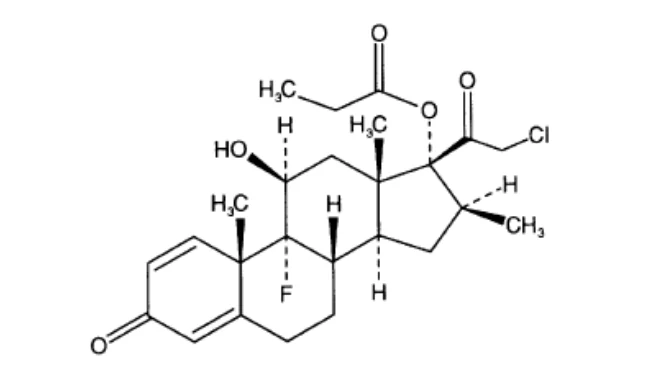 |
| Physicochemical properties: | A white to cream-colored crystalline powder, practically insoluble in water. |
CLINICAL TRIALS
In a double-blind, randomized study of 377 patients aged 12 years and older, with moderate to severe atopic dermatitis, OLUX®-E (clobetasol propionate) Foam was applied twice daily for 2 weeks. Treatment success was defined as the proportion of patients who had all of the following: an Investigator’s Static Global Assessment (ISGA) score of clear or almost clear, a minimum improvement in the 5 point ISGA score of 2 grades from Baseline to Week 2, and a score of absent or minimal for both erythema and induration/papulation at Week 2. The results of this study demonstrated that OLUX®-E Foam was significantly more effective than vehicle foam in reducing the manifestations of atopic dermatitis, as measured by treatment success.
Study demographics and trial design
Table 2 Summary of patient demographics for clinical trials in the treatment of male and female subjects 12 years of age and older with moderate to severe atopic dermatitis
| Study # | Trial design | Dosage, route of administration and duration | Study subjects (n=number) | Mean age (Range) | Gender |
| CPE.C.301 | Phase 3, multicenter, randomized, double-blind, vehicle- controlled study | EF Clobetasol Foam twice daily topical application for 2 weeks | 251 | 35.0 (12.0, 78.0) | 80M/168F |
Vehicle Foam twice daily topical application for 2 weeks | 126 | 35.7 (12.0, 81.0) | 53M/71F |
Overall enrolment by gender in the intent to treat (ITT) population was 35% (133/377) male and 63% (239/377) female. The distribution of the age of the subjects in the ITT population was 27% (101/377) 12 to < 18 years of age, 63% (236/377) 18 to < 65 years of age, 9% (34/377) ≥ 65 years of age. The enrolled study subject population was comprised of Caucasian 59% (222/377). African- American subjects comprised 27% (100/377), Hispanic 6% (21/377), Asian 5% (18/377), and Other 3% (11/377). The majority of the subjects enrolled (87%, 328/377) had a Baseline ISGA score of 3 and 12% (44/377) had a baseline ISGA score of 4. The mean extent of atopic dermatitis (% BSA) at Baseline was 14.9% for the EF Clobetasol Foam group and 13.8% for the Vehicle Foam group.
Study results
In the study CPE.C.301, OLUX®-E Foam demonstrated statistical superiority (p < 0.0001) to Vehicle Foam based on the proportion of subjects who attained treatment success, defined as the proportion of subjects that had an ISGA score of 0 (clear) or 1 (almost clear), a score of 0 (absent) or 1 (minimal) for both erythema and induration/papulation at Week 2, and a minimum improvement in the ISGA score of two grades from Baseline. At the end of treatment, 131 of 251 subjects (52%) treated with OLUX®-E Foam compared with 18 of 126 (14%) treated with Vehicle Foam achieved treatment success.
Table 3 Subjects with Treatment Success at Week 2 in the treatment of male and female subjects 12 years of age and older with moderate to severe atopic dermatitis
| Study | OLUX®-E Foam (n = 251) | Vehicle Foam (n = 126) | P- value |
| Success | 131(52%) | 18(14%) | p < 0.0001 |
Note: Success is defined as the proportion of subjects who have an ISGA score of 0 or 1 at Week 2, a score of 0 or 1 for both erythema and induration/papulation at Week 2, and a minimum improvement in the ISGA score of 2 grades from Baseline to Week 2.
DETAILED PHARMACOLOGY
(see also ACTION AND CLINICAL PHARMACOLOGY)
Clobetasol propionate, a superpotent synthetic corticosteroid, is a synthetic analog of prednisolone with a high degree of glucocorticoid activity and a slight degree of mineralocorticoid activity (2).
The primary pharmacologic effect of clobetasol propionate, which is relevant to dermatologic applications, is its anti-inflammatory activities (3, 4). Like all other corticosteroids, clobetasol propionate exerts its effect through direct or indirect mechanisms mediated via the glucocorticoid receptor in the cytoplasm. After necessary conformational changes, the active complex traverses the nuclear envelope and binds to acceptor sites on DNA (5), thereby regulating various specific messenger RNA (6).
Another pharmacological effect of clobetasol propionate in treating dermatoses relies on its antiproliferative activity on the epidermis, since some dermatoses are manifested by the hyperproliferation of keratinocytes. It has been shown that clobetasol propionate acts through the inhibition of DNA synthesis of keratinocytes (7) and type I and type III collagen biosynthesis from fibroblasts (8).
Pharmacokinetics
There have been no in vitro metabolism or in vivo animal pharmacokinetic studies performed with OLUX®-E foam. Studies investigating the pharmacokinetic characteristics of the active pharmaceutical ingredient clobetasol propionate have been conducted.
The percutaneous absorption of clobetasol propionate from topical application of cream and ointment formulations was evaluated in rats with and without the use of occlusion (occluded for 24hrs). For both cream and ointment formulations absorption was significantly greater when the skin was occluded for 24hrs. The proportion of the applied dose that entered the skin (assessed one week after application as applied dose minus amount recovered in the application site washes) was significantly greater when the skin was occluded (54.75-60.41% of the applied dose) than when the skin was unoccluded (41.08-48.18% of the applied dose). There was minimal systemic absorption of clobetasol propionate, or its metabolites. One week after topical administration approximately 20% (unoccluded) to 30% (occluded) of the applied dose of clobetasol propionate and its metabolites had been eliminated via the urine and feces with 5 times more identified in the feces compared to the urine. The absorption, distribution and elimination of clobetasol propionate was evaluated in rats via subcutaneous injection of a solution formulation. Clobetasol propionate and its metabolites were shown to be extensively distributed throughout the body and tissue elimination was shown to follow that of plasma elimination.
An in vitro skin penetration study demonstrated that the penetration profile of OLUX®-E Foam was within the same range as other currently marketed clobetasol products. The study results demonstrated that the relative penetration of clobetasol propionate from OLUX®-E Foam through the skin was approximately half that of 0.05% clobetasol propionate ointment and approximately equal to 0.05% clobetasol propionate cream.
TOXICOLOGY
There have been no acute animal toxicity studies conducted with OLUX®-E Foam.
A 90-day dermal toxicity study was conducted with OLUX®-E Foam. Daily dermal administration of OLUX®-E (clobetasol propionate) for 90 days resulted in a variety of test article-related effects, many of which were attributable to the known immunosuppressive properties of corticosteroids. The adrenal, lymphoid tissues (thymus, spleen, and mandibular and mesenteric lymph nodes), lungs, pancreas, liver, bone marrow, stomach, mammary gland, kidneys, and/or parathyroid glands were identified as target organs of toxicity, with a dose related increase in severity across doses of 0.01%, 0.05%, and/or 0.1% clobetasol propionate. Erythema and eschar were noted in the vehicle and test article-treated animals. The frequency of signs of dermal irritation and the number of animals affected were generally greater in the test article-treated groups compared to the vehicle-treated animals. Effects on the skin related to daily vehicle administration included acanthosis and surface crust formation.
Acute and multidose studies have been carried out with various clobetasol propionate formulations. Taken together, these studies describe consistent findings of reversible dose- and time-dependent local and systemic effects. Local cutaneous effects at the application site included alopecia and decreased skin thickness, loss of dermal collagen, and occasional evidence of eschar or scabbing. Systemic effects included some or all of the following: growth or appetite suppression, loss of body weight, lethargy, changes in organ weights (decreases in the adrenal glands, spleen, and lymph nodes; increases in the liver and kidney), gross and histologic changes in the spleen, adrenals and thymus, and occasional reports of necrosis or changes to the liver and kidney, hematologic effects (lymphopenia, neutrophilia, increased erythrocytes, hematocrit and hemoglobin) and blood chemistry changes (increases in cholesterol, triglycerides, ALT and AST enzyme activity, serum glucose and electrolyte values; decreased corticosterone) (9, 10, 11).
Special Toxicity Studies
Two irritation studies (skin and eye) were performed on OLUX®-E foam.
Table 4 Tabulation of Special Toxicity studies with BMV Foams
| Species | Route | Test Substance | Study Type |
| Rabbit | Dermal | OLUX®-E Foam 0.05% | Primary Dermal Irritation |
| Rabbit | Topical(ocular) | OLUX®-E Foam 0.05% | Primary Eye Irritation |
In the dermal irritation study OLUX®-E foam was found to be slightly irritating to both intact and abraded skin of the rabbit.
In the eye irritation study OLUX®-E Foam was found to be a slight irritant to the ocular tissue of the rabbit.
Genotoxicity
A battery of genotoxicity studies (Ames assay, mouse lymphoma assay, mouse micronucleus assay) for clobetasol propionate was conducted. Clobetasol propionate was not mutagenic in the Ames assay or the mouse lymphoma assay. In the mouse micronucleus assay of clobetasol propionate, there was an increase in the number of micronucleated polychromatic erythrocytes (MN-PCEs) in the highest dose group (2000 mg/kg) at the 24-hour timepoint, however no increase occurred at the 48-hour timepoint in the highest dose group, when compared to the control group. There were no statistically significant increases in the number of MN-PCEs in the 800 mg/kg or 1400 mg/kg groups.
Carcinogenicity
No long-term studies to investigate the carcinogenicity of clobetasol propionate have been conducted.
Reproductive and developmental toxicity
No reproductive or developmental toxicity studies have been conducted with OLUX®-E.
Studies on the active pharmaceutical ingredient clobetasol propionate have been conducted via subcutaneous administration to mice and rabbits. At the highest dose tested (1 mg/kg) in mice, clobetasol propionate was fetotoxic, and at all dose levels tested (lowest dose 0.03 mg/kg) teratogenic effects were noted. In rabbits, clobetasol propionate at 1 µg/kg had no adverse effect on fetuses, but at 3 and 10 µg/kg it was teratogenic.
While no reproductive or developmental toxicity studies have been conducted with OLUX®-E Foam, topical application of clobetasol propionate during a sensitive period for organogenesis may achieve sufficient exposure to be teratogenic due to percutaneous absorption.
REFERENCES
- 1. CPE.C.301: Phase 3, multicenter, randomized, double-blind study comparing EF Clobetasol Foam to its Vehicle Foam, in the treatment of male and female subjects 12 years of age and older with moderate to severe atopic dermatitis. (Unpublished)
- 2. Pakes GE and Kamm AT. Topical Clobetasol Propionate. Topical Corticosteroids. 1992; 370-387.
- 3. Robertson DB and Maibach HI. Topical Corticosteroids. International Journal of Dermatology. 1982; 21:59-67.
- 4. Schimmer BP, Parker KL. Adrenocorticotropic Hormone; adrenocortical steroid and theirsynthetic analogs; inhibitors of synthesis and actions of adrenocortical hormones. In: The pharmacological basis of therapeutics (ninth edition) (Hardman JG, Limbird LE, eds):McGraw-Hill. 1996:1459-85.
- 5. Marshall RC, Burrows M, Brookes LG and Du Vivier A. The effects of topical and systemic glucocorticosteroids on DNA sysnthesis in different tissues of the hairless mouse. British Journal of Dermatology. 1981; 105; 517-520.
- 6. Spindler SR, Mellon SH and Baxter JD. Growth hormone gene transcription is regulated by thyroid and glucocorticoid hormones in cultured rat pituitary tumor cells. The Journal of Biological Chemistry. 1982; 257(19):11627-11632.
- 7. Marshall RC and Du Vivier A. The effects on epidermal DNA synthesis of the butyrate esters of clobetasone and clobetasol and the propionate ester of clobetasol. British Journal of Dermatology. 1978; 98:355-359.
- 8. Oikarinen A, Auito P, Kiistala U, Risteli L and Risteli J. A new method to measure Type I and III collagen synthesis in human skin in vivo: Demonstration of decreased collagen synthesis after topical glucocorticoid treatment. The Journal of Investigative Dermatology. 1992; 98(2):220-225.
- 9. Kuramoto M, Ishimura Y, Morimoto J, Lee S-Y and Okubo T. Study on the toxicity of clobetasol 17-propionate. Ahikoku Acta Medica. 1975(a); 31(6):377-398.
- 10. Kuramoto M, Ishimura Y, Morimoto J, Lee S-Y and Okubo T. Study on the toxicity of clobetasol 17-propionate. Ahikoku Acta Medica. 1975(b);31(6):399-416.
- 11. Kuramoto M, Ishimura Y, Lee S-Y, Takeda K, Shigemi F, Tanaka M, and Matsuura H. Study on the toxicity of clobetasol 17-propionate – 3 recovery test against clobetasol 17-propionate in rats. Shikoku Acta Medica. 1976;32(3):284-300.