


Product Monograph - Onakta
RECENT MAJOR LABEL CHANGES
Not applicable
TABLE OF CONTENTS
Sections or subsections that are not applicable at the time of authorization are not listed.
RECENT MAJOR LABEL CHANGES ............................................................................................. 2
TABLE OF CONTENTS ............................................................................................................... 2
PART I: HEALTH PROFESSIONAL INFORMATION ....................................................................... 4
1 INDICATIONS ................................................................................................................ 4
1.1 Pediatrics ................................................................................................................. 4
1.2 Geriatrics ................................................................................................................. 4
2 CONTRAINDICATIONS .................................................................................................. 4
4 DOSAGE AND ADMINISTRATION .................................................................................. 4
4.1 Dosing Considerations ............................................................................................. 4
4.2 Recommended Dose and Dosage Adjustment ........................................................ 4
4.4 Administration ......................................................................................................... 5
4.5 Missed Dose ............................................................................................................ 5
5 OVERDOSAGE ............................................................................................................... 5
6 DOSAGE FORMS, STRENGTHS, COMPOSITION AND PACKAGING .................................. 5
7 WARNINGS AND PRECAUTIONS ................................................................................... 6
7.1 Special Populations.................................................................................................. 7
7.1.1 Pregnant Women .............................................................................................. 7
7.1.2 Breast-feeding ................................................................................................... 7
7.1.3 Pediatrics ........................................................................................................... 7
7.1.4 Geriatrics ........................................................................................................... 8
8 ADVERSE REACTIONS ................................................................................................... 8
8.1 Adverse Reaction Overview ..................................................................................... 8
8.2 Clinical Trial Adverse Reactions ............................................................................... 8
8.3 Less Common Clinical Trial Adverse Reactions ........................................................ 9
9 DRUG INTERACTIONS ................................................................................................. 10
9.2 Drug Interactions Overview ................................................................................... 10
9.4 Drug-Drug Interactions .......................................................................................... 10
9.5 Drug-Food Interactions .......................................................................................... 10
9.6 Drug-Herb Interactions .......................................................................................... 10
9.7 Drug-Laboratory Test Interactions ......................................................................... 10
10 CLINICAL PHARMACOLOGY ........................................................................................ 10
10.1 Mechanism of Action ....................................................................................... 10
10.2 Pharmacodynamics ......................................................................................... 10
10.3 Pharmacokinetics ............................................................................................ 11
11 STORAGE, STABILITY AND DISPOSAL .......................................................................... 12
PART II: SCIENTIFIC INFORMATION ........................................................................................ 13
13 PHARMACEUTICAL INFORMATION ............................................................................. 13
14 CLINICAL TRIALS ......................................................................................................... 14
14.1 Clinical Trials by Indication .............................................................................. 14
15 MICROBIOLOGY ......................................................................................................... 16
16 NON-CLINICAL TOXICOLOGY ...................................................................................... 16
PATIENT MEDICATION INFORMATION ................................................................................... 17
PART I: HEALTH PROFESSIONAL INFORMATION
1 INDICATIONS
ONAKTA (tirbanibulin 1 % w/w ointment) is indicated for:
- the topical treatment of non-hyperkeratotic, non-hypertrophic actinic keratosis (AK) (Olsen grade 1) on the face or scalp in adults.
1.1 Pediatrics
Pediatrics (< 18 years): No data are available to Health Canada; therefore, Health Canada has not authorized an indication for pediatric use.
1.2 Geriatrics
Geriatrics (≥65 years): Evidence from clinical studies suggests that use in the geriatric population is not associated with differences in safety or effectiveness.
2 CONTRAINDICATIONS
- ONAKTA (tirbanibulin 1 % w/w ointment) is contraindicated in patients who are hypersensitive to this drug or to any ingredient in the formulation, including any non-medicinal ingredient, or component of the container. For a complete listing, see 6 DOSAGE FORMS, STRENGTHS, COMPOSITION AND PACKAGING.
4 DOSAGE AND ADMINISTRATION
4.1 Dosing Considerations
The efficacy of ONAKTA (tirbanibulin 1 % w/w ointment) for more than 1 treatment course of 5 consecutive days have not been studied. If recurrences occur, or new lesions develop within the treatment area, other therapeutic options may be considered.
4.2 Recommended Dose and Dosage Adjustment
- ONAKTA should be applied to the affected field on the face or scalp once daily for 5 consecutive days using 1 single-dose sachet per application.
- Sufficient amount of ONAKTA ointment should be applied to form a thin layer to cover the treatment field of up to 25 cm2.
- Each sachet is for single use only and should be discarded after use.
- ONAKTA has not been studied in patients with renal or hepatic impairment. Based on clinical pharmacology and in vitro studies, no dose adjustments are needed.
- Health Canada has not authorized an indication for pediatric use.
4.4 Administration
Before applying ONAKTA, patients should wash the treatment field with mild soap and water and dry it. Hands should be washed with soap and water before and immediately after application of the ointment.
The ointment should be applied at approximately the same time each day. The treated area should not be bandaged or otherwise occluded (see 7 WARNINGS AND PRECAUTIONS, 8 ADVERSE REACTIONS and 14 CLINICAL TRIALS). Washing and touching of the treated area should be avoided for approximately 8 hours after application of ONAKTA. After this period, the treated area may be washed with mild soap and water.
4.5 Missed Dose
If a dose is missed, the patient should apply the ointment as soon as he/she remembers and then he/she should continue with the subsequent schedule. However, the ointment should not be applied more than once a day.
5 OVERDOSAGE
Overdose of ONAKTA (tirbanibulin 1 % w/w ointment) could cause an increase in incidence and severity of local skin reactions.
No systemic signs of overdose are expected following topical application of ONAKTA due to the low systemic absorption of tirbanibulin. Management of overdose should consist of treatment of clinical symptoms.
| For management of a suspected drug overdose, contact your regional poison control centre. |
|---|
6 DOSAGE FORMS, STRENGTHS, COMPOSITION AND PACKAGING
Table 1 Dosage Forms, Strengths, Composition and Packaging
ONAKTA (tirbanibulin 1 % w/w ointment) is a white to off-white ointment and is supplied in single-dose sachets containing 250 mg of ointment. Each sachet contains: 2.5 mg (1% w/w) of tirbanibulin. Each sachet should be discarded after single use. Available in box of 5 single-dose sachets.
| Route of Administration | Dosage Form / Strength/Composition | Non-medicinal Ingredients |
| Topical | 1 % w/w Each gram of ONAKTA contains 10 mg of tirbanibulin (10 mg/g). | Glycerol monostearate 40-55 Type I and propylene glycol |
7 WARNINGS AND PRECAUTIONS
General
The safety and efficacy of ONAKTA (tirbanibulin 1 % w/w ointment) treatment have not been evaluated in clinical trials on body areas apart from the face and scalp.
ONAKTA must not be ingested. If accidental ingestion occurs, the patient should drink plenty of water and seek immediate medical care.
ONAKTA is for external topical use on the face or scalp only; not for oral or ophthalmic use. Application near and around the eyes, lips, mouth and the inside of nostrils or ears should be avoided.
Carcinogenesis and Mutagenesis
Tirbanibulin induced chromosomal damage and micronuclei in genotoxicity studies conducted in rats. Tirbanibulin was shown to be non-mutagenic in bacterial mutagenesis test (16 NON-CLINICAL TOXICOLOGY, Carcinogenicity, Genotoxicity).
Driving and Operating Machinery
ONAKTA has minimal influence on the ability to drive and use machines.
Immune
The safety and efficacy of ONAKTA treatment have not been evaluated in immunocompromised patients therefore, ONAKTA should be used with caution in immunocompromised patients.
Ophthalmologic
ONAKTA may cause eye irritation. Avoid transfer of the drug into the eyes and to the periocular area during and after application. Wash hands immediately after application. In the event of accidental contact with the eyes, the eyes should be rinsed immediately with large amounts of water, and the patient should seek medical care as soon as possible.
Reproductive Health: Female and Male Potential
- Fertility
No human data on the effect of ONAKTA on fertility are available.
Tirbanibulin has been assessed for effects on fertility or reproductive function in rats. In a non-clinical fertility and early embryonic development study, oral administration of 4 mg/kg/day of tirbanibulin to male rats caused fertility toxicity (16 NON-CLINICAL TOXICOLOGY, Reproductive and Developmental Toxicology).
- Teratogenic Risk
No human data on the teratogenic effect of ONAKTA are available.
In non-clinical embryo-fetal development studies in rats and rabbits, fetal malformations occurred at oral doses of ≥1.25 mg/kg/day (rats) and 3 mg/kg/day (rabbits) (7.1.1 Pregnant Women, 16 NON-CLINICAL TOXICOLOGY, Reproductive and Developmental Toxicology).
Skin
Application of ONAKTA is not recommended until the skin is healed from any previous medicinal product, procedure or surgical treatment and should not be applied to open wounds or broken skin where the skin barrier is compromised.
Occlusion after topical application of ONAKTA is more likely to result in irritation (see 8 ADVERSE REACTIONS, Dermal Safety Studies). Propylene glycol may cause skin irritation.
Local skin reactions in the treated area, including erythema, flaking/scaling, crusting, swelling, erosion/ulceration, and vesiculation/pustulation, may occur after topical application of ONAKTA (see 8 ADVERSE REACTIONS). Treatment effect may not be adequately assessed until resolution of local skin reactions.
- Sun exposure
Due to the nature of the disease, excessive exposure to sunlight (including sunlamps and tanning beds) should be avoided or minimised.
- Risk of progression to skin cancer
Changes in the appearance of actinic keratosis could suggest progression to invasive squamous cell carcinoma. Clinically atypical lesions or lesions suspicious for malignancy should be appropriately managed (see 8 ADVERSE REACTIONS).
7.1 Special Populations
7.1.1 Pregnant Women
ONAKTA is not recommended during pregnancy and in women of childbearing potential not using contraception.
There are no clinical data regarding the use of ONAKTA in pregnant women or the impact on fertility, major birth defects, miscarriage or adverse maternal and fetal outcomes.
Tirbanibulin has been shown to have teratogenic properties. In non-clinical studies, oral administration of tirbanibulin in rats and rabbits is associated with maternal toxicity and embryo-fetal toxicity including implantation loss and teratogenicity (16 NON-CLINICAL TOXICOLOGY, Reproductive and Developmental Toxicology).
7.1.2 Breast-feeding
It is unknown if ONAKTA or its metabolites are excreted in human milk. Precaution should be exercised because many drugs can be excreted in human milk, therefore a risk to the newborns/infants cannot be excluded.
The developmental and health benefits of breastfeeding should be considered along with the mother’s clinical need for ONAKTA and any potential adverse effects on the breastfed child from tirbanibulin or from the underlying maternal condition.
7.1.3 Pediatrics
Pediatrics (<18 years): No data are available to Health Canada; therefore, Health Canada has not authorized an indication for pediatric use. Actinic keratosis is not a condition generally seen within the pediatric population.
7.1.4 Geriatrics
Of the 353 subjects with AK treated with ONAKTA in the 2 controlled Phase 3 trials, 246 (70%) were 65 years of age or older. No overall differences in safety or effectiveness were observed between these subjects and younger subjects, but greater sensitivity of some older individuals cannot be ruled out.
8 ADVERSE REACTIONS
8.1 Adverse Reaction Overview
In the pooled analysis of two phase 3 controlled clinical trials (up to Day 57), the majority of adverse reactions were mild in severity and the most common adverse reactions were: application site pruritus (9.1%) and pain (9.9%) in the treatment area. Application site pruritus and pain were mild to moderate in severity, transient in nature (mostly occurring during the first 10 days since the start of treatment). Five subjects (1.4%) in the tirbanibulin group were treated with emollients. No subject withdrew from the trials due to adverse reactions.
Local skin reactions (LSRs) were collected independent of adverse reactions. LSRs peaked 8 days after starting the treatment and typically resolved within 2 to 3 weeks after completion of treatment with tirbanibulin ointment. LSRs at the application site were erythema (91%), flaking/scaling (82%), crusting (46%), swelling (39%), erosion/ulceration (12%), and vesiculation/pustulation (8%). Severe LSRs occurred in 46 patients (13%) in the pooled safety analysis. The incidence of patients with severe LSR was highest for flaking/scaling (9% patients), followed by erythema (6% patients), and then all other LSR categories (≤2% patients).
8.2 Clinical Trial Adverse Reactions
Clinical trials are conducted under very specific conditions. The adverse reaction rates observed in the clinical trials; therefore, may not reflect the rates observed in practice and should not be compared to the rates in the clinical trials of another drug. Adverse reaction information from clinical trials may be useful in identifying and approximating rates of adverse drug reactions in real-world use.
Two double-blind, vehicle-controlled clinical trials were conducted in 702 adult subjects with actinic keratosis on the face or scalp. Subjects were randomized 1:1 to ONAKTA or vehicle. Subjects enrolled in the trials had 4 to 8 clinically typical, visible, and discrete AK lesions in a contiguous area of 25 cm2 on the face or scalp.
Table 2 Adverse Reactions** Occurring in ≥ 1% of Subjects*
Adverse Reaction System Organ Class | ONAKTA N = 353 | Vehicle N = 349 |
|---|---|---|
| Number of Subjects (%) with any adverse reaction (at least possibly related to treatment) | 56 (16%) | 35 (10%) |
| General Disorders and Administration Site Conditions | ||
| Application site pruritus | 32 (9%) | 21 (6%) |
| Application site paina | 35 (10%) | 11 (3%) |
a Application site pain includes pain, tenderness, stinging, and burning sensation at the application site.
* The Safety Population was defined as all randomized subjects who received at least one dose of study treatment.
** Defined as investigator determined at least possibly related to study treatment.
Table 3 Investigator Assessment of Maximal Post-Baseline Local Skin Reactions Greater Than Baseline in the Treatment Area (face or scalp)
| ONAKTA N = 353 | Vehicle N = 349 | |||||||||||||||
|---|---|---|---|---|---|---|---|---|---|---|---|---|---|---|---|---|
| Local Skin Reactions | Mild (1) n (%) | Moderate (2) n (%) | Severe (3) n (%) | Mild (1) n (%) | Moderate (2) n (%) | Severe (3) n (%) | ||||||||||
| Erythema | 76 (22%) | 223 (63%) | 22 (6%) | 98 (28%) | 20 (6%) | 0 | ||||||||||
| Flaking/ Scaling | 92 (26%) | 166 (47%) | 31 (9%) | 86 (25%) | 33 (9%) | 1 (< 1%) | ||||||||||
| Crusting | 107 (30%) | 50 (14%) | 7 (2%) | 31 (9%) | 8 (2%) | 0 | ||||||||||
| Swelling | 102 (29%) | 32 (9%) | 2 (< 1%) | 15 (4%) | 1 (< 1%) | 0 | ||||||||||
| Erosion/ Ulceration | 32 (9%) | 9 (3%) | 0 | 10 (3%) | 0 | 0 | ||||||||||
| Vesiculation/ Pustulation | 25 (7%) | 2 (< 1%) | 2 (< 1%) | 3 (<1%) | 0 | 0 | ||||||||||
4-point grading scale: 0 = absent, 1 = mild (slightly, barely perceptible), 2 = moderate (distinct presence), and 3 = severe (marked, intense).
For the 51 subjects (45 ONAKTA, 6 vehicle) who maintained complete clearance through the 12-month follow-up period, one isolated squamous cell carcinoma in the treatment field was reported in 1 patient following the Day 57 assessment; this event was considered by the investigator not to be related to treatment with ONAKTA.
8.3 Less Common Clinical Trial Adverse Reactions
General disorders and administration site conditions: application site paraesthesia, application site discomfort, application site dryness, application site warmth, application site inflammation, application site nodule, application site scab
Infections and infestations: carbuncle
Nervous system disorders: dysgeusia, headache
Skin and subcutaneous tissue disorders: blister, erythema, skin odour abnormal, skin tightness
Dermal Safety Studies
Clinical studies in healthy subjects demonstrated ONAKTA did not cause contact sensitization (261 subjects), phototoxic skin reactions (31 subjects), or photoallergic skin reactions (64 subjects).
Clinical studies in healthy subjects demonstrated ONAKTA caused skin irritation under open patch, semi occlusive and occlusive patches. Skin irritation with a score of 3 or greater were lower in open patches condition 22% (n=8) vs occlusive/semi-occlusive patches 89% (n=32).
9 DRUG INTERACTIONS
9.2 Drug Interactions Overview
No clinical studies evaluating the drug interaction potential of ONAKTA (tirbanibulin 1 % w/w ointment) have been conducted. Given the route of administration (topical), the short duration of dosing (5 days), the low systemic exposure (subnanomolar mean Cmax), and the in vitro data, there is low potential for interaction with tirbanibulin ointment at maximum clinical exposure.
In Vitro Studies
CYP Enzymes: Tirbanibulin and the metabolite KX2-5036 directly or time-dependently inhibited CYP 1A2, 2B6, 2C8, 2C9, 2C19, 2D6, or 3A4 with an IC50 value of >17 µM. Tirbanibulin up to 1 µM (431.5 ng/mL) and the metabolite KX2-5036 up to 3 µM (1024 ng/mL) did not induce CYP 1A2, 2B6, or 3A4. These findings suggest that ONAKTA has no clinically meaningful effect on the PK of drugs metabolized by CYP 1A2, 2B6, 2C8, 2C9, 2C19, 2D6, or 3A4.
Drug Transporters: Neither tirbanibulin nor the metabolite KX2-5036 was a substrate of MDR1, BCRP, BSEP, MRP2, MATE1, MATE2-K, OAT1, OAT3, OATP1B1, OATP1B3, OCT1 or OCT2. Tirbanibulin and the metabolite KX2-5036 inhibited MATE1, MATE2-K, OATP1B1, OATP1B3, OCT1 and/or OCT2 with an IC50 value of >1 µM. The results suggest that ONAKTA has no clinically meaningful effect on the PK of drugs mediated by MATE1, MATE2-K, OATP1B1, OATP1B3, OCT1 and OCT2.
9.4 Drug-Drug Interactions
Interactions with other drugs have not been established.
9.5 Drug-Food Interactions
Interactions with food have not been established.
9.6 Drug-Herb Interactions
Interactions with herbal products have not been established.
9.7 Drug-Laboratory Test Interactions
Interactions with laboratory tests have not been established.
10 CLINICAL PHARMACOLOGY
10.1 Mechanism of Action
Tirbanibulin is a microtubule inhibitor. Tirbanibulin disrupts microtubules by direct binding to tubulin, which induces cell cycle arrest and apoptotic death of proliferating cells, and is associated with disruption of Src tyrosine kinase signalling.
The mechanism of action of tirbanibulin for the topical treatment of actinic keratosis is unknown.
10.2 Pharmacodynamics
The pharmacodynamics of tirbanibulin in the treatment of actinic keratosis is unknown.
10.3 Pharmacokinetics
Table 4 Summary of Pharmacokinetic Parameters after 5 days of daily dosing of tirbanibulin in subjects with actinic keratosis
| Cmax | Tmax | AUC0-24h |
| 0.258 ± 0.231 ng/mL | 6.90 h | 4.09 ± 3.15 ng·h/mL |
Absorption
Following topical treatment of a mean daily dose of 138 mg (range: 54 to 295 mg) of ONAKTA to a 25 cm2 contiguous area of the face or balding scalp, once daily for 5 consecutive days, the steady-state concentration of tirbanibulin was achieved by 72 hours with a mean ± SD trough concentration (Ctrough) of 0.11 ± 0.08 ng/mL. On Day 5, systemic exposure to tirbanibulin mean ± SD values of steady-state AUC0-24h and Cmax were 4.09 ± 3.15 ng·h/mL and 0.258 ± 0.231 ng/mL, respectively. The mean Cmax was equivalent to 0.598 nM. Cmax and AUC0-24h were slightly lower in the group with scalp application compared to face application (Cmax: 0.176 ng/mL vs 0.34 ng/mL and AUC0-24h: 3.18 ng·h/mL vs 5.0 ng·h/mL). The median time to reach Cmax (Tmax) was ~7 hours.
Distribution
Plasma protein binding of tirbanibulin is 88% and is independent of concentrations in the range of 0.01 to 10 µg/mL.
Metabolism
Following topical treatment with ONAKTA to adult subjects with actinic keratosis in a maximal use pharmacokinetic study, the plasma concentrations of the main metabolites (KX2-5036 and KX2-5163) were detectable with the highest plasma concentrations of 0.09 ng/mL and 0.12 ng/mL, respectively.
The in vitro study indicated that incubation of 1 or 10 µM tirbanibulin with human hepatocytes generated KX2-5036, KX-5163 and other unidentified metabolites.
In vitro, tirbanibulin is mainly metabolized by CYP3A4, and to a lesser extent, CYP2C8.
Elimination
Excretion of tirbanibulin has not been fully characterized in humans.
Special Populations and Conditions
- Hepatic Insufficiency: No formal studies of tirbanibulin ointment in patients with hepatic impairment have been conducted. Due to the low systemic exposure to tirbanibulin after topical application of tirbanibulin ointment once daily for 5 days, changes in hepatic function are unlikely to have any effect on the elimination of tirbanibulin. Therefore, no dose adjustments are considered needed (see 4 DOSAGE AND ADMINISTRATION, 4.2 Recommended Dose and Dosage Adjustment).
- Renal Insufficiency: No formal studies of tirbanibulin ointment in patients with renal impairment have been conducted. Due to the low systemic exposure to tirbanibulin after topical application of tirbanibulin ointment once daily for 5 days, changes in renal function are unlikely to have any effect on the elimination of tirbanibulin. Therefore, no dose adjustments are considered needed (see 4 DOSAGE AND ADMINISTRATION, 4.2 Recommended Dose and Dosage Adjustment).
11 STORAGE, STABILITY AND DISPOSAL
Store at 15°C - 30°C. Do not refrigerate or freeze.
Sachets should be discarded after single use.
PART II: SCIENTIFIC INFORMATION
13 PHARMACEUTICAL INFORMATION
Drug Substance
Proper/Common name: Tirbanibulin (free base)
Chemical name: N-benzyl-2-(5-(4-(2-morpholinoethoxy)phenyl)pyridin-2-yl) acetamide
Molecular formula and molecular mass: C26H29N3O3; 431.5
Structural formula:
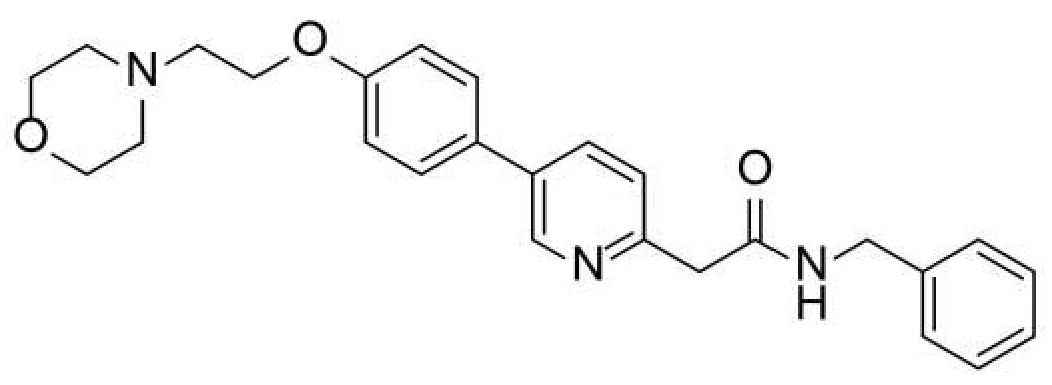
Physicochemical properties: White to off-white solid. Freely soluble in dimethyl sulfoxide, slightly soluble in ethanol, insoluble in water. Polymorphic Form B.
14 CLINICAL TRIALS
14.1 Clinical Trials by Indication
Actinic Keratosis of the Face or Scalp
Table 5 Summary of patient demographics for clinical trials in actinic keratosis
| Study # | Study design | Dosage, route of administration and duration | Study subjects (n) | Mean age (Range) | Sex |
| KX01-AK-003 | Multicenter, randomized, double-blind, vehicle-controlled, parallel-group study in adult subjects with AK. | ONAKTA Ointment 1% Topical (face or scalp) | N =351 ONAKTA N = 175 Vehicle N = 176 | ONAKTA 70.2 (48-86) Vehicle 69.5 (45-96) | 86% Male 14% Female |
| KX01-AK-004 | Multicenter, randomized, double-blind, vehicle-controlled, parallel-group study in adult subjects with AK. | ONAKTA Ointment 1% Topical (face or scalp) | N=351 ONAKTA N = 178 Vehicle N = 173 | ONAKATA 69.1 (46-90) Vehicle 70.2 (46-92) | 88% Male 12% Female |
Two double-blind, vehicle-controlled clinical trials (KX01-AK-003 and KX01-AK-004) were conducted with 702 adult subjects with actinic keratosis (AK) on the face or scalp. Subjects were randomized 1:1 to ONAKTA (tirbanibulin 1 % w/w ointment) or vehicle (353 patients treated with tirbanibulin and 349 patients treated with vehicle). Subjects enrolled had 4 to 8 clinically typical, visible, and discrete AK lesions in a contiguous area of 25 cm2 on the entire treatment field of the face or scalp. Subjects had an average age of 70 years (range 45 to 96 years), were predominantly Caucasian (>99%), male (87%), with Fitzpatrick skin types I or II (73%) and AK on the face (68%) or scalp (32%). A history of skin cancer was reported in 45 % of subjects (184 squamous cell carcinoma, 234 basal cell carcinoma, and 39 melanomas). ONAKTA was not offered to subjects with any previous use of medicinal product in the treatment area within 8 weeks of starting ONAKTA, and with any previous procedure or surgical treatment in the treatment area within 2 weeks of starting ONAKTA. Treatment groups were comparable across all demographics and baseline characteristics, including AK lesion count and distribution on the face or scalp.
Subjects received 5 consecutive days of once daily treatment with either ONAKTA (353) or vehicle control (349) to the treatment field. Subjects with complete (100%) clearance of AK lesions in the treatment area at Day 57 continued for assessment of Recurrence up to 12 months (assessments every 3 months) post-Day 57 visit.
Clinical efficacy
The primary efficacy endpoint was complete (100%) clearance of AK lesions in the treatment area on Day 57.
At Day 57, patients treated with tirbanibulin had statistically significantly higher complete and partial clearance rates than patients treated with vehicle (p<0.0001) (see Table 6).
Table 6 Complete and partial clearance rates at Day 57, ITT population (pooled data KX01-AK-003 and KX01-AK-004)
| Overall (face and scalp) | |||||
|---|---|---|---|---|---|
ONAKTA 10 mg/g ointment (N=353) | Vehicle (N=349) | ||||
| Complete (100%) clearance ratea | 49.3%b | 8.6% | |||
| Partial (≥75%) clearance rate | 72.2%b | 18.1% | |||
ITT=Intent-to-Treat
- a. Defined as the proportion of subjects at Day 57 with no clinically visible AK lesions in the treatment area and the secondary endpoint was partial (≥ 75%) clearance of AK lesions in the treatment area
- b. p<0.0001; compared to vehicle by Cochran-Mantel-Hansel stratified by treatment location and study.
Complete clearance rate and partial clearance rate with ONAKTA on scalp and facial lesions were higher as compared to vehicle in an exploratory analysis (see Table 7).
Table 7 Complete and partial clearance rates at Day 57 by treatment location, ITT population (pooled data KX01-AK-003 and KX01-AK-004)
| Location | Complete (100%) Clearance Rate | Partial (≥75%) Clearance Rate | |||
|---|---|---|---|---|---|
Tirbanibulin 10 mg/g ointment (N=353) | Vehicle (N=349) | Tirbanibulin 10 mg/g ointment (N=353) | Vehicle (N=349) | ||
| All subjects | n/N | 174/353 | 30/349 | 255/353 | 63/349 |
| % | 49.3% | 8.6% | 72.2% | 18.1% | |
| Face | n/N | 133/238 | 23/239 | 185/238 | 49/239 |
| % | 55.9% | 9.6% | 77.7% | 20.5% | |
| Scalp | n/N | 41/115 | 7/110 | 70/115 | 14/110 |
| % | 35.7% | 6.4% | 60.9% | 12.7% | |
ITT=Intent-to-Treat
Based on Mantel-Haenszel method
Recurrence, defined as the proportion of subjects with any identified AK lesion (new or previous lesion) in the previously treated area who achieved complete response at Day 57 up to 12 months post Day 57, was 73%.
15 MICROBIOLOGY
No microbiological information is required for this drug product.
16 NON-CLINICAL TOXICOLOGY
General Toxicology
Tirbanibulin was found to be a moderate contact sensitiser in dermal toxicity studies in rats and guinea pigs.
Carcinogenicity
No long-term animal studies have been performed to evaluate carcinogenic potential.
Genotoxicity
Tirbanibulin was positive in an in vitro chromosomal aberration assay with Chinese hamster ovary (CHO) cells, an in vitro mouse lymphoma assay with L5178/TK+/- cells, and an in vivo micronucleus assay in rats. Tirbanibulin was negative in an in vitro bacterial reverse mutation (Ames) assay.
Reproductive and Developmental Toxicology
Tirbanibulin was assessed for effects on fertility or reproductive function in rats. Oral administration of 4 mg/kg/day of tirbanibulin (94 times the maximum recommended human dose (MRHD) on an AUC comparison basis) adversely affected spermatogenesis (including reduced sperm count, motility, morphology of sperm and degeneration of the seminiferous epithelium). No effects on sperm were observed in males treated at 2 mg/kg/day (47 times the MRHD on an AUC comparison basis).
Tirbanibulin induced fetal deaths and external, visceral, and skeletal malformations when administered orally to pregnant rats during the period of organogenesis at doses greater than or equal to 1.25 mg/kg/day, which resulted in systemic exposures at least 74 times the exposure associated with the MRHD on an AUC comparison basis. Tirbanibulin had no apparent effects on fetal development in rats at a dose of 0.5 mg/kg/day, which resulted in systemic exposures 18 times the exposure associated with the MRHD.
Tirbanibulin reduced mean fetal weight and size (crown-rump length) when administered orally to pregnant rabbits during the period of organogenesis at a dose of 3 mg/kg/day, which resulted in a systemic exposure 159 times the exposure associated with the MRHD on an AUC comparison basis. Tirbanibulin had no apparent effects on fetal development in rabbits at a dose of 1 mg/kg/day, which resulted in systemic exposures 53 times the exposure associated with the MRHD.