


Product Monograph - Orgovyx
RECENT MAJOR LABEL CHANGES
Not applicable
TABLE OF CONTENTS
RECENT MAJOR LABEL CHANGES ......................................................................................................... 1
TABLE OF CONTENTS ........................................................................................................................... 2
PART I: HEALTH PROFESSIONAL INFORMATION .................................................................................. 4
1 INDICATIONS .......................................................................................................................... 4
1.1 Pediatrics ..............................................................................................................................4
1.2 Geriatrics ..............................................................................................................................4
2 CONTRAINDICATIONS ............................................................................................................. 4
3 SERIOUS WARNINGS AND PRECAUTIONS BOX ........................................................................ 4
4 DOSAGE AND ADMINISTRATION ............................................................................................. 4
4.1 Dosing Considerations .........................................................................................................4
4.2 Recommended Dose and Dosage Adjustment ....................................................................4
4.4 Administration .....................................................................................................................5
4.5 Missed Dose .........................................................................................................................5
5 OVERDOSAGE ......................................................................................................................... 5
6 DOSAGE FORMS, STRENGTHS, COMPOSITION AND PACKAGING ............................................. 6
7 WARNINGS AND PRECAUTIONS .............................................................................................. 6
7.1 Special Populations ..............................................................................................................8
7.1.1 Pregnant Women ..........................................................................................................8
7.1.2 Breast-feeding ...............................................................................................................8
7.1.3 Pediatrics .......................................................................................................................8
7.1.4 Geriatrics .......................................................................................................................8
8 ADVERSE REACTIONS .............................................................................................................. 8
8.1 Adverse Reaction Overview .................................................................................................8
8.2 Clinical Trial Adverse Reactions ...........................................................................................9
8.3 Less Common Clinical Trial Adverse Reactions ................................................................. 10
8.4 Abnormal Laboratory Findings: Hematologic, Clinical Chemistry and Other Quantitative Data Clinical Trial Findings ........................................................................................................... 10
8.5 Post-Market Adverse Reactions ........................................................................................ 11
9 DRUG INTERACTIONS ............................................................................................................ 11
9.2 Drug Interactions Overview .............................................................................................. 11
9.3 Drug-Behavioural Interactions .......................................................................................... 12
9.4 Drug-Drug Interactions ..................................................................................................... 12
9.5 Drug-Food Interactions ..................................................................................................... 13
9.6 Drug-Herb Interactions ..................................................................................................... 13
9.7 Drug-Laboratory Test Interactions .................................................................................... 13
10 CLINICAL PHARMACOLOGY ................................................................................................... 13
10.1 Mechanism of Action .................................................................................................. 13
10.2 Pharmacodynamics .................................................................................................... 13
10.3 Pharmacokinetics ....................................................................................................... 14
11 STORAGE, STABILITY AND DISPOSAL ..................................................................................... 16
12 SPECIAL HANDLING INSTRUCTIONS ....................................................................................... 16
PART II: SCIENTIFIC INFORMATION ................................................................................................... 16
13 PHARMACEUTICAL INFORMATION ........................................................................................ 16
14 CLINICAL TRIALS.................................................................................................................... 16
14.1 Trial Design and Study Demographics ........................................................................ 16
14.2 Study Results .............................................................................................................. 17
15 MICROBIOLOGY .................................................................................................................... 20
16 NON-CLINICAL TOXICOLOGY ................................................................................................. 20
PATIENT MEDICATION INFORMATION .............................................................................................. 22
PART I: HEALTH PROFESSIONAL INFORMATION
1 INDICATIONS
ORGOVYX (relugolix tablets, 120 mg) is indicated for the treatment of adult patients with advanced prostate cancer.
1.1 Pediatrics
Pediatrics (<18 years of age): Safety and effectiveness of ORGOVYX in patients less than 18 years of age has not been established, therefore, Health Canada has not authorized an indication for pediatric use.
1.2 Geriatrics
Of the 622 patients who received ORGOVYX in the HERO study, 81% were 65 years of age or older, while 35% were 75 years of age or older. No overall differences in safety or effectiveness were observed between these subjects and younger subjects. There was no clinically relevant impact of age on the pharmacokinetics of ORGOVYX or testosterone response based on population pharmacokinetic and pharmacokinetic/pharmacodynamic analyses in men 45 to 91 years of age.
2 CONTRAINDICATIONS
In patients with known hypersensitivity to relugolix or to any ingredient in the formulation, including any non-medicinal ingredient, or component of the container. For a complete listing (see 6 DOSAGE FORMS, STRENGTHS, COMPOSITION AND PACKAGING).
3 SERIOUS WARNINGS AND PRECAUTIONS BOX
4 DOSAGE AND ADMINISTRATION
4.1 Dosing Considerations
- Because treatment with relugolix, does not cause an increase in testosterone concentrations, it is not necessary to add an anti-androgen as mitigation to avoid the associated clinical flare after initiation of therapy.
- In patients treated with ORGOVYX for prostate cancer, treatment is usually continued upon development of nonmetastatic or metastatic castration-resistant prostate cancer.
4.2 Recommended Dose and Dosage Adjustment
- Initiate treatment of ORGOVYX with a loading dose of 360 mg (three tablets) on the first day and continue treatment with a 120 mg (one tablet) taken orally once daily at approximately the same time each day.
Dose Modification for Use with Oral P-gp Inhibitors: Co-administration of ORGOVYX with an oral
7 WARNINGS AND PRECAUTIONS Cardiovascular
Monitoring and Laboratory Tests
9 DRUG INTERACTIONS
permeability glycoprotein (P-gp) inhibitor should be avoided. If co-administration is unavoidable, take ORGOVYX first and dosing separated by at least 6 hours (see 9 DRUG INTERACTIONS and 10 CLINICAL PHARMACOLOGY). Treatment with ORGOVYX may be interrupted for up to two weeks if a short course of treatment with an oral P-gp inhibitor is required.
- Dose Modification for Use with Combined P-gp and Strong CYP3A Inducers: Co-administration of ORGOVYX with combined P-gp and strong CYP3A inducers should be avoided. If co-administration is unavoidable, increase the dose of ORGOVYX to 240 mg once daily. After discontinuation of the combined P-gp and strong CYP3A inducer, resume the recommended 120-mg dose of ORGOVYX once daily (see 9 DRUG INTERACTIONS and 10 CLINICAL PHARMACOLOGY).
Dose Modification for Pediatrics (< 18 years of age)
Health Canada has not authorized an indication for pediatric use (see 1.1 Pediatrics).
Dose Modification for Geriatrics (> 65 years of age)
No dose adjustment in elderly patients is required (see 1.2 Geriatrics and 10 CLINICAL PHARMACOLOGY).
Dose Modification for Renal Impairment
No dose adjustment in patients with mild, moderate or severe renal impairment is required. The effects of end-stage renal disease with or without hemodialysis have not been evaluated (see 10 CLINICAL PHARMACOLOGY).
Dose Modification for Hepatic Impairment
No dose adjustment in patients with mild or moderate hepatic impairment is required. The effects of severe hepatic impairment on the pharmacokinetics of relugolix have not been evaluated (see 10 CLINICAL PHARMACOLOGY).
4.4 Administration
Oral use. ORGOVYX can be taken with or without food (see 10.3 Pharmacokinetics). Instruct patients to swallow tablets whole and not to crush or chew tablets.
4.5 Missed Dose
Advise patients to take a missed dose of ORGOVYX as soon as they remember. If the dose was missed by more than 12 hours, patients should not take the missed dose and resume with the next scheduled dose.
If treatment with ORGOVYX is interrupted for greater than 7 days, restart ORGOVYX with a loading dose of 360 mg on the first day, and continue with a dose of 120 mg once daily.
5 OVERDOSAGE
There is no known specific antidote for ORGOVYX overdose. In the event of an overdose, stop ORGOVYX and undertake general supportive measures until any clinical toxicity has diminished or resolved. It is not known if relugolix is removed by hemodialysis.
| For management of a suspected drug overdose, contact your regional poison control centre. |
|---|
6 DOSAGE FORMS, STRENGTHS, COMPOSITION AND PACKAGING
Table 1 – Dosage Forms, Strengths, Composition and Packaging
Each tablet of ORGOVYX contains 120 mg relugolix. The tablets are light red, almond-shaped, film-coated, and debossed with “R” on one side and “120” on the other side. Supplied in bottles of 30 tablets with desiccant.
7 WARNINGS AND PRECAUTIONS
Please see 3 SERIOUS WARNINGS AND PRECAUTIONS BOX.
General
Relugolix is a P-gp substrate. Co-administration of ORGOVYX with an oral P-gp inhibitor or a combined P-gp and strong cytochrome P450 (CYP) 3A inducer may increase or decrease the exposure to relugolix, respectively (see 4 DOSAGE and ADMINISTRATION and 9 DRUG INTERACTIONS).
Cardiovascular
Androgen deprivation therapy can prolong the QT interval.
In an active-controlled, open-label, parallel group clinical trial of patients with prostate cancer randomised to receive relugolix 120 mg once-daily (N=65) or degarelix 4-week depot (N=38), the mean changes from baseline in the QTcF interval at 2 h post-dose on day 1 of weeks 5 and 13 were 13.0 ms (95% CI 8.8, 17.2) and 11.0 ms (95% CI 6.8, 15.2), respectively, for relugolix, and 14.7 ms (95% CI 7.0, 22.3) and 10.3 ms (95% CI 1.6, 19.1), respectively, for degarelix. The proportion of patients who were observed to have one or more QTcF value >480 ms was 5% in the relugolix group and 3% in the degarelix group. The proportion of patients who were observed to have one or more QTcF value >500 ms was 2% in the relugolix group and 3% in the degarelix group.
Prior to initiating ORGOVYX, physicians should consider whether the benefits of androgen deprivation therapy outweigh the potential risk in patients who have risk factors for QTc prolongation and torsade de pointes, including, but not limited to, a history of QT prolongation, congenital long QT syndrome, electrolyte abnormalities (e.g., hypokalemia, hypomagnesemia, hypocalcemia), congestive heart failure, uncontrolled hypothyroidism, and concomitant treatment with QT-prolonging drugs (see 9 DRUG INTERACTIONS). Periodic monitoring of electrocardiograms and serum electrolyte levels should be considered (see 7 WARNING AND PRECAUTIONS, Monitoring and Laboratory Tests). Electrolyte
| Route of Administration | Dosage Form / Strength/Composition | Non-medicinal Ingredients |
| Oral | tablet 120 mg relugolix | carnauba wax, hydroxypropyl cellulose, hypromellose, iron oxide red, magnesium stearate, mannitol, sodium starch glycolate, and titanium dioxide |
abnormalities should be corrected.
Advise patients that androgen deprivation therapy treatment can prolong the QT interval. Inform patients of the signs and symptoms of QT prolongation and torsade de pointes, as well as risk mitigation strategies. Advise patients to contact a healthcare professional immediately regarding signs or symptoms of QT prolongation or torsade de pointes or changes in or new use of other medications.
Monitoring and Laboratory Tests
Therapy with ORGOVYX results in suppression of the pituitary gonadal system. Results of diagnostic tests of the pituitary gonadotropic and gonadal functions conducted during and after ORGOVYX may be affected.
The therapeutic effect of ORGOVYX should be monitored by measuring serum concentrations of prostate specific antigen (PSA) periodically. If PSA increases, testosterone serum concentrations should be measured.
Periodic monitoring of ECG and serum electrolyte levels during treatment should also be considered for those at risk for QTc prolongation and electrolyte abnormality. Baseline measurements of ECGs and serum potassium, calcium, and magnesium levels are recommended. Electrolyte abnormalities should be corrected.
Musculoskeletal
Long-term suppression of testosterone in men who have had orchiectomy or who have been treated with a GnRH receptor agonist or GnRH receptor antagonist is associated with decreased bone density. Decreased bone density, in patients with additional risk factors, may lead to osteoporosis and increased risk of bone fracture.
Reproductive Health: Female and Male Potential
The safety and efficacy of relugolix at the recommended dose of 120 mg has not been established in females. It is not known whether relugolix or its metabolites are present in semen. Based on findings in animals and mechanism of action, advise male patients with female partners of reproductive potential to use effective contraception during treatment and for 2 weeks after the last dose of ORGOVYX (see 7.1.1 Pregnant Women).
Advise male patients to use a condom if having sex with a pregnant woman (see 16 NON-CLINICAL TOXICOLOGY).
- Fertility
Based on findings in animals and mechanism of action, ORGOVYX may impair fertility in males of reproductive potential (see 10 CLINICAL PHARMACOLOGY and 16 NON-CLINICAL TOXICOLOGY).
- Teratogenic Risk
Based on animal reproductive studies and mechanism of action, relugolix can cause fetal harm and loss of pregnancy when administered to a pregnant female.
7.1 Special Populations
7.1.1 Pregnant Women
There is a limited amount of data from the use of relugolix in pregnant women. Studies in animals have shown that exposure to relugolix in early pregnancy may increase the risk of early pregnancy loss (see 16 NON-CLINICAL TOXICOLOGY). Based on the pharmacological effects, an adverse effect on pregnancy cannot be excluded.
7.1.2 Breast-feeding
Results from nonclinical studies indicate that relugolix is excreted into the milk of lactating rats (see 16 NON-CLINICAL TOXICOLOGY). No data are available regarding the presence of relugolix or its metabolites in human milk or its effect on the breast-fed infant. An effect on breast-feeding newborns/infants cannot be excluded.
7.1.3 Pediatrics
No data are available to Health Canada; therefore, Health Canada has not authorized an indication for pediatric use.
7.1.4 Geriatrics
Of the 622 patients who received ORGOVYX in the HERO study, 81% were 65 years of age or older, while 35% were 75 years of age or older. No overall differences in safety or effectiveness were observed between these subjects and younger subjects. There was no clinically relevant impact of age on the pharmacokinetics of ORGOVYX or testosterone response based on population pharmacokinetic and pharmacokinetic/pharmacodynamic analyses in men 45 to 91 years of age.
8 ADVERSE REACTIONS
8.1 Adverse Reaction Overview
In total, 2871 patients have been exposed to at least one dose of relugolix monotherapy, including 935 patients with prostate cancer, of whom 796 patients were exposed to ORGOVYX for at least 6 months and of whom 543 patients received ORGOVYX for at least 12 months. ORGOVYX was studied primarily in an active-controlled trial (N=930) and in uncontrolled trials evaluating safety and tolerability.
The safety of ORGOVYX was evaluated in HERO, a randomized (2:1), open-label, clinical study in patients with advanced prostate cancer (see 14 CLINICAL TRIALS). Among patients who received ORGOVYX, 90% were exposed for at least 48 weeks. There were 8 patients who received concomitant use of docetaxel and 17 patients who received concomitant use of enzalutamide with ORGOVYX, with mean durations of 53.3 and 98.6 days, respectively. 15.9% of patients (99 patients) received radiotherapy while taking ORGOVYX and a total of 65 patients were randomized to ORGOVYX once daily for 24 weeks following a single loading dose of 320 mg.
The majority of adverse reactions were grade 1 or 2 with grade 3/4 adverse reaction incidences of 1.6% or less. Serious adverse reactions occurred in 12% of patients receiving ORGOVYX. Serious adverse reactions in ≥ 0.5% of patients included myocardial infarction (0.8%), acute kidney injury (0.6%), arrhythmia (0.6%), hemorrhage (0.6%), and urinary tract infection (0.5%). Fatal adverse reactions occurred in 0.8% of patients receiving ORGOVYX including metastatic lung cancer (0.3%), myocardial infarction (0.3%), and acute kidney injury (0.2%). Fatal and non-fatal myocardial infarction and stroke were reported in 2.7% of patients receiving ORGOVYX.
Permanent discontinuation of ORGOVYX due to an adverse reaction occurred in 3.5% of patients. Adverse reactions which resulted in permanent discontinuation of ORGOVYX in ≥ 0.3 % of patients included atrioventricular block (0.3%), cardiac failure (0.3%), hemorrhage (0.3%), increased transaminases (0.3%), abdominal pain (0.3%), and pneumonia (0.3%). Dosage interruptions of ORGOVYX due to an adverse reaction occurred in 2.7% of patients. Adverse reactions which required dosage interruption in ≥ 0.3% of patients included fracture (0.3%).
The most commonly observed adverse reactions during treatment with ORGOVYX in the HERO study were hot flush (54%), musculoskeletal pain (30%), fatigue (26%), and weight increase (8%). Diarrhea and constipation were also very commonly reported (12% each).
8.2 Clinical Trial Adverse Reactions
Clinical trials are conducted under very specific conditions. Adverse reaction rates observed in the clinical trials may not reflect the rates observed in practice and should not be compared to the rates in the clinical trials of another drug. Adverse reaction information from clinical trials may be useful in identifying and approximating rates of adverse drug reactions in real-world use.
Adverse events reported in 5% of patients or more regardless of causality in the HERO study are shown in Table 2.
Table 2 – Adverse Reactions ( ≥ 5%) of Patients with Advanced Prostate Cancer Who Received ORGOVYX in the HERO Study
| Adverse Reaction | ORGOVYX N = 622 | Leuprolide Acetate N = 308 |
|---|---|---|
All Grades (%) | All Grades (%) | |
| Gastrointestinal disorders | ||
| Diarrheaa | 12 | 7 |
| Constipation | 12 | 10 |
| Nausea | 6 | 4 |
| General | ||
| Fatigueb | 26 | 24 |
| Investigations | ||
| Weight increased | 8 | 7 |
Musculoskeletal and connective tissue disorders | ||
| Musculoskeletal painc | 30 | 29 |
| Nervous system disorders | ||
| Dizziness | 6 | 6 |
| Headache | 6 | 4 |
| Psychiatric disorders | ||
| Adverse Reaction | ORGOVYX N = 622 | Leuprolide Acetate N = 308 |
All Grades (%) | All Grades (%) | |
| Insomnia | 7 | 5 |
| Vascular disorders | ||
| Hot flush | 54 | 52 |
| Hypertension | 8 | 12 |
a Includes diarrhea and colitis.
b Includes fatigue and asthenia.
c Includes arthralgia, back pain, pain in extremity, musculoskeletal pain, myalgia, bone pain, neck pain, arthritis, musculoskeletal stiffness, non-cardiac chest pain, musculoskeletal chest pain, spinal pain, and musculoskeletal discomfort.
8.3 Less Common Clinical Trial Adverse Reactions
The following less common (<5%) adverse reactions were reported in the HERO study.
- Blood and lymphatic system disorders: anemia
- Cardiac disorders: myocardial infarction
- Psychiatric disorders: libido decreased/loss of libido, depression
- Reproductive system and breast disorders: gynecomastia
- Skin and subcutaneous tissue disorders: hyperhidrosis, rash
8.4 Abnormal Laboratory Findings: Hematologic, Clinical Chemistry and Other Quantitative Data Clinical Trial Findings
Table 3 summarizes the laboratory abnormalities in the HERO study.
Table 3 – Select Laboratory Abnormalities ( ≥ 15%) That Worsened from Baseline in Patients with Advanced Prostate Cancer Who Received ORGOVYX in HERO
| Laboratory Test | ORGOVYXa | Leuprolide Acetatea | ||
|---|---|---|---|---|
| All Grades | Grade 3-4 | All Grades | Grade 3-4 | |
| (%) | (%) | (%) | (%) | |
| Chemistry | ||||
| Glucose increased | 44 | 2.9 | 54 | 6 |
| Triglycerides increased | 35 | 2 | 36 | 0.7 |
| Cholesterol increasedb | 2 | 0 | 2 | 0 |
| ALT increased | 27 | 0.3 | 28 | 0 |
| AST increased | 18 | 0 | 19 | 0.3 |
| Hematology | ||||
| Hemoglobin decreased | 29 | 0.5 | 29 | 0.6 |
a The denominator used to calculate the rate varied from 611 to 619 in the ORGOVYX arm and from 301 to 306 in the leuprolide arm based on the number of patients with a baseline value and at least one post-treatment value.
b Included in group though values <15%.
8.5 Post-Market Adverse Reactions
The following adverse reactions have been identified during post-approval use of ORGOVYX. Because these adverse reactions are reported voluntarily from a population of uncertain size, the frequency of these adverse reactions is not known.
- Skin and subcutaneous tissue disorders: angioedema, urticaria
9 DRUG INTERACTIONS
9.2 Drug Interactions Overview
Oral P-gp inhibitors
Co-administration of ORGOVYX with an oral P-gp inhibitor increases the AUC and the maximum concentration (Cmax) of relugolix (see 10 CLINICAL PHARMACOLOGY), which may increase the risk of adverse reactions associated with ORGOVYX. Co-administration of ORGOVYX with an oral P-gp inhibitor should be avoided. If co-administration is unavoidable, take ORGOVYX first, separate dosing by at least 6 hours, and monitor patients more frequently for adverse reactions.
Treatment with ORGOVYX may be interrupted for up to 2 weeks for a short course of treatment with certain oral P-gp inhibitors.
Combined P-gp and Strong CYP3A Inducers
Co-administration of ORGOVYX with a combined P-gp and strong CYP3A inducer decreases the AUC and Cmax of relugolix, which may reduce the effects of ORGOVYX. Avoid co-administration of ORGOVYX with combined P-gp and strong CYP3A inducers. If co-administration is unavoidable, the dose of ORGOVYX should be increased to 240 mg once daily. After discontinuation of the combined P-gp and strong CYP3A inducer, resume the recommended 120-mg dose of ORGOVYX once daily (see 4 DOSAGE and ADMINISTRATION).
Other QTc Interval-Prolonging Drugs
Androgen deprivation therapy can cause QTc interval prolongation (see 7 WARNINGS AND PRECAUTIONS, Cardiovascular & Monitoring and Laboratory Tests). The concomitant administration of ORGOVYX with other drugs known to prolong the QT interval should be avoided. Current information sources should be consulted for lists of drugs that prolong the QTc interval.
Drugs that Can Affect Electrolyte Levels
Observe caution if using drugs that can decrease serum electrolyte levels concomitantly with ORGOVYX as electrolyte disturbances can increase the risk of QT interval prolongation (see 7 WARNINGS AND PRECAUTIONS, Cardiovascular & Monitoring and Laboratory Tests). Such drugs include, but are not limited to, the following: thiazide and related diuretics; laxatives and enemas; amphotericin B; high-dose corticosteroids; and proton pump inhibitors.
9.3 Drug-Behavioural Interactions
No drug-behavioural interactions have been noted with ORGOVYX.
9.4 Drug-Drug Interactions
The drugs listed in Table 4 are based on either drug interaction case reports or studies, or potential interactions due to the expected magnitude and seriousness of the interaction (i.e., those identified as contraindicated).
Table 4 – Established or Potential Drug-Drug Interactions
| [Proper/Common name] | Source of Evidence | Effect | Clinical comment |
| Oral P-gp and Moderate CYP3A Inhibitors (e.g. Erythromycin) | CT | Co-administration increased the AUC0-∞ and Cmax of relugolix by 3.5 and 2.9 fold, respectively | Avoid concomitant use of ORGOVYX with an oral P-gp inhibitor. If concomitant use is unavoidable, take ORGOVYX first and separate dosing by at least 6 hours (see 10 CLINICAL PHARMACOLOGY) |
| Combined P-gp and Strong CYP3A Inducers (e.g. Rifampin) | CT | Co-administration with rifampin (P-gp and strong CYP3A inducer) decreased the AUC and Cmax of relugolix by 55% and 23%, respectively | Avoid use of ORGOVYX with combined P-gp and strong CYP3A inducers (see 10 CLINICAL PHARMACOLOGY). If co-administration cannot be avoided the ORGOVYX dose should be increased (see 4 DOSAGE and ADMINISTRATION) |
Abbreviation: CT = Clinical Trial.
No clinically meaningful differences in the pharmacokinetics of relugolix were observed upon co-administration with voriconazole (strong CYP3A inhibitor), atorvastatin, enzalutamide, or acid- reducing agents. No clinically significant differences in the pharmacokinetics of midazolam (sensitive CYP3A substrate), rosuvastatin (BCRP substrate), or dabigatran etexilate (P-gp substrate) were observed upon co-administration with relugolix.
In Vitro Studies:
Cytochrome P450 (CYP) Enzymes: Relugolix is a substrate of CYP3A and CYP2C8. Relugolix is not an inhibitor of CYP1A2, CYP2B6, CYP2C8, CYP2C9, CYP2C19, CYP2D6, or CYP3A4/5. Relugolix is an inducer of CYP3A4 and CYP2B6, but not an inducer of CYP1A2.
Transporter Systems: Relugolix is a substrate of P-gp, but not a substrate of BCRP. Relugolix is an inhibitor of BCRP and P-gp, but not an inhibitor of OATP1B1, OATP1B3, OAT1, OAT3, OCT2, MATE1, MATE2-K, or BSEP.
9.5 Drug-Food Interactions
Administration following a high-fat, high-calorie meal reduced the AUC and Cmax of relugolix by 19% and 21%, respectively, relative to fasted conditions; however, the decrease in exposure to relugolix is not considered to be clinically meaningful (see 10 CLINICAL PHARMACOLOGY).
9.6 Drug-Herb Interactions
Interactions with herbal products have not been established.
9.7 Drug-Laboratory Test Interactions
See 7 WARNING AND PRECAUTIONS, MONITORING AND LABORATORY TESTS.
10 CLINICAL PHARMACOLOGY
10.1 Mechanism of Action
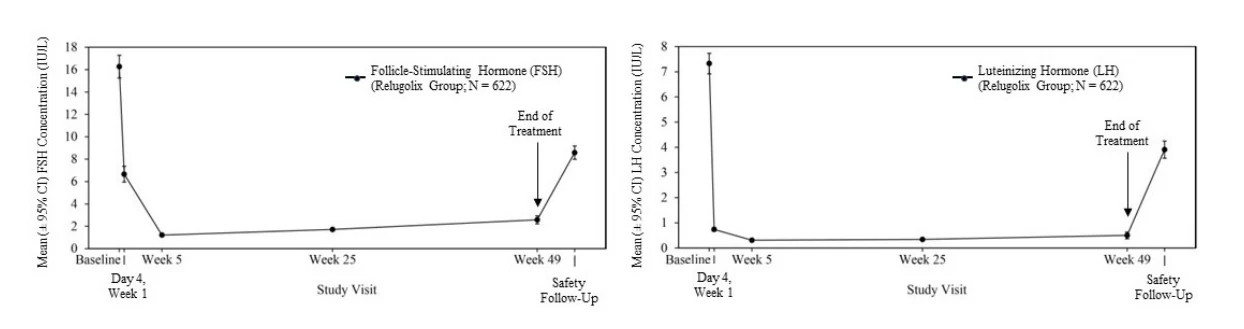
Relugolix is a nonpeptide GnRH receptor antagonist that competitively binds to pituitary GnRH receptors, thereby, reducing the release of luteinizing hormone (LH) and follicle-stimulating hormone (FSH) into the systemic circulation, and consequently reduces the production of testosterone in the testes. In humans, FSH and LH concentrations rapidly decline after oral administration and testosterone concentrations are suppressed to below physiologic concentrations.
10.2 Pharmacodynamics
Relugolix reduced LH, FSH (Figure 1), and testosterone concentrations after oral administration of a loading dose of 360 mg and a 120 mg dose once daily. Of 622 patients in the relugolix group, 56% had testosterone concentrations at castration levels (< 50 ng/dL) by the first sampling time point at day 4, and 97% maintained castration levels of testosterone from day 29 through 48 weeks of treatment.
Figure 1 – Mean (± 95% CI) Follicle-Stimulating Hormone and Luteinizing Hormone Concentrations over Time in HERO
Cardiac Electrophysiology
In a randomised, double-blind, placebo- and positive-controlled, parallel group thorough QTc study in healthy subjects (N=70 per treatment arm, 51% male/49% female) receiving single doses of relugolix 60 mg or 360 mg (0.2X and 1X multiples of the loading dose, respectively), no pharmacodynamic effect was observed on the QTc interval. The potential effects of multiple dose relugolix treatment were not assessed in this study (see 7 WARNINGS AND PRECAUTIONS, Cardiovascular & Monitoring and Laboratory Tests; 9 DRUG INTERACTIONS).
10.3 Pharmacokinetics
The pharmacokinetic parameters of relugolix after administration of ORGOVYX are summarized in Table 5.
Table 5 - Summary of Pharmacokinetic Parameters of Relugolix After Administration of ORGOVYX
Cmax (ng/mL), mean (±SD) | AUC0-24hr (ng*h/mL), mean (±SD) | Tmax (hr), median (range) | Vss (L) | t1/2 (hr) | CL (L/hr) | ||||
| Single 360 mg loading dose | 215 (± 184) | 985 (± 742) | 2.25 (0.5 – 5.0) | 3867 | 60.8 | 29.4 | |||
| Multiple 120 mg daily dose | 70 (± 65) | 407 (± 168) | |||||||
Abbreviation: AUC = area under the concentration-time curve; AUC0-24hr = AUC during a 24-hour dosing interval (after once-daily multiple dosing); CL = total clearance; Cmax = maximum observed concentration; t1/2 = elimination half-life; Tmax = time to maximum observed concentration; Vss = volume of distribution at steady state.
After administration of single doses ranging from 60 mg to 360 mg (0.17 to 1 times the recommended loading dose), the AUC0-inf and the Cmax of relugolix increases approximately proportionally with dose. After administration of multiple 20 mg to 180 mg doses of relugolix once daily (0.17 to 1.5 times the recommended once daily dose), the AUC0-24hr of relugolix increases approximately proportionally with dose, and the Cmax increases greater than proportionally to dose. The dose proportionality profile of relugolix is consistent with the dose-dependent saturation of intestinal P-gp and the corresponding decreasing contribution of intestinal P-gp efflux to the oral bioavailability of relugolix as the dose is increased. Upon saturation of intestinal P-gp, a greater proportion of the absorption of relugolix is governed by passive diffusion, and the exposure to relugolix increases in proportion to dose.
Absorption
Relugolix is a substrate for intestinal P-gp. The mean (CV%) absolute bioavailability of relugolix is approximately 12% (62%). The median (range) Tmax of relugolix is 2.25 hours (0.5 to 5.0 hours).
No clinically meaningful differences in the pharmacokinetics of relugolix were observed following consumption of a high-calorie, high-fat meal (approximately 800 to 1000 calories with 500, 220, and 124 from fat, carbohydrate, and protein, respectively).
Distribution
Relugolix is 68% to 71% bound to plasma proteins, primarily to albumin and to a lesser extent to α1-acid glycoprotein. The mean blood-to-plasma ratio is 0.78. Based on the apparent volume of distribution (Vz), relugolix distributes widely to tissues. The estimated volume of distribution at steady state (Vss) is 3900 L.
Metabolism
Relugolix is metabolized primarily by CYP3A and to a lesser extent by CYP2C8 in vitro.
Elimination
The mean effective half-life of relugolix is 25 hours and the mean (CV%) terminal elimination half-life is 60.8 (11%) hours. The mean (CV%) total clearance of relugolix is 29.4 (15%) L/h and the renal clearance is 8 L/h.
After oral administration of a single 80-mg radiolabeled dose of relugolix, approximately 81% of the radioactivity was recovered in feces (4.2% as unchanged) and 4.1% in urine (2.2% as unchanged).
Special Populations and Conditions
- Ethnic Origin: No clinically meaningful effects of race or ethnicity on relugolix exposure were identified in cross-study analysis and PopPK analysis. (Asian [19%], White [71%], Black/African American [6%]).
- Geriatrics: Of the 622 patients who received ORGOVYX in the HERO study, 81% were 65 years of age or older, while 35% were 75 years of age or older. No overall differences in safety or effectiveness were observed between these subjects and younger subjects. There was no clinically relevant impact of age on the pharmacokinetics of relugolix or testosterone response based on population pharmacokinetic and pharmacokinetic/pharmacodynamic analyses in men 45 to 91 years of age.
Hepatic Insufficiency: After administration of a single 40-mg dose of relugolix to patients with mild hepatic impairment (Child-Pugh A), the AUC0-∞ and Cmax of relugolix was decreased by 31% and 24%, respectively, compared with healthy control subjects with normal hepatic function. After administration of a single 40-mg dose of relugolix to patients with moderate hepatic impairment (Child-Pugh B), the AUC0-∞ and Cmax of relugolix was decreased by 5% and increased by 17%, respectively, compared with healthy control subjects with normal hepatic function. The mean half-life of relugolix in patients with mild or moderate hepatic impairment and healthy control subjects was comparable. None of the differences in pharmacokinetics of relugolix in mild or moderate hepatic impairment are considered to be clinically meaningful.
No dose adjustment for ORGOVYX in patients with mild or moderate hepatic impairment is required. The effects of severe hepatic impairment (Child-Pugh C) on the pharmacokinetics of relugolix have not been evaluated.
- Obesity: No clinically significant differences in the pharmacokinetics of relugolix were observed based on body weight (41 to 193 kg).
- Pediatrics: Safety and effectiveness of ORGOVYX in patients less than 18 years of age has not been established, therefore, Health Canada has not authorized an indication for pediatric use.
Renal Insufficiency: After administration of a single 40-mg dose of relugolix to patients with severe renal impairment, the exposure AUC0-∞ and Cmax of relugolix were increased by 1.5- and 1.1-fold, respectively, compared with healthy control subjects with normal renal function. After administration of a single 40-mg dose of relugolix to patients with moderate renal impairment, the exposure AUC0-∞ and Cmax of relugolix both were increased by 1.5-fold compared with healthy control subjects with normal renal function. None of the increases in patients with mild, moderate or severe renal impairment are considered to be clinically meaningful.
No dose adjustments with ORGOVYX in patients with mild, moderate or severe renal impairment are required.
The effect of end stage renal disease with or without hemodialysis on the pharmacokinetics of relugolix has not been evaluated. The amount of relugolix removed by hemodialysis is unknown.
11 STORAGE, STABILITY AND DISPOSAL
Store between 15°C to 30°C.
Dispense to patients in original container only.
For bottles, keep container tightly closed after first opening.
Keep out of reach of children.
12 SPECIAL HANDLING INSTRUCTIONS
ORGOVYX tablets no longer required should not be disposed via wastewater or household waste. The tablets should be returned to the pharmacy or disposed of in another safe way according to local requirements. These measures will help protect the environment.
PART II: SCIENTIFIC INFORMATION
13 PHARMACEUTICAL INFORMATION
Proper/Common name: Relugolix
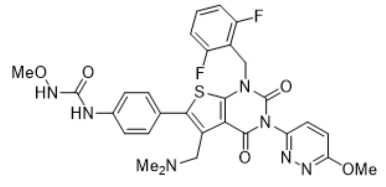
Chemical name: N-(4-{1-[(2,6-difluorophenyl)methyl]-5-[(dimethylamino)methyl]-3-(6-methoxypyridazin-3-yl)-2,4-dioxo-1,2,3,4-tetrahydrothieno[2,3-d]pyrimidin-6-yl}phenyl)-N’-methoxyurea
Molecular formula and molecular mass: C29H27F2N7O5S and a molecular weight of 623.63 daltons
Structural formula:
Physicochemical properties: Relugolix is a white to off-white to slightly yellow solid. It is slightly hygroscopic and requires no special protection from humidity during handling, shipping, or storage. The melting point could not be determined, because decomposition of relugolix occurred prior to melting. The solubility of relugolix in aqueous buffer solutions of various pH values at 37°C and in water/non-aqueous solvents of various pH values at 25°C was investigated. The solubilities in physiological pH ranges are 1.10 mg/mL in pH 1.2, 9.62 mg/mL in pH 4.5 and 0.062 mg/mL in pH 6.8. The pKa is 8.63.
14 CLINICAL TRIALS
14.1 Trial Design and Study Demographics
The safety and efficacy of ORGOVYX was evaluated in HERO, a randomized, open-label study in adult men with androgen-sensitive advanced prostate cancer requiring at least 1 year of androgen deprivation therapy. Eligible patients had either evidence of biochemical (PSA) or clinical relapse following local primary intervention or had newly diagnosed androgen-sensitive metastatic disease or had advanced localized disease unlikely to be cured by primary intervention with either surgery or radiation.
Eligible patients had to have an Eastern Cooperative Oncology Group (ECOG) performance status of 0 or 1. Patients with disease progression during the treatment period were encouraged to remain on study and if indicated, may have received radiotherapy as prescribed by the investigator. If patients had PSA progression, they were allowed to receive enzalutamide or docetaxel during the study.
The primary efficacy outcome measure was medical castration rate, defined as achieving and maintaining serum testosterone suppression to castrate levels (< 50 ng/dL) by day 29 through 48 weeks of treatment (Table 6). Other key secondary endpoints included castration rates on day 4 and 15, castration rates with testosterone < 20 ng/dL at day 15, and PSA response rate at day 15, and FSH level at day 176 (Week 25 Day 1) (Table 7).
A total of 930 patients were randomized and received ORGOVYX or leuprolide in a 2:1 ratio for 48 weeks:
- a) ORGOVYX at a loading dose of 360 mg on the first day followed by daily doses of 120 mg orally.
- b) Leuprolide acetate 22.5 mg injection (or 11.25 mg in Japan and Taiwan) subcutaneously every 3 months. Leuprolide acetate 11.25 mg is a dosage regimen that is not recommended for this indication in Canada.
The population (N = 930) across both treatment groups had a median age of 71 years (range 47 to 97 years). The ethnic/racial distribution was 68% White, 21% Asian, 5% Black, and 5% other. Disease stage was distributed as follows: 32% metastatic (M1), 31% locally advanced (T3/4 NX M0 or any T N1 M0), 28% localized (T1 or T2 N0 M0), and 10% not classifiable.
14.2 Study Results
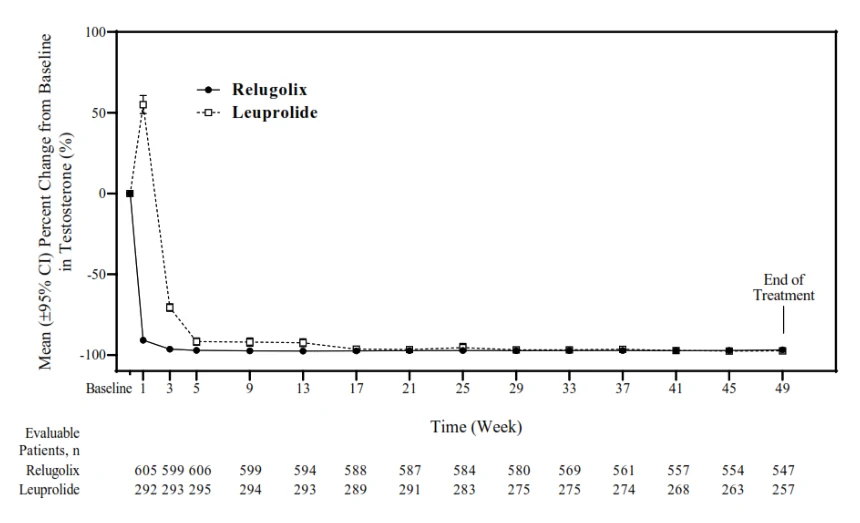
The primary efficacy results of ORGOVYX to leuprolide on achieving and maintaining serum testosterone at castrate levels (< 50 ng/dL) are shown in Table 6. The baseline testosterone levels and the time-course of testosterone suppression by ORGOVYX and leuprolide acetate during the 48 weeks treatment period are shown in Figure 2.
Table 6 – Medical Castration Rates (Testosterone Concentrations < 50 ng/dL) from Day 29 through Week 48 in HERO
ORGOVYX 360/120 mg (N = 622)b | Leuprolide Acetate 22.5 or 11.25 mga (N = 308)b | |
|---|---|---|
| Castration Rate (95% CI)c | 96.7% (94.9%, 97.9%) | 88.8% (84.6%, 91.8%) |
a22.5 mg dosed in Europe and North America; 11.25 mg dosed in Asia. The castration rate of the subgroup of patients receiving 22.5 mg leuprolide (n = 264) was 88.0% (95% Confidence Interval [CI]: 83.4%, 91.4%).
bTwo patients in each arm did not receive the study treatment and were not included.
cKaplan-Meier estimates within group.
Figure 2 – Mean (95% CI) Percent Change from Baseline in Testosterone Concentrations from Baseline to Week 49 by Treatment Group in HERO
A summary of key secondary endpoints is shown in Table 7.
Table 7 – Summary of Key Secondary Endpoints
| Secondary Endpoint | ORGOVYX (N = 622) | Leuprolide (N = 308) |
|---|---|---|
| Cumulative probability of testosterone suppression to < 50 ng/dL prior to dosing on day 4 | 56.0% | 0.0% |
| Cumulative probability of testosterone suppression to < 50 ng/dL prior to dosing on day 15 | 98.7% | 12.1% |
| Cumulative probability of testosterone suppression to < 50 ng/dL prior to dosing on day 29 | 79.4% | 19.8% |
| Cumulative probability of testosterone suppression to < 20 ng/dL prior to dosing on day 15 | 78.4% | 1.0% |
| Mean FSH (IU/L) at day 176 | 1.7 | 6.0 |
Abbreviation: FSH = follicle-stimulating hormone; PSA = prostate-specific antigen.
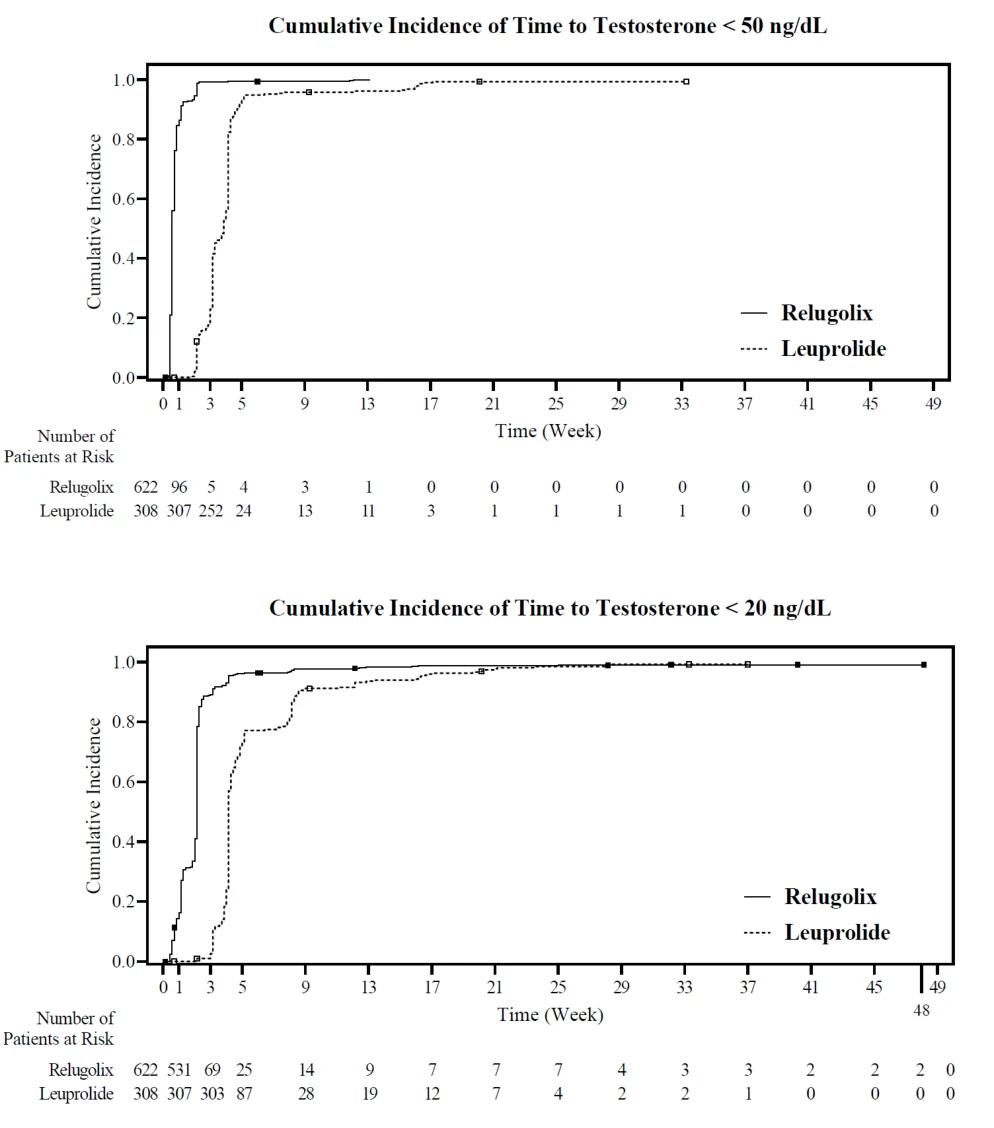
The percentage of patients who attained the medical castration levels of testosterone < 50 ng/dL and < 20 ng/dL within the first 29 days of treatment are summarized in Table 8 and the cumulative incidences of time to testosterone < 50 ng/dL and < 20 ng/dL are shown in Figure 3.
Table 8 – Percentage of Patients Attaining Testosterone Decreases within the First 29 Days in HEROa
| Testosterone < 50 ng/dL | Testosterone < 20 ng/dL | |||||||
|---|---|---|---|---|---|---|---|---|
ORGOVYX (N = 622) | Leuprolide Acetate (N = 308) | ORGOVYX (N = 622) | Leuprolide Acetate (N = 308) | |||||
| Day 4 | 56% | 0% | 7% | 0% | ||||
| Day 8 | 91% | 0% | 27% | 0% | ||||
| Day 15 | 99% | 12% | 78% | 1% | ||||
| Day 29 | 99% | 82% | 95% | 57% | ||||
a Kaplan-Meier estimates % within group
Figure 3 – Cumulative Incidence of Time to Testosterone < 50 ng/dL and < 20 ng/dL in HERO
By Week 1 day 4 (day 4) of treatment with ORGOVYX mean testosterone concentrations were 38.27 ng/dL for ORGGOVY and 625.04 ng/dL for leuprolide, and the proportion of patients with testosterone levels below the 50 ng/dL threshold was 56.0% for ORGOVYX and 0.0% for leuprolide (Table 7).
In the clinical trial, PSA levels were monitored and were lowered on average by 65% two weeks after administration of ORGOVYX, 83% after 4 weeks, 92% after 3 months and remained suppressed throughout the 48 weeks of treatment. These PSA results should be interpreted with caution because of the heterogeneity of the patient population studied. No evidence has shown that the rapidity of PSA decline is related to a clinical benefit.
Testosterone recovery was assessed in a subset of 184 patients who completed 48 weeks of treatment and were not offered alternative androgen deprivation therapy upon completion of study treatment for at least 90 days after discontinuation of ORGOVYX or leuprolide. The demographics of these patients were similar to the overall population of patients in the HERO study. The cumulative incidence rate of testosterone recovery to > 280 ng/dL at 90 days after discontinuation of treatment was 53.93% in the ORGOVYX group compared with 3.23% in the leuprolide group. The comparison of the cumulative probability of testosterone recovery in the ORGOVYX arm versus the leuprolide arm was considered descriptive.
There were 8 patients who received concomitant use of docetaxel and 17 patients who received concomitant use of enzalutamide with ORGOVYX, with mean durations of 53.3 and 98.6 days, respectively.
15 MICROBIOLOGY
No microbiological information is required for this drug product.
16 NON-CLINICAL TOXICOLOGY
General Toxicology: Toxicology studies were performed with relugolix and include single-dose toxicity studies in rats and monkeys as well as repeat-dose toxicity studies in mice (up to 13 weeks duration), rats (up to 26 weeks duration), and monkeys (up to 39 weeks duration). Non-clinical data reveal no special hazard for humans based on conventional studies of safety pharmacology, repeated dose toxicity, genotoxicity, and carcinogenic potential.
Single Dose Toxicity
Relugolix was administered at doses of 200, 600, or 2000 mg/kg to mice, rats, and monkeys. The maximum tolerated dose (MTD) was 2000 mg/kg in all species.
Repeat Dose Toxicity
Mice
In a 13-week oral toxicity study in mice (10/sex/group) administered 0, 200, 600, or 2000 mg/kg/day doses of relugolix, the no-observed-adverse-effect-level (NOAEL) was 600 mg/kg/day (approximately 200-fold the human exposure (AUC) at the 120 mg daily dose) in both sexes. The NOAEL in male mice was based on decreased red blood cells, hemogloblin, and hematocrit as well as decreased kidney weights observed at 2000 mg/kg/day. Inflammatory cell infiltration and hyperplasia of mucosal epithelium in the female cecum and in the colon of male and female mice were observed at 2000 mg/kg/day.
Rats
In a 26-week oral gavage toxicity study, rats (15/sex/group) were administered relugolix at doses of 0, 10, 30, 100, or 300 mg/kg/day. Relugolix was generally well-tolerated. Phospholipidosis (PLD) associated histological observations were noted at doses > 30 mg/kg/day in males based on foamy cell infiltration in the testicular interstitium at doses ≥ 100 mg/kg/day but was not associated with organ toxicity, adverse clinical signs, or mortality. The NOAEL was 300 mg/kg/day in both sexes with a mean AUC value for relugolix of 30,514 ng.h/mL which is approximately 55-times the exposure in human males at the MRHD of 120 mg daily, based on AUC.
Monkeys
In a 39-week oral toxicity study, male and female cynomolgus monkeys (4/sex/group) were administered relugolix at doses of 0, 1.5, 5, 15, or 50 mg/kg/day followed by a 13-week recovery period levels to assess the reversibility of any effects. Relugolix was generally well-tolerated. Observations attributable to the pharmacological effects of relugolix were noted, including decreased frequency of menses (at 50 mg/kg/day) and decreased ovary weights (at doses ≥ 5 mg/kg/day). Findings associated with liver toxicity (increased ALT and AST levels and histological changes) were observed at 50 mg/kg/day in both sexes, which demonstrated evidence of reversibility following the 13-week recovery period. Findings suggestive of generalized PLD were observed in both sexes at relugolix doses > 1.5 mg/kg/day but was not associated with organ toxicity, adverse clinical signs, or mortality, and demonstrated evidence of reversibility after cessation of treatment. The NOAEL was 15 mg/kg/day in both sexes based on liver toxicity with a mean AUC value for relugolix of 5198 ng.h/mL which is approximately 9.3-times the exposure in human males at the MRHD of 120 mg daily, based on AUC.
Carcinogenicity: Two-year carcinogenicity studies were conducted in mice at oral relugolix doses up to 100 mg/kg/day and in rats at doses up to 600 mg/kg/day. Relugolix was not carcinogenic in mice or rats at exposures up to approximately 51 or 151 times, respectively, the exposure in human males at the MRHD of 120 mg daily, based on AUC.
Genotoxicity: Relugolix was not mutagenic in the in vitro bacterial reverse mutation (Ames) assay or clastogenic in the in vitro chromosomal aberration assay in Chinese hamster lung cells or the in vivo rat bone marrow micronucleus assay.
Reproductive and Developmental Toxicology: In human GnRH-receptor knock-in male mice, oral administration of relugolix decreased prostate and seminal vesicle weights at doses ≥ 3 mg/kg twice daily for 28 days. The effects of relugolix were reversible, except for testis weight, which did not fully recover within 28 days after drug withdrawal. In a 39-week repeat-dose toxicity study in monkeys, there were no significant effects on male reproductive organs at oral relugolix doses up to 50 mg/kg/day (approximately 36 times the human exposure at the recommended dose of 120 mg daily based on AUC).
In pregnant rabbits orally dosed with relugolix during the period of organogenesis, spontaneous abortion and total litter loss were observed at exposure levels (AUC) less than that achieved at the recommended human dose of 120 mg/day. No effects on embryofetal development were observed in rats; however, relugolix does not interact significantly with GnRH receptors in that species.
Lactation: In lactating rats administered a single oral dose of 30 mg/kg radiolabeled relugolix on postpartum day 14, relugolix and/or its metabolites were present in milk at concentrations up to 10-fold higher than in plasma at 2 hours post-dose decreasing to low levels by 48 hours post-dose. The majority of relugolix-derived radioactivity in milk consisted of unchanged relugolix.