


Product Monograph - Pemetrexed Disodium for Injection (Auro Pharma)
SUMMARY PRODUCT INFORMATION
| Route of Administration | Dosage Form / Strength | Nonmedicinal Ingredients |
| Intravenous | Powder for Solution / 100 mg, 500 mg or 1000 mg pemetrexed per vial | Mannitol, Hydrochloric acid and/or Sodium hydroxide. |
INDICATIONS AND CLINICAL USE
Malignant Pleural Mesothelioma
Pemetrexed Disodium for Injection in combination with cisplatin is indicated for the first-line treatment of patients with malignant pleural mesothelioma whose disease is unresectable or who are otherwise not candidates for curative surgery.
First Line – Nonsquamous Non-Small Cell Lung Cancer – Combination with Cisplatin Pemetrexed Disodium for Injection in combination with cisplatin therapy is indicated for the initial treatment of good performance status patients with locally advanced or metastatic nonsquamous non-small cell lung cancer. See Part II: CLINICAL TRIALS.
Maintenance Therapy – Nonsquamous Non-Small Cell Lung Cancer - Monotherapy Pemetrexed Disodium for Injection monotherapy is indicated for the maintenance treatment of locally advanced or metastatic nonsquamous non-small cell lung cancer, in good performance status patients without disease progression immediately following four cycles of first-line platinum doublet chemotherapy. See Part II: CLINICAL TRIALS.
Second Line – Nonsquamous Non-Small Cell Lung Cancer - Monotherapy
Pemetrexed Disodium for Injection monotherapy is indicated as a treatment option for patients with locally advanced or metastatic nonsquamous non-small cell lung cancer after prior chemotherapy. Approval is based on similarity of the response rate, median survival rate and 1-year survival rate, for the overall study population, between pemetrexed disodium and docetaxel. See Part II: CLINICAL TRIALS.
Geriatrics (> 65 years of age):
The safety and effectiveness of pemetrexed disodium in geriatric patients has been established (see ACTION AND CLINICAL PHARMACOLOGY and Part II: CLINICAL TRIALS Sections).
Pediatrics (< 18 years of age):
The safety and effectiveness of Pemetrexed Disodium for Injection in pediatric patients have not been established.
CONTRAINDICATIONS
- Hypersensitivity to pemetrexed or to any other ingredient used in the formulation. For a complete listing, see DOSAGE FORMS, COMPOSITION AND PACKAGING Section.
- Concomitant yellow fever vaccine (see DRUG INTERACTIONS).
WARNINGS AND PRECAUTIONS
Serious Warnings and Precautions
|
Carcinogenesis and Mutagenesis
No carcinogenicity studies have been conducted with pemetrexed. Pemetrexed was clastogenic in the in vivo micronucleus assay in mouse bone marrow but was not mutagenic in multiple in vitro tests (Ames assay, CHO cell assay). Pemetrexed administered at i.v. doses of 0.1 mg/kg/day or greater to male mice (about 1/1666 the recommended human dose on a mg/m2 basis) resulted in reduced fertility, hypospermia, and testicular atrophy. Because pemetrexed may cause irreversible infertility, men are advised to seek counselling on sperm storage before starting treatment. See Part II: TOXICOLOGY Section.
Cardiovascular
No thorough clinical QT/QTc study was performed to rule out the effect of pemetrexed disodium on QT prolongation. Routine ECG assessments during clinical trials did not identify any concerns regarding QT prolongation. Serious cardiovascular and cerebrovascular events, including myocardial infarction, angina pectoris, cerebrovascular accident and transient ischemic attack have been uncommonly reported in clinical trials with pemetrexed disodium, usually when given in combination with another cytotoxic agent. Most of the patients in whom these events have been observed had preexisting cardiovascular risk factors.
Gastrointestinal
Stomatitis, nausea, vomiting, and diarrhea are common in patients receiving pemetrexed disodium with or without cisplatin. In rare cases gastrointestinal toxicity may lead to severe dehydration. Gastrointestinal toxicity should be vigorously managed (see ADVERSE REACTIONS – Clinical Trial Adverse Drug Reactions and DOSAGE AND ADMINISTRATION – Nonhematologic Toxicities).
Hepatic/Biliary
Serious hepatobiliary toxicity and rare cases of fatal hepatic failure, have been reported with pemetrexed disodium alone or in association with other chemotherapeutic agents in clinical trials. Underlying risk factors for the development of hepatic toxicity including hepatic metastases and/or underlying hepatic disease have been present in some cases. A causal relationship between pemetrexed disodium and these events has not been established.
Hematologic
Pemetrexed Disodium for Injection can suppress bone marrow function, as manifested by neutropenia, thrombocytopenia, and anemia (or pancytopenia) (see ADVERSE REACTIONS Section); myelosuppression is usually the dose-limiting toxicity (see Laboratory Monitoring and Dose Reduction Recommendations under DOSAGE AND ADMINISTRATION Section). In clinical trials, sepsis which in some cases was fatal occurred in approximately 1% of patients. Dose reductions for subsequent cycles are based on nadir Absolute Neutrophil Count (ANC), platelet count, and maximum nonhematologic toxicity seen in the previous cycle (see Dose Reduction Recommendations under DOSAGE AND ADMINISTRATION Section).
In the Phase 3 mesothelioma clinical trial, less overall toxicity and reductions in Grade 3/4 hematologic and nonhematologic toxicities such as neutropenia, febrile neutropenia and infection with Grade 3/4 neutropenia were reported when pre-treatment with folic acid and vitamin B12 was administered. Prior to treatment with Pemetrexed Disodium for Injection patients must receive supplementation with folic acid and intramuscular vitamin B12 as a prophylactic measure to reduce treatment-related toxicity (see DOSAGE AND ADMINISTRATION Section). The intramuscular vitamin B12 should not be substituted with an oral formulation.
Immune
Cases of hypersensitivity, including anaphylaxis, have been reported in patients treated with pemetrexed disodium.
Renal
Serious renal events, including acute renal failure, have been reported with pemetrexed disodium alone or in association with other chemotherapeutic agents. Most, but not all, of the patients in whom these serious renal events occurred had underlying risk factors for the development of renal events including dehydration or pre-existing hypertension or diabetes. A causal relationship between pemetrexed disodium and these events has not been established.
Respiratory
Interstitial pneumonitis with respiratory insufficiency, sometimes fatal, has been reported in clinical trials. In patients with progressive dyspnea and cough, Pemetrexed Disodium for Injection should be interrupted and prompt investigation initiated.
Cases of radiation pneumonitis have been reported in patients with radiation either prior to, during, or subsequent to their pemetrexed disodium therapy.
Skin
Rare cases of bullous epidermolysis have been reported including Stevens-Johnson syndrome and Toxic epidermal necrolysis which in some cases were fatal.
Treatment-related adverse events of pemetrexed disodium seen in clinical trials have been reversible. Skin rash has been reported in patients not pretreated with a corticosteroid in clinical trials. Pretreatment with dexamethasone (or equivalent) reduces the incidence and severity of cutaneous reaction (see DOSAGE AND ADMINISTRATION Section).
Radiation recall dermatitis has been reported in patients on pemetrexed disodium who have previously received radiotherapy. Severity of symptoms can vary from mild dermatitis to necrosis (see REFERENCES Barlesi et al, Hureaux et al).
Third Space Fluid
The effect of third space fluid, such as pleural effusion or ascites, on pemetrexed disodium is not fully defined. A phase 2 study of pemetrexed disodium in 31 solid tumor patients with stable third space fluid suggested no difference in pemetrexed disodium dose-normalized plasma concentrations or clearance compared to patients without third space fluid collections. Modest levels of pemetrexed disodium were detectable in the third space fluid after multiple cycles. Drainage of third space fluid collection prior to Pemetrexed Disodium for Injection treatment should be considered, but may not be necessary.
Special Populations
Pregnant Women:
Pemetrexed Disodium for Injection may cause fetal harm when administered to a pregnant woman. See Part II: TOXICOLOGY Section. Pemetrexed disodium clinical studies excluded pregnant women. Women of child bearing potential should have a negative serum pregnancy test prior to treatment with Pemetrexed Disodium for Injection and should be advised to avoid becoming pregnant while on treatment with Pemetrexed Disodium for Injection. Women should be advised to use effective contraceptive measures to prevent pregnancy during treatment with Pemetrexed Disodium for Injection. If Pemetrexed Disodium for Injection is used during pregnancy, or if the patient becomes pregnant while taking Pemetrexed Disodium for Injection, the patient should be informed of the potential hazard to the fetus.
Nursing Women:
It is not known whether pemetrexed or its metabolites are excreted in human milk. Because many drugs are excreted in human milk, and because of the potential for serious adverse reactions in nursing infants from pemetrexed, it is recommended that nursing be discontinued if the mother is treated with Pemetrexed Disodium for Injection.
Men:
Pemetrexed administered at i.v.doses of 0.1 mg/kg/day or greater to male mice (about 1/1666 the recommended human dose on a mg/m2 basis) resulted in reduced fertility, hypospermia, and testicular atrophy. Because pemetrexed may cause irreversible infertility, men are advised to seek counselling on sperm storage before starting treatment. See Part II: TOXICOLOGY Section.
Pemetrexed is clastogenic in the in vivo micronucleus assay in mouse bone marrow and can have genetically damaging effects. Men are advised to use effective contraceptive measures and thus not to father a child during treatment with Pemetrexed Disodium for Injection and up to 6 months thereafter.
Pediatrics (< 18 years of age):
The safety and effectiveness of Pemetrexed Disodium for Injection in pediatric patients have not been established.
Geriatrics (> 65 years of age):
Dose adjustments based on age other than those recommended for all patients have not been necessary. However, because renal function declines with age, and decreased renal function will result in reduced clearance of Pemetrexed Disodium for Injection, older patients should be followed closely for toxicity.
Patients with Hepatic Impairment:
Pemetrexed is not extensively metabolized by the liver. However, patients with hepatic impairment such as bilirubin > 1.5 times the upper limit of normal (ULN) or aminotransferase > 3 times the ULN (hepatic metastases absent) or > 5 time the ULN (hepatic metastases present) have not been specifically studied.
For dose adjustments based on hepatic impairment, refer to Laboratory Monitoring and Dose Reduction Recommendations under DOSAGE AND ADMINISTRATION Section.
Patients with Renal Impairment:
Pemetrexed disodium is known to be primarily excreted by the kidney. There is limited clinical experience in patients with calculated creatinine clearance below 45 mL/min. Therefore, patients whose creatinine clearance is < 45 mL/min should not receive Pemetrexed Disodium for Injection. Decreased renal function will result in reduced clearance of pemetrexed disodium compared with patients with normal renal function.
For dose adjustments based on renal impairment, refer to Laboratory Monitoring and Dose Reduction Recommendations under DOSAGE AND ADMINISTRATION Section.
Use of Non-Steroidal Anti-Inflammatory Drugs in Mild to Moderate Renal Insufficiency Caution should be used when administering ibuprofen concurrently with Pemetrexed Disodium for Injection to patients with mild to moderate renal insufficiency (creatinine clearance from 45 to 79 mL/min). Other NSAIDS should also be used with caution (see DRUG INTERACTIONS).
Monitoring and Laboratory Tests
All patients receiving Pemetrexed Disodium for Injection should have frequent complete blood counts, including differential and platelets as well as periodic blood chemistry tests performed, including creatinine. Patients should not begin a new treatment cycle unless the absolute neutrophil count (ANC) is ≥ 1500 cells/mm3, the platelet count is ≥ 100,000 cells/mm3, and the creatinine clearance is ≥ 45 mL/min (see DOSAGE AND ADMINISTRATION).
ADVERSE REACTIONS
Adverse Drug Reaction Overview
In clinical trials, the most common adverse reactions (incidence ≥ 10%) during therapy with pemetrexed disodium as a single agent were fatigue, nausea, anorexia, anemia, vomiting, stomatitis/ pharyngitis, rash/desquamation, diarrhea, leukopenia, and neutropenia. Additional common adverse reactions (incidence ≥ 10%) during therapy with pemetrexed disodium when used in combination with cisplatin included thrombocytopenia, decreased creatinine clearance, constipation, alopecia, creatinine elevation, and sensory neuropathy. In clinical trials, sepsis which in some cases was fatal occurred in approximately 1% of patients.
In clinical trials, cases of gastrointestinal haemorrhage, ulceration, perforation and necrosis, sometimes fatal, have been reported uncommonly in patients treated with pemetrexed disodium. Esophagitis/radiation esophagitis has also been uncommonly reported in clinical trials. Supplementation with folic acid and vitamin B12 during treatment with pemetrexed disodium reduces the frequency and severity of hematologic and nonhematologic toxicities.
Clinical Trial Adverse Drug Reactions
Malignant Pleural Mesothelioma
Combination Use with Cisplatin
The following tables list adverse events, considered to be related to pemetrexed, reported in clinical trial patients with MPM treated with 500 mg/m2 of pemetrexed disodium and 75 mg/m2 of cisplatin.
Overall, serious adverse events (SAEs) occurred significantly more frequently in patients on the pemetrexed plus cisplatin arm regardless of drug causality. This was expected because this regimen adds one drug (pemetrexed) to the control regimen (cisplatin). Among the fully supplemented (FS) subgroup, no single SAE, regardless of drug causality, occurred in > 5% of patients in either arm. Most SAEs were hematologic or gastrointestinal and were expected effects of cytotoxic chemotherapy.
Table 1 displays the incidence (percentage of patients) of CTC Grade 3/4 toxicities in patients who received vitamin supplementation with daily folic acid and vitamin B12 from the time of enrolment in the study (fully supplemented) versus patients who never received vitamin supplementation (never supplemented) during the study in the pemetrexed disodium plus cisplatin arm. Patients who received supplementation from the start of therapy experienced markedly less laboratory and nonlaboratory toxicity compared with patients who never received supplementation.
Table 1: Selected Grade 3/4 Adverse Events Comparing Fully Supplemented versus Never Supplemented Patients in the Pemetrexed disodium plus Cisplatin Arm (% incidence)
| Adverse Event Regardless of Causality*(%) | Fully Supplemented Patients (N=168) | Never Supplemented Patients (N=32) |
|---|---|---|
| Neutropenia | 24 | 38 |
| Thrombocytopenia | 5 | 9 |
| Nausea | 12 | 31 |
| Vomiting | 11 | 34 |
| Anorexia | 2 | 9 |
| Diarrhea without colostomy | 4 | 9 |
| Adverse Event Regardless of Causality*(%) | Fully Supplemented Patients (N=168) | Never Supplemented Patients (N=32) |
|---|---|---|
| Dehydration | 4 | 9 |
| Fever | 0 | 6 |
| Febrile neutropenia | 1 | 9 |
| Infection with Grade 3/4 neutropenia | 1 | 6 |
| Fatigue | 17 | 25 |
* Refer to National Cancer Institute (NCI) Common Toxicity Criteria (CTC) criteria for laboratory values for each Grade of toxicity (Version 2.0).
Table 2 provides the frequency and severity of adverse events that have been reported in
> 5% of 168 patients with MPM who were randomly assigned to receive cisplatin and pemetrexed and 163 patients with mesothelioma randomly assigned to receive single agent cisplatin. In both treatment arms, these chemonaive patients were fully supplemented with folic acid and vitamin B12.
Table 2: Adverse Events* in Fully Supplemented Patients Receiving Pemetrexed disodium plus Cisplatin in MPM CTC Grades (% incidence)
| All Reported Adverse Events Regardless of Causality | ||||||||||||||||
|---|---|---|---|---|---|---|---|---|---|---|---|---|---|---|---|---|
| Pemetrexed disodium /Cisplatin (N=168) | Cisplatin (N=163) | |||||||||||||||
| All Grades | Grade 3 | Grade 4 | All Grades | Grade 3 | Grade 4 | |||||||||||
| Laboratory | ||||||||||||||||
| Hematologic | ||||||||||||||||
| Neutropenia | 58 | 19 | 5 | 16 | 3 | 1 | ||||||||||
| Leukopenia | 55 | 14 | 2 | 20 | 1 | 0 | ||||||||||
| Anemia | 33 | 5 | 1 | 14 | 0 | 0 | ||||||||||
| Thrombocytopenia | 27 | 4 | 1 | 10 | 0 | 0 | ||||||||||
| Renal | ||||||||||||||||
| Creatinine elevation | 16 | 1 | 0 | 12 | 1 | 0 | ||||||||||
| Renal failure | 2 | 0 | 1 | 1 | 0 | 0 | ||||||||||
| Clinical | ||||||||||||||||
| Constitutional Symptoms | ||||||||||||||||
| Fatigue | 80 | 17 | 0 | 74 | 12 | 1 | ||||||||||
| Fever | 17 | 0 | 0 | 9 | 0 | 0 | ||||||||||
| Other constitutional symptoms | 11 | 2 | 1 | 8 | 1 | 1 | ||||||||||
| Cardiovascular General | ||||||||||||||||
| Thrombosis/embolism | 7 | 4 | 2 | 4 | 3 | 1 | ||||||||||
| Gastrointestinal | ||||||||||||||||
| Nausea | 84 | 11 | 1 | 79 | 6 | 0 | ||||||||||
| Vomiting | 58 | 10 | 1 | 52 | 4 | 1 | ||||||||||
| Constipation | 44 | 2 | 1 | 39 | 1 | 0 | ||||||||||
| Anorexia | 35 | 2 | 0 | 25 | 1 | 0 | ||||||||||
| Stomatitis/pharyngitis | 28 | 2 | 1 | 9 | 0 | 0 | ||||||||||
| Diarrhea without colostomy | 26 | 4 | 0 | 16 | 1 | 0 | ||||||||||
| Dehydration | 7 | 3 | 1 | 1 | 1 | 0 | ||||||||||
| Dysphagia/esophagitis/ | 6 | 1 | 0 | 6 | 0 | 0 | ||||||||||
| All Reported Adverse Events Regardless of Causality |
|---|
| Pemetrexed disodium /Cisplatin (N=168) | Cisplatin (N=163) |
|---|
| All Grades | Grade 3 | Grade 4 | All Grades | Grade 3 | Grade 4 | |
|---|---|---|---|---|---|---|
| odynophagia | ||||||
| Pulmonary | ||||||
| Dyspnea | 66 | 10 | 1 | 62 | 5 | 2 |
| Pain | ||||||
| Chest pain | 40 | 8 | 1 | 30 | 5 | 1 |
| Neurology | ||||||
| Neuropathy/sensory | 17 | 0 | 0 | 15 | 1 | 0 |
Mood alteration/depression | 14 | 1 | 0 | 9 | 1 | 0 |
| Infection/Febrile Neutropenia | ||||||
| Infection without neutropenia | 11 | 1 | 1 | 4 | 0 | 0 |
| Infection with Grade 3 or Grade 4 neutropenia | 6 | 1 | 0 | 4 | 0 | 0 |
| Infection/febrile neutropenia-other | 3 | 1 | 0 | 2 | 0 | 0 |
| Febrile neutropenia | 1 | 1 | 0 | 1 | 0 | 0 |
| Immune | ||||||
| Allergic reaction/ hypersensitivity | 2 | 0 | 0 | 1 | 0 | 0 |
| Dermatology/Skin | ||||||
| Rash/desquamation | 22 | 1 | 0 | 9 | 0 | 0 |
- * Refer to National Cancer Institute (NCI) Common Toxicity Criteria (CTC) (Version 2.0).
Drug related clinically relevant toxicity that was reported in ≥ 1% and ≤ 5% (common) of the patients that were randomly assigned to receive cisplatin and pemetrexed included: increased AST, ALT, and GGT, infection, febrile neutropenia, renal failure, chest pain, pyrexia and urticaria.
Drug related clinically relevant toxicity that was reported in < 1% (uncommon) of the patients that were randomly assigned to receive cisplatin and pemetrexed included: arrhythmia and motor neuropathy.
Non-Small Cell Lung Cancer (NSCLC)
Combination Use with Cisplatin
Table 3 provides the frequency and severity of adverse reactions that have been reported in
> 5% of 839 NSCLC patients who were randomized to study and received pemetrexed disodium plus cisplatin and 830 NSCLC patients who were randomized to study and received gemcitabine plus cisplatin. All patients received study therapy as initial treatment for locally advanced or metastatic NSCLC and patients in both treatment groups were fully supplemented with folic acid and vitamin B12.
Table 3: Adverse Reactions in Fully Supplemented Patients Receiving Pemetrexed disodium plus Cisplatin in NSCLCa
| Reactionb | Pemetrexed disodium /cisplatin (N=839) | Gemcitabine/cisplatin (N=830) | ||
| All Grades Toxicity (%) | Grade 3-4 Toxicity (%) | All Grades Toxicity (%) | Grade 3-4 Toxicity (%) | |
| All Adverse Reactions | 90 | 37 | 91 | 53 |
| Laboratory | ||||
| Hematologic | ||||
| Anemiac,d | 33 | 6 | 46 | 10 |
| Neutropeniac,d | 29 | 15 | 38 | 27 |
| Leukopeniac | 18 | 5 | 21 | 8 |
| Thrombocytopeniac,d | 10 | 4 | 27 | 13 |
| Renal | ||||
| Creatinine elevation d | 10 | 1 | 7 | 1 |
| Clinical | ||||
| Constitutional Symptoms | ||||
| Fatigue | 43 | 7 | 45 | 5 |
| Gastrointestinal | ||||
| Nauseac | 56 | 7 | 53 | 4 |
| Vomiting | 40 | 6 | 36 | 6 |
| Anorexiac | 27 | 2 | 24 | 1 |
| Constipation | 21 | 1 | 20 | 0 |
| Stomatitis/Pharyngitis | 14 | 1 | 12 | 0 |
| Diarrhea | 12 | 1 | 13 | 2 |
| Dyspesia/Heartburn | 5 | 0 | 6 | 0 |
| Neurology | ||||
| Neuropathy-sensoryc,d | 9 | 0 | 12 | 1 |
| Taste disturbance | 8 | 0e | 9 | 0e |
| Dermatology/Skin | ||||
| Alopeciad | 12 | 0e | 21 | 1e |
| Rash/Desquamation | 7 | 0 | 8 | 1 |
a For the purpose of this table a cut off of 5% was used for inclusion of all events where the reporter considered a possible relationship to pemetrexed disodium/cisplatin.
b Refer to NCI CTC Criteria version 2.0 for each Grade of toxicity.
c p< 0.05 for Grades 3/4 toxicity
d p< 0.05 for any grade toxicity
e According to NCI CTC Criteria version 2.0, this adverse event term should only be reported as Grade 1 or 2
Drug related clinically relevant toxicity that was reported in ≥ 1% and ≤ 5% (common) of the patients that were randomly assigned to receive cisplatin and pemetrexed include: AST increase, ALT increase, infection, febrile neutropenia, renal failure, pyrexia, dehydration, conjunctivitis, and creatinine clearance decrease.
The incidence of febrile neutropenia was 1.7% on the pemetrexed disodium/cisplatin arm compared to 4.1% on the gemcitabine/cisplatin arm. There were 4 patient deaths on the pemetrexed disodium/cisplatin arm compared to 1 patient death on the gemcitabine/cisplatin arm due to sepsis.
Drug related clinically relevant toxicity that was reported in < 1% (uncommon) of the patients that were randomly assigned to receive cisplatin and pemetrexed include: GGT increase, chest pain, arrhythmia, and motor neuropathy.
No clinically relevant differences in adverse reactions were seen in subpopulations based on gender, ethnicity, or histology. Patients aged ≥ 65 years generally experienced more toxicity (eg. neutropenia, febrile neutropenia, thrombocytopenia, nausea, renal failure) than patients aged < 65 years, regardless of treatment arm.
Maintenance Following Non-Pemetrexed disodium Containing, Platinum-Based Induction Therapy Table 4 provides the frequency and severity of adverse reactions that have been reported in > 5% of 441 patients with NSCLC who were randomized to receive pemetrexed disodium and 222 patients with NSCLC who were randomized to receive placebo. All patients without progressive disease received study therapy immediately following 4 cycles of platinum-based treatment for locally advanced or metastatic NSCLC. Patients in both study arms were fully supplemented with folic acid and vitamin B12.
Table 4: Adverse Reactions in Patients Randomized to Pemetrexed disodium versus Placebo in NSCLC Following Non-Pemetrexed disodium -containing, Platinum-Based Induction Therapy a
| Reactionb | Pemetrexed disodium (N=441) | Placebo (N=222) | ||||||||||||
| All Grades Toxicity (%) | Grade 3-4 Toxicity (%) | All Grades Toxicity (%) | Grade 3-4 Toxicity (%) | |||||||||||
| All Adverse Reactions | 66 | 16 | 37 | 4 | ||||||||||
| Laboratory | ||||||||||||||
| Hematologic | ||||||||||||||
| Anemia | 15 | 3 | 5 | 1 | ||||||||||
| Neutropenia | 6 | 3 | 0 | 0 | ||||||||||
| Leukopenia | 6 | 2 | 1 | 1 | ||||||||||
| Hepatic | ||||||||||||||
| Increased ALT | 10 | 0 | 4 | 0 | ||||||||||
| Increased AST | 8 | 0 | 4 | 0 | ||||||||||
| Clinical | ||||||||||||||
| Constitutional Symptoms | ||||||||||||||
| Fatigue | 25 | 5 | 10 | 1 | ||||||||||
| Gastrointestinal | ||||||||||||||
| Nausea | 19 | 1 | 5 | 1 | ||||||||||
| Anorexia | 19 | 2 | 5 | 0 | ||||||||||
| Vomiting | 9 | 0 | 1 | 0 | ||||||||||
| Mucositis/stomatitis | 7 | 1 | 2 | 0 | ||||||||||
| Diarrhea | 5 | 1 | 3 | 0 | ||||||||||
| Infection | 5 | 2 | 2 | 0 | ||||||||||
| Neurology | ||||||||||||||
| Neuropathy-sensory | 9 | 1 | 4 | 0 | ||||||||||
| Dermatology/Skin | ||||||||||||||
| Rash/Desquamation | 10 | 0 | 3 | 0 | ||||||||||
- a For the purpose of this table a cut off of 5% was used for inclusion of all events where the reporter considered a possible relationship to pemetrexed disodium.
- b Refer to NCI CTCAE Criteria version 3.0 for each Grade of toxicity.
All-grade renal events were more frequent in patients ≥ 65 years of age than in patients < 65 years of age (12.2% vs 6.8%). All-grade myelosuppression events were more frequent in patients ≥ 65 years of age than in patients < 65 years of age (24.5% vs 16.7%).
No clinically relevant differences in Grade 3/4 adverse reactions were seen in patients based on age, gender, ethnic origin, or histology except a higher incidence of Grade 3/4 gastrointestinal events for patients ≥ 65 years of age compared to patients < 65 years of age (7.5% vs 2.4%) and fatigue for Caucasian patients compared to non-Caucasian patients (6.5% versus 0.6%).
Safety was assessed by exposure for patients who were randomized and received at least one dose of pemetrexed disodium (N = 434). The incidence of adverse reactions was evaluated for patients who received ≤ 6 cycles of pemetrexed disodium, and compared to patients who received > 6 cycles of pemetrexed disodium. Increases in adverse reactions (all grades) were observed with longer exposure; however no clinically relevant differences in Grade 3/4 adverse reactions were seen.
Consistent with the higher incidence of anemia (all grades) on the pemetrexed disodium arm, use of transfusions (mainly RBC) and erythropoiesis stimulating agents (ESAs; erythropoietin and darbepoetin) were significantly higher in the pemetrexed disodium arm compared to the placebo arm (transfusions 9.5% versus 3.2%, p = 0.003; ESAs 5.9% versus 1.8%, p = 0.017).
Drug related clinically relevant toxicity that was reported in ≥ 1% and ≤ 5% (common) of the patients that were randomly assigned to receive pemetrexed disodium include: edema, fever (in the absence of neutropenia), constipation, thrombocytopenia, decreased creatinine clearance, increased creatinine, decreased glomerular filtration rate, alopecia, pruritis/itching, ocular surface disease (including conjunctivitis), and increased lacrimation.
Drug related clinically relevant toxicity that was reported in < 1% (uncommon) of the patients that were randomly assigned to receive pemetrexed disodium include: febrile neutropenia, allergic reaction/hypersensitivity, motor neuropathy, renal failure, supraventricular arrhythmia, and erythema multiforme.
Continuation of pemetrexed disodium as Maintenance Following pemetrexed disodium plus Platinum Induction Therapy
Table 5 provides the frequency and severity of adverse reactions that have been reported in > 5% of 359 patients with NSCLC who were randomized to receive pemetrexed disodium and 180 patients with NSCLC who were randomized to receive placebo. All patients without progressive disease received study therapy immediately following 4 cycles of platinum-based treatment for locally advanced or metastatic NSCLC. Patients in both study arms were fully supplemented with folic acid and vitamin B12.
Table 5: Adverse Reactions in Patients Randomized to Pemetrexed disodium versus Placebo in Nonsquamous NSCLC Following Pemetrexed disodium plus Cisplatin Induction Therapya
| Reactionb | Pemetrexed disodium (N=359) | Placebo (N=180) | ||||||||||||
| All Grades Toxicity (%) | Grade 3-4 Toxicity (%) | All Grades Toxicity (%) | Grades 3-4 Toxicity (%) | |||||||||||
| All Adverse Reactions | 62 | 22 | 35 | 6 | ||||||||||
| Laboratory | ||||||||||||||
| Hematologic | ||||||||||||||
| Anemia | 21 | 7 | 5 | 1 | ||||||||||
| Neutropenia | 12 | 6 | 1 | 0 | ||||||||||
| Leukopenia | 5 | 2 | 0 | 0 | ||||||||||
| Clinical | ||||||||||||||
| Constitutional Symptoms | ||||||||||||||
| Fatigue | 24 | 5 | 12 | 1 | ||||||||||
| Gastrointestinal | ||||||||||||||
| Nausea | 15 | 1 | 2 | 0 | ||||||||||
| Vomiting | 8 | 0 | 1 | 0 | ||||||||||
| Anorexia | 6 | 0 | 1 | 0 | ||||||||||
| Mucositis/Stomatitis | 7 | 1 | 2 | 0 | ||||||||||
| Neurology | ||||||||||||||
| Neuropathy Sensory | 6 | 1 | 7 | 1 | ||||||||||
| Pain | ||||||||||||||
| Pain, any event | 6 | 1 | 2 | 0 | ||||||||||
| Lymphatics | ||||||||||||||
| Edema | 8 | 0 | 3 | 0 | ||||||||||
- a For the purpose of this table, a cut off of 5% was used for inclusion of all events that were considered to have a possible relationship to pemetrexed disodium.
- b Refer to NCI CTCAE Criteria version 3.0 (NCI 2006) for each grade of toxicity.
- c There were no incidences of Grade 5 CTCAE toxicities for the specific toxicities listed in this table.
The incidence of adverse reactions was evaluated for patients who received ≤ 6 cycles of pemetrexed disodium maintenance, and compared to patients who received > 6 cycles of pemetrexed disodium maintenance. Increases in adverse reactions (any grades) were observed with longer exposure (laboratory CTCAE toxicities: > 6 cycles = 45.1% compared with ≤ 6 cycles = 27.9%; non-laboratory CTCAE toxicities: > 6 cycles = 61.7% compared with ≤ 6 cycles = 43.4%). The Grade 3/4/5 adverse reactions observed with longer exposure were as follows: laboratory CTCAE toxicities: > 6 cycles = 16.5% compared with ≤ 6 cycles = 11.1%; non-laboratory CTCAE toxicities: > 6 cycles = 11.3% compared with ≤ 6 cycles = 12.4%. The incidence of Grade 3/4/5 neutropenia observed with longer exposure was as follows: > 6 cycles = 9.8% compared with ≤ 6 cycles = 4.0%. This increase in neutropenia did not result in an increase in Grade 3/4/5 infections.
Consistent with the higher incidence of anemia (all grades) on the pemetrexed disodium arm, use of transfusions (mainly RBC) and erythropoiesis stimulating agents (ESAs; erythropoietin and darbepoetin) were higher in the pemetrexed disodium arm compared to the placebo arm (transfusions 18.4% versus 6.1%, ESAs 12.3% versus 7.2%, anti-infectives 33.7% versus 21.1% and colony stimulating factor 7.0% versus 0.6%).
The following clinically relevant toxicities (any CTCAE grade) were reported in ≥ 1% to
≤ 5% of patients in the maintenance pemetrexed arm: infection, platelets, diarrhea, alanine aminotransferase, increased lacrimation, constipation, fever (in the absence of neutropenia), aspartate aminotransferase, febrile neutropenia, glomerular filtration rate, rash/desquamation, creatinine, dizziness, motor neuropathy, and ocular surface disease (including conjunctivitis).
The following clinically relevant toxicities (any CTCAE grade) were reported in < 1% (uncommon) of patients in the maintenance pemetrexed arm: alopecia, pulmonary embolism, allergic reaction/hypersensitivity, pruritus/itching, renal/genitourinary-other, renal failure and supraventricular arrhythmia.
In the maintenance pemetrexed arm, 11.4% of patients experienced study drug-related SAEs, compared with 3.3% of patients in the placebo arm. In the pemetrexed arm, deaths due to AEs (on-study and within 30 days of last maintenance treatment, regardless of causality) were reported in 6 patients (1.7%), compared with 3 patients (1.7%) in the placebo arm. The grade 5 AEs that were possibly related to pemetrexed, per investigator's assessment are one case of pneumonia and one case of endocarditis.
Scheduling conflict was the most commonly reported reason for dose delays in both study arms (83.7% patients in the pemetrexed arm and 76.8% patients in the placebo arm). In the maintenance pemetrexed arm, 40.5% of patients experienced a dose delay due to an AE compared with 32.3% in the placebo arm. All dose reductions in both study arms were a result of AEs. In the maintenance pemetrexed arm, 6.1% of patients experienced a dose reduction due to an AE compared with 0.6% in the placebo arm.
In the pemetrexed arm, 12% of patients discontinued due to possibly study drug-related AEs, compared with 4.4% in the placebo arm. The following are the discontinuations due to possibly study drug-related AEs reported in >1% in the maintenance pemetrexed arm: renal failure, asthenia, blood creatinine increased and fatigue.
After Prior Chemotherapy
Pemetrexed disodium has been evaluated for safety in 265 patients randomly assigned to receive single- agent pemetrexed disodium with folic acid and vitamin B12 supplementation and 276 patients randomly assigned to receive single-agent docetaxel. All patients were diagnosed with locally advanced or metastatic NSCLC and had received prior chemotherapy. Drug-related adverse events that were reported in > 1% of patients are listed in Table 6.
Table 6: Selected Adverse Events (> 1%) in Patients Receiving Pemetrexed disodium versus Docetaxel in NSCLC
| Adverse Event | CTC Grades (% incidence) | |||||||||||||||
|---|---|---|---|---|---|---|---|---|---|---|---|---|---|---|---|---|
Pemetrexed disodium (N=265) | Docetaxel (N=276) | |||||||||||||||
| All Grades (%) | Grade 3 (%) | Grade 4 (%) | All Grades (%) | Grade 3 (%) | Grade 4 (%) | |||||||||||
| Laboratory* | ||||||||||||||||
| Hematologic | ||||||||||||||||
| Hemoglobin | 19.2 | 2.6 | 1.5 | 22.1 | 4.3 | 0 | ||||||||||
| Adverse Event | CTC Grades (% incidence) |
|---|
Pemetrexed disodium (N=265) | Docetaxel (N=276) |
|---|
| All Grades (%) | Grade 3 (%) | Grade 4 (%) | All Grades (%) | Grade 3 (%) | Grade 4 (%) | |
|---|---|---|---|---|---|---|
| Leukocytesa | 12.1 | 3.8 | 0.4 | 34.1 | 16.7 | 10.5 |
| Neutrophilsa | 10.9 | 3.4 | 1.9 | 45.3 | 8.7 | 31.5 |
| Platelets | 8.3 | 1.9 | 0 | 1.1 | 0.4 | 0 |
| Hepatic/Renal | ||||||
| ALT Elevationb | 7.9 | 1.5 | 0.4 | 1.4 | 0 | 0 |
| AST Elevation | 6.8 | 0.8 | 0.4 | 0.7 | 0 | 0 |
| Decreased creatinine clearance | 2 | < 1 | 0 | < 1 | 0 | 0 |
| Creatinine elevation | 2.3 | 0 | 0 | 0 | 0 | 0 |
| Clinical* | ||||||
| Constitutional Symptoms | ||||||
| Fatigue | 34.0 | 5.3 | 0 | 35.9 | 5.1 | 0.4 |
| Fever | 8.3 | 0 | 0 | 7.6 | 0 | 0 |
| Alopecia** | 6.4 | 0.4 | 0 | 37.7 | 1.4 | 0.7 |
| Gastrointestinal | ||||||
| Nausea | 30.9 | 2.6 | 0 | 16.7 | 1.8 | 0 |
| Anorexia | 21.9 | 1.5 | 0.4 | 23.9 | 2.2 | 0.4 |
| Vomiting | 16.2 | 1.5 | 0 | 12.0 | 1.1 | 0 |
| Stomatitis/pharyngitis | 14.7 | 1.1 | 0 | 17.4 | 1.1 | 0 |
| Diarrhea | 12.8 | 0.4 | 0 | 24.3 | 2.5 | 0 |
| Constipation | 5.7 | 0 | 0 | 4.0 | 0 | 0 |
| Pain | ||||||
| Abdominal Pain | 2.6 | 0 | 0 | 3.3 | 1.1 | 0 |
| Neurology | ||||||
| Sensory - neuropathy | 4.9 | 0 | 0 | 15.9 | 1.1 | 0 |
| Neuropathy - motor | 2.6 | 0.4 | 0 | 4.7 | 1.1 | 0 |
| Infection/Febrile Neutropenia | ||||||
| Infection without neutropenia | 1.9 | 0.4 | 0 | 3.3 | 0 | 0.4 |
| Febrile neutropeniaa | 1.9 | 1.1 | 0.8 | 13.8 | 10.1 | 2.5 |
| Immune | ||||||
| Allergic reaction/ hypersensitivity | 1.1 | 0 | 0 | 2.2 | 1.1 | 0 |
| Dermatology/Skin | ||||||
| Rash/desquamation | 14.0 | 0 | 0 | 6.2 | 0 | 0 |
| Pruritus | 6.8 | 0.4 | 0 | 1.8 | 0 | 0 |
| Erythema multiforme | 1.1 | 0 | 0 | 2.5 | 0 | 0 |
- * Refer to National Cancer Institute (NCI) Common Toxicity Criteria (CTC) for lab values for each Grade of toxicity (Version 2.0).
** According to NCI CTC Criteria (version 2.0), alopecia should only be reported as Grade 1 or 2.
- a p < 0.001 for Grades 3/4 toxicity
- b p = 0.028 for Grades 3/4 toxicity
There was a statistically significant difference between the pemetrexed disodium treatment arm and docetaxel arm with respect to the incidence of any CTC Grade 3 or 4 laboratory toxicity (12.8% vs. 46.4%; p < 0.001), largely due to the significantly higher rate of neutropenia in the docetaxel arm. The percentage of patients hospitalized for any adverse event was significantly lower in the pemetrexed disodium arm than in the docetaxel arm (31.7% vs. 40.6%, p = 0.032), particularly for drug-related febrile neutropenia (1.5% vs. 13.4%, p < 0.001). However, the total number of days of hospitalization for any reason (i.e. drug administration, adverse events, protocol tests, social reasons) was higher in the pemetrexed disodium arm than in the docetaxel arm (1722 vs. 1410 days).
Drug related clinically relevant CTC toxicity that was reported in < 1% (uncommon) of the patients that were randomly assigned to pemetrexed include supraventricular arrhythmias.
The drug related clinically relevant Grade 3 and Grade 4 laboratory toxicities were similar between integrated Phase 2 results from three single agent pemetrexed studies (n=164, patients received vitamin supplementation) and the Phase 3 single agent pemetrexed study described above, with the exception of neutropenia (12.8% versus 5.3%, respectively) and alanine aminotransferase elevation (15.2% versus 1.9%, respectively). These differences were likely due to differences in the patient population, since the Phase 2 studies included chemonaive and heavily pretreated breast cancer patients with pre-existing liver metastases and/or abnormal baseline liver function tests.
There were no clinically relevant differences observed for the safety profile of pemetrexed disodium within the histological subgroups.
Post-Market Adverse Drug Reactions
Gastrointestinal – Rare cases of colitis have been reported in patients treated with pemetrexed disodium.
General disorders and administration site conditions - Rare cases of edema have been reported in patients treated with pemetrexed disodium.
Hepatobiliary –Cases of hepatobiliary failure, sometimes fatal, have been reported very rarely.
Immune – Rare cases of haemolytic anemia have been reported in patients treated with pemetrexed disodium.
Injury, poisoning and procedural complications – Rare cases of radiation recall have been reported in patients who have previously received radiotherapy.
Peripheral ischaemia leading to extremity necrosis has been reported. Renal – Serious cases of acute renal failure have been reported rarely.
Respiratory – Rare cases of interstitial pneumonitis have been reported in patients treated with pemetrexed disodium.
Skin – Rare cases of bullous conditions have been reported including Stevens-Johnson syndrome and Toxic epidermal necrolysis which in some cases were fatal.
DRUG INTERACTIONS
Drug-Drug Interactions
Pemetrexed is primarily eliminated unchanged renally as a result of glomerular filtration and tubular secretion. In vitro studies indicate that pemetrexed is actively secreted by OAT3 (organic anion transporter 3). Concomitant administration of nephrotoxic drugs could result in delayed clearance of pemetrexed. Concomitant administration of substances that are also tubularly secreted (e.g., probenecid) could potentially result in delayed clearance of pemetrexed.
NSAIDs
Use in patients with normal renal function: Although ibuprofen (400 mg qid) can decrease the clearance of pemetrexed, it, as well as other NSAIDs, can be administered with Pemetrexed Disodium for Injection in patients with normal renal function (creatinine clearance ≥ 80 mL/min).
Use in patients with mild to moderate renal insufficiency: Caution should be used when administering NSAIDs concurrently with pemetrexed disodium to patients with mild to moderate renal insufficiency (creatinine clearance from 45 to 79 mL/min). Clinical trials have shown a decrease in pemetrexed clearance following co-administration of ibuprofen. It is recommended that patients with mild to moderate renal insufficiency should avoid taking NSAIDs with short elimination half-lives at least 2 days prior to, on the day of, and at least 2 days after administration of Pemetrexed Disodium for Injection. In the absence of data regarding potential interaction between pemetrexed and NSAIDs with longer half-lives, patients taking these NSAIDs should interrupt dosing for at least 5 days before, the day of, and at least 2 days following Pemetrexed Disodium for Injection administration. If concomitant administration of NSAIDs is necessary, patients should be monitored closely for toxicity, especially myelosuppression, renal, and gastrointestinal toxicity.
Aspirin:
Acetylsalicylic acid, administered in low to moderate doses (325 mg orally every 6 hours) does not affect the pharmacokinetics of pemetrexed.
Chemotherapeutic Agents:
The pharmacokinetics of pemetrexed are not influenced by concurrently administered cisplatin or carboplatin. Similarly, the pharmacokinetics of total platinum are unaltered by pemetrexed.
Vitamins:
Oral folic acid and intramuscular vitamin B12 supplementation do not affect the pharmacokinetics of pemetrexed.
Drugs Metabolized by Cytochrome P450 Enzymes:
Pemetrexed undergoes limited hepatic metabolism. Results from in vitro studies with human liver microsomes predict that pemetrexed would not cause clinically significant inhibition of the metabolic clearance of drugs metabolized by CYP3A, CYP2D6, CYP2C9, and CYP1A2. No studies were conducted to determine the cytochrome P450 isozyme induction potential of pemetrexed, because pemetrexed disodium used as recommended (once every 21 days) would not be expected to cause any significant enzyme induction.
Vaccines
Concomitant administration of yellow fever vaccine is contraindicated due to the risk of fatal generalised vaccinale disease (see CONTRAINDICATIONS).
Concomitant administration of live attenuated vaccines (except yellow fever, for which concomitant use is contraindicated) is not recommended due to the risk of systemic, possibly fatal, disease. The risk is increased in subjects who are already immunosuppressed by their underlying disease. Use an inactivated vaccine where it exists (e.g., poliomyelitis).
Drug-Food Interactions
Interactions with food have not been established.
Drug-Herb Interactions
Interactions with herbal products have not been established.
Drug-Laboratory Interactions
Interactions with laboratory tests have not been established.
DOSAGE AND ADMINISTRATION
Dosing Considerations
Pemetrexed Disodium for Injection is for intravenous infusion only. It should be administered under the supervision of a qualified physician experienced in the use of antineoplastic agents.
Recommended Dose and Dosage Adjustment
Malignant Pleural Mesothelioma (MPM)
Combination Use with Cisplatin: The recommended dose of Pemetrexed Disodium for Injection is 500 mg/m2 administered as an intravenous infusion over 10 minutes on Day 1 of each 21-day cycle. The recommended dose of cisplatin is 75 mg/m2 infused over 2 hours beginning approximately 30 minutes after the end of Pemetrexed Disodium for Injection administration. Patients should receive appropriate hydration prior to and/or after receiving cisplatin. In clinical trials the median number of cycles was 6 (range = 1 to 12 cycles). Please see Part II: CLINICAL TRIALS Section for further information.
Non-Small Cell Lung Cancer (NSCLC)
Combination Use with Cisplatin: The recommended dose of Pemetrexed Disodium for Injection is 500 mg/m2 administered as an intravenous infusion over 10 minutes on Day 1 of each 21-day cycle. The recommended dose of cisplatin is 75 mg/m2 infused over 2 hours beginning approximately 30 minutes after completion of the Pemetrexed Disodium for Injection administration. Patients should receive appropriate hydration prior to and/or after receiving cisplatin. In the clinical trial, treatment was administered up to a total of 6 cycles of therapy, and the median number of cycles was 5 (range 1-7). Please see Part II: CLINICAL TRIALS Section for further information.
Single-Agent Use: The recommended dose of Pemetrexed Disodium for Injection is 500 mg/m2 administered as an intravenous infusion over 10 minutes on Day 1 of each 21-day cycle for both maintenance therapy and second line therapy. For both indications, patients were administered pemetrexed disodium until progression. The median number of cycles was 5 (range 1-55) when used as maintenance therapy and 4 (range 1-20) when used as second line treatment.
Premedication Regimen for All Indications:
Corticosteroid - Skin rash has been reported in patients not pretreated with a corticosteroid. Pretreatment with dexamethasone (or equivalent) reduces the incidence and severity of cutaneous reaction. In clinical trials, dexamethasone 4 mg was given by mouth twice daily the day before, the day of, and the day after pemetrexed disodium administration.
Vitamin Supplementation - To reduce potential toxicity, patients treated with Pemetrexed Disodium for Injection must be instructed to take a low-dose oral folic acid preparation or multivitamin with folic acid on a daily basis (see Table 7). At least 5 daily doses of folic acid (400 mcg/day) must be taken during the 7-day period preceding the first dose of Pemetrexed Disodium for Injection; and dosing should continue during the full course of therapy and for 21 days after the last dose of Pemetrexed Disodium for Injection. Patients must also receive one (1) intramuscular injection of vitamin B12 (1000 mcg) during the week preceding the first dose of Pemetrexed Disodium for Injection and every 3 cycles thereafter. Subsequent vitamin B12 injections may be given the same day as Pemetrexed Disodium for Injection. In clinical trials, the dose of folic acid studied ranged from 350 to 1000 mcg, and the dose of vitamin B12 was 1000 mcg. The most commonly used dose of oral folic acid in clinical trials was 400 mcg (see WARNINGS AND PRECAUTIONS Section).
Table 7: Vitamin Supplementation
| Drug | Dose and Route | Timing |
| Folic acid | 350 to 600 micrograms by mouth (may give 1000 micrograms but usual dose has been 400 micrograms). | Daily beginning 1 week prior to chemotherapy with Pemetrexed Disodium for Injection (at least 5 of the 7 days prior to commencement of Pemetrexed Disodium for Injection chemotherapy) and continuing daily until 3 weeks after the last dose of Pemetrexed Disodium for Injection |
| Vitamin B12 | 1000 micrograms intramuscular injection | Beginning at least 1 week prior to the first dose of Pemetrexed Disodium for Injection and continuing every 9 weeks from the previous dose until 3 weeks after the last dose of Pemetrexed Disodium for Injection. |
Laboratory Monitoring and Dose Reduction Recommendations:
Monitoring: Complete blood cell counts, including platelets, and blood chemistries should be performed on all patients receiving Pemetrexed Disodium for Injection. Patients should be monitored for nadir and recovery on days 8 and 15 of each cycle. Patients should not begin a new cycle of treatment unless the ANC is ≥ 1500 cell/mm3, platelet count ≥ 100,000 cells/mm3 and creatinine clearance ≥ 45 mL/min. Periodic chemistry tests should be collected to evaluate renal and hepatic function.
General Dose Reduction Recommendations: Dose adjustments at the start of a subsequent cycle should be based on nadir hematologic counts or maximum nonhematologic toxicity from the preceding cycle of therapy. Treatment may be delayed to allow sufficient time for recovery. Upon recovery, patients should be retreated using guidelines in Table 8-10, which are suitable for using Pemetrexed Disodium for Injection as a single agent or in combination with cisplatin. Pemetrexed Disodium for Injection therapy should be discontinued if a patient experiences any Grade 3 or 4 toxicity after 2 dose reductions.
Hematologic Toxicities: In the event of hematologic toxicities, the recommended dose adjustments for Pemetrexed Disodium for Injection and cisplatin are described in Table 8.
Table 8: Dose Reduction for Pemetrexed Disodium for Injection as Single-Agent or In Combination with Cisplatin - Hematologic Toxicities
| Nadir ANC < 500/mm3 and nadir platelets ≥ 50,000/mm3. | 75% of previous dose of Pemetrexed Disodium for Injection and Cisplatin |
| Nadir platelets < 50,000/mm3 without bleeding regardless of nadir ANC. | 75% of previous dose of Pemetrexed Disodium for Injection and Cisplatin |
| Nadir platelets < 50,000/mm3 with bleedinga, regardless of nadir ANC. | 50% of previous dose of Pemetrexed Disodium for Injection and Cisplatin |
a These criteria meet the CTC version 2.0 (NCI 1998) definition of ≥ CTC Grade 2 bleeding.
Nonhematologic Toxicities: If patients develop nonhematologic toxicities (excluding neurotoxicity) ≥ Grade 3, Pemetrexed Disodium for Injection should be withheld until resolution to less than or equal to the patient’s pre-therapy value. Treatment should be resumed according to guidelines in Table 9.
Table 9: Dose Reduction for Pemetrexed Disodium for Injection as Single-Agent or In Combination with Cisplatin - Nonhematologic Toxicitiesa,b
| Dose of Pemetrexed Disodium for Injection (mg/m2) | Dose of Cisplatin (mg/m2) | |
| Grade 3 or 4 mucositis | 50% of previous dose | 100% of previous dose |
| Any diarrhea requiring hospitalization (irrespective of Grade) or Grade 3 or 4 diarrhea | 75% of previous dose | 75% of previous dose |
| Any Grade 3 or 4 toxicities except mucositis | 75% of previous dose | 75% of previous dose |
- a NCI Common Toxicity Criteria (CTC).
- b Guidelines for neurotoxicity are provided in Table 10, below.
Neurotoxicity: In the event of neurotoxicity, the recommended dose adjustments for Pemetrexed Disodium for Injection and cisplatin are described in Table 10. Patients should immediately discontinue therapy if Grade 3 or 4 neurotoxicity is experienced.
Table 10: Dose Reduction for Pemetrexed Disodium for Injection as Single-Agent or In Combination with Cisplatin - Neurotoxicity
| CTC Grade | Dose of Pemetrexed Disodium for Injection (mg/m2) | Dose of Cisplatin (mg/m2) |
| 0-1 | 100% of previous dose | 100% of previous dose |
| 2 | 100% of previous dose | 50% of previous dose |
Special Populations and Conditions:
Elderly Patients: In clinical trials, no dose reductions other than those recommended for all patients were specifically recommended for elderly patients. However, in the study comparing first-line pemetrexed disodium/cisplatin with gemcitabine/cisplatin in NSCLC patients, those patients aged ≥ 65 years generally experienced more toxicity (e.g. neutropenia, febrile neutropenia, thrombocytopenia, nausea, renal failure) than patients aged < 65 years, regardless of treatment arm. In the maintenance non-small cell lung cancer trial, patients ≥ 65 years of age experienced more myelosuppression and renal adverse events. Because renal function declines with age and decreased renal function results in reduced clearance of pemetrexed disodium, older patients should be followed closely for toxicity.
Children: Pemetrexed Disodium for Injection is not recommended for use in children as safety and efficacy have not yet been established in this group of patients.
Renally Impaired Patients: In clinical studies, patients with creatinine clearance ≥ 45 mL/min required no dose adjustments other than those recommended for all patients. Insufficient numbers of patients with creatinine clearance below 45 mL/min have been treated to make dosage recommendations for this group of patients. Therefore, Pemetrexed Disodium for Injection should not be administered to patients whose creatinine clearance is < 45 mL/min using the standard Cockcroft and Gault formula (below) or GFR measured by Tc99m-DPTA serum clearance method:
| Male: | [140 - Age in years] x Actual Body Weight (kg) | = mL/seca |
| 50 x Serum Creatinine (mcmol/L) | ||
| Females: | Estimated creatinine clearance for males x 0.85 | |
a To convert from SI (mL/sec) to (mL/min), multiply the mL/sec value by 60.
Caution should be exercised when administering Pemetrexed Disodium for Injection concurrently with NSAIDs to patients whose creatinine clearance is < 80 mL/min (see DRUG INTERACTIONS Section).
Hepatically Impaired Patients: Pemetrexed disodium is not extensively metabolized by the liver. Dose adjustments based on hepatic impairment experienced during treatment with pemetrexed are provided in Table 9 (see WARNINGS AND PRECAUTIONS, Hepatic/Biliary and Special Populations, Patients with Hepatic Impairment subsections).
Missed Dose
If chemotherapy treatment is missed, physicians should advise patients to contact them in order to provide further instruction on the administration of folic acid and intramuscular vitamin B12 (see DOSAGE AND ADMINISTRATION Section).
Administration
Pemetrexed Disodium for Injection is for intravenous infusion only.
PREPARATION AND ADMINISTRATION PRECAUTIONS:
As with other potentially toxic anticancer agents, care should be exercised in the handling and preparation of infusion solutions of Pemetrexed Disodium for Injection. The use of gloves is recommended. If a solution of Pemetrexed Disodium for Injection contacts the skin, wash the skin immediately and thoroughly with soap and water. If Pemetrexed Disodium for Injection contacts the mucous membranes, flush thoroughly with water. Several published guidelines for handling and disposal of anticancer agents are available (see Part II: REFERENCES). There is no general agreement that all of the procedures recommended in the guideline are necessary or appropriate.
Pemetrexed Disodium for Injection is not a vesicant. There is not a specific antidote for extravasation of Pemetrexed Disodium for Injection. To date, there have been few reported cases of pemetrexed disodium extravasation, which were not assessed as serious by the investigator. Pemetrexed Disodium for Injection extravasation should be managed with local standard practice for extravasation as with other non-vesicants.
Reconstitution:
| Vial Size | Volume of Diluent to be Added to Vial | Approximate Available Volume | Nominal Concentration per mL |
13.5 mL (100 mg pemetrexed) | 4.2 mL of 0.9% NaCl injection | Approximately 4.2 mL | 25 mg/mL |
50 mL (500 mg pemetrexed) | 20 mL of 0.9% NaCl injection | Approximately 20 mL | 25 mg/mL |
100 mL (1000 mg pemetrexed) | 40 mL of 0.9% NaCl injection | Approximately 40 mL | 25 mg/mL |
The appropriate volume of reconstituted Pemetrexed Disodium for Injection solution should be further diluted to a total volume of 100 mL with 0.9% Sodium Chloride Injection (preservative free) and administered as an intravenous infusion over 10 minutes.
PREPARATION FOR INTRAVENOUS INFUSION ADMINISTRATION:
- 1. Use aseptic technique during the reconstitution and further dilution of Pemetrexed Disodium for Injection for intravenous infusion administration.
- 2. Calculate the dose and the number of Pemetrexed Disodium for Injection vials needed. Vials contain either 100 mg, 500 mg or 1000 mg of pemetrexed. Each vial contains an excess of Pemetrexed Disodium for Injection to facilitate delivery of label amount.
- 3.
Reconstitute each 100 mg vial with 4.2 mL of 0.9% Sodium Chloride Injection (preservative free) to give a solution containing 25 mg/mL pemetrexed. Reconstitute each 500 mg vial
- with 20 mL of 0.9% Sodium Chloride Injection (preservative free) to give a solution containing 25 mg/mL of pemetrexed. Reconstitute each 1000 mg vial with 40 mL of 0.9% Sodium Chloride Injection (preservative free) to give a solution containing 25 mg/mL of pemetrexed. Gently swirl each vial until the powder is completely dissolved. The resulting solution is clear and ranges in colour from colourless to yellow or green-yellow without adversely affecting product quality. The pH of the reconstituted Pemetrexed Disodium for Injection solution is between 6.6 and 7.8. FURTHER DILUTION IS REQUIRED.
- 4. As with all parenteral drug products, reconstituted vials and diluted admixtures should be inspected visually for clarity, particulate matter, precipitate, discolouration and leakage prior to administration. Solutions showing haziness, particulate matter, precipitate, discolouration or leakage should not be used. Discard unused portion.
- 5. The appropriate volume of reconstituted Pemetrexed Disodium for Injection solution should be further diluted to a total volume of 100 mL with 0.9% Sodium Chloride Injection (preservative free) and administered as an intravenous infusion over 10 minutes.
- 6. Because Pemetrexed Disodium for Injection and the recommended diluents contain no antimicrobial preservatives, reconstituted and infusion solutions should be used immediately. Chemical and physical stability of reconstituted and infusion solutions of Pemetrexed Disodium for Injection were demonstrated for up to 24 hours following reconstitution of the original vial when stored refrigerated, 2-8°C. Discard any unused portion.
Reconstitution and further dilution prior to intravenous infusion is only recommended with 0.9% Sodium Chloride Injection (preservative free), USP. Pemetrexed Disodium for Injection is physically incompatible with diluents containing calcium, including Lactated Ringer’s Injection, USP and Ringer’s Injection, USP, and therefore those should not be used. Coadministration of Pemetrexed Disodium for Injection with other drugs and diluents has not been studied, and therefore is not recommended.
OVERDOSAGE
There have been few cases of pemetrexed disodium overdose. Reported toxicities included neutropenia, anemia, thrombocytopenia, mucositis, and rash. Anticipated complications of overdose include bone marrow suppression as manifested by neutropenia, thrombocytopenia, and anemia. In addition, infection with or without fever, diarrhea, and mucositis may be seen. There is no known antidote for Pemetrexed Disodium for Injection overdose. If an overdose occurs, general supportive measures should be instituted as deemed necessary by the treating physician.
The ability of pemetrexed to be dialyzed is unknown. In clinical trials, leucovorin was permitted for CTC Grade 4 leukopenia lasting ≥ 3 days, CTC Grade 4 neutropenia lasting ≥ 3 days, and immediately for CTC Grade 4 thrombocytopenia, bleeding associated with Grade 3 thrombocytopenia, or Grade 3 or 4 mucositis. The following intravenous doses and schedules of leucovorin were recommended for intravenous use: 100 mg/m2, intravenously once, followed by leucovorin, 50 mg/m2, intravenously every 6 hours for 8 days.
| For management of a suspected drug overdose, contact your regional Poison Control Centre. |
ACTION AND CLINICAL PHARMACOLOGY
Mechanism of Action
Pemetrexed disodium is an antifolate antineoplastic agent that exerts its action by disrupting crucial folate-dependent metabolic processes essential for cell replication.
Pharmacodynamics
Pemetrexed is an antifolate containing the structurally novel pyrrolopyrimidine-based nucleus that exerts its antineoplastic activity by disrupting crucial folate-dependent metabolic processes that are essential for cell replication. In vitro studies have shown that pemetrexed behaves as a multi-targeted antifolate by inhibiting thymidylate synthase (TS), dihydrofolate reductase (DHFR), and glycinamide ribonucleotide formyltransferase (GARFT), which are key folate-dependent enzymes for the de novo bio-synthesis of thymidine and purine nucleotides. Pemetrexed is transported into cells by both the reduced folate carrier and membrane folate binding protein transport systems. Once in the cell, pemetrexed is rapidly and efficiently converted to polyglutamate forms by the enzyme folylpolyglutamate synthetase. The polyglutamate forms are retained in cells and are even more potent inhibitors of TS and GARFT. Polyglutamation is a time- and concentration-dependent process that occurs in tumor cells and, to a lesser extent, in normal tissues. Polyglutamated metabolites have an increased intracellular half-life resulting in prolonged drug action in malignant cells. Data indicate that overexpression of thymidylate synthase (TS) correlates with reduced sensitivity to pemetrexed in antifolate-resistant cell lines. Results in a recent study with specimens from chemonaive patients with NSCLC demonstrated lower levels of TS expression in adenocarcinoma as compared to squamous cell carcinoma tumors. Although these data suggest that pemetrexed may offer greater efficacy for patients with adenocarcinoma as compared to squamous carcinoma histology, this hypothesis requires further validation in studies that assess the predictive and prognostic value of TS expression in patients with NSCLC.
Pharmacokinetics
The pharmacokinetics of pemetrexed administered as a single-agent in doses ranging from 0.2 to 838 mg/m2 infused over a 10-minute period have been evaluated in 426 cancer patients with a variety of solid tumors.
Absorption:
Pemetrexed total systemic exposure (AUC) and maximum plasma concentration (Cmax) increase proportionally with dose. The pharmacokinetics of pemetrexed are consistent over multiple treatment cycles.
Distribution:
Pemetrexed has a steady-state volume of distribution of 16.1 liters. In vitro studies indicate that pemetrexed is approximately 81% bound to plasma proteins. Binding is not affected by renal impairment.
Metabolism:
Pemetrexed is not metabolized to an appreciable extent.
Excretion:
Pemetrexed is primarily eliminated in the urine with 70% to 90% of the dose recovered unchanged within the first 24 hours following administration. Pemetrexed total systemic clearance is 91.8 mL/min and the elimination half-life from plasma is 3.5 hours in patients with normal renal function (creatinine clearance of 90 mL/min [calculated using the standard Cockcroft and Gault formula or measured glomerular filtration rate using the Tc99m-DPTA serum clearance method]). Between patient variability in clearance is moderate at 19.3%.
Absolute neutrophil counts (ANC) following single-agent administration of pemetrexed to patients not receiving folic acid and vitamin B12 supplementation were characterized using population pharmacodynamic analyses. Severity of hematologic toxicity, as measured by the depth of the ANC nadir, is inversely proportional to the systemic exposure of pemetrexed disodium. It was also observed that lower ANC nadirs occurred in patients with elevated baseline cystathionine or homocysteine concentrations. The levels of these substances can be reduced by folic acid and vitamin B12 supplementation. There is no cumulative effect of pemetrexed exposure on ANC nadir over multiple treatment cycles.
Time to ANC nadir with pemetrexed systemic exposure (AUC), varied between 8 to 9.6 days over a range of exposures from 38.3 to 316.8 mcg•hr/mL. Return to baseline ANC occurred 4.2 to 7.5 days after the nadir over the same range of exposures.
Special Populations and Conditions
The pharmacokinetics of pemetrexed in special populations were examined in about 400 patients in controlled and single arm studies.
Pediatrics:
The safety and effectiveness of pemetrexed disodium has not been established in pediatric patients.
Geriatrics:
No effect of age on the pharmacokinetics of pemetrexed was observed over a range of 26 to 80 years.
Gender:
The pharmacokinetics of pemetrexed were not different in male and female patients.
Race:
The pharmacokinetics of pemetrexed were similar in Caucasians and patients of African descent. Insufficient data are available to compare pharmacokinetics for other ethnic groups.
Hepatic Insufficiency:
There was no effect of elevated AST (SGOT), ALT (SGPT), or total bilirubin on the pharmacokinetics of pemetrexed. However, studies of hepatically impaired patients have not been conducted (see WARNINGS AND PRECAUTIONS section).
Renal Insufficiency:
Pharmacokinetic analyses of pemetrexed included 127 patients with reduced renal function. Plasma clearance of pemetrexed in the presence of cisplatin decreases as renal function decreases, with increase in systemic exposure. Patients with creatinine clearances of 45, 50, and 80 mL/min had 65%, 54%, and 13% increases, respectively in pemetrexed total systemic exposure (AUC) compared to patients with creatinine clearance of 100 mL/min (see WARNINGS AND PRECAUTIONS and DOSAGE AND ADMINISTRATION sections).
STORAGE AND STABILITY
Pemetrexed Disodium for Injection should be stored at 15°C to 30°C.
Chemical and physical stability of reconstituted and infusion solutions of Pemetrexed Disodium for Injection were demonstrated for up to 24 hours following reconstitution of the original vial when stored refrigerated, 2-8°C. When prepared as directed, reconstituted and infusion solutions of Pemetrexed Disodium for Injection contain no antimicrobial preservatives and should be used immediately. Discard unused portion.
Pemetrexed Disodium for Injection is not light sensitive.
SPECIAL HANDLING INSTRUCTIONS
Please see ADMINISTRATION Section.
DOSAGE FORMS, COMPOSITION AND PACKAGING
Availability of Dosage Forms:
Pemetrexed Disodium for Injection is available in sterile single-use USP Type I clear glass vials containing either 100 mg, 500 mg or 1000 mg of lyophilized pemetrexed. The drug product is white to light yellow or green yellow Lyophilized cake or powder.
Composition:
Pemetrexed Disodium for Injection, is a single-use, sterile, lyophilized powder packaged in USP Type I clear glass vials. Each 13.5 mL vial contains 100 mg of pemetrexed (as pemetrexed disodium hemipentahydrate) and 106 mg of mannitol. Each 50 mL vial contains 500 mg of pemetrexed (as pemetrexed disodium hemipentahydrate) and 500 mg of mannitol. Each 100 mL vial contains 1000 mg of pemetrexed (as pemetrexed disodium hemipentahydrate) and 1000 mg of mannitol. Hydrochloric acid and/or sodium hydroxide, may have been added to adjust pH.
PART II: SCIENTIFIC INFORMATION
PHARMACEUTICAL INFORMATION
Drug Substance
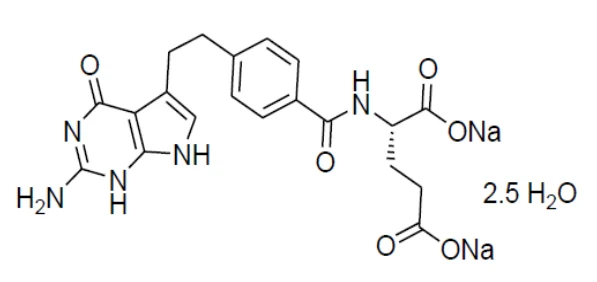
Common name: Pemetrexed Disodium (hemipentahydrate)
Chemical name: Disodium (2S)-2-[[4-[2-(2-amino-4-oxo-4,7- dihydro-1H –pyrrolo [2,3-d]pyrimidin-5 yl)ethyl]benzoyl]amino]pentanedioate
OR
N-[4-[2-(2-amino-4,7-dihydro-4-oxo-1H-pyrrolo [2,3-d] pyrimidin-5-yl)ethyl]benzoyl]-L-glutamic acid disodium salt hydrate
Molecular formula and molecular mass: C20H19N5Na2O6.2.5H2O
516.37 g/mol
Structural formula:
Physicochemical properties:
Description: White or almost white powder
Solubility of pemetrexed disodium: Freely soluble in water. Very slightly soluble in anhydrous ethanol and practically insoluble in methylene chloride.
pH: Between 7.5 and 8.4 (% of API in aqueous solution is as per USP monograph)
pKa: pKa1 = 3.6; pKa2 = 4.4 (carboxylic moieties)
CLINICAL TRIALS
Malignant Pleural Mesothelioma: Pemetrexed disodium/Cisplatin versus Cisplatin
The safety and efficacy of pemetrexed were evaluated in chemonaive patients with malignant pleural mesothelioma (MPM) in combination with cisplatin.
Study Demographics and Trial Design
Table 11: Patient Demographics - Clinical Trials Supporting Efficacy of pemetrexed disodium in the Treatment of Malignant Pleural Mesothelioma (MPM)
| Study # | Trial Design | Dosage, route of administration and duration | Study subjects and Gender (N=number) | Median age (Range) |
| H3E-MC- JMCH | international, single-blind, multi-centre, randomized, parallel-arm study | Pemetrexed disodium 500 mg/m2 intravenous injection Cisplatin 75 mg/m2 intravenous injection Treatment Duration: 21-day cycle 6 cycles of therapy | Enrolled: 456 Treated: 448 Pemetrexed disodium /Cisplatin: 226 (Male: 184; Female: 42) Cisplatin: 222 (Male 181; Female: 41) Vitamin supplemented (FS): 331 Pemetrexed disodium /Cisplatin: 168 Cisplatin: 163 Nonvitamin supplemented (PS+NS): 117 Pemetrexed disodium /Cisplatin: 58 Cisplatin: 59 | Pemetrexed disodium /Cisplatin arm Median age = 61 Age range = 29-85 Cisplatin arm Median age = 60 Age range = 19-84 |
Randomized Trial
A Phase 3 multi-centre, randomized, single-blind study in 448 chemonaive patients with MPM compared median survival in patients treated with pemetrexed disodium in combination with cisplatin to those patients receiving cisplatin alone. Pemetrexed disodium (n = 226) was administered intravenously over 10 minutes at a dose of 500 mg/m2 and cisplatin (n = 222) was administered intravenously over 2 hours at a dose of 75 mg/m2 beginning approximately 30 minutes after the end of the pemetrexed disodium infusion. Both drugs were given on Day 1 of a 21-day cycle. Folic acid and vitamin B12 supplementation were added to both treatment arms to reduce white cell and GI toxicity observed in the first 117 treated patients. All patients received prophylactic dexamethasone as part of the treatment regimen to prevent/reduce skin toxicities. Patient demographics are shown in Table 12.
Table 12: Summary of Patient Characteristics
| Patient Characteristic | Randomized and Treated Patients | Fully Supplemented Patients | ||||||
| Pemetrexed disodium / Cisplatin (N=226) | Cisplatin (N=222) | Pemetrexed disodium / Cisplatin (N=168) | Cisplatin (N=163) | |||||
| Age (yrs) | ||||||||
| Median (range) | 61 (29-85) | 60 (19-84) | 60 (29-85) | 60 (19-82) | ||||
| Gender (%) | ||||||||
| Male | 184 (81.4) | 181 (81.5) | 136 (81.0) | 134 (82.2) | ||||
| Female | 42 (18.6) | 41 (18.5) | 32 (19.0) | 29 (17.8) | ||||||
| Origin (%) | ||||||||||
| Caucasian | 204 (90.3) | 206 (92.8) | 150 (89.3) | 153 (93.9) | ||||||
| Hispanic | 11 (4.9) | 12 (5.4) | 10 (6.0) | 7 (4.3) | ||||||
| Asian | 10 (4.4) | 4 (1.9) | 7 (4.2) | 3 (1.8) | ||||||
| African descent | 1 (0.4) | 0 | 1 (0.6) | 0 | ||||||
| Stage at Entry (%) | ||||||||||
| I | 16 (7.1) | 14 (6.3) | 15 (8.9) | 12 (7.4) | ||||||
| II | 35 (15.6) | 33 (15.0) | 27 (16.2) | 27 (16.8) | ||||||
| III | 73 (32.4) | 68 (30.6) | 51 (30.5) | 49 (30.4) | ||||||
| IV | 101 (44.9) | 105 (47.2) | 74 (44.3) | 73 (45.3) | ||||||
| Unspecified | 1 (0.4) | 2 (0.9) | 1 (0.6) | 2 (1.2) | ||||||
| Diagnosis / Histologya (%) | ||||||||||
| Epithelial | 154 (68.1) | 152 (68.5) | 117 (69.6) | 113 (69.3) | ||||||
| Mixed | 37 (16.4) | 36 (16.2) | 25 (14.9) | 25 (15.3) | ||||||
| Sarcomatoid | 18 (8.0) | 25 (11.3) | 14 (8.3) | 17 (10.4) | ||||||
| Other | 17 (7.5) | 9 (4.1) | 12 (7.1) | 8 (4.9) | ||||||
| Baseline KPSb (%) | ||||||||||
| 70-80 | 109 (48.2) | 97 (43.7) | 83 (49.4) | 69 (42.3) | ||||||
| 90-100 | 117 (51.8) | 125 (56.3) | 85 (50.6) | 94 (57.7) | ||||||
- a Only 67% of the patients had the histologic diagnosis of malignant mesothelioma confirmed by independent review.
- b Karnofsky Performance Scale.
Table 13 summarizes the number of cycles of treatment completed by all randomized and treated patients and fully supplemented patients. The fully supplemented patients completed a median of 6 cycles in the pemetrexed disodium plus cisplatin treatment arm and 4 cycles in the cisplatin treatment arm. Patients who never received folic acid and vitamin B12 during study therapy received a median of 2 cycles in both treatment arms.
Table 13: Summary of Cycles Given in Randomized and Treated MPM Patients
| Cycle Statistics | All Patients* | Fully Supplemented Patients | Never Supplemented | ||||||||||||||||||||||||
Pemetrexed disodium/ Cisplatin (N=226) | Cisplatin (N=222) | Pemetrexed disodium/ Cisplatin (N=168) | Cisplatin (N=163) | Pemetrexed disodium/ Cisplatin (N= 32) | Cisplatin (N= 38) | ||||||||||||||||||||||
| Median Cycles Completed | 6 | 4 | 6 | 4 | 2 | 2 | |||||||||||||||||||||
| Range | (1-12) | (1-9) | (1-12) | (1-9) | (1-6) | (1-6) | |||||||||||||||||||||
| Total Cycles Completed | 1066 | 877 | 825 | 650 | - | - | |||||||||||||||||||||
| Cycles given at full dosage | 1030 | 874 | 802 | 648 | - | - | |||||||||||||||||||||
| (%) | (96.6%) | (99.7%) | (97.2%) | (99.7%) | - | - | |||||||||||||||||||||
- * All Patients (N=448) include all randomized and treated patients regardless of supplementation status
Table 14 summarizes the dose intensity administered to the treatment groups. Patients in both arms received more than 90% of the planned dose intensity.
Table 14: Summary of Dose Intensity (DI) in Randomized and Treated MPM Patients
| All Patients* | Fully Supplemented Patients | |||||||||||||||||||
| Pemetrexed disodium/Cisplatin (N=226) | Cisplatin (N=222) | Pemetrexed disodium/Cisplatin (N=168) | Cisplatin (N=163) | |||||||||||||||||
| Pemetrexed disodium | Cisplatin | Cisplatin | Pemetrexed disodium | Cisplatin | Cisplatin | |||||||||||||||
| Planned Mean/Patient (mg/m2/week) | 166.7 | 25 | 25 | 166.7 | 25 | 25 | ||||||||||||||
| Delivered Mean/Patient (mg/m2/week) | 153.4 | 23.2 | 24.1 | 154.6 | 23.4 | 24.1 | ||||||||||||||
| Percent of planned DI (delivered/planned) | 92.0% | 92.8% | 96.4% | 92.7% | 93.6% | 96.4% | ||||||||||||||
- * All Patients (N=448) include all randomized and treated patients regardless of supplementation status
Study Results
Table 15 summarizes the efficacy results for all randomized and treated patients regardless of vitamin supplementation status and those patients receiving vitamin supplementation from the time of enrollment in the trial (fully supplemented patients). In the population of all treated patients regardless of supplementation status (primary analysis), patients receiving the combination of pemetrexed plus cisplatin had a significantly higher median survival time than the patients in the cisplatin monotherapy arm (Table 15; Figure 1). The 2.8-month difference in median survival (12.1 versus 9.3 months), was statistical significant (p-value 0.020).
Table 15: Efficacy of Pemetrexed disodium plus Cisplatin versus Cisplatin in Randomized and Treated MPM Patients
| Efficacy Parameter | All Patients* | Fully Supplemented Patients |
Pemetrexed disodium/ Cisplatin (N=226) | Cisplatin (N=222) | |
Pemetrexed disodium/ Cisplatin (N=168) | Cisplatin (N=163) | |
| Median Overall Survival | ||
| 12.1 months | 9.3 months | |
| 13.3 months | 10.0 months | |
| (95% CI) | ||
| (10.0-14.4) | (7.8-10.7) | |
| (11.4-14.9) | (8.4-11.9) | |
| Hazard ratio | 0.77 | 0.75 |
| Log Rank p-value** | 0.02 | 0.051 |
| Percent censored | ||
| 35.8 | 28.4 | |
| 43.5 | 36.8 | |
- * All Patients (N=448) include all randomized and treated patients regardless of supplementation status
** p-value refers to comparison between arms.
| Pemetrexed disodium + Cisplatin (n=226) | |
| ---------- | Cisplatin (n=222) |
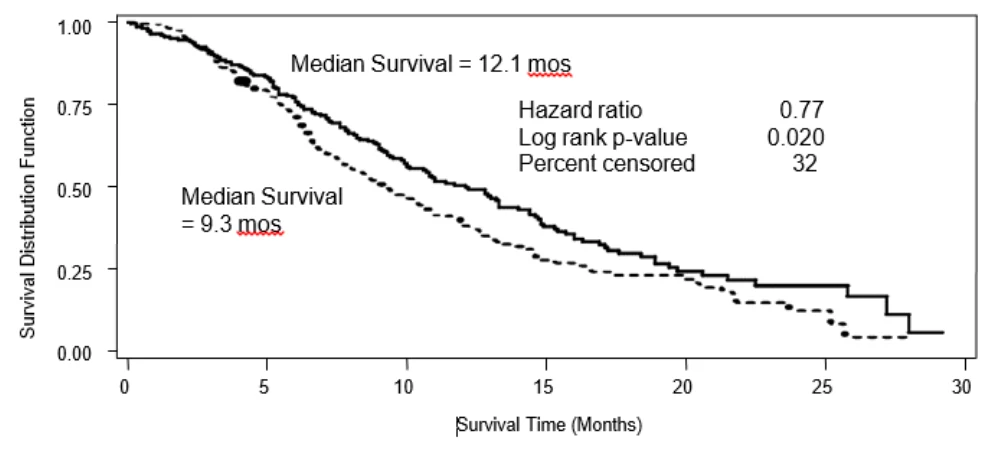
Figure 1: Kaplan-Meier Estimates of Survival Time
Objective tumour response criteria for malignant pleural mesothelioma is difficult to assess and response criteria are not universally agreed upon. However, based on a prospectively defined criteria, the objective tumour response rate for pemetrexed disodium plus cisplatin was greater than the response rate for cisplatin alone (41.3% vs. 16.7%; p = 0.001), as were the measures of time to progressive disease (5.7 vs. 3.9 months) and time to treatment failure (4.5 vs. 2.7 months; p = 0.001). Vitamin supplementation was associated with further improvement in the objective tumour response rate for the pemetrexed disodium plus cisplatin compared to cispatin alone patients (45.5% vs. 19.6%) as was time to progressive disease (6.1 vs. 3.9 months; p = 0.008) and time to treatment failure (4.7 vs. 2.7 months; p = 0.001).
Quality of Life was measured using the Lung Cancer Symptom Scale (LCSS) which assessed 6 symptoms (anorexia, fatigue, pain, cough, hemoptysis, and dyspnea); 3 summary scales (symptom distress, interference with activity level, and global QoL); and an average of all the individual scales (Total LCSS). LCSS data had to be present at both baseline and at least one post-baseline assessment between cycle 1-6, to be included in the analysis and were available for 93.8% of the pemetrexed disodium plus cisplatin patients and for 98.1% of the cisplatin monotherapy patients. At cycle 6, there was a significant difference in favour of the pemetrexed disodium plus cisplatin patients for dyspnea, fatigue, symptom distress, interference with activity, and total LCSS. Pain scores improved for pemetrexed disodium plus cisplatin patients and these scores were statistically different than those for cisplatin patients for cycles 3 through 6. Cycle 3 LS mean, (model-based mean from the repeated measures analysis) was -3.51 for pemetrexed disodium/cisplatin and -3.27 for cisplatin; p=0.005. Cycle 6 LS Mean was -1.23 for pemetrexed disodium /cisplatin and 5.8 for cisplatin (p = 0.009).
Pulmonary function tests were used to provide objective measures of lung function. Results for slow vital capacity (SVC), forced vital capacity (FVC), and forced expiratory volume in one second (FEV1) in absolute and percentage of predicted normal were assessed at baseline and repeated up to Cycle 6 for each treatment arm. For each parameter (SVC, FVC, and FEV1), lung volumes in the pemetrexed disodium/cisplatin arm at Cycle 6 were higher than the cisplatin alone arm throughout treatment period. Similar results were seen when analyzed as changes from baseline. Averaging over the entire treatment period, the pemetrexed disodium/cisplatin arm had statistically significantly greater pulmonary function for all three parameters [SVC (p = 0.001), FVC (p = 0.002), and FEV1 (p < 0.001)].
First Line – Nonsquamous Non-Small Cell Lung Cancer - Pemetrexed disodium/Cisplatin versus Gemcitabine/Cisplatin
Study Demographics and Trial Design
Table 16: Patient Demographics - Clinical Trial Supporting Efficacy of Pemetrexed disodium/Cisplatin versus Gemcitabine/Cisplatin in the Treatment of NSCLC
| Study # | Trial Design | Dosage, route of administration and duration | Study subjects and Gender (N=number) | Median age (Range) |
H3E-MC- JMDB | Phase 3, randomized, open-label, controlled, initial treatment of Stage IIIb or IV NSCLC | Pemetrexed disodium 500 mg/m2 plus cisplatin 75 mg/m2 on Day 1 of a 21-day cycle vs. gemcitabine 1250 mg/m2 on Day 1 and Day 8 plus cisplatin 75 mg/m2 on Day 1 of a 21-day cycle | Entered: 1833 Randomized: 1725 Pemetrexed disodium/Cisplatin: 862 (Male:605; Female:257) Gemcitabine/Cisplatin: 863 (Male 605; Female:258) | Pemetrexed disodium /Cisplatin arm Median age = 61 Age range = 29-83 Gemcitabine/Cisplatin arm Median age = 61 Age range = 26-79 |
Approval of pemetrexed disodium in combination with cisplatin in first line NSCLC is based on a single non-inferiority trial.
A multi-centre, randomized, Phase 3 study in 1725 chemonaive patients with NSCLC was conducted to compare the overall survival following treatment with pemetrexed disodium in combination with cisplatin (AC) versus gemcitabine in combination with cisplatin (GC). Pemetrexed disodium was administered intravenously over 10 minutes at a dose of 500 mg/m2 with cisplatin administered intravenously at a dose of 75 mg/m2 after pemetrexed disodium administration, on Day 1 of each 21-day cycle. Gemcitabine was administered at a dose of 1250 mg/m2 on Day 1 and Day 8, and cisplatin was administered intravenously at a dose of 75 mg/m2 after administration of gemcitabine, on Day 1 of each 21-day cycle. Patients in both treatment arms received folic acid, vitamin B12, and dexamethasone. The study was designed to show non-inferiority of survival of pemetrexed disodium and cisplatin to gemcitabine and cisplatin. Patient demographics of the intent to treat (ITT) population are shown in Table 17. The demographics and disease characteristics were well balanced. All patients had a good performance status of ECOG 0 or 1. The results of the protocol qualified (PQ) population analysis (N = 1666) were consistent with those of the ITT population analysis.
Table 17: Summary of Patient Characteristics
| Patient Characteristic | Pemetrexed disodium plus Cisplatin (N=862) | Gemcitabine plus Cisplatin (N=863) | |||||||
| Age (yrs) | |||||||||
| Median age, years (range) | 61.05 (28.8-83.2) | 60.95 (26.4-79.4) | |||||||
| Gender (%) | |||||||||
| Female | 257 (29.8) | 258 (29.9) | |||||||
| Male | 605 (70.2) | 605 (70.1) | |||||||
| Origin (%) | |||||||||
| African Decent | 18 (2.1) | 18 (2.1) | |||||||
| Caucasian | 669 (77.6) | 680 (78.8) | |||||||
| East/Southeast Asian | 116 (13.5) | 104 (12.1) | |||||||
| Hispanic | 27 (3.1) | 23 (2.7) | |||||||
| Western Asian | 30 (3.5) | 37 (4.3) | |||||||
| Other | 2 (0.2) | 1 (0.1) | |||||||
| Smoking Status (%)a | |||||||||
| Ever Smoker | 629 (73.0) | 637 (73.8) | |||||||
| Never Smoker | 128 (14.8) | 122 (14.1) | |||||||
| Unknown | 105 (12.2) | 104 (12.1) | |||||||
| Performance Status (%)b | |||||||||
| ECOG PS 0 | 305 (35.4) | 307 (35.6) | |||||||
| ECOG PS 1 | 556 (64.5) | 554 (64.2) | |||||||
| Unknown | 1 (0.1) | 2 (0.2) | |||||||
| Basis for Diagnosis | |||||||||
| Cytological | 289 (33.5) | 288 (33.4) | |||||||
| Histological | 573 (66.5) | 575 (66.6) | |||||||
| Stage of Disease (%) | |||||||||
| Stage IIIb | 205 (23.8) | 210 (24.3) | |||||||
| Stage IV disease | 657 (76.2) | 653 (75.7) | |||||||
| Histology (%) | |||||||||
| Adenocarcinoma | 436 (50.6) | 411 (47.6) | |||||||
| Squamous | 244 (28.3) | 229 (26.5) | |||||||
| Large Cell | 76 (8.8) | 77 (8.9) | |||||||
| Unknown | 106 (12.3) | 146 (16.9) | |||||||
Abbreviations: ECOG PS = Eastern Cooperative Oncology Group performance status; N = number of patients enrolled; n = number of patients in groups.
- a Smoking history was not recorded for all treated patients. Percentages are representative of N = 757 for the pemetrexed disodium plus cisplatin arm and N = 759 for the gemcitabine plus cisplatin arm.
- b ECOG PS was not reported for all treated patients. Percentages are representative of N=861 for the pemetrexed disodium plus cisplatin arm, and N = 861 for the gemcitabine plus cisplatin arm.
Treatment was administered up to a total of 6 cycles of therapy as per study protocol. A median of 5 cycles of treatment was administered on both treatment arms. Patients treated with pemetrexed disodium plus cisplatin received a relative dose intensity of 94.8% of the protocol-specified pemetrexed disodium dose intensity and 95.0% of the protocol-specified cisplatin dose intensity. Patients treated with gemcitabine plus cisplatin received a relative dose intensity of 85.8% of the protocol-specified gemcitabine dose intensity and 93.5% of the protocol- specified cisplatin dose intensity.
Study Results
The primary endpoint of noninferior overall survival was met for pemetrexed disodium plus cisplatin compared to gemcitabine plus cisplatin in the intent-to-treat (ITT) study population. The median survival time was 10.3 months in both treatment arms, with an adjusted hazard ratio of 0.94 (95% confidence interval 0.84 – 1.05), based on a noninferiority margin of 1.17647. This margin was derived from a single study (Sandler 2000). Progression-free survival (PFS) and objective response rate (ORR) were similar between treatment arms. Table 18 summarizes the study results in the overall study population.
Table 18: Efficacy of Pemetrexed disodium plus Cisplatin versus Gemcitabine plus Cisplatin in First-line Non-Small Cell Lung Cancer - ITT Population
| Pemetrexed disodium plus Cisplatin (N=862) | Gemcitabine plus Cisplatin (N=863) | |||||||||
| Median overall survival (95% CI) | 10.3 months (9.8-11.2) | 10.3 months (9.6-10.9) | ||||||||
| Adjusted hazard ratio (HR) a, b (95% CI) | 0.94c (0.84-1.05) | |||||||||
| Unadjusted hazard ratio (HR) b (95% CI) | 0.93c (0.83-1.04) | |||||||||
| Log rank p-value | 0.209 | |||||||||
| 12 month survival (95% CI) | 43.5% (40.1-46.9) | 41.9 % (38.5-45.4) | ||||||||
| Median progression-free survival (95% CI) | 4.8 months (4.6-5.3) | 5.1 months (4.6-5.5) | ||||||||
| Overall response rated (95% CI) | 30.6% (27.3-33.9) | 28.2% (25.0-31.4) | ||||||||
Abbreviations: CI = confidence interval; HR = hazard ratio; ITT = intent to treat; n = total population size.
- a Adjusted for gender, stage, basis of diagnosis, and performance status.
- b A HR that is less than 1.0 indicates that survival is better in the AC arm than in the GC arm. Alternatively, a HR that is greater than 1.0 indicates survival is better in the GC arm than in the AC arm.
- c Statistically significant for non-inferiority.
- d Number of qualified patients on the AC arm (N = 762) and GC arm (N = 755).
Figure 2 displays the Kaplan-Meier survival curve for the ITT population.
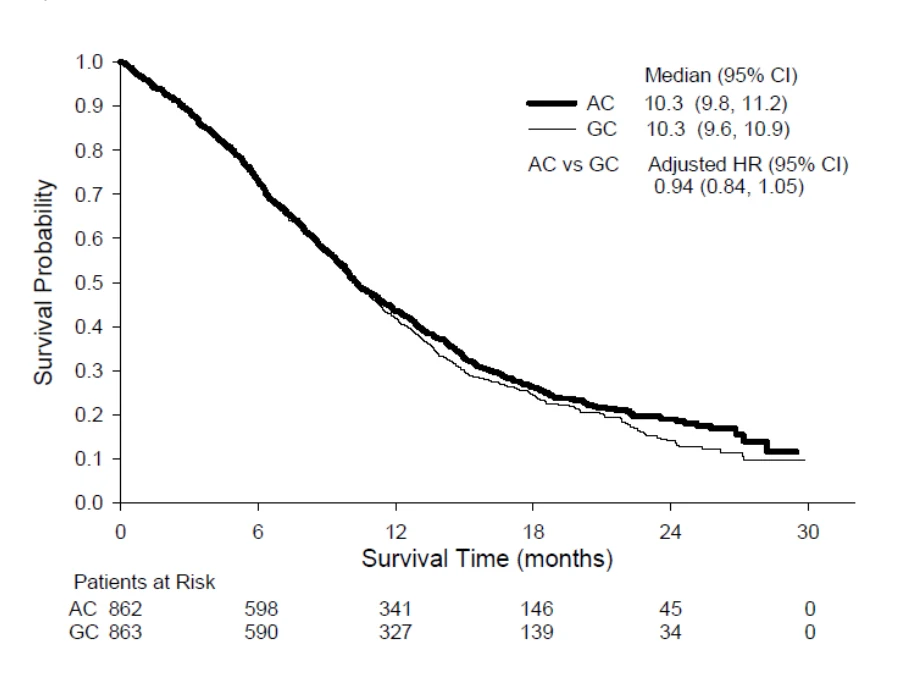
Figure 2: Kaplan-Meier Curves for Overall Survival Pemetrexed disodium plus Cisplatin (AC) versus Gemcitabine plus Cisplatin (GC) in Non-Small Cell Lung Cancer - ITT Population
Subsets of patients were examined in planned secondary analyses. The results of these analyses are shown in Figure 3.
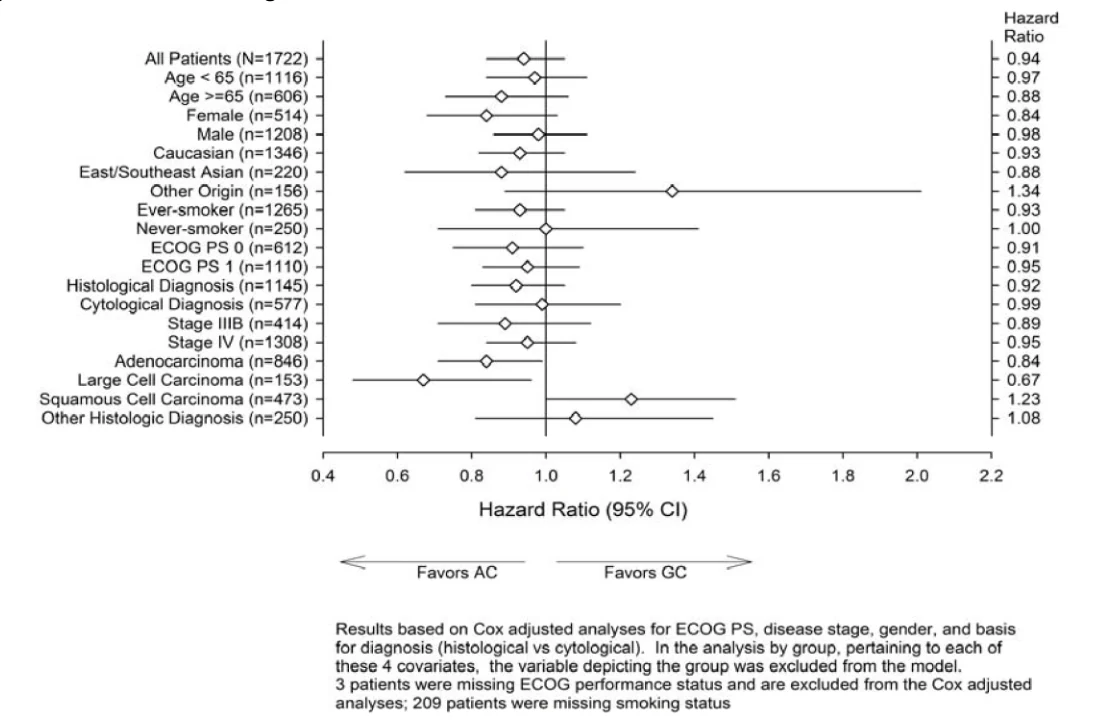
Figure 3: Forest Plot for Overall Survival Adjusted Hazard Ratios of Subgroups Pemetrexed disodium + Cisplatin versus Gemcitabine + Cisplatin in First-line Non- Small Cell Lung Cancer – ITT Population
The effect of pemetrexed disodium plus cisplatin on survival was similar regardless of age, gender, ethnic origin, smoking status, and performance status (0 or 1). A prespecified subgroup analysis of the impact of NSCLC histology on overall survival demonstrated clinically relevant differences in survival according to histology (see Table 19 below). In the subgroup analysis of patients with squamous cell histology, pemetrexed disodium plus cisplatin was not shown to be non-inferior to the comparator, suggesting it may not be effective in patients with squamous cell histology NSCLC (see INDICATIONS AND CLINICAL USE).
Table 19: Overall Survival of Pemetrexed disodium plus Cisplatin versus Gemcitabine plus Cisplatin in Non-Small Cell Lung Cancer - Histologic Subgroups, ITT Population
| Histology Subgroup | Median Overall Survival in Months (95% CI) | Hazard Ratio (HR)a (95% CI) | |||
| Pemetrexed disodium plus Cisplatin | Gemcitabine plus Cisplatin | ||||
| Adenocarcinoma (N=847) | 12.6 (10.7 - 13.6) | N=436 | 10.9 (10.2 - 11.9) | N=411 | 0.84 b (0.71 - 0.98) |
| Large Cell (N=153) | 10.4 (8.6 - 14.1) | N=76 | 6.7 (5.5 - 9.0) | N=77 | 0.68 b (0.48 - 0.97) |
| Squamous Cell (N=473) | 9.4 (8.4 - 10.2) | N=244 | 10.8 (9.5 - 12.1) | N=229 | 1.22 (0.99 - 1.50) |
| Other (N=252) | 8.6 (6.8 - 10.2) | N=106 | 9.2 (8.1 - 10.6) | N=146 | 1.12 (0.84 - 1.49) |
- a HR was based on unadjusted analyses. A HR that is less than 1.0 indicates that survival is better in the AC arm than in the GC arm. Alternatively, a HR that is greater than 1.0 indicates survival is better in the GC arm than in the AC arm.
- b Log rank p < 0.05 unadjusted for multiple comparisons.
Figure 4 displays the Kaplan-Meier curves for histology subgroups (adenocarcinoma and squamous cell carcinoma) in the ITT population.
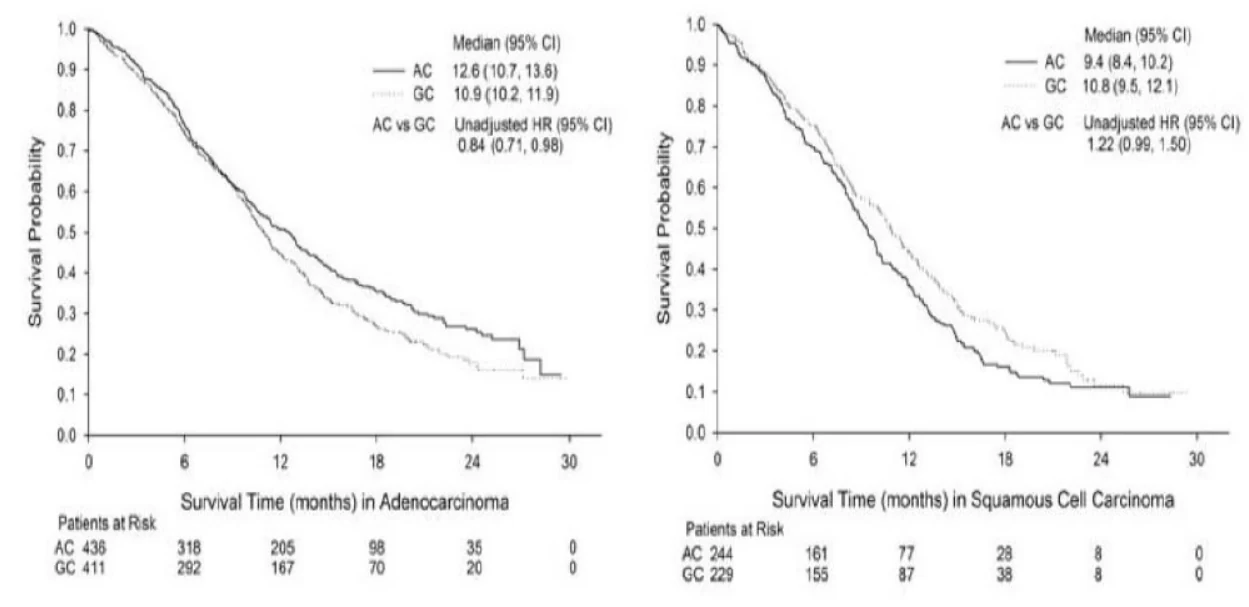
Figure 4: Kaplan-Meier Curves for Overall Survival Pemetrexed disodium plus Cisplatin (AC) versus Gemcitabine plus Cisplatin (GC) in First-line Non-Small Cell Lung Cancer - Histology Subgroups: Adenocarcinoma and Squamous Cell Carcinoma, ITT Population
No formal Quality of Life assessment was conducted during the trial. Patients treated with pemetrexed disodium and cisplatin required fewer transfusions (16.4% versus 28.9%), red blood cell transfusions (16.1% versus 27.3%) and platelet transfusions (1.8% versus 4.5%). Patients also required lower administration of erythropoietin/darbopoietin (10.4% versus 18.1%), G- CSF/GM-CSF (3.1% versus 6.1%), and iron preparations (4.3% versus 7.0%). The incidence of hospitalization for a drug-related adverse event was 17.9% for patients treated with pemetrexed disodium/cisplatin versus 16.9% for patients treated with gemcitabine/cisplatin.
Maintenance Therapy – Nonsquamous Non-Small Cell Lung Cancer - Monotherapy
Study Demographics and Trial Design
The safety and efficacy of pemetrexed disodium as a single-agent have been evaluated in 2 randomized controlled trials immediately following first-line platinum-based chemotherapy, for the maintenance treatment of patients with locally advanced or metastatic (Stage IIIb or IV) non- small cell lung cancer (NSCLC).
Table 20: Patient Demographics - Clinical Trials Supporting Efficacy of Pemetrexed disodium in NSCLC Maintenance Therapy
| Study # | Trial Design | Dosage, route of administration and duration | Study subjects and Gender (N=number) | Median age (Range) |
H3E-MC- JMEN (JMEN) | Phase 3, double- blind, placebo- controlled study of maintenance pemetrexed plus BSC immediately following non- pemetrexed- containing induction therapy for Stage IIIb or IV NSCLC | Pemetrexed disodium 500 mg/m2 on Day 1 of a 21-day cycle plus BSC | Entered: 741 Randomized: 663 Pemetrexed disodium : 441 (Male:322; Female:119) Placebo: 222 (Male 161; Female:61) | Pemetrexed disodium arm Median age = 60.6 Age range = 25.6- 82.6 Placebo arm Median age = 60.4 Age range = 35.4- 78.5 |
H3E-EW-S124 (PARAMOUNT) | Phase 3, double- blind, placebo- controlled study of continuation maintenance pemetrexed plus BSC immediately following induction therapy with pemetrexed plus cisplatin for Stage IIIb or IV NSCLC | Pemetrexed disodium 500 mg/m2 on Day 1 of a 21-day cycle plus BSC | Entered: 939 Randomized: 539 Pemetrexed disodium: 359 (Male: 201; Female:158) Placebo: 180 (Male; 112; Female: 68) | Pemetrexed disodium arm Median age = 60.9 Age range = 31.9- 78.7 Placebo arm Median age = 62.4 Age range = 34.9- 83.3 |
Abbreviations: BSC = best supportive care
JMEN
A multi-centre, randomized, double-blind, placebo-controlled, Phase 3 study was conducted in 663 patients with Stage IIIb/IV NSCLC who did not progress after four cycles of first-line platinum-based doublet chemotherapy containing cisplatin or carboplatin with gemcitabine, paclitaxel, or docetaxel. First line doublet therapy containing pemetrexed disodium was not included. Patients who did not progress were randomized 2:1 to receive pemetrexed disodium or placebo immediately following platinum-based chemotherapy. The minimization principle adopted for randomization did not include histology. Pemetrexed disodium was administered intravenously over 10 minutes at a dose of 500 mg/m2 on Day 1 of each 21-day cycle, until disease progression. Patients in both study arms received folic acid, vitamin B12, and dexamethasone.
The study was designed to demonstrate superior progression-free survival and overall survival (OS) of pemetrexed disodium over placebo. Progression free survival (PFS) was assessed by independent review. Patient characteristics of the intent to treat (ITT) population are shown in Table 21. The demographics and baseline disease characteristics were well balanced between study arms.
Table 21: Summary of Patient Characteristics in Study of NSCLC - Maintenance Therapy Following non-Pemetrexed disodium-containing Platinum-Based Induction
| Patient characteristic | Pemetrexed disodium (N=441) | Placebo (N=222) | ||||||
|---|---|---|---|---|---|---|---|---|
| Age (yrs) | ||||||||
| Median (range) | 60.6 (25.6-82.6) | 60.4 (35.4-78.5) | ||||||
| Gender | ||||||||
| Male/Female | 73.0%/27.0% | 72.5%/27.5% | ||||||
| Ethnic Origin | ||||||||
| Caucasian | 279 (63.3%) | 149 (67.1%) | ||||||
| East Asian | 104 (23.6%) | 50 (22.5%) | ||||||
| Other | 58 (13.2%) | 23 (10.4%) | ||||||
| Stage at Entrya | ||||||||
| IIIb/IV | 18.0%/82.0% | 21.2%/78.8% | ||||||
| Histology (%) | ||||||||
| Nonsquamous NSCLCb | 325 (73.7%) | 156 (70.3%) | ||||||
| Adenocarcinoma | 222 (50.3%) | 106 (47.7%) | ||||||
| Large cell | 10 (2.3%) | 10 (4.5%) | ||||||
| Otherc | 93 (21.1%) | 40 (18.0%) | ||||||
| Squamous | 116 (26.3%) | 66 (29.7%) | ||||||
| ECOG PSd | ||||||||
| 0/1 | 40.1%/59.9% | 38.3%/61.7% | ||||||
| Smoking Historye | ||||||||
| Ever/never smoker | 74.1%/25.9% | 71.5%/28.5% | ||||||
| Time from start of induction therapy to study randomization (months) | ||||||||
| Median (range) | 3.25 (1.6-4.8) | 3.29 (2.7-5.1) | ||||||
- a Stage at Entry was not reported for all randomized patients. Percentages are representative of N=440 for the pemetrexed disodium arm and N = 222 for the placebo arm.
- b Includes patients with adenocarcinoma, large cell, and other histologic diagnoses.
- c The subgroup of “Other” represents patients with a primary diagnosis of NSCLC whose disease did not clearly qualify as adenocarcinoma, large cell carcinoma, or squamous cell carcinoma.
- d Eastern Cooperative Oncology Group Performance Status (ECOG PS) was not reported for all randomized patients. Percentages are representative of N=439 for the pemetrexed disodium arm, and N = 222 for the placebo arm.
- e Smoking history was not reported for all randomized patients. Percentages are representative of N=437 for the pemetrexed disodium arm and N = 221 for the placebo arm.
Patients received a median of 5 cycles of pemetrexed disodium and 3.5 cycles of placebo. Patients randomized to pemetrexed disodium received a relative dose intensity of 95.7%. A total of 213 patients (48.3%) completed ≥ 6 cycles and a total of 98 patients (22.6%) completed ≥ 10 cycles of treatment with pemetrexed disodium. The percentage of patients that received post discontinuation systemic therapy was 51.5% for pemetrexed disodium and 67.1% for placebo patients.
Study Results
In the overall study population, pemetrexed disodium was statistically superior to placebo in terms of overall survival (OS) (13.4 months versus 10.6 months, HR = 0.79 (95% CI 0.65 - 0.95, p-value = 0.012)) and PFS (4.0 months versus 2.0 months, HR = 0.60 (95% CI 0.49 - 0.73, p- value < 0.00001)). A difference in treatment outcomes was observed according to histologic classification. For the population of patients with nonsquamous NSCLC, pemetrexed disodium was superior to placebo for OS (15.5 months versus 10.3 months, HR = 0.70 (95% CI 0.56 – 0.88, p-value = 0.002)) and PFS (4.4 months versus 1.8 months, HR = 0.47 (95% CI 0.37 – 0.60; p- value < 0.00001)). For the population of patients with squamous NSCLC, pemetrexed disodium did not improve OS compared to placebo (median 9.9 months vs 10.8 months, HR = 1.07 (95% CI 0.77 – 1.50) or PFS (median 2.4 months vs 2.5 months, HR = 1.03 (95% CI 0.71 – 1.49)). Efficacy results for the overall patient population are presented in Table 22, and efficacy results by pre-specified histologic subgroups are presented in Table 23, below.
Table 22: Maintenance Therapy Following non-Pemetrexed disodium-containing Platinum- Based Induction:
Efficacy of Pemetrexed disodium versus Placebo in NSCLC - ITT Population
| Efficacy Parametera,b | Pemetrexed disodium (N=441) | Placebo (N=222) | |||||||
| Median overall survival (95% CI) | 13.4 mos (11.9-15.9) | 10.6 mos (8.7-12.0) | |||||||
| Hazard ratio (HR)c (95% CI) | 0.79 (0.65-0.95) | ||||||||
| p-value | p=0.012 | ||||||||
| Median progression-free survivalb (95% CI) | 4.0 mos (3.1-4.4) | 2.0 mos (1.5-2.8) | |||||||
| Hazard ratio (HR)c (95% CI) | 0.60 (0.49-0.73) | ||||||||
| p-value | p<0.00001 | ||||||||
- a PFS and OS were calculated from time of randomization, after completion of 4 cycles of induction platinum-based chemotherapy.
- b Values for PFS given based on independent review (pemetrexed disodium N=387, Placebo N=194)
- c Unadjusted hazard ratios are provided. A HR < 1.0 indicates that the result is better in the pemetrexed disodium arm than in the placebo arm.
Table 23: Maintenance Therapy Following non-Pemetrexed disodium-containing Platinum-Based Induction:
Efficacy of Pemetrexed disodium versus Placebo in NSCLC – Prespecified Histologic Subgroupsa
| Overall Survival | Progression-Free Survivalb | |||||||
| Pemetrexed disodium Placebo | Pemetrexed disodium Placebo | |||||||
Median (months) Median (months) HRc (95% CI) | Median (months) Median (months) HRc (95% CI) | |||||||
Nonsquamous NSCLC d N=481 p-value | 15.5 10.3 0.70 (0.56-0.88) p=0.002 | 4.4 1.8 0.47 (0.37-0.60) p<0.00001 | ||||||
Adenocarcinoma N=328 | 16.8 11.5 0.73 (0.56-0.96)e | 4.6 2.7 0.51 (0.38-0.68)e | ||||||
Large cell carcinoma N=20 | 8.4 7.9 0.98 (0.36-2.65) | 4.5 1.5 0.40 (0.12-1.29) | ||||||
Otherf N=133 | 11.3 7.7 0.61 (0.40-0.94)e | 4.1 1.6 0.44 (0.28-0.68)e | ||||||
Squamous cell N=182 p-value | 9.9 10.8 1.07 (0.77-1.50) p=0.678 | 2.4 2.5 1.03 (0.71-1.49) p=0.896 | ||||||
- a PFS and OS were calculated from time of randomization, after completion of 4 cycles of induction platinum-based chemotherapy. All results unadjusted for multiple comparisons.
- b Values for PFS are given based on independent review (pemetrexed disodium N=387, Placebo N = 194)
c Unadjusted hazard ratios are provided. A HR < 1.0 indicates that the result is better in the pemetrexed disodium arm than in the placebo arm. A HR > 1.0 indicates that the result is better in the placebo arm
- than in the pemetrexed disodium arm.
- d Includes patients with adenocarcinoma, large cell carcinoma, and other histology.
- e p < 0.05 unadjusted for multiple comparisons.
- f The subgroup of “Other” represents patients with a primary diagnosis of NSCLC whose disease did not clearly qualify as adenocarcinoma, large cell carcinoma, or squamous cell carcinoma.
Figures 5 and 6 display the Kaplan-Meier survival curves for the overall patient population and the histologic subgroups (nonsquamous NSCLC and squamous cell NSCLC), respectively.
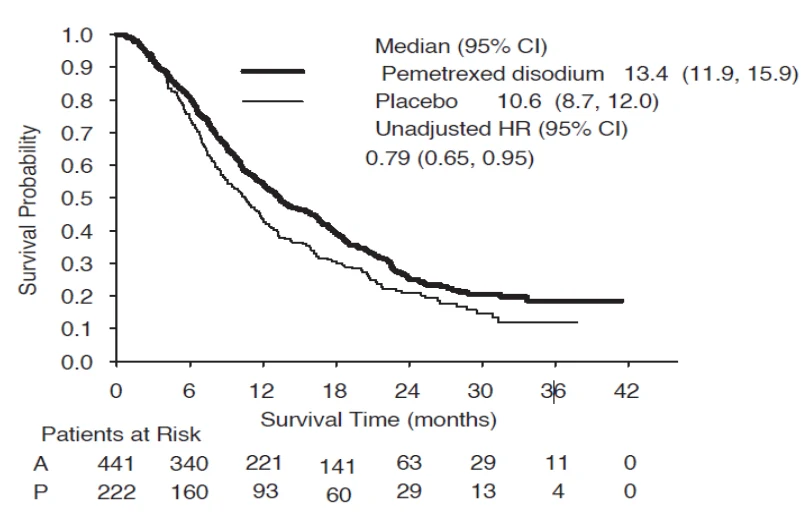
Figure 5: Kaplan-Meier Curve for Overall Survival Pemetrexed disodium (A) versus Placebo (P) in NSCLC - ITT Population.
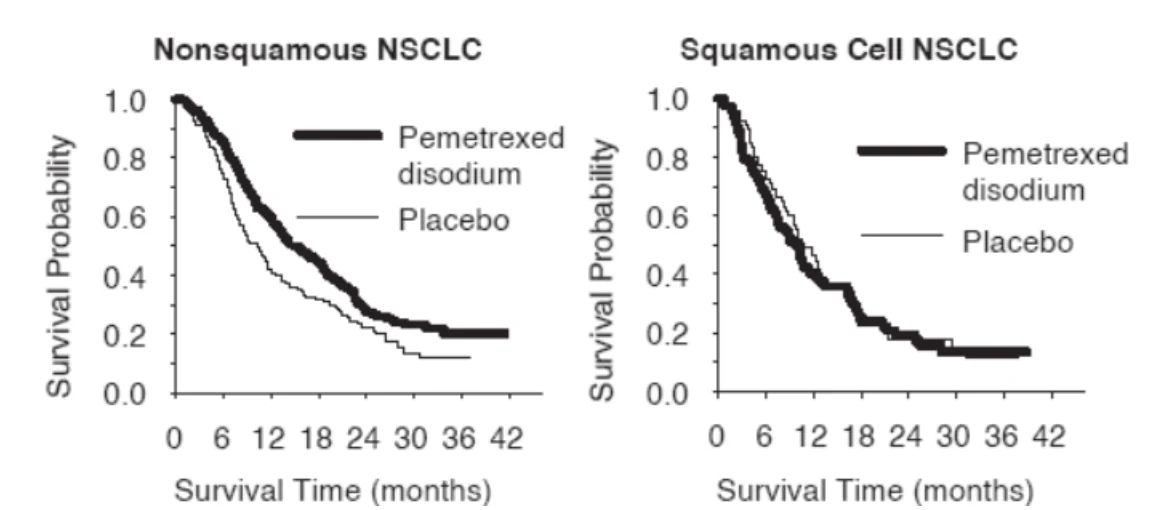
Figure 6: Kaplan-Meier Curves for Overall Survival Pemetrexed disodium versus Placebo in NSCLC - Nonsquamous NSCLC and Squamous Cell NSCLC.
Subsets of patients were examined according to baseline characteristics in pre-specified efficacy analyses. The results of these analyses are shown in Figure 7.
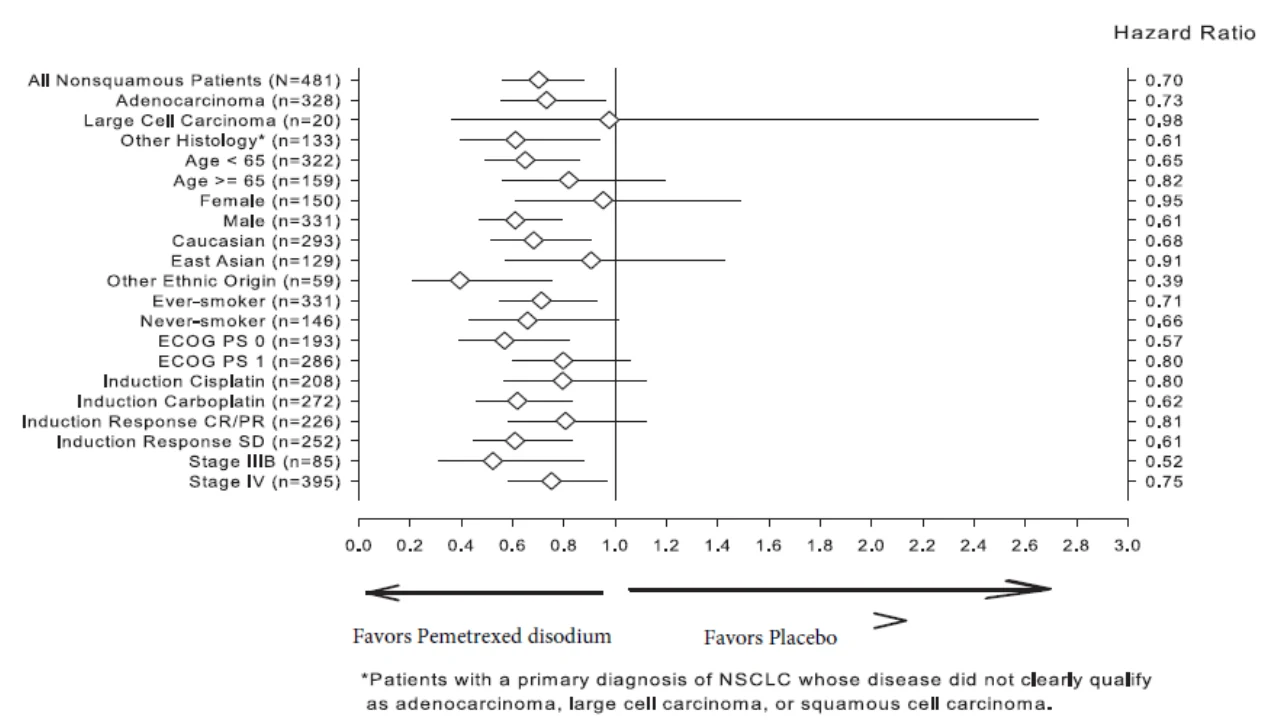
Figure 7: Forest Plot for Overall Survival Hazard Ratios Pemetrexed disodium versus Placebo – Nonsquamous NSCLC.
Supportive care measures were similar between treatment arms, except: RBC transfusions (pemetrexed disodium 9.5% vs placebo 3.2%); erythropoiesis stimulating agents (pemetrexed disodium 5.9% vs placebo 1.8%); hospitalizations for a drug-related adverse event (pemetrexed disodium 5% vs placebo 0%); enteral/parenteral nutritional support (pemetrexed disodium 5% vs placebo 1%).
PARAMOUNT
A multi-centre, randomized, double-blind, placebo-controlled Phase 3 study was conducted to evaluate continuation of pemetrexed disodium in patients with Stage IIIb/IV nonsquamous NSCLC who did not progress after 4 cycles of first line doublet therapy of pemetrexed disodium (500 mg/m2) in combination with cisplatin (75 mg/m2). Patients completing induction treatment with a best response of stable disease or better and PS 0/1 were eligible for maintenance treatment. Of the 939 patients treated with pemetrexed disodium plus cisplatin induction, 539 patients were randomized (2:1) to receive maintenance treatment with pemetrexed disodium or placebo. Of the randomized patients, 51.9% had a response of stable disease, 44.7% had a partial response, and 0.2% had a complete response to pemetrexed disodium plus cisplatin induction. The median time from the start of pemetrexed disodium plus cisplatin induction therapy to the start of maintenance treatment was 2.96 months on both the pemetrexed disodium arm and the placebo arm. Efficacy and safety were measured from the time of randomization after completion of first line (induction) therapy. Pemetrexed disodium was administered intravenously over 10 minutes at a dose of 500 mg/m2 on Day 1 of each 21-day cycle, and continued until disease progression or unacceptable toxicity. Patients in both study arms received folic acid, vitamin B12, and dexamethasone.
The study was designed to demonstrate superior progression-free survival and overall survival of pemetrexed disodium plus best supportive care (BSC) continuation maintenance over placebo plus BSC. Patient demographics of the intent to treat (ITT) population are shown in Table 24. The demographics and baseline disease characteristics were well balanced between study arms.
Table 24: Maintenance Therapy Following Pemetrexed disodium plus Cisplatin Induction: Summary of Patient Characteristics in Study of Nonsquamous NSCLC
| Patient characteristic | Pemetrexed disodium (N=359) | Placebo (N=180) | ||||||||
|---|---|---|---|---|---|---|---|---|---|---|
| Age (yrs) | ||||||||||
| Median (range) | 60.95 (31.9-78.7) | 62.35 (34.9-83.3) | ||||||||
| Gender | ||||||||||
| Male/Female | 56.0%/44.0% | 62.2%/37.8% | ||||||||
| Ethnic Origin | ||||||||||
| Caucasian | 339 (94.4%) | 171 (95.0%) | ||||||||
| Asian | 16 (4.5%) | 8 (4.4%) | ||||||||
| African | 4 (1.1%) | 1 (0.6%) | ||||||||
| Stage at Entrya | ||||||||||
| IIIb/IV | 8.6%/91.4% | 10.6%/89.4% | ||||||||
| Histology (%) | ||||||||||
| Nonsquamous NSCLCb | ||||||||||
| Adenocarcinoma | 310 (86.4%) | 161 (89.4%) | ||||||||
| Large cell | 24 (6.7%) | 12 (6.7%) | ||||||||
| Otherc | 25 (7.0%) | 7 (3.9%) | ||||||||
| ECOG PS | ||||||||||
| 0/1 | 32.0%/67.7% | 30.6%/68.3% | ||||||||
| Smoking Historyd | ||||||||||
| Ever/never smoker | 76.6%/22.8% | 80%/18.9% | ||||||||
- a Stage at Entry was not reported for all randomized patients. Percentages are representative of N = 359 for the pemetrexed disodium arm and N = 180 for the placebo arm.
- b Histological or cytological diagnosis of NSCLC defined as other than predominantly squamous cell histology (squamous cell and/or mixed small cell, non-small cell histology were not permitted on this study).
- c The subcategory of “Other” represents patients with a primary diagnosis of NSCLC whose disease did not clearly qualify as adenocarcinoma or large-cell carcinoma.
d Smoking history was not reported for all randomized patients. Percentages are representative of N = 359 for the pemetrexed disodium arm, and N = 180 for the placebo arm.
Patients received a median of 4 cycles of maintenance treatment with pemetrexed disodium (range 1-44 cycles) and 4 cycles of placebo (range 1-38 cycles). Patients randomized to continue pemetrexed disodium received a relative dose intensity of 93.7%. A total of 169 patients (47.1%) completed ≥ 6 cycles maintenance treatment with pemetrexed disodium, representing at least 10 total cycles of pemetrexed disodium. The percentage of patients that received post study treatment was 64.3% for pemetrexed disodium and 71.7% for placebo.
Study Results
Efficacy results are presented in Table 25 and Figure 8. Following pemetrexed disodium plus cisplatin induction (4 cycles), treatment with pemetrexed disodium maintenance was statistically superior to placebo for overall survival (OS) (median 13.9 months versus 11.0 months, HR = 0.78 [95% CI: 0.64-0.96], p-value = 0.0195). The investigator assessment of PFS showed that pemetrexed disodium was statistically superior to placebo (median 4.1 months versus 2.8 months, HR = 0.62 [95% CI: 0.49-0.79], p-value < 0.0001).
Table 25: Maintenance Therapy Following Pemetrexed disodium Plus Cisplatin Induction: Efficacy of Pemetrexed disodium versus Placebo in Nonsquamous NSCLC
| Efficacy Parametera,b | Pemetrexed disodium (N=359) | Placebo (N=180) | ||||||
| Median overall survivalc (95% CI) | 13.9 mos (12.8-16.0) | 11.0 mos (10.0-12.5) | ||||||
| Hazard ratio (HR)c (95% CI) | 0.78 (0.64-0.96) | |||||||
| p-value | p=0.0195 | |||||||
| 1-year survival | 58% | 45% | ||||||
| 2-year survival | 32% | 21% | ||||||
| Median progression-free survival (95% CI) | 4.1 (3.2 – 4.6) | 2.8 (2.6 – 3.1) | ||||||
| Hazard ratio (HR)c (95% CI) | 0.62 (0.49 – 0.79) | |||||||
| p-value | p<0.0001 | |||||||
- a PFS and OS were calculated from time of randomization, after completion of 4 cycles of pemetrexed disodium plus cisplatin induction therapy.
- b Values for PFS given based on investigator assessment.
c Unadjusted hazard ratios are provided. A HR < 1.0 indicates that the result is better in the pemetrexed disodium arm than in the placebo arm.
Progression-Free Survival Overall Survival
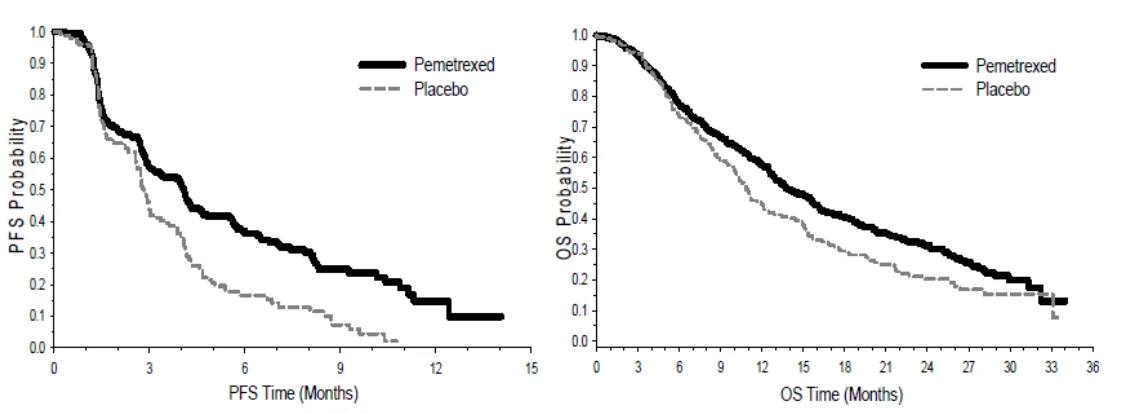
Figure 8: Maintenance Therapy Following Pemetrexed disodium Plus Cisplatin Induction: Kaplan Meier Curve for Progression-Free Survival and Overall Survival for Pemetrexed disodium versus Placebo in Nonsquamous NSCLC (measured from randomization)
For randomized patients, as measured from the start of pemetrexed disodium plus cisplatin first line induction treatment, the median investigator-assessed PFS was 6.9 months for the pemetrexed disodium arm and 5.6 months for the placebo arm (HR = 0.59, 95% CI = 0.47-
0.74). The median OS was 16.9 months for the pemetrexed disodium arm and 14.0 months for the placebo arm (HR = 0.78, 95% CI = 0.64-0.96).
The relative treatment effect of pemetrexed disodium across subgroups (including disease stage, induction response, ECOG PS, smoking status, gender, histology, and age) is presented in Figure 9 below.
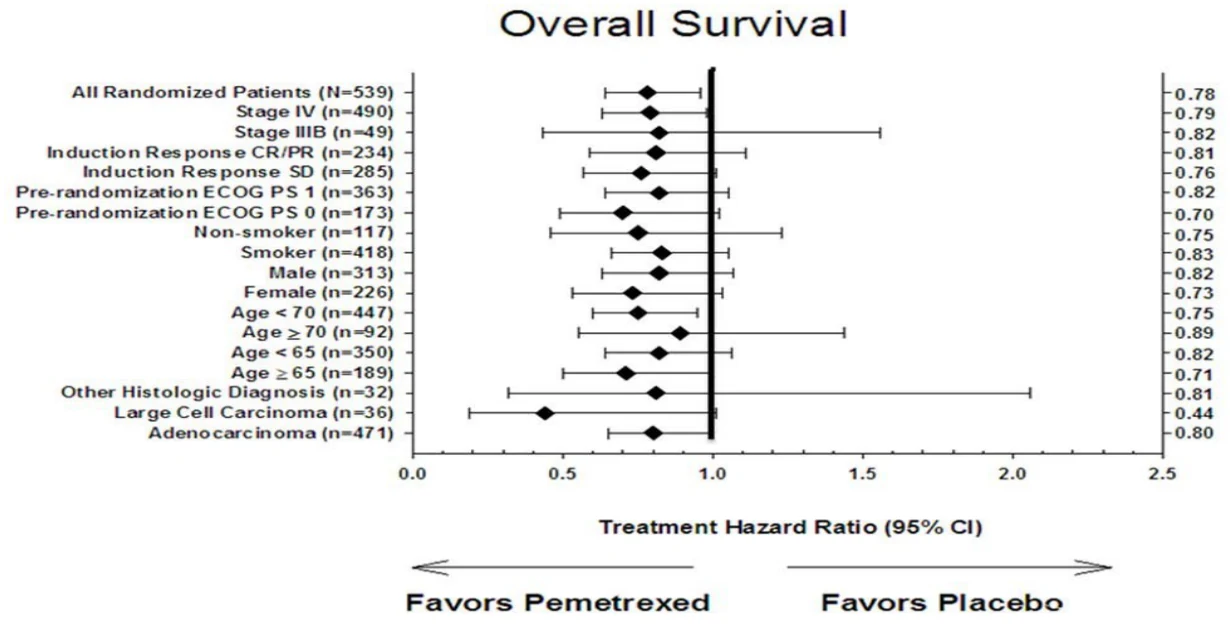
Abbreviations: CI = confidence interval; CR = complete response; ECOG PS = Eastern Cooperative Oncology Group performance status; N = number of randomized patients; n = number of patients in category; PR = partial response; SD = stable disease.
Figure 9: Overall Survival Hazard Ratios (Pemetrexed disodium over placebo) in Subgroups According to Baseline Characteristics for All Randomized Patients, PARAMOUNT.
A total of 25 patients randomized in this study received reduced dose pemetrexed during the induction phase, 18 of whom continued with the reduced dose in the maintenance phase. Clinical efficacy and safety of the pemetrexed maintenance therapy in this subgroup is unclear (post-hoc analysis). However, patient number is small and definitive conclusion cannot be established.
Second Line – Nonsquamous Non-Small Cell Lung Cancer - Pemetrexed disodium versus Docetaxel
Study Demographics and Trial Design
Table 26: Patient Demographics - Clinical Trial Supporting Efficacy of Pemetrexed disodium versus Docetaxel in the Treatment of NSCLC After Prior Chemotherapy
| Study # | Trial Design | Dosage, route of administration and duration | Study subjects and Gender (N=number) | Median age (Range) |
H3E-MC- JMEI | randomized, Phase 3, controlled, open-label, multicentre study | Pemetrexed disodium 500 mg/m2 10-minute iv infusion Docetaxel 75 mg/m2 1-hour iv infusion Treatment Duration: 21-day cycle median of 4 cycles of therapy for both arms (Pemetrexed disodium: 1 to 20 cycles; Docetaxel: 1 to 14 cycles) | Entered: 698 Randomized: 571 Pemetrexed disodium: 283 (Male:194; Female:89) Docetaxel: 288 (Male 217; Female:71) | Pemetrexed disodium arm Median age = 59 Age range = 22-81 Docetaxel arm Median age = 57 Age range = 28-87 |
A single, Phase 3 multi-center, randomized, open label study was conducted to compare the safety and efficacy of pemetrexed disodium to docetaxel in patients with locally advanced or metastatic (Stage III or IV) NSCLC after prior chemotherapy. The study was intended to show either an overall survival superiority or non-inferiority of pemetrexed disodium to docetaxel. pemetrexed disodium was administered intravenously over 10 minutes at a dose of 500 mg/m2 and docetaxel was administered at 75 mg/m2 as a 1-hour intravenous infusion. Both drugs were given on Day 1 of each 21-day cycle. All patients treated with pemetrexed disodium received vitamin supplementation with folic acid and vitamin B12. A summary of the patient demographics and characteristics are shown in Tables 26 and 27, respectively.
Table 27: Summary of Patient Characteristics
| Patient Characteristic | Pemetrexed disodium (N=283) | Docetaxel (N=288) | |||
|---|---|---|---|---|---|
| Age (yrs) | |||||
| Median age, years (range) | 59 (22-81) | 57 (28-87) | |||
| Gender (%) | |||||
| Female | 31.4 | 24.7 | |||
| Male | 68.6 | 75.3 | |||
| ECOG PS 0 or 1 (%)a | 88.6 | 87.6 | |||
| Stage III/IV disease (%) | 25.1/74.9 | 25.3/74.7 | |||
| Homocysteine level <12 mcm (%) | 71.4 | 68.9 | |||
| Diagnosis/Histology (%) | |||||
| Adenocarcinoma | 54.4 | 49.3 | |||
| Squamous | 27.6 | 32.3 | |||
| Best response to prior chemotherapy (%) | |||||
| CR/PR | 35.6 | 36.5 | |||
| Time since last chemotherapy (%) | |||||
| <3 mo | 50.4 | 48.1 | |||
| >3 mo | 49.6 | 51.9 | |||
| Prior therapy (%) | |||||
| Prior paclitaxel | 25.8 | 27.8 | |||
| Prior platinum | 92.6 | 89.9 | |||
Abbreviations: CR = complete response; ECOG = Eastern Cooperative Oncology Group; ITT = intent to treat; N = number of patients; PR = partial response; PS = performance status.
a Performance status was not reported for all treated patients. Percentages are representative of N=264 for the pemetrexed disodium and N=274 for the docetaxel arm.
Baseline demographic and disease characteristics were similar between the two treatment arms. Approximately three-quarters of the patients were men, reflecting the gender ratio of this disease observed in the general population. The median age of 58 years with a wide age range (22 to 87 years) corresponds with the expected demographics of the general NSCLC patient population. Approximately half of the patients had adenocarcinoma, and approximately 30% had squamous cell carcinoma. About three-quarters of patients presented with Stage IV disease at study entry, as would be expected for patients who experienced a relapse of a previously treated disease. Eighty-eight percent had good performance status. Approximately 90% of the patients had received prior platinum-containing regimens.
Table 28 presents a summary of reported prior therapies for the intent to treat (ITT) population. The two treatment arms were well balanced with respect to all prior therapy categories.
Table 28: Summary of Reported Prior Therapies
Pemetrexed disodium (N=283) n (%) | Docetaxel (N=288) n (%) | |
| Prior surgery | 64 (22.6) | 67 (23.3) |
| Prior radiotherapy | 125 (44.2) | 131 (45.5) |
| Prior immunotherapy | 1 (0.4) | 1 (0.3) |
| Prior chemotherapy | 283 (100) | 288 (100) |
| Adjuvant setting | 21 (7.4) | 18 (6.3) |
| Neoadjuvant setting | 26 (9.2) | 23 (8.0) |
| Locally advanced setting | 101 (35.7) | 111 (38.5) |
| Metastatic setting | 147 (51.9) | 148 (51.4) |
| One line of therapy | 143 (50.5) | 146 (50.7) |
| Two lines of therapy | 4 (1.4) | 2 (0.7) |
| Drug therapy needing classification | 1 (0.4) | 0 |
Abbreviations: n = number of patients who received specified prior therapy; N = number of intent to treat (ITT) patients
Study Results
The primary endpoint was overall survival. The median survival time was 8.3 months in the pemetrexed disodium treatment arm and 7.9 months in the docetaxel arm, with a hazard ratio of 0.99. The study did not achieve overall survival superiority of pemetrexed disodium over docetaxel. Non- inferiority of pemetrexed disodium to docetaxel could not be demonstrated because a reliable and consistent survival effect of docetaxel required for a non-inferiority analyses could not be estimated from historical trials. However, the similarity of the response rate, median survival rate and 1-year survival rate between pemetrexed disodium and docetaxel was sufficient evidence to consider pemetrexed disodium as a treatment option for patients with NSCLC after prior chemotherapy. See Table 29.
Table 29: Efficacy of Pemetrexed disodium versus Docetaxel in Non-Small Cell Lung Cancer
| Pemetrexed disodium (N=283) | Docetaxel (N=288) | |||||||||
Median overall survival (95% CI) | 8.3 mos (7.0-9.4) | 7.9 mos (6.3-9.2) | ||||||||
| Fixed Margin Method | 0.99 (0.82-1.20) 0.226 | |||||||||
| Hazard ratio (HR) | ||||||||||
| (95% CI) | ||||||||||
| Non-inferiority p-value | ||||||||||
| Log rank p-value | 0.93 | |||||||||
| 1-year survival | 29.7% | 29.7% | ||||||||
| (95% CI) | (23.7-35.6) | (23.9-35.5) | ||||||||
| Overall response rate* | 9.1% | 8.8% | ||||||||
| (95% CI) | (5.9-13.2) | (5.7-12.8) | ||||||||
| p-value | >0.999 | |||||||||
Abbreviations: CI = confidence interval; HR = hazard ratio; N = number of intent to treat (ITT) patients
- * Number of qualified patients on the Pemetrexed disodium arm (N=264) and docetaxel arm (N = 274).
Figure 10 displays the Kaplan-Meier (K-M) survival time graph for the ITT population. Graphs of survival distributions for pemetrexed disodium and docetaxel arms are superimposable.
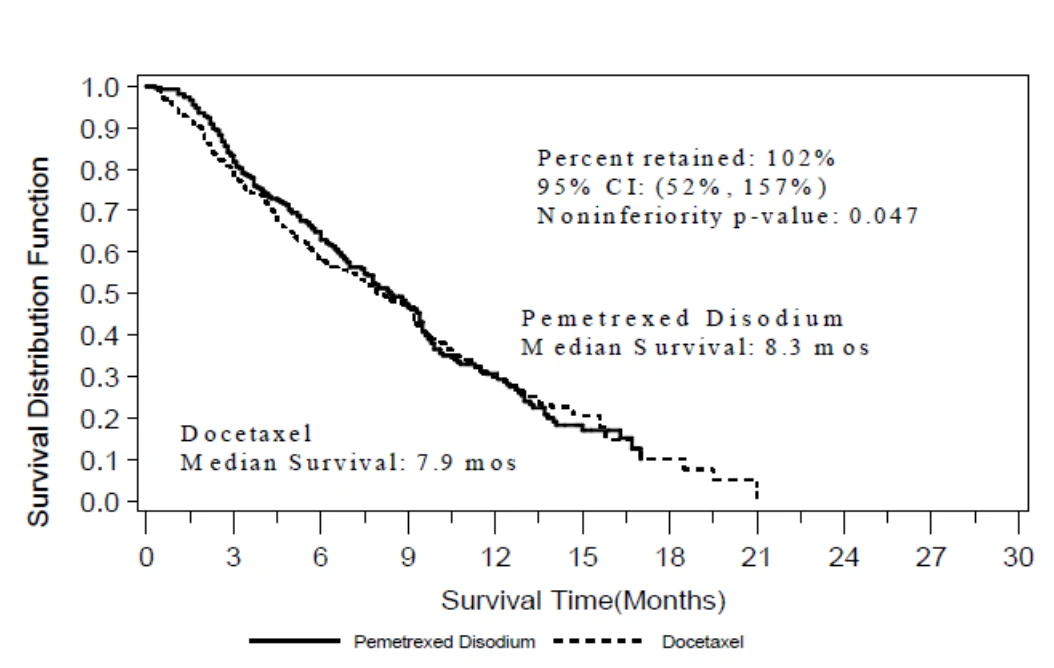
Figure 10: Kaplan-Meier Estimates of Survival Time for Pemetrexed disodium versus Docetaxel.
A retrospective analysis of the impact of NSCLC histology on the treatment effect on overall survival was in favour of pemetrexed disodium versus docetaxel for patients with nonsquamous NSCLC (n = 399, 9.3 versus 8.0 months, adjusted HR = 0.78; 95% CI = 0 .61-1.00, p = 0.047) and was in favour of docetaxel for patients with squamous cell carcinoma (n = 172, 6.2 versus 7.4 months, adjusted HR = 1.56; 95% CI = 1.08-2.26, p = 0.018).
There were no significant differences in the results of the secondary endpoints between patients on the pemetrexed disodium arm and docetaxel arm. See Table 30.
Table 30: Secondary Efficacy Endpoints – Pemetrexed disodium versus Docetaxel in Non-Small Cell Lung Cancer
| Pemetrexed disodium | Docetaxel | |||||||
|---|---|---|---|---|---|---|---|---|
| Progression-free Survival (months) | ||||||||
| No. of patients evaluated | 283 | 288 | ||||||
| Median | 2.9 | 2.9 | ||||||
| HR (95% CI) | 0.97 (0.82 – 1.16) | |||||||
| Wald p-value | 0.721 | |||||||
| Time to Progressive Disease (months) | ||||||||
| No. of patients evaluated | 283 | 288 | ||||||
| Median | 3.4 | 3.5 | ||||||
| HR (95% CI) | 0.97 (0.80 – 1.17) | |||||||
| Wald p-value | 0.721 | |||||||
| Time to Treatment Failure (months) | ||||||||
| No. of patients evaluated | 282 | 288 | ||||||
| Median | 2.3 | 2.1 | ||||||
| HR (95% CI) | 0.84 (0.71–0.997) | |||||||
| Wald p-value | 0.046 | |||||||
| Time to Tumour Response (months) | ||||||||
| No. of patients evaluated | 24 | 24 | ||||||
| Median | 2.9 | 1.7 | ||||||
| HR (95% CI) | 0.84 (0.71–0.997) | |||||||
| ANOVA p-value | 0.105 | |||||||
| Duration of Clinical Response (months) | ||||||||
| No. of patients evaluated | 24 | 24 | ||||||
| Median | 4.6 | 5.3 | ||||||
| HR (95% CI) | 0.77 (0.40–1.47) | |||||||
| Wald p-value | 0.427 | |||||||
| Duration of Clinical Benefit (months) | ||||||||
| No. of patients evaluated | 145 | 151 | ||||||
| Median | 5.4 | 5.2 | ||||||
| HR (95% CI) | 0.91 (0.71–1.16) | |||||||
| Wald p-value | 0.450 | |||||||
No differences were identified between the two treatment arms in any of the patient Lung Cancer Symptom Scales (LCSS). Both treatment arms reported initial increases in average symptom burden index, symptom distress, and interference with activity level that subsequently stabilized. Both arms reported initial deterioration in global quality of life and total LCSS, which subsequently stabilized.
DETAILED PHARMACOLOGY
Pharmacodynamics:
Preclinical studies have shown that pemetrexed inhibited, although with different potency (Table 31) the in vitro growth of multiple cell lines, including mesothelioma (MSTO-211H, NCI-H2052), non-small cell lung (A549, LX-1), breast (MCF7, ZR-75-1), colorectal (GC3, HT8, WiDr), leukemia (CCRF-CEM, L1210), and ovarian (IGROV1, SKOV3) carcinomas, as well as cells of these tumor types derived from fresh patient specimens. Additionally, these in vitro studies have shown that in certain cell lines, additive or greater than additive growth inhibitory activity could possibly be obtained when pemetrexed was optimally combined with radiation (WiDr colon,
MCF7 breast, HeLa cervix, and LX1 lung carcinomas) as well as other antineoplastic agents, such as cisplatin (NCI-H23 and NCI-H460 lung carcinoma), carboplatin (NCI-H23 lung, SKOV3 ovarian, HT29 colorectal carcinomas), oxaliplatin (HT29 colon carcinoma), doxorubicin (ZR-75-1 breast carcinoma), gemcitabine (HCT8 and HT29 colorectal carcinoma), docetaxel and paclitaxel (NCI-H460 lung carcinoma). In particular, studies with the MSTO-211H mesothelioma cell line showed synergistic effects when pemetrexed was combined concurrently with cisplatin. However, the ratios pemetrexed/cisplatin used in these experiments were different than the ratio used in humans. In vitro studies have also suggested that pemetrexed may be active against certain tumor cells that are resistant to methotrexate, 5-fluorouracil, and raltitrexed. Additionally, preclinical animal studies have suggested that folic acid can reduce the severity of the drug-induced toxicity with preservation of the antitumor activity of pemetrexed on several cell lines. Furthermore, folic acid and vitamin B12 were shown not to have negative impact on the antitumor activity of pemetrexed in mice. However, no studies of this type have been done on mesothelioma bearing animals.
Table 31: IC50 Values of Pemetrexed for Representative Tumor Cell Lines
| Tumor Typea | IC50 (nM) |
| Mesothelioma MSTO-211H | 30 |
| Mesothelioma NCI-H2052 | 209 |
| NSCLC LX-1 | 4 |
| NSCLS A549 | 156 |
| CCRF CEM leukemia | 23 to 54 |
| L1210 murine leukemia | 14 |
| Colon carcinoma GC3 | 34 |
| Colon carcinoma HCT8 | 220 |
| Breast carcinoma MCF7 | 8.1 to 31 |
| Breast carcinoma ZR-75-1 | 110 |
| Ovarian carcinoma IGROV-1 | 44 |
a Examples included here are for commonly available cell lines that have not undergone drug selection or been subjected to genetic alterations.
Absolute neutrophil counts (ANC) following single-agent administration of pemetrexed to non-vitamin-supplemented patients were characterized using a population pharmacodynamic analyses. Severity of hematologic toxicity, as measured by the depth of the ANC nadir, is influenced primarily by the magnitude of systemic exposure (AUC). A 5- to 6-fold increase in pemetrexed AUC produces a 5- to 6-fold lowering of the ANC nadir. Though less pronounced than AUC, increased cystathionine or homocysteine concentrations correlate with a lowering of the ANC nadir, supporting the use of vitamin supplementation. There is no cumulative effect of pemetrexed exposure on ANC nadir over multiple treatment cycles.
Time to ANC nadir also correlates with pemetrexed systemic exposure (AUC), and varied from 8 to 9.6 days after pemetrexed administration over a range of exposures from 38.3 to 316.8 mcg•hr/mL. Return to baseline ANC occurs from 4.2 to 7.5 days following the nadir over the same range of exposures.
TOXICOLOGY
Pemetrexed disodium has been evaluated in a comprehensive series of toxicology studies (see Table 32).
Table 32: Toxicology Program for Pemetrexed Disodium
| Study Type and Duration | Route of Administration | Species | ||||||||||
|---|---|---|---|---|---|---|---|---|---|---|---|---|
| Single-dose toxicity | Intravenous | Mouse, rat, dog | ||||||||||
| Repeat-dose toxicity | ||||||||||||
| 2-weeks (daily) | Intraperitoneal | Mouse | ||||||||||
| 6-weeks (daily, twice/week, once/week) | Intraperitoneal | Mouse | ||||||||||
| 6-month (once/week) | Intraperitoneal | Mouse | ||||||||||
| 2-weeks (daily; twice/week) | Intravenous | Dog | ||||||||||
| 6-weeks (daily, twice/week, once/week) | Intravenous | Dog | ||||||||||
| 1-month (once/week), 3 weeks reversibility | Intravenous | Dog | ||||||||||
| 6-month (once/week or once every 3 weeks) | Intravenous | Dog | ||||||||||
| 9-month (once every 3 weeks) | Intravenous | Dog | ||||||||||
| Genotoxicity | ||||||||||||
| Bacterial mutation (Ames) | In vitro | S. typhimurium, E. coli | ||||||||||
| Forward mutation | In vitro | HGPRT+ CHO cells | ||||||||||
| Chromosome aberration | In vitro | CHO cells | ||||||||||
| Micronucleus | Intravenous | Mouse | ||||||||||
| Reproductive and Developmental Toxicity | ||||||||||||
| Male fertility study | Intraperitoneal | Mouse | ||||||||||
| Embryo-fetal study | Intravenous | Mouse | ||||||||||
| Other Toxicity Studies | ||||||||||||
| Leucovorin rescue | Intravenous | Dog | ||||||||||
| Thymidine rescue | Intravenous | Dog | ||||||||||
| Ocular irritation | Conjunctival sac of eye | Rabbit | ||||||||||
| Dermal irritation | Dermal | Rabbit | ||||||||||
Intravenous dosing is the route of administration in humans. All toxicology studies in dogs were conducted by intravenous administration of pemetrexed. The intraperitoneal route was used to assess its repeat-dose toxicity in mice. Pharmacokinetic studies indicated that pemetrexed was rapidly absorbed when administered by the intraperitoneal route, with overall pharmacokinetic profile comparable to the intravenous route. The route of administration of pemetrexed was changed from intraperitoneal to intravenous in the developmental toxicity study in mice to avoid potential damage to the pregnant uterus by the injection needle.
Single-dose toxicity studies with pemetrexed have been performed in mice rats and dogs by the intravenous route of administration. Pemetrexed demonstrated low acute toxicity in mice at the dose of 4722 mg/m2, and in male rats, the MLD was 7922 mg/m2. Dogs' MLD was not determined.
The toxicologic profile of pemetrexed following repeat dosing in dogs and mice is consistent with the known antiproliferative activities of folate antimetabolites. Lesions of mucositis, enteropathy, lymphoid and bone marrow hypocellularity, and effects on spermatogenesis are commonly encountered with folate antimetabolites and other oncolytic agents. The major pathologic effects associated with pemetrexed administration occurred in the intestinal tract and lymphoid tissues; the bone marrow was only minimally affected in dogs and mice given repeated doses up to 6 weeks. However, hematotoxicity was the dose-limiting effect in dogs treated for longer than 6 weeks. Clinical manifestations of toxicity were delayed approximately l week from the time of dose administration, with individual animal variability in response to the compound. Modest signs of toxicity were generally reversible with supportive care and interruption of pemetrexed treatment. Supportive care included parenteral fluid therapy, nutritional supplementation, and antibiotics, when clinically appropriate.
Dogs were more sensitive to the toxic effects of pemetrexed than mice. This finding was expected, as mice have a “self-rescue” mechanism in a circulating thymidine moiety that can serve as a replacement source in folate-antagonized cells. Additionally, dogs are generally more predictive of systemic toxicity in man than are mice. Mice tolerated daily doses of 26.2 mg/kg (78.6 mg/m2) for 6 weeks and 700 mg/kg once weekly for 6 months without any compound-related deaths or clinical signs of toxicity. Most dogs (5 of 6) completed 6 weeks of daily doses of 0.11 mg/kg (2.2 mg/m2) with minimal clinicopathologic effects. The 1 dog that failed to complete the treatment period had become progressively anorectic, which accentuated the inherent toxicity of the folate antagonism. Higher daily doses were not tolerated for more than 3 weeks. Prominent toxicity was generally more evident in the daily dose schedule, even though the weekly dose was a much larger total dose of pemetrexed. The maximum tolerated dose (MTD) for mice given pemetrexed once weekly for 6 weeks was 314.8 mg/kg (944.4 mg/m2). The minimally toxic dose for dogs following four doses of pemetrexed given once per week was 25 mg/kg (500 mg/m2). Four doses of pemetrexed (25 mg/kg) given once per week caused slight-to-moderate decreases in neutrophils, lymphocytes, platelets, and reticulocytes. Primary histopathologic observation was minimal- to-slight enteropathy throughout the gastrointestinal tract. All changes except for the decreased platelet count fully or partially reversed within the 3-week recovery period.
A 6-month repeat dose study in beagle dog was designed to evaluate the chronic toxicity of pemetrexed at doses of 0, 10, or 25 mg/kg (0, 200, or 500 mg/m2) given intravenously once per week, which bridges directly to the 1-month study described above. However, after approximately 3 months, the dosing frequency was changed to once every 3 weeks for the dogs in the 10-mg/kg group and dosing was discontinued for the 25-mg/kg group due to hematotoxicity. Therefore, hematotoxicity was the dose-limiting effect in this study, and weekly administration of 10 or 25 mg/kg exceeded a tolerated dose. Hematotoxicity was reversible as demonstrated during a 3-month drug holiday in the dogs that had been given 25 mg/kg. Further, even when the10-mg/kg group reached critically low platelet and neutrophil levels, a 3-week period without treatment was sufficient for hematology parameters to completely recover.
An additional chronic study was conducted in which dogs were given pemetrexed intravenously at doses of 0, 10, or 25 mg/kg (0, 200, or 500 mg/m2) once every 3 weeks for 9 months. The observed effects were similar to those in the 6-month repeat-dose study in dogs, however, the hematotoxicity was not as severe due to the change in dosing regimen from once a week in the 6-month study to once every 3 weeks in the 9-month study. Additional changes observed in the 9-month study included decreased testes weight with degeneration/necrosis of the seminiferous epithelium and minimal-to-slight renal tubular karyomegaly and degeneration with no organ weight or clinical pathology correlates. This was observed in male dogs only. The effects on the testes, although not seen in previous studies (possibly due to the age of the dogs), were not unexpected based on the effects in the mouse and the cytotoxic nature of pemetrexed.
Pemetrexed was positive in an in vivo mouse micronucleus assay. This finding was not unexpected with a compound that causes accumulation of deoxyuridine monophosphate through the inhibition of thymidylate synthase. Therefore, pemetrexed may be a potential clastogenic hazard for man.
In studies on mice, pemetrexed was found to be embryotoxic at a dose of 30 mg/m2 (1/17 the recommended human dose) and all litters were entirely resorbed at a dose of 150 mg/m2 (1/3 the recommended human dose) when given in gestation days 6 through 15. Incomplete ossification was observed at a dose of 0.6 mg/m2 (1/833 of the human dose). Pemetrexed was also fetotoxic (cleft palate) at a dose of 15 mg/m2 (1/33 the recommended human dose).
Administration of pemetrexed to pregnant mice resulted in decreased fetal weight at doses
≥ 0.6 mg/m2, incomplete ossification of some skeletal structures at doses ≥ 3 mg/m2, and cleft palate at 15 mg/m2. These observations were not unexpected findings for this class of compound (folic acid antimetabolite) and were consistent with previously reported findings with folic acid antagonists and folic acid deficiency. Administration of pemetrexed at doses of 0.3 to 30 mg/m2 resulted in male reproductive toxicity characterized by slightly reduced fertility rates and testicular atrophy and epididymal hypospermia.
Two studies were conducted to evaluate potential rescue agents (leucovorin and thymidine) for treatment of severe toxicity due to pemetrexed administration. In the leucovorin rescue study, both clinical signs of toxicity and hematological alterations were reversed by coadministration of leucovorin, a reduced form of folate. In the thymidine rescue study, subsequent administration of thymidine as a continuous infusion for 3 days was successful in rescuing dogs from life-threatening toxicity associated with pemetrexed.
Pemetrexed was found to be a mild ocular irritant and a moderate dermal irritant when evaluated in rabbits. These studies were done to ensure workplace safety.
REFERENCES
- 1.
AMA Council on Scientific Affairs. Guidelines for Handling Parenteral Antineoplastics.
JAMA. 1985;253:1590-1591.
- 2. American Society of Hospital Pharmacists. ASHP Technical Assistance Bulletin on Handling Cytotoxic and Hazardous Drugs. Am J Hosp Pharm. 1990;47:1033-1049.
- 3. Barlesi F, Tummino C, Tasei A, Astoul P. 2006. Unsuccessful rechallenge with Pemetrexed after a previous radiation recall dermatitis. Lung Cancer 54, 423-425.
- 4. Bleyer WA. 1989. New vistas for leucovorin in cancer chemotherapy. Cancer 63:995 -1007.
- 5. Ceppi P, Volante M, Saviozzi S, Rapa I, Novello S, Cambieri A, Lo Iacono M, Cappia S, Papotti M, Scagliotti GV. 2006. Squamous cell carcinoma of the lung compared with other histotypes shows higher messenger RNA and protein levels for thymidylate synthase. Cancer 107(7):1589-1596.
- 6. Clinical Oncological Society of Australia. Guidelines and Recommendations for Safe Handling of Antineoplastic Agents. Med J Australia. 1983;1:426-428.
- 7. Ciuleanu T, Brodowicz T, Zielinski C, Kim JH, Krzakowski M, Laack E, Wu Y-L, Bover I, Begbie S, Tzekova V, Cucevic B, Pereira JR, Yang SH, Madhaven J, Sugarman KP, Peterson P, John WJ, Krejcy K, Belani CP. 2009. Maintenance pemetrexed plus best supportive care versus placebo plus best supportive care for non-small-cell lung cancer: a randomized, double-blind, phase 3 study. Lancet 374:1432-1440.
- 8.
Controlling Occupational Exposure to Hazardous Drugs. (OSHA Work-Practice Guidelines).
Am J Health-Syst Pharm. 1996;53:1669-1685.
- 9. Freireich EJ, Gehan EA, Rall DP, Schmidt LH, Skipper HE. 1966. Quantitative comparison of toxicity of anticancer agents in mouse, rat, hamster, dog, monkey, and man. Cancer Chemother Rep 50:219-244.
- 10.
Giovannetti E, Mey V, Nannizzi S, Pasqualetti G, Marini L, Del Tacca M, Danesi R. 2005.
Cellular and pharmacogenetics foundation of synergistic interaction of pemetrexed and gemcitibine in human non-small-cell lung cancer cells. Mol Pharmacol 68(1):110-118.
- 11. Hanna N, Shepherd FA, Fossella FV, Pereira JR, De Marinis F, von Pawel J, Gatzemeier U, Chang Yao Tsao T, Pless M, Muller T, Lim HL, Desch C, Szondy K, Gervais R, Shaharyar, Manegold C, Paul S, Paoletti P, Einhorn L, Bunn Jr P. 2004. Randomized Phase III Trial of Pemetrexed versus Docetaxel in Patients with Non-Small-Cell Lung Cancer Previously Treated With Chemotherapy. Journal of Clinical Oncology 22(9); 1589-1597.
- 12.
Hureaux J, Le Guen Y, Tuchais, C, Savary L, Urban T. 2005. Radiation recall dermatitis with
- pemetrexed. Lung Cancer 50, 255-258.
- 13. Jackman AL, Taylor GA, Calvert AH, Harrap KR. 1984. Modulation of anti-metabolite effects. Effects of thymidine on the efficacy of the quinazoline-based thymidylate synthetase inhibitor, CB3717. Biochem Pharmacol 33:3269-3275.
- 14. Jones RB, Frank R, Mass T. 1983. Safe Handling of Chemotherapeutic Agents: A Report from the Mount Sinai Medical Center. CA A Cancer J for Clin. 33:258-263.
- 15. National Study Commission on Cytotoxic Exposure-Recommendations for Handling Cytotoxic Agents. 1987. Available from Louis P. Jeffrey, ScD, Chairman, National Study Commission on Cytotoxic Exposure. Massachusetts College of Pharmacy and Allied Health Sciences, 179 Longwood Avenue, Boston, MA 02115.
- 16. Oncology Nursing Society (ONS) Clinical Practice Committee. Cancer Chemotherapy Guidelines and Recommendations for Practice. Pittsburgh, PA: Oncology Nursing Society; 1999:32-41.
- 17. Paz-Ares L, de Marinis F, Dediu M, Thomas M, Pujol JL, Bidoli P, Molinier O, Sahoo TP, Laack E, Reck M, Corral J, Melemed S, John W, Chouaki N, Zimmermann AH, Visseren- Grul C, Gridelli C. Maintenance therapy with pemetrexed plus best supportive care versus placebo plus best supportive care after induction therapy with pemetrexed plus cisplatin for advanced non-squamous non-small-cell lung cancer (PARAMOUNT): a double-blind, phase 3, randomised controlled trial. Lancet Oncol. 2012a Feb 15; 13(3): 247-255.
- 18. Peterson P, Park K, Fossella F, et al. Is pemetrexed more effective in adenocarcinoma and large cell lung cancer than in squamous cell carcinoma? A retrospective analysis of a phase III trial of pemetrexed vs docetaxel in previously treated patients with advanced non-small cell lung cancer (NSCLC). J Thoracic Oncol 2007;2 Suppl 4:S851.
- 19. Philips FS, Sternberg SS, Sodergren JE, Vidal P. 1971. Toxicologic studies of the 2,4- diamino-quinazoline antifolate, methasquin (NSC-122870). Cancer Chemother Rep 55:35- 42.
- 20.
Recommendations for the Safe Handling of Parenteral Antineoplastic Drugs.
Washington, DC: Division of Safety, Clinical Center Pharmacy Department and Cancer Nursing Services, National Institutes of Health; 1992. US Dept of Health and Human Services, Public Health Service Publication NIH 92-2621.
- 21. Sandler AB, Nemunaitis C, Denham J et al. 2000. Phase III Trial of Gemcitabine Plus Cisplatin Versus Cisplatin Alone in Patients with Locally Advanced or Metastatic Non-Small Cell Lung Cancer. J Clin Oncol 18:122-130.
- 22. Scagliotti GS, Hanna N, Fossella F, Sugarman K, Blatter J, Peterson P, Simms L, Shepherd FA. The Differential Efficacy of Pemetrexed According to NSCLC Histology: A Review of Two Phase III Studies. The Oncologist 2009; 14:000-000.
- 23.
Schardein JL. 1993. Cancer chemotherapeutic agents. In: Chemically induced birth defects.
2nd ed. New York: Marcel Dekker Inc. p 457-508.
- 24. Sigmond J, Backus HHJ, Wouters D, Temmink OH, Jansen G, Peters GJ. 2003. Induction of resistance to the multitargeted antifolate Pemetrexed (ALIMTA) in WiDr human colon cancer cells is associated with thymidylate synthase overexpression. Biochem Pharmacol 66(3):431-438.
- 25. Scagliotti GV et al. Phase III Study Comparing Cisplatin Plus Gemcitabine With Cisplatin Plus Pemetrexed in Chemotherapy-Naive Patients With Advanced-Stage Non–Small-Cell Lung Cancer. J Clin Oncol 2008; 26:3543-3551.
- 26. Valeriote F, Santelli G. 1984. 5-Fluorouracil. Pharmacol Ther 24:107-132.
- 27.
Vogelzang NJ, Rusthoven J, Paoletti P, Denham C, Kaukel E, Ruffie P et al. July 2003.
Phase III single-blinded study of pemetrexed + cisplatin vs. cisplatin alone in chemonaive patients with malignant pleural mesothelioma. Journal of Clinical Oncology 21(14):2636- 2644.
- 28. Product Monograph PrALIMTA®, manufactured by Eli Lilly Canada Inc., Date of Revision: May 10, 2013, Control Number: 160176