


Product Monograph - PMS-Rupatadine
SUMMARY PRODUCT INFORMATION
| Route of Administration | Dosage Form / Strength | Nonmedicinal Ingredients |
|---|---|---|
| Oral | Tablet / 10 mg | Lactose monohydrate, magnesium stearate, microcrystalline cellulose, pregelatinized starch, iron oxide yellow no. 10, red iron oxide. |
INDICATIONS AND CLINICAL USE
- Allergic Rhinitis: pms-RUPATADINE (rupatadine) is indicated for the symptomatic relief of nasal and non-nasal symptoms of seasonal allergic rhinitis (SAR) and perennial allergic rhinitis (PAR).
- Chronic Spontaneous Urticaria: pms-RUPATADINE (rupatadine) is indicated for the relief of the symptoms associated with chronic spontaneous urticaria (CSU), e.g. pruritus and hives.
Geriatrics (> 65 years of age):
There is limited information on the use of rupatadine in subjects over 65 years of age. Although no overall differences in effectiveness or safety were observed in clinical trials, higher sensitivity of some older individuals cannot be excluded.
Pediatrics (<12 years of age):
pms-RUPATADINE 10 mg tablets are not recommended for use in children below 12 years of age.
CONTRAINDICATIONS
pms-RUPATADINE (rupatadine) is contraindicated in patients with:
- hypersensitivity to rupatadine or to any ingredient in the formulation or component of the container. For a complete listing, see the DOSAGE FORMS, COMPOSITION AND PACKAGING.
history of QT prolongation and/or torsade de pointes, including congenital long QT
- syndromes, history of cardiac arrhythmias (see WARNINGS AND PRECAUTIONS).
- use of CYP3A4 inhibitors or use of other QTc-prolonging drugs (see DRUG INTERACTIONS).
pms-RUPATADINE Tablets: Due to the presence of lactose, patients with rare hereditary problems of galactose intolerance, glucose-galactose malabsorption or the Lapp lactase deficiency should not take pms-RUPATADINE Tablets.
WARNINGS AND PRECAUTIONS
General
Co-administration of pms-RUPATADINE (rupatadine) with ketoconazole and other potent CYP3A4 inhibitors is not recommended (see CONTRAINDICATIONS).
Co-administration of pms-RUPATADINE with erythromycin and other moderate CYP3A4 inhibitors (azithromycin, fluconazole, diltiazem) should be avoided.
Caution should be taken when pms-RUPATADINE is co-administered with drugs with narrow therapeutic windows since knowledge of the effect of rupatadine on other drugs is limited.
Rupatadine had no influence on the ability to drive and use machines. Nevertheless, care should be taken before driving or using machinery until the patient’s individual reaction on pms-RUPATADINE has been established.
Cardiovascular
Rupatadine has been associated with QTc interval prolongation (see ACTION AND CLINICAL PHARMACOLOGY, Cardiac Electrophysiology). One event of torsade de pointes has been reported with Rupatadine during post-market use (see ADVERSE REACTIONS, Post-Market Adverse Drug Reactions).
Torsade de pointes is a polymorphic ventricular tachyarrhythmia. Generally, the risk of torsade de pointes increases with the magnitude of QTc prolongation produced by the drug. Torsade de pointes may be asymptomatic or experienced by the patient as dizziness, palpitations, syncope, or seizures. If sustained, torsade de pointes can progress to ventricular fibrillation and sudden cardiac death.
pms-RUPATADINE (rupatadine) should not be used in patients with a history of QTc prolongation and/or torsade de pointes, including congenital long QT syndromes, or a history of other cardiac arrhythmias (see CONTRAINDICATIONS). Concomitant administration of pms-RUPATADINE with other QTc prolonging drugs or drugs that inhibit CYP3A4 is contraindicated (see CONTRAINDICATIONS).
Particular care should be exercised when administering pms-RUPATADINE to patients who are suspected to be at an increased risk of experiencing torsade de pointes during treatment with a QTc- prolonging drug or drugs that can cause electrolyte imbalance.
When drugs that prolong the QTc interval are prescribed, healthcare professionals should counsel their patients concerning the nature and implications of the ECG changes, underlying diseases and disorders that are considered to represent risk factors, demonstrated and predicted drug-drug interactions, symptoms suggestive of arrhythmia, risk management strategies, and other information relevant to the use of the drug.
Hepatic/Biliary/Pancreatic
There is no clinical experience in patients with hepatic insufficiency. Therefore, the use of pms-RUPATADINE is not recommended in patients with impaired liver functions.
Immune
Although rare, hypersensitivity reactions (including anaphylactic reactions, angioedema and urticaria) have been reported in post-marketing experience with rupatadine 10 mg tablets.
Skeletal Muscle Effects
Effects on skeletal muscle such as myalgia, and muscle weakness have been reported in patients treated with rupatadine. Use caution when co-administer with statins.
Renal
There is no clinical experience in patients with renal insufficiency. Therefore, the use of pms-RUPATADINE is not recommended in patients with impaired kidney functions.
Special Populations
Pregnant Women:
There are no adequate and well-controlled studies in pregnant women. Until such data become available, pms-RUPATADINE should be avoided during pregnancy, unless advised otherwise by a physician.
Animal studies do not indicate direct or indirect harmful effects with respect to pregnancy, embryonal/foetal development, parturition or postnatal development (see TOXICOLOGY). As a precautionary measure due to limited availability of data obtained in pregnant women, it is preferable to avoid the use of pms-RUPATADINE during pregnancy.
Nursing Women:
Studies in animals indicate that rupatadine is excreted in milk. The extent of excretion in human milk is unknown. Use of pms-RUPATADINE in nursing mothers is not recommended, unless directed otherwise by a physician.
Pediatrics (<12 years of age):
pms-RUPATADINE 10 mg tablets are not recommended for use in children below 12 years of age.
Geriatrics (> 65 years of age):
pms-RUPATADINE 10 mg tablets should be used with caution in elderly patients (65 years and older). Although no overall differences in effectiveness or safety were observed in clinical trials, higher sensitivity of some older individuals cannot be excluded.
Monitoring and Laboratory Tests:
Increases of blood creatine phosphokinase, alanine aminotransferase and aspartate aminotransferase, as well as abnormalities of liver function tests were uncommonly reported in clinical trials with rupatadine 10 mg tablets in adults (see ADVERSE DRUG REACTIONS, Abnormal Hematologic and Clinical Chemistry Findings).
ADVERSE REACTIONS
Adverse Drug Reaction Overview
Adults and Adolescents (12 years and older):
A total of 3823 subjects, including 2898 patients and 925 healthy volunteers have been exposed to rupatadine tablets in clinical studies at doses ranging from 2 mg to 100 mg with 2141 subjects exposed to rupatadine 10 mg. In randomized controlled studies treatment duration ranged from one to twelve weeks. The most common adverse reactions reported with rupatadine 10 mg tablets were somnolence, headache, tiredness, asthenia, dry mouth, nausea, and dizziness. The majority of the adverse reactions observed in clinical trials were mild to moderate in severity and they usually did not require cessation of therapy.
A total of 337 patients 12 years and older were treated with rupatadine 10 mg tablets once daily up to at least 6 months with 121 patients exposed for at least 12 months.
Clinical Trial Adverse Drug Reactions
Because clinical trials are conducted under very specific conditions the adverse reaction rates observed in the clinical trials may not reflect the rates observed in practice and should not be compared to the rates in the clinical trials of another drug. Adverse drug reaction information from clinical trials is useful for identifying drug-related adverse events and for approximating rates.
Allergic Rhinitis
Adults and Adolescents (12 years and older)
Two pivotal double-blind, randomized, controlled clinical studies were conducted in patients with seasonal allergic rhinitis and perennial allergic rhinitis. Together these two studies comprise a safety population of 902 patients aged 12 years and older (302 patients received rupatadine 10 mg, 307 placebo, 118 desloratadine 5 mg, and 175 cetirizine 10 mg). The treatment period was 4 to 12 weeks.
Somnolence and headache were common CNS adverse reactions in the controlled trials of patients 12 years or older in allergic rhinitis (Table 1). Somnolence was reported in 8.8% of rupatadine-treated patients compared to 2.0% of placebo patients. Headache was reported in 5.8% of rupatadine-treated patients compared to 4.9% of placebo patients.
Table 1: Treatment-Emergent Adverse Reactions (≥1%) Observed with rupatadine 10 mg Tablets and Placebo in Pivotal Allergic Rhinitis Studies
| System Organ Class/Preferred Term | Placebo (N=307) n (%) | Rupatadine 10 mg (N=294) n (%) |
|---|---|---|
| Nervous system disorders | ||
| Somnolence | 6 (2.0%) | 26 (8.8%) |
| Headache | 15 (4.9%) | 17 (5.8%) |
| Dizziness | 4 (1.3%) | 4 (1.4%) |
| Investigations | ||
| Blood creatine phosphokinase increased | 5 (1.6%) | 7 (2.4%) |
| ECG QT Prolonged | 1 (0.3%) | 3 (1.0%) |
| Gastrointestinal disorders | ||
| Abdominal Pain | 1 (0.3%) | 5 (1.7%) |
| Vomiting | 2 (0.7%) | 3 (1.0%) |
| Epigastric Pain | 2 (0.7%) | 3 (1.0%) |
General disorders and administration site conditions Tiredness | 5 (1.6%) | 4 (1.4%) |
Chronic Spontaneous Urticaria
Adults and Adolescents (12 years and older)
In the pivotal double-blind, randomized, controlled clinical study in chronic spontaneous urticaria, patients aged 12 years and older received rupatadine 10 mg tablets (n= 112) or placebo (n=113) once daily for up to 6 weeks. The study also consisted of a rupatadine 20 mg tablets treatment group (n=109).
The incidence of somnolence was higher in the placebo group (4.4%) compared to the rupatadine-treated group (2.7%). Incidences of adverse drug reactions for placebo which are comparable or greater than for the treatment group are not uncommon for allergy medications. Blood creatine phosphokinase was reported in 2.7% of rupatadine-treated patients compared to no reports for placebo (Table 2).
Table 2: Treatment-Emergent Adverse Reactions (≥1%) Observed with rupatadine 10 mg and Placebo in Pivotal Urticaria Study
| System Organ Class/ Preferred Term | Placebo (N=113) n (%) | Rupatadine 10 mg (N=112) n (%) |
|---|---|---|
Nervous system disorders Somnolence Hypersomnia Headache | 5 (4.4%) 1 (<1%) 2 (1.8%) | 3 (2.7%) 2 (1.8%) 1 (<1%) |
Investigations Blood creatine phosphokinase increased | 0 | 3 (2.7%) |
| Gastrointestinal disorders | ||
| Dry mouth | 1 (<1%) | 2 (1.8%) |
| Nausea | 2 (1.8%) | 2 (1.8%) |
Less Common Clinical Trial Adverse Drug Reactions (<1%)
The following adverse reactions were observed less frequently (<1%) in pivotal clinical trials in allergic rhinitis and urticaria.
Blood and lymphatic system disorders: anemia
Cardiac disorders: palpitations
Ear and labyrinth disorders: motion sickness
Gastrointestinal disorders: diarrhoea, dry mouth, nausea
General disorders and administration site conditions: asthenia, pyrexia, thirsty, fatigue
Investigations: alanine aminotransferase increased, aspartate aminotransferase increased, gamma glutamyltransferase increase, alkaline phosphatase increase, weight increased
Metabolism and nutrition disorders: increased appetite
Musculoskeletal and connective tissue disorders: myalgia
Nervous system disorders: dysesthesia, hypoaesthesia, sedation, dizziness
Psychiatric disorders: depression, irritability, stupor
Skin and subcutaneous tissue disorders: eczema, rash, night sweats
Long-Term Safety:
Adults and Adolescents (12 years and older)
In two long-term safety studies of perennial allergic rhinitis, 337 patients 12 years and older were treated with rupatadine 10 mg tablets once daily up to at least 6 months with 121 patients exposed for at least 12 months. The most common adverse events (>5%) were headache, nasopharyngitis/common cold symptoms, somnolence, allergic rhinoconjunctivitis, gastroenteritis, catarrh, pharyngolaryngeal pain, acute tonsillitis, odynophagia, flu-like symptoms, fatigue, cough, and dysmenorrhoea.
Abnormal Hematologic and Clinical Chemistry Findings
Across all controlled and uncontrolled studies with rupatadine 10 mg, the incidence of blood chemistry findings reported as adverse events in rupatadine-treated subjects was similar to placebo.
There were six serious adverse events reported with rupatadine in clinical trials that were considered possibly related to study drug. Creatine phosphokinase increase was reported in three rupatadine-treated subjects (5 mg, 10 mg and 60 mg doses); all were asymptomatic and resolved. In two subjects treated with rupatadine 20 mg, aspartate aminotransferase and/or alanine aminotransferase increases were reported; all resolved.
Post-Market Adverse Drug Reactions
The post-marketing safety profile observed is consistent with that in controlled clinical trials. One case of torsade de pointes has been reported following the use of rupatadine when administered with concomitant medications known to have the potential for QT prolongation.
In post-marketing experience the following adverse reactions have been reported: arthralgia, atrial fibrillation, back pain, blood creatine phosphokinase increased, cough, dyspnoea, epistaxis, fatigue, headache, hypersensitivity reactions (including anaphylactic reactions, angioedema and urticaria), hypertension, increased appetite, myalgia, muscular weakness, nausea, off-label use, palpitations, QT prolongation, rhabdomyolysis, rash, somnolence, syncope, tachycardia, urticaria, weight increased, vertigo.
DRUG INTERACTIONS
Individual drug-drug interaction studies have been performed with rupatadine and ketoconazole, erythromycin, azithromycin, and fluoxetine. Particular care should be exercised when administering antihistamines, including rupatadine to patients who are suspected to be at an increased risk of experiencing torsade de pointes during treatment with a QTc-prolonging drug (see CONTRAINDICATIONS, WARNINGS AND PRECAUTIONS, DRUG INTERACTIONS, ACTION AND CLINICAL PHARMACOLOGY).
Concomitant administration of rupatadine with known CYP3A4 inhibitors, ketoconazole or erythromycin, increased systemic exposure of rupatadine. The concomitant administration of rupatadine with azithromycin or fluoxetine did not result in any major changes in Cmax and AUC for rupatadine and metabolites.
Drug-Drug Interactions
QTc-Prolonging Drugs:
The concurrent use of pms-RUPATADINE with other QTc prolonging drugs is not recommended (see CONTRAINDICATIONS and WARNINGS AND PRECAUTIONS).
Inhibitors of CYP3A4:
The concomitant use of these drugs with pms-RUPATADINE is not recommended (see
CONTRAINDICATIONS and WARNINGS AND PRECAUTIONS).
Drugs that Cause Electrolyte Depletion:
The use of pms-RUPATADINE with drugs that can cause electrolyte imbalance is not recommended (see WARNINGS AND PRECAUTIONS).
Lorazepam
No clinically relevant CNS effects were observed when a single oral dose of lorazepam was co- administered with rupatadine 10 mg daily.
Effects of other drugs on rupatadine
Interaction with CYP3A4 inhibitors:
The concomitant administration of rupatadine 20 mg and ketoconazole increases the systemic exposure to rupatadine 10 times. Co-administration of rupatadine with ketoconazole and other potent CYP3A4 inhibitors (e.g. itraconazole, voriconazole, posaconazole, HIV protease inhibitors, clarithromycin, nefazodone) is not recommended (see CONTRAINDICATIONS).
The concomitant administration of rupatadine 20 mg and erythromycin increases the systemic exposure to rupatadine 2-3 times. Co-administration of rupatadine with erythromycin and other moderate CYP3A4 inhibitors (azithromycin, fluconazole, diltiazem) should be avoided (see WARNINGS AND PRECAUTIONS).
Effects of rupatadine on other drugs
Interaction with CNS depressants:
As with other antihistamines, interactions with CNS depressants cannot be excluded.
Interaction with statins:
Asymptomatic creatine phosphokinase (CPK) increases have been uncommonly reported in rupatadine clinical trials. The risk of interactions with statins, some of which are also metabolized by the cytochrome P450 CYP3A4 isoenzyme, is unknown. For these reasons, pms-RUPATADINE should be used with caution when it is coadministered with statins.
CYP3A4 substrates:
Dose adjustment of sensitive CYP3A4 substrates (e.g. simvastatin, lovastatin) and CYP3A4 substrates with a narrow therapeutic index (e.g. ciclosporin, tacrolimus, sirolimus, everolimus, cisapride) could be required as rupatadine may increase plasma concentrations of these drugs.
Drug-Food Interactions
The concomitant administration of grapefruit juice increased the systemic exposure to rupatadine by 3.5 times. Grapefruit or grapefruit juice should not be taken simultaneously with pms-RUPATADINE.
Drug-Herb Interactions
Interactions with herbal products have not been established.
Drug-Lifestyle Interactions
Rupatadine had no influence on the ability to drive and use machines. Nevertheless, care should be taken before driving or using machinery until the patient’s individual reaction on pms-RUPATADINE has been established.
After administration of alcohol, a dose of 10 mg of rupatadine produced marginal effects in some psychomotor performance tests although they were not significantly different from those induced by intake of alcohol only. A dose of 20 mg increased the impairment caused by the intake of alcohol (See DETAILED PHARMACOLOGY, Human Pharmacology). In sensitive patients, concurrent use of rupatadine with alcohol or other CNS depressants may cause additional reductions in alertness and impairment of performance.
DOSAGE AND ADMINISTRATION
Dosing Considerations
Renal impairment
There is no clinical experience in patients with renal impairment. Therefore, the use of pms-RUPATADINE (rupatadine) in patients with renal impairment is not recommended.
Hepatic impairment
There is no clinical experience in patients with hepatic impairment. Therefore, the use of pms-RUPATADINE in patients with hepatic impairment is not recommended.
Pediatric (<12 years of age)
pms-RUPATADINE is not recommended for children below 12 years of age.
Geriatrics (> 65 years of age)
No dosage adjustments are recommended in subjects > 65 years of age.
Recommended Dose and Dosage Adjustment
pms-RUPATADINE Tablets (Adults and Adolescents 12 years of age and older):
Recommended Dose: 10 mg (1 tablet) once daily with or without food.
Maximum Daily Dose: 10 mg (1 tablet)
The maximum recommended daily dose is 10 mg (1 tablet) and should not be exceeded.
Missed Dose
If a dose of pms-RUPATADINE Tablets is missed, it should be taken as soon as possible, unless it is almost time for the next dose. A patient should not take two pms-RUPATADINE doses at the same time to make up for a missed dose.
OVERDOSAGE
In a clinical safety study rupatadine at a daily dose of 100 mg for 6 days was well tolerated. The most common adverse reaction was somnolence. If accidental ingestion of very high doses occurs, symptomatic treatment together with the required supportive measures should be given.
| For management of a suspected drug overdose, contact your regional Poison Control Centre. |
|---|
ACTION AND CLINICAL PHARMACOLOGY
Mechanism of Action
Rupatadine is a second-generation antihistamine, long-acting histamine antagonist with selective peripheral H1-receptor and platelet activating factor (PAF) antagonistic activities. Some of the metabolites (desloratadine and its hydroxylated metabolites) retain an antihistaminic activity and may partially contribute to the overall efficacy of the drug, maintaining activity for up to 24 hours.
Pharmacodynamics
The pharmacodynamics effects, both antihistamine and PAF-antagonist activities, of rupatadine were characterized by means of the inhibition of flares and wheals produced by intradermal injection of histamine and PAF in relationship to placebo and other gold standards. The specific inhibition of PAF was determined in blood on ex vivo platelet aggregation induced by PAF in healthy volunteers. The rapid absorption of rupatadine correlates with the onset of the antihistamine and PAF actions which occurs within 1 to 2 hours post-dose.
In addition, in vitro studies with rupatadine at high concentration have shown an inhibition of the degranulation of mast cells induced by immunological and non-immunological stimuli as well as the release of cytokines, particularly of the TNFα in human mast cells and monocytes. The clinical relevance of the observed experimental data remains to be confirmed.
Cardiac Electrophysiology: A randomized, blinded, parallel, placebo and moxifloxacin controlled clinical trial was conducted in 160 healthy volunteers (gender balanced) randomized into four treatment groups: rupatadine therapeutic dose: 10 mg/day or supratherapeutic dose: 100 mg/day, placebo or moxifloxacin 400 mg/day, each administered for five days. Moxifloxacin, a recognized standard for use as the positive control group produced an expected change in QTc duration of more than >10 msec.
On day 5 of treatment with the rupatadine 10 mg dose, a single statistically significant positive mean difference from placebo was observed at the 16 h time point: 6.1 ms (90% CI 2.5, 9.7).
On day 5 of treatment with the supratherapeutic rupatadine 100 mg dose, statistically significant positive mean differences from placebo were observed at 2 of 13 time points, with a maximum mean difference from placebo of 6.8 ms (90% CI 3.5, 10.2) at 16 h. The time course was erratic (see, CONTRAINDICATIONS, WARNINGS AND PRECAUTIONS, ADVERSE REACTIONS, DRUG INTERACTIONS, OVERDOSAGE).
Psychomotor Studies: In controlled clinical trials at the recommended dose of 10 mg once daily, the CNS safety profile of rupatadine was similar to placebo and the incidence of somnolence was not statistically different from placebo. Rupatadine at supratherapeutic doses of 40 mg to 80 mg once daily produced CNS depression. Rupatadine 10 mg did not affect driving performance in a standard driving test. Nevertheless, care should be taken before driving or using machinery until the patient’s individual reaction on rupatadine has been established (see WARNINGS AND PRECAUTIONS, ADVERSE REACTIONS, DRUG INTERACTIONS, OVERDOSAGE).
No clinically relevant CNS effects were observed when a single oral dose of lorazepam co- administered with rupatadine 10 mg daily. As with other antihistamines, interactions with CNS depressants cannot be excluded (see WARNINGS AND PRECAUTIONS, ADVERSE REACTIONS, DRUG INTERACTIONS, OVERDOSAGE).
Combination of alcohol (0.8 g/kg) and rupatadine 20 mg produced more cognitive and psychomotor impairment than alcohol alone. Higher doses of rupatadine, in combination with alcohol, may induce cognitive and psychomotor deterioration as observed for hydroxyzine and cetirizine at therapeutic doses.
Pharmacokinetics
Absorption:
Rupatadine was rapidly absorbed after oral administration, with a time taken to reach the maximum plasma concentration (Tmax) of 1 hour (median value). The maximum plasma concentration (Cmax) obtained after single and repeated doses of 10 mg rupatadine were from
1.54 to 4.03 ng/mL and from 1.99 to 4.74 ng/mL respectively. Steady state was reached by the fifth day of therapy without extensive accumulation and the plasma concentration-time curve during a time dose interval (AUCτ) ranged from 8.37 to 16.2 ng.h/mL. Pharmacokinetics of rupatadine was linear for a dose between 10 and 20 mg after single and repeated doses. The plasma concentration followed a bi-exponential drop-off with a mean elimination half-life after a single dose of 6.1 hours.
Table 4: Summary of Rupatadine’s Pharmacokinetic Parameters Following a Single 10 mg Dose in Adults ≥ 18 years
Cmax (ng/mL) | AUC0-∞ (ng·h/mL) | Tmax (h) | t1/2 (h) | Vz/F (L) | Cl/F (L/h) |
|---|---|---|---|---|---|
| 1.54 - 4.03 | 5.51 - 12.4 | 0.75 - 1 | 4.04 - 6.07 | 7567 - 11733 | 1036 - 2141 |
N=96 (age range 18-82 years)
Effect of Food: The influence of food was examined following administration of a 20 mg dose of rupatadine 10 mg tablets. Intake of a high-fat, high-calorie meal increased the systemic exposure (AUC) to rupatadine by about 23%. The systemic exposure to one of its active metabolites and to the main inactive metabolite was practically the same following administration of rupatadine with a high-fat, high-calorie meal (reduction in AUC of about 5% and 3%, respectively). The Tmax for rupatadine was delayed by 1 hour. The maximum rupatadine concentration (Cmax) was not affected by food intake.
Distribution:
Plasma protein binding is 98.5-99.0% and apparently concentration-independent in the range studied. Metabolites did not exert any displacing effect. Rupatadine has a large apparent volume of distribution in healthy volunteers. The apparent volume of distribution (Vd/F) obtained after a repeated administration of a 10 mg dose was 9799 L.
Metabolism:
The main biotransformation pathways of rupatadine identified were different oxidative processes, namely oxidation of the pyridine methyl group to the carboxylic acid, hydroxylation in the 3, 5 and 6 positions in the tricyclic ring system and N-dealkylation of the piperidine nitrogen. In vitro metabolism studies in human liver microsomes indicate that rupatadine is mainly metabolized by the cytochrome P450 (CYP 3A4), with other CYP isoenzymes less involved, e.g., CYP2C9, CYP2C19 and CYP2D6. The main active metabolites were isolated and identified by mass and/or NMR spectrometry as desloratadine and hydroxylated forms of desloratadine.
Excretion:
In the subgroup of children 2-5 and 6-11 years old, rupatadine was rapidly absorbed and the mean Cmax was of 1.9 and 2.5 ng/mL after repeated oral dose, respectively. In term of exposition, the mean total area under the curve (AUC) value was 10.4 ng.h/mL in children 2-5 years and 10.7 ng.h/mL in children 6-11 years. The mean elimination half-life of rupatadine in children 2- 5 years was 15.9 h and in children 6-11 years was 12.3 h.
Geriatrics: Following repeated dosing (7 days) in 12 healthy young (age 18-35) and 12 elderly (age 65-82) volunteers, AUC0-τ and Cmax were increased in elderly volunteers in relation to those observed in younger volunteers (Cmax: 3.2 ng/mL vs 2.0 ng/mL; and AUC0-τ: 17.5 ng/mL.h vs 9.2 ng/mL.h, respectively). Furthermore, lower systemic clearance (Clss/F) values were observed in elderly volunteers when compared to young volunteers (798.2 L/h vs 1556.2 L/h). The mean elimination half-life of rupatadine in elderly and young volunteers was 8.7 hours and 5.9 hours respectively. These differences were not observed in the metabolites analysed. As these results for rupatadine and for its metabolites were not clinically significant, it was concluded that it is not necessary to make any adjustment when using a dose of 10 mg in the elderly.
Hepatic Insufficiency: There is no clinical experience in patients with hepatic insufficiency. Therefore, the use of pms-RUPATADINE is not recommended in patients with impaired liver functions.
Renal Insufficiency: There is no clinical experience in patients with renal insufficiency. Therefore, the use of pms-RUPATADINE is not recommended in patients with impaired renal functions.
STORAGE AND STABILITY
Keep out of reach and sight of children.
Keep in the original packaging in order to protect from light. Store at room temperature (15 to 30ºC).
DOSAGE FORMS, COMPOSITION AND PACKAGING
Composition: Each pms-RUPATADINE tablet contains 10 mg rupatadine (as 12.8 mg rupatadine fumarate) for oral administration.
Description: Light salmon, round shaped, biconvex uncoated tablet, debossed with “10” on one side and nothing on the other side.
Non-medicinal ingredients: Lactose monohydrate, magnesium stearate, microcrystalline cellulose, pregelatinized starch, iron oxide yellow no. 10, red iron oxide.
pms-RUPATADINE Tablets are packaged in blister packs of 30 tablets and in bottles of 100 tablets.
PART II: SCIENTIFIC INFORMATION
PHARMACEUTICAL INFORMATION
Drug Substance
Proper name: Rupatadine fumarate
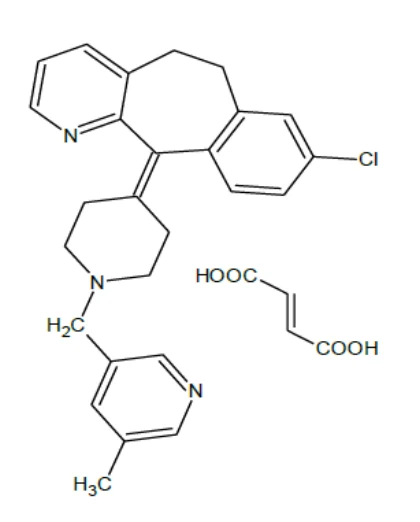
Chemical name: 8-Chloro-11-[1-[(5-methylpyridin-3-yl)methyl]piperidin-4-ylidene]-6,11-dihydro-5H-benzo[5,6]cyclohepta[1,2-b]pyridine (2E)-but-2-enedioate
Molecular formula: C26H26ClN3 • C4H4O4
Molecular mass: 532.03 g / mol
Structural formula:
Physicochemical properties:
Description: Off-white crystalline powder.
Solubility: Solubility decreases with increasing pH. Very slightly soluble in water, slightly soluble in anhydrous ethanol, very slightly soluble in heptane.
Melting Range: 199 – 201ºC
pKa: 6.95 ± 0.20 at 25ºC
CLINICAL TRIALS
Efficacy in Seasonal Allergic Rhinitis (SAR) and Perennial Allergic Rhinitis (PAR)
Adult and Adolescent Patients 12 Years and Older
Study demographics and trial design
The efficacy of rupatadine 10 mg tablets has been evaluated in 2 double-blind, randomized, parallel-group, multicenter, placebo and active-controlled pivotal clinical trials in adult and adolescent patients 12 years and older with symptoms of seasonal or perennial allergic rhinitis. One of these trials was 4 weeks in duration and the other 12 weeks in duration.
The trials included a total of 898 patients (367 males and 531 females) treated with 10 mg rupatadine, cetirizine 10 mg, desloratadine 5 mg tablets or placebo once daily. Of these patients, 291 received rupatadine 10 mg tablets. About 99% of patients were Caucasian in both trials.
Table 5: Summary of the Patient Demographics (ITT population) in Clinical Trials of Rupatadine Tablets in Patients with Perennial Allergic Rhinitis and Seasonal Allergic Rhinitis
| Study # | Trial design | Dosage, route of administration and duration | Study subjects (n = number) | Mean age (Range) years | Gender |
|---|---|---|---|---|---|
| Study IC05RUP/4/03 SAR | Phase III: Double-blind, randomized, parallel-group, multicenter, placebo and active controlled design | Rupatadine 10 mg, oral, QD Desloratadine: 5 mg oral, QD Placebo oral, QD Tablet 4 weeks | 117 117 122 | 30.8 (16-67) 32.0 (13-66) 31.8 (12-64) | 50.29% male 49.71% female |
| Study IC06RUP/3/04 PAR | Phase III: Double-blind, randomized, parallel-group, multicenter, placebo and active controlled design PAR | Rupatadine 10 mg, oral, QD Cetirizine: 10 mg oral, QD Placebo oral, QD Tablet 12 weeks | 183 174 185 | 28.58 (12-75) 29.18 (12-70) 30.13 (12-69) | 34.69% male 65.31% female |
ITT=intent-to-treat; PAR=Perennial Allergic Rhinitis; QD=once daily; SAR=Seasonal Allergic Rhinitis
In the pivotal studies, the primary efficacy variable was change from baseline in the total patient symptom-score (TSS).
TSS was comprised of the total nasal symptom score (TNSS) and the total non-nasal symptom score (TNNSS). Both reflective and instantaneous TSS were examined.
TNSS was based on the assessment of four nasal symptoms: rhinorrhea, nasal congestion, nasal itching, and sneezing, using a four point (0 [none] to 3 [severe]) scoring scale. Both reflective and instantaneous TNSS were examined.
TNNSS included non-nasal symptoms: ocular pruritus, ocular redness, and tearing eyes (the latter being scored only in Study IC05RUP/4/03), and was assessed in a similar manner. Both reflective and instantaneous TNNSS were examined.
Secondary efficacy endpoints included TNSS, TNNSS, and individual symptoms scores (reflective and instantaneous), overall condition of SAR and PAR, therapeutic response and assessment of life (Rhinoconjunctivitis Quality of Life Questionnaire [RQLQ]). The RQLQ was assessed only in Study IC06RUP/3/04 and included 7 domains (limitations in day-to-day activities, deterioration of sleep, non-nasal and non-ocular symptoms, practical problems, eye symptoms, nasal symptoms and emotional problems).
Study results
Seasonal Allergic Rhinitis (Study IC05RUP/4/03)
In the pivotal SAR trial, rupatadine 10 mg tablets resulted in a statistically significant reduction in the mean TSS (reflective evaluation) from baseline compared to placebo (p=0.03) over the 4- week treatment period (Table 6). At the same time, it did not differ from the active comparator (results not shown).
Table 6: Change from baseline in Reflective TSS (ITT)
| TSS | Placebo n=122 mean (SD) (CI 95%) | Rupatadine 10 mg n=117 mean (SD) (CI 95%) | P-value1 |
|---|---|---|---|
| Baseline | 14.01 (2.77) (13.51 / 14.51) | 13.77 (2.68) (13.28 / 14.26) | |
| Final | 8.79 (4.13) (8.05 / 9.53) | 7.42 (3.70) (6.74 / 8.10) | |
| Change from baseline | -5.22 (4.21) (-5.97 / -4.47) | -6.35 (3.83) (-7.05 / -5.65) | p=0.028 |
1 Tukey test
iTNSS for rupatadine 10 mg compared to placebo was statistically significant (p=0.012) and clinically meaningful (difference greater than 0.55 units). Both iTNNSS and rTNNSS for rupatadine compared to placebo were statistically significant (p=0.024, p=0.033 respectively).
Perennial Allergic Rhinitis (Study IC06RUP/3/04)
In the pivotal PAR trial, rupatadine 10 mg tablets resulted in a statistically significant reduction in the mean TSS (instantaneous evaluation) from baseline compared to placebo (p=0.008) over the 12-week treatment period. At the same time, the active comparator was not statistically significantly different than placebo (results not shown).
Table 7: Change from baseline in instantaneous TSS (ITT)
| TSS | Placebo n=185 mean (SD) (CI 95%) | Rupatadine 10 mg n=183 mean (SD) (CI 95%) | Test1 |
|---|---|---|---|
| Baseline | 8.96 (3.25) (8.49 – 9.43) | 8.72 (2.90) (8.30 – 9.14) | |
| Final | 5.48 (3.65) (4.95 – 6.01) | 4.55 (2.90) (4.13 – 4.97) | |
| Change from baseline | -3.48 (3.62) (-4.01 – -2.95) | -4.17 (3.23) (-4.64 – -3.70) | p=0.008 |
1 Tukey test
iTNSS at the end of the 12-week dosing interval demonstrated that rupatadine 10 mg resulted in statistically significant difference from placebo (p=0.008).
Rupatadine was more effective in alleviating the burden of PAR as shown by the improvements in the RQLQ at last visit (week 12) compared to placebo.
Efficacy in Chronic Spontaneous Urticaria
Adult and Adolescent Patients Aged 12 Years and Older (Study IC02RUP/II/02 and IC010RUP/3/04)
Study demographics and trial design
The efficacy of rupatadine 10 mg tablets was evaluated in two randomized, double-blind, parallel- group, multicenter, placebo-controlled clinical trials in adult and adolescent patients 12 years and older in the treatment of Chronic Spontaneous Urticaria (CSU). The two trials included one 4- week dose ranging trial (IC02RUP/II/02) and one 6-week pivotal efficacy trial (IC010RUP/3/04).
Table 10: Summary of the Patient Demographics (ITT population) in Clinical Trial of Rupatadine Tablets in Patients with Chronic Spontaneous Urticaria
| Study # | Trial design | Dosage, route of administration and duration | Study subjects (n = number) | Mean age (Range) years | Gender |
|---|---|---|---|---|---|
Study IC02RUP/II/02 CSU | Phase II: Double-blind, randomized, multicenter, parallel-group, placebo- controlled | Rupatadine 5 mg, oral, QD Rupatadine 10 mg, oral, QD Rupatadine 20 mg, oral, QD Placebo, oral, QD Tablet 4 weeks | 64 66 64 64 | 36.3 (14-62) 39.2 (16-64) 36.3 (13-65) 37.5 (16-71) | 28% male 72% female |
Study IC010RUP/3/04 CSU | Phase III: Double-blind, randomized, multicenter, parallel-group, placebo- controlled | Rupatadine 10 mg, oral, QD Rupatadine 20 mg, oral, QD Placebo, oral, QD Tablet 6 weeks | 110 108 111 | 40.2 (13-65) 37.6 (13-65) 35.8 (12-64) | 32% male 68% female |
ITT=intent-to-treat; QD=once daily
These clinical trials included a total of 587 patients (177 males and 410 females) with CSU treated with rupatadine 5 mg, 10 mg, 20 mg tablets, or placebo. Of these patients, 176 received rupatadine 10 mg tablets once daily. About 98% of patients were Caucasian.
Pruritus severity and the number of wheals were recorded by patients in daily diary cards in the morning and at bedtime. The severity of pruritus was assessed by scoring on a 5-point scale of 0– 4 with 0 = none; 1 = mild, not annoying or troublesome; 2 = moderate, annoying or troublesome; 3 = severe, very annoying, substantially interfering with sleep/daily activities and 4 = very severe warranting doctor visit. Similarly, the number of wheals was also scored on a 5-point scale with 0= no wheal; 1= 1–5 wheals; 2 = 6–15 wheals; 3= 16–25 wheals; 4 = ≥25 wheals.
The primary efficacy endpoint for both studies was the change from baseline in mean pruritus score (MPS) over the 4-week treatment period.
Secondary efficacy endpoints in IC010RUP/3/04 study were change from baseline in MPS over the 6-week treatment period, change from baseline in mean number of wheals (MNW) score, the mean of total symptoms score (MTSS; calculated as the sum of MPS and MNW); Dermatology Life Quality Index (DLQI; a measure of QoL) and visual analogue scale (VAS), over the 4- and 6-week treatment periods. The DLQI assessed 6 domains (symptoms and feelings, daily activities, leisure, work and school, personal relationships and treatment). Overall efficacy was also assessed as a secondary outcome after treatment for 2, 4 and 6 weeks by the patient and investigator. Secondary efficacy endpoints in IC02RUP/II/02 study were change from baseline in
MNW over the 4-week treatment period, change from baseline in the mean of total symptoms score (MTSS; calculated as the sum of MPS and MNW) and changes from baseline over the 4 weeks on treatment in the interference with daily activities and sleep mean scores
Study results
IC02RUP/II/02
Rupatadine 10 mg was statistically better than placebo in reducing the MPS over a 4-week (p<0.001) in the per-protocol (PP) population.
Table 11: Change in MPS over the 4-week treatment period (PP)
| MPS | Placebo Mean (SD) CI95% | Rupatadine 10 mg Mean (SD) CI95% | Test1 |
|---|---|---|---|
| PP | N=64 | N=66 | |
| 4 weeks | |||
| Baseline MPS | 2.48 (0.51) | 2.44 (0.52) | |
| (2.35 - 2.61) | (2.31 - 2.57) | ||
| MPS | 1.33 (1.15) | 0.93 (0.89) | p<0.001 |
| (1.04 - 1.62) | (0.71 - 1.14) | ||
| Change MPS | -1.15 (0.93) | -1.51 (0.78) | p<0.001 |
| (-1.38 - -0.92) | (-1.70 - -1.31) | ||
| % Change vs. baseline | -46% | -62% | |
MPS = mean pruritus score; PP = per-protocol; SD = standard deviation
1 ANOVA
IC010RUP/3/04
Rupatadine 10 mg was statistically better than placebo in reducing the MPS over a 4-week (p=0.001) and 6-week treatment period (p=0.020) in the ITT population.
Table 12: Change in MPS over the 4- and 6-week treatment period (ITT)
| MPS | Placebo Mean (SD) CI95% | Rupatadine 10 mg Mean (SD) CI95% | Test |
|---|---|---|---|
| ITT | N=111 | N=110 | |
| 4 weeks | |||
| Baseline MPS | 2.54 (0.46) | 2.47 (0.45) | p<0.0011 |
| (2.45 - 2.63) | (2.39 – 2.56) | ||
| MPS | 1.41 (0.82) | 1.05 (0.82) | p<0.0012 |
| (1.26 – 1.56) | (0.90 – 1.21) | ||
| Change MPS | -1.13 (0.71) | -1.42 (0.73) | |
| (-1.26 - -1.00) | (-1.56 - -1.28) | ||
| % Change vs. baseline | -44.9% | -57.5% | |
| ITT | N=111 | N=110 | |
| 6 weeks | |||
| Baseline MPS | 2.54 (0.46) | 2.47 (0.45) | p=0.00031 |
| (2.45 - 2.63) | (2.39 – 2.56) | ||
| MPS | 1.30 (0.84) | 1.00 (0.85) | |
| (1.14 – 1.46) | (0.84 – 1.16) | ||
| Change MPS | -1.24 (0.74) | -1.47 (0.76) | |
| (-1.38 - -1.10) | (-1.61 - -1.33) | ||
ITT = intent-to-treat; MPS = mean pruritus score; PP = per-protocol; SD = standard deviation
1 ANOVA
2 ANCOVA
Rupatadine 10 mg was statistically better than placebo in reducing the MNW score from baseline in the ITT population over the 4-week treatment period (p=0.015).
Comparative Bioavailability Studies
A double-blinded, single-dose, randomized, two-way, crossover bioequivalence study of pms-RUPATADINE 10 mg tablets (Pharmascience Inc.) and RUPALLTM 10 mg tablets (Medexus Pharmaceuticals Inc.) was conducted in 38 healthy male and female adult subjects under fasting conditions. Comparative bioavailability data from 37 subjects that were included in the statistical analysis are presented in the following table:
SUMMARY TABLE OF THE COMPARATIVE BIOAVAILABILITY DATA
Rupatadine (1 x 10 mg Tablets) Geometric Mean Arithmetic Mean (CV %) | ||||
| Parameter | Test1 | Reference2 | % Ratio of Geometric Means | 90% Confidence Interval |
AUCT (pg/mL)*(hr) | 12581.9 14884.6 (67.5) | 11712.7 14131.3 (83.1) | 107.4 | 100.8 – 114.5 |
AUCI (pg/mL)*(hr) | 13526.4 16186.6 (73.6) | 12679.0 15580.0 (93.5) | 106.7 | 100.1 – 113.7 |
CMAX (pg/mL) | 3243.9 3720.5 (52.5) | 2912.1 3469.7 (64.8) | 111.4 | 100.6 – 123.3 |
TMAX3 (h) | 1.00 (0.50-2.33) | 1.00 (0.50-3.00) | ||
T½4 (h) | 11.07 (39.3) | 10.27 (49.6) | ||
1 pms-RUPATADINE (Rupatadine) tablets, 10 mg (Pharmascience Inc.)
2 RUPALLTM (Rupatadine) tablets, 10 mg (Medexus Pharmaceuticals Inc.) (Canada).
3 Expressed as the median (range) only
4Expressed as the arithmetic mean (CV %) only
DETAILED PHARMACOLOGY
Nonclinical Pharmacology
Extensive studies both in vitro and in vivo have demonstrated the antagonist activity of rupatadine towards both histamine H1 and PAF receptors, as well as its potential anti-allergic effect.
The antihistamine activity of rupatadine has been demonstrated in five different in vitro models, both functional (rabbit and guinea pig H1 receptor models) and binding (guinea pig ileum tests). The studies revealed that the binding of rupatadine to the H1 receptor is time-dependent and its behavior is pseudo-irreversible, as described for many second-generation antihistamines.
The PAF antagonistic activity of rupatadine has been demonstrated in six functional and binding studies in rabbit and dog in vitro models. Results show that rupatadine causes a non-competitive displacement of the selective ligand [3H]-WEB-2086 from PAF receptors in platelets. It inhibits PAF-induced platelet aggregation.
The dual H1-antihistamine and PAF-antagonist activity of rupatadine has also been demonstrated in ten studies in different in vivo models in mouse, rat, guinea pig and dog.
The anti-allergic activity of rupatadine was studied in six in vivo studies performed in mouse, rat, guinea pig and dog models. Rupatadine was shown to strongly inhibit type I hypersensitivity reactions in different anaphylaxis models, with a prolonged duration of action. The potential of rupatadine to inhibit type III hypersensitivity reactions was also demonstrated.
The effects of rupatadine were assessed on several different systems or functions, including the cardiovascular, renal, and respiratory systems, the central and autonomous nervous systems, coagulation, gastrointestinal motility and behavior.
In vitro and in vivo studies showed low potential of anticholinergic effects for rupatadine. The effect of rupatadine on the CNS is similar to that of second-generation antihistamines, known as “non-sedative” antihistamines.
In vitro cardiovascular studies showed a low potential of rupatadine for effects on action potential duration or for QT prolongation due to HERG channel blockade. Also, in in vivo studies no electrocardiographic effects were observed in any of the animal species tested (dogs, guinea pigs and rats) at doses of rupatadine 100 times or more than the recommended dose in humans. Generally mild and/or transient changes were reported in cardiovascular parameters following iv administration in rats (30 mg/kg), guinea pigs (30 mg/kg) and dogs (2 and 20 mg/kg) although a substantial increase in cardiac contractility occurred following a single iv dose at 20 mg/kg in dogs.
Human Pharmacology
The human pharmacodynamic effects, both antihistamine and PAF-antagonist activities of rupatadine, were investigated in terms of its ability to inhibit the flares and wheals produced by intradermal injection of histamine and PAF in comparison to placebo and other reference compounds. These studies were complemented by a nasal challenge test with a specific allergen in atopic volunteers.
The percentage inhibition of both PAF and histamine induced flares lagged behind mean plasma levels of rupatadine and its metabolite, desloratadine. The inhibition was significantly higher in comparison to placebo for 10 mg and higher doses and the percentage and duration of inhibition increased with dose. The maximum mean percentage inhibition occurred between two and three hours after maximum mean plasma rupatadine and desloratadine concentrations and remained high (>60%) even when mean rupatadine and desloratadine in plasma had dropped to negligible levels (<0.5 ng/mL).
In a placebo-controlled cross-over study, the effect of rupatadine, placebo or a reference compound on the overall reduction of PAF-induced nasal symptoms in allergic rhinitis patients was measured. Rupatadine caused a significant reduction of T4SS AUC compared to placebo showing PAF inhibitory effects of rupatadine on human nasal airways.
Table 15: Acute Toxicity of Rupatadine and Hydroxylated Metabolite (3-Hydroxydesloratadine)
| Species and Strain | Method of Administration | Dose (mg/kg) | LD50 values (mg/kg) | |||||||
|---|---|---|---|---|---|---|---|---|---|---|
| Rupatadine | Metabolite | |||||||||
| Mouse/Swiss | Oral gavage | 500, 2000 - |
| >500 >2000 | ||||||
| Intraperitoneal | 50, 200, 500 | - | >200 (males) >50 (females) | |||||||
| Intravenous | - | 25, 50, 200 | >50 | |||||||
| Rat/Sprague- Dawley | Oral gavage | 2000 - |
| >2000 >2000 | ||||||
| Intraperitoneal | 25, 50, 200 | - | >200 | |||||||
| Intravenous | - | 25, 50, 200 | >50 | |||||||
Repeated-Dose Toxicity
Repeated-dose toxicity of rupatadine was assessed in rats and Beagle dogs after oral administration. An overview of these studies in provided in Table 16.
Table 16: Repeated-Dose Toxicity Studies with Rupatadine and Hydroxylated Metabolite (3-Hydroxydesloratadine)
| Species and Strain | Method of Administration | Duration of Dosing | Doses (mg/kg/day) | NOAEL (mg/kg/day) | Animal to human exposure ratios1 for Rupatadine | |
|---|---|---|---|---|---|---|
| Rupatadine | Metabolite | |||||
| Rat/Crl:CD (SD) BR / VAF plus | Oral gavage | 13-week | 3, 30, 120 | - | 30 | 118-145 |
| Rat/Crl:CD (SD) BR / VAF plus | 26-week | 3, 30, 120 | - | 30 | ||
| Rat/Sprague Dawley | Oral gavage | 4-week | - | 3, 30, 120 | 120 | - |
| Dog/Beagle | Oral gavage | 13-week | 1.25, 7, 40 | - | 7 | - |
| 26-week | 1, 5, 20 | - | 20 | |||
| Dog/Beagle | Oral gavage | 39-week | 1.25, 7, 40 | - | 40 | 1750-800 |
1 AUC(0-24) ratio; Safety ratios were calculated at NOAEL which were 30 mg/kg/day for the rat and 40 mg/kg/day for the dog. Human dose was 10 mg/day.
The most significant results found at the high dose in a subchronic toxicity study in rats treated by oral gavage at doses of 3, 30 and 120 mg/kg/day for 13 weeks were a decrease in body weight gain in males raised leukocyte count and urine volume in females, and an increase in liver weight in both sexes. The no observed level (NOEL) was between 30 mg/kg/day for males and
3 mg/kg/day for females and it was concluded that the NOAEL was 30 mg/kg/day. Systemic exposure (AUC-based) measured at 30 mg/kg/day in the rat was 118 to 145-fold and 210 to 319- fold higher than therapeutic levels of rupatadine and hydroxylated metabolite (desloratadine) at the recommended human daily dose of 10 mg, respectively.
In a chronic study in rats treated by oral gavage at doses of 3, 30 and 120 mg/kg/day for 26 weeks, the main findings at the high dose were reduction in weight gain, rise in leukocyte
(females) and neutrophil counts (both sexes), fall in haemoglobin concentration (males), increase in plasma creatinine accompanied in females by slight increase in BUN, increase in total proteins, and increase in urine volume and decrease in urine specific gravity. Effects on clinical pathology in the intermediate dose were restricted to increase in total proteins in males and the same changes reported in the urine as in the high dose group. Several macroscopic and histopathological changes were observed at 120 mg/kg/day in both sexes. The histopathological changes observed at the intermediate dose were of lesser magnitude and were confined to the liver of male and female rats and mesenteric lymph nodes of male rats. Changes at 3 mg/kg/day were confined to the liver of male rats. The no observed adverse effect level (NOAEL) was set at 30 mg/kg/day.
Rupatadine was administered orally to Beagle dogs at doses of 1.25, 7 and 40 mg/kg/day for 13 weeks. The clinical signs observed were hyperactivity, aggressiveness and anxiety at the
7 mg/kg/day dose in males and at the 40 mg/kg/day dose in both sexes with increased severity.
The levels of alkaline phosphatase (males) and alanine transaminase (both sexes) were slightly raised at the high dose. Weight increase in females was reduced at a dose of 7 mg/kg/day and in both sexes at a dose of 40 mg/kg/day. Kidney and liver weights standardized by body weight were raised in males at the intermediate and high dose. The NOAEL was concluded to be
7 mg/kg/day.
In the chronic toxicity studies Beagle dogs were treated orally at doses of 1, 5, 20 and 1.25, 7, 40 mg/kg, day for 26 weeks and 39 weeks, respectively. At the doses of 5 and 20 mg/kg/day, rupatadine produced clinical signs similar to those observed in the 13-week trial (hyperactivity, elevated respiration rate, salivation, excessive urine production). Due to their transient nature these effects were not regarded as toxicologically important. Slight changes were also observed in haematology (increase in erythrocytes) and biochemistry (increase in alkaline phosphatase). The values were, however, still within the normal range and were therefore not regarded as toxicologically important. The 26-week study concluded that the NOAEL was 20 mg/kg/day. At doses of 7 and 40 mg/kg/day, slightly reduced body weight and increased plasma alkaline phosphatase levels were observed. Increased body weight-related liver weights were also observed at the end of the treatment period with 40 mg/kg/day. These changes were reversible, following a 28 day treatment free period and were not considered adverse in the absence of macroscopic or microscopic findings. The 39-week study concluded that the NOAEL was
40 mg/kg/day. Systemic exposure (AUC-based) measured at 40 mg/kg/day in the dog was 800 to 1750-fold and 1280 to 1345-fold higher than therapeutic levels of rupatadine and hydroxylated metabolite (desloratadine) at the recommended human daily dose of 10 mg, respectively.
Study in Juvenile Animals
A toxicity study was performed in juvenile Crl:CD (SD) rats to investigate the effects of rupatadine (4.5 and 30 mg/kg/day) and rupatadinium succinic acid (RSA) impurity on the juvenile development of the rat following once daily oral (gavage) administration to pups from Day 22 to at least Day 50 of age.
Decreased activity and partially closed eyes were observed for both sexes treated with rupatadine 30 mg/kg/day with or without RSA impurity. In the same two groups, treatment-related microscopic findings were recorded in the vagina, ovaries and mammary tissue in females. For all other parameters, there were no toxicologically significant changes considered to be related to treatment. There were no substantive differences between the toxicity profile of rupatadine and rupatadine that contained 5 % RSA impurity. The effects on the reproductive system of females were suggestive of an alteration in the normal oestrogen/progesterone ratio, possibly secondary to increased oestrogen catabolism related with induction of hepatic biotransformation enzymes, which may in turn affect levels of circulating hormones. Therefore, these changes were considered not to be adverse in nature. The NOAEL was established at 30+1.5 mg/kg/day (rupatadine + RSA impurity) or 30 mg/kg/day rupatadine alone. The rupatadine dose of
30 mg/kg/day in rats is 20 times higher than the dose recommended in children (2.5 mg in a child of 10 kg average body weight) on a mg/m2 basis.
Carcinogenicity
Two long-term carcinogenicity studies were carried out in two species, the mouse (at least 78 weeks) and the rat (at least 104 weeks) (Table 17).
Table 17: Overview of Carcinogenicity Studies with Rupatadine
| Species and Strain | Method of Administration | Duration of Dosing | Doses (mg/kg/day) | Animal to human exposure ratios1 |
|---|---|---|---|---|
Mouse/NMRI, Hannover-derived, outbreed, SPF quality | Oral (feeding) | 78-week | 6, 25, 100/60/40 | 1-3 |
Rat/Wistar, Hannover derived, outbreed, SPF quality | Oral (feeding) | 104-week (oncogenicity) | 2.5, 10, 40 | 72-94 |
1 AUC(0-24) ratio; Safety ratios were calculated for the doses of 25 mg/kg/day (mice) and 40 mg/kg/day (rat). Human dose was 10 mg/day.
In the mouse study, due to increased male mortality at the high dose, the dose was reduced in males to 60 mg/kg/day from Week 34 to 55, and to 40 mg/kg/day from Week 56 until the end of the study. For females the dose was reduced to 60 mg/kg/day from Week 56 until the end of the study. Treatment-related clinical signs were observed only at the high dose. The most frequent, especially among male animals, were the presence of wrinkly skin, hunched posture, cachexia and swollen abdomen. Most of the animals displaying these signs died or were sacrificed in extremis within a week of the appearance of the signs. The primary cause of death was constipation, with major intestinal distension and accumulation of faeces. This effect was probably due to excessive pharmacological activity of rupatadine.
There was no increase in the incidence and severity of neoplastic lesions in the treated mice compared with the controls. The most frequent were recorded in the lungs, haemolymphoreticular system, ovaries, adrenals and Harderian glands, and are common in animals of this strain and age.
In conclusion, rupatadine did not show any carcinogenic potential under the study conditions in mice at doses up to 40 (males) or 60 (females) mg/kg/day. Systemic exposure at these dose levels was not measured. However, systemic exposure (AUC-based) measured at the mid dose
(25 mg/kg/day) was 1 to 3-fold and 70 to 118-fold higher than therapeutic levels of rupatadine and hydroxylated metabolite (desloratadine), respectively.
In the rat study some non-neoplastic observations were recorded at 40 mg/kg/day consisting of an increased incidence of foci in the lungs (likely attributed to aspiration of rupatadine powder from the diet), correlated with alveolar histiocytosis seen in the histological exam, and the appearance of centrilobular hypertrophy of liver cells together with a mainly macrovesicular accumulation of lipids. A greater incidence of diffuse hypertrophy of thyroid follicular cells and adenomas of thyroid follicular cells was observed at the high dose. These findings could be attributed to non-neoplastic mechanisms and are species-dependent. Other non-neoplastic or neoplastic lesions observed were the same in type and incidence than those recorded in control rats of the strain and age studied.
In conclusion, rupatadine did not show any carcinogenic potential under the study conditions in rats at doses up to 40 mg/kg/day. Systemic exposure (AUC-based) measured at 40 mg/kg/day was 72 to 94-fold and 119 to 277-fold higher than therapeutic levels of rupatadine and hydroxylated metabolite (desloratadine), respectively.
Mutagenicity
Genotoxicity of rupatadine has been assessed in both in vitro and in vivo studies. Two metabolites were also tested in a reverse mutation assay (Table 18).
Table 18: Overview of Genotoxicity Studies with Rupatadine and Metabolites
| Species and Strain | Method of Administration | Doses | Outcome | ||||||
|---|---|---|---|---|---|---|---|---|---|
| In vitro | |||||||||
Salmonella typhymurium TA1535, TA1537, TA1538, TA 98, T100 | In vitro | 0.32, 1.6, 8, 40, 100, 150, 200 µg/plate | Negative | ||||||
Salmonella typhymurium TA1535, TA 97a, TA98, TA100, TA102 | In vitro | 25, 50, 100, 200, 400 µg/plate (3-hydroxydesloratadine) | Negative | ||||||
Salmonella typhymurium TA1535, TA 97a, TA98, TA100, TA102 | In vitro | 20, 60, 200, 600, 2000 µg/plate (O-glucoronide conjucate of 3-hydroxydesloratadine) | Negative | ||||||
Escherichia coli WP2 uvrA and WP2 uvrA pkM 101 | In vitro | 39.06, 78.125, 156.25, 312.5, 625, 1250 and 2500 µg/plate | Negative | ||||||
| Human lymphocytes | In vitro | without S9: 2, 10, 20 µg/mL with S9: 6, 30, 60 µg/mL | Negative | ||||||
| In vitro | |||||||||
| Mouse lymphoma L5178Y cells | In vitro | without S9: 1, 3, 5, 10, 20, 25 and 30 µg/mL with S9: 1, 3, 5, 10, 20, 30 40, 50, and 60 µg/mL | Negative | ||||||
| In vivo | |||||||||
| Mouse / CD1 | Oral Gavage | 125, 200, 320 mg/kg | Negative | ||||||
Rupatadine did not show any genotoxic potential in the battery of tests performed. None of metabolites showed mutagenic potential in the reverse mutation assay.
Reproductive Toxicology
Reproductive toxicology was assessed in several studies in rats and rabbits (Table 19).
Table 19: Overview of Reproductive and Developmental Toxicity Studies
| Species and Strain | Method of Administration | Duration of Dosing | Doses (mg/kg/day) | NOAEL (mg/kg/day) |
|---|---|---|---|---|
| Fertility and Early Embryonic Development to Implantation | ||||
| Rat /rl:CD(SD)BR/VAF plus | Oral Gavage | M: 61 days before mating. F: From Day 15 a.c. to Day 17 of pregnancy | 5, 25, 120 | 5 (female fertility and embryo- foetal developmental toxicity) 25 (male fertility) 120 (teratogenic potential) |
| Effects on Embryofetal Development | ||||
| Rabbit / New Zealand White | Oral Gavage | F: from Day 6 to 18 of gestation (13 days) | 5, 25, 100 | 100 (embryo-foetal developmental toxicity and teratogenic potential) |
| Effects on Pre- and Postnatal Development, Including Maternal Function | ||||
Rat / OFA (SD) IOPS-Caw Sprague- Dawley | Oral Gavage | F: from Day 6 of pregnancy to Day 20 post-partum | 5, 25, 120 | 5 (peri- and post-natal development) |
a.c. = ante coitus
Studies of fertility and embryonic development in the rat showed a significant reduction of male and female fertility at the dose of 120 mg/kg/day, which resulted in a Cmax of rupatadine 113 times greater than that obtained after the administration of 10 mg/day in humans. Foetal toxicity (growth delay, incomplete ossification, minor skeletal findings) was reported in rats at maternotoxic dose-levels only (25 and 120 mg/kg/day). No abnormalities in foetal structure or macroscopic changes in external or visceral appearance were observed. The NOAEL for female fertility and embryo-foetal developmental toxicity was determined at 5 mg/kg/day in rats, which is 25 times the proposed therapeutic dose in humans in terms of mg/kg and 4 times in terms of mg/m2.
In the rabbit, doses of 5, 25 and 100 mg/kg/day were administered orally to pregnant does during the period of organogenesis (Days 6 to 18 of gestation). At the high dose slight maternal toxicity was observed but there was no evidence of embryo-foetal toxicity. At the intermediate and low doses no maternal or embryo-foetal toxicity was observed. The NOAEL was determined at
100 mg/kg/day in rats, yielding a Cmax of 49 times higher, than that measured in humans at the 10 mg/day therapeutic dose.
A peri- and post-natal toxicity study in rat was designed to investigate the effects of rupatadine at doses of 5, 25 and 120 mg/kg/day administered orally on embryonic, foetal and post-natal development, following the administration of these doses to gravid animals from Day 6 of gestation, during lactation and until Day 20 post-partum. The high dose caused maternal toxicity, characterized by poor clinical condition when giving birth, prolonged birth times, a reduction in body weight gain and a decrease in food consumption. It also caused a reduction in litter weight at birth and slow development of the offspring, due to poor or absent maternal care. At the intermediate dose only slight maternal toxicity was observed. No maternal toxicity or litter effects were observed at the low dose (NOAEL).
REFERENCES
Donado E, Izquierdo I, Pérez I, García O, Antonijoan RM, Gich I, et al. No cardiac effects of therapeutic and supratherapeutic doses of rupatadine: results from a ‘thorough QT/QTc study’ performed according to ICH guidelines. Br J Clin Pharmacol 2010; 69(4):401–410 (Study IC012RUP/1/04)
Dubertret L, Zalupca L, Cristodoulo T, Benea V, Medina I, Fantin S, et al. Once-daily rupatadine improves the symptoms of chronic idiopathic urticaria: a randomised, double-blind, placebo- controlled study. Eur J Dermatol 2007; 17 (3): 223-228. (Study IC02RUP/II/02)
Fantin S, Maspero J, Bisbal C, Agache I, Donado E, Borja J, et al. A 12-week placebo-controlled study of rupatadine 10 mg once daily compared with cetirizine 10 mg once daily, in the treatment of persistent allergic rhinitis. Allergy 2008; 63:924-931 (Study IC06RUP/3/04)
Gimenez-Arnau A, Pujol RM, Ianosi S, Kaszuba A, Malbran A, Poop G, et al. Rupatadine in the treatment of chronic idiopathic urticaria: A double-blind, randomized, placebo-controlled multicentre study. Allergy 2007; 62:539-546 (Study IC010RUP/3/04)
Lukat KF, Rivas P, Roger A, Kowalski ML, Botzen U, Wessel F, et al. A direct comparison of efficacy between desloratadine and rupatadine in seasonal allergic rhinoconjunctivitis: a randomized, double-blind, placebo-controlled study. Journal of Asthma and Allergy 2013; 6:31- 39 (Study IC05RUP/4/03)
Muñoz-Cano R, Valero A, Izquierdo I, Sánchez-López J, Doménech A, Bartra J, et al. Evaluation of nasal symptoms induced by platelet activating factor, after nasal challenge in both healthy and allergic rhinitis subjects pretreated with rupatadine, levocetirizine or placebo in a cross-over study design. Allergy Asthma Clin Immunol. 2013 Nov 1;9(1):43. (Study DC03/RUP/I/08)
Valero A, de la Torre F, Castillo JA, Rivas P, del Cuvillo A, Antépara I et al. Safety of rupatadine administered over a period of 1 year in the treatment of persistent allergic rhinitis: a multicentre, open-label study in Spain. Drug Saf. 2009;32(1):33-42. (Study IC01/RUP/IV/02)
RUPALL™ Tablets 10 mg, Oral Solution 1 mg/mL, submission control 270596, Product Monograph, Medexus Inc. JAN 26, 2023.