


Product Monograph - PMSC-Vancomycin
SUMMARY PRODUCT INFORMATION
| Route of Administration | Dosage Form / Strength | All Non-medicinal Ingredients |
| Oral | Capsule, 125 mg, 250 mg | Gelatin, Indigo Carmine, Polyethylene Glycol, Potassium Hydroxide, Propylene Glycol, Shellac, Sodium Lauryl Sulfate, Titanium Dioxide, and the following: 125 mg: Iron Oxide Red, Iron Oxide Yellow 250 mg: Ponceau 4r, Sunset Yellow |
INDICATIONS AND CLINICAL USE
pmsc-VANCOMYCIN (vancomycin hydrochloride) capsules are indicated for treatment of infections caused by susceptible strains of the designated microorganisms in the following diseases and specific conditions:
- staphylococcal enterocolitis, and
- antibiotic associated pseudomembranous colitis produced by Clostridium difficile
Parenteral administration of vancomycin is not effective for the indicated conditions; therefore pmsc-VANCOMYCIN must be given orally.
pmsc-VANCOMYCIN is not effective by the oral route for the treatment of other types of infection.
Geriatrics: Evidence from clinical studies and experience suggests that use in the geriatric population is associated with differences in safety and a brief discussion can be found in the Warnings and Precautions section.
Pediatrics: Evidence from clinical studies and experience suggests that use in premature neonates and young infants are associated with differences in safety and a brief discussion can be found in the Warnings and Precautions section.
To reduce the development of drug-resistant bacteria and maintain the effectiveness of pmsc-VANCOMYCIN and other antibacterial drugs, pmsc-VANCOMYCIN should be used only to treat infections that are proven or strongly suspected to be caused by susceptible bacteria. When culture and susceptibility information are available, they should be considered in selecting or modifying antibacterial therapy. In the absence of such data, local epidemiology and susceptibility patterns may contribute to the empiric selection of therapy. Because some strains are resistant to vancomycin, when applicable, appropriate specimens should be obtained before antibacterial treatment, to determine the causative organism(s) and susceptibility to vancomycin.
CONTRAINDICATIONS
pmsc-VANCOMYCIN is contraindicated for patients who are hypersensitive to vancomycin hydrochloride or to any ingredient in the formulation or component of the container. For a complete listing, see the DOSAGE FORMS, COMPOSITION AND PACKAGING section.
WARNINGS AND PRECAUTIONS
General
Vancomycin is poorly absorbed orally. Toxic serum levels are therefore not expected from oral dosage. Clinically significant serum concentrations have been reported in some patients who have taken multiple oral doses of vancomycin for active C. difficile-induced pseudomembranous colitis; therefore, monitoring of serum concentrations may be appropriate in these patients.
When given intravenously, toxic serum levels can occur. During parenteral therapy, the risk of toxicity appears appreciably increased by high blood concentrations or prolonged treatment.
Ear/Nose/Throat
Ototoxicity has occurred when serum levels exceeded 80 mcg/mL. Deafness may be preceded by tinnitus. Deafness may be transient or permanent. The elderly are more susceptible to auditory damage. Deafness may be progressive despite cessation of treatment.
pmsc-VANCOMYCIN should be avoided (if possible) in patients with previous hearing loss. If it is used in such patients, the dose of pmsc-VANCOMYCIN should be regulated by periodic determination of drug levels in the blood. Patients with renal insufficiency and individuals over the age of 60 should be given serial tests of auditory function and of vancomycin blood levels.
Gastrointestinal
Some patients with inflammatory disorders of the intestinal mucosa may have significant systemic absorption of oral vancomycin and, therefore, may be at risk for the development of adverse reactions associated with the parenteral administration of vancomycin. The risk is greater if renal impairment is present.
Hematologic
Neutropenia can occur starting one week or more after onset of therapy with pmsc-VANCOMYCIN or after a total dose of more than 25 g. Neutropenia appears to be promptly reversible when treatment is discontinued.
Renal
Because of its ototoxicity and nephrotoxicity, pmsc-VANCOMYCIN should be used with care in patients with renal insufficiency. Vancomycin is excreted fairly rapidly by the kidney and blood levels increase markedly with decreased renal clearance. There is an increased risk of renal failure in patients receiving large doses of pmsc-VANCOMYCIN.
In patients with underlying renal dysfunction or those receiving concomitant therapy with an aminoglycoside there is a risk of developing interstitial nephritis. When these patients are being treated with pmsc-VANCOMYCIN, serial monitoring of renal function should be performed.
Susceptibility/Resistance
Development of Drug Resistant Bacteria
The prolonged use of pmsc-VANCOMYCIN may result in overgrowth of non-susceptible organisms. If new infections due to bacteria or fungi appear during therapy with this product, appropriate measures should be taken, including withdrawal of pmsc-VANCOMYCIN.
In vitro resistance to vancomycin has been reported among some entercoccal and staphylococcal isolates.
Vancomycin is not effective in vitro against gram-negative bacilli, mycobacteria, or fungi.
Prescribing pmsc-VANCOMYCIN in the absence of a proven or strongly suspected bacterial infection is unlikely to provide benefit to the patient and risks the development of drug-resistant bacteria.
Special Populations
Pregnant Women
pmsc-VANCOMYCIN should be given to pregnant woman only if clearly needed. In a controlled study, vancomycin hydrochloride was administered to 10 pregnant women for serious staphylococcal infections complicating intravenous drug abuse to evaluate potential ototoxic and nephrotoxic effects on the infant. Vancomycin levels of 13.2 and 16.6 mcg/mL were measured in core blood in two patients. No sensorineural hearing loss or nephrotoxicity attributable to vancomycin hydrochloride was noted. One infant whose mother received vancomycin hydrochloride in the third trimester experienced conductive hearing loss that was not attributed to the administration of vancomycin hydrochloride. Because the number of patients treated in this study was limited and vancomycin hydrochloride was administered only in the second and third trimesters, it is not known whether vancomycin hydrochloride causes fetal harm.
Nursing Women
Vancomycin is excreted in human milk. Caution should be exercised if pmsc-VANCOMYCIN is administered to a nursing woman. Because of the potential for adverse events, a decision should be made whether to discontinue nursing or discontinue administration of the drug, taking into account the importance of the drug to the mother.
Pediatrics (premature neonates and young infants)
It may be appropriate to confirm desired vancomycin serum concentrations. Concomitant administration of vancomycin and anesthetic agents has been associated with erythema and histamine-like flushing in children.
Geriatrics
The natural decrease of glomerular filtration with increasing age may lead to elevated vancomycin serum concentrations if dosage is not adjusted. Vancomycin dosage schedules should be adjusted in elderly patients. It should be noted that the total systemic and renal clearances of vancomycin are reduced in the elderly. The elderly are more susceptible to auditory damage.
Monitoring and Laboratory Tests
All patients receiving the drug should have periodic hematologic studies, urinalyses, and liver and renal function tests.
ADVERSE REACTIONS
Adverse Drug Reaction Overview
Nephrotoxicity
Rarely, renal failure, principally manifested by increased serum creatinine or blood urea nitrogen (BUN) concentrations, especially in patients given large doses of vancomycin hydrochloride, has been reported. Rare cases of interstitial nephritis have been reported. Most of these have occurred in patients who were given aminoglycosides concomitantly or who had pre-existing kidney dysfunction. When vancomycin hydrochloride was discontinued, azotemia resolved in most patients.
Ototoxicity
A few dozen cases of hearing loss associated with vancomycin hydrochloride have been reported. Most of these patients had kidney dysfunction, pre-existing hearing loss, or concomitant treatment with an ototoxic drug. Vertigo, dizziness, and tinnitus have been reported rarely.
Hematopoietic
Reversible neutropenia, usually starting one week or more after onset of therapy with vancomycin hydrochloride or after a total dose of more than 25 g, has been reported in several dozen patients. Neutropenia appears to be promptly reversible when vancomycin hydrochloride is discontinued. Thrombocytopenia has rarely been reported. Although a causal relationship has not been established, reversible agranulocytosis (granulocyte count less than 500/mm3) has been reported rarely. Eosinophilia has been associated with the administration of vancomycin hydrochloride.
Drug Reaction with Eosinophilia and Systemic Symptoms Syndrome (DRESS)
Toxic Epidermal Necrolysis (TEN)
Miscellaneous
Anaphylaxis, drug fever, nausea, chills, hypotension, wheezing, dyspnea, urticaria, pruritus flushing of the upper body (“red neck”), pain and muscle spasm of the chest and back, rashes, including exfoliative dermatitis, Stevens-Johnson syndrome, linear IgA bullous dermatosis and rare cases of vasculitis have been associated with the administration of vancomycin hydrochloride.
DRUG INTERACTIONS
Overview
Drug-Drug Interactions
Concurrent and sequential use of other neurotoxic and/or nephrotoxic agents, particularly ethacrynic acid, neuromuscular blocking agents, aminoglycoside antibiotics, polymixin B, colistin, viomycin, and cisplatin, requires careful monitoring.
Concomitant administration of vancomycin and anesthetic agents has been associated with erythema and histamine-like flushing in children.
Drug-Food Interactions
Interactions studies between vancomycin hydrochloride and food have not been conducted.
Drug-Herb Interactions
Interactions studies between vancomycin hydrochloride and herbs have not been conducted.
Drug-Laboratory Test Interactions
Interactions studies between vancomycin hydrochloride and laboratory tests have not been conducted.
DOSAGE AND ADMINISTRATION
Dosing Considerations
If parenteral and oral vancomycin are administered concomitantly an additive effect can occur. This should be taken into consideration when calculating the total dose. In this situation serum levels of the antibiotic should be monitored.
pmsc-VANCOMYCIN capsules are formulated in a matrix gel that prevents administration by a nasogastric tube.
Recommended Dose and Dosage Adjustment
Adults
The usual daily dosage for antibiotic-associated pseudomembranous colitis produced by C.difficile and staphylococcal entercolitis is 125 mg to 500 mg administered orally every 6 to 8 hours for 7 to 10 days.
Pediatrics
The usual daily dosage is approximately 40 mg/kg in 3 or 4 divided doses for 7 to 10 days administered orally. The total daily dosage should not exceed 2 g.
Missed Dose
If a dose of this medication has been missed, it should be taken as soon as possible. However, if it is almost time for the next dose, skip the missed dose and resume the regular dosing schedule. Do not double doses.
OVERDOSAGE
Activated charcoal may be administered to aid in the removal of unabsorbed drug. General supportive measures are recommended.
Other than general supportive treatment, no specific antidote is known. Dialysis does not remove significant amounts of vancomycin. Hemofiltration and hemoperfusion with polysulfone resin have been reported to result in increased vancomycin clearance.
In managing overdosage, consider the possibility of multiple drug overdoses, interaction among drugs, and unusual drug kinetics in the patient.
| For management of a suspected drug overdose, contact your regional Poison Control Centre immediately. |
|---|
ACTION AND CLINICAL PHARMACOLOGY
Mechanism of Action
In vitro studies indicate that the bactericidal action of vancomycin hydrochloride against many gram-positive bacteria results from the inhibition of cell-wall synthesis. There is also evidence that vancomycin alters the permeability of the cell membrane and selectively inhibits RNA synthesis.
STORAGE AND STABILITY
Store between 15°C and 30°C.
DOSAGE FORMS, COMPOSITION AND PACKAGING
Capsules
125 mg: Each hard gelatin, coni-snap capsule, ink-printed in white with ”VANCOMYCIN” over “125 mg” on the peach body and nothing on the dark blue cap, contains 125 mg of vancomycin as vancomycin hydrochloride, and the following non-medicinal ingredients: Gelatin, Indigo Carmine, Iron Oxide Red, Iron Oxide Yellow, Polyethylene Glycol, Potassium Hydroxide, Propylene Glycol, Shellac, Sodium Lauryl Sulfate and Titanium Dioxide. Available in HDPE bottles of 100 capsules and in blister packs of 30 capsules.
250 mg: Each hard gelatin, coni-snap capsule, ink-printed in white with “VANCOMYCIN” over “250 mg” on the pale brown body and nothing on the dark blue cap contains 250 mg of vancomycin as vancomycin hydrochloride, and the following non medicinal ingredients: Gelatin, Indigo Carmine, Polyethylene Glycol, Ponceau 4r, Potassium Hydroxide, Propylene Glycol, Shellac, Sodium Lauryl Sulfate, Sunset Yellow and Titanium Dioxide. Available in HDPE bottles of 100 capsules and in blister packs of 30 capsules.
PART II: SCIENTIFIC INFORMATION
PHARMACEUTICAL INFORMATION
Drug Substance
Proper name: Vancomycin hydrochloride
Chemical name: (Sa)-(3S,6R,7R,22R,23S,26S,36R,38aR)-44-[[2-0-(3-Amino-2,3,6-trideoxy-3-C-methyl-α-L-lyxo-hexopyranosyl)-β-D-glucopyranosyl]oxy]-3-(carbamoylmethyl)-10,19-dichloro-2,3,4,5,6,7,23,24,25,26,36,37,38, 38a-tetradecahydro-7,22,28,30,32-pentahydroxy-6-[(2R)-4-methyl-2-(methylamino)valeramido]-2,5,24,38,39-pentaoxo-22H-8,11:18,21-dietheno-23,36-(iminomethano)-13,16:31,35-dimetheno-1H,16H-[1,6,9]oxadiazacyclohexadecino[4,5-m][10,2,16] -benzoxadiazacyclo-tetracosine-26, carboxylic acid, monohydrochloride
Molecular formula: C66H75Cl2N9O24·HCl
Molecular mass: 1485.68 g/mol
Structural formula:
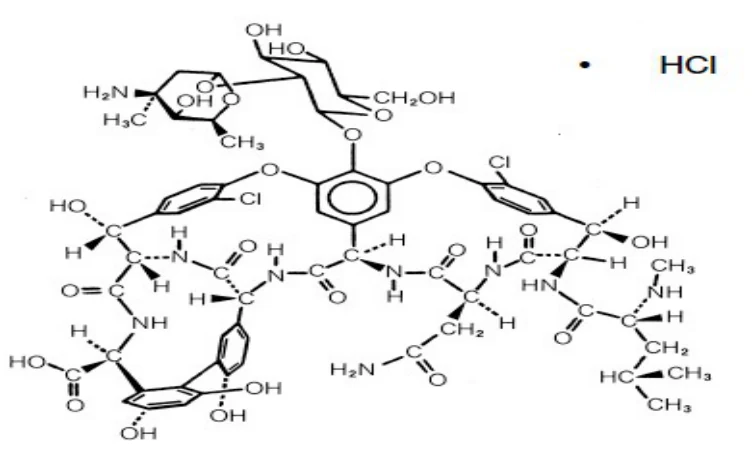
Physicochemical properties:
Description: Vancomycin hydrochloride is a chromatographically purified tricyclic glycopeptide antibiotic derived from Amycolatopsis orientalis (formerly Nocardia orientalis). It is an off-white free flowing powder, having essentially no odor. It is soluble in water and insoluble in organic solvents.
DETAILED PHARMACOLOGY
Human Pharmacology
Adults
Renal Insufficiency
Infusions of 1 g vancomycin in 250 mL D5-W were given over 30 minutes to 29 anephric patients. After 18 days with intermittent dialysis at three-day intervals, the serum concentration was still 3.5 mcg/mL. The elimination half-life was about 7.5 days.
Oral Administration
Vancomycin is poorly absorbed after oral administration, only trace amounts being found in blood or urine. Following 125 mg orally 4 times daily, the mean concentration of vancomycin in stools was approximately 350 mcg/g. Following up to ten daily oral doses of 2 g, a mean level of 3100 mcg/g with a range of 905 – 8760 mcg/g was detected in feces of patients with pseudomembranous colitis.
Tissue Penetration and Distribution
Central Nervous System
Vancomycin does not readily diffuse across normal meninges into the spinal fluid; but when the meninges are inflamed, penetration into the spinal fluid occurs.
Other Tissues and Fluids
Vancomycin concentration in human pericardial, pleural, bile, ascetic and synovial fluids reaches approximately one third of the equivalent serum level after single intravenous doses. A level of 7.6 mcg/mL was achieved in the brain cyst of one infant following intravenous infusion of 40 mg/kg daily for 4 days.
MICROBIOLOGY
Cross-resistance has not been demonstrated between vancomycin hydrochloride and other classes of antibiotics. Laboratory-induced resistance has been reported to occur in a slow stepwise fashion. Its activity is not significantly altered by changes in pH or by the presence of serum.
Vancomycin is active against most strains of the following organisms in vitro and in clinical infections as described in the section INDICATIONS AND CLNICAL USE:
- Staphylococcus aureus (including heterogeneous methicillin-resistant strains)
- Clostridium difficile
Vancomycin is active against most strains of the following organisms in vitro. However the safety and effectiveness of vancomycin hydrochloride in treating clinical infections due to these organisms have not been established in adequate and well-controlled trials.
- Staphylococcus epidermidis (including heterogeneous methicillin-resistant strains)
- Streptococcus pneumoniae (including multiple-resistant strains)
- Streptococcus pyogenes (group A beta-hemolytic)
- Streptococcus agalactiae (group B beta-hemolytic)
- Streptococcus bovis
- Alpha-hemolytic streptococci (viridans groups)
- Enterococci (e.g. E. faecalis)
- Bacillus sp.
- Listeria monocytogenes
- Lactobacillus sp.
- Neisseria sp.
- Diptheroids
- Actinomyces sp.
Note
Many strains of streptococci, staphylococci, C. difficile, and other gram-positive bacteria are susceptible in vitro to concentrations of 0.5 to 5 mcg/mL. Staphylococci are generally susceptible to less than 5 mcg/mL of vancomycin hydrochloride, but a small proportion of S. Aureus strains require 10 to 20 mcg/mL for inhibition.
In vitro resistance to vancomycin has been reported among some entercoccal and staphylococcal isolates.
Vancomycin is not effective in vitro against gram-negative bacilli, mycobacteria, or fungi.
Table 1: In Vitro Activity of Vancomycin
| Organism | No. of Strains | MIC* (mcg/mL)Range | Median |
|---|---|---|---|
| Staphylococcus aureus | 55 | 1.0-2.0 | 1.0 |
| 101 | 0.78-12.5 | 3.1 | |
| 35 | 0.25-1.0 | 1.0 | |
| Staphylococcus aureus (methicillin-resistant) | 22 | 0.5-4.0 | 0.5 |
| 38 | 0.3-12.0 | 1.5 | |
| 12 | 0.2-3.12 | 0.4 | |
| Streptococcus epidermidis | 177 | 1.56-6.25 | 3.1 |
| 35 | 0.4-3.1 | 1.6 | |
| 27 | 0.2-6.25 | 3.12 | |
| Streptococcus pneumonia | 70 | 0.125-0.5 | 0.25 |
| Streptococcus pyogenes | 12 | 0.8-3.1 | 1.6 |
| Streptococcus viridans | 82 | 0.39-1.56 | 0.78 |
| Streptococcus group D enterococci | 382 | 0.8->100.0 | 3.1 |
| Clostridium perfringens | 43 | 0.4-1.6 | 0.8 |
| Clostridium ramosum | 49 | 3.1-12.5 | 6.2 |
| Organism | No. of Strains | MIC* (mcg/mL)Range | Median |
|---|---|---|---|
| Clostridium difficile | 14 | <1.0 | <1.0 |
| 78 | 1.0-4.0 |
*Minimum Inhibitory Concentration (MIC)
Methods of Susceptibility Testing
When the standardized method of disc susceptibility testing is used, a 30 mcg disc of vancomycin should produce a zone of more than 11 mm when in contact with “susceptible” organisms. A zone size of 10 – 11 mm indicates intermediate susceptibility, while a zone size of 9 mm or less indicates resistance.
With the WHO-ICS agar dilution and broth dilution methods, and MIC of <5 mcg/mL indicates susceptibility to vancomycin.
Assay Methods
Vancomycin serum and tissue levels may be determined by Bennett’s agar-well diffusion method. This test can quantitatively measure vancomycin concentrations from 0.5 to 0.8 mcg/mL. Two disc-diffusion assay methods are available for vancomycin. Both use Bacillus subtilis as the test organism. The first method, which uses antibiotic medium No. 5, is capable of measuring vancomycin levels from approximately 5 to 40 mcg/mL. The second uses minimal salt agar and is capable of detecting vancomycin concentrations from about 0.8 to 25 mcg/mL. A modification of this assay permits reliable bioassay for vancomycin (in concentrations of 0.78 to 50.0 mcg/mL) in the presence of rifampin or aminoglycosides. Two commercially prepared assay methods are now available and include a radioimmunoassay and an automated fluorescence polarization immunoassay.
TOXICOLOGY
Acute Toxicity
Vancomycin was administered to mice, rats and dogs by various routes.
Table 2: LD50 ± SE (mg/kg) Following Vancomycin Administration
| Route of Administration | Rat | Mouse | Dog |
|---|---|---|---|
| Intravenous | 319 ± 14 | 489 ± 41 | 292 ± 29 |
| Intraperitoneal | 2218 ± 240 | 1734 ± 227 | |
| Subcutaneous | > 5000 | ||
| Oral | > 5000 |
Rats died quickly from CNS-mediated effects, while dogs died, generally from kidney failure, several days after the intravenous administration.
Vancomycin, when administered intravenously in a 5 percent solution to dogs at a rate of 0.6 mL/minute, caused a slight dose-related drop in blood pressure. When the same dogs were given the same doses at a rate of 15 mL/minute, blood pressure dropped dramatically, as much as 40 percent. Whether the response is due to a direct effect on histamine receptors or to release of histamine, possibly from mast cells, is not known.
Subchronic Toxicity
Dogs were given daily IV doses of vancomycin at 12.5 mg and 50 mg/kg for 21 – 311 days.
Renal damage was seen in 4/22 dogs receiving 50 mg/kg/day.
Monkeys tolerated IV doses of 25 mg and 50 mg/kg/day for 16 – 187 days, with irritation at the injection site as the only toxic effect.
Cats received IV doses of 25 mg and 50 mg/kg/day for three months with no systemic toxicity. Anaphylaxis could not be induced in 9 guinea pigs that received 100 mg vancomycin subcutaneously when challenged by a 25 mg IV dose, 25 days later.
Intraperitoneal doses of 150 mg vancomycin or 60 mg tobramycin given subcutaneously to rats, resulted in no nephrotoxicity; however, when administered together, significant renal toxicity occurred.
Vancomycin 1000 mg/kg administered subcutaneously concurrently with ethacrynic acid 40 mg/kg intravenously did not product ototoxicity in a guinea pig model.
Neuromuscular blocking has not been demonstrated in vancomycin-treated rabbits.
REFERENCES
- 1. Bartlett JG. Antibiotic-associated pseudomembranous colitis. Hospital Practice (Off Ed). 1981 Dec; 16 (12):85-8, 93-5. PubMed PMID: 6796495.
- 2. Bartlett JG. Treatment of antibiotic-associated pseudomembranous colitis. Rev Infect Dis. 1984 Mar-Apr; 6 Suppl 1:S235-S241. PubMed PMID: 6718937.
- 3. Burdon DW. Treatment of pseudomembranous colitis and antibiotic-associated diarrhoea. J Antimicrob Chemother. 1984 Dec: 14Suppl. D:103-9. Review. PubMed PMID: 6394575.
- 4. Cooper GL, Given DB. Vancomycin – a comprehensive review of 30 years of clinical experience. Park Row Publishers Inc. Jan 1986.
- 5. Cunha BA, Ristuccia AM. Clinical usefulness of vancomycin. Clin. Pharm. 1983 Sep- Oct; 2 (5): 417-424. Review. PubMed PMID: 6354567.
- 6. Dudley MD, McLaughlin JC, Carrington G, Frick J, Nightingale CH, Quintiliani R. Oral bacitracin vs. vancomycin therapy for Clostridium difficile-induced diarrhea. A randomized double-blind trial. Arch Intern Med. 1986 Jun; 146 (6):1101-4. PubMed PMID: 3521518.
- 7. Fekety R. Recent advances in management of bacterial diarrhea. Rev Infect Dis. 1983 Mar-Apr; 5(2): 246-57. PubMed PMID: 6405474.
- 8. Fekety R, Silva J, Buggy B, Deery HG. Treatment of antibiotic-associated colitis with vancomycin. J Antimicrob Chemother. 1984 Dec; 14 Suppl D:97-102. PubMed PMID: 6520070.
- 9. Finegold SM, Gaylor DW. Enterocolitis due to phage type 54 staphylococci resistant to kanamycin, neomycin, paromomycin and chloramphenicol. N Engl J Med. 1960 Dec 1; 263:1110-6. PubMed PMID: 13699584.
- 10. Geraci JE, Heilman FR, Nichols DR, Wellman WE. Antibiotic therapy of bacterial endocarditis. VII. Vancomycin for acute micrococcal endocarditis; preliminary report. Proc Staff Meet Mayo Clinic. 1958 Apr 2; 33 (7):172-81. PubMed PMID: 13542649.
- 11. Geraci JE, Heilman FR, Nichols DR, Ross GT, Wellmann WE. Some laboratory and clinical experiences with a new antibiotic, vancomycin. Proc Staff Meet Mayo Clinic. 1956 Oct 17; 31 (21):564-82. PubMed PMID: 13370625.
- 12.
Geraci JE, Hermans PE. Vancomycin. Mayo Clinic Proc. 1983 Feb; 58 (2):88-91.
PubMed PMID: 6823162.
- 13. Griffith RS. Vancomycin use – an historical review. J Antimicrob Chemother. 1984 Dec; 14 Suppl D:1-5. PubMed PMID: 6394574.
- 14.
Griffith RS, Peck FB Jr. Vancomycin, a new antibiotic. III. Preliminary clinical and
- laboratory studies. Antibiot Annu. 1955-1956; 3: 619-22. PubMed PMID: 13355338.
- 15. Kaplan EL. Vancomycin in infants and children: A review of pharmacology and indications for therapy and prophylaxis. J Antimicrob Chemother. 1984 Dec; 14 Suppl D: 59-66. Review. PubMed PMID: 6394578.
- 16. Karchmer AW, Archer GL, Dismukes WE. Staphylococcus epidermidis causing prosthetic valve endocarditis: Microbiologic and clinical observations as guides to therapy. Ann Intern Med. 1983 Apr; 98 (4):447-455. PubMed PMID: 6838067.
- 17. Keighley MR. Pseudomembranous colitis. Schweiz Rundsch Med Prax. 1982 Jan 19; 71 (3): 98-106. PubMed PMID: 7038661.
- 18.
Khan MY, Hall WH. Staphylococcal enterocolitis – treatment with oral vancomycin.
Ann Intern Med. 1966 Jul; 65(1): 1-8. PubMed PMID: 5936663.
- 19. Kirby WMM. Vancomycin therapy of severe staphylococcal infections. J Antimicrob Chemother. 1984 Dec; 14 (Supp. D):73-8. PubMed PMID: 6394579.
- 20. Marrie TJ, Furlong M, Faulkner RS, Sidorov J, Haldane EV, Kerr EA. Clostridium difficile: Epidemiology and clinical features. Can J Surg. 1982 Jul; 25(4):438-442. PubMed PMID: 7093841.
- 21. Matzke GR, McGory RW, Halstenson CE, Keane WF. Pharmacokinetics of vancomycin in patients with various degrees of renal function. Antimicrobl Agents Chemother. 1984 Apr; 25(4):433-7. PubMed PMID: 6732213; PubMed Central PMCID: PMC185546.
- 22. McCormick MH, McGuire JM, Pittenger GE, Pittenger RC, Stark WM. Vancomycin, a new antibiotic. I. Chemical and biologic properties. Antibiotics Annu. 1955-1956; 3: 606-11. PubMed PMID: 1355336.
- 23.
McGuire JM, Wolfe RN, Ziegler DW. Vancomycin a new antibiotic. II. In vitro
antibacterial studies. Antibiot Annu. 1955-1956;3: 612-8 PubMed PMID: 13355337.
- 24.
McHenry MC, Gavan TL. Vancomycin. Pediat Clin North Am. 1983 Feb; 30 (1): 31-37.
PubMed PMID: 6338468.
- 25. Moellering RC Jr. Pharmaokinetics of vancomycin. J Antimicrob Chemother. 1984 Dec; 14 Suppl D: 43-52. Review. PubMed PMID: 6394577.
- 26. Pfaller MA, Krogstad JD, Granich GG, Murray PR. Laboratory evaluation of five assay methods for vancomycin: bioassay, high-pressure liquid chromatography, fluorescence polarization immunoassay, radioimmunoassay, and fluorescence immunoassay. J Clin Microbiol. 1984 Sep; 20 (3):311-6. PubMed PMID: 6386852; PubMed Central PMCID: PMC271319.
- 27.
Shuttleworth R, Taylor M, Jones DM. Antimicrobial susceptibilities of Clostridium difficile.
- J. Clin Pathol. 1980 Oct; 33 (10):1002-5. PubMed PMID: 7430354; PubMed Central PMCID: PMC1146303.
- 28. Thomas DF, Fernie DS, Malone M, Bayston R, Spitz L. Association between Clostridium difficile and enterocolitis in Hirschsprung’s Disease. Lancet. 1982 Jan 9; 1 (8263):78-9. PubMed PMID: 6119496.
- 29. Wallace JF, Smith RH, Petersdorf RG. Oral administration of vancomycin in the treatment of staphylococcal enterocolitis. N Engl J Med. 1965 May 13; 272:1014-5. PubMed PMID: 14279249.
- 30. Watanakunakorn C. Mode of action and in vitro activity of vancomycin. J Antimicrob Chemother. 1984 Dec; 14 Suppl D: 7-18. Review. PubMed PMID: 6440886.
- 31. Welch DF, Marks MI. Is Clostridium difficile pathogenic in infants? Pediatr. 1982 Mar; 100(3): 393-5. PubMed PMID: 7062169.
- 32.
Wise RI, et al. The vancomycin symposium: summary and comments. Rev Infect Dis.
1981 Nov-Dec; 3:S293-300.
- 33. Woodley DW, Hall WH. The treatment of severe staphylococcal infections with vancomycin. Ann Intern Med. 1961 Aug; 55:235-49. PubMed PMID: 13786545.
- 34. PrVANCOCIN® (Vancomycin Hydrochloride capsules) Product Monograph, Searchlight Pharma Inc., Submission Control No: 223248; Revision Date: January 21, 2019.