


Product Monograph - Priorix-Tetra
Recent Major Label Changes
| 2026-02 |
|---|---|
| 2026-02 |
| 2026-02 |
| 2026-02 |
| 2026-02 |
Table of Contents
Certain sections or subsections that are not applicable at the time of the preparation of the most recent authorized product monograph are not listed.
Recent Major Label Changes ......................................................................................... 2
Table of Contents ......................................................................................................... 2
Part 1: Healthcare Professional Information ................................................................. 4
- 1.
Indications ............................................................................................................. 4
1.1. Pediatrics ....................................................................................................... 4
1.2. Geriatrics ....................................................................................................... 4
- 2. Contraindications .................................................................................................. 4
- 4.
Dosage and Administration ................................................................................... 5
4.2. Recommended Dose and Dosage Adjustment .............................................. 5
4.3. Reconstitution ............................................................................................... 5
4.4. Administration ............................................................................................... 6
- 5. Overdose ............................................................................................................... 7
- 6. Dosage Forms, Strengths, Composition, and Packaging ......................................... 7
- 7.
Warnings and Precautions ..................................................................................... 8
General ...................................................................................................................... 8
Hematologic .............................................................................................................. 9
Immune ..................................................................................................................... 9
7.1. Special Populations ..................................................................................... 10
7.1.1. Pregnancy ........................................................................................ 10
7.1.2. Breastfeeding .................................................................................. 10
7.1.3. Pediatrics ......................................................................................... 10
- 8.
Adverse Reactions ............................................................................................... 10
8.2. Clinical Trial Adverse Reactions ................................................................... 10
8.5. Post-Market Adverse Reactions .................................................................. 11
- 9.
Drug Interactions ................................................................................................. 12
9.4. Drug-Drug Interactions ................................................................................ 12
9.7. Drug-Laboratory Test Interactions .............................................................. 13
- 10.
Clinical Pharmacology ......................................................................................... 13
10.1. Mechanism of Action ................................................................................... 13
- 11. Storage, Stability, and Disposal ............................................................................ 14
Part 2: Scientific Information ...................................................................................... 15
- 13. Pharmaceutical Information ................................................................................ 15
- 14.
Clinical Trials ........................................................................................................ 15
14.1. Clinical Trials by Indication .......................................................................... 15
14.3. Immunogenicity ........................................................................................... 17
- 16. Non-Clinical Toxicology ........................................................................................ 26
Patient Medication Information ................................................................................. 27
Part 1: Healthcare Professional Information
1. Indications
PRIORIX-TETRA (combined measles, mumps, rubella and varicella vaccine, live, attenuated) is indicated for active immunization against measles, mumps, rubella and varicella in individuals from 9 months to 6 years of age. Refer to the Canadian Immunization Guide for further information on the use of PRIORIX-TETRA below 6 years of age.1,2,3,4
1.1. Pediatrics
Pediatrics (9 months to 12 years of age): Efficacy has not been evaluated in clinical trials above 6 years of age. PRIORIX-TETRA may be used in individuals up to 12 years of age based upon previous experience with the separate component vaccines, PRIORIX (combined measles, mumps and rubella vaccine, live, attenuated) and VARILRIX [varicella virus vaccine, live, attenuated (OKA-strain)].
1.2. Geriatrics
Geriatrics (65 years of age and older): The safety, immunogenicity and efficacy in individuals 65 years of age and older have not been assessed in clinical trials.
2. Contraindications
PRIORIX-TETRA (combined measles, mumps, rubella and varicella vaccine, live, attenuated) is contraindicated in:
- individuals with known hypersensitivity to neomycin or to any other component of the vaccine (for egg allergy, see 7. Warnings and Precautions ). A history of contact dermatitis to neomycin is not a contraindication. For a complete listing of excipients, see 6. Dosage Forms, Strengths, Composition, and Packaging.
- individuals having shown signs of hypersensitivity after previous administration of measles, mumps, rubella and/or varicella vaccines.
Measles-containing vaccines are contraindicated in:
- individuals with severe humoral or cellular (primary or acquired) immunodeficiency e.g., symptomatic HIV infection, hypogammaglobulinemic and dysgammaglobulinemic states, as well as blood dyscrasias, leukemia, lymphomas of any type, or other malignant neoplasms affecting the bone marrow or lymphatic systems. Individuals with a family history of congenital or hereditary immunodeficiency, until the immune competence of the potential vaccine recipient is demonstrated. Post marketing reports of measles inclusion body encephalitis (MIBE), pneumonitis and death as a direct consequence of disseminated measles vaccine virus infection have been rarely reported in severely immunocompromised individuals inadvertently vaccinated with measles-containing vaccine. See 7. Warnings and
1,2,3,4 Local recommendations are provided in the Canadian Immunization guide: June 2025 for measles, mumps and rubella vaccines and May 2025 for varicella vaccines.
- Precautions.
- patients on current or recent immunosuppressive therapy (includes high doses of corticosteroids but not topical or low-dose parenteral corticosteroids, adrenocorticotropic hormone (ACTH), irradiation, alkylating agents or antimetabolites) (see 7. Warnings and Precautions).
- individuals suffering from acute severe febrile illness.
- individuals with active untreated tuberculosis.
- pregnant women. Pregnancy should be avoided for one month after vaccination (see 7. Warnings and Precautions, Special Populations).
4. Dosage and Administration
4.2. Recommended Dose and Dosage Adjustment
Primary immunization consists of two doses of PRIORIX-TETRA (combined measles, mumps, rubella and varicella vaccine, live, attenuated) vaccine. An interval of at least 6 weeks between doses is preferable and in no circumstances should this interval be less than 4 weeks.
If official recommendations call for a second dose of varicella, PRIORIX-TETRA can be used in lieu of separate MMR and varicella vaccines. Refer to the Canadian Immunization Guide for current recommendations.
4.3. Reconstitution
The diluent and reconstituted vaccine should be inspected visually for any foreign particulate matter and/or abnormal physical appearance prior to administration. In the event of either being observed, do not administer the diluent or reconstituted vaccine.
Instructions for reconstitution of the vaccine with diluent presented in pre-filled syringe
PRIORIX-TETRA must be reconstituted by adding the entire contents of the pre-filled syringe of diluent to the vial containing the powder.
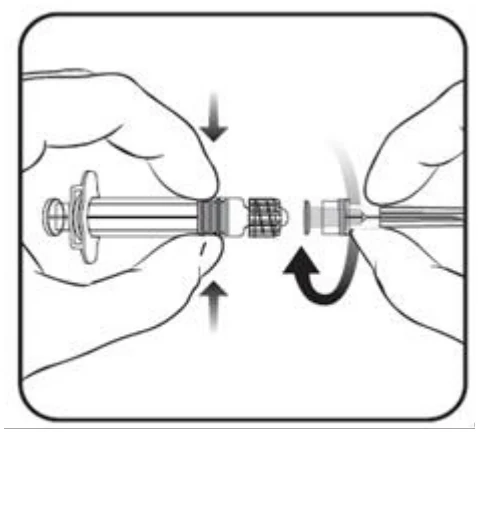
To attach the needle to the syringe, carefully read the instructions given with pictures 1 and 2.
Note: The syringe provided with PRIORIX-TETRA might be slightly different (without screw thread) than the syringe illustrated. In that case, the needle should be attached without screwing.
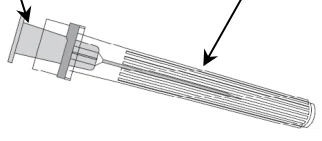
Needle
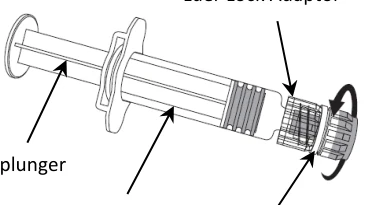
Syringe
Picture 1
Picture 2
Always hold the syringe by the barrel, not by the syringe plunger or the Luer Lock Adaptor (LLA), and maintain the needle in the axis of the syringe (as illustrated in picture 2). Failure to do this may cause the LLA to become distorted and leak.
During assembly of the syringe, if the LLA comes off, a new vaccine dose (new syringe and vial) should be used.
- 1. Unscrew the syringe cap by twisting it anticlockwise (as illustrated in picture 1).
- 2. Attach the needle to the syringe by gently connecting the needle hub into the LLA and rotate a quarter turn clockwise until you feel it lock (as illustrated in picture 2).
- 3. Remove the needle protector, which may be stiff.
- 4. Add the diluent to the vial of powder. The mixture should be well shaken until the powder is completely dissolved in the diluent.
After reconstitution, the vaccine should be used promptly.
- 5. Withdraw the entire contents of the vial.
- 6. A new needle should be used to administer the vaccine. Unscrew the needle from the syringe and attach the injection needle by repeating step 2 above.
Reconstituted vaccine should be injected as soon as possible, within 8 hours of reconstitution if it is stored refrigerated (2 to 8°C).
Any unused product or waste material should be disposed of in accordance with local requirements.
4.4. Administration
The colour of the reconstituted vaccine may vary from clear peach to fuchsia pink (bright pink)
Syringe barrel
Syringe plunger
Luer Lock Adaptor
Syringe cap
Needle protector
Needle hub
due to minor variations of its pH. This is normal and does not impair the performance of the vaccine. In the event of other variation being observed, do not administer the vaccine.
PRIORIX-TETRA is to be injected subcutaneously (SC), or intramuscularly (IM) in the deltoid region of the upper arm.
The vaccine should be administered subcutaneously in individuals with bleeding disorders (eg. thrombocytopenia or any coagulation disorder).
Alcohol and other disinfecting agents must be allowed to evaporate from the skin before injection of the vaccine since they can inactivate the attenuated viruses in the vaccine.
5. Overdose
For the most recent information in the management of a suspected drug overdose, contact your regional poison control centre or Health Canada’s toll-free number, 1-844 POISON-X (1-844-764-7669).
- 6. Dosage Forms, Strengths, Composition, and Packaging
Table 1 – Dosage Forms, Strengths, and Composition
| Route of Administration | Dosage Form/ Strength/Composition | Non-Medicinal Ingredients |
Subcutaneous injection (SC) or Intramuscular injection (IM) | Lyophilized powder for injection After reconstitution, 1 dose (0.5mL) contains: Live, attenuated measles virusa (Schwarz strain) not less than 103.0 CCID50c Live, attenuated mumps virusa (RIT 4385 strain, derived from Jeryl Lynn strain) not less than 104.4 CCID50c Live, attenuated rubella virusb (Wistar RA 27/3 strain) not less than 103.0 CCID50c Live, attenuated varicella virusb (OKA strain) not less than 103.3 PFU | Amino acids, lactose, mannitol, sorbitol, and water for injection. Residue: neomycin sulphate. |
a Produced in chick embryo cells
b Produced in human diploid (MRC-5) cells
c Cell Culture Infective Dose 50%
Dosage Forms
PRIORIX-TETRA (combined measles, mumps, rubella and varicella vaccine, live, attenuated) is supplied as a sterile powder (vial) and diluent (prefilled syringe) with or without needles.
Description
PRIORIX-TETRA is a lyophilized mixed preparation of the attenuated Schwarz measles, RIT 4385 mumps (derived from Jeryl Lynn strain), Wistar RA 27/3 rubella and Oka varicella strains of viruses.
Packaging
PRIORIX-TETRA is supplied in packages of 10 as monodose vial of lyophilized powder with prefilled syringe of diluent (sterile WFI), with or without needle(s).
7. Warnings and Precautions
General
PRIORIX-TETRA (combined measles, mumps, rubella and varicella vaccine, live, attenuated) must not be administered intravascularly or intradermally. Accidental intravascular administration may give rise to severe reactions or even shock. Immediate measures depend on the severity of the reaction.
As with other vaccines, the administration of PRIORIX-TETRA should be postponed in individuals suffering from acute severe febrile illness. However, the presence of a minor infection, such as a cold, should not result in the deferral of vaccination.
As with all injectable vaccines, appropriate medical treatment and supervision should always be readily available in case of a rare anaphylactic event following the administration of the vaccine.
Alcohol and other disinfecting agents must be allowed to evaporate from the skin before injection of the vaccine since they can inactivate the attenuated viruses in the vaccine.
Limited protection against measles may be obtained by vaccination up to 72 hours after exposure to natural measles.
Infants in their first year of life may not respond sufficiently to the measles component of the vaccine, due to the possible persistence of maternal measles antibodies. Additional doses of a measles containing vaccine should be given according to official recommendations.
There is an increased risk of fever and febrile convulsions 5 to 12 days after the first dose of PRIORIX-TETRA as compared with 2 separate injections of MMR and varicella vaccines (see 8. Adverse Reactions). There was no indication of an increased risk after the second dose.
Fever rates are usually high after the first dose of measles-containing vaccines.
Vaccination of individuals with a history of febrile convulsions or a family history of convulsions should be considered with caution. Alternative immunization of these individuals with separate MMR and varicella vaccines should be considered for the first dose. In any case vaccinees should be monitored for fever during the risk period.
Transmission of measles, mumps and rubella viruses from vaccinees to susceptible contacts has never been documented, although pharyngeal excretion of the rubella virus is known to occur about 7 to 28 days after vaccination with peak excretion around the 11th day. Transmission of the Oka vaccine virus has been shown to occur at a very low rate in seronegative contacts of vaccinees with rash. Transmission of the Oka vaccine from a vaccinee who does not develop a rash to seronegative contacts cannot be excluded.
The measles and mumps components of the vaccine are produced in chick embryo cell culture and may therefore contain traces of egg protein. Persons with a history of anaphylactic, anaphylactoid, or other immediate reactions (e.g. generalized urticaria, swelling of the mouth and throat, difficulty breathing, hypotension or shock) subsequent to egg ingestion may be at an enhanced risk of immediate-type hypersensitivity reactions after vaccination, although these types of reactions have been shown to be very rare. Individuals who have experienced anaphylaxis after egg ingestion should be vaccinated with extreme caution, with adequate treatment for anaphylaxis on hand should such a reaction occur.
Syncope (fainting) can occur following, or even before, any vaccination as a psychogenic response to the needle injection. It is important that procedures are in place to avoid injury from faints.
Encephalitis has been reported during post-marketing use of live attenuated measles, mumps, rubella and varicella vaccines including PRIORIX-TETRA. Fatal outcomes have been observed, especially in patients who were immunocompromised (see 2. Contraindications). Vaccinees or parents should be instructed to seek prompt medical attention if they or their child experience, after vaccination, symptoms suggestive of encephalitis such as loss or reduced levels of consciousness, convulsions or ataxia accompanied by fever and headache.
Hematologic
Cases of worsening of thrombocytopenia and recurrence of thrombocytopenia in individuals who suffered thrombocytopenia after the first dose have been reported following vaccination with live measles, mumps and rubella vaccines. In such cases, the risk-benefit of immunising with PRIORIX-TETRA should be carefully evaluated.
Immune
As with any vaccine, a protective immune response may not be elicited in all vaccinees.
As for other varicella vaccines, cases of varicella disease have been shown to occur in persons who have previously received PRIORIX-TETRA. These breakthrough cases are usually mild, with a fewer number of lesions and less fever as compared to cases in unvaccinated individuals.
There are limited data on the use of PRIORIX-TETRA in immunocompromised individuals, therefore vaccination should be considered with caution and only when, in the opinion of the physician, the benefits outweigh the risks.
Immunocompromised individuals who have no contraindication for this vaccination (see 2. Contraindications) may not respond as well as immunocompetent individuals, therefore some of these individuals may acquire measles, mumps, rubella or varicella despite appropriate vaccine administration. Immunocompromised individuals should be monitored carefully for signs of measles, mumps, rubella and varicella.
Due to the potential risk of decreased vaccine response and/or disseminated diseases, consideration should be given to the time interval between PRIORIX-TETRA vaccination and immunosuppressive therapy (see 2. Contraindications).
Very few reports exist on disseminated varicella with internal organ involvement following vaccination with Oka varicella vaccine strain mainly in immunocompromised individuals.
7.1. Special Populations
7.1.1. Pregnancy
Pregnant women must not be vaccinated with PRIORIX-TETRA. Pregnancy should be avoided for one month after vaccination. Women of reproductive age or those who intend to become pregnant should be advised to delay pregnancy.
Adequate human data on the use of PRIORIX-TETRA during pregnancy are not available and animal studies on reproductive toxicity have not been conducted.
In a literature review of more than 3,500 susceptible individuals who were unknowingly in early stages of pregnancy when vaccinated with a rubella-containing vaccine, no cases of congenital rubella syndrome were reported. Post-marketing surveillance identified congenital rubella syndrome associated with a rubella vaccine strain (Wistar RA 27/3) following inadvertent vaccination of a pregnant individual with a measles, mumps and rubella vaccine.
Fetal damage has not been documented when measles, mumps or varicella vaccines have been given to pregnant women.
7.1.2. Breastfeeding
Adequate human data on the use of PRIORIX-TETRA during lactation are not available.
It is not known whether measles, mumps, or varicella virus is secreted in human milk. Studies of other rubella-containing vaccine(s) have shown that lactating postpartum women vaccinated with live attenuated rubella vaccine may secrete the virus in breast milk and transmit it to breast-fed infants. In the infants who developed serological evidence of rubella infection, none exhibited severe disease; however, one exhibited mild clinical illness typical of acquired rubella. Therefore, caution should be exercised if PRIORIX-TETRA is inadvertently administered to a nursing woman. Breastfeeding women may be vaccinated where, in the judgement of the health professional, the benefit outweighs the risk.
7.1.3. Pediatrics
Pediatrics (9 months to 12 years of age): Efficacy has not been evaluated in clinical trials above 6 years of age. PRIORIX-TETRA may be used in individuals up to 12 years of age based upon previous experience with the separate component vaccines, PRIORIX (combined measles, mumps and rubella vaccine, live, attenuated) and VARILRIX [varicella virus vaccine, live, attenuated (OKA-strain)].
8. Adverse Reactions
8.2. Clinical Trial Adverse Reactions
Clinical trials are conducted under very specific conditions. Therefore, the frequencies of adverse reactions observed in the clinical trials may not reflect frequencies observed in clinical practice and should not be compared to frequencies reported in clinical trials of another drug.
The safety profile presented below is based on data from more than 6,700 doses of PRIORIX-
TETRA (combined measles, mumps, rubella and varicella vaccine, live, attenuated) administered subcutaneously to children from 9 to 27 months of age. Events were recorded for up to 42 days after vaccination.
Very Common Clinical Trial Adverse Reactions ≥ 1/10
General disorders and administration site conditions: pain and redness at the injection site, fever (rectal ≥ 38°C and ≤ 39.5°C; axillary/oral: ≥ 37.5°C and ≤ 39°C)a
Common Clinical Trial Adverse Reactions ≥ 1/100 to < 1/10
General disorders and administration site conditions: swelling at the injection site, fever (rectal > 39.5°C; axillary/oral > 39°C)a
a Following the administration of the first dose of PRIORIX-TETRA, higher incidences of fever (approximately 1.5 fold) were observed when compared to the concomitant administration of PRIORIX and VARILRIX vaccines at separate injection sites.
Psychiatric disorders: irritability
Skin and subcutaneous tissue disorders: rash including measles-like, rubella-like and varicella-like rash
Uncommon Clinical Trial Adverse Reactions ≥ 1/1,000 to < 1/100
Blood and lymphatic system disorders: lymphadenopathy
Gastrointestinal disorders: parotid gland enlargement, diarrhea, vomiting
General disorders and administration site conditions: lethargy, malaise, fatigue
Infections and infestations: upper respiratory tract infection
Metabolism and nutrition disorders: anorexia
Psychiatric disorders: crying, insomnia, nervousness
Respiratory, thoracic and mediastinal disorders: rhinitis
Rare Clinical Trial Adverse Reactions ≥ 1/10,000 to < 1/1,000
General disorders and administration site conditions: injection site bruising
Infections and infestations: otitis media
Nervous system disorders: febrile convulsions
Respiratory, thoracic and mediastinal disorders: cough, bronchitis
8.5. Post-Market Adverse Reactions
During post-marketing surveillance, the following additional reactions have been reported rarely after measles-mumps-rubella and varicella vaccination:
Blood and lymphatic system disorders: thrombocytopenia, thrombocytopenic purpura
Immune system disorders: allergic reactions (including anaphylactic and anaphylactoid reactions)
Infections and infestations: meningitis, herpes-zoster, measles-like syndrome, mumps-like syndrome (including orchitis, epididymitis and parotitis)
Musculoskeletal and connective tissue disorders: arthralgia, arthritis
Nervous system disorders: encephalitis (see 7. Warnings and Precuations, Immune) , cerebrovascular accident, cerebellitis, cerebellitis like symptoms (including transient gait disturbance and transient ataxia), Guillain Barré syndrome, transverse myelitis, peripheral neuritis
Encephalitis has been observed following vaccination with live attenuated varicella vaccines. Fatal outcome was reported in a few cases, especially in immunocompromised people.
Skin and subcutaneous tissue disorders: erythema multiforme, varicella-like rash
Vascular disorders: vasculitis (including Henoch Schonlein purpura and Kawasaki syndrome)
Post-Marketing Observational Safety Surveillance Study
The risk of febrile convulsions (FC) following the first dose vaccination of children aged 9 to 30 months with PRIORIX-TETRA compared with a matched cohort who received MMR or simultaneous, but separate MMR and varicella vaccination was assessed in a retrospective database analysis.
The study included 82,656 children immunized with MMRV, 149,259 with MMR and 39,203 with separate MMR and varicella vaccines. In the matched cohort, there were 82,436 subjects in the PRIORIX-TETRA group and 82,469 in the control group (pooled groups of MMR and MMR+V).
The attributable risk of febrile convulsions on cohorts matched for confounding factors (gender, age at immunization, calendar month of immunization and statutory health insurances) in the main risk period of 5 to 12 days following first dose of PRIORIX-TETRA was 3.64/10,000 (95% CI: -6.11; 8.30). This suggests one additional case of febrile convulsion per 2,747 subjects vaccinated with PRIORIX-TETRA compared to matched control cohorts who received MMR or simultaneous, but separate MMR and varicella vaccination (FC Jacobsen case definition to identify febrile convulsions). The relative risks of febrile convulsions (FC Jacobsen case definition) for the comparison of PRIORIX-TETRA with the pooled exposure group of children vaccinated against MMR or MMR+V were 1.48 (95% CI, 1.08 - 2.01) for the entire risk period 0-30 days, and 2.43 (95% CI, 1.46 - 4.04) for the main risk period 5 to 12 days after immunization.
The study found a 4.1-fold (95% CI, 1.34 -12.68) and 3.5-fold (95% CI, 0.66 - 18.98) increase in the cumulative incidence of the main outcome 'FC narrow' in the main risk interval 5 days to 12 days after a first dose immunization with PRIORIX-TETRA compared to matched cohorts of MMR and MMR+V, respectively, and taking into account additional confounding factors (personal history of febrile convulsions, co-administration of other vaccines, and hospitalization for infectious diseases).
9. Drug Interactions
9.4. Drug-Drug Interactions
Clinical studies have demonstrated that PRIORIX-TETRA (combined measles, mumps, rubella and varicella vaccine, live, attenuated) can be given with any of the following monovalent or combination vaccines: hexavalent vaccines (DTaP-HBV-IPV-Hib), diphtheria-tetanus-acellular pertussis vaccine (DTaP), Haemophilus influenzae type b vaccine (Hib), inactivated polio vaccine (IPV), Hepatitis B vaccine (HBV). The immune response to PRIORIX-TETRA is not decreased by co-administration with any of the following vaccines: BEXSERO [meningococcal serogroup B vaccine (MenB)], meningococcal serogroup C conjugate vaccine (MenC), meningococcal serogroups A, C, W-135 and Y conjugate vaccine (MenACWY) and 10-valent pneumococcal conjugate vaccine (PCV).
As higher percentages of subjects reported systemic reactions, including fever, change in eating habits, tenderness at the injection site and irritability, following BEXSERO given concomitantly with routine vaccines than after BEXSERO alone, separate vaccinations can be considered when possible.
See 14.3. Immunogenicity, Administration of PRIORIX-TETRA with other vaccines and Product Monograph of the co-administered vaccine.
In individuals who have received human gammaglobulins or a blood transfusion, vaccination should be delayed for at least three months because of the likelihood of vaccine failure due to passively acquired antibodies.
Salicylates should be avoided for 6 weeks after each vaccination as Reye’s Syndrome has been reported following the use of salicylates during natural varicella infection.
If PRIORIX-TETRA is to be given at the same time as another injectable vaccine, the vaccines should always be administered at different injection sites.
In the absence of compatibility studies, this medicinal product must not be mixed with other medicinal products.
9.7. Drug-Laboratory Test Interactions
If tuberculin testing has to be done it should be carried out before or simultaneously with vaccination since it has been reported that combined measles, mumps and rubella vaccines may cause a temporary depression of tuberculin skin sensitivity. As this anergy may last up to a maximum of 6 weeks, tuberculin testing should not be performed within that period after vaccination to avoid false negative results.
10. Clinical Pharmacology
10.1. Mechanism of Action
PRIORIX-TETRA is a combined live, attenuated measles (Schwarz strain), mumps (RIT 4385 strain, derived from Jeryl Lynn strain), rubella (Wistar RA 27/3 strain) and varicella-zoster virus (OKA strain) vaccine. In general, live attenuated viral vaccines contain whole, weakened viruses that have the capacity to replicate within a host. PRIORIX-TETRA induces a mild, usually inapparent version of measles, mumps, rubella, and varicella-zoster virus infection in susceptible patients that resembles natural infection and in turn trains the immune system through induction of humoral and cell-mediated immune responses. The relative contributions of humoral immunity and cell-mediated immunity to protection from measles, mumps, rubella, and varicella-zoster virus are unknown.
- 11. Storage, Stability, and Disposal
Store PRIORIX-TETRA (combined measles, mumps, rubella and varicella vaccine, live, attenuated) at 2 to 8°C (in a refrigerator). Do not freeze. Store in the original packaging in order to protect from light.
The reconstituted vaccine should be administered as soon as possible. It may be kept up to 8 hours in the refrigerator (2 to 8°C).
The expiry date of the vaccine is indicated on the label and packaging.
Keep out of the reach and sight of children.
Part 2: Scientific Information
13. Pharmaceutical Information
Non-proprietary name: combined measles, mumps, rubella and varicella vaccine, live, attenuated
Product Characteristics:
PRIORIX-TETRA (combined measles, mumps, rubella and varicella vaccine, live, attenuated) is a whitish to slightly pink coloured cake or powder contained in a glass vial sealed with a rubber stopper. The diluent (sterile water for injection) is clear and colourless. The reconstituted vaccine is a clear peach to fuchsia pink (bright pink) coloured solution.
14. Clinical Trials
14.1. Clinical Trials by Indication
Table 2 – Summary of Demographic Characteristics (ATP cohort for Immunogenicity)
| Study # | Study design | Dosage, route of administration and duration | Study subjects (n = 3770) | Mean Age (range) | Gender | ||||
|---|---|---|---|---|---|---|---|---|---|
| Study # | Study design | Dosage, route of administration and duration | Study subjects (n = 3770) | Mean Age (range) | Gender | ||||
| Study # | Study design | Dosage, route of administration and duration | Study subjects (n = 3770) | Mean Age (range) | Gender | ||||
| 038 | Partially blinded, randomized, phase III, controlled, 2 doses, 4 parallel groups Study continued; | First dose on Day 0 and second dose on Day 42 by subcutaneous injection 2 doses of PRIORIX-TETRA or 2 doses of PRIORIX + 1 dose of VARILRIX | 311 PRIORIX-TETRA 108 PRIORIX + VARILRIX | 14.4 ± 2.30 (11 - 23) | PRIORIX-TETRA Male: 51.4% PRIORIX + VARILRIX Male: 52.8% | ||||
| *23.5 ± 0.7 (21.0-25.0) | ||||||||
| **35.4 ± 0.7 (33.0-38.0) | ||||||||
| 043 | Partially blinded, randomized, phase III, controlled, 2 doses, 4 parallel groups | First dose on Day 0 and second dose on Day 42 by subcutaneous injection 2 doses of PRIORIX-TETRA or | 1162 PRIORIX-TETRA 193 PRIORIX + VARILRIX | 14.0 ± 2.26 (11-21) | PRIORIX-TETRA Male: 51.5% PRIORIX + VARILRIX Male: 50. 3% | ||||
| 2 doses of PRIORIX + 1 dose of VARILRIX | |||||||||
| 044 | Partially blinded, randomized, phase III controlled, 2 doses, 4 parallel groups | First dose on Day 0 and second dose on Day 42 by subcutaneous injection 2 doses of PRIORIX-TETRA or 2 doses of PRIORIX + 1 dose of VARILRIX | 681 PRIORIX-TETRA 219 PRIORIX + VARILRIX | 12.9 ± 2.07 (11-20) | PRIORIX-TETRA Male: 51.4% PRIORIX + VARILRIX Male: 57.1% | ||||
| 046 | Open, randomized, phase II, controlled, 2 parallel groups | First dose on Day 0 and second dose on Day 42-56 by subcutaneous injection First dose of PRIORIX-TETRA + 2nd dose of VARILRIX or First dose of PRIORIX and VARILRIX + 2nddose of VARILRIX | 238 PRIORIX-TETRA VARILRIX 240 PRIORIX + VARILRIX. VARILRIX | 31.7 ± 16.35 (15-83) 31.0 ± 15.68 (15-83) | PRIORIX-TETRA + VARILRIX Male 48.7% PRIORIX + VARILRIX. VARILRIX Male 51.8% | ||||
| 047 | Open, randomized, phase II, controlled, 2 parallel groups | First dose on Day 0 by subcutaneous injection 1 dose of PRIORIX-TETRA or 1 dose of PRIORIX + 1 dose of VARILRIX | 195 PRIORIX-TETRA 195 PRIORIX + VARILRIX | 47.4 ± 19.09 (15-75) 46.4 ± 19.09 (15-73) | PRIORIX-TETRA Male 49.7% PRIORIX + VARILRIX Male 45.5% | ||||
| 048 | Open, randomized phase III, controlled, 2 doses, 2 | First dose on Day 0 and second dose on Day 42 by subcutaneous injection | 142 PRIORIX-TETRA (SC) | 12.5 ± 2.0 (11-20) | PRIORIX-TETRA Male 57.7% | ||||
| parallel groups | First dose on Day 0 and second dose on Day 42 by intramuscular injection | 141 PRIORIX-TETRA (IM) | 12.6 ± 2.1 (11-20) | PRIORIX-TETRA Male 50.4% | |||||
*= Time between vaccination 2 and Year 2 (months)
**= Time between vaccination 2 and Year 3 (months)
14.3. Immunogenicity
Study demographics and trial design
PRIORIX-TETRA (combined measles, mumps, rubella and varicella vaccine, live attenuated) has been evaluated in three pivotal clinical studies (038, 043 and 044).
Study 038 was a phase III study evaluating the consistency post dose 2 of three lots of PRIORIX-TETRA vaccine and non-inferiority of PRIORIX-TETRA vaccine compared to two doses of PRIORIX and one dose of VARILRIX, coadministered with PRIORIX at the first visit. The study continued for 3 years evaluating the persistence of antibodies of each of the vaccine antigens.
Study 043 was a phase III study evaluating the immunogenicity of lots near the end of the shelf life (aged) of PRIORIX-TETRA vaccine. A control group received two doses of PRIORIX and one dose of VARILRIX, coadministered with PRIORIX at the first visit.
Study 044 was a phase III study evaluating the consistency post dose 1 of three lots of PRIORIX-TETRA vaccine. Another study objective was to establish a seroconversion rate for mumps by neutralisation assay of at least 90% or higher. A control group received two doses of PRIORIX and one dose of VARILRIX, coadministered with PRIORIX at the first visit.
Study 046 was a phase II, open, randomized, comparative study to evaluate the immunogenicity and safety of PRIORIX-TETRA vaccine and PRIORIX, coadministered in separate injections with one dose of VARILRIX when given in healthy children who previously received a first dose of an MMR vaccine.
Study 047 was a phase II, open, randomized, comparative study to evaluate the immunogenicity and safety of PRIORIX-TETRA vaccine and PRIORIX, coadministered in separate injections with VARILRIX when given in healthy children who previously received a first dose of an MMR vaccine and one dose of a varicella vaccine.
Study 048 was a phase III study evaluating the immunogenicity and reactogenicity of PRIORIX-TETRA administered intramuscularly (IM), given according to a two-dose regimen (6 week interval), compared to subcutaneous (SC) administration.
For studies 038, 043 and 044, a total of 2206 healthy male and female subjects received at least one dose of PRIORIX-TETRA, of which 2173 vaccinees received the second dose of the vaccine 6 weeks after the first administration. The age at enrolment ranged from 9 through 23 months.
For studies 046 and 047, a total of 423 healthy male and female subjects received at least one dose of PRIORIX-TETRA, of which 153 were aged 24 months or less, and 270 were above 24 months of age. The age at enrolment ranged from 13 months through 6 years of age.
In study 048, an additional 328 healthy male and female subjects were given one dose of PRIORIX-TETRA at day 0, and given a second dose six weeks after the first administration, either via intramuscular or subcutaneous injection.
In studies 038, 043 and 044, baseline serum samples were obtained immediately prior to vaccine administration, at the time of the second injection and 6 weeks after. Anti-measles, anti-mumps and anti-rubella antibody titres were determined by an enzyme-linked immunosorbent assay (ELISA). Anti-mumps antibodies were also determined by neutralization test. Anti-varicella antibodies were determined by an indirect immunofluorescence assay (IFA).
Study results
In studies 038, 043 and 044, a subset of 2,051 vaccinees who received at least one dose of PRIORIX-TETRA and 2,013 who received the second dose of vaccine were used in the immunogenicity analysis. The immunogenicity of PRIORIX-TETRA was similar to that of its individual component vaccines [PRIORIX (combined measles, mumps and rubella vaccine, live, attenuated) and VARILRIX (varicella virus vaccine, live, attenuated (OKA-strain))], which are commercially available and routinely used in immunization. (See Table 3).
Subjects in the PRIORIX-TETRA group received two doses of PRIORIX-TETRA given 6 weeks apart. Subjects in the PRIORIX+VARILRIX group received 1 dose of PRIORIX and 1 dose of VARILRIX as the first dose, and then 6 weeks later another dose of PRIORIX only.
Table 3 – Seroconversion rates observed in Study 038 following the first and second doses of PRIORIX-TETRA compared with PRIORIX and VARILRIX given separately
| Dose 1 | |||
|---|---|---|---|
| PRIORIX-TETRA | PRIORIX + VARILRIX | ||
| Antibody | |||
| Lot | N | % | |
| 95% CI | |||
| N | |||
| % | |||
| 95% CI | |||
| Measles | |||
| A | 106 | 97.2 | |
| 92.0 to 99.4 | 106 | ||
| 100.0 | |||
| 96.6 to 100.0 | |||
| B* | 100 | 99.0 | 94.6 to 100.0 |
| C | 100 | 97.0 | 91.5 to 99.4 |
| Mumps | |||
| A | 105 | 91.4 | |
| 84.4 to 96.0 | 106 | ||
| 95.3 | |||
| 89.3 to 98.5 | |||
| B* | 98 | 85.7 | 77.2 to 92.0 |
| C | 99 | 92.9 | 86.0 to 97.1 |
| Rubella | |||
| A | 106 | 97.2 | |
| 92.0 to 99.4 | 106 | ||
| 100.0 | |||
| 96.6 to 100.0 | |||
| B* | 100 | 100.0 | 96.4 to 100.0 |
| C | 100 | 100.0 | 96.4 to 100.0 |
| Varicella | |||
| A | 105 | 99.0 | |
| 94.8 to 100.0 | 106 | ||
| 100.0 | |||
| 96.6 to 100.0 | |||
| B* | 99 | 100.0 | 96.3 to 100.0 |
| C | 100 | 100.0 | 96.4 to 100.0 |
| Dose 2 | |||
| PRIORIX-TETRA | PRIORIX + VARILRIX | ||
| Antibody | |||
| Lot | N | % | |
| 95% CI | |||
| N | |||
| % | |||
| 95% CI | |||
| Measles | |||
| A | 106 | 100.0 | |
| 96.6 to 100.0 | 108 | ||
| 100.0 | |||
| 96.6 to 100.0 | |||
| B* | 102 | 100.0 | 96.4 to 100.0 |
| C | 99 | 100.0 | 96.3 to 100.0 |
| Mumps | |||
| A | 106 | 100.0 | |
| 96.6 to 100.0 | 108 | ||
| 99.1 | |||
| 94.9 to 100.0 | |||
| B* | 102 | 95.1 | 88.9 to 98.4 |
| C | 99 | 99.0 | 94.5 to 100.0 |
| Rubella | |||
| A | 106 | 100.0 | |
| 96.6 to 100.0 | 108 | ||
| 100.0 | |||
| 96.6 to 100.0 | |||
| B* | 102 | 100.0 | 96.4 to 100.0 |
| C | 99 | 100.0 | 96.3 to 100.0 |
| Varicella | |||
| A | 106 | 100.0 | |
| 96.6 to 100.0 | 108 | ||
| 100.0 | |||
| 96.6 to 100.0 | |||
| B* | 102 | 100.0 | 96.4 to 100.0 |
| C | 98 | 100.0 | 96.3 to 100.0 |
Notes:
Seroconversion = titre ≥ cut-off in initially seronegative subjects. The cut-off of the tests is as follows:
Measles (ELISA): 150 mIU/mL, Mumps (ELISA): 231 U/mL, Rubella (ELISA): 4 IU/mL, Varicella (IFA): 1:4
N = number of subjects in the specified group with available data
% = percentage of subjects who had seroconverted at a given timepoint
CI= confidence interval
Table 4 – Seropositivity rates for antibodies observed in Study 038 after 2 and 3 years
| 2nd Year follow-up | |||
|---|---|---|---|
| PRIORIX-TETRA | PRIORIX + VARILRIX | ||
| Antibody | |||
| Lot | N | % | |
| 95% CI | |||
| N | |||
| % | |||
| 95% CI | |||
| Measles | |||
| A | 82 | 100 | |
| 95.6 to100.0 | 92 | ||
| 100 | |||
| 96.1 to 100.0 | |||
| B* | 83 | 100 | 95.7 to 100.0 |
| C | 78 | 100 | 95.4 to 100.0 |
| Mumps | |||
| A | 82 | 93.9 | |
| 86.3 to 98.0 | 89 | ||
| 92.1 | |||
| 84.5 to 96.8 | |||
| B* | 82 | 96.3 | 89.7 to 99.2 |
| C | 78 | 93.6 | 85.7 to 97.9 |
| Rubella | |||
| A | 83 | 100 | |
| 95.7 to 100.0 | 92 | ||
| 100 | |||
| 96.1 to 100.0 | |||
| B* | 82 | 100 | 95.6 to 100.0 |
| C | 79 | 100 | 95.4 to 100.0 |
| Varicella | |||
| A | 77 | 96.1 | |
| 89.0 to 99.2 | 86 | ||
| 90.7 | |||
| 82.5 to 95.9 | |||
| B* | 75 | 97.3 | 90.7 to 99.7 |
| C | 72 | 98.6 | 92.5 to 100.0 |
| 3rd Year follow up | |||
| PRIORIX-TETRA | PRIORIX + VARILRIX | ||
| Antibody | |||
| Lot | N | % | |
| 95% CI | |||
| N | |||
| % | |||
| 95% CI | |||
| Measles | |||
| A | 67 | 100 | |
| 94.6 to 100.0 | 66 | ||
| 97.0 | |||
| 89.5 to 99.6 | |||
| B* | 65 | 100 | 94.5 to 100.0 |
| C | 62 | 96.8 | 88.8 to 99.6 |
| Mumps | |||
| A | 67 | 98.5 | |
| 92.0 to 100.0 | 64 | ||
| 93.8 | |||
| 84.8 to 98.3 | |||
| B* | 65 | 96.9 | 89.3 to 99.6 |
| C | 62 | 96.8 | 88.8 to 99.6 |
| Rubella | |||
| A | 68 | 100 | |
| 94.7 to 100.0 | 66 | ||
| 100 | |||
| 94.6 to 100.0 | |||
| B* | 64 | 100 | 94.4 to 100.0 |
| C | 63 | 100 | 94.3 to 100.0 |
| Varicella | |||
| A | 61 | 98.4 | |
| 91.2 to 100.0 | 62 | ||
| 96.8 | |||
| 88.8 to 99.6 | |||
| B* | 58 | 100 | 93.8 to 100.0 |
| C | 56 | 100 | 93.6 to 100.0 |
Notes:
Seroconversion = titre ≥ cut-off in initially seronegative subjects. The cut-off of the tests is as follows:
Measles (ELISA): 150 mIU/mL, Mumps (ELISA): 231 U/mL, Rubella (ELISA): 4 IU/mL, Varicella (IFA): 1:4
N = number of subjects in the specified group with available data
% = percentage of subjects who had seroconverted at a given timepoint
CI= confidence interval
*B = experimental formulation
The Total Vaccinated Cohort years 2 and 3, include all vaccinated subjects in the summary study 038 who returned for the follow-ups. The results of the analysis were comparable in the group receiving PRIORIX-TETRA with those receiving PRIORIX + VARILRIX separately.
Table 5 – Seroconversion rates observed in Study 043
| Dose 1 | ||||||
|---|---|---|---|---|---|---|
| Lot D (aged) | Lot D (fresh) | |||||
| Antibody | N | % | 95% CI | |||
| N | % | 95% CI | ||||
| Measles | 372 | 97.0 | 94.8 to 98.5 | 387 | 97.4 | 95.3 to 98.8 |
| Mumps (Neutra) | 337 | 95.3 | 92.4 to 97.3 | 327 | 97.2 | 94.8 to 98.7 |
| Mumps (ELISA) | 360 | 88.9 | 85.2 to 91.9 | 378 | 91.3 | 88.0 to 93.9 |
| Rubella | 376 | 100 | 99.0 to 100 | 389 | 100 | 99.1 to 100 |
| Varicella | 358 | 97.2 | 94.9 to 98.7 | 374 | 98.9 | 97.3 to 99.7 |
| Lot E (aged) | PRIORIX + VARILRIX | |||||
| Antibody | N | % | 95% CI | |||
| N | % | 95% CI | ||||
| Measles | 384 | 97.9 | 95.9 to 99.1 | 190 | 95.3 | 91.2 to 97.8 |
| Mumps (Neutra) | 321 | 92.8 | 89.4 to 95.4 | 166 | 99.4 | 96.7 to 100 |
| Mumps (ELISA) | 371 | 88.1 | 84.4 to 91.2 | 182 | 95.1 | 90.8 to 97.7 |
| Rubella | 384 | 99.7 | 98.6 to 100 | 189 | 100 | 98.1 to 100 |
| Varicella | 373 | 96.8 | 94.4 to 98.3 | 184 | 95.7 | 91.6 to 98.1 |
| Dose 2 | ||||||
| Lot D (aged) | Lot D (fresh) | |||||
| Antibody | N | % | 95% CI | |||
| N | % | 95% CI | ||||
| Measles | 365 | 99.2 | 97.6 to 99.8 | 380 | 99.7 | 98.5 to 100 |
| Mumps (Neutra) | 331 | 99.4 | 97.8 to 99.9 | 319 | 99.7 | 98.3 to 100 |
| Mumps (ELISA) | 366 | 99.2 | 97.6 to 99.8 | 379 | 98.4 | 96.6 to 99.4 |
| Rubella | 369 | 100 | 99.0 to 100 | 382 | 100 | 99.0 to 100 |
| Varicella | 351 | 100 | 99.0 to 100 | 367 | 99.7 | 98.5 to 100 |
| Lot E (aged) | PRIORIX + VARILRIX | |||||
| Antibody | N | % | 95% CI | |||
| N | % | 95% CI | ||||
| Measles | 380 | 99.2 | 97.7 to 99.8 | 188 | 98.4 | 95.4 to 99.7 |
| Mumps (Neutra) | 320 | 99.7 | 98.3 to 100 | 164 | 99.4 | 96.6 to 100 |
| Mumps (ELISA) | 376 | 97.6 | 95.5 to 98.9 | 185 | 99.5 | 97.0 to 100 |
| Rubella | 380 | 100 | 99.0 to 100 | 187 | 100 | 98.0 to 100 |
| Varicella | 371 | 100 | 99.0 to 100 | 182 | 97.3 | 93.7 to 99.1 |
Notes:
Seroconversion = titre ≥ cut-off in initially seronegative subjects. The cut-off of the tests is as follows:
Measles (ELISA): 150 mIU/mL, Mumps (ELISA): 231 U/mL, Mumps (Neutralizations): 1:28, Rubella (ELISA): 4 IU/mL, Varicella (IFA): 1:4
N = number of subjects in the specified group with available data
% = percentage of subjects who had seroconverted at a given timepoint
CI= confidence interval
Table 6 – Seroconversion rates observed in Study 044
| Dose 1 | ||||||
|---|---|---|---|---|---|---|
| PRIORIX-TETRA | PRIORIX + VARILRIX | |||||
| Antibody | N | % | 95% CI | |||
| N | % | 95% CI | ||||
| Measles | 670 | 94.5 | 92.5 to 96.1 | 213 | 93.4 | 89.2 to 96.4 |
| Mumps (Neutra) | 558 | 96.1 | 94.1 to 97.5 | 187 | 93.6 | 89.1 to 96.6 |
| Mumps (ELISA) | 650 | 94.3 | 92.2 to 96.0 | 207 | 92.3 | 87.8 to 95.5 |
| Rubella | 667 | 99.7 | 98.9 to 100 | 212 | 98.1 | 95.2 to 99.5 |
| Varicella | 624 | 95.5 | 93.6 to 97.0 | 204 | 95.6 | 91.8 to 98.0 |
| Dose 2 | ||||||
| PRIORIX-TETRA | PRIORIX | |||||
| Antibody | N | % | 95% CI | |||
| N | % | 95% CI | ||||
| Measles | 657 | 98.3 | 97.0 to 99.2 | 209 | 97.6 | 94.5 to 99.2 |
| Mumps (Neutra) | 541 | 99.4 | 98.4 to 99.9 | 182 | 99.5 | 97.0 to 100 |
| Mumps (ELISA) | 656 | 99.2 | 98.2 to 99.8 | 208 | 99.5 | 97.4 to 100 |
| Rubella | 653 | 99.7 | 98.9 to 100 | 209 | 100 | 98.3 to 100 |
| Varicella | 615 | 99.7 | 98.8 to 100 | 199 | 97.5 | 94.2 to 99.2 |
Notes:
Seroconversion = titre ≥ cut-off in initially seronegative subjects. The cut-off of the tests is as follows:
Measles (ELISA): 150 mIU/mL, Mumps (ELISA): 231 U/mL, Mumps (Neutralizations): 1:28, Rubella (ELISA): 4 IU/mL, Varicella (IFA): 1:4
N = number of subjects in the specified group with available data
% = percentage of subjects who had seroconverted at a given timepoint
CI= confidence interval
Table 7 – Pooled Analysis on Seroconversion Rates Post-Vaccination with PRIORIX-TETRA vs. PRIORIX + VARILRIX
| Dose 1 | |||||
|---|---|---|---|---|---|
| Dose 1 | |||||
| PRIORIX-TETRA | PRIORIX + VARILRIX | ||||
| PRIORIX-TETRA | PRIORIX + VARILRIX | ||||
| Antibody | % | 95% CI | % | 95% CI | |
| Measles | 96.4 | 95.5 to 97.2 | 95.5 | 93.3 to 97.1 | |
| Mumps (Neutra) | 95.4 | 94.3 to 96.3 | 96.8 | 94.8 to 99.7 | |
| Mumps (ELISA) | 91.3 | 90.0 to 92.5 | 93.9 | 91.5 to 95.9 | |
| Rubella | 99.7 | 99.4 to 99.9 | 99.2 | 98.0 to 99.8 | |
| Varicella | 97.2 | 96.3 to 97.9 | 96.6 | 94.5 to 98.0 | |
| Dose 2 | |||||
| PRIORIX-TETRA | PRIORIX | ||||
| Antibody | % | 95% CI | % | 95% CI | |
| Measles | 99.1 | 98.6 to 99.5 | 98.4 | 96.9 to 99.3 | |
| Mumps (Neutra) | 99.4 | 98.9 to 99.7 | 99.5 | 98.4 to 99.9 | |
| Mumps (ELISA) | 98.8 | 98.2 to 99.2 | 99.4 | 98.3 to 99.9 | |
| Rubella | 99.9 | 99.6 to 100.0 | 100.0 | 99.3 to 100.0 | |
| Varicella* | 99.8 | 99.5 to 100.0 | 98.0 | 96.3 to 99.0 | |
Notes:
Seroconversion = titre ≥ cut-off in initially seronegative subjects. The cut-off of the tests is as follows:
Measles (ELISA): 150 mIU/mL, Mumps (ELISA): 231 U/mL, Mumps (Neutralizations): 1:28, Rubella (ELISA): 4 IU/mL, Varicella (IFA): 1:4
% = percentage of subjects who had seroconverted at a given timepoint
CI= confidence interval
P value calculated using two-sided Wald test
* No significant differences (p < 0.05) were seen between groups for any antigen or for anytime point, with the exception of seroconversion to anti-varicella after the second dose.
Seroconversion rates elicited by subcutaneous dosing shows that after the first dose for subjects administered PRIORIX-TETRA ranged from 91.3% (for mumps by ELISA) to 99.7% (for rubella); values for the control group (PRIORIX + VARILRIX) ranged from 93.9% (for mumps by ELISA) to 99.2% (for rubella). Seroconversion rates post dose 2 were above 98% for all antigens in both groups.
At the one year follow-up after the second dose of PRIORIX-TETRA, no breakthrough cases were reported for measles, mumps and rubella despite reported contacts with wild virus. Exposures to varicella or zoster were reported in 14.2% in the PRIORIX-TETRA group versus 20.0% in the control group (PRIORIX + VARILRIX for the first dose; PRIORIX alone for the second dose). Breakthrough cases were reported in 0.34% of PRIORIX-TETRA recipients, as opposed to 1.9% of children in the control group. These data confirm that the vast majority of subjects who receive varicella vaccines and are exposed to wild-type virus are either completely protected from chickenpox or develop a milder form of the disease. These data also suggest a higher efficacy and a decrease in breakthrough varicella following two doses of vaccine as compared to one dose.
The absence of breakthrough cases of measles, mumps and rubella in the follow-up phase of the studies is supported by the experience with PRIORIX, for which only a low rate of vaccine failure has been observed. Further evidence of the effectiveness of the varicella component is provided by data on the impact of the use of VARILRIX on the incidence of varicella disease.
For studies 046 and 047, the immune response to PRIORIX-TETRA, MMR was assessed on 384 subjects from 13 months to 6 years of age, of whom 255 were more than two years old. PRIORIX-TETRA was administered as a second dose of MMR vaccine and as a first dose of varicella vaccine to the children in study 046. In study 047, PRIORIX-TETRA was administered as a second dose of MMR vaccine and as a second dose of varicella vaccine to the study children.
In children 25-72 months of age, the seropositivity rates were 100% for measles, mumps and rubella in both studies after PRIORIX-TETRA given as a second dose of MMR vaccine. The seropositive rates were 98.1% for varicella in study 046 after PRIORIX-TETRA given as a first dose of varicella vaccine and 100% for varicella in study 047 after PRIORIX-TETRA given as a second dose of varicella vaccine. The GMTs for all antigens 42 days post-vaccination were not reduced in children 25-72 months of age as compared to children 15-24 months of age in both studies. Table 8 presents the immunogenicity results by age group.
Overall, seropositivity rates to measles, mumps and rubella in children 25-72 months of age were within the same range as those observed in children 15-24 months of age within the same studies, and in previously reported studies. Therefore, these data indicate that the vaccine induces similar immune responses in children 2-6 years of age as compared to children 15-24 months of age. Taken together, these data support the indication of PRIORIX-TETRA, in children 2-6 years of age, in terms of the level of immune response induced.
Table 8 – Antibody seropositivity rates observed in Study 046 and Study 047:
42-60 days post dose 1 of PRIORIX-TETRA in subjects less than or equal to 24 months of age and in subjects above 24 months of age
Study 046
| Group | Timing | Measles | Mumps | Rubella | Varicella | ||||||||||||||
|---|---|---|---|---|---|---|---|---|---|---|---|---|---|---|---|---|---|---|---|
| N | % (95% CI) | N | % (95% CI) | N | % (95% CI) | N | % (95% CI) | ||||||||||||
| Toddlers | Pre | 88 | 87.5 (78.7 to 93.6) | 88 | 92.0 (84.3 to 96.7) | 88 | 96.6 (90.4 to 99.3) | 87 | 4.6 (1.3 to 11.4) | ||||||||||
| PI (W6) | 88 | 98.9 (93.8 to 100) | 88 | 100 (95.9 to 100) | 88 | 100 (95.9 to 100) | 87 | 97.7 (91.9 to 99.7) | |||||||||||
| Children | Pre | 107 | 95.3 (89.4 to 98.5) | 107 | 92.5 (85.8 to 96.7) | 107 | 99.1 (94.9 to 100) | 107 | 11.2 (5.9 to 18.8) | ||||||||||
| PI (W6) | 107 | 100 (96.9 to 100) | 107 | 100 (96.6 to 100) | 107 | 100 (95.6 to 100) | 107 | 98.1 (93.4 to 99.8) | |||||||||||
Toddlers = subjects aged 15-24 months; Children= subjects aged 25-72 months
Pre = Day 0, PI (W6) = 6 weeks after the first vaccine dose
N = number of subjects, % percentage of subjects reporting a specified symptom, 95% CI= Exact 95% confidence interval
Study 047
| Group | Timing | Measles | Mumps | Rubella | Varicella |
|---|---|---|---|---|---|
| Group | Timing | Measles | Mumps | Rubella | Varicella |
| N | % (95% CI) | ||||
| N | % (95% CI) | ||||
| N | % (95% CI) | ||||
| N | % (95% CI) | ||||
| N | % (95% CI) | ||||
| N | % (95% CI) | ||||
| N | % (95% CI) | ||||
| N | % (95% CI) | ||||
| Toddlers | Pre | ||||
| 41 | 95.1 (83.5 to 99.4) | ||||
| 41 | 97.6 | ||||
| 41 | 100 | ||||
| 41 | 95.1 | ||||
| (87.1 to 99.9) | (91.4 to 100) | (83.5 to 99.4) | |||
| PI (W6) | |||||
| 41 | 100 (91.4 to 100) | ||||
| 41 | 100 (91.4 to 100) | ||||
| 41 | 100 (91.4 to 100) | ||||
| 41 | 100 (91.4 to 100) | ||||
| Children | Pre | ||||
| 148 | 96.6 (92.3 to 98.9) | ||||
| 148 | 97.3 (93.2 to 99.3) | ||||
| 148 | 100 (97.5 to 100) | ||||
| 145 | 96.6 (92.1 to 98.9) | ||||
| PI (W6) | |||||
| 148 | 100 (97.5 to 100) | ||||
| 148 | 100 (97.5 to 100) | ||||
| 148 | 100 (97.5 to 100) | ||||
| 145 | 100 (97.5 to 100) | ||||
Toddlers = subjects aged 15-24 months; Children= subjects aged 25-72 months
Pre = Day 0, PI (W6) = 6 weeks after the first vaccine dose
N = number of subjects, % percentage of subjects reporting a specified symptom, 95% CI= Exact 95% confidence interval
A comparative study (048) in 328 children who received PRIORIX-TETRA either by intramuscular or subcutaneous route (Table 9) demonstrated no significant differences between the two routes of administration, SC vs. IM, in terms of seroconversion rates for measles, mumps, rubella and varicella antibodies after the second dose for either administration routes.
Table 9 – Seropositivity rates following vaccination with two doses of PRIORIX-TETRA (IM vs. SC)
Study 048
| Group | Timing | Measles | Mumps | Rubella | Varicella | ||||||||||||||||
|---|---|---|---|---|---|---|---|---|---|---|---|---|---|---|---|---|---|---|---|---|---|
| N | % (95% CI) | N | % (95% CI) | N | % (95% CI) | N | % (95% CI) | ||||||||||||||
| IM | Post (W12) | 141 | 99.3 (96.1-100.0) | 141 | 100.0 (97.4-100.0) | 141 | 100.0 (97.4-100.0) | 141 | 100.0 (97.4-100.0) | ||||||||||||
| SC | Post (W12) | 142 | 98.6 (95.0-99.8) | 142 | 99.3 (96.1-100.0) | 142 | 100.0 (97.4-100.0) | 142 | 100.0 (97.4-100.0) | ||||||||||||
Seroconversion = titre ≥ cut-off in initially seronegative subjects. The cut-off of the tests is as follows:
Measles (IFA): 150 mIU/mL, Mumps (IFA): 231 U/mL, Rubella (IFA): 4 IU/mL, Varicella (IFA): 1:4
N = the total number of subjects with results available - i.e. subjects with a seronegative, a seropositive or unknown pre-vaccination status
95% CI = 95% confidence interval
POST (W12) = post-vaccination time point at Week 12
Duration of effect
Long-term persistence of anti-measles, anti-mumps, anti-rubella and anti-varicella antibodies have been observed in follow-up periods of 1, 2, 6 and 10 years. At the one year follow-up after a second dose of PRIORIX-TETRA (combined measles, mumps, rubella, varicella vaccine, live, attenuated), more than 98.8% of all children were seropositive for anti-measles, anti-rubella and anti-varicella antibodies, and 90.6% were seropositive for the anti-mumps antibodies.
Administration of PRIORIX-TETRA with other vaccines
Clinical studies have demonstrated that PRIORIX-TETRA (combined measles, mumps, rubella and varicella vaccine, live, attenuated) can be given simultaneously with any of the following monovalent or combination vaccines: hexavalent vaccines (DTaP-HBV-IPV-Hib), diphtheria-tetanus-acellular pertussis vaccine (DTaP), Haemophilus influenzae type b vaccine (Hib), inactivated polio vaccine (IPV), Hepatitis B vaccine (HBV), meningococcal serogroup B vaccine (MenB - BEXSERO), meningococcal serogroup C conjugate vaccine (MenC), meningococcal serogroups A, C, W-135 and Y conjugate vaccine (MenACWY) and 10-valent pneumococcal conjugate vaccine (PCV).
In Study 013, children who had previously received a complete primary vaccination course against diphtheria, tetanus, pertussis, hepatitis B, polio and Haemophilus
influenzae type b received INFANRIX HEXA as a booster dose, co-administered with PRIORIX-TETRA. Control groups received either PRIORIX-TETRA or INFANRIX HEXA alone. Based on the results, there was no evidence of any clinically relevant interference with the immune response to the measles, mumps, rubella and varicella antigens following co-administration with INFANRIX HEXA.
Study MenACWY-TT-039 demonstrated non-inferiority of the seroconversion rates for anti-measles, mumps, rubella, and varicella zoster virus (VZV) antibodies 42 days after the first dose of PRIORIX-TETRA when administered concomitantly with meningococcal group A, C, W-135 and Y conjugate vaccine (MenACWY-TT - Nimenrix) versus separately at different visits.
Study V72P13E1 assessed the concomitant use of PRIORIX-TETRA and BEXSERO, and demonstrated non-inferiority of seroconversion (≥ 1.25 gpELISA units/mL), but not of seroprotection (≥ 5 gpELISA units/mL) for varicella after the first dose. The difference between the groups was 2% (95% CI, -11%, 7%). The clinical implication of these differences remains unknown.
Study MMRV-063 demonstrated the non-inferiority of PRIORIX-TETRA co-administered with MenC conjugate vaccine (Meningitec) compared to the first dose of PRIORIX-TETRA alone with respect to anti-measles, anti-mumps, anti-rubella and anti-varicella seroconversion rates at Day 42 after Dose 1.
Study 10PN-PD-DIT-022 assessed the immunogenicity of PRIORIX-TETRA and 10-valent pneumococcal conjugate vaccine (SYNFLORIX) when co-administered with each other. Study 10PN-PD-DIT-022 confirmed that the immunogenicity of PRIORIX-TETRA is not compromised when co-administered with 10-valent pneumococcal conjugate vaccine.
16. Non-Clinical Toxicology
A repeated dose toxicity study in animals did not reveal any local or systemic toxicity of the vaccine.