


Product Monograph - Prochlorazine
Recent Major Label Changes
| None at time of the most recent authorization |
|---|
Table of Contents
Certain sections or subsections that are not applicable at the time of the preparation of the most recent authorized product monograph are not listed.
Recent Major Label Changes .................................................................................................... 2
Table of Contents ..................................................................................................................... 2
Part 1: Healthcare Professional Information ............................................................................. 4
- 1.
Indications ........................................................................................................................ 4
1.1. Pediatrics ................................................................................................................... 4
1.2. Geriatrics ................................................................................................................... 4
- 2. Contraindications .............................................................................................................. 4
- 3. Serious Warnings and Precautions Box .............................................................................. 5
- 4.
Dosage and Administration ............................................................................................... 5
4.1. Dosing Considerations ............................................................................................... 5
4.2. Recommended Dose and Dosage Adjustment .......................................................... 5
4.4 Administration ........................................................................................................... 5
4.5. Missed Dose .............................................................................................................. 5
- 5. Overdose ........................................................................................................................... 6
- 6. Dosage Forms, Strengths, Composition, and Packaging ..................................................... 6
- 7.
Warnings and Precautions ................................................................................................. 7
General .................................................................................................................................. 7
Carcinogenesis and Genotoxicity ........................................................................................... 7
Cardiovascular ....................................................................................................................... 7
Driving and Operating Machinery .......................................................................................... 7
Endocrine and Metabolism .................................................................................................... 7
Genitourinary ........................................................................................................................ 7
Hematologic .......................................................................................................................... 8
Monitoring and Laboratory Tests .......................................................................................... 8
Neurologic ............................................................................................................................. 8
Ophthalmologic ..................................................................................................................... 8
Respiratory ............................................................................................................................ 8
Skin ........................................................................................................................................ 8
7.1. Special Populations ................................................................................................... 9
7.1.1. Pregnancy .................................................................................................................. 9
7.1.2. Breastfeeding ............................................................................................................ 9
7.1.3. Pediatrics ................................................................................................................... 9
7.1.4. Geriatrics ................................................................................................................... 9
- 8.
Adverse Reactions ............................................................................................................. 9
8.1. Adverse Reaction Overview ....................................................................................... 9
- 9.
Drug Interactions ............................................................................................................. 11
9.3. Drug-Behaviour Interactions ................................................................................... 11
9.4. Drug-Drug Interactions ............................................................................................ 12
9.5. Drug-Food Interactions............................................................................................ 12
9.6. Drug-Herb Interactions ............................................................................................ 12
9.7. Drug-Laboratory Test Interactions .......................................................................... 12
- 10.
Clinical Pharmacology ..................................................................................................... 12
10.1. Mechanism of Action ............................................................................................... 12
10.2. Pharmacodynamics ..................................................................................................... 12
10.3. Pharmacokinetics .................................................................................................... 13
- 11. Storage, Stability and Disposal ........................................................................................ 13
Part 2: Scientific Information .................................................................................................. 14
- 13. Pharmaceutical Information ............................................................................................ 14
- 14. Clinical Trials ................................................................................................................... 14
15 Microbiology ................................................................................................................... 14
- 16. Non-Clinical Toxicology .................................................................................................... 14
Patient Medication Information ............................................................................................. 14
Part 1: Healthcare Professional Information
1. Indications
PROCHLORAZINE (Prochlorperazine Maleate Tablets) is indicated for:
- the management of manifestations of psychotic disorders such as agitation, confusion, delusion, tension and anxiety.
- controlling nausea and vomiting due to stimulation of the chemoreceptor trigger zone.
In selected patients, prochlorperazine may be of value for the relief of excessive anxiety, accompanied by severe tension and agitation, associated with psychoneurotic or somatic conditions.
1.1. Pediatrics
Pediatrics (> 2 years and < 18 years of age): See 4.2. Recommended Dose and Dosage Adjustment and 7.1.3. Pediatrics.
Occasionally the patient may react to the drug with signs of restlessness and excitement; if this occurs, treatment should be discontinued.
Acute febrile illness or dehydration: In such patients, the drug should be used under close supervision and at low doses.
Pediatrics (< 2 years of age): Do not administer to children under 2 years of age unless potentially lifesaving. Do not administer to children under 9 kg of body weight.
1.2. Geriatrics
Geriatrics (> 65 years of age): Evidence from clinical studies and experience suggests that use in the geriatric population is associated with differences in safety or effectiveness. See 7.1.4. Geriatrics.
2. Contraindications
PROCHLORAZINE (Prochlorperazine Maleate Tablets), is contraindicated in
- Patients who are hypersensitive to this drug or a history of hypersensitivity to phenothiazine derivatives or to any ingredient in the formulation, including any non-medicinal ingredient, or component of the container. For a complete listing, see 6 Dosage Forms, Strengths, Composition, and Packaging.
- The presence of circulatory collapse, altered states of consciousness or comatose states, particularly when these are due to intoxication with central depressant drugs (alcohol, hypnotics, narcotics).
- Severely depressed patients, in the presence of blood dyscrasias, liver disease, renal insufficiency, pheochromocytoma, or in patients with severe cardiovascular disorders.
- As with other phenothiazines, in patients with suspected or established subcortical brain damage, with or without hypothalamic damage, since a hyperthermic reaction with temperatures above 40oC may occur, sometimes not until 14 to 16 hours after drug administration.
- Patients receiving large doses of hypnotics, due to the possibility of potentiation.
- Children undergoing surgery.
3. Serious Warnings and Precautions Box
- Increased mortality in geriatric patients with dementia: Geriatric patients with dementia treated with antipsychotic drugs are at an increased risk of death compared to those treated with placebo. PROCHLORAZINE is not approved for use in geriatric patients with dementia.
- Neuroleptic malignant syndrome (NMS) is a rare, sometimes fatal, neurological disorder that has been reported in association with antipsychotic drugs including zuclopenthixol (see 8 Adverse Reactions).
4. Dosage and Administration
4.1. Dosing Considerations
Begin with the lowest recommended dosage. Adjust to response of the individual.
4.2. Recommended Dose and Dosage Adjustment
Adults
To control nausea, vomiting or excessive anxiety: Usually 5 to 10 mg, 3 or 4 times daily; in mild cases, a single dose of 5 to 10 mg is often adequate.
In psychiatry for moderate to severe conditions, the usual starting dosage is 10 mg 3 or 4 times a day; increase dosage gradually by 5 to 10 mg every 2 or 3 days until symptoms are controlled or adverse reactions intervene. Some patients respond satisfactorily on 50 to 75 mg per day. In more severe disturbances it may reach 100 to 150 mg a day. For maintenance therapy, the dosage should be reduced to the minimum effective dose.
Pediatrics
Daily dosage, administered in divided doses, should be based on body weight rather than on age, and should not be exceeded. Do not administer to children under 2 years of age or 9 kg of body weight. Occasionally the patient may react to the drug with signs of restlessness and excitement; if this occurs, treatment should be discontinued.
From 9 to 14 kg: 2.5 mg, 1 or 2 times a day, maximum 7.5 mg/day.
From 14 to 18 kg: 2.5 mg, 2 or 3 times a day, maximum 10 mg/day.
From 18 to 39 kg: 2.5 mg, 3 times a day, or 5 mg 2 times a day, maximum 15 mg/day.
Vomiting usually subsides after a single day of treatment.
In psychiatry: On the first day of treatment a dosage of 10 mg, in divided doses, should not be exceeded. The maximum total daily dosage reached by gradual increments should not exceed 20 mg for children of 2 to 5 years, and 25 mg for children of 6 to 12 years.
4.4 Administration
Tablets are for oral administration.
4.5. Missed Dose
If a dose is missed, the patient should take it as soon as it is recognized. If it is almost time for the next dose, skip the missed dose and continue with the next scheduled dose. The patient should be instructed not take 2 doses at the same time.
5. Overdose
Symptoms
Primarily extrapyramidal reactions, CNS depression which may vary from simple lethargy to coma. Agitation and restlessness may also occur. Other possible manifestations include convulsions, fever and autonomic reactions such as hypotension, dry mouth and ileus.
Treatment
Essentially symptomatic and supportive. Early gastric lavage may be helpful.
Maintain an open airway. If hypotension occurs, the standard measures for managing circulatory shock should be initiated; if a pressor agent is required give levarterenol or phenylephrine and not epinephrine as it may further depress the blood pressure. Extrapyramidal reactions should be treated with an antiparkinsonian agent.
Centrally-acting emetics will be ineffective because of prochlorperazine's antiemetic action. Limited experience indicates that phenothiazines are not dialyzable.
For the most recent information in the management of a suspected drug overdose, contact your regional poison control centre or Health Canada’s toll-free number, 1-844 POISON-X (1-844-764-7669).
- 6. Dosage Forms, Strengths, Composition, and Packaging
Table 1 – Dosage Forms, Strengths, and Composition
Description
PROCHLORAZINE 5 mg: Each orange, round, biconvex, film-coated tablet engraved 5 on one side contains prochlorperazine maleate equivalent to 5 mg prochlorperazine. Available in bottles of 100, 500 and 1000.
PROCHLORAZINE 10 mg: Each orange, round, biconvex, film-coated tablet engraved 10 on one side contains prochlorperazine maleate equivalent to 10 mg prochlorperazine. Available in bottles of 100, 500 and 1000.
| Route of Administration | Dosage Form/ Strength/Composition | Non-Medicinal Ingredients |
| Oral | Tablet 5 mg and 10 mg of Prochlorperazine as Prochlorperazine maleate | Carnauba wax, croscarmellose sodium, dextrates and magnesium stearate; the film coating contains D&C yellow #10 aluminum lake 14-18%, hydroxypropyl methylcellulose, polyethylene glycol, sunset yellow aluminum lake 40%, titanium dioxide. |
7. Warnings and Precautions
See 3 Serious Warnings and Precautions Box.
General
The antiemetic action of prochlorperazine may mask the signs and symptoms of overdosage of other drugs and may obscure the diagnosis and treatment of other conditions such as brain tumour or intestinal obstruction. Therefore, the etiology of nausea and vomiting should be established before using the drug.
Patients receiving prochlorperazine should be cautioned against exposure to extreme heat or organophosphorous insecticides.
Carcinogenesis and Genotoxicity
Neuroleptic drugs elevate prolactin levels; the elevation persists during chronic administration. Tissue culture experiments indicate that approximately one-third of human breast cancers are prolactin-dependent in vitro, a factor of potential importance if the prescription of these drugs is contemplated in a patient with a previously detected breast cancer. Although disturbances such as galactorrhea, amenorrhea, gynecomastia and impotence have been reported, the clinical significance of elevated serum prolactin levels is unknown for most patients. An increase in mammary neoplasms has been found in rodents after chronic administration of neuroleptic drugs. Neither clinical studies, nor epidemiologic studies conducted to date, however, have shown an association between chronic administration of these drugs and mammary tumorigenesis; the available evidence is considered too limited to be conclusive at this time.
Cardiovascular
Hypotension and ECG changes, particularly non-specific and usually reversible Q and T wave distortions, have been associated with the administration of phenothiazines. Therefore, prochlorperazine should be used with caution in patients with compensated cardiovascular and cerebrovascular disorders.
Driving and Operating Machinery
The use of this drug may impair the mental and physical abilities required for the performance of potentially hazardous tasks, such as driving a car or operating machinery.
While taking PROCHLORAZINE, patients should be cautioned not to drive, operate dangerous machinery or engage in activities that require alertness or physical coordination if they are experiencing any of these effects.
Potentiation of the effects of alcohol may also occur.
Endocrine and Metabolism
Hyperglycemia: Diabetic ketoacidosis (DKA) has occurred in patients with no reported history of hyperglycemia. Patients should have baseline and periodic monitoring of blood glucose and body weight.
Hyperprolactinemia: Long-standing hyperprolactinemia when associated with hypogonadism may lead to decreased bone mineral density in both female and male subjects.
Genitourinary
Genitourinary: Rare cases of priapism have been reported with antipsychotic use, such as prochlorperazine. This adverse reaction, as with other psychotropic drugs, did not appear to be dose- dependent and did not correlate with the duration of treatment.
Because of its anticholinergic action, prochlorperazine should be used with great caution in patients with prostatic hypertrophy.
Hematologic
Neutropenia, granulocytopenia and agranulocytosis have been reported during antipsychotic use. Therefore, it is recommended that patients have their complete blood count (CBC) tested prior to starting PROCHLORAZINE and then periodically throughout treatment.
Monitoring and Laboratory Tests
On long-term therapy, particularly during the first 2 or 3 months, it is advisable to perform periodic liver function tests and blood counts as cholestatic jaundice and blood dyscrasias may occur, necessitating discontinuation of treatment. Renal function should be monitored and, if BUN becomes abnormal, treatment should be discontinued.
To lessen the likelihood of adverse reactions related to drug accumulation, patients on long-term therapy, particularly on high doses, should be evaluated periodically to decide whether the maintenance dosage could be lowered or drug therapy discontinued.
Neurologic
The increased incidence of seizures, which occasionally occur in epileptics started on antipsychotic medication, may be controlled by increasing the dosage of their anticonvulsant. Patients with a familial history of seizures or febrile convulsions are more likely to develop seizures than those who have no such history.
Unexpected, sudden deaths have occurred in hospitalized patients treated with phenothiazines. Previous brain damage or seizures may predispose. High doses should be avoided in known seizure patients.
Sudden exacerbations of psychotic behaviour patterns occurred in several patients shortly before death.
The possibility of persistent tardive dyskinesia should also be borne in mind when patients are under long-term treatment.
Withdrawal Emergent Neurological Signs
Abrupt withdrawal after short-term administration of antipsychotic drugs does not generally pose problems. However, transient dyskinetic signs are experienced by some patients on maintenance therapy after abrupt withdrawal. The signs are very similar to those described under Tardive Dyskinesia, except for duration.
Although it is not known whether gradual withdrawal of antipsychotic drugs will decrease the incidence of withdrawal emergent neurological signs, gradual withdrawal would appear to be advisable.
Ophthalmologic
Retinal changes, lenticular and corneal deposits have been observed with other phenothiazines and may occur after prolonged therapy.
Because of its anticholinergic action, prochlorperazine should be used with great caution in patients with glaucoma.
Respiratory
Acute fulminating pneumonia or pneumonitis and aspiration of gastric contents were also observed. Therefore, the physician also should keep in mind the possible development of silent pneumonias.
Skin
Abnormal skin pigmentation have been observed with other phenothiazines and may occur after prolonged therapy.
7.1. Special Populations
7.1.1. Pregnancy
Safety during pregnancy has not been established. Therefore prochlorperazine should not be used during pregnancy unless the expected benefits to the mother markedly outweigh the potential risks to the fetus.
Non-Teratogenic Effects: Neonates exposed to antipsychotic drugs (including prochlorperazine) during the third trimester of pregnancy are at risk for extrapyramidal and/or withdrawal symptoms following delivery. There have been reports of agitation, hypertonia, hypotonia, tremor, somnolence, respiratory distress and feeding disorder in these neonates. These complications have varied in severity; while in some cases symptoms have been self-limited, in other cases neonates have required intensive care unit support and prolonged hospitalization.
7.1.2. Breastfeeding
It is unknown if Prochlorperazine maleate is excreted in human milk. Precaution should be exercised because many drugs can be excreted in human milk.
7.1.3. Pediatrics
The drug should not be used in children under 2 years unless potentially life-saving.
The extrapyramidal symptoms which can occur secondary to prochlorperazine may be confused with the CNS signs of an undiagnosed primary disease responsible for the vomiting, e.g. Reye's syndrome or other encephalopathy. The use of prochlorperazine should be avoided in children and adolescents whose signs and symptoms suggest Reye's syndrome.
Children with an acute febrile illness or suffering from dehydration seem to be much more susceptible than adults to neuromuscular reactions, particularly dystonias. In such patients, the drug should be used under close supervision and at low doses.
7.1.4. Geriatrics
The incidence of adverse reactions may be greater in patients over 55 years of age, since the half-lives of antipsychotic drugs are often prolonged. To minimize this possibility, the maintenance dosage should be reduced to the lowest effective level as soon as possible after initial titration and periodically reviewed.
Since psychiatric syndromes in the elderly can be caused by drugs or organic disease, withdrawal of the precipitating drug or treatment of the medical condition should supersede initiation of antipsychotic medication. These agents should not be used for non-psychiatric conditions for which other drugs are available, since the elderly are especially prone to develop adverse effects from antipsychotic drugs.
8. Adverse Reactions
8.1. Adverse Reaction Overview
Adverse reactions with different phenothiazines vary in type, frequency, and mechanism of occurrence, i.e., some are dose-related, while others involve individual patient sensitivity. Some adverse reactions may be more likely to occur with greater intensity, in patients with special medical problems.
Not all of the following adverse reactions have been observed with every phenothiazine derivative, but they have been reported with one or more and should be borne in mind when drugs of this class are administered.
Patients should be advised of the risk of severe constipation during prochlorperazine treatment, and that they should tell their healthcare professional if constipation occurs or worsens, as they may need laxatives.
Blood and lymphatic system disorders: Blood dyscrasias including leukopenia, agranulocytosis, pancytopenia, thrombocytopenic or non-thrombocytopenic purpura, eosinophilia, and anemia, have been associated with phenothiazine therapy. Routine blood counts are therefore advisable during prolonged therapy. If any soreness of the mouth, gums or throat or any symptoms of upper respiratory infection occur and confirmatory leukocyte count indicates cellular depression, therapy should be discontinued and other appropriate measures instituted immediately.
Cardiac disorders:
Hypotension
Patients with pheochromocytoma, cerebral vascular or renal insufficiency, or a severe cardiac reserve deficiency such as mitral insufficiency appear to be particularly prone to hypotensive reactions with phenothiazine compounds, and should therefore be observed closely when the drug is administered. Should hypotension occur in patients receiving prochlorperazine and a vasopressor agent be required, i.v. levarterenol or phenylephrine should be used, and not epinephrine, since phenothiazine derivatives can reverse the pressor effect of the latter drug.
General disorders and administration site conditions:
Miscellaneous
The following adverse reactions have been reported in patients receiving phenothiazine derivatives: headache, asthma, laryngeal, cerebral and angioneurotic edema, altered cerebrospinal fluid proteins, systemic lupus erythematosus-like syndrome, hyperpyrexia, ECG and EEG changes and hypotension severe enough to cause fatal cardiac arrest. Skin pigmentation, epithelial keratopathy, lenticular and corneal deposits have been associated with long-term administration.
Sudden, unexpected and unexplained deaths have been reported in hospitalized psychotic patients receiving phenothiazines. Previous brain damage or seizures may be predisposing factors; high doses should be avoided in known seizure patients. Several patients have shown flare-ups of psychotic behaviour patterns shortly before deaths. Autopsy findings have usually revealed acute fulminating pneumonia or pneumonitis, aspiration of gastric contents or intramyocardial lesions.
Potentiation of CNS depressants (barbiturates, narcotics, analgesics, alcohol, antihistamines) may occur.
Hepatobiliary disorders: Cholestatic jaundice and biliary stasis may be encountered, particularly during the first months of therapy, and require immediate discontinuation of treatment.
Immune system disorders:
Allergic
Pruritus, dermatitis, rash, erythema, urticaria, seborrhea, eczema, exfoliative dermatitis, and photosensitivity. The possibility of an anaphylactoid reaction should be borne in mind.
Metabolism and nutrition disorders:
Metabolic and Endocrine
Anorexia, menstrual irregularities, impotence, and increased thirst, weight changes, increased appetite, peripheral edema, galactorrhea, gynecomastia, false positive pregnancy tests, and changes in libido have also occurred in patients receiving phenothiazine therapy.
Nervous system disorders:
Neurological
Extrapyramidal reactions including tremor, rigidity, akathisia, dystonia, dyskinesia, oculogyric crises, opisthotonos, hyperreflexia and sialorrhea. EEG changes, disturbed temperature regulation and seizures have also been encountered. Seizures have also been encountered.
Persistent Tardive Dyskinesia
As with other antipsychotic agents, tardive dyskinesia may occur in patients on long-term therapy or may be observed after drug therapy has been discontinued. The risk seems to be greater in elderly patients on high doses, especially females. The symptoms are persistent and in some patients appear to be irreversible. The syndrome is characterized by rhythmical involuntary movements of the tongue, face, mouth or jaw (e.g., protrusion of tongue, puffing of cheeks, puckering of mouth, chewing movements). Sometimes, these may be accompanied by involuntary movements of the extremities.
There is no known effective treatment for tardive dyskinesia; antiparkinsonian agents usually do not alleviate the symptoms of this syndrome. It is suggested that all antipsychotic agents be discontinued if these symptoms appear. Should it be necessary to reinstitute treatment, or increase the dosage of the agent, or switch to a different antipsychotic agent, the syndrome may be masked. It has been reported that the fine vermicular movements of the tongue may be an early sign of the syndrome and if the medication is stopped at that time, the syndrome may not develop. The physician may be able to reduce the risk of this syndrome by minimizing the unnecessary use of neuroleptic drugs and reducing the dose or discontinuing the drug, if possible, when manifestations of this syndrome are recognized, particularly in patients over the age of 50.
Neuroleptic Malignant Syndrome
As with other neuroleptic drugs, a symptom complex sometimes referred to as neuroleptic malignant syndrome (NMS) may occur. Cardinal features of NMS are hyperpyrexia, muscle rigidity, altered mental status (including catatonic signs), and evidence of autonomic instability (irregular pulse or blood pressure). Additional signs may include elevated CPK, myoglobinuria (rhabdomyolysis), and acute renal failure.
NMS is potentially fatal and requires symptomatic treatment and immediate discontinuation of neuroleptic treatment.
Autonomic Nervous System
Dry mouth, nasal congestion, headache, nausea, constipation, tachycardia, hypotension, syncope, dizziness, blurred vision, vomiting, sweating and urinary incontinence have been observed.
Other autonomic reactions which have occurred with phenothiazines are salivation, polyuria, glaucoma, bladder paralysis, adynamic ileus, and fecal compaction.
Psychiatric disorders:
Behavioral
Sleep disturbances, drowsiness, fatigue, insomnia, and depression have been reported and may, in severe cases, necessitate reduction in dosage. As with other phenothiazine derivatives, reactivation or aggravation of psychotic processes may be encountered. Paradoxical effects such as agitation, anxiety, restlessness, excitement and bizarre dreams, have been observed.
9. Drug Interactions
9.3. Drug-Behaviour Interactions
The interaction of PROCHLORAZINE with individual behavioural risks (e.g. cigarette smoking, cannabis use, and/or alcohol consumption) has not been studied.
9.4. Drug-Drug Interactions
The drugs listed in this table are based on either drug interaction case reports or studies, or potential interactions due to the expected magnitude and seriousness of the interaction (i.e., those identified as contraindicated).
Table 2 – Established or Potential Drug-Drug Interactions
| Non-proprietary name(s) of the drug product(s) | Source of evidence | Effect | Clinical comment |
| Anticholinergic Drugs | T | Effects of anticholinergic drugs may be potentiated | Paralytic ileus, even resulting in death, may occur, especially in the elderly. Caution should be observed if constipation develops. |
| Alcohol | T | Potentiation of the effects of alcohol may also occur. | See 7. Warnings and precautions, Driving and Operating Machinery |
| General anesthetics, opiates, barbiturates, and other CNS depressants | T | Phenothiazines may increase the effects | The doses of these drugs should be reduced if administered concomitantly with prochlorperazine. |
Legend: C = Case Study; CT = Clinical Trial; T = Theoretical; PBPK = Physiologically based pharmacokinetic modeling; popPK = Population pharmacokinetic modeling
9.5. Drug-Food Interactions
Interactions with food have not been established.
9.6. Drug-Herb Interactions
Interactions with herbal products have not been established.
9.7. Drug-Laboratory Test Interactions
Interactions with laboratory tests have not been established.
10. Clinical Pharmacology
10.1. Mechanism of Action
Prochlorperazine is a piperazine phenothiazine derivative with antipsychotic, antiemetic and weak sedative activity.
10.2. Pharmacodynamics
Prochlorperazine has actions similar to those of other phenothiazine derivatives but appears to be less sedating and to have a weak propensity for causing hypotension or potentiating the effects of CNS depressants and anesthetics. However, it produces a high incidence of extrapyramidal reactions.
10.3. Pharmacokinetics
Absorption
Prochlorperazine is well absorbed from the gastrointestinal tract. Onset of action following oral administration is 30 to 40 minutes; 60 minutes for suppositories and 10 to 20 minutes after i.m. administration. Duration of action for all routes is 3 to 4 hours.
Distribution
Prochlorperazine distributes to most body tissues with high concentrations being distributed into liver and spleen.
Elimination
Prochlorperazine enters the enterohepatic circulation and is excreted chiefly in the feces.
- 11. Storage, Stability, and Disposal
Store ate room temperature 15°C to 30°C. Protect from light.
Part 2: Scientific Information
13. Pharmaceutical Information
Drug Substance
Non-proprietary name of the drug substance: Prochlorperazine Maleate
Chemical name: 10H-Phenothiazine, 2-chloro-10-[3-(4-methyl-1-piperazinyl)-propyl]-, (Z)-2-butenedioate (1 : 2)
2-Chloro-10-[3-(4-methylpiperazin-1-yl) propyl] phenothiazine maleate (1 : 2)
Molecular formula and molecular mass: C20H24ClN3S·2C4H4O4 and 606.09 g/mol
Structural formula:
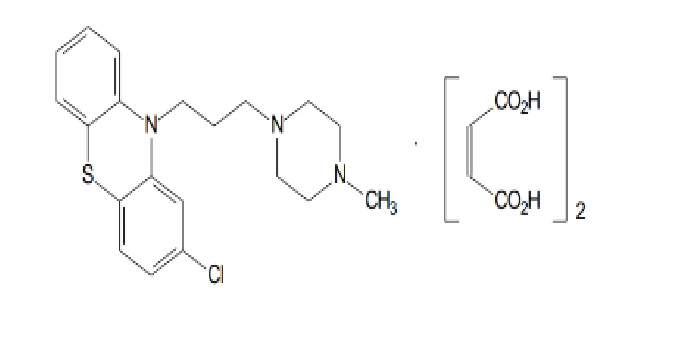
Physicochemical properties: Prochlorperazine maleate is white or pale yellow, crystalline powder. It is very slightly soluble in warm chloroform, practically insoluble in water and in alcohol. pKa= 8.21. No chiral centers are present in Prochlorperazine Maleate. Constant crystalline form is obtained.
Pharmaceutical standard: USP
14. Clinical Trials
The clinical trial data on which the original indication was authorized is not available.
15. Microbiology
No microbiological information is required for this drug product.
16. Non-Clinical Toxicology
The clinical trial data on which the original indication was authorized is not available.