


Patient Medication Information: uses, side effects, how to take - Qosequ
What is QOSEQU™ used for?
QOSEQU™ is used:
for the treatment of osteoporosis (thinning and weakening of the bone) in women after menopause who:
- have an increased risk for fractures or;
- cannot use other osteoporosis medicines, or other osteoporosis medicines did not work well.
- to increase bone mass in men with osteoporosis at high risk for fracture.
- to increase bone mass and possibly reduce fractures that occur when medication to reduce testosterone levels are taken for the treatment of prostate cancer that has not spread to other parts of the body (nonmetastatic).
- to increase bone mass in women who are receiving certain treatments for breast cancer, which has not spread to other parts of the body (nonmetastatic) and at high risk of fracture.
- to increase bone mass to treat osteoporosis in both women and men at high risk for fracture related to the use of corticosteroid medicines, such as prednisone.
- to increase bone mass to prevent osteoporosis in both women and men at high risk for fracture related to starting corticosteroid medicines, such as prednisone.
What is osteoporosis?
Bone is constantly changing. There are special cells in the body, called osteoclasts, whose primary function is to remove bone. There is another type of cell, called osteoblasts, which are bone-forming cells. In normal bone, there is a balance between the actions of these two cells. In people with osteoporosis, this balance no longer exists. Instead, the cells that remove bone work overtime, removing bone faster than new bone can be created. The result is bone that is thinner, weaker and more likely to break. Osteoporosis may occur without any pain or other symptoms. Sometimes, the first symptom of osteoporosis is a fragility fracture, a broken bone that may be caused by a minor fall, or simple activities such as lifting groceries or getting out of bed. A fragility fracture can significantly increase the risk of future fractures. Aside from prescribing QOSEQU™, your doctor can guide you in other ways to manage your bone health.
Surgery or medicines that stop the production of estrogen or testosterone, used to treat patients with breast or prostate cancer, can also lead to bone loss. This may cause some bones to become weaker and break more easily.
Corticosteroids, like prednisone, can also cause thinning and weakening of the bone, increasing your chance of broken bones.
How does QOSEQU™ work?
QOSEQU™ works differently than other osteoporosis medications. It is a RANK ligand inhibitor. RANK ligand is a protein which activates the cells that break down bone (osteoclasts). QOSEQU™ blocks RANK ligand to stop the cells that break down bone. This action strengthens your bones by increasing bone mass and lowers the chance of breaking bones of the hip, spine, and nonspinal sites.
What are the ingredients in QOSEQU™?
Medicinal ingredient: denosumab.
Non-medicinal ingredients: glacial acetic acid, polysorbate 20, sodium hydroxide, sorbitol, and water for injection. The prefilled syringe is not made with natural rubber latex.
QOSEQU™ comes in the following dosage forms:
QOSEQU™ is a liquid for injection, available in a prefilled syringe.
QOSEQU™ is a clear, colorless to pale yellow solution. Do not use if the solution is cloudy.
Do not use QOSEQU™ if you:
- are allergic to denosumab or any other ingredient of QOSEQU™. Allergic reactions (e.g., rash, hives, or in rare cases, swelling of the face, lips, tongue, throat, or trouble breathing) have been reported.
- have low calcium levels in your blood (hypocalcemia).
- are less than 18 years of age (see also What is QOSEQU™ used for? above and Other warnings you should know about below).
are pregnant or breastfeeding.
- are a woman before menopause (unless you have been diagnosed with breast cancer or are taking QOSEQU™ for the treatment or prevention of osteoporosis related to the use of corticosteroid medicines (see also What is QOSEQU™ used for? above and Other warnings you should know about below)).
- are currently taking other denosumab-containing medicinal products.
- do not have access to a healthcare professional or trained injector.
Other warnings you should know about:
If you are being treated with QOSEQU™, you should not be taking other denosumab-containing medicinal products or vice versa.
There is an increased risk of skin infection (cellulitis) with QOSEQU™ therapy, most commonly on the leg. See a doctor urgently if you develop swollen, red, hot or painful skin, with or without fever.
You should take calcium and vitamin D supplements as recommended by your healthcare professional.
To help avoid side effects and ensure proper use, talk to your healthcare professional before you take QOSEQU™. Talk about any health conditions or problems you may have, including if you:
- have low blood calcium.
- cannot take daily calcium and vitamin D.
- had parathyroid or thyroid surgery (glands located in your neck).
- have been told you have trouble absorbing minerals in your stomach or intestines (malabsorption syndrome).
- have kidney problems or are on kidney dialysis.
- have ever had an allergic reaction to QOSEQU™.
- plan to have dental surgery or teeth removed.
- have a history of cancer.
- are pregnant or could become pregnant.
Denosumab may interfere with normal bone and tooth development in fetuses, nursing babies, and children under 18 years of age. QOSEQU™ is not indicated for use in patients under 18 years of age.
Do not take QOSEQU™ if you are pregnant or could become pregnant, as denosumab may harm your unborn baby. Your healthcare provider should do a pregnancy test before you start treatment with QOSEQU™. You should use an effective method of birth control (contraception) during treatment with QOSEQU™ and for at least 5 months after your last dose of QOSEQU™. If you become pregnant while taking QOSEQU™, stop taking QOSEQU™ and tell your doctor right away.
Nursing mothers should not take QOSEQU™. It may also interfere with breastfeeding.
Denosumab may lower levels of calcium in the blood. If you are prone to low calcium levels, your doctor will monitor your blood, especially in the first few weeks after starting QOSEQU™. Severe low blood calcium levels may lead to hospitalization, life-threatening events, and death. Low blood calcium should be treated before receiving QOSEQU™. Symptoms of low blood calcium may include muscle spasms, twitches, cramps, numbness or tingling in hands, feet or around the mouth, and weakness. Some patients may not have any symptoms of low calcium. Tell your doctor if you have any of these symptoms. Tell your doctor if you have or have had severe kidney problems, as this may increase your risk of getting low blood calcium.
Tell your doctor right away if you have symptoms of infection, including:
- fever or chills.
- skin that looks red, swollen, hot or tender to touch.
- severe abdominal pain.
- frequent or urgent need to urinate or burning feeling when you urinate.
Tell your doctor if you have any of the following symptoms of skin problems that do not go away or get worse:
- redness.
- itching.
- rash.
- dry or leathery skin.
- open, crusted or peeling skin.
- blisters.
After you start QOSEQU™:
- take good care of your teeth and gums, and see your dentist regularly.
- if you have a history of dental problems (such as poorly fitting dentures or gum disease), see your dentist before starting QOSEQU™.
- tell your dentist that you are taking QOSEQU™, especially if you are having dental work.
A dental condition called osteonecrosis of the jaw (ONJ), which can cause tooth and jawbone loss, has been reported in patients treated with denosumab. The risk of ONJ may increase with length of time on QOSEQU™. Tell your doctor and dentist immediately about any dental symptoms, including pain or unusual feeling in your teeth or gums, or any dental infections.
Some people have developed unusual fractures in their thigh bone. Contact your doctor if you experience new or unusual pain in your hip, groin, or thigh.
After your treatment with QOSEQU™ is stopped, it is possible that broken bones in your spine may occur, especially if you have a history of broken bones in the spine. Do not stop taking QOSEQU™ without first talking with your doctor. If your QOSEQU™ treatment is stopped, discuss other available treatment options with your doctor.
Tell your healthcare professional about all the medicines you take, including any drugs, vitamins, minerals, natural supplements or alternative medicines.
The following may interact with QOSEQU™:
In a drug interaction study, denosumab (60 mg) did not interfere with the action of a drug called midazolam, which is metabolized (broken down) by a certain liver enzyme called cytochrome P450 3A4. No drug interactions are expected with QOSEQU™ and other drugs metabolised by this enzyme in women with postmenopausal osteoporosis.
You should discuss with your doctor any medications or vitamins or herbal products you are taking before using QOSEQU™.
How to take QOSEQU™:
QOSEQU™ is administered as a single injection under the skin (subcutaneous) every 6 months. The injection can be in your upper arm, upper thigh, or abdomen. It can be given any time, with or without food, by a healthcare professional, by a trained injector, or a patient may self -inject if a healthcare professional determines that is appropriate.
Your prefilled syringe may be left outside the refrigerator to reach room temperature (up to 25°C) before injection. This will make the injection more comfortable. See instructions for injection.
Keep all medicines, including QOSEQU™, away from children.
Do not share QOSEQU™ with others, even if they have a similar disease.
Usual dose:
The usual dose of QOSEQU™ is 60 mg administered once every 6 months. You should also take supplements of calcium and vitamin D.
Missed dose:
If you miss a dose, you should receive your next dose as soon as convenient. Schedule your next dose 6 months from the date of your last injection.
To avoid forgetting your next dose, QOSEQU™ is provided with a reminder card, available as a peel off sticker on the syringe tray. When getting your QOSEQU™ injection, you can remove the reminder card from the syringe tray, write the date of your next dose (i.e., 6 months later), and keep the reminder card somewhere safe.
Overdose:
| If you think you, or a person you are caring for, have taken too much QOSEQU™, contact a healthcare professional, hospital emergency department, regional poison control centre or Health Canada’s toll-free number, 1-844 POISON-X (1-844-764-7669) immediately, even if there are no signs or symptoms. |
|---|
The following instructions are for preparing and giving an injection of QOSEQU™ using a single-use prefilled syringe with an automatic needle safety guard:
Guide to parts
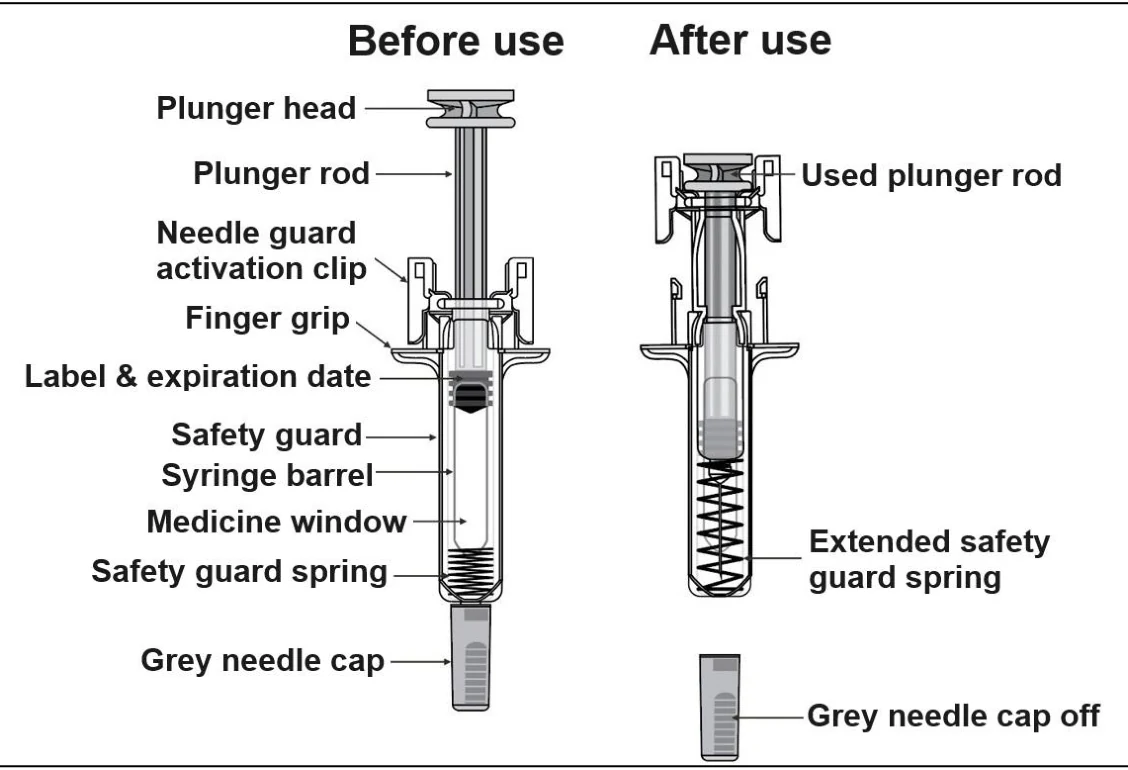
Important:
In order to minimize accidental needlesticks, the QOSEQU™ single-dose prefilled syringe will have a safety guard that will be automatically activated to cover the needle after the injection is given.
DO NOT touch the needle guard activation clips before use. Touching them may cause the syringe needle guard to be activated too early. Grab the safety guard to remove the prefilled syringe from the tray. Do not hold the prefilled syringe by the plunger head or rod, needle guard activation clips, or grey needle cap.
If the transparent needle guard is covering the needle cap, the needle guard has already been activated (as shown in “After use” image above). Do not use the prefilled syringe if the needle guard has been activated. Get another prefilled syringe that has not been activated and is ready for use.
Before you use an QOSEQU™ prefilled syringe, read this important information:
Using the prefilled syringe:
- QOSEQU™ is given as an injection into the tissue just under the skin (subcutaneous (SC) injection).
- administration should be performed by an individual who has been trained in injection techniques. This includes patients who have been deemed appropriate by their healthcare professional to administer QOSEQU™.
- make sure the name QOSEQU™ appears on the carton, tray and prefilled syringe label.
- check the carton, tray and prefilled syringe label to make sure the dose strength is 60 mg/mL.
- do NOT use a syringe after the expiration date on the label.
- do NOT shake the syringe.
- do NOT remove the grey needle cap from the syringe until you are ready to inject.
- do NOT use the syringe if the carton is open or damaged.
- do NOT use a syringe if it has been dropped on a hard surface. Part of the syringe may be broken, even if you cannot see the break. Use a new syringe.
- the prefilled syringe is not made with natural rubber latex.
Call your healthcare provider or Mantra Pharma Inc.’s Medical Information at 1-833-248-7326 if you have any question regarding QOSEQU™. Alternatively, you may also refer to QOSEQU™’s website, at www.qosequ.ca. The website will also provide you with information pertaining to QOSEQU™’s patient support program.
Step 1: Prepare
- A.
Remove the prefilled syringe carton from the refrigerator. Remove the prefilled syringe tray from the carton, and gather the supplies needed for your injection: alcohol wipes, a cotton ball or gauze pad, an adhesive bandage and a sharps disposal container (not included).
On a clean, well-lit surface, place the syringe tray.
For a more comfortable injection, leave the prefilled syringe tray at room temperature for about 30 minutes before injecting.
- do NOT use the prefilled syringe if the carton is damaged.
- do NOT try to warm the prefilled syringe by using a heat source such as hot water or microwave.
- do NOT leave the prefilled syringe in direct sunlight.
- do NOT shake the prefilled syringe.
- keep the prefilled syringe out of the sight and reach of children.
Wash your hands thoroughly with soap and water. Open the tray, peeling away the cover. Grab the prefilled syringe safety guard to remove the prefilled syringe from the tray.
Important: before opening the tray, you can remove the peel off reminder card from the tray and indicate the date of your next dose (i.e., in 6 months) on it. Refer to section Missed dose above for additional details.
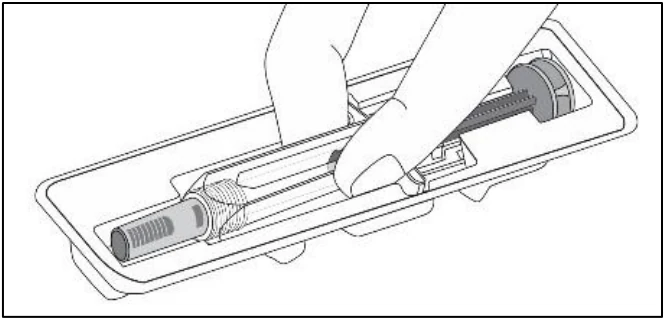
For safety reasons:
- do NOT grab the plunger head or rod.
- do NOT grab the needle guard activation clips.
- do NOT grab the grey needle cap.
- Inspect the medicine and prefilled syringe. The medicine can be inspected through the syringe’s medicine window.
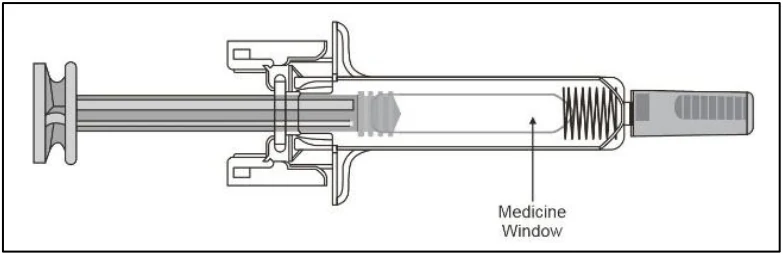
Always hold the syringe by its safety guard.
Make sure the medicine in the prefilled syringe is a clear and colorless to pale yellow solution.
Do NOT use the prefilled syringe if:
- the medicine is cloudy or discoloured, or if there are particles in it.
- any part appears cracked or broken.
- the prefilled syringe has been dropped.
- the grey needle cap is missing or not securely attached.
- the expiration date printed on the label has passed the last day of the month shown.
- the needle guard is activated. Check to make sure that the plastic transparent needle guard is covering the barrel of the glass syringe. If the transparent needle guard is covering the needle cap, the needle guard has already been activated. Do not use the prefilled syringe in this case.
In all cases above, use a new prefilled syringe and call your healthcare professional or Mantra Pharma Inc.’s Medical Information at 1-833-248-7326.
- C.
On a clean, well-lit work surface, place the:
- • prefilled syringe.
- • alcohol wipe.
- • cotton ball or gauze pad.
- • adhesive bandage.
- • sharps disposal container.
Step 2: Get ready
- D.
Prepare and clean the injection site.
You can use:
- upper thigh OR;
- stomach area (abdomen), except for a 5 cm (2-inch) area right around the navel (belly button) OR;
- outer area of upper arm (only if someone else is giving you the injection).
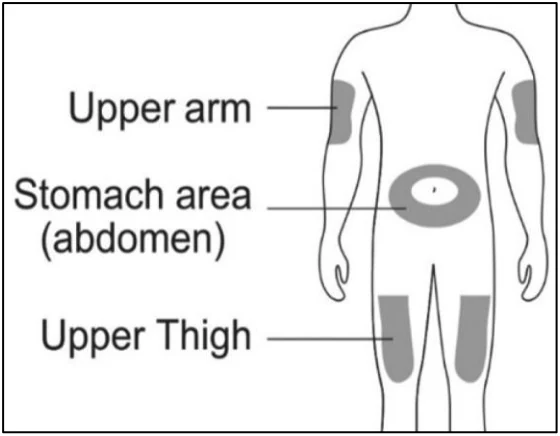
Clean the injection site with an alcohol wipe. Let the skin dry.
- do NOT touch this area again before injecting.
- do NOT inject into areas where the skin is tender, bruised, red, or hard. Avoid injecting into areas with scars or stretch marks.
- Hold the prefilled syringe by the safety guard. Carefully pull the grey needle cap straight out and away from your body.
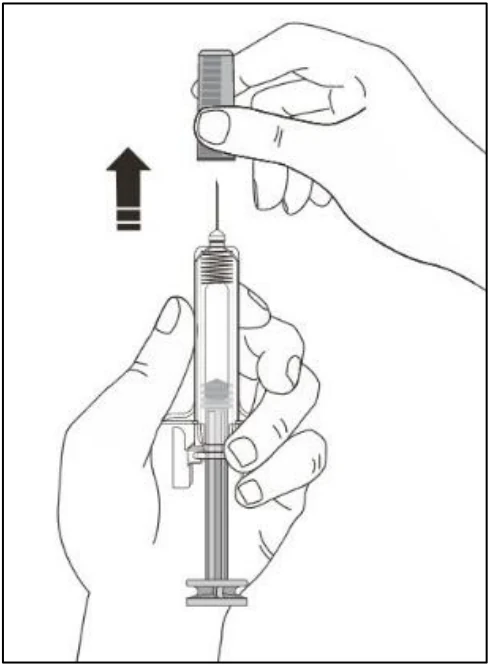
- do NOT remove the grey needle cap from the prefilled syringe until you are ready to inject.
- do NOT twist or bend the grey needle cap.
- do NOT hold the prefilled syringe by the plunger head or rod.
- do NOT put the grey needle cap back onto the prefilled syringe.
- do NOT touch the needle or allow it to touch any surface.
Important: Discard the grey needle cap into the sharps disposal container.
Step 3: Subcutaneous (under the skin) injection
- F. Pinch the injection site to create a firm surface.
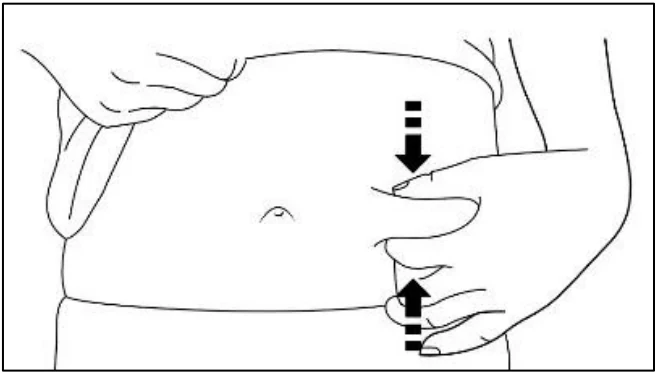
Important: Keep skin pinched while injecting.
- G.
Hold the pinch. Put one finger on each finger grip of the syringe, and your thumb on the plugger head without applying pressure on it. Insert the needle into the skin at 45 to 90 degrees.
- • do NOT touch the cleaned area of the skin.
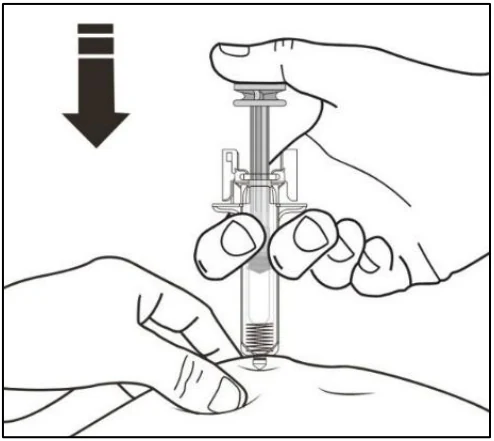
- H.
Push the plunger down with slow and constant pressure.
- • it is important to push down completely, in order to deliver your full dose.
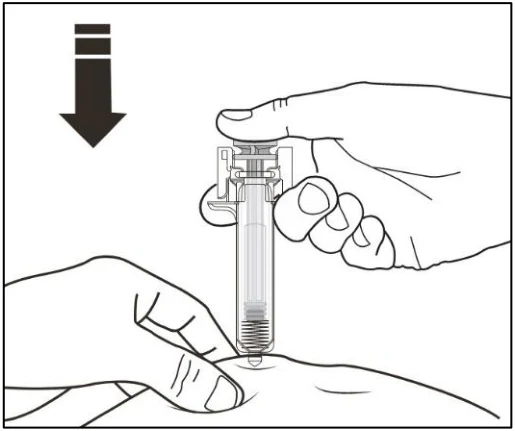
- do NOT pull back the plunger while the needle is inserted. When done, gently pull the syringe off of the skin.
while pulling the syringe off the skin, do NOT release pressure on the plunger head. Keep the plunger fully pressed down while you carefully pull the needle straight
- out from the injection site.
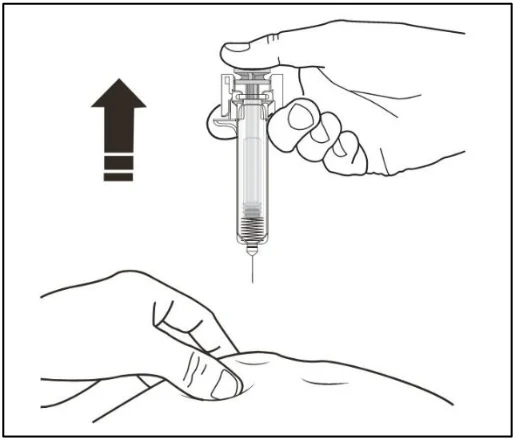
Important: When you remove the syringe, if it looks like the medicine is still in the syringe barrel, this means you have not received a full dose. Call your healthcare professional right away.
Step 4: Finish
- I.
Activate the needle guard.
Activate the needle safety guard by slowly releasing your thumb from the plunger head and allowing the needle guard to automatically cover the injection needle.
- keep your hands away from the needle at all times.
- do NOT put the grey needle cap back on the used prefilled syringe.
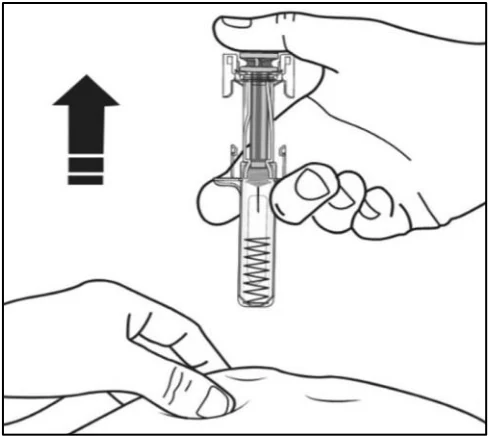
- J. Discard (throw away) the used prefilled syringe, and other supplies, in a sharps disposal container.
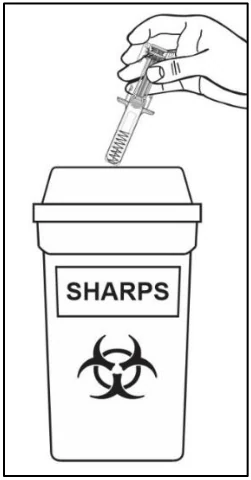
- put the used prefilled syringe in a sharps disposal container right away after use. Do NOT throw away (dispose of) the syringe in the household trash.
if you do not have a sharps disposal container, you may use a household container that is:
- made of a heavy-duty plastic;
- can be closed with a tight-fitting, puncture-resistant lid, without sharps being able to come out;
- upright and stable during use;
- leak-resistant; and
- properly labeled to warn of hazardous waste inside the container.
- when your sharps disposal container is almost full, you will need to follow your community guidelines for the right way to dispose of your sharps disposal container. There may be provincial or local laws about how you should throw away used needles and syringes. Talk to your healthcare professional about proper disposal of the sharps disposal container.
- do NOT reuse the prefilled syringe.
- do NOT recycle the prefilled syringe or sharps disposal container or throw them into household trash.
Important: Always keep the sharps disposal container out of the reach of children.
- K.
Examine the injection site.
If there is blood, press a cotton ball or gauze pad on the injection site. Do NOT rub the injection site. Apply an adhesive bandage if needed.
What are possible side effects from using QOSEQU™?
Like all medicines, QOSEQU™ can cause side effects, although not everybody gets them.
These are not all the possible side effects you may have when taking QOSEQU™. If you experience any side effects not listed here, tell your healthcare professional.
Possible side effects include:
- pain, sometimes severe, in the muscles, joints, arms, legs or back.
- low blood calcium (hypocalcemia). Symptoms of low blood calcium may include muscle spasms, twitches, cramps, numbness or tingling in fingers, toes or around the mouth.
- allergic reactions (e.g., rash, hives or, in rare cases, swelling of the face, lips, tongue, throat, or trouble breathing).
- allergic reaction that can damage blood vessels, mainly in the skin (e.g., purple or brownish-red spots, hives or skin sores).
- severe allergic reaction (drug reaction with eosinophilia and systemic symptoms [DRESS] syndrome) with skin rash/blisters, fever and/or increase in a type of white blood cell (eosinophils) with possible organ damage, such as liver, kidney, or lung.
- skin condition with itching, redness and/or dryness (eczema). Injection site reactions were uncommon.
- rash that may occur on the skin, or sores in the mouth (lichenoid drug eruption).
- hair loss (alopecia).
- skin infection with swollen, red area of skin, that feels hot and tender and may be accompanied by fever (cellulitis).
- common cold (runny nose or sore throat).
- broken bones in the spine after stopping QOSEQU™ (multiple vertebral fractures).
Serious side effects and what to do about them
| Serious side effects and what to do about them | |||
|---|---|---|---|
| Symptom / effect | Talk to your healthcare professional | Stop taking drug and get immediate medical help | |
| Symptom / effect | Talk to your healthcare professional | Stop taking drug and get immediate medical help | |
| Only if severe | In all cases | ||
| Only if severe | In all cases | ||
| COMMON (≥ 1%, in 1 to 10% of patients) | |||
| Skin condition with itching, redness and/or dryness (eczema) | ✓ | ||
| UNCOMMON (≥ 0.1%, < 1%) | |||
| Skin infection (mainly cellulitis) leading to hospitalization, erysipelas (serious and rapid skin infection commonly on the face or legs) | ✓ | ||
| Bladder infection, pancreatitis (inflamed pancreas causing severe stomach pains), and ear infection | ✓ | ||
| Broken bones in the spine after stopping QOSEQU™ treatment (multiple vertebral fractures) | ✓ | ||
| RARE (≥ 0.01%, < 0.1%) | |||
| Low calcium levels in the blood (muscle spasms, twitches, cramps, numbness or tingling in hands, feet or around the mouth, and weakness) | ✓ | ||
| Endocarditis (inflammation of the inner lining of the heart) | ✓ | ✓ | |
| Sore in mouth involving gums or jaw bones (osteonecrosis of the jaw) | ✓ | ✓ | |
| Allergic reaction (feeling faint, trouble breathing/ wheezing, throat tightness, swelling of face, lips or tongue, rash, hives) | ✓ | ✓ | |
| Unusual thigh bone fractures (atypical femoral fracture) | ✓ | ||
If you have a troublesome symptom or side effect that is not listed here or becomes bad enough to interfere with your daily activities, tell your healthcare professional.
Reporting Side Effects
You can report any suspected side effects associated with the use of health products to Health Canada by:
NOTE: Contact your health professional if you need information about how to manage your side effects. The Canada Vigilance Program does not provide medical advice. |
|---|
Storage:
Keep out of the reach and sight of children.
When prescribed QOSEQU™, you will likely need to fill your prescription at a pharmacy.
Store QOSEQU™ in your refrigerator at 2°C to 8°C until your injection appointment with your healthcare professional or trained injector, or until you self-inject. Do not freeze.
When removed from the refrigerator, QOSEQU™ must be kept at room temperature (up to 25°C) in the original carton and must be used within 30 days.
Store in original carton in order to protect from light.
Do not use QOSEQU™ after the expiry date which is printed on the carton and label. The expiry date refers to the last day of that month.
Medicines should not be disposed of via wastewater or household waste. Ask your pharmacist how to dispose of medicines that are no longer required.
If you want more information about QOSEQU™:
- talk to your healthcare professional.
- find the full product monograph, that is prepared for healthcare professionals and includes this Patient Medication Information by visiting the Health Canada website (https://www.canada.ca/en/health-canada/services/drugs-health-products/drug-products/drug-product-database.html); by contacting Mantra Pharma Inc. at medinfo@mantrapharma.ca or at 1-833-248-7326, or by visiting www.qosequ.ca.
- there is a patient support program in place for QOSEQU™. More information is available at www.qosequ.ca.
1000 rue du Lux, Suite 201
Brossard, Quebec
J4Y 0E3