


Product Monograph - Ratio-Risedronate
SUMMARY PRODUCT INFORMATION
| Route of Administration | Dosage Form / Strength | Clinically Relevant Nonmedicinal Ingredients |
| Oral | Tablet 35 mg | Lactose Monohydrate For a complete listing see Dosage Forms, Composition and Packaging Section |
INDICATIONS AND CLINICAL USE
| ratio-RISEDRONATE (risedronate sodium hemi-pentahydrate) is indicated for: | |
| |
| |
| Postmenopausal Osteoporosis: In the treatment of osteoporosis in postmenopausal women, | |
| ratio-RISEDRONATE prevents vertebral and nonvertebral osteoporosis-related (fragility) | |
| fractures and increases bone mineral density (BMD) at all measured skeletal sites of clinical | |
| importance for osteoporotic fractures, including spine, hip, and wrist. | |
| Osteoporosis may be confirmed by the presence or history of osteoporotic fracture, or by the | |
| finding of low bone mass (e.g., at least 2 standard deviation [SD] below the premenopausal | |
| mean). | |
| For the prevention of osteoporosis in postmenopausal women who are at risk of developing | |
| osteoporosis, ratio-RISEDRONATE preserves or increases BMD at sites of clinical | |
| importance. | |
| ratio-RISEDRONATE may be considered in postmenopausal women who are at risk of | |
| developing osteoporosis and for whom the desired clinical outcome is to maintain bone mass and | |
| to reduce the risk of fracture. | |
| Factors such as family history of osteoporosis (particularly maternal history), age, previous | |
| fracture, smoking, moderately low BMD, high bone turnover, thin body frame, Caucasian or | |
| Asian race, and early menopause are associated with an increased risk of developing | |
| osteoporosis and fractures. | |
The optimal duration of use has not been determined. Patients should have the need for continued therapy re-evaluated on a periodic basis.
Geriatrics: In Risedronate Sodium osteoporosis studies, 26-46% of patients were between 65 and 75 years of age and 10-23% were over 75 years of age. No overall differences in efficacy or safety were observed between these patients and younger patients (< 65 years) in the above osteoporosis studies. (See CLINICAL TRIALS section).
Based upon the above study population, no overall differences in efficacy or safety were observed between these patients and younger patients (< 65 years).
Pediatrics: Safety and efficacy in children and growing adolescents have not been established.
CONTRAINDICATIONS
- Patients who are hypersensitive to this drug or to any ingredient in the formulation. For a complete listing, see DOSAGE FORMS, COMPOSITION AND PACKAGING.
- Hypocalcemia (see WARNINGS AND PRECAUTIONS, General)
WARNINGS AND PRECAUTIONS
General
Hypocalcemia and other disturbances of bone and mineral metabolism should be effectively treated before starting ratio-RISEDRONATE (risedronate sodium) therapy.
Adequate intake of calcium and vitamin D is important in all patients (see DRUG INTERACTIONS).
Osteonecrosis of the Jaw: In post-marketing reporting, osteonecrosis of the jaw has been reported in patients treated with bisphosphonates. The majority of reports occurred following dental procedures such as tooth extractions and have involved cancer patients treated with intravenous bisphosphonates, but some occurred in patients receiving oral treatment for postmenopausal osteoporosis and other diagnoses. Many had signs of local infection, including osteomyelitis. Osteonecrosis has other well documented multiple risk factors. It is not possible to determine if these events are related to bisphosphonates, to concomitant drugs or other therapies, to the patient’s underlying disease or to other co-morbid risk factors (e.g., anemia, infection, pre-existing oral disease). A dental examination with appropriate preventative dentistry should be considered prior to treatment with bisphosphonates in patients with concomitant risk factors (e.g., cancer, immune suppression, head and neck radiotherapy or poor oral hygiene). While on treatment, these patients should avoid invasive dental procedures if possible. For patients requiring dental procedures, there are no data available to suggest whether discontinuation of bisphosphonate treatment prior to the procedure reduces the risk of osteonecrosis of the jaw. Clinical judgment, based on individual risk assessment, should guide the management of patients undergoing dental procedures.
Atypical Subtrochanteric and Diaphyseal Femoral Fractures:
Atypical, low-energy, or low trauma fractures of the femoral shaft have been reported in bisphosphonate-treated patients. These fractures can occur anywhere in the femoral shaft from just below the lesser trochanter to above the supracondylar flare and are transverse or short oblique in orientation without evidence of comminution.
Atypical femur fractures most commonly occur with minimal or no impact trauma to the affected area. They may be bilateral and many patients report prodromal pain in the affected area, usually presenting as dull, aching thigh pain, weeks to months before a complete fracture occurs. Poor healing of these fractures was also reported.
Any patient with a history of bisphosphonate exposure who presents with thigh or groin pain should be suspected of having an atypical fracture and should be evaluated to rule out an incomplete femur fracture. Patients presenting with an atypical fracture should also be assessed for symptoms and signs of fracture in the contra-lateral limb. Interruption of bisphosphonate therapy should be considered, pending a risk/benefit assessment. Although causality has not been established, the role of bisphosphonates cannot be ruled out.
Musculoskeletal: In postmarketing experience, severe and occasionally incapacitating bone, joint, and/or muscle pain has been reported in patients taking bisphosphonates (see ADVERSE REACTIONS). The time to onset of symptoms varied from one day to several months after starting the drug. Most patients had relief of symptoms after stopping the medication. A subset of patients had recurrence of symptoms when rechallenged with the same drug or another bisphosphonate. Consider discontinuing use if severe symptoms develop.
Gastrointestinal
Bisphosphonates may cause upper gastrointestinal (GI) disorders such as dysphagia, esophagitis, esophageal ulcer, and gastric ulcer (see ADVERSE REACTIONS). Since some bisphosphonates have been associated with esophagitis and esophageal ulcerations, to facilitate delivery to the stomach and minimize the risk of these events, patients should take ratio-RISEDRONATE while in an upright position (i.e., sitting or standing) and with sufficient plain water (> 120 mL). Patients should not lie down for at least 30 minutes after taking the drug. Health professionals should be particularly careful to emphasize the importance of the dosing instructions to patients with a history of esophageal disorders (e.g., inflammation, stricture, ulcer, or disorders of motility).
Ophthalmologic
Ocular disturbances including conjunctivitis, uveitis, episcleritis, iritis, and scleritis have been reported with risedronate sodium therapy. Patients with ocular events other than uncomplicated conjunctivitis should be referred to an ophthalmologist for evaluation. If ocular inflammatory symptoms are observed, treatment may have to be discontinued.
Renal
Risedronate sodium is not recommended for use in patients with severe renal impairment (creatinine clearance < 30 mL/min).
Special Populations
Pediatrics: The safety and efficacy of risedronate sodium in children and growing adolescents have not been established.
Pregnant Women: Risedronate sodium is not intended for use during pregnancy. There are no studies of risedronate in pregnant women.
Nursing Women: Risedronate sodium is not intended for use with nursing mothers. It is not known whether risedronate is excreted in human milk. Risedronate was detected in feeding pups exposed to lactating rats for a 24-hour period post-dosing, indicating a small degree of lacteal transfer. Since many drugs are excreted in human milk and because of the potential for serious adverse reactions in nursing infants from bisphosphonates, a decision should be made whether to discontinue nursing or to discontinue the drug, taking into account the importance of the drug to the mother.
ADVERSE REACTIONS
Adverse Drug Reaction Overview
Bisphosphonates may cause upper gastrointestinal disorders such as dysphagia, esophagitis, esophageal ulcer and gastric ulcer. It is therefore important to follow the recommended dosing instructions (see DOSAGE AND ADMINISTRATION).
Musculoskeletal pain, rarely severe, has been reported as a common adverse event in patients who received risedronate sodium for all indications and dosage forms.
In risedronate sodium osteoporosis studies, the most commonly reported adverse reactions were abdominal pain, dyspepsia and nausea. In addition, diarrhea was the most commonly reported adverse reaction for the highest risedronate sodium monthly dose.
Clinical Trial Adverse Drug Reactions
Because clinical trials are conducted under very specific conditions the adverse reaction rates observed in the clinical trials may not reflect the rates observed in practice and should not be compared to the rates in the clinical trials of another drug. Adverse drug reaction information from clinical trials is useful for identifying drug-related adverse events and approximate rates of occurrence.
Weekly Dosing: In the 1-year, double-blind, multicentre study comparing risedronate 35 mg Once-a-Week to risedronate 5 mg daily for the treatment of osteoporosis in postmenopausal women, the overall safety and tolerability profiles of the 2 oral dosing regimens were similar.
The proportion of patients who experienced an upper gastrointestinal adverse event and the pattern of those events were found to be similar between the risedronate 35 mg Once-a-Week and risedronate 5 mg daily-treated groups. In addition to the previously described adverse reactions reported in risedronate osteoporosis clinical trials, arthralgia (risedronate 35 mg, 2.1%; risedronate 5 mg, 1.3%) was reported in ≥ 1% of patients and in more risedronate 35 mg weekly treated patients than risedronate 5 mg daily treated patients.
In the 1-year, double-blind, multicentre study comparing risedronate 35 mg Once-a-Week to placebo for the prevention of osteoporosis in postmenopausal women, the overall safety and tolerability profiles of the two groups were comparable with the exception of “arthralgia”. Specifically, 1.5% of patients taking risedronate 35 mg Once-a-Week experienced arthralgia compared to 0.7% of placebo patients. The overall safety profile observed in this study showed no substantive difference from that observed in the risedronate 5 mg daily versus risedronate 35 mg Once-a-Week treatment study.
Treatment of Osteoporosis in Men, to Improve Bone Mineral Density: In a 2-year, double-blind, multicentre study using risedronate 35 mg Once-a-Week (n=191) and placebo (n=93) in men with osteoporosis, the overall safety and tolerability profiles of the two treatment groups were similar.
The proportion of patients who experienced an upper gastrointestinal adverse event and the pattern of those events were higher in placebo (18%) than in risedronate 35 mg Once-a-Week treated patients (8%).
In addition to the previously described adverse events reported in risedronate osteoporosis clinical trials, the following adverse events were reported in ≥ 2% of patients and in more risedronate-treated patients than placebo-treated patients in the male osteoporosis study (events are included without attribution of causality): hypoaesthesia (risedronate 35 mg, 2%; placebo, 1%), nephrolithiasis (risedronate 35 mg, 3%; placebo, 0%), benign prostatic hyperplasia (risedronate 35 mg, 5%; placebo, 3%), and arrhythmia (risedronate 35 mg, 2%; placebo, 0%).
Endoscopic Findings: At the 1-year time point in studies, comparing risedronate sodium 35 mg Once-a-Week to risedronate sodium 5 mg daily in the treatment of postmenopausal osteoporosis, endoscopies performed during the studies revealed no dose dependent pattern in the number of patients with positive endoscopic findings or in the anatomical location of abnormalities detected. Endoscopies were conducted only on consenting patients experiencing moderate to severe gastrointestinal complaints.
| Less Common Clinical Trial Adverse Drug Reactions | |
| The following adverse drug reactions were reported in ≤1% of patients who received risedronate | |
| for all indications: | |
| |
| |
| Abnormal Hematologic and Clinical Chemistry Findings | |
| Asymptomatic mild decreases in serum calcium and phosphorus levels have been observed in | |
| some patients (see ACTION AND CLINICAL PHARMACOLOGY, Pharmacodynamics). | |
Rare cases of leukemia have been reported following therapy with bisphosphonates. Any causal relationship to either the treatment or to the patients' underlying disease has not been established.
Post-Market Adverse Drug Reactions
Hypersensitivity and Skin Reactions: Reported rarely, angioedema, generalized rash and bullous skin reactions, some severe.
Musculoskeletal and Connective tissue: Reported very rarely, low-energy femoral shaft fractures (see WARNINGS AND PRECAUTIONS).
Osteonecrosis of the Jaw: Osteonecrosis of the jaw has been reported rarely (see WARNINGS AND PRECAUTIONS).
Ophthalmologic: Reported rarely, conjunctivitis, episcleritis, iritis, scleritis and uveitis. (see WARNINGS AND PRECAUTIONS).
DRUG INTERACTIONS
Overview
No specific drug-drug interaction studies were performed with risedronate sodium tablets. Animal studies have demonstrated that risedronate is highly concentrated in bone and is retained only minimally in soft tissue. No metabolites have been detected systemically or in bone. The binding of risedronate to plasma proteins in humans is low (24%), resulting in minimal potential for interference with the binding of other drugs. In an additional animal study, there was also no evidence of hepatic microsomal enzyme induction. In summary, risedronate sodium is not systemically metabolized, does not induce cytochrome P450 enzymes and has low protein binding. ratio-RISEDRONATE is therefore not expected to interact with other drugs based on the effects of protein binding displacement, enzyme induction or metabolism of other drugs.
Drug-Drug Interactions
Patients in the clinical trials were exposed to a wide variety of commonly used concomitant medications (including NSAIDs, H2-blockers, proton pump inhibitors, antacids, calcium channel blockers, beta-blockers, thiazides, glucocorticoids, anticoagulants, anticonvulsants, cardiac glycosides) without evidence of clinically relevant interactions.
The drugs listed in Table 1 are based on either drug interaction case reports or predicted interactions due to the expected magnitude and seriousness of the interaction (i.e., those identified as contraindicated).
| Table 1 | |||
| Established or Predicted Drug-Drug Interactions | |||
| Risedronate sodium Reference Effect | Clinical Comment | ||
| Antacids and calcium | CT/T | Interference with the absorption | Such medications should be |
| supplements which contain | of risedronate | administered at a different time of | |
| polyvalent cations (e.g., | the day from risedronate sodium | ||
| calcium, magnesium, | (see DOSAGE AND | ||
| aluminum and iron) | ADMINISTRATION). | ||
| Hormone replacement | CT | No clinically significant effect for | If considered appropriate, |
| therapy (HRT). | risedronate sodium. | risedronate sodium may be used | |
| concomitantly with HRT. | |||
| Table 1 | |||
| Established or Predicted Drug-Drug Interactions | |||
| Risedronate sodium Reference Effect | Clinical Comment | ||
| H2-blockers and | CT | Among H2-blockers and PPIs | In the 1-year study comparing |
| proton pump | users, the incidence of upper | risedronate once-a-week and daily | |
| inhibitors (PPIs) | gastrointestinal adverse | dosing regimens in postmenopausal | |
| experiences was found to be | women, at least 9% of patients in the | ||
| similar between the weekly- and | risedronate 35 mg once-a-week and 5 | ||
| daily-treated groups. | mg daily groups used H2-blockers | ||
| and/or PPIs. | |||
Legend: CT = Clinical Trial; T = Theoretical
In the 1-year study comparing risedronate 35 mg Once-a-Week to risedronate 5 mg daily, ASA use was reported by 56% and NSAID use by 41%. The incidence of upper gastrointestinal adverse events was similar between the riseodronate weekly- and daily-treated groups.
Drug-Food Interactions
Clinical benefits may be compromised by failure to take ratio-RISEDRONATE on an empty stomach. For dosing information see DOSAGE AND ADMINISTRATION.
Drug-Herb Interactions
Interactions with herbs have not been studied.
Drug-Laboratory Interactions
Bisphosphonates are known to interfere with the use of bone-imaging agents. Specific studies with ratio-RISEDRONATE have not been performed.
DOSAGE AND ADMINISTRATION
Dosing Considerations
Patients should receive supplemental calcium and vitamin D if dietary intake is inadequate (see WARNINGS AND PRECAUTIONS, General).
- Risedronate sodium should be taken on an empty stomach at least 30 minutes before consuming the first food, drink (other than plain water) and/or any other medication of the day. Food, medication or drink other than plain water can interfere with the absorption of risedronate sodium. (See Recommended Dose and Dosage Adjustment).
- Each risedronate sodium tablet should be swallowed whole while the patient is in an upright position and with sufficient plain water (≥ 120 mL) to facilitate delivery to the stomach.
- Patients taking risedronate sodium should not lie down for at least 30 minutes after taking the medication (see WARNINGS AND PRECAUTIONS, General).
Risedronate sodium tablets should not be chewed, cut, or crushed (see WARNINGS
AND PRECAUTIONS, General).
- Medications containing polyvalent cations (e.g. calcium, magnesium, aluminum, and iron) can interfere with the absorption of risedronate sodium. These medications should be administered at a different time of the day than risedronate sodium.
Recommended Dose and Dosage Adjustment
For All Indications and doses: The patient should be informed to pay particular attention to the dosing instructions as clinical benefits may be compromised by failure to take the drug according to instructions.
Treatment of Postmenopausal Osteoporosis: The recommended regimen is 35 mg Once-a-Week, taken orally.
Prevention of Postmenopausal Osteoporosis: The recommended regimen is 35 mg Once-a-Week, taken orally.
Treatment of Osteoporosis in Men, to Improve Bone Mineral Density: The recommended regimen is 35 mg Once-a-Week, taken orally.
Renal Impairment: No dosage adjustment is necessary in patients with a creatinine clearance ≥ 30 mL/min or in the elderly. Not recommended for use in patients with severe renal impairment (creatinine clearance < 30 mL/min).
Geriatrics: No dosage adjustment is necessary in elderly patients (see INDICATIONS AND CLINICAL USE, Geriatrics).
Missed Dose
Patients should be instructed that if they miss a dose of ratio-RISEDRONATE 35 mg Once-a-Week on their regularly scheduled day, they should take 1 tablet of ratio-RISEDRONATE on the day they first remember missing their dose. Patients should then return to taking 1 tablet once a week as originally scheduled on their chosen day. Patients should not take 2 tablets on the same day.
OVERDOSAGE
Decreases in serum calcium following substantial overdose may be expected in some patients. Signs and symptoms of hypocalcemia may also occur in some of these patients.
Milk or antacids containing calcium, magnesium, and aluminum may be given to bind risedronate sodium and reduce absorption of the drug. In cases of substantial overdose, gastric lavage may be considered to remove unabsorbed drug if performed within 30 minutes of ingestion. Standard procedures that are effective for treating hypocalcemia, including the administration of calcium intravenously, would be expected to restore physiologic amounts of ionized calcium and to relieve signs and symptoms of hypocalcemia.
For management of a suspected drug overdose, contact your regional Poison Control Centre.
ACTION AND CLINICAL PHARMACOLOGY
Mechanism of Action
Risedronate sodium, a pyridinyl-bisphosphonate in the form of hemi-pentahydrate with small amounts of monohydrate, inhibits osteoclast bone resorption and modulates bone metabolism. Risedronate has a high affinity for hydroxyapatite crystals in bone and is a potent antiresorptive agent. At the cellular level, risedronate inhibits osteoclasts. The osteoclasts adhere normally to the bone surface, but show evidence of reduced active resorption (e.g., lack of ruffled border). Histomorphometry in rats, dogs, minipigs and humans showed that risedronate treatment reduces bone turnover (i.e., activation frequency, the rate at which bone remodelling sites are activated) and bone resorption at remodelling sites.
Pharmacodynamics
Treatment and Prevention of Osteoporosis in Postmenopausal Women: Osteoporosis is a degenerative and debilitating bone disease characterized by decreased bone mass and increased fracture risk at the spine, hip, and wrist. The diagnosis can be confirmed by the finding of low bone mass, evidence of fracture on x-ray, a history of osteoporotic fracture, or height loss or kyphosis indicative of vertebral fracture. Osteoporosis occurs in both men and women but is more common among women following menopause.
In healthy humans, bone formation and resorption are closely linked; old bone is resorbed and replaced by newly-formed bone. In postmenopausal osteoporosis, bone resorption exceeds bone formation, leading to bone loss and increased risk of bone fracture. After menopause, the risk of fractures of the spine and hip increases dramatically; approximately 40% of 50-year-old women will experience an osteoporosis-related fracture of the spine, hip, or wrist during their remaining lifetimes. After experiencing one osteoporosis-related fracture, the risk of future fracture increases 5-fold compared to the risk among a non-fractured population. One in five men older than 50 years will have an osteoporotic fracture, most commonly at the spine, hip and wrist.
Risedronate sodium treatment decreases the elevated rate of bone turnover and corrects the imbalance of bone resorption relative to bone formation that is typically seen in postmenopausal osteoporosis. In clinical trials, administration of risedronate to postmenopausal women resulted in dose-dependent decreases in biochemical markers of bone turnover, including urinary markers of bone resorption and serum markers of bone formation, at doses as low as 2.5 mg daily. At the 5 mg daily dose, decreases in resorption markers were evident within 14 days of treatment. Changes in bone formation markers were observed later than changes in resorption markers, as expected, due to the coupled nature of bone formation and bone resorption; decreases in bone formation of about 20% were evident within 3 months of treatment. Bone turnover markers (BTMs) reached a nadir of about 40% below baseline values by the sixth month of treatment and remained stable with continued treatment for up to 3 years.
These data demonstrate that risedronate 5 mg administered daily to postmenopausal women produces a rapid reduction in bone resorption without over-suppression of bone formation. Bone turnover is decreased as early as 2 weeks and maximally within about 6 months of treatment, with achievement of a new steady-state which more nearly approximates the rate of bone turnover seen in premenopausal women.
In weekly risedronate postmenopausal osteoporosis dosing studies, consistent decreases in bone resorption (50-60%) and bone formation (30-40%) markers were observed at Month 12.
As a result of the inhibition of bone resorption, asymptomatic and usually transient decreases from baseline in serum calcium (about 2%) and serum phosphate levels (about 5%) and compensatory increases in serum parathyroid hormone (PTH) levels were observed within 6 months in risedronate 5 mg daily-treated patients in postmenopausal osteoporosis trials. No further decreases in serum calcium or phosphate, or increases in PTH were observed in postmenopausal women treated for up to 3 years.
In two 1-year studies for the treatment of osteoporosis in postmenopausal women comparing risedronate sodium 35 mg Once-a-Week to risedronate sodium 5 mg daily, similar mean changes from baseline in serum calcium, phosphate and PTH were found for the intermittent regimen when compared to the daily dosage regimen.
| Consistent with the effects of risedronate on biochemical markers of bone turnover, daily oral | |||||||
| doses as low as 2.5 mg produced dose dependent, significant increases in lumbar spine bone | |||||||
| mineral density (BMD) (risedronate 2.5 mg, 3% to 3.7%; risedronate 5 mg, 4% to 4.5%) after 12 | |||||||
| months of treatment in large-scale postmenopausal osteoporosis trials. A dose-dependent | |||||||
| response to treatment was also observed in the BMD of the femoral neck over the same time | |||||||
| (risedronate 2.5 mg, 0.7% to 0.9%; risedronate 5 mg, 1.5% to 2%). In the 1-year study for the | |||||||
| treatment of osteoporosis in postmenopausal women, comparing risedronate sodium 35 mg | |||||||
| Once-a-Week to risedronate sodium 5 mg daily, similar mean changes from baseline in BMD of | |||||||
| the lumbar spine, total proximal femur, femoral neck and femoral trochanter were found for both | |||||||
| dosage regimens (see CLINICAL TRIALS, Treatment of Osteoporosis in Postmenopausal | |||||||
| Women). | |||||||
| Treatment of Osteoporosis in Men, to Improve Bone Mineral Density: In a 2-year clinical | |||||||
| trial in the treatment of osteoporosis in men, risedronate 35 mg Once-a-Week decreased urinary | |||||||
| collagen cross-linked N-telopeptide (NTX) (a marker of bone resorption), and serum bone | |||||||
| specific alkaline phosphatase (BAP) (a marker of bone formation) by approximately 40% and | |||||||
| 30%, below baseline values, respectively, within 12 months. The BTMs all had statistically | |||||||
| significant decreases in bone turnover from baseline compared to placebo at all time points. The | |||||||
| decreases in bone turnover were observed within 3 months after initiation of therapy and | |||||||
| maintained throughout the 2-year study. | |||||||
| Pharmacokinetics | |||||||
| Table 2 | |||||||
| Summary of Pharmacokinetic Parameters of Risedronate | |||||||
| Cmax | tmax (h) | t1/2 ,z (h) | AUC0 - ∞ | Clearance | Vz (L/kg) | ||
| (ng/mL) | (ng.h/mL) | (L/h/kg) | |||||
| 35 mg tablet; multiple doseb, | 10.6 | 0.49 | nd | 53.3 | 12.9 | nd | |
| steady state | |||||||
| b administered weekly | |||||||
| t1/2 , z is the half-life of the terminal exponential phase. | |||||||
| VZ is the terminal volume of distribution uncorrected for bioavailability. | |||||||
| nd = not determined | |||||||
Absorption: Absorption after an oral dose is relatively rapid (tmax ~ 1 hour) for the film-coated tablet and occurs throughout the upper gastrointestinal tract. Absorption is independent of dose up to 75 mg two consecutive days per month; systemic exposure increases disproportionally at 150 mg (about 2 fold greater than expected based on dose). Steady-state conditions in the serum are observed within 57 days of daily dosing. The mean oral bioavailability of the 30 mg film-coated tablet is 0.63% and is bioequivalent to a solution. Extent of absorption when administered 30 minutes before breakfast is reduced by 55% compared to dosing in the fasting state (i.e., no food or drink for 10 hours prior to or 4 hours after dosing). Dosing 1 hour prior to breakfast reduces extent of absorption by 30% compared to dosing in the fasting state. Dosing either 30 minutes prior to breakfast or 2 hours after a meal results in a similar extent of absorption.
Distribution: The mean steady-state volume of distribution is 6.3 L/kg in humans. Human plasma protein binding of drug is about 24%. Preclinical studies in rats and dogs dosed intravenously with single doses of [14C] risedronate indicate that approximately 60% of the dose is distributed to bone. The remainder of the dose is excreted in the urine. After multiple oral dosing in rats, the uptake of risedronate in soft tissues was found to be minimal (in the range of 0.001% to 0.01%), with drug levels quickly decreasing after the final dose.
Metabolism: There is no evidence that risedronate is systemically metabolized.
Excretion: Approximately half of the absorbed dose is excreted in urine within 24 hours, and 85% of an intravenous dose is recovered in the urine over 28 days. The mean renal clearance is 105 mL/min (CV = 34%) and mean total clearance is 122 mL/min (CV = 19%), with the difference primarily reflecting non-renal clearance or clearance due to adsorption to bone. The renal clearance is not concentration dependent, and there is a linear relationship between renal clearance and creatinine clearance. Unabsorbed drug is eliminated unchanged in feces. Once risedronate is absorbed, the serum concentration-time profile is multi-phasic with an initial half-life of about 1.5 hours and a terminal exponential half-life of 480 hours. Although the elimination rate of bisphosphonates from human bone is unknown, the 480 hour half-life is hypothesized to represent the dissociation of risedronate from the surface of bone.
Special Populations and Conditions
Pediatrics: Risedronate pharmacokinetics has not been studied in patients < 18 years of age.
Geriatrics: Bioavailability and disposition are similar in elderly (> 65 years of age) and younger subjects. No dosage adjustment is necessary.
Gender: Bioavailability and disposition following oral administration are similar in men and women.
Race: Pharmacokinetic differences due to race have not been studied.
Hepatic Insufficiency: No studies have been performed to assess risedronate's safety or efficacy in patients with hepatic impairment. Risedronate is not metabolized in rat, dog, and human liver preparations. Insignificant amounts (< 0.1% of intravenous dose) of drug are excreted in the bile in rats. Therefore, dosage adjustment is unlikely to be needed in patients with hepatic impairment.
Renal Insufficiency: Risedronate is excreted intact primarily via the kidney. Patients with mild-to-moderate renal impairment (creatinine clearance > 30 mL/min) do not require a dosage adjustment. Exposure to risedronate was estimated to increase by 44% in patients with creatinine clearance of 20 mL/min. Risedronate is not recommended for use in patients with severe renal impairment (creatinine clearance < 30 mL/min) because of a lack of clinical experience.
Genetic Polymorphism: No data are available.
STORAGE AND STABILITY
Keep the tablets in their original package and store at controlled room temperature (15oC – 30oC). Protect from moisture.
DOSAGE FORMS, COMPOSITION AND PACKAGING
ratio-RISEDRONATE is supplied as 35 mg film-coated tablets, caplet shaped, light orange tablets with “rph” engraved on one side and R51 on the other side. ratio-RISEDRONATE is available in cartons of 4 blister packaged tablets.
Medicinal Ingredients: Each film-coated ratio-RISEDRONATE tablet for oral administration contains the equivalent of 35 mg of anhydrous risedronate sodium in the form of the hemi-pentahydrate with small amounts of monohydrate.
Nonmedicinal Ingredients: colloidal silicon dioxide, crospovidone, F, D&C Yellow, ferric oxide red, ferric oxide yellow, hydroxypropyl methylcellulose, lactose monohydrate, magnesium stearate, microcrystalline cellulose, Polyethylene glycol, titanium dioxide.
PART II: SCIENTIFIC INFORMATION
PHARMACEUTICAL INFORMATION
Drug Substance
Proper Name: risedronate sodium hemi-pentahydrate
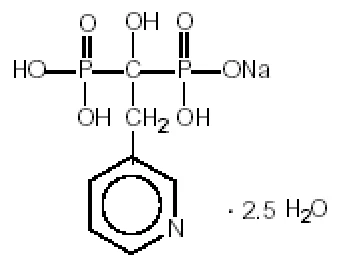
Chemical Name: ratio-RISEDRONATE tablets contain risedronate sodium in the form of hemi-pentahydrate with small amounts of monohydrate. The chemical name of risedronate sodium is [1-hydroxy-2-(3-pyridinyl)ethylidene]bis[phosphonic acid] monosodium salt.
Molecular Formula: C7H10NO7P2Na·2.5H2O
Structural Formula:
Molecular Weight: Anhydrous: 305.10 g/mol
Hemi-pentahydrate: 350.13 g/mol
Physicochemical Properties:
Solubility: Risedronate sodium is soluble in pH 7.0 potassium phosphate dibasic solution, 0.1 N sodium hydroxide, and water; very slightly soluble in 0.1 N hydrochloric acid, practically insoluble in ethanol, and insoluble in isopropanol.
Solution pH: The pH of a 1.0% aqueous solution of risedronate sodium is 4.15.
Dissociation Constants: The five pKa values for risedronate sodium are as follows: pK1 = 1.6 ± 0.2, pK2 = 2.2 ± 0.2, pK3 = 5.9 ± 0.1, pK4 = 7.1 ± 0.1 and pK5 = 11.7 ± 0.3.
Description: Risedronate sodium is a fine white to off-white crystalline powder.
CLINICAL TRIALS
A single dose, blinded, randomized, 2-way crossover bioequivalence study of ratio-RISEDRONATE 35 mg tablets and 35 mg PrActonel®
administered at 1 x 35mg in 46 healthy male volunteers were conducted under fasting conditions. The results indicate that ratio-RISEDRONATE 35 mg is bioequivalent to 35 mg PrActonel®
. The summary of results is presented in the following table:
Table 3 Risedronic Acid (1 x 35 mg) From measured data uncorrected for potency Geometric Mean Arithmetic Mean (CV %) | ||||
| Parameter | ratio-RISEDRONATE Risedronate Sodium Hemi-Pentahydrate 35 mg tablet ratiopharm inc., Canada | PrActonel® (Risedronate Sodium Hemi-Pentahydrate) 35 mg tablet Procter & Gamble Pharmaceuticals, Canada | % Ratio of Geometric Means | 90% Confidence Interval |
AUC0-t (pg.h/mL) | 24264.19 30738.98 (102.75) | 23654.63 28211.81 (70.73) | 102.58% | 88.40% to 119.02% |
AUC0-inf (pg.h/mL) | 25366.57 31889.78 (101.59) | 24618.51 29227.63 (70.30) | 103.04% | 89.01% to 119.28% |
Cmax (pg/mL) | 7716.97 9920.04 (98.73) | 7325.69 9222.79 (92.28) | 105.34% | 89.84% to 123.52% |
Tmax§ (h) | 1.05 (45.92) | 1.34 (53.74) | ||
T½ el§ (h) | 2.58 (22.74) | 2.38 (26.55) | ||
§ Expressed as arithmetic mean (CV%)
| Treatment of Osteoporosis in Postmenopausal Women | |||||||
| Study Demographics and Trial Design | |||||||
| Table 4 | |||||||
| Summary of Patient Demographics for Clinical Trial of Risedronate | |||||||
| in Treatment of Osteoporosis in Postmenopausal Women | |||||||
| Study | Trial | Dosage | Duration | Patients N = | Age Range | Daily | |
| Number | Design | number | (Age Mean) | Supplement** | |||
| Vitamin D | |||||||
| 5 | R, AC, DB, | 5 mg/day | 12 months | 1456 | 46-95 | ≤500IU | |
| MC, PG | 35 mg/week* | (67.9) | |||||
| 50 mg/week * | |||||||
R: randomized ; AC: active-controlled; DB: double-blind; MC: multicentre; PG: parallel-group * Placebo other days of treatment
| In Study 5 postmenopausal women were recruited on the basis of low lumbar spine bone | |
| mass (i.e., more than 2 SD below the premenopausal mean) rather than a history of vertebral | |
| fracture. | |
| In Study 5, patients had either lumbar spine bone mass more than 2.5 SD below the | |
| premenopausal mean, or lumbar spine bone mass more than 2.0 SD below, and a prevalent | |
| vertebral fracture. | |
| Patients with active or a history of upper gastrointestinal disorders at baseline and those | |
| taking ASA, NSAIDs or drugs usually used for the treatment of peptic ulcers were not | |
| specifically excluded from participating in the risedronate weekly dosing osteoporosis | |
| studies. | |
| Results of Study 5: | |
| Table 5 | |
| Comparison of Risedronate Once–a-Week vs. Daily Dosing in the Treatment of Osteoporosis | |
| in Postmenopausal Women – Primary Efficacy Analysis of Completers | ||
| Endpoints | Risedronate 5 mg Daily Mean Increase in BMD % (95% Confidence Interval) | Risedronate 35 mg Once-a-Week Mean Increase in BMD % (95% Confidence Interval |
| N=391 | N=387 | |
| 12 months Lumbar Spine | 4.0 (3.7, 4.3) | 3.9 (3.6, 4.3) |
The results of the intent-to-treat analysis with the last observation carried forward were consistent with the primary efficacy analysis of completers. There were also no statistically significant differences between the two treatment groups at 1 year in regards to BMD increases from baseline at other skeletal sites (total proximal femur, femoral neck and femoral trochanter). Based on these BMD outcomes, risedronate 35 mg Once-a-Week was concluded to be non-inferior to risedronate 5 mg daily.
In trials with risedronate 5 mg daily, changes in BMD of this magnitude were associated with a significant decrease in fracture incidence relative to placebo (see Table 5). This is further
| supported by the fact that within the 1-year study comparing risedronate 35 mg Once-a-Week to | ||||||||
| risedronate 5 mg daily, no statistically significant differences amongst these treatment groups | ||||||||
| were seen with respect to the number of patients with at least 1 new fractured vertebra at 1 year. | ||||||||
| risedronate 35 mg taken once a week is similar in safety and efficacy to risedronate 5 mg daily | ||||||||
| for the treatment of postmenopausal osteoporosis. | ||||||||
| Prevention of Osteoporosis in Postmenopausal Women | ||||||||
| Study Demographics and Trial Design | ||||||||
| Table 6 | ||||||||
| Summary of Patient Demographics for Clinical Trials of Risedronate | ||||||||
| in the Prevention of Osteoporosis in Postmenopausal Women | ||||||||
| Study | Trial | Dosage | Duration | Patients | Age Range | Daily Supplement | ||
| Number | Design | N =number | (Age Mean) | |||||
| Elemental | Vitamin D | |||||||
| Calcium | ||||||||
| 10 | R, DB, PC, | 35 mg/week | 1 year | 280 | 44-64 | 1000 mg | 400 IU | |
| MC, PG | ||||||||
| Placebo | (53.6) | |||||||
R: randomized; PC: placebo-controlled; DB: double-blind; MC: multicentre; PG: parallel-group
Study 10 included women who were 0.5 to 5 year postmenopausal without osteoporosis. All patients were supplemented with 1000 mg elemental calcium and 400 IU vitamin D per day.
Results of Study 10:
| Table 7 | ||||
| Effect of Risedronate 35 mg Once-a-Week on Bone Mineral Density in | ||||
| Postmenopausal Women without Osteoporosis | ||||
| Risedronate 35 mg | Placebo | Mean Difference | ||
| Once-a-Week | Mean Increase in BMD | from Placebo | ||
| Mean Increase in BMD | % | % | ||
| Endpoints | % | |||
| 6 months | Lumbar Spine | 1.7 | -0.5 | 2.2* |
| Trochanter | 1.0 | -0.4 | 1.3* | |
| Femoral Neck | 0.4 | -1.0 | 1.4* | |
| 12 months | Lumbar Spine | 1.9 | -1.1 | 3.0* |
| Trochanter | 1.0 | -0.7 | 1.7* | |
| Femoral Neck | 0.3 | -1.0 | 1.3** | |
*vs. placebo: p<0.0001; ** p=0.0041
Treatment of Osteoporosis in Men, to Improve Bone Mineral Density
| Study Demographics and Trial Design | |
| Table 8 | |
| Summary of Patient Demographics for Clinical Trial of Risedronate | |
| in Treatment of Osteoporosis in Men, to Improve Bone Mineral Density | |||||||||||||||
| Study Number | Trial Design | Dosage | Duration | Patients N = number | Age Range (Age Mean) | Daily Supplement | |||||||||
| Elemental | Vitamin | ||||||||||||||
| Calcium | D | ||||||||||||||
| 12 | R, DB, PC, MC, PG | 35 | 2 years | 191 93 | 36-84 (60.8) | 1000 mg | 400-500 IU | ||||||||
| mg/week | |||||||||||||||
| Placebo | |||||||||||||||
| R: randomized ; DB: double-blind; PC: placebo-controlled; MC: multicentre; PG: parallel-group | |
| Patients with active or a history of upper gastrointestinal disorders at baseline and those taking | |
| ASA, NSAIDs, or drugs traditionally used for the treatment of peptic ulcers were not specifically | |
| excluded from participating in the 2-year male osteoporosis study. | |
| Results of Study 12: | |
| Risedronate 35 mg Once-a-Week demonstrated efficacy in men with osteoporosis, as measured | |
| by change in BMD. All patients in this study received supplemental calcium 1000 mg/day and | |
| vitamin D 400-500 IU/day. Risedronate 35 mg produced significant mean increases in BMD at | |
| the lumbar spine, femoral neck, trochanter and total hip compared to placebo in a 2 year study | |
| (lumbar spine, 4.5%; femoral neck, 1.1%; trochanter, 2.2%; total hip, 1.5%). Statistically | |
| significant increases in lumbar spine BMD were observed within 6 months following initiation of | |
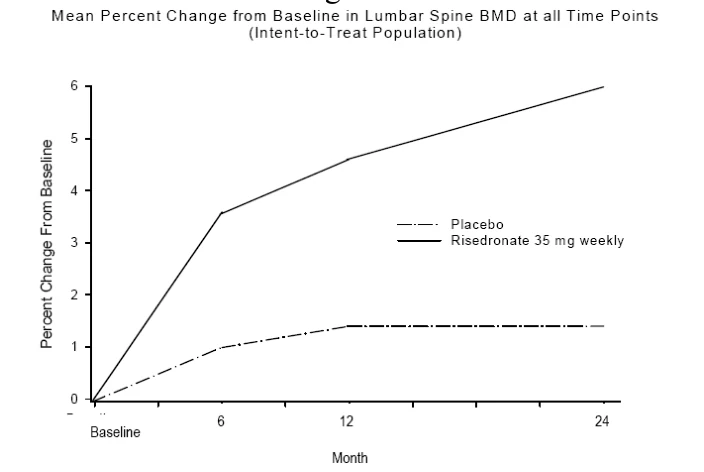
| risedronate treatment. Lumbar spine BMD percent change from baseline at Months 6, 12, and 24 | |
| showed that the risedronate 35 mg Once-a-Week group had a statistically significant increase in | |
| mean percent change from baseline versus placebo at all time points (see Figure 1). | |
| Figure 1 | |
DETAILED PHARMACOLOGY
| There are extensive preclinical data to support that bone produced during risedronate sodium | |
| treatment at therapeutic doses is of normal quality, consistent with clinical experience. | |
| Risedronate demonstrated potent anti-osteoclast, antiresorptive activity in ovariectomized | |
| animals, increasing bone mass and biomechanical strength dose-dependently. Risedronate | |
| treatment maintained the positive correlation between BMD and bone strength. In intact dogs, | |
| risedronate induced positive bone balance at the level of the basic multicellular unit. | |
| Long-term oral administration of risedronate to ovariectomized rats (up to 2.5 mg/kg/day for 12 | |
| months) and ovariectomized minipigs (up to 2.5 mg/kg/day for 18 months) did not impair bone | |
| structure, mineralization, or biomechanical strength. These doses were 5 times the optimal | |
| antiresorptive dose for these species. Normal lamellar bone was formed in these animals. | |
| Risedronate treatment did not impair the normal healing of radial fractures in adult dogs. The | |
| Schenk rat assay, based on histologic examination of the epiphyses of growing rats after drug | |
| treatment, demonstrated that risedronate did not interfere with bone mineralization even at the | |
| highest dose tested (5 mg/kg/day, subcutaneously), which was > 3000 times the lowest | |
| antiresorptive dose (1.5 µg/kg/day). |
TOXICOLOGY
Acute Toxicity: Lethality after single oral doses was seen in female rats at 903 mg/kg (5826 mg/m2) and male rats at 1703 mg/kg (10967 mg/m2). The minimum lethal dose in mice, rabbits, and dogs was 4000 mg/kg (10909 mg/m2), 1000 mg/kg (10870 mg/m2), and 128 mg/kg (2560 mg/m2), respectively. These values represent 140 to 620 times the human 30 mg dose based on surface area (mg/m2).
Chronic Toxicity: In a 1-year daily repeat dose toxicity study in dogs, the limiting toxicity of risedronate was observed at 8 mg/kg/day (160 mg/m2) and consisted of liver, testicular, renal, and gastrointestinal changes. Gastrointestinal effects at 16 mg/kg (111 mg/m2) were the first limiting toxicity in rats in a 26-week study. These doses are equivalent to approximately 6.25 to 9 times the human 30 mg dose based on surface area, mg/m2. In 6 month and 1-year monthly repeat dose toxicity studies in dogs, the limiting systemic toxicity of risedronate was observed at 32 mg/kg (640 mg/m2) and consisted of liver, testicular, and renal toxicities. Gastric lesions were observed at 16 mg/kg (320 mg/m2). These doses are equivalent to approximately 3.5 and 7 times the human 150 mg dose based on surface area, mg/m2.
A 13-week oral dog study was performed to evaluate the gastric and lower gastrointestinal toxicity and toxicokinetics of risedronate (8 and 16 mg/kg) when dosed with or without EDTA (2.5 and 12.5 mg/kg) following 14 once-weekly oral doses. No additional GI toxicity was observed with the addition of either dose of EDTA to either dose of risedronate. No new organs of toxicity were identified when dogs were treated with risedronate in combination with EDTA (vs risedronate alone). Treatment with EDTA alone was not associated with any treatmentrelated changes.
Co-administration of EDTA with 8 and/or 16 mg/kg risedronate was associated with potentiation of risedronate-mediated histologic alterations in the liver, kidneys, and testes (incidence and/or severity). Potentiation of toxicity was more evident at 12.5 mg/kg EDTA when compared with 2.5 mg/kg EDTA. With respect to expected pharmacological effects (e.g. increased bone), 12.5 mg/kg EDTA potentiated the severity of rib hypertrophy and the incidence of increased bone in nasal turbinates when administered in combination with 8 and 16 mg/kg risedronate (vs risedronate alone). These findings may be related to the observed increase in exposure noted when risedronate was administered in combination with EDTA.
| Carcinogenicity: Three carcinogenicity studies in two species (mouse and rat) have been | |
| completed. All studies clearly showed dose-dependent bone pharmacologic effects. Risedronate | |
| was not carcinogenic in male or female rats dosed daily by gavage for 104 weeks at doses up to | |
| 24 mg/kg/day (12 times the human 30 mg dose based on surface area, mg/m2). Similarly, there | |
| was no evidence of a carcinogenic potential in male or female mice dosed daily by gavage for 80 | |
| weeks at doses up to 32 mg/kg/day (5 times the human 30 mg dose based on surface area, | |
| mg/m2). | |
Mutagenesis: In a series of seven in vitro and in vivo mutagenicity assays, risedronate was not genotoxic. An in vitro chromosomal aberration assay in Chinese hamster ovary cells was weakly positive at highly cytotoxic doses (> 675 µg/mL). However, when the assay was repeated at doses exhibiting increased cell survival (300 µg/mL), risedronate was negative.
Reproduction: In female rats, ovulation was inhibited at an oral dose of 16 mg/kg/day (approximately 5.2 times the 30 mg/day human dose based on surface area, mg/m2). Decreased implantation was noted in female rats treated with doses ≥7 mg/kg/day (approximately 2.3 times the 30 mg/day human dose based on surface area, mg/m2). In male rats, testicular and epididymal atrophy and inflammation were noted at 40 mg/kg/day (approximately 13 times the 30 mg/day human dose based on surface area, mg/m2). Testicular atrophy was also noted in male rats after 13 weeks of treatment at oral doses of 16 mg/kg/day (approximately 5.2 times the 30 mg/day human dose based on surface area, mg/m2). There was moderate-to-severe spermatid maturation block after 13 weeks in male dogs at an oral dose of 8 mg/kg/day (approximately 8 times the 30 mg/day human dose based on surface area, mg/m2). These findings tended to increase in severity with increased dose and exposure time.
Survival of neonates was decreased in rats treated during gestation with oral doses ≥16 mg/kg/day (approximately 5.2 times the 30 mg/day human dose based on surface area, mg/m2). Body weight was decreased in neonates from dams treated with 80 mg/kg (approximately 26 times the 30 mg/day human dose based on surface area, mg/m2). In rats treated during gestation, the number of fetuses exhibiting incomplete ossification of sternebrae or skull was statistically significantly increased at 7.1 mg/kg/day (approximately 2.3 times the 30 mg/day human dose based on surface area, mg/m2). Both incomplete ossification and unossified sternebrae were increased in rats treated with oral doses ≥16 mg/kg/day (approximately 5.2 times the 30 mg/day human dose based on surface area, mg/m2). A low incidence of cleft palate was observed in fetuses from female rats treated with oral doses ≥3.2 mg/kg/day (approximately 1 time the 30 mg/day human dose based on surface area, mg/m2). The relevance of this finding to human use of risedronate is unclear. No significant fetal ossification effects were seen in rabbits treated with oral doses up to
10 mg/kg/day during gestation (approximately 6.7 times the 30 mg/day human dose based on surface area, mg/m2). However, in rabbits treated with 10 mg/kg/day, 1 of 14 litters were aborted and 1 of 14 litters were delivered prematurely.
Similar to other bisphosphonates, treatment during mating and gestation with doses as low as 3.2 mg/kg/day (approximately 1 time the 30 mg/day human dose based on surface area, mg/m2) has resulted in periparturient hypocalcemia and mortality in pregnant rats allowed to deliver.
Bisphosphonates are incorporated into the bone matrix, from which they are gradually released over periods of weeks to years. The amount of bisphosphonate incorporation into adult bone, and hence, the amount available for release back into the systemic circulation, is directly related to the dose and duration of bisphosphonate use. There are no data on fetal risk in humans. However, there is a theoretical risk of fetal harm, predominantly skeletal, if a woman becomes pregnant after completing a course of bisphosphonate therapy. The impact of variables such as time between cessation of bisphosphonate therapy to conception, the particular bisphosphonate used, and the route of administration (intravenous versus oral) on this risk has not been studied.
REFERENCES
| |
| Management of corticosteroid-induced osteoporosis. Semin Arthritis Rheum 2000;29:228- | |
| 51. | |
| |
| Safety 1996 Mar;14(3):158-70. | |
| |
| |
| response in prevention of early postmenopausal bone loss [abstract]. 18th Ann Meet Amer | |
| Soc Bone Mineral Res; 1996 Sept 7-11; Seattle (WA): J Bone Miner Res 1996 | |
| Aug;11(Suppl 1):S346(#M658). | |
| |
| Risedronate is effective in increasing BMD in both early and late postmenopausal women | |
| with low bone mass [abstract]. 19th Ann Meet Amer Soc Bone Miner Res; 1997 Sept 10- | |
| 14; Cincinnati (OH): J Bone Miner Res 1997b Aug;12(Suppl 1):S471(#S474). | |
| |
| bisphosphonate. Dig Dis Sci 1997 Feb; 42(2):281-8. | |
| |
| Shown to Be Safe and Effective in Men With Osteoporosis in a 2-Year, Double-Blind, | |
| Randomized, Placebo-Controlled, Multicenter Study. Osteoporos Int 2006;17(Supp | |
| 2):S106-S107. | |
| |
| once a week for the treatment of postmenopausal osteoporosis. Calcif Tissue Int | |
| 2002;71:103-111. | |
| |
| therapy prevents corticosteroid-induced bone loss - a twelve-month, multicenter, | |
| randomized, double-blind, placebo-controlled, parallel-group study. Arthritis Rheum | |
| 1999a;42:2309-18. | |
- 10. Cohen S, Werhya G, Levy R, Jencen D, Chines A, Reid D. Risedronate treatment increases bone mass in patients taking corticosteroids regardless of underlying condition or gender [abstract]. Arthritis Rheum 1999b;42 Suppl9:S287.
- 11.
Devogelaer JP, Hughes R, Laan R, Adami S, Reid D, Sacco-Gibson N, et al.
Risedronate is effective and well-tolerated in patients on chronic corticosteroid therapy [abstract]. Bone 1998;23 Suppl 5:S480.
- 12. Fogelman I, Ribot C, Smith R, Ethgen D, Sod E, Reginster J-Y. Risedronate reverses bone loss in postmenopausal women with low bone mass: results from a multinational, double-blind, placebo-controlled trial. J Clin Endocrinol Metab 2000;85(5):1895-1900.
- 13. Harris ST, Watts NB, Genant HK, et al. Effects of risedronate treatment on vertebral and nonvertebral fractures in women with postmenopausal osteoporosis. JAMA. 1999;282:1344-1352.
- 14. Harris ST, Eriksen EF, Davidson M et al. Effect of combined risedronate and hormone replacement therapies on bone mineral density in postmenopausal women. J Clin Endocrin Metabol 2001;86(6):1890-1897.
- 15. Homik JE, Cranney A, Shea B, Tugwell P, Wells F, Adachi JD, et al. A meta-analysis on the use of bisphosphonates in corticosteroid-induced osteoporosis. J Rheumatol 1999;26:1148-57.
- 16.
Lanza, Schwartz Sahba B et al. An endoscopic comparison of the effects of
alendronate and risedronate on upper gastrointestinal mucosae. Am J Gastroenterol. 2000;95(11):3112-7.
| |
| Risedronate increases BMD at the hip, spine and radius in postmenopausal women with | |
| low bone mass [abstract]. 19th Ann Meet Amer Soc Bone Mineral Res; 1997 Sept 10-14; | |
| Cincinnati (OH): J Bone Miner Res 1997 Aug;12(Suppl 1):S169(#P269). | |
| |
| |
| al. Effect of food on risedronate pharmacokinetics in healthy volunteers. 1994 American | |
| Association of Pharmaceutical Scientists Annual Meeting Nov 6-10 1994, San Diego. | |
| Pharm Res 1994; Oct:11(Suppl 10):S370 (PPDM 8151). | |
| |
| bone mass in an early postmenopausal population: Two years of treatment plus one year | |
| of follow-up. J Clin Endocrinol Metab 1998 Feb;83 (2):396-402. | |
| |
| Esophageal transit of risedronate cellulose-coated tablet and gelatin capsule formulations. | |
| Int J Pharm 1999c;186:169-75. | |
| |
| risedronate on vertebral fractures in women with established postmenopausal | |
| osteoporosis. Osteoporos Int. 2000;11:83–91. | |
- 23. Reid DM. The role of risedronate in the management of postmenopausal and corticosteroid-induced osteoporosis: an initial assessment. Today’s Therapeutic Trends 1999b;17:159-366.
- 24. Ruggiero SL, Mehrotra B, Rosenberg TJ, Engroff SL. Osteonecrosis of the jaws associated with the use of bisphosphonates: a review of 63 cases. J Oral Maxillofac Surg. 2004 May;62(5):527-34.
- 25. Shadmany SA, Kloos RT. Risedronate in osteoporosis or osteopenia after alendronate intolerance [abstract]. Proceedings of the 81st Annual Meeting of the Endocrine Society, Endo ‘99;1999 June 12-15;San Diego, California; p 442.
- 26. Sietsema WK, Ebetino FH, Salvagno AM, Bevan JA. Antiresorptive dose-response relationships across three generations of bisphosphonates. Drugs Exp Clin Res 1989;15(9):389-96.
- 27.
Product Monograph PrActonel® (Risedronate Sodium Warner Chilcott Canada Co.
Control Number 133857. Date of Revision: July 15, 2011.