


Product Monograph - Ratio-Temazepam
ACTIONS AND CLINICAL PHARMACOLOGY
General:
Temazepam is a benzodiazepine with hypnotic properties.
Benzodiazepines act as depressants of the central nervous system (CNS). It is believed that benzodiazepines enhance or facilitate the effects of the inhibitory neurotransmitter gamma-aminobutyric acid (GABA).
Benzodiazepines act as agonists at the benzodiazepine receptors sites. The benzodiazepine-GABA receptor-chloride ionophore complex functions mainly in the gating of the chloride channel. Benzodiazepines are thought to produce their pharmacological effects by facilitating GABA-mediated transmission in the CNS, which reportedly increase the frequency of the chloride channel opening.
In sleep laboratory studies, the effect of temazepam 15 mg and 30 mg, was compared to placebo over a two week period. There was a linear dose-response improvement in total sleep time and sleep latency with significant drug-placebo differences occurring for total sleep time at both doses, and for sleep latency at the higher dose. REM sleep was essentially unchanged and slow wave sleep was decreased.
Rebound insomnia:
A transient syndrome, known as "rebound insomnia", whereby the symptoms that led to treatment with a benzodiazepine recur in an enhanced form, may occur on withdrawal of hypnotic treatment. In the sleep laboratory studies, no measurable effects on daytime alertness or performance occurred following temazepam treatment or during the withdrawal period, even though a transient sleep disturbance in some sleep parameters was observed following the withdrawal of the higher doses.
The duration of hypnotic effect and the profile of unwanted effects may be influenced by the alpha (distribution) and beta (elimination) half-lives of the administered drug and any active metabolites formed. When half-lives are long, the drug or metabolite may accumulate during periods of nightly administration and be associated with impairments of cognitive and motor performance during waking hours. If half-lives are short, the drug and metabolites will be cleared before the next dose is ingested, and carry-over effects related to sedation or CNS depression should be minimal or absent. However, during nightly use and for an extended period, pharmacodynamic tolerance or adaptation to some effects of benzodiazepine hypnotics may develop.
If the drug has a very short elimination half-life, it is possible that a relative deficiency
(i.e., in relation to the receptor site) may occur at some point in the interval between each night’s use. This sequence of events may account for two clinical findings reported to occur after several weeks of nightly use of rapidly eliminated benzodiazepine hypnotics: 1) increased wakefulness during the last third of the night and 2) the appearance of increased day-time anxiety (see WARNINGS).
Pharmacokinetics:
Orally administered temazepam is well absorbed in man. In a single and multiple dose absorption, distribution, metabolism and excretion (ADME) study, using 3H labelled drug, temazepam was found to have minimal (8%) first-pass metabolism. There were no active metabolites formed and the only significant metabolite present in blood was the O-conjugate. Oral administration of 15 to 45 mg temazepam in man resulted in rapid absorption with significant blood levels achieved in 30 minutes and peak levels at
2-3 hours. Drug levels in blood declined in a biphasic manner with a short half-life ranging from 0.4 to 0.6 hours and a terminal half-life from 3.5 to 18 hours (mean
9 hours). The inactive O-conjugate metabolite was formed with a half-life of 10 hours and excreted with a half-life of approximately 2 hours. Thus, O-conjugation is the rate limiting step in the biodisposition. In a multiple dose study, steady-state was approximated after the second daily dose with no evidence of accumulation after
5 consecutive daily doses of 30 mg temazepam. Steady-state plasma levels at 2.5 hours were 382 ± 192 ng/mL.
Approximately 96% of unchanged drug is bound to plasma protein.
Twenty-four hours after a single oral dose of temazepam approximately 80%-90% of the drug was recovered in urine, primarily as the O-conjugate. Total recovery from feces and urine in single- and multiple-dose studies was approximately 95%, with only 3-13% of the radioactivity detectable in feces. Less than 1% of the dose was excreted as unchanged drug or N-desmethyltemazepam. A dose-proportional relationship has been established for the area under the plasma concentration/time curve over the 15-30 mg dose range.
At the dose of 30 mg once a day for 8 weeks, no evidence of enzyme induction was found in man.
BIOAVAILABILITY
Randomized, two-way crossover, single-dose bioavailability studies were conducted in fasting healthy, adult male subjects. The bioavailability of ratio-TEMAZEPAM capsules, 15 and 30 mg, relative to Restoril® capsules, 15 and 30 mg was determined following single 1 x 15 mg and 1 x 30 mg doses. The average values of the pharmacokinetic parameters as well as ratio of means (with 90% confidence intervals)
are listed in the following tables:
Table 1:
Summary Table of the Comparative Bioavailability Study of ratio-TEMAZEPAM vs Restoril®, Temazepam 15 mg capsules conducted under fasting conditions in 24 healthy adult male volunteers (from measured data) | |||
| Parameter | Geometric Mean Arithmetic Mean (CV%) | Ratio of Geometric Means (%) (90% Confidence Limits) | |
| ratio-TEMAZEPAM | Restoril®** | ||
AUCt (ng.h/mL) AUCinf (ng.h/mL) Cmax (ng/mL) Tmax* (h) T½* (h) | 2051.15 2203.85 (40.9) 2190.65 2352.96 (41.7) 368.18 376.72 (20.8) 1.18 (57.6) 10.06 (26.9) | 2092.97 2277.73 (46.1) 2237.77 2459.45 (50.1) 322.43 334.76 (28.3) 1.51 (50.2) 10.54 (31.0) | 98 (95-102) 98 (95-101) 114 (104-125) --- --- |
*The Tmax and T½ parameters are expressed as the arithmetic means.
**Restoril® is manufactured by Novartis Pharmaceuticals and was purchased in Canada. Table 2:
Summary Table of the Comparative Bioavailability Study of ratio-TEMAZEPAM vs Restoril®, Temazepam 30 mg capsules conducted under fasting conditions in 24 healthy adult male volunteers (from measured data) | |||
| Parameter | Geometric Mean Arithmetic Mean (CV%) | Ratio of Geometric Means (%) (90% Confidence Limits) | |
| ratio-TEMAZEPAM | Restoril®** | ||
AUCt (ng.h/mL) AUCinf (ng.h/mL) Cmax (ng/mL) Tmax* (h) T½* (h) | 5696.11 6172.59 (38.7) 5905.83 6424.72 (39.7) 892.64 929.49 (27.7) 1.65 (48.8) 10.34 (23.6) | 5924.46 6414.84 (39.1) 6140.71 6673.25 (40.2) 903.73 949.22 (29.8) 1.54 (53.8) 10.60 (17.6) | 96 (92-99) 96 (92-99) 98 (89-109) --- --- |
*The Tmax and T½ parameters are expressed as the arithmetic means.
**Restoril® is manufactured by Novartis Pharmaceuticals and was purchased in Canada.
Conclusion: The 90% confidence intervals for the ln-transformed parameters AUCt and AUCinf for temazepam were within the 80-125% TPD acceptance range both before and after correction for measured content. Also, the ratio of means for Cmax was within the 80-125% range. Based on these results, ratio-TEMAZEPAM and
Restoril® (temazepam) 15 and 30 mg capsules are considered bioequivalent under single-dose fasting conditions.
INDICATIONS AND CLINICAL USE
Sleep disturbance may be the presenting manifestation of a physical and/or psychiatric disorder. Consequently, a decision to initiate symptomatic treatment of insomnia should only be made after the patient has been carefully evaluated.
ratio-TEMAZEPAM (temazepam) is indicated for the symptomatic relief of transient and short-term insomnia characterized by difficulty in falling asleep, frequent nocturnal awakenings and/or early morning awakenings.
Treatment with ratio-TEMAZEPAM should usually not exceed 7 to 10 consecutive days. Use for more than 2 to 3 consecutive weeks requires complete re-evaluation of the patient. Prescriptions for ratio-TEMAZEPAM should be written for short-term use
(7 to 10 days) and it should not be prescribed in quantities exceeding a 1-month supply.
The use of hypnotics should be restricted for insomnia where disturbed sleep results in impaired daytime functioning.
CONTRAINDICATIONS
ratio-TEMAZEPAM (temazepam) is contraindicated in patients with a known hypersensitivity to the drug, any component of its formulation, or to other benzodiazepines; myasthenia gravis; sleep apnea syndrome.
ratio-TEMAZEPAM is contraindicated in patients who in the past manifested paradoxical reactions to alcohol and/or sedative medications.
WARNINGS
General:
Benzodiazepines should be used with extreme caution in patients with a history of substance or alcohol abuse.
The lowest possible effective dose should be prescribed for elderly patients.
Inappropriate, heavy sedation in the elderly, may result in accidental events or falls.
The failure of insomnia to remit after 7 to 10 days of treatment may indicate the presence of a primary psychiatric and/or medical illness or the presence of sleep state misperception.
Worsening of insomnia or the emergence of new abnormalities of thinking or behaviour may be the consequence of an unrecognized psychiatric or physical disorder. These have also been reported to occur in association with the use of drugs that act at the benzodiazepine receptors.
Pregnancy:
The use of ratio-TEMAZEPAM (temazepam) during pregnancy is not recommended.
Benzodiazepines may cause fetal damage when administered during pregnancy.
During the first trimester of pregnancy, several studies have suggested an increased risk of congenital malformations associated with the use of benzodiazepines. During the last weeks of pregnancy, ingestion of therapeutic doses of a benzodiazepine hypnotic has resulted in neonatal CNS depression due to transplacental distribution.
If the drug is prescribed to a woman of childbearing potential, the patient should be warned of the potential risk to a fetus and advised to consult her physician regarding the discontinuation of the drug if she intends to become pregnant or suspects that she is pregnant.
Memory disturbance:
Anterograde amnesia of varying severity has been reported following therapeutic doses of benzodiazepines. The event is rare with temazepam. Anterograde amnesia is a dose-related phenomenon and elderly subjects may be at particular risk. Cases of transient global amnesia and "traveller’s amnesia" have also been reported in association with benzodiazepines, the latter in individuals who have taken the drug, often in the middle of the night, to induce sleep while travelling.
Transient global amnesia and traveller’s amnesia are unpredictable and not necessarily dose-related phenomena. Patients should be warned not to take temazepam under circumstances in which a full night's sleep and clearance of the drug from the body are not possible before they need again to resume full activity.
Abnormal thinking and psychotic behavioural changes have been reported to occur in association with the use of benzodiazepines including temazepam, although rarely.
Some of the changes may be characterized by decreased inhibition, e.g., aggressiveness or extroversion that seem excessive, similar to that seen with alcohol and other CNS depressant (e.g., sedative/hypnotics). Particular caution is warranted in patients with a history of violent behaviour and a history of unusual reactions to sedatives including alcohol and the benzodiazepines. Psychotic behavioural changes that have been reported with benzodiazepines include bizarre behaviour, hallucinations, and depersonalization. Abnormal behaviours associated with the use of benzodiazepines have been reported more with chronic use and/or high doses but they may occur during the acute, maintenance or withdrawal phases of treatment.
It can rarely be determined with certainty whether a particular instance of abnormal behaviours listed above is drug induced, spontaneous in origin, or a result of an underlying psychiatric disorder. Nevertheless, the emergence of any new behavioural sign or symptom of concern requires careful and immediate evaluation. Confusion:
The benzodiazepines affect mental efficiency, e.g., concentration, attention and vigilance. The risk of confusion is greater in the elderly and in patients with cerebral impairment.
Anxiety, restlessness:
An increase in daytime anxiety and/or restlessness have been observed during treatment with temazepam.
This may be a manifestation of interdose withdrawal due to the short elimination half-life of the drug.
Depression:
Caution should be exercised if temazepam is prescribed to patients with signs or symptoms of depression that could be intensified by hypnotic drugs. The potential for self-harm (e.g., intentional overdose) is high in patients with depression and thus, the least amount of drug that is feasible should be available to them at any one time.
Potentiation of drug effects:
Temazepam may potentiate the effects of other central nervous system depressant drugs such as alcohol, barbiturates, non-barbiturate hypnotics, antihistamines, narcotics, antipsychotic and antidepressant drugs, and anticonvulsants. Therefore, different benzodiazepines should usually not be used simultaneously and careful consideration should be given if other CNS depressants are administered in combination with temazepam. Patients should be advised against the simultaneous use of other CNS depressant drugs and should be cautioned not to take alcohol because of the potentiation of effects that might occur.
Complex Sleep-Related Behaviours
Complex sleep-related behaviours such as “sleep-driving” (i.e., driving while not fully awake after ingestion of a sedative-hypnotic, with amnesia for the event) have been reported in patients who have taken temazepam. Other potentially dangerous behaviours have been reported in patients who got out of bed after taking a sedative-hypnotic and were not fully awake, including preparing and eating food, making phone calls, leaving the house, etc. As with “sleep-driving”, patients usually do not remember these events. The use of alcohol and other CNS-depressants with temazepam appears to increase the risk of such behaviours, as does the use of temazepam at doses exceeding the maximum recommended dose. Temazepam is not to be taken with alcohol. Caution is needed with concomitant use of other CNS depressant drugs. Due to the risk to the patient and the community, discontinuation of temazepam should be strongly considered for patients who report any such complex sleep-related behaviours.
Severe Anaphylactic and Anaphylactoid Reactions
Rare cases of angioedema involving the tongue, glottis or larynx have been reported in patients after taking the first or subsequent doses of sedative-hypnotics, including temazepam. Some patients have had additional symptoms such as dyspnea, throat closing or nausea and vomiting that suggest anaphylaxis. Some patients have required medical therapy in the emergency department. If angioedema involves the throat, glottis or larynx, airway obstruction may occur and be fatal. Patients who develop angioedema after treatment with temazepam should not be rechallenged with the drug.
PRECAUTIONS
Drug interactions:
ratio-TEMAZEPAM (temazepam) may produce additive CNS depressant effects when co-administered with alcohol, sedative antihistamines, anticonvulsants, or psychotropic medications which themselves can produce CNS depression.
Compounds which inhibit certain hepatic enzymes (particularly cytochrome P450) may enhance the activity of benzodiazepines.
Drug abuse, dependence and withdrawal:
Withdrawal symptoms, similar in characteristic to those noted with barbiturates and alcohol (convulsions, tremor, abdominal and muscle cramps, vomiting, sweating, dysphoria, perceptual disturbances and insomnia) have occurred following abrupt discontinuation of benzodiazepines including temazepam.
The more severe symptoms are usually associated with higher dosages and longer usage, although patients given therapeutic dosages for as few as 1 to 2 weeks can also have withdrawal symptoms including daytime anxiety between nightly doses.
Consequently, abrupt discontinuation should be avoided and a gradual dosage tapering schedule is recommended in any patient taking more than the lowest dose for more than a few weeks. The recommendation for tapering is particularly important in patients with a history of seizures.
The risk of dependence is increased in patients with a history of alcoholism, drug abuse, or in patients with marked personality disorders. Interdose daytime anxiety and rebound anxiety may increase the risk of dependency in temazepam treated patients.
As with all hypnotics, repeat prescriptions should be limited to those who are under medical supervision.
Patients with specific conditions
Temazepam is O-conjugated in the liver and is primarily excreted by the kidney. Hence, ratio-TEMAZEPAM (temazepam) should be given with caution to patients with impaired hepatic or renal function.
ratio-TEMAZEPAM (temazepam) should also be given with caution to patients with severe pulmonary insufficiency: respiratory depression has been reported in patients with compromised respiratory function.
ratio-TEMAZEPAM (temazepam) should be used with caution in severely depressed patients or those in whom there is any evidence of latent depression; it should be recognized that suicidal tendencies may be present and protective measures may be necessary.
Patients requiring mental alertness:
Because of temazepam’s CNS depressant effect, patients receiving the drug should be cautioned against engaging in hazardous occupations requiring complete mental alertness such as operating machinery or driving a motor vehicle. For the same reason, patients should be warned against the concomitant ingestion of ratio-TEMAZEPAM and alcohol or CNS depressant drugs.
Use in nursing mothers:
It is not known whether or not temazepam is excreted in human milk. Therefore, it should not be given to nursing mothers.
Use in pregnancy:
For teratogenic effects see WARNINGS. Non-teratogenic effects: a child born to a mother who is on benzodiazepines may be at risk for withdrawal symptoms from the drug during the postnatal period. Also, neonatal flaccidity has been reported in an infant born to a mother who had been receiving benzodiazepines.
Use in children:
The safety and effectiveness of temazepam in children below the age of 18 have not been established.
Use in the elderly and debilitated patients:
Elderly patients are especially susceptible to dose-related adverse effects, such as drowsiness, dizziness, or impaired coordination. Inappropriate, heavy sedation may result in accidental events/falls. Therefore, the lowest possible dose should be used in these subjects.
Debilitated patients, or those with organic brain syndrome, are prone to CNS depression after even low doses of benzodiazepines and may experience paradoxical reactions to these drugs. Therefore, ratio-TEMAZEPAM (temazepam) should be used only at the lowest possible dose and adjusted when necessary under careful observation, depending on the response of the patient.
Because temazepam is eliminated by O-conjugation, minimal accumulation occurs.
ADVERSE REACTIONS
During controlled clinical trials in which 1076 patients received temazepam at bedtime, the adverse events occurring in 1% or more of patients are listed as follows:
temazepam % incidence (n=1076) | Placebo % incidence (n=783) | |
Drowsiness Headache Fatigue Nervousness Lethargy Dizziness Nausea Hangover Anxiety Depression Dry mouth Diarrhea Abdominal discomfort Euphoria Weakness Confusion Blurred vision Nightmares Vertigo | 9.1 8.5 4.8 4.6 4.5 4.5 3.1 2.5 2.0 1.7 1.7 1.7 1.5 1.5 1.4 1.3 1.3 1.2 1.2 | 5.6 9.1 4.7 8.2 3.4 3.3 3.8 1.1 1.5 1.8 2.2 1.1 1.9 0.4 0.9 0.5 1.3 1.7 0.8 |
The following adverse events have been reported with an incidence of 0.5 - 0.9%:
Central nervous system: anorexia, ataxia, equilibrium loss, tremor, increased dreaming.
Cardiovascular: dyspnea, palpitations.
Gastrointestinal: vomiting.
Musculoskeletal: backache.
Special senses: hyperhydrosis, burning eyes.
The following adverse events have been reported with an incidence of less than 0.5%:
Amnesia, hallucinations, horizontal nystagmus and paradoxical reactions including restlessness, overstimulation and agitation.
SYMPTOMS AND TREATMENT OF OVERDOSAGE
Manifestations of acute overdosage of temazepam, as with other benzodiazepines, can be expected to reflect the increasing CNS effects of the drug and include somnolence, confusion and coma, with reduced or absent reflexes. With large overdoses, respiratory depression, hypotension and finally coma will result. If the patient is conscious, vomiting should be induced mechanically or with emetics (e.g., syrup of ipecac 20 to 30 mL). Gastric lavage should be employed as soon as possible, utilizing concurrently a cuffed endotracheal tube if the patient is unconscious, in order to prevent aspiration and pulmonary complications. Maintenance of adequate pulmonary ventilation is essential and fluids should be administered intravenously to encourage diuresis. The use of pressor agents, such as norepinephrine bitartrate or metaraminol, intravenously may be necessary to combat hypotension but only if considered essential. The value of dialysis in emergency therapy for benzodiazepine overdosage has not been determined. If excitation occurs, barbiturates should not be used. It should be borne in mind that multiple agents may have been ingested.
The benzodiazepine antagonist, flumazenil (Anexate), is a specific antidote in known or suspected benzodiazepine overdose. For conditions of use see flumazenil Product Monograph.
For management of a suspected drug overdose, contact your Regional Poison Control
Centre.
DOSAGE AND ADMINISTRATION
The lowest effective dose of ratio-TEMAZEPAM (temazepam) should be used.
Treatment with ratio-TEMAZEPAM should usually not exceed 7-10 consecutive days.
Use for more than 2 to 3 consecutive weeks requires complete reevaluation of the patient.
An appropriate hypnotic dose should produce the desired hypnotic effect while avoiding oversedation and impairment of performance the next day.
Adult dose:
The recommended adult dose of ratio-TEMAZEPAM (temazepam) is 30 mg before retiring, 15 mg may be sufficient for some patients.
Elderly and debilitated patients:
The recommended initial dose should not exceed 15 mg before retiring. (see
PRECAUTIONS).
ratio-TEMAZEPAM (temazepam) is intended only for short-term use and therefore, should not be prescribed in quantities exceeding those required for that cycle of administration. Prescriptions should not be renewed without further assessment of the patient’s needs.
ratio-TEMAZEPAM is not indicated in children under 18 years of age.
PHARMACEUTICAL INFORMATION
Drug substance:
Trade name: ratio-TEMAZEPAM
Proper name: Temazepam
Chemical name: 7-chloro-1,3-dihydro-3-hydroxy-1-methyl-5-phenyl-2H-1,4-benzodiazepine-2-one.
Structural formula: 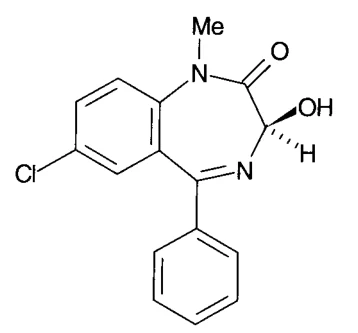
Molecular formula: C16H13CIN2O2
Molecular weight: 300.74
Composition: Each 15 mg capsule contains: 15 mg of temazepam. Non-medicinal ingredients in alphabetical order: Ammonium hydroxide, n-butyl alcohol, D&C red #28, D&C red #33, D&C yellow #10, FD&C blue #1, FD&C yellow #6, gelatin, isopropyl alcohol, lactose, magnesium stearate, propylene glycol, shellac, silicon dioxide, simethicone, sodium lauryl sulfate and titanium dioxide.
Each 30 mg capsule contains: 30 mg of temazepam. Non-medicinal ingredients in alphabetical order: Ammonium hydroxide, n-butyl alcohol, D&C red #28, D&C red #33, D&C yellow #10, FD&C blue #1, gelatin, isopropyl alcohol, lactose, magnesium stearate, propylene glycol, shellac, silicon dioxide, simethicone, sodium lauryl sulfate and titanium dioxide.
Stability and storage
recommendations: Store at controlled room temperature, between 15-30 oC.
Protect from moisture and light.
AVAILABILITY OF DOSAGE FORMS
ratio-TEMAZEPAM (temazepam) 15 mg
Each maroon and peach, size 3 hard shell gelatin capsule, printed in white ink with
"TEC 185A", contains: temazepam 15 mg. Also contains lactose. Bottles of 100 and
500.
ratio-TEMAZEPAM (temazepam) 30 mg
Each maroon and blue, size 3 hard shell gelatin capsule, printed in white ink with "TEC
185B", contains: temazepam 30 mg. Also contains lactose. Bottles of 100 and 500.
PHARMACOLOGY
In animals, temazepam produces sedative and muscle relaxant effects. At higher doses it has some cardiovascular depressant effects. In unanesthetized rabbits and dogs, temazepam caused slight but significant decreases in blood pressure at oral doses from
5 to 20 mg/kg.
Temazepam decreases spontaneous activity at doses of 2.5 to 5 mg/kg p.o. in the mouse, 20 mg/kg p.o. in the rat and at 10 mg/kg p.o. in the dog. It produces ataxia in the mouse and rat at 10 mg/kg p.o. and in the dog at 20 mg/kg p.o. Loss of righting reflex occurs in mouse and rat at 40 mg/kg p.o. and muscle tone is decreased in the mouse at 10 to 40 mg/kg p.o. and in the rat and dog at 20 mg/kg p.o. Ptosis, myosis and piloerection occur in the mouse at 2.5 to 5 mg/kg p.o., in the rat at 10 to 20 mg/kg p.o., and in the dog bradycardia occurs at 20 to 40 mg/kg and photophobia at
80 mg/kg p.o.
Temazepam potentiates the sleep-enhancing effects of hexabarbitone, induces sleep in cebus monkeys at the minimum effective dose of 3.75 mg/kg p.o. and blocks the lingomandibular reflex in cats at the dose of 0.1 to 1.0 mg/kg i.v. Temazepam also blocks pentylenetetrazol-induced convulsions in mice at the dose of 0.23 mg/kg p.o.
Pharmacokinetics:
Metabolism and excretion of temazepam in toxicology species (mouse, rat and dog)
varied considerably from the pattern in man but the biotransformation pathways in humans also occur in all of the animals studied thus far. In the mouse, the major metabolites were N-desmethyltemazepam and its conjugates. In the rat, temazepam and the N-demethylated compound were present in equal proportions, largely unconjugated, but more than 50% was present as unidentified metabolites. In the dog, conjugated temazepam was the major metabolite, followed by free and conjugated N-desmethyltemazepam in equal proportions. In all species studied, man showed the highest blood levels, the smallest distribution volume and the greatest proportion of urinary elimination.
TOXICOLOGY
In the acute toxicity studies the following title LD50 for temazepam were determined:
| Species | Sex | Routes | LD50 mg/kg |
Mouse Mouse | M & F M | Oral Oral | 1963 (1813-2126) 980 (860-1117) |
Mouse Mouse | M & F M | i.p. i.p. | 1050 (967-1140) 485 (411-572) |
Rat Rat | M & F M | Oral Oral | 1823 (1639-2027) 2800 (2059-3808) |
Rat Rat | M & F M | i.p. i.p. | 617 (551-690) 670 (626-717) |
| Rabbit | M & F | Oral | > 2400 |
| Dog | M & F | Oral | > 1600 |
Overt sedation was prominent in all acute tests and ataxia and decreased locomotion were observed in some tests.
Subacute toxicity experiments lasting from 6 to 13 weeks were conducted in rats
(9-250 mg/kg/day p.o.) and dogs (80-200 mg/kg/day p.o.). In the rat changes in hepatic function were seen at the doses over 100 mg/kg/day.
In subacute studies in dogs treatment-related symptoms included decreased locomotion, sedation, abdominal distension and weight loss. Sporadic hyperexcitability was seen in some animals. Chronic toxicity studies of 6 to 12 months were performed in rats (10-160 mg/kg/day p.o.) and dogs (5-120 mg/kg/day p.o.). In the rat the major finding was a liver weight increase at high doses and minimal hepatic lipidosis at the mid and high doses. Dogs at the higher doses exhibited slight lethargy.
Two series of 18 month studies were performed in mice at doses from
11-158 mg/kg/day. In one study there was a 4% increase over controls in hepatocellular adenomas in female mice. This incidence is within that found in control groups for the species studied.
Reproductive and Teratology studies:
Rats (25-840 mg/kg/day) and rabbits (5-60 mg/kg/day) were utilized to assess potential reproductive and teratologic effects. Two segment II type studies in rats provided evidence of the possible increased incidence of fetal resorptions, at doses of
30-120 mg/kg. In perinatal and postnatal studies in rats at doses of 60 and
120 mg/kg/day, resulted in increasing nursling mortality. There were minimal untoward effects on the newborn survival rate. Two segment II type studies in rabbits produced no evidence of potential teratologic effects.
REFERENCES I. Preclinical
- 1.
Banziger, R.F.: Anticonvulsant Properties of Chlordiazepoxide, Diazepam and
Certain Other 1,4-Benzodiazepines. Arch. Int. Pharmacodyn. 154: 131-136, 1965.
- 2.
Childress, S.J. and Gluckman, M.I.: 1,4-Benzodiazepines (Review Article). J.
Pharmaceut. Sci. 53: 577-590, 1964.
- 3.
Curry, S.H. et al: Behavioral and Pharmacokinetic Studies in the Monkey
(Macaca mulatta) with Diazepam, Nordiazepam and Related 1,4-Benzodiazepines, Br. J. Pharmacol. 61: 325-330, 1977.
- 4.
deAngelis, L., et al.: Comparative Evaluation of the Central Nervous System
Activity of Diazepam and its Metabolites (Demethyl-Diazepam, Methyl-Oxazepam and Oxazepam). Pharmacol. Res. Commun. 6: 61-75, 1974.
- 5.
Mille, T., et al.: A New Benzodiazepine: Electroencephalographic Studies of its
Anticonvulsant Activity in Non-Anesthetized, Non-Curarized Rabbits. Arzneim. Forsch. 19: 730-735, 1969.
- 6.
Ruelius, H.W., et al. Metabolism of diazepam in Dogs: Transformation to
Oxazepam. Arch. Biochem. Biophys. 111: 376-380, 1965.
II Clinical
- 1.
Bixler, E.O., et al: Effectiveness of Temazepam with Short, Intermediate, and
Long-Term Use: Sleep Laboratory Evaluation. J. Clin. Pharmacol. 18: 110-118, 1978.
- 2.
Clarke, C.H., and Nicholson, A.N.: Immediate and Residual Effects in Man of the
Metabolites of Diazepam. Br. J. Clin. Pharmac. 6, 325-331, 1978.
- 3. Ford, G.A., Hoffman, B.B., Blaschke, T.F: Effect of Temazepam on blood pressure regulation in healthy elderly subjects. Br. J. Clin. Pharmac. 1990; 29: 61-67.
- 5.
Fowler, L.K.: Temazepam (Euhypnos) as a Hypnotic: A Twelve-Week Trial in
General Practice. J. Int. Med. Res 5: 295-296, 1977.
- 6.
Fowler, L.K.: Temazepam (Euhypnos) as a Hypnotic: A Multicentre Trial in
General Practice. J. Int. Med. Res. 5: 297-300, 1977.
- 7. Fraschini, F., Stankov, B., Temazepam: Pharmacological profile of a benzodiazepine and new trends in its clinical application. Pharmacol. Res. 1993; 27: 97-113.
- 8.
Fuccella, L.M.: Study of Physiological Availability of Temazepam in Man. Int. J.
Clin. Pharmacol. 6: 303-309, 1972.
- 9.
Heffron, W.A., and Roth, P.: Double-Blind Evaluation of the Safety and Hypnotic
Efficacy of Temazepam in Insomniac Outpatients. Br. J. Clin. Pharmac. 8, 69S-72S, 1979.
- 10. King, D.J. Benzodiazepines, amnesia and sedation; Theoretical and clinical issues and controversies. Human Psychopharmacol. 1992; 7: 79-87.
- 11. Maczaj: M. Pharmacological treatment of insomnia. Drugs 1993; 45: 44-55.
- 12. Meuleman, J.R., Nelson, R.C., Clark, R.L.: Evaluation of Temazepam and diphenhydramine as hypnotics in a nursing-home population. Drug Intell. Clin. Pharm. 1987; 21: 716-720.
- 13.
Mitler, M.M., et al: Hypnotic efficacy of Temazepam: A Long-Term Sleep
Laboratory Evaluation. Br. J. Clin. Pharmac. 8, 63S-68S, 1979.
- 14.
Nicholson, A.N., and Stone, B.M. Effect of a Metabolite of Diazepam, 3-
Hydroxydiazepam (Temazepam) on sleep in man. Br. J. Clin. Pharmac. 3: 543-550, 1976.
- 15.
Nicholson, A.N.: Performance Studies with Diazepam and its Hydroxylated
Metabolites. Br. J. Clin. Pharmac. 8, 39S-42S, 1979.
- 16. Priest, R.G., and Rizvi, Z.A.: Nitrazepam and Temazepam: A Comparative Trial of Two Hypnotics. J. Int. Med. Res. 4: 145-151, 1976.
- 17.
Roth, T., et al: Effects of Temazepam, Flurazepam and Quinalbarbitone on
Sleep: Psychomotor and Cognitive Function. Br. J. Clin. Pharmac. 8, 47S-54S, 1979.
- 18.
Schwartz, M.A., et al: Metabolism of Diazepam in Rat, Dog and Man. J.
Pharmacol. Exp. Ther. 149: 423-435, 1965.
- 19.
Thorpe, M.J., Chairman. International classification of sleep disorders:
Diagnostic and coding manual. Rochester, Minnesota, American Sleep Disorder Association, 1990.
III. Others:
- 1.
Product Monograph Restoril® (temazepam) capsules - 15 mg and
30 mg. Date of revision June 26, 2009. Sepracor Pharmaceuticals Inc.