


Product Monograph - Reddy-Clobetasol Shampoo
RECENT MAJOR LABEL CHANGES
| 1 Indications | 12/2022 |
|---|---|
| 1 Indications, 1.1 Pediatrics | 12/2022 |
| 1 Indications, 1.2 Geriatrics | 12/2022 |
| 4 Dosage and Administration, 4.1 Dosing Consideration | 12/2022 |
| 4 Dosage and Administration, 4.2 Recommended Dose and Dosage Adjustment | 12/2022 |
| 7 Warnings and Precautions, General | 12/2022 |
| 7 Warnings and Precautions, Immune | 12/2022 |
| 7 Warnings and Precautions, Musculoskeletal | 12/2022 |
| 7 Warnings and Precautions, 7.1.1 Pregnant Women | 12/2022 |
TABLE OF CONTENTS
RECENT MAJOR LABEL CHANGES ............................................................................ 2
TABLE OF CONTENTS .................................................................................................. 2
PART I: HEALTH PROFESSIONAL INFORMATION .................................................... 4
1 INDICATIONS ...................................................................................................... 4
1.1 Pediatrics ................................................................................................... 4
1.2 Geriatrics ................................................................................................... 4
2 CONTRAINDICATIONS ....................................................................................... 4
4 DOSAGE AND ADMINISTRATION ..................................................................... 4
4.1 Dosing Considerations .............................................................................. 4
4.2 Recommended Dose and Dosage Adjustment .......................................... 5
4.4 Administration ............................................................................................ 5
4.5 Missed Dose .............................................................................................. 5
5 OVERDOSAGE .................................................................................................... 6
6 DOSAGE FORMS, STRENGTHS, COMPOSITION AND PACKAGING ............. 6
7 WARNINGS AND PRECAUTIONS ...................................................................... 6
7.1 Special Populations ................................................................................... 8
7.1.1 Pregnant Women ................................................................................... 8
7.1.2 Breast-feeding ....................................................................................... 8
7.1.3 Pediatrics ............................................................................................... 9
7.1.4 Geriatrics ............................................................................................... 9
8 ADVERSE REACTIONS ...................................................................................... 9
8.1 Adverse Reaction Overview ....................................................................... 9
8.2 Clinical Trial Adverse Reactions .............................................................. 10
8.3 Less Common Clinical Trial Adverse Reactions ...................................... 11
8.5 Post-Market Adverse Reactions .............................................................. 11
9 DRUG INTERACTIONS ..................................................................................... 11
9.2 Drug Interactions Overview ...................................................................... 11
9.4 Drug-Drug Interactions............................................................................. 11
9.5 Drug-Food Interactions ............................................................................ 11
9.6 Drug-Herb Interactions............................................................................. 12
9.7 Drug-Laboratory Test Interactions ........................................................... 12
10 CLINICAL PHARMACOLOGY ........................................................................... 12
10.1 Mechanism of Action................................................................................ 12
10.2 Pharmacodynamics ................................................................................. 12
10.3 Pharmacokinetics .................................................................................... 13
11 STORAGE, STABILITY AND DISPOSAL ......................................................... 14
12 SPECIAL HANDLING INSTRUCTIONS ............................................................ 14
PART II: SCIENTIFIC INFORMATION ......................................................................... 15
13 PHARMACEUTICAL INFORMATION ............................................................... 15
14 CLINICAL TRIALS ............................................................................................. 16
14.1 Trial Design and Study Demographics .................................................... 16
14.2 Study Results ........................................................................................... 16
15 MICROBIOLOGY ............................................................................................... 18
16 NON-CLINICAL TOXICOLOGY ......................................................................... 19
PATIENT MEDICATION INFORMATION ..................................................................... 22
PART I: HEALTH PROFESSIONAL INFORMATION
1 INDICATIONS
Reddy-Clobetasol Shampoo (clobetasol propionate shampoo, 0.05%) is a super-high potent topical corticosteroid formulation indicated for the relief of the inflammatory and pruritic manifestations of moderate to severe forms of scalp psoriasis in subjects 18 years of age and older.
Treatment should be limited to a maximum of four consecutive weeks.
1.1 Pediatrics
Use in patients under 18 years of age is not recommended. Reddy-Clobetasol Shampoo is contraindicated in children under 2 years of age. See 7 WARNINGS AND PRECAUTIONS, 7.1.3 Pediatrics.
1.2 Geriatrics
Limited data are available in patients aged 65 years and over. Dosing selection should be made with caution in geriatric patients. See 7 WARNINGS AND PRECAUTIONS, 7.1.4 Geriatrics.
2 CONTRAINDICATIONS
- Patients who are hypersensitive to clobetasol propionate, to other corticosteroids, or to any ingredient in this preparation.
- On skin areas affected by bacterial or mycobacterial infections (including tuberculosis of the skin), fungal infections, syphilitic skin infections, chicken pox, eruptions following vaccinations, viral diseases of the skin in general, parasitic infections and ulcerous wounds.
- In the treatment of rosacea, acne vulgaris, perioral dermatitis or perianal and genital pruritus.
- Must not be used in children under 2 years of age.
- Must not be applied to the eyes and eyelids (risk of glaucoma, risk of cataract).
4 DOSAGE AND ADMINISTRATION
4.1 Dosing Considerations
- Treatment duration should not exceed 4 consecutive weeks.
- Reddy-Clobetasol Shampoo (clobetasol propionate shampoo, 0.05%) should not be used with occlusive dressings unless directed by a physician.
4.2 Recommended Dose and Dosage Adjustment
Reddy-Clobetasol Shampoo (clobetasol propionate) should be applied in a thin film to the affected areas of the scalp one application per day. The product should be applied on dry scalp and left in place for 15 minutes before lathering and rinsing.
Reddy-Clobetasol Shampoo is a super-high potent topical corticosteroid formulation. Patients should be instructed to use Reddy-Clobetasol Shampoo for the minimum time period necessary to achieve the desired results. Treatment should be limited to 4 consecutive weeks. If treatment with a local corticosteroid is clinically justified beyond 4 weeks, switching to a less potent corticosteroid preparation should be considered.
The maximum amount of Reddy-Clobetasol Shampoo to be used per week is 50 g (50 mL or 1.75 fl.oz.) because of the potential for the drug to suppress the hypothalamic-pituitary-adrenal (HPA) axis.
As with other corticosteroids, therapy should be discontinued when control is achieved. If no improvement is seen within 4 weeks, reassessment of diagnosis may be necessary.
Pediatrics: Use in patients between 2 and 18 years of age is not recommended and is contraindicated in children below 2 years of age (see 1.1 Pediatrics).
4.4 Administration
Move the hair away from the scalp so that one of the affected areas is exposed. Position the bottle over the lesion. Apply a small amount of the shampoo directly onto the lesion, letting the product naturally flow from the bottle (gently squeeze the bottle), avoiding any contact of the product with the facial skin, eyes or lips. In case of contact, rinse thoroughly with water. Spread the product so that the entire lesion is covered with a thin uniform film. Massage gently into the lesion and repeat for additional lesion(s). Wash your hands carefully after applying Reddy-Clobetasol Shampoo.
Leave the shampoo in place for 15 minutes. Add water, lather and rinse thoroughly all parts of the scalp and body that came in contact with the shampoo (e.g., hands, face, neck and shoulders). Avoid contact with eyes and lips. Minimize contact to non-affected areas of the body. Although no additional shampoo is necessary to cleanse your hair, you may use a non-medicated shampoo if desired.
4.5 Missed Dose
In the event of a missed dose, Reddy-Clobetasol Shampoo should be applied as soon as you remember. Then go back to your regular schedule. If it is about time for your next dose, apply just that 1 dose, and continue with your regular schedule. Do not make up the missed dose. If you miss several doses, tell your doctor.
5 OVERDOSAGE
In case of chronic overdose or misuse, the features of hypercortisolism may appear and in this situation, treatment should be discontinued gradually. However, because of the risk of acute adrenal suppression, this should be done gradually under medical supervision (see 7 WARNINGS AND PRECAUTIONS).
| For management of a suspected drug overdose, contact your regional poison control centre. |
|---|
6 DOSAGE FORMS, STRENGTHS, COMPOSITION AND PACKAGING
Table 1 – Dosage Forms, Strengths, Composition and Packaging
| Route of Administration | Dosage Form / Strength / Composition | Non-medicinal Ingredients |
|---|---|---|
| Topical | Shampoo, 0.05% w/w | Alcohol (10%), citric acid monohydrate, coco-betaine, polyquaternium-10, purified water, sodium citrate dihydrate and sodium laureth sulfate. |
Reddy-Clobetasol Shampoo (clobetasol propionate shampoo, 0.05%) is supplied in 120 mL bottles.
7 WARNINGS AND PRECAUTIONS
General
Reddy-Clobetasol Shampoo (clobetasol propionate shampoo, 0.05%) should not be used under occlusive dressing, over extensive areas, or on the face, axillae and scrotum, as sufficient absorption may occur giving rise to adrenal suppression and other systemic effects.
Clobetasol propionate belongs to the most potent class of topical corticosteroids (Class I) and prolonged use may result in serious undesirable effects (see 8.5 Post-Market Adverse Reactions). Treatment should not exceed 4 consecutive weeks (see 4 DOSAGE AND ADMINISTRATION).
Patients should be advised to inform subsequent health professionals of the prior use of corticosteroids.
Endocrine and Metabolism
Systemic absorption of topical corticosteroids can produce reversible hypothalamic-pituitary-adrenal (HPA) axis suppression with the potential for glucocorticosteroid insufficiency after withdrawal of treatment. Manifestations of Cushing's syndrome, hyperglycemia and glucosuria can also be produced in some patients by systemic absorption of topical corticosteroids while on treatment.
The effect of clobetasol proprionate shampoo on HPA axis suppression was evaluated in one study in adolescents 12 to 17 years of age. In this study, 5 of 12 evaluable subjects developed suppression of their HPA axis following 4 weeks of treatment with clobetasol propionate shampoo applied once daily.
Conditions which increase systemic absorption include the application of the more potent corticosteroids, use over large surface areas, prolonged use, and the addition of occlusive dressings. Therefore, patients applying a topical steroid to a large surface area or to areas under occlusion should be evaluated periodically for evidence of HPA axis suppression. This may be done by using the ACTH stimulation, A.M. plasma cortisol, and urinary free cortisol tests. If HPA axis suppression is noted, an attempt should be made to withdraw the drug, to reduce the frequency of application, or to substitute a less potent steroid. Recovery of HPA axis function is generally prompt and complete upon discontinuation of topical corticosteroids (see 14 CLINICAL TRIALS). Infrequently, signs and symptoms of glucocorticosteroid insufficiency may occur, requiring supplemental systemic corticosteroids. For information on systemic supplementation, see Product Monograph for those products.
Immune
Corticosteroids have immunosuppressive properties. Topical corticosteroids may decrease resistance to infection, increase the risk of opportunistic infection and also mask some signs of infection. With increasing doses of corticosteroids, the rate of occurrence of infectious complications increases.
Cases of systemic immunosuppression and serious infections have been reported with long-term use of clobetasol propionate beyond the maximum recommended doses (see 8.5 Post-Market Adverse Reactions). Combining clobetasol propionate with other medicines known to weaken the immune system increases the risk of systemic immunosuppression and serious infections.
Monitoring and Laboratory Tests
The following tests may be helpful in evaluating patients for HPA axis suppression:
- ACTH stimulation test
- A.M. plasma cortisol test
- Urinary free cortisol test
Musculoskeletal
Cases of osteonecrosis have been reported with long-term use of clobetasol propionate beyond the maximum recommended doses (see 8.5 Post-Market Adverse Reactions).
Ophthalmologic
Prolonged corticosteroid use may produce posterior subcapsular cataracts (especially in children), increased intraocular pressure and glaucoma with possible damage to the optic nerves, or rare diseases such as central serous chorioretinopathy (CSCR). It may also enhance secondary ocular infections due to fungi or viruses.
If a patient presents with symptoms such as blurred vision or other visual disturbances, the patient should be considered for referral to an ophthalmologist.
Skin
Topical corticosteroids are known to potentially induce telangiectasia. If irritation develops, Clobetasol Shampoo (clobetasol propionate shampoo, 0.05%) should be discontinued and appropriate therapy instituted. Allergic contact dermatitis with corticosteroids is usually diagnosed by observing a failure to heal rather than noting a clinical exacerbation, as with most topical products not containing corticosteroids. Such an observation should be corroborated with appropriate diagnostic patch testing.
In the presence of dermatological infections, the use of an appropriate antifungal or antibacterial agent should be instituted. If a favorable response does not occur promptly, use of Reddy-Clobetasol Shampoo should be discontinued until the infection has been adequately controlled.
Although Reddy-Clobetasol Shampoo is intended for the topical treatment of moderate to severe scalp psoriasis, it should be noted that certain areas of the body, such as the face, groin, and axillae, are more prone to atrophic changes than other areas of the body following treatment with corticosteroids. Reddy-Clobetasol Shampoo must not be applied on intertriginous areas (axillae and genitoanal regions) and on other erosive skin surfaces as this could increase the risk of topical adverse events such as atrophic changes, telangiectasia or cortico-induced dermatitis. Avoid any contact of the drug product with the facial skin, eyes and lips. In case of contact, rinse thoroughly with water all parts of the body that came in contact with the shampoo.
Suitable precautions should be taken when using topical corticosteroids in patients with stasis dermatitis and other skin diseases with impaired circulation.
7.1 Special Populations
7.1.1 Pregnant Women
There have been no adequate and well-controlled studies in pregnant women. Reddy-Clobetasol Shampoo should be used during pregnancy only if the potential benefit justifies the potential risk to the fetus.
Corticosteroids have been shown to be teratogenic in laboratory animals when administered systemically at relatively low dosage levels. Some corticosteroids have been shown to be teratogenic after dermal application in laboratory animals (see 16 NON-CLINICAL TOXICOLOGY).
7.1.2 Breast-feeding
Systemically administered corticosteroids appear in human milk and could suppress growth, interfere with endogenous corticosteroid production, or cause other untoward effects. It is not known whether topical administration of corticosteroids could result in sufficient systemic absorption to produce detectable quantities in human milk. Because many drugs are excreted in human milk, caution should be exercised when Reddy-
Clobetasol Shampoo is administered to a nursing woman. Clobetasol propionate should not be prescribed to breast-feeding women unless clearly indicated.
7.1.3 Pediatrics
Safety and effectiveness of clobetasol propionate shampoo have been established in patients 18 years and older. Insufficient data have been obtained in patients under the age of 18 years. Because of a higher ratio of skin surface area to body mass, pediatric patients are at a greater risk than adults of HPA axis suppression and Cushing’s syndrome when they are treated with topical corticosteroids. They are therefore also at greater risk of adrenal insufficiency during and/or after withdrawal of treatment. Adverse effects including striae have been reported with inappropriate use of topical corticosteroids in infants and children.
Use in patients below 18 years of age is not recommended and is contraindicated in children below 2 years of age.
HPA axis suppression, Cushing's syndrome, linear growth retardation, delayed weight gain, and intracranial hypertension have been reported in children receiving topical corticosteroids. Manifestations of adrenal suppression in children include low plasma cortisol levels and an absence of response to ACTH stimulation. Manifestations of intracranial hypertension include bulging fontanelles, headaches, and bilateral papilledema.
7.1.4 Geriatrics
Clinical studies of clobetasol propionate shampoo, 0.05%, did not include sufficient numbers of patients aged 65 years and over to determine whether they respond differently than younger patients. In general, dose selection for an elderly patient should be made with caution, usually starting at the low end of the dosing range, reflecting the greater frequency of decreased hepatic, renal or cardiac function, and of concomitant disease or other drug therapy.
8 ADVERSE REACTIONS
8.1 Adverse Reaction Overview
Systemic absorption of topical corticosteroids has produced reversible HPA axis suppression, manifestations of Cushing's syndrome, hyperglycemia, and glucosuria in some patients.
The following additional local adverse reactions have been reported with topical corticosteroids, and they may occur more frequently with the use of occlusive dressings, especially with higher potency corticosteroids. These reactions include: irritation, dryness, itching, burning, folliculitis, acneiform eruptions, hypopigmentation, perioral dermatitis, allergic contact dermatitis, skin atrophy, atrophy of subcutaneous tissues, telangiectasia, hypertrichosis, change in pigmentation, opportunistic infection, hypersensitivity, glaucoma, striae, and miliaria. If applied to the face, acne, rosacea or perioral dermatitis can occur. When occlusive dressings are used, pustules, miliaria, folliculitis and pyoderma may occur. In rare instances, treatment of psoriasis with systemic or very potent topical corticosteroids (or their withdrawal) is thought to have provoked the pustular form of the disease.
Rebound effect may occur upon treatment discontinuation.
8.2 Clinical Trial Adverse Reactions
Clinical trials are conducted under very specific conditions. The adverse reaction rates observed in the clinical trials; therefore, may not reflect the rates observed in practice and should not be compared to the rates in the clinical trials of another drug. Adverse reaction information from clinical trials may be useful in identifying and approximating rates of adverse drug reactions in real-world use.
A total of 214 (23.8%) of the 900 subjects in the safety population reported at least one AE during the nine Phase II and III studies. Out of the total 558 subjects exposed to Clobetasol Propionate Shampoo, 129 (23.1%) experienced at least one adverse event. These AEs were mainly dermatological (49 subjects, 8.8%), leading to discontinuation in 6 subjects and were considered to be related to the drug for 40 subjects. Of the 6 discontinued subjects, 5 had dermatological events and 2 had non-dermatological events (one subject had one dermatological and one non-dermatological events).
See below for a summary of adverse events in the safety population of 558 patients for Clobetasol Propionate Shampoo and 127 patients in the Vehicle Shampoo group.
Table 2: Summary of Adverse Events by Body System and Detail of Events with Frequency of 1% or More in Clobetasol Propionate Shampoo Group
Body System Costart Term* | Clobetasol Propionate Shampoo (N=558) | Vehicle Shampoo (N=127) |
| Total Number of AE(s) | 166 | 69 |
| Total Number of Subjects with AE(s)^ | 129 (23.1%) | 40 (31.5%) |
| SKIN AND APPENDAGES | 49 (8.8%) | 28 (22.0%) |
| DISCOMFORT SKIN | 26 (4.7%) | 16 (12.6%) |
| BODY AS A WHOLE | 33 (5.9%) | 12 (9.4%) |
| HEADACHE | 10 (1.8%) | 1 (0.8%) |
| INJURY/ ACCIDENT | 8 (1.4%) | 3 (2.4%) |
| FLU SYNDROME | 6 (1.1%) | 3 (2.4%) |
| RESPIRATORY SYSTEM | 20 (3.6%) | 6 (4.7%) |
| PHARYNGITIS | 12 (2.2%) | 4 (3.1%) |
| DIGESTIVE SYSTEM | (2.9%) | 4 (3.1%) |
| TOOTH DISEASE | 6 (1.1%) | 0 (0.0%) |
| GASTROENTERITIS | 6 (1.1%) | 0 (0.0%) |
| UROGENITAL SYSTEM | 9 (1.6%) | 1 (0.8%) |
| HEMIC AND LYMPHATIC SYSTEM | 4 (0.7%) | 0 (0.0%) |
| METABOLIC AND NUTRITIONAL DISORDER | 4 (0.7%) | 1 (0.8%) |
| NERVOUS SYSTEM | 4 (0.7%) | 2 (1.6%) |
| CARDIOVASCULAR SYSTEM | 3 (0.5%) | 0 (0.0%) |
| MUSCULOSKELETAL SYSTEM | 3 (0.5%) | 1 (0.8%) |
| SPECIAL SENSES | 2 (0.4%) | 1 (0.8%) |
*: A subject was counted once per COSTART term even if more than one occurrence of the event was experienced within the COSTART term.
8.3 Less Common Clinical Trial Adverse Reactions
Adverse events with a frequency less than 1% include eye stinging/burning, eye irritation, ocular tight sensation, pruritus, urticaria, pain of skin, oedema, telangiectasia, psoriasis aggravation, alopecia, dry skin, skin atrophy, skin tightness, skin irritation and acne.
8.5 Post-Market Adverse Reactions
The following adverse reactions have been reported in clobetasol propionate during the post-marketing setting: adrenal suppression, Cushing syndrome, glaucoma, blurred vision, hypersensitivity, allergic contact dermatitis, erythema and rash.
Cases of osteonecrosis, Kaposi’s sarcoma lesions, and necrotizing fasciitis have been reported with long-term use of clobetasol propionate beyond the maximum recommended doses (see 4 DOSAGE AND ADMINISTRATION and 7 WARNINGS AND PRECAUTIONS, Immune).
9 DRUG INTERACTIONS
9.2 Drug Interactions Overview
Clobetasol propionate could induce a six-fold induction of ethoxycoumarin-O-dealkylase activity in skin. This indicates that there is a potential drug-drug interaction with other topical drugs that could be metabolised by the same enzyme.
9.4 Drug-Drug Interactions
Interactions with other drugs have not been established.
9.5 Drug-Food Interactions
Interactions with food have not been established.
9.6 Drug-Herb Interactions
Interactions with herbal products have not been established.
9.7 Drug-Laboratory Test Interactions
Interactions with laboratory tests have not been established.
10 CLINICAL PHARMACOLOGY
10.1 Mechanism of Action
Clobetasol propionate is a super-high potency topical corticosteroid. Like other topical corticosteroids, clobetasol propionate has anti-inflammatory, antipruritic, and vasoconstrictive properties. The mechanism of the anti-inflammatory activity of the topical steroids, in general, is unclear. However, corticosteroids are thought to act by the induction of phospholipase A2 inhibitory proteins, collectively called lipocortins. It is postulated that these proteins control the biosynthesis of potent mediators of inflammation such as prostaglandins and leukotrienes by inhibiting the release of their common precursor, arachidonic acid. Arachidonic acid is released from membrane phospholipids by phospholipase A2.
10.2 Pharmacodynamics
The pharmacodynamics properties of clobetasol propionate were investigated in a vasoconstrictor study. This was as a single-center, randomized, investigator-blinded, active and vehicle-controlled, intra-individual comparison evaluating the skin blanching capacity of clobetasol propionate versus clobetasol propionate liquid 0.05%, cream 0.05%, and betamethasone dipropionate cream, 0.05% when administered as a 15-minute occlusive patch test on the forearm of 12 healthy subjects. Under the conditions of this study, clobetasol propionate shampoo produced less vasoconstriction than did either clobetasol propionate liquid 0.05% or cream 0.05%, and more vasoconstriction than did betamethasone dipropionate cream, 0.05% allowing its ranking as a "very strong" (class 1) corticosteroid.
A phase I, intra-individual, investigator-blinded, randomized, controlled irritation and sensitization study was conducted. In this study, two clobetasol propionate shampoo vehicle formulations (one with and another without preservative) were assessed to determine their potential to cause irritation and/or sensitization after repeated application three times weekly for three weeks to the skin of healthy subjects, using a standard repeat insult patch testing (RIPT) design (a 3-week induction phase, a 2-week rest period, and a single application challenge phase). In this study, the clobetasol propionate shampoo vehicle showed evidence of mild cumulative irritation potential under occlusion (given that the formulation contains a surfactant) but no evidence of irritation under non-occluded conditions. There was no evidence of sensitization to either of the vehicle shampoos, regardless of the mode of application (occluded or unoccluded).
10.3 Pharmacokinetics
Absorption
The extent of percutaneous absorption of topical corticosteroids is determined by many factors, including the vehicle, the integrity of the epidermal barrier and the use of occlusive dressings. Topical corticosteroids can be absorbed from normal intact skin while inflammation and/or other disease processes in the skin may increase percutaneous absorption.
Topically applied clobetasol propionate shampoo 0.05% once daily short-contact therapy poses low systemic exposure. This has been demonstrated an in vitro liberation-penetration study and under clinical conditions in four different studies.
The in vitro liberation-penetration study evaluated the skin penetration of clobetasol propionate, through washed and unwashed healthy human skin, after topical application of a 10 mg dose of the shampoo formulation (equivalent to 5 mcg of clobetasol propionate). After a short contact therapy lasting 15 minutes prior to rinsing only a small percentage (0.1%) of the applied dose of clobetasol propionate penetrated the skin.
This low systemic exposure has been demonstrated under clinical conditions of use in scalp psoriasis subjects by the measuring of clobetasol propionate serum levels in a total of 141 subjects. In four studies which had duration of 4 hours to 4-weeks, blood samples were analyzed by reverse-phase high-performance liquid-chromatography using a method validated between 0.2 and 5 ng/mL with a 0.1 ng/mL limit of detection. Only one subject (0.7%) out of 141 subjects who received clobetasol propionate shampoo and was assayed for plasma clobetasol propionate had a quantifiable clobetasol propionate level (0.426 ng/mL). Two other subjects (1.4%) had levels above the limit of detection (0.1 ng/mL) but below the limit of quantification (0.2 ng/mL).
Distribution
Once absorbed through the skin, topical corticosteroids are handled through pharmacokinetic pathways similar to systemically administered corticosteroids. Due to the fact that circulating levels are well below the level of detection, the use of pharmacodynamic endpoints for assessing the systemic exposure of topical corticosteroids is necessary.
Metabolism and Elimination
Topical corticosteroids are metabolized, primarily in the liver, and are then excreted by the kidneys. In addition, some corticosteroids, including clobetasol propionate and its metabolites, are also excreted in the bile.
If absorbed through the skin, clobetasol propionate will be metabolised by the liver and excreted primarily via bile into the feces.
Special Populations and Conditions
Ethnic Origin
There were insufficient numbers of non-Caucasian patients in the studies evaluating the safety and efficacy of clobetasol propionate shampoo to determine whether they responded differently than Caucasian patients with regards to efficacy and safety.
11 STORAGE, STABILITY AND DISPOSAL
Keep tightly closed. Store at room temperature 15°C - 30°C.
12 SPECIAL HANDLING INSTRUCTIONS
There are no special handling requirements for this product.
PART II: SCIENTIFIC INFORMATION
13 PHARMACEUTICAL INFORMATION
Drug Substance
Proper name: clobetasol propionate
Chemical name: 21-chloro-9-fluoro-11β, 17-dihydroxy-16β-methylpregna-1, 4-diene-3, 20-dione 17-propionate
Molecular formula: C25H32ClFO5 (CAS Registry Number 25122-46-7)
Molecular mass: 466.97 grams / mole
Structural formula:
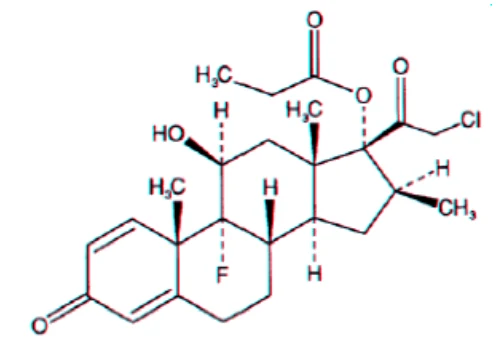
Physicochemical properties: White to practically white crystalline powder. It is insoluble in water and has a melting point of approximately 196°C
14 CLINICAL TRIALS
14.1 Trial Design and Study Demographics
Two Phase II randomized, investigator-masked safety and preliminary efficacy studies were conducted to evaluate dose-regimens, by assessing scalp conditions (wet or dry) and/or the duration of contact time before rinsing (2.5, 5, 10 and 15 minutes). The results led to the selection that 15 minutes, dry scalp application would be the most effective application regimen.
The clinical efficacy of clobetasol propionate shampoo, 0.05% has been demonstrated in two pivotal well-controlled clinical trials involving patients of moderate to severe scalp psoriasis. These studies involved 142 (Study A) and 148 (Study B) patients each and were treated with either clobetasol propionate shampoo or with its vehicle shampoo at 15 minutes of exposure, once a day for 4 weeks. The patients also went through 2 weeks of post-treatment follow-up. In these two studies, Global Severity Score (GSS) was evaluated for the whole scalp and considered the overall presence and intensity of plaque thickening, scaling and erythema on six-point scales ranging from 0-5. The GSS was dichotomized as success (score of 0 to 1) or failure (score of 2 to 5) to yield a Success Rate which was the primary efficacy variable as measured at Week 4 in the Intent to treat population (ITT). The secondary efficacy variables included the Total Severity Scores (TSS) defined as the sum of the individual scores for erythema, scaling, and plaque thickening with each parameter scored on a 4-point scale from 0 (none) to 3 (severe). Other variables were individual signs and symptoms, scalp surface area of involvement and global assessment improvement. All tests were two-sided and the 0.05 level was used to determine significance.
14.2 Study Results
The results obtained from both trials demonstrated that clobetasol propionate shampoo was significantly more effective than its vehicle after 4 weeks of treatment. See Table 3 below.
Table 3: Summary of Efficacy with Clobetasol Propionate Shampoo versus Vehicle
| Clobetasol Propionate Shampoo n (%) | Clobetasol Propionate Shampoo Vehicle n (%) | |
STUDY A Total Number of Patients | N = 95 | N = 47 |
Success Rate1
| 40 (42.1%) 21 (23.9%) | 1 (2.1%) 2 (4.5%) |
| Subjects with Scalp Psoriasis Parameter |
Clear (None) at Endpoint Erythema Scaling Plaque Thickening Pruritus | 17 (17.9%) 21 (22.1%) 35 (36.8%) 43 (45.3%) | 3 (6.4%) 0 (0%) 5 (10.6%) 6 (12.8%) |
STUDY B Total Number of Patients | N = 99 | N = 49 |
Success Rate1 at Endpoint2 at Week 6 (follow-up) | 28 (28.3%) 18 (19.6%) | 5 (10.2%) 6 (13.3%) |
Subjects with Scalp Psoriasis Parameter Clear (None) at Endpoint Erythema Scaling Plaque Thickening Pruritus | 12 (12.1%) 15 (15.2%) 34 (34.3%) 41 (41.4%) | 1 (2.0%) 2 (4.1%) 5 (10.2%) 8 (16.3%) |
1 The success rate is defined as the proportion of patients with a Global Severity Score of 0 (clear) or (1) minimal on a 0 to 5 point scale.
2 Last observation recorded for a subject during the treatment period, including Baseline if no post-baseline data were available.
Three additional Phase III studies were conducted to compare clobetasol propionate shampoo to a representative of every pharmacological class used in the treatment of scalp psoriasis: tars, vitamin D analogues and corticosteroids. These studies were designed to demonstrate non-inferiority of clobetasol propionate shampoo to the chosen comparator. Two of the studies with the tar blend and calcipotriol solution (a vitamin D analogue) demonstrated the superior efficacy of clobetasol propionate shampoo. The other study compared clobetasol propionate shampoo with a clobetasol propionate gel and a vehicle shampoo and showed clobetasol propionate shampoo to be non-inferior to the gel form.
Two studies were conducted and no HPA Axis suppression was observed in adult (18 years and above) psoriatic subjects when clobetasol propionate shampoo was applied once daily for 15 minutes to a dry scalp before lathering and rinsing, over a treatment period of 4 weeks (see Table 4 and Table 5 below).
Table 4: Summary of HPA Axis Function in Adolescents Ages 12-17 Years with Scalp Psoriasis
Clobetasol Propionate Shampoo* N = 13 | ||
Baseline (Week 0) Pre-stimulation Cortisol (mcg/dL) | Mean ± SD | 12.57 ± 3.778 |
| Min - Max | 7.4 - 19.6 | |
| Post-stimulation Cortisol (mcg/dL) | Mean ± SD | 29.57 ± 4.659 |
| Min - Max | 24.1 - 39.3 | |
| HPA Axis Suppression | N (%) | |
End of Treatment (Week 4) Pre-stimulation Cortisol (mcg/dL) | Mean ± SD | 14.38 ± 5.586 |
| Min - Max | 7.5 - 27.7 | |
| Post-stimulation Cortisol (mcg/dL) | Mean ± SD | 39.98 ± 8.191 |
| Min - Max | 10.4 - 42.0 | |
| HPA Axis Suppression | N (%) |
*HPA axis suppression defined in the protocol as pre-stimulation cortisol value <7 mcg/dL or post-stimulation cortisol value <18 mcg/dL.
Table 5: Summary of HPA Axis Function in Scalp Psoriasis Patients Aged 18 Years and Older Clobetasol Propionate Shampoo
| Clobetasol propionate ShampooN = 14 | HPA Axis Suppression* | ||
Baseline (Week 0) Pre-stimulation Cortisol (mcg/dL) | Mean ± SD | 21.30 ± 7.352 | |
| Min - Max | 12.9 - 36.1 | ||
| Post-stimulation Cortisol (mcg/dL) | Mean ± SD | 33.33 ± 9.015 | |
| Min - Max | 25.1 - 50.5 | ||
| Post-Pre Cortisol (mcg/dL) | Mean ± SD | 12.03 ± 5.036 | |
| Min - Max | 2.4 - 21.1 | ||
| HPA Axis Suppression | N (%) | 0 (0.0%) | |
End of Treatment (Week 4) Pre-stimulation Cortisol (mcg/dL) | Mean ± SD | 23.53 ± 10.648 | |
| Min - Max | 10.6 - 49.6 | ||
| Post-stimulation Cortisol (mcg/dL) | Mean ± SD | 33.91 ± 10.696 | |
| Min - Max | 23.4 - 63.8 | ||
| Post-Pre Cortisol (mcg/dL) | Mean ± SD | 10.38 ± 3.608 | |
| Min - Max | 4.2 - 15.8 | ||
| HPA Axis Suppression | N (%) | (0.0%) |
*HPA axis suppression defined in the protocol as pre-stimulation cortisol value <10 mcg/dL and the change (post-pre) <8 mcg/dL.
15 MICROBIOLOGY
No microbiological information is required for this drug product.
16 NON-CLINICAL TOXICOLOGY
General Toxicology:
Acute Toxicity –
Acute toxicity was determined in mice and rats using subcutaneous, oral, and intraperitoneal routes. The animals received a single dose of different concentrations of clobetasol propionate and were observed for 3 consecutive weeks. The LD50 value obtained by the subcutaneous route in mice was 81.7 mg.kg-1 for all animals. None of the mice died after oral administration up to 3 g.kg-1. The LD50 value obtained by the intraperitoneal route in mice was 156 mg.kg-1 for males and 118 mg.kg-1 for females. The subcutaneous LD50 value for male rats was 397 mg.kg-1 and 366 mg.kg-1 for female rats. None of the rats died after oral administration up to 3 g.kg-1. The LD50 value by the intraperitoneal route for male rats was 414 mg.kg-1 and 351 mg.kg-1 for female rats.
Long-Term Toxicity –
In a four-week dose-range-finding study, Göttingen minipigs (one animal per sex per group) were treated daily on approximately 10% of their body surface area with clobetasol propionate shampoo 0.05% in volumes ranging from 0.5 - 2 mL.kg-1. The placebo group was treated with the vehicle at 2 mL.kg-1. The exposure time was 15 minutes for all groups, followed by rinsing. The only remarkable sign in this study was erythema and scab formation without histopathological changes observed in some of the animals receiving the high volume, independent of the presence of clobetasol propionate. Hence, it was concluded that the vehicle is slightly irritating.
In a thirteen-week study with four Göttingen minipigs per sex per group and the rest of the design exactly the same as that of the dose-range-finding study, no treatment-related clinical signs or skin effects were observed.
Published literature shows that long-term effect of high doses of clobetasol propionate treatment causes emaciation, piloerection, inhibition of hair growth, body weight loss, lacrimation, diarrhea, atrophy of spleen, mesenteric lymph nodes, thymus and adrenal glands, focal necrosis of liver and mortality.
Carcinogenicity:
No classical two-year animal studies applying animal models using genetically engineered mice have been performed to evaluate the carcinogenic potential of clobetasol propionate. One 18-month study was performed in mice to evaluate the carcinogenic potential of fluticasone propionate (medium-potency corticosteroid) when given topically as a 0.05% ointment. No evidence of carcinogenicity was found in this study. No evidence of pre-neoplastic lesions was noted in a 6-month toxicity study performed with clobetasol propionate by the subcutaneous route in rats.
Genotoxicity:
Two mutagenicity studies were performed: an in vitro chromosomal aberration study on Chinese Hamster Ovary cells and a mouse in vivo micronucleus study.
In vitro chromosomal aberration study, concentrations of clobetasol propionate up to 4670 mcg.mL-1 did not induce an increase in the number of aberrant cells neither in the presence or the absence of S9 metabolic activation. The highest concentration tested in the 20-hour incubation experiment was 31.3 mcg.mL-1 due to cytotoxicity. Also under the extended incubation conditions there was no increase in the number of aberrant cells.
In the mouse in vivo micronucleus study, there was an increase in the number of micronucleated cells in the mice treated with clobetasol propionate. In the high dose group, the ratio of the polychromatic erythrocytes over the total erythrocytes at the 24-hour sampling tended to be less than in the placebo group. This could indicate that this dose was toxic to the bone marrow.
Clobetasol propionate was non-mutagenic in three different test systems reported in the literature for clobetasol propionate 0.05% cream and ointment: the Ames test, the Saccharomyces cerevisiae gene conversion assay, and the E. coli B WP2 fluctuation test.
Reproductive and Developmental Toxicology:
A teratogenicity study of clobetasol propionate in rats using the dermal route resulted in dose-related material toxicity and fetal effects from 0.05 to 0.5 mg/kg/day. These doses are approximately 0.1 to 1.0 times, respectively, the maximum human topical dose of clobetasol propionate from Reddy-Clobetasol Shampoo. Abnormalities seen included low fetal weights, umbilical herniation, cleft palate, reduced skeletal ossification, and other skeletal abnormalities.
Clobetasol propionate administered to rats subcutaneously at a dose of 0.1 mg/kg from day 17 of gestation to day 21 postpartum was associated with prolongation of gestation, decreased number of offspring, increased perinatal mortality of offspring, delayed eye opening and delayed hair appearance in surviving offspring. Some increase in offspring perinatal mortality was also observed at a dose of 0.05 mg/kg. Doses of 0.05 and 0.1 mg/kg are approximately 0.1- and 0.2-fold the maximum human topical dose of clobetasol propionate from Reddy-Clobetasol Shampoo.
Segment I fertility studies in rats following oral administration at doses up to 50 mcg.kg-1 per day revealed an increase in the number of the resorbed embryos and a decrease in the number of living foetuses at the highest dose.
Segment II teratogenicity studies in mice, rats and rabbits showed clobetasol propionate to be teratogenic when administered subcutaneously or topically. Abnormalities seen include fetal immaturity and several malformations, cleft palate, cranioschisis and skeletal abnormalities, in combination with maternal toxicity. There are no adequate and well-controlled studies in pregnant women.
A segment III study of peri-natal and post-natal effects was performed on 20 female rats at doses of 0, 25, 50 and 100 mcg/kg body weight daily through sub-cutaneous route at day 17 of gestation through day 21 post-partum. At the 50 and 100 mcg.kg-1 doses, increased pup loss, total litter loss, acts of cannibalism and diminished parental care were the major effects observed during the first days post-partum. No effects were observed at the dose of 25 mcg.kg-1. Growth and development of the F1 surviving offspring were unaffected by treatment.
Local Tolerance:
Three studies were performed with clobetasol propionate shampoo 0.05% to evaluate the response following a single dermal and a single ocular application, and to evaluate its potential to induce delayed-type of hypersensitization. Clobetasol propionate shampoo 0.05% when administered undiluted for 15 minutes was found to be a slight irritant to the skin whereas the vehicle is considered to be an irritant. Clobetasol propionate shampoo 0.05% and its vehicle, as a 30%-dilution in water were found to be slightly irritating to the eye. In the third study, there were no skin reactions attributable to sensitization, indicating the absence of the potential of the product to induce delayed-type sensitization.
17 SUPPORTING PRODUCT MONOGRAPHS
- 1. Clobex® (clobetasol propionate shampoo, 0.05% w/w) Product Monograph, Galderma Canada Inc, Last Revised: May 12, 2022 Control No. 259690.