


Product Monograph - Reddy-Edoxaban
RECENT MAJOR LABEL CHANGES
Not Applicable
TABLE OF CONTENTS
Certain sections or subsections that are not applicable at the time of the preparation of the most recent authorized product monograph are not listed
RECENT MAJOR LABEL CHANGES ................................................................................................2
TABLE OF CONTENTS ..................................................................................................................2
PART I: HEALTH PROFESSIONAL INFORMATION ..........................................................................4
1 INDICATIONS .................................................................................................................4
1.1 Pediatrics (< 18 years of age) .............................................................................................. 4
1.2 Geriatrics (> 65 years of age) .............................................................................................. 4
2 CONTRAINDICATIONS ....................................................................................................4
4 DOSAGE AND ADMINISTRATION ....................................................................................4
4.1 Dosing Considerations ......................................................................................................... 4
4.2 Recommended Dose and Dosage Adjustment .................................................................. 5
4.4 Administration ..................................................................................................................... 7
4.5 Missed Dose ......................................................................................................................... 8
5 OVERDOSAGE ................................................................................................................8
6 DOSAGE FORMS, STRENGTHS, COMPOSITION AND PACKAGING ......................................8
7 WARNINGS AND PRECAUTIONS ......................................................................................9
7.1 Special Populations ........................................................................................................... 13
7.1.1 Pregnant Women .............................................................................................................. 13
7.1.2 Breast-feeding ................................................................................................................... 14
7.1.3 Pediatrics (< 18 years of age) ............................................................................................ 14
7.1.4 Geriatrics (> 65 years of age) ............................................................................................ 14
8 ADVERSE REACTIONS ................................................................................................... 14
8.1 Adverse Reaction Overview .............................................................................................. 14
8.2 Clinical Trial Adverse Reactions ........................................................................................ 15
8.3 Less Common Clinical Trial Adverse Reactions ................................................................ 19
8.5 Post-Market Adverse Reactions ....................................................................................... 19
9 DRUG INTERACTIONS ................................................................................................... 20
9.1 Serious Drug Interactions .................................................................................................. 20
9.2 Drug Interactions Overview .............................................................................................. 20
9.3 Drug-Behavioural Interactions .......................................................................................... 20
9.4 Drug-Drug Interactions ..................................................................................................... 20
9.5 Drug-Food Interactions ..................................................................................................... 23
9.6 Drug-Herb Interactions ..................................................................................................... 23
9.7 Drug-Laboratory Test Interactions ................................................................................... 23
10 CLINICAL PHARMACOLOGY .......................................................................................... 24
10.1 Mechanism of Action ........................................................................................................ 24
10.2 Pharmacodynamics ........................................................................................................... 24
10.3 Pharmacokinetics .............................................................................................................. 25
11 STORAGE, STABILITY AND DISPOSAL ............................................................................. 29
12 SPECIAL HANDLING INSTRUCTIONS .............................................................................. 29
PART II: SCIENTIFIC INFORMATION ........................................................................................... 30
13 PHARMACEUTICAL INFORMATION ............................................................................... 30
14 CLINICAL TRIALS ........................................................................................................... 30
14.1 Clinical Trials by Indication ................................................................................................ 30
14.2 Comparative Bioavailability Studies .............................................................................. 41
15 MICROBIOLOGY ........................................................................................................... 42
16 NON-CLINICAL TOXICOLOGY ......................................................................................... 42
17 SUPPORTING PRODUCT MONOGRAPHS........................................................................ 43
PATIENT MEDICATION INFORMATION ...................................................................................... 44
PART I: HEALTH PROFESSIONAL INFORMATION
1 INDICATIONS
Reddy-Edoxaban (edoxaban tablets) is indicated for:
- Prevention of stroke and systemic embolic events in patients with atrial fibrillation, in whom anticoagulation is appropriate.
- Treatment of venous thromboembolism (VTE) (deep vein thrombosis [DVT], pulmonary embolism [PE]) and the prevention of recurrent DVT and PE.
1.1 Pediatrics (< 18 years of age)
The safety and efficacy of edoxaban tablets in children under the age of 18 years have not yet been established. Therefore, use of Reddy-Edoxaban is not recommended in these patients.
1.2 Geriatrics (> 65 years of age)
Clinical studies in stroke prevention in patients with atrial fibrillation (SPAF), treatment of VTE and prevention of recurrent DVT and PE, included patients > 65 years of age (see 7 WARNINGS AND PRECAUTIONS -Table 5, 4 DOSAGE AND ADMINISTRATION, and 14 CLINICAL TRIALS).
2 CONTRAINDICATIONS
The use of Reddy-Edoxaban is contraindicated in the following conditions:
- Clinically significant active bleeding, including gastrointestinal bleeding
- Lesions or conditions at increased risk of clinically significant bleeding, e.g., recent cerebral infarction (hemorrhagic or ischemic), active peptic ulcer disease with recent bleeding, patients with spontaneous or acquired impairment of hemostasis
- Hepatic disease associated with coagulopathy and clinically relevant bleeding risk (see 10 CLINICAL PHARMACOLOGY -Hepatic Insufficiency)
Concomitant treatment with any other anticoagulant, including
- unfractionated heparin (UFH), except at doses used to maintain a patent central venous or arterial catheter,
- low molecular weight heparins (LMWH), such as enoxaparin and dalteparin,
- heparin derivatives, such as fondaparinux, and
- oral anticoagulants, such as warfarin, dabigatran, apixaban, rivaroxaban except under circumstances of switching therapy to or from Reddy-Edoxaban.
- Pregnancy (See 7 WARNING AND PRECAUTIONS -Special Populations, Pregnant Women)
- Nursing Women (See 7 WARNING AND PRECAUTIONS - Special Populations, Breast-feeding)
- Hypersensitivity to edoxaban or to any ingredients of the formulation. For a complete listing of ingredients see 6 DOSAGE FORMS, STRENGTHS, COMPOSITION AND PACKAGING.
4 DOSAGE AND ADMINISTRATION
4.1 Dosing Considerations
As for any non-vitamin K antagonist oral anticoagulant (NOAC) drug, before initiating Reddy-Edoxaban, ensure that the patient understands and is prepared to accept adherence to NOAC therapy, as directed.
Reddy-Edoxaban should be taken regularly, as prescribed, to ensure optimal effectiveness. All temporary discontinuations should be avoided, unless medically indicated.
Determine estimated creatinine clearance (eCrCl) in all patients before instituting Reddy-Edoxaban, and monitor renal function during Reddy-Edoxaban treatment, as clinically appropriate. Determination of renal function by eCrCL should occur at least once per year, and especially during circumstances when renal function may be expected to be compromised, ie, acute myocardial infarction (AMI), acute decompensated heart failure (AHF), increased use of diuretics, dehydration, hypovolemia, etc. Clinically relevant deterioration of renal function may require dosage adjustment or discontinuation of Reddy-Edoxaban (see below, Renal Impairment).
The method used to estimate renal function (CrCL in mL/min) during the clinical development of edoxaban tablets was the Cockcroft-Gault method. The formula is as follows in:
Males: (140-age) (years) x weight (kg) x 1.23 or, serum creatinine (μmol/L) | (140-age) (years) x weight (kg) 72 x serum creatinine (mg/100 mL) |
|---|---|
Females:(140-age) (years) x weight (kg) x 1.04 or, serum creatinine (μmol/L) | (140-age) (years) x weight (kg) x 0.85 72 x serum creatinine (mg/100 mL) |
4.2 Recommended Dose and Dosage Adjustment
SPAF
The usual recommended dose of Reddy-Edoxaban is 60 mg once daily.
Treatment of VTE and Prevention of Recurrent DVT and PE
The recommended dose of Reddy-Edoxaban is 60 mg once daily following initial use of a parenteral anticoagulant for 5-10 days.
The duration of therapy should be individualized after careful assessment of the treatment benefit against the risk of bleeding. Short duration of therapy (at least 3 months) should be based on transient risk factors (e.g. surgery, trauma, immobilisation), while extended duration should be based on permanent risk factors or idiopathic DVT or PE.
Dose reductions for SPAF and VTE
The recommended dose of Reddy-Edoxaban is 30 mg once daily in patients with one or more of the following clinical factors:
- Moderate renal impairment (creatinine clearance (CrCL) 30- 50 mL/min or severe renal impairment (CrCL 15-29 mL/min)
- Low body weight ≤ 60 kg (132 lbs)
- Concomitant use of P-gp inhibitors except amiodarone and verapamil.
Table 1 – Summary Dosing in SPAF and VTE (DVT and PE)
| Summary Guide for Dosing | |
|---|---|
| SPAF: Recommended dose | 60 mg once daily |
| VTE: Recommended dose | 60 mg once daily (following initial use of heparin) |
Renal Impairment: Moderate (CrCL 30 - 50 mL/min) or Severe (CrCL 15 - 29 mL/min) Low Body Weight: ≤ 60 kg P-gp Inhibitors except amiodarone and verapamil | 30 mg once daily |
|---|
Renal impairment
There are limited data in patients with end stage renal impairment (CrCl < 15 mL/min) or on dialysis as these patients were excluded from pivotal Phase III trials. Therefore, Reddy-Edoxaban is not recommended in these patients (see 7 WARNINGS AND PRECAUTIONS -Renal).
Table 2 – Summary Posology in Renal Impairment for SPAF and VTE
| Renal Impairment Status | Creatinine Clearance (CrCL) mL/min | Reddy-Edoxaban Dose Once Daily |
|---|---|---|
| Mild | >50-80 | 60 mg |
| Moderate | 30-50 | 30 mg |
| Severe | 15-29 | 30 mg |
| End Stage Renal Disease or on Dialysis* | <15 | Not recommended (see 7 WARNINGS AND PRECAUTIONS and 10 CLINICAL PHARMACOLOGY). |
*Hemodialysis does not significantly contribute to edoxaban clearance.
Hepatic impairment
In patients with mild to moderate hepatic impairment the recommended dose of Reddy-Edoxaban is 60 mg once daily (see 10 CLINICAL PHARMACOLOGY).
Edoxaban tablets has not been studied in patients with severe hepatic impairment (see 10 CLINICAL PHARMACOLOGY). Therefore, its use in these patients is not recommended.
Reddy-Edoxaban is contraindicated in patients with hepatic disease associated with intrinsic coagulation abnormalities (see 7 WARNINGS AND PRECAUTIONS and 10 CLINICAL PHARMACOLOGY).
Patients undergoing cardioversion
Reddy-Edoxaban can be initiated or continued in patients who may require cardioversion. For transoesophageal echocardiogram (TEE) guided cardioversion in patients not previously treated with anticoagulants, Reddy-Edoxaban treatment should be started at least 2 hours before cardioversion to ensure adequate anticoagulation (see ACTION AND CLINICAL PHARMACOLOGY, Pharmacodynamics and Pharmacokinetics). Cardioversion should be performed no later than 12 hours after the dose of edoxaban on the day of the procedure.
For all patients undergoing cardioversion: confirmation should be sought prior to cardioversion that the patient has taken Reddy-Edoxaban as prescribed. Decisions on initiation and duration of treatment should follow established guidelines for anticoagulant treatment in patients undergoing cardioversion.
Elderly Population
No dose reduction is generally required. Increasing age may be associated with declining renal function (see 10 CLINICAL PHARMACOLOGY).
Pediatrics (<18 years)
Health Canada has not authorized an indication for pediatric use.
Switching to and from Reddy-Edoxaban
Continued anticoagulant therapy is important in patients with SPAF and in the treatment of VTE. There may be situations that warrant a change in anticoagulation therapy.
Table 3 – Recommendation for switching to and from Reddy-Edoxaban
| Switching from: | To: Reddy-Edoxaban |
|---|---|
| Vitamin K Antagonist (VKA) | Discontinue the VKA and start Reddy-Edoxaban when the international normalized ratio (INR) is ≤ 2.5. |
| Oral anticoagulants other than VKA | Discontinue the non-VKA oral anticoagulant and start Reddy-Edoxaban at the time of the next non-VKA dose (see 14 CLINICAL TRIALS). |
| Subcutaneous anticoagulant | Discontinue subcutaneous anticoagulant and start Reddy-Edoxaban at the time of the next scheduled subcutaneous anticoagulant dose. |
| Unfractionated heparin | Discontinue the infusion and start Reddy-Edoxaban 4 hours later. |
| Switching from: | To: Another Treatment |
| Reddy-Edoxaban | VKA oral option: Administer a Reddy-Edoxaban dose of 30 mg (15 mg for patients on a reduced dose for one or more of the following: moderate to severe renal impairment (CrCL 15 – 50 mL/min), low body weight, or use with P-gp inhibitors (except amiodarone and verapamil), together with an appropriate VKA dose. INR must be measured at least weekly and just prior to the daily dose of Reddy-Edoxaban to minimize the influence of Reddy-Edoxaban on INR measurements. Once a stable INR of ≥ 2.0 is achieved, Reddy-Edoxaban must be discontinued. |
| VKA parenteral option: Discontinue Reddy-Edoxaban and administer a parenteral anticoagulant and VKA at the time of the next scheduled Reddy-Edoxaban dose. Once a stable INR of ≥ 2.0 is achieved, the parenteral anticoagulant must be discontinued and the VKA continued. | |
| Oral anticoagulants other than VKA: Discontinue Reddy-Edoxaban and start the non- VKA anticoagulant at the time of the next scheduled dose of Reddy-Edoxaban. | |
| Parenteral anticoagulants: Discontinue Reddy-Edoxaban and start the parenteral anticoagulant at the time of the next scheduled dose of Reddy-Edoxaban. | |
4.4 Administration
Reddy-Edoxaban should be taken once daily, with or without food see 9.5 Drug-Food Interactions.
For patients who are unable to swallow whole tablets, Reddy-Edoxaban tablets may be crushed and mixed with water or apple puree and immediately administered orally.
Alternatively, Reddy-Edoxaban tablets may be crushed and suspended in 60 to 90 mL of water and immediately delivered through a nasogastric tube (a gauge of 10 to 18FR and length of 120 cm was utilized in the in vitro study) (see 10 CLINICAL PHARMACOLOGY, Pharmacokinetics). The tube should be flushed with water after delivering Reddy-Edoxaban. Reddy-Edoxaban suspension should be administered within 4 hours of preparation. If not used immediately shake the suspension before administration.
Crushed Reddy-Edoxaban tablets are stable in water and apple puree for up to 4 hours.
4.5 Missed Dose
If a dose of Reddy-Edoxaban is missed, the dose must be taken as soon as possible on the same day. The dose of Reddy-Edoxaban must not be doubled to make up for a missed dose. Return to normal dosing schedule the next day.
5 OVERDOSAGE
Overdose with Reddy-Edoxaban may lead to hemorrhage. Experience with overdose cases is very limited. In cases of overdose, depending on the clinical situation Reddy-Edoxaban must be stopped or the next dose delayed, taking the half-life (t½) of edoxaban tablets (10-14 hours) into account.
In cases of bleeding, initiate appropriate measures such as packed red blood cells and/or hemostasis.
A specific reversal agent for edoxaban tablets is not available. Although not evaluated in patients, 3-factor or 4- factor prothrombin complex concentrate (PCC), activated prothrombin complex concentrates (aPCCs), or recombinant Factor VIIa could be considered for the reversal of the anticoagulant effect of Reddy-Edoxaban.
4-factor prothrombin complex concentrate (PCC): In healthy subjects, the administration of 4-factor PCC at 50 IU/kg reversed the anticoagulant effect of edoxaban tablets within 30 minutes after completing the infusion.
3-factor PCC: In healthy volunteers, a 3-factor PCC restored thrombin generation but did not normalize PT.
In animal models PCC, aPCC, and recombinant Factor VIIa agents have reversed coagulation biomarkers and bleeding.
The following are not expected to reverse the anticoagulant effects of edoxaban tablets: protamine sulfate, vitamin K, and tranexamic acid.
Hemodialysis does not significantly contribute to edoxaban tablets clearance.
| For the most recent information in the management of a suspected drug overdose, contact your regional poison control centre or Health Canada’s toll-free number, 1-844 POISON-X (1-844-764-7669). |
|---|
6 DOSAGE FORMS, STRENGTHS, COMPOSITION AND PACKAGING
Table 4 – Dosage Forms, Strengths, Composition and Packaging
Route of Administration | Dosage Form / Strength / Composition | Non-medicinal Ingredients |
|---|---|---|
| Oral | Tablet 15 mg, 30 mg and 60 mg | anhydrous dibasic calcium phosphate, colloidal silicon dioxide, crospovidone, hydroxypropyl cellulose, lactose monohydrate, magnesium stearate, sodium starch glycolate. |
Reddy-Edoxaban is available for oral administration as a 60 mg, 30 mg, or 15 mg round shaped, film-coated tablet, debossed with product identification markings.
The inactive ingredients are:
anhydrous dibasic calcium phosphate, colloidal silicon dioxide, crospovidone, hydroxypropyl cellulose, lactose monohydrate, magnesium stearate and sodium starch glycolate.
The color coatings contain hydroxypropyl methylcellulose, iron oxide red (60 mg tablets and 15 mg tablets), iron oxide yellow (15 mg tablets), macrogol 6000 and talc.
Reddy-Edoxaban 60 mg Tablets:
Light red to red coloured, Round, film-coated tablets debossed with “L 3” on one side and plain on other side.
Each 60 mg tablet contains 80.82 mg edoxaban tosylate monohydrate equivalent to 60 mg of edoxaban.
Reddy-Edoxaban 30 mg Tablets:
White to off white coloured, Round, film-coated tablets debossed with “L 2” on one side and plain on other side.
Each 30 mg tablet contains 40.41 mg edoxaban tosylate monohydrate equivalent to 30 mg of edoxaban.
Reddy-Edoxaban 15 mg Tablets:
Light brown to brown coloured, Round, film-coated tablets debossed with “L 1” on one side and plain on other side.
Each 15 tablet contains 20.2 mg edoxaban tosylate monohydrate equivalent to 15 mg of edoxaban.
Reddy-Edoxaban tablets are supplied in HDPE bottles containing 30, 90 and 500 tablets each and blisters pack of 30 (10’s x 3).
7 WARNINGS AND PRECAUTIONS
PREMATURE DISCONTINUATION OF ANY ORAL ANTICOAGULANT, INCLUDING REDDY-EDOXABAN, INCREASES THE RISK OF THROMBOTIC EVENTS.
To reduce this risk, consider coverage with another anticoagulant if Reddy-Edoxaban is discontinued for a reason other than pathological bleeding or completion of a course of therapy (see 4 DOSAGE AND ADMINISTRATION).
The following Warnings and Precautions are listed in alphabetical order.
Bleeding
Reddy-Edoxaban increases the risk of bleeding and can cause serious, potentially fatal bleeding. Promptly evaluate any signs or symptoms of blood loss. Discontinue Reddy-Edoxaban in patients with clinically significant active bleeding. Reddy-Edoxaban, like other anticoagulants, must be used with caution in patients with any increased risk of bleeding. Patients at high risk of bleeding should not be prescribed Reddy-Edoxaban (see 2 CONTRAINDICATIONS).
Should severe bleeding occur, treatment with Reddy-Edoxaban must be discontinued and the source of bleeding investigated promptly.
Close clinical surveillance (looking for signs of bleeding or anemia) is recommended throughout the treatment period, especially in the presence of multiple risk factors for bleeding (see Table 5 below).
Table 5 – Factors Which Increase Hemorrhagic Risk
| Factors increasing edoxaban plasma levels* | Severe renal impairment (CrCl 15-29 mL/min) Moderate renal impairment (CrCl 30 – 50 mL/min) |
|---|---|
| Concomitant systemic treatment with P-gp inhibitors | |
| Low body weight ≤ 60 kg | |
| Pharmacodynamic interactions | Chronic use of NSAIDs |
| Platelet aggregation inhibitors, including ASA, clopidogrel, prasugrel, ticagrelor | |
| Selective serotonin reuptake inhibitors (SSRIs), and serotonin norepinephrine reuptake inhibitors (SNRIs) | |
| Diseases / procedures with special hemorrhagic risks | Congenital or acquired coagulation disorders |
| Thrombocytopenia or functional platelet defects | |
| Active ulcerative gastrointestinal disease | |
| Recent gastrointestinal bleeding | |
| Recent intracranial hemorrhage or ischemia | |
| Recent brain, spinal or ophthalmological surgery | |
| Others | Age > 75 years |
* see 4 DOSAGE AND ADMINISTRATION for dose reductions.
Coadministration with Anticoagulants, Antiplatelets, Thrombolytics, and SSRIs/SNRIs Concomitant use of drugs affecting hemostasis may increase the risk of bleeding. These include antiplatelet agents, such as aspirin (ASA), P2Y12 platelet inhibitors, other antithrombotic agents, fibrinolytic therapy, selective serotonin reuptake inhibitors (SSRIs) and serotonin norepinephrine reuptake inhibitors (SNRIs) due to reported known effects on abnormal platelet aggregation, and chronic nonsteroidal anti-inflammatory drugs (NSAIDs).
Long term concomitant treatment with Reddy-Edoxaban and other anticoagulants is therefore not recommended due to increased risk of bleeding. Short term co-administration may be needed for patients transitioning to or from Reddy-Edoxaban (see 4 DOSAGE AND ADMINISTRATION).
Concomitant use of Reddy-Edoxaban with unfractionated heparin (UFH) is contraindicated, except at doses used to maintain a patent central venous or arterial catheter.
In clinical studies with edoxaban tablets, concomitant use of low dose (≤ 100 mg/day) ASA or thienopyridines (clopidogrel), and NSAIDs resulted in increased rates of clinically relevant bleeding. Other platelet aggregation inhibitors such as prasugrel and ticagrelor, have not been studied with edoxaban tablets in any patient population, and are not recommended as concomitant therapy (see 9 DRUG INTERACTIONS).
Cardiovascular
Valvular Disease
Safety and efficacy of edoxaban tablets have not been studied in patients with prosthetic mechanical heart valves or those with hemodynamically significant rheumatic heart disease, especially mitral stenosis. Therefore, Reddy-Edoxaban is not recommended in these patients. Of note, the ENGAGE AF-TIMI 48 study that evaluated edoxaban tablets in SPAF, has included patients with other valvular heart disease (e.g. aortic stenosis, aortic and or mitral regurgitation) as well as with prosthetic biological valves (see 14 CLINICAL TRIALS).
Cardioversion
Patients can be initiated or maintained on Reddy-Edoxaban while being cardioverted.
Hepatic/Biliary
Hepatic Impairment
Patients with significant liver disease (e.g., acute hepatitis, chronic active hepatitis, cirrhosis) were excluded from clinical trials of edoxaban tablets. Therefore, Reddy-Edoxaban is contraindicated in patients with hepatic disease associated with coagulopathy and clinically relevant bleeding risk.
Edoxaban tablets has not been studied in patients with severe hepatic impairment; therefore, it is not recommended. Reddy-Edoxaban should be used with caution in patients with mild to moderate hepatic impairment (see 4 DOSAGE AND ADMINISTRATION and 10 CLINICAL PHARMACOLOGY).
Monitoring and Laboratory Tests
A specific anticoagulant reversal agent for edoxaban tablets is not commercially available. The pharmacodynamic effects measured by anti-factor Xa (FXa) assay are predictable and correlate with the dose and the concentration of edoxaban tablets. As a result of FXa inhibition, edoxaban tablets also prolongs clotting time in tests such as prothrombin time (PT), and activated partial thromboplastin time (aPTT). Changes observed in these clotting tests at the expected therapeutic dose, however, are small, subject to a high degree of variability, and not useful in monitoring the anticoagulation effect of edoxaban tablets.
Although Reddy-Edoxaban therapy will lead to an elevated INR, depending on the timing of the measurement, the INR is not a valid measure to assess the anticoagulant activity of Reddy-Edoxaban (see 4 DOSAGE AND ADMINISTRATION, Switching from Reddy-Edoxaban to VKA, Considerations for INR Monitoring of VKA Activity during Concomitant Reddy-Edoxaban Therapy). The INR is only calibrated and validated for vitamin K antagonists (VKA) and should not be used for any other anticoagulant, including Reddy-Edoxaban.
Although there is no need to monitor anticoagulation effect of Reddy-Edoxaban during routine clinical practice, in certain infrequent situations such as overdosage, acute bleeding, urgent surgery, in cases of suspected non-compliance, or in other unusual circumstances, assessment of the anticoagulant effect of Reddy-Edoxaban may be appropriate. Accordingly, a calibrated quantitative anti-FXa assay may be useful to inform clinical decisions in these circumstances (see 10 CLINICAL PHARMACOLOGY - Pharmacodynamics, Table 12) for predicted steady-state peak and trough anti-FXa activity in different indications and for different doses of edoxaban tablets).
Patients with antiphospholipid syndrome
Direct oral anticoagulants (DOACs) including edoxaban are not recommended for patients with a history of thrombosis who are diagnosed with antiphospholipid syndrome. In particular for patients that are triple positive (for lupus anticoagulant, anticardiolipin antibodies, and anti-beta 2-glycoprotein I antibodies), treatment with DOACs could be associated with increased rates of recurrent thrombotic events compared with vitamin K antagonist therapy.
Peri-Operative/ Procedural Considerations
As with any anticoagulant, patients on Reddy-Edoxaban who undergo surgery or invasive procedures are at increased risk for bleeding. In these circumstances, temporary discontinuation of Reddy-Edoxaban may be required.
Pre-Operative Phase
If an invasive procedure or surgical intervention is required, Reddy-Edoxaban should be stopped at least 24 hours before the intervention, if possible, due to increased risk of bleeding, and based on clinical judgment of the physician. If the procedure cannot be delayed, the increased risk of bleeding should be assessed against the urgency of the intervention. Although there are limited data in patients at higher risk of bleeding or in major surgery where complete hemostasis may be required, consider stopping Reddy-Edoxaban at least 48 hours before surgery, depending on clinical circumstances. Reddy-Edoxaban should be restarted after surgery or interventional procedures as soon as it has been determined that adequate hemostasis has been established.
Peri-Operative Spinal/Epidural Anesthesia, Lumbar Puncture
When neuraxial (epidural/spinal) anesthesia or spinal puncture is performed, patients treated with antithrombotics for prevention of thromboembolic complications are at risk for developing an epidural or spinal hematoma that may result in long-term neurological injury or permanent paralysis.
The risk of these events is even further increased by the use of indwelling catheters or the concomitant use of drugs affecting hemostasis. Accordingly, indwelling epidural or intrathecal catheters must be removed at least 5 hours prior to the first dose of Reddy-Edoxaban. The risk may also be increased by traumatic or repeated epidural or spinal puncture. If traumatic puncture occurs, the administration of Reddy-Edoxaban should be delayed for 24 hours.
Patients who have undergone epidural puncture and who are receiving Reddy-Edoxaban should be frequently monitored for signs and symptoms of neurological impairment (e.g., numbness or weakness of the legs, bowel or bladder dysfunction). If neurological deficits are noted, urgent diagnosis and treatment is necessary.
The physician should consider the potential benefit versus the risk before neuraxial intervention in patients anticoagulated or to be anticoagulated for thromboprophylaxis and use Reddy-Edoxaban only when the benefits clearly outweigh the possible risks. An epidural catheter should not be withdrawn earlier than 24 hours after the last administration of Reddy-Edoxaban.
Post-Procedural Period
Reddy-Edoxaban should be restarted following an invasive procedure or surgical intervention as soon as adequate hemostasis has been established and the clinical situation allows, in order to avoid unnecessary increased risk of thrombosis.
Orthopedic Surgery
Reddy-Edoxaban is not recommended for the prevention of VTE in patients who have undergone elective total knee or hip surgery, since the safety and efficacy of edoxaban tablets have not been established in these clinical situations.
Pulmonary
Reddy-Edoxaban is not recommended as an alternative to unfractionated heparin in patients with pulmonary embolism who are haemodynamically unstable or may receive thrombolysis or pulmonary embolectomy since the safety and efficacy of edoxaban tablets have not been established in these clinical situations.
Renal
Renal Impairment
Plasma concentration of edoxaban is increased with the degree of renal impairment. Therefore, renal function: CrCL should be monitored at the beginning of the treatment in all patients and afterwards when clinically indicated.
There are limited data in patients with end stage renal disease (CrCl<15 mL/min) or on dialysis as these patients were excluded from pivotal Phase III trials. Therefore, Reddy-Edoxaban is not recommended in these patients. Patients who develop acute renal failure while on Reddy-Edoxaban should discontinue such treatment (see 4 DOSAGE AND ADMINISTRATION and 10 CLINICAL PHARMACOLOGY).
Anticoagulant-related nephropathy
There have been post-marketing reports of anticoagulant-related nephropathy (ARN) following edoxaban use, presenting as acute kidney injury. Close monitoring including renal function evaluation is advised in patients with excessive anticoagulation, compromised renal function and hematuria.
7.1 Special Populations
7.1.1 Pregnant Women
No data are available on the use of edoxaban tablets in pregnant women. Based on animal data, use of edoxaban tablets is contraindicated throughout pregnancy (see 2 CONTRAINDICATIONS, and 16 NON-CLINICAL TOXICOLOGY –Reproductive and developmental Toxicology ).
If Reddy-Edoxaban is to be used in women of childbearing potential, pregnancy should be avoided.
The safety and effectiveness of edoxaban tablets during labor and delivery have not been studied in clinical studies. The risk for pregnancy-related hemorrhage and/or emergent delivery is increased with the use of an anticoagulant that is not readily reversible.
Animal reproductive and development toxicity studies showed maternal and embryo-fetal toxicities in rats and rabbits at higher doses. Reproductive performance was unaffected in both rats and rabbits (see 16 NON-CLINICAL TOXICOLOGY).
7.1.2 Breast-feeding
No data are available on the use of edoxaban tablets in nursing mothers. In a non-clinical study, edoxaban was excreted in the breast milk of rats. Reddy-Edoxaban should only be administrated after breastfeeding is discontinued (see 16 NON-CLINICAL TOXICOLOGY - Reproductive and developmental Toxicology).
It is not known if edoxaban or its metabolites are excreted in human milk. Because many drugs are excreted in human milk caution should be exercised and a decision made whether to discontinue breastfeeding or discontinue Reddy-Edoxaban, taking into account the importance of the drug to the mother.
7.1.3 Pediatrics (< 18 years of age)
The safety and efficacy of edoxaban tablets in children under age 18 years have not been yet established. Therefore, use of Reddy-Edoxaban is not recommended in these patients.
7.1.4 Geriatrics (> 65 years of age)
No change in dose is generally required based on age (see 10 CLINICAL PHARMACOLOGY).
8 ADVERSE REACTIONS
8.1 Adverse Reaction Overview
SPAF
In the pivotal double-blind randomized ENGAGE AF-TIMI 48 study, a total of 21,026 subjects with documented atrial fibrillation (AF) received at least one dose of edoxaban tablets 60 mg (N=7012), edoxaban tablets 30 mg (N=7002), or warfarin (N=7012). The duration of edoxaban tablets exposure was ≥360 days for 11,479 subjects and ≥720 days for 10,075 subjects. Median study drug exposure for the edoxaban tablets and warfarin treatment group was 2.5 years.
In the ENGAGE AF-TIMI 48 study, 2256 (32.2%) of the subjects treated with edoxaban tablets 60 mg (30 mg dose-reduced) experienced adverse reactions. Non-endpoint adverse events resulted in study drug discontinuation in 11.2% and 11.0% of the subjects in the edoxaban tablets 60 mg, and the warfarin treatment groups, respectively.
Treatment of VTE and Prevention of Recurrent DVT and PE
In the pivotal double-blind randomized HOKUSAI-VTE study, subjects with acute, symptomatic DVT involving the popliteal, femoral or iliac veins, or PE requiring anticoagulant therapy were treated with edoxaban tablets (N=4118) or warfarin (N=4122) after a heparin-based initial treatment of ≥5 days. These 8240 subjects comprised the safety population. The median time on treatment was 8.8 months in both groups. The duration of drug exposure for edoxaban tablets was ≤ 6 months for 1561 (37.9%) of subjects, > 6 months for 2557 (62.1%) of subjects and 12 months for 1661 (40.3%) of subjects.
In the HOKUSAI-VTE study, in total, 1249 (30.3%) of the subjects treated with edoxaban tablets 60 mg (30 mg dose-reduced) experienced adverse reactions. The frequency of non-endpoint adverse events resulting in permanent study drug discontinuation was 5.7% in the edoxaban tablets group and 5.4% in the warfarin group.
Bleeding in Patients with VTE in the Hokusai VTE Cancer Study
In the Hokusai VTE Cancer, randomized, open-label, non-inferiority study, evaluating the efficacy and safety of edoxaban 60 mg once daily after at least 5 days of low molecular weight heparin (LMWH) versus dalteparin (200 IU/kg day 1-30; 150 IU/kg day 31 to the end of treatment) in 1050 patients with acute VTE and predominantly advanced cancer (see 10 CLINICAL PHARMACOLOGY).
The median duration of edoxaban tablets exposure was 211 days (range, 2 to 423). The safety outcome was major bleeding that occurred during or within three days of stopping study treatment. The incidence of major bleeding was higher in the edoxaban tablets arm than in the dalteparin arm [HR (95% CI): 2.00 (1.09, 3.66)].
Table 6: Analysis of Adjudicated Bleeding Events, Safety Analysis Set - On-Treatment Study Period
| Edoxaban (N=522) | Dalteparin (N=524) | HR (95% CI) | p-value | |
|---|---|---|---|---|
| Major Bleeding, n (%) | 32 (6.1) | 16 (3.1) | 2.00 (1.089, 3.657) | 0.0254 |
| Major + CRNM Bleeding, n (%) | 91 (17.4) | 59 (11.3) | 1.55 (1.113, 2.151) | 0.0094 |
| CRNM Bleeding, n (%) | 70 (13.4) | 48 (9.2) | 1.45 (1.002, 2.099) | 0.0488 |
| Nuisance Bleeding, n (%) | 56 (10.7) | 60 (11.5) | 0.91 (0.636, 1.311) | 0.6219 |
| Any Confirmed Bleeding, n (%) | 137 (26.2) | 104 (19.8) | 1.31 (1.018, 1.696) | 0.0361 |
Abbreviations: HR = hazard ratio, CI = confidence interval, CRNM = clinically relevant non-major
Note: The HR, 2-sided CI and p-value for pairwise comparisons versus dalteparin are based on the Cox regression model with counting process approach for on-treatment including treatment and the 2 stratification factors as covariates: the dichotomized bleeding risk and the dichotomized dose-adjustment factor.
In patients with GI cancer at randomization, major bleeding occurred in 13.2% (18/136) in the edoxaban tablets group and 2.4% (3/125) in the dalteparin group. In patients without GI cancer at randomization, major bleeding occurred in 3.6% (14/386) in the edoxaban tablets group and 3.3% (13/399) in the dalteparin group.
8.2 Clinical Trial Adverse Reactions
Clinical trials are conducted under very specific conditions. The adverse reaction rates observed in the clinical trials; therefore, may not reflect the rates observed in practice and should not be compared to the rates in the clinical trials of another drug. Adverse reaction information from clinical trials may be useful in identifying and approximating rates of adverse drug reactions in real-world use.
Bleeding Events
The most notable adverse reactions reported with edoxaban tablets were related to bleeding. Bleeding of any type of severity occurred at a rate of 14.2 % per year among subjects with AF treated with edoxaban tablets in the ENGAGE-AF TIMI 48 study and in 21.7 % in the HOKUSAI-VTE study. Bleeding can occur at any site and may be severe, life-threatening, and even fatal (see 7 WARNINGS AND PRECAUTIONS). Known complications secondary to severe bleeding, such as acute renal injury due to hypoperfusion, have been reported.
In both studies, the most common adverse reactions related to bleeding with edoxaban tablets 60 mg (30 mg dose-reduced) group included cutaneous soft tissue hemorrhage (≤ 5.9%) and epistaxis (≤ 4.7%), while vaginal hemorrhage (9.0%) was the most common bleeding-related adverse reaction in HOKUSAI-VTE study only.
Since the patient populations treated with edoxaban tablets for different indications are not interchangeable, a summary description of major and total bleeding is provided by indication and pivotal trial below.
ENGAGE AF-TIMI 48 study
Table 7 – Adjudicated Bleeding Events in SPAF Patients, ENGAGE AF-TIMI 48 study
Edoxaban tablets 60mg (30mg dose-reduced) (N=7012) | Warfarin (N=7012) | Edoxaban tablets 60mg (30mg dose reduced) vs Warfarin | |||||||||
|---|---|---|---|---|---|---|---|---|---|---|---|
Bleeding Category - First Event | n (%/yr)a | n (%/yr) a | HR (95% CI) | p-value | |||||||
| Majorb | 418 (2.75) | 524 (3.43) | 0.80 (0.707, 0.914) | 0.0009 | |||||||
| ICHc | 61 (0.39) | 132 (0.85) | 0.47 (0.344, 0.631) | <0.0001 | |||||||
| Gastrointestinal | 232 (1.51) | 190 (1.23) | 1.23 (1.019, 1.496) | 0.0311 | |||||||
| Fatal | 32 (0.21) | 59 (0.38) | 0.55 (0.355, 0.840) | 0.0059 | |||||||
| ICHc | 24 (0.15) | 42 (0.27) | 0.58 (0.349, 0.951) | 0.0312 | |||||||
| Non-ICH | 8 (0.05) | 17 (0.11) | 0.47 (0.204, 1.095) | 0.0804 | |||||||
| CRNMd | 1214 (8.67) | 1396 (10.15) | 0.86 (0.795, 0.927) | 0.0001 | |||||||
Any Confirmed Bleedse | 1865 (14.15) | 2114 (16.40) | 0.87 (0.816, 0.924) | <0.0001 | |||||||
Abbreviations: CI = Confidence Interval; ICH = Intracranial Hemorrhage; HR = Hazard Ratio versus Warfarin; yr = year; CRNM = Clinically Relevant Non-Major
Note: Adjudicated bleeding events include events during treatment or within 3 days of stopping study treatment.
A subject can be included in multiple sub-categories if he/she had an event for those categories. The first event of each category is included in the analysis
a: The event rate (%/yr) is calculated as # of events/subject-year exposure.
b: A Major Bleeding event (the study primary safety endpoint) was defined as clinically overt bleeding that met one of the following criteria: fatal bleeding; symptomatic bleeding in a critical site such as retroperitoneal, intracranial, intraocular, intraspinal, intra-articular, pericardial, or intramuscular with compartment syndrome; a clinically overt bleeding event that caused a fall in hemoglobin of at least 2.0 g/dL (or a fall in hematocrit of at least 6.0% in the absence of hemoglobin data), when adjusted for transfusions (1 unit of transfusion = 1.0 g/dL drop in hemoglobin).
c: ICH includes primary hemorrhagic stroke, subarachnoid hemorrhage, epi/subdural hemorrhage, and ischemic stroke with major hemorrhagic conversion.
d: CRNM (Clinically Relevant Non-Major bleeding) was defined as an overt bleeding event that required medical attention, including those that may have resulted in diagnostic or therapeutic measures.
e: Any Confirmed Bleed includes those that the adjudicator defined as clinically overt.
The site of major bleeds was mostly in the gastrointestinal (GI) tract, followed by intracranial, and intra- ocular. There were more Major GI bleeds in the edoxaban tablets 60 mg (30 mg dose- reduced) group than the warfarin group (1.5% and 1.2% per year, respectively).
A higher proportion of edoxaban tablets treated patients reported anemia related events; 8.2% (578/7012) of the 60 mg patients (30 mg dose-reduced) as compared to 5.6 % (396/7012) of warfarin treated patients. Similarly, more anemia and anemia-related events were reported to be serious or severe for edoxaban tablets 60 mg (30 mg dose-reduced) group (1.4%) compared to the warfarin group (0.7%). The majority of the bleeding events occurring in edoxaban tablets 60 mg (30 mg dose-reduced) treated patients with either serious or severe anemia/anemia-related events were from the GI tract. A number of risk factors have been identified to increase the risk of bleeding which may result in post hemorrhagic anemia (see 7 WARNINGS AND PRECAUTIONS - Table 5) and are associated with dose adjustments (see 4 DOSAGE AND ADMINISTRATION).
The percentage of subjects who discontinued study drug due to Investigator-reported bleeding events was 3.9% and 4.1%, respectively, for the edoxaban tablets 60 mg (30 mg dose-reduced) and the warfarin treatment groups.
HOKUSAI-VTE study
Table 8 – Adjudicated Bleeding Events in VTE Patients, HOKUSAI-VTE Study
| Adjudicated Bleeding | Edoxaban tablets 60mg (30mg dose- reduced) N=4118 | Warfarin N=4122 | Edoxaban tablets vs. Warfarin | |
|---|---|---|---|---|
| HR (95% CI) | p-value | |||
| Major/CRNM Bleeding, n (%) | 349 (8.5) | 423 (10.3) | 0.81 (0.705, 0.936) [a] | 0.0040 [a] |
| ICH, n (%) | 5 (0.1) | 18 (0.4) | - | - |
| Gastrointestinal, n (%) | 98 (2.4) | 94 (2.3) | - | - |
| Major Bleeding, n (%) [b] | 56 (1.4) | 66 (1.6) | 0.84 (0.592, 1.205) [a] | 0.3521 [a] |
| ICH, n (%) | 5 (0.1) | 18 (0.4) | - | - |
| Fatal ICH, n (%) | 0 (0) | 6 (0.1) | - | - |
| Gastrointestinal, n (%) | 27 (0.7) | 18 (0.4) | - | - |
| All Bleeding, n (%) | 895 (21.7) | 1056 (25.6) | 0.82 (0.750, 0.896) | <0.0001 |
Abbreviations: CI = Confidence Interval, CRNM = Clinically Relevant Non-Major, HR = Hazard Ratio vs. Warfarin, ICH: intracranial hemorrhage; N = number of subjects in analysis set, n = number of subjects meeting event criteria.
Note: Adjudicated bleeding events include events during treatment or within 3 days of stopping study treatment.
a The HR and two-sided CI are based on the Cox proportional hazards regression model including treatment and the following randomization stratification factors as covariates: presenting diagnosis (PE with or without DVT, DVT only), baseline risk factors (temporary factors, all others), and the need for 30 mg edoxaban tablets/edoxaban tablets placebo dose at randomization (yes, no), p -value α =0.01 [two-sided].
b A Major Bleeding event was defined as clinically overt bleeding that met one of the following criteria: associated with a fall in hemoglobin level of 2.0 g/dL or more, or leading to transfusion of two or more units of packed red cells or whole blood; occurring in a critical site or organ: intracranial, intraspinal, intraocular, pericardial, intra-articular, intramuscular with compartment syndrome, retroperitoneal;
contributing to death.
The percentage of subjects who discontinued study drug due to Investigator-reported bleeding events was 1.4% in both groups.
Most Common Adverse Drug Reaction
The most common non-bleeding treatment-emergent adverse reactions reported in the ENGAGE AF- TIMI 48 Study for edoxaban tablets 60 mg (30 mg dose-reduced) group versus warfarin were rash (4.2% vs 4.1%), and abnormal liver function tests (4.8% vs. 4.6%), respectively. Results are presented below in Table 9.
Table 9 – Common Adverse Drug Reactions observed in ≥ 1% of edoxaban tablets-treated Patients in ENGAGE AF-TIMI 48 Study
Edoxaban tablets 60 mg (30 mg Dose -Reduced) N = 7012 n (%)a | Warfarin N = 7012 n (%)a | |
|---|---|---|
| Respiratory, Thoracic and Mediastinal Disorders | ||
| Epistaxis | 392 (2.6) | 359 (2.4) |
| Gastrointestinal Disorders | ||
| Lower GI hemorrhage | 411 (2.7) | 264 (1.7) |
| Upper GI hemorrhage | 187 (1.2) | 144 (0.9) |
| Skin and Subcutaneous Tissue Disorders | ||
| Cutaneous soft tissue hemorrhage | 577 (3.8) | 947 (6.6) |
| Renal and Urinary Disorders | ||
| Macroscopic hematuria/urethral | 293 (1.9) | 255 (1.7) |
| Blood and Lymphatic System Disorders | ||
| Anaemia | 368 (5.2) | 242 (3.5) |
| Skin and Subcutaneous Tissue Disorders | ||
| Rash | 295 (4.2) | 289 (4.1) |
| Investigations | ||
| Liver function test abnormal | 337 (4.8) | 326 (4.6) |
a Summary of adjudicated bleeding events by location (%/year).
The most common treatment-emergent adverse drug reactions in the HOKUSAI-VTE Study are presented below in Table 10.
Table 10 – Common Adverse Reactions observed in ≥ 1% of edoxaban tablets-treated Patients in HOKUSAI- VTE Study
Edoxaban tablets 60 mg (30 mg Dose-Reduced) N = 4118 n (%)a | Warfarin N = 4122 n (%)a | |
|---|---|---|
| Respiratory, Thoracic and Mediastinal Disorders | ||
| Epistaxis | 195 (4.7) | 237 (5.7) |
| Gastrointestinal Disorders | ||
| Lower GI hemorrhage | 141 (3.4) | 126 (3.1) |
| Oral/Pharyngeal hemorrhage | 138 (3.4) | 162 (3.9) |
| General | ||
|---|---|---|
| Puncture site hemorrhage | 56 (1.4) | 99 (2.4) |
| Skin and Subcutaneous Tissue Disorders | ||
| Cutaneous soft tissue hemorrhage | 245 (5.9) | 414 (10.0) |
| Rash | 147 (3.6) | 151 (3.7) |
| Renal and Urinary Disorders | ||
| Macroscopic hematuria/urethral | 91 (2.2) | 117 (2.8) |
| Reproductive System and Breast Disorders | ||
| Vaginal hemorrhage | 158 (9.0) | 126 (7.1) |
| Blood and Lymphatic System Disorders | ||
| Anaemia | 72 (1.7) | 55 (1.3) |
| Investigations | ||
| Liver function test abnormal | 322 (7.8) | 322 (7.8) |
a Summary of adjudicated bleeding events by location (%). For gender specific category (vaginal bleeding) the event rate is based on the gender specific subject numbers
8.3 Less Common Clinical Trial Adverse Reactions
ENGAGE AF-TIMI 48
Cardiovascular Disorders: Pericardial hemorrhage
Eye Disorders: Intraocular hemorrhage
Gastrointestinal Disorders: Oral/Pharyngeal hemorrhage, Retroperitoneal hemorrhage
General: Puncture site hemorrhage
Injury, Poisoning and Procedural Complications: Surgical site hemorrhage
Musculoskeletal and Connective Tissue Disorders: Intramuscular (no compartment syndrome), Intra- articular hemorrhage
Reproductive System and Breast Disorders: Vaginal hemorrhage
Respiratory, Thoracic and Mediastinal Disorders: Haemoptysis, Interstitial Lung Disease
Vascular: Other hemorrhage (including subconjunctival, ear, pleural)
Hokusai VTE
Cardiovascular Disorders: Pericardial hemorrhage
Eye Disorders: Conjunctival/Scleral hemorrhage, Intraocular hemorrhage
Respiratory, Thoracic and Mediastinal Disorders: Haemoptysis
Injury, Poisoning and Procedural Complications: Subdural hemorrhage, Procedural hemorrhage
Musculoskeletal and Connective Tissue Disorders: Intramuscular (no compartment syndrome), Intra- articular hemorrhage
Vascular: Other hemorrhage (including surgical site, pleural)
8.5 Post-Market Adverse Reactions
The following adverse reactions have been identified during post-approval use of edoxaban. The frequency of these adverse reactions reported from post-marketing experience cannot be estimated. The hereafter listed Adverse Drug Reactions are coming from all reporting sources.
Blood and lymphatic system disorders: thrombocytopenia
Gastrointestinal disorders: abdominal pain
Immune system disorders: angioedema, allergic oedema, hypersensitivity, urticaria
Nervous system disorders: dizziness, headache
Renal and urinary disorders: Anticoagulant-related nephropathy (ARN).
Skin and subcutaneous tissue disorders: Stevens-Johnson syndrome
9 DRUG INTERACTIONS
9.1 Serious Drug Interactions
Serious Drug Interactions The use of Reddy-Edoxaban is contraindicated for concomitant treatment with any other anticoagulant, including
|
|---|
9.2 Drug Interactions Overview
In vitro studies indicate that edoxaban is a substrate of p-glycoprotein (P-gp) transporter; therefore, its plasma concentration may increase in the presence of P-gp inhibitors such as cyclosporine, dronedarone, erythromycin, ketoconazole or quinidine (see below Table 11). Edoxaban does not inhibit the major cytochrome P450 enzymes (CYP1A2, 2A6, 2B6, 2C8/9, 2C19, 2D6, 2E1, or 3A4) and does not induce CYP1A2, CYP3A4 or the P-gp transporter (MDR1). In vitro data also indicate that edoxaban does not inhibit the following transporters at clinically relevant concentrations: P-gp, the organic anion transporters OAT1 or OAT3; the organic cation transporters OCT1 or OCT2; or the organic ion transporting polypeptides OATP1B1 or OATP1B3.
9.3 Drug-Behavioural Interactions
Reddy-Edoxaban has no or negligible influence on the ability to drive and use machines.
9.4 Drug-Drug Interactions
The drugs listed in this table are based on either drug interaction case reports or studies, or potential interactions due to the expected magnitude and seriousness of the interaction (i.e., those identified as contraindicated).
Table 11 – Established or Potential Drug-Drug Interactions
| Proper name | Source of Evidence | Effect | Clinical comment |
|---|---|---|---|
| P-gp Inhibitors/Substrates | |||
| Cyclosporine | CT | Concurrent administration of a single dose of cyclosporine 500 mg with a single dose of edoxaban tablets 60 mg increased edoxaban tablets AUC and Cmax by 73% and 74%, respectively. | Concomitant use of Reddy-Edoxaban with this drug requires dose reduction to 30 mg once daily. |
| Dronedarone | CT | Dronedarone 400 mg twice daily for 7days with a single concomitant dose of edoxaban tablets 60 mg on Day 5 increased edoxaban tablets AUC and Cmax by 85% and 46%, respectively. | Concomitant use of Reddy-Edoxaban with this drug requires dose reduction to 30 mg once daily. |
| Proper name | Source of Evidence | Effect | Clinical comment |
|---|---|---|---|
| Erythromycin | CT | Erythromycin 500 mg (systemic) four times daily for 8 days with a single concomitant dose of edoxaban tablets 60 mg on Day 7 increased the edoxaban tablets AUC and Cmax by 85% and 68%, respectively. | Concomitant use of Reddy-Edoxaban with this drug requires dose reduction to 30 mg once daily. |
| Ketoconazole | CT | Ketoconazole 400 mg (systemic) once daily for 7days with a single concomitant dose of edoxaban tablets 60 mg on Day 4, increased edoxaban tablets AUC and Cmax by 87% and 89%, respectively. | Concomitant use of Reddy-Edoxaban with this drug requires dose reduction to 30 mg once daily. |
| Quinidine | CT | Quinidine 300mg once daily on Days
| Concomitant use of Reddy-Edoxaban with this drug requires dose reduction to 30 mg once daily. |
| Verapamil | CT | Verapamil 240 mg once daily for 11 days with a single concomitant dose of edoxaban tablets 60 mg on Day 10 increased the edoxaban tablets AUC and Cmax by approximately 50%. Edoxaban tablets decreased the Cmax and AUC of concomitantly administered verapamil by 14% and 16%, respectively. | No dose adjustment is required. Use with caution in taking into account specific individual patient characteristics. |
| Amiodarone | CT | Amiodarone 400 mg once daily for 4 days with a single dose of edoxaban tablets 60 mg on Day 4 increased the edoxaban tablets AUC and Cmax approximately 40% and 66%, respectively, Amiodarone was not at steady state in this study. | No dose adjustment is required. Use with caution in taking into account specific individual patient characteristics. |
| Clarithromycin | Literature | Clarithromycin (500 mg twice daily) for 10 days with a single concomitant dose of edoxaban 60 mg on day 9 increased the edoxaban AUC and Cmax by approximately 53% and 27%, respectively | No dose adjustment is required. Use with caution in taking into account specific individual patient characteristics. |
| CYP 3A4 and P-gp Inducers | |||
| Rifampicin | CT | Rifampicin 600 mg once daily for 7 days with a single dose of edoxaban tablets 60 mg on Day 7 decreased the AUC of edoxaban tablets by 34% without an apparent effect on Cmax. | Combined use with strong CYP3A4 and P-gp inducers (e.g. phenytoin, carbamazepine and phenobarbital) should generally be avoided, since efficacy of |
| Proper name | Source of Evidence | Effect | Clinical comment |
|---|---|---|---|
| Reddy-Edoxaban may be compromised. | |||
| P-gp Substrates | |||
| Digoxin | CT | Multiple daily doses of digoxin 0.25 mg with co-administration of edoxaban tablets 60 mg one daily for Days 8-14 increased the Cmax of edoxaban tablets by 17%, with no significant effect on AUC or renal clearance at steady-state. Edoxaban tablets increased the Cmax of concomitantly administered digoxin by 28%; however, the AUC was not affected. | No dose modification is necessary when Reddy-Edoxaban is administered with digoxin. |
CYP3A4 Inhibitors and Inducers | CT | Less than 10% of an orally administered edoxaban tablets dose is metabolised via CYP3A4 in subjects with normal renal function. Therefore, no interaction is anticipated with CYP3A4 inhibitors or inducers. | No dose modification is necessary for patients taking CYP inhibitors or inducers. |
| Proton-Pump Inhibitors (PPIs) | |||
| Esomeprazole | CT | Esomeprazole 40 mg once daily for 5 days with a single concomitant dose of edoxaban tablets 60 mg on Day 5 had no effect on the AUC of edoxaban tablets but the Cmax decreased by approximately 33%. | No dose modification is necessary when Reddy-Edoxaban is administered with esomeprazole. |
| Anticoagulants | CT, T | A single subcutaneous dose of 1 mg/kg enoxaparin did not have an effect on the PK of a single oral dose of edoxaban tablets 60 mg when administered concomitantly or within 12 hours of each other. | Co-administration of Reddy-Edoxaban with other anticoagulants is contraindicated due to increased risk of bleeding (see 2 CONTRAINDICATION) |
| Platelet Inhibitors | |||
| Acetylsalicylic acid (ASA) | CT | Co-administration of ASA (100 mg or 325 mg) and edoxaban tablets increased bleeding time relative to either medicine alone. Co- administration of high-dose ASA (325 mg) increased the steady state Cmax and AUC of edoxaban tablets by 35% and 32%, respectively. In clinical studies concomitant use of ASA (low dose ≤100 mg/day) was permitted and resulted in increased clinically relevant bleeding although with a lower risk of bleeding on edoxaban | Reddy-Edoxaban can be co- administered with low-dose ASA (≤ 100 mg/day). Assess bleeding risk before co- administration, and use with caution, if deemed necessary. |
| Proper name | Source of Evidence | Effect | Clinical comment |
|---|---|---|---|
tablets compared to warfarin (see 7 WARNINGS AND PRECAUTIONS). | |||
| Thienopyridines (e.g. Clopidogrel) | CT | In ENGAGE AF-TIMI 48 there was very limited experience on the use of edoxaban tablets with dual antiplatelet therapy or fibrinolytic agents. | Concomitant use of drugs affecting hemostasis may increase the risk of bleeding. Use with caution, if deemed necessary. |
| NSAIDs | |||
| Naproxen | CT | Co-administration of naproxen and edoxaban tablets increased bleeding time relative to either medicine alone. Naproxen had no effect on the Cmax and AUC of edoxaban tablets. In clinical studies, co-administration of NSAIDs resulted in increased clinically relevant bleeding. | Chronic use of NSAIDs with Reddy-Edoxaban is not recommended. Short term use should be used with caution, if deemed necessary. |
| Other medications | |||
| Atorvastatin | CT | Atorvastatin 80 mg once daily for 8 days with a single concomitant dose of edoxaban tablets 60 mg on Day 7 decreased the Cmax or AUC of edoxaban by 15%. | Use with caution in taking into account specific individual patient characteristics. |
| HIV protease inhibitors, e.g. darunavir/ ritonavir, lopinavir/ritonavir | T | No specific drug-drug interaction has been performed with HIV protease inhibitors in combination with edoxaban. HIV protease inhibitors can inhibit P-gp (besides CYP3A) and potentially increase edoxaban exposure by 1.5 to 2-fold. | Use with caution, if deemed necessary. |
Selective serotonin reuptake inhibitors (SSRIs)/ Serotonin norepinephrine reuptake inhibitors (SNRIs) | CT, T | As with other anticoagulants, patients on edoxaban tablets are at an increased risk of bleeding in case of concomitant use with SSRIs or SNRIs due to their reported effect on abnormal platelet aggregation. | Use with caution, if deemed necessary (see 7 WARNINGS AND PRECAUTIONS). |
Legend: C = Case Study; CT = Clinical Trial; T = Theoretical
9.5 Drug-Food Interactions
Reddy-Edoxaban can be taken with or without food.
9.6 Drug-Herb Interactions
Drug-herb interactions have not been established.
9.7 Drug-Laboratory Test Interactions
Drug-lab interactions have not been established.
10 CLINICAL PHARMACOLOGY
10.1 Mechanism of Action
Edoxaban is a highly selective, direct and reversible inhibitor of factor Xa, the serine protease located in the final common pathway of the coagulation cascade. Edoxaban inhibits free factor Xa, and prothrombinase activity. Inhibition of factor Xa in the coagulation cascade reduces thrombin generation and prolongs clotting time and reduces the risk of formation or provoked thrombus formation.
10.2 Pharmacodynamics
Edoxaban tablets produces rapid onset of pharmacodynamic effects within 1-2 hours, which corresponds with peak edoxaban exposure (Cmax). The pharmacodynamic effects measured by anti-factor Xa assay are predictable and correlate with the dose and the concentration of edoxaban. As a result of FXa inhibition, edoxaban tablets also prolongs clotting time in tests such as prothrombin time (PT) and activated partial thromboplastin time (aPTT). Changes observed in these clotting tests at the expected therapeutic dose, however, are small, subject to a high degree of variability, and not useful in monitoring the anticoagulation effect of edoxaban tablets.
Table 12 – Predicted Edoxaban Steady State Exposure and Anti-FXa Activity
| ENGAGE-AF | ||||
|---|---|---|---|---|
| Edoxaban Dose | Edoxaban | |||
| Cmin (ng/mL) | Cmax (ng/mL) | Anti-FXa activity Mina (IU/mL) | Anti-FXa activity Maxb, (IU/mL) | |
| Median [2.5-97.5%] | ||||
| 60 mg full dose | 27.3 (14.6 – 45.5) | 217 (129 – 302 ) | 0.65 (0.11 – 3.50) | 3.96 (0.23 – 8.0) |
| Dose reduced to 30 mg | 21.0 (10.2 – 30.7) | 143 (91.1 - 198) | 0.53 (0.05 – 2.15) | 2.88 (0.24 – 6.15) |
| HOKUSAI VTE | ||||
| Edoxaban Dose | Edoxaban | |||
| Cmin (ng/mL) | Cmax (ng/mL) | Anti-Xa activity Minc, (IU/mL) | Anti-Xa activity Maxd, (IU/mL) | |
| Median [2.5-97.5%] | ||||
| 60 mg full dose | 15.2 (8.37 –31.1) | 211 (135 – 296) | 0.28 (0.10 – 2.73) | 2.79 (0.21 – 5.67) |
| Dose reduced to 30 mg | 11.7 (4.55 – 23.5) | 141 (91.9 – 190) | 0.26 (0.10 – 1.66) | 1.95 (0.19 – 4.98) |
a In ENGAGE-AF Edoxaban Anti-Xa activity Min was assessed on day 29 pre-dose
b In ENGAGE-AF Edoxaban Anti-Xa activity Max was assessed on day 29 post-dose
c For HOKUSAI-VTE Edoxaban Anti-Xa activity Min was assessed over 3 months, pre-dose d For HOKUSAI-VTE Edoxaban Anti-Xa activity Max was assessed over 3 months, post-dose
Effects on coagulation markers when switching from rivaroxaban, dabigatran, and apixaban to edoxaban tablets
In clinical pharmacology studies, healthy subjects received rivaroxaban 20 mg once daily, dabigatran 150 mg twice daily, or apixaban 5 mg twice daily, followed by a single dose of edoxaban tablets 60 mg on Day 4. Following the switch to edoxaban tablets on Day 4, effects on PT, aPTT, and anti-FXa (rivaroxaban, or apixaban) were comparable to those seen when edoxaban tablets was dosed alone for 4 days. After switching to edoxaban tablets from dabigatran, aPTT values were comparable to those seen on dabigatran. Based on these data, the first dose of Reddy-Edoxaban can be initiated at the next scheduled dose of the previous anticoagulant.
Variants of the Vitamin K epoxide reductase complex subunit 1(VKORC1) and CYP2C9 genes that are known to affect warfarin sensitivity had no effect on bleeding in patients treated with edoxaban tablets.
Effects on coagulation markers when switching from Warfarin to edoxaban tablets
In a double-blind study after a single 60 mg dose of edoxaban administered 24 h after the last warfarin dose, mean INR values increased from 2.25 (24 h time point) to peak levels of approximately 3.7. Mean INR values then decreased and attained levels close to the mean pre-dose value at approximately 12 h post dose (36 h).
QT/QTc Prolongation
In a randomized, double-blind, single dose, placebo- and active-controlled, four-period cross-over study, edoxaban tablets at 90 mg and 180 mg doses in healthy subjects (N=62) was not observed to affect the QTc interval, the QRS duration, the PR interval, or heart rate.
10.3 Pharmacokinetics
Table 13 – Summary of Edoxaban Pharmacokinetic Parameters in Healthy Subjects (Single Oral 1 x 60 mg Dose), Fasting Conditions.
| AUC0-inf (ng.h/mL) | Cmax (ng/mL) | Tmax 1 (h) | t½ (h) | CL/F (L/h) | Vd/F (L) | |
|---|---|---|---|---|---|---|
Single dose arithmetic mean ± SD (n=30) | 1769 ± 461 | 249.5 ± 84.5 | 1.00 [0.50 - 2.50] | 13.33 ± 6.87 | 36.66 ± 11.73 | 701 ± 429 |
1 Expressed as median [range] only.
Absorption
Edoxaban is absorbed with peak plasma concentrations attained within 1-2 hours. The absolute bioavailability is 62%.
Effect of Food
Food increases peak exposure to varying degrees but has minimal effect on total exposure. Edoxaban tablets was administered with or without food in the ENGAGE AF-TIMI 48 and the HOKUSAI-VTE studies.
Effect of Gastric pH Modulators
Edoxaban is poorly soluble at pH of 6.0 or higher. It is predominantly absorbed in the upper GI tract. Thus, drugs or disease conditions that increase the stomach pH or increase gastric emptying and gut motility have the possibility of reducing edoxaban dissolution and absorption. However, co- administration of proton pump inhibitors (esomeprazole) did not impact edoxaban exposure (see 9 DRUG INTERACTIONS).
Alternate Modes of Administration
In a phase I, open-label, cross-over study, the administration of a crushed 60 mg edoxaban tablets either, orally mixed into apple puree or, suspended in water and given through a nasogastric tube, showed similar exposure (both mean AUC and Cmax) compared to the administration of an intact tablet.
Distribution:
Disposition is biphasic. The steady-state volume of distribution (Vdss) following intravenous administration of edoxaban is 107 ± 19.9 L (mean ±SD). In vitro plasma protein binding is approximately 55%. There is no clinically relevant accumulation of edoxaban (accumulation ratio 1.14) with once daily dosing. Steady state concentrations are achieved within 3 days.
Metabolism:
Unchanged edoxaban is the predominant form in plasma. There is minimal metabolism (<10%) via hydrolysis (mediated by carboxylesterase 1), conjugation or oxidation by CYP3A4. The predominant metabolite (M-4), formed by hydrolysis is active and reaches < 10% of the exposure of the parent compound in healthy subjects. Exposure to the other metabolites is < 5%.
Elimination
In healthy subjects, edoxaban is cleared both through metabolism and as unchanged drug in urine and feces. Renal clearance (11 L/hour) of unchanged drug contributes approximately 50% to total clearance (22 L/hour) with the remaining 50% non-renal clearance occurring through metabolism and biliary secretion. The t½ for oral administration is 10-14 hours.
Linearity/non-linearity
Edoxaban displays approximately dose-proportional pharmacokinetics for doses of 15 mg to 60 mg in healthy subjects.
Pharmacokinetic/pharmacodynamic relationship(s)
PT, INR, aPTT and Anti-factor Xa correlate linearly with edoxaban concentrations.
Special Populations and Conditions
Pediatrics
A Phase 1 single-dose study demonstrated that the exposures to edoxaban in the pediatric patients (6 months to <18 years of age, n=54), the median AUCinf and Cmax, ranged from 0.69 to 1.17 fold and from 0.89 to 1.47 fold, respectively, relative to those in adults with venous thromboembolism who were administered edoxaban at 30 or 60 mg once daily (QD).
Geriatrics
After taking renal function and body weight into account, age had no additional clinically significant effect on edoxaban pharmacokinetics in a population pharmacokinetic analysis of subjects ≥ 75 years of age in the ENGAGE AF-TIMI 48 study.
Sex
After accounting for body weight, gender had no additional clinically significant effect on edoxaban tablets pharmacokinetics in a population pharmacokinetic analysis of the ENGAGE AF-TIMI 48 study.
Genetic Polymorphism
Variants of the ABCB1 gene, which encodes P-gp, had no effect on edoxaban tablets pharmacokinetics in healthy subjects.
Ethnic Origin
In a population pharmacokinetic analysis of the ENGAGE AF-TIMI 48 study, peak and total exposure in Asian patients and non-Asian patients were comparable.
Hepatic Insufficiency
Patients with mild or moderate hepatic impairment (classified as Child Pugh A or Child Pugh B) exhibited comparable pharmacokinetics and pharmacodynamics to their matched healthy control group. Edoxaban tablets has not been studied in patients with severe hepatic impairment (see 4 DOSAGE AND ADMINISTRATION).
Renal Insufficiency
50% of unchanged edoxaban is eliminated by the kidney and the plasma AUCs for subjects with mild (50-80 mL/min), moderate (30-50 mL/min) and severe (<30 mL/min but not undergoing dialysis) renal impairment were increased by 32%, 74%, and 72%, respectively, relative to subjects with normal renal function. Population PK modeling indicates that exposure approximately doubles in patients with severe renal impairment CrCL 15- 29 mL/min relative to patients with normal renal function.
Predicated efficacy and safety responses in patients with different renal function based on modeling and simulation is shown in figure below. Figure 1 describes the modeled relationship between drug exposure and outcomes. The two curves represent the average predicted probability of a stroke/SEE or major bleeding event given an average ENGAGE AF patient, i.e. using the mean age (72 years), and weighted with the probability of risk factors for stroke/SEE (prior stroke/TIA versus no prior stroke/TIA) or major bleeding (concomitant use aspirin/antiplatelet agent (ASA) or no concomitant use of ASA). The exposure response modelling predicts minimal differences in efficacy within the range of edoxaban tablets concentrations noted in the renal function groups, but predicts a significant increase in major bleeding over this same range. The therapeutic implications of using these data in monitoring patients on edoxaban have not been established in clinical trials.
Figure 1 – Predicted Efficacy and Safety Response for average AF Patient
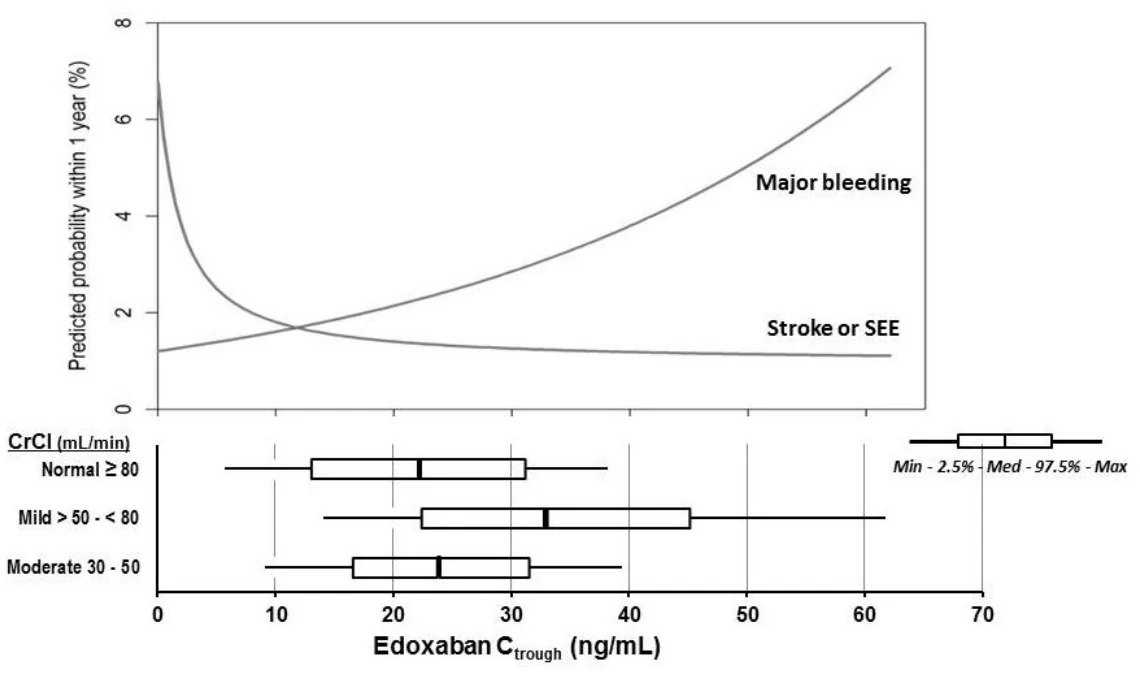
Note: Edoxaban trough concentrations were predicted using population PK modelling; concentrations immediately before outcomes were not available.
Horizontal bars represent model predicted Ctrough in normal renal function (edoxaban dose 60 mg), mild renal impairment (edoxaban dose 60 mg) and moderate renal impairment (edoxaban dose 30 mg).
- Hemodialysis
A 4-hour hemodialysis session reduced total edoxaban tablets exposures by less than 7%.
Low Body Weight
In a population pharmacokinetic analysis of the ENGAGE AF-TIMI 48 study, Cmax and AUC in patients with median low body weight (55 kg) were increased by 40% and 13%, respectively, as compared with patients with median high body weight (84 kg). In phase 3 clinical studies (both SPAF and VTE indications), patients with body weight ≤ 60 kg had a 50% edoxaban tablets dose reduction and had consistent efficacy and safety outcomes with the overall results.
Table 14 – Summary of Reddy-Edoxaban’s Pharmacokinetic and Pharmacodynamics in Sub-groups of Interest in ENGAGE AF TIMI 48 Study
Edoxaban 60 mg (30 mg Dose-reduced) | Edoxaban | ||
|---|---|---|---|
| Ctrough (ng/mL) | Anti-FXa activity Mina (IU/mL) | Anti-FXa activity Maxb (IU/mL) | |
| Median [2.5-97.5%] | |||
| Edoxaban 60 mg full dose | 27.3 [14.6 – 45.5] | 0.65 (0.11, 3.56) | 3.96 (0.22, 8.0) |
| Edoxaban dose reduced to 30 mg (due to single or multiple factors) | 21.0 [10.2 – 30.7] | 0.53 (0.05, 2.16) | 2.88 (0.24, 6.20) |
| Renal function by CrCL at baseline | |||
| 30-50 mL/min*c | 23.7 [16.5 – 31.5] | 0.56 (0.05, 2.12) | 2.80 (0.24, 6.40) |
| 32.8 [22.4 – 45.2] | 0.74 (0.05, 3.32) | 4.34 (0.23, 8.00) |
|---|---|---|---|
| 22.1 [13.0 – 31.2] | 0.51 (0.05, 3.92) | 3.44 (0.19, 7.60) |
| Weight ≤60 Kg only*c | 19.6 [9.43 – 30.9] | 0.43 (0.05, 2.52) | 3.20 (0.31, 6.40) |
| Concomitant use of P-gp inhibitors only*c | 17.2 [9.24 – 32.4] | 0.63 (0.05, 3.32) | 3.28 (0.19, 8.00) |
| CrCL≤50 and P-gp | 27.2 [15.7 – 36.7] | 1.22 (0.24, 2.52) | 3.52 (1.81, 6.52) |
| Weight ≤60 Kg and P-gp | 22.4 [13.5 – 36.6] | 0.66 (0.05, 2.52) | 3.52 (0.24, 5.88) |
| North America | 26.2 [14.1 – 45.0] | 0.69 (0.11, 2.12) | 3.44 (0.33, 7.96) |
| Age ≥75 years | 28.2 [15.1 – 46.6] | 0.68 (0.05, 2.56) | 3.52 (0.28, 8.00) |
| Fragile patients**d | 26.1 [15.2 – 49.3] | 0.63 (0.05, 2.16) | 3.18 (0.24, 8.00) |
a In ENGAGE-AF Edoxaban Anti-Xa activity Min was assessed on day 29 pre-dose
b In ENGAGE –AF Edoxaban Anti-Xa activity Max was assessed on day 29 post-dose
*c Dose reduced to 30 mg
**d Fragile patients defined as ≥ 80 years, weight ≤ 50 kg, CrCL ≤ 50 ml/min and or history of fall
11 STORAGE, STABILITY AND DISPOSAL
Store at controlled room temperature 15°C-30°C.
Keep in a safe place out of the reach and sight of children.
12 SPECIAL HANDLING INSTRUCTIONS
No special requirements.
PART II: SCIENTIFIC INFORMATION
13 PHARMACEUTICAL INFORMATION
Drug Substance
Proper name: edoxaban tosylate monohydrate
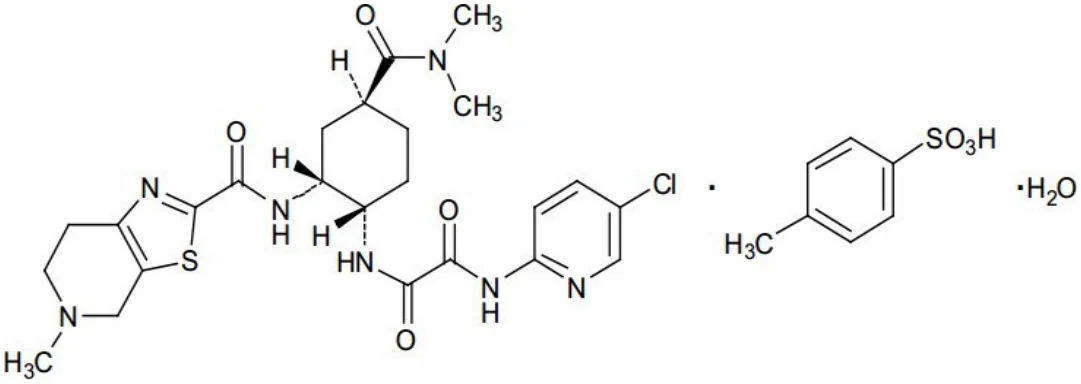
Chemical name: N-(5-Chloropyridin-2-yl)-N′-[(1S,2R,4S)-4-(N,N-dimethylcarbamoyl)-2-(5-methyl- 4,5,6,7-tetrahydro[1,3]thiazolo[5,4-c]pyridine-2-carboxamido)cyclohexyl] oxamide mono (4-methylbenzenesulfonate) monohydrate
Molecular formula and molecular mass: C24H30ClN7O4S•C7H8O3S•H2O, 738.27 g/mol
Structural formula:
Physicochemical properties: It is a white to pale yellowish-white crystalline powder. The solubility of edoxaban tosylate (pKa 6.7) decreases with increasing pH. Soluble in Dimethylsulphoxide and N,NDimethylformamide. Slightly soluble at pH 1.2 to 4.5 and insoluble at pH 6.8 to 8.
14 CLINICAL TRIALS
14.1 Clinical Trials by Indication
Prevention of stroke and systemic embolism in patients with Atrial Fibrillation (SPAF)
ENGAGE AF-TIMI 48 Study
The edoxaban tablets clinical programme for atrial fibrillation was designed to demonstrate the efficacy and safety of two dose regimens of edoxaban tablets compared to warfarin for the prevention of stroke and systemic embolism events (SEE) in subjects with nonvalvular atrial fibrillation and at moderate to high risk of stroke and SEE.
In the pivotal ENGAGE AF-TIMI 48 study (an event-driven, phase 3, multi-centre, randomized, double- blind double-dummy parallel-group study), 21,105 subjects (21,026 of whom received study drug), with a mean CHADS2 score of 2.8, were randomized to receive either edoxaban tablets 30 mg (15 mg dose-reduced) once daily, edoxaban tablets 60 mg (30 mg dose-reduced) once daily treatment group or warfarin. Subjects in both edoxaban tablets groups had their dose halved, if one or more of the following clinical factors, known to increase drug exposure, were present at randomization or during the trial: moderate renal impairment (CrCL30 – 50 mL/min), low body weight (≤ 60 kg) or concomitant use of specific P-gp inhibitors (verapamil, quinidine, dronedarone). The most common reason for dose reduction was a CrCL ≤ 50 mL/min at randomization (19% of patients).
Table 15 – Summary of Patient Demographics for clinical Trials in SPAF
| Study design | Dosage, route of administration and duration | Study subjects (n = number)b | Mean age (Range) years | Sex (M/F) % | |||||
|---|---|---|---|---|---|---|---|---|---|
| Edoxaban tabletsa: | n = 7002 | 70.6 | 61.2/38.8 | ||||||
| 30 mg QD PO | (27 – 95) | ||||||||
| Edoxaban tabletsa: | n = 7012 | 70.6 | 62.1/37.9 | ||||||
| 60 mg QD PO | (25 – 96) | ||||||||
| Warfarin: QD PO | |||||||||
Dose adjusted to maintain INR | n = 7012 | 70.5 (27 – 95) | 62.5/37.5 | ||||||
| between 2.0 and 3.0 | |||||||||
| Median duration of | Total n = 21,026 | ||||||||
| treatment 2.5 years | |||||||||
AF = atrial fibrillation, QD = once daily
a Dose reduction (30 mg to 15 mg QD; 60 mg to 30 mg QD) for moderate renal impairment, low body weight, or specified concomitant medications
b all treated patients receiving the drug or within 3 days from the last dose taken
Patients were well balanced with respect to demographic and baseline characteristics. The percentages of patients aged≥ 75 years and ≥ 80 years were approximately 40% and 17%, respectively.
Concomitant diseases of patients in this study included hypertension (94%), congestive heart failure (58%), and prior stroke or transient ischemic attack (28%). At baseline, approximately 30% of patients were on aspirin and approximately 2% of patients were taking a thienopyridine.
Patients were excluded if they had a creatinine clearance <30 mL/min, significant liver disease, cancer, active bleeding, acute coronary syndrome or percutaneous coronary intervention (PCI) (within the previous 30 days). Patients with prosthetic heart valves, or those with hemodynamically significant rheumatic heart disease, especially mitral stenosis, were also excluded from the study, and thus were not evaluated. Of note, approximately 20% of patients had other valvular heart disease including aortic stenosis, aortic regurgitation, and/or mitral regurgitation. Patients with a history of mitral valve repair were not excluded from the study.
The primary efficacy endpoint was the composite of stroke and systemic embolic events (SEE) that occurred during treatment or within 3 days from the last dose taken (mITT-on treatment – See Table 16 for definition). Secondary efficacy endpoints included:
- Composite of stroke, SEE, and cardiovascular mortality (CV);
- Major adverse cardiovascular event (MACE), which is the composite of non-fatal MI, non- fatal stroke, non-fatal SEE, and death due to CV cause or bleeding;
- Composite of stroke, SEE, and all-cause mortality;
- Death due to CV cause or bleeding.
The median study drug exposure for both the edoxaban tablets 60 mg and 30 mg treatment groups was
2.5 years. The median study follow-up for both the edoxaban tablets 60 mg and 30 mg treatment groups was 2.8 years.
Efficacy in SPAF
In the ENGAGE AF-TIMI 48 study both edoxaban tablets 30 mg and 60 mg group regimens were non-inferior to warfarin for the primary efficacy endpoint with the upper boundary of the 97.5% CI below the pre- specified non-inferiority margin of 1.38. However, the 30 mg regimen was numerically less effective than warfarin for the primary endpoint, and was also markedly inferior in reducing the rate of ischemic stroke (Table 16).
In the warfarin group, the median TTR (time in therapeutic range, INR 2.0 to 3.0) was 68.4%.
Table 16 - Efficacy Results from ENGAGE AF-TIMI 48 Study (mITT analysis set on-treatment)
| Primary Endpoint | Edoxaban tablets 30 mg (15 mg Dose- Reduced) (N=7002) | Edoxaban tablets 60 mg (30 mg Dose- Reduced) (N = 7,012) | Warfarin (N= 7,012) | ||||||||
|---|---|---|---|---|---|---|---|---|---|---|---|
| First Stroke or SEEa | |||||||||||
| n (%/yr)b | 253 (1.61) | 182 (1.18) | 232 (1.5) | ||||||||
| HR (97.5% CI) | 1.07 | 0.79 | |||||||||
| (0.874, 1.314) | (0.632, 0.985) | ||||||||||
| p-valuec | 0.0055 | <0.0001 | |||||||||
| First Ischemic Stroke | |||||||||||
| n (%/yr)b | 226 (1.43) | 135 (0.87) | 144 (0.93) | ||||||||
| HR (95% CI) | 1.54 | 0.94 | |||||||||
| (1.253, 1.903) | (0.746, 1.193) | ||||||||||
| First Haemorrhagic Stroke | |||||||||||
| n (%/yr)b | 18 (0.11) | 40 (0.26) | 76 (0.49) | ||||||||
| HR (95% CI) | 0.23 | 0.53 | |||||||||
| (0.139, 0.389) | (0.362, 0.778) | ||||||||||
| First SEE | |||||||||||
| n (%/yr)a | 11 (0.07) | 8 (0.05) | 13 (0.08) | ||||||||
| HR (95% CI) | 0.83 | 0.62 | |||||||||
| (0.370, 1.850) | (0.257, 1.497) | ||||||||||
Abbreviations: HR= Hazard Ratio versus warfarin, CI= Confidence Interval, n = number of events, mITT = Modified Intent-to-treat, N = number of subjects in mITT population, SEE= Systemic Embolic Event, yr= year.
Note: The mITT population included only subjects who received at least one dose of drug; and the on- treatment period was the period during which the subject took study drug unless the patient had early drug discontinuation(s) in which case the on-treatment period included the 3 days following drug discontinuation(s).
a A subject can be represented in multiple rows.
b The event rate (%/yr) is calculated as# of events/subject-year exposure.
c The two-sided p-value is based on the non-inferiority margin of 1.38.
Subjects who received edoxaban tablets 30 mg (dose reduced subjects in the 60 mg group) had an event rate of 1.79% per year for the primary endpoint, compared with an event rate of 2.21% per year for the matching dose reduced subjects in the warfarin group. Compared to warfarin-treated subjects, the HR in the edoxaban tablets 30 mg (dose reduced subjects in the 60 mg group) was 0.81 (95% CI: 0.58, 1.13).
Figure 2 - Kaplan-Meier Curve Estimate of Cumulative Event Rates for Primary Endpoint (first occurrence of stroke or SEE) (mITT analysis set - on Treatment Study Period) in the ENGAGE AF-TIMI 48 study
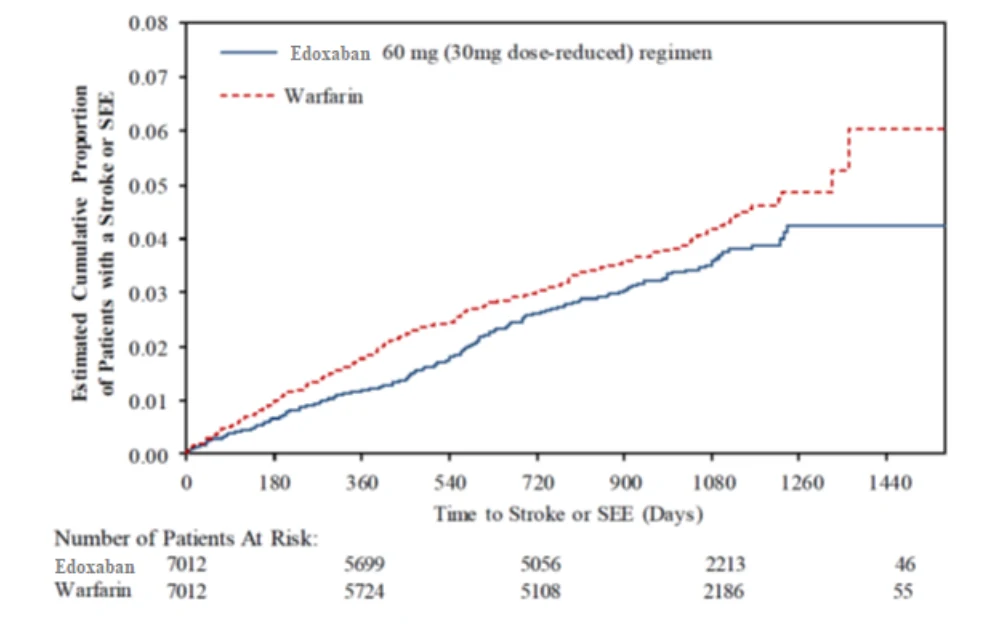
The HR for the composite endpoints for the comparison of the edoxaban tablets 60 mg (30 mg dose-reduced) group and warfarin for stroke, SEE, and cardiovascular (CV) mortality was 0.87 (95% CI: 0.79, 0.96), MACE was 0.89 (95% CI: 0.81, 0.97), and stroke, SEE, and all-cause mortality was 0.90 (95% CI: 0.82, 0.98), death due to CV cause was 0.86 (95% CI: 0.77, 0.97).
Results in subgroups of Interest
The efficacy results for pre-specified major subgroups (with dose reduction as required), including age, body weight, prior stroke or TIA, diabetes and P-gp inhibitors were generally consistent with the primary efficacy results for the overall population studies in the trial. However, there was a statistically significant interaction between the effect of edoxaban versus warfarin on the primary efficacy endpoint based on renal function (HR was 1.41 in favor of warfarin for the subgroup with CrCL ≥ 80 mL/min) and geographical regions (HR was 1.47 in favor of warfarin for Western Europe) (see Figure 3).
Figure 3 – ENGAGE AF-TIMI 48 Study: Primary Efficacy Endpoint by Subgroups (mITT-on treatment)
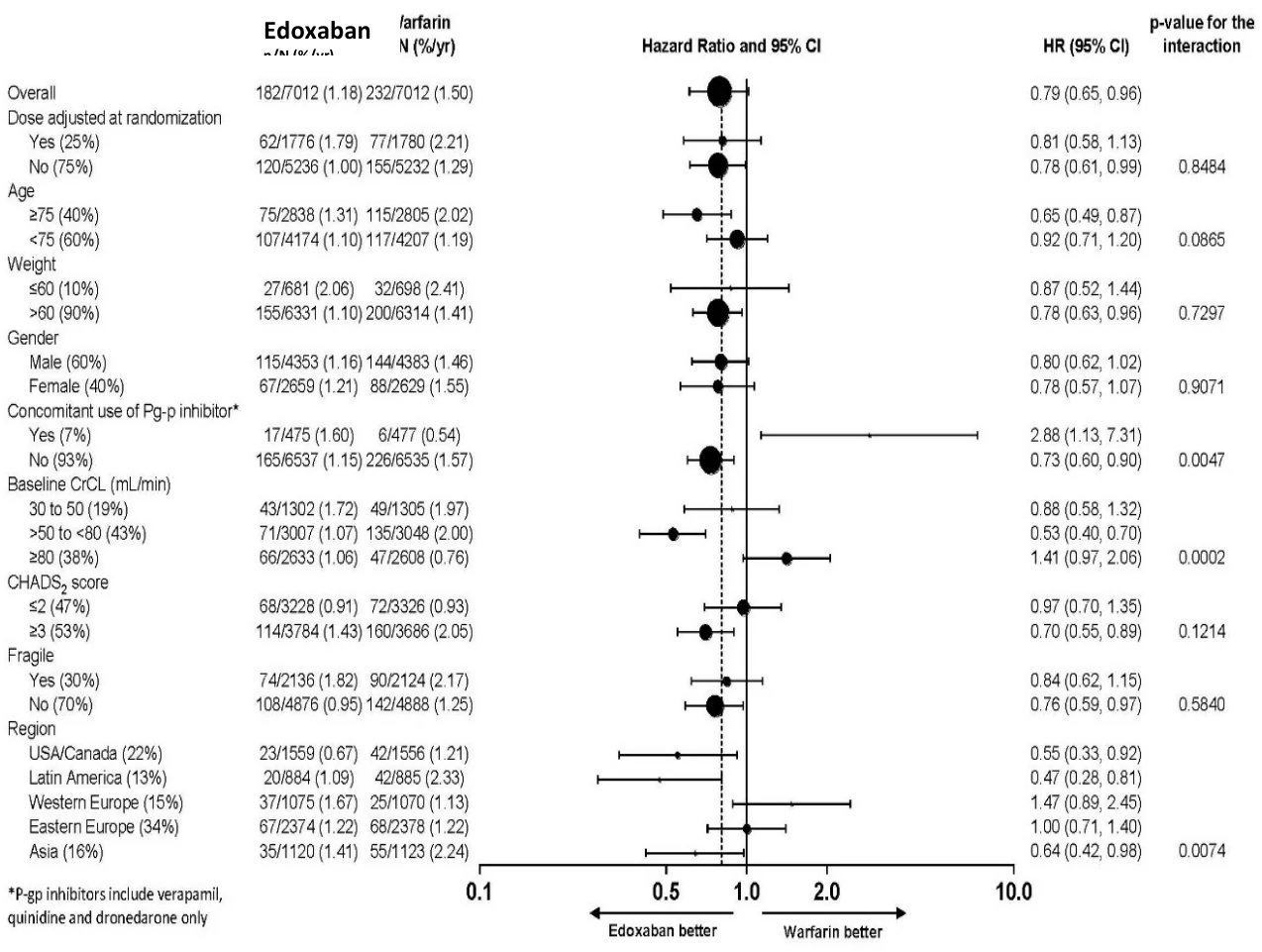
Note: In the following patient groups, the edoxaban dosage was reduced to 30 mg: Weight <60 kg, CrCL 30 to 50 mL/min and concomitant use of P-gp inhibitors.
Fragile patients included patients who were ≥80 years, weight ≤50 kg, CrCL ≤50 mL/min and or history of fall.
An additional exploratory analysis was performed for the primary efficacy and safety endpoints by CrCl intervals of 20 mL/min. The observed percentage differences in efficacy in higher creatinine clearance groups between edoxaban and warfarin were numerically small, and notably, with overlapping confidence intervals. Tough the event rates of stroke/SEE in the edoxaban group were maintained in patients with CrCL between 70 and 130 mL/min, there was an unfavorable but non-significant effect of edoxaban compared to warfarin in patients with CrCL over 130 mL/min, for which there were fewer events (Figure 4). For major bleeding, the trend in favor of edoxaban 60 mg (30 mg dose-reduced) versus warfarin was preserved across the continuum of renal function (Figure 5).
Edoxaban
n/N (%/yr)
Figure 4 – Stroke/SEE Event Rate by Baseline CrCl mITT Analysis Set, Overall Study Period - ENGAGE AF-TIMI 48 study
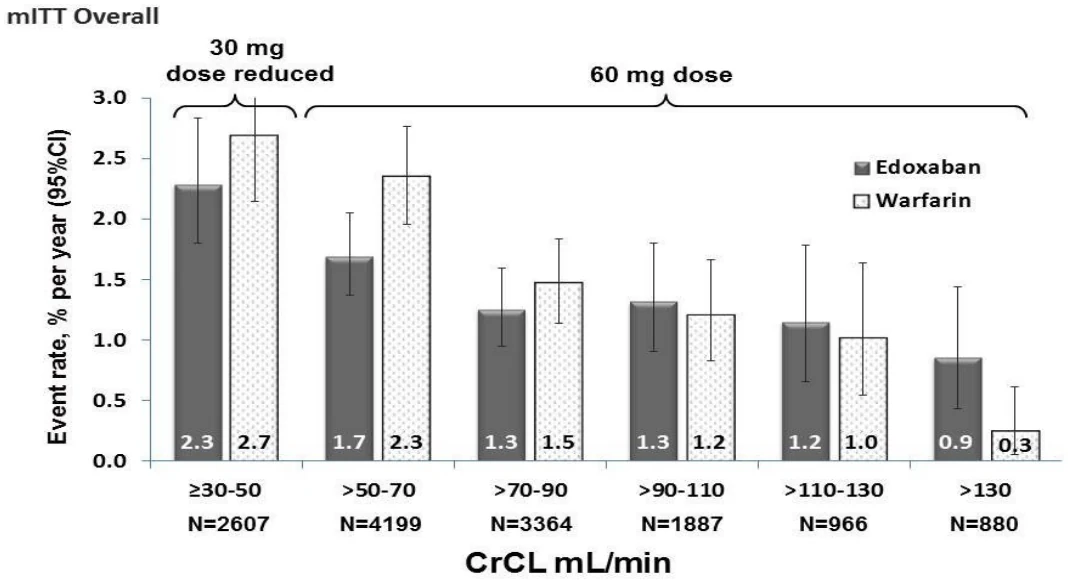
Figure 5 – Major Bleeds by Baseline CrCl Category in ENGAGE AF-TIMI 48 study
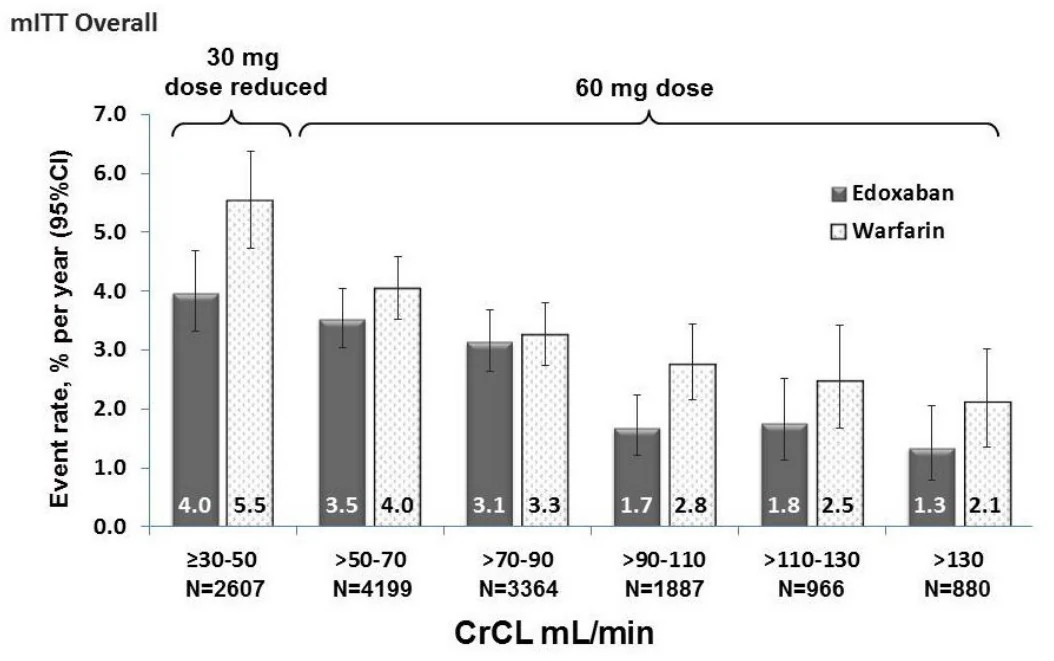
Transition to Other Anticoagulants
In the ENGAGE AF-TIMI 48 study, the transition schemes described in Table 3 (see 4 DOSAGE AND ADMINISTRATION -Switching to and from Reddy-Edoxaban) were effective when transitioning to VKA, Factor Xa and IIa inhibitors at the end of the study. The transition scheme included edoxaban tablets at half dose for ≤14 days concurrently with VKA. The rate of Stroke and SEE during the 30 days following the last dose of blinded study drug was similar for those who transitioned off of edoxaban tablets and for those who transitioned off of warfarin. In the edoxaban tablets 60 mg group 7 of 4529 (0.2%)
subjects had a stroke or SEE compared to 7 of 4506 (0.2%) subjects in the warfarin arm.
Safety in SPAF
The primary safety endpoint was major bleeding. The secondary safety endpoint was major bleeding or clinically relevant non-major (CRNM) bleeding.
Table 7 summarises adjudicated bleeding events for the safety analysis set on-treatment period (See 8 ADVERSE REACTIONS, Clinical Trial Adverse Reactions, Bleeding Events). Subjects in the edoxaban tablets 60 mg (30 mg dose-reduced) group experienced significantly lower bleeding events for all bleeding categories, (major Bleeding, CRNM, and any confirmed bleeding) compared with warfarin.
The rate of major bleeding was significantly less in the edoxaban tablets 60 mg (30 mg dose-reduced) group compared with the warfarin group (2.75%, and 3.43% per year, respectively) [HR (95% CI): 0.80 (0.71, 0.91)]; p=0.0009]. Similar benefits were observed in favor of the edoxaban tablets 60 mg (30 mg dose-reduced) group compared with the warfarin group for the subset of subjects experiencing ICH (0.39%, and 0.85%), respectively [HR (95% CI): 0.47 (0.34, 0.63); p<0.0001]. The rate in fatal bleeds was also significantly less in the edoxaban tablets 60 mg (30 mg dose-reduced) group compared with the warfarin group (0.21%, and 0.38%) [HR (95% CI): 0.55 (0.36, 0.84); p=0.0059 for superiority.
Subjects who received edoxaban tablets 30 mg (dose reduced subjects in the 60 mg group) had an event rate of 3.05% per year for major bleeding, compared with the event rate of 4.85% per year for the matching dose reduced subjects in the warfarin group. Compared to warfarin-treated subjects, the HR in the edoxaban tablets 30 mg (dose reduced subjects in the 60 mg group) was 0.63 (95% CI: 0.50, 0.81).
Subgroup analyses showed that edoxaban tablets 60 mg (30 mg dose-reduced) group had a lower event rate and a hazard ratio of less than 1 for major bleeding compared to the warfarin group for all subgroups, except for subjects with history of TIA only. In the subgroup of subjects with a high risk of bleeding, such as age ≥ 75 years, CrCL 30 to ≤ 50 and >50 to < 80 mL/min, and CHADS2 score ≥3, edoxaban tablets 60 mg (30 mg dose-reduced) group had a hazard ratio less than 1 for major bleeding compared with warfarin.
Nonvalvular Atrial Fibrillation (NVAF) Patients undergoing cardioversion
A multicentre, prospective, randomised, open-label study with blinded endpoint evaluation (ENSURE- AF) was conducted which randomised 2199 subjects (oral anticoagulant naïve and pre-treated) with NVAF scheduled for cardioversion, to compare edoxaban 60 mg once daily with enoxaparin/warfarin to maintain a therapeutic INR of 2.0 to 3.0 (randomised 1:1), mean TTR on warfarin was 70.8%. A total of 2149 subjects were treated with either edoxaban (N = 1067) or enoxaparin/warfarin (N = 1082).
Subjects in the edoxaban treatment group received 30 mg once daily if one or more of the following clinical factors were present: moderate renal impairment (CrCl 30 – 50 mL/min), low body weight (≤ 60 kg) or concomitant use of specific P-gp inhibitors. The majority of subjects in the edoxaban and warfarin groups had cardioversion performed (83.7% and 78.9%, respectively) or were auto converted (6.6% and 8.6%, respectively). TEE-guided (within 3 days of initiation) or conventional cardioversion (at least 21 days of pre-treatment) was employed. Subjects were maintained on treatment for 28 days post cardioversion.
The primary efficacy outcome consisted of a composite of all stroke, SEE, MI and CV mortality. A total of 5 (0.5%, 95% CI 0.15% - 1.06%) events occurred in subjects in the edoxaban group (N = 1095) and 11 (1.0%, 95% CI 0.50% - 1.78%) events in the warfarin group (N = 1104); odds ratio (OR) 0.46 (95% CI 0.12 - 1.43); ITT analysis set overall study period with mean duration of 66 days.
The primary safety outcome was a composite of major and CRNM bleeding. A total of 16 (1.5%, 95% CI 0.86% - 2.42%) events occurred in subjects in the edoxaban (N = 1067) group and 11 (1.0%, 95% CI 0.51% - 1.81%) events in the warfarin (N = 1082) group; OR 1.48 (95% CI 0.64 - 3.55); safety analysis set on-treatment period.
This exploratory study showed low rates of major and CRNM bleeding and thromboembolism in the two treatment groups in the setting of cardioversion.
ETNA-AF-Europe – Phase IV Study
In addition to the Phase III ENGAGE -AF-TIMI-48 study, a multinational, multicenter, post-authorization, observational study (ETNA-AF-Europe) has been conducted to assess the risks and benefits of edoxaban in routine care for unselected patients with AF.
13,638 patients with non-valvular AF were treated with edoxaban, 76.6% of the patients received the standard dose of 60 mg and 23.4% received the reduced dose of 30 mg, for prevention of stroke and systemic embolism and enrolled in the study. The mean age of the patients was 73.6 years old with 50.7% of the patients been 75 years old and older. The mean CHADS2 score was 1.7 and the HAS-BLED score was 2.6.
Based on the 1-year follow-up analysis [n=13224], the stroke and systemic embolism rates were 0.79%/year. Haemorrhagic stroke rates were 0.12 %/year while the ischemic stroke rates were 0.56%/year. The major bleeding (ISTH) rates were 1.15%/year. The Intracranial hemorrhage rates were 0.25%/year and the major GI bleed event rates were 0.46%/year. The CV death rates were 1.67%/year.
These results are consistent with the established efficacy and safety profile of edoxaban tablets in this population.
Treatment of VTE and the prevention of recurrent DVT and PE
The HOKUSAI-VTE Study
The edoxaban tablets clinical programme for venous thromboembolism (VTE) was designed to demonstrate the efficacy and safety of edoxaban tablets in the treatment of deep vein thrombosis (DVT) and pulmonary embolism (PE), and the prevention of recurrent DVT and PE.
In the pivotal HOKUSAI-VTE study, 8,292 subjects were randomized to receive initial heparin therapy (enoxaparin or unfractionated heparin for 5-10 days) followed by edoxaban tablets 60 mg once daily or the comparator. In the comparator arm, subjects received initial heparin therapy concurrently with warfarin, titrated to a target international normalized ratio (INR) of 2.0 to 3.0, followed by warfarin alone. The treatment duration was from 3 months up to 12 months, determined by the investigator based on the patient’s clinical features. Patients were excluded if they required thrombectomy, insertion of a caval filter, use of a fibrinolytic agent, had a creatinine clearance <30 mL/min, significant liver disease, or active bleeding. The primary efficacy endpoint was the recurrence of symptomatic VTE, defined as the composite of recurrent symptomatic DVT, non-fatal symptomatic PE and fatal PE in patients during the 12 months study period. Secondary efficacy outcomes included the composite clinical outcome of recurrent VTE and all-cause mortality.
Table 17 – Summary of patient demographics for clinical trials in VTE
| Study design | Dosage, route of administration and duration | Study subjects (n = number) | Mean age (Range) years | Sex (M/F) % |
|---|---|---|---|---|
| Randomized, double-blind, matching placebo, parallel group, active controlled | Edoxaban tablets 60 mg QD POa Median duration of treatment = 267 days | n = 4118 | 55.7 (18 – 106) | 57.3/42.7 |
Warfarin QD POb Median duration of treatment = 266 days | n = 4122 | 55.9 (18 – 95) | 57.2/42.8 | |
| Total n = 8240 | ||||
VTE = venous thromboembolism, QD = once daily
a Edoxaban tablets dose halved for subjects with moderate renal impairment [CrCL ≥ 30 and ≤ 50 mL/min], low body weight [≤ 60 kg], or on concomitant strong P-gp inhibitor [eg, verapamil, quinidine].
b Warfarin dose adjusted to maintain INR between 2.0 and 3.0, inclusive
Subjects in the edoxaban tablets 60 mg treatment group had their dose halved if one or more of the following were present: moderate renal impairment (CrCL30 - 50 mL/min); body weight ≤ 60 kg; concomitant use of specific P-gp inhibitors (verapamil and quinidine or the short-term concomitant administration of azithromycin, clarithromycin, erythromycin, oral itraconazole or oral ketoconazole).
Efficacy in VTE
In the HOKUSAI-VTE study (Table 18), edoxaban tablets was demonstrated to be non-inferior to warfarin for the primary efficacy outcome, recurrent VTE, which occurred in 130 of 4118 subjects (3.2%) in the edoxaban tablets group versus 146 of 4122 subjects (3.5%) in the warfarin group [HR (95% CI): 0.89 (0.70,1.13); p <0.0001 for non-inferiority to a pre-specified margin of 1.5]. In the warfarin group, the median TTR (time in therapeutic range, INR 2.0 to 3.0) was 63.5%. For subjects presenting with PE (with or without DVT), 47 (2.8%) edoxaban tablets and 65 (3.9%) of warfarin subjects had a recurrent VTE [HR (95% CI): 0.73 (0.50, 1.06)]. For subjects presenting with DVT, 83 (3.4 %) edoxaban tablets and 81 (3.3%) of warfarin subjects had a recurrent VTE [HR (95% CI): 1.02 (0.75, 1.38)].
For subjects who received the 30 mg dose (predominantly subjects with body weight ≤ 60 kg or moderate renal impairment) 22 (3.0%) edoxaban tablets and 30 (4.2%) of warfarin subjects had a recurrent VTE.
The composite endpoint of recurrent VTE and all-cause mortality occurred in 228 of subjects (5.5%) in the edoxaban tablets group and in 228 subjects (5.5%) in the warfarin group [HR: (95% CI):1.00 (0.83, 1.20)].
In the HOKUSAI-VTE study, the duration of drug exposure for edoxaban tablets 60 mg was ≤ 6 months for 1561 (37.9%) of patients, >6 months for 2557 (62.1%) of patients and 12 months for 1661 (40.3%) of patients.
Table 18 - Efficacy Results from the HOKUSAI-VTE Study (mITT Overall Study Period)
Edoxaban tablets 60 mg (30 mg Dose-Reduced) (N = 4118) | Warfarin (N= 4122) | Edoxaban tablets vs Warfarin HR (95% CI) | ||||
|---|---|---|---|---|---|---|
| All subjects with symptom recurrent VTE, a n (%) | 130 (3.2) | 146 (3.5) | 0.89 (0.70, 1.13) p-value< 0.0001 (non-inferiority) | |||
| PE with or without DVT | 73 (1.8) | 83 (2.0) | ||||
| Fatal PE/Death where PE cannot be ruled out | 24 (0.6) | 24 (0.6) | ||||
| Non-fatal PE | 49 (1.2) | 59 (1.4) | ||||
| DVT only | 57 (1.4) | 63 (1.5) | ||||
Abbreviations: mITT = modified intent-to-treat; HR= Hazard Ratio vs. warfarin; CI= Confidence Interval; N= number of subjects in mITT population; n= number of events
a Primary Efficacy Endpoint: Symptomatic recurrent VTE (i.e. the composite endpoint of DVT, non -fatal PE and fatal PE).
Note: The primary efficacy analysis was performed in the mITT Analysis Set, Overall Study Period - (all events occurring during the Overall Study Period are included regardless of study drug administration status).
Figure 6 – Kaplan-Meier Curve Estimate of cumulative event rates for the primary efficacy endpoint (mITT-on treatment) for the HOKUSAI study
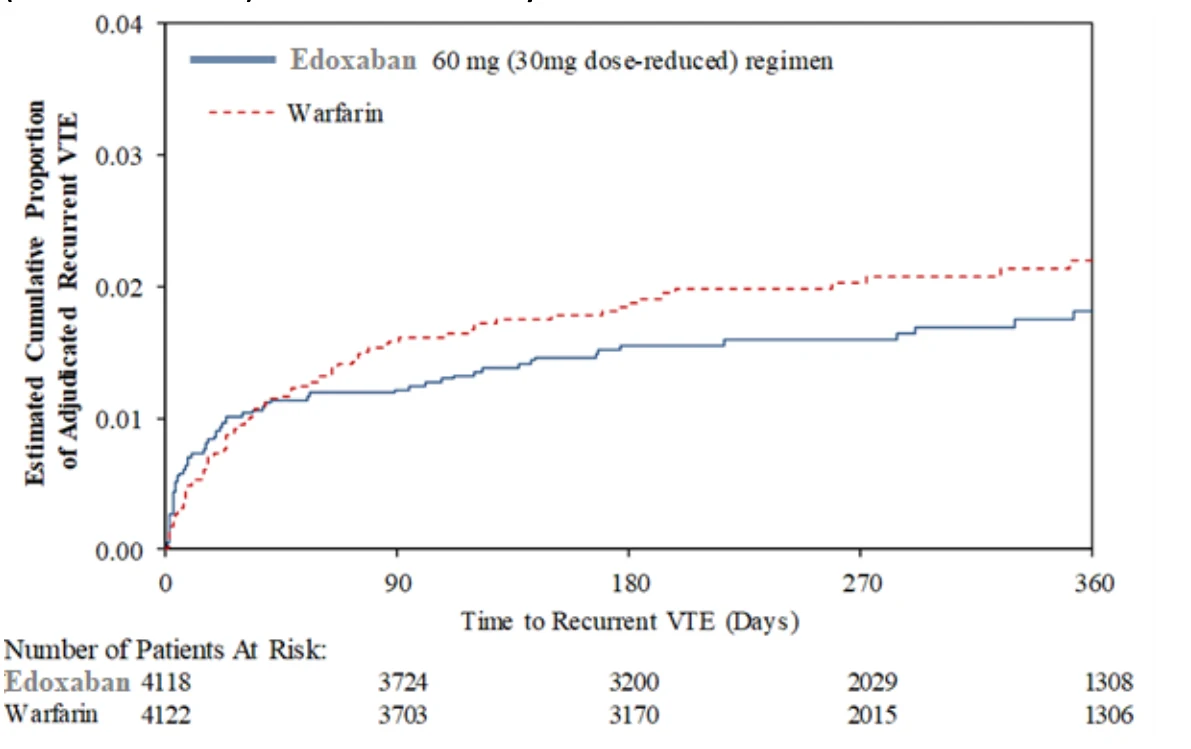
Results in subgroups of Interest
The efficacy results for pre-specified major subgroups (with dose reduction as required), including age, body weight, and P-gp inhibitors were generally consistent with the primary efficacy results for the overall population studies in the trial (Figure 7).
Figure 7 – HOKUSAI-VTE Study: Primary Efficacy Endpoint by Subgroups (mITT-overall)
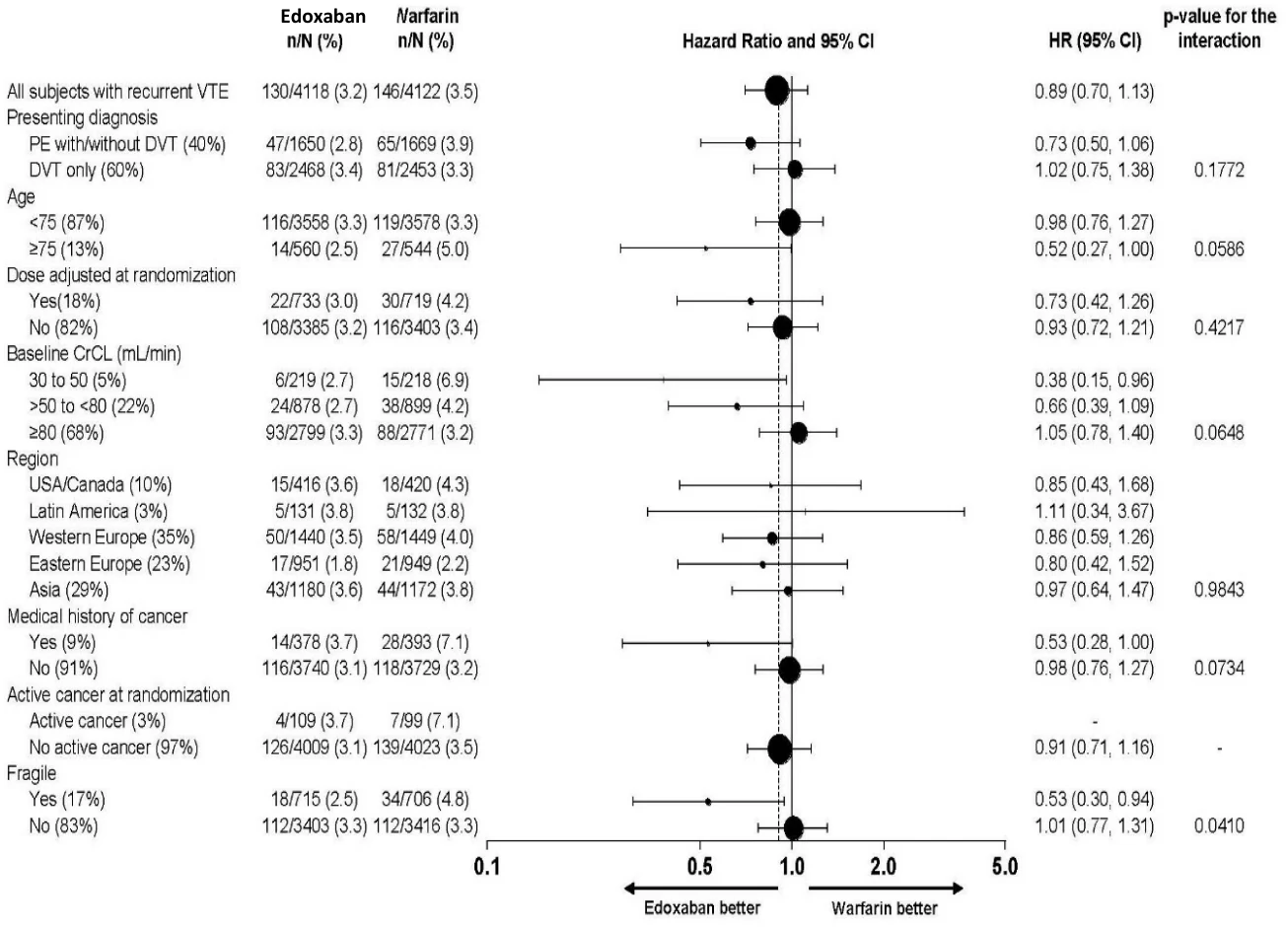
Note: Fragile patients included patients who were ≥ 75 years old and/or had body weight ≤ 50 kg and/or had CrCL ≥ 30 to ≤ 50 mL/min, each as determined at randomization
Safety in VTE
The principal safety endpoint was clinically relevant bleeding (major or clinically relevant non-major - CRNM) occurring during or within three days of interrupting or stopping study treatment. An additional endpoint included Major Adverse Cardiovascular Events - MACE (non-fatal MI, non-fatal stroke, non- fatal systemic embolic events, and cardiovascular death).
Table 7 summarizes adjudicated bleeding events for the safety analysis set on-treatment period (See 8 ADVERSE REACTIONS, Clinical Trial Adverse Reactions, Bleeding Events). Edoxaban tablets was demonstrated to be superior to warfarin for the primary safety endpoint of clinically relevant bleeding, a
Edoxaban
composite of major bleeding or CRNM, which occurred in 349 of 4118 subjects (8.5%) in the edoxaban tablets group and in 423 of 4122 subjects (10.3%) in the warfarin group [HR (95% CI): 0.81 (0.71 to 0.94); p=0.004 for superiority].
The composite endpoint of MACE was 1.2% in the edoxaban tablets group and 1.0% in the warfarin group.
Subjects who received edoxaban tablets 30 mg (dose reduced subjects in the 60 mg group) had an event rate of 7.9% for clinically relevant bleeding, compared with the event rate of 12.8% for the matching dose reduced subjects in the warfarin group. Compared to warfarin-treated subjects, the hazard ratio (HR) in the edoxaban tablets 30 mg (dose reduced subjects in the 60 mg group) was 0.62 (95% CI: 0.44, 0.86).
Subgroup analyses of fragile subjects, elderly subjects, and subjects with a history of cancer demonstrated a favorable bleeding outcome with edoxaban tablets therapy. However, numerically higher rates of GI tract and vaginal bleeding events were noted in the edoxaban tablets group (See 8 ADVERSE REACTIONS - Clinical Trial Adverse Reactions, Bleeding events).
HOKUSAI-VTE Cancer Study
In the Hokusai VTE Cancer study, 1050 patients were randomized to receive edoxaban tablets 60 mg once daily [30 mg dose reduced per the dose adjustment regimen used in Engage AF-TIMI 48 and Hokusai VTE studies, (see The Hokusai VTE Study)] after at least 5 days of low-molecular-weight heparin treatment or dalteparin (200 IU/kg day 1-30; 150 IU/kg day 31 to the end of treatment). The treatment duration was for a minimum of 6 months and up to 12 months. Patients with CrCL <30 mL/min were not eligible for enrollment in the study.
The efficacy of edoxaban tablets was based upon the rate of recurrent VTE (mITT) during the overall study period. Edoxaban tablets was non-inferior to dalteparin for the rate of recurrent VTE. Recurrent VTE occurred in 7.9% (41/522) and 11.3% (59/524) of patients in the edoxaban tablets and dalteparin groups, respectively [HR (95% CI): 0.71 (0.48, 1.06)].
14.2 Comparative Bioavailability Studies
A double blinded, randomized, two treatment, two period, two way, single-dose (60 mg dose as 1 x 60 mg), crossover, comparative oral bioavailability study of Reddy-Edoxaban (Dr. Reddy’s Laboratories Canada Inc.) and PrLIXIANA® (Servier Canada Inc.) was conducted in healthy, adult, male and female subjects under fasting condition. Comparative bioavailability data from 44 subjects that were included in the statistical analysis are presented in the following table:
SUMMARY TABLE OF THE COMPARATIVE BIOAVAILABILITY DATA
Edoxaban (1 x 60 mg) Geometric Mean Arithmetic Mean (CV%) | ||||
| Parameter | Test1 | Reference2 | % Ratio of Geometric Means | 90% Confidence Interval |
AUCT (ng·h/mL) | 2017.18 2093.42 (26.68) | 2012.16 2086.78 (27.61) | 100.2 | 93.8 - 107.1 |
AUCI (ng·h/mL) | 2241.10 2301.75 (22.77) | 2235.15 2291.03 (22.97) | 100.3 | 94.8 - 106.1 |
CMAX (ng/mL) | 272.23 305.63 (42.63) | 288.09 311.08 (35.82) | 94.5 | 83.8 - 106.5 |
TMAX3 (h) | 0.88 (0.35 - 5.01) | 0.88 (0.50 - 3.01) | ||
T1/24 (h) | 8.10 (30.712) | 7.88 (30.04) | ||
1 PrReddy-Edoxaban (edoxaban as edoxaban tosylate monohydrate) tablets, 60 mg (Dr. Reddy’s Laboratories Canada Ltd.) 2 PrLIXIANA® (edoxaban as edoxaban tosylate monohydrate) tablets, 60 mg (Servier Canada Inc.) 3 Expressed as the median (range) only 4 Expressed as the arithmetic mean (CV%) only | ||||
15 MICROBIOLOGY
No microbiological information is required for this drug product.
16 NON-CLINICAL TOXICOLOGY
Non-clinical data reveal no special hazard for humans based on conventional studies of safety pharmacology, repeated dose toxicity, genotoxicity, carcinogenic potential, or phototoxicity.
General Toxicology (Repeat-Dose Studies)
In the repeated-dose oral toxicity studies in rats, a small number of focal hemorrhagic lesions were observed in the pancreas, lung, and thymus of rats given edoxaban tosylate hydrate at ≥20 mg/kg/day. In repeated-dose oral toxicity studies in cynomolgus monkeys, hemorrhagic findings and anemia were noted in some animals given the drug at ≥15 mg/kg/day, leading to deteriorated animal condition or animal deaths with chronic dosing in a few monkeys.
These findings are thought to be related to the anticoagulant effect of edoxaban tosylate hydrate (its principal pharmacological action) which constitutes the only dose-limiting toxicity for this compound. Since the pharmacological activity of the drug for the cynomolgus monkey was comparable to that for humans, safety margins for hemorrhagic risk were estimated by comparison of exposures between cynomolgus monkeys and humans. The mean AUC0-24h values at NOAEL in the 52-week repeated dose oral toxicity study in cynomolgus monkeys were approximately 2.1 times higher than the exposures in human subjects given edoxaban at the maximum recommended clinical dose of 60 mg.
Carcinogenicity
Edoxaban was not carcinogenic when administered daily to mice and rats by oral gavage for ≤104 weeks. The highest dose tested (500 mg/kg/day) in male and female mice was 3 and 6 times, respectively, the human exposure (AUC) at the human dose of 60 mg/day, and the highest doses tested in male (600/400 mg/kg/day) and female (200 mg/kg/day) rats were 8 and 14 times, respectively, the human exposure at the human dose of 60 mg/day.
Genotoxicity
Based on the weight of evidence, edoxaban tosylate hydrate and its human-specific metabolite M-4 were not considered to pose any genotoxic risk to humans.
Reproductive and developmental Toxicology
Edoxaban showed vaginal hemorrhage at higher doses in rats and rabbits but had no effects in the reproductive performance of parent rats.
In rats, no effects on male or female fertility were seen.
In animal reproduction studies, rabbits showed increased incidence of gallbladder variations at a dosage of 200 mg/kg [approximately 65 times the maximum recommended human dose (MRHD) of 60 mg/day based on total body surface area in mg/m2]. Increased post-implantation pregnancy losses occurred in rats at 300 mg/kg/day (approximately 49 times the MRHD) and in rabbits at 200 mg/kg/day (approximately 65 times the MRHD) respectively.
Edoxaban was found in fetuses of pregnant rats and excreted in the breast milk of lactating rats.
17 SUPPORTING PRODUCT MONOGRAPHS
- 1. PrLIXIANA® (Tablets, 15 mg, 30 mg and 60 mg), submission control 278099, Product Monograph, Servier Canada Inc. (JAN 05, 2024).