


Product Monograph - Regiocit
RECENT MAJOR LABEL CHANGES
Not applicable
TABLE OF CONTENTS
RECENT MAJOR LABEL CHANGES ......................................................................................2
TABLE OF CONTENTS ..............................................................................................................2
PART I: HEALTH PROFESSIONAL INFORMATION ............................................................4
1 INDICATIONS ...................................................................................................... 4
1.1 Pediatrics ................................................................................................... 4
1.2 Geriatrics ................................................................................................... 4
2 CONTRAINDICATIONS ....................................................................................... 4
3 SERIOUS WARNINGS AND PRECAUTIONS BOX ..................... Not Applicable
4 DOSAGE AND ADMINISTRATION ..................................................................... 4
4.1 Dosing Considerations............................................................................... 4
4.2 Recommended Dose and Dosage Adjustment .......................................... 5
4.3 Administration ............................................................................................ 5
4.4 Reconstitution ....................................................................... Not Applicable
4.5 Missed Dose ......................................................................... Not Applicable
5 OVERDOSAGE .................................................................................................... 6
6 DOSAGE FORMS, STRENGTHS, COMPOSITION AND PACKAGING ........... 6
7 WARNINGS AND PRECAUTIONS ...................................................................... 7
7.1 Special Populations ................................................................................... 9
7.1.1 Pregnant Women ....................................................................................... 9
7.1.2 Breast-feeding ........................................................................................... 9
7.1.3 Pediatrics ................................................................................................. 10
7.1.4 Geriatrics ................................................................................................. 10
8 ADVERSE REACTIONS .................................................................................... 10
8.1 Adverse Reaction Overview .................................................................... 10
8.2 Clinical Trial Adverse Reactions .............................................................. 10
8.3 Less Common Clinical Trial Adverse Reactions ................... Not Applicable
8.4 Abnormal Laboratory Findings: Hematologic, Clinical Chemistry and Other Quantitative Data ................................................................... Not Applicable
8.5 Clinical Trial Adverse Reactions (Pediatrics) ........................ Not Applicable
8.6 Post-Market Adverse Reactions .............................................................. 11
9 DRUG INTERACTIONS ................................................................................... 11
9.1 Serious Drug Interactions Box .............................................. Not Applicable
9.2 Overview .................................................................................................. 11
9.3 Drug-Drug Interactions ............................................................................ 11
9.4 Drug-Food Interactions ......................................................... Not Applicable
9.5 Drug-Herb Interactions ......................................................... Not Applicable
9.6 Drug-Laboratory Test Interactions ........................................ Not Applicable
9.7 Drug-Lifestyle Interactions .................................................... Not Applicable
10 ACTION AND CLINICAL PHARMACOLOGY ................................................... 12
10.1 Mechanism of Action ............................................................................... 12
10.2 Pharmacodynamics ................................................................................. 12
10.3 Pharmacokinetics .................................................................................... 12
11 STORAGE, STABILITY AND DISPOSAL ........................................................ 13
12 SPECIAL HANDLING INSTRUCTIONS ............................................................ 13
13 PHARMACEUTICAL INFORMATION ............................................................... 15
14 CLINICAL TRIALS ............................................................................................. 15
14.1 Trial Design and Study Demographics .................................................... 15
14.2 Study Results ....................................................................... Not Applicable
14.3 Comparative Bioavailability Studies ...................................... Not Applicable
15 MICROBIOLOGY .......................................................................... Not Applicable
16 NON-CLINICAL TOXICOLOGY ......................................................................... 16
17 SUPPORTING PRODUCT MONOGRAPHS ................................. Not Applicable
PATIENT MEDICATION INFORMATION ..................................................................... 17
PART I: HEALTH PROFESSIONAL INFORMATION
1 INDICATIONS
REGIOCIT (sodium chloride and sodium citrate) solution is indicated for use as replacement solution for regional citrate anticoagulation (RCA) of the extracorporeal circuit in patients treated with continuous renal replacement therapy (CRRT), particularly when systemic anticoagulation with heparin is contraindicated, e.g., in patients with increased bleeding risks.
REGIOCIT should be administered only under the supervision of a physician experienced in the use of CRRT.
1.1 Pediatrics
Pediatrics (<18 years of age): No data are available to Health Canada; therefore, Health Canada has not authorized an indication for pediatric use.
1.2 Geriatrics
Geriatrics (> 65 years of age): Evidence from clinical studies and experience suggests that use in the geriatric population is not associated with differences in safety or effectiveness.
2 CONTRAINDICATIONS
REGIOCIT solution is contraindicated in:
- patients who are hypersensitive to this drug or to any ingredient in the formulation, including any non-medicinal ingredient, or component of the container. For a complete listing, see Dosage Forms, Strengths, Composition and Packaging.
- severe liver failure
- shock with muscle hypoperfusion
4 DOSAGE AND ADMINISTRATION
For Extracorporeal use only. Not for direct intravenous infusion.
REGIOCIT solution is used as a renal replacement solution. The product has an osmolarity of 244 mOsm / L and a pH of approximately 7.4.
4.1 Dosing Considerations
Dosing considerations of the drug:
- REGIOCIT solution should not be used for direct intravenous infusion. The product must be used in pre-dilution mode only, with appropriate extracorporeal renal replacement equipment intended for CRRT, using an integrated pre-blood pump for RCA.
- In addition to providing anticoagulation to the extracorporeal circuit and hemofilters, citrate also acts as a buffer source due to its metabolic conversion to bicarbonate systemically. Thus, the infusion rate of REGIOCIT solution to be administered should take into account the rate at which buffer administration occurs from other sources, e.g., dialysate and/or replacement fluid. The product must be used together with a dialysis/replacement solution at an appropriate bicarbonate concentration.
- Dose reduction may be needed in patients with mild to moderate hepatic impairment. In these patients, more frequent monitoring of citrate accumulation is advised. REGIOCIT solution should not be administered to patients with reduced liver and muscle perfusion, e.g., during conditions such as septic shock and lactic acidosis, or in patients with severe hepatic impairment, due to limited citrate metabolism (see CONTRAINDICATIONS).
- A separate systemic infusion of calcium is always required to prevent or treat hypocalcemia. Adjust calcium infusion depending on measured serum total-to-ionized calcium ratio and ionized calcium levels, to maintain values in the physiologic range. Adjust or stop calcium infusion according to the direction of the attending physician when REGIOCIT solution has been stopped.
- Magnesium may need to be supplemented intravenously, based on systemic serum magnesium levels.
4.2 Recommended Dose and Dosage Adjustment
The rate at which REGIOCIT solution is administered depends on the targeted citrate dose and the prescribed blood flow rate (BFR). The prescription of the product must consider the flow rates of the effluent and other therapeutic fluids, the patient’s fluid removal requirements, additional fluid inputs and outputs, and the desired acid-base and electrolyte balance.
REGIOCIT solution should be prescribed and its administration (dose, infusion rate, and cumulative volume) established only by critical care or nephrology physicians experienced in administration of CRRT.
The pre-filter infusion rate of REGIOCIT solution (based on its concentration) is indexed to the blood flow rate to achieve a target blood citrate concentration of 3 to 4 mmol/L in the blood. Flow rate for anticoagulation of the extracorporeal circuit should be titrated to achieve a post-filter concentration of ionized calcium in the range 0.25 to 0.35 mmol / L. The patient’s systemic ionized calcium concentration should be maintained in the normal physiologic range by adjustment of calcium supplementation.
4.3 Administration
Monitoring of the post-filter blood ionized calcium (iCa), systemic blood iCa, and total blood calcium levels in conjunction with other laboratory and clinical parameters is essential to guide appropriate REGIOCIT solution dosage based on the desired level of anticoagulation (see WARNINGS AND PRECAUTIONS).
Plasma levels of sodium, magnesium, potassium, and phosphate should also be monitored regularly and these electrolytes supplemented as needed.
REGIOCIT solution may be warmed to 37°C to enhance patient comfort. Warming of the product prior to use should be done with dry heat only. Solution should not be heated in water or in a microwave oven due to the potential for patient injury or discomfort.
REGIOCIT solution should be inspected visually for particulate matter and discoloration prior to administration, whenever solution and container permit. Do not administer unless the solution is clear and the seal is intact.
5 OVERDOSAGE
Electrolyte imbalance and acid–base balance abnormalities, e.g., hypocalcemia, metabolic alkalosis, etc. may occur in the event of an overdose. Stop administration promptly (see WARNINGS AND PRECAUTIONS).
In patients with impaired citrate metabolism, e.g., liver failure, circulatory shock etc, overdosage with REGIOCIT solution may be manifested as citrate accumulation, metabolic acidosis, systemic total hypercalcemia and ionized hypocalcemia along with increased total calcium/ionized calcium ratio (see CONTRAINDICATIONS, and WARNINGS AND PRECAUTIONS).
Careful calcium supplementation can reverse the effects of an overdose. The risk can be minimized by close monitoring during treatment.
| For management of a suspected drug overdose, contact your regional poison control centre. |
|---|
6 DOSAGE FORMS, STRENGTHS, COMPOSITION AND PACKAGING
Table 1 – Dosage Forms, Strengths, Composition and Packaging
Table 2 – Electrolyte Concentrations from the Medicinal Ingredients
REGIOCIT (sodium chloride and sodium citrate) solution is available in a 5 000 mL bag, with a luer connector valve and a spike connector. The bag is made of a multilayer film containing polyolefins and elastomers.
| Route of Administration | Dosage Form / Strength / Composition | Non-medicinal Ingredients |
| Extracorporeal | Sodium chloride 5.03 g / L, sodium citrate 5.29 g / L solution for hemofiltration and regional citrate anticoagulation (RCA) | Hydrochloric acid, water |
| mmol / L | |
| Citrate, C6H5O7 3- | 18 |
| Sodium, Na+ | 140 |
| Chloride, Cl- | 86 |
This product is not made with natural rubber latex.
7 WARNINGS AND PRECAUTIONS
There have been reports of system failure due to apparent operator error during administration of CRRT with REGIOCIT solution, leading to serious adverse events, including life-threatening hypocalcemia. Plasma electrolyte and acid-base parameters should be closely monitored during CRRT, and appropriate action taken if imbalances of electrolytes or acid-base balance are detected. Instructions for use of REGIOCIT and CRRT must be strictly followed.
Cautionary statements are provided in WARNINGS AND PRECAUTIONS, Endocrine and Metabolism, Hematologic, Hepatic / Biliary / Pancreatic, and Monitoring and Laboratory Tests, and in DRUG INTERACTIONS to avoid the following when performing the CRRT procedure:
- Hypercalcemia
- Hyponatremia
- Fluid retention, dehydration
- Nausea, vomiting
- Muscle spasms
Citrate Accumulation
Special attention is required in patients with liver failure, including hepatic cirrhosis or acute hepatic failure, or in shock, since metabolism of citrate may be markedly reduced and patients may be thus exposed to citrate accumulation. In these circumstances, more frequent monitoring of citrate accumulation should be undertaken. With systemic citrate accumulation, metabolic acidosis and ionized hypocalcemia may ensue, and the ratio of total to ionized calcium in the blood rises. If total/ionized calcium ratio rises above 2.3, REGIOCIT infusion should be reduced or stopped. CRRT may then be continued without anticoagulation, or by using other means of anticoagulation.
REGIOCIT is contraindicated in patients with severe hepatic impairment or in circulatory shock with muscle hypoperfusion (see CONTRAINDICATIONS).
Excessive infusion of citrate can lead to acute hypocalcemia and metabolic alkalosis, with neurologic and cardiac complications. Treatment consists of discontinuation of the citrate infusion and infusion of calcium.
Endocrine and Metabolism
Hypocalcemia
REGIOCIT solution contains no calcium, and may lead to systemic ionized hypocalcemia, due to loss of calcium bound to citrate in the effluent and/or in the case of systemic citrate accumulation (see DOSAGE AND ADMINISTRATION, Administration).
Electrolyte and Acid–Base Balance
REGIOCIT solution contains citrate, which can influence the patient’s electrolyte and acid–base balance. Plasma electrolyte and acid–base parameters should be closely monitored during CRRT. Closely monitor sodium, magnesium, potassium, phosphate, and calcium. Infusion of electrolytes may be needed to supplement any loss.
Hypercalcemia
Medicinal products containing calcium used for maintenance of calcium homeostasis in
CRRT patients can increase the risk of hypercalcemia, and can result in a reduced anticoagulation effect. Care should be taken to avoid excessive titration in administering calcium as this can lead to hypercalcemia. Frequent monitoring of pH, electrolytes, total-to-ionized calcium ratio, and systemic ionized calcium is important to avoid electrolyte and/or acid-base imbalance.
Hypomagnesemia
REGIOCIT solution contains no magnesium. Use of the REGIOCIT solution may result in hypomagnesemia due to CRRT effluent losses (see DOSAGE AND ADMINISTRATION, Administration).
Hypoglycemia
REGIOCIT solution contains no dextrose. Administration of REGIOCIT solution may lead to hypoglycemia. Blood glucose levels should be monitored regularly.
Hypokalemia
REGIOCIT solution contains no potassium. The serum potassium concentration must be monitored before and during CRRT.
Metabolic Alkalosis
REGIOCIT solution contains citrate, which contributes to the overall buffer load. Additional sodium bicarbonate (or buffer source) contained in the CRRT fluids or in other fluids administered during therapy may increase the risk of metabolic alkalosis. Metabolic alkalosis may occur if the net citrate administration rate exceeds that which is necessary to maintain acid–base balance.
If metabolic alkalosis occurs, decrease the citrate dose, and/or increase the dialysate flow rate or change the composition of the CRRT solution.
Blood calcium levels, pH and bicarbonate should be monitored regularly in patients with metabolic alkalosis since this condition may potentiate hypocalcemia.
Metabolic Acidosis
Metabolic acidosis may occur if metabolic clearance of citrate by the liver or skeletal muscle is impaired (see CONTRAINDICATIONS).
If citrate accumulation develops and/or metabolic acidosis develops or worsens during therapy with REGIOCIT, the infusion rate may need to be decreased or its administration stopped.
Hypo-osmolarity/Hypotonicity
REGIOCIT solution is hypo-osmolar/hypotonic relative to standard CRRT replacement fluids and should be used with caution in patients with traumatic brain injury, cerebral edema, or increased intracranial pressure.
Instructions for use of REGIOCIT must be strictly followed. Incorrect use of the access ports or other restrictions to fluid flow may lead to incorrect patient weight loss and may result in machine alarms being set off. Continuing treatment without resolving the originating cause may lead to patient injury or death.
Careful ongoing assessment is required of all solutions infused during REGIOCIT administration, whether related to CRRT dialysis fluids or to other solutions infused systemically.
REGIOCIT has a physiological sodium level of 140 mmol/L. However, sodium losses occurring during CRRT must be balanced as part of overall fluid and electrolyte management to avoid a drop in blood sodium level leading to systemic hyponatremia.
Hematologic
Hemodynamic Status and Fluid Balance
The patient’s hematocrit, hemodynamic status and fluid balance should be monitored throughout the procedure.
- In case of hypervolemia, the net ultrafiltration rate prescribed for the CRRT device can be increased, and/or the rate of administration of solutions other than replacement fluid and/or dialysate can be reduced.
- In case of hypovolemia, the net ultrafiltration rate prescribed for the CRRT device can be reduced, and/or the rate of administration of solutions other than replacement fluid and/or dialysate can be increased.
Hepatic / Biliary / Pancreatic
Use in Patients with Mild to Moderate Hepatic Impairment
Systemic metabolism of citrate to bicarbonate may be impaired in patients with hepatic impairment, resulting in accumulation of citrate. If REGIOCIT solution is administered to patients with mild to moderate hepatic impairment, frequent monitoring of pH, electrolytes, total-to-ionized calcium ratio, and systemic ionized calcium is important to avoid electrolyte and/or acid–base imbalance (see CONTRAINDICATIONS).
Monitoring and Laboratory Tests
Plasma electrolyte and acid–base parameters should be closely monitored during CRRT. Closely monitor sodium, magnesium, potassium, phosphate, calcium, blood glucose levels, hematocrit, hemodynamic status and fluid balance, pH, bicarbonate, total-to-ionized calcium ratio, and systemic ionized calcium. Infusion of electrolytes may be needed to supplement any loss.
7.1 Special Populations
7.1.1 Pregnant Women
There are no adequate data from the use of REGIOCIT solution in pregnant women.
Physicians should carefully consider the potential risks and benefits for each specific patient before administering REGIOCIT solution.
7.1.2 Breast-feeding
There are no adequate data from the use of REGIOCIT solution in lactating women.
Physicians should carefully consider the potential risks and benefits for each specific patient before administering REGIOCIT solution.
It is unknown if the drug is excreted in human milk. Because many drugs are excreted in human milk, caution should be exercised.
7.1.3 Pediatrics
Pediatrics (< 18 years of age): No data are available to Health Canada; therefore, Health Canada has not authorized an indication for pediatric use.
7.1.4 Geriatrics
Geriatrics (> 65 years of age): Evidence from clinical studies and experience suggests that use in the geriatric population is not associated with differences in safety or effectiveness.
8 ADVERSE REACTIONS
8.1 Adverse Reaction Overview
The following adverse reactions represent those adverse reactions that are thought to have an association with the use of REGIOCIT solution or that may occur in conjunction with performing the CRRT procedure:
Adverse reactions reported with other CRRT products include:
- Hypotension
- Hypocalcemia (due to excessive and uncorrected effect of citrate in the body)
- Other electrolyte imbalances (hypomagnesemia, hypokalemia, hypophosphatemia)
- Acid-base balance disorders (including metabolic alkalosis, metabolic acidosis)
- Hypoglycemia
- Fluid imbalance
8.2 Clinical Trial Adverse Reactions
Because clinical trials are conducted under very specific conditions, the adverse reaction rates observed in the clinical trials may not reflect the rates observed in practice and should not be compared to the rates in the clinical trials of another drug. Adverse reaction information from clinical trials is useful for identifying drug-related adverse events and for approximating rates.
In an open-label randomised study, 54 patients were administered RCA with an equimolar solution of citrate, sodium and chloride, as contained in REGIOCIT solution, and 49 received systemic anticoagulation with unfractionated heparin (UFH) while undergoing CRRT using continuous venovenous hemodiafiltration. Adverse events related to metabolic disorders occurred in 26% of patients in the RCA-treated group, compared to 28% of patients in the UFH-treated group. These adverse events were generally transient and reversible. Metabolic alkalosis was seen in 6% of patients treated with RCA, compared to none treated with UFH, and metabolic acidosis was reported in 6% and 2% of patients in the RCA and UFH groups, respectively. Six patients treated with RCA experienced severe hypocalcemia, compared to one patient treated with UFH.
In a second hemodiafiltration trial which evaluated 19 patients randomised to an equimolar solution of citrate, sodium and chloride, as contained in REGIOCIT solution, and 11 patients randomised to UFH anticoagulation, Hypocalcemia requiring intervention was reported in 3 patients treated with RCA, with 2 of these patients requiring treatment interruption of RCA.
8.6 Post-Market Adverse Reactions
To date, adverse events reported in the post-marketing setting for REGIOCIT appear to be consistent with those listed above in Adverse Reaction Overview.
9 DRUG INTERACTIONS
9.2 Overview
The blood concentration of filterable/dialyzable drugs may be reduced during treatment due to their removal by the extracorporeal filter. Corresponding corrective therapy should be instituted if necessary to establish the desired blood concentrations for drugs removed during treatment. Patient monitoring at an appropriate frequency is required.
When prescribing REGIOCIT, the physician needs to consider the use of other anticoagulants along with other buffer-containing and electrolyte solutions (including CRRT replacement fluid and dialysate).
9.3 Drug-Drug Interactions
The drugs listed in this table are based on either drug interaction case studies or clinical trials, or potential interactions due to the expected magnitude and seriousness of the interaction (i.e., those identified as contraindicated).
Table 3 - Established or Potential Drug-Drug Interactions
| Proper / Common name | Source of Evidence | Effect | Clinical comment |
|---|---|---|---|
Calcium (e.g. calcium chloride or calcium gluconate) | C, CT | Increase the risk of hypercalcemia, and can result in a reduced anticoagulation effect | Such drugs are used for maintenance of calcium homeostasis in CRRT patients receiving citrate anticoagulation. |
| Vitamin D and Vitamin D analogues | C, CT | Increase the risk of hypercalcemia, and can result in a reduced anticoagulation effect | - |
| Sodium bicarbonate | May increase the risk of high concentrations of bicarbonate in blood, leading to metabolic alkalosis | Blood calcium levels should be monitored regularly in patients with metabolic alkalosis since this condition may potentiate hypocalcaemia. |
Legend: C = Case Study; CT = Clinical Trial; T = Theoretical
10 ACTION AND CLINICAL PHARMACOLOGY
10.1 Mechanism of Action
Citrate provides regional anticoagulation of blood in the continuous renal replacement therapy (CRRT) extracorporeal circuit by binding calcium and rendering calcium unavailable to the clotting cascade. Several steps of the clotting cascade are dependent on calcium and the absence of calcium prevents clotting in the circuit.
During CRRT, pre-dilution infusion of citrate into the access line of the extracorporeal circuit provides only regional extracorporeal anticoagulation (and thus avoids systemic anticoagulation of the patient) for two reasons. First, once blood from the extracorporeal circuit is returned to the patient, it mixes with the central venous blood which contains calcium. The second way in which a systemic anticoagulant effect is avoided is by infusion of calcium in the post-filter (return) bloodline of the extracorporeal circuit.
This procedure not only helps neutralize citrate’s anticoagulant effect in the patient’s blood, but also prevents any depletion of the patient’s calcium stores which may result from the loss of calcium (bound to citrate) in the CRRT effluent fluid.
10.2 Pharmacodynamics
Citrate provides anticoagulation by its ability to form complexes with ionized calcium, making it unavailable to the clotting cascade. In REGIOCIT, sodium concentration has been set to 140 mmol/l as critically ill patients may develop severe hyponatremia. Chloride is set to the level required to balance cations as the solution is hydrogen carbonate free. Sodium and chloride are normal constituents of the human body and are considered to be pharmacologically inactive. Citrate is a normal metabolite in the human body that acts as a first intermediate substance in the Krebs cycle. REGIOCIT does not contain potassium or glucose.
Two studies provide information on the dose/response relationship between citrate concentration and anticoagulation. In one study, ex-vivo anticoagulation with anticoagulant citrate dextrose formula A (ACD-A) in blood collected from six healthy volunteers was studied. The study concluded that the clinically relevant effects of citrate anticoagulation rely solely on the disturbed formation of the calcium-dependent coagulation factors complexes. In this study, the anticoagulation effects of citrate were monitored either by methods that quantify clot formation (i.e., activated clotting time) or by direct assessment of ionized calcium levels.
The correlation between concentrations of ionized calcium and clotting times revealed almost no anticoagulant effect when ionized calcium levels were up to or above 0.50 mmol / L, while clotting times showed a steep increase when calcium levels were decreased below 0.50 mmol/L. With respect to maximum effect, 5.65 mmol / L citrate induced clotting times of infinity in all samples.
10.3 Pharmacokinetics
Citrate is a normal metabolite in the human body and an intermediate substance in the Krebs cycle. This physiological pathway is capable of processing high amounts of citric acid as long as it occurs at low concentrations. The Krebs cycle takes place in the mitochondria, and all cells that contain these cellular organelles can metabolize citrate. Tissues rich in mitochondria such as liver, skeletal muscles, and kidney therefore have a higher capacity for citrate generation and elimination.
Absorption: Absorption of sodium and chloride is determined by the patient’s clinical condition, metabolic status, and residual renal function.
Distribution: Extracellular citrate can be transported from the blood across the plasma membrane by a group of proteins i.e. the plasma membrane citrate transporters (PMCTs) into the cells and then metabolized in various organs and tissues.
Metabolism: Citrate is an intermediate in the central metabolic pathway called Krebs cycle as mentioned above. Citrate is rapidly metabolized mainly in the liver, but can also be metabolized by other organs / tissues.
Elimination: Any excess of circulating citrate is normally excreted via the kidneys.
Special Populations and Conditions
Hepatic Insufficiency:
When treating decompensated cirrhosis patients, one should also consider:
- Impairment of citrate metabolism due to failure of microcirculation and oxidative metabolism (lactic acidosis and / or shock),
- Impaired muscular utilization of citrate (cachexia, high doses of vasopressors),
- Citrate load associated with blood products.
11 STORAGE, STABILITY AND DISPOSAL
Store at 4 °C to 30 °C. Do not freeze or expose to excessive heat.
12 SPECIAL HANDLING INSTRUCTIONS
Aseptic technique should be used throughout the handling and administration to the patient.
Remove the overwrap from the bag immediately before use.
Use only if the overwrap is not damaged, all seals are intact, and the solution is clear. Press bag firmly to test for any leakage. If leakage is discovered, discard the solution immediately since sterility can no longer be assured.
Follow the instructions below when connecting the solution bags for correct use of the access ports.
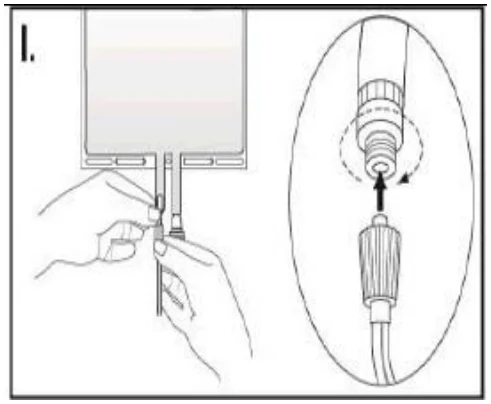
If the luer connector is used, remove the cap with a twist and pull motion. Connect the male luer lock on the pre-blood pump line to the female luer connector on the bag using a push and twist motion. Ensure that the connection is fully sealed and tighten (see Figure I). The connector is now open. Verify that the fluid is flowing freely.
When the pre-blood pump line is disconnected from the luer connector, the connector will close and the flow of the solution will stop. The luer is a needleless and swabbable port.
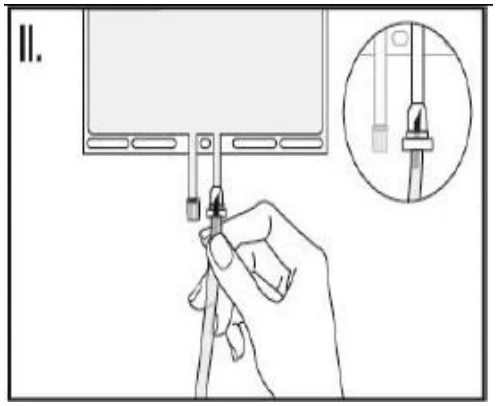
- If the injection connector (or spike connector) is used, remove the snap-off cap. The injection port is a swabbable port. Introduce the spike through the rubber septum (see Figure II). Verify that the fluid is flowing freely.
- Before adding a substance or medication, verify that it is soluble and stable in REGIOCIT, and that the pH range of REGIOCIT is appropriate.
- Additives known or determined to be incompatible should not be added.
- The instructions for use of the medication to be added and other relevant literature must be consulted.
- After addition, if there is a discoloration and / or the appearance of precipitates, insoluble complexes, or crystals, do not use.
- Mix the solution thoroughly when additives have been introduced. The introduction and mixing of additives must always be performed prior to connecting the solution bag to the extracorporeal circuit.
- The solution is for single use only.
- Discard any unused portion.
PART II: SCIENTIFIC INFORMATION
13 PHARMACEUTICAL INFORMATION
Drug Substance
| Proper Name / Chemical name | Molecular formula and molecular mass | Structural formula | Physicochemical properties |
|---|---|---|---|
| Sodium chloride | NaCl 58.44 g / mol |  | White or almost white, crystalline powder or colourless crystals. Freely soluble in water, practically insoluble in anhydrous ethanol. |
Sodium citrate (dihydrate) 1,2,3-Propanetricarboxylic acid, 2-hydroxy-, trisodium salt | C6H5Na3O7·2H2O 294.10 g / mol | 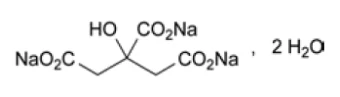 | White or almost white, crystalline powder or white or almost white, granular crystals, slightly deliquescent in moist air. Freely soluble in water, practically insoluble in ethanol. |
14 CLINICAL TRIALS
14.1 Trial Design and Study Demographics
In an open-label randomised study, 54 patients received RCA with an equimolar solution of citrate, sodium and chloride, as contained in REGIOCIT solution, and 49 received systemic anticoagulation with UFH while undergoing CRRT using continuous venovenous hemodiafiltration. The study demonstrated significant improvements in the co-primary endpoints of mean hemofilter lifespan, at 49 hours in the RCA group, compared to 28 hours for the UFH group, (p=0.004), with mean effective daily delivered renal replacement time (RRT) during the first 3 days of CRRT was 29 ml/kg/h for the RCA-treated group, compared to 27 ml/kg/h for the UFH group (p=0.005). Hemofilter clotting was observed in 6% of RCA-treated patients, compared to 37% of UFH-treated patients.
A second hemodiafiltration trial evaluated 19 patients randomised to RCA with an equimolar solution of citrate, sodium and chloride, as contained in REGIOT solution, and 11 to UFH anticoagulation. The primary efficacy outcome was hemofilter lifespan. Median hemofilter lifespan, analyzed by intent-to-treat (ITT) analysis, was not significantly different in the RCA group, at 34 hours, compared to UFH, at 31 hours (p=0.58), however in the per-protocol analysis median hemofilter lifespan in the RCA group was 42 hours, compared to 24 hours for the UFH group (p=0.004).
16 NON-CLINICAL TOXICOLOGY
The No Observed Adverse Effect Level (NOAEL) of citric acid for repeat-dose toxicity has been calculated at 1200 mg/kg/day over a lifetime, in rats. Citric acid is not suspected of being a carcinogen, teratogen, or reproductive toxicant. Citric acid is not mutagenic in vitro or in vivo and its sensitizing potential is low. Since sodium and chloride are physiological components in animal and human plasma, and as their concentrations in REGIOCIT solution are physiologically compatible, toxic effects are not expected at therapeutic doses.