


Product Monograph - Riva-Cyclobenzaprine
RECENT MAJOR LABEL CHANGES
No recent major changes in the last 24 months.
TABLE OF CONTENTS
Sections or subsections that are not applicable at the time of authorization are not listed.
RECENT MAJOR LABEL CHANGES ............................................................................................. 2
TABLE OF CONTENTS ............................................................................................................... 2
PART I: HEALTH PROFESSIONAL INFORMATION ....................................................................... 4
1 INDICATIONS ................................................................................................................ 4
1.1 Pediatrics ................................................................................................................. 4
1.2 Geriatrics ................................................................................................................. 4
2 CONTRAINDICATIONS .................................................................................................. 4
4 DOSAGE AND ADMINISTRATION .................................................................................. 4
4.1 Dosing Considerations ............................................................................................. 4
4.2 Recommended Dose and Dosage Adjustment ........................................................ 5
5 OVERDOSAGE ............................................................................................................... 5
6 DOSAGE FORMS, STRENGTHS, COMPOSITION AND PACKAGING .................................. 6
7 WARNINGS AND PRECAUTIONS ................................................................................... 6
7.1 Special Populations.................................................................................................. 8
7.1.1 Pregnant Women: ................................................................................................ 8
7.1.2 Breast-feeding: .................................................................................................... 8
7.1.3 Pediatrics (< 15 years of age): .............................................................................. 8
7.1.4 Geriatrics (> 65 years of age): .............................................................................. 8
8 ADVERSE REACTIONS ................................................................................................... 8
8.1 Adverse Reaction Overview ..................................................................................... 8
9 DRUG INTERACTIONS ................................................................................................... 9
9.1 Serious Drug Interactions ........................................................................................ 9
9.4 Drug-Drug Interactions ............................................................................................ 9
10 CLINICAL PHARMACOLOGY ........................................................................................ 10
10.1 Mechanism of Action ......................................................................................... 10
10.2 Pharmacodynamics ............................................................................................ 10
10.3 Pharmacokinetics ............................................................................................... 10
11 STORAGE, STABILITY AND DISPOSAL .......................................................................... 11
12 SPECIAL HANDLING INSTRUCTIONS ............................................................................ 11
PART II: SCIENTIFIC INFORMATION ........................................................................................ 12
13 PHARMACEUTICAL INFORMATION ............................................................................. 12
14 CLINICAL TRAILS ......................................................................................................... 13
14.2 Comparative Bioavailability Studies ................................................................... 13
15 MICROBIOLOGY ......................................................................................................... 14
16 NON-CLINICAL TOXICOLOGY ...................................................................................... 14
17 SUPPORTING PRODUCT MONOGRAPHS ..................................................................... 16
PATIENT MEDICATION INFORMATION ................................................................................... 17
PART I: HEALTH PROFESSIONAL INFORMATION
1 INDICATIONS
RIVA-CYCLOBENZAPRINE (cyclobenzaprine hydrochloride) is indicated:
- As an adjunct to rest and physical therapy for relief of muscle spasm associated with acute, painful musculoskeletal conditions.
Cyclobenzaprine should be used only for short periods (up to two or three weeks), because adequate evidence of effectiveness for more prolonged use is not available, and because muscle spasm associated with acute, painful musculoskeletal conditions is generally of short duration and specific therapy for longer periods is seldom warranted.
Cyclobenzaprine hydrochloride has not been found effective in the treatment of spasticity associated with cerebral or spinal cord disease, or in children with cerebral palsy.
1.1 Pediatrics
Pediatrics (< 15 years of age): The safety and effectiveness of cyclobenzaprine hydrochloride in children below 15 years of age have not been established.
1.2 Geriatrics
Geriatrics (>65 years of age): Evidence from clinical studies suggests that use in the geriatric population is associated with differences in safety or effectiveness (see 4.2 Recommended Dose and Dosage Adjustment, 7.1.4 Geriatrics and 10.3 Pharmacokinetics).
2 CONTRAINDICATIONS
RIVA-CYCLOBENZAPRINE is contraindicated:
- In patients who are hypersensitive to this drug or to any ingredient in the formulation, including any non-medicinal ingredient, or component of the container. For a complete listing, see 6 DOSAGE FORMS, STRENGTHS, COMPOSITION AND PACKAGING.
- In patients with hyperthyroidism
- In the acute recovery phase of myocardial infarction,
- In patients with arrhythmias, heart block or conduction disturbances, or congestive heart failure.
- With concomitant use of monoamine oxidase (MAO) inhibitors, or within 14 days after their discontinuation (see 9 DRUG INTERACTIONS).
4 DOSAGE AND ADMINISTRATION
4.1 Dosing Considerations
Cyclobenzaprine hydrochloride is not recommended for periods longer than two or three weeks (see 1 INDICATIONS).
4.2 Recommended Dose and Dosage Adjustment
The usual dosage of cyclobenzaprine hydrochloride is 10 mg three times a day with range of 20 to 40 mg a day in divided doses. Dosage should not exceed 60 mg a day.
Hepatic Insufficiency
The plasma concentration of cyclobenzaprine is generally higher in patients with hepatic impairment (see 10.3 Pharmacokinetics). Patients with hepatic impairment are generally more susceptible to drugs with potentially sedating effects, including cyclobenzaprine.
Cyclobenzaprine is not recommended in those with moderate to severe impairment.
Cyclobenzaprine should be used with caution and reduced dosing (e.g. less frequent) in patients with mild hepatic impairment.
Geriatrics (> 65 years of age)
The plasma concentration of cyclobenzaprine is increased in the elderly (see 10.3 Pharmacokinetics). In elderly patients cyclobenzaprine should be initiated with a reduced dose (e.g. reduced dose frequency) and titrated slowly upward (see 7.1.4 Geriatrics; 10.3 Pharmacokinetics).
5 OVERDOSAGE
Signs and symptoms of toxicity may develop rapidly after cyclobenzaprine overdose; hospital monitoring is required as soon as possible. Monitor patients for an extended period after ingestion as delayed absorption may occur due to the anticholinergic effects of cyclobenzaprine.
Manifestations: Based on the known pharmacologic actions of the drug, overdosage may cause drowsiness, agitation, tachycardia and other cardiac rhythm abnormalities such as bundle branch block, ECG evidence of impaired conduction, and congestive heart failure. Other manifestations of high doses may be dilated pupils, severe hypotension, temporary confusion, disturbed concentration, transient visual hallucinations, stupor, coma, hyperactive reflexes, muscle rigidity, convulsions, vomiting, or hyperpyrexia, in addition to anything listed under 8.1 Adverse Reaction Overview.
Changes in the electrocardiogram, particularly in QRS axis or width, are clinically significant indicators of cyclobenzaprine toxicity.
Treatment: There are no specific antidotes. Treatment is symptomatic and supportive. Obtain an ECG, and initiate cardiac monitoring and observation for signs of hypotension, CNS or respiratory depression, or seizures.
Maintain an open airway, adequate fluid intake, and regulation of body temperature. Standard medical measures should be used to manage circulatory shock and metabolic acidosis.
Gastrointestinal decontamination / Elimination: If early in therapy, empty the stomach as quickly as possible. The suitability of emesis, gastric lavage and activated charcoal for gastric decontamination depends upon the time since ingestion and upon the patient being asymptomatic, conscious and cooperative. These processes should be considered early in therapy, before absorption is complete. Absorption may be delayed due to the anticholinergic effects of cyclobenzaprine. Gastric decontamination should not delay hospitalization.
Dialysis is probably of no value due to low plasma concentrations of the drug.
Cardiovascular: An ECG should be taken and cardiac function closely monitored if there is any evidence of dysrhythmia. Close monitoring of cardiac function for not less than five days is advisable.
Serum alkalinization, to a pH of 7.45 to 7.55, using intravenous sodium bicarbonate therapy/ hyperventilation should be instituted for patients with dysrhythmias and/or QRS widening. Many antiarrhythmics are contraindicated; consult a poison control centre for current approaches to refractory dysrhythmia.
CNS: In patients with CNS depression, early intubation is advised because of the potential for abrupt deterioration. Anticonvulsants (e.g. benzodiazepines) may be given to control seizures. Consult a poison control centre if considering the use of physostigmine to treat life-threatening symptoms of cyclobenzaprine overdose that have been unresponsive to other therapies.
Psychiatric Follow-up: Since overdosage is often deliberate, patients may attempt suicide by other means during the recovery phase.
Deaths by deliberate or accidental overdosage have occurred with this class of drugs.
| For management of a suspected drug overdose, contact your regional poison control center. |
|---|
6 DOSAGE FORMS, STRENGTHS, COMPOSITION AND PACKAGING
Table – Dosage Forms, Strengths, Composition and Packaging
| Route of Administration | Dosage Form / Strength/Composition | Non-medicinal Ingredients |
|---|---|---|
| Oral | Tablets, 10 mg | Colloidal Silicon Dioxide, Hydroxypropyl Cellulose, Hypromellose, Lactose, Magnesium Stearate, Polyethylene Glycol, Polysorbate 80, Pregelatinized Starch, Purified Water, Titanium Dioxide and Yellow Iron Oxide. |
RIVA-CYCLOBENZAPRINE (cyclobenzaprine hydrochloride) 10 mg Tablets, are butterscotch yellow, film-coated D-shape tablet debossed "111" on one side and nothing on the other side. They are supplied in bottles of 100 and 500 tablets.
7 WARNINGS AND PRECAUTIONS
General
Tricyclic Antidepressant-like Effects
Cyclobenzaprine is structurally related to the tricyclic antidepressants, e.g., amitriptyline and imipramine. Tricyclic antidepressants have been reported to produce arrhythmias, sinus tachycardia, prolongation of the conduction time leading to myocardial infarction and stroke (see 2 CONTRAINDICATIONS). Some of the more serious central nervous system (CNS) reactions noted with the tricyclic antidepressants have occurred in short-term studies of cyclobenzaprine for indications other than muscle spasm associated with acute musculoskeletal conditions, and usually at doses somewhat greater than those recommended for skeletal muscle spasm (see also 8.1 Adverse Reaction Overview).
Because of its atropine-like action, cyclobenzaprine should be used with caution in patients with a history of urinary retention, angle-closure glaucoma, increased intraocular pressure, and in patients taking anticholinergic medication.
Carcinogenesis and Mutagenesis
See 16 NON-CLINICAL TOXICOLOGY.
Driving and Operating Machinery
Cyclobenzaprine may impair mental and/or physical abilities required for performance of hazardous tasks, such as operating machinery or driving a motor vehicle. These effects may be enhanced in the presence of alcohol, barbiturates, and other CNS depressants (see 9.4 Drug-Drug Interactions).
Neurologic
Serotonin Toxicity:
Serotonin toxicity, also known as serotonin syndrome, is a potentially life-threatening condition and has been reported with cyclobenzaprine when used with other drugs (see 9 DRUG INTERACTIONS).
Serotonin toxicity is characterized by neuromuscular excitation, autonomic stimulation (e.g. tachycardia, flushing) and altered mental state (e.g. anxiety, agitation, hypomania). In accordance with the Hunter Criteria, serotonin toxicity diagnosis is likely when, in the presence of at least one serotonergic agent, one of the following is observed:
- Spontaneous clonus
- Inducible clonus or ocular clonus with agitation or diaphoresis
- Tremor and hyperreflexia
- Hypertonia and body temperature >38°C and ocular clonus or inducible clonus.
The concomitant use of cyclobenzaprine with MAO inhibitors is contraindicated. If concomitant treatment with cyclobenzaprine and other serotonergic agents is clinically warranted, careful observation of the patient is advised, particularly during treatment initiation and dose increases (see 2 CONTRAINDICATIONS and 9 DRUG INTERACTIONS). If serotonin toxicity is suspected, discontinuation of the serotonergic agents should be considered.
Patients should be cautioned about the risk of serotonin toxicity with the concomitant use of cyclobenzaprine and other serotonergic drugs. Patients should be advised of the signs and symptoms of serotonin toxicity, and be instructed to seek medical care immediately if they experience these symptoms.
Ophthalmologic
Angle-Closure Glaucoma: Due to their atropine-like action, tricyclic antidepressants and other antidepressants can cause mydriasis which may trigger an angle-closure attack in a patient with anatomically narrow ocular angles. Caution should be used when cyclobenzaprine is prescribed for patients with untreated narrow angles. Open - angle glaucoma is not a risk factor for angle-closure glaucoma. Patients should be advised to seek immediate medical assistance if they experience eye pain, changes in vision or swelling or redness in or around the eye.
7.1 Special Populations
7.1.1 Pregnant Women:
The safety of cyclobenzaprine administration in pregnant women has yet to be established. A clinical report showed that cyclobenzaprine use during late pregnancy should be considered a potential cause of early ductal closure. Cyclobenzaprine should not be used in women who are, or may become pregnant, unless the possible risk to the fetus is outweighed by the expected benefits for the mother.
7.1.2 Breast-feeding:
Because it is likely that cyclobenzaprine is excreted in milk, cyclobenzaprine hydrochloride should not be given to nursing mothers.
7.1.3 Pediatrics (< 15 years of age):
The safety and effectiveness of cyclobenzaprine in children below 15 years of age have not been established.
7.1.4 Geriatrics (> 65 years of age):
The plasma concentration of cyclobenzaprine is increased in the elderly (see 10.3 Pharmacokinetics). The elderly may also be more at risk for CNS adverse events such as hallucinations and confusion, cardiac events resulting in falls or other sequelae, drug-drug and drug-disease interactions. For these reasons, in the elderly, cyclobenzaprine should be used only if clearly needed (see 4.2 Recommended Dose and Dosage Adjustment).
8 ADVERSE REACTIONS
8.1 Adverse Reaction Overview
The following adverse reactions have been reported with cyclobenzaprine hydrochloride tablets:
Most frequent: Drowsiness (39%), dry mouth (27%), dizziness (11%).
Less frequent: Increased heart rate (and several cases of tachycardia), weakness, fatigue, dyspepsia, nausea, paresthesia, unpleasant taste, blurred vision, insomnia, convulsions and abnormal liver function (hepatitis, jaundice and cholestasis).
Rare: Serotonin toxicity, sweating, myalgia, dyspnea, abdominal pain, constipation, coated tongue, tremors, dysarthria, euphoria, nervousness, disorientation, confusion, headache, urinary retention, decreased bladder tonus, ataxia, depressed mood, hallucinations, and allergic reaction including rash, urticaria, and edema of the face and tongue.
The listing which follows includes other adverse reactions which have been reported with tricyclic compounds, but not with cyclobenzaprine hydrochloride when used in short-term studies in muscle spasm of peripheral origin. Some of these reactions were noted, however, when cyclobenzaprine hydrochloride was studied for other indications, usually in higher dosage. Pharmacologic similarities among the tricyclic drugs require that each of the reactions be considered when cyclobenzaprine hydrochloride is administered.
Cardiovascular: Hypotension, hypertension, palpitation, myocardial infarction, arrhythmias, heart block, stroke.
CNS and Neuromuscular: Confusional states, disturbed concentration, delusions, excitement, anxiety, restlessness, nightmares, numbness and tingling of the extremities, peripheral neuropathy, incoordination, seizures, alteration in EEG patterns, extrapyramidal symptoms, tinnitus, syndrome of inappropriate ADH (antidiuretic hormone) secretion.
Anticholinergic: Disturbance of accommodation, paralytic ileus, dilatation of urinary tract.
Allergic: Skin rash, urticaria, photosensitization, edema of face and tongue.
Hematologic: Bone marrow depression including agranulocytosis, leukopenia, eosinophilia, purpura, thrombocytopenia.
Gastrointestinal: Epigastric distress, vomiting, anorexia, stomatitis, diarrhea, parotid swelling, black tongue. Rarely, hepatitis (including altered liver function and jaundice).
Endocrine: Testicular swelling and gynecomastia in the male, breast enlargement and galactorrhea in the female. Increased or decreased libido, elevation and lowering of blood sugar levels.
Other: Weight gain or loss, urinary frequency, mydriasis, jaundice, alopecia.
Withdrawal symptoms: Abrupt cessation of treatment after prolonged administration may produce nausea, headache and malaise. These are not indicative of addiction.
9 DRUG INTERACTIONS
9.1 Serious Drug Interactions
Serious Drug Interactions
See 9.4 Drug-Drug Interactions |
|---|
9.4 Drug-Drug Interactions
The drugs listed here are based on either drug interaction case reports or studies, or potential interactions due to the expected magnitude and seriousness of the interaction (i.e.,those identified as contraindicated).
Serotonergic drugs
Post-marketing cases of serotonin toxicity have been reported during combined use of cyclobenzaprine and other drugs, such as SSRIs, SNRIs, TCAs, tramadol, bupropion, meperidine, verapamil, or MAO inhibitors. (See 7 WARNINGS AND PRECAUTIONS, Neurologic)
MAO inhibitors
The concomitant use of cyclobenzaprine with MAO inhibitors, or within 14 days after their discontinuation, is contraindicated (see 2 CONTRAINDICATIONS). Hyperpyretic crisis, severe seizures and deaths have occurred in patients receiving cyclobenzaprine (or structurally similar tricyclic antidepressants) concomitantly with MAO inhibitor drugs.
Tramadol
Based on its structural similarity to tricyclic antidepressants, cyclobenzaprine hydrochloride may enhance the seizure risk in patients taking tramadol.
Guanethidine
Based on its structural similarity to tricyclic antidepressants, cyclobenzaprine hydrochloride may block the antihypertensive action of guanethidine and similarly acting compounds.
CNS depressants
Based on its structural similarity to tricyclic antidepressants, cyclobenzaprine hydrochloride may enhance the effects of alcohol, barbiturates, and other CNS depressants, including the level of psychomotor impairment (See 7 WARNINGS AND PRECAUTIONS, Driving and Operating Machinery).
Acetylsalicylic acid
In 14 human subjects, the co-administration of cyclobenzaprine hydrochloride and multiple doses of acetylsalicylic acid had no effect on cyclobenzaprine plasma levels or bioavailability.
10 CLINICAL PHARMACOLOGY
10.1 Mechanism of Action
Cyclobenzaprine relieves skeletal muscle spasm of local origin without interfering with muscle function. The mechanism by which cyclobenzaprine exerts its therapeutic effects is unknown.
10.2 Pharmacodynamics
Controlled clinical studies show that cyclobenzaprine hydrochloride improves the signs and symptoms of skeletal muscle spasm.
Pharmacological studies in animals demonstrated a similarity between the effects of cyclobenzaprine and the structurally related tricyclic antidepressants, including reserpine antagonism, norepinephrine potentiation, potent peripheral and central anticholinergic effects, and sedation. Cyclobenzaprine caused slight to moderate increase in heart rate in animals.
10.3 Pharmacokinetics
Cyclobenzaprine hydrochloride is well absorbed in man after oral administration, but there is a large intersubject variation in plasma levels. After oral or intravenous doses (10 mg) of 14C-labelled cyclobenzaprine hydrochloride to human subjects, plasma levels of radioactivity were comparable. In addition, the excretion of radioactivity was similar after both routes (38 - 51 % in the urine; 14 - 15 % in the feces), suggesting that oral absorption is almost complete. The half-life varies from one to three days.
Cyclobenzaprine hydrochloride is extensively metabolized in man. In the study with 14C-labelled drug, about 1 % of the dose was excreted in the urine as unchanged cyclobenzaprine hydrochloride. The metabolites (probably glucuronides) were excreted as water-soluble conjugates. After oral or intravenous administration of 40 mg of unlabelled cyclobenzaprine hydrochloride to two subjects, only 0.2 to 1.5 % of the dose was excreted as unchanged drug in the urine within 24 hours.
Cytochromes P450 3A4, 1A2, and, to a lesser extent, 2D6, mediate N-demethylation, one of the oxidative pathways for cyclobenzaprine. Cyclobenzaprine is eliminated quite slowly, with an effective half-life of 18 hours (range 8-37 hours; n=18); plasma clearance is 0.7 L/min.
The plasma concentration of cyclobenzaprine is generally higher in the elderly and in patients with hepatic impairment.
Special Populations and Conditions
Geriatrics: In a pharmacokinetic study in elderly individuals (≥65 years of age), mean (n=10) steady-state cyclobenzaprine AUC values were approximately 1.7 fold (171.0 ng•hr/mL, range 96.1-255.3) higher than those seen in a group of eighteen younger adults (101.4 ng•hr/mL, range 36.1-182.9) from another study. Elderly male subjects had the highest observed mean increase, approximately 2.4 fold (198.3 ng•hr/mL, range 155.6-255.3 versus 83.2 ng•hr/mL, range 41.1142.5 for younger males) while levels in elderly females were increased to a much lesser extent, approximately 1.2 fold (143.8 ng•hr/mL, range 96.1 -196.3 versus 115.9 ng•hr/mL, range 36.1-182.9 for younger females).
In light of these findings, cyclobenzaprine therapy in the elderly should be initiated with lower (e.g. less frequent) dosing and titrated slowly upward.
Hepatic Insufficiency: In a pharmacokinetic study of sixteen subjects with hepatic impairment (15 mild, 1 moderate per Child-Pugh score), both AUC and Cmax were approximately double the values seen in the healthy control group. Based on the findings, cyclobenzaprine should be used with caution in subjects with mild hepatic impairment; reduced (e.g. less frequent) daily doses should be considered. Due to the lack of data in subjects with more severe hepatic insufficiency, the use of cyclobenzaprine in subjects with moderate to severe impairment is not recommended.
11 STORAGE, STABILITY AND DISPOSAL
Store at room temperature between 15°- 30°C.
Keep out of reach and sight of children.
12 SPECIAL HANDLING INSTRUCTIONS
Not applicable
PART II: SCIENTIFIC INFORMATION
13 PHARMACEUTICAL INFORMATION
Drug Substance
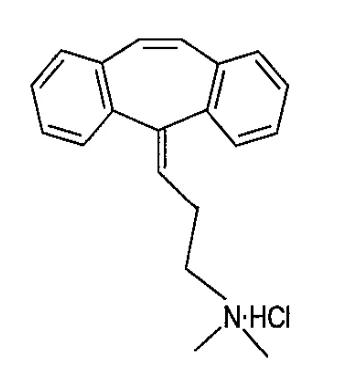
Chemical Name: 3-(5H-Dibenzo[a,d] cyclohepten-5-ylidene)-N,N-dimethyl-1 propanamine hydrochloride. N,N-dimethyl-5H
dibenzo[a,d]cyclohepten- _5,γ-propylamine hydrochloride
Structural Formula:
Molecular Formula: C20H21N•HCl
Molecular Weight: 311.9 g/mol
Physicochemical Properties:
Description: A white or off-white odourless crystalline powder.
Melting Point: 215° to 219° with a range of not more than 2°C.
Solubility: Freely soluble in water, alcohol, and methyl alcohol; sparingly soluble in isopropyl alcohol; slightly soluble in chloroform and methylene chloride; practically insoluble in hydrocarbons.
 |
|---|
14 CLINICAL TRAILS
14.2 Comparative Bioavailability Studies
A blinded, randomized, two-treatment, two-period, two-sequence, single oral dose (2 x 10 mg), crossover comparative bioavailability study of RIVA-CYCLOBENZAPRINE tablets 10 mg (Laboratoire Riva Inc.) and FlexerilTM tablets 10 mg (Merck-Frosst Canada Inc.), was conducted in healthy, adult male subjects under fasting conditions. Comparative bioavailability data from 24 subjects that were included in the statistical analysis are presented in the following table:
SUMMARY TABLE OF THE COMPARATIVE BIOAVAILABILITY DATA
Cyclobenzaprine (2 x 10 mg) Geometric Mean Arithmetic Mean (CV %) | ||||
|---|---|---|---|---|
| Parameter | Test1 | Reference2 | % Ratio of Geometric Means | 90 % Confidence Interval |
AUC0-72 (ng·h/mL) | 231.03 247.45 (40.6) | 233.80 247.09 (35.1) | 98.8 | 93.0 – 105.0 |
AUCT (ng·h/mL) | 239.80 261.40 (46.3) | 247.29 259.44 (41.2) | 99.4 | 93.2 – 106.0 |
AUCI (ng·h/mL) | 267.12 287.02 (42.3) | 269.08 286.87 (38.5) | 99.3 | 93.7 – 105.1 |
Cmax (ng/mL) | 12.88 13.61 (37.0) | 12.96 13.56 (29.9) | 99.4 | 92.2 – 107.1 |
Tmax3 (h) | 4.04 (0.81) | 4.04 (0.78) | ||
T½3 (h) | 23.66 (6.26) | 24.71 (5.97) | ||
1 RIVA-CYCLOBENZAPRINE (cyclobenzaprine hydrochloride) tablets, 10 mg (Laboratoire Riva Inc.)
2 FlexerilTM (cyclobenzaprine hydrochloride) tablets, 10 mg (Merck-Frosst Canada Inc.)
3 Expressed as the arithmetic mean (CV %) only
15 MICROBIOLOGY
No microbiological information is required for this drug product.
16 NON-CLINICAL TOXICOLOGY
Detailed pharmacology
Cyclobenzaprine hydrochloride has skeletal muscle spasmolytic activity in a number of experimental situations, including tetanus toxin hyperactivity in rabbits, supraspinal rigidity and ischemic cord (spinal) rigidity in cats, and muscle spasm in mice.
Animal studies indicate that cyclobenzaprine does not act at the neuromuscular junction or directly on skeletal muscle. Such studies show that cyclobenzaprine acts primarily within the central nervous system at brain stem as opposed to spinal cord levels, although its action on the latter may contribute to its overall skeletal muscle relaxant activity. Evidence suggests that the net effect of cyclobenzaprine is a reduction of tonic somatic motor activity, influencing both gamma and alpha motor systems.
Studies in several species of laboratory test animals showed that cyclobenzaprine hydrochloride also possesses psychotropic activity (evidenced by tetrabenazine and reserpine antagonism in mice and rats, potentiation of norepinephrine pressor response in anesthetized dogs, typical ataraxic drug taming action in monkeys), significant anticholinergic and antihistaminic activity, weak adrenergic blocking and antiserotonin activity, and minor local anesthetic action. In dogs with Heidenhain gastric pouches, cyclobenzaprine did not stimulate gastric secretion.
Following either oral or intravenous doses of 14C-labelled drug, peak plasma levels of radioactivity appeared in half an hour in rats, in two hours in dogs, and in two to four hours in monkeys. Radioactivity was excreted mainly in the feces in rats (59 % of the dose vs 13 % in the urine), mainly in the urine in dogs (55 % vs 29% in the feces), and mostly in the urine in monkeys (75% vs 9% in the feces). Rats excreted 25 % of an intravenous dose in the bile in six hours. Urinary radioactivity was present almost entirely as water-soluble conjugates, but some species differences were observed in preliminary extraction experiments. The excretion pattern was similar after oral and intravenous doses, suggesting that the drug is extensively absorbed. In rats, all tissues except red blood cells contained higher levels of radioactivity than did plasma two hours after an intravenous dose of labelled drug. Levels were particularly high in small intestine, lung, kidney, and liver. After 48 hours all levels had declined, but activity persisted in liver, kidney and red blood cells.
Toxicology
General Toxicology
Acute Toxicity: Oral LD50 values were approximately 338 mg/kg in mice and 425 mg/kg in rats (27 and 68 times the MRHD on mg/m2 basis, respectively). Signs of drug effects were similar in both species and included ataxia, decreased respiratory rate, sedation, flaccid hind legs, loss of the ear flick reflex, loss of righting reflex with swimming movements, and intermittent clonic convulsions. Death occurred 30 minutes to seven days following administration and was preceded by weight loss and lethargy. Dogs given single oral doses of 180 mg/kg (97 times the MRHD on mg/m2 basis) or more by gavage developed ptyalism, emesis, tremors, convulsions, and increased respiratory rate, and died within an hour. When the same dose was given in a capsule, dogs developed similar physical signs, followed by sedation, but recovered after three days, suggesting that the oral dosage form may influence the toxicity. The drug was more toxic to infant and weanling rats than to young adults.
Subacute and Chronic Toxicity: Signs of drug effect in subacute and chronic toxicity studies in rats, dogs, and monkeys were primarily related to the pharmacologic activity of the compound.
In a 67-week study with rats that received cyclobenzaprine at oral doses of 10 to 40 mg/kg/day (1.6 to 6.5 times the MRHD on mg/m2 basis), there were findings in the liver consisting of midzonal vacuolation with lipidosis for males and midzonal and centrilobular hepatocytic enlargement for females. In addition, there were findings of centrilobular coagulative necrosis. In the higher dose groups, these microscopic changes were seen after 26 weeks and even earlier in rats that died prior to 26 weeks; at lower doses, these changes were not seen until after 26 weeks.
In a 26-week study with Cynomolgus monkeys that received cyclobenzaprine at oral of doses of 2.5, 5, 10, or 20 mg/kg/day, one monkey at 20 mg/kg/day (6.4 times the MRHD on mg/m2 basis) was euthanized in week 17. Morbidity for this animal was attributed to findings of chronic pancreatitis, cholecystitis, cholangitis, and focal liver necrosis.
| Dose (mg/kg/day)* | Duration | Physical Signs | Postmortem Findings |
|---|---|---|---|
| RATS | |||
| 5 mg | 56 weeks | ptyalism | low incidence of midzonal hepatocytic vacuolation with lipidosis. |
| 10 mg | 67 weeks | ptyalism, decreased activity, chromorhinorrhea, rales, frequent micturition, flaccidity, resistance to dosing, irritability | midzonal hepatocytic vacuolation with lipidosis, enlarged hepatocytes, centrilobular necrosis |
| 20 or 40 mg | 67 weeks | depressed body wt. gain, increased mortality | same as above. More frequent in males |
| 60 mg | 2 weeks | decreased physical activity and growth rate | no postmortem examinations |
| 120 or 240 mg | 2 – 8 doses | severe wt. loss, collapse, convulsions, death | no postmortem examinations |
| DOGS | |||
| 2 mg | 53 weeks | minimal ptyalism, vomiting, dry nose, dry gums | no treatment-related changes |
| 4 or 8 mg | 53 weeks | same as above but more pronounced | small foci of gastric mucosal necrosis, hemorrhage, or inflammation in 3/16 dogs |
| 10 mg | 28 weeks | slight weight loss, slightly prominent P & T waves in ECG recordings | small focus of unilateral renal papillary edema in 1 of 4 dogs |
| 60 or 120 mg | 28 doses | tachycardia, sedation, ataxia, convulsions, death | no postmortem examination |
| MONKEYS | |||
| 2.5 mg | 26 weeks | none observed | no treatment related changes |
| 5 or 10 mg | 26 weeks | sleepiness (rare) | no treatment related changes |
| 20 mg | 26 weeks | general debilitation (1/6 monkeys), sleepiness | chronic pancreatitis, cholecystitis, cholangitis, focal peritonitis (1/6 monkeys) |
* Based on a Maximum Recommended Human Dose of 60 mg/day (1.0 mg/kg/day), on a mg/m2 basis:
- 10 mg/kg/day in mice is 0.8 times, and 20 mg/kg/day is 1.6 times the MRHD;
- 10 mg/kg/day in rats is 1.6 times, and 40 mg/kg/day is 6.4 times the MRHD;
- 10 mg/kg/day in dogs is 5.4 times, and 120 mg/kg/day is 65 times the MRHD;
- 10 mg/kg/day in monkeys and rabbits is 3.2 times, and 20 mg/kg/d is 6.4 times the MRHD.
Carcinogenicity
Cyclobenzaprine hydrochloride did not have any effect on the onset, incidence or distribution of neoplasms when given in oral doses of up to 10 mg/kg/day to mice for 81 weeks or to rats for 105 weeks (1 and 1.6 times the MRHD on a mg/m2 basis, respectively).
Reproductive and Developmental Toxicology
Studies in mice and rabbits did not reveal any evidence of embryo lethality or teratogenicity at oral doses up to 20 mg/kg/day (respectively, 1.6 and 6.4 times the MRHD on a mg/m2 basis).
In rats, doses of 5 mg or 10 mg/kg/day did not adversely affect the reproduction performance or fertility of males or females, or the growth and survival of their offspring.
At doses of 20 mg/kg/day (3.2 times the MRHD on a mg/m2 basis) there was decrease in litter size, decrease in size and survival of the pups, and reduced weight gain of mothers.
17 SUPPORTING PRODUCT MONOGRAPHS
- 1. Flexeril®, Tablet, 10 mg, Product Monograph, Frosst Division of Merck Frosst Canada Inc. March 08, 1988.
- 2. Teva-Cyclobenzaprine, Tablet, 10 mg, Submission Control 250699, Product Monograph, Teva Canada Limited. August 26, 2021.