


Product Monograph - Sandoz Alfuzosin
SUMMARY PRODUCT INFORMATION
| Route of Administration | Dosage Form / Strength | Nonmedicinal Ingredients |
| Oral | Prolonged-Release Tablets 10 mg | colloidal hydrated silica, ethylcellulose, hydrogenated castor oil, hydroxypropyl methylcellulose (hypromellose), magnesium stearate, mannitol, microcrystalline cellulose, povidone, yellow ferric oxide |
INDICATIONS AND CLINICAL USE
Sandoz Alfuzosin (alfuzosin hydrochloride) is indicated for:
- Benign Prostatic Hyperplasia
Sandoz Alfuzosin is indicated for the treatment of the signs and symptoms of benign prostatic hyperplasia (BPH).
- Acute Urinary Retention
Sandoz Alfuzosin is indicated as adjunctive therapy with urethral catheterization for Acute Urinary Retention related to BPH and management following catheter removal.
Geriatrics (> 65 years of age):
Alfuzosin hydrochloride has been found to be a safe and effective when administered at the therapeutic dose (10 mg once-daily) to patients over the age of 65 years (see WARNINGS AND PRECAUTIONS, Cardiovascular).
Women:
Alfuzosin hydrochloride is not indicated nor recommended for use in women.
Pediatrics (< 18 years):
Alfuzosin hydrochloride is not indicated for use in children.
CONTRAINDICATIONS
Alfuzosin hydrochloride is contraindicated in:
- Patients with a known hypersensitivity to alfuzosin hydrochloride or to any ingredient in the formulation. For a complete listing, see the Dosage Forms, Composition and Packaging section of the product monograph.
- Patients with moderate to severe hepatic insufficiency, since alfuzosin blood levels are increased in these patients (see ACTION AND CLINICAL PHARMACOLOGY, Pharmacokinetics, Special Populations and Conditions, Hepatic Insufficiency).
- Combination with other alpha1-blockers.
- Combination with potent CYP3A4 inhibitors such as ketoconazole, ritonavir and itraconazole, since alfuzosin blood levels and exposure (AUC) are increased (see DRUG INTERACTIONS, Overview).
WARNINGS AND PRECAUTIONS
General
Prostatic carcinoma: Carcinoma of the prostate and BPH cause many of the same symptoms. These two diseases frequently coexist. Therefore, patients thought to have BPH should be examined prior to starting therapy with alfuzosin hydrochloride to rule out the presence of carcinoma of the prostate.
Patients with known hypersensitivity to alpha1-blockers should be closely monitored while on Alfuzosin hydrochloride.
There are no data available on the effect on driving vehicles. Adverse reactions such as vertigo, dizziness and asthenia may occur essentially at the beginning of treatment. This has to be taken into consideration when driving vehicles and operating machines.
Patient should be warned that the tablet should be swallowed whole. Any other mode of administration, such as crunching, crushing, chewing, grinding or pounding to powder should be prohibited. These actions may lead to inappropriate release and absorption of the drug and therefore possible early adverse reactions (see DOSAGE AND ADMINISTRATION, Administration).
Cardiovascular
Alfuzosin hydrochloride is not indicated for the treatment of hypertension.
As with all alpha1-blockers in some patients, in particular, patients receiving antihypertensive medications, postural hypotension with or without dizziness or other symptoms may develop within a few hours following administration of alfuzosin hydrochloride. However, these effects are usually transient, occur at the beginning of treatment and do not usually prevent the continuation of treatment. In such cases, the patients should lie down until the symptoms have completely disappeared.
Pronounced drop in blood pressure has been reported in post-marketing surveillance in patients with pre-existing risk factors (such as underlying cardiac diseases and/or concomitant treatment with anti-hypertensive medication). The risk of developing hypotension and related adverse reactions may be greater in elderly patients.
As with other alpha1-blockers (alpha1-adrenergic blocking agents), there is a potential for syncope. Patients beginning treatment should be warned of the possible occurrence of such events.
Care should be taken when alfuzosin hydrochloride is administered to patients with symptomatic orthostatic hypotension, in patients who have had a pronounced hypotensive response to another alpha1-blocker or in patients on anti-hypertensive medication or nitrates.
As with all alpha1-blockers, alfuzosin has been observed to increase heart rate. Caution should be taken in patients with histories of tachyarrhythmia or with certain cardiovascular conditions, such as myocardial ischemia. The heart rate increasing effects of alfuzosin are additive to those of other heart rate increasing drugs (see DRUG INTERACTIONS).
Coronary insufficiency: Specific treatment for coronary insufficiency should be continued; however, if angina pectoris reappears or becomes worse, alfuzosin hydrochloride should be discontinued.
Patients with congenital QTc prolongation, with a known history of acquired QTc prolongation or who are taking drugs known to increase the QTc interval should be evaluated before and during the administration of alfuzosin.
Co-administration of alfuzosin with a drug known to be a QTc prolonging drug should be evaluated by the physician based on individual patient’s condition (see ACTION AND CLINICAL PHARMACOLOGY, Pharmacodynamics, Electrocardiography).
Ophthalmologic
Intraoperative Floppy Iris Syndrome (IFIS, a variant of small pupil syndrome) has been observed during cataract surgery in some patients on or previously treated with some alpha-1-blockers. Cases of IFIS have been observed with alfuzosin hydrochloride use. Ophthalmic surgeons should be informed in advance of cataract surgery of current or past use of alpha-1-blockers, as IFIS may lead to increased procedural complications. The ophthalmologists should be prepared for possible modifications to their surgical technique.
Reproductive System
Alfuzosin hydrochloride, like other alpha1-blockers (alpha adrenergic antagonists), has been associated with priapism (persistent painful penile erection unrelated to sexual activity). Because this condition can lead to permanent impotence if not properly treated, patients should be advised about the seriousness of the condition and to seek immediate medical attention (see ADVERSE REACTIONS, Post-Market Adverse Drug Reactions).
Special Populations
Pregnant Women:
Alfuzosin hydrochloride is not indicated nor recommended for use in women. No embryotoxic and/or teratogenic effects in the rat and rabbit were observed with alfuzosin hydrochloride. Parameters of male and female fertility, parturition, lactation and pup development were not modified by alfuzosin hydrochloride.
Nursing Women:
Alfuzosin hydrochloride is not indicated nor recommended for use in women. It is unknown if the drug is excreted in human milk.
Pediatrics (< 18 years):
Alfuzosin hydrochloride is not indicated for use in children.
Geriatrics (> 65 years of age):
The pharmacokinetic parameters (Cmax and AUC) are not increased in elderly patients when compared to healthy male volunteers. However, through levels of alfuzosin are positively correlated with the age. The concentration in subjects ≥ 75 years of age are approximately 35% greater than those found in patients < 65 years of age. No overall differences in safety or effectiveness were observed when alfuzosin hydrochloride was administered at the therapeutic dose (10 mg once-daily) to patients over the age of 65 years , but greater sensitivity of some older individuals cannot be ruled out (see WARNINGS AND PRECAUTIONS, Cardiovascular).
ADVERSE REACTIONS
Adverse Drug Reaction Overview
Dizziness and headache are the most frequent adverse drug reactions with alfuzosin hydrochloride.
Alfuzosin hydrochloride was associated with a low incidence of postural symptoms. As with all alpha1-blockers, there is also a potential for syncope.
Clinical Trial Adverse Drug Reactions
Because clinical trials are conducted under very specific conditions the adverse reaction rates observed in the clinical trials may not reflect the rates observed in practice and should not be compared to the rates in the clinical trials of another drug. Adverse drug reaction information from clinical trials is useful for identifying drug-related adverse events and for approximating rates.
Safety information was derived from placebo-controlled clinical trials involving 1,608 men with BPH. The safety profile of alfuzosin hydrochloride in the ALFAUR study which included 363 patients with Acute Urinary Retention due to BPH was similar to the safety profile reported in previous BPH studies.
In the BPH studies, 4% of patients taking alfuzosin hydrochloride 10 mg tablets withdrew from the study due to adverse events, compared with 3% in the placebo group. Dizziness and headache were the most frequent cause in each of the groups, although no single symptom was predominant. The withdrawal rate was similar in the alfuzosin hydrochloride group following long-term use in open-label extension studies for up to 1 year.
Table 1 summarizes the treatment-emergent adverse events that occurred in ≥ 2% of patients receiving alfuzosin hydrochloride and placebo, in three 3-month trials. In general, the adverse events seen in long-term use were similar in type and frequency to the events described below for the 3-month trials.
Table 1 – Treatment-Emergent Adverse Events Occurring in ≥ 2% of Patients with BPH treated with alfuzosin hydrochloride and with Placebo in 3-Month Placebo-Controlled Clinical Studies
| Adverse Event | Placebo (N = 678) | Alfuzosin hydrochloride (N = 473) | |
General Disorders and Administration Site Conditions Fatigue a | 12 (1.8%) | 13 (2.7%) | |
Musculoskeletal and Connective Tissue Disorders Joint Disorders b | 15 (2.2%) | 10 (2.1%) | |
Infection and Infestations Upper respiratory tract infection c | 23 (3.4%) | 29 (6.1%) | |
Nervous System Disorders Dizziness d Headache | 19 (2.8%) 12 (1.8%) | 27 (5.7%) 14 (3.0%) | |
a Includes: fatigue and asthenia b Includes: arthritis, arthrosis, arthropathy, arthritis aggravated, arthralgia, and bursitis c Includes: upper respiratory tract infection, rhinitis, sinusitis, laryngitis, pharyngitis d Includes: dizziness and malaise | |||
Less Common Clinical Trial Adverse Drug Reactions
The following adverse events, reported by between 1% and 2% of patients receiving alfuzosin hydrochloride and placebo are listed and are as follows:
Table 2 – Treatment-Emergent Adverse Events Occurring Between 1% and 2% of Patients with BPH treated with alfuzosin hydrochloride and Placebo in 3-Month Placebo-Controlled Clinical Studies
| Adverse Event | Placebo (N=678) | Alfuzosin hydrochloride (N=473) |
|---|---|---|
| Gastrointestinal Disorders | ||
| Abdominal Pain | 7 (1.0) | 7 (1.5) |
| Dyspepsia | 7 (1.0) | 6 (1.3) |
| Constipation | 3 (0.4) | 5 (1.1) |
| Nausea | 4 (0.6) | 5 (1.1) |
| General Disorders and Administration Site Conditions | ||
| Influenza-like symptoms | 14 (2.1) | 9 (1.9) |
| Pain | 4 (0.6) | 7 (1.5) |
| Infection and Infestations | ||
| Bronchitis | 5 (0.7) | 7 (1.5) |
| Injury, Poisoning and Procedural Complications | ||
| Inflicted injury a | 3 (0.4) | 6 (1.3) |
| Musculosqueletal and Connective Tissue Disorders | ||
| Back pain b | 11 (1.6) | 7 (1.5) |
| Reproductive System and Breast Disorders | ||
| Impotence | 4 (0.6) | 7 (1.5) |
a Includes: bite and inflicted injury b Includes: ischial neuralgia, neuralgia, neuropathy, back pain, and lumbar disc lesion | ||
Reproductive System and Breast Disorders
Impotence and other events related to sexual function are commonly associated with other alpha1-blockers, however, with alfuzosin hydrochloride, there were minimal effects regarding sexual function and ejaculatory disorders/abnormalities with no reports of priapism. Also, no patient discontinued treatment with alfuzosin hydrochloride due to ejaculation disorders. The reported incidence of ejaculation disorders was not associated with the study drug and is consistent with that reported in the untreated population.
Alfuzosin hydrochloride was not associated with deleterious effects on sexual function.
Cardiac Disorders
Atrial Arrhythmias
A total of 47 cases of potential atrial arrhythmia were reported with alfuzosin whatever the formulation. Twenty nine cases of these arrhythmias were atrial fibrillations. In 13 double-blind clinical studies, 2881 patients were treated with alfuzosin (any formulation) and 15 (0.5%) cases of potential atrial arrhythmias have been detected. Six (0.2%) of these cases of arrhythmias were atrial fibrillations. Because atrial fibrillation has also been observed with other alpha1-blocker users, it may suggest that atrial fibrillation observed among the alfuzosin users may be possibly related to a class effect of alpha1-blockers.
Vascular Disorders
Signs and Symptoms of Orthostasis in Clinical Studies.
The number of patients with symptoms of orthostasis are summarized in Table 3.
Table 3 – Number (%) of Patients with BPH with Symptoms Possibly Associated with Orthostasis in 3-Month Placebo-Controlled Clinical Studies
| Symptoms | Placebo (N=678) | Alfuzosin hydrochloride (N=473) |
Dizziness Hypotension or postural hypotension Syncope | 19 (2.8%) 0 0 | 27 (5.7%) 2 (0.4%) 1 (0.2%) |
Multiple testing for blood pressure changes or orthostatic hypotension was conducted in the three controlled studies. These tests were considered positive for blood pressure decrease if (1) supine systolic blood pressure was ≤ 90 mmHg, with a decrease ≥ 20 mmHg versus baseline, and/or (2) supine diastolic blood pressure was ≤ 50 mmHg, with a decrease ≥ 15 mmHg versus baseline. The tests were considered positive for orthostatic hypotension if there was a decrease in systolic blood pressure of ≥ 20 mmHg upon standing from the supine position during the orthostatic tests. The percentage of patients with a positive test at any visit was 7.7% for placebo and 6.6% for alfuzosin hydrochloride, as shown in Table 4.
Table 4 – Number (%) of Patients with BPH with Clinically Meaningful Decreases in Blood Pressure at Any Visit in 3-Month Placebo-Controlled Clinical Studies
| Clinically Meaningful Change | Placebo (N=674) | Alfuzosin hydrochloride (N=469) | |
Decreased systolic blood pressure Decreased diastolic blood pressure Positive orthostatic test | 0 3 (0.4%) 52 (7.7%) | 1 (0.2%) 4 (0.9%) 31a (6.6%) | |
| a N = 471 | |||
A subset of patients from Study 1 had blood pressure measurements 12 to 16 hours after the first dose to assess the potential to produce orthostatic hypotension. None of the 35 alfuzosin hydrochloride treated patients showed a positive test for systolic, diastolic, or orthostatic blood pressure change.
No age effect on the overall incidence of patients reporting adverse events was observed in the alfuzosin hydrochloride group; elderly patients (≥ 65 years) did not experience more vasodilatory adverse events than the younger patients (see WARNINGS AND PRECAUTIONS, Cardiovascular).
Post-Market Adverse Drug Reactions
The following adverse events have also been reported in post-marketing experience:
The following frequency rating is used: very common (≥ 10%), common (≥ 1% and < 10%), uncommon (≥ 0.1% and < 1%), rare (≥ 0.01% and < 0.1%), very rare (< 0.01%)
Blood and lymphatic system disorders:
Cases of thrombocytopenia have been reported.
Cardiac Disorders:
Uncommon: tachycardia
Very Rare: angina pectoris in patients with pre-existing coronary artery disease (see also WARNINGS AND PRECAUTIONS, Cardiovascular). Isolated spontaneous cases of QT interval prolongation, ventricular arrhythmias, including Torsade de Pointes, ventricular tachycardia and fibrillation have been reported particularly in patients with pre-existing cardiovascular diseases; however, a relationship between these adverse events and the alfuzosin hydrochloride treatment was not clearly established due to concomitant cardiac disorders, concomitant medications or absence of pre-treatment ECG measurement.
Cases of atrial fibrillation have been reported.
Vascular Disorders:
Uncommon: flushing, hypotension (postural)
Gastrointestinal disorders:
Common: nausea, abdominal pain, vomiting
Uncommon: diarrhea
General Disorders and Administration Site Conditions:
Common: asthenia
Uncommon: edema, chest pain
Ear and Labyrinth Disorders:
Uncommon: vertigo
Eye disorders:
Cases of intraoperative floppy iris syndrome have been reported (see WARNINGS AND PRECAUTIONS, Ophthalmologic).
Hepato-biliary disorders:
Cases of hepatocellular injury and cholestatic liver disease have been reported.
Nervous system disorders:
The risk of cerebral ischemic disorders in patients with pre-existing cerebral circulatory disturbances, due to the fact that hypotension may develop following alfuzosin administration, can be considered.
Common: faintness, dizziness, headache
Uncommon: syncope, vertigo
Respiratory, thoracic and mediastinal disorders:
Uncommon: rhinitis
Reproductive System and Breast Disorders:
Priapism (see WARNINGS AND PRECAUTIONS, Reproductive System).
Skin and Subcutaneous Tissue Disorders:
Uncommon: rash, pruritus
Very rare: urticaria, angioedema.
DRUG INTERACTIONS
Overview
Alfuzosin hydrochloride is not an inducer or an inhibitor of any of the principal hepatic enzymes involved in the metabolism of other drugs.
CYP3A4 is the principal hepatic enzyme isoform involved in the metabolism of alfuzosin hydrochloride.
Potent CYP3A4 inhibitors, such as ketoconazole, itraconazole and ritonavir, increased alfuzosin hydrochloride blood levels and exposure (AUC). Therefore, alfuzosin hydrochloride should not be co-administered with potent inhibitors of CYP3A4 (see CONTRAINDICATIONS). See Drug-Drug Interactions for details of increased alfuzosin hydrochloride blood levels. As this is only a partial list, the physician is advised to consult current scientific literature regarding other CYP 3A4 competitive inhibitors prior to prescribing alfuzosin hydrochloride if other concomitant medications are used as high blood levels of alfuzosin hydrochloride can result.
It is not known how combined exposure of any medications metabolized by the CYP3A4 hepatic enzyme isoform (such as modern alpha1-blockers), herbal remedies (particularly St. John’s Wort, Milk thistle) and grapefruit juice may influence the overall efficacy and unwanted side effects of these medications, therefore, caution should be exercised.
Alfuzosin hydrochloride should be prescribed carefully in combination with antihypertensive drugs (see WARNINGS AND PRECAUTIONS, Cardiovascular and Drug-Drug Interactions, Cardiovascular Drugs).
Drug-Drug Interactions
Anti-Infectious Drugs
Imidazole
Ketoconazole
CYP3A4 is the principal hepatic enzyme involved in the metabolism of alfuzosin hydrochloride. Ketoconazole is a strong-potency inhibitor of CYP3A4. Repeated 200 mg daily dosing of ketoconazole, for seven days increased alfuzosin hydrochloride Cmax 2.11-fold and AUClast 2.46-fold following a single 10 mg dose of alfuzosin hydrochloride under fed condition. Other parameters such as tmax and t1/2 were not modified. The 8-day repeated administration of ketoconazole 400 mg daily increased Cmax of alfuzosin hydrochloride by 2.3-fold, AUClast and AUC by 3.2 and 3.0 respectively.
Cardiovascular Drugs
Alpha1-Blocker
Alfuzosin hydrochloride should not be used in combination with other alpha1-blockers (see CONTRAINDICATIONS).
Anticoagulant
Warfarin
The potential drug interactions of alfuzosin hydrochloride with warfarin was studied in clinical trials. The results showed that alfuzosin hydrochloride can be prescribed without risk of interactions in combination with warfarin.
Beta-Blocker
Atenolol
The potential drug interactions of alfuzosin hydrochloride with atenolol was studied in clinical trials. The results showed that alfuzosin hydrochloride may be used with atenolol taking into account the hypotensive effects specific to drugs in this group.
Calcium Channel Blocker
Diltiazem
Repeated coadministration of 240 mg/day of diltiazem, a moderate-potency inhibitor of CYP3A4, with 7.5 mg/day alfuzosin (equivalent to the exposure with alfuzosin hydrochloride) increased the Cmax and AUC0-24 of alfuzosin 1.5- and 1.3-fold, respectively. Alfuzosin increased the Cmax and AUC0-12 of diltiazem 1.4-fold. No changes in blood pressure were observed.
Cardiotonic Glycoside
Digoxin
Repeated coadministration of alfuzosin hydrochloride and digoxin for 7 days did not influence the steady-state pharmacokinetics of either drug.
Diuretic
Hydrochlorothiazide
The potential drug interactions of alfuzosin hydrochloride with hydrochlorothiazide was studied in clinical trials. The results showed that alfuzosin hydrochloride can be prescribed without risk of interactions in combination with hydrochlorothiazide.
Nitrates
Alfuzosin hydrochloride should be prescribed carefully in combination with nitrates.
Gastrointestinal Drugs
Histamine H2 Receptor Antagonist
Cimetidine
The potential drug interactions of alfuzosin hydrochloride with cimetidine was studied in clinical trials. The results showed that alfuzosin hydrochloride can be prescribed without risk of interactions in combination with cimetidine.
Sexual Function Drugs
Inhibitor of cyclic guanosine monophosphate (cGMP)-specific phosphodiesterase type 5 (PDE5)
Because of the vasodilatory effects of alpha-blockers and PDE5-inhibitors, patients treated with alpha-blocker therapy should be hemodynamically stable before treatment with PDE5-inhibitors is initiated.
Tadalafil
The potential drug interaction of alfuzosin hydrochloride with tadalafil was studied in a clinical trial. The results showed that there is no clinically significant hemodynamic interaction between alfuzosin hydrochloride 10 mg once daily and tadalafil 20 mg. Alfuzosin hydrochloride can be prescribed in combination with tadalafil.
Sildenafil
The effect on QT/QTc interval of the combination of alfuzosin hydrochloride 10 mg and sildenafil 100 mg has been studied in an electrophysiology trial (see ACTION AND CLINICAL PHARMACOLOGY, Pharmacodynamics, Electrocardiography).
Vardenafil
The potential drug interaction of alfuzosin hydrochloride with vardenafil was not studied in a clinical trial.
Drug-Food Interactions
alfuzosin hydrochloride should be taken after a meal.
It is not known how combined exposure of grapefruit juice may influence the overall efficacy and unwanted side effects of these type of medications, therefore, caution should be exercised.
Drug-Herb Interactions
Interactions with herbal products have not been established. It is not known how combined exposure of herbal remedies (particularly St. John’s Wort, Milk thistle) may influence the overall efficacy and unwanted side effects of these medications, therefore, caution should be exercised when taking herbal remedies with these types of medications.
Drug-Laboratory Tests Interactions
Treatment with alfuzosin hydrochloride for up to 12 months produced no clinically significant changes in urinalysis, the routine biochemical and hematologic tests as well as in prostate specific antigen (PSA).
DOSAGE AND ADMINISTRATION
Recommended Dose and Dosage Adjustment
Benign Prostatic Hyperplasia: The recommended dosage is one 10 mg Sandoz Alfuzosin tablet daily to be taken after the same meal each day.
Acute Urinary Retention: The recommended dosage is one 10 mg Sandoz Alfuzosin tablet daily after a meal to be taken from the first day of catheterization and continued beyond catheter removal unless there is a relapse of acute urinary retention or disease progression.
Administration
The tablet should be swallowed whole. Any other mode of administration, such as crunching, crushing, chewing, grinding or pounding to powder should be prohibited. These actions may lead to an inappropriate release and absorption of the drug and therefore possible early adverse reactions.
OVERDOSAGE
Should overdose of Sandoz Alfuzosin lead to hypotension, support of the cardiovascular system is of first importance; the patient should be hospitalized. Restoration of blood pressure and normalization of heart rate may be accomplished by keeping the patient in the supine position. If this measure is inadequate, then the administration of intravenous fluids should be considered. If necessary, vasopressor should then be used and the renal function should be monitored and supported as needed. Alfuzosin hydrochloride is 87% (82 - 90%) protein-bound, therefore, dialysis may not be of benefit.
For management of a suspected drug overdose, contact your regional Poison Control Centre.
ACTION AND CLINICAL PHARMACOLOGY
Mechanism of Action
Alfuzosin hydrochloride, indicated for the treatment of benign prostatic hyperplasia (BPH) and as adjunctive therapy with urethral catheterization for acute urinary retention related to BPH and management following catheter removal, is a uroselective antagonist of post-synaptic α1-adrenoceptors located in the prostate, bladder base, bladder neck, prostatic capsule, and prostatic urethra.
Pharmacodynamics
The clinical manifestations of benign prostatic hyperplasia are due to bladder outlet obstruction caused by anatomical (static) and functional (dynamic) factors. The static component is related to an increase in prostate size which may not cause symptoms. The dynamic component is related primarily to an increase in smooth muscle tone in the prostate, prostatic capsule, bladder base, bladder neck, and prostatic urethra. This increased tone is mediated by the activation of α1-adrenoceptors and leads to an increased resistance to urinary voiding and the symptoms of BPH such as a hesitant, interrupted, weak stream; urgency and leaking or dribbling; and/or more frequent urination, especially at night. Alfuzosin hydrochloride blocks α1-adrenoceptors leading to a relaxation of the smooth muscle in the bladder neck and prostate.
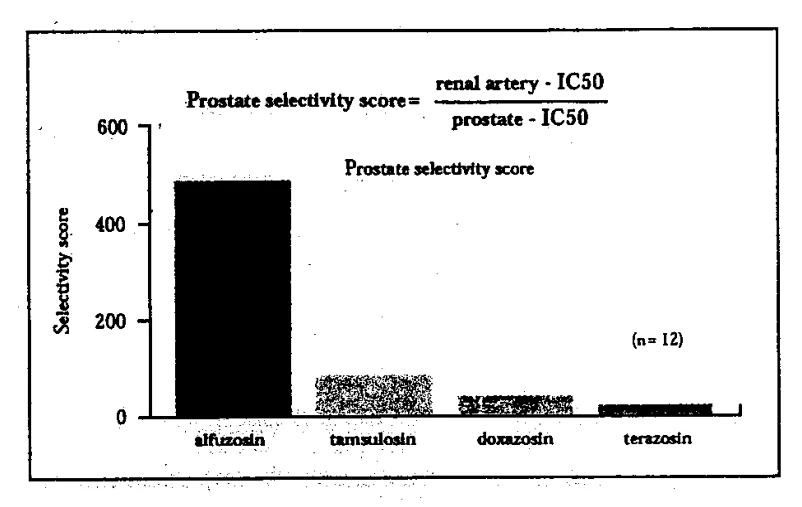
In animal studies, alfuzosin was shown to be functionally uroselective by preferentially decreasing urethral blood pressure over arterial blood pressure. In human tissue, in vitro, alfuzosin has induced preferential α1-adrenoceptor antagonist activity on prostatic cells relative to renal artery cells. This is illustrated in the figure below:
Figure 1 - Prostatic Selectivity Score
In placebo-controlled clinical studies in patients with BPH, alfuzosin hydrochloride was shown to:
- significantly increase urine peak flow rate (Qmax) by 30% which is observed after the first dose
- significantly reduce detrusor pressure and increase bladder capacity
- significantly reduce residual urine volume
These favourable urodynamic effects lead to an improvement of lower tract irritative and obstructive symptoms without any deleterious effect on sexual function. The Quality of Life Index was also significantly improved by 33% in the alfuzosin hydrochloride - treated patients.
In addition, the efficacy of alfuzosin 10 mg OD on peak flow rate and the limited effect on blood pressure have been demonstrated to be related to its pharmacokinetic profile. Moreover, the efficacy on peak flow rate is maintained up to 24 hours after intake.
A lower frequency of acute urinary retention was observed in the alfuzosin treated patient than in the untreated patient.
Electrocardiography
The effect of 10 mg and 40 mg alfuzosin on QT interval was evaluated in a double-blind, randomized, placebo and active-controlled (moxifloxacin 400 mg), 4-way crossover single dose study in 45 healthy white male subjects aged 19 to 45 years. The 40 mg dose of alfuzosin was chosen because this dose achieves higher blood levels than those achieved with the co-administration of alfuzosin hydrochloride and ketoconazole 400 mg (CYP3A4 inhibitor). QT interval, obtained with 12-lead ECGs, was measured from 2h to 12h post treatment administration.
Table 5 summarizes the mean effect and the maximum mean effect on heart rate (HR) and corrected QT interval (QTc) with different methods of correction [Bazett (QTcB), Fridericia (QTcF) and population-specific (QTcN) correction methods]. There is a trend to lower values for QTc interval changes from QTcB → QTcF → QTcN, demonstrating the critical role of the correction formula used to minimize the biased overestimation linked to the heart rate increase. The maximum mean change of heart rate associated with a 10 mg dose of alfuzosin in this study was 3.69 beats/minute and 5.45 beats/minute with 40 mg alfuzosin. The change in heart rate with moxifloxacin was 2.85 beats/minute.
Table 5 - 12-lead ECG - Mean change in HR and QTc data from T7 –T11h and maximum mean baseline- and placebo-adjusted HR and QTc interval changes over the observation period T2-T12h
| Mean difference | Largest time-matched analysis (bootstrap adjusted) | |||||||||||||
|---|---|---|---|---|---|---|---|---|---|---|---|---|---|---|
| Parameter | Treatment | Mean change from baseline vs placebo | 95% CI (upper bound) | Estimation of largest time-matched mean difference | 95% CI (upper bound) | |||||||||
| HR (bpm) | Alfuzosin 10 mg | 1.5 | 3.0 | 3.69 | 5.83 | |||||||||
| Alfuzosin 40 mg | 3.7 | 5.2 | 5.45 | 7.06 | ||||||||||
| Moxifloxacin* | 1.5 | 3.0 | 2.85 | 4.26 | ||||||||||
| QTcB (msec) | Alfuzosin 10 mg | 3.3 | 6.9 | 6.08 | 9.59 | |||||||||
| Alfuzosin 40 mg | 10.8 | 14.4 | 13.27 | 16.71 | ||||||||||
| Moxifloxacin* | 11.9 | 15.6 | 12.57 | 16.12 | ||||||||||
| QTcF (msec) | Alfuzosin 10 mg | 1.6 | 4.3 | 4.01 | 6.68 | |||||||||
| Alfuzosin 40 mg | 6.9 | 9.5 | 10.73 | 13.49 | ||||||||||
| Moxifloxacin* | 10.3 | 13.0 | 11.17 | 14.06 | ||||||||||
| QTcN (msec) | Alfuzosin 10 mg | 0.5 | 3.0 | 2.74 | 5.27 | |||||||||
| Alfuzosin 40 mg | 4.6 | 7.0 | 9.30 | 12.14 | ||||||||||
| Moxifloxacin* | 9.4 | 11.9 | 10.78 | 13.67 | ||||||||||
| * Active control | ||||||||||||||
The maximum mean effect on QTcN appeared greater for 40 mg compared to 10 mg alfuzosin. The effect of the highest alfuzosin dose (four times the therapeutic dose) studied did not appear as large as that of the active control moxifloxacin at its therapeutic dose.
A separate post-marketing study evaluated the effect of the co-administration of 10 mg alfuzosin and a drug with similar QT effect size. It was a double-blind, randomized, placebo and active-controlled (moxifloxacin 400 mg), 5-way crossover study conducted in 39 healthy white male subjects aged 19 to 46 years. QT interval, obtained with 12-lead ECGs, was measured from 4h to 12h post treatment administration. Maximum mean effect on HR and QT interval were extracted from a time-matched placebo adjusted analysis. In this study, the maximum mean placebo-substracted QTcN increase of alfuzosin 10 mg alone was 4.41 msec (upper bound 95% CI, 7.09 msec), shown in Table 6 below. The concomitant administration of the two drugs (alfuzosin and sildenafil) showed an increased QT effect when compared with either drug alone. This maximum mean QTcN increase [8.27 msec (UB 95% CI, 10.90 msec)] was not more than additive. Although this study was not designed to make direct statistical comparisons between drugs, the maximum mean QTcN increase with both drugs given together appeared to be lower than the maximum mean QTcN increase seen with the positive control moxifloxacin 400 mg [11.44 msec (UB 95% CI, 14.01 msec)]. The combination of alfuzosin + sildenafil produced a statistically significant increase in the mean heart rate [+ 4 bpm, p<0.0001].
Table 6 - 12-lead ECG - Mean change in HR and QTc data from T7–T10h and maximum mean baseline- and placebo-adjusted HR and QT interval changes over the observation period T4-T12h
| Mean difference | Largest time-matched analysis (bootstrap adjusted) | |||||||||||||
|---|---|---|---|---|---|---|---|---|---|---|---|---|---|---|
| Parameter | Treatment | Mean change from baseline vs placebo | 95% CI (upper bound) | Estimation of largest time-matched mean difference | 95% CI (upper bound) | |||||||||
| HR (bpm) | Alfuzosin 10 mg | 1.1 | 2.9 | 3.78 | 5.54 | |||||||||
| Alfuzosin + Sildenafil | 4.0 | 5.8 | 5.53 | 7.25 | ||||||||||
| Sildenafil 100 mg | 1.4 | 3.2 | 2.13 | 3.82 | ||||||||||
| Moxifloxacin* | 1.3 | 3.2 | 2.80 | 4.39 | ||||||||||
| QTcB (msec) | Alfuzosin 10 mg | 5.0 | 8.8 | 7.49 | 10.68 | |||||||||
| Alfuzosin + Sildenafil | 13.3 | 17.1 | 14.99 | 18.35 | ||||||||||
| Sildenafil 100 mg | 6.3 | 10.1 | 7.85 | 11.30 | ||||||||||
| Moxifloxacin* | 9.4 | 13.2 | 17.18 | 20.72 | ||||||||||
| QTcF (msec) | Alfuzosin 10 mg | 3.7 | 6.6 | 5.72 | 8.19 | |||||||||
| Alfuzosin + Sildenafil | 9.5 | 12.4 | 10.47 | 12.97 | ||||||||||
| Sildenafil 100 mg | 4.8 | 7.7 | 6.40 | 8.97 | ||||||||||
| Moxifloxacin* | 7.8 | 10.7 | 13.80 | 16.48 | ||||||||||
| QTcN (msec)** | Alfuzosin 10 mg | 2.2 | 5.1 | 4.41 | 7.09 | |||||||||
| Alfuzosin + Sildenafil | 7.0 | 10.0 | 8.27 | 10.90 | ||||||||||
| Sildenafil 100 mg | 3.5 | 6.4 | 5.26 | 7.87 | ||||||||||
| Moxifloxacin* | 6.5 | 9.4 | 11.44 | 14.01 | ||||||||||
* Active control **For the analysis of the mean difference, only QTcNi data are available (QT interval corrected by a subject specific formula) | ||||||||||||||
QT interval prolongation has not been studied in patients with BPH, therefore similar data is not available. This population may suffer from other conditions and have a higher risk to develop QT interval prolongation due to concomitant risk factors or pre-existing cardiovascular disorders. Based on individual patient’s condition, monitoring for ECG abnormalities should be considered by the physician during treatment.
Pharmacokinetic
The alfuzosin hydrochloride tablet is based on the GEOMATRIX® System, a patented prolonged-release technology designed to provide a sustained and continuous delivery of the active ingredient consistent with a once-daily administration. The pharmacokinetic properties of this system have been evaluated in healthy adult volunteers after single and/or multiple administrations with daily doses ranging from 7.5 mg to 30 mg, and in patients with BPH at doses from 7.5 mg to 15 mg.
Absorption:
Bioavailability is reduced when alfuzosin hydrochloride is administered under fasting conditions. A consistent pharmacokinetic profile is obtained when alfuzosin hydrochloride is administered following a meal. A mean peak plasma concentration of 12.3 ± 6.6 ng/mL is reached in 6 to 14 hours after a single dose.
Under fed conditions and after repeated doses, mean Cmax and Cthrough values are 13.6 (SD = 5.6) and 3.1 (SD = 1.6) ng/mL respectively. Mean AUC0-24 is 194 (SD = 75) mg.h/mL. A plateau of concentration is observed from 3 to 14 hours with concentrations above 8.1 ng/mL (Cav) for 11 hours.
Figure 2 - Mean (SEM) alfuzosin plasma concentration-time profiles after a repeated administration of alfuzosin 10 mg OD tablet in healthy middle-aged male volunteers (N=42)
Time (h) 0 4 8 12 16 20 24 Alfuzosin plasma concentration (ng/mL) 0 4 8 12 16
Distribution:
The volume of distribution calculated following intravenous administration is 2.5 L/kg which indicates a distribution into extracellular fluids of the body. Alfuzosin hydrochloriden is moderately bound to plasma proteins with the free fraction accounting for 13.3% in healthy volunteers. Fractions bound to serum albumin and α1-glycoproteins are 68.2 and 52.5%, respectively. Salicylic acid, hydrochlorothiazide, diltiazem, digoxin and indomethacin does not affect the binding of alfuzosin hydrochloride to human plasma proteins. Based on in vivo data, it is not likely that alfuzosin hydrochloride will affect the extent of binding of these drugs to human plasma proteins. There is an increase in free fraction in renal insufficiency patients (16.8%) and in patients with hepatic disease (20.8%).
10 mg OD
Metabolism:
Alfuzosin hydrochloride undergoes metabolism by the liver, with only 11% of the parent compound being excreted as unchanged in the urine. The metabolites which are all inactive are eliminated in the urine (15-30%) and feces (75-91%). Alfuzosin hydrochloride is metabolized by three metabolic pathways (oxidation, O-demethylation, N–dealkylation) which are qualitatively identical to those observed in the animal (rat and dog).
CYP3A4 is the principal hepatic enzyme isoform involved in its metabolism.
Excretion:
Following intravenous or oral administration, the elimination of alfuzosin hydrochloride is characterized, in healthy young subjects and in the target population, by a terminal half-life of about 4.8 hours and a total clearance of 0.3 L/h/kg.
The apparent half-life of alfuzosin hydrochloride is increased to 9.1 hours in healthy middle-aged volunteers and to 10.1 hours in elderly volunteers.
Special Populations and Conditions
Geriatrics:
Compared to healthy middle-aged volunteers, the pharmacokinetic parameters of alfuzosin hydrochloride (Cmax and AUC) are not increased in elderly patients. However, through levels of alfuzosin are positively correlated with the age. The concentration in subjects ≥ 75 years of age are approximately 35% greater than those found in patients < 65 years of age.
Renal Insufficiency:
Compared to subjects with normal renal function, the mean Cmax and AUC values of alfuzosin hydrochloride are moderately increased (1.5 to 1.6 fold) in patients with various stages of renal impairment, with no change in the apparent elimination half-life. This change in the pharmacokinetic profile is not considered clinically relevant; and therefore, does not necessitate a dosing adjustment.
Alfuzosin hydrochloride has not been evaluated in patients with end-stage renal disease.
Hepatic Insufficiency:
After a single oral administration of alfuzosin hydrochloride in patients with severe hepatic insufficiency, the elimination half-life is prolonged. A two-fold increase in Cmax values and a three-fold increase in the AUC is observed. Bioavailability is increased in comparison with that in healthy volunteers (see CONTRAINDICATIONS).
Chronic Cardiac Insufficiency:
The pharmacokinetic profile of alfuzosin hydrochloride administered intravenously is not affected by chronic cardiac insufficiency.
STORAGE AND STABILITY
Store at room temperature (15-30° C). Keep in a safe place out of the reach of children.
SPECIAL HANDLING INSTRUCTIONS
There are no special handling instructions.
DOSAGE FORMS, COMPOSITION AND PACKAGING
Sandoz Alfuzosin 10 mg once-daily prolonged release tablet is a three-layer round and biconvex tablet containing the active ingredient in a white matrix layer between two inactive yellow layers. Sandoz Alfuzosin is available in blisters of 7 tablets and in High Density Polyethylene (HDPE) bottles of 7, 100 and 1000 tablets.
The composition of the three layers consists of alfuzosin hydrochloride (white layer only) and the following non-medicinal ingredients: colloidal hydrated silica, ethylcellulose, hydrogenated castor oil, hydroxypropyl methylcellulose (hypromellose), magnesium stearate, mannitol, microcrystalline cellulose, povidone and yellow ferric oxide.
PART II: SCIENTIFIC INFORMATION
PHARMACEUTICAL INFORMATION
Drug Substance
Proper Name: Alfuzosin hydrochloride
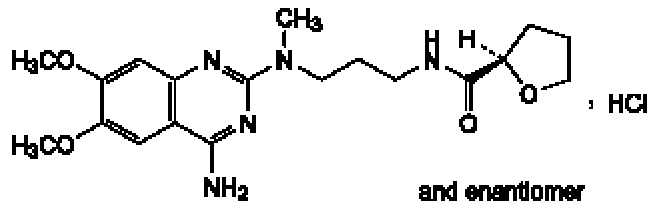
Chemical name: (R,S)-N-[3-[(4-amino-6,7-dimethoxy-2-quinazolinyl) methylamino] propyl] tetrahydro-2-furancarboxamide hydrochloride
Molecular formula and molecular mass: C19H27N5O4•HCl; 425.92
Structural formula:
Physicochemical properties: White to off-white crystalline powder. Alfuzosin is readily soluble in water (> 10%). Its solubility at saturation over a range of pH values is given in the following table:
| pH | Solubility (mg/mL) |
| 2.20 | 176 |
| 5.98 | 172 |
| 6.60 | 235 |
| 7.20 | 243 |
| 7.22 | 234 |
| 7.37 | 179 |
| 7.73 | 109 |
| 8.49 | 20 |
The pH of a 2% solution is between 4.0 and 6.0. The pKa = 8.1 (by spectrophotometry).
Partition Coefficient (octanol/water at pH 7.4): The Partition Coefficient (D) between octanol and a pH 7.4 aqueous buffer was determined by an HPLC method and the result obtained, expressed as a logarithm, is Log D 7.4 = 1.51.
The two enantiomers (S and R) have the same pharmacological activity as the racemate.
CLINICAL TRIALS
Study Results
Benign Prostatic Hyperplasia (BPH):
Four placebo-controlled, double-blind, 12-week studies were conducted with alfuzosin hydrochloride (alfuzosin HCl; prolonged-release) for BPH at doses ranging from 7.5 to 15 mg once-daily. These studies enrolled 1,949 patients with signs and symptoms of BPH. Based on the results of these studies, a dose of 10 mg was selected.
Below are the results of two studies that extensively evaluated alfuzosin hydrochloride.
There were two primary efficacy variables in these studies: International Prostate Symptom Score (IPSS) and Peak Flow Rate (PFR). The International Prostate Symptom Score consists of questions that assess the severity of both irritative and obstructive symptoms, with possible scores ranging from 0 to 35. In addition, the Quality of Life Index was also measured, with possible scores ranging from 0 to 6. The second efficacy variable was peak flow rate.
As evident in Table 7 and
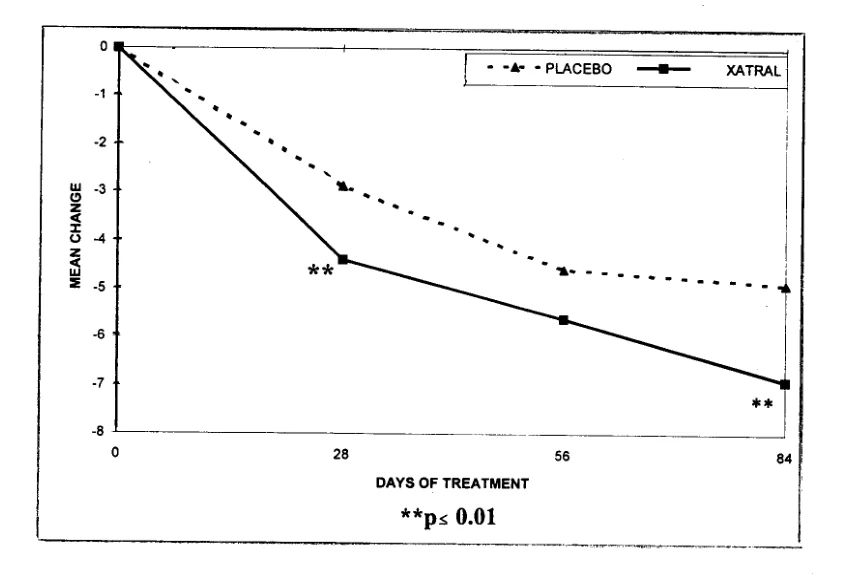
Figure 2 and Figure 3, there was a statistically significant reduction in the Symptom Score versus placebo in both studies, indicating a reduction in symptom severity. This was due to a statistically significant improvement in both the irritative and obstructive subscores. The Quality of Life Index was also significantly improved by 33% in the alfuzosin hydrochloride-treated patients.
Table 7 – Mean Change (±SD) from Baseline in Symptom Score in Patients with BPH
| Study 1* | Study 2* | ||||||||||||||
| Symptom Score | Placebo (N=167) | Alfuzosin hydrochloride 10 mg (N=170) | Placebo (N=152) | Alfuzosin hydrochloride 10 mg (N=137) | |||||||||||
Total symptom score Baselinea Changeb | 18.2 (±6.4) -1.6 (±5.8) | 18.2 (±6.3) -3.6 (±4.8) | 17.7 (±4.1) -4.9 (±5.9) | 17.3 (±3.5) -6.9 (±4.9) | |||||||||||
| p-value | 0.001 | 0.002 | |||||||||||||
Irritative subscore Baselinea Changeb | 7.9 (±3.0) -0.4 (±2.5) | 8.1 (±3.0) -1.4 (±2.5) | 7.0 (±2.6) -1.6 (±2.6) | 6.8 (±2.5) -2.3 (±2.3) | |||||||||||
| p-value | 0.0006 | 0.02 | |||||||||||||
Obstructive subscore Baselinea Changeb | 10.3 (±4.3) -1.1 (±3.8) | 10.1 (±4.4) -2.2 (±3.4) | 10.7 (±3.2) -3.3 (±4.0) | 10.4 (±3.2) -4.6 (±3.5) | |||||||||||
| p-value | 0.02 | 0.005 | |||||||||||||
Quality of Life Index Baselinea Changeb | 3.7 (±1.1) -0.3 (±1.1) | 3.8 (±1.1) -0.7 (±1.1) | 3.3 (±1.0) -0.6 (±1.2) | 3.3 (±0.9) -1.1 (±1.1) | |||||||||||
| p-value | 0.002 | 0.0008 | |||||||||||||
* Data analysis used for Study 1 was the Dunnett test and for Study 2, a One-way ANOVA was used. a The pretreatment days on which the baseline values were obtained in both Study 1 and 2 were 28 days before randomization (D -28 to D0). b Absolute difference between baseline value and last value | |||||||||||||||
Figure 3 - Mean Change from Baseline to Total Symptom Score, by Visit: Study 1
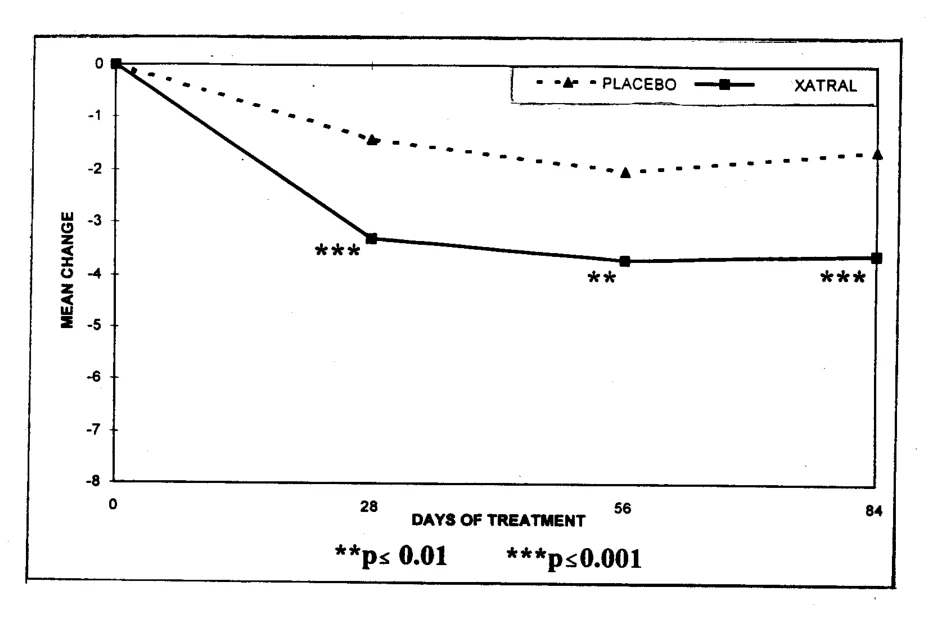
Figure 4 - Mean Change from Baseline in Total Symptom Score, by Visit: Study 2
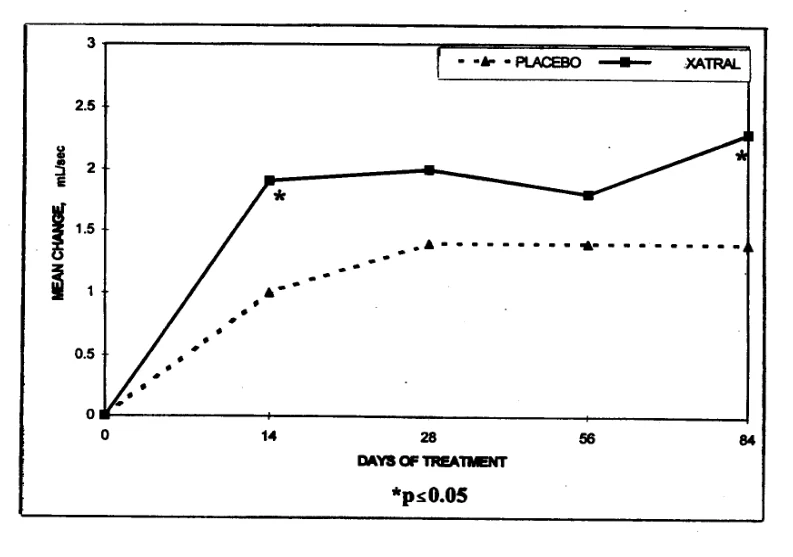
Peak flow rate was also increased, indicating a lessening of obstruction to flow. As can be seen in Table 8 and Figure 4 and Figure 5, the peak flow rate was increased significantly versus placebo in both studies. In Study 2, the assessment of peak flow rate was made at the end of the dosing interval (at approximately 20 hours after the initial dose when trough levels were expected), confirming the efficacy of the once-daily regimen.
Table 8 - Mean Change (±SD) from Baseline in Peak Flow Rate in Patients with BPH
| Study 1* | Study 2* | ||||||||||||
| Peak Flow Rate | Placebo (N=167) | Alfuzosin hydrochloride 10 mg (N=170) | Placebo (N=147) | Alfuzosin hydrochloride 10 mg (N=136) | |||||||||
Baseline,a mL/sec Change, b mL/sec | 10.2 (±4.0) 0.2 (±3.5) | 9.9 (±3.9) 1.7 (±4.2) | 9.2 (±2.0) 1.4 ±(3.2) | 9.4 (±1.9) 2.3 (±3.6) | |||||||||
| p-value | 0.0004 | 0.03 | |||||||||||
* Data analysis used for Study 1 was the Dunnett test and for Study 2, a one-way ANOVA was used. a The baseline was obtained on the day when uroflowmetry was performed before randomization (Day 0) for both Study 1 and 2. b Absolute difference between baseline value and last value | |||||||||||||
Figure 5- Mean Change from Baseline in Peak Flow Rate (mL/sec), by Visit: Study 1
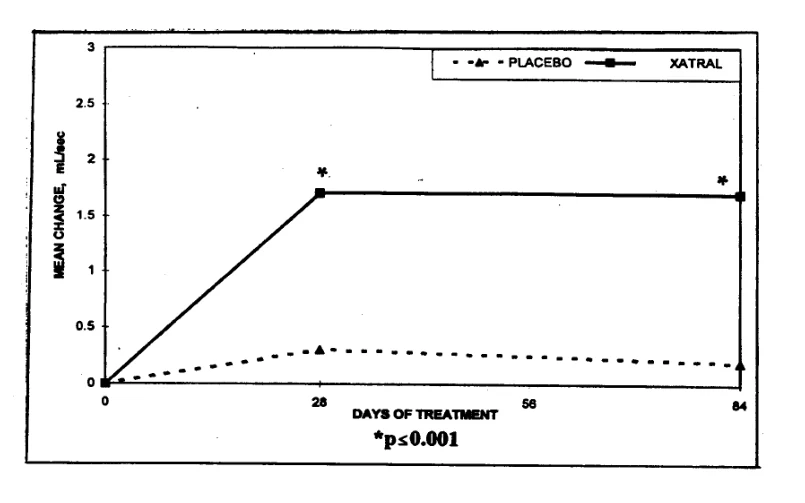
Figure 6 - Mean Change from Baseline in Peak Flow Rate (mL/sec), by Visit: Study 2
Efficacy was maintained in the open-label extension phases of these studies, for up to 1 year in duration.
Alfuzosin hydrochloride was superior over placebo for both IPSS and PFR in both studies. Peak flow rate which was assessed at the end of the dosing interval, demonstrated the 24 hour coverage of this once-daily formulation.
In addition to the studies mentioned above, a 6-month, double blind, multicentre study to assess the comparative efficacy and safety of alfuzosin hydrochloride, finasteride and the combination of both in 1,051 patients with signs and symptoms of BPH was performed. Symptomatic improvement was significantly higher with alfuzosin hydrochloride from the first month of treatment, alone or in combination, compared with finasteride alone (alone: P= 0.01; combination: P= 0.03).
Acute Urinary Retention (AUR):
The ALFAUR study assessed the efficacy of alfuzosin hydrochloride over placebo in patients with a first episode of AUR related to BPH (ALFAUR-1) as well as the need for surgery during the six months following initial AUR (ALFAUR-2). In the first phase of the double-blind, randomized, placebo-controlled, multicenter study, alfuzosin hydrochloride 10 mg (N= 241) or placebo (N=122) was administered once daily to patients for a duration of 3 to 4 days following urethral catheterization for AUR (starting during the first day of catheterization to one day after catheter removal). Patients were catheterized for a minimum period of 39 hours to a maximum of 70 hours. The primary endpoint was the number of patients with successful voiding after catheter removal. Successful voiding was defined as a return to spontaneous voiding, as determined by the patient’s assessment, at 24 hours following catheter removal without re-catheterization. This endpoint is often used clinically to judge the necessity for urgent surgery.
In the alfuzosin hydrochloride group, 62% of patients returned to successful voiding after catheter removal following a first episode of AUR compared with 48% of patients in the placebo group (p=0.012). In three countries that recruited more than 20 patients who received placebo during the period of catheterization following AUR, a placebo response rate of 20 to 79% was observed indicating a variability of this endpoint (patient self-assessment of voiding).
One hundred and sixty-five (165), out of 204 patients (alfuzosin hydrochloride or placebo), who voided successfully during the first phase (ALFAUR-1), were re-randomized and entered the second phase (ALFAUR-2) of the study. The need for surgery during the 6 months following initial AUR episode was assessed. Alfuzosin hydrochloride reduced the risk of need for surgery (emergency surgery due to recurrence of urinary retention or non-emergency surgery) compared to placebo; risk reduction of 60% (p=0.04), 50% (p=0.04) and 30% (p=0.2) at months 1, 3 and 6, respectively, indicating a statistically significant difference with placebo up to 3 months.
DETAILED PHARMACOLOGY
General animal pharmacological profile
Alfuzosin is a selective blocker of α1-adrenoceptors which potently inhibits [3H]-prazosin binding to the α1-adrenoceptors in the cerebral cortex of male rats. Conversely alfuzosin inhibits binding of [3H]-idazoxan or [3H]-clonidine to α2-adrenoceptors at concentrations 33 to 50 fold greater to those needed to inhibit [3H] prazosin binding.
In human prostatic adenomyofibroma tissue alfuzosin inhibits [3H]-prazosin binding to α1-adrenoceptors with a potency similar to that exerted to inhibit [3H]-prazosin binding to the α1-adrenoceptors in the cerebral cortex.
Alfuzosin has a balanced binding affinity for the three α1-adrenoceptor subtypes either in animal tissues (native: α1A, α1B) or cloned from human tissues and expressed in isolated cells (α1a, α1b, α1d).
Alfuzosin has a selective binding profile in favor of α1-adrenoceptors with little or no affinity for D2-dopaminergic, 5HT1-and 5HT2-serotoninergic, H1-histaminergic, β-adrenergic or muscarinic cholinergic receptors.
Effects on lower urinary tract
Alfuzosin is a potent competitive antagonist of contractions induced by α1-adrenoceptor stimulation by phenylephrine in trigone and urethra from male rabbits.
Noradrenaline- or electrically-induced contractions of isolated trigone were also potently inhibited by alfuzosin and only slightly reduced by the α2-adrenoceptor antagonist idazoxan.
In the anaesthetized cat, by the intravenous (i.v.) route of administration, alfuzosin potently inhibited urethral hypertonia induced by electrical stimulation of the hypogastric nerve.
Accordingly, in anaesthetized dogs, alfuzosin potently inhibited urethral hypertonia induced by electrical stimulation of the hypogastric nerve. These results show that alfuzosin is a competitive antagonist of α1-adrenoceptors in the lower urinary tract and may thereby, reduce the urethral pressure component related to sympathetic tone.
Uroselectivity
Since decrease in urethral pressure with minimal side-effects is the targeted end point of clinical use of α1-adrenoceptor antagonists, the assessment of functional uroselectivity (preferential effect on urethral pressure without significant effects either on the cardiovascular or central nervous systems) in animal models is an essential pathway in the prediction of clinical uroselectivty.
The first models allowed to measure the effects of drugs on urethral pressure (UP) in anaesthetized cats and the effects on blood pressure (BP) in spontaneously hypertensive rats. The ratio of doses needed to reduce UP by 50% in cats over the dose needed to reduce BP by 20% in SHR therefore provided a first uroselectivity index. Under these conditions, the ratio calculated for alfuzosin was equal to 11, i.e. the dose needed to reduce BP was 11 fold higher than the dose required to reduce UP. This ratio was equal to 1 for prazosin i.e. both pressures were decreased at the same dose whereas for terazosin a ratio of 3.5 was achieved.
In another model allowing simultaneous measurement of urethal and arterial blood pressure in the same conscious animal, alfuzosin was administered by the i.v. route dose-dependently and selectively decreased urethral pressure. Arterial pressure was only slightly decreased at the highest dose for less than 15 min. No significant effects on heart rate were observed throughout the study. Within the dose-range tested and under normal sympathetic tone, alfuzosin exhibits functional uroselectivity in contrast with other α1-adrenoceptor antagonists like prazosin, terazosin or tamsulosin.
Tissue distribution
One hour following oral administration of alfuzosin to rats, a prostate/plasma concentration ratio of 4.6 was reached. At 6 hours, prostatic tissue concentration was still about 9 times higher than plasma concentration.
In the same study, an index of the antagonistic activity of alfuzosin against phenylephrine-induced urethral contractions was directly correlated with prostatic tissue concentrations. This study, demonstrating that alfuzosin concentrates in the prostate at levels 4 - 9 fold above the plasma levels, may thus provide an explanation for its preferential activity in the lower urinary tract compared to vascular effects.
In rat hippocampus, serotonin release is modulated by α1-adrenoceptor activation and the local measurement of serotonin concentration may provide an index of central activity of adrenoceptor antagonists which penetrate the brain. Alfuzosin, at doses 10 to 40 times higher than those effective on urethral pressure, does not modify hippocampal serotonin release. Thus, in the rat, alfuzosin shows functional uroselectivity by decreasing urethral pressure at doses which do not modify blood pressure or penetrate the brain.
Cardiovascular profile
In anaesthetized cats, electrical stimulation of the sympathetic nerves induced a sustained increase in heart rate which was in a dose-dependent manner inhibited by the α2-adrenoceptor agonist UK-14,304. Alfuzosin at 1mg/kg i.v. did not reverse this antagonism, indicating its absence of interaction with cardiac α2-adrenoceptors.
Alfuzosin reduced the aortic blood pressure of normotensive dogs anaesthetized with sodium pentobarbital in a dose-dependent manner, without significantly modifying the heart rate. The reduction in the aortic pressure was due to a lowering of the total peripheral vascular resistance with redistribution of the cardiac output (which is only transiently increased), and the preferential dilatation of the femoral vascular bed. No change in cardiac contractility in dogs with intact cardiac innervation has been shown following alfuzosin treatment.
Alfuzosin was not cardiotoxic in conscious normotensive dogs with or without an experimental myocardial infarction induced 5 to 8 days before treatment. Hence, the compound slightly reduced the systolic aortic pressure of dogs with a healthy or infarcted heart, without notably modifying the heart rate. Alfuzosin caused no ECG abnormality either in healthy dogs or in animals.
Alfuzosin decreased but did not reverse, the rise in blood pressure seen when conscious normotensive dogs stood up on their hind legs, an experimental model allowing an evaluation of the action of various drugs on the orthostatic reflex. It was also shown that alfuzosin in this model, unlike prazosin at equiactive doses, did not lead to orthostatic hypotension and has a much less effect on the orthostatic reflex than prazosin.
Specific non-clinical safety pharmacology studies have been performed both in vitro and in vivo to examine effects on ventricular polarization. The most relevant in vitro study uses the hERG channel potassium current for assessment of the potential to prolong the QT/QTc interval. In this study at concentrations of up to 1000µM, the IC50 was calculated to be 83.5µM (35500ng/mL), indicating an extremely weak inhibition of the potassium channel. The positive control cisapride, well known for prolonging QT/QTc interval shows an IC50 of 0.0065µM. At the dose of 83.5µM of alfuzosin, the concentration in the experimental system is over 3000-fold that seen in plasma (Cmax of 11.2 ng/mL) at the therapeutic dose of 10mg/day. In the other in vitro studies performed using the guinea pig papillary muscle preparation and the piglet Purkinje fibre assay, very slight effects (increases of 4 to 6%) were seen on the in vitro action potential at doses of around 10µM (4000 ng/mL), equivalent to around 350-fold the human exposure at the therapeutic dose. In the in vivo haemodynamic study in anaesthetized dogs, at the dose of 10mg/kg i.v., an increase in the QTc interval of 13% was seen associated with a weakly depressed atrioventricular conduction. At this dose, the estimated exposure (AUC) in the animals was around 12000 ng/mL.h, equivalent to 50-fold the human exposure at the therapeutic dose.
The package of safety pharmacology studies show that there is a very weak signal in the nonclinical studies, but that the effects occur at exposures which vary between 50 to 3000-fold that seen at therapeutic doses in man.
TOXICOLOGY
Acute toxicity
The results of single dose toxicity studies in mice and rats after oral and intraperitoneal administration are summarized in the Table 9 below.
Table 9 - Single dose toxicity studies in mice and rats after oral and intraperitoneal administration
| Species | Route | Sex | LD50-values (mg/kg) | |||||||
| mouse | oral | M & F (10, 20, 40, 60 mice/sex) | 2300 + 94 in males 1950 ± 79 in females | |||||||
| rat | M & F (10, 20 rats/sex) | ≥ 4000 in males 3000 in females | ||||||||
| mouse | intraperitoneal | M & F (20 mice/sex) | 600 ± 25 in males 650 ± 20 in females | |||||||
| rat | M & F (10, 20 rats/sex) | 480 in males and females | ||||||||
Clinical symptoms included palpebral ptosis, motor disturbances, sedation, prostration, cyanosis and clonic convulsions. Symptoms disappeared within 4 to 5 days after administration.
After intravenous administration in mice and rats, no deaths were observed as the maximum deliverable dose under experimental conditions was 40 mg/kg for both mice and rats.
Chronic toxicity
The chronic toxicity of orally administered alfuzosin was studied in rats and dogs in 1 month and 3 month toxicity studies. In addition, chronic oral toxicity was evaluated in rats up to 6 months. The dosages administered in these studies are given in the table below.
Table 10 - Chronic 1-month and 3-month toxicity studies in rats and dogs.
| Study | Alfuzosin doses in mg/kg/day (Oral administration) |
1 week intravenous study in rats (5M, 5F/dose group) | 30, 60 and 100 |
1 week intravenous study in dogs (1M, 1F/dose group) | 10, 15 and 30 mg/kg bid |
1 month intravenous study in rats (3M, 3F/dose group) | 2, 10 and 50 |
1 month oral study in rats (12M, 12F/dose group) | 30, 100 and 400 in males 100, 200 and 400 in females |
1 month intravenous study in dogs (3M, 3F/dose group) | 2, 5 and 20 mg/kg bid |
1 month oral study in dogs (1M, 1F/dose group) | 5, 100 and 200 as gelatin capsules 60 for 1 week then 100 for 3 weeks |
1 month study in dogs (2M, 2F/dose group) | 50, 100 and 200 as gelatin capsules |
1 month study in dogs (3M, 3F/dose group) | 20 mg/animal of 5 mg SR tablets |
3 month toxicity in rats (20M, 20F/dose group) | 5, 30 and 200 |
3 month study in dogs (3M, 3F/dose group) | 5, 20 and 80 |
6 month toxicity in rats (25M, 25F/dose group) | 10, 50 and 250 |
1 year study in rats (20M, 20F/dose group) | 1, 5 and 25 |
1 year study in dogs (7M, 7F/dose group) | 5, 20 and 80 |
In the 1 week intravenous studies in rats, 3 animals died on days 1, 3 and 5 as a result of severe cardiac depression. Survivors exhibited prostration, dyspnea, sialorrhea, peripheral vasodilation and palpebral ptosis. No lesions were observed at injection sites. When dogs were administered alfuzosin intravenously for one week, no deaths occurred and clinical symptoms consisted of peripheral vasodilation, nasal dryness, diarrhea, hypotonia, tremor, protrusion of the nictitating membrane and hyperdacryorrhea. Palpebral ptosis was observed at 15 and 30 mg/kg bid with vomiting and salivation occurring at 30 mg/kg bid. In a one month intravenous study in dogs, no deaths occurred and no lesions were evident at injection sites. However clinical symptoms such as peripheral vasodilation, palpebral ptosis, nasal dryness, tachypnea, tachycardia and some hypotonia, vomiting, and ptyalism were recorded.
In one month oral studies in rats, clinical signs began to appear at 100 mg/kg/day for males and 200 mg/kg/day for females and consisted mainly of sedation, hypersalivation, slight changes in haematology as well as increased triglycerides. When rats where treated by i.v. route with 2, 10 or 50 mg/kg/day alfuzosin three deaths occurred in the first week. Clinical symptoms included palpebral ptosis, hypotonia, ocular secretions, peripheral vasodilation, respiratory difficulties and vaginal dilation.
Beagle dogs treated with 200 mg/kg/day for 4 weeks demonstrated motor incoordination and loss of appetite accompanied by a reduction in water intake. A dose of 200 mg/kg/day also produced an increase in SGPT, proteinuria, haematuria and renal lesions. When dogs were treated with 60 mg/kg/day for one week followed by 100 mg/kg/day for 3 weeks, clinical symptoms were mild and consisted of vomiting and diarrhea, tremor, sedation, vasodilation, palpebral ptosis and abnormal gait. Similar symptoms were observed in dogs treated for 3 months with 80 mg/kg/day. When dogs were treated with the 5 mg SR formulation for one month (20 mg/animal/day) no clinical signs and no deaths were observed. Body weight and food consumption were normal. In addition, dogs treated with 2, 5 or 20 mg/kg bid by IV route demonstrated typical clinical symptoms but no deaths were observed.
In 3 month toxicity studies in rats, 200 mg/kg /day caused transient hypersalivation, mild anaemia, increased urine output and weight changes of adrenal glands and spleen in males. When dogs were treated with alfuzosin 5, 20 or 80 mg/kg/day for 3 months, no deaths occurred and clinical symptoms included soft feces, vomiting, tremor, peripheral vasodilation and hyper salivation at 20 and 80 mg/kg/day. In addition, abnormal quietness was observed at all doses.
Rats treated with alfuzosin for 6 months demonstrated marked accumulation of the compound in blood and histopathological changes in adrenal tissue at 50 mg/kg/day in males and 250 mg/kg/day in females as well as liver cell changes such as necrosis of cells around acinus and cytoplasmic eosinophilia. In this 6 month toxicity study, rats of both sexes were divided into four groups and administered 10, 50 or 250 mg/kg/day alfuzosin or control. Twenty-two animals died out of which 4 cases were considered not related to treatment. The deaths were dose-related (2 males at 50 mg/kg/day, 7 males and 9 females at 250 mg/kg/day). Rats administered 250 mg/kg/day and 2 males at 50 mg/kg/day died within 30 minutes after oral gavage and exhibited respiratory difficulties, hypersalivation and peripheral vasodilation prior to death. The other animals died between 2 and 22 hours following administration of alfuzosin. Alfuzosin also caused ptosis and peripheral vasodilation from Week 1 and peripheral redness of the eyes and vaginal dilation from Week 2. Rats receiving 50 and 250 mg/kg/day showed a dose-related frequency of salivation (from Week 2) and urogenital wetness (from Week 7). Food consumption slightly increased in all animals with the exception of males receiving 250 mg/kg/day who lost all appetite from Week 9.
When rats were treated with alfuzosin 1, 5 or 20 mg/kg/day for one year clinical symptoms were ptosis at 5 and 25 mg/kg/day and scrotal reddening and vaginal dilation in all treatment groups. Increased weight gain was observed in females at 25 mg/kg/day after Month 1. Food consumption was increased in males at the two higher doses and females at 25 mg/kg/day. Water consumption was normal. Twelve animals died or were sacrificed, however 8 cases were not treatment related. Organ weight examination revealed increases in the pituitary gland in females, the kidney and thyroid in males and the liver and spleen in both sexes.
Oral administration of alfuzosin to dogs for 53 weeks is characterized by a fairly wide range of clinical symptoms such as photophobia, tremor, palbebral ptosis, nasal dryness and soft feces. However laboratory and physiological tests did not show any treatment related effects. Macroscopic and microscopic examinations revealed impairment of the female reproductive cycle.
Carcinogenicity Studies
Carcinogenicity studies were carried out in the mouse and rat. Alfuzosin was shown to have no carcinogenic effect. In a 98-week oral carcinogenicity study in mice, alfuzosin was administered at doses with vehicle control to groups of 51 males and 51 females in 2 sub-groups. Mortality was increased in males at 100 mg/kg/day (53% in controls, 78% in the 100 mg/kg/day group). There were very slight increases in the relative weight of the liver in a few males who received 100 mg/kg/day of alfuzosin. No tumoral or other types of lesions were observed. At doses up to 100 mg/kg/day, alfuzosin had no carcinogenic potential in mice.
In a 104-weeks oral carcinogenicity study in rats, alfuzosin was administered at doses of 10, 30 and 100 mg/kg/day, with vehicle control, to groups of 50 males and 50 females in 2 sub-groups. Mortality was comparable in all doses. No oncogenic effect was noted.
Mutagenicity Studies
Alfuzosin did not show any mutagenic potential in the AMES test, mouse lymphoma test, chromosomal aberrations test in Chinese hamster ovary cells, unscheduled DNA repair test and mouse micronucleus test.
Reproduction and Teratogenicity Studies
Studies were carried out in the Sprague Dawley rat and the New Zealand rabbit. Alfuzosin was not embryotoxic, produced no teratogenic effects and did not affect fertility, parturition or lactation at dose levels many-fold greater than therapeutic levels in man.
A preliminary fertility study in Sprague Dawley rats established that the maximum dose to be used in the principal fertility study should be < 200 mg/kg/day. The principal study utilized groups of 26 male and female animals who received alfuzosin by gavage at doses of 5, 25 and 125 mg/kg/day, with vehicle control. Males were treated from Day 71 prior to mating to the end of gestation of the female. Females were treated from Day 15 prior to mating to Day 21 post-coitum and half of the females to Day 25 post-partum. The vaginal cytological cycle was altered at doses of 25 and 125 mg/kg/day of alfuzosin, but alfuzosin had not effect on mating, ovulation or pre- and post-natal development. The “No Adverse Effect Level” for the F0 generation was 5 mg/kg/day. The viability of the offspring was reduced at a dose of 125 mg/kg/day but the reproductive behaviour of the F1 generation was not changed following treatment of the parents.
Consequently, the “No Adverse Effect Level” for the F1 and F2 generations was considered to be 25 mg/kg/day.
In a peri- and post-natal study in the rat, alfuzosin was administered from Day 15 post-coitum to Day 21 post-partum at doses of 5, 25 and 125 mg/kg/day, with vehicle control, to groups of 20 females. Alfuzosin at these doses caused no abnormalities in parents or pups. The “No Adverse Effect Level” for the F0 generation was 5 mg/kg/day and for the F1 generation was 125 mg/kg/day.
Teratogenicity studies were carried out in the rat and rabbit. Alfuzosin produced no teratogenic effects.
Alfuzosin was administered by gavage to three groups of females rats at various dose levels, with vehicle control, from Day 6 to Day 15 of gestation. In a preliminary study, 15 animals received 100 or 200 mg/kg/day. In the main study, 20 animals received 10, 50 or 250 mg/kg/day. These studies showed no effect of alfuzosin on organogenesis up to a dose of 250 mg/kg/day. The “No Adverse Effect Level” for the F0 and F1 generations was 250 mg/kg/day.
Alfuzosin was administered by gavage to two groups of females rabbits at various dose levels, with vehicle control from Day 6 to Day 18 of gestation. In a preliminary study, 4 animals received 50, 100 or 250 mg/kg/day. In the main study, 14 animals received 10, 30 or 100 mg/kg/day. These studies showed no effect of alfuzosin on organogenesis up to a dose of 100 mg/kg/day. The “No Adverse Effect Level” for the F0 generation was 10 mg/kg/day and for the F1 generation was 30 mg/kg/day.
Cytotoxicity Studies
Alfuzosin was administered in vitro to cultures of hepatocytes from males Sprague Dawley rats and male Beagle dogs at concentration from 1.25 to 100 μM. Findings were similar in both species: Alfuzosin induced gradual membrane and metabolic damage. However the IC50 was >100 μM. Alfuzosin was otherwise well tolerated by hepatocytes at these concentrations.
Immunotoxicity Studies
Sensitization studies carried out in male and female Dunkin Hartley albino guinea pigs showed that alfuzosin had a mild sensitizing capacity at oral doses of 6-10 mg/kg.
REFERENCES
- 1. Abbou CC, Hozneck A, McCarthy C, and the XATTAD Study Group. Alfuzosin an uroselective α1-blocker versus pygeum africanum, a plant extract: a randomized controlled trial in patients with symptomatic benign prostatic hypertrophy (BPH). Eur Urol 1996;30(suppl 2):77, abstr 241.
- 2. Boyarsky S, Jones G, Paulson DF, Prout GR Jr. A new look at bladder neck obstruction by the Food and Drug Administration regulators: guidelines for investigation of benign prostatic hypertrophy. Trans Amer Genit Urin Drug 1977;68:29-32.
- 3. Birch NC, Hurst G, Doyle PT. Serial residual urine volumes in men with prostatic hypertrophy. Br J Urol 1988,62(6):571-5.
- 4. Buzelin JM, Hebert M, Blondin P, and the PRAZALF Group. Alpha-blocking treatment with alfuzosin in symptomatic benign prostatic hyperplasia: comparative study with prazosin. Br J Urol 1993;72:922-7.
- 5. Buzelin JM, Roth S, Geffriaud-Ricouard C, Delauche-Cavallier MC, and the ALGEBI Study Group. Efficacy and safety of sustained-release alfuzosin 5 mg in patients with benign prostatic hyperplasia. Eur Urol 1997;31:190-8.
- 6. Buzelin JM, Delauche-Cavallier MC, Roth S, Geffriaud-Ricouard C, Santoni JP. Clinical uroselectivity: evidence from patients treated with SR alfuzosin for symptomatic benign prostatic obstruction. Br J Urol 1997;79:898-906.
- 7. Costa P, Geffriaud C, Delauche MC, Velut V, Proffit O, Bennanoum K, et al. Effect of a single dose of alfuzosin SR on flow rate in elderly patients with symptomatic benign prostatic hyperplasia (BPH). Proceedings XI th Congress of the European Association of Urology, Berlin, Germany. 1994; 23, abstr 45.
- 8. Cramer P, Neveux E, Régnier F, Depassio J, Bérard E. Bladder-neck opening test in spinal cord injury patients using a new iv alpha-blocking agent, alfuzosin. Paraplegia 1989;27:119-24.
- 9. Cockett AT, Aso Y, Denis L, et al. Recommendations of the International Consensus Committee. Proceeding of the International Consultation on Benign Prostatic Hyperplasia (BPH) Paris;1991,June 26-27: 279-88.
- 10. Fowler FJ Jr, Wennberg JE, Timothy RP, Barry MJ, Mulley AG Jr, Hanley D. Symptom status and quality of life following prostatectomy. JAMA1988;259:3018-22.
- 11. Grasso M, Montesano A, Buonaguidi A, Castelli M, Lania C, Rigatti P, et al. Comparative effects of alfuzosin versus serenoa repens in the treatment of symptomatic benign prostatic hyperplasia. Arch Esp Urol 1995;48: 97-104.
- 12. Jardin A, Bensadoun H, Delauche-Cavallier MC, Attali P, and the BPH-ALF Group. Alfuzosin for treatment of benign prostatic hypertrophy. Lancet 1991;337:1457-61.
- 13. Jardin A, Bensadoun H, Delauche-Cavallier MC, Attali P, and the BPH-ALF Group. Long term treatment of benign prostatic hyperplasia with alfuzosin: a 12-18 month assessment. Br J Urol 1993;72:615-20.
- 14. Jardin A, Bensadoun H, Delauche-Cavallier MC, Stalla-Bourdillon A, Attali P, and the BPH-ALF Group. Long term treatment of benign prostatic hyperplasia with alfuzosin: a 24-30 month survey. Br J Urol 1994;74:579-84.
- 15. Lukacs B, Leplège A, McCarthy, C, Comet D. Symptom evaluation, quality of life and sexuality. Appendix A. Construction and validation of a BPH specific health related quality of life scale (with special attention to sexuality), for medical outcome research studies. In: Cockett A.T.K. et al. Editors. The 2nd International Consultation on Benign Prostatic Hyperplasia (BPH), Paris. 1993:139-43.
- 16. Lukacs B, Leplège A, Thibault P, Jardin A. Prospective study in men with clinical benign prostatic hyperplasia treated with alfuzosin by general practitioners: 1-year results. Urology 1996;48:731-40.
- 17. Lukacs B, Blondin P, MacCarthy C, Du Boys B, Grippon P, Lassale C. Safety profile of 3 months’ therapy with alfuzosin in 13,389 patients suffering from benign prostatic hypertrophy. Eur Urol 1996;29:29-35.
- 18. Lefevre-Borg F, O’Connor SE, Schoemaker H, Hicks PE, Lechaire J, Gautier E, et al. Alfuzosin, a selective α1-adrenoceptor antagonist in the lower urinary tract. Br J Pharmacol 1993;109(4):1282-9.
- 19. Lainée P, Cassiat G, Guilbert F, et al. Orthostatic responses to α1-adrenoceptor antagonists in conscious dogs: comparison of prazosin and alfuzosin.Fundam. Clin. Pharmacol., 9 : A406, 1995.
- 20. Martorana G, Gilberti C, Di Silverio F, Von-Heland M, Rigatti P, Colombo R, et al. Short-term evaluation of alfuzosin or placebo treatments of BPH patients by means of symptoms, free flow uroflowmetry and pressure/flow (P/F) study. Urodinamica 1995;5:180-3.
- 21. Martin D, Jammes D, Angel I. Effects of alfuzosin on urethral and blood pressures in conscious male rats. Life Sciences 1995;57:PL387-91.
- 22. Martin DJ, Lluel P, Pouyet T, Rauch-Desanti C, Angel I. Relationship between the effects of alfuzosin on rat urethral and blood pressures and its tissue concentrations. Life Sci 1998;63:169-76.
- 23.
Pimoule C, Schoemaker H, Jardin A, Langer SZ. Identification and characterization of high affinity [3H]prazosin binding to the α-adrenoceptor in the human prostatic adenoma.
Fundam. Clin Pharmacol 1989;3:A446.
- 24. Perrigot M, Delauche-Cavallier MC, Amarenco G, Geffriaud C, Stalla-Bourdillon A, Costa P and the DORALI Study Group. Effect of intravenous alfuzosin on urethral pressure in patients with neurogenic bladder dysfunction. Neurourol Urodyn 1996;15:119-31.
- 25. Rouquier L, Claustre Y, Benavides J. α1-adrenoceptor antagonists differentially control serotonin release in the hippocampus and striatum: a microdialysis study. Eur J Pharmacol 1994;261:59-64.
- 26. Scott MG, Deering AH, McMahon MT, Harron DWG, Shanks RG. Haemodynamic and pharmacokinetic evaluation of alfuzosin in man. A dose-ranging study and comparison with prazosin. Eur Clin Pharmacol 1989;37:53-8.
- 27. Stephenson TP, Jensen RD, and the PRANALF Group. A placebo-controlled study of the efficacy and tolerability of alfuzosin and prazosin, for the treatment of benign prostatic hypertrophy (BPH). Proceedings 11th Congress of the European Association or Urology, Berlin, Germany. 1994; 25, abstr 48.
- 28. Teillac P, Delauche-Cavallier MC, Attali P, and the DUALF Group. Urinary flow rates in patients with benign prostatic hypertrophy following treatment with alfuzosin. Br J Urol 1992;70:58-64.
- 29. Italian Alfuzosin Cooperative Group. Multicenter observational trial on symptomatic treatment of benign prostatic hyperplasia with alfuzosin: clinical evaluation of impact on patients’ quality of life. Eur Urol 1995;25:128-34.
- 30. Debruyne FMJ, Jardin A, Colloi D, et al. Sustained-release alfuzosin, finasteride and the combination of both in the treatment of benign prostate hyperplasia. Eur Urol 1998;34:169-75.
- 31. De Groat WC, Yoshimura N. Pharmacology of the lower urinary tract. Annu Rev Pharmacol Toxicol 2001;41:691-721.
- 32. Roehrborn C and the Alfus Study Group. Efficacy and Safety of once-daily alfuzosin in the treatment of lower urinary tract symptoms and clinical benign prostatic hyperplasia: a randomized, placebo-controlled trial. Urology 2001;58(6):953-9.
- 33. van Kerrebroeck P, Jardin A, Laval KU, van Cangh P and the ALFORTI Study Group. Efficacy and Safety of a new prolonged release formulation of alfuzosin 10 mg once daily versus alfuzosin 2.5 mg thrice daily and placebo in patients with symptomatic benign prostatic hyperplasia. Eur Urol 2000;37:306-13.
- 34. van Kerrebroeck Ph EV. The efficacy and safety of a new once-a-day formulation of an α-blocker. Eur Urol 2001;39(suppl 6):19-26.
- 35. Eckert R, Utz J, Alloussi S, Trautwein W, Ziegler M. Prostate selectivity of alpha 1 adrenoceptor blockers. Abstracts of the 94th Annual Meeting of the American Urological Association. J Urol 1999;161(4 suppl):233.
- 36. Eckert RE, Schreier U, Alloussi S, Ziegler M. Zelluläre Grundlage der dynamischen, infravesikalen Obstruktion im Rahmen der benignen Prostatahyperplasie: Rolle von Alpharezeptorenblockern und zyklischen Nukleotiden. Akt Urol 1998:29:252-60.
- 37. Kumar VL, Dewan S. Alpha adrenergic blockers in the treatment of benign hyperplasia of the protstate. Int Urol Nephrol 2000; 32:67-71.
- 38. McKeage K, Plosker GL. Alfuzosin: a review of the therapeutic use of the prolonged release formulation given once daily in the management of benign prostatic hyperplasia. Drugs. 2002; 62(4): 633-53.
- 39. Multicenter observational trial on symptomatic treatment of benign prostatic treatment of benign prostatic hyperplasia with Alfuzosin: Clinical evaluation of impact on patient's quality of life. The Italian Alfuzosin Cooperative Group. Eur Urol 1995: 27: 128-134.
- 40. PrXatral®, Alfuzosin Hydrochloride Prolonged-Release Tablets 10 mg, Sanofi-aventis Canada Inc., Product Monograph, Control No. 221120, Date of Revision: January 2, 2019.