


Product Monograph - PHL-Terazosin
SUMMARY PRODUCT INFORMATION
Route of Administration | Dosage Form / Strength | Non-medicinal Ingredients |
| oral | tablet 1 mg, 2 mg, 5 mg & 10 mg | corn starch, crospovidone, lactose, magnesium stearate, povidone and talc. 2 mg tablets also contain FD&C yellow No. 6 Lake. 5 mg tablets also contain black iron oxide, iron oxide red and yellow iron oxide. 10 mg tablets also contain FD&C Blue No. 1 Lake and FD&C Blue No. 2 Aluminum Lake. |
INDICATIONS AND CLINICAL USE
Phl-TERAZOSIN (terazosin hydrochloride) is indicated for:
- the treatment of mild to moderate hypertension.
- the treatment of symptoms of benign prostatic hyperplasia (BPH).
Hypertension
Phl-TERAZOSIN is employed in a general treatment program in conjunction with a thiazide diuretic and/or other antihypertensive drugs as needed for proper patient response. Phl-TERAZOSIN may be tried as a sole therapy in those patients in whom other agents caused adverse effects or are inappropriate.
Benign Prostatic Hyperplasia
The onset of effect is rapid, with improvement in peak flow rate and symptoms observed at 2 weeks. The effect on these variables was well maintained throughout the study duration (18 months). Terazosin hydrochloride does not retard or stop the progression of benign prostatic hyperplasia (BPH). The long-term effects of terazosin hydrochloride on the incidence of surgery, acute urinary obstruction or other complications of BPH, are yet to be determined.
A number of clinical conditions can mimic symptomatic BPH (i.e. stricture of urethra, stricture of bladder neck, urinary bladder stones, neurogenic bladder dysfunction secondary to diabetes,
Parkinsonism, etc.). These conditions should therefore be ruled out before terazosin hydrochloride therapy is initiated.
Pediatrics (< 18 years of age):
Terazosin hydrochloride has not been studied in children and therefore use in this age group is not recommended.
Geriatrics (> 65 years of age):
Patients over 75 years of age may have limited benefit from terazosin hydrochloride therapy.
CONTRAINDICATIONS
Patients who are hypersensitive to Phl-TERAZOSIN (terazosin hydrochloride) or its analogs or to any ingredient in the formulation or component of the container. For a complete listing, see the DOSAGE FORMS, COMPOSITION AND PACKAGING section of the Product Monograph.
WARNINGS AND PRECAUTIONS
Serious Warnings and Precautions
|
General
Phl-TERAZOSIN (terazosin hydrochloride) therapy does not modify the natural history of BPH. It does not retard or stop the progression of BPH, nor does it improve urine flow sufficiently to significantly reduce the residual urine volume. However, significant reduction of the mean residual volume has been shown in patients with baseline residual volumes of > 50 mL. The patient may continue to be at risk of developing urinary retention and other BPH complications during Phl-TERAZOSIN therapy.
Prostatic Cancer
Carcinoma of the prostate and BPH cause many of the same symptoms. These two diseases frequently coexist. Therefore, patients thought to have BPH should be examined prior to starting Phl-TERAZOSIN therapy to rule out the presence of carcinoma of the prostate.
Carcinogenesis and Mutagenesis
Terazosin hydrochloride was devoid of mutagenic potential when evaluated in vivo and in vitro.
Terazosin hydrochloride administered in the feed to rats at doses of 8, 40, and 250 mg/kg/day for 2 years, was associated with a statistically significant increase in benign adrenal medullary tumors of male rats exposed to the 250 mg/kg dose. Female rats were unaffected. Terazosin hydrochloride was not oncogenic in mice when administered in feed for 2 years at a maximum tolerated dose of 32 mg/kg/day.
Cardiovascular
Syncope and "First dose" Effect
Terazosin hydrochloride can cause marked hypotension, especially postural hypotension, and syncope in association with the first dose or first few doses of therapy. A similar effect can occur if therapy is re-instated following interruption for more than a few doses. Syncope has also occurred in association with rapid dosage increases or the introduction of another antihypertensive agent into the regimen of a patient taking high doses of terazosin hydrochloride.
Syncope is believed to be due to an excessive postural hypotensive effect, although occasionally the syncopal episode has been preceded by a bout of severe supraventricular tachycardia with heart rates of 120 to 160 beats per minute.
In studies of terazosin hydrochloride the incidence of syncopal episodes was approximately 1% in hypertensive patients and 0.7% in patients with BPH.
The likelihood of syncopal episodes or excessive hypotension can be minimized by limiting the initial dose of the drug to 1 mg of Phl-TERAZOSIN given at bedtime, by increasing the dosage slowly, and by introducing any additional antihypertensive drugs into the patient's regimen with caution. See (DOSAGE AND ADMINISTRATION).
Patients should be advised of the possibility of syncopal and orthostatic symptoms, and to avoid driving or hazardous tasks for 12 hours after the initial dose of Phl-TERAZOSIN after the dose is increased and after interruption of therapy when treatment is resumed. They should be cautioned to avoid situations where injury could result should syncope occur.
If syncope occurs, place the patients in the recumbent position and institute supportive measures as necessary.
Patients with a history of micturition syncope should not receive Phl-TERAZOSIN.
Concomitant administration of Phl-TERAZOSIN with verapamil to hypertensive patients may result in symptomatic hypotension and in some cases tachycardia. See (DRUG INTERACTIONS, Drug-Drug Interactions, Table 2).
Use with Phosphodiesterase type 5 (PDE5) Inhibitors
Caution is advised when PDE5 inhibitors such as sildenafil, tadalafil and vardenafil are co-administered with alpha-blockers. Both PDE5 inhibitors and alpha-adrenergic blocking agents are vasodilators with blood pressure lowering effects. When vasodilators are used in combination, additive effects on blood pressure may be anticipated. In some patients, concomitant use of these two classes of drugs can lower blood pressure significantly, which may lead to symptomatic hypotension. Hypotension has been reported when terazosin hydrochloride has been used with PDE5 inhibitors. (See DRUG INTERACTIONS). Consideration should be given to the following:
- Patients should be stable on alpha-blocker therapy prior to initiating a PDE5 inhibitor. Patients who demonstrate hemodynamic instability on alpha-blocker therapy alone are at increased risk of symptomatic hypotension with concomitant use of PDE5 inhibitors.
- In patients who are stable on alpha-blocker therapy, PDE5 inhibitors should be initiated at the lowest dose.
- Safety of combined use of PDE5 inhibitors and alpha-blockers may be adversely affected by other factors, such as intravascular volume depletion and other anti-hypertensive therapy.
Orthostatic Hypotension
While syncope is the most severe orthostatic effect of terazosin hydrochloride see (WARNINGS AND PRECAUTIONS, Cardiovascular, Syncope and “First Dose” Effect), other symptoms of lowered blood pressure, such as dizziness, lightheadedness and palpitations are more common with one or more of these occurring in 28% of patients in clinical trials of hypertension. In BPH clinical trials, 21% of the patients experienced one or more of the following: dizziness, hypotension, postural hypotension, syncope, and vertigo. Patients should be advised to lie down when these symptoms occur and then wait for a few minutes before standing to prevent their recurrence.
Patients with occupation in which such events represent potential problems should be treated with particular caution.
There is evidence that the orthostatic effect of terazosin hydrochloride is greater, even in chronic use, shortly after dosing.
Peripheral Edema
Fluid retention resulting in weight gain may occur during terazosin hydrochloride therapy. In placebo- controlled monotherapy trials, male and female patients receiving terazosin hydrochloride gained a mean 0.8 and 1 kg respectively, compared to losses of 0.1 and 0.5 kg respectively, in the placebo group. Both differences are significant.
Genitourinary
Concomitant Conditions
Phl-TERAZOSIN should not be prescribed to patients with symptomatic BPH who have the following concomitant conditions: chronic urinary retention, high residual urine (over 200 mL), peak urine flow of 5 mL/sec or less, history of prior prostatic surgery, chronic fibrous or granulomatous prostatitis, urethral stricture, history of pelvic irradiation, presence of prostatic calculi, presence of large median lobe of prostate, presence of calculi in urinary bladder, recent history of epididymitis, gross hematuria, presence of neurogenic bladder dysfunction (diabetes mellitus, Parkinsonism, uninhibited neurogenic bladder, etc.), hydro-nephrosis, presence of carcinoma of the prostate, patients with clinically significant renal or hepatic impairment (i.e. serum creatinine > 2 mg/dL or serum glutamic oxaloacetic transaminase (SGOT) > 1.5 times the upper limit of normal (or equivalent level on the international scale).
Hepatic/Biliary/Pancreatic
Use in Patients with Liver Impairment
No information is available on the use of terazosin hydrochloride in patients with impaired liver function.
Peri-Operative Considerations
Cataract Surgery
Intraoperative Floppy Iris Syndrome (IFIS) has been observed during cataract surgery in some patients on/or previously treated with alpha-1 blockers. This variant of small pupil syndrome is characterized by the combination of a flaccid iris that billows in response to intraoperative irrigation currents, progressive intraoperative miosis despite preoperative dilation with standard mydriatic drugs, and potential prolapse of the iris toward the phacoemulsification incisions. The patient's ophthalmologist should be prepared for possible modifications to their surgical technique, such as the utilization of iris hooks, iris dilator rings, or viscoelastic substances. There does not appear to be a benefit of stopping alpha-1 blocker therapy prior to cataract surgery.
Renal
The use of terazosin hydrochloride in patients with impaired renal function requires careful monitoring. Limited pharmacokinetic studies using low doses (1 mg) showed no difference in the pharmacokinetics of terazosin hydrochloride as compared to patients with normal renal function. Approximately 40% of oral terazosin hydrochloride dose is excreted by the kidney as parent drug or metabolites.
Sensitivity/Resistance
Anaphylactoid-like Reactions
Anaphylactoid-like reactions manifested by angioedema of the lips, tongue, pharynx, and/or laryngeal spasm have been rarely reported in patients treated with terazosin hydrochloride. See (ADVERSE REACTIONS). In such cases, terazosin hydrochloride should be promptly discontinued and appropriate therapy and monitoring should be provided until complete and sustained resolution of signs and symptoms has occurred.
Sexual Function/Reproduction
Effect on fertility was assessed in a standard fertility/reproductive performance study in which male and female rats were administered oral doses of 8, 30 and 120 mg/kg/day. Four of 20 male rats given 30 mg/kg and five of 19 male rats given 120 mg/kg failed to sire a litter. Testicular weights and morphology were unaffected by treatment. Vaginal smears at 30 and 120 mg/kg, however, appeared to contain less sperm than smears from control matings and good correlation was reported between sperm count and subsequent pregnancy.
Oral administration of terazosin hydrochloride for 1 or 2 years elicited a statistically significant increase in the incidence of testicular atrophy in rats exposed to 40 and 250 mg/kg/day, but not in rats exposed to 8 mg/kg/day. Testicular atrophy was also observed in dogs dosed with 300 mg/kg/day for 3 months but not after 1 year when dosed with 20 mg/kg/day.
Special Populations
Pregnant Women
The safety of terazosin hydrochloride in pregnancy has not been established. Phl-TERAZOSIN is not recommended during pregnancy unless potential benefits justifies potential risks to mother and fetus.
In animal studies there was no teratogenic effect. In peri- and post-natal development studies in rats, significantly more pups died in the group dosed with 120 mg/kg/day than in the control group during the three week postpartum period.
Nursing Women
It is not known whether terazosin hydrochloride is excreted in human milk. Because of possible adverse reactions in nursing infants an alternate method of infant feeding should be considered when the use of drug is essential.
Pediatrics (< 18 years of age)
The use of terazosin hydrochloride in children is not recommended since safety and efficacy have not been established.
Geriatrics (> 65 years of age)
Terazosin hydrochloride should be used cautiously in elderly patients because of the possibility of orthostatic hypotension. There was an age-related trend towards an increased incidence of dizziness, blurred vision and syncope in elderly patients treated with this drug. Patients over 75 years of age may have limited benefit from Phl-TERAZOSIN therapy.
Monitoring and Laboratory Tests
Long-term (6 months or longer) administration of terazosin hydrochloride has produced no pattern of clinically significant changes attributable to the drug in the following clinical laboratory measurements: glucose, uric acid, creatinine, blood urea nitrogen (BUN), liver function tests, and electrolytes.
Small but statistically significant decreases in hematocrit, hemoglobin, white blood cells, total protein and albumin were observed in controlled clinical trials. These laboratory findings suggested the possibility of hemodilution. Treatment with terazosin hydrochloride for up to 24 months had no significant effect on prostate specific antigen (PSA) levels.
ADVERSE REACTIONS
Adverse Drug Reaction Overview
Hypertension
The incidence of adverse reactions is derived from clinical trials involving 1986 hypertensive patients on terazosin hydrochloride monotherapy or combination therapy.
The most serious adverse reaction encountered with terazosin hydrochloride is syncope occurring in approximately 1% of patients.
The most common reactions were dizziness (18.9%), headache (14.1%), asthenia (11%), somnolence (4.8%), nasal congestion (4.6%) and palpitation (4.6%).
The most frequently reported adverse effects which resulted in termination of terazosin hydrochloride were dizziness (3.5%), asthenia (2.1%) and headache (1.8%).
Benign Prostatic Hyperplasia
In clinical trials involving 1171 patients with BPH, syncope was reported in 0.7% of patients following treatment with terazosin hydrochloride.
Clinical Trial Adverse Drug Reactions
Because clinical trials are conducted under very specific conditions the adverse reaction rates observed in the clinical trials may not reflect the rates observed in practice and should not be compared to the rates in the clinical trials of another drug. Adverse drug reaction information from clinical trials is useful for identifying drug-related adverse events and for approximating rates.
Most Common Adverse Drug Reactions (>1%)
Hypertension
Adverse drug reactions occurring more commonly in 1% or more of hypertensive patients on terazosin hydrochloride monotherapy or combination therapy are shown in Table 1.
Table 1: Adverse Drug Reactions in Clinical Trials Involving Hypertensive Patients on
Terazosin Hydrochloride Monotherapy or Combination Therapy
Terazosin hydrochloride n= 1986 (%) | |
|---|---|
Body as a Whole Headache Asthenia Peripheral Edema Chest Pain AbPhlinal Pain Edema Facial Edema | 14.1 11.0 3.6 2.2 1.5 1.3 1.0 |
Cardiovascular System Palpitation Tachycardia Syncope | 4.6 2.9 1.0 |
Digestive System Nausea Dry Mouth Diarrhea | 3.9 1.7 1.3 |
Nervous System Dizziness Somnolence Nervousness Paresthesia Insomnia | 18.9 4.8 2.2 1.5 1.2 |
Respiratory System Nasal Congestion Dyspnea Rhinitis | 4.6 2.8 1.2 |
Skin and Appendages Sweating | 1.1 |
Special Senses Blurred Vision Eye Disorder | 1.4 1.2 |
Urogenital System Impotence | 1.1 |
Miscellaneous Pain in Extremities | 1.8 |
Benign Prostatic Hyperplasia
In controlled and uncontrolled clinical trials involving 1171 patients with BPH, the most common reactions (≥1%) were dizziness (14.0%), asthenia (9.0%), headache (6.4%), somnolence (4.5%), postural hypotension (3.8%), impotence (3.5%), urinary tract infection (3.1%), pharyngitis (2.7%), dyspnea (2.5%), rhinitis (2.2%), dysuria (2%), back pain (1.8%), nausea (1.8%), flu syndrome (1.7%), rash (1.7%), sinusitis (1.7%), hypotension (1.5%), chest pain (1.5%), vertigo (1.3%), dyspepsia (1.1%), diarrhea (1%), palpitation (1%), abphlinal pain (1%) and amblyopia (1.0%).
Less Common Clinical Trial Adverse Drug Reactions (<1%)
Hypertension
The following events were reported in less than 1% of cases. The order of presentation corresponds within each heading to the relative frequency of occurrence.
Body as a Whole: Back pain, weight gain, allergic reactions, malaise.
Cardiovascular System: Postural hypotension, angina pectoris, arrhythmias, cerebrovascular accident, heart failure, hypotension (at times severe), migraine.
Digestive System: Dyspepsia, vomiting, anorexia, gastritis, liver function abnormality, jaundice.
Nervous System: Incoordination, abnormal dreams, confusion, speech disorder, tremor, vertigo, seizure, depression.
Respiratory System: Sinusitis, cold symptoms, pharyngitis, asthma, increased cough, laryngeal spasm.
Skin and Appendages: Pruritus, rash, photosensitivity.
Special Senses: Tinnitus, taste perversion.
Urogenital System: Urinary frequency, dysuria.
Miscellaneous: Hypokalemia, hypophosphatemia, decreased libido.
Benign Prostatic Hyperplasia
| Cardiovascular System: | Syncope, tachycardia. |
Metabolic and Nutritional Disorders: | Peripheral edema, weight gain. |
| Nervous System: | Libido decrease. |
Post-Market Adverse Drug Reactions
| Body as a Whole: | Fever, neck pain, and shoulder pain, anaphylaxis has been reported, angioedema has been reported. Hypersensitivity has been reported. |
| Cardiovascular System: | Vasodilation, atrial fibrillation has been reported. |
| Digestive System: | Constipation and flatulence. |
| Nervous System: | Anxiety. |
| Respiratory System: | Bronchitis, epistaxis and flu symptoms. |
| Special Senses: | Conjunctivitis. |
| Urogentital System: | Priapism, urinary tract infection, and urinary incontinence primarily reported in post-menopausal women. |
| Musculoskeletal System: | Arthralgia, arthritis, joint disorder and myalgia. |
| Hematopoietic System: | Thrombocytopenia has been reported. |
Metabolic/Nutritional Disorders: | Gout. |
During cataract surgery, a variant of small pupil syndrome known as Intraoperative Floppy Iris Syndrome (IFIS) has been reported in association with alpha-1 blocker therapy.
DRUG INTERACTIONS
Drug-Drug Interactions
The following table provides a list of potential drug interactions due to pharmacokinetic reasons:
Table 2: Potential Drug Interactions Associated with Terazosin Hydrochloride
| Concomitant Drug Class: Drug Name | Ref | Effect | Clinical Comment |
|---|---|---|---|
| Verapamil | P/CT | Significant increases in AUC, Cmax and Cmin of terazosin hydrochloride in hypertensive patients. The pharmacokinetics of verapamil were not altered. | Symptomatic hypotension, and in some cases tachycardia, were observed when terazosin hydrochloride was administered concomitantly with verapamil. Caution should therefore be exercised when these drugs are administered concomitantly. See (WARNINGS AND PRECAUTIONS). |
| Concomitant Drug Class: Drug Name | Ref | Effect | Clinical Comment | ||
|---|---|---|---|---|---|
PDE5 Inhibitors e.g., sildenafil, vardenafil, and tadalafil | P/C | Hypotension has been reported during the concomitant use of PDE5 inhibitors and terazosin hydrochloride See (WARNINGS AND PRECAUTIONS) | Symptomatic hypotension. | ||
| Definitions: C = Case Study; CT = Clinical Trials; P = Potential | |||||
In controlled trials, terazosin hydrochloride has been added to diuretics and several beta-adrenergic blockers; except for the additive hypotensive effect, no unexpected interactions were observed. Terazosin hydrochloride has also been used in patients on a variety of concomitant therapies. While these were not formal interaction studies, no interactions were observed. terazosin hydrochloride has been used concomitantly in at least 50 patients on the following drugs or drug classes: 1) analgesic/anti-inflammatory (e.g., acetaminophen, acetylsalicylic acid, codeine, ibuprofen, inPhlethacin); 2) antibiotics (e.g., erythromycin, trimethoprim and sulfamethoxazole); 3) anticholinergic/ sympathomimetics (e.g., phenylephrine hydrochloride, phenylpropanolamine hydrochloride, pseudoephedrine hydrochloride); 4) antigout (e.g., allopurinol); 5) antihistamines (e.g., chlorpheniramine); 6) cardiovascular agents (e.g., atenolol, hydrochlorothiazide, methyclothiazide, propranolol); 7) corticosteroids; 8) gastrointestinal agents (e.g., antacid); 9) hypoglycemics; 10) sedatives and tranquilizers (e.g. diazepam).
DOSAGE AND ADMINISTRATION
Dosing Considerations
Hypertension
The dose and the dosing intervals (12 to 24 hours) of Phl-TERAZOSIN (terazosin hydrochloride) should be adjusted to the patient's individual blood pressure response.
When Phl-TERAZOSIN is being added to the existing antihypertensive therapy, the patient should be carefully monitored for the occurrence of hypotension. If a diuretic or other antihypertensive agent is being added to Phl-TERAZOSIN regimen, dosage reduction of Phl-TERAZOSIN and re-titration with careful monitoring may be necessary.
Benign Prostatic Hyperplasia
The dose of Phl-TERAZOSIN should be adjusted to the patient's individual response.
Recommended Dose and Dosage Adjustment
Hypertension
Initial dose
1 mg of Phl-TERAZOSIN at bedtime is the starting dose for all patients and this dose should not be exceeded; compliance with this initial dosage recommendation should be strictly observed to minimize the potential for acute hypotensive episodes.
Subsequent doses
The dose may be slowly increased to achieve the desired blood pressure response. The usual dose range is 1 to 5 mg once-a-day. Some patients may benefit from doses up to 20 mg per day which is the maximum recommended daily dose.
The blood pressure should be monitored at the end of the dosing interval to assure that control is maintained. It is also helpful to measure the blood pressure 2 to 3 hours after dosing to see if the maximum and minimum responses are similar and to evaluate symptoms.
If response to Phl-TERAZOSIN is substantially diminished at 24 hours, patients may be tried on a larger dose or twice daily dosage regimen. The latter should also be considered if adverse effects such as dizziness, palpitations or orthostatic complaints are seen 2 to 3 hours after dosing.
Benign Prostatic Hyperplasia
Initial dose
1 mg of Phl-TERAZOSIN at bedtime is the starting dose for all patients, and this dose should not be exceeded for the first week. Compliance with this initial dosage should be strictly observed to minimize the potential for acute hypotensive episodes.
Subsequent doses
The dose should be increased in a stepwise fashion at weekly intervals to 2, 5, or 10 mg once daily to achieve the desired improvement of symptoms and/or flow rates. Maintenance doses of 5 to 10 mg once daily are generally required for the clinical response. The duration and dosage of treatment should be carefully titrated. Four weeks of Phl-TERAZOSIN therapy may be required before statistically significant improvement in the objective parameters of flowmetry (peak urine flow) are obtained. Improvement in the symptoms may appear as early as 2 weeks, but may be delayed as late as 6 weeks or more. Some patients may not achieve a clinical response despite appropriate titration. Following 18 months of treatment, a complete re-evaluation of the patient's condition should be made.
Following the administration of the maximum recommended dosage, Phl-TERAZOSIN should be discontinued if improvement in uroflowmetry is not clinically significant from baseline level or improvement in the American Urology Association (AUA) scores are not translated into improvements in quality of life. Phl-TERAZOSIN therapy should also be discontinued if side effects are more bothersome than BPH symptoms or if the patient develops a urinary complication while on Phl-TERAZOSIN therapy.
Missed Dose
If Phl-TERAZOSIN administration is discontinued for several days or longer, therapy should be reinstituted using the initial dosing regimen.
OVERDOSAGE
Should administration of Phl-TERAZOSIN (terazosin hydrochloride) lead to hypotension, support of the cardiovascular system is of first importance. Restoration of blood pressure and normalization of heart rate may be accomplished by keeping the patient in the supine position. If this measure is inadequate, shock should first be treated with volume expanders. If necessary, vasopressors should then be used and the renal function should be monitored and supported as needed. Laboratory data indicate that terazosin hydrochloride is highly protein bound; therefore, dialysis may not be of benefit.
For management of a suspect drug overdose, contact your regional Poison Control Centre immediately.
ACTION AND CLINICAL PHARMACOLOGY
Mechanism of Action
Hypertension
The antihypertensive effect of terazosin hydrochloride is believed to be a direct result of peripheral vasodilation. Although the exact mechanism by which the lowering of blood pressure is achieved is not known, the relaxation of the vessels appears to be produced mainly by selective blockade of alpha-1-adrenoceptors.
Benign Prostatic Hyperplasia
The reduction in the symptoms associated with BPH following administration of terazosin hydrochloride may be related to the changes in muscle tone produced by a blockade of alpha-1 adrenoceptors in the smooth muscle of the bladder neck and prostate.
Pharmacodynamics
Hypertension
Systolic and diastolic blood pressure is lowered in both the supine and standing positions. In clinical trials, blood pressure responses were measured at the end of the dosing interval (24 hours), with the usual supine response 5 to 10 mmHg systolic and 3.5 to 8 mmHg diastolic. The response in the standing position tended to be larger by 1 to 3 mmHg.
Limited measurements of peak response (2 to 3 hours after dosing) during chronic terazosin hydrochloride administration indicate that this response is somewhat greater than the trough (24-hour) response, suggesting some attenuation of response at 24 hours, presumably due to a fall in blood terazosin hydrochloride concentrations at the end of the dose interval.
The greater blood pressure effect associated with peak plasma concentrations appears to be more position dependent (greater in the standing position) than the effect of terazosin hydrochloride at 24 hours; in the standing position there is also a 6 to 10 beat per minute increase in heart rate in the first few hours after dosing. During the first 3 hours after dosing 12.5% of patients had a systolic pressure fall of 30 mmHg or more from supine to standing, or standing systolic pressure below 90 mm Hg with a fall of at least 20 mmHg.
During controlled clinical studies, patients receiving terazosin hydrochloride monotherapy had a small but statistically significant decrease (a 3% fall) compared to placebo in total cholesterol and the combined low-density and very-low density lipoprotein fractions. No significant changes were observed in high-density lipoprotein fraction and triglycerides compared to placebo.
Benign Prostatic Hyperplasia
The symptoms associated with BPH are related to bladder outlet obstruction. The bladder outlet obstruction is comprised of a static obstruction due to the enlarged prostate and a dynamic obstruction which is dependent upon the sympathetically controlled tone of the smooth muscle in the prostate and the bladder neck. Stimulation of alpha-1 adrenoceptors in the smooth muscle of the bladder neck and the prostate causes smooth muscle contraction and an increase in muscle tone.
In three placebo-controlled studies in men with symptomatic BPH, symptom evaluation and uroflowmetric measurements were performed approximately 24 hours following dosing. Results from these studies indicated that terazosin hydrochloride significantly improved symptoms and peak urine flow rates over placebo.
In 30 to 70% of patients with symptomatic BPH, placebo has also shown a remarkable and sometimes dramatic effect in controlled short-term studies. The symptoms may subside or fade away without treatment in approximately 20% of patients.
Pharmacokinetics
Table 3: Summary of the Pharmacokinetic Parameters of Terazosin Hydrochloride
| Cmax | t½ (h) | AUC0-48 | Clearance | Volume of distribution | |
Single dose mean (intravenous) | -- | 12 h | -- | Plasma: 80 mL/min Renal: 10 mL/min | 25-30 L |
Single dose mean (1 mg tablet) | 21 ng/mL | -- | 202.8 ng•h/mL | -- | -- |
Absorption
Orally administered terazosin hydrochloride is essentially completely absorbed in man. Nearly all of the circulating dose is in the form of parent drug. Food has little or no effect on the bioavailability. The plasma levels of the free base peak in about 1 hour and then decline with a t½ of approximately 12 hours.
Metabolism
Approximately 90 to 94% of the drug is bound to plasma proteins and binding is constant over the clinically observed concentration range. Hepatic metabolism is extensive with major biliary elimination.
Excretion
Approximately 10% of an orally administered dose is excreted as parent drug in the urine and approximately 20% is excreted in the feces. The remainder is eliminated as metabolites. Overall approximately 40% of the administered dose is excreted in the urine and approximately 60% in the feces.
Special Populations and Conditions
Geriatrics
In a study that evaluated the effect of age on terazosin hydrochloride pharmacokinetics, the mean plasma half-lives were 14.0 and 11.4 hours for the age group ≥ 70 years and the age group 20 to 39 years, respectively. After oral administration, the plasma clearance was decreased by 31.7% in patients 70 years of age or older compared to that in patients 20 to 39 years of age.
Renal Insufficiency
Impaired renal function had no significant effect on the elimination of terazosin hydrochloride, and dosage adjustment of terazosin hydrochloride to compensate for the drug removal during hemodialysis (approximately 10%) does not appear to be necessary.
STORAGE AND STABILITY
Phl-TERAZOSIN (terazosin hydrochloride) tablets should be stored at controlled room temperature between 15ºC and 30ºC.
DOSAGE FORMS, COMPOSITION AND PACKAGING
Tablets
1 mg: White, flat face, beveled edge, round tablet debossed “TRZ” on one side and “1” on the other. Available in HDPE bottles of 100 tablets.
2 mg: Orange, flat face, beveled edge, round tablet debossed “TRZ” on one side and “2” on the other. Available in HDPE bottles of 100 tablets.
5 mg: Brown-beige, flat face, beveled edge, round tablet debossed “TRZ” on one side and “5” on the other. Available in HDPE bottles of 100 tablets.
10 mg: Blue, flat face, beveled edge, round tablet debossed “TRZ” on one side and “10” on the other. Available in HDPE bottles of 100 tablets.
Composition
Phl-TERAZOSIN tablets contain 1 mg, 2 mg, 5 mg or 10 mg of terazosin, as terazosin hydrochloride, and the follow non-medicinal ingredients: corn starch, crospovidone, lactose, magnesium stearate, povidone and talc.
In addition, the tablets contain:
2 mg: FD&C yellow No. 6 Lake.
5 mg: Black iron oxide, iron oxide red and yellow iron oxide.
10 mg: FD&C Blue No. 1 Lake and FD&C Blue No.2 Aluminum Lake.
PART II: SCIENTIFIC INFORMATION
PHARMACEUTICAL INFORMATION
Drug Substance
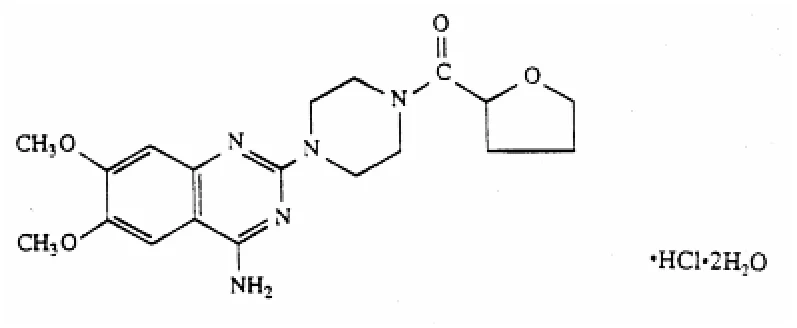
Proper name: terazosin hydrochloride dihydrate
Chemical name: 1-(4-amino-6,7-dimethoxy-2-quinazolinyl)-4-[(tetrahydro-2-furanyl) carbonyl]-piperazine, monohydrochloride, dihydrate
Molecular formula: C19H25N5O4HCl•2H2O
Molecular mass: 459.93 g/mol
Structural formula:
Physicochemical properties: Terazosin hydrochloride is a white, crystalline substance, freely soluble in water and isotonic saline.
CLINICAL TRIALS
A comparative bioavailability study was performed using Phl-TERAZOSIN 5 mg tablets (Pharmel Inc.) versus HYTRIN 5 mg tablets (Abbott Laboratories Ltd.) in 36 healthy male volunteers. A single 5 mg oral dose was administered in the fasting state. The results are summarized in the following table:
SUMMARY TABLE OF THE COMPARATIVE BIOAVAILABILITY DATA
Terazosin (1 x 5 mg) From measured data Geometric Mean Arithmetic Mean (CV %) | ||||
|---|---|---|---|---|
| Parameter | Test* | Reference† | % Ratio of Geometric Means | Confidence Interval 90% |
AUCT‡ (ng.h/mL) | 1110.87 1110.87 | 1112.97 1132.10 (18.69) | 100 | 97 - 102 |
AUCI (ng.h/mL) | 1161.71 1190.20 (22.20) | 1161.53 1181.86 (18.89) | 100 | 97 - 103 |
Cmax (ng/mL) | 95.60 97.92 (21.48) | 95.64 98.07 (21.93) | 100 | 94 - 106 |
Tmax§ (h) | 0.98(72.32) | 1.21 | ||
T½§ (h) | 14.93 (22.57) | 15.18 (13.98) | ||
* Phl-TERAZOSIN 5 mg Tablet (Pharmel Inc.)
†HYTRIN 5 mg tablet (Abbott Laboratories Ltd, Canada)
§Expressed as the arithmetic mean (CV%).
Study Demographics and Trial Design
Table 4: Summary of Patient Demographics for Clinical Studies in Benign Prostatic Hyperplasia (BPH)
| Study # | Trial Design | Dosage, Route of Administration and Duration | Study Subjects (n) | Mean Age in Years (Range) | Gender (%M/F) | ||||||||
|---|---|---|---|---|---|---|---|---|---|---|---|---|---|
| I | Double-blind, ranPhlized, parallel, placebo-controlled, titration to fixed dose, Phase III study | Placebo vs. Terazosin hydrochloride 2 mg Terazosin hydrochloride 5 mg Terazosin hydrochloride 10 mg Oral 12 weeks (3 months) | 252 | Placebo 62.1 (47-73) 2 mg 61.6 (44-77) 5 mg 61.7 (45-75) 10 mg 61.6 (51-75) | All males | ||||||||
| II | Double-blind, ranPhlized, parallel, placebo-controlled, titration to response, Phase III study | Placebo vs. Terazosin hydrochloride (2, 5, 10 or 20 mg) Oral 24 weeks (6 months) | 177 | Placebo 61.3 (39-77) Terazosin hydrochloride 62.7 (46-82) | All males | ||||||||
| III | Double-blind, ranPhlized, parallel, placebo-controlled, titration to response, Phase III study | Placebo vs. Terazosin hydrochloride (1, 2, 5 or 10 mg) Oral 24 weeks (6 months) | 147 | Placebo 63.8 (48-80) Terazosin hydrochloride 64.5 (44-77) | All males | ||||||||
| IV | Open label, titration to response, long-term, Phase II study | Terazosin hydrochloride (1, 2, 5, 10 or 20 mg) Oral 2 years | 475 | 63.1 (40-86) | All males | ||||||||
| Definitions: n = number; F = females; M = males; vs. = versus. | |||||||||||||
Study Results
In three placebo controlled studies, both symptom scores and peak urine flow rates showed statistically significant improvement from baseline in patients treated with terazosin hydrochloride from week 2 (or the first clinic visit) and throughout the study duration. Results from these three studies are tabulated in Table 5.
Table 5: Symptom Evaluation and Uroflowmetric Measurements from Three Placebo- controlled Clinical Studies
Symptom Score (Range 0-27) | Peak Flow Rate (mL/sec) | ||||||||||||
|---|---|---|---|---|---|---|---|---|---|---|---|---|---|
| N | Mean Baseline | Mean Change (%) | N | Mean Baseline | Mean Change (%) | ||||||||
Study I (10 mg)a Titration to fixed dose (12 wks) | |||||||||||||
| Placebo | 55 | 9.7 | -2.3 (24) | 54 | 10.1 | +1.0 (10) | |||||||
| Terazosin hydrochloride | 54 | 10.1 | -4.5 (45)* | 52 | 8.8 | + 3.0 (34)* | |||||||
Study II (2, 5, 10, 20 mg)b Titration to response (24 wks) | |||||||||||||
| Placebo | 89 | 12.5 | -3.8 (30) | 88 | 8.8 | +1.4 (16) | |||||||
| Terazosin hydrochloride | 85 | 12.2 | -5.3 (43)* | 84 | 8.4 | +2.9 (35)* | |||||||
Study III (1, 2, 5, 10 mg)c Titration to response (24 wks) | |||||||||||||
| Placebo | 74 | 10.4 | -1.1 (11) | 74 | 8.8 | +1.2 (14) | |||||||
| Terazosin hydrochloride | 73 | 10.9 | -4.6 (42)* | 73 | 8.6 | +2.6 (30)* | |||||||
a Highest dose 10 mg shown. b 23% of patients on 10 mg, 41% of patients on 20 mg. c 67% of patients on 10 mg. * Significantly (p ≤ 0.05 more improvement than placebo). | |||||||||||||
Analysis of the effect of terazosin hydrochloride on individual urinary symptoms demonstrated that compared to placebo, terazosin hydrochloride significantly improved the symptoms of hesitancy, intermittency, impairment in size and force of urinary stream, sensation of incomplete emptying, terminal dribbling, daytime frequency and nocturia.
Global assessments of overall urinary function and symptoms were also performed by investigators who were blinded to patient treatment assignment. In studies 1 and 3, patients treated with terazosin hydrochloride had a significantly (p ≤ 0.001) greater overall improvement compared to placebo treated patients.
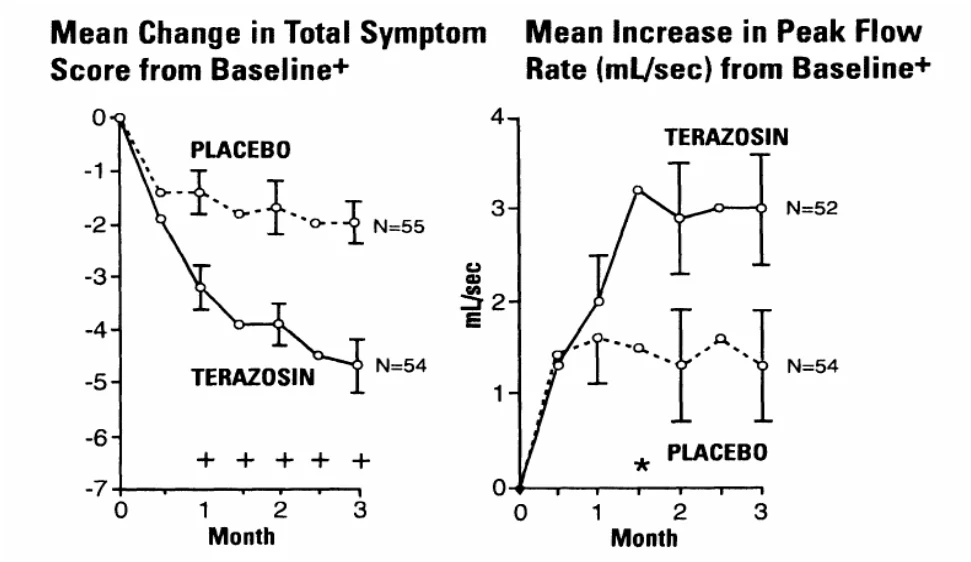
In a short-term study (Study I), patients were ranPhlized to either 2, 5 or 10 mg of terazosin hydrochloride or placebo. Patients ranPhlized to the 10 mg group achieved a statistically significant response in both symptoms and peak flow rate compared to placebo (Figure 1).
+ for baseline values see Table 5
* p ≤ 0.05, compared to placebo group
Figure 1. Short Term Study Where Patients Were RanPhlized to Either 2, 5 or 10 mg of Terazosin Hydrochloride or Placebo (Study I)
In a long-term, open-label, non-placebo controlled clinical trial 181 men were followed for 2 years and 58 of these men were followed for 30 months. The effect of terazosin hydrochloride on urinary symptom scores and peak flow rates was maintained throughout the study duration (Figure 2 and Figure 3).
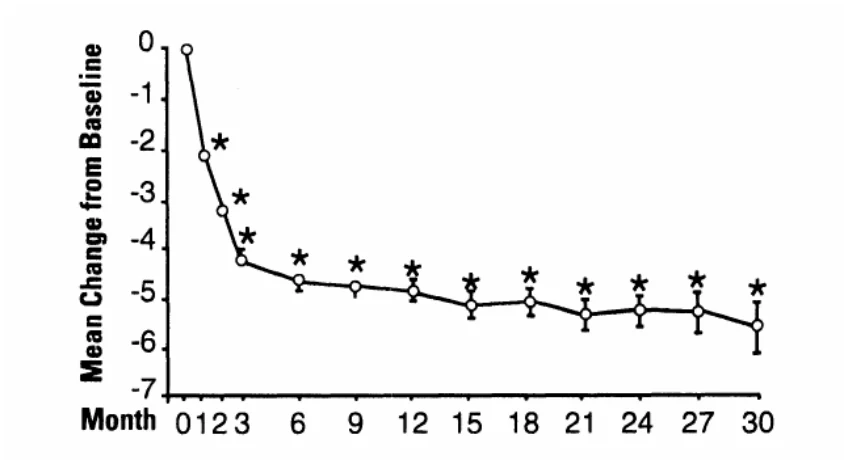
* p ≤ 0.05 versus baseline
Mean baseline = 10.7
Figure 2. Mean Change in Total Symptom Score from Baseline Long-Term, Open- Label, Non-Placebo Controlled Study (N=494)
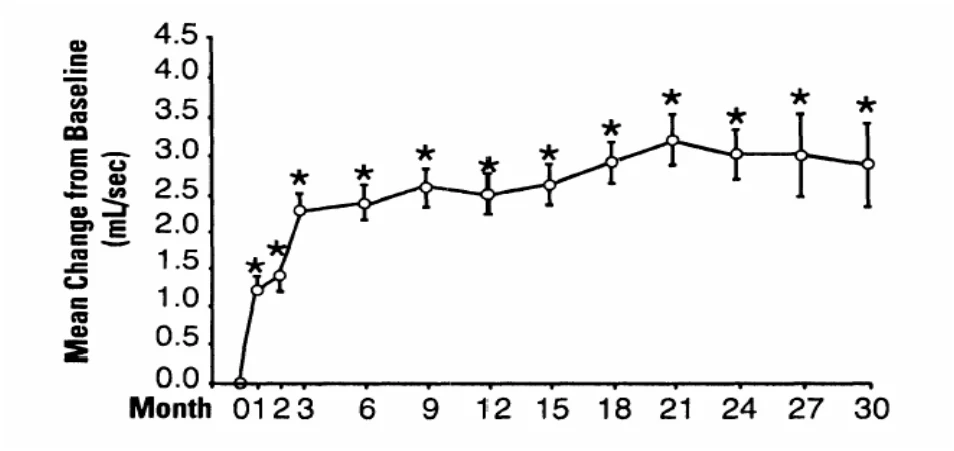
* p ≤ 0.05 versus baseline
Mean baseline = 9.9
Figure 3. Mean Change in Peak Flow Rate from Baseline Long-Term, Open-Label,
Non-Placebo Controlled Study (N=494)
In this long-term trial, both symptom scores and peak urinary flow rates showed statistically significant improvement suggesting a relaxation of smooth muscle cells.
Although blockade of alpha-1 adrenoceptors also lowers blood pressure in hypertensive patients with increased peripheral vascular resistance, terazosin hydrochloride treatment of normotensive men with BPH did not result in a clinically significant blood pressure lowering effect (Table 6).
Table 6: Mean Changes in Blood Pressure from Baseline to Final Visit in all Double-blind, Placebo-controlled Studies
Normotensive Patients DBP < 90 mm Hg | Hypertensive Patients DBP > 90 mm Hg | ||||||||
| Group | N | Mean Change | N | Mean Change | |||||
SBP (mm Hg) | Placebo Terazosin hydrochloride | 293 519 | -0.1 -3.3* | 45 65 | -5.8 -14.4* | ||||
DBP (mm Hg) | Placebo Terazosin hydrochloride | 293 519 | +0.4 -2.2* | 45 65 | -7.1 -15.1* | ||||
* p ≤ 0.05 versus placebo Definitions: DBP = diastolic blood pressure; SBP = systolic blood pressure. | |||||||||
DETAILED PHARMACOLOGY
Animal Pharmacology
Pharmacodynamics
Terazosin hydrochloride was found to decrease blood pressure by up to 44% when administered orally to spontaneously hypertensive rats at doses of 0.1 mg/kg to 30 mg/kg. Similar findings were found in deoxycorticosterone (DOC)-salt hypertensive rats.
Terazosin hydrochloride produced small decreases in blood pressure (4%) in some normal rats, No significant changes in heart rate were observed.
Effects on the Cardiovascular System
Terazosin hydrochloride was administered intravenously to anesthetized male dogs (4 to 5/group) at doses of 0.1 mg/kg followed 60 minutes later by 0.3 mg/kg. Terazosin hydrochloride decreased arterial blood pressure (6 and 13%, respectively, slightly more pronounced for systolic than diastolic), left ventricular systolic pressure (11 and 21%, respectively), and total peripheral resistance (14 and 19%, respectively). Transient increases in heart rate (7 and 18%, respectively), cardiac output (13 and 21%, respectively), and first derivative of left ventricular (LV) pressure over time (dP/dt max) (20 and 17%, respectively) were observed immediately following the administration of the drug. These increases lasted only several minutes and later subsided towards the baselines. In the case of LVdP/dt max, the effects reversed into a mild reduction of 18% for the 0.3 mg/kg dose.
Intravenous administration of terazosin hydrochloride to dogs following treatment with phenoxybenzamine greatly reduced the hypotensive effect of terazosin hydrochloride.
Pre-treatment with either propranolol or atropine had no effect on the hypotensive action of terazosin hydrochloride.
Effect on Central Nervous System
In rats (6 animals), terazosin hydrochloride produced a significant decrease in spontaneous motor activity at an oral dose of 80 mg/kg.
In dogs (4 animals), changes in gross behaviour (decreased activity, ataxia, tremors) were produced by terazosin hydrochloride at oral doses of 5 mg/kg. Oral administration of 3 mg/kg of terazosin hydrochloride to mice (4 to 11 animals/group) produced no significant reductions in locomotor activities. At 10 mg/kg of terazosin hydrochloride, significant decreases in activities of mice were observed.
In immobilized rabbits, intravenous injections of 3 mg/kg of terazosin hydrochloride caused no significant effects on the spontaneous electroencephalogram (EEG) patterns. Drowsiness patterns were recorded after the administration of 10 mg/kg. However, a normal EEG pattern was again observed 2 to 3 hours after drug administration.
Ancillary Studies
Terazosin hydrochloride had no effect on either non-vascular smooth muscle (intestinal motility in mice at doses of 100 and 300 mg/kg, isolated guinea pig trachea in concentrations of 10-8 to 10-4 M, and motility of pregnant and non-pregnant rat uteri in concentrations of 10-6 to 10-4 M) or skeletal muscle (isolated nerve muscle of rat diaphragm in concentrations of 10-5 to 10-4 M).
Pharmacokinetics
Oral administration of terazosin hydrochloride to the rat (9.5 mg/kg) and the dog (0.2 to 10 mg/kg) has shown that terazosin hydrochloride was rapidly absorbed, reaching peak plasma levels of 1 to 2 mcg/mL within 1 to 2 hours. The half-life was reasonably similar in both species and averaged 6.5 hours in rats and 5.7 hours in dogs.
After oral administration of 14 C terazosin hydrochloride (0.33 mg/kg) to rats and dogs, 28 to 38% of the dose was excreted in the urine and 16 to 17% was eliminated as the unchanged parent drug. The remainder of the dose was excreted in the feces and largely resulted from the biliary secretion of terazosin hydrochloride and its metabolites.
Pregnancy did not appear to alter the pharmacokinetics of terazosin hydrochloride in rats or rabbits.
The in vitro plasma protein binding of terazosin hydrochloride was low, averaging 44 to 63% in rats and 40 to 45% in dogs at concentrations ranging from 1 to1000 ng/mL.
The disposition of the compound in animals is qualitatively similar to that in humans.
TOXICOLOGY
Acute Toxicity
Table 7 summarizes the acute toxicity results. Intravenous and oral median lethal dosages (LD50) of terazosin hydrochloride in rats and mice ranges from 211 to 271 mg/kg and 2.7 to 10.0 g/kg, respectively. No sex difference was found in median lethal dosages. The prePhlinant toxic effect was central nervous system depression followed by death.
Table 7: Results of Terazosin Hydrochloride Acute Toxicity Studies
| Species | Sex | Route | LD50 Range mg/kg | Findings | |||
|---|---|---|---|---|---|---|---|
| Mice | F M F M | intravenous intravenous oral oral | 264 240 4 200 3 700 | Decreased activity, ataxia, dyspnea, twitches and convulsions. | |||
| Rat | F M F M | intravenous intravenous oral oral | 271 255 6 000 5 500 | Decreased activity, dyspnea and mucoid discharges from eyes and nose. | |||
| Definitions: F = female; M = male; LD50 = median lethal dose. | |||||||
Subacute and Chronic Toxicity
Table 8: Results of Terazosin Hydrochloride Subacute and Chronic Toxicity Studies
| Species | Route | Dose mg/kg/day | Animals per Dose Level | Duration | Findings |
|---|---|---|---|---|---|
| Rat | Oral | 0 10 30 300 | 10 Male | 2 Weeks | Dose dependent ptosis and lacrimation. Decreased growth at 300 mg/kg. Increased absolute and relative adrenal weights at 30 and 300 mg/kg. Increased relative spleen and kidney weights at 30 and 300 and 10 and 300 mg/kg, respectively. Splenic congestion judged to be drug-related. Dose-related increase in urinary protein. Histopathological examination of the liver, kidney and spleen revealed no changes. |
| Rat | Oral | 0 8 60 480 | 10 Female 10 Male | 13 Weeks | Ptosis, cutaneous erythema, ocular and nasal discharges, soft feces, increased food consumption, urine output and growth* at 480 mg/kg. Transient decreases in serum protein, sodium and globulin.** Increased bilirubin, serum glutamic pyruvic transaminase (SGPT)** and potassium*, and relative and absolute liver, kidney, adrenal and heart weights*, primarily at 480 mg/kg. Gastric erosion and/or hemorrhage in some high dose rats. Splenic congestion in the majority of rats in the high dose group, decreased activity, decreased rectal temperature and increased water consumption. * females only ** males only |
| Rat | Oral | 0 8 40 250 | 10 Female 10 Male | 52 Weeks | Ptosis in rats dosed with 250 mg/kg, and for a short time, with 40 mg/kg. Food consumption, body weight and body weight gains decreased in male rats receiving 250 mg/kg. Decreases in the mean erythrocyte number, hemoglobin and hematocrit values in male rats dosed with 250 mg/kg. Increased liver weights in rats dosed with 250 mg/kg at necropsy. Degeneration of hepatocytes of rats fed 40 and 250 mg/kg. Testicular atrophy in 10% of the male rats dosed with 40 mg/kg and in 50% of male rats dosed with 250 mg/kg for one year. |
| Species | Route | Dose mg/kg/day | Animals per Dose Level | Duration | Findings |
|---|---|---|---|---|---|
| Rat | Oral | 0 8 40 250 | 110 Female (controls) 110 Male (controls) 60 Female (treated) 60 Male (treated) | 104 Weeks§ | Lower survival rates for male rats dosed with 8 and 40 mg/kg. Decreased survival rates in female rats that received 40 and 250 mg/kg. Food consumption decreased in male rats treated with 250 mg/kg. Average body weight gains depressed by 32% (in males) and 14% (in females) dosed with 250 mg/kg. Absolute body weight of males (-24%) and of females (-10%) affected in rats treated with 250 mg/kg. Increased serum glutamic oxaloacetic transaminase (SGOT) at 8 mg/kg and 250 mg*, sodium at 40 mg/kg**, globulin at 250 mg/kg**, and mean corpuscular volume at 250 mg/kg*. Drug-related testicular atrophy observed in mid- and high dose male rats. A number of neoplasms observed in control and test rats. Increased incidence of adrenal medullary secretory cell tumor at 250 mg/kg. * males only ** females only. |
| Rat | Intravenous | 0 10 40 150 | 10 Female 10 Male | 4 Weeks | Deaths (3 males and 6 females) occurred within minutes after administration of 150 mg/kg. Decreased activity and ptosis observed in all groups. Rats treated with 150 mg/kg generally exhibited increased proteinuria and ketonuria. No evidence of renal histopathology. Splenic congestion observed at 40 and 150 mg/kg. |
| Mouse | Oral | 0 2 8 32 | 110 Female (controls) 110 Male (controls) 50 Female (treated) 50 Male (treated) | 104 Weeks | Body weight gains reduced by 17, 9 and 14%, respectively, in the 2, 8 and 32 mg/kg; reductions statistically significant in the 2 and 32 mg/kg. Positive trends for eye adenoma in male mice and for malignant lymphomas in female mice. |
| Dog | Oral | 0 5 40 300 | 3 Female 3 Male | 13 Weeks | Four deaths at 300 mg/kg after 2 to 3 days of treatment; gastrointestinal ulceration and myocardial degeneration found. Gastrointestinal lesions, fatty degeneration of the liver, endo- and sub-endocardial hemorrhages and myocardial degeneration, nephrosis, thymic atrophy and hydropic degeneration of the ciliary process observed in 2 dogs killed after 22 and 44 days of treatment. Scleral and conjunctival redness, ptosis, lacrimation, salivation (prior to treatment), and erythema at 5 and 40 mg/kg. One duodenal ulcer in one male dog treated with 40 mg/kg. Gastrointestinal ulceration, tubular nephrosis and uremia, fatty degeneration of liver, endocardial/sub-endocardial hemorrhage with myocardial degeneration, thymic atrophy, lack of spermiogenesis and hydropic swelling of ciliary process in some dogs treated with 300 mg/kg. |
| Dog | Oral | 0 2.4 7 20 | 6 Female 6 Male | 52 Weeks | No mortalities occurred. Ptosis of eyelids observed in females at 20 mg/kg. No gross or microscopic changes of toxicologic significance observed. |
| Species | Route | Dose mg/kg/day | Animals per Dose Level | Duration | Findings | ||||
|---|---|---|---|---|---|---|---|---|---|
| Dog | Intravenous | 0 4 15 60 | 3 Female 3 Male | 4 Weeks | Two deaths (females) at 60 mg/kg; perforated gastric and duodenal ulcers accompanied by focal peritonitis observed. No histopathologic changes were observed in survivors. Treatment-related signs including dehydration, decreased activity, black or bloody feces, emesis and tremors. Dose-related trends toward lower erythropoietic parameters and evident decreased bone marrow myeloid/erythroid ratios observed at 60 mg/kg. | ||||
| § Females were sacrificed approximately 6 weeks earlier. | |||||||||
Mutagenicity
Table 9: Results of Terazosin Hydrochloride Mutagenicity Studies
| Study | Test Organism | Dose | Route | Major Finding(s) |
| Ames Test | Salmonella-strains TA- 1535, TA-1537 and TA-1538, activated and non-activated with hepatic microsomes | 50, 100 and 500 mcg/plate | In vitro | No evidence of mutagenic potential. |
In vivo Cytogenetics | Rat - bone marrow | 60, 240 and 480 mg/kg/day for 5 days | In vivo Oral | No evidence of mutagenicity observed. |
Phlinant Lethal | Mouse | 50, 165 and 500 mg/kg/day | In vivo Oral | No evidence of Phlinant lethality/mutagenicity found. |
Carcinogenicity
Terazosin hydrochloride, administered in the feed to Sprague-Dawley rats (60/sex/dose) at dosages of 0, 8, 40 and 250 mg/kg/day for up to 104 weeks was associated with a statistically significant increase of benign adrenal medullary secretory cell tumors in male rats exposed to the 250 mg/kg dose. This dose is 695 times the maximum recommended human dose (20 mg/55 kg patients). Female rats were unaffected. Terazosin hydrochloride was not oncogenic in mice when administered in feed for 2 years at a maximum tolerated dose of 32 mg/kg/day.
Teratogenicity
Teratology - Segment II
Table 10: Results of Teratology – Segment II Studies
| Species | Route | Dose mg/kg/day | Animals per Dose Level | Duration | Findings |
| Rat | Oral | 0 8 60 480 | 20 Female | Day 6 to 15 of gestation | Maternal toxic effects observed at 480 mg/kg. Ptosis, ocular discharge and decreased activity seen in all dose groups. Tremors, ataxia, dehydration, hypothermia and death (12 out of 25) occurred in the 480 mg/kg dams, marked decreased maternal body weight gains and food consumption. Litter of 480 mg/kg group resorbed (83%). No teratogenicity or embryotoxicity seen at 8 or 60 mg/kg. |
| Rabbit | Oral | 0 8 22 60 | 15 Female | Day 6 to 18 of gestation | Weight loss and decreased food consumption, increased incidence of fetal resorptions observed at 60 mg/kg; fetal weights also decreased. Increased number of supernumerary ribs in off-springs at 60 mg/kg. No teratogenicity or embryotoxicity seen at 8 or 22 mg/kg. |
Fertility and General Reproductive Performance - Segment I
Table 11: Results of Segment I – Fertility and General Reproductive Performance Study
| Species | Route | Dose mg/kg/day | Animals per Dose Level | Duration | Findings |
| Rat | Oral | 0 8 30 120 | Males dosed for 2 months prior to mating. Females dosed 14 days pre-mating through mating, gestation, parturition and 3 weeks postpartum while nursing. | Ptosis of eyelids observed in all treated animals; sedation observed at 120 mg/kg (male and females). Diminished fertility observed at 30 and 120 mg/kg. No evidence of embryolethality, embryotoxicity or teratogenicity observed. Normal parturition in all groups. Litter size of treated dams not statistically different from control values. Postnatal survival of pups not significantly affected. Pups from dams treated at 120 mg/kg were slower in acquiring surface righting, air-drop righting, auditory startle reflexes, forward locomotion and visual placing. |
Peri- and Post-natal Study - Segment III
Table 12: Results of Peri and Post Natal Study- Segment III
| Species | Route | Dose mg/kg/day | Animals per Dose Level | Duration | Findings |
| Rat | Oral | 0 8 30 120 | 20 Female | From day 15 of gestation through postpartum day 20 | Eyelid ptosis observed in all treated animals. Mild sedation noted in the dams at 120 mg/kg. Gestation length not significantly altered in the 3 dose groups. Litter size comparable in the dose groups. |
REFERENCES
- 1. Abraham PA, Halstenson CE, Matzke GR, Napier JL, Keane WF. Antihypertensive therapy with once-daily administration of terazosin, a new alpha-1 adrenergic-receptor blocker. Pharm 1985;5(5):285-289.
- 2. Abraham PA, Opsahl JA, Halstenson CE, Matzke GR, Keane WF. Prospective comparison of the renal effects of terazosin and propranolol during antihypertensive therapy. J Hypertension 1986;4(suppl 5):S479-S481.
- 3. Caine M. Clinical experience with alpha-adrenoceptor antagonists in benign prostatic hypertrophy. Fed Proc 1986;45:2604-2068.
- 4. Caine M. The present role of alpha-adrenergic blockers in the treatment of benign prostatic hypertrophy. J Urol 1986;136:1-4.
- 5. Caine M. Alpha-adrenergic mechanisms in dynamics of benign prostatic hypertrophy. Urol (suppl) 1988;32:16-20.
- 6. Chrysant SG, Black HR, Davidov M, et al. Experience with terazosin administered in combination with other antihypertensive agents. Am J Med 1986;80(suppl 5B):55-61.
- 7. Cohen A. Placebo-controlled study of once-daily administration of terazosin to patients with mild to moderate hypertension. Curr Ther Res 1987;41(1):105-113.
- 8. Dauer AD, Deger G, Fleming L. Terazosin: An effective once-a-day antihypertensive agent with an apparent beneficial effect on cholesterol. Today's Ther Trends 1986;4(1):1-15.
- 9. Dauer AD, Abraham PA, Cohen A, et al. Terazosin: An effective once-daily monotherapy for the treatment of hypertension. Am J Med 1986;80(suppl 5B):29-34.
- 10. Deger G. Effect of terazosin on serum lipids. Am J Med 1986;80 (suppl 5B):82-85.
- 11. Deger G. Cutler RE, Dietz AJ, Lewin AJ, Vlachakis N. Comparison of the safety and efficacy of once-daily terazosin versus twice-daily prazosin for the treatment of mild to moderate hypertension. Am J Med 1986;80(suppl 5B):62-67.
- 12. Jungers P, Ganeval D, Pertuiset N. Chauveau P. Influence of renal insufficiency on the pharmacokinetics and pharmacodynamics of terazosin. Am J Med 1986;80(suppl 5B):94-99.
- 13. Kyncl JJ. Pharmacology of terazosin. AM J Med 1986;80(supp 5B);12-19.
- 14. Kyncl JJ, Sonders RC, Sperzel WD, Wynn M, Seely JH. Terazosin. New Cardiovascular Drugs 1986; Raven Press, N.Y.:1-17.
- 15. Luther RR, Glassman HN, Jordan DC, Sperzel WD. Efficacy of terazosin as an antihypertensive agent. Am J Med 1986;80(suppl 5B): 73-76.
- 16. Luther RR, Glassman HN, Spertzel WD, Steinberg FJ, Horton JK, Jordan DC. Terazosin: A new alpha1-blocker for the treatment of hypertension: a review of ranPhlized, controlled clinical trials of once-daily administration as monotherapy. J. Hypertension 1986;4 (suppl 5):S494-S497.
- 17. McNeil JJ, Drummer OH, Conway EL, Workman BS, Louis WJ. Effect of age on pharmacokinetics of and blood pressure responses to prazosin and terazosin. J. Cardiovasc Pharmacol 1987;10(2):168-175.
- 18. Mersey JH, Abraham PA, Arnold JD, et al. Long-term experience with terazosin for treatment of mild to moderate hypertension. Am J Med 1986;80(suppl 5B):68-72.
- 19. Rudd P, Berenson G. Brown M, et al. Cumulative experience with terazosin administered in combination with diuretics. Am J Med 1986;80(suppl 5B):49-54.
- 20. Ruoff G, Cohen A, Hollifield JW, McCarron DA. Comparative trials of terazosin with other antihypertensive agents. Am J Med 1986;80(suppl 5B):42-48.
- 21. Ruoff G, Dietz AJ, Keilson L, Lunn J, McCarron DA, Nash DT. Effect of withdrawal of terazosin therapy in patients with hypertension. Am J Med 1986; 80(suppl 5B):35-41.
- 22. Sonders RC. Pharmacokinetics of terazosin. Am J Med 1986;80(suppl 5B):20-24.
- 23. Sperzel WD, Glassman HN, Jordan DC, Luther RR. Overall safety of terazosin as an antihypertensive agent. Am J Med 1986;80(suppl 5B):77-81.
- 24. Titmarsh S, Monk JP. Terazosin: A review of its pharmacodynamic and pharmacokinetic properties, and therapeutic efficacy in essential hypertension. Drugs 1987;33:461-477.
- 25. HYTRIN Product monograph, BGP Pharma Inc., date of revision: January 7, 2015, control number: 180585