


Product Monograph - Sandoz Ciprofloxacin / Dexamethasone
SUMMARY PRODUCT INFORMATION
| Route of Administration | Dosage Form / Strength | Clinically Relevant Nonmedicinal Ingredients |
| Otic | Suspension/ 0.3% ciprofloxacin (as ciprofloxacin hydrochloride) and 0.1% dexamethasone | Benzalkonium chloride as preservative. For a complete listing see Dosage Forms, Composition and Packaging section. |
INDICATIONS AND CLINICAL USE
Sandoz Ciprofloxacin / Dexamethasone (ciprofloxacin/dexamethasone otic suspension) is indicated for the treatment of infections caused by most strains of the designated microorganisms in the specific conditions listed below:
Acute Otitis Media with Otorrhea through tympanostomy tubes in pediatric patients ≥ 6 months of age due to:
Aerobic, Gram-Positive:
Streptococcus pneumoniae
Staphylococcus aureus
Aerobic, Gram-Negative:
Haemophilus influenza
Moraxella catarrhalis
Pseudomonas aeruginosa
Acute Otitis Externa in adults and pediatric patients ≥ 1 year of age due to: Aerobic, Gram-Positive:
Staphylococcus aureus
Aerobic, Gram-Negative:
Pseudomonas aeruginosa
To reduce the development of drug-resistant bacteria and maintain the effectiveness of Sandoz Ciprofloxacin / Dexamethasone and other antibacterial drugs, Sandoz Ciprofloxacin / Dexamethasone should be used only to treat infections that are proven or strongly suspected to be caused by susceptible bacteria.
Geriatrics (> 65 years of age): Elderly patients may be at a higher risk of developing tendon inflammation and rupture (see WARNINGS AND PRECAUTIONS, General).
Pediatrics (< 6 months of age): The safety and effectiveness of ciprofloxacin/dexamethasone otic suspension have not been evaluated in pediatric patients < 6 months of age.
CONTRAINDICATIONS
Sandoz Ciprofloxacin / Dexamethasone is contraindicated in patients with:
- Hypersensitivity to ciprofloxacin, dexamethasone or to any ingredient in the formulation or component of the container. For a complete listing, see Dosage Forms, Composition and Packaging section.
- Hypersensitivity to other quinolones, including nalidixic acid.
- Hypersensitivity to other corticosteroids.
- Viral infections of the external canal, including herpes simplex infections.
- Fungal otic infections.
- Parasitic otic infections.
WARNINGS AND PRECAUTIONS
FOR TOPICAL OTIC USE ONLY.
NOT FOR OPHTHALMIC USE.
NOT FOR INJECTION.
General
Sandoz Ciprofloxacin / Dexamethasone should be discontinued at the first appearance of a skin rash or any other sign of hypersensitivity. Serious and occasionally fatal hypersensitivity (anaphylactic) reactions, some following the first dose, have been reported in patients receiving systemic quinolones. Some reactions were accompanied by cardiovascular collapse, loss of consciousness, angioedema (including laryngeal, pharyngeal or facial edema), airway obstruction, dyspnea, urticarial and itching. Serious acute hypersensitivity reactions may require immediate emergency treatment. Oxygen and airway management should be administered as clinically indicated.
Corticosteroids may reduce resistance to and aid in the establishment of non-susceptible bacterial, fungal, parasitic or viral infections and mask the clinical signs of infection.
If the infection is not improved after one week of treatment, alternate therapy should be considered.
If otorrhea persists after a full course of therapy, or if 2 or more episodes of otorrhea occur within 6 months, further evaluation is recommended to exclude an underlying condition, such as
cholesteatoma, foreign body, or a tumor.
The systemic administration of quinolones, including ciprofloxacin at doses much higher than given or absorbed by the otic route, has led to lesions or erosions of the cartilage in weight-bearing joints and other signs of arthropathy in immature animals of various species.
Tendon inflammation and rupture may occur with systemic fluoroquinolone therapy, including ciprofloxacin, particularly in elderly patients and in those treated concurrently with corticosteroids. Therefore, treatment with Sandoz Ciprofloxacin / Dexamethasone should be discontinued at the first sign of tendon inflammation.
Spontaneous extrusion of tympanostomy tubes is not unexpected and occurred at an incidence of 1.8% in the ciprofloxacin/dexamethasone otic suspension treatment group in the clinical trials.
Sandoz Ciprofloxacin / Dexamethasone contains the preservative benzalkonium chloride, which may be an irritant and cause skin reactions.
Sexual Function/Reproduction
Studies have not been performed to evaluate the effect of topical administration of the combination of ciprofloxacin and dexamethasone on human fertility. Topical dermal studies in animals have shown effects on male sex organs following long-term use of dexamethasone at high doses (see TOXICOLOGY, Reproduction & Teratology).
Special Populations
Pregnant Women: Reproduction studies have been performed in rats and mice using oral doses of up to 100 mg/kg and IV doses up to 30 mg/kg and have revealed no evidence of harm to the fetus as a result of ciprofloxacin. In rabbits, ciprofloxacin (30 and 100 mg/kg orally) produced gastrointestinal disturbances resulting in maternal weight loss and an increased incidence of abortion, but no teratogenicity was observed at either dose. After intravenous administration of doses up to 20mg/kg, no maternal toxicity was produced in the rabbit, and no embryotoxicity or teratogenicity was observed.
Corticosteroids are generally teratogenic in laboratory animals when administered systemically at relatively low dosage levels. The more potent corticosteroids have been shown to be teratogenic after dermal application in laboratory animals. The teratogenic potential of dexamethasone after topical (ophthalmic) treatment has been investigated in New Zealand white rabbits. Treatment with a 0.1% suspension of dexamethasone into the conjunctival sac on days 6 through 18 of gestation resulted in a 15.6% and 32.3% incidence of fetal anomalies in two groups of rabbits.
Animal reproduction studies have not been conducted with ciprofloxacin/dexamethasone otic suspension. No adequate and well controlled studies have been performed in pregnant women. Prolonged or repeated systemic corticoid use during pregnancy has been associated with an increased risk of intra-uterine growth retardation. Infants born of mothers who received substantial doses of corticosteroids during pregnancy should be observed carefully for signs of hypoadrenalism. Caution should be exercised when ciprofloxacin/dexamethasone otic
suspension is used by a pregnant woman.
Nursing Women: Ciprofloxacin and corticosteroids, as a class, appear in milk following oral administration. Dexamethasone in breast milk could suppress growth, interfere with endogenous corticosteroid production, or cause other untoward effects. It is not known whether topical otic administration of ciprofloxacin or dexamethasone could result in sufficient systemic absorption to produce detectable quantities in human milk. Because of the potential for unwanted effects in nursing infants, a decision should be made whether to discontinue nursing or to discontinue the drug, taking into account the importance of the drug to the mother and the low dose used in topical otic therapy.
Pediatrics (< 6 months of age): The safety and effectiveness of ciprofloxacin/dexamethasone otic suspension have not been established in pediatric patients < 6 months of age.
Pediatrics (≥ 6 months of age): The safety and efficacy of ciprofloxacin/dexamethasone otic suspension have been established in pediatric patients 6 months and older (937 patients) in clinical trials.
No clinically relevant changes in hearing function were observed in 69 pediatric patients (age 4 to 12 years) treated with ciprofloxacin/dexamethasone otic suspension and tested for audiometric parameters.
Although ciprofloxacin and other quinolones cause arthropathy in immature animals after oral administration, topical ocular administration of ciprofloxacin to immature dogs did not cause any arthropathy and there is no evidence that the otic dosage form has any effect on the weight bearing joints.
Susceptibility/Resistance
Development of Drug-Resistant Bacteria: Prescribing ciprofloxacin/dexamethasone otic suspension in the absence of a proven or strongly suspected bacterial infection is unlikely to provide benefit to the patient and risks the development of resistant drug-resistant bacteria.
Potential for Microbial Overgrowth: As with other antibacterial preparations, prolonged use of ciprofloxacin/dexamethasone otic suspension may result in overgrowth of non-susceptible organisms, including yeast and fungi. If superinfection occurs, discontinue use and institute alternative therapy.
ADVERSE REACTIONS
Clinical Trial Adverse Drug Reactions
Because clinical trials are conducted under very specific conditions the adverse reaction rates observed in the clinical trials may not reflect the rates observed in practice and should not be compared to the rates in the clinical trials of another drug. Adverse drug reaction information from clinical trials is useful for identifying drug-related adverse events and for approximating
rates.
In Phase II and III clinical trials, a total of 937 patients were treated with ciprofloxacin/dexamethasone otic suspension. This included 400 patients with acute otitis media with otorrhea and 537 patients with acute otitis externa. The reported treatment-related adverse events are listed below:
Acute Otitis Media in pediatric patients with tympanostomy tubes
The following treatment-related adverse events occurred in 0.5% or more of the patients with non-intact tympanic membranes.
| Adverse Event | Incidence (N=400) |
| Ear discomfort | 3.0% |
| Ear pain | 2.3% |
| Ear precipitate (residue) | 0.5% |
| Irritability | 0.5% |
| Taste perversion | 0.5% |
The following treatment-related adverse events were each reported in a single patient: tympanostomy tube blockage; ear pruritus; tinnitus; candidiasis; crying; dizziness; and erythema.
Acute Otitis Externa
The following treatment-related adverse events occurred in 0.4% or more of the patients with intact tympanic membranes.
| Adverse Event | Incidence (N=537) |
| Ear pruritus | 1.5% |
| Ear debris | 0.6% |
| Superimposed ear infection | 0.6% |
| Ear congestion | 0.4% |
| Ear pain | 0.4% |
| Erythema | 0.4% |
The following treatment-related adverse events were each reported in a single patient: ear discomfort; decreased hearing; and ear disorder (tingling).
Post-Market Adverse Drug Reactions
Adverse reactions identified from subsequent clinical trials are listed below. Ear and labyrinth disorders: ear infection fungal, otorrhea; Gastrointestinal disorders: vomiting;
General disorders and administration site conditions: device occlusion; Nervous system disorders: headache;
Skin and subcutaneous tissue disorders: skin exfoliation.
Adverse reactions identified via spontaneous reporting are listed below. Ear and labyrinth disorders: auricular swelling;
Immune system disorders: hypersensitivity.
DRUG INTERACTIONS
Specific drug interaction studies have not been conducted with ciprofloxacin/dexamethasone otic suspension administered in the ear.
DOSAGE AND ADMINISTRATION
Recommended Dose
Acute Otitis Media in pediatric patients (≥ 6 months of age) with tympanostomy tubes:
Four drops instilled into the affected ear twice daily for seven days.
Acute Otitis Externa in adult patients and pediatric patients (≥ 1 year of age): Four drops instilled into the affected ear twice daily for seven days.
Missed Dose
If a dose is missed, it should be given as soon as possible. If it is almost time for the next dose, skip the missed dose and go back to the regular dosing schedule.
Administration
SHAKE WELL IMMEDIATELY BEFORE USING.
Acute Otitis Media in pediatric patients (≥ 6 months of age) with tympanostomy tubes:
The suspension should be warmed by holding the bottle in the hand for one or two minutes to avoid dizziness, which may result from the instillation of a cold suspension. The patient should lie with the affected ear upward, and then the drops should be instilled. The tragus should then be pumped 5 times by pushing inward to facilitate penetration of the drops into the middle ear. This position should be maintained for 60 seconds. Repeat, if necessary, for the opposite ear. Discard unused portion after therapy is completed.
Acute Otitis Externa in adult patients and pediatric patients (≥ 1 year of age): The suspension should be warmed by holding the bottle in the hand for one or two minutes to avoid dizziness, which may result from the instillation of a cold suspension. The patient should lie with the affected ear upward, and then the drops should be instilled. This position should be maintained for 60 seconds to facilitate penetration of the drops into the ear canal. Repeat, if necessary, for the opposite ear. Discard unused portion after therapy is completed.
OVERDOSAGE
There is no known treatment of overdosage since overdosage in the use of topical otic preparations is a remote possibility. Discontinue medication when heavy or protracted use is suspected.
For management of a suspected drug overdose, contact your regional Poison Control Centre.
ACTION AND CLINICAL PHARMACOLOGY
Mechanism of Action
Ciprofloxacin, a fluoroquinolone antibiotic, has in vitro activity against a wide range of gram-positive and gram-negative microorganisms. The bactericidal action of ciprofloxacin results from inhibition of the enzyme, DNA gyrase, which is required for the synthesis of bacterial DNA.
Dexamethasone, a potent corticosteroid, has been shown to aid in the resolution of inflammation.
Pharmacokinetics
Following a single bilateral 4-drop topical otic dose of ciprofloxacin/dexamethasone otic suspension to pediatric patients following tympanostomy tube insertion, measurable plasma concentrations of ciprofloxacin and dexamethasone were observed up to 6 hours. In 25 patients, the mean (± SD) peak plasma concentrations of ciprofloxacin and dexamethasone were 1.14 ± 0.98 ng/mL and
0.86 ± 1.19 ng/mL, respectively, and were observed typically within 15 minutes to 2 hours post-dose. For ciprofloxacin, these levels were approximately 650-fold lower than levels achieved with an oral dose of 250 to 1000 mg.1 This bilateral exposure resulted in a peak dexamethasone concentration approximately 9-fold lower than reported by following an oral 0.5mg dose.2
Estimates of half-life averaged 3.1 hours for ciprofloxacin and 4.5 hours for dexamethasone. Both values are similar to those reported after oral doses in adults.1,3 While systemic exposure was assessed with bilateral administration, most AOMT patients in the clinical trials for this product had unilateral infections (77%).
STORAGE AND STABILITY
Store at room temperature (15°C to 30° C). Avoid freezing. Protect from light. Keep out of reach and sight of children.
DOSAGE FORMS, COMPOSITION AND PACKAGING
Each mL of Sandoz Ciprofloxacin / Dexamethasone contains:
Medicinal Ingredients: Ciprofloxacin Hydrochloride (equivalent to 3 mg ciprofloxacin base) and 1 mg Dexamethasone.
Preservative: 0.1 mg benzalkonium chloride.
Non-medicinal Ingredients: boric acid, sodium chloride, hydroxyethyl cellulose, tyloxapol, acetic acid, sodium acetate, edetate disodium and purified water. Sodium hydroxide and/or hydrochloric acid may be added for adjustment of pH.
Sandoz Ciprofloxacin / Dexamethasone has a pH of approximately 5 and an osmolality of approximately300 mOsm/kg.
Sandoz Ciprofloxacin / Dexamethasone is supplied as follows: 7.5 mL fill in a DROP-TAINER* system. The DROP-TAINER* system consists of a natural polyethylene bottle and natural plug, with a white polypropylene closure. Tamper evidence is provided with a shrink band around the closure and neck area of the package.
PART II: SCIENTIFIC INFORMATION
PHARMACEUTICAL INFORMATION
Drug Substance
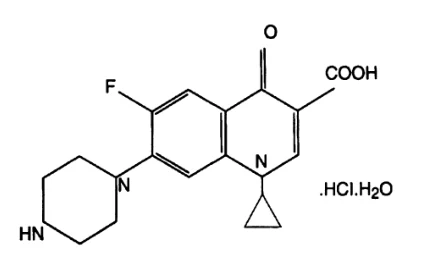
Proper name: Ciprofloxacin Hydrochloride
Chemical name: 1 cyclopropyl-6-fluoro-1,4-dihydro-4-oxo-7-(1-piperazinyl)-3-quinolinecarboxylic acid, hydrochloride monohydrate
Molecular formula and molecular mass: C17H18FN303⋅HCl⋅H20; 385.8
Structural formula:
Physicochemical properties: Ciprofloxacin is a faintly yellowish to light yellow crystalline substance. Ciprofloxacin is readily water soluble and the pH of a 2.5% solution is about 4.
Drug Substance
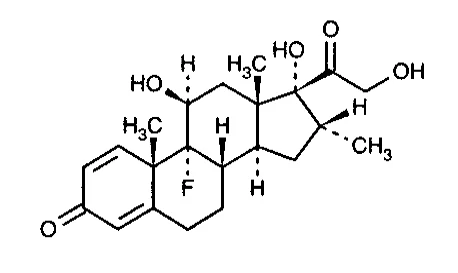
Proper name: Dexamethasone
Chemical name: 9-Fluoro-11β,17,21-trihydroxy-16∀-methylpregna-1,4-diene-3,20-dione
Molecular formula and molecular mass: C22H29FO5; 392.47
Structural formula:
Physicochemical properties: Dexamethasone is a white to practically white crystalline powder, and is practically insoluble in water, sparingly soluble in alcohol, and slightly soluble in chloroform. The melting point is about 250oC with decomposition.
CLINICAL TRIALS
In a randomized, multicenter, controlled clinical trial, ciprofloxacin/dexamethasone otic suspension dosed 2 times per day for 7 days demonstrated clinical cures in the per protocol analysis in 86% of AOMT patients compared to 79% for ofloxacin solution, 0.3%, dosed 2 times per day for 10 days. Among culture positive patients, clinical cures were 90% for ciprofloxacin/dexamethasone otic suspension compared to 79% for ofloxacin solution, 0.3%. Microbiological eradication rates for these patients in the same clinical trial were 91% for ciprofloxacin/dexamethasone otic suspension compared to 82% for ofloxacin solution, 0.3%.
In 2 randomized multicenter, controlled clinical trials, ciprofloxacin/dexamethasone otic suspension dosed 2 times per day for 7 days demonstrated clinical cures in 87% and 94% of per protocol evaluable AOE patients, respectively, compared to 84% and 89%, respectively, for otic suspension containing neomycin 0.35%, polymyxin B 10,000 IU/mL, and hydrocortisone 1.0% (neo/poly/HC). Among culture positive patients clinical cures were 86% and 92% for ciprofloxacin/dexamethasone otic suspension compared to 84% and 89%, respectively, for neo/poly/HC. Microbiological eradication rates for these patients in the same clinical trials were 86% and 92% for ciprofloxacin/dexamethasone otic suspension compared to 85% and 85%, respectively, for neo/poly/HC.
MICROBIOLOGY
Ciprofloxacin has in vitro activity against a wide range of gram-positive and gram-negative microorganisms. The bactericidal action of ciprofloxacin results from interference with the enzyme, DNA gyrase, which is needed for the synthesis of bacterial DNA.
The following table shows the in vitro activity of ciprofloxacin.
Acute Otitis Media with Otorrhea
| Pathogen | N | MIC range | MIC50 | MIC90 | ||||||
| μg/mL | μg/mL | μg/mL | ||||||||
| Aerobic, Gram-Positive | ||||||||||
| Staphylococcus aureus | 54 | 0.13 - 16 | 0.25 | 1.0 | ||||||
| Streptococcus pneumoniae | 48 | 0.25 - 4.0 | 1.0 | 2.0 | ||||||
| Aerobic, Gram-Negative | ||||||||||
| Haemophilus influenzae | 36 | 0.004 - 0.13 | 0.008 | 0.016 | ||||||
| Moraxella catarrhalis | 11 | 0.013 - 0.06 | 0.03 | 0.06 | ||||||
| Pseudomonas aeruginosa | 48 | 0.06 - 2.0 | 0.25 | 0.50 | ||||||
Acute Otitis Externa
| Pathogen | N | MIC range | MIC50 | MIC90 | ||||||
| μg/mL | μg/mL | μg/mL | ||||||||
| Aerobic, Gram-Positive | ||||||||||
| Staphylococcus aureus | 41 | 0.13 - 2.0 | 0.25 | 1.0 | ||||||
| Staphylococcus haemolyticus | 13 | 0.13 - 16 | 0.25 | 16 | ||||||
| Enterococcus faecalis | 29 | 0.50 - 2.0 | 1.0 | 2.0 | ||||||
| Aerobic, Gram-Negative | ||||||||||
| Acinetobacter genospecies 3 | 15 | 0.06 - 4.0 | 0.13 | 4.0 | ||||||
| Enterobacter aerogenes | 20 | 0.008 - 0.13 | 0.016 | 0.03 | ||||||
| Enterobacter cloacae | 12 | 0.004 - 0.03 | 0.016 | 0.03 | ||||||
| Klebsiella pneumoniae | 18 | 0.016 - 0.06 | 0.03 | 0.06 | ||||||
| Proteus mirabilis | 10 | 0.016 - 0.03 | 0.03 | 0.03 | ||||||
| Pseudomonas aeruginosa | 235 | 0.016-1.0 | 0.13 | 0.25 | ||||||
| Pseudomonas stutzeri | 10 | 0.016 - 0.25 | 0.13 | 0.25 | ||||||
| Serratia marcescens | 15 | 0.03 - 1.0 | 0.06 | 0.50 | ||||||
Resistance:
Cross-resistance has been observed between ciprofloxacin and other fluoroquinolones. There is generally no cross-resistance between quinolones and other classes of antibacterial agents such as β-lactams or aminoglycosides.
TOXICOLOGY
Single-Dose Toxicity
The single-dose toxicity of ciprofloxacin has been established in several species. The oral LD50 in rats and mice is > 5000 mg/kg, and about 2500 mg/kg in rabbits. Emesis in dogs and cats precluded determination of oral LD50s in these species. However, in cats it was shown to be greater than 150 mg/kg. The intramuscular LD50 was >1000 mg/kg in rats and mice.
Several routes of administration have been used to determine the single-dose toxicity of dexamethasone. The oral LD50 of dexamethasone in rats is > 3000 mg/kg. Subcutaneous LD50s are 14 mg/kg, 4400 mg/kg and 7200 μg/kg in rats, mice and rabbits, respectively. Intraperitoneal LD50s are 54 mg/kg in rats and 410 mg/kg in mice.
The single dose exposure to ciprofloxacin and dexamethasone from the instillation of four drops of the ciprofloxacin/dexamethasone otic suspension into the affected ear is 0.42 mg ciprofloxacin and 0.14 mg dexamethasone. Administration of this product to a 10 kg child twice daily in both ears would result in exposures of 0.168 mg/kg ciprofloxacin and 0.056 mg/kg dexamethasone. These doses are >800 and >50,000 fold lower than the lowest oral LD50s reported for ciprofloxacin and dexamethasone, respectively. In the event that a 10 kg child should accidentally ingest the entire contents of a 7.5 ml vial of ciprofloxacin/dexamethasone otic
suspension they would receive a dose of 2.25 mg/kg ciprofloxacin and 0.75 mg/kg dexamethasone. These doses are 66 and 4,000 fold lower that the lowest oral LD50s for ciprofloxacin and dexamethasone respectively.
Mutagenicity:
Eight in vitro mutagenicity tests have been conducted with ciprofloxacin, and the test results are listed below:
Salmonella/Microsome Test (Negative)
E. coli DNA Repair Assay (Negative)
Mouse Lymphoma Cell Forward Mutation Assay (Positive)
Chinese Hamster V 79 Cell HGPRT Test (Negative)
Syrian Hamster Embryo Cell Transformation Assay (Negative)
Saccharomyces cerevisiae Point Mutation Assay (Negative)
Saccharomyces cerevisiae Mitotic Crossover and Gene Conversion Assay (Negative) Rat Hepatocyte DNA Repair Assay (Positive)
Thus, 2 of the 8 tests were positive, but results of the following 3 in vivo test systems gave negative results:
Rat Hepatocyte DNA Repair Assay
Micronucleus Test (Mice)
Dominant Lethal Test (Mice)
Carcinogenicity:
Long-term carcinogenicity studies in mice and rats have been completed for ciprofloxacin. After daily oral doses of 750 mg/kg (mice) and 250 mg/kg (rats) were administered for up to 2 years, there was no evidence that ciprofloxacin had any carcinogenic or tumorigenic effects in these species. No long term studies of ciprofloxacin/dexamethasone otic suspension have been performed to evaluate carcinogenic potential.
Long term studies have not been performed to evaluate the carcinogenic potential of topical otic dexamethasone. Dexamethasone has been tested for in vitro and in vivo genotoxic potential and shown to be positive in the following assays; chromosomal aberrations, sister-chromatid exchange in human lymphocytes and micronuclei and sister-chromatid exchanges in mouse bone marrow. However, the Ames/Salmonella assay, both with and without S9 mix, did not show any increase in His+ revertants.
Reproduction & Teratology:
Fertility studies performed in rats at oral doses of ciprofloxacin up to 100 mg/kg/day revealed no evidence of impairment. This would be over 1000 times the maximum recommended clinical dose of ototopical ciprofloxacin, assuming total absorption of ciprofloxacin from the ear of a 10kg child treated with ciprofloxacin/dexamethasone otic suspension twice per day according to label directions.
The effect of dexamethasone on fertility has not been investigated following topical otic application. However, the lowest toxic dose of dexamethasone identified following topical dermal application was 1802 μg/kg in a 26-week study in male rats and resulted in changes to the testes, epididymis, sperm duct, prostate, seminal vesicle, Cowper’s gland and accessory glands.
The relevance of this study for topical otic use is unknown; however this dose is > 150 fold higher than the exposure which would occur if a 50 kg adult used ciprofloxacin/dexamethasone otic suspension in both ears twice a day as indicated.
Local Tolerance Studies:
Guinea pigs dosed in the middle ear with ciprofloxacin/dexamethasone otic suspension for one month exhibited no drug-related structural or functional changes of the cochlear hair cells and no lesions in the ossicles. Ciprofloxacin/dexamethasone otic suspension was also shown to lack dermal sensitizing potential in the guinea pig when tested according to the method of Buehler.
REFERENCES
- 1.
Campoli-Richards DM, Monk JP, Price A, Benfield P, Todd PA, Ward A. Ciprofloxacin:
A review of its antibacterial activity, pharmacokinetic properties and therapeutic use. Drugs 1988; 35:373-447.
- 2.
Loew D, Schuster O, and Graul E. Dose-dependent pharmacokinetics of dexamethasone.
Eur J Clin Pharmacol 1986; 30:225-230.
- 3.
Roland PS, Stroman DW. Microbiology of acute otitis externa. Laryngoscope 2002;
112:1166-1177.
- 4.
Tsuei SE, Moore RG, Ashley JJ, McBribe WG. Disposition of synthetic glucocorticoids.
I. Pharmacokinetics of dexamethasone in healthy adults. J Pharmacokinet Biopharm. 1979; 7:249-264.
- 5.
Roland PS, Kreisler LS, Reese B, Anon JB, Lanier B, Conroy PJ, Wall GM, Dupre SJ,
Potts S, Hogg G, Stroman DW, McLean C. Topical ciprofloxacin/dexamethasone otic suspension is superior to ofloxacin otic solution in the treatment of children with acute otitis media with otorrhea through tympanostomy tubes. Pediatrics 2004; 113:40-46.
- 6.
Product monograph of PrCIPRODEX® (Ciprofloxacin / Dexamethasone Otic Suspension,
0.3% w/v (as ciprofloxacin hydrochloride) / 0.1% w/v); Novartis Pharmaceuticals Canada Inc. Submission control no. 206140; Date of Revision: September 27, 2017.