


Patient Medication Information: uses, side effects, how to take - Sandoz Latanoprost
What is Sandoz Latanoprost used for?
Sandoz Latanoprost is used to treat high pressure in the eye in patients with open-angle glaucoma or ocular hypertension. These conditions may eventually affect your eyesight.
How does Sandoz Latanoprost work?
Sandoz Latanoprost is a solution for use only in the eyes.
The active ingredient in Sandoz Latanoprost is one of a group of medications known as prostaglandins. It helps to lower the pressure within the eye by increasing the natural outflow of fluid from inside the eye.
What are the ingredients in Sandoz Latanoprost?
Medicinal ingredients: Latanoprost
Non-medicinal ingredients: benzalkonium chloride, disodium phosphate (anhydrous), monobasic sodium phosphate, sodium chloride, water for injection.
Sandoz Latanoprost comes in the following dosage forms:
Ophthalmic solution: 50 mcg/mL latanoprost.
Do not use Sandoz Latanoprost if:
- you have a known hypersensitivity to latanoprost, benzalkonium chloride, any other ingredient in this product or any part of the container (see What are the ingredients in Sandoz Latanoprost).
To help avoid side effects and ensure proper use, talk to your healthcare professional before you take Sandoz Latanoprost. Talk about any health conditions or problems you may have, including if you:
- are using any other eye drops or taking any other medication.
are pregnant, think you might be pregnant or you are planning a pregnancy.
- are breast feeding or planning to breastfeed.
- have or have had herpes simplex keratitis (inflammation of the cornea caused by the herpes simplex virus).
- have eyes that are sensitive to light.
- have liver or kidney problems.
- have or have had eye inflammation (for example uveitis, iritis).
Other warnings you should know about:
Sandoz Latanoprost is not recommended for use in children.
Driving and Using Machinery:
Your sight may become blurred for a short period of time just after using Sandoz Latanoprost. Do NOT drive or use machines until your sight is clear again.
Contact Lenses:
Sandoz Latanoprost contains a preservative that may be absorbed by contact lenses and stains them a brown colour. The preservative may form a solid with an ingredient (thimerosal) present in many contact lens soaking solutions. Contact lenses can be reinserted 15 minutes after applying the eye drops.
If you are using more than one type of eye drop medication, wait at least 5 minutes between each different eye drop.
Tell your healthcare professional about all the medicines you take, including any drugs, vitamins, minerals, natural supplements or alternative medicines.
The following may interact with Sandoz Latanoprost:
Based only on your healthcare professional’s advice, Sandoz Latanoprost may be used together with other eye drops to further lower intraocular pressure. If more than one eye drop is being used, they should be administered at least 5 minutes apart.
How to take Sandoz Latanoprost:
Usual adult dose:
1 drop of Sandoz Latanoprost should be dropped into the affected eye(s) once daily. The best time to do this is in the evening.
Do not allow the dropper tip of the bottle to touch the eye or anything else, because this could contaminate the tip with common bacteria known to cause eye infections.
Serious damage to the eye and loss of vision may result if you use eye drop solutions that have become contaminated.
If you experience any type of eye condition or have surgery, immediately talk to your healthcare professional about continuing to use Sandoz Latanoprost.
Follow these steps to help you use Sandoz Latanoprost properly:
How to Use:
Picture 1: Picture 2: Picture 3:
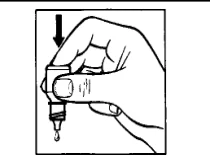
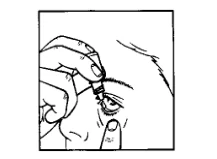
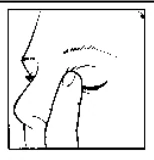
- 1. Wash your hands.
- 2. Shake well before use.
- 3. Twist off the bottle cap.
- 4. After the cap is removed: if tamper evident snap collar is loose, remove before using product.
- 5. If you wear contact lenses, remove them before using your eye drops.
- 6. Hold the bottle, pointing down, between your thumb and fingers.
- 7. Tilt your head back.
- 8. Pull down your lower eyelid with a clean finger until there is a ‘pocket’ between the eyelid and your eye. The drop will go in here. (picture 1).
- 9. Bring the bottle tip close to the eye. Do this in front of a mirror if it helps.
- 10. Do not touch your eye or eyelid, surrounding areas or other surfaces with the dropper. It could infect the drops.
- 11. Gently press on the base of the bottle to release one drop of Sandoz Latanoprost Ophthalmic Solution at a time.
- 12. Do not squeeze the bottle: it is designed so that a gentle press on the bottom is all that it needs (picture 2).
- 13. After using SandozLatanoprost Ophthalmic Solution, press a finger into the corner of your eye, by the nose (picture 3). This helps to stop Sandoz Latanoprost Ophthalmic Solution getting into the rest of the body. Close your eye for 2 to 3 minutes.
- 14. If you use drops in both eyes, repeat the steps for your other eye.
- 15. Close the bottle cap firmly immediately after use.
- 16. Use up one bottle before opening the next bottle.
- 17. If a drop misses your eye, try again.
Overdose:
| If you think you, or a person you are caring for, have taken too much Sandoz Latanoprost, contact a healthcare professional, hospital emergency department, or regional poison control centre immediately, even if there are no symptoms. |
|---|
Missed Dose:
If you forget one dose of Sandoz Latanoprost, continue with the next dose as normal. Do not take two doses to make up for the one that you missed. If you take too many doses, you may irritate your eye.
What are possible side effects from using Sandoz Latanoprost?
These are not all the possible side effects you may have when taking Sandoz Latanoprost. If you experience any side effects not listed here, tell your healthcare professional.
- Change in eye colour
- Longer eyelashes
- Iris cysts
- A feeling that something is in your eye
- Eye redness
- Blurred vision
- Skin rash
- Eye pain
- Eye irritation (for example, burning or stinging eyes)
- Eyelid inflammation
- Infection in nose, sinuses and/or throat
- Headache
- Vomiting
- Nausea
- Muscle pain
- Joint pain
- Chest pain
- Dry eyes
- Dizziness
- Itchy eyes
- Damage to cornea
- Watery eyes
- Crust on eyelid
- Eyelid pain
- Sensitivity to light
- Eye discharge
- Doubled vision
- Eye inflammation
- Pink eye
- Darkening of eyelid
- Cold and/or flu
Serious side effects and what to do about them
| Symptom / effect | Talk to your healthcare professional | Stop taking drug and get immediate medical help | |
| Only if severe | In all cases | ||
| UNCOMMON OCULAR ADVERSE EVENTS | |||
| Macular edema: blurred or wavy vision in the middle of the eye and colors perception changes | ✓ | ||
| Herpetic keratitis: Infection and infestations of the eyes (blurred vision, pain, redness, tearing, discharge, sensitivity to lights) | ✓ | ||
| UNCOMMON SYSTEMIC ADVERSE EVENTS | |||
| Asthma (or Asthma aggravation or Acute asthma attack): difficulty breathing and coughing, chest tightness, wheezing or whistling sound when breathing | ✓ | ||
| Severe skin reactions: rash and skin degradation in different parts of the body | ✓ | ||
If you have a troublesome symptom or side effect that is not listed here or becomes bad enough to interfere with your daily activities, tell your healthcare professional.
Reporting Side Effects
You can report any suspected side effects associated with the use of health products to Health Canada by:
NOTE: Contact your health professional if you need information about how to manage your side effects. The Canada Vigilance Program does not provide medical advice. |
Storage:
Before Sandoz Latanoprost is first opened, keep it in a fridge (between 2°C and 8°C), out of direct light.
Once the bottle has been opened, Sandoz Latanoprost may be kept at room temperature up to 25°C. Sandoz Latanoprost must be used within 6 weeks after opening the bottle.
Discard the bottle and/or unused contents after 6 weeks. Sandoz Latanoprost should not be used after the expiry date on the bottle.
Keep out of reach and sight of children.
If you want more information about Sandoz Latanoprost:
- Talk to your healthcare professional
- Find the full product monograph that is prepared for healthcare professionals and includes this Patient Medication Information by visiting the Health Canada website: (https://www.canada.ca/en/health-canada/services/drugs-health-products/drug-products/drug-product-database.html); the manufacturer’s website www.sandoz.com, or by calling 1-800-361-3062.