


Product Monograph - Selegiline
ACTIONS AND CLINICAL PHARMACOLOGY
Selegiline hydrochloride is an irreversible inhibitor of the enzyme monoamine oxidase (MAO). Because selegiline has greater affinity for type B than type A MAO, it can serve as a selective inhibitor of MAO-B if it is administered at the recommended dose.
Selegiline may have pharmacological effects unrelated to MAO-B inhibition. There is some evidence that it may increase dopaminergic activity by interfering with dopamine re-uptake at the synapse. Effects resulting from selegiline administration may also be mediated through its metabolites. Two of its three principle metabolites, amphetamine and methamphetamine, have pharmacological actions of their own, they interfere with neuronal re-uptake and enhance the release of several neurotransmitters (e.g., norepinephrine, dopamine, serotonin). The extent to which these neurotransmitters contribute to selegiline’s effects are unknown.
Rationale for the use of selective MAO-B inhibitors in Parkinson’s Disease
Many of the prominent symptoms of Parkinson’s Disease are due to a deficiency of striatal dopamine that is the consequence of a progressive degeneration and loss of a population of dopaminergic neurons which originate in the substantia nigra and project to the striatum. Early in the course of the disease, the deficit in the capacity of these neurons to synthesize dopamine can be overcome by the administration of exogenous levodopa. After several years of levodopa therapy, the response to a given dose of levodopa is often accompanied by side effects (dyskinesia, on-off phenomena, freezing).
MAO-B inhibitors may be useful under these conditions because by blocking the catabolism of dopamine, they increase the net amount of dopamine available. In patients with advanced Parkinson’s Disease, the addition of selegiline to levodopa (usually with a decarboxylase inhibitor) has been shown to improve the therapeutic effect of levodopa.
Recently, in newly diagnosed patients, selegiline was shown to delay the need to implement levodopa therapy.*
The mechanisms of action of selegiline, both in newly diagnosed and in severely incapacitated patients, is unknown.
Hypertensive Crisis (“Cheese Reaction”)
MAOs are widely distributed throughout the body; their concentration is especially high in liver, kidney, stomach, intestinal wall and brain. In the intestine, type A is the predominant MAO; it is thought to provide vital protection from exogenous amines (e.g. tyramine) that have the capacity to displace norepinephrine from storage sites and thereby cause a hypertensive crisis. MAO-A catabolizes the exogenous amines which are found in a variety of foods (fermented cheese, red wine, herring) and drugs (over-the-counter cough/cold medications). Since MAO-A in the gut is not inhibited by therapeutic doses of selegiline, in theory, patients may take medications
* Parkinson Study Group: Effect of Deprenyl on the progression of disability in early Parkinson’s disease. N Engl J Med 1989; 321: 1364-1371.
containing pharmacologically active amines and consume tyramine-containing foods without the risk of uncontrolled hypertension.
To date, clinical experience appears to confirm this prediction: hypertensive crises have not been reported in selegiline treated patients. However, until the pathophysiology of the “cheese reaction” is more completely understood, it seems prudent to assume that selegiline can only be used safely without dietary restrictions at doses where it presumably selectively inhibits MAO-B (e.g. 10 mg/day).
Attention to the dose dependent nature of selegiline’s selectivity is critical if it is to be used without restrictions being placed on diet and concomitant drug use (See WARNINGS and PRECAUTIONS).
Pharmacokinetics
The extremely short half-life of selegiline (< 0.15 hours following a 10 mg i.v. dose) is consistent with the inability to detect unchanged selegiline in the serum and urine following oral administration.
Only preliminary information about the details of the pharmacokinetics of selegiline hydrochloride and its metabolites is available. In a 7-day study undertaken to investigate the effect of selegiline on the kinetics of an oral hypoglycemic agent, subjects were given a 10 mg dose of selegiline hydrochloride for seven consecutive days. Serum levels of intact selegiline were below the limit of detection (<10 ng/mL). Trough levels of the three metabolites were as follows: N-desmethylselegiline, the major metabolite, was not detectable; the levels of amphetamine and methamphetamine were 3.5 ng/mL, and 8.0 ng/mL, respectively.
The rate of MAO-B regeneration following discontinuation of treatment has not been quantified. It is this rate, dependent upon de novo protein synthesis, which seems likely to determine how fast normal MAO-B activity can be restored.
Comparative Bioavailability
A randomized, single-dose, double-blinded, standard, Two-Treatment, Three-Period, Reference Replicated, crossover comparative bioavailability study conducted under fasting conditions, was performed on healthy male volunteers. The results obtained from 48 healthy volunteers who completed the study are summarized in the following table. The rate and extent of absorption of selegeline and N-desmethyl selegiline were measured and compared following a single oral dose (2 x 5 mg tablet) of SELEGILINE (Selegiline Hydrochloride) 5 mg tablet (AA pharma Inc.) and MYLAN-SELEGILINE (Selegiline Hydrochloride) 5 mg tablet (Mylan Pharmaceuticals ULC).
(Selegiline hydrochloride) (2 x 5 mg) From Measured Data Geometric Mean Arithmetic Mean (CV%) | ||||
| Parameter | Test* | Reference† | Ratio of Geometric Means (%) | 90% Confidence Interval (%) |
AUCT (pg•h/mL) | 5422.2 7265.4 (73.7) | 5458.3 7883.7 (90.6) | 99.3 | 89.2 – 110.6 |
AUCI (pg•h/mL) | 5865.6 8120.3 (74.4) | 5893.7 8905.1 (92.2) | 99.5 | 89.5 – 110.6 |
Cmax (pg/mL) | 3497.3 4357.8 (63.6) | 3398.7 4723.2 (97.7) | 102.9 | 90.2 – 117.4 |
| Tmax§ (h) | 0.89 (45.0) | 0.86 (49.2) | ||
| T1/2§ (h) | 5.64 (31.9) | 5.63 (35.7) | ||
* SELEGILINE (Selegiline Hydrochloride) 5 mg Tablets (AA pharma Inc.). † MYLAN-SELEGILINE (Selegiline Hydrochloride) 5 mg Tablets (Mylan Pharmaceuticals ULC) were purchased in Canada. § Expressed as the arithmetic mean (CV%) only. | ||||
INDICATIONS
SELEGILINE (selegiline hydrochloride) may be of value:
- as an adjunct to levodopa (with or without a decarboxylase inhibitor) in the management of the signs and symptoms of Parkinson’s Disease.
- in newly diagnosed patients before symptoms begin to affect the patient’s social or professional life, at which time more efficacious treatment becomes necessary.
CONTRAINDICATIONS
SELEGILINE (selegiline hydrochloride) is contraindicated in patients with known hypersensitivity to this drug.
SELEGILINE should not be used in patients with other extrapyramidal disorders such as excessive tremor or tardive dyskinesia, or in patients with severe psychosis or profound dementia.
SELEGILINE is contraindicated in combination with meperidine (see DRUG INTERACTIONS). This contraindication is often extended to other opioids as well.
SELEGILINE should not be used in patients with active peptic ulcer.
WARNINGS
SELEGILINE (selegiline hydrochloride) should not be used at daily doses exceeding those recommended (10 mg/day) because of the risks associated with non-selective inhibition of MAO (see ACTIONS AND CLINICAL PHARMACOLOGY).
The selectivity of selegiline hydrochloride for MAO-B may not be absolute at the recommended daily dose of 10 mg/day, and selectivity is further diminished with increasing daily doses. The precise dose at which selegiline hydrochloride becomes a non-selective inhibitor of all MAO is unknown, but may be in the range of 30 to 40 mg per day.
Postmarketing cumulative reports suggest that serious CNS adverse events might occur when selegiline hydrochloride is combined with tricyclic antidepressants (TCAs) and selective serotonin re-uptake inhibitors (SSRIs).
Hyperpyrexia and death have been reported with the combination of tricyclic antidepressants and non selective monoamine oxydase inhibitors (MAOIs) such as phenelzine and tranylcypromine. Similarly, the combined use of tricyclic antidepressants and selegiline hydrochloride has been associated with hyperpyrexia, tremors, agitation, restlessness, reduced level of consciousness and in rare instances fatalities. Related adverse events also seen after this combination included hypertension, syncope, asystole, diaphoresis, seizure, change in behavioural and mental status, and muscular rigidity.
Serious, sometimes fatal, reactions with signs and symptoms that may include hyperthermia, rigidity, myoclonus, autonomic instability with rapid fluctuations of the vital signs, and mental status changes that include extreme agitation progressing to delirium and coma have been reported with patients receiving a combination of fluoxetine hydrochloride and non-selective MAOI’s. Similar signs have been reported in some patients on the combination of selegiline hydrochloride (10 mg/day) and selective serotonin re-uptake inhibitors including fluoxetine, sertraline and paroxetine.
Since the mechanisms of these reactions are not fully understood, it seems prudent, in general, to avoid this combination of selegiline hydrochloride and tricyclic antidepressants as well as selegiline hydrochloride and selective serotonin re-uptake inhibitors. At least 14 days should elapse between discontinuation of selegiline hydrochloride and initiation of treatment with a tricyclic antidepressant or selective serotonin re-uptake inhibitors. Because of the long half-lives of fluoxetine and its active metabolite, at least five weeks (perhaps longer, especially if fluoxetine has been prescribed chronically and/or at higher doses) should elapse between discontinuation of fluoxetine and initiation of treatment with selegiline hydrochloride.
PRECAUTIONS
General
Some patients given SELEGILINE (selegiline hydrochloride) may experience an exacerbation of levodopa-associated side effects, presumably due to the increased amounts of dopamine reacting with supersensitive post-synaptic receptors. These effects may often be mitigated by reducing the dose of levodopa by approximately 10 to 30%.
The decision to prescribe SELEGILINE should take into consideration that the MAO system of enzymes is complex and incompletely understood and there is only a limited amount of carefully documented clinical experience with selegiline hydrochloride. Consequently the full spectrum of possible responses to selegiline hydrochloride may not have been observed in the premarketing evaluation of the drug. It is advisable, therefore, to observe the patients closely for atypical responses.
Information for Patients
Patients should be advised of the possible need to reduce levodopa dosage after initiation of selegiline hydrochloride therapy. The patients (or their families, if the patient is incompetent) should be advised not to exceed the recommended daily dose of 10 mg. The risk of using higher daily doses of selegiline hydrochloride should be explained, and a brief description of the “hypertensive crisis” (“cheese reaction”) provided. While hypertensive reactions with selegiline hydrochloride have not been reported, documented experience is limited. Consequently, it may be useful to inform patients (or their families) about the signs and symptoms associated with MAO inhibitor induced hypertensive reactions. In particular, patients should be urged to report, immediately, any severe headache or other atypical or unusual symptoms not previously experienced.
Laboratory Tests
Transient or continuing abnormalities with a tendency for elevated levels of liver enzymes have been described during long term therapy. Although serious hepatic toxicity has not been observed, caution is recommended in patients with a history of hepatic dysfunction. Periodic routine evaluation of all patients however, is appropriate.
Drug Interactions
The occurrence of stupor, muscular rigidity, severe agitation and elevated temperature has been reported in a man receiving selegiline and meperidine, as well as other medications. Symptoms resolved over days when the combination was discontinued. This case is typical of the interaction of meperidine and MAOIs.
Other serious reactions (including severe agitation, hallucinations, and death) have been reported in patients receiving this combination. While it cannot be said definitively that all of these reactions were caused by this combination, they are all compatible with this well recognized interaction.
Although the database of documented clinical experience is limited, MAO inhibitors are ordinarily contraindicated for use with meperidine. This warning is often extended to other opioids (see CONTRAINDICATIONS).
It is also prudent to avoid the concomitant use of selegiline hydrochloride and selective serotonin re-uptake inhibitors and tricyclic antidepressants (see WARNINGS).
Other than the possible exacerbation of side effects in patients receiving levodopa therapy, no interactions attributed to the combined use of selegiline hydrochloride and other drugs have been reported. However, because the database of documented clinical experience is limited, the level of reassurance provided by this lack of adverse reporting is uncertain (see WARNINGS and PRECAUTIONS).
Carcinogenesis
Long-term studies in mice and rats have shown no evidence of a carcinogenic effect or significant histopathological toxicity, with selegiline.
Use During Pregnancy
Insufficient animal reproduction studies have been done with selegiline to conclude that selegiline poses no teratogenic potential. However, one rat study carried out at doses as much as 180 fold the recommended human dose revealed no evidence of a teratogenic effect. It is not known whether selegiline hydrochloride can cause fetal harm when administered to a pregnant woman or can affect reproductive capacity. SELEGILINE should be given to a pregnant woman only if clearly needed.
Nursing Mothers
It is not known whether selegiline hydrochloride is excreted in human milk. Because many drugs are excreted in human milk, consideration should be given to discontinuing the use of all but absolutely essential drug treatments in nursing women.
Pediatric Use
The effects of selegiline hydrochloride in children under 18 have not been evaluated.
ADVERSE REACTIONS
Introduction
The side effects of selegiline hydrochloride are usually those associated with excessive dopaminergic stimulation. The drug may potentiate the side effects of levodopa, therefore, adjustments of drug dosages may be required. Some of the most serious adverse reactions reported with the combination of selegiline hydrochloride and levodopa were hallucinations and confusion, particularly visual hallucinations.
Although a cause and effect relationship has not been established, a tendency to a progressive rise in several liver enzymes has been reported after long term therapy.
In prospective clinical trials, the following adverse effects, (listed in decreasing order of frequency), led to the discontinuation of selegiline hydrochloride: nausea, hallucinations, confusion, depression, loss of balance, insomnia, orthostatic hypotension, increased akinetic involuntary movements, agitation, arrhythmia, bradykinesia, chorea, delusions, hypertension, new or increased angina pectoris and syncope.
Events reported only rarely as a cause of discontinuation of treatment include anxiety, drowsiness/lethargy, nervousness, dystonia, increased episodes of freezing, increased tremor, weakness, excessive perspiration, constipation, weight loss, burning lips/mouth, ankle edema, gastrointestinal bleeding and hair loss.
In controlled clinical trials involving a very limited number of patients (N=49 receiving selegiline hydrochloride; N=50 receiving placebo) the following adverse reactions were reported (incidences are devoid of practical statistical significance):
INCIDENCE OF TREATMENT-EMERGENT ADVERSE EVENTS IN CLINICAL TRIALS
- A. IN COMBINATION WITH LEVODOPA
| ADVERSE EVENT | Number of Patients Reporting Events | |||
SELEGILINE HYDROCHLORI DE (N =49) | PLACEBO | |||
| Nausea | 10 | 3 | ||
| Dizziness/Lightheaded/Fainting | 7 | 1 | ||
| Abdominal pain | 4 | 2 | ||
| Confusion | 3 | 0 | ||
| Hallucinations | 3 | 1 | ||
| Dry mouth | 3 | 1 | ||
| Vivid dreams | 2 | 0 | ||
| Dyskinesia | 2 | 5 | ||
| Headache | 2 | 1 | ||
| The following events were reported once in either or both groups: | ||||
| Ache, generalized | 1 | 0 | ||
| Anxiety/tension | 1 | 1 | ||
| Anemia | 0 | 1 | ||
| Diarrhea | 1 | 0 | ||
| Hair loss | 0 | 1 | ||
| Insomnia | 1 | 1 | ||
| Lethargy | 1 | 0 | ||
| Leg pain | 1 | 0 | ||
| Low back pain | 1 | 0 | ||
| Malaise | 0 | 1 | ||
| Palpitations | 1 | 0 | ||
| Urinary retention | 1 | 0 | ||
| Weight loss | 1 | 0 | ||
- B. IN MONOTHERAPY
The incidence of adverse reactions occurring in trials using selegiline hydrochloride as monotherapy has not been fully reported to date. Serious adverse reactions were as follows: depression, chest pain, myopathy and diarrhea. Other reported adverse reactions included insomnia, headache, nausea, dizziness and vertigo.
In all prospectively monitored clinical investigations, enrolling approximately 920 patients, the following adverse events, classified by body system, were reported.
Central Nervous System
Motor / Coordination / Extrapyramidal: increased tremor, chorea, loss of balance, restlessness, blepharospasm, increased bradykinesia, facial grimace, falling down, heavy leg, muscle twitch, myoclonic jerks, stiff neck, tardive dyskinesia, dystonic symptoms, dyskinesia, involuntary movements, freezing, festination, increased apraxia, muscle cramps.
Mental Status / Behavioural / Psychiatric: hallucinations, dizziness, confusion, anxiety, depression, drowsiness, behaviour / mood change, dreams / nightmares, tiredness, delusions, disorientation, lightheadedness, impaired memory, increased energy, transient high, hollow feeling, lethargy/malaise, apathy, overstimulation, vertigo, personality change, sleep disturbance, restlessness, weakness, transient irritability.
Pain / Altered Sensation: headache, back pain, leg pain, tinnitus, migraine, supraorbital pain, throat burning, generalized ache, chills, numbness of toes/fingers, taste disturbance.
Autonomic Nervous System
Dry mouth, blurred vision, sexual dysfunction.
Cardiovascular
Orthostatic hypotension, hypertension, arrhythmia, palpitations, new or increased angina pectoris, hypotension, tachycardia, peripheral edema, sinus bradycardia, syncope.
Gastrointestinal
Nausea/vomiting, constipation, weight loss, anorexia, poor appetite, dysphagia, diarrhea, heartburn, rectal bleeding, bruxism.
Genitourinary/Gynecologic/Endocrine
Transient anorgasmia, nocturia, prostatic hypertrophy, urinary hesitancy, urinary retention, decreased penile sensation, urinary frequency.
Skin and Appendages
Increased sweating, diaphoresis, facial hair, hair loss, hematoma, rash, photosensitivity.
Miscellaneous
Asthma, diplopia, shortness of breath, speech affected. Toxic delirium has also been reported with selegiline hydrochloride when used as adjunctive therapy to levodopa treatment.
SYMPTOMS AND TREATMENT OF OVERDOSAGE
Symptoms:
No specific information is available about clinically significant overdoses with selegiline hydrochloride. However, experience gained during the development of selegiline hydrochloride reveals that some individuals exposed to doses of 600 mg/day d,l, selegiline suffered severe hypotension and psychomotor agitation.
Since the selective inhibition of MAO-B by selegiline hydrochloride is achieved only at doses recommended for the treatment of Parkinson’s disease (i.e. 10 mg), overdoses are likely to cause significant inhibition of both MAO-A and MAO-B. Consequently, the signs and symptoms of overdose may resemble those observed with marketed non-selective MAO inhibitors (e.g. tranylcypromine, isocarboxazide, and phenelzine).
Overdose with non-selective MAO inhibitors:
Note: This section is provided for reference; it does not describe events that have actually been observed with selegiline in overdose.
Characteristically, signs and symptoms of non-selective MAO inhibitor overdose may not appear immediately. Delays of up to 12 hours between ingestion of the drug and the appearance of signs may occur. Importantly, the peak intensity of the syndrome may not be reached for upwards of a day following the overdose. Death has been reported following overdose. Therefore, immediate hospitalization, with continuous patient observation and monitoring for a period of at least two days following the ingestion of such drugs in overdose is strongly recommended.
The clinical picture of MAO inhibitor overdose varies considerably; its severity may be a function of the amount of drug consumed. The central nervous system and cardiovascular systems are prominently involved.
Signs and symptoms of overdosage may include, alone or in combination, any of the following: drowsiness, dizziness, faintness, irritability, hyperactivity, agitation, severe headache, hallucinations, trismus, opisthotonus, convulsions, and coma; rapid and irregular pulse, hypertension, hypotension and vascular collapse; precordial pain, respiratory depression and failure, hyperpyrexia, diaphoresis, and cool, clammy skin.
Treatment:
Because there is no recorded experience with selegiline overdose, the following suggestions, based on the management of non-selective MAO inhibitor poisoning, might be applicable.
Treatment of overdose with non-selective MAO inhibitors is symptomatic and supportive. Induction of emesis or gastric lavage with instillation of charcoal slurry may be helpful in early poisoning, provided the airway has been protected against aspiration. Signs and symptoms of central nervous system stimulation, including convulsions, should be treated with diazepam, given slowly intravenously. Phenothiazine derivatives and central nervous stimulants should be avoided. Hypotension and vascular collapse should be treated with intravenous fluids and, if necessary, blood pressure titration with an intravenous infusion of a dilute pressor agent. It should be noted that adrenergic agents may produce a markedly increased pressor response. Respiration should be supported by appropriate measures, including management of the airway, use of supplemental oxygen, and mechanically supported ventilatory assistance, as required.
Body temperature should be monitored closely. Intensive management of hyperpyrexia may be required. Maintenance of fluid and electrolyte balance is essential.
DOSAGE AND ADMINISTRATION
The recommended dosage of SELEGILINE (selegiline hydrochloride) as monotherapy in newly diagnosed patients, or as an adjunct to levodopa (usually with a decarboxylase inhibitor) is 10 mg per day administered as divided doses of 5 mg each taken at breakfast and lunch.
When SELEGILINE adjunctive therapy is added to the existing levodopa therapeutic regime, a reduction, usually of 10 to 30% in the dose of levodopa (in some instances a reduction of the dose of SELEGILINE to 5 mg/day) may be required during the period of adjustment of therapy or in case of exacerbation of adverse effects.
Doses higher than 10 mg/day should not be used. There is no evidence that additional benefit will be obtained from the administration of higher doses. Furthermore, higher doses will result in a loss of selectivity of selegiline hydrochloride towards MAO-B with an increase in the inhibition of type MAO-A. There is an increased risk of adverse reactions with higher doses as well as an increased risk of a hypertensive episode (“cheese reaction”).
PHARMACEUTICAL INFORMATION
Drug Substance
Proper/Common Name: selegiline hydrochloride, USP
Chemical Names: (–)-(R)-N,α-Dimethyl-N-2-propynylphenethylamine hydrochloride
Structural Formula:
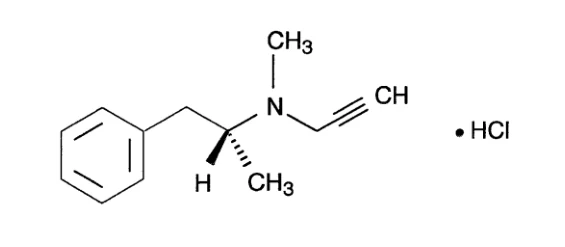
Molecular Formula: C13H17N ▪ HCl
Molecular Weight: 223.74 g/mol
Description: Selegiline hydrochloride is a white to near white crystalline powder which is freely soluble in water, chloroform and methanol. It has a melting point of 141ºC-144ºC and a pH (2% aqueous solution) of 3.5-4.5. Its optical rotation is between -10.0ºC and -12.0ºC at 25ºC in a 10% aqueous solution.
Composition
In addition to selegiline hydrochloride, each tablet contains the non-medicinal ingredients citric acid, lactose, magnesium stearate and microcrystalline cellulose.
Stability and Storage Recommendations
Store at room temperature 15ºC to 30ºC. Protect from light.
AVAILABILITY OF DOSAGE FORMS
SELEGILINE 5 mg: Each round, white, flat-faced, bevelled-edge tablet, engraved ‘S5’ on one side, contains 5 mg of the l-isomer of selegiline hydrochloride. Available in bottles of 100.
PHARMACOLOGY
Two Types of Monoamine Oxidase
Monoamine oxidase (MAO) is an enzymatic system which deaminates monoamine transmitters and other similar amines. Two forms of MAO have been identified: Type A and Type B. The natural substrate of MAO-A includes serotonin and adrenaline, those of MAO-B include phenylethylamine, benzylamine and methyl-histamine. Tyramine, dopamine, noradrenaline, and tryptamine are substrates for both types of enzyme. This specificity is not absolute and can be influenced by the concentration of the substrate. The distribution of the two types of MAO varies greatly between organs and species. In the human intestine, 75% of the total activity of MAO is of Type A. In the human brain, about 70% of total MAO activity is of Type B, whereas in rat only 5% is of MAO-B.
Inhibition of MAO-B by Selegiline
Selegiline is an irreversible inhibitor of MAO-B. In vitro, 10-6M appears to be the optimal concentration to inhibit MAO-B, while leaving MAO-A practically unaffected. Although many studies have reported using doses as high as 10 mg/kg in rats, the maximum doses in rats which block MAO-B activity without significantly affecting the MAO-A are between 0.25 mg to 0.5 mg/kg. Blocking MAO-B results in an increase of dopamine in the central nervous system.
The rate of recovery of MAO-B activity after selegiline treatment is based on the rate of synthesis of new enzymes; it also depends on the dose and the organ. In the rat brain, 50% of the MAO-B activity is recovered in about 8-12 days after a high dose (10 mg/kg) of selegiline. The same enzyme recovery in the liver, however, takes only 3 days. In the pig brain, where the MAO-A / MAO-B ratio is very similar to that in the human brain, the recovery of MAO-estimated by positron emission tomography is 6.5 days after a tracer dose of radiolabelled selegiline along with 1 mg/kg of non-labelled selegiline. In the monkey, a similar experiment showed that the MAO-B recovery takes as long as 30 days. In addition to the inhibition of MAO-B, selegiline (10 mg/kg I.P.) inhibits the uptake of dopamine and noradrenaline, and increases turnover of dopamine in rat brain tissue. This effect of selegiline may explain the potentiation of levodopa response seen in animal models such as the induced circling in nigral-lesioned rats.
Effects of Selegiline on Tyramine
By contrast to MAO-A inhibitors, selegiline does not potentiate the hypertensive effect of tyramine. A study in rats comparing the blood pressure response of selegiline to intravenous tyramine shows that selegiline 1 mg/kg administered chronically did not affect this response. In contrast, clorgyline, a MAO-A inhibitor, at the same dose significantly potentiates the tyramine response. The absence of potentiation of the tyramine response is explained by the fact that selegiline blocks the uptake of tyramine into neurons.
Abuse Liability
The fact that selegiline is metabolized into methamphetamine and amphetamine raises the question on the possible physical abuse liability of this drug. The potential for addiction was studied in rats comparing the results of oral (-)-selegiline 4 mg/kg, (+)-selegiline 5 mg/kg, (+)-amphetamine 5 mg/kg, and ( )-amphetamine 6 mg/kg. After 6 weeks of treatment, withdrawal symptoms were present in all the groups except in the group treated with (-)-selegiline. These results suggest that in contrast to (+)/( )-amphetamine, (-)-selegiline has a very low probability for physical dependence.
Longevity
In two independent studies, selegiline has been demonstrated to increase the mean and the maximum lifespan of rats. In both studies, selegiline (0.25 mg/kg) was given subcutaneously every day starting when the animals were 23 to 25 months old. The two studies used different strains of rats with differing average lifespans. In the first study, the control group had an average lifespan of 147.1 5.6 weeks with the longest living animal reaching 164 weeks compared to 197.9 2.4 weeks and 226 weeks respectively for the selegiline treated group. The second study reports the additional surviving days after beginning of the treatment. The saline control group had an additional average lifespan of 114.7 7.7 days with the longest living animal reaching 251 days compared to 133.7 8.3 days and 315 days respectively for the selegiline-treated group. The first study also reported a significant (p<0.001) increase in sexual activity in animals of the selegiline group.
Neuro Protection
Selegiline at 10 mg/kg for 4 days followed by 2 mg/kg for 7 to 8 days prevents the parkinsonism induced by a 4 day treatment with 0.35 mg/kg of MPTP (methyl-phenyl- tetrahydropyridine) in monkeys. The latter compound is transformed into MPP+ (methyl-phenylpyridium) which destroys nigro-striatal dopaminergic neurons. By blocking MAO-B, selegiline prevents the generation of MPP+, hence the protective effect. Other mechanisms of action may be involved in this neuroprotection. Experiments in mice show that selegiline at 0.25 mg/kg reduces the death of nigrostriatal dopaminergic neurons when given 3 days after the administration of MPTP. This finding suggests a second action of selegiline, independent from MAO-B inhibition. This neuronal protection does not appear to be limited to dopaminergic neurons. An experiment using facial nerve axotomy in rats, shows that selegiline (10 mg/kg every second day) increases by 2.2 times the motoneurons surviving 21 days after axotomy.
Although these findings suggest the possibility of a neuroprotective effect of selegiline, it is not clear however, how they can be related to human parkinsonism and its treatment.
TOXICOLOGY
Acute toxicity studies did not reveal any specific target organs of toxicity. Long-term toxicity studies in mice, rats and dogs showed dose-dependent, amphetamine-like symptoms in all three species. At high doses, significant reductions in body weight gain were recorded, as well as other amphetamine-like pharmacodynamic actions, such as hypermotility, reduction in appetite and changes in behaviour. There was no morphological evidence of organ damage. The effects were reversible; they appeared at high doses, such that a minimum safety factor of 10 was estimated between the “no-toxic-effect” dose of 1 mg/kg and the recommended human dose.
Acute Toxicity
| Species | Route | Sex | LD50 (mg/kg) |
| Rat | p.o. | M | 422 (332-535) |
| p.o. | F | 302 (227-407) | |
| i.v. | M | 75 (67-84) | |
| i.v. | F | 69 (61-78) | |
| Mouse | p.o. | M | 445 (363-545) |
| p.o. | F | 365 (287-463) | |
| i.v. | M | 49 (42-59) | |
| i.v. | F | 50 (41-62) | |
| Dog | p.o. | M/F | ca. 200 |
Multiple Dose Toxicity Studies
| Species | Duration (W/M)* | Dose (mg/kg) | No. animals per group | Non-toxic dose (mg/kg) |
| Rat | 2W | 0-80 | 20/20 | - |
| 4W | 0-270 | 8/8 | 10 | |
| Rat | 6M | 0-30 | 10/10 | 30 |
| Rat | 6M | 0-90 | 10/10 | 10 |
| Dog | 6M 8W | 0-30 | 5/5 plus 2/2 | 3-10 ++ |
| Dog | 6M | 0-20 | 2/2 | 5 |
*W = weeks; M = months; ++ = no withdrawal effects
CARCINOGENICITY
Mice
Charles River mice received selegiline hydrochloride orally via the diet at doses of 3, 10 and
30 mg/kg/day for a minimum of 78 weeks continual dosing. There were two control groups.
All surviving animals from each group were sacrificed and necropsied. Mice who had premature deaths were also necropsied. Mortality was similar in all groups. No notable differences in the clinical signs. The 10 and 30 mg/kg/day males and females showed a marked reduction in body weight gain when compared to the Controls. In regards to differential blood counts and gross pathology, there were no notable intergroup differences.
Histopathology: There were no notable intergroup differences in the incidences of neoplastic and non-neoplastic findings.
Rats
Sprague-Dawley rats were dosed with selegiline hydrochloride via the diet at concentrations of 0.7, 3.5 and 17.5 mg/kg/day for 104 weeks. There were two control groups. Mortality was similar in all groups. The majority of 17.5 mg/kg/day dose males and females were noted to be more excitable than the Controls during the first 52 weeks of the study. There was a slight reduction in body weight gain in males at 3.5 mg/kg/day, a moderate reduction in females at 3.5 mg/kg/day and marked reductions in high dose males and females. A reduction in food consumption was also seen in the high dose males. Under opthalmoscopy and differential blood count examination, no notable intergroup differences were seen. Gross pathology: There was a decrease in the number of animals with subcutaneous masses in the
High dose male group (10%) when compared to the Controls (26%). A decrease in the number of animals with dermal masses recorded in the High dose male group (8%), compared to 20% in the controls was noted. In this study there was an increase in the number of animals with small seminal vesicles in the High dose group (30%), compared to
12% in the Low and Intermediate dose groups and 8% in the Control. In females, there was an increase in the incidence of enlargement of one adrenal (Control–4%, Low dose-16%,
Intermediate dose-18%, and High dose-26%). Histopathology Neoplastic Findings: There was no statistically significant increase in tumours in any organ. Non-neoplastic Findings:
There were a variety of background changes normally seen in rats of this age and strain but there was no evidence of a carcinogenic effect or significant histopathological toxicity.
REPRODUCTION STUDIES
Studies in reproduction revealed no teratogenic potential of selegiline in rats and rabbits, and fertility in rats was not affected at doses up to 100 mg/kg. In studies on peri- and post-natal development, toxic effects were observed primarily in the mothers and secondarily in the fetuses and neonates. These effects were ascribed to the excessive pharmacodynamic action of doses of 16 mg/kg and higher. A no-toxic-effect level of 4 mg/kg was established in these studies.
Selegiline did not have any mutagenic potential in a number of tests on gene and chromosome mutations in prokaryotic and eukaryotic cells as well as in cell culture and in vivo. Likewise, no effects on DNA or induction of cell transformation processes, were noted.
REFERENCES
- 1. Arnett CD, Fowler JS, MacGregor RR, et al.: Turnover of brain monoamine oxidase measured in vivo by positron emission tomography using L-[11C]deprenyl. J Neurochem, 1987, 49: 522-527.
- 2. Birkmayer W, Knoll J, Riederer P, Youdim MBH, Hars V, Marton J: Increased life expectancy resulting from addition of l-deprenyl to Madopar treatment in Parkinson’s disease; A longterm study. J Neural Transm, 1985; 64:113-127.
- 3. Brodersen P, Philbert A, Gulliksen G, Stigard A. The effect of l-deprenyl on on-off phenomena in Parkinson’s disease. Acta Neurol Scand, 1985; 71:494-497.
- 4. Cohen G, Pasik P, Cohen B, Leist A, Mytilineous C, Yahr MD: Rapid Communication: Pargyline and deprenyl prevent the neurotoxicity of 1-methyl-4-phenyl-1,2,3,6-tetrahydropyridine (MPTP) in monkeys. European J Pharmacol, 1984,106: 209-210.
- 5. Cohen RM, Campbell IC, Yamaguchi I, Pickar D, Kopin IJ, Murphy DL: Cardiovascular changes in response to selective monoamine oxidase inhibition in the rat. European J Pharmacol, 1982, 80: 155-160.
- 6. Elsworth JD, Glover V, Reynolds GP, Sandler M, Lees AJ, Phuapradit P, Shaw KM, Stern GM, Kumar P: Deprenyl administration in man: A selective monoamine oxidase B inhibitor without the “cheese effect”. Psychopharmacology, 1978; 57:33-38.
- 7. Elsworth JD, Sandler M, Lees AJ, Ward C, Stern GM: The contribution of amphetamine metabolites of (-)-deprenyl to its antiparkinsonian properties. J Neural Transm 1982; 54;105-110.
- 8. Golbe LI. Deprenyl as symptomatic therapy in Parkinson's Disease. Clin Neuropharmacol, 1988, 11: 387-400.
- 9. Golbe LI. Long-term efficacy and safety of deprenyl (selegiline) in advanced Parkinson’s disease. Neurology, 1989; 39:1109-1111.
- 10. Heikkila RE, Cabbat FS, Manzino L, Duvoisin RC: Potentiation by deprenil of l-dopa induced circling in nigral-lesioned rats. Pharm Biochem Behavior, 1981, 15: 75-79.
- 11. Heinonen EH, Lammintausta R: A review of the pharmacology of selegiline. Acta Neurol Scand, 1991, 84: Suppl 136: 44-59.
- 12. Knoll J. The possible mechanisms of action of (-)deprenyl in parkinson's disease. J Neural Transm, 1978, 43: 177-198.
- 13. Knoll J. The pharmacology of selegiline ((-)deprenyl): New aspects. Acta Neurol. Scand, 1989, 126: 83-91.
- 14. Koller WC: Initiating treatment of Parkinson's disease; Neurology, 1992;42(Suppl1):33-38.
- 15. Lewitt PA: Deprenyl's effect at slowing progression of parkinsonian disability – the DATATOP study: Acta Neurol Scand, 1991;84:S136 79-86.
- 16. Lieberman A, Fazzini E: Experience with selegiline and levodopa in advanced Parkinson's disease, Acta Neurol Scand, 1991;84:S136:66-69.
- 17. Milgram NW, Racine J, Nellis P, Mendonca A, Ivy GO: Maintenance on L-deprenyl prolongs life in aged male rats. Life Sciences, 1990, 47: 415-420.
- 18. Myllylä VV, et al: Selegiline as initial treatment in de novo parkinsonian patients, Neurology, 1992;42:339-343.
- 19. Nickel B, Schulze G, Szelenyt I: Effect of enantiomers of deprenyl (selegiline) and amphetamine on physical abuse liability and cortical electrical activity in rats. Neuropharmacology, 1990, 29[11]: 983-992.
- 20. Oreland L, Jossan SS, Fartvig P, Aquilonius SM, Langstrom B: Turnover of monoamine oxidase B (MAO-B) in pig brain by positron emission tomography using 11C-L-deprenyl. J Neural Transm, 1990, [Suppl] 32: 55-59.
- 21. Parkinson Study Group: Effect of Deprenyl on the progression of disability in early Parkinson's disease. N Engl J Med, 1989, 321: 1364-71.
- 22.
Pickar D, Cohen RM, Jimerson DC, Murphy DL: Tyramine infusions and selective monoamine oxidase inhibitor treatment.
I. Changes in pressor sensitivity. Psychopharmacology, 1981; 74:4-7.
- II. Interrelationships among pressor sensitivity changes, platelet MAO inhibition and plasma MHPG reduction. Psychopharmacology, 1981, 74: 8-12.
- 23. Presthus J, Berstad J, Lien K. Selegiline (l-deprenyl) and low l-dopa treatment of Parkinson’s Disease. Acta Neurol Scand, 1987; 76:200-203.
- 24. Reynolds GP, Elsworth JD, Blau K, Sandler M, Lees AJ, Stern GM: Deprenyl is metabolized to methamphetamine and amphetamine in man. Br J Clin Pharmacol, 1978; 6:542-544.
- 25. Riederer P, Youdim MBH, Rausch WD, Birkmayer W, Jellinger K, Seemann D. On the mode of action of l-deprenyl in the human central nervous system. J Neural Transm 1978; 43:217-226.
- 26. Riederer P, Youdim MBH, Birkmayer W, Jellinger K: Monoamine oxidase activity during l-deprenyl therapy: Human brain post mortem studies. In: Robers PJ, Iverson LL, eds. Adv Biochem Psychopharm, 19, New York, Raven Press, 1978; pp 791-795.
- 27. Riederer P, Reynolds GP. Deprenyl is a selective inhibitor of brain MAO-B in the long-term treatment of Parkinson's Disease. Br J Clin Pharmacol, 1980, 9: 98-99.
- 28. Rinne JO, Roytta M, Paljarvi L, et al: Selegiline (deprenyl) treatment and death of nigral neurons in Parkinson's disease. Neurology, 1991, 41:859-861.
- 29. Rinne UK, Siirtola T, Sonninen V: L-Deprenyl treatment of on-off phenomena in Parkinson’s disease. J Neurol Transm 1978; 43:253-262.
- 30. Salo PT, Tatton WG: Rapid Communication: Deprenyl reduces the death of motoneurons caused by axotomy. J Neurosc Res, 1992, 31: 394-400.
- 31. Silversten B et al: Selegiline and levodopa in early or moderately advanced Parkinson's disease: a double-blind controlled short- and long-term study, Acta neurol Scand, 1989;126:147-152.
- 32. Stern GM, Lees AJ, Sandler M: Recent observations on the clinical pharmacology of (-)-deprenyl. J Neural Transm, 1978; 43:245-251.
- 33. Tatton WG, Greenwood CE: Rapid Communication: Rescue of dying neurons: A new action for deprenyl in MPTP parkinsonism. J Neurosc Res, 1991, 30: 1-7.
- 34. Tetrud JW, Langston JW: The effect of Deprenyl (selegiline) on the natural history of Parkinson's disease. Science, 1989, 245: 519-22.
- 35. Product Monograph - ELDEPRYL – 5mg Tablets. Draxis Health Inc. Canada. Date of Revision: October 7, 1999, Control Number: 062076 & 063009.