


Product Monograph - Selexid
RECENT MAJOR LABEL CHANGES
| 3 SERIOUS WARNINGS AND PRECAUTIONS BOX | 05/2023 |
|---|---|
| 7 WARNINGS AND PRECAUTIONS, Skin | 05/2023 |
TABLE OF CONTENTS
RECENT MAJOR LABEL CHANGES .......................................................................................... 2
TABLE OF CONTENTS ............................................................................................................ 2
PART I: HEALTH PROFESSIONAL INFORMATION .................................................................... 4
1 INDICATIONS ............................................................................................................. 4
1.1 Pediatrics .................................................................................................................. 4
1.2 Geriatrics .................................................................................................................. 4
2 CONTRAINDICATIONS ................................................................................................ 4
3 SERIOUS WARNINGS AND PRECAUTIONS BOX ........................................................... 5
4 DOSAGE AND ADMINISTRATION ................................................................................ 5
4.1 Dosing Considerations ............................................................................................. 5
4.2 Recommended Dose and Dosage Adjustment ........................................................ 5
4.3 Administration ......................................................................................................... 6
4.4 Missed Dose ............................................................................................................. 6
5 OVERDOSAGE ............................................................................................................ 6
6 DOSAGE FORMS, STRENGTHS, COMPOSITION AND PACKAGING ................................ 6
7 WARNINGS AND PRECAUTIONS ................................................................................. 7
7.1 Special Populations .................................................................................................. 9
7.1.1 Pregnant Women ............................................................................................... 9
7.1.2 Breast-feeding .................................................................................................... 9
7.1.3 Pediatrics ............................................................................................................ 9
7.1.4 Geriatrics .......................................................................................................... 10
8 ADVERSE REACTIONS............................................................................................... 10
8.1 Adverse Reaction Overview ................................................................................... 10
9 DRUG INTERACTIONS .............................................................................................. 11
9.1 Drug-Behavioural Interactions ............................................................................... 11
9.2 Drug-Drug Interactions .......................................................................................... 11
9.3 Drug-Food Interactions .......................................................................................... 11
9.4 Drug-Herb Interactions .......................................................................................... 11
9.5 Drug-Laboratory Test Interactions......................................................................... 12
10 CLINICAL PHARMACOLOGY ...................................................................................... 12
10.1 Mechanism of Action ....................................................................................... 12
10.2 Pharmacodynamics .......................................................................................... 12
10.3 Pharmacokinetics ............................................................................................. 12
11 STORAGE, STABILITY AND DISPOSAL ........................................................................ 15
12 SPECIAL HANDLING INSTRUCTIONS .......................................................................... 15
PART II: SCIENTIFIC INFORMATION ..................................................................................... 16
13 PHARMACEUTICAL INFORMATION .......................................................................... 16
14 CLINICAL TRIALS ...................................................................................................... 16
14.1 Trial Design and Study Demographics ............................................................. 16
14.2 Comparative Bioavailability Studies ................................................................ 16
15 MICROBIOLOGY ...................................................................................................... 17
16 NON-CLINICAL TOXICOLOGY .................................................................................... 24
PATIENT MEDICATION INFORMATION ................................................................................ 29
PART I: HEALTH PROFESSIONAL INFORMATION
1 INDICATIONS
SELEXID (pivmecillinam hydrochloride) tablets are indicated in adults and children > 6 yrs of age for:
- the treatment of uncomplicated urinary tract infections caused by sensitive strains of E. coli, Klebsiella species, Enterobacteria species and Proteus species.
To reduce the development of drug-resistant bacteria and maintain the effectiveness of SELEXID and other antibacterial drugs, SELEXID should be used only to treat infections that are proven or strongly suspected to be caused by susceptible bacteria. When culture and susceptibility information are available, they should be considered in selecting or modifying antibacterial therapy. In the absence of such data, local epidemiology and susceptibility patterns may contribute to the empiric selection of therapy
1.1 Pediatrics
Pediatrics (> 6 Years of age): Based on the data submitted and reviewed by Health Canada, the safety and efficacy of SELEXID in pediatric patients has been established. Therefore, Health Canada has authorized an indication in this age group (see 4 DOSAGE AND ADMINISTRATION, 7.1.3 Pediatrics).
Pediatrics (< 6 Years of age): The safety and effectiveness has not been established in children younger than 6 years of age. Therefore, Health Canada has not authorized an indication in this age group.
1.2 Geriatrics
Geriatrics (> 65 Years of age): Renal excretion of mecillinam is delayed in the elderly, but significant accumulation of the drug is not likely at the recommended adult dosage of SELEXID. Dosage adjustment is not necessary.
2 CONTRAINDICATIONS
Pivmecillinam hydrochloride is contraindicated in patients:
- Who are hypersensitive to this drug or to any ingredient in the formulation, including any non-medicinal ingredient, or component of the container. For a complete listing, see 6 DOSAGE FORMS, STRENGTHS, COMPOSITION AND PACKAGING.
- With hypersensitivity to penicillins and cephalosporins.
- With any conditions resulting in impaired transit through the esophagus.
- With genetic metabolism anomalies known to be leading to severe carnitine deficiency, such as carnitine transporter defect, methylmalonic aciduria or propionic acidemia.
3 SERIOUS WARNINGS AND PRECAUTIONS BOX
Serious Warnings and Precautions
|
|---|
4 DOSAGE AND ADMINISTRATION
4.1 Dosing Considerations
- The recommended duration of treatment for uncomplicated cystitis is 3-7 days.
- For chronic urinary tract infections (see Precautions regarding long-term use), therapy should continue until urine is sterile.
- Not for use in children under 40 kg.
4.2 Recommended Dose and Dosage Adjustment
Adults:
Adults with acute uncomplicated cystitis and urethritis: 400 mg, 3 times a day for 3-7 days. In acute uncomplicated cystitis, therapy should be continued for at least three days or at least 48 hours after signs and symptoms of infection have disappeared.
For chronic urinary tract infections (see Precautions regarding long-term use): 200-400 mg three or four times daily. Continue therapy until urine is sterile.
Pediatrics:
Children above > 6 years and weighing > 40 kg: 20-40 mg/kg/day divided into 3 doses with a maximum of 1200 mg per day. The recommended duration of treatment is 3-7 days.
Consideration should be given to official guidance on the appropriate use of antibacterial agents.
Elderly:
Renal excretion of mecillinam is delayed in elderly patients, however dose adjustment in these patients is not necessary.
Renal Impairment:
In patients with renal impairment, the dosage administered should be reduced in proportion to the degree of loss of renal function. In severe renal function impairment, it is suggested that the plasma level of the drug be monitored to avoid excessive concentrations. (see 7 WARNINGS AND PRECAUTIONS; Renal).
- Hepatic Impairment:
Dosage adjustment is not necessary.
4.3 Administration
- SELEXID (pivmecillinam hydrochloride) must be taken with at least half a glass of liquid.
- SELEXID may be taken with food.
4.4 Missed Dose
If a dose is missed, the patient should take their next dose when he/she remembers, but only once on a given day and then continue on as usual.
5 OVERDOSAGE
There is no experience of overdosage with SELEXID (pivmecillinam hydrochloride) tablets. However, excessive doses of SELEXID are likely to induce nausea, vomiting, abdominal pain and diarrhoea. Treatment should be restricted to symptomatic and supportive measures.
| For management of a suspected drug overdose, contact your regional poison control centre. |
|---|
6 DOSAGE FORMS, STRENGTHS, COMPOSITION AND PACKAGING
Table – Dosage Forms, Strengths, Composition and Packaging
Dosage Form
200 mg tablets: A white, circular film-coated convex tablet embossed with an Assyrian lion on one side and “137” on the other. The tablet is 9.5 mm in diameter.
400 mg tablets: A White, capsule-shaped, film-coated tablet, size 8 x 17 mm. There is no embossing on either side.
| Route of Administration | Dosage Form / Strength/Composition | Non-medicinal Ingredients |
| oral | tablet 200 mg, 400 mg pivmecillinam hydrochloride | cellulose microcrystalline, hydroxypropyl cellulose, hypromellose, magnesium stearate, simethicone emulsion, synthetic paraffin. |
Packaging
200 mg and 400 mg tablets:
Aluminium/PVC-Aluminium blister packs of 10, 15, 20 tablets
7 WARNINGS AND PRECAUTIONS
Please see 3 SERIOUS WARNINGS AND PRECAUTIONS BOX.
Endocrine and Metabolism
Long-term treatment or frequently repeated treatment courses should be used with caution as SELEXID (pivmecillinam hydrochloride) has been associated with an increased excretion of carnitine in urine and a reduction of serum carnitine. Symptoms of carnitine depletion include muscle aches, fatigue and confusion.
Concurrent treatment with valproic acid, valproate or other medications liberating pivalic acid should be avoided due to increased risk of carnitine depletion. (see 9 DRUG INTERACTIONS, Drug-Drug Interactions).
Neither measurement of serum carnitine nor concomitant administration of prophylactic doses of carnitine is recommended as a general measure for patients receiving pivalic acid liberating antibiotics, such as SELEXID.
During absorption Pivmecillinam is hydrolyzed to pivalic acid and mecillinam. Pivalic acid is excreted partly as a conjugate with carnitine. Treatment with pivalic acid liberating antibiotics for a duration of 22 and 30 months in children resulted in total muscle carnitine depletion to 10% of reference values, however, no adverse clinical effects were reported which could be associated with primary or secondary carnitine deficiency. Following 7 to 10 days treatment at the highest recommended doses of SELEXID there was a significant reduction in serum carnitine which returned to the normal range within 2 weeks of stopping therapy. Despite these reductions in serum carnitine, total body stores of carnitine were reduced by approximately 10%. The increased excretion of carnitine associated with the use of SELEXID is considered to be without clinical significance in short-term treatment.
Gastrointestinal
Pseudomembranous colitis caused by Clostridium difficile may occur. In case of diarrhoea, the possibility of pseudomembranous colitis should be considered, and appropriate actions should be taken.
SELEXID tablets must be taken with at least half a glass of fluid due to the risk of esophageal ulceration.
Hematologic
Periodic assessment of hematopoietic function should be made during prolonged therapy.
SELEXID should not be used by patients suffering from porphyria as pivmecillinam has been connected to acute attacks of porphyria.
Hepatic/biliary/pancreatic
Periodic assessment of hepatic function should be made during prolonged therapy.
Immune
Hypersensitivity
Serious and occasionally fatal hypersensitivity reactions (including angioedema and anaphylaxis) have been reported in patients receiving penicillins (see 8 ADVERSE REACTIONS). The reactions are more likely to occur in persons with a history of sensitivity to multiple allergens. Before therapy with SELEXID careful inquiry should be made concerning previous hypersensitivity reactions to penicillins, cephalosporins or other allergens. Pivmecillinam hydrochloride is contraindicated in patients who are hypersensitive to this drug product, or are hypersensitive to penicillins and cephalosporins (see 2 CONTRAINDICATIONS). If an allergic or hypersensitivity reaction occurs, the administration of SELEXID should be discontinued and appropriate therapy instituted.
Superinfection
The possibility of superinfections with mycotic or bacterial pathogens should be kept in mind during therapy. If superinfections, usually involving Pseudomonas or Candida the drug should be discontinued and/or appropriate therapy instituted.
Monitoring and Laboratory Tests
During prolonged therapy, periodically assess:
- hematopoietic function
- hepatic functions
- renal function
Renal
Periodic assessment of renal functions should be made during prolonged therapy.
SELEXID is excreted mostly by the kidneys. In patients with renal impairment, the dosage administered should be reduced in proportion to the degree of loss of renal function.
In severe renal function impairment, it is recommended that the plasma level of the drug be monitored to avoid excessive concentrations.
The passage of any penicillin from blood into brain is facilitated by inflamed meninges and during cardiopulmonary bypass. In the presence of these conditions and particularly when accompanied by renal failure, sufficiently high penicillin serum concentrations can be obtained to produce central nervous system adverse effects. These include myoclonia, convulsive seizure and depressed consciousness. Although these reactions have not yet been reported for SELEXID, physicians should be aware of the possibility of their occurrence.
Sensitivity/Resistance
Development of Drug Resistant Bacteria
Prescribing SELEXID in the absence of a proven or strongly suspected bacterial infection is unlikely to provide benefit to the patient and risks the development of drug-resistant bacteria.
Skin
Severe Cutaneous Adverse Reactions
Severe cutaneous adverse reactions (SCAR) such as acute generalized exanthematous pustulosis (AGEP), drug reaction with eosinophilia and systemic symptoms (DRESS), Stevens-Johnson syndrome (SJS), and toxic epidermal necrolysis (TEN) have been reported in association with beta-lactam treatment. When SCAR is suspected, SELEXID should be discontinued and appropriate therapy and/or measures should be taken.
7.1 Special Populations
7.1.1 Pregnant Women
Data on pregnant women (Wide: > 1,000 pregnancies) indicate no malformative nor feto/neonatal toxicity of pivmecillinam. SELEXID can be used in pregnancy if clinically needed.
Some cases of false-positive newborn screening tests simulating the presence of isovaleric acidaemia have been reported. The intake of pivmecillinam shortly before delivery may cause a false positive test for isovaleric acidaemia in the newborn as part of neonatal screening (see 9 DRUG INTERACTIONS; Drug-Laboratory Test Interactions).
7.1.2 Breast-feeding
Mecillinam is excreted in human milk, but at therapeutic doses of SELEXID no effects on breastfed newborns/infants are anticipated. SELEXID can be used during breastfeeding.
7.1.3 Pediatrics
Pediatrics (> 6 Years of age): Studies have shown that the safety and efficacy profile of pivmecillinam in children is similar to that of adults. Reported adverse effects were infrequent, mild, and similar to those reported for sulfamethoxazole. The various doses used in paediatric clinical trials do not indicate a clear preference for a particular paediatric dosing.
7.1.4 Geriatrics
Geriatrics (> 65 Years of age): Renal excretion of mecillinam is delayed in the elderly, but significant accumulation of the drug is not likely at the recommended adult dosage of SELEXID. Dosage adjustment is not necessary.
8 ADVERSE REACTIONS
8.1 Adverse Reaction Overview
The estimation of the frequency of adverse reactions is based on an analysis of pooled data from clinical studies and spontaneous reporting.
The most frequently reported adverse reactions are nausea and diarrhoea.
Anaphylactic reactions and fatal pseudomembranous colitis have been reported. (See 7 WARNINGS AND PRECAUTIONS, Immune and Gastrointestinal).
The following adverse reactions can occur during therapy with SELEXID: Undesirable effects are listed by MedDRA SOC and the individual undesirable effects are listed starting with the most frequently reported. Common ≥1/100 to < 1/10; Uncommon ≥1/1,000 to <1/100.
Infections and infestations
Common: Vulvovaginal mycotic infection
Uncommon: Clostridium difficile colitis
Blood and lymphatic system disorders
Uncommon: Thrombocytopenia
Immune system disorders
Uncommon: Anaphylactic reaction
Not known: Anaphylactic shock
Metabolism and nutrition disorders
Uncommon: Carnitine decreased
Nervous system disorders
Uncommon: Headache, dizziness
Ear and labyrinth disorders
Uncommon: Vertigo
Gastrointestinal disorders
Common: Diarrhea, nausea,
Uncommon: Vomiting, abdominal pain, dyspepsia, esophageal ulcer, esophagitis, mouth ulceration.
Hepatobiliary disorders
Uncommon: Hepatic function abnormal
Skin and subcutaneous tissue disorders
Uncommon: Rash (Various types of rash such as erythematous, macular or maculo-papular have been reported), urticaria, pruritus
Not known: Angioedema
General disorders and administration site conditions
Uncommon: Fatigue
Class adverse reactions of beta-lactam antibiotics:
Slight reversible increase in ASAT, ALAT, alkaline phosphatase, and bilirubin
Neutropenia
Eosinophilia
Severe cutaneous adverse reactions (SCAR) such as acute generalized exanthematous pustulosis
(AGEP), drug reaction with eosinophilia and systemic symptoms (DRESS), Stevens-Johnson syndrome
(SJS), and toxic epidermal necrolysis (TEN) have been reported in association with beta-lactam treatment
9 DRUG INTERACTIONS
9.1 Drug-Behavioural Interactions
SELEXID (pivmecillinam hydrochloride) has no or negligible influence on the ability to drive or to use machines.
9.2 Drug-Drug Interactions
Simultaneous administration of probenecid reduces the excretion of penicillins and hence increases the blood level of the antibiotic.
Clearance of methotrexate from the body can be reduced by concurrent use of penicillins. The bactericidal effect of penicillins can be hindered by concurrent administration of products with bacteriostaticeffect for instance erythromycin and tetracyclines.
Concurrent treatment with valproic acid, valproate or other medication liberating pivalic acid should be avoided due to increased risk of carnitine depletion (see 7 WARNINGS AND PRECAUTIONS; Endocrine and Metabolism).
Use with other beta-lactam antibiotics – synergistic effect
9.3 Drug-Food Interactions
There are no known interactions with food. SELEXID may be taken with food.
9.4 Drug-Herb Interactions
Interactions with herbal products have not been established.
9.5 Drug-Laboratory Test Interactions
Interference with neonatal screening tests: The intake of pivmecillinam shortly before delivery may cause a false positive test for isovaleric acidemia in the newborn as part of neonatal screening. This may be due to the formation of pivaloylcarnitine simulating the presence of isovalerylcarnitine. It is therefore recommended to include a second tier screening test for each sample obtained from newborns tested positive for isovaleric acidaemia if those findings are suspected of being pivmecillinam-related false positive.
10 CLINICAL PHARMACOLOGY
10.1 Mechanism of Action
SELEXID (pivmecillinam hydrochloride) is an orally active antibiotic, containing the pro-drug pivmecillinam. This is the pivaloyloxymethyl ester of the amidinopenicillanic acid, mecillinam. On oral administration pivmecillinam is well absorbed and subsequently hydrolyzed by non-specific esterases present in blood, gastro-intestinal mucosa and other tissues to mecillinam, the active antibacterial agent. Mecillinam is a beta-lactam antibiotic with a narrow spectrum of activity. It is bactericidal and mainly active against Gram-negative bacteria and works by interfering with the biosynthesis of the bacterial cell wall.
10.2 Pharmacodynamics
Mecillinam, unique among beta-lactam agents, exerts high specificity against penicillin-binding protein 2 (PBP-2) in the Gram-negative cell wall, unlike the majority of other beta-lactam agents, which preferentially bind Gram-negative PBP-1A, -1B or -3. Synergy has been observed when mecillinam is combined with other beta-lactam antibiotics, including ampicillin, amoxicillin, cefoxitin, cefalotin, cefazolin, cefradine, cefamandole, cefoxitin, ceftazidime and ceftriaxone, against selected isolates of most Enterobacteriaceae.
Mecillinam shows potent antibacterial activity against Enterobacteriaceae, whereas its activity against other Gram-negative organisms and also Gram-positive bacteria is relatively low; Pseudomonas spp., Enterococcus faecalis and Staphylococcus aureus are resistant to mecillinam. Because of its low in vitro activity against Gram-positive organisms, there were initial concerns regarding its efficacy against Staphylococcus saprophyticus, a frequent cause of UTI in women. In vitro, mecillinam MICs for S. saprophyticus have been reported as 8–64 mg/L, however, clinical studies have shown cure rates of 73%– 92%. The success of therapy likely reflects the very high urinary concentration of mecillinam >200 mg/L after intake of one 400 mg tablet.
SELEXID has low impact on the normal skin, oral, intestinal and vaginal microflora.
10.3 Pharmacokinetics
Summary table of Pivmecillinam hydrochloride Pharmacokinetic Parameters in adults
| Cmax | Tmax | t½ (h) | AUC0-∞ | CL1 | Vd | |
| 200 mg Single dose mean | 1.5 µg/mL | 1 1½ hours | App. 1 hour | 3.0 µg·h/mL | 4 mL/min/kg | 0.25 L/kg |
| Cmax | Tmax | t½ (h) | AUC0-∞ | CL1 | Vd | |
| 400 mg Single dose mean | 3.0 µg/mL | 1 1½ hours | App. 1 hour | 7.0 µg·h/mL | 4 mL/min/kg | 0.25 L/kg |
1 Determination of clearance (CL) and volume of distribution (Vd) is only available for intravenous administration of mecillinam.
Absorption
Following oral administration of 200 mg and 400 mg pivmecillinam, peak mecillinam concentrations of approximately 1.5 µg/mL and 3 µg/mL, respectively, are attained within 1-1½ hours after dosing.
SELEXID (pivmecillinam hydrochloride) is an inactive pro-drug which is converted during its absorption from the gastrointestinal tract to the microbiologically active mecillinam, together with formaldehyde and pivalic acid, by non-specific esterases present in most body tissues. In 6 volunteers given a single oral dose of 500 mg pivmecillinam hydrochloride, intact pivmecillinam could not be detected in serum or urine samples, indicating that the hydrolysis of pivmecillinam was virtually complete.
The absorption of SELEXID was virtually unaffected by taking the dose with food. Although the peak serum level may be reduced and delayed when compared to doses given in the fasting state, the total bioavailability was not affected.
Significantly higher peak serum levels were observed in ambulant volunteers given 400 mg pivmecillinam hydrochloride when compared to those obtained when the subjects were supine.
Gastroscopy showed that the administration of single oral doses of 200 mg pivmecillinam hydrochloride caused no visible changes to the gastric mucosa.
Studies in a group of 10 fasting volunteers given single doses of 200, 400 and 800 mg have shown that pivmecillinam was well absorbed. Detectable serum levels of mecillinam were present after 15 minutes. The mean peak mecillinam serum concentrations achieved were 3.3 mcg/mL (200 mg), 5.2 mcg/mL (400 mg) and 8.1 mcg/mL (800 mg). Mean serum curves showed that serum levels of mecillinam and the area under the serum/time curve were increased proportionately with higher doses. The delay before the peak level was achieved and a reduced percentage urinary recovery with the 800 mg dose suggested that a threshold value for absorption had been reached.
In healthy volunteers the plasma half-life of mecillinam is approximately one hour and there is no significant accumulation on repeated dosing. No accumulation of mecillinam was recorded in the serum of 11 patients receiving 600 mg pivmecillinam hydrochloride twice daily, between the second and fifth days.
A mean mecillinam peak serum level of 3.9 mcg/mL was recorded in 33 patients with urinary tract infections following a single oral dose of 400 mg pivmecillinam hydrochloride.
A mean mecillinam peak serum level of 4.6 mcg/mL was recorded 35 to 100 minutes after dosing in 9 children aged 6 months to 9-1/2 years, given 10 mg pivmecillinam base/kg bodyweight as a suspension.
In one study of 6 elderly subjects given a 400 mg dose of pivmecillinam hydrochloride, the serum elimination half-life of mecillinam was markedly prolonged (3.97h), despite apparently normal renal function, compared to that in healthy volunteers (0.88h). The difference appeared to be due to a decreased ability in the elderly to eliminate mecillinam.
The concurrent administration of 1g probenecid delayed renal excretion of mecillinam in volunteers given a 400 mg dose of pivmecillinam hydrochloride. The average maximum serum level of mecillinam was increased from 4.3 mcg/mL to 5.7 mcg/mL and the area under the serum/time curve raised from 8.3 to 14.3 µg/mL/hr by taking the dose with probenecid.
Distribution
The bioavailability of orally administered pivmecillinam is approximately 60-70%. Bioavailability of pivmecillinam is not affected by taking the tablets with food.
Elimination
The elimination half-life of mecillinam is about 1 hour. It is excreted primarily in the urine with some biliary excretion. Mecillinam is to a large extent excreted by the kidneys by filtration and active tubular secretion. Probenecid, which inhibits tubular secretion, also inhibits the elimination of mecillinam. Approximately 60-70% of the mecillinam reaching the systemic circulation is excreted unchanged in urine; almost all within the first 6 hours after dosing resulting in urine concentrations > 200 mg/L after oral administration of one 400 mg tablet.
The elimination of mecillinam is reduced by approximately 75% in patients with severe renal impairment (see 7 WARNINGS AND PRECAUTIONS; Renal).
Low concentrations of mecillinam are observed in foetuses, breast milk, and amniotic fluid. The protein binding of mecillinam in human serum is 5-10% (see 7 WARNINGS AND PRECAUTIONS; Breast-feeding).
The urinary excretion of mecillinam in healthy volunteers in the first 6 hours expressed as a percentage of the dose administered was 60-80%.
Mecillinam is also excreted partly in the bile. In 5 patients with T-tube, levels of mecillinam of 12.8 mcg/mL and 3.4 mcg/mL were present in common bile duct, and serum, respectively, around 2 hours after dosing with 600 mg pivmecillinam hydrochloride. Other investigations with mecillinam indicated that lower levels (12 mcg/mL) were present in patients with non-functioning compared to functioning gall bladders (40 mcg/mL) and only small amounts were excreted in the bile of severely jaundiced subjects.
Studies indicate that the conversion of pivmecillinam to mecillinam during absorption results in the release of pivalic acid and formaldehyde from the ester component. Pivalic acid is excreted mainly in the urine in the form of labile conjugates with glycine and the formaldehyde is oxidized rapidly to formic acid and partly excreted into the respiratory air as carbon dioxide and partly incorporated into normal metabolic pathways as "one carbon unit".
Around 50-70% of an administered dose (as mecillinam) was removed from the body by haemodialysis during a 4-hour period. Only 4% of a dose was removed by peritoneal dialysis during 14-18 hourly exchanges.
In a study of the fecal flora of 26 healthy volunteers who served as controls or were given repeated courses of therapeutic doses of ampicillin or pivmecillinam was studied. Pivmecillinam had only a transient effect on the aerobic faecal flora and in contrast to ampicillin did not increase populations of resistant Enterobacteriaceae, which would be a potential hazard to the patient and contaminate the environment.
Pharmacokinetic/pharmacodynamic relationship(s)
As a beta-lactam antibiotic, the bacteriological effect of SELEXID in the treatment of urinary tract infections is expected to depend on time above MIC.
Linearity/non-linearity
Mecillinam displays linear pharmacokinetics in the clinically relevant range.
Clinically relevant accumulation of mecillinam does not take place at dosing up to four times daily and there are no indications that the pharmacokinetics change over time during repeated dosing.
Special Populations and Conditions
- Pediatrics Pharmacokinetic data for pivmecillinam in children are lacking. Physiological data indicate that it is mainly in the very young age groups (newborns, infants and pre-school children), that major differences with the adult physiology are observed and where predictivity from adult parameters is least robust. The age and weight limits in the proposed posology for pivmecillinam treatment in children reflects that this very young age group is not included in the proposed patient group, which could be treated with SELEXID.
- Geriatrics Renal excretion of mecillinam is delayed in the elderly, but significant accumulation of the drug is not likely at the recommended adult dosage of SELEXID. Dosage adjustment is not necessary.
- Sex Gender differences in the pharmacokinetics of mecillinam have not been reported.
- Hepatic Insufficiency Dosage adjustment is not necessary.
- Renal Insufficiency SELEXID is excreted mostly by the kidneys. Both clearance from plasma and elimination rate constant have shown a linear relationship with creatinine clearance. In subjects with creatinine clearances of greater than 50 ml/min, the elimination half-life remain relatively constant; however, as the creatinine clearance decreases, there is a progressive rise in the elimination half-life. The clearance from plasma and the half-life of SELEXID are altered up to fourfold in patients with creatinine clearances of less than 15 ml/min.
11 STORAGE, STABILITY AND DISPOSAL
Store at room temperature (15-30°C).
12 SPECIAL HANDLING INSTRUCTIONS
No special handling instructions.
PART II: SCIENTIFIC INFORMATION
13 PHARMACEUTICAL INFORMATION
Drug Substance
Proper name: Pivmecillinam hydrochloride
Chemical name: [2S-(2alpha,5alpha,6beta)]-6E-{[(Hexahydro-1H-azepin-1-yl) methylene] amino}-3,3-dimethyl-7-oxo-4-thia-1-azabicyclo [3.2.0]heptane-2-carboxylic acid (2,2-dimethyl-1-oxopropoxy)methyl ester monohydrochloride
Molecular formula and molecular mass: C21 H34 ClN3 O5 S/476.0
Structural formula:
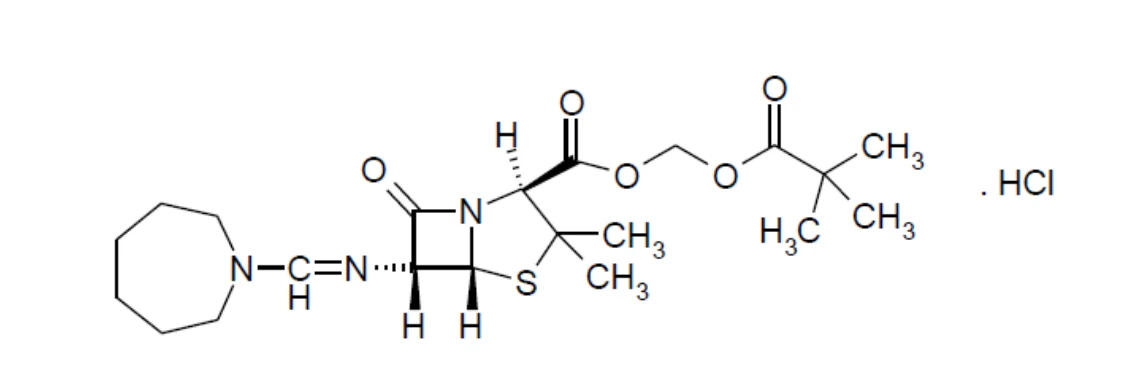
Physicochemical properties: A white crystalline powder.
14 CLINICAL TRIALS
14.1 Trial Design and Study Demographics
The efficacy of pivmecillinam for treatment of acute uncomplicated urinary infection has, since 1977 been consistently documented in clinical trials. The clinical efficacy has varied from 85 –100% and the microbiological efficacy from 75 – 100%. The safety profiles of pivmecillinam/mecillinam are very well established. They are generally similar to those of the other penicillin-type antibiotics.
Paediatrics (> 6 years of age): SELEXID (pivmecillinam hydrochloride) has been evaluated for treatment of acute urinary tract infections in children. The outcomes reported in children are consistent with those reported in adults.
14.2 Comparative Bioavailability Studies
A single center, double-blind, balanced, randomized, two-sequence, two-treatment, two-period, single oral dose, crossover study comparing 1 x SELEXID 400 mg tablets (Karo Healthcare AB) to 2 x SELEXID 200 mg tablets (Karo Healthcare AB) in 18 healthy, adult, human male subjects was conducted under fasting conditions.
SUMMARY TABLE OF THE COMPARATIVE BIOAVAILABILITY DATA
Mecillinam (1 x 400 mg or 2 x 200 mg) From measured data Geometric Mean Arithmetic Mean (CV %) | ||||
| Parameter | Test* | Reference† | % Ratio of Geometric Means | Confidence Interval |
AUCT (ug·h/mL) | 6.06 6.27 (26.2) | 6.29 6.50 (26.3) | 96.25 | 89.0 – 104.0 |
AUCI (ug·h/mL) | 6.28 6.48 (25.2) | 6.53 6.73 (25.3) | 96.22 | 89.0 – 104.0 |
CMAX (ug·mL) | 2.85 2.96 (28.3) | 2.92 3.03 (28.6) | 97.75 | 90.0 – 106.0 |
TMAX§ (h) | 1.00 (0.50 – 1.50) | 1.00 (1.00 - 1.50) | Not applicable | Not applicable |
T½ (h) € | 1.08 (22) | 1.06 (13) | Not applicable | Not applicable |
* SELEXID 400 mg tablets (Karo Healthcare AB).
† SELEXID 200 mg tablets (Karo Healthcare AB).
§ Expressed as the median (range) only.
€ Expressed as the arithmetic mean (CV %) only.
15 MICROBIOLOGY
The antibacterial activity of SELEXID (pivmecillinam hydrochloride) is identical to that of mecillinam. Mecillinam is bactericidal and has demonstrated in vitro activity against a broad range of Gram-negative bacteria. Tables 1, 2, and 3 summarize the in vitro activity of mecillinam against various Gram-negative and Gram-positive organisms.
The in vitro antimicrobial activity of mecillinam against a selection of clinical isolates was compared to that of other antibiotic agents (Table 4).
A study of the resistance of Salmonella strains to mecillinam suggests that resistance develops due to the presence of gene determinants on the plasmid producing a plasmid mediated beta-lactamase. Resistance to more than one antibiotic may be coded on the same gene determinants. The antibiotic resistance pattern of 2000 Enterobacteriaceae isolates from patients with significant urinary tract infections has shown that resistance to mecillinam was much less common than the resistance to ampicillin or amoxicillin (Table 5). Ampicillin resistant E. coli isolated from infected urines were often susceptible to mecillinam, while organisms relatively resistant to mecillinam were usually resistant to both ampicillin and cephaloridine.
TABLE 1
CUMULATIVE PERCENTAGE OF GRAM-NEGATIVE ISOLATES
SUSCEPTIBLE TO MECILLINAM
PERCENTAGE INHIBITED
| Organisms | No. Tested | <0.4* | 0.4 | 0.8 | 1.6 | 3.2 | 6.3 | 12.5 | 25 | 50 | 100 | >100 |
|---|---|---|---|---|---|---|---|---|---|---|---|---|
Escherichia coli (Amp** sensitive) Escherichia coli (Amp resistant) Klebsiella pneumoniae Enterobacter Serratia marcescens Proteus Proteus (indole +) Salmonella Citrobacter Acinetobacter Providencia Pseudomonas Bacteroides fragilis*** Haemophilus influenzae*** (Amp resistant) | 29 36 32 40 32 48 46 25 27 11 6 10 10 15 | 55 19 18 22 - - - - 37 - - - - - | - 22 - - - - - 20 - - 16 - - - | 68 36 40 37 3 - - 50 66 - - - - - | - 47 65 50 - - 6 60 70 - - - - - | 79 61 68 50 - 2 - 75 - - - - - - | 86 75 71 62 - 8 9 - - - - - - - | 93 91 81 72 6 10 12 - 74 - - - - - | 100 94 - 75 12 21 - 80 - 18 - - - - | - 100 87 97 32 25 - 96 81 27 - - - - | - - - - - 86 - 100 92 72 50 - - - | - - 100 100 100 100 100 - 100 100 100 100 100 100 |
TABLE 2
CUMULATIVE PERCENTAGE OF GRAM-POSITIVE ISOLATES
SUSCEPTIBLE TO MECILLINAM
PERCENTAGE INHIBITED
| Organisms | No. Tested | <0.4* | 0.4 | 0.8 | 1.6 | 3.2 | 6.3 | 12.5 | 25 | 50 | 100 | >100 |
|---|---|---|---|---|---|---|---|---|---|---|---|---|
Staphylococcus aureus Staphylococcus epidermidis Streptococcus pneumoniae** Streptococcus pyogenes** Streptococcus fecalis Streptococcus bovis Streptococcus viridans** Listeria Bacillus subtilis | 25 10 5 5 15 5 10 5 3 | - - - - - - - - - | - - - - - - - - - | - - 20 20 - - - - - | 4 - 60 60 - - 20 - - | - 10 80 80 - - 60 - - | - 70 - 100 - - 80 - 100 | - - 100 - - - 100 - - | 12 - - - - - - - - | 28 80 - - - - - - - | 36 100 - - - - - 75 - | 100 - - - 100 100 - 100 - |
* MIC (mcg/mL); determined by agar dilution with NIH agar.
** Agar dilution on blood agar.
TABLE 3
COMPARISON OF MIC AND MBC FOR MECILLINAM
| Organisms | MIC* | MBC* |
|---|---|---|
Escherichia coli Enterobacter cloacae Klebsiella pneumoniae Citrobacter freundii Salmonella typhimurium Proteus morganii Proteus mirabilis | 0.4 - 1.6 0.8 0.8 0.4 0.4 1.6 12.5 | 1.6 - 25 0.8 - 25 1.6 25 3.2 - 50 200 200 |
*Measured in mcg/mL
TABLE 4
COMPARISON OF THE ACTIVITY OF MECILLINAM WITH THAT OF OTHER ANTIMICROBIAL AGENTS AGAINST CLINICAL ISOLATES
| Percentage of strains inhibited at 6.3 or 25 mcg/mL | |||||||||
|---|---|---|---|---|---|---|---|---|---|
Organisms (No. tested) | Mecillinam 6.3 25 | Ampicillin 6.3 25 | Carbenicillin 6.3 25 | Cephalothin 6.3 25 | Cephamandole 6.3 25 | Cefoxitin 6.3 25 | Gentamicin* 6.3 | Amikacin 6.3 25 | |
E. coli (54) Shigella (31) Salmonella (34) Citrobacter (25) Klebsiella (33) Enterobacter (32) Serratia (32) Proteus mirabilis (31) Indole-positive Proteus (31) Providencia (26) | 80 89 82 88 74 81 83 88 30 72 72 81 18 31 0 6 3 3 12 12 | 28 35 44 44 48 52 4 12 6 6 0 9 0 0 87 90 3 6 0 4 | 17 41 35 50 42 52 12 32 0 3 22 66 0 19 97 97 58 68 42 46 | 20 63 13 41 58 77 16 16 24 52 6 6 0 0 84 90 0 3 0 0 | 61 76 53 100 74 84 40 68 48 73 31 41 0 0 97 97 35 84 23 78 | 69 89 32 53 94 94 44 56 39 76 6 19 0 0 90 100 84 97 100 100 | 59 21 55 72 67 84 28 6 48 8 | 59 96 29 100 26 87 44 88 79 94 72 100 13 75 12 65 39 97 77 100 | |
* The values for gentamicin are given only for 6.3 mcg/mL, since a sustained concentration of 25 mcg/mL is not clinically achievable without toxicity.
TABLE 5
ANTIBIOTIC RESISTANCE PATTERN OF 2,000 ENTEROBACTERIACEAE ISOLATED FROM PATIENTS WITH
SIGNIFICANT URINARY TRACT INFECTIONS IN THE YORK HEALTH DISTRICT, U.K.
% Organisms resistant by the disc antibiotic susceptibility test with discs containing: | |||||||||||||||||||||
|---|---|---|---|---|---|---|---|---|---|---|---|---|---|---|---|---|---|---|---|---|---|
Source of urine specimens | No. of organisms examined | % Organisms susceptible to all antibiotics tested | Mecilli-nam (10 ug) | Amoxicillin or Ampicillin (25 ug) | Cepha- loridine (25 ug) | Sulpha- triad (300 ug) | Trimetho- prim (2.5 ug) | Nitro- furantoin (200 ug) | Colistin (10 ug) | Genta- micin (10 ug) | |||||||||||
General practice and antenatal patients Hospital Out-patients Hospital In-patients All mecillinam resistant isolates | 705 227 1,068 37 | 63.0 53.3 38.4 0 | 0.4 0.4 3.1 100 | 17.7 26.9 37.5 91.9 | - - - 78.4 | 17.3 26.0 27.9 70.3 | 9.9 9.7 23.9 67.6 | 5.2 4.0 13.7 35.1 | - - - 29.7 | 0.1 0 0.2 0 | |||||||||||
Combinations of mecillinam and beta-lactam antibiotics such as ampicillin, carbenicillin, cloxacillin and cephalexidin may act synergistically in vitro against some clinical isolates of Gram-negative bacteria.
In vivo experiments in mice also demonstrated the potential for synergy between mecillinam and derivatives of 6-aminopenicillanic acid and 7-aminocephalosporanic acid against some strains of Gram-negative bacteria. Synergy can be demonstrated when the ratio of mecillinam to another penicillin is in the range of from 1:1 to 1:50. The only non beta-lactam antibiotic which appears to be synergistic with mecillinam is alafosfalin. The mechanism of these synergistic interactions is not yet fully understood and the role of the organism's sensitivity to mecillinam or to other antibiotics is not clear.
In vitro sensitivity to mecillinam can be determined by the Kirby-Bauer disc diffusion method using disc containing 10 mcg mecillinam. The following criteria have been proposed:
Sensitive organisms: Zone equal to or greater than 16 mm diameter (equivalent to an MIC of 1 mcg/mL or less).
Intermediate sensitivity: Zone diameter of 10-15 mm (equivalent to an MIC of 2 to 8 mcg/mL).
Resistant organisms: Zone equal to or less than 9 mm diameter (equivalent to an MIC in excess of 8 mcg/mL).
Breakpoints
CLSI: S≤8 mg/L, R≥16 mg/L (for E. coli)
SRGA: S≤1 mg/L, R≥8 mg/L
EUCAST: S ≤8 mg/L / R >8 mg/L (for E. coli, Klebsiella spp. and P. mirabilis)
Generally sensitive species
Gram negative micro-organisms
Citrobacter spp.
Enterobacter spp.
Escherichia coli
Klebsiella spp.
Proteus mirabilis
Salmonella spp.
Shigella spp.
Yersinia spp.
Naturally resistant species
Gram-positive micro-organisms
Enterococcus spp.
Staphylococcus saprophyticus*
Staphylococcus spp.
Streptococcus spp.
Gram negative micro-organisms
Pseudomonas spp.
*Due to the high concentrations of mecillinam in urine, clinical effect is normally obtained in urinary tract infections caused by S. saprophyticus.
Resistance
As a narrow-spectrum antibiotic active against Gram-negative bacilli, pivmecillinam is unlikely to contribute to the widespread of resistant bacterial strains. The exclusive action of pivmecillinam on PBP-2 results in the low cross-resistance with other β-lactams (penicillins and cephalosporins). Mecillinam has limited susceptibility to most of the beta-lactamases (including ESBL) produced by Enterobacteriaceae.
In Enterobacteriaceae, resistance to mecillinam may be due to marked production of some beta-lactamases and modification of penicillin binding proteins.
16 NON-CLINICAL TOXICOLOGY
General Toxicology:
Acute and Long-term Toxicity
The acute toxicity of pivmecillinam was determined in mice and rats, intravenously, subcutaneously and orally. The results are shown in the following table:
| Species | Route of Administration | LD50 mg/kg Pivmecillinam Hydrochloride | Signs and Symptoms |
|---|---|---|---|
| Mice | i.v. (3 sec. inj) i.v. (1 min inj) | 113 (90-143) 542 (410-715) | Clonic convulsion, forced respiration Clonic convulsion, forced respiration, red swollen tails with necrosis after 7 days |
i.v. s.c. oral oral | 475 (male) 480 (female) 1930 (male) 1736 (female) >2000 3020 (M&F) | None |
| Rats | ||
|---|---|---|
i.v. (3 sec inj) i.v. s.c. oral oral | 224 (187-269) 465 (M&F) 2100 (male) 1935 (female) >2000 9500 (male) 10000 (female) | Clonic convulsions, cyanotic and swollen vein in tail, necrotic after 7 days. None |
Pivmecillinam when given orally shows very low toxicity. Given intravenously the drug is restricted by its low solubility at the pH of blood. It is precipitated from the concentrated solutions given intravenously causing venous thrombosis. Pivmecillinam is not intended to be injected parenterally and should never be given as an intravenous injection.
Sub-acute Toxicity
Rats: Pivmecillinam was administered orally to 4 groups of 15 male and 15 female rats at dose levels of 0 (control), 70, 200 and 600 mg/kg/day, 6 days a week for 8 weeks. No adverse effects were observed. Weight gain was normal and all haematological and biochemical results were within the normal range. An autopsy macroscopic examination showed no changes attributable to the dosing with pivmecillinam.
Dogs: Two male and 2 female Beagle dogs were dosed orally with pivmecillinam 200 mg/kg/day, 6 days a week for 47 days. No adverse effects were seen. All parameters measured were within normal ranges. Macroscopic examination showed no abnormalities and no histological changes related to dosing were observed.
Monkeys: Two groups of 6 Rhesus monkeys, 3 male and 3 female, received oral pivmecillinam at dose levels of 70 to 210 mg/kg/day for 3 months. A further group of 8 monkeys (4 male and 4 female) received an oral dose of 630 mg/kg/day. There was a control group of 3 male and 3 female monkeys.
Vomiting and diarrhoea was seen in the high dose group and occasionally in the intermediate group. The relative liver weight increased slightly and the prostate weight decreased in the males receiving the highest dose. Females at this dose level showed fat in the interstitium of the renal medulla. Smooth endoplasmic reticulum proliferated focally in the epithelium of the proximal and distal convoluted tubules in the males in the high dosage group but it is not known whether this was a toxic or adaptive alteration. There was no change in body weight gain, food intake, haematology and serum chemistry.
It was concluded that the toxicity in Rhesus monkeys was low and that dose levels of 70 mg/kg/day and 210 mg/kg/day could be considered safe.
Chronic Toxicity
Rats: Four groups of 15 male and 15 female rats received oral pivmecillinam at dose levels of 0 (control), 70, 210 and 630 mg/kg/day, 6 days a week for 6 months.
Weight gain was significantly lower in the high dose level animals and reduced in the intermediate dose group as compared with controls. The low dose level animals had slightly higher weight gain than the controls.
No macroscopic or histological changes attributable to the dosing were observed.
Dogs: Three groups of 3 male and 3 female Beagle dogs received oral daily doses of pivmecillinam at dose levels of 630 (315 twice daily), 210 and 70 mg/kg/day 7 days a week for 6 months. A fourth group of 5 males and 5 females served as control.
A marked reduction in appetite was seen in the dogs receiving 315 mg/kg twice daily and a decreased body weight gain was seen in these animals. No adverse effect was seen in the other dosed group.
After 16 weeks dosing, packed cell volume, hemoglobin and red cell counts in dogs receiving 315 mg/kg twice daily were significantly reduced when compared to controls. After 24 weeks a slight reduction also appeared in dogs receiving 210 mg/kg/day.
When compared to the controls, the mean platelet count in dogs receiving 630 and 210 mg/kg/day was elevated after 16 weeks but after 24 weeks no significant differences existed between the groups.
The biochemical tests showed SAP values exceeding the normal range in 2 dogs receiving 630 mg/kg/day beginning after 4 weeks. Elevated levels of urea, SGPT and SGOT were seen in dogs receiving the high dose after 8 weeks dosing but at the end of the dosing period, values relating to these parameters were normal in all dogs.
During the study there was a progressive increase in the quantities of total reducing substances present in the urine from dogs at the high dose level.
At autopsy, the macroscopic examination revealed that the liver in all dogs receiving 630 mg/kg/day was enlarged and there was a significant increase in liver weights. The histological examination showed fatty infiltration in the liver of males at this high dose group. No necrotic or inflammatory changes in the liver cells were seen.
No adverse effects of the drug were seen in animals receiving 210 and 70 mg/kg/day. At the end of the study all biochemical and haematological results were within normal range and at autopsy macroscopic as well as histological examinations showed no changes attributable to the dosing with pivmecillinam at these dose levels.
Reversibility Studies
Dogs: To investigate whether the liver changes observed in dogs on long-term treatment with high doses are reversible, another dog study was performed. Two male and 2 female Beagle dogs were dosed orally with 315 mg/kg twice daily of pivmecillinam for a period of 14 weeks, 7 days a week. Subsequently the animals were observed but not dosed during a period of 25 weeks. The bodyweight was satisfactory for all dogs. After 14 weeks' dosing elevated SGPT levels were recorded in 2 dogs but they normalized during the first weeks of the observation period. No changes were seen in SAP and SGOT levels and there was no adverse effect on plasma urea.
The histological examination of the liver biopsies the end of the dosing period showed hepatocyte enlargement, deposition of a basophilic pigment and intracytoplasmic eosinophilic globules in all dogs: intracytoplasmic basophilic granules were seen in 2 dogs.
During the recovery period the hepatocytes returned to normal size and the intracytoplasmic eosinophilic globules disappeared in all dogs. The basophilic pigment and the intracytoplasmic basophilic granules showed an obvious diminution at the end of the recovery period.
Macroscopic postmortem examination showed no changes attributable to the dosing. The weight and fat content of the liver were within normal limits.
Therefore, it would appear that the observed liver changes are reversible as the elevated enzyme values returned to normal a few weeks after dosing ceased and the histological changes tended to normalize during the recovery period.
Reproductive and Developmental Toxicology:
Reproduction and Mutagenicity
Teratology
Mice: Three groups of pregnant mice (20, 20, 14) were dosed orally during the period from day 6 to day 15 of gestation with 70, 210 and 630 mg/kg/day of pivmecillinam. A fourth group (27 mice) served as control.
The parent animals showed no signs of reaction to the treatment. The litter parameters were comparable for all groups and no adverse effects on the embryonic and foetal development were observed.
Rats: Three groups of pregnant rats (28, 22, 26) were given orally from day 6 to day 15 of gestation 70, 210 and 630 mg/kg/day of pivmecillinam. A fourth group (28) served as control.
The parent animals showed no obvious signs of reaction to the treatment. The litter parameters were comparable for all groups and no adverse effects on the embryonic and foetal development were observed.
Fertility and General Reproductive Performance
Two groups of 15 male and 30 female rats received daily oral doses of 210 and 630 mg/kg of pivmecillinam. A third group was undosed. Dosing commenced when the males were 60 days and the females 110 days of age. The period of treatment before mating was 70 days for males and 20 days for females and the administration continued during mating and throughout the duration of gestation, lactation and weaning.
Animals at the high dose level had a slightly lower weight gain up to mating and birth than other groups.
Mating performance and pregnancy rate did not seem to be affected by treatment at any dosage and the duration of gestation was comparable for all groups.
Litter parameters as assessed at day 13 of pregnancy were not significantly affected by treatment at any dosage. Among animals rearing young, litter parameters were comparable for all groups and no abnormalities were observed.