


Product Monograph - Septa-Citalopram
SUMMARY PRODUCT INFORMATION
| Route of Administration | Dosage Form / Strength | All Nonmedicinal Ingredients |
| Oral | tablet / 10 mg, 20 mg, 40 mg, as Septa-Citalopram | corn starch, croscarmellose sodium, copovidone, glycerine, hypromellose, lactose monohydrate, magnesium stearate, microcrystalline cellulose, polyethylene glycol 400 and titanium dioxide |
INDICATIONS AND CLINICAL USE
Adults
Septa-Citalopram is indicated for:
- the symptomatic relief of depressive illness
The relapse rate was significantly lower in Septa-Citalopram-treated patients than in placebo-treated patients in two placebo-controlled studies that were conducted over a 24-week period in patients who responded to 6 or 8 weeks of acute treatment with Septa-Citalopram (see CLINICAL TRIALS). Nevertheless, the physician who elects to use Septa-Citalopram for extended periods should periodically re-evaluate the long-term usefulness of the drug for the individual patient.
Geriatrics (≥ 65 years of age):
Elderly patients should be administered lower doses and a lower maximum dose (see DOSAGE AND ADMINISTRATION, Geriatrics and WARNINGS AND PRECAUTIONS, Special Populations, Geriatrics).
Pediatrics (<18 years of age):
Septa-Citalopram is not indicated for use in patients below the age of 18 (see WARNINGS AND PRECAUTIONS, General, Potential Association with Behavioural and Emotional Changes, Including Self-Harm).
CONTRAINDICATIONS
Patients who are hypersensitive to Septa-Citalopram or to any ingredient in the formulation or component of the container. For a complete listing, see the Dosage Forms, Composition and Packaging section of the product monograph.
MONOAMINE OXIDASE INHIBITORS
Cases of serious reactions have been reported in patients receiving selective serotonin reuptake inhibitors (SSRIs) in combination with a monoamine oxidase inhibitor (MAOI) or the reversible MAOI (RIMA), moclobemide, and in patients who have recently discontinued an SSRI and have been started on a MAOI (see DRUG INTERACTIONS). With the co-administration of an SSRI with MAOI, there have been reports of serious, sometimes fatal reactions including hyperthermia,
rigidity, myoclonus, autonomic instability with possible fluctuations of vital signs, and mental status changes, including extreme agitation progressing to delirium and coma. Some cases presented with features resembling serotonin syndrome.
Therefore, Septa-Citalopram should not be used in combination with a MAOI or within 14 days of discontinuing treatment with a MAOI, (including linezolid, an antibiotic which is a reversible non-selective MAO inhibitor and methylene blue, which is a MAOI). Similarly, at least 14 days should elapse after discontinuing Septa-Citalopram treatment before starting a MAOI.
PIMOZIDE
Septa-Citalopram should not be used in combination with the antipsychotic drug pimozide, as results from a controlled study indicate that concomitant use is associated with an increased risk of QTc prolongation compared to pimozide alone. This apparent pharmacodynamic interaction occurred in the absence of a clinically significant pharmacokinetic interaction; the mechanism is unknown (see DRUG INTERACTIONS).
QT PROLONGATION
Septa-Citalopram is contraindicated in patients with known QT interval prolongation or with congenital long QT syndrome. (see WARNINGS AND PRECAUTIONS, Cardiovascular/QT Prolongation; ADVERSE REACTIONS, Post-Market Adverse Reactions; DRUG INTERACTIONS; DOSAGE AND ADMINISTRATION, OVERDOSAGE).
WARNINGS AND PRECAUTIONS
GENERAL
POTENTIAL ASSOCIATION WITH BEHAVIORAL AND EMOTIONAL CHANGES, INCLUDING SELF-HARM:
Pediatrics: Placebo-Controlled Clinical Trial Data
- Recent analyses of placebo-controlled clinical trial safety databases from SSRIs and other newer anti-depressants suggest that use of these drugs in patients under the age of 18 may be associated with behavioral and emotional changes, including an increased risk of suicidal ideation and behavior over that of placebo.
- The small denominators in the clinical trial database, as well as the variability in placebo rates preclude reliable conclusions on the relative safety profiles among these drugs.
Adults and Pediatrics: Additional data
- There are clinical trial and post-marketing reports with SSRIs and other newer anti-depressants, in both pediatrics and adults, of severe agitation-type adverse events coupled with self-harm and harm to others. The agitation-type events include: akathisia, agitation, disinhibition, emotional lability, hostility, aggression and depersonalization. In some cases, the events occurred within several weeks of starting treatment.
- Rigorous clinical monitoring for suicidal ideation or other indicators of potential for suicidal behavior is advised in patients of all ages. This includes monitoring for agitation-type emotional and behavioral changes.
An FDA meta-analysis of placebo-controlled clinical trials of antidepressant drugs in adult patients aged 18 to 24 years with psychiatric disorders showed an increased risk of suicidal behaviours with antidepressants compared to placebo.
Discontinuation Symptoms
Patients currently taking Septa-Citalopram should NOT be discontinued abruptly, due to risk of discontinuation symptoms. At the time that a medical decision is made to discontinue an SSRI or other newer antidepressant drug, a gradual reduction in the dose rather than an abrupt cessation is recommended.
DISCONTINUATION OF TREATMENT WITH SEPTA-CITALOPRAM
Symptoms when treatment is discontinued are common, particularly if discontinuation is abrupt (see ADVERSE REACTIONS, Adverse Reactions following Discontinuation of Treatment (or Dose Reduction)).
When discontinuing treatment, patients should be monitored for symptoms which may be associated with discontinuation. The risk of discontinuation symptoms may be dependent on several factors, including the duration and dose of therapy and the rate of dose reduction. Dizziness, sensory disturbances (including paraesthesia), sleep disturbances (including insomnia and intense dreams), agitation or anxiety, nausea and/or vomiting, tremor and headache are the most commonly reported reactions.
Generally, these symptoms are mild to moderate; however, in some patients they may be severe in intensity. They usually occur within the first few days of discontinuing treatment, but there have been very rare reports of such symptoms in patients who have inadvertently missed a dose.
Generally, these symptoms are self-limiting and usually resolve within 2 weeks, though in some individuals they may be prolonged (2-3 months or more).
It is therefore advised that Septa-Citalopram should be gradually tapered over a period of several weeks or months when discontinuing treatment, according to the patient’s needs (see DOSAGE AND ADMINISTRATION, Discontinuation of Septa-Citalopram Treatment).
If intolerable symptoms occur following a decrease in the dose or upon discontinuation of treatment, dose titration should be managed on the basis of the patient’s clinical response (see ADVERSE REACTIONS, Adverse Reactions following Discontinuation of Treatment (or Dose Reduction) and DOSAGE AND ADMINISTRATION, Discontinuation of Septa-Citalopram Treatment).
Septa-Citalopram Treatment during Pregnancy- Effects on Newborns
In animal reproduction studies, Septa-Citalopram has been shown to have adverse effects on embryo/fetal and postnatal development, including teratogenic effects, when administered at doses greater than human therapeutic doses (see TOXICOLOGY, Reproduction Toxicity). There are no adequate and well-controlled studies in pregnant women; therefore, Septa-Citalopram should be used during pregnancy only if the potential benefit to the patient justifies the potential risk to the fetus.
Post-marketing reports indicate that some neonates exposed to SSRIs and other antidepressants late in the third trimester have developed complications requiring prolonged hospitalization,
respiratory support, and tube feeding. Such complications can arise immediately upon delivery. When treating a pregnant woman with Septa-Citalopram during the third trimester, the physician should carefully consider the potential risks and benefits of treatment (see WARNINGS AND PRECAUTIONS, Special Populations, Pregnant and Nursing Women; and DOSAGE AND ADMINISTRATION).
INTERFERENCE WITH COGNITIVE AND MOTOR PERFORMANCE
In studies in normal volunteers, Septa-Citalopram in doses of 40 mg/day did not impair cognitive function or psychomotor performance. However, psychotropic medications may impair judgement, thinking or motor skills. Consequently, patients should be cautioned against driving a car or operating hazardous machinery until they are reasonably certain that Septa-Citalopram does not affect them adversely.
Bone Fracture Risk
Epidemiological studies show an increased risk of bone fractures following exposure to some antidepressants, including SSRIs/SNRIs. The risks appear to be greater at the initial stages of treatment, but significant increased risks were also observed at later stages of treatment. The possibility of fracture should be considered in the care of patients treated with Septa-Citalopram. Elderly patients and patients with important risk factors for bone fractures should be advised of possible adverse events which increase the risk of falls, such as dizziness and orthostatic hypotension, especially at the early stages of treatment but also soon after withdrawal. Preliminary data from observational studies show association of SSRIs/SNRIs and low bone mineral density in older men and women. Until further information becomes available, a possible effect on bone mineral density with long term treatment with SSRIs/SNRIs, including Septa-Citalopram, cannot be excluded, and may be a potential concern for patients with osteoporosis or major risk factors for bone fractures.
The following additional PRECAUTIONS are listed alphabetically.
CARCINOGENESIS AND MUTAGENESIS
For animal data, see Part II: TOXICOLOGY section.
CARDIOVASCULAR
PATIENTS WITH CARDIAC DISEASE
Septa-Citalopram has not been systematically evaluated in patients with a recent history of myocardial infarction or unstable heart disease. Patients with these diagnoses were generally excluded from clinical trials during the drug’s premarketing assessment.
In clinical trials, Septa-Citalopram caused small but statistically significant decreases in heart rate (see ADVERSE REACTIONS, ECG). Consequently, caution should be observed when Septa-Citalopram is initiated in patients with pre-existing slow heart rate.
QT PROLONGATION AND TORSADES DE POINTES
Septa-Citalopram can cause a dose-dependent increase in the QT interval (see CONTRAINDICATIONS; ADVERSE REACTIONS, Post-Market Adverse Reactions; DRUG INTERACTIONS; DOSAGE AND ADMINISTRATION; OVERDOSAGE).
Events of torsade de pointes, ventricular fibrillation, cardiac arrest, and sudden death have been reported during post-marketing use of Septa-Citalopram. Torsade de pointes is a polymorphic ventricular tachyarrhythmia. Generally, the risk of torsade de pointes increases with the magnitude of QT/QTc prolongation produced by the drug. Torsade de pointes may be asymptomatic or experienced by the patient as dizziness, palpitations, syncope, or seizures. If sustained, torsade de pointes can progress to ventricular fibrillation and sudden cardiac death.
A randomized, double-blind, placebo- and positive-controlled, crossover study was performed in healthy subjects (N=119) to examine the effects of Septa-Citalopram 20 mg/day and 60 mg/day on ECG intervals (individually corrected QTcNi interval) when administered according to an escalating multiple dose regimen (9 days at 20 mg/day, 4 days at 40 mg/day, 9 days at 60 mg/day). The maximum mean (upper bound of the 95% one-sided confidence interval) differences from placebo were 8.5 (10.8) and 18.5 (21.0) msec for 20 mg and 60 mg Septa-Citalopram, respectively. The effects of the 40 mg/day dose were not studied, but are predicted to be approximately 13 ms (estimate value on QTcNI).
- Septa-Citalopram should not be dosed above 40 mg/day.
- In patients who are CYP2C19 poor metabolizers or patients taking concomitant cimetidine or another CYP2C19 inhibitor, citlaopram should not be dosed over 20 mg/day.
- Hypokalemia and hypomagnesemia should be corrected prior to initiation of treatment and periodically monitored.
- ECG monitoring is recommended in patients with risk factors for torsades de pointes, such as congestive heart failure, recent myocardial infarction, bradyarrhythmias, or patients on concomitant medications that prolong the QT interval or in patients with altered metabolism. e.g. liver impairment.
ENDOCRINE AND METABOLISM
DIABETIC PATIENTS
Septa-Citalopram has not been systematically evaluated in diabetic patients since diabetes constituted an exclusion criterion. Although 13 patients did receive insulin during the studies, this number is too small to determine whether Septa-Citalopram affects the response to insulin. Rare events of hypoglycemia were reported. Treatment with an SSRI in patients with diabetes may alter glycaemic control (hypoglycaemia and hyperglycaemia). Septa-Citalopram should be used with caution in diabetic patients on insulin or other antidiabetic drugs.
HEMATOLOGIC
ABNORMAL BLEEDING
SSRIs and SNRIs, including Septa-Citalopram, may increase the risk of bleeding events by causing abnormal platelet aggregation. Concomitant use of acetylsalicylic acid (ASA), nonsteroidal anti-inflammatory drugs (NSAIDs), warfarin and other anticoagulants may add to the risk. Case reports and epidemiological studies (case-control and cohort design) have demonstrated an association between use of drugs that interfere with serotonin reuptake and the occurrence of gastrointestinal bleeding. Bleeding events related to SSRIs and SNRIs use have ranged from ecchymoses, hematomas, epistaxis, and petechiae to life-threatening haemorrhages. Patients should be cautioned about the risk of bleeding associated with the concomitant use of Septa-Citalopram and NSAIDs, ASA, or other drugs that affect coagulation (see DRUG
INTERACTIONS). Caution is advised in patients with a history of bleeding disorder or predisposing conditions (e.g. thrombocytopenia).
HEPATIC/BILIARY/PANCREATIC
HEPATIC IMPAIRMENT
In subjects with hepatic impairment, Septa-Citalopram clearance was significantly decreased and plasma concentrations, as well as elimination half-life significantly increased (see ACTION AND CLINICAL PHARMACOLOGY, Pharmacokinetics, Special Populations, Hepatic Impairment). Consequently, the use of Septa-Citalopram in hepatically impaired patients should be approached with caution and a lower maximum dosage is recommended (see DOSAGE AND ADMINISTRATION, Recommended Dose and Dose Adjustments, Hepatic Impairment).
NEUROLOGIC
SEIZURES
Septa-Citalopram has not been systematically evaluated in patients with a seizure disorder. These patients were excluded from clinical studies during the premarketing testing of Septa-Citalopram. In clinical trials, seizures occurred in 0.25% of patients treated with Septa-Citalopram and in 0.23% patients treated with placebo. Like other antidepressants, Septa-Citalopram should be used with caution in patients with a history of seizure disorder. The drug should be discontinued in any patient who develops seizures.
SEROTONIN SYNDROME/NEUROLEPTIC MALIGNANT SYNDROME (NMS) LIKE EVENTS
On rare occasions serotonin syndrome or neuroleptic malignant syndrome-like events have occurred in association with treatment with SSRIs, including Septa-Citalopram, particularly when given in combination with other serotonergic and/or neuroleptic drugs. As these syndromes may result in potentially life-threatening conditions, treatment with Septa-Citalopram should be discontinued if such events (characterized by clusters of symptoms such as hyperthermia, rigidity, myoclonus, autonomic instability with possible rapid fluctuations of vital signs, mental status changes including confusion, irritability, extreme agitation progressing to delirium and coma) occur and supportive symptomatic treatment should be initiated. Septa-Citalopram should not be used in combination with MAO inhibitors or serotonin-precursors (such as L-tryptophan, oxitriptan) and should be used with caution in combination with other serotonergic drugs (triptans, certain tricyclic antidepressants, lithium, tramadol, St. John’s Wort) due to the risk of serotonergic syndrome (see CONTRAINDICATIONS and DRUG INTERACTIONS, Serotonergic Drugs, Triptans).
OPHTALMOLOGIC
GLAUCOMA
As with other SSRIs/SNRIs, Septa-Citalopram can cause mydriasis and should be used with caution in patients with raised intraocular pressure or those with narrow-angle glaucoma.
PSYCHIATRIC
SUICIDE
Depression is associated with an increased risk of suicidal thoughts, self harm and suicide (suicide-related events). This risk persists until significant remission occurs. As improvement
may not occur during the first few weeks or more of treatment, patients should be closely monitored until such improvement occurs. It is general clinical experience that the risk of suicide may increase in the early stages of recovery. Therefore, high risk patients should be closely supervised throughout therapy with Septa-Citalopram and consideration should be given to the possible need for hospitalization. In order to minimize the opportunity for overdosage, prescription for Septa-Citalopram should be written for the smallest quantity of drug consistent with good patient management.
Other psychiatric conditions for which Septa-Citalopram is prescribed can also be associated with an increased risk of suicide-related events. In addition, these conditions may be co-morbid with major depressive disorder. The same precautions observed when treating patients with major depressive disorder should therefore be observed when treating patients with other psychiatric disorders.
Patients with a history of suicide-related events, or those exhibiting a significant degree of suicidal ideation prior to commencement of treatment, are at greater risk of suicidal thoughts or suicide attempts and should receive careful monitoring during treatment. In addition, there is a possibility of an increased risk of suicidal behaviour in young adults.
Patients (and caregivers of patients) should be alerted about the need to monitor for the emergence of such events and to seek medical advice immediately if these symptoms present.
(See WARNINGS AND PRECAUTIONS: Potential Association with Behavioral and Emotional Changes, Including Self-Harm).
ACTIVATION OF MANIA/HYPOMANIA
In placebo-controlled trials with Septa-Citalopram, some of which included patients with bipolar disorder, mania/hypomania was reported in 0.1% of 1027 patients treated with Septa-Citalopram versus none of the 426 patients treated with placebo. Activation of mania/hypomania has also been reported in a small proportion of patients with major affective disorders treated with other marketed antidepressants. If a patient enters a manic phase, Septa-Citalopram should be discontinued.
As with all drugs effective in the treatment of depression, Septa-Citalopram should be used with caution in patients with a history of mania. A major depressive episode may be the initial presentation of bipolar disorder. Patients with bipolar disorder may be at an increased risk of experiencing manic episodes when treated with antidepressants alone. Therefore, the decision to initiate symptomatic treatment of depression should only be made after patients have been adequately assessed to determine if they are at risk for bipolar disorder.
ELECTROCONVULSIVE THERAPY (ECT)
The safety and efficacy of the concurrent use of Septa-Citalopram and ECT have not been studied and therefore, caution is advisable.
RENAL
HYPONATREMIA
Hyponatremia and SIADH (syndrome of inappropriate antidiuretic hormone secretion) have been reported as a rare adverse event with use of Septa-Citalopram, as with other SSRIs. The majority
of these occurrences have been in elderly individuals, some in patients taking diuretics or who were otherwise volume-depleted. Elderly female patients in particular seem to be a group at risk.
RENAL IMPAIRMENT
No dosage adjustment is needed in patients with mild to moderate renal impairment. Since, no information is available on the pharmacokinetic or pharmacodynamic effects of Septa-Citalopram in patients with severely reduced renal function (creatinine clearance < 30 mL/min), Septa-Citalopram should be used with caution in these patients.
SPECIAL POPULATIONS
Male Fertility: Animal data have shown that Septa-Citalopram may affect sperm quality (see TOXICOLOGY, Fertility). Human case reports with some SSRIs have shown that an effect on sperm quality is reversible. Impact on human fertility has not been observed.
Pregnant Women: The safety of Septa-Citalopram during pregnancy has not been established. Therefore, Septa-Citalopram should not be used during pregnancy, unless, in the opinion of the physician, the expected benefits to the patient markedly outweigh the possible risk to the fetus.
Complications following late third trimester exposure to SSRIs: Post-marketing reports indicate that some neonates exposed to SSRIs such as Septa-Citalopram and other antidepressants late in the third trimester have developed complications requiring prolonged hospitalization, respiratory support, and tube feeding. Such complications can arise immediately upon delivery. Reported clinical findings have included respiratory distress, cyanosis, apnea, seizures, temperature instability, feeding difficulty, vomiting, hypoglycemia, hypotonia, hypertonia, hyperreflexia, tremor, jitteriness, irritability, and constant crying. These features are consistent with either a direct toxic effect of SSRIs and other newer anti-depressants, or, possibly, a drug discontinuation syndrome. It should be noted that, in some cases, the clinical picture is consistent with serotonin syndrome (see WARNINGS AND PRECAUTIONS, Neurlogic, Serotonin Syndrome). When treating a pregnant woman with Septa-Citalopram during the third trimester, the physician should carefully consider the potential risks and benefits of treatment (see DOSAGE AND ADMINISTRATION, Recommended Dose and Dose Adjustments, Treatment of Pregnant Women During the Third Trimester).
Risk of PPHN and exposure to SSRIs (including Septa-Citalopram): Epidemiological studies on persistent pulmonary hypertension of the newborn (PPHN) have shown that the use of SSRIs (including Septa-Citalopram) in pregnancy, particularly use in late pregnancy, was associated with an increased risk of PPHN. PPHN occurs in 1-2 per 1,000 live births in the general population and is associated with substantial neonatal morbidity and mortality. In a retrospective case-control study of 377 women whose infants were born with PPHN and 836 women whose infants were born healthy, the risk for developing PPHN was approximately six-fold higher for infants exposed to SSRIs after the 20th week of gestation compared to infants who had not been exposed to antidepressants during pregnancy (Odds Ratio 6.1, 95% CI 2.2-16.8). A study using data from the Swedish Medical Birth Register for 831,324 infants born in 1997-2005 found an increased risk of PPHN of approximately 2-fold associated with patient-reported maternal use of SSRIs in the first trimester of pregnancy (Risk Ratio 2.4, 95% CI 1.2-4.3), and an increased risk of PPHN of approximately 4-fold associated with a combination of patient-reported maternal use of SSRIs in the first trimester and an antenatal SSRI prescription in later pregnancy (Risk Ratio 3.6, 95% CI 1.2-8.3).
Nursing Women: The safety of Septa-Citalopram during lactation has not been established. Septa-Citalopram is excreted in human milk. Septa-Citalopram should not be administered to nursing mothers unless, in the opinion of the treating physician, the expected benefits to the patient markedly outweigh the possible risks to the child; in which case the infant should be closely monitored.
Pediatrics (<18 years of age): Septa-Citalopram is not indicated for use in patients below the age of 18 years (see WARNINGS AND PRECAUTIONS, Potential Association with Behavioural and Emotional Changes, Including Self Harm).
Geriatrics (≥65 years of age): Elderly patients should be administered lower doses and a lower maximum dose (see DOSAGE AND ADMINISTRATION, Recommended Dose and Dose Adjustments, Geriatrics).
In premarketing clinical trials, 800 elderly patients (≥65 years of age) have been treated with Septa-Citalopram. Of these patients 298 were ≥75 years old. In a pharmacokinetic study (N=11, age 73 to 90 years), clearance was substantially decreased and half-life prolonged. In a multiple-dose pharmacokinetic study, the area under the curve (AUC) and half-life of S-Septa-Citalopram were increased by approximately 50% at steady-state in elderly subjects as compared to young subjects. (See ACTION AND CLINICAL PHARMACOLOGY, Pharmacokinetics, Special Populations and Conditions, Geriatrics). In a 6-week placebo-controlled study, approximately equal numbers of patients received Septa-Citalopram at 20 or 30 mg per day, as the final dose. In about 5% of patients, the final dose was 10 mg per day (see CLINICAL TRIALS).
ADVERSE REACTIONS
Adverse Drug Reaction Overview
During the premarketing clinical development, 3652 patients received Septa-Citalopram for the treatment of depression. Of these patients, 66% were females and 34% were males. The mean age of the patients was 50 years, with 70% being <60 years old (30% <40 years old, 40% 40 to 59 years old) and 30% being ≥60 years old. Adverse events observed with Septa-Citalopram are in general mild and transient. They usually attenuate during the first one or two weeks of treatment.
Clinical Trial Adverse Drug Reactions
Because clinical trials are conducted under very specific conditions the adverse reaction rates observed in the clinical trials may not reflect the rates observed in practice and should not be compared to the rates in the clinical trials of another drug. Adverse drug reaction information from clinical trials is useful for identifying drug-related adverse events and for approximating rates.
Adverse Findings Observed in Short-term, Placebo-controlled Trials
Adverse Reactions Leading to Discontinuation of Treatment
From the short-term (4 to 6 weeks) placebo-controlled, Phase III clinical trials, 15.9% (163/1027) of the Septa-Citalopram-treated patients discontinued treatment due to an adverse event. The discontinuation rate in the placebo-treated patients was 7.7% (33/426).
The events associated with discontinuation of Septa-Citalopram in 1% or more of patients at a rate of at least twice that of placebo, were as follows: nausea (4.1% vs. 0.0%), insomnia (2.4%
vs. 1.2%), somnolence (2.4% vs. 1.2%), dizziness (2.3% vs. 0.7%), vomiting (1.3% vs. 0.0%), agitation (1.2% vs. 0.0%), asthenia (1.1% vs. 0.5%), and dry mouth (1.1% vs. 0.2%).
Incidence of Adverse Events in Placebo-controlled Studies
Table 1 enumerates the incidence of treatment emergent adverse events that occurred in 1027 depressed patients who received Septa-Citalopram at doses ranging from 10 to 80 mg/day in placebo-controlled trials of up to 6 weeks in duration. Events included are those occurring in 2% or more of patients treated with Septa-Citalopram, and for which the incidence in patients treated with Septa-Citalopram was greater than the incidence in placebo-treated patients. Reported adverse events were classified using the standard World Health Organization (WHO)-based dictionary terminology.
The prescriber should be aware that these figures cannot be used to predict the incidence of adverse events in the course of usual medical practice where patient characteristics and other factors differ from those which prevailed in the clinical trials. Similarly, the cited frequencies cannot be compared with figures obtained from other clinical investigations involving different treatments, uses, and investigators. The cited figures, however, do provide the prescribing physician with some basis for estimating the relative contribution of drug and non-drug factors to the adverse event incidence rate in the population studied.
Table 1: Treatment-emergent adverse events* incidence in placebo-controlled clinical trials
| Body System/Adverse Events | Percentage of Patients Reporting | |
| Septa-Citalopram | Placebo | |
| (N = 1027) | (N = 426) | |
Body as a Whole Fatigue Fever1 | 5.2 2.4 | 3.1 0.2 |
Autonomic Nervous System Dry mouth1 Sweating increased | 19.4 10.5 | 12.2 8.0 |
| Central and Peripheral Nervous System Tremor | 8.4 | 6.3 |
Gastrointestinal System Nausea1 Diarrhea Dyspepsia Vomiting Abdominal pain | 20.6 8.1 4.3 3.9 3.1 | 13.4 5.4 3.5 2.6 2.1 |
Psychiatric Somnolence1 Anorexia1 Nervousness Anxiety Agitation1 Libido decreased1 Yawning1 | 17.3 4.2 3.6 3.3 2.4 2.2 2.1 | 9.9 1.6 3.5 2.1 0.7 0.2 0 |
| Reproductive, Female2 Dysmenorrhea (<50 years) | 2.7 | 1.6 |
| Body System/Adverse Events | Percentage of Patients Reporting | |
| Septa-Citalopram | Placebo | |
| (N = 1027) | (N = 426) | |
| Reproductive, Male3 Ejaculation disorder1 Impotence3 | 6.2 3.2 | 1.1 0.6 |
Respiratory System Upper respir. tract infection Rhinitis Pharyngitis Sinusitis1 | 5.1 4.9 3.4 2.4 | 4.7 3.3 2.8 0.2 |
| Urinary System Micturition disorder | 2.3 | 2.1 |
*Events included are those occurring in 2% or more of patients treated with Septa-Citalopram, and for which the incidence in patients treated with Septa-Citalopram was greater than the incidence in placebo-treated patients. 1Statistically significantly higher incidence in the Septa-Citalopram group (p <0.05).
2Denominator used was for females only (N=623 for Septa-Citalopram; N=245 for placebo).
3Denominator used was for males only (N=404 for Septa-Citalopram; N=181 for placebo).
The following events had a higher incidence in the placebo group compared to the Septa-Citalopram group: asthenia, back pain, headache, dizziness, constipation, palpitation, insomnia, abnormal vision.
Most Frequent Adverse Events
Adverse events that occurred in Septa-Citalopram-treated patients in the course of the short-term, placebo-controlled trials with an incidence greater than, or equal to, 10% were: nausea, dry mouth, somnolence, and increased sweating (Table 1).
Dose Dependency of Adverse Events
The potential relationship between the dose of Septa-Citalopram and the incidence of an adverse event was examined in a fixed dose short-term, placebo-controlled study in which patients received Septa-Citalopram at doses of 10, 20, 40 or 60 mg per day. The incidence of diarrhea, dry mouth, fatigue, insomnia, increased sweating, nausea and somnolence was dose-related.
Male and Female Sexual Dysfunction with SSRIs
While sexual dysfunction is often part of depression and other psychiatric disorders, there is increasing evidence that treatment with SSRIs may induce sexual side effects. This is a difficult area to study because patients may not spontaneously report symptoms of this nature, and therefore, it is thought that sexual side effects with SSRIs may be underestimated.
In placebo-controlled, short-term clinical trials, the reported incidence of decreased libido, ejaculation disorders (primarily ejaculation delay and ejaculation failure), and impotence in male depressed patients receiving Septa-Citalopram (N=404) was 3.7%, 6.2%, and 3.2%, respectively. In female depressed patients receiving Septa-Citalopram (N=623), the reported incidence of decreased libido and anorgasmia was 1.3% and 1.1%, respectively. The reported incidence of each of these adverse events was ≤1% among male and female depressed patients receiving placebo.
Weight Changes
Patients treated with Septa-Citalopram in controlled trials experienced a weight loss of about 0.5 kg compared to no change for placebo patients.
ECG
Retrospective analyses of electrocardiograms in Septa-Citalopram-treated (N=779 <60 years and N=313 ≥60 years) and placebo-treated (N=74 <60 years and N=43 ≥60 years) patients indicated that Septa-Citalopram decreases heart rate. In patients <60 years old, the mean decrease was approximately 5 bpm, while in patients ≥60 years old, mean decreases ranged between 5 to 10 bpm. Following the initial drop, heart rate remained decreased but stable over prolonged periods of time (up to one year in over 100 younger and over 50 elderly patients). The effect was reversible within approximately a week after stopping treatment.
In the 6-week, fixed dose, dose-response study, the mean decreases in heart rate ranged between 2-6 bpm in the 20-60 mg/day dose range, but the effect did not seem to be dose-related and was independent of gender. In placebo-treated patients heart rates remained unaffected. The differences in heart rates between Septa-Citalopram- and placebo-treated patients were statistically significant. ECG parameters, including QT interval, remained unaffected.
Adverse Reactions following Discontinuation of Treatment (or Dose Reduction) There have been reports of adverse reactions upon the discontinuation of Septa-Citalopram (particularly when abrupt), including but not limited to the following: dizziness, abnormal dreams, sensory disturbances (including paresthesias and electric shock sensations), agitation or anxiety, emotional indifference, impaired concentration, headache, migraine, tremor, nausea and/or vomiting, sleep disturbances (including insomnia and intense dreams), confusion, diarrhoea, palpitations, irritability, visual disturbances and sweating or other symptoms which may be of clinical significance (see WARNINGS AND PRECAUTIONS: Discontinuation Symptoms and DOSAGE AND ADMINISTRATION, Recommended Dose and Dose Adjustments, Discontinuation of Septa-Citalopram Treatment).
Patients should be monitored for these or any other symptoms. A gradual reduction in the dosage over a period of at least one to two weeks, rather than abrupt cessation is recommended to reduce the risk of withdrawal reactions. Generally these events are mild to moderate and are self-limiting, however, in some patients they may be severe and/or prolonged. It is therefore advised that when Septa-Citalopram treatment is no longer required, gradual discontinuation by dose tapering should be carried out. If intolerable symptoms occur following a decrease in the dose or upon discontinuation of treatment, dose titration should be managed on the basis of the patient’s clinical response. Symptoms associated with discontinuation have been reported for other selective serotonin reuptake inhibitors (see WARNINGS AND PRECAUTIONS: Discontinuation Symptoms and DOSAGE AND ADMINISTRATION, Recommended Dose and Dose Adjustments, Discontinuation of Septa-Citalopram Treatment).
Additional Adverse Events Observed During the Premarketing Evaluation of Septa-Citalopram
The events listed below include all adverse events that were reported in the overall development program of Septa-Citalopram (N=3652). All reported events are included except those already listed in Table 1 and those events which occurred in only one patient. It is important to emphasize that, although the events reported occurred during treatment with Septa-Citalopram, they were not necessarily caused by it. The events are enumerated using the following criteria:
- frequent: adverse events that occurred on one or more occasions in at least 1/100 patients
- infrequent: adverse events that occurred in less than 1/100 patients but at least in 1/1000 patients
- rare: adverse events that occurred in fewer than 1/1000 patients.
Body as a Whole - General Disorders: Frequent: influenza-like symptoms, non-pathological trauma, pain. Infrequent: alcohol intolerance, allergic reaction, allergy, chest pain, edema, hot flushes, leg pain, malaise, rigors, syncope. Rare: peripheral edema, sudden death, traumatic injury.
Cardiovascular Disorders: Frequent: postural hypotension, tachycardia. Infrequent: angina pectoris, arrhythmia, bradycardia, cardiac failure, cerebrovascular disorders, edema dependent, extrasystoles, flushing, hypertension, hypotension, myocardial infarction, myocardial ischemia, peripheral ischemia. Rare: aggravated hypertension, bundle branch block, cardiac arrest, coronary artery disorder, ECG abnormal, heart disorder, phlebitis, supraventricular extrasystoles.
Central and Peripheral Nervous System Disorders: Frequent: migraine, paraesthesia. Infrequent: abnormal gait, ataxia, convulsions, dysphonia, dystonia, extrapyramidal disorder, hyperkinesia, hypertonia, hypoesthesia, hypokinesia, involuntary muscle contractions, leg cramps, neuralgia, speech disorder, vertigo. Rare: abnormal coordination, convulsions grand mal, hyperesthesia, ptosis, sensory disturbance, stupor.
Collagen Disorders: Rare: rheumatoid arthritis.
Endocrine Disorders: Rare: goiter, gynecomastia, hypothyroidism.
Gastrointestinal System Disorders: Frequent: flatulence. Infrequent: colitis, dental abscess, dysphagia, eructation, gastritis, gastroenteritis, gastrointestinal disorder (not specified), hemorrhoids, increased saliva, teeth-grinding, toothache. Rare: appendicitis, esophagitis, gastric ulcer, gastroesophageal reflux, gingivitis, stomatitis, tooth disorder, ulcerative stomatitis.
Hematopoietic and Lymphatic Disorders: Infrequent: anemia, epistaxis, leukocytosis, purpura. Rare: coagulation disorder, gingival bleeding, granulocytopenia, hematoma, leukopenia, lymphadenopathy, lymphocytosis, pulmonary embolism.
Liver and Biliary System Disorders: Infrequent: cholecystitis, cholelithiasis, increased gamma-GT, increased ALT. Rare: bilirubinemia, increased AST, jaundice.
Metabolic and Nutritional Disorders: Frequent: appetite decreased, weight decrease, weight increase. Infrequent: leg edema, xerophthalmia. Rare: dehydration, edema, hypoglycemia, hypokalemia, increased alkaline phosphatase, obesity, thirst.
Musculo-Skeletal System Disorders: Infrequent: arthralgia, arthritis, arthrosis, dystonia, muscle weakness, myalgia. Rare: bone disorder, bursitis, osteoporosis, tendon disorder.
Neoplasm: Rare: breast neoplasm malignant female.
Psychiatric Disorders: Frequent: abnormal dreaming, aggravated depression, amnesia, apathy, confusion, depression, impaired concentration, increased appetite, sleep disorder, suicide attempt. Infrequent: abnormal thinking, aggressive reaction, delusion, depersonalization, drug abuse, drug
dependence, emotional lability, euphoria, hallucination, increased libido, manic reaction, neurosis, paranoid reaction, paroniria, psychosis, psychotic depression. Rare: catatonic reaction, hysteria, personality disorder.
Reproductive Disorders, Female: Frequent: Abnormal orgasm Infrequent: amenorrhea, breast pain, lactation nonpuerperal, menorrhagia, menstrual disorder, premenstrual syndrome, salpingitis, unintended pregnancy, vaginal dryness, vaginitis. Rare: breast enlargement, vaginal hemorrhage.
Reproductive Disorders, Male: Infrequent: penis disorder, prostatic disorder, testis disorder.
Resistance Mechanism Disorders: Infrequent: abscess, fungal infection, herpes simplex infection, otitis media, viral infection. Rare: bacterial infection, moniliasis, sepsis.
Respiratory System Disorders: Infrequent: bronchitis, coughing, dyspnea, pneumonia. Rare: asthma, bronchospasm, increased sputum, laryngitis, pneumonitis, respiratory disorder.
Skin and Appendage Disorders: Frequent: pruritus, rash. Infrequent: acne, alopecia, dermatitis, dry skin, eczema, photosensitivity reaction, psoriasis, rash erythematous, rash maculo-papular, skin discoloration, urticaria. Rare: cellulitis, decreased sweating, hypertrichosis, melanosis, pruritus ani.
Special Senses, Vision, Hearing and Vestibular Disorders: Frequent: abnormal accommodation. Infrequent: conjunctivitis, earache, eye pain, mydriasis, taste perversion, tinnitus. Rare: eye abnormality, keratitis, photophobia.
Urinary System Disorders: Frequent: polyuria. Infrequent: abnormal urine, cystitis, hematuria, micturition frequency, urinary incontinence, urinary retention, urinary tract infection. Rare: dysuria, facial edema, oliguria, renal calculus, renal pain.
Post-Market Adverse Drug Reactions
During the 22 year of post marketing experience, it is estimated that more than 138 million patients have been treated with Septa-Citalopram, which corresponds to more than 34 million patient-years of treatment.
The following adverse events have been identified during post-approval use of Septa-Citalopram. These events are reported voluntarily from a population of uncertain size, and it is not possible to reliably estimate their frequency or establish a causal relationship to drug exposure.
| Table 2 – Spontaneous Adverse Events | |
| System Organ Class | Adverse Event |
| Blood and lymphatic disorders | Eosinophilia, hemolytic anemia, Pancytopenia, Thrombocytopenia, |
| Immune system disorders | Anaphylactic reaction, Hypersensitivity, |
| Endocrine disorders | Hyperprolactinemia, Inappropriate ADH secretion |
| Metabolism and nutrition disorders | Hyponatremia, hypokalaemia |
| Psychiatric disorders | Abnormal orgasm (female), Bruxism, Confusional state, Delirium, Hypomania, Panic attack, Restlessness, Withdrawal syndrome, |
| Table 2 – Spontaneous Adverse Events | |
| System Organ Class | Adverse Event |
| abnormal dreams | |
| Nervous system disorders | Akathisia, Choreoathetosis, Dyskinesia, Extrapyramidal disorder, Movement disorder, Myoclonus, Neuroleptic malignant syndrome, Neuropathy, Nystagmus, Serotonin syndrome, Syncope, dizziness, disturbance in attention, taste disturbance |
| Eye disorders | Visual disturbance |
| Cardiac disorders | Torsade de pointes, Ventricular arrhythmia, cardiac arrest, cardio-respiratory arrest, electrocardiogram QT interval prolonged, long QT syndrome, ventricular fibrillation, ventricular tachycardia, sudden death |
| Vascular disorders | Orthostatic hypotension, Vasodilatation |
| Gastrointestinal disorders | Gastrointestinal haemorrhage (including rectal haemorrhage), Pancreatitis, constipation |
| Hepatobiliary disorders | Hepatitis, Liver function test abnormal |
| Skin and subcutaneous tissue disorders | Angioedemas, Ecchymosis, Epidermal necrolysis, Erythema multiforme, Stevens-Johnson syndrome, photosensitivity |
| Musculoskeletal and connective tissue disorders | Rhabdomyolysis |
| Renal and urinary disorders | Acute renal failure |
| Reproductive system and breast disorders | Female: menometrorrhagia, Male: Priapism, Galactorrhoea |
General disorders and administration site conditions | Fatigue, Condition aggravated, pyrexia |
| Investigations | Decreased drug level, Decreased prothrombin time, Increased drug level, Increased prothrombin time |
| Pregnancy, puerperium and perinatal conditions | Spontaneous abortion/fetal death |
DRUG INTERACTIONS
Serious Drug Interactions
- Monoamine Oxidase Inhibitors: see CONTRAINDICATIONS.
- Pimozide: see CONTRAINDICATIONS.
OVERVIEW
Alcohol
Although Septa-Citalopram did not potentiate the cognitive and psychomotor effects of alcohol in volunteers, the concomitant use of alcohol and Septa-Citalopram should be avoided.
Cimetidine
Septa-Citalopram should not be dosed above 20 mg/day in patients receiving cimetidine.
CNS drugs
Drug interactions have not been specifically studied between Septa-Citalopram and other centrally acting drugs. Given the primary CNS effects of Septa-Citalopram, caution should be used as with other SSRIs when Septa-Citalopram is taken in combination with other centrally acting drugs.
Cytochrome P450 Isozymes
Using in vitro models of human liver microsomes, the biotransformation of Septa-Citalopram to its demethyl metabolites was shown to depend on both CYP2C19 and CYP3A4, with a small contribution from CYP2D6. Studies have also indicated that Septa-Citalopram is a weak inhibitor of CYP2D6 and CYP2C19 and a weak or negligible inhibitor of CYP3A4, CYP1A2, CYP2C9 and CYP2E1. Although Septa-Citalopram has a low potential for clinically significant drug interactions, caution is recommended, when Septa-Citalopram is co-administered with drugs that are mainly metabolized by CYP2D6, and that have a narrow therapeutic index.
One in vitro study using human liver microsomes has shown that ketoconazole and omeprazole reduced the rate of formation of the demethylSepta-Citalopram metabolite of Septa-Citalopram to 45-60% and 75-85% of control, respectively. As data are not available from multi-dose pharmacokinetic studies, the possibility that the clearance of Septa-Citalopram will be decreased when Septa-Citalopram is administered with a potent inhibitor of CYP3A4 (e.g., ketoconazole, itraconazole, fluconazole or erythromycin), or a potent inhibitor of CYP2C19 (e.g., omeprazole, esomeprazole, fluvoxamine, lansoprazole, ticlopidine), should be considered.
Septa-Citalopram 20 mg/day is the maximum recommended dose for patients taking concomitant CYP2C19 inhibitors because of the risk of QT prolongation.
In addition, a single-dose study of esSepta-Citalopram co-administered with a multiple-dose regimen of cimetidine, a non-specific CYP inhibitor, led to significant changes in most of the pharmacokinetic parameters of esSepta-Citalopram. The overall metabolic pathways for esSepta-Citalopram and Septa-Citalopram are qualitatively similar and the interaction potential for esSepta-Citalopram is expected to closely resemble that of Septa-Citalopram. Thus, this allows for extrapolation to previous studies with esSepta-Citalopram.
Various scientific publications have acknowledged that the main components in grapefruit juice may act as a CYP3A4 inhibitor. Septa-Citalopram is also metabolized by other isoenzymes not affected by grapefruit juice, namely CYP2C19 and CYP2D6.
Drugs Affecting Platelet Function (e.g. NSAIDs, ASA and other anticoagulants) Serotonin release by platelets plays an important role in hemostasis. Epidemiological studies of the case-control and cohort design that have demonstrated an association between use of psychotropic drugs that interfere with serotonin reuptake and the occurrence of upper gastrointestinal bleeding have also shown that concurrent use of an NSAID, ASA or other anticoagulants may potentiate the risk of bleeding.
Altered anticoagulant effects, including increased bleeding, have been reported when SSRIs and SNRIs are co-administered with warfarin. Patients receiving warfarin therapy should be carefully monitored when Septa-Citalopram is initiated or discontinued. (See WARNINGS AND PRECAUTIONS, Hematologic, Abnormal Bleeding.)
Drugs That Prolong the QT Interval
ECG monitoring is recommended if Septa-Citalopram is administered with concomitant medications that have demonstrated prolongation of the QT interval. (See CONTRAINDICATIONS; WARNINGS AND PRECAUTIONS; ADVERSE REACTIONS/POST-MARKET ADVERSE DRUG REACTIONS; DRUG INTERACTIONS/OVERVIEW/Cytochrome P450 Isozymes and Cimetidine; DOSAGE AND ADMINISTRATION)
Drugs known to prolong the QT/QTc:
The concomitant use of Septa-Citalopram with another drug known to prolong the QT/QTc interval should be carefully considered to determine that the therapeutic benefit outweighs the potential risk. Drugs that have been associated with QT/QTc interval prolongation and/or torsade de pointes include, but are not limited to, the examples in the following list. Chemical/pharmacological classes are listed if some, although not necessarily all, class members have been implicated in QT/QTc prolongation and/or torsade de pointes:
- class IA antiarrhythmics (e.g., procainamide, disopyramide);
- class III antiarrhythmics (e.g., amiodarone, sotalol, ibutilide);
- Class IC antiarrhythmics (e.g., propafenone);
- antipsychotics (e.g., chlorpromazine, pimozide, haloperidol, droperidol, ziprasidone);
- antidepressants (e.g., fluoxetine, venlafaxine, tricyclic/tetracyclic antidepressants e.g.,amitriptyline, imipramine, maprotiline); - opioids (e.g., methadone);
- macrolide antibiotics and analogues (e.g., erythromycin, clarithromycin, telithromycin, tacrolimus);
- quinolone antibiotics (e.g., moxifloxacin, levofloxacin, ciprofloxacin);
- antimalarials (e.g., quinine, chloroquine);
- azole antifungals (e.g., ketoconazole, fluconazole, voriconazole);
- domperidone; 5- hydroxytryptamine (5-HT)3 receptor antagonists (e.g., ondansetron);
- tyrosine kinase inhibitors (e.g., sunitinib, nilotinib, lapatinib);
- histone deacetylase inhibitors (e.g., vorinostat);
- beta-2 adrenoceptor agonists (e.g., salmeterol, formoterol).
The use of Septa-Citalopram should be carefully considered with drugs that can disrupt electrolyte levels (see WARNINGS AND PRECAUTIONS), including, but not limited to, the following:
- loop, thiazide, and related diuretics;
- laxatives and enemas;
- amphotericin B;
- high dose corticosteroids.
Monoamine Oxidase Inhibitors
In patients receiving SSRIs in combination with a monoamine oxidase inhibitor (MAOI), there have been reports of serious, sometimes fatal, reactions including hyperthermia, rigidity, myoclonus, autonomic instability with possible rapid fluctuations of vital signs, and mental status changes, including extreme agitation progressing to delirium and coma. These reactions have also been reported in patients who have recently discontinued SSRI treatment and have been started on a MAOI. Some cases presented with features resembling serotonin syndrome or neuroleptic malignant syndrome. Septa-Citalopram should not be used in combination with a
MAOI, (including linezolid, an antibiotic which is a reversible non-selective MAO inhibitor and methylene blue, which is a MAOIs) or within 14 days of discontinuing treatment with a MAOI. Similarly, at least 14 days should elapse after discontinuing Septa-Citalopram treatment before starting a MAOI (see CONTRAINDICATIONS).
Serotonergic Drugs
Based on the mechanism of action of Septa-Citalopram and the potential for serotonin syndrome, caution is advised when Septa-Citalopram is coadministered with other drugs or agents that may affect the serotonergic neurotransmitter systems, such as tryptophan, triptans, serotonin reuptake inhibitors, lithium, St. John's Wort, fentanyl and its analogues, dextromethorphan, tramadol, tapentadol, meperidine, methadone and pentazocine. (see WARNINGS AND PRECAUTIONS, Serotonin Syndrome/Neuroleptic Malignant Syndrome (NMS)-like events). Concomitant use of Septa-Citalopram and MAO inhibitors (including linezolid and methylene blue), is contraindicated (see CONTRAINDICATIONS).
Triptans (5HT1 agonists)
Cases of life-threatening serotonin syndrome have been reported during combined use of selective serotonin reuptake inhibitors (SSRIs)/serotonin norepinephrine reuptake inhibitors (SNRIs) and triptans. If concomitant treatment with Septa-Citalopram and a triptan is clinically warranted, careful observation of the patient is advised, particularly during treatment initiation and dose increases (see WARNINGS AND PRECAUTIONS: Serotonin Syndrome/ Neuroleptic Malignant Syndrome (NMS)-like events).
Racemic Septa-Citalopram
Septa-Citalopram is a racemic mixture of R-Citalopram and S-Septa-Citalopram, the later being the active isomer. As es-Citalopram (Cipralex®), is the active isomer of racemic Septa-Citalopram, the two drugs should not be taken together.
Other Drugs
No pharmacodynamic interactions have been noted in clinical trials where Septa-Citalopram has been given concomitantly with benzodiazepines (anxiolytics/hypnotics), analgesics (NSAIDs, non-NSAIDs), antihistamines, antihypertensives or other cardiovascular drugs. Pharmacokinetic interactions between Septa-Citalopram and these drugs were not specifically studied.
DRUG-DRUG INTERACTIONS
Where studies are described in this section, they were carried out in young, healthy, mostly male volunteers. In addition, some of the studies, namely interactions with metoprolol, warfarin, digoxin, imipramine, and levomepromazine, utilized only single doses of these drugs, although Septa-Citalopram was given repeatedly to attain steady state. Thus, data are not available in patients who would be receiving these drugs on an ongoing basis at therapeutic doses.
| Potential Drug-Drug | Effect | Clinical Recommendations |
| Interactions with: | ||
| Carbamazepine | Carbamazepine, titrated to 400 mg/day, was given for 21 days alone and then in combination with Septa-Citalopram (40 mg/day) for an additional 14 days. Septa-Citalopram did not affect the | Since carbamazepine is a microsomal enzyme inducer, the possibility that carbamazepine may increase the clearance of Septa-Citalopram should be considered if the two drugs are given |
| Potential Drug-Drug | Effect | Clinical Recommendations |
| Interactions with: | ||
| plasma levels of carbamazepine, a CYP3A4 substrate, or its metabolite, carbamazepine-epoxide. | concomitantly. | |
| Cimetidine | Septa-Citalopram 40 mg/day was administered for 29 days. During the last 8 days of treatment, cimetidine (400 mg bid) was added to the treatment regimen. In the presence of cimetidine, a potent inhibitor of hepatic cytochrome P450 enzymes (CYP2D6, 3A4 and 1A2 inhibitor), the Cmax and AUC of Septa-Citalopram was increased by 39% and 41%, respectively. | Caution should be exercised at the upper end of the dose range of Septa-Citalopram when it is used concomitantly with high doses of cimetidine. Septa-Citalopram 20 mg/day is the maximum recommended dose when taken with cimetidine. |
| Cipralex | Es Citalopram (Cipralex) is the active isomer of racemic Citalopram (Citalopram). | The two drugs should not be taken together. |
| Digoxin | Administration of Septa-Citalopram (40 mg/day for 21 days) did not affect the pharmacokinetics of digoxin (single dose of 1 mg), although the serum levels of Septa-Citalopram were slightly lower in the presence of digoxin. | |
| Imipramine/Desipra mine | Coadministration of Septa-Citalopram (40 mg/day for 10 days) and the tricyclic antidepressant, imipramine (single dose of 100 mg), did not affect the pharmacokinetics of either drug. However, in the presence of Septa-Citalopram, the concentration of desipramine, the metabolite of imipramine, increased by approximately 50% and its half-life was prolonged. The results indicate that Septa-Citalopram does not interfere with the demethylation of imipramine to desipramine but does inhibit the metabolism of desipramine to its 2-hydroxy metabolite. Both Imipramine and Desipramine are substrate for CYP2D6. | The clinical significance of this finding is unknown. Concomitant treatment with Septa-Citalopram and imipramine/desipramine should be undertaken with caution. |
| Ketoconazole | Combined administration of Septa-Citalopram (40 mg single dose) and the potent CYP3A4 inhibitor ketoconazole (200 mg single dose) decreased the Cmax of ketoconazole by 21% and did |
| Potential Drug-Drug | Effect | Clinical Recommendations |
| Interactions with: | ||
| not affect the pharmacokinetics of Septa-Citalopram. | ||
| Levomepromazine | Coadministration of Septa-Citalopram (40 mg/day for 10 days) and levomepromazine (single dose of 50 mg), a CYP2D6 inhibitor, did not affect the pharmacokinetics of either drug. | |
| Lithium | Coadministration of Septa-Citalopram (40 mg/day for 10 days) and lithium (30 mmol/day for 5 days), did not affect the pharmacokinetics of either drug. | Since lithium may increase serotonergic neurotransmission, concomitant treatment with these two drugs should be undertaken with caution. |
| Metoprolol | Coadministration of Septa-Citalopram (40 mg/day for 22 days) and the β-adrenergic blocking agent metoprolol (single dose of 150 mg), resulted in a twofold increase in the plasma levels of metoprolol. However, the effect of metoprolol, a CYP2D6 substrate, on blood pressure and heart rate was not affected. | |
| Omeprazole: | CYP2C19 inhibitor | Co-administration of omeprazole (30 mg once daily for 6 days), a CYP2C19 inhibitor, with esSepta-Citalopram (single dose of 20 mg on day 5) resulted in an increase in esSepta-Citalopram AUC and Cmax of approximately 50% and 10%, respectively. Septa-Citalopram 20 mg/day is the maximum recommended dose for patients taking concomitant CYP2C19 inhibitors because of the risk of QT prolongation. |
| Pimozide | In a double-blind crossover study in healthy young adults, a single dose of the anti-psychotic drug, pimozide 2 mg co-administered with Septa-Citalopram 40 mg given once daily for 11 days was associated with a mean increase in QTc values at Tmax of approximately 12 msec compared to pimozide when given with placebo. This apparent pharmacodynamic interaction occurred in the absence of a clinically significant pharmacokinetic interaction; the mechanism is unknown. | Concomitant use of Septa-Citalopram and pimozide is contraindicated (see CONTRAINDICATIONS). |
| Ritonavir | Substrate for CYP3A4. | Combined administration of a single |
| Potential Drug-Drug | Effect | Clinical Recommendations |
| Interactions with: | ||
dose of ritonavir (600 mg), a CYP3A4 substrate and a potent inhibitor of CYP3A4, and esSepta-Citalopram (20 mg) did not affect the pharmacokinetics of either ritonavir or esSepta- Citalopram. | ||
| Theophylline | Co-administration of Septa-Citalopram (40 mg/day for 21 days) with the CYP1A2 substrate theophylline (single dose of 300 mg) did not affect the pharmacokinetics of theophylline. | |
| Triazolam | Combined administration of Septa-Citalopram (titrated to 40 mg/day for 28 days) and the CYP3A4 substrate triazolam (single dose of 0.25 mg) did not significantly affect the pharmacokinetics of either drugs. | |
| Warfarin | Administration of Septa-Citalopram (40 mg/day for 21 days), did not affect either the pharmacokinetics or the pharmacodynamics (prothrombin time) of a single, 25 mg dose of warfarin, a CYP3A4 and CYP2C9 |
DRUG-FOOD INTERACTIONS
Although there is a theoretical possibility of pharmacokinetic drug product interactions resulting from co-administration of Septa-Citalopram with grapefruit juice, the onset of an interaction is considered unlikely (see CYTOCHROME P450 ISOZYMES).
DRUG-HERB INTERACTIONS
St-John’s Wort: In common with other SSRIs, pharmacodynamic interactions between Septa-Citalopram and the herbal remedy St-John’s Wort may occur and may result in undesirable effects.
DRUG-LABORATORY INTERACTIONS
Interactions with laboratory tests have not been established.
DOSAGE AND ADMINISTRATION
DOSING CONSIDERATIONS
Septa-Citalopram is not indicated for use in children under 18 years of age (see
WARNINGS AND PRECAUTIONS, Potential Association with Behavioral and Emotional Changes, Including Self-Harm).
- General: Septa-Citalopram should be administered once daily, in the morning or evening, with or without food.
RECOMMENDED DOSE AND DOSAGE ADJUSTMENT
Adults
Septa-Citalopram should be administered as a single oral dose of 20 mg/day. In patients who do not respond adequately, an increase of dosage to a maximum of 40 mg/day should be considered. Dose increases should usually occur at intervals of no less than one week.
Treatment of Pregnant Women
The safety of Septa-Citalopram during pregnancy has not been established. Therefore, Septa-Citalopram should not be used during pregnancy, unless, in the opinion of the physician, the expected benefits to the patient markedly outweigh the possible risk to the fetus.
Post-marketing reports indicate that some neonates exposed to SSRIs such as Septa-Citalopram and other newer antidepressants late in the third trimester have developed complications requiring prolonged hospitalization, respiratory support, and tube feeding (see WARNINGS AND PRECAUTIONS, Special Populations, Pregnant Women). When treating pregnant women with Septa-Citalopram during the third trimester, the physician should carefully consider the potential risks and benefits of treatment. The physician may consider tapering Septa-Citalopram in the third trimester.
Geriatrics (≥ 65 years of age):
A longer half-life and decreased clearance have been demonstrated in the elderly, therefore lower doses and a lower maximum dose should be considered. It may be desirable to start at 10 mg daily and titrate upwards as needed and tolerated. A single oral dose of 20 mg/day is the recommended dose for most elderly patients. Some patients may respond to a 10 mg/day dose (see CLINICAL TRIALS). The dose may be titrated to a maximum of 20 mg/day if needed and tolerated. As with other SSRIs, caution should be exercised in treating elderly female patients who may be more susceptible to adverse events such as hyponatremia and SIADH (syndrome of inappropriate antidiuretic hormone secretion) (see WARNINGS AND PRECAUTIONS, Endocrine and Metabolism, Hyponatremia).
Hepatic Impairment
Dosages should be restricted to the lower end of the dose range in patients with mild to moderate hepatic insufficiency. Accordingly, an initial single oral dose of 10 mg daily is recommended. Subsequently, the dose may be increased based on the patient’s response and clinical judgement.Patients with reduced hepatic function should receive dosages of no more than 20 mg/day (see WARNINGS AND PRECAUTIONS, Hepatic/Biliary/ Pancreatic, Hepatic Impairment). Septa-Citalopram should be used with additional caution in patients with severe hepatic impairment.
Renal Impairment
No dosage adjustment is necessary for patients with mild to moderate renal impairment. Since there is no information available on the pharmacokinetic or pharmacodynamic effects of Septa-Citalopram in patients with severe renal impairment, Septa-Citalopram should be used with caution in these patients.
CYP2C19 Poor Metabolisers
An initial dose of 10 mg daily during the first two weeks of treatment is recommended for patients who are known to be poor metabolisers of CYP2C19. The dose may be increased to a
maximum of 20 mg daily depending on individual patient response (see ACTION AND CLINICAL PHARMACOLOGY, Pharmacokinetics).
Maintenance Treatment
Evaluation of Septa-Citalopram in two placebo-controlled studies has shown that its antidepressant efficacy was maintained for periods of up to 24 weeks, following 6 or 8 weeks of initial treatment (total of 32 weeks) (See CLINICAL TRIALS). In the flexible dose study, the great majority of patients were receiving 20 or 40 mg/day doses both at 12 and 24 weeks. During maintenance therapy, the dosage should be kept at the lowest effective level and patients should be periodically reassessed to determine the need for continued treatment.
Switching Patients To or From a MAOI
At least 14 days should elapse between discontinuation of a MAOI and initiation of therapy with Septa-Citalopram. Similarly, at least 14 days should be allowed after stopping Septa-Citalopram before starting a MAOI (see CONTRAINDICATIONS).
Discontinuation of Septa-Citalopram Treatment
Symptoms associated with the discontinuation or dosage reduction of Septa-Citalopram have been reported. Patients should be monitored for these and other symptoms when discontinuing treatment or during dosage reduction (see WARNINGS AND PRECAUTIONS, Discontinuation Symptoms and ADVERSE REACTIONS).
A gradual reduction in the dose over a period of at least one to two weeks rather than abrupt cessation is recommended to reduce the risk of withdrawal reactions. If intolerable symptoms occur following a decrease in the dose or upon discontinuation of treatment, dose titration should be managed on the basis of the patient’s clinical response (see WARNINGS AND PRECAUTIONS, Dependence/Tolerance, Withdrawal Symptoms Seen on Discontinuation of SSRI and ADVERSE REACTIONS, Adverse Reactions following Discontinuation of Treatment (or Dose Reduction)).
Missed dose
In the event that a dose is missed, the patient should take the next dose when it is due.
OVERDOSAGE
For management of a suspected drug overdose, contact your regional Poison Control Centre.
In clinical trials with racemic Septa-Citalopram, there were no reports of fatal Septa-Citalopram overdoses of up to 2000 mg.
All patients recovered. Events of torsade de pointes have been reported during overdose with Septa-Citalopram during post-market use (see CONTRAINDICATIONS; WARNINGS AND PRECAUTIONS, Cardiovascular; ADVERSE REACTIONS/Post Market Adverse Drug Reactions, DRUG INTERACTIONS; DOSAGE AND ADMINISTRATION). When specified, these overdoses were in the range of 800-1000 mg.
Comprehensive clinical data on Septa-Citalopram overdose are limited and many cases involve concomitant overdoses of other drugs and/or alcohol. Fatal cases of Septa-Citalopram overdose have been reported with Septa-Citalopram alone; however, the majority of fatal cases have involved overdose with concomitant medications. Post-marketing reports of drug overdoses
involving Septa-Citalopram have included fatalities with Septa-Citalopram alone as well as non-fatal overdoses of up to 5200 mg.
Although most patients recovered without sequelae, 3 fatalities with known overdoses of racemic Septa-Citalopram alone have been reported in the literature (doses of 2800 mg, 2880 mg, and 3920 mg).
Fatal cases of serotonin syndrome have been reported in patients who took overdoses of moclobemide (Manerix) and Septa-Citalopram (see WARNINGS AND PRECAUTIONS: Neurologic, Serotonin Syndrome). The plasma concentrations of moclobemide were between 16 and 90 mg/L (therapeutic range: 1 to 3 mg/L) and those of Septa-Citalopram between 0.3 and 1.7 mg (therapeutic concentration: 0.3 mg/L). This indicates that a relatively low dose of Septa-Citalopram, given with an overdose of moclobemide represents a serious risk for the patient.
The following symptoms have been seen in reported overdose of Septa-Citalopram: agitation, atrial and ventricular arrhythmia, bradycardia, bundle branch block, cardiac arrest, confusion, convulsion, coma, cyanosis, dizziness, ECG changes, hyperventilation, hypotension, hypertension, loss of consciousness, mydriasis, nausea, QRS prolongation, QT prolongation, rhabdomyolysis, seizure, serotonin syndrome, somnolence, stupor, sweating, tachycardia, torsade de pointes, tremor, and vomiting.
Management of Overdose
Establish and maintain an airway to ensure adequate ventilation and oxygenation. Gastric lavage and use of activated charcoal should be considered. Gastric lavage should be carried out as soon as possible after oral ingestion. Cardiac and vital sign monitoring are recommended, along with general symptomatic and supportive measures. There are no specific antidotes for Septa-Citalopram.
ECG monitoring is advisable in case of overdose.
Due to the large volume of distribution of Septa-Citalopram, forced diuresis, dialysis, hemoperfusion and exchange transfusion are unlikely to be of benefit.
In managing overdosage, the possibility of multiple drug involvement must be considered.
ACTION AND CLINICAL PHARMACOLOGY
Mechanism of Action
Septa-Citalopram is a highly selective and potent serotonin (5-hydroxytryptamine, 5-HT) reuptake inhibitor with minimal effects on the neuronal reuptake of norepinephrine (NE) and dopamine (DA). The ability of Septa-Citalopram to potentiate serotonergic activity in the central nervous system via inhibition of the neuronal reuptake of serotonin is thought to be responsible for its antidepressant action. Tolerance to the inhibition of serotonin reuptake is not induced by long-term (14 days) treatment of rats with Septa-Citalopram.
Pharmacodynamics
Septa-Citalopram has no or very low affinity for a series of receptors including serotonin 5-HT1A, 5-HT2, dopamine D1 and D2, α1-, α2-, β-adrenergic, histamine H1, muscarinic cholinergic, benzodiazepine, gamma aminobutyric acid (GABA) and opioid receptors.
Pharmacokinetics
Absorption: Following the administration of a single oral dose of Septa-Citalopram (40 mg) to healthy male volunteers, peak blood levels occurred at about 4 hours (range 1 to 6 hours). The absolute bioavailability of Septa-Citalopram was about 80% (range 52 to 93%) relative to an intravenous dose. Absorption was not affected by food.
Distribution: After intravenous infusion in healthy male volunteers, the apparent volume of distribution (Vd) β was about 12 L/kg (range 9-17 L/kg), indicating a pronounced tissue distribution; (Vd)β oral was about 17 L/kg (range 14-21 L/kg). The binding of Septa-Citalopram and its demethylated metabolites to human plasma proteins is about 80%.
The single- and multiple-dose pharmacokinetics of Septa-Citalopram are linear and dose-proportional in a dose range of 10 to 60 mg/day. Steady-state plasma levels are achieved in patients in 1-2 weeks. At a daily dose of 40 mg, the average plasma concentration is about 83 ng/mL (n=114) with a range from 30 to 200 ng/mL. Septa-Citalopram does not accumulate during long-term treatment. A clear relationship between Septa-Citalopram plasma levels and therapeutic response or side effects has not been established.
Metabolism: Septa-Citalopram is metabolized in the liver to demethylSepta-Citalopram (DCT), didemethylSepta-Citalopram (DDCT), Septa-Citalopram-N-oxide, and a deaminated propionic acid derivative. In vitro studies show that DCT, DDCT and Septa-Citalopram-N-oxide also inhibit the neuronal reuptake of serotonin but are less selective and less potent than the parent compound and are of minor clinical importance. Unchanged Septa-Citalopram is the predominant compound in plasma.
In vitro studies indicated that the biotransformation of Septa-Citalopram to its demethyl metabolites depends on both CYP2C19 and CYP3A4, with a small contribution from CYP2D6. An initial dose of 10 mg is recommended for known poor metabolisers of CYP2C19 (see DOSAGE AND ADMINISTRATION).
Elimination: The elimination half-life of Septa-Citalopram (t1/2β) is approximately 37 hours (range: 30 - 42 hours) which allows recommendation of once-daily dosing. The systemic Septa-Citalopram plasma clearance (ClS) is 0.33 L/min. Septa-Citalopram is eliminated primarily via the liver (85%) and the remainder via the kidneys; approximately 12% (range 6-21%) of the daily dose is excreted in urine as unchanged Septa-Citalopram.
Special Populations and Conditions
Geriatrics: Elderly patients (4 males and 7 females aged 73 - 90 years), received a 20 mg/day dose of Septa-Citalopram for 3-4 weeks. In the elderly, steady state plasma levels were elevated (106 ng/mL), half-life prolonged (1.5 - 3.75 days) and clearance decreased (0.08 - 0.3 L/min). Elevation of Septa-Citalopram plasma levels occurred at an earlier age in females than in males. In this population, lower doses and a lower maximum dose of Septa-Citalopram are recommended (see WARNINGS AND PRECAUTIONS, Special Populations, Geriatrics and DOSAGE AND ADMINISTRATION, Recommended Dose and Dose Adjustments, Geriatrics).
Hepatic Insufficiency: The pharmacokinetics of Septa-Citalopram were compared in patients with reduced hepatic function (3 female and 6 male patients aged 41 - 60 years) to those seen in 12 healthy male volunteers (aged 21 - 43 years). In patients with reduced hepatic function the
half-life of Septa-Citalopram was approximately doubled (83 hours vs. 37 hours), steady state Septa-Citalopram concentrations increased by 61% and oral clearance decreased by 37%. Consequently, the use of Septa-Citalopram in patients with reduced hepatic function should be approached with caution and lower maximal doses should be prescribed (see WARNINGS AND PRECAUTIONS, Special Populations, Hepatic Insufficiency and DOSAGE AND ADMINISTRATION, Recommended Dose and Dose Adjustments, Hepatic Insufficiency).
Renal Insufficiency: In patients with mild to moderate reduction of the renal function (4 female and 3 male patients aged 30-55 years), Septa-Citalopram was being eliminated more slowly than in 12 healthy male volunteers (aged 21-43 years); half-lives being 49 hours vs. 37 hours. However, mild to moderate renal impairment had no major influence on the kinetics of Septa-Citalopram. At present, no information is available for chronic treatment of patients with severely reduced renal function (creatinine clearance <20 mL/min).
STORAGE AND STABILITY
Septa-Citalopram tablets should be stored at room temperature (15oC to 30oC), in a dry place.
DOSAGE FORMS, COMPOSITION AND PACKAGING
Septa-Citalopram tablets contain Citalopram hydrobromide corresponding to 10 mg, 20 mg, or 40 mg Septa-Citalopram, and the following non-medicinal ingredients: corn starch, croscarmellose sodium, copovidone, glycerine, hypromellose, lactose monohydrate, magnesium stearate, microcrystalline cellulose, polyethylene glycol 400 and titanium dioxide
Septa-Citalopram is available as film-coated tablets:
10 mg tablets: White, round, film-coated tablets debossed with ‘F7’ on one side and plain on the other side. Packaged in 2 types of blister pack (coldformable blister pack and thermoformable blister pack). Each blister has 10 tablets and 3 such blisters in a carton (30 tablets) and bottles of 30 (child resistant closure), 100 (child resistant closure), 100 (non-child resistant closure) tablets and 1000 (non-child resistant closure) tablets.
20 mg tablets: White, oval shaped, biconvex, film-coated tablets with scoreline on one side, debossed with ‘F’ on the left side and ‘8’ on the right side of scoreline and plain on the other side. Packaged in 2 types of blister pack (coldformable blister pack and thermoformable blister pack). Each blister has 10 tablets and 3 such blisters in a carton (30 tablets) and bottles of 30 (child resistant closure), 100 (child resistant closure), 100 (non-child resistant closure) tablets and 1000 (non-child resistant closure) tablets.
40 mg tablets: White, oval shaped, biconvex, film-coated tablets with scoreline on one side, debossed with ‘G’ on the left side and ‘1’ on the right side of scoreline and plain on the other side. Packaged in 2 types of blister pack (coldformable blister pack and thermoformable blister pack). Each blister has 10 tablets and 3 such blisters in a carton (30 tablets) and bottles of 30 (child resistant closure), 100 (child resistant closure), 100 (non-child resistant closure) tablets and 1000 (non-child resistant
closure) tablets.
PART II: SCIENTIFIC INFORMATION
PHARMACEUTICAL INFORMATION
Drug Substance
Proper name: Citalopram hydrobromide
Chemical name: 1-[3-(dimethylamino)propyl]-1-(p-fluorophenyl)-5-phthalan-carbonitrile monohydrobromide
Molecular formula and
molecular mass:
C20H21FN2O.HBr
405.30 g/mol
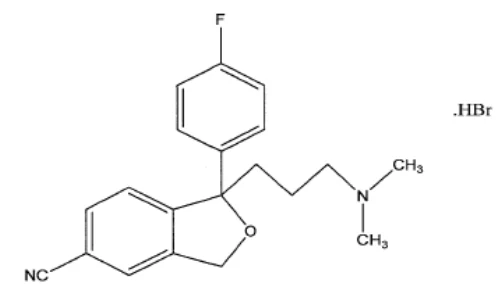
Structural formula:
Physicochemical
properties:
Description: white to almost white crystalline powder.
Melting Point: 185°C-188°C
pH: 5.5 - 6.5 (0.5% w/v in water)
pKa: 9.0
Solubility: Freely soluble in water, in alcohol and in chloroform.
Partition Coefficient: log P (octanol/phosphate buffer pH 7.4) – 1.57
CLINICAL TRIALS
COMPARATIVE BIOAVAILABILITY
A randomized, blinded, two-period, two-treatment, two-sequence, single dose, two-way crossover, bioequivalence study comparing Septa-Citalopram Tablets 40 mg (Septa Pharmaceuticals Inc.) with Celexa® (Citalopram Tablets) Tablets 40 mg (Lundbeck Canada Inc.) in 25 healthy adult, human subjects, under fasting conditions. A summary of the bioavailability data for Septa-Citalopram is presented below.
SUMMARY TABLE OF THE COMPARATIVE BIOAVAILABILITY DATA
Septa-Citalopram (1 x 40 mg) Tablet From measured data Geometric Mean Arithmetic Mean (CV %) | ||||
| Parameter | Test# | Reference$ | % Ratio of Geometric Means | 90% Confidence Interval |
| AUC0-72 (ng*hr/mL) | 2051.54 2127.83 (23.20) | 2201.34 2252.64 (22.55) | 93.2 | 87.9 - 98.8 |
| Cmax (ng/mL) | 68.48 69.88 (20.44) | 71.55 72.94 (20.73) | 95.7 | 92.6 - 98.9 |
| Tmax* (hr) | 2.67 (1.50 - 5.67) | 2.67 (1.50 - 4.33) | ||
# Septa-Citalopram Tablets 40 mg [Septa Pharmaceuticals Inc]
$ PrCelexa® (Citalopram) Tablets 40 mg [Lundbeck Canada Inc.] were purchased in Canada. * Data presented as Median (Range)
AUCI and T½ parameters are not included in the above table as they could not be accurately estimated.
The efficacy of Septa-Citalopram in the treatment of depression was established in five placebo-controlled studies in patients who met the DSM-III or DSM-III-R criteria for major depression. Response to treatment was evaluated by the Hamilton Depression Rating Scale (HAMD) and/or the Montgomery Asberg Depression Rating Scale (MADRS), as well as the Clinical Global Impression (CGI) Severity Scale. On the HAMD and MADRS, total scores, selected single items, and percentage of responders (defined as patients whose HAMD/MADRS total score decreased by at least 50% versus baseline) were assessed.
In a 6-week fixed-dose, dose-response study, patients received Septa-Citalopram, at doses of 10, 20, 40, or 60 mg/day or placebo (n=129 to 131 per group). The 40 and 60 mg/day doses were titrated, with patients reaching these designated doses within 4 and 8 days, respectively. The study showed that the 40 and 60 mg/day doses were significantly more effective than placebo, although the 60 mg/day dose was not more effective than the 40 mg/day dose. The lower doses did not show statistically significant superiority over placebo, except on the MADRS; on this scale the percent of ‘responders’ was significantly higher in all the Septa-Citalopram-treated groups than in the placebo-treated group.
The second study was a 4-week flexible-dose study in which 85% of the depressed patients met the criteria for melancholia. At entry, 89 and 91 patients were randomized to the Septa-Citalopram and placebo groups, respectively. This was the only study in which more male than female patients participated (64% vs. 36%). The initial dose of Septa-Citalopram, 20 mg/day, could be titrated to the maximal tolerated dose or a maximum dose of 80 mg/day. Patients treated with Septa-Citalopram showed significantly greater improvement than patients treated with placebo. At week 4, the average daily dose was 63 mg, with 52% of patients receiving the 80 mg/day dose.
In a 6-week fixed-dose study, patients received Septa-Citalopram, 20 or 40 mg/day, or placebo (n=64 to 70 per group). Patients treated with Septa-Citalopram, 40 mg/day, showed significantly greater improvement than placebo-treated patients. The difference between the lower dose of Septa-Citalopram and placebo was not significant.
In another 6-week fixed-dose study, patients received Septa-Citalopram, 20 or 40 mg/day or placebo (n=88 to 97 per group). Although Septa-Citalopram-treated patients improved to a somewhat greater degree than the placebo-treated patients, the differences between drug and control groups did not reach statistical significance due to a high placebo response, i.e., substantial improvement in the placebo group.
A 6-week, flexible-dose study was conducted in elderly, depressed patients (the mean age of male and female patients was 75 and 77 years, respectively) to determine the antidepressant effect and safety of Septa-Citalopram in this subpopulation. The number of patients who received Septa-Citalopram and placebo was 98 and 51, respectively. The study allowed patients to enter with lower baseline HAMD scores than are usually acceptable (≥18 in clinical trials). However, only a small percentage of patients had HAMD scores of less than 18 at entry. The dose of Septa-Citalopram was titrated from a starting dose of 10 mg/day to a maximum dose of 30 mg/day. Patients treated with Septa-Citalopram showed significantly greater improvement than patients treated with placebo. The final dose of Septa-Citalopram was 10, 20 and 30 mg/day in 5%, 51% and 44% of patients, respectively.
The effectiveness of Septa-Citalopram in preventing relapse was assessed in two long-term studies. Depressed patients who responded to Septa-Citalopram during an initial 6 or 8 weeks of acute treatment (fixed doses of 20 or 40 mg/day in one study and flexible doses of 20-60 mg/day in the second study) were randomized to continue on Septa-Citalopram or receive placebo. The number of patients who received Septa-Citalopram and placebo was 257 and 116, respectively. In both studies, patients who continued on Septa-Citalopram experienced significantly lower relapse rates over the subsequent 6 months compared to those receiving placebo. In the fixed-dose study, the relapse rates were similar at the 20 and 40 mg/day doses, namely 10% and 12%, respectively. Of the placebo-treated patients, 31% experienced relapse. In the flexible-dose study, the relapse rates were 14% and 24% in the Septa-Citalopram- and placebo-treated patients, respectively. While the majority of patients (76%) were maintained on 20 or 40 mg/day of Septa-Citalopram during most of the study, some patients received 60 mg/day, while a few patients were maintained on less than 20 mg/day.
DETAILED PHARMACOLOGY
Pharmacodynamics
Septa-Citalopram is a racemic mixture with the S (+) enantiomer mediating the pharmacological effects. The R (-) enantiomer contributes little to the activity of Septa-Citalopram.
In Vitro Experiments
(a) Neuronal reuptake of serotonin, norepinephrine and dopamine
The primary pharmacological effect of Septa-Citalopram is inhibition of the 5-HT reuptake mechanism. Septa-Citalopram was shown to inhibit 5-HT uptake in rabbit blood platelets, with an IC50 of 14 nM. Similarly, the drug inhibits 5-HT uptake in rat brain synaptosomal preparations.
Uptake of 3H amines into rat brain synaptosomes (IC50 nM)
| 5-HT | NE | DA | NE/5-HT | |
| Septa-Citalopram | 1.8 | 8800 | 41000 | 4889 |
| demethyl-Citalopram | 7.4 | 780 | 26000 | 105 |
| didemethyl-Citalopram | 24 | 1500 | 12000 | 63 |
| Citalopram-N-oxide | 56 | 3200 | >100000 | 57 |
The data indicate that Septa-Citalopram is a potent and specific 5-HT uptake inhibitor with no activity on the neuronal reuptake of norepinephrine (NE) or dopamine (DA). The metabolites of Septa-Citalopram are also specific inhibitors of 5-HT reuptake, albeit less active than the parent drug.
The ratio between the concentrations inhibiting the in vitro uptake of NE and 5-HT determine the selectivity of a SSRI. According to this criterion Septa-Citalopram is a highly selective SSRI.
(b) Effect on neurotransmitter receptors
Septa-Citalopram has no or very low affinity for a series of receptors including 5-HT1A, 5-HT2, dopamine D1 and D2 receptors, α1-, α2-, β-adrenoreceptors, histamine H1, muscarinic cholinergic, benzodiazepine, and opioid receptors.
A series of functional in vitro tests in isolated organs as well as functional in vivo tests have confirmed the lack of receptor affinity.
Behavioral Effects
In a “behavioral despair paradigm”, mice, trained to swim in a glass jar, eventually exhibit immobility. This behavior was dose-dependently reversed by Septa-Citalopram.
The 5-HT precursors, tryptophan and 5-HTP, induce in mice and rats the 5-HT syndrome, characterized by tremor, hyperactivity, abnormal gait, lordosis, and abduction of the hind limbs. Septa-Citalopram potentiated these behavioral manifestations. The demethyl, didemethyl, and N-oxide metabolites were less potent than the parent drug.
The characteristic head twitches, induced by a combined treatment with a MAOI and 5-HTP, were potentiated by Septa-Citalopram. However, head twitches induced by quipazine, a direct 5-HT mimetic, were not affected by Septa-Citalopram, indicating that the drug has no anti-5-HT activity.
Although Septa-Citalopram has no antinociceptive activity per se, it potentiated the antinociceptive effect of morphine. In a food reinforcement paradigm, delivered under a multiple schedule, Septa-Citalopram did not affect the responding in pigeons but potentiated the 5-HTP-induced decrease in responding.
In rats, Septa-Citalopram did not facilitate self-stimulation, did not substitute for d-amphetamine, d-LSD, or 8-OHDPAT in a drug discrimination paradigm and did not increase ethanol consumption in an ethanol/water preference test. In the latter experiment, Septa-Citalopram actually decreased ethanol consumption. These experiments indicate that Septa-Citalopram would not be abused and would not cause dependence.
Septa-Citalopram had a slight protective effect against maximal electroshock-induced convulsions, isoniazide-induced convulsions and audiogenic seizure. However, in toxicity studies convulsions have been observed at very high plasma levels of Septa-Citalopram (see TOXICOLOGY).
Cardiovascular Effects
Septa-Citalopram blocked heterologous HERG-mediated currents in transfected Chinese hamster ovary cells with an IC50 of 4 µM.
In conscious dogs, single oral doses of 5 mg/kg of Septa-Citalopram caused pronounced fluctuation of the blood pressure and heart rate. A 10 mg/kg dose caused tachycardia and elevated blood pressure. The ECG was unchanged.
In anaesthetized cats, single oral doses of 35 mg/kg decreased the following parameters: mean arterial blood pressure, left ventricular end diastolic pressure, contractility, cardiac performance, stroke volume, and cardiac output. Peripheral resistance was increased. ECG abnormalities included alterations in conduction, changes in rhythm and T-wave inversion in 2 of 6 cats.
Additional cardiovascular effects of Septa-Citalopram and a metabolite are described under TOXICOLOGY.
Pharmacokinetics in Animals
Absorption
The kinetics of Septa-Citalopram in mouse, rat, and dog are characterized by rapid absorption, with Tmax ranging from 0.5 to 4 hours. In contrast to man, reduced systemic bioavailability due to extensive first-pass metabolism has been demonstrated in animals.
Distribution
Pharmacokinetic analysis of single dose i.v. data suggests two-compartment distribution characteristics. High levels of drug and demethylated metabolites were found in the lungs, liver, and kidneys, and lower levels in the heart and brain. Septa-Citalopram and the demethylated metabolites were shown to pass the placental barrier and were excreted in small amounts in milk.
The plasma protein binding of Septa-Citalopram has been estimated to be 70-80%. The binding protein(s) has not been identified.
Both in mice and dogs, tissue concentrations of parent drug as well as those of the demethylated metabolites increased with increasing doses, although not necessarily in a dose-related manner. Levels of the didemethylated metabolites were higher in dogs than in mice in relation to the parent drug, resulting in smaller Septa-Citalopram/didemethylSepta-Citalopram ratios in the dog, particularly in the heart and kidneys.
Metabolism
There are no major qualitative differences in the metabolism of Septa-Citalopram between animals and man. Septa-Citalopram is metabolized to demethylSepta-Citalopram, didemethylSepta-Citalopram, Septa-Citalopram-N-oxide, and the deaminated propionic acid. DemethylSepta-Citalopram and didemethylSepta-Citalopram levels are more prominent in mouse, rat, and dog than in man.
Elimination
Elimination of Septa-Citalopram after a single dose is rapid, the half-life ranging from 1.5-2 hours in the mouse to 3.58 hours in the dog. In the dog, the half-life is prolonged with increasing doses due to saturation of the first-pass metabolism.
Following the administration of 14C-labelled Septa-Citalopram to rats, at a dose of 20 mg/kg, approximately equal amounts of the dose were excreted in the urine and feces, with total recovery being about 80%.
Toxicokinetics
Plasma levels were determined in several long-term toxicity studies. The table below summarizes the results seen in some of these studies.
| Species | Study | Dose mg/kg | CTa ng/mL | DCTb ng/mL | DDCTc ng/mL |
| Ratd | 12-month tox po (diet) | 32 | male female 330 334 | 474 391 | 246 204 |
| 60 | male female 690 826 | 989 862 | 497 290 | ||
| 120 | male female 1163 1286 | 1947 1655 | 758 577 | ||
| Doge | 12-month tox po (in capsules) | 1 | 19 | 22 | 95 |
| 3 | 350 | 170 | 314 | ||
| 8 | 1218 | 586 | 574 | ||
| Man | Multiple dose po 6 weeks | 0.3 | 39 | 13 | 3.7 |
| 0.6 | 83 | 28 | 5.2 | ||
| 0.9 | 121 | 41 | 6.3 |
a: Septa-Citalopram; b:demethyl-Citalopram; c:didemethyl-Citalopram; d:average value at Week 52; e: 2 hours postdose-Week 52 (1 and 3 mg/kg dose groups), Week 57 (8 mg/kg dose group).
The data indicate that the plasma levels of Septa-Citalopram, as well as those of the demethylated metabolites, are considerably higher in animals than in man. The approximate 0.9 mg/kg dose in man corresponds to the highest recommended dose (60 mg/day). The plasma levels of the parent drug, seen in rats and dogs at the highest doses, are approximately 10 times higher in animals than in man, while the levels of the didemethyl metabolites are almost 100 fold higher. In the rat, a NOEL (no observable effect level) could not be established in this study; at the low dose minimal vacuolization of hepatocytes with fatty infiltration, and foam cell accumulation in lungs were noted. The changes were reversible. In dogs, the NOEL was 3 mg/kg.
TOXICOLOGY
Acute Toxicity
The LD50 values of Septa-Citalopram ranged between 900-1700 mg/kg after oral administration and 38-74 mg/kg after intravenous administration. However, some mortality was also seen in the 400-600 mg/kg dose range, indicating a very flat dose-response curve regarding mortality. Signs of toxicity were sedation and tremor, while convulsions occurred at doses close to or above the LD50 values.
LD50 Values in the Mouse and Rat (mg/kg body weight)
| Route of Administration | ||||||
| Species | Sex | i.v. | p.o. | i.p. | s.c. | i.m. |
| Mouse | Male Female | 72 ± 9 74 ± 10 | 1140 ± 190 900 ± 120 | 220 ± 9 207 ± 20 | 534 ± 71 - | >400 - |
| Rat | Male Female | 40 ± 4 38 ± 7 | 1710 ± 292 1426 ± 554 | 157 ± 27 133 ± 17 | 1950 ± 364 - | >400 - |
A number of single dose toxicity studies have been carried out in dogs to investigate the potential cardiovascular toxicity of Septa-Citalopram. In these studies, cardiotoxicity was not observed, but tonic-clonic convulsions were seen after oral administration of 20-40 mg/kg, as well as after slow intravenous infusion of 20-24 mg/kg. The critical plasma concentration for convulsions was about 1950 ng/mL.
Long-term Toxicity
Toxicological studies, including daily dosing for periods up to 26 weeks in mice and 52 weeks in rats and dogs, have been carried out. Plasma drug monitoring in the long-term safety studies documented that animals have been exposed to average Septa-Citalopram levels of up to about 1200 ng/mL (dogs and rats) and 2900 ng/mL (mice), as well as substantial levels of demethylSepta-Citalopram [up to about 1800 ng/mL (rats), 600 ng/mL (dogs), 1150 ng/mL (mice)] and didemethylSepta-Citalopram [up to about 650 ng/mL (rats), 600 ng/mL (dogs), 300 ng/mL (mice)]. Apart from behavioral and functional characteristics of exaggerated 5-HT stimulation (e.g., hyperactivity, tremor, tail rigidity, mydriasis, reduced food consumption, and reduced body weight gain), two treatment-related findings have been demonstrated in rodents, namely fatty infiltration of the liver and lipidosis (vacuolization of lymphocytes). Both of the findings were reversible. In addition, retinal degeneration and testicular atrophy were also observed in rats.
In dogs, two treatment-related effects were found. Firstly, convulsions and death when plasma Septa-Citalopram levels exceeded 1950 ng/mL (p.o. or i.v.). Secondly, fatal ventricular arrhythmias at combined high levels of the didemethyl metabolite (about 300 ng/mL) and Septa-Citalopram (about 1950 ng/mL) were seen following i.v. infusion.
Hepatic Fatty Infiltration in Rodents
Fatty infiltration in the liver was first observed in a 3-month gavage study in rats given 8-32 mg/kg/day of Septa-Citalopram. This administration resulted in dose-related hepatic fatty infiltration in all male rats but not in female rats at any of the doses. The fatty infiltration in male rats was also observed in a 4-week study, however, only at considerably higher doses (>160 mg/kg). In female rats only minimal fatty infiltration was seen at a 200 mg/kg/day dose.
Lipidosis (phospholipids) in Rodents
Phospholipidosis, which has been seen in rodents, is an abnormal accumulation of phospholipids in phagocytic cells and cells which catabolize biomembranes, such as pulmonary alveolar macrophages and circulating leucocytes (especially lymphocytes).
Phospholipidosis developed in rats receiving Septa-Citalopram at daily doses of 120 mg/kg and slight vacuolization of peripheral lymphocytes was observed in mice at daily doses of 100 mg/kg, in the 52-week and 26-week studies, respectively. Both conditions were reversible within 3-4 weeks.
Retinal Degeneration/Atrophy in Rats
In the rat carcinogenicity study, a slight, dose-related increase in lens opacity was seen, affecting
males only. In addition, increased incidence/severity of retinal degeneration/atrophy was seen in the high-dose group (80 mg/kg/day). The incidence was higher in females, however, more female than male rats survived the study. It was concluded by an independent pathologist that the retinal changes were most likely related to drug-induced pupillary dilatation (mydriasis) which increased the risk of retinal damage in the already light-sensitive albino rat.
Testicular Atrophy in Rats
In the 52-week rat toxicity study, testicular atrophy was seen at the 60 and 120 mg/kg/day doses of Septa-Citalopram.
Convulsions and Death in Dogs
Toxicity studies in dogs revealed that Septa-Citalopram administration led to fatal ventricular arrhythmias. Consequently, studies were undertaken to elucidate the mechanism of this effect and to determine its relevance to humans.
The studies have shown that:
- i.v. infusion of Septa-Citalopram, at a dose of 20 mg/kg, led to convulsions. The blood levels of Septa-Citalopram were 1950 ng/mL at this dose. In the presence of diazepam, also infused intravenously, higher doses of Septa-Citalopram could be infused, namely up to 70 mg/kg (6800 ng/mL).
- Intravenous infusion of the didemethyl metabolite of Septa-Citalopram caused QT prolongation in a dose range of 5 to 22 mg/kg. The blood levels of the metabolite were 300 ng/mL at the 5 mg/kg dose. The QT prolongation was dose-dependent.
- When Septa-Citalopram, 20 mg/kg, and didemethylSepta-Citalopram, 5 mg/kg, were infused concomitantly (in the presence of diazepam in order to prevent convulsions), 5 out of 9 dogs died due to ventricular fibrillation. At these doses, the plasma levels of Septa-Citalopram and didemethylSepta-Citalopram were 1950 ng/mL and 300 ng/mL, respectively.
As shown in the table below, there is a substantial difference in the plasma levels of Septa-Citalopram and its metabolite in dogs and in humans at the recommended therapeutic doses.
| Treatment | Dog ventricular fibrillation | Patients at steady state after a 60 mg/day dose of Septa-Citalopram |
| Septa-Citalopram, 20 mg/kg plus | 1950 ng/mL | 121 ng/mL |
| didemethyl-Citalopram, 5 mg/kg | 300 ng/mL | 6.3 ng/mL |
Reproduction Toxicity
Septa-Citalopram did not affect the reproductive performance of rats at dosages up to 16 mg/kg/day (males) and 32 mg/kg/day (females).
In the teratology studies in rats, effects were observed in the conceptuses at dosages that were toxic to the dams. Minimal developmental toxicity was evident at 32 mg/kg/day: manifested as low incidences of resorptions, slightly reduced fetal and pup weights, and small reversible delays in ossification and postnatal development.
In rabbits, dosages of 4.8 mg/kg/day and above were toxic to the dams, and 16 mg/kg/day and above caused deaths. There were no effects on embryo-fetal development at the highest dose that could be assessed (16 mg/kg/day).
In a rat embryo/fetal development study, oral administration of Septa-Citalopram (32, 56, or 112 mg/kg/day) to pregnant animals during the period of organogenesis resulted in decreased embryo/fetal growth and survival and an increased incidence of fetal abnormalities (including cardiovascular and skeletal defects) at the high dose, which is approximately 18 times the MRHD of 60 mg/day on a body surface area (mg/m2) basis. This dose was also associated with maternal toxicity (clinical signs, decreased body weight gain). The developmental, no-effect dose of 56 mg/kg/day is approximately 9 times the MRHD on a mg/m2 basis. In a second embryo/fetal developmental study in rats conducted at similar dose levels, no increase in fetal abnormalities were observed.
In a rabbit study, no adverse effects on embryo/fetal development were observed at doses of up to 16 mg/kg/day, or approximately 5 times the MRHD on a mg/m2 basis. Thus, teratogenic effects were observed at a maternally toxic dose in one embryo-foetal developmental study in the rats, but were not confirmed in a second rat study or in the rabbit.
When female rats were treated with Septa-Citalopram (4.8, 12.8, or 32 mg/kg/day) from late gestation through weaning, increased offspring mortality during the first 4 days after birth and persistent offspring growth retardation were observed at the highest dose, which is approximately 5 times the MRHD on an mg/m2 basis. The no-effect dose of 12.8 mg/kg/day is approximately 2 times the MRHD on an mg/m2 basis. Similar effects on offspring mortality and growth were seen when dams were treated throughout gestation and early lactation at doses ≥ 24 mg/kg/day, approximately 4 times the MRHD on an mg/m2 basis. A no-effect dose was not determined in that study.
Fertility
Animal data have shown that Septa-Citalopram induces a reduction of fertility index and pregnancy index, reduction in number in implantation and abnormal sperm at exposure well in excess of human exposure.
Mutagenic Potential
Septa-Citalopram did not have mutagenic activity in most of the in vitro tests (Ames Salmonella assay; chromosome aberration assay in cultured human lymphocytes; gene mutation assay in cultured mouse lymphoma L5178Y) and in vivo tests (micronucleus test; unscheduled DNA synthesis). However, Septa-Citalopram was mutagenic in some in vitro studies (Ames Salmonella assay and Chinese hamster lung cell assay).
Carcinogenicity
Septa-Citalopram did not show any carcinogenic potential in mice at daily doses of 40-240 mg/kg (1.5 years) and in rats at 8-80 mg/kg (2 years). There was an increased incidence of small intestine carcinoma in rats treated with 8 and 24 mg/kg/day of Septa-Citalopram but not in rats treated with an 80 mg/kg/day dose.
REFERENCES
Preclinical/In vitro
- 1.
Hyttel J, Arnt J, Sánchez C. The pharmacology of Citalopram. Rev Contemp Pharmacother
1995; 6: 271-285.
- 2.
Skjelbo E, Brøsen K. Inhibitors of imipramine metabolism by human liver microsomes. Br J
Clin Pharmac 1992; 34: 256-261.
Clinical/Reviews
- 1. Ahlfors UG, Elovaara S, Harma P, et al. Clinical multicentre study of Citalopram compared double-blindly with mianserin in depressed patients in Finland. Nord Psykiatr Tidsskr 1988; 42(3): 201-210.
- 2. Andersen J, Bech P, Benjaminsen S, et al. Citalopram: clinical effect profile in comparison with clomipramine. A controlled multicenter study. Psychopharmacology 1986; 90: 131-138.
- 3.
Baldwin D, Johnson FN. Tolerability and safety of Citalopram. Rev Contemp Pharmacother
1995; 6: 315-325.
- 4. Baumann P. Pharmacokinetic-pharmacodynamic relationship of the selective serotonin reuptake inhibitors. Clin Pharmacokinet 1996; 31(6): 444-469.
- 5.
Baumann P, Souche A, Montaldi S, et al. A double-blind, placebo-controlled study of
Citalopram with and without lithium in the treatment of therapy-resistant depressive patients: a clinical, pharmacokinetic, and pharmacogenetic investigation. J Clin Psychopharmacol 1996; 16(4): 307-314.
- 6. Bertilsson L, Dahl M-L. Polymorphic drug oxidation: Relevance to the treatment of psychiatric disorders. CNS Drugs 1996; 5(3): 200-223.
- 7. Bouchard JM, Delaunay J, Delisle JP, et al. Citalopram versus maprotiline: a controlled clinical multicentre trial in depressed patients. Acta psychiatr scand 1987; 76: 583-592.
- 8. Christensen P, Thomsen HY, Pedersen OL, et al. Orthostatic side effects of clomipramine and Citalopram during treatment for depression. Psychopharmacology 1985; 86: 383-385.
- 9. de Wilde J, Mertens C, Overø KF, et al. Citalopram versus mianserin. A controlled, double-blind trial in depressed patients. Acta psychiatr scand 1985; 72: 89-96.
- 10. Fuglum E, Rosenberg C, Damsbo N, et al. Screening and treating depressed patients. A comparison of two controlled Citalopram trials across treatment settings: hospitalized patients vs. patients treated by their family doctors. Acta Psychiatr Scand 1996; 94(1): 18-25.
- 11.
Gottfries CG. Scandinavian experience with Citalopram in the elderly. Int Clin
Psychopharmacol 1996; 11(Suppl 1): 41-44.
- 12.
Gravem A, Amthor KF, Astrup C, et al. A double-blind comparison of Citalopram (Lu 10-
171) and amitriptyline in depressed patients. Acta psychiatr scand 1987; 75: 478-486.
- 13. Greenblatt DJ, von Moltke LL, Harmatz JS, et al. Drug interactions with newer antidepressants: Role of human cytochromes P450. J Clin Psychiatry 1998; 59(Suppl 15): 19-27.
- 14. Haffmans PMJ, Timmerman L, Hoogduin CAL, et al. Efficacy and tolerability of Citalopram in comparison with fluvoxamine in depressed outpatients: a double-blind multicentre study. Int Clin Psychopharmacol 1996; 11(3): 157-164.
- 15. Jeppesen U, Gram LF, Vistisen K, et al. Dose-dependent inhibition of CYP1A2, CYP2C19 and CYP2D6 by Citalopram, fluoxetine, fluvoxamine and paroxetine. Eur J Clin Pharmacol 1996; 51(1): 73-78.
- 16. Møller SE, de Beurs P, Timmerman L, et al. Plasma tryptophan and tyrosine ratios to competing amino acids in relation to antidepressant response to Citalopram and maprotiline. A preliminary study. Psychopharmacology 1986; 88: 96-100.
- 17.
Montgomery SA, Rasmussen JGC, Lyby K, et al. Dose response relationship of Citalopram
20 mg, Citalopram 40 mg and placebo in the treatment of moderate and severe depression. Int Clin Psychopharmacol 1992; 6(Suppl 5): 65-70.
- 18.
Montgomery SA, Rasmussen JGC. Citalopram 20 mg, Citalopram 40 mg and placebo in the prevention of relapse of major depression. Int Clin Psychopharmacol 1992; 6(Suppl 5): 71-
73.
- 19. Montgomery SA, Rasmussen JGC, Tanghøj P. A 24-week study of 20 mg Citalopram, 40 mg Citalopram, and placebo in the prevention of relapse of major depression. Int Clin Psychopharmacol 1993; 8: 181-188.
- 20. Montgomery SA, Pedersen V, Tanghøj, et al. The optimal dosing regimen for Citalopram - a meta-analysis of nine placebo-controlled studies. Int Clin Psychopharmacol 1994; 9(Suppl 1): 35-40.
- 21.
Muldoon C. The safety and tolerability of Citalopram. Int Clin Psychopharmacol 1996;
11(Suppl 1): 35-40.
- 22. Neuvonen PJ, Pohjola-Sintonen S, Tacke U, et al. Five fatal cases of serotonin syndrome after moclobemide-Citalopram or moclobemide-clomipramine overdoses. Lancet 1993; 342: 1419.
- 23.
Nyth AL, Gottfries CG, Lyby K, et al. A controlled multicenter clinical study of Citalopram and placebo in elderly depressed patients with and without concomitant dementia. Acta
psychiatr scand 1992; 86: 138-145.
- 24.
Östrom M, Eriksson A, Thorson J, et al. Fatal overdose with Citalopram. Lancet 1996; 348:
339-340.
- 25. Patris M, Bouchard J-M, Bougerol T, et al. Citalopram versus fluoxetine: A double-blind, controlled, multicentre, phase III trial in patients with unipolar major depression treated in general practice. Int Clin Psychopharmacol 1996; 11(2): 129-136.
- 26. Priskorn M, Sidhu JS, Larsen F, et al. Investigation of multiple dose Citalopram on the pharmacokinetics and pharmacodynamics of racemic warfarin. Br J Clin Pharmacol 1997; 44: 199-202.
- 27. Robert Ph, Montgomery SA. Citalopram in doses of 20-60 mg is effective in depression relapse prevention: a placebo-controlled 6 month study. Int Clin Psychopharmacol 1995; 10(Suppl 1): 29-35.
- 28. Rosenberg C, Damsbo N, Fuglum E, et al. Citalopram and imipramine in the treatment of depressive patients in general practice. A Nordic multicentre clinical study. Int Clin Psychopharmacol 1994; 9(Suppl 1): 41-48.
- 29.
Timmerman L, de Beurs P, Tan BK, et al. A double-blind comparative clinical trial of
Citalopram vs maprotiline in hospitalized depressed patients. In Clin Psychopharmacol 1987; 2: 239-253.
- 30. Timmerman L, Haffmans PMJ, Hoogduin CAL, et al. Citalopram in major depression: a comparative study with fluvoxamine, preliminary results. In: Beigel A, Lopez Ibor JJ, Costa e Silva JA, eds. Past, Present and Future of Psychiatry, IX World Congress of Psychiatry, Volume II, Rio De Janiero, Brazil, June 6-12, 1993. World Scientific, London, 1994; 982-986.
- 31. Von Moltke L.L. et al. Citalopram and desmethyl Citalopram in vitro: human cytochromes mediating transformation, and cytochrome inhibitory effects. Biol Psychiatry 1999; 46 (6): 839-849.
- 32. Witchel H.J. et al. Inhibitory actions of the selective serotonin re-uptake inhibitor Citalopram on HERG and ventricular L-type calcium currents. FEBS Letters 2002, 512:59-66.
- 33.
Product Monograph for Pr Celexa® (Citalopram tablets). Lundbeck Canada Inc. Submission
Control No. 167268; Date of Revision: December 02, 2013
IMPORTANT: PLEASE READ
Pr SEPTA-CITALOPRAM
Citalopram Tablets USP 10, 20 and 40 mg Citalopram (as Citalopram hydrobromide)
This leaflet is part III of a three-part “Product Monograph” published when Septa-Citalopram tablets were approved for sale in Canada and is designed specifically for Consumers. Please read this information before you start to take your medicine. Keep the leaflet while you are taking Septa-Citalopram tablets as you may want to read it again. This leaflet is a summary and will not tell you everything about Septa-Citalopram. Contact you doctor or pharmacist if you have any questions about the drug. Always keep medicines out of the reach of children.
ABOUT THIS MEDICATION
What the medication is used for:
Septa-Citalopram tablets have been prescribed to you by your doctor to relieve your symptoms of depression. Treatment with these types of medications is most safe and effective when you and your doctor have good communication about how you are feeling.
What it does:
Septa-Citalopram belongs to a group of medicines known as antidepressants, more specifically to the family of medicines called SSRIs (Selective Serotonin Reuptake Inhibitors).
Septa-Citalopram is thought to work by increasing the levels of a chemical in the brain called serotonin (5-hydroxytryptamine).
When it should not be used:
Do not use Septa-Citalopram tablets at the same time as
pimozide.
Do not use Septa-Citalopram tablets if you are currently or
have recently taken monoamine oxidase antidepressants (e.g. selegiline, moclobemide).
Do not take Septa-Citalopram tablets if you are allergic to it,
or to any of the components of its formulation (for list of ingredients see below).
Stop taking Septa-Citalopram tablets and contact your doctor
immediately if you experience an allergic reaction or any severe side effect.
Do not use Septa-Citalopram tablets if you have been
diagnosed with a congenital long QT syndrome
What the medicinal ingredient is:
Citalopram hydrobromide
What the nonmedicinal ingredients are:
corn starch, croscarmellose sodium, copovidone, glycerine, hypromellose, lactose monohydrate, magnesium stearate, microcrystalline cellulose, polyethylene glycol 400 and titanium dioxide.
What dosage forms it comes in:
Septa-Citalopram is available as white 10 mg, 20 mg, or 40 mg tablets in blisters and bottles.
WARNINGS AND PRECAUTIONS
Treatment with these types of medications is most safe and effective when you and your doctor have good communication about how you are feeling.
Septa-Citalopram tablets are not for use in children under 18 years of age.
New or Worsened Emotional or Behavioural Problems Particularly in the first few weeks or when doses are adjusted, a small number of patients taking drugs of this type may feel worse instead of better. They may experience new or worsened feelings of agitation, hostility, anxiety, impulsivity or thoughts about suicide, self-harm or harm to others. Suicidal thoughts and actions can occur in any age group but may be more likely in patients 18 to 24 years old. Should this happen to you, or to those in your care, consult your doctor immediately. Close observation by a doctor is necessary in this situation. Do not discontinue your medication on your own.
You may be more likely to think like this if you have previously had thoughts about harming yourself.
You may find it helpful to tell a relative or close friend that you are depressed or have an anxiety disorder, and ask them to read this leaflet. You might ask them to tell you if they think your depression or anxiety is getting worse, or if they are worried about changes in your behaviour.
Effects on Pregnancy and Newborns
If you are already taking/using Septa-Citalopram and have just found out that you are pregnant, you should talk to your doctor immediately. You should also talk to your doctor if you are planning to become pregnant.
Possible complications at birth (from taking any newer antidepressant, including Septa-Citalopram tablets): Post-marketing reports indicate that some newborns whose mothers took an SSRI (Selective Serotonin Reuptake Inhibitor) such as Septa-Citalopram tablets or other newer antidepressant during pregnancy have developed complications at birth requiring prolonged hospitalisation, breathing support and tube feeding. Reported symptoms include: feeding and/or breathing difficulties, seizures, tense or overly relaxed muscles, jitteriness and constant crying. In most cases, the newer antidepressant was taken during the third trimester of pregnancy. These symptoms are consistent with either a direct adverse effect of the antidepressant on the baby, or possibly a discontinuation syndrome caused by sudden withdrawal from the drug. These symptoms normally resolve over time. However, if your baby experiences any of these symptoms, contact your doctor as soon as you can.
Persistent Pulmonary Hypertension of the Newborn (PPHN) and newer antidepressants:
Preliminary information suggests that use of SSRIs during the second half of pregnancy may be associated with an increased rate of a serious lung condition called persistent pulmonary hypertension of the newborn (PPHN) that causes breathing
IMPORTANT: PLEASE READ
difficulties in newborns soon after birth. According to the study, babies born with this condition were 6 times more likely than healthy babies to have been exposed to SSRIs. In the general population, PPHN is known to occur at a rate of about 1-2 per 1000 newborns.
If you are pregnant and taking an SSRI, or other newer antidepressant, you should discuss the risks and benefits of the various treatment options with your doctor. It is very important that you do NOT stop taking these medications without first consulting your doctor.
Risk of Bone Fractures:
Taking Septa-Citalopram tablets may increase your risk of breaking a bone if you are elderly or have osteoporosis or have other major risk factors for breaking a bone. You should take extra care to avoid falls especially if you get dizzy or have low blood pressure.
Before you use Septa-Citalopram tablets tell your doctor or pharmacist:
All your medical conditions, including heart problems,
history of seizures, manic-depressive illness, liver or kidney disease or diabetes.
You have a bleeding disorder or have been told that you
have low platelets.
If you have QT/QTc prolongation or a family history of
QT/QTc prolongation.
- If you have a personal history of fainting spells.
If you have a family history of sudden cardiac death at <50
years.
If you have electrolyte disturbances (e.g., low blood
potassium, magnesium, or calcium levels) or conditions that could lead to electrolyte disturbances (e.g., vomiting, diarrhea, dehydration).
- If you have glaucoma or increased pressure in your eyes
- If you have an eating disorder or are following a strict diet.
If you had a recent bone fracture or were told you have
osteoporosis or risk factors for osteoporosis.
If you are pregnant or thinking about becoming pregnant, or
if you are breast feeding.
Any medications (prescription or non-prescription) which
you are taking or have taken within the last 14 days, especially monoamine oxidase inhibitors, pimozide, any other antidepressants, triptans used to treat migraines, lithium, tramadol or drugs containing tryptophan.
- Your habits of alcohol and /or street drug consumption.
Any natural or herbal products you are taking (e.g. St. John’s
Wort).
If you drive a vehicle or perform hazardous tasks during
your work.
INTERACTIONS WITH THIS MEDICATION
Serious Drug Interactions
Do not use Septa-Citalopram tablets if you are taking or have recently taken:
Monoamine oxidase inhibitor (e.g., phenelzine,
tranylcypromine, moclobemide or selegiline)
- Pimozide
- Linezolid (an antibiotic)
- Methylene blue (intravenous)
The following list includes some, but not all, of the drugs that may increase the risk of side-effects while receiving Septa-Citalopram tablets. You should check with your doctor or pharmacist before taking any other medication (prescription, non-prescription or natural/herbal) with Septa-Citalopram tablets.
Other drugs that may interact with Septa-Citalopram tablets include:
- drugs to treat heart rhythm disturbances (antiarrhythmics)
- antipsychotics
- opioid painkillers
- drugs to treat infections
- drugs to treat nausea and vomiting
- cancer drugs
- asthma drugs
- diuretics (water pills)
- Carbamezepine
- Other SSRIs e.g., Cipralex® (es-Citalopram) or any other antidepressant (e.g., imipramine, desipramine)
- Lithium
- Tryptophan
- Cimetidine
- Triptans (e.g., sumatriptan, zolmitriptan, naratriptan)
- Fluconazole, Ketoconazole, Itraconazole
- Erythromycin
- Warfarin
- Omeprazole
- Any herbal product such as St. John’s Wort
- Certain medicines which may affect blood clotting and increase bleeding, such as oral anticoagulants (e.g. warfarin, dabigatran), acetylsalicylic acid (e.g. Aspirin) and other non-steroidal anti-inflammatory drugs (ibuprofen)
- Certain medicines used to treat pain, such as fentanyl (used in anaesthesia or to treat chronic pain), tramadol, tapentadol, meperidine, methadone, pentazocine.
Certain medicines used to treat cough, such as
dextromethorphan.
Avoid drinking alcohol while taking Septa-Citalopram tablets.
Drugs from the class that Septa-Citalopram belongs to may increase the chance of a bleeding event such as nose bleeds, bruising and even life threatening bleeding. This is more likely if you have a history of a bleeding disorder or are taking other drugs that are known to affect your platelets.
IMPORTANT: PLEASE READ
Treatment with an SSRI in patients with diabetes may alter glycaemic control (hypoglycaemia and hyperglycaemia).
Tell your doctor all the medicines (prescription or over the counter) and natural health products that you are using or thinking of taking.
PROPER USE OF THIS MEDICATION
Usual dose:
It is important that you take Septa-Citalopram tablets exactly
as your doctor has instructed.
Usually your doctor will prescribe 20 mg per day, which
you will take once daily preferably at the same time each day. If you are elderly, your doctor may prescribe a lower dose. This dose may be increased. Never change the dose of Septa-Citalopram tablets you are taking, or that someone in your care is taking unless your doctor tells you to. Dosage directions should be followed carefully. Never exceed the prescribed dose.
Swallow the tablets whole with a drink of water. Do not
chew them. Septa-Citalopram tablets can be taken with or without food.
You should continue to take Septa-Citalopram tablets even if
you do not feel better, as it may take several weeks for your medication to work. Improvement may be gradual.
Continue to take Septa-Citalopram tablets for as long as your
doctor recommends it. Do not stop taking your tablets abruptly even if you begin to feel better, unless you are told to do so by your doctor. Your doctor may tell you to continue to take Septa-Citalopram tablets for several months. Continue to follow your doctor’s instructions.
Overdose:
If you have accidentally taken too much Septa-Citalopram
tablets contact your doctor or the Regional Poison Control Centre immediately, even if you do not feel sick. If you go to the doctor or the hospital, take the Septa-Citalopram tablets container with you.
In case of drug overdose, contact a health care practitioner, hospital emergency department or regional Poison Control Centre immediately, even if there are no symptoms.
Missed Dose:
If you forget a dose, take the next dose as planned. Do not take a double dose to make up for a forgotten dose.
SIDE EFFECTS AND WHAT TO DO ABOUT THEM
Septa-Citalopram tablets may cause unwanted effects (side-
effects). These may include fatigue, dry mouth, increased sweating, tremor (shakiness), nausea, diarrhea, somnolence (sleepiness), ejaculation disorder and upper respiratory tract infection.
Contact your doctor before stopping or reducing your dosage
of Septa-Citalopram. Symptoms such as dizziness, abnormal dreams, electric shock sensations, agitation, anxiety,
emotional indifference, difficulty concentrating, headache, migraine, tremor (shakiness), nausea, vomiting, sweating or other symptoms may occur after stopping or reducing the dosage of Septa-Citalopram. Such symptoms may also occur if a dose is missed. These symptoms usually disappear without needing treatment. Tell your doctor immediately if you have these or any other symptoms. Your doctor may adjust the dosage of Septa-Citalopram to reduce the symptoms.
- Side-effects are often mild and may disappear after a few days. If they are troublesome or persistent, or if you develop any other unusual side-effects while taking Septa-Citalopram tablets, please consult your doctor.
- Usually Septa-Citalopram tablets do not affect your ability to carry out normal daily activities. However, you should not drive a car or operate machinery until you are reasonably certain that Septa-Citalopram tablets do not affect you adversely.
- Post-marketing reports indicate that some newborns whose mothers took an SSRI (Selective Serotonin Reuptake Inhibitor) such as Septa-Citalopram tablets or other newer antidepressant during pregnancy have developed complications at birth requiring prolonged hospitalization, breathing support and tube feeding. Reported symptoms include: feeding and/or breathing difficulties, seizures, tense or overly relaxed muscles, jitteriness and constant crying. In most cases, the newer antidepressant was taken during the third trimester of pregnancy. These symptoms are consistent with either a direct adverse effect of the antidepressant on the baby, or possibly a discontinuation syndrome caused by sudden withdrawal from the drug. These symptoms normally resolve over time. However, if your baby experiences any of these symptoms, contact your doctor as soon as you can.
If you are pregnant and taking an SSRI, or other newer antidepressant, you should discuss the risks and benefits of the various treatment options with your doctor. It is very important that you do NOT stop taking these medications without first consulting your doctor.
If you experience any symptoms of a possible heart rhythm disturbance, such as dizziness, palpitations, fainting or seizures, you should seek immediate medical attention.
| SERIOUS SIDE EFFECTS, HOW OFTEN THEY HAPPEN AND | ||||
| WHAT TO DO ABOUT THEM | ||||
| symptom/ effect | Talk with your doctor or pharmacist right away | Stop taking drug and seek immediate emergency medical assistance | ||
| Only if severe | In all cases | |||
| Uncommon | Low Platelets: Bruising or unusual bleeding from the skin or other areas | √ | ||
| Mania: Overactive behaviour and | √ | |||
IMPORTANT: PLEASE READ
| SERIOUS SIDE EFFECTS, HOW OFTEN THEY HAPPEN AND | ||||
| WHAT TO DO ABOUT THEM | ||||
| symptom/ effect | Talk with your doctor or pharmacist right away | Stop taking drug and seek immediate emergency | ||
| thoughts | ||||
| Rare | Gastrointestinal bleeding: Vomiting blood or passing blood in stools | √ | ||
Glaucoma: Increased pressure in the eye, eye pain and blurred vision | √ | |||
Low sodium level in blood: Symptoms of tiredness, weakness, confusion combined with achy, stiff or uncoordinated muscles | √ | |||
Serotonin syndrome: A combination of symptoms, possibly including: agitation, confusion, tremor, sudden jerking of muscles, high fever | √ | |||
| Very Rare | Liver disorder: Symptoms include nausea, vomiting, loss of appetite combined with itching, yellowing of the skin or eyes, dark urine | √ | ||
| Seizures: Loss of consciousness with uncontrollable shaking (“fit”) | √ | |||
| See Warnings & Precautions | Akathisia: Feeling restless and unable to sit or stand still | √ | ||
New or Worsened Emotional or Behavioural Problems | √ | |||
| Unknown | Abnormal heart rate or rhythm, palpitations, fainting | √ | ||
Signs of serious skin reactions: e.g.: Stevens-Johnson Syndrome: SJS (skin rash, redness of the skin, blistering of the lips, eyes or mouth, skin peeling, accompanied by fever, chills, headache, cough, | √ | |||
| SERIOUS SIDE EFFECTS, HOW OFTEN THEY HAPPEN AND WHAT TO DO ABOUT THEM | ||||
| symptom/ effect | Talk with your doctor or pharmacist right away | Stop taking drug and seek immediate emergency | ||
| body aches) | ||||
This list is not a complete list of side effects. If you have any unexpected effects while taking this drug, contact your doctor or pharmacist.
HOW TO STORE IT
As with all medicines, keep Septa-Citalopram tablets out of the reach and sight of children. Store your tablets at room temperature (15°C to 30°C), in a dry place.
Keep the container tightly closed.
There is an expiry date on the label. Do not use the medicine after this date.
If your doctor tells you to stop taking your medicine, you should return any leftover tablets to the pharmacist, unless your doctor tells you to keep them at home.
REMEMBER: This medicine is for YOU. Only a doctor can prescribe it, so never offer it to any other person, even if their symptoms seem to be the same as yours.
REPORTING SUSPECTED SIDE EFFECTS
You can report any suspected adverse reactions associated with the use of health products to the Canada Vigilance Program by one of the following 3 ways:
- Report online at www.healthcanada.gc.ca/medeffect
- Call toll-free at 1-866-234-2345
Complete a Canada Vigilance Reporting Form and:
- Fax toll-free to 1-866-678-6789, or
Mail to: Canada Vigilance Program
Health Canada
Postal Locator 0701E
Ottawa, ON K1A 0K9
Postage paid labels, Canada Vigilance Reporting Form and the adverse reaction reporting guidelines are available on the MedEffect™ Canada Web site at
www.healthcanada.gc.ca/medeffect.
NOTE: Should you require information related to the management of side effects contact your health professional. The Canada Vigilance Program does not provide medical advice
MORE INFORMATION
This document plus the full product monograph prepared for health professional can be obtained by contacting the distributor, Septa Pharmaceuticals Inc. at 905-564-5665.
or by email, at: info@septapharmaceuticals.com
IMPORTANT: PLEASE READ
Septa Pharmaceuticals Inc
7490 Pacific Circle, # 1,
Mississauga ON L5T 2A3
Canada
Date of Preparation: October 6, 2014