


Product Monograph - Shingrix
Recent Major Label Changes
| Section | Date |
|---|---|
| 4 DOSAGE AND ADMINISTRATION, 4.3 Reconstitution | 2026-04 |
| 4 DOSAGE AND ADMINISTRATION, 4.4 Administration | 2026-04 |
| 7 Warnings and Precautions, Neurologic | 2026-03 |
| 8.5 Post Market Adverse Reactions | 2026-03 |
Table of Contents
Certain sections or subsections that are not applicable at the time of the preparation of the most recent authorized product monograph are not listed.
Recent Major Label Changes .................................................................................................... 2
Table of Contents .................................................................................................................... 2
PART 1: Healthcare Professional Information .......................................................................... 4
- 1.
Indications ................................................................................................................... 4
1.1. Pediatrics ............................................................................................................... 4
1.2. Geriatrics ............................................................................................................... 4
- 2. Contraindications ......................................................................................................... 4
- 4.
Dosage and Administration .......................................................................................... 4
4.1. Dosing Considerations ........................................................................................... 4
4.2. Recommended Dose and Dosage Adjustment ...................................................... 4
4.3. Reconstitution ....................................................................................................... 4
4.4. Administration ....................................................................................................... 6
4.5. Missed Dose .......................................................................................................... 7
- 5. Overdose...................................................................................................................... 7
- 6. Dosage Forms, Strengths, Composition, and Packaging ................................................ 8
- 7.
Warnings and Precautions ............................................................................................ 9
7.1. Special Populations .............................................................................................. 10
7.1.1. Pregnancy ........................................................................................................ 10
7.1.2. Breastfeeding .................................................................................................. 10
7.1.3. Pediatrics ......................................................................................................... 10
7.1.4. Geriatrics ......................................................................................................... 10
- 8.
Adverse Reactions ...................................................................................................... 10
8.1. Adverse Reaction Overview ................................................................................. 10
8.2. Clinical Trial Adverse Reactions ........................................................................... 11
8.5. Post-Market Adverse Reactions .......................................................................... 15
Guillain-Barré syndrome ........................................................................................................ 15
- 9.
Drug Interactions ....................................................................................................... 16
9.2. Drug Interactions Overview ................................................................................. 16
9.4. Drug-Drug Interactions ........................................................................................ 16
9.5. Drug-Food Interactions ........................................................................................ 16
9.6. Drug-Herb Interactions ........................................................................................ 16
9.7. Drug-Laboratory Test Interactions ....................................................................... 16
- 10.
Clinical Pharmacology ................................................................................................ 16
10.1. Mechanism of Action ....................................................................................... 16
- 11. Storage, Stability, and Disposal .................................................................................. 17
PART 2: Scientific Information ............................................................................................... 18
- 13. Pharmaceutical Information ....................................................................................... 18
- 14.
Clinical Trials .............................................................................................................. 19
14.1. Clinical Trials by Indication .............................................................................. 19
Herpes Zoster (HZ) in Adults aged 50 years and older ..................................................... 19
Herpes Zoster (HZ) in Immunocompromised (IC) adults 18 years and older ................... 27
14.3. Immunogenicity ............................................................................................... 31
- 16. Non-Clinical Toxicology .............................................................................................. 33
Patient Medication Information ............................................................................................ 34
PART 1: Healthcare Professional Information
1. Indications
SHINGRIX is indicated for the prevention of herpes zoster (HZ, or shingles) in:
- adults 50 years of age or older;
- adults 18 years of age or older who are or will be at increased risk of HZ due to immunodeficiency or immunosuppression caused by known disease or therapy.
1.1. Pediatrics
Pediatrics (<18 years of age): The safety and efficacy of SHINGRIX in individuals younger than 18 years have not been established.
1.2. Geriatrics
Geriatrics (≥60 years of age): The efficacy and safety in individuals 60 years and older were assessed in clinical trials (see 14. Clinical Trials).
2. Contraindications
Individuals with a known hypersensitivity to the active substance or to any component of the vaccine. For a complete listing, see 6. Dosage Forms, Strengths, Composition and Packaging.
4. Dosage and Administration
4.1. Dosing Considerations
This medicinal product must not be mixed with other medicinal products.
4.2. Recommended Dose and Dosage Adjustment
The primary vaccination schedule consists of two doses of 0.5 mL each; an initial dose at Month 0 followed by a second dose administered anytime between 2 and 6 months later. Administration of the second dose of SHINGRIX is important to ensure maximum vaccine efficacy and duration of protection against HZ disease.
For individuals who are or will be immunodeficient, or immunosuppressed and who would benefit from a shorter vaccination schedule, the second dose can be given 1 to 2 months after the initial dose (see 14. Clinical Trials).
The need for booster doses following the primary vaccination schedule has not been established.
SHINGRIX can be given with the same vaccination schedule in individuals previously vaccinated with live attenuated HZ vaccine (see 14. Clinical Trials).
4.3. Reconstitution
SHINGRIX is available in two formulations that are presented as two dosage formats: liquid formulation (a single pre-filled syringe format) and lyophilized powder/liquid formulation (a vial/vial format).
Liquid formulation (pre-filled syringe format):
The liquid formulation of SHINGRIX comes in a single pre-filled syringe format, therefore, no
reconstitution is needed prior to administration.
The vaccine should be an opalescent, colorless to pale brownish liquid.
Lyophilized Powder/Liquid formulation (vial/vial format):
The lyophilized powder and liquid formulation of SHINGRIX comes in 2 vials (i.e., vial/vial format), therefore SHINGRIX must be reconstituted prior to administration.
- The lyophilized powder and suspension of SHINGRIX should be inspected visually for any foreign particulate matter and/or variation of appearance. If either is observed, do not reconstitute the vaccine.
- The lyophilized powder is white.
- The suspension is an opalescent, colourless to pale brownish liquid.
- SHINGRIX must not be mixed with other medicinal products, vaccines or diluents.
How to prepare SHINGRIX:
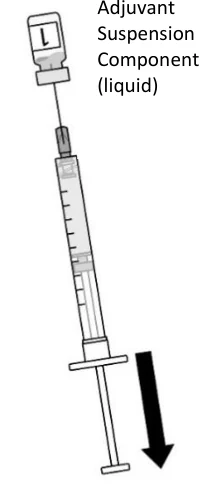
- Withdraw the entire contents of the vial containing the suspension into a sterile syringe with a suitable needle (21G to 25G).
- Add the entire contents of the syringe into the vial containing the lyophilized powder.
- Shake gently until the lyophilized powder is completely dissolved. Do not shake vigorously.
Before Administration:
- Withdraw the entire contents of the vial containing the reconstituted vaccine into the syringe.
- Prior to administration, change the needle so that you are using a new needle to administer the vaccine.
SHINGRIX is supplied in 2 vials that must be combined prior to administration using the 4- step process illustrated in Figure 1 below. Prepare SHINGRIX by reconstituting the lyophilized varicella zoster virus glycoprotein E (gE) antigen component (powder, Vial 2 (brown-coloured cap)) with the accompanying AS01B adjuvant suspension component (liquid, Vial 1 (teal-coloured cap)).
Use only the supplied adjuvant suspension (liquid, Vial 1 (teal-coloured cap)) for reconstitution. It is important to ensure to follow these reconstitution steps to properly reconstitute SHINGRIX.
The reconstituted vaccine should be an opalescent, colorless to pale brownish liquid.
Figure 1 Reconstitution Instructions
| Step 1. Cleanse both vial stoppers. Using a sterile needle and sterile syringe, withdraw the entire contents of the vial containing the adjuvant suspension component (liquid) by slightly tilting the vial. Vial 1 of 2 (teal-coloured cap vial). | Step 2. Slowly transfer entire contents of syringe into the lyophilized gE antigen component vial (powder). Vial 2 of 2 (brown-coloured cap vial). | Step 3. Gently shake the vial until powder is completely dissolved. Do not shake vigorously. | Step 4. After reconstitution, withdraw 0.5 mL from the vial containing the reconstituted vaccine and administer intramuscularly. |
|---|
4.4. Administration
SHINGRIX is available in two formulations that are presented as two dosage formats: liquid formulation (a single pre-filled syringe format) and lyophilized powder/liquid formulation (a vial/vial format).
SHINGRIX is for intramuscular injection only, preferably in the deltoid muscle.
Liquid formulation (pre-filled syringe format):
The vaccine should be an opalescent, colorless to pale brownish liquid.
The vaccine should be inspected visually for any foreign particulate matter and/or variation of appearance. If either is observed, do not administer the vaccine.
SHINGRIX is supplied in a pre-filled syringe. See Figure 2 below for instructions on how to attach a needle for administration.
SHINGRIX is to be administered as soon as possible after being removed from the refrigerator.
 Adjuvant Suspension Component (liquid) | 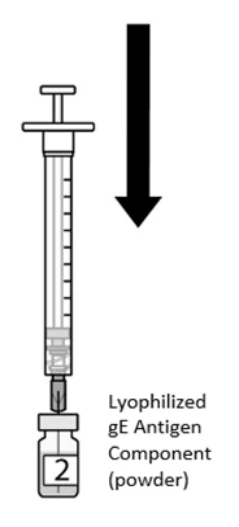 | 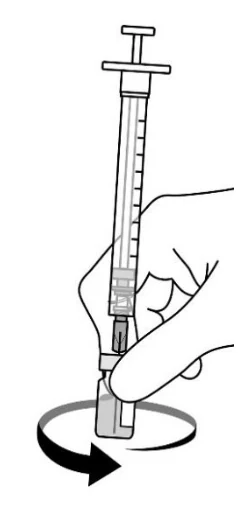 | 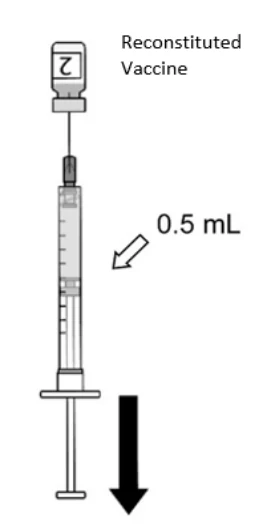 |
|---|
However, SHINGRIX remains stable for up to 72 hours at temperatures between 8˚C and 37˚C.
Any unused medicinal product or waste material should be disposed of in accordance with local requirements.
Figure 2 Instructions for the pre-filled syringe
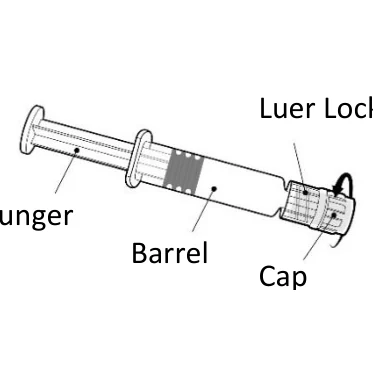
Hold the syringe by the barrel, not by the plunger.
Unscrew the syringe cap by twisting it anticlockwise.
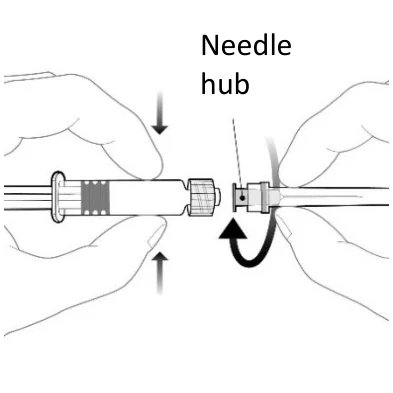
To attach the needle for intramuscular injection, connect the hub to the Leur Lock Adaptor and rotate a quarter turn clockwise until you feel it lock.
Do not pull the syringe plunger out of the barrel. If it happens, do not administer the vaccine.
Lyophilized Powder/Liquid formulation (vial/vial format):
The reconstituted vaccine should be an opalescent, colorless to pale brownish liquid.
The reconstituted vaccine should be inspected visually for any foreign particulate matter and/or variation of appearance. If either is observed, do not administer the vaccine.
The reconstituted vaccine should be used promptly; if this is not possible, the vaccine should be stored in a refrigerator (2°C to 8°C). If not used within 6 hours it should be discarded.
Any unused medicinal product or waste material should be disposed of in accordance with local requirements.
4.5. Missed Dose
If you miss a scheduled injection, it is important that you make another appointment.
5. Overdose
No cases of overdose have been reported.
| For the most recent information in the management of a suspected drug overdose, contact your regional poison control centre or Health Canada’s toll-free number, 1-844 POISON-X (1-844-764-7669). |
|---|
Plunger
Barrel
Cap
Luer Lock Adaptor
Needle hub
- 6. Dosage Forms, Strengths, Composition, and Packaging
To help ensure the traceability of vaccines for patient immunization record-keeping as well as safety monitoring, health professionals should record the time and date of administration, quantity of administered dose (if applicable), anatomical site and route of administration, brand name and generic name of the vaccine, the product lot number and expiry date.
Table 1 Dosage Form, Strengths and Composition
Description
One dose (0.5 mL) contains:
Varicella Zoster Virus gE1 50 mcg
Quillaja saponaria Molina fraction 21 (QS-21)2 50 mcg
3-O-desacyl-4’-monophosphoryl lipid A (MPL)2 50 mcg
1 Varicella Zoster Virus (VZV) glycoprotein E (gE) produced by recombinant DNA technology in Chinese Hamster Ovary cells
2 The AS01B Adjuvant System is composed of the plant extract Quillaja saponaria Molina, fraction 21 (QS-21) (50 mcg) and 3-O-desacyl-4’-monophosphoryl lipid A (MPL) from Salmonella minnesota (50 mcg) combined with dioleoyl phosphatidylcholine (DOPC) (1 mg) and cholesterol (0.25 mg)
Dosage Form
SHINGRIX is available in two formulations that are presented as two dosage formats: liquid formulation (a single pre-filled syringe format) and lyophilized powder/liquid formulation (a vial/vial format).
Liquid formulation (pre-filled syringe format):
SHINGRIX is a suspension for injection supplied as a single-dose pre-filled syringe. A single dose is 0.5mL.
The vaccine is an opalescent, colourless to pale brownish liquid.
Lyophilized Powder/Liquid formulation (vial/vial format):
SHINGRIX is a suspension for injection supplied as a single-dose vial of lyophilized glycoprotein E (gE) to be reconstituted with the accompanying vial of adjuvant suspension. A single dose after reconstitution is 0.5 mL.
The lyophilized powder is white. The suspension is an opalescent, colourless to pale brownish liquid. The reconstituted vaccine is an opalescent, colourless to pale brownish liquid.
| Route of Administration | Dosage Form / Strength per 0.5 mL dose | Non-medicinal Ingredients |
| Intramuscular injection | Suspension for injection/ 50 mcg Varicella Zoster Virus (VZV) glycoprotein E (gE) | Cholesterol, dioleoyl phosphatidylcholine, dipotassium phosphate, disodium phosphate anhydrous, polysorbate 80, potassium dihydrogen phosphate, Quillaja saponaria Molina, fraction 21 (QS-21), 3-O-desacyl-4’-monophosphoryl lipid A (MPL), sodium chloride, sodium dihydrogen phosphate dihydrate, sucrose, water for injection |
Packaging
SHINGRIX is available in two formulations that are presented as two dosage formats: liquid formulation (a single pre-filled syringe format) and lyophilized powder/liquid formulation (a vial/vial format).
Liquid formulation (pre-filled syringe format):
SHINGRIX comes as a single component:
- Single dose pre-filled syringe
SHINGRIX is available in pack sizes (packaged without needles) of:
- 1 pre-filled syringe; or,
- 10 pre-filled syringes
Lyophilized Powder/Liquid formulation (vial/vial format):
SHINGRIX comes as two components:
- Single dose lyophilized gE in a vial (type I glass) with a stopper (butyl rubber), with brown-coloured caps
- Single dose adjuvant suspension in a vial (type I glass) with a stopper (butyl rubber), with teal-coloured caps
SHINGRIX is available in pack sizes (packaged without syringes or needles) of:
- 1 vial of lyophilized powder plus 1 vial of adjuvant suspension; or,
- 10 vials of lyophilized powder plus 10 vials of adjuvant suspension
7. Warnings and Precautions
General
Prior to immunization
It is good clinical practice to precede vaccination by a review of the medical history (especially with regards to previous vaccination and possible occurrence of undesirable events) and a clinical examination.
As with other vaccines, vaccination with SHINGRIX should be postponed in individuals suffering from an acute severe febrile illness. The presence of a minor infection, such as a cold, should not result in the deferral of vaccination.
Syncope (fainting) can occur following, or even before, any vaccination as a psychogenic response to the needle injection. It is important that procedures are in place to avoid injury from faints.
As with all injectable vaccines, appropriate medical treatment and supervision should always be readily available in case of an anaphylactic event following the administration of the vaccine.
As with any vaccine, a protective immune response may not be elicited in all vaccinees.
Precautions for use
Do not administer the vaccine intravascularly, intradermally or subcutaneously.
Maladministration via the subcutaneous route may lead to an increase in transient local reactions.
SHINGRIX is not indicated for prevention of primary varicella infection or for the treatment of herpes zoster (HZ) or postherpetic neuralgia (PHN).
Concomitant use of vaccines
Fever and shivering were more frequent when PPV23 vaccine is co-administered with SHINGRIX.
Hematologic
As with other vaccines administered intramuscularly, SHINGRIX should be given with caution to individuals with thrombocytopenia or any coagulation disorder since bleeding may occur following an intramuscular administration to these individuals.
Neurologic
Guillain-Barré Syndrome (GBS): In postmarketing observational studies, an increased risk of GBS has been observed during the 42 days following vaccination with SHINGRIX. See 8.5. Post-Market Adverse Reactions.
7.1. Special Populations
7.1.1. Pregnancy
There are no data on the use of SHINGRIX in pregnant women. Animal studies performed with SHINGRIX administered to female rats do not indicate any harmful effects with respect to pregnancy (see 16. Non-Clinical Toxicology).
7.1.2. Breastfeeding
The effect on breast-fed infants of administration of SHINGRIX to their mothers has not been studied.
7.1.3. Pediatrics
Pediatrics (<18 years of age): The safety and efficacy of SHINGRIX in individuals younger than 18 years have not been established.
7.1.4. Geriatrics
Geriatrics (≥60 years of age): The efficacy and safety in individuals 60 years and older were assessed in clinical trials (see 14. Clinical Trials).
8. Adverse Reactions
8.1. Adverse Reaction Overview
More than 17,000 adults aged 50 through 96 years of age received at least one dose of SHINGRIX in 17 clinical studies. The incidence of solicited local and general symptoms was higher in subjects who received SHINGRIX than in subjects who received control (placebo or other vaccines). SHINGRIX was generally well tolerated.
Additionally, 1,587 adults 18 years of age and older who were immunodeficient or immunosuppressed due to disease or therapy (referred to as immunocompromised (IC)), were vaccinated with at least one dose of SHINGRIX in clinical studies. The reported adverse reactions were consistent with the reported clinical trial adverse reactions of adults 50 years of age and older.
8.2. Clinical Trial Adverse Reactions
Clinical trials are conducted under very specific conditions. Therefore, the frequencies of adverse reactions observed in the clinical trials may not reflect the rates observed in clinical practice and should not be compared to frequencies reported in clinical trials of another vaccine.
Adults aged 50 years and older
The safety of SHINGRIX was evaluated by pooling data from two pivotal phase III placebo-controlled clinical studies, ZOE-50 (Zoster-006) and ZOE-70 (Zoster-022), involving 29,305 adults aged 50 years and older who received at least one dose of SHINGRIX (n = 14,645) or placebo (n = 14,660) administered according to a 0- and 2-month schedule.
Solicited Adverse Reactions
The reported frequencies of solicited local and general adverse reactions from studies ZOE-50 and ZOE-70 are presented in Table 2.
Data on solicited local and general symptoms were collected using standardized diary cards for 7 days following each dose of vaccine or placebo in a subset of adults (n = 4,886 receiving SHINGRIX, n = 4,881 receiving placebo with at least one documented dose in the ZOE-50 and ZOE-70 studies).
| Table 2 Percentage of adults aged 50 to 69 years and 70 years and older with solicited local and general adverse reactions within 7 daysa of vaccination (a subset of TVC with 7-day diary card b) in studies ZOE-50 and ZOE-70 | ||||
|---|---|---|---|---|
| Aged 50 - 69 Years | Aged ≥70 Years | |||
SHINGRIX (%) | Placebog (%) | SHINGRIX (%) | Placebo (%) | |
| Local Adverse Reactionse | n = 2626 | n = 2617 | n = 2258 | n = 2263 |
| Pain | 85.6 | 12.8 | 69.2 | 8.8 |
| Redness | 38.5 | 1.4 | 37.7 | 1.2 |
| Swelling | 28.5 | 0.9 | 23.0 | 1.1 |
| General Adverse Reactionsf | n = 2624 | n = 2617 | n = 2252 | n = 2264 |
| Myalgia | 53.0 | 13.2 | 35.1 | 9.9 |
| Fatigue | 51.3 | 18.3 | 36.6 | 14.4 |
| Headache | 45.2 | 18.6 | 29.0 | 11.8 |
| Shivering | 33.1 | 6.5 | 19.5 | 4.9 |
| Feverc | 25.9 | 3.2 | 14.3 | 2.7 |
| Gastrointestinald | 20.5 | 9.7 | 13.5 | 7.6 |
TVC = Total vaccinated cohort for safety included all adults with at least one documented dose (n).
a 7 days included day of vaccination and the subsequent 6 days.
b Pooled data from ZOE-50 (subjects ≥50 years) and ZOE-70 (subjects ≥70 years).
c Fever defined as ≥37.5°C/99.5°F for oral, axillary, or tympanic route, or ≥38°C/100.4°F for rectal route.
d GI = Gastrointestinal symptoms including nausea, vomiting, diarrhea, and/or abdominal pain.
e All solicited local (injection site) adverse reactions will be considered causally related to vaccination.
f Solicited general adverse reactions are those experiences which do not occur at the site of injection and are temporally associated with the use of the vaccine, whether or not considered related.
g Placebo = saline solution
The majority of solicited local and general symptoms seen with SHINGRIX were mild to moderate in intensity and were not long-lasting (median duration of 3 days).
The incidence of solicited local and general symptoms was numerically lower in adults aged 70 years and older compared with those aged 50 to 69 years. There was a higher incidence of pain and swelling at the injection site, fatigue, myalgia, headache, shivering, fever and gastrointestinal symptoms in adults aged 50 to 69 years compared with those aged 70 years and older. The overall frequency and severity of these events did not indicate a clinically meaningful different reactogenicity profile in the younger age strata.
The incidence of solicited local and general symptoms of SHINGRIX from the ZOE-50 and ZOE-70 studies were generally the same following each dose.
Unsolicited Adverse Events
In studies ZOE-50 and ZOE-70, unsolicited adverse events that occurred within 30 days following each vaccination (Day 0 to 29) were recorded with diary cards in all adults. In studies ZOE-50 and ZOE-70, unsolicited adverse events occurring within 30 days of vaccination were reported in 50.5% and 32.0% of adults who received SHINGRIX (n = 14,645) and placebo (n = 14,660), respectively (Total Vaccinated Cohort). Unsolicited adverse events that occurred in ≥1% of recipients of SHINGRIX and at a rate at least 2-fold higher than placebo included chills (3.5% versus 0.2%), injection site pruritus (2.2% versus 0.2%), malaise (1.7% versus 0.3%), and arthralgia (1.7% versus 1.2%).
Serious Adverse Events (SAEs)
In studies ZOE-50 and ZOE-70, SAEs occurred at a similar rate in adults who received SHINGRIX (2.3%) and placebo (2.2%) within 30 days after the last dose of vaccine or placebo. During the entire follow-up period (median 4.4 years, range: 0 to 5.0 years), SAEs were reported for 12.8% of adults who received SHINGRIX and for 13.3% of adults who received placebo. In both groups, the incidence of SAEs was higher in adults aged 70 years and older compared with those aged 50 to 69 years. These events were either not in temporal association with vaccination and/or had alternative plausible causes.
Deaths
During the 30-day follow-up period, deaths were reported for 0.1% of adults who received SHINGRIX and 0.1% of adults who received placebo in studies ZOE-50 and ZOE-70. During the entire follow-up period (median 4.4 years, range: 0 to 5.0 years), deaths were reported in 4.3% of adults who received SHINGRIX and in 4.6% of adults who received placebo. Causes of death were consistent with those generally reported in adult and elderly populations. The majority of deaths were reported in adults aged 70 years and older in the vaccine and placebo groups. None of the fatal cases were considered related to vaccination.
Potential Immune-Mediated Diseases
In studies ZOE-50 and ZOE-70, new onset of potential immune-mediated diseases (pIMDs) or exacerbation of existing pIMDs were reported for 1.2% of adults who received SHINGRIX and 1.4% of adults who received placebo during the entire follow-up period (median 4.4 years, range: 0 to 5.0 years). Approximately half of pIMDs occurred with time to onset longer than one year after the last vaccination. The most frequently reported pIMDs in the vaccine and placebo groups were polymyalgia rheumatica (0.2% in each group), rheumatoid arthritis (0.1% versus 0.2%, respectively), psoriasis (0.1% in each group), and autoimmune thyroiditis (0.1% in each group).
Flexible Dosing Schedule
In a phase III clinical study Zoster-026, where 119 adults ≥50 years of age were vaccinated with SHINGRIX following a 0, 6-month schedule, the safety profile was comparable to that observed in adults ≥50 years of age vaccinated with SHINGRIX following a 0, 2-month schedule (see 14. Clinical Trials).
Adults with Previous History of Vaccination with Live Attenuated HZ Vaccine
In a phase III clinical study Zoster-048, where 430 adults ≥65 years of age with or without a previous history of vaccination with live attenuated HZ vaccine were vaccinated with at least 1 dose of SHINGRIX, the safety and reactogenicity profiles were comparable in adults irrespective of previous vaccination with live attenuated HZ vaccine. See 14. Clinical Trials.
Concomitant use of vaccines
In a phase III clinical study Zoster-035 including 865 adults ≥50 years of age were vaccinated with SHINGRIX following a 0, 2-month or 2, 4-month with 1 dose of Pneumovax 23 at month 0, fever and shivering were reported more frequently when PPV23 vaccine was co-administered with SHINGRIX (16% and 21%, respectively) compared to when SHINGRIX was given alone (7% for both adverse reactions).
Immunocompromised (IC) Adults aged 18 years and older
The safety of SHINGRIX was evaluated by pooling data from 6 placebo-controlled clinical studies involving 3,116 adults aged 18 years and older who were immunodeficient or immunosuppressed due to disease or therapy (referred to as immunocompromised) and received at least one dose of SHINGRIX (n = 1,587) or placebo (n = 1,529) administered according to the study schedule. At the time of receipt of SHINGRIX or placebo, the mean age of the population was 55 years. The methodology for evaluating solicited adverse reactions, unsolicited adverse events, serious adverse events, deaths, and pIMDs across these studies was similar to those in the ZOE-50 and ZOE-70 studies. See 14. Clinical Trials.
Solicited Adverse Reactions
The reported frequencies of solicited local and general adverse reactions (overall per subject) by age group across the 6 studies are presented in Table 3. Data on solicited local and general symptoms were collected in adults 7 days following each dose of vaccine dose or placebo (n = 1,587 receiving SHINGRIX, n = 1,529 receiving placebo with at least one documented dose in the studies).
Table 3 Percentage of adults aged ≥18 Years with solicited local and general adverse reactions within 7 daysa of vaccination (Total Vaccinated Cohort b)
| Aged 18 - 49 Years | Aged ≥50 Years | |||||||||||||
SHINGRIX % | Placebo c % | SHINGRIX % | Placebo c % | |||||||||||
| Local Adverse Reactions | n = 437 | n = 406 | n = 1,116 | n = 1,080 | ||||||||||
| Pain | 90 | 14 | 82 | 10 | ||||||||||
| Redness | 33 | 0 | 35 | 1 | ||||||||||
| Swelling | 22 | 0 | 18 | 1 | ||||||||||
| General Adverse Reactions | n = 436 | n = 407 | n = 1,117 | n = 1,081 | ||||||||||
| Myalgia | 61 | 26 | 50 | 24 | ||||||||||
| Fatigue | 65 | 42 | 56 | 39 | ||||||||||
| Headache | 49 | 27 | 32 | 20 | ||||||||||
| Shivering d | 33 | 14 | 25 | 12 | ||||||||||
| Fever | 30 | 6 | 19 | 7 | ||||||||||
| GI e | 27 | 20 | 28 | 20 | ||||||||||
Total vaccinated cohort for safety included all adults with at least 1 documented dose (n).
a 7 days included day of vaccination and the subsequent 6 days.
b Pooled data from: ZOSTER-015 (HIV), ZOSTER-001 and ZOSTER-002 (Autologous Hematopoietic Stem Cell Transplant), ZOSTER-041 (Renal Transplant), ZOSTER-039 (Hematologic Malignancies), ZOSTER-028 (Solid Malignant Tumours). The following study groups were in the pooled analysis: SHINGRIX (3 doses [Months 0, 1, and 3]), SHINGRIX (1 dose of placebo at Month 0, and 2 doses of SHINGRIX [Months 1 and 3]), and placebo (3 doses of placebo [Months 0, 1, and 3]).
c Placebo was a sucrose/saline solution.
d Shivering was not collected as a solicited general adverse reaction in auHSCT study (Zoster-001). In the 18 to 49-year age group: n = 422 for SHINGRIX, n = 403 for placebo. In the ≥50-year age group: n = 1,073 for SHINGRIX, n = 1,055 for placebo.
e GI = Gastrointestinal symptoms including nausea, vomiting, diarrhea, and/or abdominal pain.
The majority of solicited local and general adverse reactions seen with SHINGRIX were mild to moderate in intensity and were not long-lasting (median duration of 1 to 3 days).
There was a higher incidence of pain, fatigue, myalgia, headache, shivering, and fever
in adults aged 18 to 49 years compared with those aged 50 years and older. The overall frequency and severity of these events did not indicate a clinically meaningful different reactogenicity profile in the younger age strata.
Unsolicited Adverse Events
Unsolicited adverse events occurring within 30 days following each vaccination were reported in 46% and 44% of adults who received SHINGRIX or placebo. The unsolicited adverse event that occurred in ≥1% of recipients of SHINGRIX and at a rate at least 1.5-fold higher than placebo was arthralgia (1.5% versus 1.0%).
Serious Adverse Events
Serious Adverse Events (SAEs) occurred at similar rate in adults who received SHINGRIX (7%) or placebo (8%) from the first administered dose up to 30 days post-last vaccination. SAEs were reported for 26% of adults who received SHINGRIX and for 27% of adults who received placebo from the first administered dose up to 1 year post-last vaccination.
Deaths
From the first administered dose up to 30 days post-last vaccination, deaths were reported for 0.1% of subjects who received SHINGRIX and 0.5% of subjects who received placebo. From the first administered dose up to 1 year post-last vaccination, deaths were reported for 6% of subjects who received SHINGRIX and for 6% of subjects who received placebo.
Potential Immune-Mediated Diseases
New onset of potential immune-mediated diseases (pIMDs) or exacerbation of existing pIMDs were reported for 1.3% of adults who received SHINGRIX and 1.0% of adults who received placebo from the first administered dose up to 1 year post-last vaccination. The most frequently reported pIMDs were comparable in the groups receiving SHINGRIX and the placebo groups.
Other Medically Relevant Events
In the auHSCT study (Zoster-002), relapse and disease progression occurred at similar rates in subjects who received SHINGRIX 239 of 922 subjects (26%) and 81 of 922 subjects (9%), respectively or placebo 253 of 924 subjects (27%) and 82 of 924 subjects (9%), respectively from the first vaccination to study end.
In the hematologic malignancy study, disease-related events (i.e., relapse or disease progression) were reported for 45 of 283 subjects (16%) who received SHINGRIX and 58 of 279 subjects (21%) who received placebo from the first vaccination to study end.
In the renal transplant study, biopsy-confirmed allograft rejection occurred at similar rates in subjects who received SHINGRIX at 4 of 132 subjects (3%) or placebo at 7 of 132 subjects (5%) from the first vaccination to study end.
8.5. Post-Market Adverse Reactions
Table 4 Post-Market Adverse Reactions
| System Organ Class | Adverse reactions | Frequency |
|---|---|---|
| General disorders and administration site conditions | Injection site induration | Uncommon |
| Immune system disorders | Hypersensitivity reactions including rash, urticaria, angioedema | Rare |
| Nervous system disorders | Guillain-Barré syndrome | Very rare |
Post-marketing observational study of the risk of Guillain-Barré syndrome (GBS) following vaccination with SHINGRIX
In 2 similar post-marketing observational studies in the US among individuals aged 65 years or older, an increased risk of Guillain-Barré syndrome (estimated 3 to 7 excess cases per million doses administered) was observed during the 42 days following any dose of SHINGRIX. In further analyses, the increased risk was observed following the first dose of SHINGRIX (estimated 6 to 12 excess cases of Guillain-Barré syndrome per million doses administered), but no increased risk was observed following the second dose.
9. Drug Interactions
9.2. Drug Interactions Overview
SHINGRIX can be given concomitantly with unadjuvanted seasonal influenza vaccine, 23-valent pneumococcal polysaccharide vaccine (PPV23) or reduced antigen diphtheria-tetanus-acellular pertussis vaccine (Tdap) (see 14. Clinical Trials). The vaccines should be administered at different injection sites.
9.4. Drug-Drug Interactions
Interactions with other drugs have not been established.
9.5. Drug-Food Interactions
Interactions with food have not been established.
9.6. Drug-Herb Interactions
Interactions with herbal products have not been established.
9.7. Drug-Laboratory Test Interactions
Interactions with laboratory tests have not been established.
10. Clinical Pharmacology
10.1. Mechanism of Action
Primary varicella zoster virus (VZV) infection results in varicella (chickenpox), after which VZV becomes latent in neurons of dorsal root and cranial nerve ganglia. HZ (or shingles) results from the reactivation of latent VZV in sensory ganglia. Any person who has had varicella is at risk of developing HZ. Nearly all adult Canadians (≥90%) have had chickenpox and are therefore at risk for HZ. It has been estimated that 30% of Canadians will develop HZ at some point in their lives. Age is the most important risk factor for the development of HZ with two-thirds of the cases occurring in those over 50 years of age. Adults 18 years and older at increased risk for HZ are heterogeneous and individuals can have different levels of immunosuppression based on their underlying disease, the type, duration and combination of therapy, as well as individual risk factors.
HZ can be a severely debilitating disease that typically presents as an acute, painful, vesicular rash distributed along a single dermatome, with the acute phase pain lasting a median of 2 weeks and interfering with daily activities. The rash typically heals in 2-4 weeks, but may leave scars or pigmentation changes, while HZ-associated pain can persist for weeks, months or even years. HZ complications can only occur following HZ. The most common HZ complications are postherpetic neuralgia (PHN) and HZ ophthalmicus (HZO). PHN is defined as pain that persists for at least 3 months or occurs after the HZ rash itself has resolved. Affected patients report typical neurologic pain symptoms such as intermittent or continuous, deep or superficial throbbing or stabbing, spontaneous aching or burning, intense itching, allodynia, and hyperalgesia. PHN can only occur as a result of HZ and develops in 10% to 30% of patients, with approximately 30-50% of patients experiencing pain for >1 year and several studies have reported PHN lasting up to 10 years.
SHINGRIX is designed to induce antigen-specific cellular and humoral immune responses in individuals with pre-existing immunity against VZV. The risk of developing HZ which increases with age and with immunosuppression due to disease and/or therapy, appears to be related to a decline in VZV-specific immunity. Although no immunological correlate for protection against HZ has been identified, current knowledge suggests that VZV-specific cell-mediated immunity (CMI) is of primary importance in preventing HZ. VZV-specific antibodies (Abs) may help control viral dissemination and may thereby help limit the severity of HZ. While VZV-specific Abs may not be directly protective against HZ, they may represent an indirect measure of the CMI response to vaccination.
The antigen component of SHINGRIX is one of the major glycoproteins from VZV and is unable to replicate. When the vaccine antigen is combined with the AS01B Adjuvant System (composed of the plant extract Quillaja saponaria Molina, fraction 21 (QS-21) and 3-O-desacyl-4’-monophosphoryl lipid A (MPL), the vaccine increases VZV-specific CMI, which is thought to be the mechanism by which it protects against zoster disease and its subsequent complications.
Non-clinical data show that the adjuvant component, AS01B, induces a local and transient activation of the innate immune system through molecular pathways specific to MPL and QS-21, which act as immunoenhancers. This facilitates the recruitment and activation of antigen-presenting cells carrying gE-derived antigens in the draining lymph node, which in turn leads to the generation of gE-specific CD4+ T cells. The adjuvant effect of AS01B is the result of interactions between MPL and QS-21 formulated in liposomes. SHINGRIX also increases VZV-specific humoral immunity, which is an indicator of the responsiveness to the vaccine.
- 11. Storage, Stability, and Disposal
Keep out of reach and sight of children.
Store SHINGRIX in a refrigerator (2°C to 8°C). Do not freeze. Store in the original package in order to protect from light.
SHINGRIX is available in two formulations that are presented as two dosage formats: liquid formulation (a single pre-filled syringe format) and lyophilized powder/liquid formulation (a vial/vial format).
Liquid formulation (pre-filled syringe format):
For storage conditions outside of the refrigerator, see 4.4 Administration.
Lyophilized Powder/Liquid formulation (vial/vial format):
For storage conditions after reconstitution of the vaccine, see 4.4. Administration.
PART 2: Scientific Information
13. Pharmaceutical Information
Drug Substance
Non-proprietary name of the drug substance: Herpes Zoster vaccine (non-live recombinant, AS01B adjuvanted)
Product Characteristics:
SHINGRIX is a sterile, non-live vaccine for intramuscular injection and cannot cause shingles since it is an inactivated non-live vaccine.
The antigen in SHINGRIX is a truncate of the VZV gE expressed in Chinese Hamster Ovary cells. After purification, the non-infectious gE antigen component is formulated with excipients and adjuvanted with AS01B.
The Adjuvant System, AS01B, is composed of 3-O-desacyl-4’-monophosphoryl lipid A (MPL) from Salmonella minnesota and a saponin molecule (QS-21) purified from plant extract Quillaja saponaria Molina, combined in a liposomal formulation. The liposomes are composed of dioleoyl phosphatidylcholine (DOPC) and cholesterol in phosphate-buffered saline solution containing disodium phosphate anhydrous, potassium dihydrogen phosphate, sodium chloride, and water for injection.
14. Clinical Trials
14.1. Clinical Trials by Indication
Herpes Zoster (HZ) in Adults aged 50 years and older
Table 5 Summary of patient demographics for clinical trials in adults 50 years and oldera
| Study # | Study design | Dosage, route of administration and duration | Vaccinated Study subjects (n=number) [# Canadian subjects enrolled*] | Age (Range) | Sex | ||
|---|---|---|---|---|---|---|---|
| Study # | Study design | Dosage, route of administration and duration | Vaccinated Study subjects (n=number) [# Canadian subjects enrolled*] | Age (Range) | Sex | ||
| Study # | Study design | Dosage, route of administration and duration | Vaccinated Study subjects (n=number) [# Canadian subjects enrolled*] | Age (Range) | Sex | ||
| Efficacy Studies | |||||||
| ZOE-50 (Zoster-006) | Phase III, multi-centre, randomized, observer-blind, placebo-controlled in subjects 50 years of age and older | 0.5 mL suspension IM injection 0, 2 months median follow-up: 3.1 years (range: 0 to 3.7 years) | 15405 α (SHINGRIX n = 7695; placebo n = 7710) [629] | 62.3 years (48 to 96 years) | 61.1% female, 38.9% male | ||
| ZOE-70 (Zoster-022) | Phase III, multi-centre, randomized, observer-blind, placebo-controlled in subjects 70 years of age and older | 0.5 mL suspension IM injection 0, 2 months median follow-up: 3.9 years (range: 0 to 4.5 years) | 13900 β (SHINGRIX n = 6950; placebo n = 6950) [800] | 75.5 years (62 to 96 years) | 54.9% female, 45.1% male | ||
| Immunogenicity Studies | |||||||
| Zoster-004 | Phase III, multi-centre, randomized, open-label, controlled, co-administration with FLU D-QIV in subjects 50 years of age and older | SHINGRIX: 0.5 mL suspension IM injection, and/or 1 dose FLU D-QIV 0, 2 months Follow up: 12 months after last dose | SHINGRIX n = 828 [134] | 63.4 years (50 to 92 years) | 51.8% female, 48.2% male | ||
| Zoster-007 | Phase III, multi-centre, randomized, double-blind, placebo-controlled in subjects 50 years of age and older (lot-to-lot consistency study) | 0.5 mL suspension IM injection 0, 2 months Follow up: 12 months after last dose | SHINGRIX n = 651 [93] | 64.5 years (49 to 91 years) | 55.3% female, 44.7% male | ||
| Zoster-026 | Phase III, multi-centre, randomized, observer-blind, placebo-controlled in subjects 50 years of age and older | 0.5 mL suspension IM injection 0, 2-month or 0, 6-month or 0, 12-month schedule Follow up: 12 months after last dose | SHINGRIX n = 354 | 64.2 years (50 to 86 years) | 69.5% female, 30.5% male | ||
| Zoster-035 | Phase III, multi-centre, randomized, open-label, controlled, co-administration with Pneumovax 23 in subjects 50 years of age and older | SHINGRIX 0.5 mL suspension IM injection, 0, 2-month or 2, 4-month; and Pneumovax 23 1 dose, Month 0 Follow up: 12 months after last dose | SHINGRIX n = 865 [299] | 63.2 years (50 to 90 years) | 59.7% female, 40.3% male | ||
| Zoster-042 | Phase III, multi-centre, randomized, open-label, controlled, co-administration with BOOSTRIX in subjects 50 years of age and older | SHINGRIX 0.5 mL suspension IM injection, 0, 2-month or 2, 4-month; and BOOSTRIX 1 dose, Month 0 Follow up: 12 months after last dose | SHINGRIX n = 830 | 63.2 years (49γ to 91 years) | 53.9% female, 46.1% male | ||
| Zoster-048 | Phase III, multi-centre, open-label, parallel group, in subjects 65 years of age and older with or without a previous history of vaccination with live attenuated HZ vaccine (Zostavax1) | 0.5 mL suspension IM injection, 0, 2-month Follow up: 12 months after last dose | SHINGRIX n = 430 | 70.9 years (65 to 87 years) | 51.2% female, 48.8% male | ||
IM = intramuscular
FLU D-QIV = GlaxoSmithKline’s unadjuvanted quadrivalent seasonal influenza vaccine
BOOSTRIX = a Tdap vaccine, marketed in the USA and formulated with 0.3 milligrams Al3+
* The number of Canadian subjects enrolled includes both placebo and vaccine subjects
gE/AS01E = 50 mcg gE plus ½ dose AS01B adjuvant
a Total number of clinical study subjects who received SHINGRIX = 18,863
α Total number of subjects randomized in study ZOE-50 = 16,161; number of subjects excluded from the TVC = 756; additional number of subjects excluded from mTVC: 652
β Total number of subjects randomized in study ZOE-70 = 14,816; number of subjects excluded from the TVC = 916; additional number of subjects excluded from mTVC: 737
γ One subject who was 50 years of age at the time of enrollment was wrongly assigned the age of 49 years.
Efficacy against Herpes Zoster (HZ)
In two large clinical studies, ZOE-50 and ZOE-70, SHINGRIX significantly reduced the risk of developing herpes zoster (HZ) when compared with placebo (Table 6 and Table 7).
Study ZOE-50 in Subjects 50 Years and Older
The efficacy of SHINGRIX against HZ in subjects ≥50 years of age (YOA) was evaluated in ZOE-50, a placebo-controlled, observer-blind clinical study conducted in 18 countries, from North America (US and Canada), Latin America, Europe, Asia, and Australia, in which 15,405 subjects received (randomized 1:1) two doses (0 and 2 months) of either SHINGRIX (n = 7,695) or placebo (n = 7,710) (see Table 6). The mean age of subjects was 62.3 years. Overall, 95.6% of subjects completed both doses of SHINGRIX in ZOE-50.
Subjects were followed for the development of HZ for a median of 3.1 years (range: 0 to 3.7 years). The study excluded, among others, subjects who were immunocompromised, had a previous history of HZ, were previously vaccinated against varicella or HZ, and patients whose survival was not expected to be at least 4 years, or with conditions that might interfere with study evaluations. Randomization was stratified by age: 50 to 59 years, 60 to 69 years, 70 to 79 years, and ≥80 years in a 8:5:3:1 ratio.
| 1 Registered trademark, Merck Sharp & Dohme Corp. Used under license. |
The primary endpoint was to evaluate vaccine efficacy in the prevention of HZ compared to placebo in adults ≥50 YOA, as measured by the reduction in HZ risk. Analyses were conducted when a pre-specified number of HZ cases accrued. Confirmed HZ cases were determined by either Polymerase Chain Reaction (PCR) (89.4%), or by a Clinical Evaluation Committee (10.6%) when there were no samples available or with inconclusive PCR results. Individuals in both vaccine and placebo groups who developed HZ were evaluated and treated as per treating physician’s judgment.
The primary efficacy results of the modified Total Vaccinated Cohort (mTVC), which includes subjects randomized in the study who received a second dose of the vaccine and did not develop a confirmed case of HZ within one month after the second dose, are presented in Table 6.
Table 6 Number of herpes zoster cases and vaccine efficacy on HZ incidence in subjects ≥50 YOA receiving two doses of SHINGRIX compared with placebo in study ZOE-50 (mTVCa)
| Age group (years) | SHINGRIX | Placebo | % Efficacy (95% CI) | ||||||||||||||
|---|---|---|---|---|---|---|---|---|---|---|---|---|---|---|---|---|---|
| N | n | n/T (per 1000) | N | n | n/T (per 1000) | ||||||||||||
| Overall** (≥ 50) | 7344 | 6 | 0.3 | 7415 | 210 | 9.1 | 97.2 (93.7, 99.0) | ||||||||||
| 50 – 59* | 3492 | 3 | 0.3 | 3525 | 87 | 7.8 | 96.6 (89.6, 99.3) | ||||||||||
| 60 – 69* | 2141 | 2 | 0.3 | 2166 | 75 | 10.8 | 97.4 (90.1, 99.7) | ||||||||||
| ≥ 70* | 1711 | 1 | 0.2 | 1724 | 48 | 9.4 | 97.9 (87.9, 100.0) | ||||||||||
N = Number of subjects per group; n = Number of subjects having at least one confirmed HZ episode; CI = Confidence Interval
n/T (per 1000) = Incidence rate of subjects reporting at least one event
a Modified Total Vaccinated Cohort; the primary efficacy analysis which included all subjects randomized in the study who received a second dose of the vaccine and did not develop a confirmed case of HZ within one month after the second dose.
YOA = Years of age
(%) Efficacy = Vaccine Efficacy by Poisson method
* : VE adjusted by region
** : VE adjusted by age strata and region
SHINGRIX significantly reduced the risk of developing HZ by 97.2% (95% CI: 93.7, 99.0) in subjects ≥50 YOA as compared to placebo. The vaccine efficacy (VE) estimate was consistent regardless of the age of vaccination, including those ≥70 YOA. See also Figure 3.
Figure 3 Cumulative Incidence of Herpes Zoster over time in adults ≥50 YOA in the ZOE-50 study (mTVC)
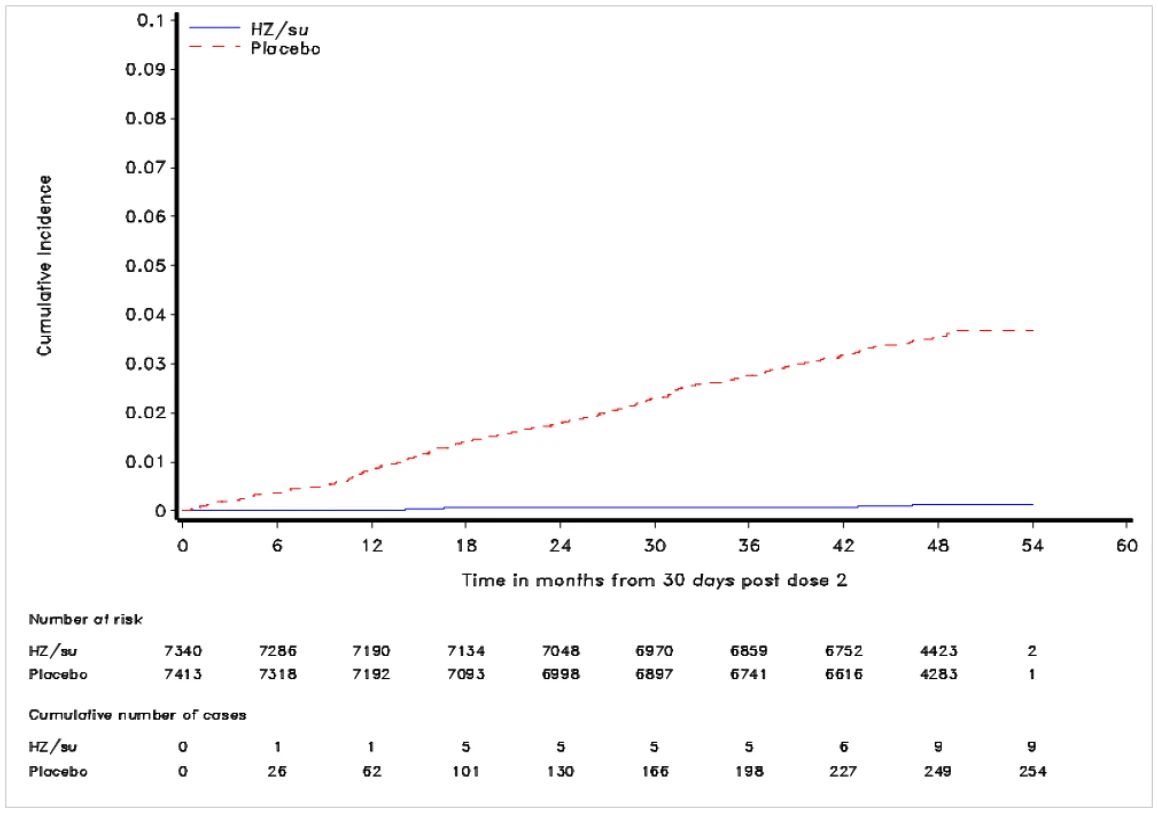
In the fourth year after vaccination, vaccine efficacy against HZ in subjects ≥50 YOA in ZOE-50 was 93.1% (95% CI: 81.2, 98.2).
Study ZOE-70 in Subjects ≥70 Years
ZOE-70 (Zoster-022) was a placebo-controlled, observer-blind clinical study, conducted in the same 18 countries as ZOE-50, in which 13,900 subjects aged 70 years and older received (randomized 1:1) two doses (at 0 and 2 months) of either SHINGRIX (n = 6,950) or placebo (n = 6,950). The mean age of subjects was 75.6 years (see Table 7). Overall, 94.4% of subjects completed both doses of SHINGRIX in ZOE-70.
Subjects were followed for the development of HZ and PHN for a median of 3.9 years (range: 0 to 4.5 years). The study exclusion criteria were the same as for ZOE-50. Randomization was stratified by age: 70 to 79 years and ≥80 years in a 3:1 ratio.
The primary objective was to evaluate VE in the prevention of HZ compared to placebo in adults ≥70 years of age (YOA), as measured by the reduction in HZ risk. The efficacy of SHINGRIX to prevent HZ in subjects ≥70 YOA was evaluated by combining the results from studies ZOE-50 and ZOE-70 through a pre-specified pooled analysis in the mTVC. A total of 8,250 and 8,346 subjects who received SHINGRIX and placebo, respectively, were included in the pooled mTVC analysis. Refer to Table 7.
Confirmed HZ cases were determined by either PCR (92.3%) or by a Clinical Evaluation Committee (7.7%).
The primary efficacy results of the modified Total Vaccinated Cohort (mTVC), which includes subjects randomized in the study who received a second dose of the vaccine and did not develop a confirmed case of HZ within one month after the second dose, are presented in Table 7.
Table 7 Number of herpes zoster cases and vaccine efficacy on HZ incidence in subjects ≥70 YOA receiving two doses of SHINGRIX compared with placebo in studies ZOE-50 and ZOE-70 (Pre-Specified Pooled Dataa) (mTVCb)
| Age group (years) | SHINGRIX | Placebo | % Efficacy (95% CI) | |||||||||||||
|---|---|---|---|---|---|---|---|---|---|---|---|---|---|---|---|---|
| N | n | n/T (per 1000) | N | n | n/T (per 1000) | |||||||||||
| Overall** (≥ 70) | 8250 | 25 | 0.8 | 8346 | 284 | 9.3 | 91.3 (86.8, 94.5) | |||||||||
| 70 – 79* | 6468 | 19 | 0.8 | 6554 | 216 | 8.9 | 91.3 (86.0, 94.9) | |||||||||
| ≥ 80* | 1782 | 6 | 1.0 | 1792 | 68 | 11.1 | 91.4 (80.2, 97.0) | |||||||||
N = Number of subjects per group; n = Number of subjects having at least one confirmed HZ episode; CI = Confidence Interval
n/T (per 1000) = Incidence rate of subjects reporting at least one event
a Pooled data from Study ZOE-50 (subjects ≥50 years) and Study ZOE-70 (subjects ≥70 years).
b mTVC = Modified Total Vaccinated Cohort; the primary efficacy analysis which included all subjects randomized in the study who received a second dose of the vaccine and did not develop a confirmed case of HZ within one month after the second dose.
YOA = Years of age
(%) Efficacy = Vaccine Efficacy by Poisson method
* : VE adjusted by region
** : VE adjusted by age strata and region
SHINGRIX significantly reduced the risk of developing HZ by 91.3% (95% CI: 86.8, 94.5) in subjects ≥70 YOA and by 91.4% (95% CI: 80.2, 97.0) in subjects ≥80 YOA, as compared to placebo. The VE estimate was consistent regardless of the age at immunization. See also Figure 4.
Figure 4 Cumulative incidence of herpes zoster over time in adults ≥70 YOA in the pre-specified pooled ZOE-50/-70 analysis (mTVC)
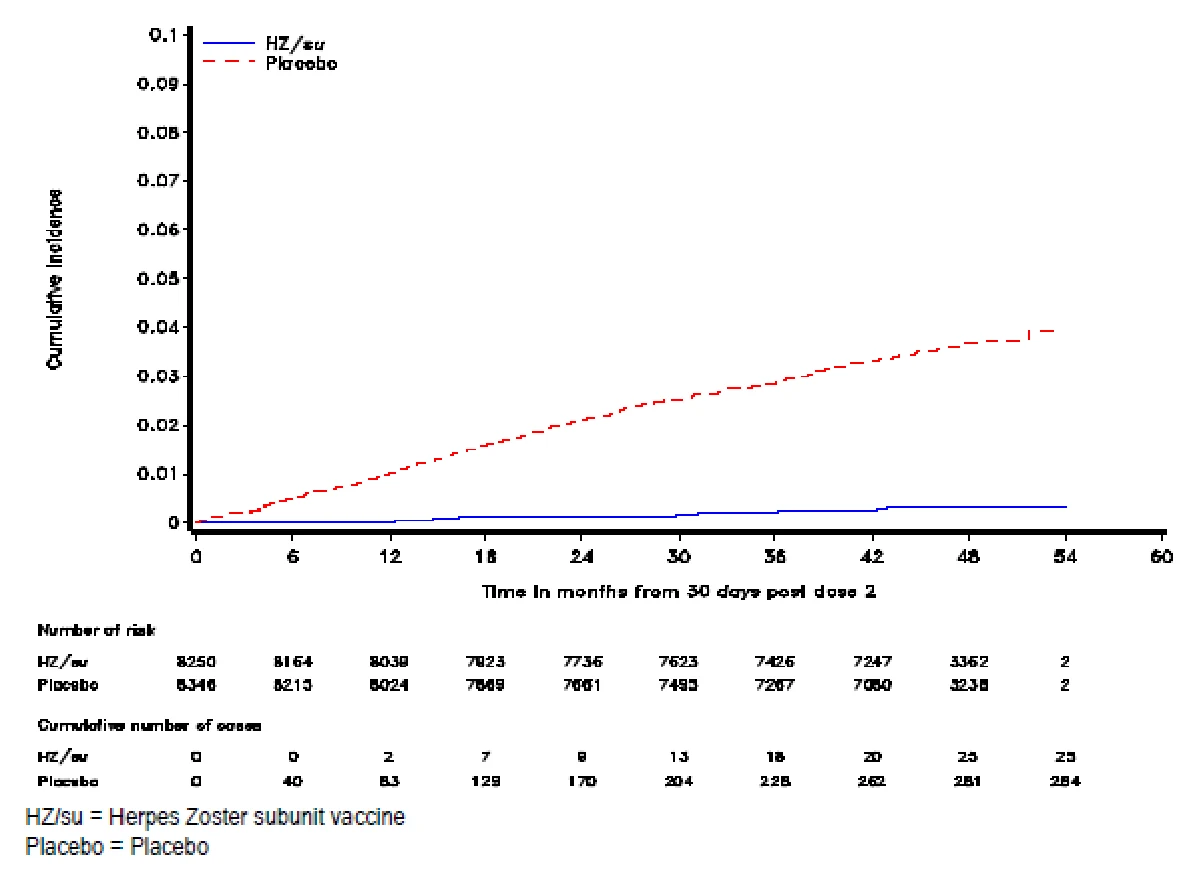
In the fourth year after vaccination, vaccine efficacy against HZ in subjects ≥70 YOA was 87.9% (95% CI: 73.3, 95.4).
Pooled analysis of Study ZOE-50 and ZOE-70
Suspected HZ cases were followed prospectively for the development of PHN, a HZ-related complication defined as HZ-associated pain (rated as 3 or greater on a 0 to 10-point scale by the study subject) occurring or persisting at least 90 days following the onset of rash in evaluable cases of HZ using Zoster Brief Pain Inventory questionnaire.
The analysis of the overall rates of PHN in subjects ≥70 years of age (YOA) was conducted by combining the results from studies ZOE-50 and ZOE-70 through a pre-specified pooled analysis in the mTVC. A total of 8,250 and 8,346 subjects who received SHINGRIX and placebo, respectively, were included in the pre-specified pooled mTVC analysis. Table 8 compares the overall rates of PHN in SHINGRIX and placebo groups.
Table 8 Number of postherpetic neuralgia (PHN) cases and incidence rate in subjects ≥70 YOA receiving two doses of vaccine compared with placebo in studies ZOE-50 and ZOE-70 (Pre-Specified Pooled Dataa) (mTVCb)
| Age group (years) | SHINGRIX | Placebo | % Efficacy (95% CI) | ||||||||||||
|---|---|---|---|---|---|---|---|---|---|---|---|---|---|---|---|
| N | n | Incidence Rate of PHN per 1,000 Person-Years | N | n | Incidence Rate of PHN per 1,000 Person-Years | ||||||||||
| Overall (≥ 70) | 8250 | 4 | 0.1 | 8346 | 36 | 1.2 | 88.8 (68.7, 97.1) | ||||||||
| 70 - 79 | 6468 | 2 | 0.1 | 6554 | 29 | 1.2 | 93.0 (72.4, 99.2) | ||||||||
| ≥ 80 | 1782 | 2 | 0.3 | 1792 | 7 | 1.1 | 71.2 (-51.6, 97.1) | ||||||||
Number of subjects per group; n = Number of subjects having at least one PHN; CI = Confidence Interval; PHN = Postherpetic neuralgia defined as HZ-associated pain rated as 3 or greater (on a 0-10 scale) occurring or persisting at least 90 days following the onset of rash using Zoster Brief Pain Inventory questionnaire.
YOA = Years of age
a Pooled data from Study ZOE-50 (subjects ≥50 years) and Study ZOE-70 (subjects ≥70 years).
b mTVC = Modified Total Vaccinated Cohort; the primary efficacy analysis which included all subjects randomized in the study who received a second dose of the vaccine and did not develop a confirmed case of HZ within one month after the second dose.
SHINGRIX significantly decreased the incidence of PHN compared with placebo in subjects ≥70 YOA (4 vs. 36 cases in the pre-specified pooled analysis of ZOE-50 and ZOE-70).
The benefit of SHINGRIX on PHN can be attributed to the effect of the vaccine on the prevention of HZ. A further reduction of PHN incidence in subjects with confirmed HZ could not be demonstrated due to the limited number of HZ cases in the vaccine group.
Effect on other HZ-related complications
A post-hoc pooled efficacy analysis to evaluate the overall VE in preventing HZ-associated complications (other than PHN), was performed on ZOE-50 and ZOE-70 including 27,916 subjects from the mTVC (n = 13,881 for SHINGRIX, n = 14,035 for placebo). The HZ-related complications evaluated were HZ vasculitis, disseminated disease, ophthalmic disease, neurologic disease, visceral disease, and stroke. The number of HZ-related complications other than PHN in subjects ≥50 YOA was 1 versus 16 cases in the SHINGRIX and placebo group, respectively.
Effect on Use and Duration of Pain Medication
In subjects ≥70 YOA from Study ZOE-70 with confirmed HZ, the use of HZ-associated pain medications was reported for 10 out of 23 subjects (43.5%) who received SHINGRIX, and for 160 out of 223 subjects (71.7%) who received placebo. The median duration of pain medication use was 30 (6.0-660.0) and 38 (1.0 and 4529.0) days, in the SHINGRIX group and the placebo group, respectively.
Herpes Zoster (HZ) in Immunocompromised (IC) adults 18 years and older
Table 9 Summary of patient demographics for clinical trials in Immunocompromised adults aged 18 years and older
| Study # | Study design | Dosage, route of administration and duration | Vaccinated Study subjects (n=number) [# Canadian subjects enrolled*] | Age (Range) | Sex |
|---|---|---|---|---|---|
| Study # | Study design | Dosage, route of administration and duration | Vaccinated Study subjects (n=number) [# Canadian subjects enrolled*] | Age (Range) | Sex |
| Efficacy Studies | |||||
| Zoster-002 a | Phase III, multi-center, placebo-controlled, observer-blind in auHSCT recipients aged 18 years or older, vaccinated post-transplant | 0.5 mL suspension IM injection, 0 and 1-2 months Follow up: at least 12 months after last dose (median follow up for efficacy: 21 months; range: 0 to 50 months) | SHINGRIX n = 922 Placebo n = 924 | 55 years (18 - 78) | 37.3 % female; 62.7% male |
| Immunogenicity Studies | |||||
| Zoster-001 b | Phase I/IIa, placebo-controlled, observer-blind in auHSCT recipients aged 18 years or older, vaccinated post-transplant | 0.5 mL suspension IM injection, 0, 1, 3 months Follow up: 12 months after last dose | gE/AS01B3: SHINGRIX n = 30 P_gE/AS01B2: SHINGRIX n = 31 | gE/AS01B3: 53 years (20 – 70) P_gE/AS01 B2: 58 years (42 – 68) | gE/AS01B3: 40% female; 60% male P_gE/AS01 B2: 32% female; 68% male |
| Zoster-015 c | Phase I/II, multi-center, placebo-controlled, observer-blind in HIV-infected subjects aged 18 years or older | 0.5 mL suspension IM injection, 0, 2, 6-months Follow up: 12 months after last dose | SHINGRIX n = 74 | 46 years (23 - 74) | 5.7% female; 94.3% male |
| Zoster-028 d | Phase II/III, multi-center, placebo-controlled, observer-blind in patients aged 18 years or older with solid tumours undergoing chemotherapy | 0.5 mL suspension IM injection, 0 and 1-2 months Follow up: 12 months after last dose | SHINGRIX n = 117 | 57.8 years (31 - 87) | 59.9% female; 40.1% male |
| Zoster-039 e | Phase III, multi-center, placebo-controlled, observer-blind in patients aged 18 years or older with hematologic malignancies vaccinated during or following a cancer therapy course Vaccine efficacy was evaluated post-hoc | 0.5 mL suspension IM injection, 0 and 1-2 months Follow up: 12 months after last dose (median follow up for efficacy: 11 months; range: 0 to 15.6 months) | SHINGRIX n= 283 Placebo n = 279 | 57.3 years (18 - 85) | 40.6% female; 59.4% male |
| Zoster-041 f | Phase III, multi-center, placebo-controlled, observer-blind in renal transplant recipients aged 18 years or older on chronic immunosuppressive treatment at time of vaccination | 0.5 mL suspension IM injection, 0 and 1-2 months Follow up: 12 months after last dose | SHINGRIX n = 132 | 52.4 years (20 - 82) | 29.9% female; 70.1% male |
* The number of Canadian subjects enrolled includes both placebo and vaccine subjects
IM = intramuscular
auHSCT = Autologous hematopoietic stem cell transplantation
a Vaccinated subject number reflects TVC population. The proportion of subjects by underlying disease was: 53.1% (SHINGRIX) and 53.4% (placebo) for multiple myeloma and 46.9% (SHINGRIX) and 46.6% (placebo) for other diagnosis. Study excluded, among others, subjects who within the preceding 12 months had either a history of HZ or VZV or were vaccinated against HZ or VZV. The first dose was administered within 50 to 70 days after transplantation. 21.3% (SHINGRIX) and 20.5% (placebo) of the subjects received at least one immunosuppressive treatment (for a duration of at least one day) from HSCT up to 30 days after Dose 2 (TVC). The second dose was administered between 1 to 2 months after the first vaccination.
b Vaccinated subject number reflects TVC population. The following study groups were in the pooled safety analysis: gE/AS01B3 (3 doses of SHINGRIX [Months 0, 1, and 3]), P_gE/AS01B2 (1 dose of placebo at Month 0, and 2 doses of SHINGRIX [Months 1 and 3]), and placebo (3 doses of placebo [Months 0, 1, and 3]).
c Vaccinated subject number reflects TVC population. Study excluded, among others, subjects who within the preceding 12 months had either a history of HZ or VZV or were vaccinated against HZ or VZV. Subjects were divided into 3 cohorts by HIV treatment: no antiretroviral therapy (ART) with CD4 T-cell count of ≥500 cells/mm3; stable on ART with low CD4 T-cell count of 50-199 cells/mm3; stable on ART with high CD4 T-cell count of ≥200 cells/mm3. As foreseen in the protocol, due to differential recruitment rates observed for the ART Low CD4 and the non-ART High CD4 cohorts, portions of the subjects planned for enrolment in these 2 cohorts were reassigned to the ART High CD4 cohort during the study. The TVC consisted of 94 subjects in the ART High CD4 cohort, 14 in the ART Low CD4 cohort, and 15 in the non-ART High CD4 cohort.
d Vaccinated subject number reflects TVC population. Study excluded, among others, subjects who within the preceding 12 months had either a history of HZ or VZV or were vaccinated against HZ or VZV. In the PreChemo group (TVC: SHINGRIX [n = 90], placebo [n = 91]), the first dose was administered a maximum of 1 month to a minimum of 10 days before the start of a chemotherapy cycle. The second dose was administered between 1 to 2 months after the first vaccination on the first day of a subsequent chemotherapy cycle. In the OnChemo group (TVC: SHINGRIX [n = 27], placebo [n = 24]), the first dose was administered on the first day of a chemotherapy cycle. The second dose was administered between 1 to 2 months after the first vaccination on the first day of a subsequent chemotherapy cycle.
e Vaccinated subject number reflects TVC population. The proportion of subjects by underlying disease was: 70.7% (SHINGRIX) and 71.3% (placebo) for multiple myeloma (MM) and other diseases, 14.5% (SHINGRIX) and 14.0% (placebo) for non-Hodgkin B-cell lymphoma (NHBCL), and 14.8% (SHINGRIX) and 14.7% (placebo) for chronic lymphocytic leukaemia (CLL). Study excluded, among others, subjects who within the preceding 12 months had either a history of HZ or VZV or were vaccinated against HZ or VZV. For subjects who received the vaccination during a cancer therapy course (37%), there was at least 10 days between cancer therapy and each vaccination. For subjects who received the vaccination after a full cancer therapy course (63%), the first dose was administered from 10 days to 6 months after cancer therapy had ended. The second dose was administered between 1 to 2 months after the first vaccination.
f Vaccinated subject number reflects TVC population. The first dose was administered between 4 to 18 months after transplantation. The second dose was administered between 1 to 2 months after the first vaccination.
Efficacy against Herpes Zoster (HZ)
The efficacy of SHINGRIX was evaluated in two phase 3 randomized, placebo-controlled, observer-blind clinical studies in immunocompromised subjects aged ≥18 years: 1) auHSCT recipients (ZOSTER-002), and 2) subjects with hematologic malignancies (ZOSTER-039 - efficacy was evaluated post-hoc). In these 2 studies, although antiviral prophylaxis was permitted per local standard of care, antiviral therapy beyond 6 months were excluded in the auHSCT study. These studies were not designed to assess the impact of concomitant use of immunosuppressive therapy on vaccine efficacy or to assess the impact of specific immunosuppressive treatments on vaccine efficacy. Most vaccine recipients were not under IS therapy at the time of vaccination. Not all types of immunosuppressive therapies were used in the populations studied.
In the auHSCT efficacy study, subjects were followed for the development of HZ for a median of 21 months (range: 0 to 49.4 months). The primary efficacy analysis populations (mTVC) included 1,721 subjects who received 2 doses of either SHINGRIX or placebo and did not develop a confirmed case of HZ within 1 month after the second dose. The demographics of the mTVC populations were similar to the overall population in each study. Confirmed HZ cases were determined by either PCR (83.7%) or by a Clinical Evaluation Committee (16.3%).
In the post-hoc analysis in subjects with hematologic malignancies, subjects were followed for the development of HZ for a median of 11.1 months (range: 0 to 15.6 months). The primary efficacy analysis populations (mTVC) included 515 subjects who received 2 doses of either SHINGRIX or placebo and did not develop a confirmed case of HZ within 1 month after the second dose. The demographics of the mTVC populations were similar to the overall population in each study. Confirmed HZ cases were determined by either PCR (81.3%) or by a Clinical Evaluation Committee (18.7%).
Compared with placebo, SHINGRIX significantly reduced the risk of developing HZ in immunocompromised subjects aged 18 years and older (Table 10).
Table 10 Efficacy of SHINGRIX on Incidence of Herpes Zoster Compared with Placebo in Immunocompromised Subjects Aged ≥18 Years (mTVCa)
| Clinical Studies | Age Group (Years) | SHINGRIX | Placebo | % Efficacy (95% CI) | ||||
|---|---|---|---|---|---|---|---|---|
| N | n | Incidence Rate of HZ per 1,000 Person-Years | N | n | Incidence Rate of HZ per 1,000 Person-Years | |||
| auHSCT | Overall (≥18)b | 870 | 49 | 30.0 | 851 | 135 | 94.3 | 68.2 (55.6, 77.5) |
| 18 - 49 | 213 | 9 | 21.5 | 212 | 29 | 76.0 | 71.8 (38.8, 88.3) | |
| ≥50 | 657 | 40 | 33.0 | 639 | 106 | 100.9 | 67.3 (52.6, 77.9) | |
| Hematologic Malignancies | Overall (≥18)c | 259 | 2 | 8.5 | 256 | 14 | 66.2 | 87.2d (44.2, 98.6) |
auHSCT = Autologous, hematopoietic, stem cell transplant.
N = Number of subjects included in each group; n = Number of subjects having at least 1 confirmed HZ episode; HZ = Herpes zoster; CI = Confidence Interval.
a mTVC = Modified Total Vaccinated Cohort, defined as subjects who received 2 doses (0 and 1 to 2 months) of either SHINGRIX or placebo and did not develop a confirmed case of HZ within 1 month after the second dose.
b Primary study endpoint was based on confirmed HZ cases in subjects aged ≥18 years.
c Confirmed HZ cases in subjects aged ≥18 years was a secondary study endpoint.
d Efficacy calculation was performed post-hoc
In an exploratory analysis, in which the risk for HZ is considered to be highest (follow-up post-second dose, approximately 6 months to 1 year after auHSCT), vaccine efficacy against HZ in subjects aged 18 years and older was estimated to be 76.2% (95% CI: 61.1, 86.0).
Effect on other HZ-related complications
In an exploratory analysis, in Zoster-002, SHINGRIX reduced HZ-related complications in auHSCT recipients ≥ 18 years (3 vs 13 cases). Additionally, this study found that, SHINGRIX reduced HZ-related hospitalizations (2 vs 13 cases).
Effect on HZ-associated pain
In an exploratory analysis, in Zoster-002, subjects with suspected HZ rated their “worst” HZ-associated pain on a 10-point scale. Among subjects with confirmed HZ, 37 out of 49 subjects receiving SHINGRIX and 120 out of 135 subjects receiving placebo rated their “worst” HZ-associated pain as 3 or greater. In this subset of subjects, the median duration of “worst” HZ associated pain was 14 and 24 days, among SHINGRIX and placebo recipients, respectively. The median duration of pain medication use was 21.5 and 47.5 days in the SHINGRIX and placebo group, respectively.
14.3. Immunogenicity
Adults aged 50 years and older
The gE-specific CD4+ T cell activity for cell-mediated immunity (CMI) was measured by intra-cellular cytokine staining (ICS) assay in terms of frequency of gE-specific CD4[2+] T-cells (i.e., CD4+ T cells expressing at least 2 activation markers from amongst IFN-γ, TNF-α, IL-2, and CD40-L) per 106 CD4+ T cells. Anti-gE antibody levels were measured by anti-gE enzyme-linked immunosorbent assay (gE ELISA). The vaccine response rate (VRR) for anti-gE was defined as the percentage of subjects with at least a 4-fold increase in post-Dose 2 anti-gE antibody concentration compared with the pre-vaccination anti-gE antibody concentration (for subjects seropositive at baseline) or with the anti-gE antibody cut-off value for seropositivity (for subjects seronegative at baseline). An immunological correlate of protection against HZ has not been established; therefore, the level of immune response that provides protection against HZ is unknown.
Immunogenicity in Dose Selection Study Zoster-003
The safety and immune response of SHINGRIX in adults 60 years of age (YOA) or older was evaluated in a dose selection study (Zoster-003). In study Zoster-003, there was an increase in CMI responses following the first dose of SHINGRIX, however, subjects who received a second dose of SHINGRIX developed a higher CMI response to gE after the second dose. In subjects in the SHINGRIX arm, the baseline median frequency of gE-specific CD4 T cells/106 cells was 122. This increased to 383 at two months post-Dose 1 (prior to dose 2) and to 1755 at one month post-Dose 2.
Humoral Immune Response
Humoral immune responses in subjects ≥50 YOA were evaluated in subjects from Study ZOE-50 who were randomly allocated to the immunogenicity subset (n = 1,197 for SHINGRIX and n = 1,200 for placebo). At one month post-Dose 2, the Geometric Mean Concentration (GMC) was 44.3-fold (95% CI: 41.7, 47.1) greater in subjects who received SHINGRIX compared with placebo.
Humoral immune responses in subjects ≥70 YOA were evaluated by combining the results from Studies ZOE-50 and ZOE-70 through a pre-specified pooled analysis in subjects from the immunogenicity subset (n = 1,646 for SHINGRIX and n = 1,647 for placebo). At one month post-Dose 2, the GMC was 35.4-fold (95% CI: 32.8, 38.1) greater in subjects who received SHINGRIX compared with placebo.
Anti-gE antibody responses with SHINGRIX were consistently high in all age groups at one month post-Dose 2 and remained above pre-vaccination levels at three years post-Dose 2.
Cell-Mediated Immune (CMI) Response
CMI responses to vaccination were evaluated in subjects from the immunogenicity subset of 3 countries in ZOE-50 (n = 232 for SHINGRIX and n = 234 for placebo). At one month post-Dose 2, the gE-specific CD4+ T cell activity in subjects who received SHINGRIX was 18.7-fold (95% CI: 14.0, 25.0) greater than placebo in subjects ≥50 YOA and 14.9-fold (95% CI: 8.8, 25.2) greater than placebo in subjects ≥70 YOA.
The gE-specific CMI responses with SHINGRIX were consistently above pre-vaccination levels in all age groups at one month post-Dose 2, and persisted relative to pre-vaccination levels through three years post-Dose 2.
Immunogenicity following concomitant vaccination
In three phase III, controlled, open-label clinical studies, adults ≥50 years of age were randomized to receive 2 doses of SHINGRIX 2 months apart administered either concomitantly at the first dose or non-concomitantly with unadjuvanted seasonal quadrivalent influenza vaccine (N=828; Zoster-004), PPV23 vaccine (N=865; Zoster-035) or Tdap vaccine formulated with 0.3 milligrams Al3+ (N=830; Zoster-042). The vaccine response rate (in terms of anti-gE antibodies) was 95.8% (95% CI: 93.3; 97.6), 98.3% (95% CI: 96.4; 99.3) and 97.8% (95% CI: 95.8; 99.1) following co-administration of SHINGRIX with the influenza, PPV23 and Tdap vaccine respectively at 1 month post-dose 2 of SHINGRIX. The immune responses of the co-administered vaccines were unaffected, with the exception of lower geometric mean concentrations (GMCs) for one of the pertussis antigens (pertactin) when SHINGRIX is coadministered with the Tdap vaccine. However, clinical relevance of these data is not known.
Immunogenicity in subjects with a history of HZ prior to vaccination
In a phase III, uncontrolled, open-label clinical study (Zoster-033), 96 adults ≥50 years of age, with a history of HZ, received 2 doses of SHINGRIX 2 months apart. The vaccine response rate (anti-gE antibodies) at 1 month post-vaccination was 90.2% (95% CI: 81.7; 95.7).
Immunogenicity in subjects receiving 2 doses of SHINGRIX 6 months apart
In a phase III, open-label clinical study (Zoster-026) where 238 subjects ≥50 years of age were equally randomised to receive 2 doses of SHINGRIX 2 or 6 months apart, the vaccine response rate (anti-gE antibodies) at 1 month post-vaccination following the 0, 6-month schedule was 96.5% (95% CI: 90.4; 99.2).
The humoral immune response (anti-gE antibodies concentration) following the 0, 6-month schedule was not inferior to the humoral immune response following the 0, 2-month schedule, as the 97.5% CI upper limit of the antibodies concentration ratio was below 1.50 [1.16 (97.5% CI: 0.98; 1.39)].
Immunogenicity in individuals previously vaccinated with live attenuated herpes zoster (HZ) vaccine
A phase III, open-label, multicentre clinical study (Zoster-048) evaluated the immunogenicity and safety of SHINGRIX in 430 adults ≥65 years of age with or without a previous history of vaccination with live attenuated HZ vaccine (Zostavax2) ≥5 years earlier (HZ-PreVac and HZ-nonVac, respectively). Subjects in the two groups were group-matched for age, sex, race and medical conditions at a 1:1 ratio to receive 2 doses of SHINGRIX 2 months apart.
The co-primary immunogenicity endpoint evaluating non-inferiority of HZ-PreVac compared to HZ-nonVac for humoral immune response was met, as the upper limit of the 97.5% CI of the adjusted GMC ratio was below the predefined limit of 1.50 [1.04 (97.5% CI: 0.92; 1.17)] at one-month post-dose 2, indicating that SHINGRIX induced a strong immune response, irrespective of previous live-attenuated HZ vaccination.
As the study above used an interval of at least 5 years between the two vaccines and shorter intervals have not been studied, additional considerations of the interval may include age of vaccination with the live attenuated HZ vaccine, as well as time since last vaccination with the live attenuated HZ vaccine3 .
2 Registered trademark, Merck Sharp & Dohme Corp. Used under license.
3 Grupping K, et al, 2017 J. Inf. Dis. 216: 1343-1351; NACI 2018 https://www.canada.ca/en/services/health/publications/healthy-living/updated-recommendations-use-herpes-zoster-vaccines.html
Immunocompromised (IC) adults 18 years and older
The immune response to SHINGRIX were evaluated in five randomized, placebo-controlled, observer-blind clinical studies conducted in immunocompromised subjects aged ≥18 years, including auHSCT recipients, solid tumour patients, hematologic malignancy patients, renal transplant recipients, HIV infected subjects. SHINGRIX or placebo was administered according to a 0- and 1- to 2-month schedule in all studies except for study in HIV infected subjects (which used a 3 dose, 0, 2, 6 month schedule). The gE-specific humoral and cell-mediated immune responses at 1 month post-dose 2 in terms of the median fold increase over baseline ranged from 14.1 to 40.9 in terms of anti-gE antibody concentration and 4.9 to 109.0 in terms of gE-specific CD4[2+] T-cell frequencies (ATP cohort for immunogenicity) in all IC populations respectively. In subjects who received SHINGRIX according to a 0- and 1- to 2-month schedule, the humoral and cell-mediated immune responses remained above pre-vaccination levels at 1 year (and 2 years for Zoster-002) post-Dose 2. The clinical relevance in terms of impact on efficacy, on the short and long term, is unknown.
16. Non-Clinical Toxicology
General toxicology: Non-clinical data reveal no special hazard for humans based on conventional studies of acute and repeated dose toxicity, local tolerance and cardiovascular/respiratory safety pharmacology.
Reproductive and developmental toxicology: Administration of VZV gE AS01B to female rats did not indicate any harmful effects with respect to fertility, pregnancy, embryo-foetal development, parturition or postnatal development. Treatment of male rats did not affect mating performance, fertility or early embryonic development.