


Product Monograph - Skyclarys
RECENT MAJOR LABEL CHANGES
Table of Contents
Sections or subsections that are not applicable at the time of authorization are not listed.
Recent Major Label Changes .................................................................................................... 2
Table of Contents ..................................................................................................................... 2
Part 1: Healthcare Professional Information ............................................................................. 4
1 Indications .................................................................................................................... 4
1.1 Pediatrics ............................................................................................................... 4
1.2 Geriatrics ............................................................................................................... 4
2 Contraindications .......................................................................................................... 4
4 Dosage and Administration ........................................................................................... 4
4.1 Dosing Considerations ........................................................................................... 4
4.2 Recommended Dose and Dosage Adjustment ...................................................... 4
4.4 Administration ....................................................................................................... 6
4.5 Missed Dose .......................................................................................................... 6
5 Overdose ...................................................................................................................... 6
6 Dosage Forms, Strengths, Composition and Packaging .................................................. 6
7 Warnings and Precautions ............................................................................................ 7
7.1 Special Populations ................................................................................................ 8
7.1.1 Pregnancy .......................................................................................................... 8
7.1.2 Breastfeeding .................................................................................................... 9
7.1.3 Pediatrics ........................................................................................................... 9
7.1.4 Geriatrics ........................................................................................................... 9
8 Adverse Reactions......................................................................................................... 9
8.1 Adverse Reaction Overview ................................................................................... 9
8.2 Clinical Trial Adverse Reactions ............................................................................. 9
8.2.1 Clinical Trial Adverse Reactions – Pediatrics .................................................... 12
8.3 Less Common Clinical Trial Adverse Reactions .................................................... 12
8.4 Abnormal Laboratory Findings ............................................................................ 12
8.5 Post-Market Adverse Reactions .......................................................................... 13
9 Drug Interactions ........................................................................................................ 13
9.2 Drug Interactions Overview ................................................................................. 13
9.3 Drug-Behavioural Interactions ............................................................................. 13
9.4 Drug-Drug Interactions ........................................................................................ 13
9.5 Drug-Food Interactions ........................................................................................ 16
9.6 Drug-Herb Interactions ........................................................................................ 16
9.7 Drug-Laboratory Test Interactions ....................................................................... 16
10 Clinical Pharmacology ................................................................................................. 17
10.1 Mechanism of Action ........................................................................................... 17
10.2 Pharmacodynamics ............................................................................................. 17
10.3 Pharmacokinetics ................................................................................................ 17
11 Storage, Stability and Disposal .................................................................................... 19
12 Special Handling Instructions ...................................................................................... 19
Part 2: Scientific Information .................................................................................................. 20
13 Pharmaceutical Information ....................................................................................... 20
14 Clinical Trials ............................................................................................................... 21
14.1 Clinical Trials by Indication .................................................................................. 21
16 Non-Clinical Toxicology ............................................................................................... 23
Patient Medication Information ............................................................................................. 25
Part 1: Healthcare Professional Information
1 Indications
SKYCLARYS (omaveloxolone) is indicated for the treatment of Friedreich’s ataxia in patients 16 years of age and older.
1.1 Pediatrics
Adolescents (16 to <18 years): Based on data submitted and reviewed, Health Canada has authorized an indication for use in adolescent patients aged 16 years and older.
Children (<16 years): No data are available to Health Canada; therefore, Health Canada has not authorized an indication for use in patients <16 years of age.
1.2 Geriatrics
Geriatrics: Clinical studies of SKYCLARYS for the treatment of Friedreich’s ataxia did not include patients aged 65 and over. No data are available to determine whether older patients respond differently than younger adult patients.
2 Contraindications
SKYCLARYS is contraindicated in patients who are hypersensitive to this drug or to any ingredient in the formulation, including any non-medicinal ingredient, or component of the container. For a complete listing, (see 6 Dosage Forms, Strengths, Composition and Packaging).
4 Dosage and Administration
4.1 Dosing Considerations
SKYCLARYS treatment should be initiated and supervised by physicians with experience in the treatment of patients with Friedreich’s ataxia.
Recommended Testing Before and During Treatment with SKYCLARYS
- Alanine transaminase (ALT), aspartate aminotransferase (AST), bilirubin, B-type natriuretic peptide (BNP), and lipid parameters should be monitored prior to initiating SKYCLARYS and during treatment (see 7 Warnings and Precautions, 7.1 Special Populations).
4.2 Recommended Dose and Dosage Adjustment
- The recommended dose of SKYCLARYS is 150 mg (3 capsules of 50 mg each) taken orally once daily.
Concomitant Use with CYP3A4 Inhibitors and Inducers
The recommended dosages for concomitant use of SKYCLARYS with strong or moderate cytochrome P450 (CYP) 3A4 inhibitors or inducers are described in Table 1 (see 9 Drug
- Interactions, 9.4 Drug-Drug Interactions).
Table 1 Recommended Dosage of Omaveloxolone with Concomitant use of CYP3A4 Inhibitors and Inducers
| Concomitant Drug Class | Dosage |
|---|---|
| Strong CYP3A4 inhibitors | Avoid concomitant use If concomitant use cannot be avoided:
|
| Moderate CYP3A4 inhibitors | Avoid concomitant use If concomitant use cannot be avoided:
|
| Strong or moderate CYP3A4 inducers | Avoid concomitant use |
Patients with Renal Impairment
- The effect of moderate and severe renal impairment on the pharmacokinetics of SKYCLARYS is unknown (see 10 Clinical Pharmacology, 10.3 Pharmacokinetics).
Patients with Hepatic Impairment
- The recommended dosages for patients with hepatic impairment are described in Table 2.
Table 2 Recommended dose adjustments for patients with hepatic impairment
| Impairment Classification (Child-Pugh) | Dosage |
|---|---|
| Severe (Child-Pugh Class C) | Avoid use. |
| Moderate (Child-Pugh Class B) |
|
| Mild (Child-Pugh Class A) | 150 mg once daily |
4.4 Administration
This medicinal product is for oral use.
SKYCLARYS should be taken on an empty stomach at least 1 hour before or 2 hours after eating (see 10 Clinical Pharmacology, 10.3 Pharmacokinetics).
SKYCLARYS capsules should be swallowed whole and not crushed or chewed.
For patients who are unable to swallow whole capsules, SKYCLARYS capsules may be opened and the entire contents sprinkled onto 2 tablespoons (30 mL) of applesauce and mixed homogenously. Patients should consume all the drug-applesauce mixture immediately on an empty stomach at least 1 hour before eating or 2 hours after eating. The drug-applesauce mixture should not be stored for future use (see 10 Clinical Pharmacology, 10.3 Pharmacokinetics).
Contents of the SKYCLARYS capsules should not be mixed with milk or orange juice.
4.5 Missed Dose
If a dose of SKYCLARYS is missed, the next dose should be administered at its scheduled time the following day. A double dose should not be taken to make up for a missed dose.
5 Overdose
No cases of overdose have been observed in clinical trials with omaveloxolone. There is no specific antidote for omaveloxolone. For patients who experience overdose, closely monitor and provide appropriate supportive treatment.
For the most recent information in the management of a suspected drug overdose, contact your regional poison control centre or Health Canada’s toll-free number, 1-844 POISON-X (1-844-764-7669).
6 Dosage Forms, Strengths, Composition and Packaging
Table 3 Dosage Forms, Strengths, Composition and Packaging
| Route of Administration | Dosage Form / Strength/Composition | Non-medicinal Ingredients |
| Oral | Capsule, 50 mg omaveloxolone | Capsule Contents Croscarmellose sodium Magnesium stearate Pregelatinized starch Silicified microcrystalline cellulose (microcrystalline cellulose and Silica, colloidal anhydrous) Capsule shell |
Each capsule contains 50 mg of omaveloxolone and is supplied as opaque capsules having a light green body and blue cap, imprinted with “RTA 408” in white ink on the body and “50” in white ink on the cap.
Packaging Types
High-density polyethylene bottles with child-resistant, foil induction seal closure.
Pack size of 90 capsules.
7 Warnings and Precautions
Carcinogenicity and Genotoxicity
Carcinogenicity risks in humans are currently unknown. Neoplastic findings were observed in some tissues or organs when rats were treated with omaveloxolone at doses greater than 0.3 mg/kg/day (lower than the human exposure achieved at the maximum recommended human dose). (see 16 NON-CLINICAL TOXICOLOGY, Carcinogenicity)
Cardiovascular
Elevation of B-Type Natriuretic Peptide (BNP)
Treatment with SKYCLARYS can cause an increase in BNP, a marker of cardiac function (see 8 Adverse Reactions, 8.4 Abnormal Laboratory Findings). Elevations in BNP may indicate cardiac failure and should prompt an evaluation of cardiac function. Check natriuretic peptide levels prior to initiation of SKYCLARYS. Monitor patients for the signs and symptoms of fluid overload, such as sudden weight gain, peripheral edema, palpitations or shortness of breath. If signs and symptoms of fluid overload develop, worsen, or require hospitalization, evaluate natriuretic peptide levels and cardiac function, and manage appropriately. Management of fluid overload and heart failure may require discontinuation of SKYCLARYS. Whether the elevations in BNP in MOXIe Part II are related to SKYCLARYS or cardiac disease associated with Friedreich’s ataxia is unclear (see 8 Adverse Reactions, 8.4 Abnormal Laboratory Findings).
Elevation of Low-density Lipoprotein Cholesterol (LDL-C)
Treatment with SKYCLARYS can cause changes in serum cholesterol, including elevations of LDL-C (see 8 Adverse Reactions, 8.4 Abnormal Laboratory Findings). Lipid parameters should be assessed prior to initiation of SKYCLARYS and monitored periodically during treatment. Lipid abnormalities should be managed according to clinical guidelines.
Brilliant Blue FCF (E133) Ferric oxide yellow (E172) Hypromellose (E464) Titanium dioxide (E171) Printing ink Shellac (E904) Titanium dioxide (E171) |
Endocrine and Metabolism
Weight Loss
Mild decreases in body weight have been observed with omaveloxolone treatment (see 8 Adverse Reactions, 8.2 Clinical Trial Adverse Reactions). Monitor patient body weight regularly.
Hepatic/Biliary/Pancreatic
Elevation of Serum Aminotransferases
Treatment with SKYCLARYS can result in elevations of serum transaminases (see 8 Adverse Reactions, 8.4 Abnormal Laboratory Findings). Serum ALT, AST and total bilirubin should be monitored prior to initiation of SKYCLARYS every month for the first 3 months of treatment, and periodically thereafter, as clinically indicated. If transaminases increase to levels greater than 5 times the upper limit of normal (ULN), or greater than 3 times the ULN with evidence of liver dysfunction (e.g., elevated bilirubin), SKYCLARYS should be discontinued immediately and repeat liver function tests should be performed as soon as possible. If transaminase levels stabilize or resolve, SKYCLARYS may be reinitiated with an appropriately increased frequency of monitoring of liver function (see 8 Adverse Reactions, 8.2 Clinical Trial Adverse Reactions).
Reproductive Health
Fertility
There are no data on the effects of omaveloxolone on human fertility. For interactions with hormonal contraceptives (see 7 Warnings and Precautions, 7.1.1 Pregnant Women, and 9 Drug Interactions, 9.4 Drug-Drug Interactions).
Animal data
Fertility and early embryonic development studies did not indicate impairment of reproductive or fertility indices. An increase in pre- and post-implantation loss, increased early and late resorptions, decreased numbers of implantation sites and decreased numbers of viable embryos were observed at exposures greater than the maximum recommended human dose (MRHD). In the pre- and postnatal development study, animal data did not indicate impairment of parent male or female fertility; however, delayed sexual maturation in males and reduced reproductive function in females were observed in omaveloxolone-exposed pups (see 16 Non-Clinical Toxicology, Reproductive and development toxicology).
7.1 Special Populations
7.1.1 Pregnancy
There are no data on the developmental risk associated with the use of omaveloxolone in pregnant women. Omaveloxolone should not be used during pregnancy and in women of childbearing potential who are not using effective and reliable methods of contraception.
In rats and rabbits, no malformations or developmental effects were observed in the pivotal embryofetal development study. However, poor pregnancy outcomes in rabbits due to maternal toxicity were seen at exposures similar to the maximum recommended human dose (MRHD). In the pre- and postnatal development study in rats, an increased number of stillbirths, delayed sexual maturation in offspring males, and reduced reproductive function in female offspring were observed at dose levels that were not related to maternal toxicity (see 16 Non-Clinical Toxicology).
Clinical studies have shown that omaveloxolone can reduce the efficacy of hormonal contraceptives (e.g., pill, patch, ring), implants, and progestin only pills. Patients should use an alternative contraceptive method (e.g., non-hormonal intrauterine system) or additional non-hormonal contraceptive (e.g., condoms) during concomitant use and for 28 days after discontinuation of omaveloxolone (see 9 Drug Interactions, 9.4 Drug-Drug Interactions).
Pregnancy Exposure Registry
There is a pregnancy exposure registry that monitors pregnancy outcomes in women exposed to SKYCLARYS during pregnancy. Healthcare providers are encouraged to enroll pregnant patients, or pregnant women may register themselves in the program by calling 1-866-609-1785 or by sending an email to SkyclarysPregnancySurveillance@ppd.com.
7.1.2 Breastfeeding
There are no data on the presence of omaveloxolone in human milk. In animal studies, omaveloxolone was present in the milk of lactating rats and resulted in treatment-related effects in the offspring. A decision should be made whether to discontinue omaveloxolone or not breast feed as a risk to the newborn infant cannot be excluded (see 16 Non-Clinical Pharmacology, Reproductive and Developmental Toxicology).
7.1.3 Pediatrics
Safety and effectiveness in patients less than 16 years of age have not been established.
7.1.4 Geriatrics
Clinical studies of SKYCLARYS did not include patients 65 years of age and older. Therefore, it is unknown whether or not they respond differently from patients less than 65 years of age.
8 Adverse Reactions
8.1 Adverse Reaction Overview
The adverse reactions observed in the MOXIe Part II study, a 48-week, randomized, double-blind, placebo-controlled trial of SKYCLARYS 150 mg/day over 48 weeks, are listed in Table 4 by system organ class.
The most frequently occurring adverse reactions observed with SKYCLARYS are increased serum ALT (37.3%), headache (37.3%), nausea (33.3%), increased serum AST (21.6%), fatigue (21.6%), and diarrhea (19.6%).
8.2 Clinical Trial Adverse Reactions
Clinical trials are conducted under very specific conditions. Adverse reaction rates observed in the clinical trials, therefore, may not reflect the rates observed in practice and should not be compared to rates in the clinical trials of another drug. Adverse reaction information from clinical trials may be useful in identifying and approximating rates of adverse drug reactions in real-world use.
In the MOXIe Part II study (N=103), 4 (7.8%) adult patients in the SKYCLARYS group and 2 (3.8%) patients in the placebo group discontinued treatment due to adverse events, of which, one SKYCLARYS-treated patient discontinued treatment due to liver function test increases.
Table 4 Adverse Reactions in the placebo-controlled period of MOXIe Part II with ≥5% incidence in SKYCLARYS 150 mg treatment group and at ≥5% higher incidence compared to placebo*
SKYCLARYS n = 51 (%) | Placebo n = 52 (%) | |
SKYCLARYS n = 51 (%) | Placebo n = 52 (%) | |
Infections and Infestations Influenza Urinary tract infection | 7 (14) 4 (8) | 2 (4) 0 |
Injury, poisoning and procedural complications Limb injury | 4 (8) | 1 (2) |
Gastrointestinal disorders Nausea Diarrhea Upper abdominal pain Abdominal pain | 17 (33) 10 (20) 5 (10) 4 (8) | 7 (13) 5 (10) 1 (2) 1 (2) |
Nervous system disorders Headache | 19 (37) | 13 (25) |
Musculoskeletal and connective tissue disorders Back pain Muscle spasm | 7 (14) 7 (14) | 4 (8) 3 (6) |
Investigations Increased ALT Increased AST GGT increased | 19 (37) 11 (22) 3 (6) | 1 (2) 1 (2) 0 |
General disorders and administration Fatigue | 11 (22) | 7 (13) |
Respiratory, thoracic and mediastinal disorders Oropharyngeal pain | 9 (18) | 3 (6) |
Metabolism and nutrition disorders Decreased appetite | 6 (12) | 2 (4) |
Skin and subcutaneous tissue disorders Rash | 5 (10) | 2 (4) |
Reproductive system and breast disorders Dysmenorrhea | 3 (6) | 0 |
* all frequencies reported are the number of patients with adverse events
ALT=alanine aminotransferase; AST=aspartate aminotransferase; GGT=gamma-glutamyltransferase
Most gastrointestinal disorders occurred within 45 days of initiation of treatment with SKYCLARYS.
Body Weight Decreases
Weight decrease was noted in 2.0% of participants treated with omaveloxolone in MOXIe Part II and in 1.9% of those treated with placebo. No serious adverse reactions or discontinuations due to decreased appetite or weight decrease were reported in either treatment group.
In MOXIe Part II, decreases in body weight were observed after Week 24. The mean weight decrease from study entry was 1.4 kg in the omaveloxolone group, compared to a mean weight increase of 1.2 kg in the placebo group, at 48 weeks of treatment. Among all study participants with BMI < 25 kg/m2 at study entry (omaveloxolone, n=37; placebo, n=37), weight loss of at least 5% from baseline was observed in 32.4% of omaveloxolone -treated patients, compared to 2.7% of placebo-treated patients.
Long-term extension trial
Long-term safety of SKYCLARYS was evaluated in an open-label extension trial in 149 patients with Friedreich’s ataxia, with or without pes cavus, conducted over a period of up to an additional 144 weeks following their participation in earlier studies. The safety profile of SKYCLARYS observed in this trial was consistent with that seen in the randomized, double-blind, placebo-controlled study, MOXIe Part II.
8.2.1 Clinical Trial Adverse Reactions – Pediatrics
Based on limited data from MOXIe Part II in patients aged 16 - 17 years at study entry (omaveloxolone n=9, placebo n=15), the safety profile of omaveloxolone was consistent with that in adult patients. No data were available in patients less than 16 years.
8.3 Less Common Clinical Trial Adverse Reactions
The following is a list of additional adverse events that were reported in the MOXIe Part II clinical trial with a frequency of less than 5%, where at least 2 adverse events were reported in omaveloxolone-treated patients (n=51), and were numerically more frequent than in placebo-treated patients (n=52). Events are categorized by system organ class alphabetically.
Gastrointestinal disorders: dyspepsia, abdominal distension, constipation, gastroesophageal reflux disease
General disorders and administration site conditions: non-cardiac chest pain
Infections and infestations: viral upper respiratory tract infection, conjunctivitis
Injury, poisoning and procedural complications: concussion, foot fracture
Investigations increased: very low-density lipoprotein (VLDL)
Metabolism and nutrition disorders: hypertriglyceridemia
Musculoskeletal and connective tissue disorders: myalgia, musculoskeletal chest pain, joint swelling, pain in jaw
Nervous system disorders: dyskinesia, somnolence
Reproductive system and breast disorders: ovarian cyst
Respiratory, thoracic and mediastinal disorders: epistaxis, rhinorrhea
Skin and subcutaneous tissue disorders: hyperhidrosis
8.4 Abnormal Laboratory Findings
Elevations of BNP
In MOXIe Part II, a total of 14% of patients treated with omaveloxolone had an increase in BNP above ULN of 100 pg/mL, as compared with 4% of patients who received placebo. The incidence of elevation of BNP above 200 pg/mL was 4% in patients treated with SKYCLARYS.
Lipoprotein Levels
A total of 16% of patients treated with omaveloxolone in MOXIe Part II had an increase of LDL-C from baseline, as compared to 8% who received placebo. The mean increase of LDL-C for omaveloxolone-treated patients was 23.5 mg/dL at 48 weeks. Mean decrease of HDL-C in omaveloxolone-treated patients was 5.3 mg/dL at 48 weeks.
Serum Transaminases
Sixteen (31.4%) patients in the omaveloxolone group in MOXIe Part II exceeded the pre-specified threshold of ALT or AST > 3 × ULN during the study, while 8 (15.7%) exceeded ALT or AST > 5 × ULN, and 2 (3.9%) exceeded ALT or AST > 10 × ULN during the study. Mean increases in ALT and AST levels observed with omaveloxolone were maximal at Week 2 and then trended back toward baseline values over time while therapy was continued. In the event of study drug withdrawal, AST and ALT levels declined to baseline values within 4 weeks following drug discontinuation. No noteworthy increases of bilirubin were observed with transaminase elevations.
Adverse events due to liver function test increases, considered related to omaveloxolone by the study investigator, included increased ALT (19 patients) at 37.3%, increased AST (11 patients) at 21.6%, and, increased gamma-glutamyl transferase (GGT) (3 patients) at 5.9%.
8.5 Post-Market Adverse Reactions
The following additional adverse reactions have been reported in post-marketing experience with SKYCLARYS. Because these reactions are reported voluntarily from a population of uncertain size, it is not possible to reliably estimate their frequency:
Immune System Disorders: hypersensitivity, including urticaria and rash
Metabolism and nutritional disorders: increased blood cholesterol, increased LDL-C
Gastrointestinal disorders: vomiting
9 Drug Interactions
9.2 Drug Interactions Overview
Omaveloxolone is primarily metabolized by CYP3A4 and, to a lesser extent, by CYP2C8 and CYP2J2. It is also a weak inducer of CYP3A4 (see 10 Clinical Pharmacology).
9.3 Drug-Behavioural Interactions
Drug-Behavioural Interactions have not been established.
9.4 Drug-Drug Interactions
The drugs listed in Table 5 are based on either drug interaction case reports or studies, or potential interactions due to the expected magnitude and seriousness of the interaction (i.e., those identified as contraindicated).
Table 5 Established or Potential Drug Drug Interactions
| [Proper/Common name] | Source of Evidence | Effect | Clinical comment |
|---|---|---|---|
| [Proper/Common name] | Source of Evidence | Effect | Clinical comment |
| [Proper/Common name] | Source of Evidence | Effect | Clinical comment |
Strong CYP3A4 inhibitors (e.g., Itraconazole) | CT; T (for strong and moderate CYP3A4 inducers) | Itraconazole 200 mg QD Single 150 mg dose of omaveloxolone Itraconazole increased Cmax and AUC of omaveloxolone by 3- and 4-fold, respectively | Avoid concomitant use. If concomitant use cannot be avoided, see Table 1 in 4.2 Recommended Dose and Dosage Adjustment for dose modifications. Omaveloxolone is a CYP3A4 substrate. Concomitant use of omaveloxolone with moderate or strong CYP3A4 inhibitors is expected to result in clinically significant increased exposure of omaveloxolone which may increase the risk of adverse reactions |
Moderate CYP3A4 inhibitors (e.g., Verapamil) | CT | Verapamil 120 mg QD; single 150 mg dose of omaveloxolone Verapamil increased omaveloxolone Cmax and AUC by 1.3 and 1.4-fold, respectively | Monitor adverse reactions and adjust dose of omaveloxolone accordingly |
Strong or Moderate CYP3A4 inducers (e.g., Efavirenz) | Efavirenz 600 mg QD; Single 150 mg dose of omaveloxolone Efavirenz decreased omaveloxolone Cmax and AUC by 38% and 49%, respectively | Avoid concomitant use, as moderate or strong CYP3A4 inducers are associated with clinically significant decreased exposure of omaveloxolone which may reduce its efficacy | |
CYP3A4 Substrates (e.g. Midazolam, oral contraceptives) | CT; T (for hormonal contraceptives) | Midazolam 2 mg omaveloxolone 150 mg QD reduced midazolam AUC by 45% | Avoid concomitant use of omaveloxolone with combined hormonal contraceptives (e.g., pill, patch, ring), implants, and progestin only pills as their efficacy maybe reduced. Patients using hormonal contraceptives should use an alternative contraceptive method (e.g., non-hormonal intrauterine system) or additional non-hormonal contraceptive (e.g., condoms) during concomitant use and for 28 days after discontinuation of omaveloxolone. Refer to Product Monographs of CYP3A4 substrates for dosing instructions if used concomitantly with omaveloxolone and monitor for lack of efficacy of the concomitant treatment |
| CYP2C8 substrates (e.g., Repaglinide) | CT | Repaglinide 1 mg omaveloxolone 150 mg QD reduced repaglinide AUC by 35% | Monitor for lack of efficacy of concomitant treatment Concomitant use with omaveloxolone can reduce the exposure of CYP2C8 substrates. Refer to the prescribing information of CYP2C8 substrates for dosing instructions if used concomitantly with omaveloxolone |
BCRP and OATP1B1 Substrates (e.g., rosuvastatin) | CT | omaveloxolone, a weak inducer of BCRP and OATP1B1, at 150 mg QD, reduced rosuvastatin AUC by 30% | Monitor for lack of efficacy of concomitant treatment. Refer to the Product Monographs of BCRP and OATP1B1 substrates for dosing instructions |
Legend: C = Case Study; CT = Clinical Trial; T = Theoretical
There are no clinically significant differences in the pharmacokinetics of digoxin (P-gp substrate) or metformin [(organic cation transporter (OCT)1 substrate] when co-administered with omaveloxolone.
CYP2C8 Inhibitors: Gemfibrozil, a CYP2C8 inhibitor, does not affect omaveloxolone exposure.
In Vitro Studies
CYP Enzymes: omaveloxolone is not an inhibitor of CYP1A2, CYP2B6, CYP2C9, CYP2C19, and CYP2D6. It is also not an inducer of CYP1A2 and CYP2B6.
Drug Transporters: omaveloxolone is not an inhibitor of BCRP, BSEP, OAT3, OATP1B1, OATP1B3, OCT2, MATE1, and MATE2-K.
Omaveloxolone is not an inhibitor of OAT1 at the maximum recommended daily dose.
9.5 Drug-Food Interactions
Grapefruit juices are inhibitors of CYP3A4. Patients should be warned to avoid grapefruit and grapefruit juice beverages while taking omaveloxolone (see 9.2 Drug Interactions Overview).
Compared to administration under fasted conditions, coadministration of a high-fat, high-calorie meal resulted in a small increase (1.15-fold) in the extent of absorption (AUC0-inf) but caused a 4.5-fold increase in Cmax. It is recommended that SKYCLARYS be taken without food on an empty stomach at least 1 hour before or 2 hours after eating (see 4 Dosage and Administration, 4.4 Administration).
9.6 Drug-Herb Interactions
Interactions with herbal products have not been established.
9.7 Drug-Laboratory Test Interactions
Interactions with laboratory tests have not been established.
10 Clinical Pharmacology
10.1 Mechanism of Action
The precise mechanism by which omaveloxolone exerts its therapeutic effects in patients with Friedreich’s ataxia is unknown. In pre-clinical studies, omaveloxolone has been shown to activate Nuclear factor (erythroid-derived 2)-like 2 (Nrf2) in vitro, which is involved in cellular response to oxidative stress, and may play a role in restoring mitochondrial function
10.2 Pharmacodynamics
Cardiac Electrophysiology
Omaveloxolone and its major metabolites (M17 and M22) alone or combined did not cause a clinically significant QTc prolongation in healthy subjects. The mean omaveloxolone Cmax of 319 ng/mL in the study was 4.5-fold the predicted mean steady-state Cmax (71.5ng/mL) in FA patients and covers the worst-case clinical exposure scenario of a 4.5-fold increase in Cmax if omaveloxolone is administered with food.
10.3 Pharmacokinetics
The single and multiple dose pharmacokinetics (PK) of omaveloxolone after oral administration have been well characterized in healthy subjects, and in subjects with hepatic impairment.
Absorption:
Omaveloxolone was absorbed after a single oral administration of 150 mg in healthy fasted subjects, with an average peak plasma concentration 7 to 14 hours post dose. Patients with Friedreich’s ataxia demonstrated a 2.3-fold faster absorption of omaveloxolone than fasted healthy subjects. In healthy fasted subjects, over the dose range of 50 to 150 mg, total plasma omaveloxolone exposure (AUC) increased in a dose-dependent and dose- proportional manner, but Cmax increased in a less than dose-proportional manner.
Compared to administration under fasted conditions, co-administration of a high-fat, high-calorie meal resulted in a small increase (1.15-fold) in the extent of absorption (AUC0-inf) but caused a 4.5-fold increase in Cmax. It is recommended that omaveloxolone be taken without food on an empty stomach at least 1 hour before or 2 hours after eating (see 4 Dosage and Administration, 4.4 Administration, and 9 Drug Interactions, 9.5 Drug-Food Interactions).
Omaveloxolone Cmax and AUC0-inf were similar following a single oral dose of 150 mg (3 capsules of 50 mg) when capsule contents were sprinkled on applesauce or when administered as intact capsules. The median Tmax of omaveloxolone was shortened from approximately 10 hours to 6 hours when sprinkled on applesauce.
Distribution:
Omaveloxolone is 97% bound to protein in human plasma. The mean apparent volume of distribution is 7,361 L (105 L/kg for 70 kg person).
Metabolism:
Following a single oral dose of radiolabeled omaveloxolone administered to healthy male subjects, omaveloxolone was metabolized via CYP3A4 to several metabolites, none of which demonstrated meaningful pharmacological activity.
Elimination:
Following a single oral dose of radiolabeled omaveloxolone administered to healthy male subjects, approximately 92.5% of the dosed radioactivity was recovered within a 528-hour collection period: 92.4% via the feces and 0.1% via the urine. Nearly 91% of the administered dose was recovered in the feces within 96 hours post dose.
The average apparent plasma clearance of omaveloxolone is 109 L/hr and the average apparent plasma terminal half-life is 64 hours (range: 32-94 hours).
Special Populations and Conditions
- Pediatrics (Under 16 years of age): The pharmacokinetics of omaveloxolone have not been studied in pediatric patients younger than 16 years of age.
- Pediatrics (16 and 17 years of age): There are no clinically significant differences in the pharmacokinetics of omaveloxolone between adolescent patients, 16 and 17 years of age, and adults.
- Geriatrics: Population pharmacokinetic studies demonstrate that there were no clinically significant differences in the pharmacokinetics of omaveloxolone based on age (16 to 71 years of age). Therefore, no dose adjustment is required based on age.
- Sex: Population pharmacokinetic analyses demonstrate that there is no clinically meaningful effect of sex/gender on the pharmacokinetics of omaveloxolone. Therefore, no dose adjustment is necessary based on sex/gender.
- Ethnic Origin: Population pharmacokinetic analyses demonstrate that there is no clinically meaningful effect of race (White or Black/African American) on the pharmacokinetics of omaveloxolone. Therefore, no dose adjustment is necessary based on race/ethnicity.
Hepatic Insufficiency: Compared to subjects with normal hepatic function, those with mild hepatic impairment (Child-Pugh Class A) showed no meaningful change in omaveloxolone pharmacokinetics. However, subjects with moderate hepatic impairment (Child-Pugh Class B) exhibited a 65% increase in AUC and an 83% increase in Cmax. In those with severe hepatic impairment (Child-Pugh Class C), omaveloxolone AUC doubled, whereas Cmax decreased by
- approximately 30%. Omaveloxolone clearance also decreased by approximately one-third in subjects with moderate and severe hepatic impairment. The recommended dosage for patients with hepatic impairment is described in 4 Dosage and Administration, 4.2 Recommended Dose and Dosage Adjustment.
- Renal Insufficiency: A formal renal impairment pharmacokinetic study has not been conducted. Only 0.1% of omaveloxolone is excreted via the urinary system. Therefore, no dose adjustment is recommended for patients with mild renal impairment. The effect of moderate or severe renal impairment on the pharmacokinetics of omaveloxolone is unknown
- Obesity: There were no clinically significant differences in the pharmacokinetics of omaveloxolone based on body weight (41 to 128 kg). Therefore, no dose adjustment is necessary based on body weight.
11 Storage, Stability and Disposal
Storage
Store at room temperature (15°C to 30°C)
No special requirements for storage.
Disposal
Any unused medicinal product or waste material should be disposed of in accordance with local requirements.
12 Special Handling Instructions
There are no special handling instructions for this medicinal product.
PART 2: Scientific Information
13 Pharmaceutical Information
Drug Substance
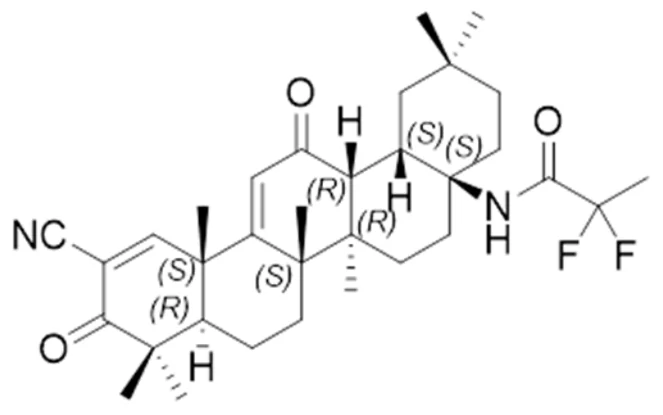
Proper/Common name: omaveloxolone
Chemical name: Propanamide, N-(2-cyano-3,12-dioxo-28-noroleana-1,9(11)-dien-17-yl)-2,2-difluoro
Molecular formula and molecular mass: C33H44F2N2O3 and 554.72 g/mol
Structural formula:
Physicochemical properties: Omaveloxolone is a white to off-white amorphous solid. Omaveloxolone has a pKa of 7.26 and is practically insoluble in water across the physiological pH range.
Product Characteristics:
Omaveloxolone is supplied as a capsule.
Each capsule contains 50 mg of omaveloxolone and is supplied as opaque capsules having a light green body and blue cap, imprinted with “RTA 408” in white ink on the body and “50” in white ink on the cap.
There are no materials that are directly or indirectly derived from animal or human sources used in the omaveloxolone commercial manufacturing process for omaveloxolone drug substance.
14 Clinical Trials
14.1 Clinical Trials by Indication
Friedreich’s ataxia
The efficacy of SKYCLARYS was evaluated in MOXIe Part II, a 48-week, randomized, double-blind, placebo-controlled study, see Table 6, below.
Table 6 Summary of patient demographics in clinical trials of Friedreich’s Ataxia
| Study | Study design | Dosage, route of administration and duration | Study subjects (N) | Mean age (range) | Sex (M/F) |
| MOXIe Part II | 48-week, randomized, double-blind, placebo-controlled study | omaveloxolone 150 mg (3 x 50 mg capsules) oral 48 weeks | 103 | 24 years (16 - 40) | 53%/47% |
MOXIe Part II was a 48-week, randomized, double-blind, placebo-controlled study to evaluate SKYCLARYS in patients 16 to 40 years of age with Friedreich’s ataxia. A total of 103 patients were randomized to receive SKYCLARYS 150 mg/day (n=51) or placebo (n=52), with randomization stratified by pes cavus status, i.e., with pes cavus and or without pes cavus.
Enrolled patients had a stable modified Friedreich’s Ataxia Rating Scale (mFARS) score between 20 and 80, able to complete maximal exercise testing, had a left ventricular ejection fraction of at least 40% and a BNP level ≤ 200 pg/mL. Patients were excluded from MOXIe Part II if they had a history of clinically significant liver disease, e.g., fibrosis, cirrhosis, hepatitis, or clinically relevant deviations in laboratory tests at screening, including serum ALT and/or AST > 1.5 x ULN, bilirubin > 1.2 x ULN, alkaline phosphatase > 2 x ULN, or albumin < lower limit of normal (LLN).
In this study overall, 53% of enrolled participants were male, 97% were White, the mean age was 24 years at study entry, the mean age of Friedreich’s ataxia onset was 15.1 years, and 92% of participants were ambulatory. Mean mFARS score at study entry was 39.8. Although the distribution of baseline characteristics was generally similar between treatment groups, the SKYCLARYS cohort had slightly more advanced disease, with higher average baseline mFARS scores, longer GAA1 repeat lengths, and a greater proportion of participants with a history of cardiomyopathy. Overall, 38% had a history of cardiomyopathy at study entry.Study Results
The primary pre-specified analysis in MOXIe Part II was the change in the mFARS score from baseline compared to placebo at Week 48 in the Full Analysis Set (FAS), i.e., in patients without pes cavus (N=82). The mFARS is a clinical assessment tool to assess patient function and consists of 4 domains to evaluate bulbar function, upper limb coordination, lower limb coordination, and upright stability. The mFARS has a maximum score of 99, with a lower score on the mFARS signifying less physical impairment.
Table 7 mFARS Results of the 48-week, randomized, double-blind, placebo-controlled study
(MOXIe Part II) in Friedreich’s Ataxia (Full Analysis Set)
| Primary Endpoints | Omaveloxolone (n = 40) | Placebo (n = 42) |
| Total mFARS | ||
| Baseline | ||
| n | 40 | 42 |
| Mean (SD) | 40.9 (10.39) | 38.8 (11.03) |
| Week 48 | ||
| n | 34 | 41 |
| Mean (SD) | 39.2 (10.02) | 39.5 (11.57) |
| Week 48 Change from baseline | ||
| LS Mean (SE) | -1.6 (0.69) | 0.8 (0.64) |
| LS Mean Difference (SE) | -2.4 (0.96) | - |
| p-value vs. placebo | 0.014 | |
SD = standard deviation; SE = standard error; LS = least squares
Treatment with SKYCLARYS resulted in a significantly lower mean mFARS score, indicating less impairment, relative to placebo at Week 48, with a LS mean difference of -2.4, p = 0.01, see Table 7, above. Divergence in mFARS scores relative to placebo were evident after Week 12, with continued separation through Week 48.
Results in the All Randomized Population (N = 103), which included all patients regardless of pes cavus status, were similar to those of the FAS, with lower mFARS scores observed in patients treated with SKYCLARYS, compared to placebo, with a LS mean difference of -1.9 p = 0.03, in favour of SKYCLARYS.
16 Non-Clinical Toxicology
General Toxicology: Preclinical data revealed toxicities related to omaveloxolone. In rats, findings of irreversible kidney injury (multifocal renal tubular degeneration/regeneration accompanied by proteinuria) were observed at clinically relevant dose levels after 28 days of daily oral exposure up to 6 months. Furthermore, observations of hyperplasia of the gastrointestinal (GI) tract (forestomach, esophagus, larynx) were observed after 28 days and 6 months of dosing in rats. Similar changes occurred in monkeys after 28 days and 9 months of dosing. The observations were fully reversible in monkeys and only partially reversible in rats after a 28-day recovery period.
In rats, irreversible kidney injury (multifocal renal tubular degeneration/regeneration accompanied by proteinuria) was observed in studies of ≥ 28 days at dose levels of ≥ 0.3 mg/kg/day. There were no associated changes in serum or urinary markers of kidney damage and there was no observed functional impact. There were no adverse kidney findings in monkeys. The AUC-based safety margin for kidney injury in rats was <1-fold the maximum recommended human dose (MRHD).
In rats, adverse findings in the liver (increased liver weight, hepatocellular hypertrophy, bile duct hypertrophy, hyperplasia, and individual hepatocyte necrosis) with associated changes in serum biomarkers were observed at ≥ 1 mg/kg/day. The NOAEL was exceeded after 26 weeks of administration in rats. In monkeys, increases in liver weight were not associated with adverse liver findings at doses up to 100 mg/kg/day for up to 9 months, however, adverse prolongations in APTT, with associated alterations in coagulability, were noted in females receiving 100 mg/kg/day. The AUC-based safety margin at the NOAEL of 30 mg/kg/day was 1.7-fold compared to the MRHD.
In rats, adverse observations of squamous cell hyperplasia in the forestomach at ≥ 3 mg/kg/day for up to 6 months were not a risk for humans since humans do not have this structure in their digestive system.
Genotoxicity: Omaveloxolone was not mutagenic with or without metabolic activation in the Ames assay. Omaveloxolone was mutagenic in a chromosomal aberration assay in human peripheral blood lymphocytes but negative in in vitro (rat micronucleus and comet) assays.
Carcinogenicity: Omaveloxolone did not exhibit evidence of carcinogenic potential in a 26-week study in the rasH2 transgenic mouse at doses of 5, 10, or 30 mg/kg/day in males or 20, 50, or 100 mg/kg/day in females. The AUC-based safety margins were 14.6-fold and 54.5-fold in males and females, respectively, to the MRHD.
Omaveloxolone was administered in a carcinogenicity study in rats at levels of 0.1, 0.3, or 1 mg/kg/day for up to 87 weeks in males, or 0.3, 1, or 3 mg/kg/day for up to 85 weeks in females. Neoplastic findings were noted in the liver (bile ducts), mammary, testis, and rectum at >0.3 mg/kg/day. The AUC-based safety margins were less than 1-fold the human exposure at the maximum recommended human dose (MRHD). The human relevance is currently unknown.
Reproductive and Developmental Toxicology: In the pivotal fertility and early embryonic development study in rats (0, 1, 3, 10 mg/kg/day), an increase in pre- and post-implantation loss and resorptions, resulting in a decrease in viable embryos, was observed at 10 mg/kg/day. The NOAEL was 3 mg/kg/day with an AUC-based safety margin of 2-fold to the MRHD.
Omaveloxolone was evaluated in embryofetal development studies in rats and rabbits and demonstrated no evidence of teratogenicity up to 6.3-fold the MRHD in rats and 0.7-fold in rabbits (AUC-based safety margins).
Oral administration of omaveloxolone throughout pregnancy and lactation in rats (1, 3, 10 mg/kg) resulted in an increase in stillbirths at all doses, reduced body weight in offspring at ≥ 3 mg/kg/day, and delayed sexual maturation (males), increased postnatal mortality, and impaired reproductive performance in offspring at 10 mg/kg/day. Omaveloxolone concentrations were measurable in milk and in plasma from F1 pups in a dose-proportional manner, indicating that pups were exposed to omaveloxolone prenatally and during lactation. The no observed adverse effect for reproductive function in parental dams and in F1 pups was 3 mg/kg. Single-timepoint plasma exposure in F1 pups at the lowest dose tested was less than that in humans at the MRHD.