


Product Monograph - Sofracort
RECENT MAJOR LABEL CHANGES
| 2 Contraindications | 11/2020 |
|---|---|
| 7 Warnings and Precautions, Driving and Operating Machinery | 11/2020 |
| 7 Warnings and Precautions, Ear/Nose/Throat | 11/2022 |
| 7 Warnings and Precautions, Endocrine and Metabolism | 11/2020 |
| 7 Warnings and Precautions, Neurologic | 11/2020 |
| 7 Warnings and Precautions, Ophthalmologic | 11/2020 |
| 7 Warnings and Precautions, Sensitivity/Resistance | 11/2020 |
TABLE OF CONTENTS
Sections or subsections that are not applicable at the time of authorization are not listed.
RECENT MAJOR LABEL CHANGES .......................................................................................... 2
TABLE OF CONTENTS ............................................................................................................ 2
PART I: HEALTH PROFESSIONAL INFORMATION .................................................................... 4
1 INDICATIONS ............................................................................................................. 4
1.1 Pediatrics .................................................................................................................. 4
1.2 Geriatrics .................................................................................................................. 4
2 CONTRAINDICATIONS ................................................................................................ 4
4 DOSAGE AND ADMINISTRATION ................................................................................ 5
4.2 Recommended Dose and Dosage Adjustment ........................................................ 5
4.5 Missed Dose ............................................................................................................. 5
5 OVERDOSAGE ............................................................................................................ 5
6 DOSAGE FORMS, STRENGTHS, COMPOSITION AND PACKAGING ................................ 5
7 WARNINGS AND PRECAUTIONS ................................................................................. 5
7.1 Special Populations .................................................................................................. 7
7.1.1 Pregnant Women ............................................................................................... 7
7.1.2 Breast-feeding .................................................................................................... 7
7.1.3 Pediatrics ............................................................................................................ 7
8 ADVERSE REACTIONS................................................................................................. 8
8.2 Clinical Trial Adverse Reactions ............................................................................... 8
8.5 Post-Market Adverse Reactions ............................................................................... 8
9 DRUG INTERACTIONS ................................................................................................ 8
9.4 Drug-Drug Interactions ............................................................................................ 8
9.5 Drug-Food Interactions ............................................................................................ 9
9.6 Drug-Herb Interactions ............................................................................................ 9
9.7 Drug-Laboratory Test Interactions........................................................................... 9
10 CLINICAL PHARMACOLOGY ........................................................................................ 9
11 STORAGE, STABILITY AND DISPOSAL .......................................................................... 9
12 SPECIAL HANDLING INSTRUCTIONS ............................................................................ 9
PART II: SCIENTIFIC INFORMATION ..................................................................................... 10
13 PHARMACEUTICAL INFORMATION .......................................................................... 10
14 CLINICAL TRIALS ...................................................................................................... 13
15 MICROBIOLOGY ...................................................................................................... 13
16 NON-CLINICAL TOXICOLOGY .................................................................................... 13
PATIENT MEDICATION INFORMATION ................................................................................ 14
PART I: HEALTH PROFESSIONAL INFORMATION
1 INDICATIONS
SOFRACORT (framycetin sulfate, dexamethasone and gramicidin ophthalmic/otic solution) is indicated for:
- Eye: Blepharitis and infected eczema of the eyelid; allergic, infective and rosacea conjunctivitis; rosacea keratitis; scleritis and episcleritis; iridocyclitis, and other inflammatory conditions of the anterior segment of the eye.
- Ear: Otitis externa (acute and chronic) and other inflammatory and seborrheic conditions of the external ear.
SOFRACORT contains antibacterial ingredients, framycetin and gramicidin. To reduce the development of drug-resistant bacteria and maintain the effectiveness of framycetin and gramicidin, SOFRACORT should only be used for the authorized indication.
1.1 Pediatrics
Pediatrics (< 18 years of age): No data are available to Health Canada; therefore, Health Canada has not authorized an indication for pediatric use (see 7.1.3 Pediatrics).
1.2 Geriatrics
Geriatrics: No data are available to Health Canada; therefore, Health Canada has not authorized an indication for geriatric use.
2 CONTRAINDICATIONS
SOFRACORT is contraindicated in patients with:
- Known hypersensitivity to this drug or to any ingredient in the formulation, including any non-medicinal ingredient, or component of the container. For a complete listing, see 6 DOSAGE FORMS, STRENGTHS, COMPOSITION AND PACKAGING.
Eye:
- Herpes simplex and other viral diseases of the cornea and conjunctiva; tuberculosis and fungal diseases of the eye; trachoma.
- Acute purulent, untreated infections of the eye, which, like other diseases caused by micro-organisms, may be masked or enhanced by the presence of the steroid.
- Glaucoma.
Ear:
- Viral and fungal infections.
- Acute purulent, untreated infections.
- Perforation of the eardrum because of the risk of ototoxicity.
4 DOSAGE AND ADMINISTRATION
4.2 Recommended Dose and Dosage Adjustment
Eye: In acute conditions, 1 or 2 drops every 1 to 2 hours may be instilled (generally for 2 or 3 days). Subsequently, 1 or 2 drops 3 or 4 times daily. To avoid possibility of reinfection later, do not touch eye with dropper.
Ear: Instill 2 or 3 drops in the ear canal 3 or 4 times daily by tilting head to one side. Squeeze the dropper carefully. To avoid possibility of reinfection later, do not touch ear with dropper. Alternatively, a saturated gauze wick may be inserted by the physician into the external auditory meatus.
Pediatrics (< 18 years of age):
Health Canada has not authorized an indication for pediatric use (see 1.1 Pediatrics).
4.5 Missed Dose
If a dose is missed, it should be administered as soon as possible, and the regular dosage schedule should be resumed. If it is almost time for the next dose, the missed dose should be skipped, and the regular dosing schedule should be resumed. A double dose should not be administered.
5 OVERDOSAGE
Long-term intensive topical use may lead to systemic effects.
| For management of a suspected drug overdose, contact your regional poison control centre. |
|---|
6 DOSAGE FORMS, STRENGTHS, COMPOSITION AND PACKAGING
Table 1 – Dosage Forms, Strengths, Composition and Packaging
Each milliliter of solution contains: 5 mg framycetin sulfate, 0.5 mg dexamethasone (as dexamethasone sodium metasulfobenzoate), and 0.05 mg gramicidin.
SOFRACORT is available in an amber glass bottle with rubber dropper bulb, containing 8 mL of solution.
7 WARNINGS AND PRECAUTIONS
Driving and Operating Machinery
| Route of Administration | Dosage Form/ Strength/Composition | Non-medicinal Ingredients |
| Ophthalmic/Otic | Solution 5 mg/mL Framycetin sulfate 0.5 mg/mL Dexamethasone 0.05 mg/mL Gramicidin | Citric acid monohydrate, hydrochloric acid, industrial methylated spirit (IMS 66OP), lithium chloride, polysorbate 80, sodium citrate, sodium hydroxide, 2-phenyl ethanol, water for injection |
SOFRACORT may cause transient blurring of vision on instillation. If blurred vision occurs after SOFRACORT administration, the patient must wait until vision clears before driving or operating machinery.
Ear/Nose/Throat
Aminoglycoside antibiotics may cause irreversible, partial or total deafness when applied topically to open wounds or damaged skin. This effect is aggravated by renal or hepatic impairment and by prolonged duration of treatment. The treatment should not be continued after resolution of symptoms.
There have been reported cases of an increased risk of ototoxicity with aminoglycosides administered to patients with mitochondrial mutations, particularly the nucleotide 1555 A to G substitution in the 12S rRNA gene, including cases where the patient's aminoglycoside serum levels were within the recommended range. Some cases were associated with a maternal history of deafness and/or mitochondrial mutation. Mitochondrial mutations are rare, and the penetrance of this observed effect is unknown.
Based on a shared mechanism of action with other aminoglycosides, the risk of ototoxicity with framycetin and other topical aminoglycosides cannot be ruled out.
Endocrine and Metabolism
During therapy with SOFRACORT, a possibly increased need for insulin or antidiabetics should be considered in patients with diabetes (see 8.5 Post-Market Adverse Reactions).
Immune
Discontinue SOFRACORT if there are signs of sensitivity to any of its ingredients. Patients are advised to inform the physicians of the prior use of corticosteroids (see 2 CONTRAINDICATIONS and 8.5 Post-Market Adverse Reactions).
In patients known to be allergic to other aminoglycoside antibiotics (neomycin, kanamycin), cross-sensitization to framycetin may occur, but not invariably so.
Neurologic
Pheochromocytoma crisis, which can be fatal, has been reported after administration of corticosteroids. Corticosteroids should only be administered to patients with suspected or identified pheochromocytoma after an appropriate risk/benefit evaluation.
Ophthalmologic
Visual disturbance may be associated with systemic and topical corticosteroid use. If a patient presents with symptoms such as blurred vision or other visual disturbances, the patient should be considered for referral to an ophthalmologist for evaluation of possible causes which may include cataract, glaucoma or rare diseases such as central serous chorioretinopathy (CSCR). Treatment with corticosteroid preparations should not be repeated or prolonged without regular review to exclude raised intraocular pressure, cataract formation or unsuspected infections. In conditions causing thinning of the cornea, topical steroids may cause perforation. Cataract has occurred after prolonged treatment with topical steroids (see 8.5 Post-Market Adverse Reactions).
Topical corticosteroids should never be given for an undiagnosed red eye as inappropriate use is potentially blinding.
Sensitivity/Resistance
Treatment with corticosteroid/antibiotic combinations should not be continued in the absence of clinical improvement, since prolonged use may lead to occult extension of infections due to the masking effect of the steroid. Prolonged use may also lead to skin sensitization and the emergence of resistant organisms.
Development of Drug Resistant Bacteria:
Prescribing SOFRACORT in the absence of the authorized indications is unlikely to provide benefit to the patient and risks the development of drug-resistant bacteria.
Potential for Microbial Overgrowth:
The use of SOFRACORT may promote the selection of non-susceptible organisms. Should superinfection occur during therapy, appropriate measures should be taken.
7.1 Special Populations
7.1.1 Pregnant Women
There are no available data on SOFRACORT use in pregnant women. The safety of prolonged use of topical steroids during pregnancy has not been substantiated. No conclusions can be drawn regarding whether or not SOFRACORT is safe for use during pregnancy. SOFRACORT should be used during pregnancy only if the potential benefits to the mother outweigh the potential risks, including those to the fetus.
7.1.2 Breast-feeding
There are no available data on the presence of SOFRACORT in human milk, milk production, or the effects on the breast-fed infant. No conclusions can be drawn regarding whether or not SOFRACORT is safe for use during breast-feeding. SOFRACORT should be used during breast-feeding only if the potential benefits to the mother outweigh the potential risks, including those to the breast-fed child.
7.1.3 Pediatrics
Pediatrics (< 18 years of age): No data are available to Health Canada; therefore, Health Canada has not authorized an indication for pediatric use (see 1.1 Pediatrics).
There is a risk of adrenal suppression, even without occlusive dressings, after prolonged treatment of infants with topical steroids.
8 ADVERSE REACTIONS
8.2 Clinical Trial Adverse Reactions
Clinical trials are conducted under very specific conditions. The adverse reaction rates observed in the clinical trials; therefore, may not reflect the rates observed in practice and should not be compared to the rates in the clinical trials of another drug. Adverse reaction information from clinical trials may be useful in identifying and approximating rates of adverse drug reactions in real-world use.
Eye disorders
Increased intra-ocular pressure; perforation of the cornea; hypersensitivity; burning or stinging of the eye.
8.5 Post-Market Adverse Reactions
Endocrine disorders
Iatrogenic Cushing’s syndrome; adrenal atrophy.
Eye disorders
Blurred vision; chorioretinopathy; increased intra-ocular pressure leading to optic nerve damage, reduced visual acuity and visual field defects; glaucoma; cataracts.
Immune disorders
Hypersensitivity reactions, usually of the delayed type, may occur, leading to irritation, burning, stinging, itching and dermatitis.
Metabolism and nutrition disorders
Diabetes mellitus; decreased glucose tolerance.
9 DRUG INTERACTIONS
9.4 Drug-Drug Interactions
The drugs listed in this table are based on either drug interaction case reports or studies, or potential interactions due to the expected magnitude and seriousness of the interaction (i.e., those identified as contraindicated).
Table 2 - Established or Potential Drug-Drug Interactions
Proper/ Common name | Source of Evidence | Effect | Clinical comment |
| CYP3A inhibitors | T | Increased risk of side effects | Co-treatment with CYP3A inhibitors, including cobicistat-containing products, is expected to increase the risk of systemic side-effects. The combination should be avoided unless the benefit outweighs the increased risk of such side-effects, in which case patients should be monitored. |
Legend: T = Theoretical
9.5 Drug-Food Interactions
Interactions with food have not been established.
9.6 Drug-Herb Interactions
Interactions with herbal products have not been established.
9.7 Drug-Laboratory Test Interactions
Interactions with laboratory tests have not been established.
10 CLINICAL PHARMACOLOGY
This information is not available for this drug product.
11 STORAGE, STABILITY AND DISPOSAL
Store between 15-25 °C. Do not refrigerate.
Use within four weeks of opening.
12 SPECIAL HANDLING INSTRUCTIONS
This information is not available for this drug product.
PART II: SCIENTIFIC INFORMATION
13 PHARMACEUTICAL INFORMATION
Drug Substance
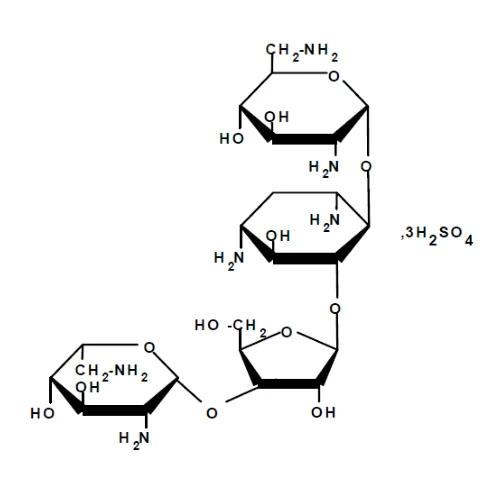
Proper name: Framycetin sulfate or Neomycin B sulfate
Chemical name: Sulfate of 2-deoxy-4-O-(2,6-diamino-2,6-dideoxy-α-D-glucopyranosyl)-5-O-[3-O-(2,6-diamino- 2,6-dideoxy-β-L-idopyranosyl)-β-D-ribofuranosyl]-D-streptamine
Molecular formula: C23H46N6O13, 3H2SO4
Molecular mass: Mr 908.9 (Framycetin sulfate); Mr 614.6 (Framycetin)
Structural formula:
Physicochemical properties: Hygroscopic, white to slightly yellowish powder, not granular to the touch. Framycetin sulfate is highly soluble in water, very slightly soluble in alcohol and practically insoluble in acetone, chloroform and ether. Not more than 80 mcg can be dissolved in 1 mL of cyclohexane.
Drug Substance
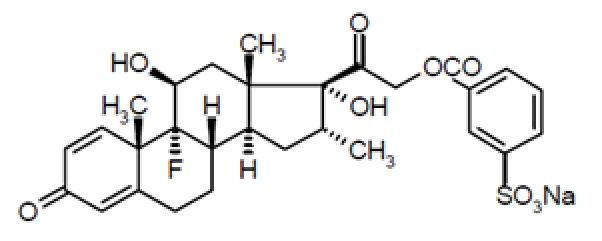
Proper name: Dexamethasone sodium metasulfobenzoate or Dexamethasone 21 (sodium metasulfobenzoate)
Chemical name: (11β,16α 9-Fluoro-11, 17-dihydroxy-16-methyl-21-[(3- sulfobenzoyl)oxy]-pregna-1, 4-diene-3, 20-dione Monosodium salt
(9α-Fluoro-11 β, 17 α -dihydroxy-16 α -methyl-3, 20-
dioxopregna-1, 4-dien-21-yl), m-sulfobenzoate, sodium salt
Molecular formula: C29H32FNaO9S
Molecular mass: Mr = 598.6 (Dexamethasone sodium metasulfobenzoate);
Mr = 392.5 (Dexamethasone)
Structural formula:
Physicochemical properties: White to practically white microcrystalline powder. The polymorphism analyses show the crystalline form I. In addition to an amorphous form, 10 crystalline forms (solvate, hydrate and anhydrous forms) were identified during the polymorph screening. The water content, the TGA and DSC results show that form I is a monohydrate form.
| Solvent | Descriptive term | Solubility (g/L) |
|---|---|---|
| Water | Soluble | between 30 and 100 |
| Acetone | Sparingly soluble | between 10 and 30 |
| Ether | Sparingly soluble | between 10 and 30 |
Drug Substance
Proper name: Gramicidin
Chemical name: Gramicidin A1 (Val-Gram A)
Gramicidin A2 (Ile-Gram A)
Gramicidin B1 (Val-Gram B)
Gramicidin C1 (Val-Gram C)
Gramicidin C2 (Ile-Gram C)
Molecular formula: Gramicidin A1: C99H140N20O17
Gramicidin A2: C100H142N20O17
Gramicidin B1: C97H139N19O17
Gramicidin C1: C97H139N19O18
Gramicidin C2: C98H141N19O18
Molecular mass: Gramicidin A1: 1882 g/mol
Gramicidin A2: 1896 g/mol
Gramicidin B1: 1843 g/mol
Gramicidin C1: 1859 g/mol
Gramicidin C2: 1873 g/mol
Structural formula:
The gramicidins constitute a family of end-substituted linear pentadecapeptides where the N-terminal amino group is formylated and the C-terminal carboxylic group is amidated with ethanolamine. Change of the two amino acids elements (first and eleventh) of the polypeptide chain gives the components of the gramicidin family: A1, A2, B1, C1 and C2.
The general structure of the gramicidins is:

The peptide bond is indicated by →.
The amino acid at X and that at Y for each component of the gramicidin family is indicated in the table below:
| Gramicidin A1 | X = L-Val | Y = L-Trp |
|---|---|---|
| Gramicidin A2 | X = L-Ile | Y = L-Trp |
| Gramicidin B1 | X = L-Val | Y = L-Phe |
| Gramicidin C1 | X = L-Val | Y = L-Tyr |
| Gramicidin C2 | X = L-Ile | Y = L-Tyr |
Physicochemical properties: Gramicidin is a white or almost white, crystalline powder. It is slightly hygroscopic. It is very stable both in the dry form and in solution, also at elevated temperatures. Gramicidin is practically insoluble in water, sparingly soluble in alcohol, and soluble in methanol.
14 CLINICAL TRIALS
This information is not available for this drug product.
15 MICROBIOLOGY
This information is not available for this drug product.
16 NON-CLINICAL TOXICOLOGY
This information is not available for this drug product.