


Product Monograph - Garasone Ophthalmic Ointment
INDICATIONS AND CLINICAL USES
Ophthalmic use: GARASONE Ophthalmic/Otic Solution and GARASONE Ophthalmic Ointment are indicated for ocular inflammation when concurrent use of an antimicrobial is judged necessary, e.g.
staphylococcal blepharoconjunctivitis. GARASONE is indicated for the treatment of non-purulent bacterial infections of the anterior segment of the eye due to organisms sensitive to the antibiotic and when the anti-inflammatory action of betamethasone sodium phosphate is indicated, as in allergic vernal and phlyctenular conjunctivitis; non-purulent blepharitis; interstitial sclerosing post-operative keratitis; superficial chemical and thermal burns of the cornea.
| 3 |
In stubborn cases of anterior segment eye disease or in deep-seated ocular diseases, systemic therapy may be required. However, in these diseases GARASONE Ophthalmic/Otic Solution may be used as adjunctive therapy.
Otic Use: GARASONE Ophthalmic/Otic Solution may also be used for the treatment of lesions in the external ear canal, such as acute otitis externa, eczematoid-dermatitis, seborrheic dermatitis and contact dermatitis secondarily infected with susceptible organisms.
CONTRAINDICATIONS
GARASONE is contraindicated in those individuals who have shown hypersensitivity to any of its components and to other aminoglycosides or to other corticosteroids.
Ophthalmic Use
Ophthalmic use is contraindicated in epithelial herpes simplex keratitis (dendritic keratitis), vaccinia, varicella, and many other viral diseases of the cornea and conjunctiva, mycobacterial infections of the eye or ear, trachoma, fungal diseases of ocular structures.
Use of corticosteroid/antibiotic combinations is contraindicated after removal of a corneal foreign body or in the presence of acute local viral lesions, e.g. herpes, and in patients with absent or perforated tympanic membranes. As with all ophthalmic products containing benzalkonium chloride, patients are advised not to wear soft contact lenses during treatment with GARASONE
Ophthalmic/Otic Solution.
| 4 |
Otic Use
GARASONE ophthalmic/otic drops are contraindicated in patients with absent or perforated tympanic membranes.
WARNINGS
General
If prompt clinical response is not obtained with the use of Garasone Ophthalmic/Otic Solution or
GARASONE Ophthalmic Ointment, further evaluation is advised.
Ophthalmic Use
Garasone Ophthalmic Solution is for topical use only. It should never be injected subconjunctivally, nor should it be introduced directly into the anterior chamber of the eye.
Prolonged ophthalmic use may result in increased intraocular pressure in some individuals with a family history of open-angle glaucoma, with a high degree of myopia or with diabetes. If used for 10 days or longer, intraocular pressure should be routinely monitored. In diseases causing thinning of the cornea or sclera, perforation has been known to occur with the use of topical preparations containing corticosteroids. Protracted use of topical corticosteroids in the eye may result in the development of posterior subcapsular cataracts. Acute anterior uveitis may occur in susceptible individuals, primarily blacks. Prolonged use may suppress the host response and thus increase the hazard of secondary ocular infections. In acute purulent conditions of the eye, steroids may mask infection or enhance existing infection.
| 5 |
Although corticosteroids are contraindicated in acute viral infection of the cornea caused by herpes simplex, there may be occasion to employ steroids in the healing stage to prevent scarring;
however, this must only be done with great caution and close observation. In patients with a history of herpetic infection of the cornea, reactivation of the disease may occur with the use of topical ophthalmic or otic corticosteroids.
The use of steroids after cataract surgery may delay healing and increase the incidence of filtering blebs.
Otic Use
When GARASONE Otic Solution is used locally in the ear, potential eighth cranial nerve toxicity should be considered. Animal studies have shown that gentamicin applied topically to the external ear canal may be absorbed since the drug has been detected in the serum and urine after this route of administration.
PRECAUTIONS
General
During long-term use of preparations containing corticosteroids, such as GARASONE, the possibility of overgrowth of nonsusceptible microorganisms such as fungi must be considered, especially in the presence of a persistent corneal ulceration that fails to respond to conventional therapy. By reducing inflammation, steroids may mask the symptoms of serious disease or enhance existing infection due to organisms resistant to gentamicin. Should this occur, or if irritation or
| 6 |
hypersensitivity to GARASONE Ophthalmic/Otic Solution develops, discontinue use of this preparation and institute appropriate therapy.
Clinical studies have shown that organisms previously sensitive to gentamicin have become resistant during therapy. Although this has occurred infrequently, the possibility should nevertheless be considered. There is evidence that cross-resistance between gentamicin and other aminoglycoside antibiotics may occur since bacteria made resistant to aminoglycoside antibiotics artificially in the laboratory are also resistant to gentamicin. However, gentamicin may be active against clinical isolates of bacteria resistant to other aminoglycosides. Conversely, organisms resistant to gentamicin may be sensitive to other aminoglycoside antibiotics.
If irritation occurs with the use of GARASONE, hypersensitivity to a component of the preparation is a possibility and use should be discontinued. Cross-allergenicity among aminoglycosides and corticosteroids has been demonstrated (See CONTRAINDICATIONS).
To avoid possible contamination and cross-infection, avoid the use of the same bottle of medication for the treatment of otic and ocular infections. The use of this dispenser by more than one person may spread infection. Contamination may occur if the dropper tip touches any surface. Do not allow dispenser tip to touch the surface of the eye.
Ophthalmic Use
In ophthalmic use, intraocular pressure should be checked frequently (tonometry) (See
WARNINGS). Slit-lamp examination should be done for dendritic keratitis.
| 7 |
It is not advisable to treat bacterial corneal ulcers, which may be due to Pseudomonas aeruginosa, with a combination antibiotic-anti-inflammatory product as initial therapy. It is prudent to use an anti-infective agent alone initially. For ulcers caused by Pseudomonas, GARAMYCIN Ophthalmic
Ointment would be indicated. If the infection responds to the anti-infective treatment, then the addition of an anti-inflammatory agent to minimize the fibrous reaction and scarring of the cornea is suggested.
Eyelid cultures and tests to determine the susceptibility of infecting organisms may be indicated if signs/symptoms persist or recur in spite of recommended course of treatment with this product.
Otic Use
To minimize the risk of ototoxicity, the following precautions are suggested: GARASONE drops should be used for the shortest duration possible; the patient should be precisely instructed regarding the dosage and duration of therapy. Treatment should be discontinued if hearing loss, tinnitus, vertigo, or imbalance is noted. The use of GARASONE eardrops should be reassessed, with respect to ototoxicity, 5-7 days after start of treatment and thereafter, on a regular basis.
Pediatric Use
Safety and effectiveness of GARASONE in children below the age of eight years have not been established.
| 8 |
Pregnancy and Lactation
Safety of topical corticosteroid/antibiotic preparations during pregnancy has not been established, therefore, drugs of this class should be used during pregnancy only if the potential benefit justifies the potential risk to the fetus.
Since it is not known whether topical administration of corticosteroids can result in sufficient systemic absorption to produce detectable quantities in breast milk, a decision should be made to discontinue nursing or to discontinue the drug, taking into account the importance of the drug to the mother.
ADVERSE REACTIONS
Ophthalmic use: Adverse reactions reported after the use of GARASONE include: increased ocular pressure; ocular hypersensitivity manifested by increased ocular hyperemia, edema and burning/stinging sensation.
Adverse reactions reported with other steroid-anti-infective combinations include: allergic sensitization due to the antibiotic component; elevation of intraocular pressure with possible development of glaucoma and infrequent optic nerve damage, posterior subcapsular cataract formation, filtering blebs following cataract surgery, secondary ocular infection from pathogens including herpes simplex and delayed wound healing due to the steroid component.
| 9 |
Corticosteroid-containing preparations can also cause anterior uveitis or perforation of the globe.
Mydriasis, defects in visual acuity and visual fields, loss of accommodation and ptosis have also been reported following corticosteroid therapy.
Transient eye irritation has been reported with ophthalmic gentamicin sulfate. Ophthalmic preparations may sting briefly upon application.
Otic use: The possibility of ototoxicity should be kept in mind and the patient monitored accordingly on a regular basis (SEE CONTRAINDICATIONS, WARNINGS and PRECAUTIONS).
During the post-marketing of gentamicin containing otic preparations, rare cases of ototoxicity
(hearing loss, tinnitus, vertigo, imbalance, ataxia or oscillopsia) in the presence of tympanic membrane perforation or tympanoplasty tubes have been reported. Ototoxicity was primarily vestibular and was generally associated with prolonged treatment duration. However, ototoxicity with treatment durations of 5 to 7 days has also been reported. In some instances, patients have not recovered from their symptoms (hearing loss, tinnitus, vertigo, imbalance, ataxia or oscillopsia).
OVERDOSAGE
Symptoms: Excessive prolonged use of topical corticosteroids can suppress pituitary-adrenal function resulting in secondary adrenal insufficiency, and produce manifestations of hypercorticism, including Cushing’s disease.
A single overdosage of gentamicin would not be expected to produce symptoms.
| 10 |
Treatment: Appropriate symptomatic treatment of corticosteroid overdosage is indicated. Acute hypercorticoid symptoms are virtually reversible.
Treat electrolyte imbalance, if necessary. In cases of chronic toxicity, slow withdrawal of corticosteroids is advised.
Although a single overdose is not expected to require treatment, gentamicin can be removed from the blood by hemodialysis or peritoneal dialysis. Approximately 80% to 90% is removed from the circulatory system during twelve hours of hemodialysis. Peritoneal dialysis appears to be less effective.
DOSAGE AND ADMINISTRATION
GARASONE Ophthalmic/Otic Solution
Ophthalmic drops: Instil two drops into the conjunctival sac of the affected eye three or four times daily. During the acute stage, two drops may be administered every two hours.
GARASONE Ophthalmic Ointment
Apply a thin film to the affected eye area three or four times per day. When a favourable response is observed, the number of daily applications may be reduced. The ointment form is also indicated for application at bedtime in conjunction with daytime use of the drops.
| 11 |
Improvement usually occurs within 48 hours, with clearing of the signs and symptoms usually within two weeks. In chronic conditions, withdrawal of treatment should be carried out by gradually decreasing the frequency of application.
GARASONE Ophthalmic/Otic Solution
Otic use: Thoroughly clean the ear canal of cerumen and debris. Instil three or four drops into the affected ear three times daily or as directed by the physician. The patient should lie with the affected ear turned upward; instil the solution and let the patient remain in this position for several minutes to insure penetration of the medication into the ear canal. If preferred, a cotton wick may be inserted into the canal and then saturated with the solution. The wick should be kept moist by adding further solution every four hours. The wick should be replaced once every 24 hours.
After a favourable response is obtained, reduce dosage gradually and discontinue once a cure is achieved.
The need for GARASONE eardrops should be reassessed, with respect to ototoxicity, 5-7 days after start of treatment and thereafter, on a regular basis.
AVAILABILITY
GARASONE Ophthalmic /Otic Solution - 7.5 mL dropper bottle
Each millilitre of sterile solution contains 3.0 mg gentamicin (as sulfate USP), and 1.0 mg betamethasone (as sodium phosphate USP), disodium edetate, purified water, sodium chloride,
| 12 |
sodium citrate dihydrate, sodium borate, sodium phosphate dibasic and sodium phosphate monobasic with benzalkonium chloride as preservative.
Store between 15 and 30°C, away from light.
GARASONE Ophthalmic Ointment - 3.5 gram tube
Each gram of sterile ointment contains 3.0 mg gentamicin (as sulfate USP) and 1.0 mg betamethasone (as sodium phosphate USP) in a base of mineral oil and white petrolatum.
Store between 15 and 30°C.
| 13 |
PHARMACOLOGY
BETAMETHASONE SODIUM PHOSPHATE
Structure:
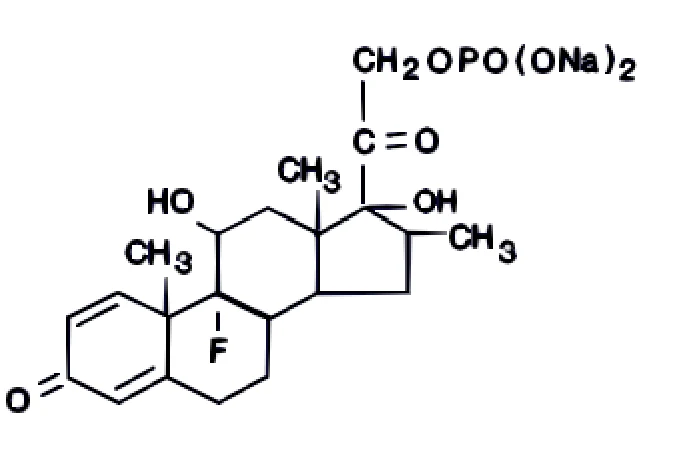
Chemical Name: 9-Fluoro-11β, 17, 21-trihydroxy-16β-methylpregna-1, 4-diene-3, 20-dione-21
(disodium phosphate).
Molecular Formula: C22 H28FNa2O8P
Molecular Weight: 516.41
Description:
Betamethasone sodium phosphate is a white or almost white odorless hygroscopic powder with a bitter taste. It is freely soluble in water and methyl alcohol.
| 14 |
GENTAMICIN SULFATE
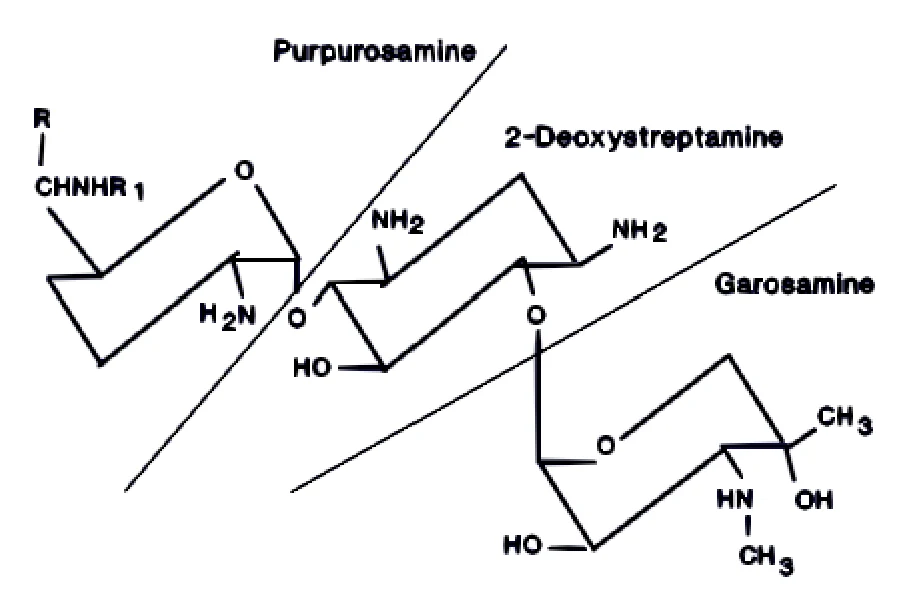
Gentamicin is a mixture of the following three substances:
Molecular
Names Formula Weight
- a) gentamicin C1 R=CH3, R1=CH3 C21H43N5O7 477.61
- b) gentamicin C2 R=CH3, R1 = H C20H41N5O7 463.59
- c)
gentamicin C1a R=H, R1=H C19H39N5O7
449.56
The relative ratio of C1:C1a:C2 is variable in a range of 25-50%: 15-40%: 20-50%.
| 15 |
Description
Gentamicin sulfate is a water soluble antibiotic derived from Micromonospora purpurea, an actinomycete. It is a white to cream colored powder, which is readily soluble in water and moderately soluble in methanol, ethanol and acetone. Betamethasone disodium phosphate is a water soluble corticosteroid with an anti-inflammatory potency approximately 25 times that of hydrocortisone. The mechanism by which it suppresses inflammation is not entirely known, but it is believed that inhibition of accumulation of macrophage cells, suppression of infiltration of polymorphonuclear leucocytes and inhibition of release of mediators of inflammation, may be involved. The rapid anti-inflammatory response to betamethasone is due to its rapid rate of absorption and transport into tissues.
In plasma, betamethasone sodium phosphate has a half-life of approximately 6.5 hours. However, its biological half-life has been estimated to be longer, between 36 and 72 hours. Betamethasone sodium phosphate is taken up rapidly by tissues of the eye as concentration in the cornea, aqueous humor and iris of the rabbit averaged 1.76, 0.48 and 0.77 μg/g of tissue after application of 50 mg tritiated betamethasone sodium phosphate to the cornea. At 4 hours, the concentrations averaged
0.4, 0.016 and 0.18 μg/g of tissue. The drug or its metabolite disappeared from the cornea and the iris with a half-life of approximately 1 hour. The half-life of elimination from the aqueous humor was slightly longer. The absorption of gentamicin into aqueous humor was investigated in rabbits by applying either gentamicin or gentamicin plus betamethasone sodium phosphate solution or ointment to the eyelids of normal eyes or eyes inflamed by mechanical abrasion of the cornea or by a 10% sodium hydroxide treatment. Following topical application of a 0.3% solution (2 drops q 15
| 16 |
min. x 1 hour) to the eye with the abraded cornea, the gentamicin concentration at one-half hour post application was 0.4 μg/mL in the aqueous humor.
Application of a 2 inch strip of 0.3% ointment resulted in an aqueous humor concentration of 1.6
μg/mL, one hour post application. The absorption of gentamicin was not affected by the presence of betamethasone sodium phosphate. The range of antibiotic detected in the aqueous humor in this study is in excess of the minimum inhibitory concentration for most strains of Staphylococcus aureus and Pseudomonas aeruginosa.
Comparable kinetic studies have not been conducted with GARASONE in the ear.
MICROBIOLOGY
Gentamicin is active against gram-positive bacteria commonly found in eye and/or ear infections:
coagulase-positive and coagulase-negative Staphylococci, Group A beta-hemolytic and non-hemolytic Streptococci and Diplococcus pneumoniae.
Gentamicin is also active against gram-negative bacteria including Pseudomonas aeruginosa, indole-positive and indole-negative Proteus species, Escherichia coli, Klebsiella pneumoniae
(Friedlander's bacillus), Serratia marcescens, Neisseria gonorrhoeae, Enterobacter aerogenes,
Providence species and Herellea vaginicola.
The relatively high concentrations achieved locally with application of GARASONE may be bactericidal against bacteria only slightly sensitive in vitro at low concentrations.
| 17 |
Pseudomonacidal Activity in Rabbit Eyes:
Dramatic improvement occurred in approximately two thirds of rabbit corneas infected with
Pseudomonas aeruginosa and treated topically or subconjunctivally with gentamicin drops; five days after the start of treatment, only minimal hyperemia remained in the eye treated with gentamicin whereas corneal perforation and widespread loss of corneal and conjunctival tissue occurred in the untreated eyes.
In a clinical survey including 216 cases of infectious otorrhea, microbiological studies have identified the following organisms as etiological agents and they are classified by order of frequency:
Staphylococcus aureus 76 (35%)
Pseudomonas species 70 (32%)
Proteus species 14 (6%)
Escherichia coli 9 (4%)
Other gram-negative species alone or in combination 47 (23%)
TOXICOLOGY (OPHTHALMOLOGICAL)
Acute Toxicity: Twenty guinea pigs and albino rats were treated with one drop of 0.1% betamethasone sodium phosphate plus 0.3% gentamicin sulfate. No local or systemic toxic effects were observed and microscopic examination of eyes did not reveal any pathological changes. In
| 18 |
rats, the LD50s for gentamicin and betamethasone sodium phosphate were respectively 371 mg/kg and 955 mg/kg.
Subacute Ocular Tolerance: Rabbits were treated with 0.1 mL of the combination of betamethasone sodium phosphate (0.1%) and gentamicin sulfate (0.3%), nine times daily, five days a week for 3 weeks. Only mild intermittent conjunctival hyperemia was evidenced in some instances. A similar study with the ointment formulation caused transient blepharospasm in some animals.
Chronic Ocular Toxicity: Twelve New Zealand rabbits were divided into two equal groups of males and females. One group of equal number received the placebo vehicle formulation while the other group was administered the betamethasone/gentamicin either the ophthalmic solution or ointment formulation, 3 times per day for 12 weeks. Neither the placebo nor the combination caused any pathological changes in body weight, blood count, SGOT, SGPT, blood urea nitrogen, blood sugar, total serum proteins or urine.
No specific otic toxicology studies have been carried out on GARASONE otic drops.
CLINICAL STUDIES:
The safety and efficacy of gentamicin sulfate Ophthalmic/Otic preparations have been described.1-18
Safety:
An open clinical trial was conducted in patients with either staphylococcal marginal keratitis, allergic conjunctivitis complicated by bacterial infection, phlyctenular keratoconjunctivitis, or vernal catarrh.19 Patients received either one drop of betamethasone/gentamicin solution four times daily
| 19 |
or ointment three times daily. The majority of patients had a favourable response with an absence of any abnormal increase in intraocular pressure or serious adverse effects.
Safety and Efficacy:
In two double-blind, randomized, placebo-controlled studies, GARASONE Ophthalmic/Otic Solution or Ophthalmic Ointment were compared to their ingredients for the treatment of chronic staphylococcal blepharoconjunctivitis.20 GARASONE Ophthalmic Ointment was significantly better than placebo or its ingredients in total sign score. The efficacy of GARASONE Ophthalmic/Otic
Solution was significantly superior to placebo and gentamicin, and equivalent to betamethasone in the parameters measured. No adverse reactions were reported.
| 20 |
BIBLIOGRAPHY
- 1.
Kanski JJ. The prevention and management of post-operative bacterial endophthalmitis.
Trans. Ophthalmol Soc UK, April 1974; 94:19-28.
- 2.
Kanski JJ. Treatment of late endophthalmitis associated with filtering blebs. Arch
Ophthalmol May 1974; 91:339-43.
- 3. Smolin G. Proteus endophthalmitis. Arch Ophthalmol May 1975; 91:419-20
- 4.
Dunne JA, Travers JP. Double-blind clinical trial of topical steroids in anterior uveitis. Brit J
Ophthalmol 1979; 63:762-67.
- 5.
Bron AJ. The treatment of bacterial infections of the eye. Documenta Ophthalmologica Proc
Series. New Developments in Ophthalmology - Nijmegen 16-18, October 1975; 7:39-60.
- 6. Jain IS, Amba SK, Gupta SD.Topical corticosteroids and intraocular pressure in high myopia II. Study relationship of pressure response to age, diopteric power, degenerative changes in eye and scleral rigidity. Indian J Ophthalmol, Sept 1973; 21:108-11.
- 7. Turner JS Jr, Staats E, Stone HH, Logan R. Use of gentamicin in preparing the chronically infected ear for tympanoplastic surgery. Southern Med J Jan 1966; 59:94-7.
- 8.
Federspil P. Use of gentamicin in ear, nose, and throat infections. J Infect Dis Apr-Aug
1969; 119:465-70.
- 9.
Federspil P. La gentamycine en oto-rhino-laryngologie et dans la chirurgie cervico-faciale.
G. Ital Chemother Jan-Sept 1969;16:412-17.
- 10. Mendonca D. The topical use of gentamicin in otorrhoea. Practitioner Dec 1969;203:786-88.
- 11.
Houdeshell JW, Hennessey W. Gentamicin in canine otitis externa. Vet Med Small Anim
Clin June 1972; 67:625-28.
- 12.
Mittelman H. Ototoxicity of "ototopical" antibiotics: past, present, and future. Trans Am Acad
Opth & Otol Nov-Dec 1972; 76:1432-43.
- 13. Lumba SP, Chopra HL. The topical use of gentamicin (Genticyn Ear Drops) in chronic otorrhoea. Antiseptic Dec 1973; 70:854-857.
- 14.
Webster FL, Whyard BH, Brandt RW, Jones WG. Treatment of otitis externa in the dog with
Gentocin otic. Can Vet Jour June 1974; Vol. 15, No. 6:176-177.
- 15.
Gydé ML. L'otorrhée: un défi pour l'otologiste. Ann Otolaryng (Paris) 91:No. 9, 459-474,
June 1974.
| 21 |
- 16.
Gydé MC. When the weeping stopped. An otologist views, otorrhea and gentamicin. Arch
Otolaryngol Sept 1976; 102:542-6.
- 17. Gydé MC, Randall RF. A double-blind comparative study of trimethoprimsulfacetamide-polymyxin B versus gentamicin in the treatment of otorrhea. Clin Therap 1978; 1: No.5, 303-316, 1978.
- 18.
Gydé MC, Norris D, Kavalec EC. The weeping ear: clinical re-evaluation of treatment. J Int
Med Res 1982; 10: No. 5, 333-340, 1982.
- 19.
Abel, R., et al., An Open Clinical Trial of GARASONE Ophthalmic Solution and Ointment in
Microbial Allergic Ocular Inflammation, S77-008 and s77-009. Schering-Plough Corporation.
- 20.
Brodrick, J., et al. A Multicentric Clinical Trial of GARASONE Ophthalmic in Staphylococcal
Blepharoconjunctivitis, S77-006 and S77-007. Schering-Plough Corporation.
- 21.
Hélal A. Aminoglycoside eardrops and ototoxicity. Can Adverse Drug React Newsl
1997;7(2):3. (Also published in CMAJ 1997; 156(7):1056-8.)
- 22.
Stockwell M. Gentamicin ear drops and ototoxicity: update. Can Adverse Drug React Newsl
2001;11(1):3 (Also published in CMAJ 2001; 164(1)160.)