


Patient Medication Information: uses, side effects, how to take - Somavert
What is Somavert used for?
- Somavert is a medicine used to treat acromegaly, which is a disease caused when the body produces too much growth hormone.
How does Somavert work?
Somavert blocks the effect of too much growth hormone and improves the symptoms of acromegaly.
What are the ingredients in Somavert?
Medicinal ingredient: pegvisomant.
Non-medicinal ingredients: glycine, mannitol, sodium phosphate dibasic anhydrous, and sodium dihydrogen phosphate monohydrate.
Somavert comes in the following dosage forms:
Somavert is supplied as a sterile powder intended for subcutaneous (under the skin) injection after reconstitution with 1 mL of Sterile Water for Injection (Ph. Eur.). It is available in single-dose vials containing 10, 15, 20, 25 or 30 mg of pegvisomant protein. The diluent (Sterile Water for Injection, Ph. Eur) is provided in a pre-filled syringe that is included in the same package as the Somavert vial.
Do not use Somavert if:
- You should not use this medicine if you have had an allergic reaction to Somavert or any of its ingredients. The stopper on the vial of Somavert is latex free.
To help avoid side effects and ensure proper use, talk to your healthcare professional before you take Somavert. Talk about any health conditions or problems you may have, including if you:
- Have liver disease now, or have had liver disease in the past.
- Take insulin or anti-diabetes drugs, because the dose of these medicines may need to be changed when you use Somavert.
- Take narcotic painkillers (opioid medicines), because the dose of Somavert may need to be changed when you take these medicines.
Plan to become pregnant, or if you are pregnant, might be pregnant, or do not use effective birth control. Treating your acromegaly may lead to an increase in fertility. If you become pregnant, your doctor may need to monitor your hormone levels, and adjust the dose of Somavert during pregnancy.
- Plan to breast-feed, or if you are already breast-feeding.
Tell your healthcare professional about all the medicines you take, including any drugs, vitamins, minerals, natural supplements or alternative medicines.
It is especially important that your doctor know if you are taking insulin or anti-diabetes drugs and opioids.
Combination treatment involving Somavert and somatostatin analogues (drugs used to treat acromegaly) may increase risk of liver problems.
How to take Somavert:
Somavert is intended for subcutaneous (under the skin) administration. Your first dose, called a loading dose, will be given to you by a health care professional. Following this, your health care professional will instruct you to inject Somavert subcutaneously once a day. You and any caregiver who may give you the injections should receive individual training under the supervision of the prescribing doctor.
Always follow the detailed instructions that are given in the INSTRUCTIONS FOR USE when you are preparing or injecting Somavert. However, these instructions do not replace the individual training by a health care professional.
Usual dose:
The recommended dose range is between 10 to 30 mg SC once daily
Overdose:
In cases of overdose, administration of Somavert should be discontinued and not resumed.
| If you think you, or a person you are caring for, have taken too much Somavert, contact a healthcare professional, hospital emergency department, or regional poison control centre immediately, even if there are no symptoms. |
|---|
Missed Dose:
If you forget to give yourself an injection of Somavert, get back on the schedule the next day. Do not inject a double dose to make up for a forgotten injection.
What are possible side effects from using Somavert?
These are not all the possible side effects you may have when taking Somavert. If you experience any side effects not listed here, tell your healthcare professional.
Somavert is generally well tolerated. The side effects are usually mild and do not last long. The following is not a complete list of side effects. Ask your doctor to tell you about the other side effects.
The most common side effects related to the use of the drug are pain, infection, reaction at the site of injection, influenza, and nausea.
Some patients may develop changes in their blood sugar level. You doctor may change your dose of diabetes medicine while you take Somavert.
Some patients may develop skin thickening at the injection site that could lead to lumps (lipohypertrophy).
Serious side effects and what to do about them
| Symptom / effect | Talk to your healthcare professional | Stop taking drug and get immediate medical help | |
|---|---|---|---|
| Only if severe | In all cases | ||
| COMMON | |||
Allergic (anaphylactic) reactions*/ Symptoms of a serious allergic reaction may include one or more of the following:
| × | ||
| RARE | |||
Liver problems**/
| × | × | |
*Caution and close monitoring by your doctor should be exercised when re-initiating Somavert therapy.
**Your doctor will draw some of your blood before and during treatment with Somavert to check how you are responding to the medicine, to change the dose if necessary, and to check for potential liver problems.
If you have a troublesome symptom or side effect that is not listed here or becomes bad enough to interfere with your daily activities, tell your healthcare professional.
Reporting Side Effects
You can report any suspected side effects associated with the use of health products to Health Canada by:
NOTE: Contact your health professional if you need information about how to manage your side effects. The Canada Vigilance Program does not provide medical advice. |
Storage:
Until you mix the powder and the liquid, store the package of Somavert as follows:
30 day packages
30 Pre-filled syringes:
- If room temperature is below 30°C, the pre-filled syringes may be stored at room temperature (below 30°C);
- If room temperature is above 30°C, the pre-filled syringes should be stored in a refrigerator (2°C - 8°C). Protect from freezing.
30 Vials:
- If the room temperature is below 25°C, all 3 boxes of vials of Somavert may be stored at room temperature (below 25°C); The Use by date should be written on the carton (up to 30 days from the date removed from the refrigerator). The vials must be protected from light and should not be placed back into the refrigerator. The Somavert powder vials must be discarded if not used within the 30 days of room temperature storage or the expiry date printed on the carton, whichever is earlier.
- If the room temperature is above 25°C, store all 3 boxes of vials of Somavert powder in a refrigerator (at 2 to 8 °C). Protect the vials from light. Protect from freezing.
One day packages
- If the room temperature is below 25°C, the entire package may be stored at room temperature (below 25°C); The Use by date should be written on the carton (up to 30 days from the date removed from the refrigerator). The entire package must be protected from light and should not be placed back into the refrigerator. The Somavert powder vial must be discarded if not used within the 30 days of room temperature storage or the expiry date printed on the carton, whichever is earlier.
- If the room temperature is above 25°C, store the entire package in the refrigerator (at 2 to 8°C). Protect from freezing. Protect the vial from light.
Pre-filled syringe:
- If room temperature is below 30°C, the diluent pre-filled syringe may be stored at room temperature (below 30°C).
- If room temperature is above 30°C, the diluent pre-filled syringe should be stored in a refrigerator (2°C - 8°C). Protect from freezing.
After reconstitution (mixing the powder and liquid), you may keep the mixed medicine at room temperature inside the syringe, but you must inject the mixed Somavert within 3 hours. If you have not used the mixed medicine within 3 hours, throw it away.
Keep out of reach and sight of children.
If you want more information about Somavert:
- Talk to your healthcare professional
- Find the full product monograph that is prepared for healthcare professionals and includes this Patient Medication Information by visiting the Health Canada website: (https://www.canada.ca/en/health-canada/services/drugs-health-products/drug-products/drug-product-database.html; the manufacturer’s website http://www.pfizer.ca, or by calling Pfizer Canada ULC at 1-800-463-6001.
Last Revised:
SOMAVERT®
(Pegvisomant)
10, 15, 20, 25 and 30 mg per vial for subcutaneous injection
INSTRUCTIONS FOR USE (IFU)
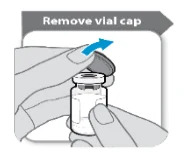
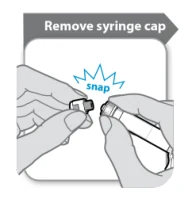
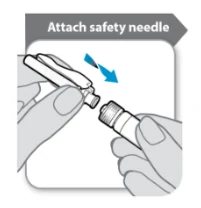
Somavert is packaged in dry powdered form. Before you use Somavert, it must first be reconstituted. This means it is mixed with a liquid called a diluent. The diluent is in the same packaging with the medicine. It is called Sterile Water for Injection, Ph. Eur. It is the only approved diluent for reconstituting Somavert. Do not use any other liquid to reconstitute the medicine.
Use only one dose from each vial (small bottle) of Somavert.
| Getting Started | ||
|---|---|---|
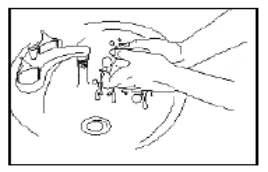
| Remove one package of Somavert from the refrigerator and allow it to warm up to room temperature for approximately 10 minutes while you get ready to prepare your injection. | ||
 |
| |
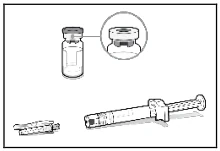 |
You will also need:
| |
| Reconstituting SOMAVERT | ||
  |
| |
 |
|
|---|---|
 |
|
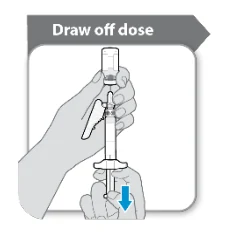 |
Note: If you see air in the syringe, tap the barrel to float the bubbles to the top and then gently push the bubbles out into the vial. Pull the needle out of the vial. |
|---|---|
| Giving the Injection | |
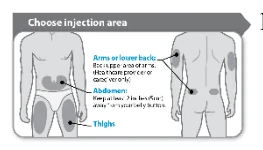
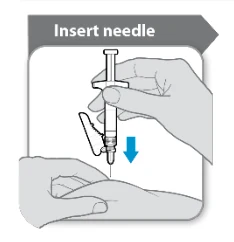
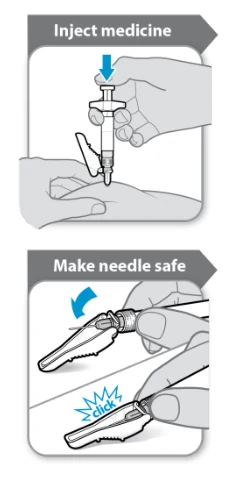
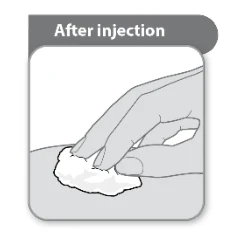
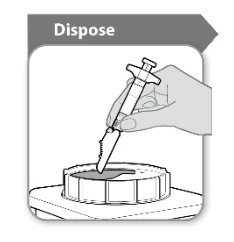
| Subcutaneous (under the skin) injection sites may include the upper arm, lower back, upper thigh, abdomen (stomach area) and buttocks. Select the injection site from one of the areas identified by your health care professional. Select a different injection site each day so lumps do not develop. It may be helpful to keep a record of each day’s injection site as you take your daily dose of Somavert. Do not use an area that has a rash or broken skin, or is bruised or lumpy. | |
 |
|
 |
|
 |
|
 |
|
 |
|
|---|