


Product Monograph - Spectro Eczemacare Medicated Cream
1 INDICATIONS
Spectro EczemaCare Medicated Cream (clobetasone butyrate) is indicated for:
- Treatment and control of small patches of eczema and dermatitis including atopic eczema and irritant and allergic contact dermatitis.
To be applied to itchy, red, dry and inflamed skin to clear the flare-up and to break the itch-scratch cycle of eczema and dermatitis.
1.1 Pediatrics
Pediatrics (<12 years of age): Use in children under 12 years only on the advice of a physician.
The management of eczema and dermatitis in infants and young children requires supervision of a physician. Treatment without management of a physician is therefore limited to adults and children aged 12 years and over. (see Section 6.1.3 Pediatrics)
1.2 Geriatrics
Clinical studies have not identified differences in responses between the elderly and younger patients (see Section 6.1.4 Geriatrics).
2 CONTRAINDICATIONS
Spectro EczemaCare Medicated Cream is contraindicated in patients who are hypersensitive to corticosteroids or to any ingredient in the formulation, including any non-medicinal ingredient, or component of the container. (For a complete listing, see Section 5 Dosage Forms, Strengths, Composition and Packaging)
Clobetasone butyrate is not indicated for the treatment of primarily infected skin lesions caused by infection with fungi (e.g. Candidiasis, Tinea) or bacteria (e.g. Impetigo), primary cutaneous viral infections (i.e., herpes simplex, vaccinia and varicella), syphilitic skin infections or tuberculous skin lesions unless an anti-infective agent is used simultaneously.
Clobetasone butyrate is also contraindicated in patients with acne vulgaris, rosacea, psoriasis, or pruritus without inflammation.
3 DOSAGE AND ADMINISTRATION
3.1 Dosage
Under conditions of non-prescription use, the total dose of Spectro EczemaCare Medicated Cream applied should not exceed 15 grams per week in adults.
3.2 Administration
Spectro EczemaCare Medicated Cream is suitable for use in adults and children aged 12 years or older.
Spectro EczemaCare Medicated Cream should be applied sparingly to the affected area twice a day for up to 7 days using fingertip units.
A single streak of cream from the top crease in the finger to the fingertip is one “fingertip unit”. This is enough to treat a patch area equal to the front and back of one hand. For smaller areas, squeeze out half a fingertip unit – enough to cover a patch of skin the same size as the palm of one hand.
If the condition resolves within 7 days, treatment with Spectro EczemaCare Medicated Cream should be stopped. If the condition worsens or does not improve within 7 days, treatment and diagnosis should be re-evaluated by a physician.
Therapy with topical corticosteroids should be gradually discontinued once control is achieved and an emollient continued as maintenance therapy.
Rebound of pre-existing dermatoses can occur with abrupt discontinuation of topical corticosteroids especially with potent preparations.
4 OVERDOSAGE
Acute overdosage is very unlikely to occur. Chronic overdosage requires continuous use of large quantities for long periods of time. In the case of chronic overdosage or misuse, the features of hypercortisolism may appear. As with any corticosteroid, treatment should be discontinued gradually by reducing the frequency of application or by substituting a less potent corticosteroid because of the risk of glucocorticosteroid insufficiency. However, because of the risk of acute adrenal suppression in such cases, drug withdrawal should be carried out under medical supervision.
| For management of a suspected drug overdose, contact your regional poison control centre. |
|---|
5 DOSAGE FORMS, STRENGTHS, COMPOSITION AND PACKAGING
Table 1– Dosage Forms, Strengths, Composition and Packaging.
Spectro EczemaCare Medicated Cream is a topical corticosteroid containing 0.05% clobetasone butyrate as the medicinal ingredient in a cream base, supplied in a 30 g tube. The tube is an internally lacquered aluminium tube with latex band and polypropylene cap.
| Route of Administration | Dosage Form / Strength/Composition | Non-medicinal Ingredients |
| Topical | Cream, 0.05% w/w | Arlacel 165, beeswax substitute, cetostearyl alcohol, chlorocresol, citric acid monohydrate, dimethicone 20, glycerin, glyceryl monostearate, purified water, sodium citrate dihydrate. |
6 WARNINGS AND PRECAUTIONS
General
For external use only. This and all medication should be kept out of the reach of children. In case of accidental ingestion, professional assistance should be sought or a national poison control centre contacted immediately. (see Section 4 Overdosage)
Use for no more than 7 days continuous treatment.
Patients are warned in product labelling to use the minimum amount of cream for the shortest time necessary to relieve symptoms.
Patients are advised on product labelling to use on intact skin only.
Topical corticosteroids are sometimes used to treat the dermatitis around chronic leg ulcers. However, this use may be associated with a higher occurrence of local hypersensitivity reactions and an increased risk of local infection.
Patients are warned in product labelling not to use other topical corticosteroids, either prescribed or obtained over-the-counter (such as hydrocortisone), at the same time as Spectro EczemaCare Medicated Cream as this may increase the risk of unwanted effects.
If a symptomatic response is not noted within a few days to a week, the local application of Spectro EczemaCare Medicated Cream should be discontinued and the patient re-evaluated.
Patients are advised in product labelling to use Spectro EczemaCare Medicated Cream only for the treatment of eczema or dermatitis and not to use it on the groins, genitals, on axilla or between the toes or on the face or scalp unless such use is conducted under medical supervision.
Long Term Effects
Prolonged or extensive use of topical corticosteroid products may produce atrophy of the skin and subcutaneous tissue, particularly on flexor surfaces and on the face. If this is noted, the use of Spectro EczemaCare Medicated Cream should be discontinued. Prolonged application to the face is undesirable as this area is more susceptible to atrophic changes. Spectro EczemaCare Medicated Cream should be applied to the face only if in the estimation of a physician it is necessary and the benefits of application to the face outweigh the risks.
Ophthalmologic
Patients are warned in product labelling against letting the cream get into the eye.
Visual disturbances have been reported with the use of systemic and topical corticosteroids as a result of increased systemic availability and direct contact with the eyes. Consequently, if a patient presents with symptoms such as blurred vision or other visual disturbances, the patient should be considered for referral to an ophthalmologist for evaluation as possible causes may include cataract, glaucoma or rare diseases such as central serous chorioretinopathy (CSCR).
If applied to the eyelids, care is needed to ensure that the preparation does not enter the eye, as cataract and glaucoma might result from repeated exposure.
Renal/Hepatic Impairment
In case of systemic absorption (when the application is over a large surface area for a prolonged period) metabolism and elimination may be delayed therefore increasing the risk of systemic toxicity. Therefore, the minimum quantity should be used for the shortest duration to achieve the desired clinical benefit. All patients are advised on product labelling to use the minimum amount of cream for the shortest duration to achieve the desired clinical benefit.
Sensitivity/Resistance
Although hypersensitivity reactions are rare with topically applied corticosteroids, the drug should be discontinued and appropriate therapy initiated if there are signs of hypersensitivity.
Skin
Spectro EczemaCare Medicated Cream should be used with caution in patients with stasis dermatitis and other skin diseases associated with impaired circulation.
Patients are advised in product labelling that they should not use clobetasone butyrate for the treatment of psoriasis as there are no adequate studies that support the efficacy of clobetasone butyrate in the treatment of psoriasis.
If irritation develops, Spectro EczemaCare Medicated Cream should be discontinued and appropriate therapy instituted. Allergic contact dermatitis from corticosteroids, although uncommon, can be diagnosed by observing ‘failure to heal’ rather than clinical exacerbation as with most topical products not containing corticosteroids. Such an observation should be corroborated with appropriate diagnostic patch testing.
Skin Infection
Appropriate anti-bacterial therapy should be used whenever treating inflammatory lesions which have become infected. Any spread of infection requires withdrawal of topical corticosteroid therapy and administration of appropriate antimicrobial therapy. If it is considered necessary, the topical corticosteroid may be used as an adjunct to control inflammation, erythema and itching. If a symptomatic response is not noted within a few days to a week, the local application of corticosteroid should be discontinued until the infection is brought under control. Bacterial infection is encouraged by the warm, moist conditions within skin folds or caused by occlusive dressings. When using occlusive dressings, the skin should be cleansed before a fresh dressing is applied.
During the use of topical corticosteroids, secondary infections may occur. Appropriate antimicrobial therapy should be used whenever treating inflammatory lesions which have become infected. Any spread of infection requires withdrawal of topical corticosteroid therapy, and systemic administration of antimicrobial agents. Bacterial infection is encouraged by the warm, moist conditions induced by occlusive dressings, and so the skin should be cleansed before a fresh dressing is applied.
Systemic Effects
Manifestations of hypercortisolism (Cushing’s syndrome) and reversible hypothalamicpituitary-adrenal (HPA) axis suppression, leading to glucocorticosteroid insufficiency can occur in some individuals as a result of prolonged duration of use, extensive application to the skin, or because of increased systemic absorption of topical steroids. If either of the above are observed, withdraw the drug gradually by reducing the frequency of application or by substituting a less potent corticosteroid. Abrupt withdrawal of treatment may result in glucocorticosteroid insufficiency (see Section 7 Adverse Reactions).
Risk factors for increased systemic effects are:
- Potency and formulation of topical steroid.
- Duration of exposure, therefore, patients are advised in product labelling to inform subsequent physicians of the prior use of corticosteroids or any other prescription medication or over the counter products.
- Application to a large surface area.
- Use on occluded areas of skin e.g. on intertriginous areas or under occlusive dressings (e.g. plasters, dressings, gloves or cling film. In infants the nappy may act as an occlusive dressing).
- Increasing hydration of the stratum corneum.
- Use on thin skin areas such as the face, scalp, axillae and scrotum.
- Use on broken skin or other conditions where the skin barrier may be impaired.
- In comparison with adults, children and infants may absorb proportionally larger amounts of topical corticosteroids and thus be more susceptible to systemic adverse effects. This is because children have an immature skin barrier and a greater surface area to body weight ratio compared with adults.
6.1 Special Populations
6.1.1 Pregnant Women
There are limited data from the use of clobetasone in pregnant women. Topical administration of corticosteroids to pregnant animals can cause abnormalities of fetal development. The relevance of this finding to human beings has not been established. Administration of clobetasone butyrate during pregnancy should only be considered if the expected benefit to the mother outweighs the risk to the fetus.
Women, who are pregnant, may be pregnant or are planning to become pregnant, are advised in product labelling not to use Spectro EczemaCare Medicated Cream without medical advice.
Drugs of this class should not be used extensively in pregnant patients in large amounts or for prolonged periods of time. The minimum quantity should be used for the minimum duration.
6.1.2 Breast-feeding
The safe use of topical corticosteroids during lactation has not been established. It is not known whether the topical administration of corticosteroids could result in sufficient systemic absorption to produce detectable amounts in breast milk. Administration of clobetasone during lactation should only be considered if the expected benefit to the mother outweighs the risk to the infant.
Women, who are breast feeding, are advised in product labelling not to use Spectro EczemaCare Medicated Cream without medical advice.
If used during lactation (only under medical advice), clobetasone should not be applied to the breasts to avoid accidental ingestion by the infant.
6.1.3 Pediatrics
In infants and children under 12 years of age, long-term continuous topical corticosteroid therapy should be avoided where possible and if treated only on the advice of a physician.
Because of the higher ratio of skin surface area to body mass, children are at greater risk than adults for HPA axis suppression when treated with topical corticosteroids and, in general require shorter courses and less potent agents than adults. They are also at greater risk of glucocorticosteroid insufficiency after withdrawal of treatment and of Cushing’s syndrome while on treatment. Adverse effects including striae have been reported with use of topical corticosteroids in infants and children. HPA axis suppression and Cushing’s syndrome have been reported in children receiving topical corticosteroids. Manifestations of adrenal suppression in children include: linear growth retardation, delayed weight gain, low plasma cortisol levels and absence of response to ACT stimulation.
In clinical practice, a substantial proportion of the use of Spectro EczemaCare Medicated Cream has been in children. There have been no published reports of significant untoward effects.
Care should be taken when using clobetasone butyrate to ensure the amount applied is the minimum that provides therapeutic benefit.
6.1.4 Geriatrics
The greater frequency of decreased hepatic or renal function in elderly may delay elimination if systemic absorption occurs. Therefore, the minimum quantity should be used for the shortest duration of time to achieve the desired clinical benefit. All patients are advised on product labelling to use the minimum amount of cream for the shortest time necessary to relieve symptoms.
7 ADVERSE REACTIONS
7.1 Adverse Reaction Overview
Side effects associated with short-term (up to 7 days) use include:
Hypersensitivity
- Local hypersensitivity reactions such as erythema, rash, pruritis, urticaria, local skin burning and allergic contact dermatitis may occur at the site of application and may resemble symptoms of the condition under treatment. In the unlikely event of signs of hypersensitivity appearing, application should stop immediately.
- Exacerbation of underlying symptoms may occur.
Local burning, irritation, itching, skin atrophy, dryness of the skin, atrophy of subcutaneous tissues, telangiectasia, striae, change in pigmentation, secondary infection and hypertrichosis have been observed following topical corticosteroid therapy.
If more than the correct amount of cream is used or if it is used for longer than recommended, the following symptoms may be experienced: increased weight, rounding of the face, obesity, skin thinning, or changes to the colour of skin and increased body hair.
Local atrophic changes could possibly occur in situations where moisture increases absorption of clobetasone butyrate, but only after prolonged use.
The following symptoms may occur with use in children: delayed weight gain, slow growth.
When large areas of the body are being treated with clobetasone butyrate, it is possible that some patients will absorb sufficient steroid to cause transient adrenal suppression despite the low degree of systemic activity associated with clobetasone butyrate.
Other side effects may include: a decrease of the hormone cortisol in your blood, increased levels of sugar in your blood or urine, high blood pressure, cloudy lens in the eye (cataract), increased pressure in the eye (glaucoma), or weakening of the bones through gradual loss of mineral (osteoporosis).
7.2 Clinical Trial Adverse Reactions
Because clinical trials are conducted under very specific conditions, the adverse reaction rates observed in the clinical trials may not reflect the rates observed in practice and should not be compared to the rates in the clinical trials of another drug. Adverse reaction information from clinical trials is useful for identifying drug-related adverse events and for approximating rates.
Adverse events from five controlled multi-centre trials and one single-centre trial which treated patients with topical clobetasone butyrate 0.01-0.05% are summarised. Patients presented with atopic, contact, infantile, or other forms of eczema and dermatitis, with most patients affected by the atopic form. All adverse events were skin related.
| Table 2 - Summary of adverse events reported in clinical trials of clobetasone butyrate 0.01-0.05% in patients with bilateral eczema. | |||||||
Study # Adverse event | Clobetasone Butyrate (nAE) | Reference product (nAE) | |||||
| AS (N=165)1 | |||||||
| Burning Sensation | NR | 2 | |||||
| Redness | 2 | NR | |||||
| AY (N=94)2 | |||||||
| Burning Sensation | 1 | 1 | |||||
| Irritation | 2 | 1 | |||||
| BE (N=156)3 | |||||||
| Burning Sensation | 1 | NR | |||||
| BH (N=39)4 | NR | NR | |||||
| BI (N=32)3 | NR | NR | |||||
| Irritation | 2 | NR | |||||
| BS (N=32)3 | NR | NR | |||||
N = total number of enrolled subjects; nAE = Number of adverse events; NR = none reported 1Clobetasone butyrate 0.01% cream versus hydrocortisone 1% cream; 2Clobetasone butyrate 0.025% cream versus hydrocortisone 1% cream; 3Clobetasone butyrate 0.05% cream versus hydrocortisone 1% cream; 4Clobetasone butyrate 0.05% cream versus fluocortolone pivalate 0.1% with fluocortolone hexanoate 0.1% cream; 5Clobetasone butyrate 0.05% cream versus flurandrenolone 0.0125% cream; 6Clobetasone butyrate 0.05% ointment versus fluocortolone pivalate 0.1% with fluocortolone hexanoate 0.1% ointment.
A total of 518 patients with eczema were involved in controlled clinical trials for clobetasone butyrate 0.01-0.05%. A total of 12 adverse events were reported by 11 patients. Adverse events were mild and transient, none of the reactions was severe and therapy continued uneventfully for all patients.
7.3 Clinical Trial Adverse Reactions (Pediatrics)
No adverse events in paediatrics were reported for those treated with topical clobetasone butyrate 0.01-0.05% in the six controlled clinical trials in patients with bilateral eczema. One patient aged 2 years reported slight burning for the reference product, hydrocortisone 1% cream. One patient aged 12 years reported slight irritation for the reference product, hydrocortisone 1% cream. Therapy continued uneventfully for both patients.
7.4 Post-Market Adverse Reactions
The adverse reactions described below were all very rarely reported (<1/10,000).
Infections and Infestations
Opportunistic infection
Immune System Disorders
Hypersensitivity
Endocrine Disorders
Hypothalamic pituitary adrenal (HPA) axis suppression: Cushingoid features (e.g. moon face, central obesity), delayed weight gain/growth retardation in children, osteoporosis, glaucoma, hyperglycaemia/ glucosuria, cataract, hypertension, increased weight/obesity, decreased endogenous cortisol levels
Skin and Subcutaneous Tissue Disorders
Allergic contact dermatitis, urticaria, skin atrophy*, pigmentation changes*, exacerbation of underlying symptoms, local skin burning, hypertrichosis, rash, pruritus, erythema
* skin features secondary to local and/or systemic effects of hypothalamic-pituitary adrenal (HPA) axis suppression
8 DRUG INTERACTIONS
8.1 Overview
Patients are advised on product labelling that some medicines may affect how Spectro EczemaCare Medicated Cream works,or make it more likely that the patient will experience side effects. These include: other corticosteroids medicines- these may include some eczema creams, asthma inhalers, tablets, injections, nasal sprays, and eye or nose drops.
8.2 Drug-Drug Interactions
Co-administered drugs that can inhibit CYP34A (e.g. ritonavir, itraconazole) have been shown to inhibit the metabolism of corticosteroids leading to increased systemic exposure. The extent to which this interaction is clinically relevant depends on the dose and route of administration of the corticosteroids and the potency of the CYP3A4 inhibitor. Patients are advised on product labelling not to use with ritonavir or itraconazole.
8.3 Drug-Food Interactions
Interactions with food have not been established.
8.4 Drug-Herb Interactions
Interactions with herbal products have not been established.
8.5 Drug-Laboratory Test Interactions
Interactions with drug laboratory tests have not been established.
9 ACTION AND CLINICAL PHARMACOLOGY
Pharmacological studies in man and animals have shown that clobetasone butyrate has a relatively high level of topical activity accompanied by a low level of systemic activity. The anti-inflammatory properties of clobetasone butyrate reduce the erythema and itchiness associated with eczema and dermatitis. Clobetasone butyrate has little or no effect on hypothalamic-pituitary-adrenal function. This has been so even when Spectro EczemaCare Medicated Cream was applied to adults in large amounts under whole-body occlusion.
9.1 Mechanism of Action
Topical corticosteroids act as anti-inflammatory agents via multiple mechanisms to inhibit late phase allergic reactions including decreasing the density of mast cells, decreasing chemotaxis and activation of eosinophils, decreasing cytokine production by lymphocytes, monocytes, mast cells and eosinophils, and inhibiting the metabolism of arachidonic acid.
9.2 Pharmacodynamics
Topical corticosteroids have anti-inflammatory, antipruritic and vasoconstrictive properties.
9.3 Pharmacokinetics
Absorption:
Topical corticosteroids can be systemically absorbed from intact healthy skin. The extent of percutaneous absorption of topical corticosteroids is determined by many factors, including the vehicle and the integrity of the epidermal barrier. Occlusion, inflammation and/or other disease processes in the skin may also increase percutaneous absorption.
Distribution:
The use of pharmacodynamic endpoints for assessing the systemic exposure of topical corticosteroids is necessary due to the fact that circulating levels are well below the level of detection.
Metabolism:
Once absorbed through the skin, topical corticosteroids are handled through pharmacokinetic pathways similar to systemically administered corticosteroids. They are metabolised, primarily in the liver.
Elimination:
Clobetasone butyrate and its metabolites are excreted in urine.
10 STORAGE, STABILITY AND DISPOSAL
Store between 15 - 25°C.
Keep out of reach and sight of children. In order to prevent accidental ingestion by children, the remaining contents of Spectro EczemaCare Medicated Cream should be discarded after use.
11 SPECIAL HANDLING INSTRUCTIONS
There are no special requirements for handling of this product.
PART II: SCIENTIFIC INFORMATION
12 PHARMACEUTICAL INFORMATION
Drug Substance
| Proper name: | Clobetasone Butyrate |
|---|---|
| Chemical name: | 21-Chloro-9-fluoro-16β-methyl-3,11,20-trioxopregna-1,4-dien-17-yl butanoate |
| Molecular formula: | C26H32CIFO5 |
| Molecular mass: | Mr 479.0 |
| Structural Formula: | |
| Physicochemical properties: | |
| Description: | white or almost white powder |
| Solubility: | practically insoluble in water, freely soluble in acetone and methylene chloride, slightly soluble in ethanol (96%) |
| Melting Point: | about 178°C |
13 CLINICAL TRIALS
13.1 Trial Design and Study Demographics
Two controlled multi-centre trials and one single-centre trial conducted in patients with eczema are summarised. Each investigation was a double blind, comparator-controlled, left versus right study in patients with bilateral eczema. Patients presented with atopic, contact, infantile, or other forms of eczema and dermatitis, with most patients affected by the atopic form. Side of lesions included arms, legs, hands, feet, face, neck and other body areas.
Patient demographics are summarised in the following table.
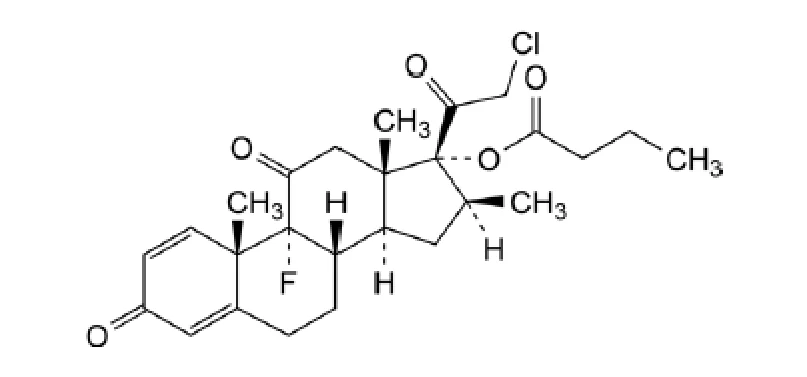 |
Table 3 - Summary of patient demographics for clinical trials with topical clobetasone butyrate in the treatment of eczema
| Study # | Trial design | Dosage, route of administration and duration analyzed | Study subjects (n) | Mean age (Range) | Sex |
| BE | Active-controlled, double-blind, multi-centre study Test Drug: 1, 0.05% Comparator Drug: 2 | 0.05%, topical, duration analysed: ≤ 9, 10-15 and > 15 days | 156 | Mean age: 4 years (4 months to 72 years) | 61M/77F (18 unknown) |
| BH | Active-controlled, double-blind, multi-centre study Test Drug: 1, 0.05% Comparator Drug: 3 | 0.05%, topical, duration analysed: ≤ 9 and 14 days | 39 | Mean age: 32 years (8 months to 75 years) | 18M/21F |
| BI | Active-controlled, double-blind, single centre study Test Drug: 1, 0.05% Comparator Drug: 4 | 0.05%, topical, duration analysed: 7 days | 32 | mean age: 7 years (3 months to 58 years) | 22M/10F |
1 = clobetasone butyrate cream; 2 = hydrocortisone 1% cream; 3 = fluocortolone pivalate 0.1% with fluocortolone hexanoate 0.1% cream; 4 = flurandrenolone 0.0125% cream
13.2 Study Results
Table 4 - Results of study BE in Eczema Treatment
| Key Endpoints | Associated value and statistical significance for clobetasone butyrate 0.05% cream | Associated value and statistical significance for hydrocortisone 1% cream |
| Healed (n), assessed ≤9 days | 13 | 9 |
| Improved (n), assessed ≤9 days | 143 | 145 |
| Healed (n), assessed 10-15 days | 71 | 51 |
| Improved (n), assessed 10-15 days | 3 | 8 |
| Healed (n), assessed >15 days | 1 | NR |
| Improved (n), assessed >15 days | 1 | 1 |
| number of objective preferences at 7 days (%)1 | n = 69 (39) | n = 29 (16) |
| Statistical significance in objective preferences | Significant difference in favour of clobetasone butyrate cream (p < 0.05) | |
NR = None reported; 1 objective preferences were assessed as close to 7 days as possible and the result for objective preferences with no difference was n = 80 (45%)
In study BE, improvement was achieved in almost all cases on treatment with clobetasone butyrate 0.05% cream, generally within the first 9 days of treatment. Healing was observed within 2 weeks in almost half the cases whereas with hydrocortisone healing within 2 weeks was observed in about one third of cases. There was a greater overall number of preferences for the clobetasone butyrate 0.05% cream compared with hydrocortisone 1% cream, and this difference was statistically significant at the 5% level when the results were plotted sequentially.
Table 5 - Results of study BH in Eczema Treatment
| Key Endpoints | Associated value and statistical significance for clobetasone butyrate 0.05% cream | Associated value and statistical significance for fluocortolone pivalate 0.1% with fluocortolone hexanoate 0.1% cream | |
| Healed (n), assessed <9 days | 1 | 1 | |
| Improved (n), assessed <9 days | 30 | 26 | |
| Healed (n), assessed 14 days | NR | NR | |
| Improved (n), assessed 14 days | 2 | 2 | |
| number of objective preferences at 7 days (%)1 | n = 10 (32) | n = 10 (32) | |
| Statistical significance in objective preferences | No significant difference between clobetasone butyrate 0.05% cream and fluocortolone pivalate 0.1% with fluocortolone hexanoate 0.1% cream | ||
NR = None reported; 1 objective preferences were assessed as close to 7 days as possible and the result for objective preferences with no difference was n = 11 (35%)
In the treatment of eczema of study BH, the clobetasone butyrate cream produced an improvement in the majority of cases and compared well with fluocortolone pivalate 0.1% with fluocortolone hexanoate 0.1% cream.
Table 6 - Results of study BI in Eczema Treatment
| Primary Endpoints | Associated value and statistical significance for clobetasone butyrate 0.05% cream | Associated value and statistical significance for flurandrenolone 0.0125% cream | |
| Healed (n) assessed 7 days | 6 | 4 | |
| Improved (n) assessed 7 days | 23 | 24 | |
| number of objective preferences at 7 days (%)1 | n = 14 (44) | n = 7 (22) | |
| Statistical significance in objective preferences | Number of patients was insufficient for significance to be assessed | ||
1 the result for objective preferences with no difference was n = 11 (34%)
The results of treatment with clobetasone butyrate 0.05% in study BI compared well with those with flurandrenolone 0.0125% cream. Improvement was observed in all but one case which deteriorated with both preparations and 2 cases for which no result was given.
13.3 Comparative Bioavailability Studies
Spectro EczemaCare Medicated Cream is not a new dosage form, therefore, no comparative bioavailability studies were conducted. Pharmacokinetic information is addressed in Section 9.3 Pharmacokinetrics.
14 NON-CLINICAL TOXICOLOGY
Acute Toxicity
The acute systemic toxicity of clobetasone butyrate was examined in a range of species and is summarized in the table below. LD50 values from acute studies with mice, rats, cats and dogs indicated the toxicity of clobetasone butyrate to be low.
After oral dosing, LD50 values were >1000 mg/kg in mice and rats. One female mouse dosed with 4000 mg/kg clobetasone butyrate died within 48hr, but all other animals survived the 7-day observation period and were apparently unaffected by treatment. No histological signs of specific toxicity were found in either mice or rats.
After parenteral dosing, LD50 values were >1000 mg/kg in mice and rats, >37 mg/kg in guinea pigs and rabbits, and >18 mg/kg in cats and dogs. A detailed histological examination of mice body organs showed that the only effect attributable to clobetasone butyrate was the absence of thymus tissue.
Table 7 - Acute systemic toxicity of clobetasone butyrate
| Species | Sex | Route of administration | LD50 (mg/kg) |
|---|---|---|---|
Mouse Rat | M,F M,F | po po | >4000 >1000 |
Mouse Rat Guinea pig Rabbit Cat Dog | M,F M,F M,F M,F M,F M,F | sc sc sc sc sc sc | >3600 >1000 >37 >38 >38 >18 |
Mouse Rat Rat | M,F M F | ip ip ip | ~5000 1510 1660 |
F = Female; M = Male; ip = intraperitoneal; po = per os; sc = subcutaneous
Chronic Toxicity
Effects typical of those produced by glucocorticoids were detected in 1- and 6-month topical toxicity studies with a 0.05% (w/w) topical formulation of clobetasone butyrate, applied at a dose of 500 mg/kg/day to the shaved skin of rats. This is equivalent to a clobetasone butyrate dose of 0.25 mg/kg/day. Another study lasting 1 month used a 0.5% (w/w) formulation of clobetasone butyrate (equivalent to 2.5mg/kg/day clobetasone butyrate). No significant differences from the control groups were observed in the animals treated for 1 month with 0.25 mg/kg/day clobetasone butyrate. The animals in the 0.25 mg/kg/day (6 months) and 2.5 mg/kg/day (1 month) dose groups showed changes typical of corticosteroid administration, such as decreased body weight gain, leucopaenia and atrophy of the adrenals, thymus and spleen. Recovery was either complete or almost complete after one month.
In a 3-week subcutaneous toxicity study, groups of eight male and eight female rats were injected with either clobetasone butyrate (0.2, 1, 5 and 25 mg/kg/day) or betamethasone alcohol (0.12 mg/kg/day). Two females in the high dose group died shortly before the end of the investigation; the cause of death could not be determined from histological examination. Most of the effects seen were typical of anti-inflammatory corticosteroid administration. The no-effect dose was determined to be 0.2 mg/kg/day. At ≥1 mg/kg/day clobetasone butyrate produced a decrease in body weight gain. Hematological changes included a depression of mononuclear cell count, and, at three weeks, an increase in neutrophils. Post mortem findings included: a decrease in heart, lung, liver, kidney and gonad weight, a marked decrease in thymus and adrenal weight, and smaller decreases in prostate and uterus weight. Histological findings included thymic involution, fatty replacement of bone marrow, atrophy of the inner adrenal cortex, and a decrease or disappearance of endometrium eosinophils. These changes were generally dose-related, with 0.12 mg/kg/day betamethasone producing effects comparable to those obtained with 5-25 mg/kg clobetasone butyrate.
In a 1-month subcutaneous toxicity study, groups of 10 male and 10 female rats received injections of 0.01, 0.03, 0.1, 1.0, 10 or 100 mg/kg/day clobetasone butyrate for 6 days/week. Further groups comprising five rats of each sex received 0.1 or 10 mg/kg/day clobetasone butyrate, and were then allowed to recover for 31 or 60 days after the end of the dosing period. The no-effect dose was determined to be 0.03 mg/kg/day. Dose-related effects, typical of anti-inflammatory corticosteroid treatment, in rats given ≥0.1 mg/kg/day included: decreased body weight gain, emaciation, atrophy of the inner adrenal cortex, lymphatic and hemopoietic tissues, lymphopaenia and an increase in serum cholesterol. Treatment-related effects in rats given ≤1 mg/kg/day were generally reversible. Irreversible changes (which may not be treatment-related) included a ‘fatty infiltration’ of pancreatic exocrine glands in males dosed with ≥1 mg/kg/day, and females dosed with ≥10mg/kg/day.
In a 12-week subcutaneous study, five dose groups comprising 10 male and 10 female rats received 0, 0.2, 0.8, 3.2 or 12.8 mg/kg/day clobetasone butyrate. A further group received 0.1mg/kg/day betamethasone alcohol. Systemic effects typical of anti-inflammatory administration were observed. All animals from the two highest dose groups, except one male, died before the end of the dosing period. They all showed signs of local inflammation; in addition, multiple pelvic abscesses were histologically confirmed in one rat. Histopathological investigation of the animals from the two high dose groups attributed the lesions to infection toxaemia in immunologically-suppressed animals. Two rats died in the 0.2 mg/kg/day group (one male and one female after 12 and 28 doses, respectively), with pyelonephritis and subcutaneous abscess. Doses of ≤0.8 mg/kg/day resulted in reduced growth, thymic involution and adrenal cortical atrophy, with animals in the 0.8mg/kg/day group also developing hypoglycaemia and increased levels of aspartate transaminase and alkaline phosphatase. The above mentioned changes were also observed with betamethasone-treated rats, with the severity of lesions equivalent to those seen in the 0.8 mg/kg/day clobetasone butyrate group.
In a 6-month subcutaneous toxicity study of clobetasone butyrate, groups of five male and five female rats received sc injections of 0, 0.003, 0.01, 0.03, 0.1 or 0.3 mg clobetasone butyrate/kg/day for 6 months. Doses of up to 0.03 mg/kg/day induced no significant treatment-related effects. Higher doses of 0.1 and 0.3 mg/kg/day induced some suppression of body weight gain, emaciation, atrophy of the adrenal, lymphatic and hemopoietic tissues, and lymphopaenia; these changes were reversible, with no significant differences between treated and control animals apparent two months after the end of the dosing period.
The intramuscular toxicity of clobetasone butyrate (0, 0.2, 0.7, 2.5 or 8.6 mg/kg/day) was investigated using five groups of two male and two female Beagle dogs in a 13-week study. Three dogs from the high dose group died before the end of the dosing period. These animals had swollen or sore limbs, and/or blood in their faeces. Histological examination revealed a variety of changes, with pathogens isolated from the subcutaneous abscesses of two dogs. The other dogs survived the dosing period,and appeared healthy. Effects typical of anti-inflammatory corticosteroid administration were produced in dogs treated with ≥0.7 mg/kg/day clobetasone butyrate.
Reproductive Toxicity Studies
Administration of corticosteroids to pregnant animals can cause abnormalities of fetal development. A high incidence of cleft palate in fetuses of laboratory animals is a well-described and common finding following corticosteroid treatment.
The teratogenic effects of clobetasone butyrate were assessed in the mouse, rat and rabbit. The proportion of fetuses with skeletal immaturity and cleft palate increased with clobetasone butyrate administration.
Fertility Studies
No company data regarding the effects of clobetasone butyrate on fertility in laboratory animals have been generated.
Organogenesis Studies
Pregnant mice were subcutaneously injected with clobetasone butyrate at doses of 1, 3, 10 or 30 mg/kg/day from Days 7-16 of pregnancy. The animals were killed on Day 19 and their uterine contents examined. Clobetasone butyrate treatment had no effect on the number of implantation sites or sex ratio. However, at doses of ≥3 mg/kg/day, an increase in the number of dead fetuses and resorption sites was noted. A dose-related increase in the number of mice with cleft palate or skeletal immaturity was also observed. The incidence of cleft palate was 0.7% for untreated mice, 1.9% for the 1 mg/kg/day dose group, and 95% in the 10 mg/kg/day dose group.
A small number of soft tissue abnormalities were also evident in the dead fetuses from the high dose group.
A rat organogenesis study using topical application has been reported. From Days 7-17 of pregnancy, 0.2g of an ointment formulation containing either 0.05% or 0.5% clobetasone butyrate was applied daily to the shaved skin of rats (equivalent to a clobetasone butyrate dose of 0.5 mg/kg/day and 5 mg/kg/day, respectively, using a female rat body weight of 200 g. Treatment was associated with a small increase in the number of skeletal abnormalities, which were more prominent in the 0.5% dose group. The 0.5% formulation caused impaired weight gain, and reduced thymus, adrenal and spleen weight. Parturition and ossification were unaffected, and no teratogenic effects were observed. The authors of the publication noted that in spite of the fetal effects, the offspring in both dose groups grew normally, with normal neurological test results at 4 weeks of age.
In a study in Dutch rabbits, groups of 10 animals were subcutaneously injected with clobetasone butyrate at doses of 10, 30, 100 or 300 mg/kg/day from Days 6-18 of pregnancy. A further group received 100mg betamethasone alcohol/kg/day. The animals were killed on Day 19 of pregnancy and their uterine contents examined. The 10 mg/kg/day dose was determined to be the no-effect dose. Clobetasone butyrate at doses of up to 100 mg/kg/day had no effect on implantation, the number of live fetuses, resorptions or live litter weight.
At doses ≥30 mg/kg/day, a dose-related incidence of cleft palate occurred; other abnormalities affecting the skull, fore and hind limbs were noted, mainly in the two high dose groups. A delay in the maturity of fetuses from the two highest clobetasone butyrate dose groups and the betamethasone group was observed. The 300 mg/kg/day clobetasone butyrate dose group exhibited results equivalent to the 100 mg/kg/day betamethasone animals, with a reduction of body weight during the second half of pregnancy, marked reductions in the number and weight of live fetuses, and an increase in the number of resorption sites.
Peri- and Post-Natal Development
No company data regarding the peri/post-natal development of clobetasone butyrate treated laboratory animals have been generated.
Genotoxicity Studies
Clobetasone butyrate showed no evidence of mutagenic activity in studies with Salmonella typhimurium and E. coli at concentrations of up to 1000 mg/plate, with and without metabolic activation using rat liver S9 fraction.
Clobetasone butyrate did not induce detectable increases in gene conversion frequencies at test concentrations of 100, 300 and 1000 mg/mL in the yeast gene conversion assay with Saccharomyces cerevisiae JD1.
Clobetasone butyrate did not demonstrate mutagenic potential in the in vitro mouse lymphoma assay.
Clobetasone butyrate was screened for its potential to induce chromosome damage in vitro using cultured human lymphocytes, and in vivo in two rat micronucleus tests: Clobetasone butyrate was not clastogenic in human peripheral lymphocytes. The cells were treated with concentrations of up to 90 mg/mL for 24hr in the absence of S9-mix, and 400 mg/mL for 1hr in the presence of S9-mix.
In the first micronucleus test, marginal (but statistically significant) increases in the incidence of micronuclei were observed in the bone marrow of rats killed at 48hr after sc administration of 100, 300 and 1000 mg/kg clobetasone butyrate. The effects were not dose-related and increases in micronuclei were not observed 24hr post-dose. The lack of dose response contrasts with the increasing plasma concentrations of drug obtained with increasing dose.
A repeat micronucleus test in which animals received single sc doses of 10 or 100 mg/kg, showed an increase in micronuclei incidence, but only 48hr after treatment with the highest dose.
The mean increases in micronuclei observed in both studies were extremely small, and there was considerable inter-animal variation in response. For example, in the second study a control range between 0 and 4 micronucleated cells per 1000 immature erythrocytes was obtained, whilst the range for animals treated with 100 mg/kg clobetasone butyrate fell between 1 and 6.
Consequently in this group, the micronucleus incidence for only 2 animals fell outside the control range. In the light of these observations, it is concluded that the small increases in micronuclei observed in rat bone marrow are unrelated to any genotoxic effect of this drug. The effects could be the consequence of a generalized action of this drug on cell homeostasis within the bone marrow for individual animals. In conclusion, the administration of clobetasone butyrate is not considered to pose a clastogenic risk to exposed individuals.
Carcinogenicity Studies
Carcinogenicity studies have not been performed with clobetasone butyrate. There was no requirement for such studies when the compound entered clinical use. Preclinical studies, and more importantly extensive clinical experience, do not suggest a carcinogenic risk for clobetasone butyrate.
Other Hormonal Activities
Clobetasone butyrate (1mg/animal) did not demonstrate significant mineralcorticoid activity after subcutaneous administration to adrenalectomised rats. It had no effect on sodium excretion or urine volume, but did increase potassium excretion, an effect attributable to its glucocorticoid activity.
Subcutaneous clobetasone butyrate was devoid of anabolic and androgenic effects in mice and rats. In female mice, 1.6 mg clobetasone butyrate was without effect on kidney and preputial gland weight. In male mice, 2 mg clobetasone butyrate was without effect on seminal vesicle weight, although a significant reduction in the growth rate and levator ani weights was noted.
Clobetasone butyrate (0.5 mg/animal) showed no estrogenic activity in either mice or rats, as no significant increase in uterine weight was observed. In mice, 0.5 mg clobetasone butyrate, when administered concomitantly with 0.1 mg estrogen, inhibited the uterine growth produced by estrogen alone, demonstrating a significant anti-estrogenic effect. This effect was confirmed in the rat where subcutaneous clobetasone butyrate had approximately 8% of the anti-estrogenic activity of subcutaneous progesterone; by the oral route, clobetasone butyrate had 2.5% of the activity of subcutaneous progesterone.
In the rabbit, subcutaneous clobetasone butyrate (0.2, 0.4 and 0.8 mg/animal) demonstrated approximately three times the progestational activity of subcutaneous progesterone (0.4, 0.8 and 1.6 mg/animal), as determined by increased uterine carbonic anhydrase levels.
Clobetasone butyrate was devoid of anti-gonadotrophic activity, as determined by testicular weight, when administered subcutaneously to male rats.
The effect of subcutaneous clobetasone butyrate, at doses of up to 18 mg/animal, on hypothalamic-pituitary-adrenal function was approximately 5% that of betamethasone alcohol in stressed male mice.