


Product Monograph - Stieprox Shampoo
SUMMARY PRODUCT INFORMATION
| Route of Administration | Dosage Form / Strength | Clinically Relevant Nonmedicinal Ingredients |
| Topical | Shampoo 1.5% w/w | Coconut diethanolamide, Dipropylene glycol and Sodium lauryl ether sulphate For a complete listing see DOSAGE FORMS, COMPOSITION AND PACKAGING section. |
INDICATIONS AND CLINICAL USE
STIEPROX® (ciclopirox olamine 1.5% w/w) shampoo is indicated for:
- Topical treatment and prophylaxis of dandruff or the treatment of seborrhoeic dermatitis in which the yeast Malassezia furfur is involved.
Geriatrics (≥ 65 years of age):
The safety and efficacy of STIEPROX® have not been established in geriatric patients.
Pediatrics (< 18 years of age):
The safety and efficacy of STIEPROX® have not been established in pediatric patients.
CONTRAINDICATIONS
- Patients who are hypersensitive to this drug or to any ingredient in the formulation or component of the container. For a complete listing, see the DOSAGE FORMS, COMPOSITION AND PACKAGING section.
WARNINGS AND PRECAUTIONS
General
STIEPROX® (ciclopirox olamine 1.5% w/w) shampoo is for external use only. Avoid contact with eyes. In case of contact with the eyes, rinse thoroughly with copious amounts of water. If irritation persists, a physician should be consulted.
Skin
If a reaction suggesting hypersensitivity or chemical irritation should occur with the use of STIEPROX® shampoo, treatment should be applied less often or should be discontinued and appropriate therapy instituted.
Hair Discolouration: A discolouration of the hair has been observed, mainly in patients with grey, white or chemically treated hair (for example, due to hair dye) (see ADVERSE REACTIONS).
Special Populations
Pregnant Women: The safety of STIEPROX® shampoo during pregnancy has not been established. There is evidence that ciclopirox olamine crosses the placental barrier in animals. Reproductive studies in mice, rats, rabbits and monkeys, at doses of ciclopirox olamine 10 times that of a topical human dose, have revealed no significant evidence of impaired fertility or harm to the fetus. STIEPROX® should only be used during pregnancy if the potential benefits to the mother justify the potential risks to the fetus.
No pregnant women were enrolled during clinical trials with STIEPROX®.
Nursing Women: It is unknown if ciclopirox olamine is excreted in human milk. Because many drugs are excreted in human milk precaution should be exercised. Patients are advised to ensure that any residual product is fully washed off the breast prior to breast-feeding to avoid possible ingestion by nursing infant.
Pediatrics (< 18 years of age): The safety and effectiveness of STIEPROX® has not been established in pediatric patients. No data is available in children less than 12 years of age.
Geriatrics (≥ 65 years of age): The safety and effectiveness of STIEPROX® has not been established in a geriatric population.
ADVERSE REACTIONS
Adverse Drug Reaction Overview
STIEPROX® (ciclopirox olamine 1.5% w/w) shampoo is well tolerated with a low incidence of adverse reactions.
Clinical Trial Adverse Drug Reactions
Because clinical trials are conducted under very specific conditions the adverse reaction rates observed in the clinical trials may not reflect the rates observed in practice and should not be compared to the rates in the clinical trials of another drug. Adverse drug reaction information from clinical trials is useful for identifying drug-related adverse events and for approximating rates.
Table 1 provides the list of the Common Adverse Drug Reactions (>1%) observed with STIEPROX® (ciclopirox olamine 1.5% w/w) shampoo during the controlled clinical trials.
Table 1 Common Adverse Drug Reaction to STIEPROX® or its vehicle
STIEPROX® Shampoo (1.5% ciclopirox olamine) (n= 258) | Active Comparator (n= 84) | Placebo (n= 164) | |
| Skin and subcutaneous tissue disorders | |||
| Pruritus* | 3 (1.2%) | -- | 3 (1.8%) |
| Skin Irritation* | 5 (1.9%) | -- | 3 (1.8%) |
| Scalp Irritation | 0 | 2 (2.4%) | 0 |
Less Common Clinical Trial Adverse Drug Reactions (<1%)
Administration site conditions: erythema*, erosion of scalp, application site rash*
Eye disorders: stinging, burning, watering, infection
Gastrointestinal disorders: nausea
Nervous system disorders: headache
* exacerbation of symptoms
Abnormal Hematologic and Clinical Chemistry Findings
Hematologic and clinical chemistry parameters were not evaluated during clinical trials with STIEPROX®.
Post-Market Adverse Drug Reactions
In addition to adverse drug reactions identified from clinical trials, the following adverse reactions have been identified during post-approval use of STIEPROX®. Because these events have been reported voluntarily from a population of unknown size, estimates of frequency cannot be made.
Immune system disorder: application site hypersensitivity
Skin and subcutaneous tissue disorders: burning sensation*, skin exfoliation*, eczema, alopecia*, hair colour changes and hair texture abnormal*.
* exacerbation of symptoms
DRUG INTERACTIONS
Overview
No drug interactions have been reported with ciclopirox olamine. The possibility of interaction with alcohol has not been evaluated.
Drug-Drug Interactions
Interactions with other drugs have not been established.
Drug-Food Interactions
Interactions with food have not been established.
Drug-Herb Interactions
Interactions with herbal products have not been established.
Drug-Laboratory Interactions
Interactions with laboratory tests have not been established.
DOSAGE AND ADMINISTRATION
Dosing Considerations
Situations that may affect the dosing of STIEPROX® have not been established.
Recommended Dose and Dosage Adjustment
Dandruff: Use 2 or 3 times a week or as often as necessary.
Seborrhoeic dermatitis: Use 3 times a week or as often as necessary.
Missed Dose
Any missed application of the shampoo should be done the next day.
Administration
Note that this product is only for topical application to the scalp and adjacent areas.
The hair should be wet and sufficient STIEPROX® (ciclopirox olamine 1.5% w/w) shampoo should be applied to produce an abundant lather. The affected areas (scalp and/or its edges) should be vigorously massaged with the fingertips for two to three minutes. The hair should then be thoroughly rinsed and the procedure repeated.
OVERDOSAGE
| For management of a suspected drug overdose, contact your regional Poison Control Centre. |
There have been no clinical reports of acute overdosage with STIEPROX® (ciclopirox olamine 1.5% w/w) shampoo.
Symptoms
Oral ingestion is usually followed by nausea and vomiting due to the detergent.
Treatment
Management should be as clinically indicated. If ingested, treatment should be symptomatic. In the event of accidental ingestion, only supportive measures should be carried out. In order to avoid aspiration, neither emesis nor gastric lavage should be performed.
ACTION AND CLINICAL PHARMACOLOGY
Mechanism of Action
Ciclopirox olamine is a synthetic antifungal which is structurally unrelated to the common imidazoles or other antifungals. Unlike most antifungals, ciclopirox olamine does not affect sterol biosynthesis. It has been suggested that ciclopirox olamine interferes with the active uptake and accumulation of some essential substrates and/or polyvalent cations which results in cell death because of cellular depletion. Ciclopirox olamine may act through chelation of polyvalent cations such as Fe3+ or Al2+.
Pharmacodynamics
Except for its specific fungicidal activity, ciclopirox olamine when formulated in a 1.5% w/w shampoo is not expected to exert any other pharmacodynamic effect when applied topically. No pharmacodynamic studies were conducted in humans with STIEPROX® (ciclopirox olamine 1.5% w/w) shampoo.
Pharmacokinetics
No pharmacokinetic studies were conducted in humans with STIEPROX® (ciclopirox olamine 1.5% w/w) shampoo.
Special Populations and Conditions
STIEPROX® was not tested in special populations.
STORAGE AND STABILITY
Store STIEPROX® between 4 and 30 C.
SPECIAL HANDLING INSTRUCTIONS
None.
DOSAGE FORMS, COMPOSITION AND PACKAGING
STIEPROX® contains ciclopirox olamine USP / EP 1.5% w/w in a mild aqueous shampoo base.
STIEPROX® contains the following excipients: purified water, sodium lauryl ether sulphate, cocamidopropyl betaine, disodium phosphate dodecahydrate, citric acid monohydrate, coconut diethanolamide, hexylene glycol, oleyl alcohol, polysorbate 80, polyquaternium 10, fragrance (including dipropylene glycol), and sodium hydroxide.
STIEPROX® shampoo is a clear, yellow to light orange coloured, viscous liquid.
STIEPROX® shampoo is packaged into 150 mL HDPE bottles, with polypropylene screw caps and 10 mL, laminated, aluminum foil sample size sachets.
PART II: SCIENTIFIC INFORMATION
PHARMACEUTICAL INFORMATION
Drug Substance
Proper name: Ciclopirox olamine
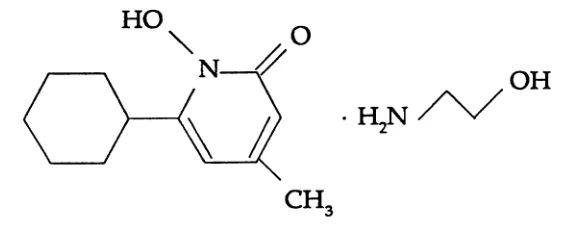
Chemical name: 2(1H)-Pyridinone, 6-cyclohexyl-1-hydroxy-4-methyl-, compound with 2-aminoethanol (1:1)
Molecular formula and molecular mass: C12H17NO2 ● C2H7NO
Structural formula: 268.35
Structural formula:
Physicochemical properties: White-to-cream white crystalline odourless powder. Very soluble (1 part in less than 1 part of solvent) in ethanol, methylene chloride and chloroform; slightly soluble (1 part in 100 to 1,000 parts of solvent) in ethyl acetate and water; practically insoluble (1 part in more than 10,000 parts of solvent) in cyclohexane and ether. Ciclopirox olamine has a melting point of superior to 100 C with decomposition and a pH of 8.0 to 9.0 (in a 1% water solution).
CLINICAL TRIALS
A) DANDRUFF
Study demographics and trial design
Table 2 Summary of patient demographics for clinical trials in specific indication
| Study # | Trial design | Dosage, route of administration and duration | Study subjects (n=number) | Mean age (Range) | Gender |
| S177-GB-030[Ref 1] | Double blind, parallel groups, randomized single-centre | two times per week topical 29 days of treatment | n=163 | 45.2 years (18-70 years) | female: 35% male: 65% |
All patients were healthy Caucasian men or women with severe dandruff and/or seborrhoeic dermatitis.
Study results
Figure 1 Whole-head study, showing the mean area x severity dandruff scores over time
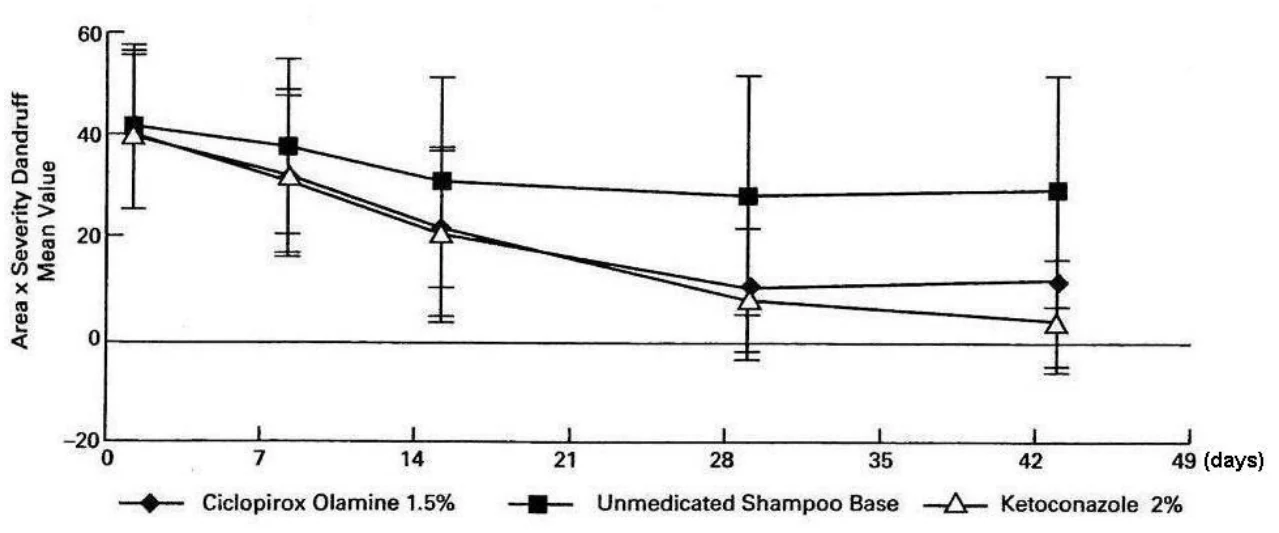
Note: The mean reductions from baseline were all significantly greater than for the control for both the ciclopirox olamine (P<0.01 at days 8 and 15, P<0.001 at days 29 and 43) and ketoconazole (P<0.05 at day 8, P<0.01 at day 15, P<0.001 at days 29 and 43) treatment groups.
B) SEBORRHOEIC DERMATITIS
Study demographics and trial design
Table 3 Summary of patient demographics for clinical trials in specific indication
| Study # | Trial design | Dosage, route of administration and duration | Study subjects (n=number) | Mean age (Range) | Gender |
| SCI-2002-01 | Double blind, parallel groups, randomized multi-centre | three times per week topical 42 days of treatment | n=103 | 43.8 years (18-84 years) | female: 36% male: 64% |
All patients were healthy men or women with moderate to severe seborrhoeic dermatitis. 88% were Caucasians.
Table 4 Severity of Seborrhoeic Dermatitis
| Treatment Week | Severity of Seborrhoeic Dermatitis | P value | |||||||||||
| STIEPROX® | placebo | ||||||||||||
| Enrolled / Completed | mean severity | Enrolled / Completed | mean severity | ||||||||||
| Baseline | 69/69 | 3.17 | 34/34 | 3.29 | 0.1636 | ||||||||
| Week 2 | 69/69 | 2.14 | 34/34 | 2.65 | 0.0094 | ||||||||
| Week 4 | 69/68 | 1.40 | 34/33 | 2.30 | 0.0003 | ||||||||
| Week 6 | 69/68 | 1.22 | 34/33 | 2.27 | 0.0004 | ||||||||
Table 5 Severity of Erythema
| Treatment Week | Severity of Erythema | P value | ||||||||||
| STIEPROX® | placebo | |||||||||||
| Enrolled / Completed | mean severity | Enrolled / Completed | mean severity | |||||||||
| Baseline | 69/69 | 3.17 | 34/34 | 3.29 | 0.1636 | |||||||
| Week 2 | 69/69 | 1.80 | 34/34 | 2.47 | 0.0025 | |||||||
| Week 4 | 69/68 | 1.07 | 34/33 | 1.94 | 0.0009 | |||||||
| Week 6 | 69/68 | 1.06 | 34/33 | 1.79 | 0.0188 | |||||||
Table 6 Severity of Scaling
| Treatment Week | Severity of Scaling | P value | |||||||||||
| STIEPROX® | placebo | ||||||||||||
| Enrolled / Completed | mean severity | Enrolled / Completed | mean severity | ||||||||||
| Baseline | 69/69 | 2.32 | 34/34 | 3.26 | 0.5950 | ||||||||
| Week 2 | 69/69 | 1.93 | 34/34 | 2.50 | 0.0154 | ||||||||
| Week 4 | 69/68 | 1.26 | 34/33 | 2.03 | 0.0047 | ||||||||
| Week 6 | 69/68 | 1.19 | 34/33 | 1.94 | 0.0164 | ||||||||
Table 7 Severity of Pruritus
| Treatment Week | Severity of Pruritis | P value | |||||||||||
| STIEPROX® | placebo | ||||||||||||
| Enrolled / Completed | mean severity | Enrolled / Completed | mean severity | ||||||||||
| Baseline | 69/69 | 2.32 | 34/34 | 2.44 | 0.7699 | ||||||||
| Week 2 | 69/69 | 1.45 | 34/34 | 2.06 | 0.0099 | ||||||||
| Week 4 | 69/68 | 0.97 | 34/33 | 1.73 | 0.0010 | ||||||||
| Week 6 | 69/68 | 1.09 | 34/33 | 1.61 | 0.0417 | ||||||||
Table 8 Surface Area of Target Lesion
| Treatment Week | Surface Area of Target Lesion | P value | |||||||||||
| STIEPROX® | placebo | ||||||||||||
| Enrolled / Completed | mean severity | Enrolled / Completed | mean severity | ||||||||||
| Baseline | 69/69 | 37.08 | 34/34 | 27.88 | 0.9860 | ||||||||
| Week 2 | 69/69 | 30.61 | 34/34 | 29.16 | 0.3837 | ||||||||
| Week 4 | 69/68 | 19.51 | 34/33 | 25.45 | 0.0261 | ||||||||
| Week 6 | 69/68 | 15.86 | 34/33 | 24.15 | 0.0335 | ||||||||
Comparative Bioavailability Studies
No biovailability studies were conducted with STIEPROX® shampoo.
DETAILED PHARMACOLOGY
In addition to its antifungal activity, ciclopirox olamine has anti-inflammatory activity as a result of its ability to inhibit the synthesis of prostaglandins and leukotrienes. It has been shown to significantly reduce arachidonic acid-induced ear-oedema (p<0.05), as measured by percentage change from control-inflamed ears in mice. The anti-inflammatory effect of antifungal preparations, including 1% ciclopirox olamine cream on the skins of healthy human volunteers was examined. Compared with oxiconazole, econazole, hydrocortisone and ketoconazole, ciclopirox olamine was significantly superior in inhibiting UVB-induced erythema. It was equipotent when compared with terbinafine or naftifine.
Although ciclopirox olamine has no characteristic pharmacological actions, it did reduce spontaneous behaviour, caused irregular respiration and lowered the body temperature of rats and mice. It did not affect the respiration, electrocardiogram or blood pressure of anaesthetised rabbits or cats. It had no effect upon isolated organ preparations, nor was it phototoxic or irritant after topical application.
When ciclopirox olamine was injected cutaneously, there was an irritant effect on the skin. Similarly, there was an irritant effect when it was instilled into the conjunctival sacs in rabbits.
Pharmacokinetics
Studies in animals and humans showed that dermal absorption of ciclopirox olamine after the topical application of a cream containing 1% ciclopirox olamine was relatively low. The percutaneous absorption in dogs was 5-15% of the given dose and 11-12% of the given dose in rats. The percutaneous absorption in humans was shown to be about 1.3% of the administered dose.
The in vitro penetration of ciclopirox olamine through the epidermis of animal and human skin has been examined. The results showed that in rats 20% to 40% of the applied ciclopirox olamine was absorbed over the first 24 hours, whereas, only 1.6% to 3.0% was absorbed through human skin over the same time period. For humans, this level of absorption was similar to that found by other investigators using cream formulations. However, the shampoo formulation appeared to provide a better vehicle than the cream formulation for penetration through rat skin. Ten percent (10%) dilutions of the concentrates in water showed very slow rates of absorption and the level of absorption was very much less than the level seen with the concentrates.
Penetration of the skin appears to be via the epidermis and the hair follicles.
Ciclopirox olamine has also been shown to penetrate through the surface of the fingernails. There was evidence from pregnant rat studies that the compound could enter the placenta. However, despite good absorption from the gastro-intestinal tract, placental transfer remained low.
Distribution
Following oral administration of ciclopirox olamine to humans, affinity of ciclopirox olamine to serum proteins was found to be 96±2% in the concentration range of 0.01 to 11.0 µg/mL.
After oral administration of radio labelled ciclopirox olamine to rats, radioactivity could be found in all organs, tissues and body fluid examined. These included spleen, adrenal glands, kidneys, gonads, liver, heart, lung, skeletal musculature, smooth muscle, retroperitoneal fatty tissue, brain, bone marrow, eyes, intestine, skin, blood and plasma. There was evidence that ciclopirox olamine crossed the placental barrier, but apparently only slightly. However, after dermal application, absorption was marginal and although radioactivity was found in a number of organs and tissues, only in the gall bladder, urinary bladder and large intestine were there any notable concentrations.
The metabolic patterns after oral and dermal application are similar. Glucuronidation of ciclopirox olamine appears to be the major form of its metabolism. In dogs, about 43% of the given dose was excreted via the kidneys within the first day, and of this, about three quarters was in the form of the glucuronide of ciclopirox olamine.
Excretion of ciclopirox olamine in dogs after topical application, was very slow and occurred primarily in the urine. Levels of excreted radioactivity in the urine and the feces were extremely low compared with the administered dose.
MICROBIOLOGY
Ciclopirox olamine (2(1H)-Pyridinone, 6-cyclohexyl-1-hydroxy-4-methyl-, compound with 2-aminoethanol (1:1)) is a broad spectrum antimycotic agent with some antibacterial activity. It is effective against pathogenic dermatophytes and yeasts. Important in its efficacy in the treatment of dandruff/seborhoeic dermatitis and other mild dermatoses is that ciclopirox olamine is an effective antifungal against Pityrosporum ovale and Pityrosporum orbiculare. The latter are the yeast forms of Malassezia furfur, which have been implicated as the causative organisms in conditions such as dandruff. Ciclopirox olamine has a steep dose response line and a high penetration capacity, enabling it to reach deeper horny layers of the skin. These points allow for better elimination of the pathogens. Ciclopirox olamine exhibits antibacterial activity against a variety of Gram-positive and Gram-negative bacteria. Ciclopirox olamine inhibits the growth of dermatophytes, yeast, dimorphic fungi and actinomycetales at concentrations of 4 mg/L or less when these organisms were grown in Sabouraud dextrose media containing beef peptone free of certain minerals. The in vitro anti-fungal activity of ciclopirox olamine has been summarized in Table 9.
Table 9 In-vitro Susceptibility of 124 Dermatophyte Strains, 104 Yeasts and Yeast -Like Fungi and 29 Moulds of Various Species to Ciclopirox Olamine.
| Test Organism | No. of Strains | Cumulative % of Strains Inhibited at MICs (mg/L) | ||||||||
| 0.49 | 0.98 | 1.95 | 3.9 | 7.8 | <31 | |||||
| Trichophyton rubrum | 37 | 2.7 | 40.5 | 94.6 | 100 | |||||
| Trichophyton mentagrophytes | 29 | 0 | 34.5 | 93.1 | 100 | |||||
| Other Trichophyton species | 22 | 0 | 27.3 | 95.5 | 100 | |||||
| Microsporum canis | 20 | 5 | 15 | 80 | 100 | |||||
| Other Microsporum species | 11 | 0 | 9.1 | 54.6 | 100 | |||||
| Epidermophyton floccosum | 5 | 0 | 40 | 100 | ||||||
| Candida albicans | 37 | 0 | 56.8 | 86.5 | 100 | |||||
| Candida tropicalis | 12 | 0 | 50 | 100 | ||||||
| Other Candida species | 36 | 0 | 8.3 | 63.9 | 100 | |||||
| Other yeasts | 19 | 0 | 21.1 | 89.5 | 100 | |||||
| Moulds | 29 | 0 | 3.5 | 34.5 | 69 | 79.3 | 100 | |||
In vivo studies in guinea pigs with experimental trichophytosis showed that application of ciclopirox olamine, 0.06% to 2.0% in isopropyl alcohol for 5 days after infection, resulted in a 20 to 85% suppression of the spread of mycosis and a decrease in the diameters of the areas of alopecia. Creams of ciclopirox olamine have also been shown to be effective in this experimental model.
Ciclopirox olamine affects the cytoplasmic membrane where it appears to impair active transport mechanisms, cell respiratory processes and membrane integrity. Ciclopirox also negatively influences the macromolecular synthesis of nucleic acids and proteins. Cell death occurs primarily due to cellular depletion.
TOXICOLOGY
Acute Toxicity
Acute toxicity studies with STIEPROX® (ciclopirox olamine 1.5%) shampoo have not been conducted. Ciclopirox olamine has a low order of oral toxicity with LD50 values ranging between 2 and 4 g/kg in rats and mice.
Table 10 LD50 (mg/kg) Values for Ciclopirox Olamine
| Species | |||||||
| Route of Administration | Mice | Rats | |||||
| Oral | 1740 - >2500 | 3290 | |||||
| Intravenous | 74 – 74 | 72 – 79 | |||||
| Intraperitoneal | 83 – 88 | 146 – 172 | |||||
| Sub-cutaneous | >2500 | >2500 | |||||
Subacute Toxicity
In one-month and 3-month repeat oral dosing studies using rats, ciclopirox olamine at dose levels of 30 mg/kg and 10 mg/kg, respectively, were tolerated and were symptom-free.
Six-month dermal toxicity studies in dogs showed that the animals tolerated the daily application of 1% ciclopirox olamine. There was no sign of systemic effects at any of the doses applied (0.63-2.5 mg/kg body-weight) and reactions to treatment were only seen at the site of application.
Ciclopirox olamine 1% or 5% solutions in PEG-400, were applied twice weekly to the shaven dorsal skin of female mice (40 mice in each treatment group and 30 in the untreated control group), over a period of one year. There were no indications of any toxic or carcinogenic effects.
Local Toxicity
When ciclopirox olamine was injected intra cutaneously or applied to the conjunctival sac in rabbits, local irritative action was observed. However, when the compound was applied topically to the skin of rabbits, it was well tolerated. Ciclopirox olamine was not phototoxic in guinea pigs.
Ciclopirox olamine 1% solution in PEG-400 applied for 24 hours to the shaven skin of rabbits using gauze tape, did not produce any topical or systemic pathological changes. After application of 1, 2 or 4% solutions for 20 consecutive days, a correlation between the severity of the skin reaction and the increasing concentration of ciclopirox olamine applied was noted. Histological investigations revealed inflammatory reactions in individual animals treated with the 1% and 2% solutions. Thickening of the germinative layer and hyperkeratosis, in addition to inflammatory changes, were noted in the animals treated with 4% solution. No systemic changes were found in any of the groups.
A one-month dermal toxicity study in rabbits showed that the animals tolerated the daily application of 1% ciclopirox olamine cream (0.5 g/60cm2, 1.0 g/120cm2, 2.0 g/240cm2) compared with 2.0 g of placebo cream applied to 240 cm2 of skin. Redness and scabbing were seen in rabbits with either intact and abraded skin, to the same extent in the treatment and control groups. Four weeks after the discontinuation of the treatment, these changes were no longer evident. Matching results were seen in a similar study in guinea pigs which were given doses of 0.125 g/15cm2, 0.25 g/30cm2, 0.5 g/60cm2 of 1% ciclopirox olamine cream compared with 0.5 g of placebo cream applied to 60 cm2 of skin. Macroscopic examination revealed no skin reactions. Histologically, there was thickening of the epidermis in both study and control animals, which was reversible within four weeks.
Groups of 2 male/2 female beagle dogs were treated with 0.5 g of 1% ciclopirox olamine cream or 0.5 g of placebo cream applied to an area of 6 cm x 6 cm of skin for 30 consecutive days. Both formulations were well tolerated without any adverse reaction being recorded.
The results from the local irritation studies are somewhat contradictory. In the study in which ciclopirox olamine was in solution with PEG-400, there was evidence of histological changes and inflammatory reactions in the skin of rabbits after topical application over a period of 20 consecutive days. The severity of these changes was reported to be related to the concentration of ciclopirox olamine used, although the incidence and severity of the skin responses to 1% ciclopirox olamine solution were minimal. This study did not appear to have a placebo treated group. Therefore, it is difficult to relate the response of the skin to ciclopirox olamine to that caused by application of PEG-400 alone.
In two other studies, one involving rabbits and one involving dogs, a cream formulation of ciclopirox olamine applied for 30 consecutive days, did not cause any greater reaction in the skin, than that seen with the placebo control. From these observations, it must be concluded that the 1% cream formulation of ciclopirox olamine has a very low probability of causing any reaction to the skin of humans when used as instructed.
Teratology
No study to determine the teratologic potential of STIEPROX® was conducted. Studies in animals given oral or subcutaneous ciclopirox olamine failed to reveal any reproduction toxicity. There is evidence that ciclopirox olamine crosses the placental barrier in animals.
Mutagenicity
There is no evidence that ciclopirox olamine is mutagenic following topical, oral or subcutaneous administration to a number of animal species.
Carcinogenicity
There is no evidence from animal studies to suggest that ciclopirox olamine is carcinogenic when administered orally, topically or subcutaneously.
REFERENCES
- 1. Shuttleworth D. Squire RA. et al., Comparative clinical efficacy of shampoos containing ciclopirox olamine (1.5%) or ketoconazole (2%; Nizoral®) for the control of dandruff / seborrhoeic dermatitis. J. Dermatological. Treatment. 1998; 9: 157-162.
- 2. Dittmar W., Grau W., Raether W. et al., Microbiological laboratory studies with ciclopirox olamine. Arzneim-Forsch/Drug Res. 1981; 31(II)(8a): 1317-1322.
- 3. Jue S G., Dawson G W., Brogden R N., Ciclopirox olamine 1% cream. A preliminary review of its antimicrobial activity and therapeutic use. Drugs. 1985; 29: 330-341.
- 4. Abrams B. B., Hanel H., Hoehler T., Ciclopirox olamine: a hydroxopyridone antifungal agent. Clinical Dermatology. 1991; 9: 471-477.
- 5. Rosen T., Schell B J., Orengo I., Anti-inflammatory activity of antifungal preparations. Int. J. Dermatol. 1997, 36: 788-792.
- 6. Hanel H., Smith-Kurtz E., Pastowsky S., Treatment of seborrhoeic eczema using an antimycotic with antiphlogistic properties. Mycoses. 1991; 34 (suppl.): 91-93.
- 7. Sakurai M., Kitatani T., Yoshido S., et al., Pharmacological study of 6-cyclohexyl-1-hydroxy-4-methyl-2(1H)-pyridone ethanolamine salt (Hoe 296). Pharmacometrics. 1975; 9(1): 57-65.
- 8. Kellner von H-M., Arnold Ch., Christ O E., et al., Studies of the pharmacokinetics and biotransformation of the drug ciclopirox olamine in animals and man after topical and systemic application. Arzneim-Forsch/Drug Res. 1981; 31(II)(8a): 1337-1353.
- 9. Alpermann von H G., Schutz E., Studies on the pharmacology and toxicology of ciclopirox olamine. Arzneim-Forsch/Drug Res. 1981; 31(II)(8a): 1328-1332.
- 10. Mizukami K., Hayashi S., Omosu M., et al., Influence of the consecutive dermal application of 6-cyclohexyl-1-hydroxy-4-methyl-2(1H)-pyridone ethanolamine salt (Hoe 296) to beagle dogs for 6 months. Pharmacometrics. 1975; 9(1): 83-95.
- 11. Miyamoto M. Ohtsu M. Sugisaki T. et al.,Teratological studies of 6-cyclohexyl- 1-hydroxy-4-methyl-2(1H)-pyridone ethanolamine salt (Hoe 296). Pharmacometrics. 1975; 9(1): 97-108.