


Patient Medication Information: uses, side effects, how to take - Strensiq
What is Strensiq used for?
- Strensiq (asfotase alfa) is indicated as enzyme replacement therapy for patients with confirmed diagnosis of pediatric-onset hypophosphatasia (HPP).
- Treatment with Strensiq (asfotase alfa) should be initiated by a physician with experience in the management of patients with metabolic bone disorders.
How does Strensiq work?
Strensiq replaces the defective enzyme and prevents or reverses the mineralization defects of the skeleton.
What are the ingredients in Strensiq?
Medicinal ingredients: asfotase alfa
Non-medicinal ingredients: Dibasic sodium phosphate, heptahydrate
Monobasic sodium phosphate, monohydrate
Sodium Chloride
Water for injections
Strensiq comes in the following dosage forms:
Strensiq is a solution for subcutaneous injection.
Strensiq is supplied in a Type I glass vial with a butyl rubber stopper and an aluminum seal with a polypropylene flip-off cap.
| Pack sizes | Filled Volume (Total Volume) mL | Concentration mg/mL | Strength * mg/vial | |||
| 12 vials per carton | 0.3 (0.43) | 40 | 12 | |||
| 0.45 (0.58) | 40 | 18 | ||||
| 0.7 (0.83) | 40 | 28 | ||||
| 1.0 (1.13) | 40 | 40 | ||||
| 0.8 (0.93) | 100 | 80 | ||||
*Not all strengths may be marketed.
Do not use Strensiq if:
- You are allergic to asfotase alfa or any of the other ingredients in this medicine (listed under ingredients)
To help avoid side effects and ensure proper use, talk to your healthcare professional before you take Strensiq. Talk about any health conditions or problems you may have, including if you:
- are pregnant or think you may be pregnant;
- are nursing;
- have a history of allergic to any ingredient in the formulation;
- have a kidney disease;
- have a liver disease
Hypersensitivity
Talk to your doctor, pharmacist or nurse if you are experiencing hypersensitive reactions from Strensiq treatment.
Allergic reactions
Patients receiving asfotase alfa have had allergic reactions including life threatening allergic reactions requiring medical treatment called anaphylaxis. Patients who experienced anaphylaxis had symptoms like difficulty breathing, choking sensation, nausea, swelling around the eyes, and dizziness. The reactions occurred within minutes after taking asfotase alfa and can occur in patients who were taking asfotase alfa for more than one year. If you experience any of these symptoms, discontinue Strensiq and seek medical help immediately.
Children and adolescents
There are no special Strensiq related precautions needed for the treatment of children and adolescents.
Pregnancy, breast-feeding and fertility
If you are pregnant or breast-feeding, think you may be pregnant or are planning to have a baby, ask your doctor or pharmacist for advice before taking this medicine.
Driving and using machines
Strensiq has no or little effect on the ability to drive and use machines.
Strensiq contains sodium
This medicine contains less than 1 mmol sodium (23 mg) per vial, i.e. essentially ‘sodium-free’.
Other warnings you should know about:
Talk to your doctor, pharmacist or nurse before using Strensiq.
If you are treated with Strensiq, you may experience a reaction at the injection site during the injection of the medicine or during the hours following the injection.
When injecting regularly, the position on the body where the injections are given should be rotated to a different site with each injection, as this may help reduce pain and irritation. Areas with a substantial amount of fat below the skin are the most suitable areas to inject. Please discuss with your healthcare professional the best sites for you. Please refer to section How to inject Strensiq.
Regular injections of Strensiq may lead to a reaction called lipodystrophy. You may experience either an enlargement or thickening of tissue or a depression in the skin at the injection site. Rotating the injection site may reduce the risk of developing this reaction.
Some known eye-related side-effects have been reported in clinical trials with Strensiq, probably associated with hypophosphatasia, talk to your doctor in case of vision trouble.
Patients with HPP are at risk of developing calcium deposits in tissues other than bone, such as eye and kidney. Your doctor may check for calcium deposits at these sites periodically before and during Strensiq treatment.
Early fusion of the bones of the head in children below 5 years of age has been reported in clinical studies of infants with Hypophosphatasia, with and without use of Strensiq. Talk to your doctor if you notice any change in the shape of your infant’s head.
The development of blood proteins against Strensiq, also called anti-drug antibodies, may occur during the treatment. Talk to your doctor if you feel that Strensiq is no longer working as well for you.
Tell your healthcare professional about all the medicines you take, including any drugs, vitamins, minerals, natural supplements or alternative medicines.
Tell your doctor or pharmacist if you are using, have recently used or might use any other medicines (prescription or non-prescription medicines).
If you need to undergo laboratory tests (giving blood for testing), tell your doctor that you are treated with Strensiq. Strensiq may cause some tests to show wrongly higher or lower results. Therefore, another type of test may need to be used if you are treated with Strensiq.
How to take Strensiq:
If you are injecting this medicine yourself, you will be shown how to prepare and give the injection by your doctor, pharmacist or nurse. Do not inject this medicine yourself unless you have received training and you understand the procedure.
How to inject Strensiq:
Take the unopened Strensiq vial(s) out of the refrigerator 15 to 30 minutes before injecting to allow the liquid to reach room temperature. Do not warm Strensiq in any other way (for example, do not warm it in a microwave or in hot water). Upon removal of the vial(s) from refrigeration, Strensiq should be used within 3 hours maximum.
Each vial is for single use and should only be punctured once. Strensiq liquid should look clear to slightly yellow and may have a few small translucent or white particles in it. Do not use it if the liquid is discoloured or contains any lumps or large particles in it and get a new vial.
Any unused medicinal product or waste material should be disposed of in accordance with local requirements.
Wash your hands thoroughly with soap and water.
Remove the protective cap from the Strensiq vial.
Withdraw the correct dose of Strensiq into the syringe. The use of two different gauge needles is recommended, a larger bore needle for withdrawal of the medication, and a smaller bore needle for the injection.
| Strensiq is injected under the skin (subcutaneously) of your stomach-area (abdomen), upper arms, upper legs, or buttocks. | |
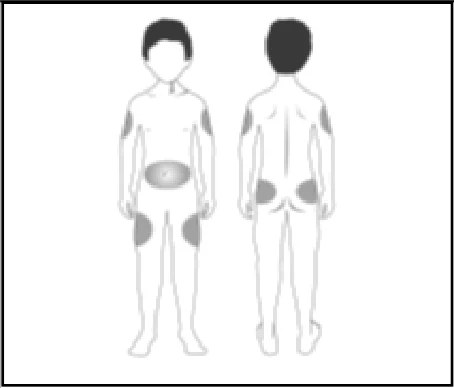 | It is important to rotate Strensiq injection sites to reduce the risk of some reactions including lipohypertrophy (enlargement or thickening of tissue) and injection site atrophy (depression in the skin). Do not administer injections in areas that are reddened, inflamed or swollen. Determine the injection site then, using a 60-70% alcohol-based solution (isopropyl alcohol or ethanol) on a single use or cotton-wool ball, clean the site. NOTE: Do not use any areas in which you feel lumps, firm knots, or pain; talk to your doctor about anything you find. |
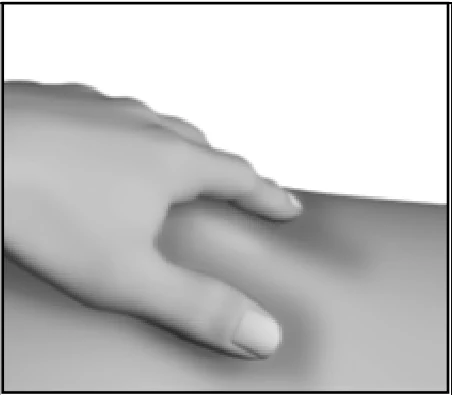 | Gently pinch the skin of the chosen injection area between your thumb and index finger. |
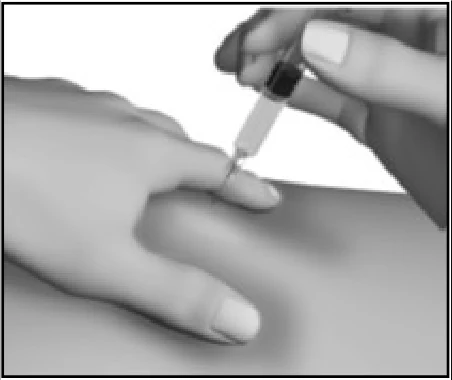
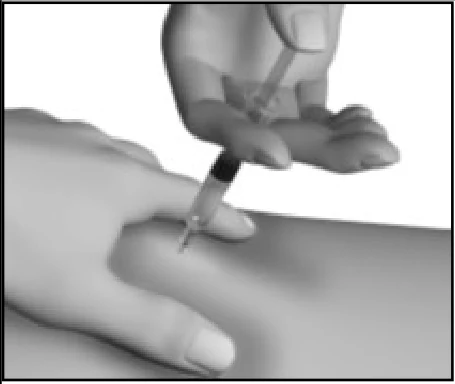
Subcutaneously administer the prescribed dose to the injection site. Holding the syringe like a pencil or a dart, insert the needle into the raised skin so it is at an angle of between 45o and 90o to the skin surface. For patients who have little subcutaneous fat or thin skin, a 45o angle may be preferable. | |
While continuing to hold the skin, push the syringe plunger to inject the medication while counting slowly to 10. Remove the needle, release the skin fold and gently place a piece of cotton wool or gauze over the injection site for a few seconds. This will help seal the punctured tissue and prevent any leakage. Do not rub the injection site after injection. Place bandage onto the injection site and properly dispose of the needle. |
Usual dose:
Recommended dosage regimen of Strensiq is 2 mg/kg of body weight administered subcutaneously three times per week, or a dosage regimen of 1 mg/kg of body weight administered six times per week. The maximum volume of subcutaneous injection is 1 mL per injection.
Overdose:
If you suspect that you have been accidently administered a higher dose of Strensiq than prescribed, please contact your doctor for advice.
The consequences of an overdose are not known with Strensiq.
| If you think you, or a person you are caring for, have taken too much Strensiq, contact a healthcare professional, hospital emergency department, or regional poison control centre immediately, even if there are no symptoms. |
 | |
 |
Missed Dose or Stopping Treatment:
In case of a missed dose, resume the regular schedule as soon as possible. Scheduling of subsequent doses should be determined by the treating physician and the Strensiq dosing regimen. Inform your doctor if you missed a dose. A missed dose should be administered as soon as possible to ensure adequate serum levels of Strensiq.
Do not take a double dose to make up for a forgotten dose and please contact your doctor for advice.
Strensiq is recommended for the long-term treatment of HPP and stopping treatment may lead to the return of your symptoms including high calcium levels in the blood. Do not stop treatment unless you and your doctor decide there is a significant risk to you to continue receiving Strensiq.
What are possible side effects from using Strensiq?
These are not all the possible side effects you may have when taking Strensiq. If you experience any side effects not listed here, tell your healthcare professional.
Serious side effects and what to do about them
| Symptom / effect | Talk to your healthcare professional | Stop taking drug and get immediate medical help | |
| Only if severe | In all cases | ||
| VERY COMMON | |||
| Injection site reactions (ISRs) | √ | ||
| Hypersensitivity | √ | ||
| COMMON | |||
| Kidney Stones | √ | ||
| Low level of calcium in blood | √ | ||
| Signs and symptoms of anaphylaxis (e.g. difficulty breathing, choking sensation, swelling or puffiness around the eyes, and dizziness) | √ | ||
| Skin discolouration | √ | ||
| UNCOMMON | |||
| Skin hyperpigmentation | √ | ||
If you have a troublesome symptom or side effect that is not listed here or becomes bad enough to interfere with your daily activities, tell your healthcare professional.
Reporting Side Effects
You can report any suspected side effects associated with the use of health products to Health Canada by:
NOTE: Contact your health professional if you need information about how to manage your side effects. The Canada Vigilance Program does not provide medical advice. |
Storage:
Strensiq vials must be stored in the original carton until the time of use under refrigerated conditions at 2-8°C and protected from light.
Out of refrigeration, the medicinal product should be kept at room temperature and administered within 3 hours.
DO NOT FREEZE OR SHAKE.
Do not use beyond the expiration date stamped on the carton
Keep out of reach and sight of children.
If you want more information about Strensiq:
- Talk to your healthcare professional
- Find the full product monograph that is prepared for healthcare professionals and includes this Patient Medication Information by visiting the Health Canada website: (https://www.canada.ca/en/health-canada/services/drugs-health-products/drug-products/drug-product-database.html; the manufacturer’s websitewww.alexion.com, or by calling 1-844-MAP-PAM2 (1-844-627-7262).
- Alexion Pharma GmbH has established a Registry for HPP in order to continue to monitor and evaluate the safety and effectiveness of Strensiq®. You are encouraged to participate and advised that participation may involve long-term follow-up. For information regarding the HPP Registry please call 1-844-MAP-PAM2 (1-844-627-7262). You can only participate in the Registry through your doctor.