


Product Monograph - Sumatriptan (Sivem Pharmaceuticals)
Recent Major Label Changes
Table of Contents
Certain sections or subsections that are not applicable at the time of the preparation of the most recent authorized product monograph are not listed.
Recent Major Label Changes ................................................................................................. 2
Table of Contents ................................................................................................................. 2
Part 1: Healthcare Professional Information.......................................................................... 5
- 1.
Indications ................................................................................................................... 5
1.1. Pediatrics ....................................................................................................................... 5
1.2 Geriatrics ....................................................................................................................... 5
- 2. Contraindications........................................................................................................... 5
- 4.
Dosage and Administration ............................................................................................ 6
4.1. Dosing Considerations ................................................................................................... 6
4.2. Recommended Dose and Dosage Adjustment.............................................................. 6
4.4. Administration ............................................................................................................... 7
- 5. Overdose ................................................................................................................... 7
- 6. Dosage Forms, Strengths, Composition, and Packaging................................................... 8
- 7.
Warnings and Precautions ............................................................................................. 8
General ................................................................................................................................... 8
Cardiovascular ........................................................................................................................ 9
Driving and Operating Machinery ........................................................................................ 12
Hepatic/Biliary/Pancreatic .................................................................................................... 12
Immune ................................................................................................................................. 13
Monitoring and Laboratory Tests ......................................................................................... 13
Neurologic ............................................................................................................................. 13
Ophthalmologic .................................................................................................................... 14
Renal ................................................................................................................................... 14
7.1. Special Populations ..................................................................................................... 14
| 2026-10 |
|---|
7.1.1. Pregnancy .................................................................................................................. 14
7.1.2. Breastfeeding ............................................................................................................ 15
7.1.3. Pediatrics ................................................................................................................... 15
7.1.4. Geriatrics ................................................................................................................... 15
- 8.
Adverse Reactions ....................................................................................................... 15
8.1. Adverse Reaction Overview ........................................................................................ 15
8.2. Clinical Trial Adverse Reactions ................................................................................... 15
8.4. Abnormal Laboratory Findings: Hematologic, Clinical Chemistry, and Other Quantitative Data.................................................................................................................. 18
8.5. Post-Market Adverse Reactions .................................................................................. 18
- 9.
Drug Interactions ......................................................................................................... 19
9.4. Drug-Drug Interactions ................................................................................................ 19
9.5. Drug-Food Interactions ............................................................................................... 20
9.6. Drug-Herb Interactions................................................................................................ 20
9.7. Drug-Laboratory Test Interactions .............................................................................. 20
- 10.
Clinical Pharmacology .................................................................................................. 20
10.1. Mechanism of Action .................................................................................................. 20
10.2. Pharmacodynamics ..................................................................................................... 21
10.3. Pharmacokinetics ........................................................................................................ 23
- 11. Storage, Stability, and Disposal .................................................................................... 26
- 12. Special Handling Instructions ....................................................................................... 26
Part 2: Scientific Information .............................................................................................. 27
- 13. Pharmaceutical Information ......................................................................................... 27
- 14.
Clinical Trials ................................................................................................................ 28
14.1. Clinical Trials by Indication .......................................................................................... 28
Migraine ................................................................................................................................ 28
Menstrually-Associated Migraine ......................................................................................... 29
14.2. Comparative Bioavailability Studies ............................................................................ 29
- 15. Microbiology ............................................................................................................... 30
- 16. Non-Clinical Toxicology ................................................................................................ 30
- 17. Supporting Product Monographs ................................................................................. 36
Patient Medication Information ......................................................................................... 37
Part 1: Healthcare Professional Information
1. Indications
SUMATRIPTAN (sumatriptan succinate tablets) is indicated for the acute treatment of migraine attacks with or without aura.
SUMATRIPTAN is not intended for the prophylactic therapy of migraine or for use in the management of hemiplegic, basilar, or ophthalmoplegic migraine (see 2. Contraindications). Safety and efficacy have not been established for cluster headache, which is present in an older, predominantly male population.
1.1. Pediatrics
Pediatrics (< 18 years of age): The safety and efficacy of sumatriptan succinate in pediatric patients have not been established and their use in this age group is not recommended (See 7.1.3. Pediatrics).
1.2 Geriatrics
Geriatrics (> 65 years of age): Experience of the use of sumatriptan succinate in patients aged over 65 years is limited. Therefore, the use of SUMATRIPTAN in patients over 65 years is not recommended (See 7.1.4. Geriatrics).
2. Contraindications
SUMATRIPTAN is contraindicated in:
- Patients with hypersensitivity to sumatriptan or to any of the ingredients of the formulations, or component of the container. For a complete listing, see 6. Dosage Forms, Strengths, Composition and Packaging.
- Patients with history, symptoms, or signs of ischemic cardiac, cerebrovascular, or peripheral vascular syndromes, valvular heart disease or cardiac arrhythmias (especially tachycardias). In addition, patients with other significant underlying cardiovascular diseases (e.g., atherosclerotic disease, congenital heart disease) should not receive SUMATRIPTAN. Ischemic cardiac syndromes include, but are not limited to, angina pectoris of any type (e.g., stable angina of effort and vasospastic forms of angina such as the Prinzmetal’s variant), all forms of myocardial infarction, and silent myocardial ischemia. Cerebrovascular syndromes include, but are not limited to, strokes of any type as well as transient ischemic attacks (TIAs). Peripheral vascular disease includes, but is not limited to, ischemic bowel disease, or Raynaud’s syndrome (see 7. Warnings and Precautions, Cardiovascular).
- Patients with uncontrolled or severe hypertension because SUMATRIPTAN may increase blood pressure (See 7. Warnings and Precautions, Cardiovascular).
- Concurrent administration of MAO inhibitors or use within 2 weeks of discontinuation of MAO inhibitor therapy is contraindicated (see 9.4. Drug-Drug Interactions, MAO Inhibitors and 10.3. Pharmacokinetics, Absorption/Metabolism).
- Within 24 hours before or after treatment with other 5-HT1 receptor agonists, or ergotamine- containing drugs or their derivatives (e.g. dihydroergotamine, methysergide). Ergot-containing drugs have been reported to cause prolonged vasospastic reactions. Because SUMATRIPTAN may also cause coronary vasospasm, these effects may be additive (see 9.4. Drug-Drug Interactions, Ergot-Containing Drugs; and Other 5-HT1 agonists).
- Patients with severe hepatic impairment (see 7. Warnings and Precautions, Hepatic/Biliary/Pancreatic and 4.2. Recommended Dose and Dosage Adjustment, Hepatic Insufficiency).
- Patients with hemiplegic, basilar, or ophthalmoplegic migraine.
4. Dosage and Administration
4.1. Dosing Considerations
Adults
- SUMATRIPTAN is indicated for the acute treatment of migraine headache with or without aura.
- SUMATRIPTAN should not be used prophylactically.
- SUMATRIPTAN is for oral administration.
- The safety of treating an average of more than four headaches in a 30 day period has not been established.
- The recommended dose of SUMATRIPTAN should not be exceeded.
- Significant relief begins about 30 minutes following oral administration.
- In addition to relieving the pain of migraine, sumatriptan has also been shown to be effective in relieving associated symptoms of migraine (nausea, vomiting, phonophobia, photophobia).
- Sumatriptan is equally effective when administered at any stage of a migraine attack.
- Long-term (12 to 24 months) clinical studies with maximum recommended doses of sumatriptan indicate that there is no evidence of the development of tachyphylaxis, or medication-induced (rebound) headache.
4.2. Recommended Dose and Dosage Adjustment
The minimum effective single adult dose of SUMATRIPTAN tablets is 25 mg.
The optimal dose is a single 50 mg tablet although some patients did respond to a single 25 mg tablet (see 14. Clinical Trials). Depending on clinical response and tolerability, some patients may benefit from the 100 mg strength. However, in controlled clinical trials, the 100 mg dose was associated with more frequent adverse events compared to the 50 and 25 mg doses (see 8.2. Clinical Trial Adverse Reactions). The maximum recommended single dose is 100 mg, which should not be exceeded.
Clinical trials have shown that approximately 50 to 75% of patients have headache relief within two hours after oral dosing with 100 mg, and that a further 15 to 25% have headache relief by 4 hours. Comparator studies have shown similar efficacy rates with the 50 mg and 100 mg tablets.
If the migraine headache returns, or if a patient has a partial response to the initial dose, the dose may be repeated after 2 hours. Not more than 200 mg should be taken in any 24-hour period.
If a patient does not respond to the first dose of SUMATRIPTAN tablets, a second dose should not be taken for the same attack, as it is unlikely to be of clinical benefit. SUMATRIPTAN may be taken to treat subsequent migraine attacks.
Geriatrics (> 65 years of age)
No differences have been observed between the pharmacokinetic parameters in healthy elderly volunteers compared with younger volunteers (less than 65 years old).
Pediatrics (< 18 years of age)
The safety and efficacy of sumatriptan succinate in pediatrics has not been established and its use in this age group is not recommended (see 7.1.3. Pediatrics).
Hepatic Insufficiency
Adults with Mild to Moderate Hepatic Impairment:
In patients with mild or moderate hepatic impairment, plasma sumatriptan concentrations up to two times those seen in healthy subjects have been observed. Therefore, a 25 mg dose (single tablet) may be considered in these patients (Child Pugh grade A or B) (see 7. Warnings and Precautions, Hepatic/Biliary/Pancreatic).
Adults with Severe Hepatic Impairment:
SUMATRIPTAN is contraindicated in patients with severe hepatic impairment (see 2. Contraindications).
4.4. Administration
The tablet should be swallowed whole with water, not crushed, chewed or split.
5. Overdose
There have been some reports of overdosage with sumatriptan succinate.
Doses up to 400 mg orally were not associated with side effects other than those mentioned. (see 8. Adverse Reactions).
If overdosage with sumatriptan occurs, the patient should be monitored and standard supportive treatment applied as required. Toxicokinetic data are not available.
The effect of hemodialysis or peritoneal dialysis on the serum concentration of sumatriptan is unknown.
| For the most recent information in the management of a suspected drug overdose, contact your regional poison control centre or Health Canada’s toll-free number, 1-844 POISON-X (1-844-764-7669). |
|---|
- 6. Dosage Forms, Strengths, Composition, and Packaging
Table 1 – Dosage Forms, Strengths, and Composition
| Route of Administration | Dosage Form / Strength / Composition | Non-Medicinal Ingredients |
| Oral | Tablets 25 mg, 50 mg and 100 mg sumatriptan (as sumatriptan succinate) | Carnauba wax, colloidal silicon dioxide, croscarmellose sodium, ferric oxide red (100 mg), hydroxypropyl methylcellulose, lactose, magnesium stearate, microcrystalline cellulose, polyethylene glycol and titanium dioxide. |
Availability of Dosage Forms
SUMATRIPTAN 25 mg Tablets: Each white, triangular, film-coated tablet, engraved “APO” on one side, "SUM" over “25" on the other side, contains 25 mg sumatriptan (base) as the succinate salt. Available in cartons containing one blister card of 6 tablets.
SUMATRIPTAN 50 mg Tablets: Each white, triangular, biconvex, film-coated tablet, engraved “APO” on one side, "SUM" over “50" on the other side, contains 50 mg sumatriptan (base) as the succinate salt. Available in cartons containing one blister card of 6 tablets.
SUMATRIPTAN 100 mg Tablets: Each pink, triangular, biconvex, film-coated tablet, engraved “APO” on one side, "SUM" over “100" on the other side, contains 100 mg sumatriptan (base) as the succinate salt. Available in cartons containing one blister card of 6 tablets.
7. Warnings and Precautions
General
SUMATRIPTAN should only be used where a clear diagnosis of migraine has been established.
Cluster Headache There is insufficient information on the efficacy and safety of sumatriptan succinate in the treatment of cluster headache, which is present in an older, predominantly male population. The need for prolonged use and the demand for repeated medication in this condition renders the dosing information inapplicable for cluster headache.
Medication Overuse Headache Overuse of acute headache treatments has been associated with the exacerbation of headache (medication overuse headache, MOH) in susceptible patients. Withdrawal of the treatment may be necessary.
Cardiovascular
Risk of Myocardial Ischemia and/or Infarction and Other Adverse Cardiac Events Sumatriptan succinate has been associated with transient chest and/or neck pain, pressure, heaviness and tightness which may resemble angina pectoris. In rare cases, the symptoms have been identified as being the likely result of coronary vasospasm or myocardial ischemia. Rare cases of serious coronary events or arrhythmia have occurred following use of sumatriptan succinate. SUMATRIPTAN should not be given to patients who have documented ischemic or vasospastic coronary artery disease (CAD) (see 2. Contraindications). It is strongly recommended that SUMATRIPTAN not be given to patients in whom unrecognized CAD is predicted by the presence of risk factors (e.g., hypertension, hypercholesterolemia, smoking, obesity, diabetes, strong family history of CAD, female who is surgically or physiologically postmenopausal, or male who is over 40 years of age) unless a cardiovascular evaluation provides satisfactory clinical evidence that the patient is reasonably free of coronary artery and ischemic myocardial disease or other significant underlying cardiovascular disease. The sensitivity of cardiac diagnostic procedures to detect cardiovascular disease or predisposition to coronary artery vasospasm is unknown. If, during the cardiovascular evaluation, the patient’s medical history or electrocardiographic investigations reveal findings indicative of, or consistent with, coronary artery vasospasm or myocardial ischemia, SUMATRIPTAN should not be administered (see 2. Contraindications).
For patients with risk factors predictive of CAD, who are considered to have a satisfactory cardiovascular evaluation, the first dose of SUMATRIPTAN should be administered in the setting of a physician’s office or similar medically staffed and equipped facility. Because cardiac ischemia can occur in the absence of clinical symptoms, consideration should be given to obtaining electrocardiograms in patients with risk factors during the interval immediately following SUMATRIPTAN administration on the first occasion of use. However, an absence of drug-induced cardiovascular effects on the occasion of the initial dose does not preclude the possibility of such effects occurring with subsequent administrations.
Intermittent long term users of SUMATRIPTAN who have or acquire risk factors predictive of CAD, as described above, should receive periodic interval cardiovascular evaluations over the course of treatment.
If symptoms consistent with angina occur after the use of SUMATRIPTAN, ECG evaluation should be carried out to look for ischemic changes.
The systematic approach described above is intended to reduce the likelihood that patients with unrecognized cardiovascular disease will be inadvertently exposed to SUMATRIPTAN.
Discomfort in the chest, neck, throat and jaw (including pain, pressure, heaviness, tightness, dyspnea) has been reported after administration of sumatriptan succinate. Because 5-HT1 agonists may cause coronary vasospasm, patients who experience signs or symptoms suggestive of angina following SUMATRIPTAN should be evaluated for the presence of CAD or a predisposition to variant angina before receiving additional doses, and should be monitored electrocardiographically if dosing is resumed and similar symptoms recur. Similarly, patients who experience other symptoms or signs suggestive of decreased arterial flow, such as ischemic bowel syndrome or Raynaud’s syndrome following SUMATRIPTAN should be evaluated for atherosclerosis or predisposition to vasospasm (see 2. Contraindications and 8.2. Clinical Trial Adverse Reactions).
Cardiac Events and Fatalities Associated with 5-HT1 Agonists Sumatriptan succinate can cause coronary artery vasospasm. Serious adverse cardiac events, including acute myocardial infarction, life threatening disturbances of cardiac rhythm, and death have been reported within a few hours following the administration of 5-HT1 agonists. Considering the extent of use of 5-HT1 agonists in patients with migraine, the incidence of these events is extremely low. The fact that some of these events have occurred in patients with no prior cardiac disease history and with documented absence of CAD, and the close proximity of the events to sumatriptan succinate use support the conclusion that some of these cases were caused by the drug. In many cases, however, where there has been known underlying coronary artery disease, the relationship is uncertain.
Premarketing Experience with Sumatriptan Succinate
Of 6348 patients with migraine who participated in premarketing controlled and uncontrolled clinical trials of oral sumatriptan succinate, two experienced clinical adverse events shortly after receiving oral sumatriptan succinate that may have reflected coronary vasospasm. Neither of these adverse events was associated with a serious clinical outcome.
Post-marketing Experience with Sumatriptan Succinate
Serious cardiovascular events, some resulting in death, have been reported in association with the use of sumatriptan succinate tablets. The uncontrolled nature of postmarketing surveillance, however, makes it impossible to determine definitively the proportion of the reported cases that were actually caused by sumatriptan succinate or to reliably assess causation in individual cases. On clinical grounds, the longer the latency between the administration of sumatriptan succinate and the onset of the clinical event, the less likely the association is to be causative. Accordingly, interest has focused on events beginning within 1 hour of the administration of sumatriptan succinate.
Cardiac events that have been observed to have onset within 1 hour of sumatriptan succinate administration include: coronary artery vasospasm, transient ischemia, myocardial infarction, ventricular tachycardia and ventricular fibrillation, cardiac arrest, and death.
Some of these events occurred in patients who had no findings of CAD and appear to represent consequences of coronary artery vasospasm. However, among reports from the USA of serious cardiac events occurring within 1 hour of sumatriptan succinate administration, almost all of the patients had risk factors predictive of CAD and the presence of significant underlying CAD was established in most cases (see 2. Contraindications).
Special Cardiovascular Pharmacology Studies
In subjects (n=10) with suspected coronary artery disease undergoing angiography, a 5-HT1 agonist at a subcutaneous dose of 1.5 mg produced an 8% increase in aortic blood pressure, an 18% increase in pulmonary artery blood pressure, and an 8% increase in systemic vascular resistance. In addition, mild chest pain or tightness was reported by four subjects. Clinically significant increases in blood pressure were experienced by three of the subjects (two of whom also had chest pain/discomfort). Diagnostic angiogram results revealed that 9 subjects had normal coronary arteries and 1 had insignificant coronary artery disease.
In an additional study with this same drug, migraine patients (n=35) free of cardiovascular disease were subjected to assessments of myocardial perfusion by positron emission tomography while receiving a subcutaneous 1.5 mg dose in the absence of a migraine attack. Reduced coronary vasodilatory reserve (~10%), increase in coronary resistance (~20%), and decrease in hyperemic myocardial blood flow (~10%) were noted. The relevance of these finding to the use of the recommended oral doses of this 5-HT1 agonist is not known.
Similar studies have not been done with sumatriptan succinate. However, owing to the common pharmacodynamic actions of 5-HT1 agonists, the possibility of cardiovascular effects of the nature described above should be considered for any agent of this pharmacological class.
Other Vasospasm-Related Events
5-HT1 agonists may cause vasospastic reactions other than coronary artery vasospasm. Extensive post-market experience has shown the use of sumatriptan succinate to be associated with rare occurrences of peripheral vascular ischemia and colonic ischemia with abdominal pain and bloody diarrhea, and in isolated cases there was no previous history or concomitant medications.
Cerebrovascular Events and Fatalities with 5-HT1 Agonists
Cerebral hemorrhage, subarachnoid hemorrhage, stroke, and other cerebrovascular events have been reported in patients treated with oral sumatriptan succinate and some have resulted in fatalities. The relationship of sumatriptan succinate to these events is uncertain. In a number of cases, it appears possible that the cerebrovascular events were primary, sumatriptan succinate having been administered in the incorrect belief that the symptoms experienced were a consequence of migraine when they were not. Before treating migraine headaches with SUMATRIPTAN in patients not previously diagnosed as migraineurs, and in migraineurs who present with atypical symptoms, care should be taken to exclude other potentially serious neurological conditions. If a patient does not respond to the first dose, the opportunity should be taken to review the diagnosis before a second dose is given. It should also be noted that patients with migraine may be at increased risk of certain cerebrovascular events (e.g., stroke, hemorrhage, TIA).
Increase in Blood Pressure
Significant elevation in blood pressure, including hypertensive crisis, has been reported on rare occasions in patients with and without a history of hypertension. SUMATRIPTAN is contraindicated in patients with uncontrolled or severe hypertension (see 2. Contraindications). In patients with controlled hypertension, SUMATRIPTAN should be administered with caution, as transient increases in blood pressure and peripheral vascular resistance have been observed in a small portion of patients.
Driving and Operating Machinery
Patients should be cautioned that drowsiness may occur as a result of treatment with SUMATRIPTAN. They should be advised not to perform skilled tasks (e.g. driving or operating machinery) if drowsiness occurs.
Hepatic/biliary/pancreatic
The effect of hepatic impairment on the efficacy and safety of sumatriptan succinate has not been evaluated; however, the pharmacokinetic profile of sumatriptan (assessed by aminopyrine breath test, >0.2 to 0.4 scaling units) in patients with moderate hepatic impairment (Child Pugh B) shows that these patients, following an oral dose of 50 mg, have much higher plasma sumatriptan concentrations than healthy subjects (Table 2). Therefore, an oral dose of 25 mg may be considered in patients with mild or moderate hepatic impairment (Child Pugh A or B) (see 4.2. Recommended Dose and Dosage Adjustment, Hepatic Insufficiency).
Table 2 - Pharmacokinetic Parameters After Oral Administration of Sumatriptan Succinate 50 mg to Healthy Volunteers and Moderately Hepatically Impaired Patients
| Parameter | Mean Ratio (hepatic impaired/healthy) n=8 | 90% CI | p-value |
|---|---|---|---|
AUC∞ Cmax | 181% 176% | 130 to 252% 129 to 240% | 0.009* 0.007* |
*Statistically significant
SUMATRIPTAN is contraindicated in patients with severe hepatic impairment (see 2. Contraindications and 4.2. Recommended Dose and Dosage Adjustment, Hepatic Insufficiency).
Immune
Rare hypersensitivity (anaphylaxis/anaphylactoid) reactions may occur in patients receiving 5-HT1 agonists such as SUMATRIPTAN. Such reactions can be life threatening or fatal. In general, hypersensitivity reactions to drugs are more likely to occur in individuals with a history of sensitivity to multiple allergens (see 2. Contraindications). Owing to the possibility of cross-reactive hypersensitivity reactions, SUMATRIPTAN should not be used in patients having a history of hypersensitivity to chemically related 5-HT1 receptor agonists. There have been reports of patients with known hypersensitivity to sulphonamides exhibiting an allergic reaction following administration of sumatriptan succinate. Reactions ranged from cutaneous hypersensitivity to anaphylaxis.
Monitoring and Laboratory Tests
No specific laboratory tests are recommended for monitoring patients prior to and/or after treatment with SUMATRIPTAN.
Neurologic
Care should be taken to exclude other potentially serious neurologic conditions before treating headache in patients not previously diagnosed with migraine headache or who experience a headache that is atypical for them. There have been rare reports where patients received 5-HT1 agonists for severe headaches that were subsequently shown to have been secondary to an evolving neurologic lesion. For newly diagnosed patients or patients presenting with atypical symptoms, the diagnosis of migraine should be reconsidered if no response is seen after the first dose of SUMATRIPTAN.
Seizures: Caution should be observed if SUMATRIPTAN is to be used in patients with a history of seizures or other risk factors, such as structural brain lesions, which lower the convulsion threshold. There have also been rare post-market reports of seizures following administration of sumatriptan succinate in patients without risk factors or previous history of seizures. (see 8.5. Post- Market Adverse Reactions, Nervous System Disorders).
Serotonin toxicity / Serotonin Syndrome: Serotonin toxicity, also known as serotonin syndrome, is a potentially life-threatening condition and has been reported during use of triptans.
Serotonin toxicity is characterised by neuromuscular excitation, autonomic stimulation (e.g. tachycardia, flushing) and altered mental state (e.g. anxiety, agitation, hypomania). In accordance with the Hunter Criteria, serotonin toxicity diagnosis is likely when, in the presence of at least one serotonergic agent, one of the following is observed:
- Spontaneous clonus
- Inducible clonus or ocular clonus with agitation or diaphoresis
- Tremor and hyperreflexia
- Hypertonia and body temperature >38°C and ocular clonus or inducible clonus
If concomitant treatment with SUMATRIPTAN and other serotonergic agents is clinically warranted, careful observation of the patient is advised, particularly during treatment initiation and dose increases (see 9.4. Drug-Drug Interactions, Selective Serotonin Reuptake Inhibitors (SSRIs)/Serotonin Norepinephrine Reuptake inhibitors (SNRIs). If serotonin toxicity is suspected, discontinuation of the serotonergic agents should be considered.
Ophthalmologic
Binding to Melanin Containing Tissues: In rats treated with a single subcutaneous dose (0.5 mg/kg) or oral dose (2 mg/kg) of radiolabelled sumatriptan, the elimination half-life of radioactivity from the eye was 15 and 23 days, respectively, suggesting that sumatriptan and/or its metabolites bind to the melanin of the eye. Because there could be an accumulation in melanin-rich tissues over time, this raises the possibility that sumatriptan could cause toxicity in these tissues after extended use. However, no effects on the retina related to treatment with sumatriptan were noted in any of the oral or subcutaneous toxicity studies. Although no systematic monitoring of ophthalmologic function was undertaken in clinical trials, and no specific recommendations for ophthalmologic monitoring are offered, prescribers should be aware of the possibility of long term ophthalmologic effects.
Renal
The effects of renal impairment on the efficacy and safety of sumatriptan succinate have not been evaluated. Therefore, SUMATRIPTAN is not recommended in this patient population.
7.1. Special Populations
7.1.1. Pregnancy
Reproduction studies, performed in rats, have not revealed any evidence of impaired fertility, teratogenicity, or postnatal development due to sumatriptan succinate. Reproduction studies, performed in rabbits by the oral route, have shown increased incidence of variations in cervico-thoracic blood vessel configuration in the fetuses. These effects were only seen at the highest dose tested, which affected weight gain in the dams, and at which blood levels were in excess of 50 times those seen in humans after therapeutic doses. A direct association with sumatriptan succinate treatment is considered unlikely but cannot be excluded.
Post-marketing data from multiple prospective pregnancy registries have documented the pregnancy outcomes in approximately 1,100 women exposed to sumatriptan. At this time, there is insufficient information to draw conclusions. Therefore, use of SUMATRIPTAN is not recommended in pregnancy and it should be used only if the potential benefit to the mother justifies the potential risk to the fetus.
In a rat fertility study, oral doses of sumatriptan succinate resulting in plasma levels approximately 150 times those seen in humans after a 6 mg subcutaneous dose and approximately 200 times those seen in humans after a 100 mg oral dose were associated with a reduction in the success of insemination. This effect did not occur during a subcutaneous study, where maximum plasma levels achieved approximately 100 times those in humans by the subcutaneous route and approximately 150 times those in humans by the oral route.
7.1.2. Breastfeeding
Sumatriptan is excreted in human breast milk. Therefore, caution is advised when administering SUMATRIPTAN to nursing women. Infant exposure can be minimized by avoiding breastfeeding for 24 hours after treatment. Any milk expressed during this time period should be discarded.
There have been post-marketing reports of breast pain or nipple pain following sumatriptan administration, mostly in breastfeeding women. The pain was resolved within approximately 4 to 12 hours after onset.
7.1.3. Pediatrics
Pediatrics (< 18 years of age): The safety and efficacy of sumatriptan succinate in children has not been established and its use in this age group is not recommended.
7.1.4. Geriatrics
Geriatrics (> 65 years of age): Experience of the use of sumatriptan succinate in patients aged over 65 years is limited. Therefore, the use of SUMATRIPTAN in patients over 65 years is not recommended.
8. Adverse Reactions
8.1. Adverse Reaction Overview
Serious cardiac events, including some that have been fatal, have occurred following the use of 5-HT1 agonists. These events are extremely rare and most have been reported in patients with risk factors predictive of CAD. Events reported have included coronary artery vasospasm, transient myocardial ischemia, myocardial infarction, ventricular tachycardia, and ventricular fibrillation (see 2. Contraindications and 7. Warnings and Precautions, Cardiovascular).
8.2. Clinical Trial Adverse Reactions
Clinical trials are conducted under very specific conditions. Therefore, the frequencies of adverse reactions observed in the clinical trials may not reflect frequencies observed in clinical practice and should not be compared to frequencies reported in clinical trials of another drug.
Experience in Controlled Clinical Trials with Sumatriptan Succinate
Typical 5-HT1 Agonist Adverse Reactions
As with other 5-HT1 agonists, sumatriptan succinate has been associated with sensations of heaviness, pressure, tightness or pain, which may be intense. These may occur in any part of the body including the chest, throat, neck, jaw and upper limb.
Acute Safety
In placebo-controlled migraine trials, 3095 patients received at least one dose of oral sumatriptan succinate. Table 3 lists adverse events occurring in these trials at an incidence of 1% or more in any of the sumatriptan succinate dose groups and that occurred at a higher incidence than in the placebo groups.
Table 3 - Treatment-Emergent Adverse Events in Oral Placebo-Controlled Clinical Trials Reported by at Least 1% of Patients with Migraine
| System organ class / preferred term | Placebo | Sumatriptan Succinate 25 mg | Sumatriptan Succinate 50 mg | Sumatriptan Succinate 100 mg** |
| Number of Patients | 690 | 351 | 723 | 2021 |
| Number of Migraine Attacks Treated | 1187 | 945 | 1889 | 14750 |
| Symptoms of Potentially Cardiac Origin | ||||
| Chest Sensations* | 0.6% | 2.3% | 2.6% | 3.2% |
| Neck/Throat/Jaw Sensations* | 1.4% | 2.3% | 3.5% | 5.2% |
| Upper Limb Sensations* | 1.2% | 1.4% | 2.5% | 3.6% |
| Palpitations | 0.6% | 0.3% | 1.0% | 1.1% |
| Neurological | ||||
| Head/Face Sensations* | 1.3% | 2.3% | 2.5% | 4.7% |
| Dizziness | 2.5% | 3.1% | 3.3% | 6.2% |
| Headache | 3.3% | 4.0% | 2.2% | 3.3% |
| Vertigo | 0.6% | 1.1% | 1.1% | 1.0% |
| Drowsiness | 1.6% | 1.1% | 1.2% | 2.1% |
| Tremor | 0.4% | 0.9% | 0.4% | 1.1% |
| Gastrointestinal | ||||
| Nausea | 5.8% | 2.8% | 4.4% | 11.0% |
| Hyposalivation | 1.2% | 1.4% | 1.1% | 1.2% |
| Vomiting | 2.9% | 4.3% | 1.1% | 4.4% |
| System organ class / preferred term | Placebo | Sumatriptan Succinate 25 mg | Sumatriptan Succinate 50 mg | Sumatriptan Succinate 100 mg** |
| Gastrointestinal Discomfort & Pain | 1.4% | 1.1% | 0.8% | 2.0% |
| Abdominal Discomfort & Pain | 0.3% | NR | 0.4% | 1.2% |
| Diarrhea | 0.9% | 0.3% | 0.6% | 1.1% |
| Musculoskeletal | ||||
| Musculoskeletal Pain | 0.7% | 2.3% | 0.4% | 1.4% |
| Muscle Pain | 0.3% | 0.9% | 0.1% | 1.0% |
| Muscle Atrophy Weakness & Tiredness | NR | 0.6% | 0.4% | 1.4% |
| Ear, Nose & Throat | ||||
| Infections | 0.6% | 0.6% | 1.1% | 1.4% |
| Nasal Signs & Symptoms | 0.7% | 1.4% | 0.8% | 1.0% |
| Throat & Tonsil Symptoms | 0.6% | NR | 0.4% | 2.3% |
| Respiratory | ||||
| Viral Infection | 0.3% | 1.1% | 0.1% | 1.0% |
| Non-Site Specific | ||||
| Limb Sensations* | 0.4% | 1.1% | 0.4% | 1.5% |
| Sensations* (body region unspecified) | 4.5% | 5.7% | 8.0% | 9.0% |
| Malaise/Fatigue | 5.1% | 3.7% | 2.6% | 9.5% |
| Sweating | 0.4% | 0.6% | 0.6% | 1.6% |
* The term “sensations” encompasses adverse events described as pain & discomfort, pressure, heaviness, constriction, tightness, heat/burning or cold sensation, paresthesia, hypoesthesia, numbness, flushing and strange sensations.
** Includes patients receiving up to 3 doses of 100 mg.
NR = Not Reported
Sumatriptan succinate is generally well tolerated. Most of the events were transient in nature and resolved within 2 hours of oral administration.
Dyspnea has commonly been observed following sumatriptan treatment.
8.4. Abnormal Laboratory Findings: Hematologic, Clinical Chemistry and Other Quantitative Data
Minor disturbances of liver function tests have occasionally been observed with sumatriptan treatment. There is no evidence that clinically significant abnormalities occurred more frequently with sumatriptan than with placebo.
8.5. Post-Market Adverse Reactions
The following section enumerates potentially important adverse events that have occurred in clinical practice and that have been reported spontaneously to various surveillance systems. The events enumerated represent reports arising from both domestic and nondomestic use of sumatriptan. These events do not include those already listed in the previous subsections of 8. Adverse Reactions. Because the reports cite events reported spontaneously from worldwide post-marketing experience, the frequency of such events and the role of sumatriptan in their causation cannot be reliably determined.
Cardiac Disorders
Bradycardia, tachycardia, palpitations, cardiac arrhythmias, transient ischaemic ECG changes, coronary artery vasospasm, angina, myocardial infarction (see 2. Contraindications and 7. Warnings and Precautions, Cardiovascular).
Gastrointestinal Disorders
Colonic ischemia (see 7. Warnings and Precautions, Cardiovascular, Other Vasospasm-Related Events).
Immune System Disorders
Hypersensitivity reactions ranging from cutaneous hypersensitivity to anaphylaxis (see 7. Warnings and Precautions, Immune).
Nervous System Disorders
Seizures, although some have occurred in patients with either a history of seizures or concurrent conditions predisposing to seizures there are also reports in patients where no such predisposing factors are apparent (see 7. Warnings and Precautions, Neurologic).
There have been very rare reports of dystonia and related extrapyramidal disorders, such as choreoathetoid movement, akathisia, parkinsonism and akinesia following oral treatments of sumatriptan succinate. Patients with previous history of drug related dystonia and patients taking medications recognised to be associated with movement disorders such as SSRIs, may be at higher risk.
Nystagmus, scotoma.
Ophthalmological Disorders
Patients treated with sumatriptan succinate rarely exhibit visual disorders like flickering and diplopia. Additionally, cases of reduced vision have been observed. Very rarely, both transient and permanent loss of vision have occurred. These occurrences have included reports of retinal vascular occlusion, ocular venous thrombosis, vasospasm of the eye and ischemic optic neuropathy. Visual disorders may also occur during a migraine attack itself
(see 7. Warnings and Precautions, Ophthalmologic).
Reproductive System and Breast Disorders
Breast pain
Vascular Disorders
Hypotension, Raynaud’s phenomenon, peripheral vascular ischemia (see 2. Contraindications and 7. Warnings and Precautions, Cardiovascular; Increase in Blood Pressure; and Other Vasospasm Related Events).
9. Drug Interactions
9.4. Drug-Drug Interactions
Single-dose pharmacokinetic drug interaction studies have not shown evidence of interactions with propranolol, flunarizine, pizotifen or alcohol. Multiple-dose interaction studies have not been performed.
Ergot-Containing Drugs
Ergot-containing drugs have been reported to cause prolonged vasospastic reactions. Because there is a theoretical basis for these effects being additive, ergot-containing or ergot-type medications (like dihydroergotamine or methysergide) are contraindicated within 24 hours of SUMATRIPTAN administration (see 2. Contraindications).
MAO Inhibitors
In studies conducted in a limited number of patients, MAO inhibitors reduce sumatriptan clearance, significantly increasing systemic exposure. Therefore, the use of SUMATRIPTAN in patients receiving MAO inhibitors is contraindicated (see 2. Contraindications, and 10.3. Pharmacokinetics).
Selective Serotonin Reuptake Inhibitors (SSRIs)/Serotonin Norepinephrine Reuptake Inhibitors (SNRIs)
Cases of life-threatening serotonin syndrome have been reported during combined use of selective serotonin reuptake inhibitors (SSRIs) or serotonin norepinephrine reuptake inhibitors (SNRIs) and triptans (see 7. Warnings and Precautions, Serotonin Toxicity/Serotonin Syndrome).
Other 5-HT1 agonists
The administration of sumatriptan succinate with other 5-HT1 agonists has not been evaluated in migraine patients. As an increased risk of coronary vasospasm is a theoretical possibility with co-administration of 5-HT1 agonists, use of these drugs within 24 hours of each other is contraindicated.
9.5. Drug-Food Interactions
Interactions with food have not been established.
9.6. Drug-Herb Interactions
Interactions with herbal products have not been established.
9.7. Drug-Laboratory Test Interactions
Sumatriptan succinate is not known to interfere with commonly employed clinical laboratory tests.
10. Clinical Pharmacology
10.1. Mechanism of Action
Sumatriptan succinate has been shown to be effective in relieving migraine headache. Sumatriptan is an agonist for a vascular 5-hydroxytryptamine1D (5-HT1D) receptor subtype (a member of the 5-HT1 family), and has only weak affinity for 5-HT1A receptors and no significant activity (as measured using standard radioligand binding assays) or pharmacological activity at 5-HT2, 5-HT3, 5-HT4, 5-HT5A, or 5-HT7 receptor subtypes, or at alpha1-, alpha2-, or beta-adrenergic; dopamine1 or dopamine2; muscarinic; or benzodiazepine receptors.
The therapeutic activity of sumatriptan succinate in migraine is generally attributed to its agonist activity at 5-HT1B/5-HT1D receptors. Two current theories have been proposed to explain the efficacy of 5-HT1 receptor agonists in migraine. One theory suggests that activation of 5-HT1 receptors located on intracranial blood vessels, including those on the arteriovenous anastomoses, leads to vasoconstriction, which is believed to be correlated with the relief of migraine headache. The other hypothesis suggests that activation of 5-HT1 receptors on perivascular fibres of the trigeminal system results in the inhibition of pro-inflammatory neuropeptide release. These theories are not mutually exclusive.
Experimental data from animal studies show that sumatriptan also activates 5-HT1 receptors on peripheral terminals of the trigeminal nerve, which innervates cranial blood vessels. This causes the inhibition of neuropeptide release. It is thought that such an action may contribute to the anti-migraine action of sumatriptan in humans.
Cardiovascular Effects
In vitro studies in human isolated epicardial coronary arteries suggest that the predominant contractile effect of 5-HT is mediated via 5-HT2 receptors. However, 5-HT1 receptors also contribute to some degree to the contractile effect seen. Transient increases in systolic and diastolic blood pressure (up to 20 mmHg) of rapid onset (within minutes), have occurred after intravenous administration of up to 64 mcg/kg (3.2 mg for 50 kg subject) to healthy volunteers. These changes were not dose related and returned to normal within 10 to 15 minutes. Following oral administration of 200 mg or intranasal administration of 40 mg, however, mean peak increases in blood pressure were smaller and of slower onset than after intravenous or subcutaneous administration.
10.2. Pharmacodynamics
Significant relief begins about 30 minutes following oral administration.
Human Pharmacodynamics
Administration of subcutaneous sumatriptan 6 mg twice daily for 5 days to healthy subjects caused slight increases in mean systolic and diastolic blood pressures (6 to 8 mmHg) while heart rate decreased slightly (1 to 7 bpm).
Vasopressor effects were also evident following oral administration, with mean peak increases being somewhat smaller and of slower onset than after parenteral administration. A single oral dose of 200 mg sumatriptan caused significant increases in both systolic and diastolic blood pressures (16 mmHg and 5 mmHg, respectively); however, further dosing (200 mg three times daily for a further 7 days) did not cause any additional vasopressor effects.
In hypertensive patients with common or classical migraine, small, transient increases in both systolic and diastolic blood pressure (maximum mean increase: 6/6 mmHg) occurred shortly after subcutaneous doses of 6 mg, but resolved within 60 minutes. A dose-related increase of 14 mmHg in systolic blood pressure was found in elderly patients given 200 mg oral sumatriptan.
Sumatriptan had no effect on cardiac function in migraine patients when given as a 64 mcg/kg intravenous infusion. Exercise tests were performed after each infusion showing that sumatriptan had no effect on left ventricular ejection fraction either at rest or after exercise, and no differences were noted between placebo and sumatriptan.
Animal Pharmacodynamics
The action of sumatriptan has been studied in a range of isolated preparations in vitro, all known to contain different 5-HT receptor subtypes.
In Beagle dog isolated saphenous vein known to contain 5-HT1 receptors, sumatriptan had a mean EC50 (molar concentration required to produce 50% of the maximum response) of 302 nM, while 5-HT had an EC50 of 44nM.
In cat isolated saphenous vein, sumatriptan (concentrations of up to 10 mcM) had no activity on 5-HT1 receptors, suggesting that sumatriptan is a highly selective agonist at some, but not all, 5-HT1 receptors. The contrasting action of sumatriptan at these receptor sites in the Beagle dog and cat isolated saphenous veins provides evidence that 5-HT1 receptors are heterogeneous.
Sumatriptan displayed virtually no activity at 5-HT2 receptors mediating contraction of the rabbit isolated aorta (concentrations up to 50 mcM) and at 5-HT3 receptors mediating depolarization of the rat isolated vagus nerve (concentrations up to 100 mcM).
The selectivity of sumatriptan was further confirmed by studies in dog isolated saphenous vein, and in dog and primate isolated basilar artery. In these assays sumatriptan was resistant to the selective 5-HT2 and 5-HT3 receptor antagonists, ketanserin and MDL72222, respectively. Radioligand binding studies provide yet additional support for the high degree of specificity of sumatriptan. Sumatriptan was shown to have a high affinity for some 5-HT1 binding sites, notably the 5-HT1D subtype, and no significant affinity for other neurotransmitter binding sites such as, 5-HT1A, 5-HT1C, 5-HT2, 5-HT3, alpha1, alpha2, beta1, dopamine D1 and D2, muscarinic and benzodiazepine receptors. In the human isolated basilar artery, methiothepin specifically and equally antagonised the contractile effects of both 5-HT and sumatriptan, suggesting that sumatriptan and 5-HT contract this artery by activating the same receptor type. This receptor appears to be identical to the 5-HT1 receptor which mediates contraction of the dog isolated saphenous vein and cerebral blood vessels in both the dog and primate.
Sumatriptan selectively reduced the extravasation of plasma proteins in the duramater of rats and guinea pigs, in response to trigeminal nerve stimulation.
Although an inhibitory effect on neurotransmitter release from trigeminal nerve endings is implicated, the action of sumatriptan would still predominantly involve a direct vasoconstrictive action on dural blood vessels, which could be expected to inhibit extravasation. In fact, such a vasoconstrictive action during a migraine attack could also increase the threshold for activating perivascular nerve afferents by reducing pressure on edematous pain-sensitive vessels within the cranium.
The major metabolite of sumatriptan in humans and other animal species, GR49336, has no pharmacological activity at 5-HT1 receptors or other vascular 5-HT receptor subtypes.
Sumatriptan (1 to 1000 mcg/kg, iv) produced a selective long-lasting and dose-dependent decrease in carotid arterial blood flow, in vivo (anaesthetised Beagles), with little or no change in arterial blood pressure. The dose of sumatriptan producing 50% of its maximum vasoconstrictor action was 39 ± 8 mcg/kg, iv. Maximal vasoconstrictor responses were achieved with intravenous doses between 300 to 1000 mcg/kg.
The vasoconstrictor action of sumatriptan in the carotid arterial circulation of anaesthetised Beagles is mediated by the activation of 5-HT1 receptors since it was antagonised by methiothepin, a selective 5-HT1 receptor blocker.
Sumatriptan (30 to 1000 mcg/kg, iv) produced a dose-dependent reduction in the proportion of cardiac output passing through arteriovenous anastomoses (AVAs) in anaesthetised cats.
At doses up to 1000 mcg/kg iv, sumatriptan had little effect upon vascular resistance in a variety of other vascular beds. In contrast, the administration of ergotamine (30 mcg/kg) caused marked increases in vasoconstriction in most vascular beds examined.
Sumatriptan did not modify efferent vagal activity by either a central action or by interference with cholinergic neurotransmission from vagal nerve endings in the myocardium of anaesthetised cats.
It had no antinociceptive effects in rodents, and is, therefore, unlikely that its effectiveness in alleviating migraine headache is due to a generalized analgesic action.
In conscious monkeys, at cumulative doses of up to 1000 mcg/kg, there were no significant effects on arterial blood pressure, heart rate, ECG or respiratory rate that could be attributed to the intravenous administration of sumatriptan.
Sumatriptan up to 1 mg/kg had little or no effect upon either pulmonary artery or esophageal pressure in Beagle dogs. There was also little or no effect upon total peripheral resistance, and only a slight increase in cardiac output and stroke volume.
In the rat, sumatriptan (1 and 10 mg/kg, ip) caused a dose-related increase in the rate of gastric emptying, the magnitude of this effect being comparable with that obtained with metoclopramide at doses of 5 to 20 mg/kg, ip.
10.3. Pharmacokinetics
Pharmacokinetic parameters following oral administration are shown in Table 4.
Inter-patient and intra-patient variability was noted in most pharmacokinetic parameters assessed.
Table 4: Summary of Pharmacokinetic Parameters
| Parameter | Oral |
| Bioavailability | 14% |
| Cmax (ng/mL) | 100 mg: 50 to 60 ng/mL 25 mg: 18 ng/mL |
| Tmax | 100 mg: 0.5 to 5 hr* |
| T½ | 2 hr (1.9 to 2.2 hr) |
| Protein Binding | 14 to 21 % |
| Volume of Distribution | 170 L |
| Total Plasma Clearance | 1160 mL/min |
| Renal Plasma Clearance | 260 mL/min |
| * 70% to 80% of CMAX values were attained within 30 to 45 minutes of dosing. | |
Absorption/Metabolism
Sumatriptan is rapidly absorbed after oral administration. The low oral bioavailability is primarily due to metabolism (hepatic and pre-systemic) and partly due to incomplete absorption. The oral absorption of sumatriptan is not significantly affected either during migraine attacks or by food.
In vitro studies with human microsomes suggest that sumatriptan is metabolized by monoamine oxidase (MAO), predominantly the A isoenzyme. In studies conducted in a limited number of patients, MAO inhibitors reduce sumatriptan clearance, significantly increasing systemic exposure.
Excretion
Non-renal clearance of sumatriptan accounts for about 80% of the total clearance. The major metabolite, the indole acetic acid analogue of sumatriptan is mainly excreted in the urine where it is present as a free acid (35%) and the glucuronide conjugate (11%). It has no known 5-HT1 or 5-HT2 activity. Minor metabolites have not been identified.
Special populations and conditions
Geriatrics: No differences have been observed between the pharmacokinetic parameters in healthy elderly volunteers and those in younger volunteers (less than 65 years old).
Animal Pharmacokinetics
Absorption of radiolabelled drug-related material following single-dose oral administration of sumatriptan was both rapid and extensive in mice, rats, rabbits and dogs. Oral bioavailabilities of 37% in rat (5 mg/kg), 23% in rabbit (5 mg/kg) and 58% in dog (1 mg/kg) indicate that first-pass metabolism is moderate to high in these species. In dogs, this was supported by low metabolic clearance relative to hepatic blood flow. Following intravenous administration, the parent compound was rapidly eliminated from the plasma of mice, rats and rabbits (t½ ≤ 1.2 h) and less rapidly in dogs (t½ = 2.1 h). Active tubular secretion of sumatriptan occurred in the kidneys of rats and rabbits but not in the dog, where clearance was primarily metabolic.
The repeat-dose pharmacokinetics of sumatriptan in the mouse, rat, rabbit and dog were generally consistent with the single-dose data. Plasma levels attained in these species showed that sumatriptan concentrations were linearly-related to oral doses up to 160 mg/kg in mice, 200 mg/kg in rats (subcutaneous doses up to 25 mg/kg), 400 mg/kg in rabbits and 100 mg/kg in dogs (subcutaneous doses up to 24 mg/kg).
Following intranasal administration to the rat or dog, plasma concentrations of sumatriptan peaked at approximately 30 minutes; in the monkey it peaked at 15 minutes. A second peak was observed in some animals at 90 to 120 minutes suggesting absorption of a swallowed portion of the dose.
The maximum concentrations of sumatriptan detected in plasma following oral or subcutaneous administration to dogs were 35- and 75-fold higher, respectively, than were measured in human plasma following standard therapeutic doses.
There was no evidence of accumulation or enzyme inhibition/induction in any of the species studied.
Radioactive drug-related material was widely distributed throughout the body following both oral and intravenous administration of radiolabelled sumatriptan. Transfer into the central nervous system was limited.
Drug-related material was cleared rapidly from all tissues with the exception of the eye in which it appeared to be bound to the melanin in the uveal tract.
The binding of sumatriptan to plasma proteins over the concentration range 10 to 1000 ng/mL was low, 21% or less, in all species studied. Erythrocyte-associated 14C-GR43175 was reversibly bound.
Placental transfer studies in rat and rabbit showed that in both species the fetuses were exposed to low levels of drug-related material. Sumatriptan and drug-related material were secreted into the milk of lactating rats and were present at higher concentrations than those seen in maternal plasma.
Following oral administration to the rabbit and dog, and intravenous administration to the dog, and intranasal administration to the rat and dog, the indole acetic acid derivative GR49336 was the major metabolite formed.
This metabolite was also a major component in the urine of rats after both oral and intravenous and intranasal administration and in rabbits after intravenous administration, indicating that oxidative deamination is the major metabolic pathway in all animal species studied.
Metabolism of the methylaminosulphonylmethyl side chain resulting in the formation of an N-demethylated derivative of sumatriptan was apparent in the urine of the mouse, rat, and rabbit but not in the dog.
The major route of excretion was via the urine in the mouse, rabbit and dog following oral and intravenous administration and in the rat following intravenous dosing only.
Following oral administration to rats, the major route of excretion of drug-related material was via the feces.
- 11. Storage, Stability, and Disposal
SUMATRIPTAN tablets should be stored at room temperature 15°C to 30°C. Protect from light by keeping blister packs inside the cardboard box.
Keep out of reach and sight of children.
12. Special Handling Instructions
There are no special handling instructions.
Part 2: Scientific Information
13. Pharmaceutical Information
Drug Substance
Non-proprietary name of the drug substance: sumatriptan succinate (USAN, BAN and INN)
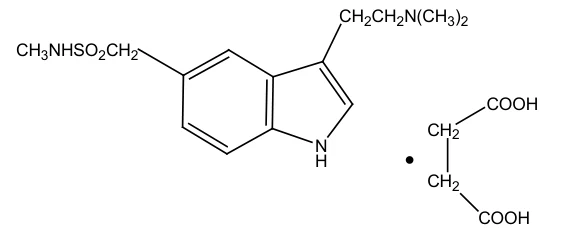
Chemical name: 3-[2-(dimethyl amino)ethyl]-N-methyl-indole-5-methane sulphonamide, succinate (1:1)
Molecular formula and molecular mass: C14H21N3O2S· C4H6O4, 413.5 g/mol
Structural formula:
Physicochemical properties:
Physical Characteristics: White to off-white powder. Freely soluble in water, sparingly soluble methanol and practically insoluble in methylene chloride.
Solubility: In water (4°C) = 54 mg/mL In water (20°C) = 101 mg/mL In saline (0.9% w/v, 4°C) = 62 mg/mL In saline (0.9% w/v, 20°C) = 109 mg/mL
pH and pka: The pH of a 1% w/v solution of sumatriptan succinate in water is approximately 4.9. pka1 (succinic acid) = 4.21, 5.67 pka2 (3° amine group) = 9.63 pka3 (sulphonamide group) = >12
Partition Coefficient
(between n-octanol and water): log P = 1.07 at a pH of 10.7
Melting Range: 165°C to 166°C
14. Clinical Trials
14.1. Clinical Trials by Indication
Migraine
The efficacy of sumatriptan succinate tablets for the treatment of migraine was established in four multicentre, randomized, placebo-controlled studies. Patients enrolled and treated in these studies were primarily female (84%), Caucasian (98%) and with a mean age of 40 years (range of 18 to 65 years). Patients were instructed to treat a moderate to severe headache. In Study 2, up to three doses were permitted to treat a single attack within a 24-hour period, non-responders could take a second dose at two hours, while any recurrence of migraine could be treated with a third dose. Studies 1, 3 and 4 were designed to allow for the treatment of up to three attacks.
Headache relief at two hours was statistically significantly greater for all sumatriptan groups when compared to placebo (see Table 5).
Table 5 - Percentage of Patients with Headache Relief (0/1)1 at 2 Hours Post Oral Dose for the Treatment of Migraine
| Study | Placebo (%) | 25 mg (%) | 50 mg (%) | 100 mg (%) |
| Study 1 | 27 (n=212) | - | - | 67* (n=313) |
| Study 2 | 19 (n=84) | - | - | 50* (n=149) |
| Study 3 | 23 (n=154) | - | 49 (n=331) | - |
| Study 4 | 28 (n=98) | 47** (n=303) | 61* (n=302) | 61* (n=298) |
1 Headache relief is defined as a reduction in headache severity from grade 3 or 2 (severe or moderate) to grade 1 or 0 (mild or no pain) = Not evaluated * p<0.001 vs. placebo ** p=0.001 vs. placebo | ||||
In Study 4, the 50 mg (p=0.002) and 100 mg (p=0.003) groups had significantly more patients experience headache relief compared to the 25 mg group at 2 hours.
For patients with migraine-associated nausea, photophobia and/or phonophobia at baseline, there was a decreased incidence of these symptoms following administration of sumatriptan succinate tablets compared to placebo.
Menstrually-Associated Migraine
Two multicentre, randomized, placebo-controlled studies evaluated sumatriptan succinate 50 mg and 100 mg tablets administered during the mild phase of a menstrually-associated migraine attack. A total of 816 subjects with a mean age of 37 (18 to 65 years of age), with at least a 1-year history of migraine, and a 6-month history of regularly occurring MAM, were enrolled and treated. MAM was defined as any migraine beginning on Day –2, to +4 with day 1 = the first day of flow. Patients were instructed to treat a single, mild, moderate or severe headache within one hour of mild pain onset.
A statistically significantly higher proportion of patients following sumatriptan succinate 50 mg and 100 mg achieved pain-free status at 2 hours post-dose compared with placebo in the treatment of menstrually-associated migraine (see Table 6).
Table 6 - Percentage of Patients with Complete Headache Pain Relief1 at 2 Hours Post Oral Dose for the Treatment of Menstrually-Associated Migraine
| Study | Placebo (%) | 50 mg (%) | 100 mg (%) |
| Study 1 | 22 (n=132) | 51* (n=138) | 58* (n=133) |
| Study 2 | 29 (n=118) | 51* (n=116) | 61* (n=115) |
1 Complete Headache Pain Relief is defined as grade 1 (mild pain) reduced to grade 0 (no pain) * p<0.001 vs. placebo | |||
For patients with migraine-associated nausea, photophobia and/or phonophobia at baseline, there was a decreased incidence of these symptoms following administration of sumatriptan succinate tablets compared to placebo.
14.2. Comparative Bioavailability Studies
A randomized, single oral dose (1 x 100 mg), crossover comparative bioavailability study of SUMATRIPTAN (Sivem Pharmaceuticals ULC) and IMITREX (Glaxo Canada Inc.) was conducted in healthy, adult male subjects under fasting conditions. Comparative bioavailability data from the 22 subjects included in the statistical analysis are presented in the following table.
SUMMARY TABLE OF THE COMPARATIVE BIOAVAILABLITY DATA
Sumatriptan (1 x 100 mg) Geometric Mean Arithmetic Mean (CV %) | ||||
| Parameter | Test1 | Reference2 | % Ratio of Geometric Means | 90% Confidence Interval |
AUCT (ng.h/mL) | 195.3 204.5 (31) | 189.3 197.2 (30) | 102.8 | 97.5 – 108.3 |
AUCI (ng.h/mL) | 202.9 211.9 (30) | 197.4 205.2 (29) | 102.4 | 97.4 – 107.6 |
Cmax (ng/mL) | 52.8 54.6 (26) | 50.8 52.8 (30) | 103.6 | 96.5 – 111.2 |
Tmax3 (h) | 1.33 (0.33 – 3.00) | 2.50 (0.50 – 3.00) | ||
T½4 (h) | 1.97 (19) | 2.06 (22) | ||
1 SUMATRIPTAN (sumatriptan as sumatriptan succinate) tablets 100 mg (Sivem Pharmaceuticals ULC)
2 IMITREX (sumatriptan as sumatriptan succinate) tablets 100 mg (Glaxo Canada Inc.)
3 Expressed as the median (range) only
4 Expressed as the arithmetic mean (CV %) only
15. Microbiology
No microbiological information is required for this drug product.
16. Non-Clinical Toxicology
General toxicology
Acute Studies: Administration of single oral doses of sumatriptan up to 2000 mg/kg in rats and 1200 mg/kg in mice was well tolerated.
Dogs also survived high oral doses of sumatriptan (500 mg/kg).
In subcutaneous studies, a dose of 2 mg/kg to rats was lethal. Dogs received subcutaneous doses of 20 and 100 mg/kg which were non-lethal. The reactions to treatment were similar irrespective of species or route of administration. Apart from local damage at the injection sites, there were no macroscopic or microscopic changes noted in any tissue (Table 7).
Table 7 - Results from Acute Toxicity (LD50) Studies in Mice, Rats and Dogs
| Species/Strain | Route | Approx. LD50 (mg/kg) | MNLD (mg/kg) | MLD (mg/kg) |
Mouse: CRH Mouse: CRH | Oral Intravenous | 1500 >15, <20 | ≥ 1200 ≥ 15 | > 1200 ≤ 20 |
Rat: RH Rat: SD | Oral Oral | > 2000 > 2000 | ≥ 2000 ≥ 2000 | > 2000 > 2000 |
| Rat: RH | Intravenous | > 40 | > 20 | ≤ 32 |
| Rat: SD | Subcutaneous | 1200 (M) 1400 (F) | ≥ 500 | ≤ 1000 |
Dog: Beagle Dog: Beagle | Oral Subcutaneous | > 500 > 100 | > 500 ≥ 100 | > 500 > 100 |
MNLD - Maximum non-lethal dose MLD - Minimum lethal dose (M) - Male (F) - Female | ||||
Long Term Studies: Subacute toxicity studies were conducted for periods up to 6 weeks in RH rats. Sumatriptan was given orally (by gavage) at doses up to 500 mg/kg/day and given subcutaneously at doses up to 81 mg/kg/day.
Clinical signs observed following oral administration were generally minor and transient in nature and occurred predominantly at 500 mg/kg/day. These signs included post-dosing erythema, mydriasis, ataxia, salivation, subdued temperament, postural changes and moist eyes.
Reactions were similar in subcutaneous studies in rats receiving doses of sumatriptan up to 81 mg/kg/day. Local irritation at the injection site was accompanied by a marked inflammatory response, local necrosis, hemorrhage, infiltration, granulation tissue formation and local muscle degeneration and repair. These reactions were dose dependent.
In dogs administered oral sumatriptan (1 to 100 mg/kg/day) in studies up to 6 weeks, clinical signs observed included head shaking, scratching, salivation, trembling, agitated behaviour, vocalization, mydriasis and vasodilation. These effects were dose-related. The dogs also developed tachycardia lasting for several hours, often followed by bradycardia. No changes in ECG were detected.
Subcutaneous administration of sumatriptan (1 to 16 mg/kg/day) up to 6 weeks in dogs caused injection site reactions similar to the reactions described in rats.
Chronic toxicity studies were carried out for 24 weeks and 72 weeks in rats and 26 and 60 weeks in dogs.
In both the 24 week and 72 week studies in rats receiving sumatriptan doses of 5, 50 and 500 mg/kg/day orally, clinical signs were similar to those seen in previous oral toxicity studies in rats and were mild and transient in nature.
Animals of each sex receiving 50 and 500 mg/kg/day gained weight more rapidly than controls. This was considered to be related to increased food consumption.
Small reductions in cholesterol levels were frequently noted at 500 mg/kg/day. As well, dose-related increases in urine specific gravity were seen throughout the 72 week study at 500 mg/kg/day. These increases were of no toxicological significance. Cessation of treatment showed good evidence of recovery.
There were no macroscopic or histological treatment-related findings in any of the organs in either study.
A long term repeat-dose subcutaneous toxicity study of 24 weeks duration was performed in RH rats receiving sumatriptan at doses of 1, 8 and 64 mg/kg/day.
There was occasional temporary appearance of masses at the injection sites in the animals receiving the highest dose of sumatriptan. Evidence of injection site injury was also apparent in the recovery animals. Rats in this group showed signs of neutrophilia and lymphocytosis.
Injection site reactions in animals in the high-dose group were similar to those reported during previous toxicity studies.
Studies of 26 and 60 weeks at oral doses of 2, 10 and 50 mg/kg/day were performed in Beagle dogs.
A moderate increase in heart rate was observed in the intermediate (10 mg/kg/day) dose group (60 week study) and in the high (50 mg/kg/day) dose group (26 and 60 week studies). The increase lasted for up to 7 hours after dosing and a dose-related decrease in heart rate was evident 24 hours after dosing, at 10 and 50 mg/kg/day. There were no changes in rhythm. Animals of either sex receiving 50 mg/kg/day showed slight reductions in body weight gain in both studies.
In the 60 week study, a dose-related incidence of transient changes was noted on the surface of the cornea. However, these changes were not considered to be treatment-related as evidenced by microscopic examination.
Organ weight analyses revealed significantly increased heart weights in all groups of treated females in the 26 week study. There were no treatment-related effects on organ weights in the 60 week study.
A long term repeat-dose subcutaneous study of 24 weeks’ duration was performed in the Beagle dog at doses of 1, 3.5 and 12 mg/kg/day. Injection site reactions included edema, marked hemorrhage, moderate/chronic inflammation and minimal arteritis. Some minimal injection site changes were also seen in treated animals after a 5-week recovery period.
Transient dose related changes in the precorneal tear film of treated dogs were observed. There was, however, no histological evidence of damage to the cornea or surrounding tissues.
Analysis of hematological parameters revealed a slight lowering of some red cell parameters in the high-dose (12 mg/kg/day) group. No reticulocyte response was evident. Although no effect on total leucocyte count was observed, lymphocyte numbers were generally lower and neutrophils were generally slightly higher at this dose level. The only change observed during the recovery period was a statistically significantly reduced hemoglobin level in the males.
Genotoxicity
Sumatriptan produced no detectable or reproducible mutagenic potential above that seen in controls, in studies conducted in vitro with mutant strains of Salmonella typhimurium, Escherichia coli, or Saccharomyces cerevisiae with or without a rat hepatic drug metabolizing enzyme system. In addition, no statistically significant clastogenic effects were seen in vitro using cultured human peripheral lymphocytes at a maximum dose of 1000 mcg/mL in the presence of the rat hepatic drug metabolism enzyme system or in vivo in a rat micronucleus test, at a maximum dosage of 1000 mg/kg.
Sumatriptan showed only weak cytotoxic activity at the highest concentration of 5000 mcg/mL tested in vitro with V-79 mammalian cells.
Carcinogenicity
The carcinogenic potential of sumatriptan was evaluated in a 78-week oncogenicity study conducted in mice given oral doses of 10, 60 and 160 mg(base)/kg/day. There were two groups (102 mice each) given the vehicle only.
Tumours were found in more than half of the male mice and in less than half of the females across all groups. There was a statistically significant increase in the incidence of non-fatal hemolymphoreticular tumours observed in males at the dose of 60 mg/kg/day group only when compared with controls. Since there was no dose relationship, this increase was considered to be of no toxicological significance. There was no evidence that administration of sumatriptan at any of the dose levels caused any alteration in the incidence of any specific tumours or non-neoplastic lesions.
A 104-week study was conducted in the Sprague-Dawley rat given oral doses of 10, 60 and 360 mg(base)/kg/day. Two control groups of 100 animals each were given vehicle control only.
There was a significant increase in the incidence of non-fatal adrenal medullary tumours (benign and malignant pheochromocytomas) in males given doses of 10 and 60 mg/kg/day and in males dosed at 360 mg/kg/day. A significant increase in the incidence of benign testicular interstitial (Leydig) cell tumours occurred when compared with controls. Adrenal medullary tumours also increased significantly in females dosed at 60 and 360 mg/kg/day. Comparison of both types of tumours with historical control data indicated that the observations were within the expected background range for the species and that long-term exposure to sumatriptan does not induce any treatment-related increases in the incidences of any tumours for the species tested.
Reproduction and developmental toxicology
In organogenesis studies, oral doses of up to 500 mg/kg/day in the rat were without adverse effects upon fetal parameters measured, but an oral dose of 1000 mg/kg/day in the rat proved toxic to both dams and embryos.
Two oral organogenesis studies were conducted in rabbits, one using daily oral doses of 5, 25 or 100 mg/kg/day and the other using 5, 15 or 50 mg/kg/day. Sumatriptan was administered from days 8 to 20 of pregnancy.
In the first study, there were no adverse effects at the two lower doses. At the highest dose (100 mg/kg), there was a severe decrease in maternal body weight gain indicating that this dose is maternally toxic. A non-significant increase in post-implantation intra-uterine death from 8.3% in the untreated control group to 21.2% in the high-dose (background range in untreated control animals 1.7% to 15.2%) was observed. In addition there was an increased incidence of subtle variations in the position of certain blood vessels emanating from the aortic arch. In the untreated control these were present at 5.5% of fetuses (3 out of 10 litters affected). At the maternally toxic dose of 100 mg/kg, 23.1% of fetuses had these variations (4 out of 5 litters affected). This type of change is commonly found in untreated control animals (historical control incidence 17.5%; proportion of litters affected 44 out of 91), and does not compromise either health or survival.
In the second oral study, the findings were similar to those seen in the first study. There were no adverse effects at the two lower doses. At the highest dose (50 mg/kg), there was a severe decrease in maternal body weight gain. There were also various fetal effects ascribed to maternal toxicity. There was a slight reduction in mean fetal weight (37.7 g in control, 35.3 g at 50 mg/kg); small increases in the incidence of common skeletal variants (control incidence 8.8%; at 50 mg/kg 20.8%; background mean 6.2%; background range 1.3% to 13.3%) and again an increased incidence of positional changes of certain aortic arch blood vessels; (control incidence 12.8%, 3 out of 20 litters affected; at 50 mg/kg 25%, 10 out of 14 litters affected).
Placental transfer studies in pregnant rabbits have shown that sumatriptan can cross the placental barrier in small amounts. After a 5 mg/kg oral dose, 71.2 ng sumatriptan per gram of fetus was detected. The blood levels at this dose were 172 to 269 ng/mL. At the maternally toxic dose of 50 mg/kg in rabbits, blood levels reached 3180 to 6750 ng/mL.
Organogenesis studies conducted using intravenous doses of up to 12.5 mg/kg/day in rats revealed fused ribs at a dose of 2.5 mg/kg/day and rudimentary tail and dilatation of the renal pelvis at a dose of 12.5 mg/kg/day. The treatment had no adverse effects on either the dams or the fetuses and the malformations were considered unrelated to treatment since they are known to occur spontaneously in the control groups of the rat strain employed.
Rabbits were also studied using intravenous doses of up to 8.0 mg/kg/day which revealed no teratological response. However, in the first study a statistically significant dose-related increasing trend in prenatal mortality was seen due to apparent maternal toxicity. In the second study, using intravenous doses up to 2.0 mg/kg/day, no maternal toxicity or increased prenatal mortality were observed.
Fertility studies conducted in rats with oral doses of up to 500 mg/kg/day and subcutaneous doses of up to 60 mg/kg/day indicated that there were no adverse effects upon the reproductive performance of the treated, parental generation, or upon the growth and development of two successive untreated generations.
In peri- and post-natal studies conducted in rats given oral doses of up to 1000 mg/kg/day and subcutaneous doses of up to 81 mg/kg/day, no toxicological adverse effects that may have been relevant to the peri- and post-natal development of their offspring were seen. However, oral administration of 1000 mg/kg/day during periods of pregnancy and lactation resulted in a decrease in maternal and fetal body weight.
A comprehensive evaluation of the effects of sumatriptan on reproduction indicates that the compound is devoid of teratogenic potential in the rat. In addition, there were no adverse effects on fertility or postnatal development. In rabbit oral reproduction studies, there were increased incidences of variations in cervico-thoracic blood vessel configuration in the fetuses, but these were only seen at maternally toxic doses in which blood levels were in excess of 50 times those seen after therapeutic doses in humans. A direct association with sumatriptan treatment is considered unlikely but cannot be excluded. The relevance to humans is unknown.
Special toxicology
Local Tolerance: The subcutaneous and intramuscular administration of 1 mL of a solution of sumatriptan (50 mg/mL) to rabbits produced no overt signs of irritancy and caused only slight necrotic changes in the deepest layers of the subcuticular muscle. While the subcutaneous lesions healed in a rapid and uncomplicated manner, the intramuscular lesions were moderately slow to heal.
At a lower concentration (2.5 mg/mL) no signs of subcutaneous or intramuscular irritancy were apparent.
In inhalation toxicity studies (dog, monkey), no irritants of the nasal passages or respiratory tract tissues were identified after intranasal administration of sumatriptan.
Skin and Eye Irritancy: Sumatriptan produced little or no irritant reaction when applied topically to the skin of guinea-pigs and was a non-irritant in the rabbit eye.
Sumatriptan was shown to be devoid of detectable skin sensitizing potential in guinea-pigs subjected to a 12-day induction period (0.05 mL of a 10% solution, applied epicutaneously) prior to challenge with sumatriptan.
Dependence Liability: The physical dependence liability of sumatriptan was assessed in Cynomolgus monkeys at an oral dose of 5 mg/kg, the lowest tolerable dose causing mild to moderate CNS effects.
The behavioural changes observed upon withdrawal of sumatriptan were limited in number, sporadic, unsustained and not observed in all animals. It would appear that sumatriptan does not share with compounds such as opiates and benzodiazepines the ability to cause physical dependence.
17. Supporting Product Monographs
- 1) IMITREX DF (sumatriptan succinate tablets, 50 mg and 100 mg sumatriptan), IMITREX (sumatriptan succinate injection, 6 mg / 0.5 mL sumatriptan [as sumatriptan succinate]) and IMITREX (sumatriptan nasal spray, 5 mg and 20 mg sumatriptan [as hemisulphate]), control 299824, product monograph, GlaxoSmithKline Inc. (2025-12-09)