


Product Monograph - Taro-Adapalene/Benzoyl Peroxide
SUMMARY PRODUCT INFORMATION
| Route of Administration | Dosage Form / Strength | All Nonmedicinal Ingredients |
| Topical | Gel, 0.1% adapalene / 2.5% benzoyl peroxide Gel, 0.3% adapalene / 2.5% benzoyl peroxide | C13-14 isoparaffin, docusate sodium, edetate disodium, glycerin, laureth 7, poloxamer 124, polyacrylamide, propylene glycol, and purified water. . |
INDICATIONS AND CLINICAL USE
Taro-Adapalene / Benzoyl Peroxide (adapalene 0.1%/benzoyl peroxide 2.5%) Topical Gel is indicated for:
- Treatment of mild and moderate acne vulgaris, characterized by comedones, inflammatory papules/pustules in patients 9 years of age and older.
Taro-Adapalene / Benzoyl Peroxide Forte (adapalene 0.3%/benzoyl peroxide 2.5%) Topical Gel is indicated for:
- Treatment of moderate and severe acne vulgaris, characterized by comedones, inflammatory papules/pustules with or without occasional nodules in patients 12 years of age and older.
CLINICAL USE
Physicians should be able to choose between the two concentrations Taro-Adapalene / Benzoyl Peroxide Forte topical gel and Taro-Adapalene / Benzoyl Peroxide topical gel based on the presenting patient’s clinical condition and confounding factors that could worsen acne severity.
Taro-Adapalene / Benzoyl Peroxide Forte may also be considered for those patients who have moderate and severe acne vulgaris, who may have risk factors that worsen acne prognosis such as tendency toward cyclical relapses, pre-pubertal onset or long term history of acne, positive family / genetic history, those prone to or at risk for scarring, and those who may have intolerance or contraindication to systemic treatment. In these cases, physicians have the option to choose between the 2 concentrations. Clinical surveillance of these patients is recommended to ensure sufficient therapeutic response.
Geriatrics (> 65 years of age):
Safety and effectiveness of adapalene and benzoyl peroxide, 0.1% / 2.5% w/w topical gel and adapalene and benzoyl peroxide, 0.3%/2.5% w/w topical gel in geriatric patients aged 65 years and above have not been established.
Pediatrics (< 9 years of age):
Safety and effectiveness of adapalene and benzoyl peroxide, 0.1% / 2.5% w/w topical gel in children below the age of 9 years have not been established.
Safety and effectiveness of adapalene and benzoyl peroxide, 0.3% / 2.5% w/w topical gel in children below the age of 12 years have not been established.
CONTRAINDICATIONS
- Patients who are hypersensitive to adapalene, benzoyl peroxide or to any ingredient in the formulation or component of the container. For a complete listing, see the Dosage Forms, Composition and Packaging section of the product monograph.
- Application to areas of skin affected by eczema or seborrhoeic dermatitis
- Pregnancy
- Women planning a pregnancy
WARNINGS AND PRECAUTIONS
General
For external use only. Not for ophthalmic use.
Avoid contact with the eyes, lips, angles of the nose, mucous membranes, abraded skin and open wounds. If contact occurs, rinse thoroughly with warm water.
If a reaction suggesting allergic / hypersensitivity reactions to any component of the formula occurs, the use of the product should be discontinued.
Concomitant topical acne therapy is not recommended because a possible cumulative irritancy effect may occur, especially with the use of peeling, desquamating, or abrasive agents (see DRUG INTERACTIONS, Drug-Drug Interactions). Avoid concomitant use of other potentially irritating topical products (medicated or abrasive soaps and cleansers, soaps and cosmetics that have strong skin-drying effect and products with high concentrations of alcohol, astringents, spices, or limes).
The product should not be applied to cuts, abrasions, eczematous or sunburned skin. As with other retinoids, use of electrolysis, “waxing” and chemical depilatories for hair removal should be avoided on skin treated with Taro-Adapalene / Benzoyl Peroxide or Taro-Adapalene / Benzoyl Peroxide Forte (see DRUG INTERACTIONS, Drug-Lifestyle Interactions).
Taro-Adapalene / Benzoyl Peroxide and Taro-Adapalene / Benzoyl Peroxide Forte may bleach hair and coloured fabric. Use caution when applying near hairline (see DRUG INTERACTIONS, Drug-Lifestyle Interactions).
Patients should be advised to use non-comedogenic cosmetics (see DRUG INTERACTIONS, Drug-Lifestyle Interactions).
Certain cutaneous signs and symptoms such as erythema, dryness, scaling, burning or pruritus are associated with the topical application of retinoids and can also be expected with the use of Taro-Adapalene / Benzoyl Peroxide (adapalene 0.1%/benzoyl peroxide 2.5% w/w) or Taro-Adapalene / Benzoyl Peroxide Forte (adapalene 0.3%/benzoyl peroxide 2.5% w/w) Topical Gel. These treatment-related effects generally occur during the first four weeks of therapy, are mostly mild to moderate in intensity, and usually lessen as the skin adjusts with continued use. Depending on the degree of the side effects, patients can be directed to use a moisturizer, use the medication less frequently or temporarily discontinue use until the symptoms subside (see DOSAGE AND ADMINISTRATION).
As with any retinoid, exposure to excessive sunlight, including sunlamps, should be avoided while using the preparation, or a suitably effective sunscreen product and protective clothing over the treated areas is recommended when exposure cannot be avoided. In case of sunburn, allow the skin to heal before using Taro-Adapalene / Benzoyl Peroxide or Taro-Adapalene / Benzoyl Peroxide Forte. Weather extremes, such as wind or cold, may also be irritating to patients under treatment with adapalene.
Carcinogenesis and Mutagenesis
See TOXICOLOGY.
Special Populations
Pregnant Women:
Orally administered retinoids have been associated with congenital abnormalities. Topical adapalene/benzoyl peroxide is contraindicated in pregnant women and in women planning a pregnancy because of the possibility of an increased systemic exposure due to various factors (e.g. damaged skin barrier, excessive use).
There are no well-controlled trials in pregnant women treated with adapalene and benzoyl peroxide, 0.1% / 2.5% w/w topical gel or adapalene and benzoyl peroxide, 0.3% / 2.5% w/w topical gel. Animal reproduction studies have not been conducted with the combination gel or benzoyl peroxide. Furthermore, such studies are not always predictive of human response; therefore, if the patient becomes pregnant while using Taro-Adapalene / Benzoyl Peroxide or Taro-Adapalene / Benzoyl Peroxide Forte, treatment should be discontinued.
There have been rare reports of birth defects among babies born to women exposed to topical retinoids during pregnancy. However, there are no well-controlled prospective studies of the use of topical retinoids, including adapalene, in pregnant women. A retrospective study of mothers exposed to topical tretinoin during the first trimester of pregnancy found no increase in the incidence of birth defects.
Adapalene administered orally at doses of ≥25 mg/kg/day has been shown to be teratogenic. No teratogenic effects were seen in rats at oral doses of up to 5.0 mg/kg/day.
Dermal teratology studies conducted in rats and rabbits at doses of 0.6-6.0 mg adapalene/kg/day exhibited no foetotoxicity and only minimal increases in supernumerary ribs in both species and delayed ossification in rabbits (see TOXICOLOGY). The AUC at the No Observable Adverse Effect Level in the rat (6.0 mg/kg/day, the most sensitive species) corresponds to safety margins of 32 and 102 when compared respectively to the exposure data in humans with adapalene 0.3%/benzoyl peroxide 2.5% topical gel and adapalene 0.1%/benzoyl peroxide 2.5% topical gel.
Nursing Women: It is not known whether adapalene or benzoyl peroxide is excreted in human milk following use of adapalene and benzoyl peroxide, 0.1% / 2.5% w/w/ topical gel or adapalene and benzoyl peroxide, 0.3% / 2.5% w/w topical gel. Animal pharmacology studies indicate that adapalene is excreted in milk at levels lower than plasma levels. Because many drugs are excreted in human milk, caution should be exercised when Taro-Adapalene / Benzoyl Peroxide or Taro-Adapalene / Benzoyl Peroxide Forte topical gel is administered to a nursing mother. To avoid contact exposure of the infant, application of Taro-Adapalene / Benzoyl Peroxide or Taro-Adapalene / Benzoyl Peroxide Forte to the chest should be avoided when used during breastfeeding.
Pediatrics (9-16 years of age): No specific monitoring or hazards are associated with the use of adapalene and benzoyl peroxide, 0.1% / 2.5% w/w topical gel in pediatric patients between the ages of 9 and 16 years.
Safety and effectiveness of adapalene and benzoyl peroxide, 0.1% / 2.5% w/w topical gel in children below the age of 9 years have not been established.
Safety and effectiveness of adapalene and benzoyl peroxide, 0.3% / 2.5% w/w topical gel in children below the age of 12 years have not been established.
Geriatrics (> 65 years of age): Safety and effectiveness of adapalene and benzoyl peroxide, 0.1% / 2.5% w/w/topical gel and adapalene and benzoyl peroxide, 0.3% / 2.5% w/w topical gel in geriatric patients age 65 years and above have not been established.
ADVERSE REACTIONS
Adverse Drug Reaction Overview
Treatment-related adverse reactions typically associated with use of adapalene and benzoyl peroxide, 0.1% / 2.5% w/w topical gel or adapalene and benzoyl peroxide, 0.3% / 2.5% w/w topical gel include mild to moderate application site reactions, such as skin irritation characterized by scaling, dryness, erythema, and burning/stinging. These reactions usually occur early in the treatment, and tend to gradually lessen over time (see WARNINGS AND PRECAUTIONS). Local adverse reactions during the treatment period were more pronounced with adapalene and benzoyl peroxide, 0.1% / 2.5% w/w topical gel compared to adapalene or benzoyl peroxide alone.
Clinical Trial Adverse Drug Reactions
Because clinical trials are conducted under very specific conditions the adverse reaction rates observed in the clinical trials may not reflect the rates observed in practice and should not be compared to the rates in the clinical trials of another drug. Adverse drug reaction information from clinical trials is useful for identifying drug-related adverse events and for approximating rates.
During clinical trials, 2077 subjects were exposed to adapalene and benzoyl peroxide, 0.1% / 2.5% topical gel or adapalene and benzoyl peroxide, 0.3% / 2.5% w/w topical gel formulations.
A total of 1470 patients with acne vulgaris, 12 years and older, were treated once daily for 12 weeks to 12 months.
Adapalene and benzoyl peroxide, 0.1% / 2.5% w/w topical gel and adapalene and benzoyl peroxide, 0.3% / 2.5% w/w topical gel efficacy and safety were assessed in subjects 12 years of age or older presenting with acne vulgaris. In these studies, adapalene and benzoyl peroxide, 0.1% / 2.5% w/w topical gel and adapalene and benzoyl peroxide, 0.3% / 2.5% w/w topical gel and their comparators were applied once daily over a treatment period of 12 weeks.
In two 12-week studies, related adverse events that were reported in at least 1% in any treatment group of 564 patients treated with adapalene and benzoyl peroxide, 0.1% / 2.5% w/w topical gel are captured in Table 1.
Related adverse events reported in at least 1% of patients 12 years and older, in a 12-week study conducted with adapalene and benzoyl peroxide, 0.3% / 2.5% w/w topical gel or adapalene and benzoyl peroxide, 0.1% / 2.5% w/w topical gel are summarized in Table 2.
Table 1 Drug Relateda Adverse Events Reported in Clinical Trials by At Least 1% of Patients treated with Adapalene and Benzoyl Peroxide, 0.1% / 2.5% w/w Topical Gel (12 Weeks)
| System Organ Class / Preferred Termb | Adapalene and Benzoyl Peroxide 0.1% / 2.5% w/w Topical Gel (N=564) n (%) | Adapalene 0.1% Gel (N=568) n (%) | Benzoyl Peroxide 2.5% Gel (N=564) n (%) | Vehicle Gel (N=489) n (%) | ||||||||||
| Total number of AE(s) | 104 | 87 | 40 | 23 | ||||||||||
| Total number (%) of subjects with AE(s)c | 81 (14.4) | 70 (12.3) | 29 (5.1) | 21 (4.3) | ||||||||||
| Skin and Subcutaneous Tissue Disorders | ||||||||||||||
| Dry skin | 36 (6.9) | 33 (5.8) | 11 (2.0) | 10 (2.0) | ||||||||||
| Contact dermatitis | 16 (2.8) | 14 (2.5) | 1 (0.2) | 1 (0.2) | ||||||||||
| Skin irritation | 6 (1.1) | 1 (0.2) | 3 (0.5) | 0 | ||||||||||
| Pruritus | 4 (0.7) | 4 (0.7) | 10 (1.8) | 4 (0.8) | ||||||||||
| General Disorders and Administration Site Conditions | ||||||||||||||
| Application site burning | 13 (2.3) | 3 (0.5) | 2 (0.4) | 2 (0.4) | ||||||||||
| Application site irritation | 8 (1.4) | 6 (1.1) | 2 (0.4) | 1 (0.2) | ||||||||||
a Drug-related adverse events do not include known local adverse events (local tolerability) of retinoids.
b Multiple occurrences of a Preferred Term by a subject were counted once per Preferred Term.
c A subject was counted once even if the subject experienced more than one AE during the study.
Table 2 Drug Relateda Adverse Events Reported in at least 1% of patients 12 years and older, in a 12-week study conducted with Adapalene and Benzoyl Peroxide, 0.3% / 2.5% w/w Topical Gel or Adapalene and Benzoyl Peroxide, 0.1% / 2.5% w/w Topical Gel
| System Organ Class/Preferred Term | Adapalene and Benzoyl Peroxide, 0.3% / 2.5% Topical Gel (N=217) n(%) | Adapalene and Benzoyl Peroxide, 0.1% / 2.5% Topical Gel (N=217) n(%) | Vehicle Gel (N=69) n(%) | ||||
| Total Number (%) of Subjects with at least one adverse reaction | 15 (6.9) | 0 | 0 | ||||
| Skin and Subcutaneous Tissue Disorders | |||||||
| Skin irritation | 9 (4.1) | 0 | 0 | ||||
| Eczema | 3 (1.4) | 0 | 0 | ||||
| Skin burning sensation | 2 (0.9) | 0 | 0 | ||||
| Dermatitis atopic | 2 (0.9) | 0 | 0 | ||||
a Drug-related adverse events do not include known local adverse events (local tolerability) of retinoids.
In the two 12-week studies conducted with adapalene and benzoyl peroxide, 0.1% / 2.5% w/w topical gel, local tolerability evaluations were conducted at each study visit by assessment of erythema, scaling, dryness and stinging/burning. Analysis over the 12-week period showed that local tolerability scores peaked at Week 1 of therapy and subsided thereafter. Most local tolerability signs for adapalene and benzoyl peroxide, 0.1% / 2.5% w/w topical gel were mild or moderate in severity (Table 3).
Table 3 Highest Severity of Local Tolerability Scores Worse than Baseline, Safety Population, in Clinical Trials with Adapalene and Benzoyl Peroxide, 0.1% / 2.5% w/w Topical Gel
Adapalene and Benzoyl Peroxide, 0.1% / 2.5% w/w Gel Na= 553 nb (%) | Adapalene 0.1% Gel Na= 562 nb (%) | Benzoyl Peroxide 2.5% Gel Na= 557 nb (%) | Gel Vehicle Na= 481 nb (%) | |
| Erythema | 225 (40.7) | 174 (31.0) | 104 (18.7) | 97 (20.2) |
| 1 = mild | 148 (26.8) | 121 (21.5) | 73 (13.1) | 72 (15.0) |
| 2 = moderate | 72 (13.0) | 51 (9.1) | 30 (5.4) | 24 (5.0) |
| 3 = severe | 5 (0.9) | 2 (0.4) | 1 (0.2) | 1 (0.2) |
| Scaling | 253 (45.7) | 211 (37.5) | 100 (18.0) | 88 (18.3) |
| 1 = mild | 192 (34.7) | 175 (31.1) | 89 (16.0) | 84 (17.5) |
| 2 = moderate | 58 (10.5) | 35 (6.2) | 11 (2.0) | 4 (0.8) |
| 3 = severe | 3 (0.5) | 1 (0.2) | 0 | 0 |
| Dryness | 302 (54.6) | 244 (43.3) | 135 (24.2) | 87 (18.1) |
| 1 = mild | 224 (40.5) | 202 (35.9) | 121 (21.7) | 80 (16.6) |
| 2 = moderate | 74 (13.4) | 39 (6.9) | 14 (2.5) | 7 (1.5) |
| 3 = severe | 4 (0.7) | 3 (0.5) | 0 | 0 |
| Stinging/Burning | 328 (59.3) | 178 (31.6) | 79 (14.2) | 53 (11.1) |
| 1 = mild | 225 (40.7) | 139 (24.7) | 72 (12.9) | 45 (9.4) |
| 2 = moderate | 84 (15.2) | 31 (5.5) | 5 (0.9) | 8 (1.7) |
| 3 = severe | 19 (3.4) | 8 (1.4) | 2 (0.4) | 0 |
a N = Total number of subjects with data available.
b n = Number of subjects with data worse than baseline.
At the end of treatment period (12 weeks), the incidence of local signs and symptoms of tolerability of adapalene and benzoyl peroxide, 0.1% / 2.5% w/w topical gel is comparable to adapalene 0.1% gel with regard to the signs of erythema, scaling and dryness, but induces slightly more stinging (see Table 4).
Table 4 Comparison of Local Tolerability at End of Treatment Period (Last Score Observed Worse than Baseline): Combined Data from two Clinical Trials with Adapalene and Benzoyl Peroxide, 0.1% / 2.5% w/w Topical Gel
| Final Scorea | Adapalene and Benzoyl Peroxide, 0.1% / 2.5% w/w/ Gel n (%) | Adapalene 0.1% Gel n (%) | Benzoyl Peroxide 2.5% Gel n (%) | Vehicle Gel n (%) |
| Nb | 553 | 562 | 557 | 481 |
| Erythemac | 60 (10.8) | 56 (10.0) | 27 (4.8) | 39 (8.1) |
| Scalingc | 55 (9.9) | 54 (9.6) | 34 (6.1) | 30 (6.2) |
| Drynessc | 65 (11.8) | 65 (11.6) | 32 (5.7) | 28 (5.8) |
| Stinging/burningc | 51 (9.2) | 33 (5.9) | 20 (3.6) | 17 (3.5) |
a Last score observed during post-baseline period and worse than baseline.
b N = Total number of subjects with data at baseline and at least one post-baseline observation.
c Combined for ‘mild’, ‘moderate’ and ‘severe’.
In the 12-week study conducted with both adapalene and benzoyl peroxide, 0.1% / 2.5% w/w topical gel and adapalene and benzoyl peroxide, 0.3% / 2.5% w/w topical gel,, the incidence of local cutaneous irritation, for worst and final scores was comparable for all tolerability parameters between the active arms for the combined (moderate and severe) acne population (Table 5).
Table 5 Summary of Local Tolerability, observed data, worst and final scores, in the combined (moderate and severe IGA acne populations) treated with Adapalene and Benzoyl Peroxide, 0.3% / 2.5% w/w Topical Gel or Adapalene and Benzoyl Peroxide, 0.1% / 2.5% w/w Topical Gel
| Worst Score | Final Score | ||||||||||||
| Sign/Symptom | Adapalene and Benzoyl Peroxide, 0.3% / 2.5% w/w Gel N= 217 n (%) | Adapalene and Benzoyl Peroxide, 0.1% / 2.5% w/w Gel N= 217 n (%) | Gel Vehicle N= 69 n (%) | Adapalene and Benzoyl Peroxide, 0.3% / 2.5% w/w Gel N= 217 n (%) | Adapalene and Benzoyl Peroxide, 0.1% / 2.5% w/w Gel N= 217 n (%) | Gel Vehicle N= 69 n (%) | |||||||
| Erythema | 104 (48.8) | 93 (43.9) | 25 (36.8) | 40 (18.8%) | 27(12.7%) | 6 (8.8%) | |||||||
| Scaling | 116 (54.5) | 101 (47.6) | 21 (30.9) | 31 (14.6) | 28 (13.2) | 6 (8.8) | |||||||
| Dryness | 137 (64.3) | 132 (62.3) | 27 (39.7) | 38 (17.8) | 35 (16.5) | 6 (8.8) | |||||||
| Stinging/Burning | 141 (66.2) | 138 (65.1) | 19 (27.9) | 26 (12.2) | 26 (12.3) | 2 (2.9) |
n = Number of subjects with data worse than baseline
Worst Score: The highest severity score observed during post-Baseline period for a subject.
Final Score: The last data observed during the post-Baseline period for a subject.
Signs/symptoms of local irritation in the Moderate stratum at the final visit occurred in greater proportion of subjects in the Adapalene and Benzoyl Peroxide, 0.3% / 2.5% w/w Topical Gel group than in the Adapalene and Benzoyl Peroxide, 0.1% / 2.5% w/w Topical Gel group. Similar trend was observed in the Severe stratum. Scaling had a higher increase in incidence between the Moderate and Severe acne strata (Table 6). Severity was mostly mild or moderate with few subjects experiencing severe signs/symptoms.
Table 6 Summary of Local Tolerability, observed data, final scores, in the moderate and severe IGA acne populations treated with Adapalene and Benzoyl peroxide, 0.3% / 2.5% w/w Topical Gel or Adapalene and Benzoyl peroxide, 0.1% / 2.5% w/w Topical Gel
| Final Scores | ||||||||||||||||
|---|---|---|---|---|---|---|---|---|---|---|---|---|---|---|---|---|
| Sign/Symptom | Moderate acne | Severe acne | ||||||||||||||
Adapalene and Benzoyl Peroxide, 0.3% / 2.5% w/w Gel N= 110 n (%) | Adapalene and Benzoyl Peroxide, 0.1% / 2.5% w/w Gel N= 101 n (%) | Gel Vehicle N= 35 n (%) | Adapalene and Benzoyl Peroxide, 0.3% / 2.5% w/w Gel N= 103 n (%) | Adapalene and Benzoyl Peroxide, 0.1% / 2.5% w/w Gel N= 111 n (%) | Gel Vehicle N= 33 n (%) | |||||||||||
| Erythema | 20 (18.2) | 13 (12.9) | 4 (11.4) | 20 (19.4) | 14 (12.6) | 2 (6.1) | ||||||||||
| Scaling | 13 (11.8) | 11 (10.9) | 3 (8.6) | 18 (17.5) | 17 (15.3) | 3 (9.1) | ||||||||||
| Dryness | 18 (16.4) | 17 (16.8) | 3 (8.6) | 20 (19.4) | 18 (16.2) | 3 (9.1) | ||||||||||
| Stinging/Burning | 13 (11.8) | 12 (11.9) | 0 | 13 (12.6) | 14 (12.6) | 2 (6.1) | ||||||||||
n = Number of subjects with data worse than baseline
Final Score: The last data observed during the post-Baseline period for a subject.
Over the course of the long-term (12-month) study conducted with adapalene and benzoyl peroxide, 0.1% / 2.5% w/w topical gel, no unexpected events or treatment emergent safety signals appeared. A total of 147 subjects (32.5%) reported related adverse events and most of the adverse events occurred within the first three months of treatment (see Table 7).
Table 7 Drug Relateda Adverse Events Reported in Long-Term Clinical Trial by At Least 1% of Patients treated with Adapalene and Benzoyl Peroxide, 0.1% / 2.5% w/w Topical Gel (12 Months)
| System Organ Class / Preferred Termb | Baseline to Month 3 (n = 452) | Month 3 to Month 6 (n = 397) | Month 6 to Month 9 (n = 366) | Month 9 to 1 Year (n = 334) | Total (n = 452) |
| Total number of AE(s) | 233 | 18 | 15 | 9 | 276 |
| Total number (%) of subjects with AE(s)c | 127 (28.1%) | 16 (4.0%) | 11 (3.0%) | 5 (1.5%) | 147 (32.5%) |
| Skin and Subcutaneous Tissue Disorders | 94 (20.8) | 8 (2.0) | 8 (2.2) | 4 (1.2) | 110 (24.3) |
| Dry skin | 69 (15.3) | 5 (1.3) | 6 (1.6) | 3 (0.9) | 78 (17.3) |
| Erythema | 21 (4.6) | 0 | 2 (0.5) | 1 (0.3) | 24 (5.3) |
| Skin desquamation | 21 (4.6) | 0 | 1 (0.3) | 0 | 22 (4.9) |
| Skin discomfort | 5 (1.1) | 0 | 0 | 0 | 5 (1.1) |
| General Disorders and Administration Site Conditions | 59 (13.1) | 4 (1.0) | 4 (1.1) | 2 (0.6) | 68 (15.0) |
| Application site burning | 54 (11.9) | 3 (0.8) | 4 (1.1) | 1 (0.3) | 61 (13.5) |
| Application site irritation | 16 (3.5) | 1 (0.3) | 0 | 1 (0.3) | 18 (4.0) |
| Injury, Poisoning & Procedural Complications | 5 (1.1) | 4 (1.0) | 0 | 0 | 9 (2.0) |
| Sunburn | 5 (1.1) | 4 (1.0) | 0 | 0 | 9 (2.0) |
a Drug-related adverse events do not include known local adverse events (local tolerability) of retinoids.
b Multiple occurrences within a System Organ Class (SOC) by a subject were counted once per SOC. Multiple occurrences of a Preferred Term by a subject were counted once per Preferred Term.
c A subject was counted once even if the subject experienced more than one Adverse Event during the study. Subjects may be counted in more than one period due to multiple Adverse Events.
Adverse Event(s) with incomplete onset date(s) or onset date(s) prior to the first application are only included in the Total column.
Less Common Clinical Trial Adverse Drug Reactions (<1%)
The following less common events have been designated as related (possibly, probably, definitely) to treatment with adapalene and benzoyl peroxide, 0.1% / 2.5% w/w topical gel and adapalene and benzoyl peroxide, 0.3% / 2.5% w/w topical gel, considering all patients in the clinical trials in acne vulgaris:
Blood and Lymphatic: Lymphadenopathy.
General and Administration Site: Pyrexia, xerosis, application site pruritus.
Gastrointestinal: Vomiting, diarrhea.
Nervous system: Dizziness, headache, paraesthesia (tingling at the application site)
Ophthalmologic: Eyelid edema, eye discharge, eyelid erythema.
Skin: Facial edema, worsening of acne, dermatitis, dermatitis contact, dermatitis exfoliative, pain of skin, skin desquamation, urticaria, swelling of face, skin hypopigmentation, cystic acne, acne, skin burning sensation, photosensitivity reaction, sunburn, rash, erythema, eczema.
Abnormal Hematologic and Clinical Chemistry Findings
No significant abnormal values were observed in the short term controlled studies or the long- term safety study.
Pediatrics
During a pediatric clinical trial, 285 children with acne vulgaris, 9 to 11 years of age were treated with adapalene and benzoyl peroxide, 0.1% / 2.5% w/w topical gel or with the vehicle gel once daily for 12 weeks. Overall, the safety profile of adapalene and benzoyl peroxide, 0.1% / 2.5% w/w topical gel in these subjects is comparable to the safety profile observed in older subjects 12 years of age and above, both in the nature and frequency of the observed adverse events.
Analysis of local tolerability evaluations shows similar incidence of treatment emergent signs and symptoms as in subjects 12 years of age and above, with local tolerance signs and symptoms peaking during the first week and decreasing over time.
No data is available for adapalene and benzoyl peroxide, 0.3% / 2.5% w/w topical gel in children 9 to 11 years of age.
Post-Market Adverse Drug Reactions
The following events have been reported since the global launch of adapalene and benzoyl peroxide, 0.1% / 2.5% w/w topical gel. These events have been chosen for inclusion due to either their seriousness, causal connection to adapalene and benzoyl peroxide, 0.1% / 2.5% w/w topical gel or frequency of reporting. Post-market adverse events are reported spontaneously from a population of unknown size, thus estimates of frequency cannot be made.
Skin: Acne, pain of skin (stinging pain), eczema vesicular, allergic contact dermatitis, skin oedema, swelling of face, photosensitivity reaction, blister (vesicles), skin discoloration, rash, pruritus, anaphylactic reaction.
Ophthalmologic: Eyelid oedema, conjunctivitis.
Respiratory, thoracic and mediastinal disorders: Throat tightness, dyspnoea.
DRUG INTERACTIONS
Overview
There are no known interactions with other medications which are likely to be used topically and concurrently with adapalene 0.1%/benzoyl peroxide 2.5% Topical Gel or adapalene 0.3%/benzoyl peroxide 2.5% Topical Gel. Absorption of adapalene through human skin is low, and therefore interaction with systemic medications is unlikely.
The percutaneous penetration of benzoyl peroxide in the skin is low and the drug substance is completely metabolised into benzoic acid which is rapidly eliminated. Therefore, the potential interaction of benzoic acid with systemic medicinal products is unlikely to occur.
Drug-Drug Interactions
No formal drug-drug interaction studies were conducted with adapalene and benzoyl peroxide,
0.1%/2.5% w/w topical gel or adapalene and benzoyl peroxide, 0.3%/2.5% w/w topical gel.
As Taro-Adapalene / Benzoyl Peroxide and Taro-Adapalene / Benzoyl Peroxide Forte have the potential for local irritation, it is possible that concomitant use of abrasive cleansers, strong drying agents, or irritant products may produce additive irritant effects. Particular caution should be exercised in using preparations containing sulphur, resorcinol, or salicylic acid in combination with Taro-Adapalene / Benzoyl Peroxide Topical Gel and Taro-Adapalene / Benzoyl Peroxide Forte Topical Gel. If these preparations have been used, it is advisable not to start therapy with Taro-Adapalene / Benzoyl Peroxide or Taro-Adapalene / Benzoyl Peroxide Forte until the effects of such preparations have subsided.
Drug-Food Interactions
Interactions of adapalene and benzoyl peroxide, 0.1% / 2.5% w/w topical gel or adapalene and benzoyl peroxide, 0.3% / 2.5% w/w topical gel with food products have not been established.
Drug-Herb Interactions
Interactions of adapalene and benzoyl peroxide, 0.1% / 2.5% w/w topical gel or adapalene and benzoyl peroxide, 0.3% / 2.5% w/w topical gel with herbal products have not been established.
Drug-Laboratory Interactions
Interactions of adapalene and benzoyl peroxide, 0.1% / 2.5% w/w topical gel or adapalene and benzoyl peroxide, 0.3% / 2.5% w/w topical gel with laboratory tests have not been established.
Drug-Lifestyle Interactions
Taro-Adapalene / Benzoyl Peroxide and Taro-Adapalene / Benzoyl Peroxide Forte should not come into contact with any coloured material including hair and fabrics as this may result in bleaching and discolouration.
As with other retinoids, use of electrolysis, “waxing” and chemical depilatories for hair removal should be avoided on skin treated with Taro-Adapalene / Benzoyl Peroxide and Taro-Adapalene / Benzoyl Peroxide Forte.
Patients should be advised to use non-comedogenic cosmetics. Colour cosmetics such as blushers and powders are acceptable; however, make-up cosmetics should be water based. Cosmetics must be removed by thorough cleansing before the area is treated.
DOSAGE AND ADMINISTRATION
Recommended Dose and Dosage Adjustment
Taro-Adapalene / Benzoyl Peroxide (adapalene and benzoyl peroxide topical gel, 0.1% / 2.5% w/w) (patients 9 years of age and older) and Taro-Adapalene / Benzoyl Peroxide Forte (adapalene and benzoyl peroxide topical gel, 0.3% / 2.5% w/w) (patients 12 years of age and older) should be applied to affected areas of the face, chest and back once daily in the evening, after washing gently with a non-medicated cleanser.
In subjects with moderate acne vulgaris, the choice between the two concentrations of adapalene/benzoyl peroxide fixed-dose combination should be based on the patient’s clinical condition and risk factors for acne severity.
A small amount of either Taro-Adapalene / Benzoyl Peroxide or Taro-Adapalene Benzoyl Peroxide Forte should be applied to provide a thin film, avoiding eyes, lips and mucous membranes. These medications should not be applied to cuts, abrasions, eczematous, or sunburned skin.
If irritation occurs, the patient should be directed to apply non-comedogenic moisturizers. Discontinue treatment if a severe local inflammatory response is experienced. Reinstitute therapy when the reaction has subsided, initially applying the preparation less frequently (e.g. every other day). Once-daily application may be resumed if it is judged that the patient is able to tolerate the treatment.
Missed Dose
If a single dose is missed, dosing should continue as per usual the following day, and the usual amount should be applied.
OVERDOSAGE
For management of a suspected drug overdose, contact your regional Poison Control Centre.
In the event of an acute oral overdose, activated charcoal may be administered to aid in the removal of unabsorbed drug. General supportive measures are recommended.
Taro-Adapalene / Benzoyl Peroxide topical gel and Taro-Adapalene / Benzoyl Peroxide Forte topical gel are intended for cutaneous use only. Acute overdosage with the topical use is unlikely. If the medications are applied excessively, no more rapid or better results will be obtained and marked redness, peeling or discomfort may occur.
The acute oral toxicity of adapalene topical gel, 0.1% in mice and rats is greater than 10 mL/kg (10 mg/kg). Inadvertent oral ingestion of adapalene may lead to the same adverse effects as those associated with excessive oral intake of Vitamin A, including teratogenesis in women of childbearing years. Therefore, pregnancy testing should be carried out in women of childbearing potential who have ingested the product.
ACTION AND CLINICAL PHARMACOLOGY
Mechanism of Action
Adapalene and benzoyl peroxide, have complementary mechanisms of action targeting the pathology of acne vulgaris. The actives have an effect on three pathophysiologic factors known to contribute to acne vulgaris: altered follicular growth and differentiation (comedogenesis), colonization of the pilosebaceous unit with Propionibacterium acnes (P. acnes), and inflammation.
- Adapalene: Adapalene is a chemically stable, retinoid-like compound. Biochemical and pharmacological profile studies have demonstrated that adapalene is a potent modulator of cellular differentiation, keratinization and inflammatory processes, all of which represent important features in the pathology of acne vulgaris. Mechanistically, adapalene binds to specific retinoic acid nuclear receptors but, unlike tretinoin, does not bind to the cytosolic receptor protein. Although the exact mode of action of adapalene is unknown, current evidence suggests that topical adapalene normalizes the differentiation of follicular epithelial cells resulting in decreased microcomedone formation. In vitro studies with adapalene have shown inhibition of the AP-1 factors and the inhibition of the expression of toll like receptors 2. This profile suggests that the cell mediated inflammatory component of acne is reduced by adapalene.
- Benzoyl Peroxide (BPO): Benzoyl peroxide is an oxidizing agent with a broad spectrum bactericidal activity, in particular against Propionibacterium acnes (P. acnes), which is abnormally present in the acne-affected pilosebaceous unit. Additionally benzoyl peroxide has demonstrated exfoliative and keratolytic activities.
Pharmacodynamics
Taro-Adapalene / Benzoyl Peroxide (adapalene 0.1%/benzoyl peroxide 2.5%) and Taro-Adapalene / Benzoyl Peroxide Forte (adapalene 0.3%/benzoyl peroxide 2.5%) Topical Gels combine two active substances, which have complementary mechanisms of action. The targets of this action are distinct, with no known pharmacodynamic interactions.
- Adapalene: Studies in acne patients provide clinical evidence that topical adapalene is effective in reducing noninflammatory acne lesions (open and closed comedones). Adapalene inhibits the chemotactic (directional) and chemokinetic (random) responses of human polymorphonuclear leucocytes in in vitro assay models; it also inhibits the metabolism of arachidonic acid by lipoxidation to inflammatory mediators. This suggests that the cell-mediated inflammatory component of acne is modified by adapalene. Studies in human patients provide clinical evidence that topical adapalene is effective in reducing the inflammatory components of acne (i.e., papules and pustules).
- Benzoyl Peroxide: Benzoyl peroxide is an oxidizing agent with bactericidal and keratolytic
- effects. As it exerts its antimicrobial effect through its oxidizing properties, resistance to this agent is unlikely to develop and has not been reported in the literature. In addition, benzoyl peroxide has keratolytic properties, which may improve efficacy.
Pharmacokinetics
The pharmacokinetic studies for adapalene and benzoyl peroxide, 0.1% / 2.5% w/w topical gel evaluated systemic exposure to adapalene when applied in fixed combination with benzoyl peroxide or as monad. Plasma benzoyl peroxide was not measured because the skin rapidly metabolizes benzoyl peroxide into benzoic acid. Benzoic acid is an endogenous compound synthesized in the intestine from phenylalanine; the absorbed dose of benzoic acid after topical application of adapalene and benzoyl peroxide, 0.1% / 2.5%, w/w topical gel under maximized use conditions (i.e. 2 g/day) is less than 10% of the Acceptable Daily Intake established by the World Health Organization (WHO).
Topical application of either adapalene and benzoyl peroxide, 0.1% / 2.5% w/w topical gel or adapalene gel (at corresponding equivalent adapalene strengths, i.e., 0.1% or 0.3%) under conditions of maximized use generated similar results. The studies confirmed low systemic exposure to adapalene when applied topically in adapalene and benzoyl peroxide, 0.1% / 2.5% w/w topical gel or in adapalene gel. Benzoyl peroxide in fixed- combination with adapalene did not increase the systemic exposure of adapalene.
Absorption: Absorption of adapalene through human skin is low. No quantifiable levels of parent substance have been found in the plasma of patients following chronic adapalene gel 0.1% application in controlled clinical trials (limit of quantification = 0.25 ng/mL).
A pharmacokinetic study was conducted with adapalene and benzoyl peroxide, 0.1% / 2.5% w/w topical gel or adapalene gel under maximized conditions for 30 days (2 g applied to 1000 cm²).
Daily application of adapalene and benzoyl peroxide, 0.1% / 2.5% w/w topical gel resulted in low systemic exposure to adapalene, with observed plasma concentrations below 0.1 ng/mL in most subjects. Adapalene concentrations reached quantifiable levels (between 0.1 and 0.2 ng/mL) in two subjects treated with adapalene 0.1% /benzoyl peroxide 2.5% gel and three subjects with adapalene gel. The highest adapalene AUC0-24h determined in the fixed-combination group was 1.99 ng.h/mL compared to an AUC0-24h of 2.65 ng.h/mL with adapalene gel 0.1%.
An additional pharmacokinetic study was conducted with adapalene and benzoyl peroxide, 0.3% / 2.5% w/w topical gel in 28 adult and adolescent subjects (12 to 33 years of age) with severe acne vulgaris. The subjects were treated with once-daily applications on all potentially affected areas during a 4-week period with, on average, 2.3 grams/day (range: 1.6-3.1grams/day) of adapalene and benzoyl peroxide, 0.3% / 2.5% w/w topical gel applied as a thin layer to the face, shoulders, upper chest and upper back. After 4 weeks of treatment, 16 subjects (62%) had quantifiable adapalene plasma concentrations above the limit of quantification (LOQ of 0.1 ng/mL), with a mean Cmax of 0.16 ± 0.08 ng/mL and a mean AUC0-24h of 2.49 ±1.21 ng.h/mL. The most exposed subject had adapalene Cmax and AUC0-24h values of 0.35 ng/mL and 6.41 ng.h/mL, respectively.
The percutaneous penetration of benzoyl peroxide is low; when applied topically, it is rapidly and completely converted into benzoic acid in the skin and eliminated in the urine.
Distribution: Classical plasma protein binding techniques were not feasible due to the physiochemical properties of adapalene. However, an alternative method was adopted that measured the partitioning of the drug between plasma or protein solutions and erythrocytes. When 3H-adapalene was incubated with human whole blood, 26% was bound to erythrocytes and total binding of adapalene in blood was > 99%. Adapalene bound primarily to lipoproteins and human serum albumin. The distribution for benzoyl peroxide could not be determined since it is converted into benzoic acid, which is an endogenous substance.
Metabolism: Following 24-hour incubation with human hepatocytes, more than 90% of adapalene was metabolized. Both metabolites and adapalene showed a possibility for conjugation - predominantly glucuronidation and sulfation.
Benzoyl peroxide undergoes a copper-dependent metabolism in the skin to radical and non- radical metabolites. The initial cleavage of the peroxide bond yields short-lived hydroxyl benzoyloxyl free radicals. Benzoyloxyl radicals can fragment to form phenyl radicals plus carbon dioxide, or can attract hydrogen atoms to form the stable metabolite, benzoic acid. The metabolism of benzoyl peroxide metabolism evaluated in vitro in human skin confirmed benzoyl peroxide is metabolized into benzoic acid before passing into circulation.
Excretion: Excretion of adapalene appears to be primarily by the biliary route. The majority of an administered dose of 0.3% adapalene gel was excreted by 144 hours post dose and no drug was detected after the 6th day following last application. Under maximized conditions, the mean total unchanged drug substance excreted in the feces was 0.07% ± 0.06% of the total dose applied (range, 0.02% to 0.19%).
After topical administration in animal models, benzoyl peroxide was mainly and rapidly excreted in urine (45% of applied dose), nearly exclusively in the form of benzoic acid.
Special Populations and Conditions
Pharmacokinetic studies have not been conducted in subjects with a medical condition which might interfere with the absorption, distribution, metabolism, or excretion of adapalene and benzoyl peroxide, 0.1% / 2.5% w/w topical gel or adapalene and benzoyl peroxide, 0.3% / 2.5% w/w topical gel, in particular, a history of hepatic or renal disease.
STORAGE AND STABILITY
Taro-Adapalene / Benzoyl Peroxide (adapalene 0.1%/benzoyl peroxide 2.5%) and Taro-Adapalene / Benzoyl Peroxide Forte (adapalene 0.3%/benzoyl peroxide 2.5%) topical gel should be stored at room temperature (15˚C to 25˚C). Taro-Adapalene / Benzoyl Peroxide should be used within a period of 12 months after first opening and Adapalene / Benzoyl Peroxide Forte should be used within a period of 3 months after first opening. Any unused portion should be discarded 12 months after opening for Taro-Adapalene / Benzoyl Peroxide and 3 months after opening for Taro-Adapalene / Benzoyl Peroxide Forte or at product expiry date (whichever comes first). Keep container tightly closed. Keep in a safe place out of the reach of children.
SPECIAL HANDLING INSTRUCTIONS
There are no special handling instructions for Taro-Adapalene / Benzoyl Peroxide topical gel and Taro-Adapalene / Benzoyl Peroxide Forte topical gel.
DOSAGE FORMS, COMPOSITION AND PACKAGING
Taro-Adapalene / Benzoyl Peroxide (adapalene 0.1%/benzoyl peroxide 2.5%) topical gel is available in 70 g fill pump dispensers and in 60 g fill laminate tubes.
Taro-Adapalene / Benzoyl Peroxide Forte (adapalene 0.3%/benzoyl peroxide 2.5%) topical gel is available in 70 g fill pump dispensers.
Taro-Adapalene / Benzoyl Peroxide and Taro-Adapalene / Benzoyl Peroxide Forte are white to pale yellow opaque gel. Each gram of Taro-Adapalene / Benzoyl Peroxide topical gel or Taro-Adapalene / Benzoyl Peroxide Forte topical gel contains respectively adapalene 0.1% w/w (1 mg/g) or adapalene 0.3% w/w (3 mg/g) in addition to benzoyl peroxide 2.5% w/w (25 mg/g) in a vehicle consisting of C13-14 isoparaffin, docusate sodium, edetate disodium, glycerin, laureth 7, poloxamer 124, polyacrylamide, propylene glycol, and purified water.
PART II: SCIENTIFIC INFORMATION
PHARMACEUTICAL INFORMATION
Drug Substance: Adapalene
Proper name: adapalene
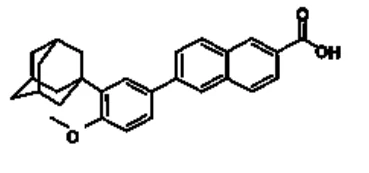
Chemical name: 6-[3-(1-Adamantyl)-4-methoxyphenyl]-2-naphthoic acid
Molecular formula: C28H28O3
Molecular mass: 412.5 g/mol
Structural formula:
Physicochemical properties: Adapalene is a white to off-white powder, which is soluble in tetrahydrofuran, sparingly soluble in ethanol and insoluble in water.
Drug Substance: Benzoyl Peroxide
Proper name: benzoyl peroxide, hydrous
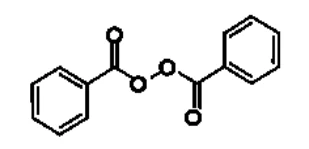
Chemical name: Dibenzoyl peroxide
Molecular formula: C14H10O4 (anhydrous)
Molecular mass: 242.23 g/mol (anhydrous)
Structural formula:
Physicochemical properties: Benzoyl peroxide is a white powder, crystals or granules. Benzoyl peroxide has low solubility in water. Soluble in ethanol, diethyl ether and acetone.
Hydrous benzoyl peroxide contains not less than 20% water.
However, the product is formulated to contain the labelled amount of benzoyl peroxide on an anhydrous basis.
CLINICAL TRIALS
Comparative Studies
A randomized, double-blind, multiple-center, placebo-controlled, parallel design study comparing Adapalene 0.1%/Benzoyl Peroxide 2.5% Topical Gel (Taro Pharmaceuticals Inc.) to TACTUPUMPTM Topical Gel Adapalene 0.l %/Benzoyl Peroxide 2.5% (Galderma Canada Inc.) in the treatment of acne vulgaris was performed in 834 eligible patients aged 12 to 40. The co-primary measures of bioequivalence were determined in the per-protocol population (PP) by evaluating the test-to-reference ratio of the mean percent change from baseline to Week 12 (Day 84±4 days) in the number of inflamed (papules/pustules) lesions and non-inflamed (open and closed comedones) lesions. The secondary measure was the test versus reference difference in the proportion of patients who were considered a “clinical success” based on improvement in the investigator global assessment score (IGA) at Week 12. In addition, superiority to placebo and safety were evaluated for test and reference treatments.
The test product was determined to be bioequivalent to the reference product for all efficacy endpoints. Results of the efficacy analyses are summarized in the table below.
| Summary of Primary Efficacy Analysis | ||||
| Equivalence, PP Population (n Test = 328 ; n Reference = 321 ; n Placebo = 109) | ||||
| PARAMETER | LS Mean for Test | LS Mean for Reference | Ratio | 90% CIa |
Inflammatory lesion counts (percent change) | -54.10 | -54.54 | 0.99 | (0.98, 1.00) |
Non-Inflammatory lesion counts (percent change) | -49.37 | -47.29 | 1.04 | (1.02, 1.07) |
| Superiority, modified Intent-to-Treat Population (n Test = 352; n Reference = 343 ; n Placebo = 115) | ||||
| PARAMETER | Test vs. Placebo | Reference vs. Placebo | ||
| LS Mean | p-value | LS Mean | p-value | |
| Test | Vehicle | |||
| Difference | Reference | Vehicle | ||
| Difference | ||||
Inflammatory lesion counts (percent change) | ||||
| -53.41 | -23.97 | |||
| -29.45 | < 0.0001 | |||
| -54.08 | -23.97 | |||
| -30.12 | < 0.0001 | |||
Non-Inflammatory lesion counts (percent change) | ||||
| -48.51 | -18.20 | |||
| -30.31 | < 0.0001 | |||
| -46.96 | -18.20 | |||
| -28.76 | < 0.0001 | |||
| Equivalence, Summary of Secondary Efficacy Analysis | ||||
| PP Population (n Test = 328 ; n Reference = 321 ; n Placebo = 109) | ||||
| PARAMETER | ||||
| Test | Reference | Vehicle | ||
| Difference Test vs Reference | 90% CI | |||
IGA success (proportion of subjects) | ||||
| 28.35% | 29.28% | 6.4% | ||
| -0.93% | (- -7.90, 6.04) | |||
a Prespecified criterion for clinical equivalence was: the 90% confidence interval for the ratio is contained within 0.80 to 1.25.
b Prespecified criterion for clinical equivalence was: the 90% confidence interval for the difference is contained within -20% to +20%.
Comparative Studies- 0.3% adapalene/2.5% benzoyl peroxide
A multi-center double-blind, randomized, placebo controlled, parallel-group study, comparing Adapalene and Benzoyl Peroxide Gel 0.3%/2.5% Topical Gel (Taro Pharmaceuticals U.S.A., Inc.) to Tactupump Forte (Adapalene and Benzoyl Peroxide Topical Gel, 0.3%/2.5% w/w), (Galderma Canada Inc.) and both active treatments to a placebo control in the treatment of acne vulgaris. The primary measures of bioequivalence were determined in the per-protocol population (PP) by evaluating the test-to-reference ratio of the mean percent change from baseline to Week 12 in the number of inflamed (papules/pustules) lesions and non-inflamed (open and closed comedones) lesions. The secondary measure was the test versus reference difference in the proportion of patients who were considered a “clinical success” based on improvement in the investigator global assessment score (IGA) at Week 12. In addition, superiority to placebo and safety were evaluated for test and reference treatments.
The test product was determined to be bioequivalent to the reference product for all efficacy endpoints. Results of the efficacy analyses are summarized in the table below.
| Primary Efficacy Parameter: Mean Percent Change from Baseline to Week 12 in Inflammatory Lesion Counts | |||
| Parameter | Test | Reference | Vehicle |
| PP Population | |||
| N | 203 | 203 | |
| LS Mean | -66.41 | -68.15 | |
| LS Mean Ratio | 0.97 | ||
| 90% CI Test/Reference | (0.93, 1.02) | ||
| mITT Population | |||
| N | 213 | 211 | 107 |
| LS Mean | -65.14 | -67.51 | -27.74 |
| LS Mean Difference to Vehicle | -37.40 | -39.77 | |
| p-value vs Vehicle | <0.0001 | <0.0001 | |
| Primary Efficacy Parameter: Mean Percent Change from Baseline to Week 12 in Non-Inflammatory Lesion Counts | |||
| PP Population | |||
| N | 203 | 203 | |
| LS Mean | -52.15 | -53.33 | |
| LS Mean Ratio | 0.98 | ||
| 90% CI Test/Reference | (0.92, 1.04) | ||
| mITT Population | |||
| N | 213 | 211 | 107 |
| LS Mean | -52.23 | -52.13 | -13.16 |
| LS Mean Difference to Vehicle | -39.06 | -38.97 | |
| p-value vs Vehicle | <0.0001 | <0.0001 | |
| Secondary Efficacy Parameter: Proportion of Subjects with IGA Success at Week 12 | |||
| PP Population | |||
| N | 203 | 203 | |
| Success Percent | 56.2 | 59.1 | |
| Percent Difference Test-Reference | -3.0 | ||
| 90% CI | (-11.5, 5.6) |
Study demographics and trial design
Table 8 Summary of patient demographics for North American Phase III clinical trials Adapalene and Benzoyl Peroxide Topical Gel, 0.1% / 2.5% w/w in acne vulgaris
| Study # | Trial design | Dosage, route of administration and duration | Study subjects (n=num ber) | Mean age y (Range) | Gender % M/F | ||||
| RD.06.SRE.18094 | Double-blind, multi- center, randomized, four treatment arms, controlled (active and vehicle) | (517) | 16.4 | 60/40 | |||||
| 149 | (12 – 56) | |||||||
| 148 | ||||||||
| 149 | ||||||||
| 71 | ||||||||
| Topical | |||||||||
| 12 weeks | |||||||||
| RD.06.SRE.18087 | Double-blind, multi- center, randomized, four treatment arms, controlled (active and vehicle) | (1668) | 18.2 | 49/51 | |||||
| 415 | (12 – 58) | |||||||
| 420 | ||||||||
| 415 | ||||||||
| 418 | ||||||||
| Topical | |||||||||
| 12 weeks | |||||||||
| RD.06.SRE.18089 | Open-label, long term, multi-center |
Topical 1 year | (452) | 18.3 (12 – 50) | 49/51 | ||||
Male and female subjects, 12 years of age or older, were eligible to enroll in the clinical trials outlined in Table 8. In Study 18094, subjects of any race with mild and moderate acne vulgaris (20 to 50 inflammatory lesions and 30 to 100 noninflammatory lesions) on the face were enrolled while subjects with nodules and cysts were excluded. These criteria were also applied to the long-term Study 18089.
In Study 18087, subjects with acne vulgaris with 20 to 50 inflammatory lesions and 30 to 100 noninflammatory lesions, one nodule and additionally specifying an Investigator Global Assessment (IGA) score of “3” (moderate) were eligible for inclusion (see Table 9). Subjects with facial and truncal acne vulgaris could also enroll.
Table 9 Global Severity Assessment
| Investigator’s Global Assessment | ||
|---|---|---|
| 0 | Clear | Residual hyperpigmentation and erythema may be present. |
| 1 | Almost Clear | A few scattered comedones and a few small papules. |
| 2 | Mild | Some comedones and some papules and pustules. No nodules present. |
| 3 | Moderate | Many comedones, papules and pustules. One nodule present. |
| 4 | Severe | Covered with comedones, numerous papules and pustules and a few nodules and cysts may be present. |
| 5 a | Very Severe | Highly inflammatory acne covering the face; with nodules and cysts present. |
a 5= very severe IGA grading was used in Study 18094, per established definitions in force at the time of conduct of the studies. Subsequent Study 18087 used a 4-point scale lacking the very severe grade 5.
Study results
Table 10 Results of Study 18094 in acne vulgaris at Week 12 (ITT Population)
| PRIMARY EFFICACY RESULTS STUDY 18094, ITT Week 12-LOCFa | ||||
| Primary Endpoints | Adapalene 0.1%/ BPO 2.5% Gel N = 149 | Adapalene Gel N = 148 | BPO Gel N = 149 | Gel Vehicle N = 71 |
| Success Rateb | ||||
| n (%) | 32 (21.5%) | 18 (12.2%) | 18 (12.1%) | 4 (5.6%) |
| [p values vs Adapalene/BPO] | - | p = 0.029 | p = 0.009 | p = 0.002 |
| Mean % lesion count reduction | ||||
| Total lesions | 48.6% | 34.0% | 33.4% | 29.7% |
| [p values vs Adapalene/BPO] | - | p < 0.001 | p < 0.001 | p < 0.001 |
| Inflammatory lesions | 52.4% | 39.9% | 35.8% | 31.8% |
| [p values vs Adapalene/BPO] | - | p < 0.001 | p < 0.001 | p < 0.001 |
| Noninflammatory lesions | 45.9% | 29.6% | 32.2% | 27.8% |
| [p values vs Adapalene/BPO] | - | p < 0.001 | p < 0.001 | p < 0.001 |
a Week 12 LOCF: The last available data observed during the study. Baseline value was used if no post-Baseline data were available.
b Success Rate was defined as the proportion of subjects with an Investigator’s Global Assessment (IGA) Score of ‘0’ or ‘1’ (clear / almost clear) with at least a two grade improvement from baseline on the global, static, dichotomized, six-point scale.
Efficacy of adapalene and benzoyl peroxide, 0.1% / 2.5% w/w topical gel vs. gel vehicle was observed early in Study 18094, with significant differences in Success Rate observed at Week 8 and sustained to the end of treatment. For Percent Change in Lesion Counts, the significant differences from gel vehicle were demonstrated at Week 1 for inflammatory lesions and at Week 4 for noninflammatory and total lesion counts, and were sustained to the end of treatment.
Adapalene and benzoyl peroxide, 0.1% / 2.5% w/w topical gel had a significantly higher Success Rate (p≤0.029) for all analyses at Week 12 LOCF, ITT) as compared to either monad or gel vehicle in the ITT population (see Table 10). The 21.5% Success Rate (subjects rated “Clear/IGA 0” or “Almost Clear/IGA 1” with at least a two-grade improvement from baseline) for adapalene and benzoyl peroxide, 0.1% / 2.5% w/w topical gel was 9% greater than either monad and 16% greater than the gel vehicle alone. All co-primary endpoints (percent change from baseline in inflammatory, noninflammatory and total lesion counts) showed significantly superior results for adapalene and benzoyl peroxide, 0.1% / 2.5% w/w topical gel in the ITT population and were confirmed in the PP population (p-values ≤ 0.02 for all comparisons).
Table 11 Results of Study 18087 in acne vulgaris at Week 12 (ITT Population)
| PRIMARY EFFICACY RESULTS STUDY 18087, ITT Week 12-LOCFa | |||||
| Primary Endpoints | Adapalene 0.1%/BPO 2.5% Gel N = 415 | Adapalene Gel N = 420 | BPO Gel N = 415 | Gel Vehicle N= 418 | |
| Success Rate2b | |||||
| n (%) | 125 | (30.1%) | 83 (19.8%) | 92 (22.2%) | 47 (11.3%) |
| [p values Adapalene/BPO] | vs | - | p < 0.001 | p = 0.006 | p < 0.001 |
| Mean % lesion count reduction | |||||
| Total lesions | 50.0% | 41.3% | 41.2% | 26.1% | |
| [p values vs Adapalene/BPO] | - | p < 0.001 | p < 0.001 | p < 0.001 | |
| Inflammatory lesions | 53.4% | 41.7% | 47.6% | 30.2% | |
| [p values vs Adapalene/BPO] | - | p < 0.001 | p = 0.017 | p < 0.001 | |
| Noninflammatory lesions | 48.1% | 40.8% | 37.2% | 23.2% | |
| [p values vs Adapalene/BPO] | - | p = 0.007 | p < 0.001 | p < 0.001 | |
a Week 12 LOCF: The last available data observed during the study. Baseline value was used if no post-Baseline data were available.
b Success Rate was defined as the proportion of subjects with an Investigator’s Global Assessment (IGA) Score of ‘0’ or ‘1’ (clear / almost clear) with at least a two grade improvement from baseline on the global, static, dichotomized, six-point scale.
All analyses (ITT, PP, and sensitivity) for Success Rate in Study 18087 showed adapalene and benzoyl peroxide, 0.1% / 2.5% w/w topical gel to be significantly more effective than either monad or the gel vehicle (p≤0.006 for primary ITT analyses; p < 0.001 for PP analyses) (see Table 11).
The percentage of subjects rated Success (“Clear/IGA 0” or “Almost Clear/IGA 1” with at least a two grade improvement from baseline) is significantly greater for adapalene and benzoyl peroxide, 0.1% / 2.5% w/w topical gel (30.1%) than for adapalene gel (19.8%), benzoyl peroxide gel (22.2%), and gel vehicle (11.3%). There was a significant (p=0.004) early treatment effect for adapalene and benzoyl peroxide, 0.1% / 2.5% w/w topical gel compared to gel vehicle starting at week 4 for Success Rate, and sustained until the end of the study.
Table 12 Results of Adapalene 0.1% / BPO 2.5% Gel in Acne vulgaris
at Month 12, Study 18089 (ITT Population)
| Summary of Percent Change at Month 12 in Study 18089 (ITT Population) | |
Percent Change at Month 12 N=327 Mean (range) | |
| Inflammatory Lesions | -66.4% (-100 to +44) |
| Noninflammatory Lesions | -64.6% (-100 to +64.1) |
| Total Lesion Counts | -65.1% (-100 to +36.8) |
In 18089 at Month 12, the mean Percent Reduction in inflammatory, noninflammatory, and total lesion counts from Baseline was 64% or greater for all lesion counts (see Table 12). Reduction in lesion counts were observed starting as early as Week 1 and improvement continued to end of the study (see Figure 1).
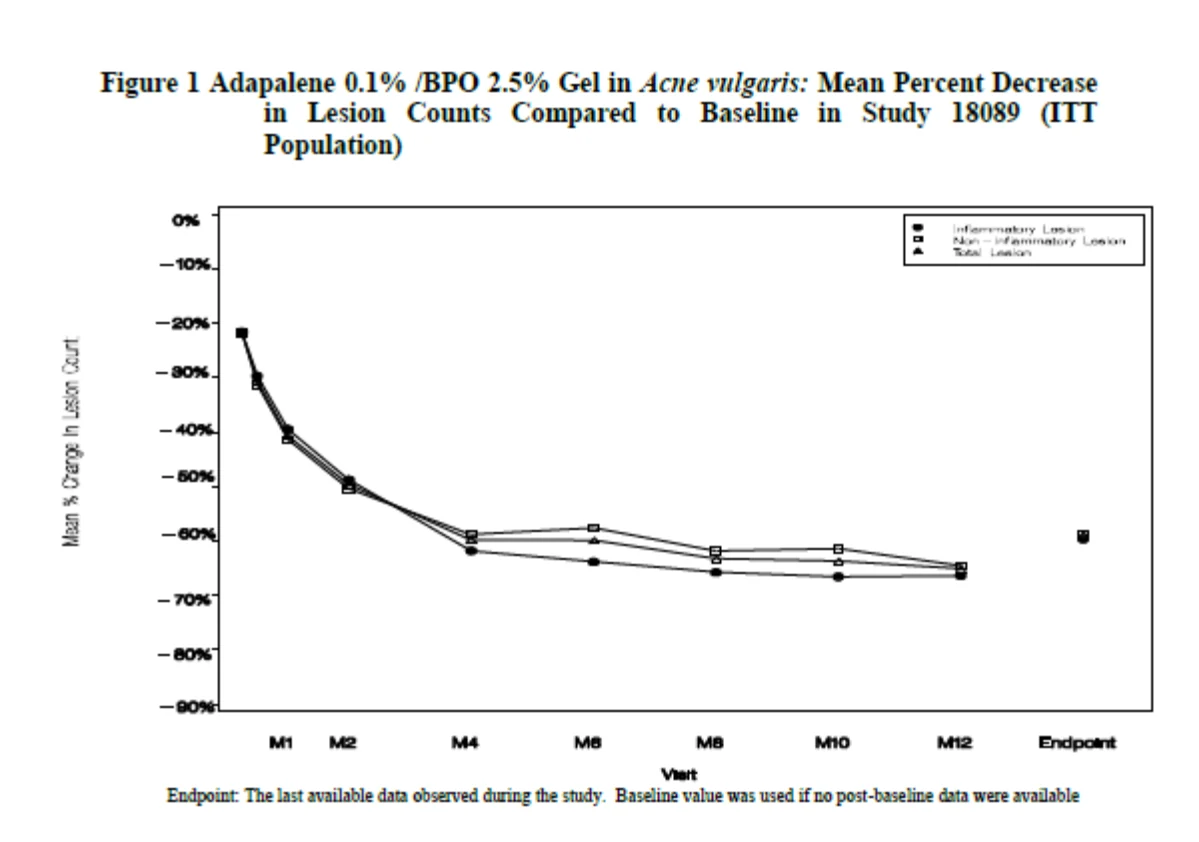
In the open-label long-term safety and efficacy study 18089, early onset of efficacy was observed at Week 1 (21.5% reduction in mean inflammatory lesion counts) with mean percent reductions in inflammatory, non-inflammatory and total lesions of 64.6% to 66.4% at Month 12. A total of 46.2% and 62.2% of subjects assessed their acne vulgaris “marked improvement” or “complete improvement” after 6 and 12 months of treatment, respectively. No decrease in efficacy was observed during long-term use. No notable differences were seen between gender, race, and age subgroups.
Table 13 Summary of patient demographics for a study in 9 – 11 years old pediatric patients treated with Adapalene and Benzoyl Peroxide, 0.1% / 2.5% w/w Topical Gel and presenting with acne vulgaris
| Trial design | Dosage, route of administration and duration | Study subjects* (n=number) | Mean age (Range) | Gender % M/F |
| Phase IV, double-blind, multi- |
| (285) | 10.4 | 24/76 |
| center, randomized, vehicle- |
| |||
| controlled |
| 142 | (9-11) | |
| 143 | |||
*At baseline, study subjects had a minimum of 20 inflammatory lesions and not more than 100 noninflammatory lesions, with an Investigator Global Assessment score of ‘Moderate’.
The safety and efficacy of adapalene and benzoyl peroxide, 0.1% / 2.5% w/w topical gel were assessed in children 9 to 11 years old presenting with moderate acne, in a 12-week clinical study (Table 13). Overall, the efficacy of adapalene and benzoyl peroxide, 0.1% / 2.5% w/w topical gel in these subjects is comparable to the efficacy observed in subjects aged 12 years and above treated with adapalene and benzoyl peroxide, 0.1% / 2.5% w/w topical gel (Table 10, Table 14).
Table 14 Results of study in pediatric patients with Acne vulgaris (9 -11 years) with Adapalene 0.1% and Benzoyl Peroxide 2.5% at Week 12 (ITT Population)
| Adapalene/BPO Gel N = 142 | Gel Vehicle N = 143 | |
| IGA: Two Grade Improvement and Clear or Almost Clear | 67 (47.2%) | 22 (15.4%) p < 0.001a |
Mean reduction in Total Lesion Count (percent change) | 28.4 (57.9%) | 4.2 (10.4) p < 0.001b |
Mean reduction in Inflammatory Lesions Count (Percent change) | 7.7 (39.8%) | 0.5 (15.3%) p < 0.001b |
Mean reduction in Noninflammatory Lesions Count (Percent change) | 20.8 (56.8%) | 3.6 (3.2%) p < 0.001b |
aP-values were based on CMH test general association statistic, controlling for center
bP-values were based on ANCOVA model with ranked changes as dependent variable, ranked Baseline as a covariate, and treatment and center as main effects
The efficacy of adapalene and benzoyl peroxide, 0.3% / 2.5% w/w topical gel applied once daily for 12 weeks for the treatment of acne vulgaris was assessed in a multicenter, randomized, double-blind, controlled study, comparing adapalene and benzoyl peroxide, 0.3% / 2.5% w/w topical gel to adapalene and benzoyl peroxide, 0.1% / 2.5% topical gel and vehicle gel in acne subjects. In this study, 217 subjects we re tre a te dwith adapalene and benzoyl peroxide, 0.3% / 2.5% w/w topical gel, 217 subjects with adapalene and benzoyl peroxide, 0.1% / 2.5% w/w topical gel, and 69 subjects with the vehicle (Table 15).
Table 15 Summary of patient demographics for North American Phase III clinical trial with Adapalene and Benzoyl Peroxide, 0.3% / 2.5% w/w Topical Gel in moderate and severe acne vulgaris Study 18240
| Trial design | Dosage, route of administration and duration | Study subjects (n=number) | Mean age (Range) y | Gender % M/F |
| Double-blind, multi- center, randomized, three treatment arms, controlled (active and vehicle) | Adapalene 0.3% /BPO 2.5% gel Adapalene 0.1% /BPO 2.5% gel Gel vehicle Topical 12 weeks | (503) 217 217 69 | 19.6 (12-57) | 48 / 52 |
Treatment response was defined as the percent of subjects who were rated ‘Clear’ or ‘Almost Clear’ at Week 12 with at least a two-grade improvement based on the Investigator’s Global Assessment (IGA), and mean absolute change from baseline at Week 12 in both inflammatory and noninflammatory lesion counts. An IGA score of ‘Clear’ corresponded to clear skin with no inflammatory or noninflammatory lesions. An IGA score of ‘Almost Clear’ corresponded to a few scattered comedones and a few small papules.
At Baseline, 50% of enrolled patients had acne severity assessed as “moderate” (IGA = 3) and 50% had scores of “severe” (IGA=4). For lesion counts, subjects had an average of 98 total lesions (range: 51-226), of which the mean number of inflammatory lesions was 38 (range: 20-
- 99)
and the mean number of non-inflammatory lesions was 60 (range: 30-149).The age of the patients ranged from 12 to 57 years, with 273 (54.3%) patients 12 to 17 years of age. A similar number of males (47.7%) and females (52.3%) were enrolled.
Table 16 Efficacy Results of Study 18240 in the overall population: subjects with moderate and severe acne vulgaris, Week 12 (MIa, ITT Population)
Adapalene and Benzoyl Peroxide, 0.3% / 2.5% w/w Topical Gel (N=217) | Adapalene and Benzoyl Peroxide, 0.1% / 2.5% w/w Topical Gel (N=217) | Vehicle Gel (N=69) | ||||||||
| Success Rate: IGA at least two-grade | 33.7% | 27.3% | 11.0% | |||||||
| improvement and | ||||||||||
| “clear” or “almost clear” | ||||||||||
| p-value vs Vehicle Gel | <0.001 | 0.014 | - | |||||||
| Mean reduction in Inflammatory Lesions | 27.8 (68.7%) | 26.5 (69.3%) | 13.2 (39.2%) | |||||||
| Count (percent change) | ||||||||||
| p-value vs Vehicle Gel | <0.001 | <0.001 | - |
| Mean reduction in Non-inflammatory Lesions | 40.5 (68.3%) | 40.0 (68.0%) | 19.7 (37.4%) |
| Count (percent change) | |||
| p-value vs Vehicle Gel | <0.001 | <0.001 | - |
aMI: Missing data was imputed using multiple imputation methodology
Superiority of adapalene and benzoyl peroxide, 0.3% / 2.5% w/w topical gel over vehicle gel was demonstrated in the overall study population of subjects with moderate and severe acne (IGA=3 and IGA=4) at Week 12 for Success Rate (subjects rated “Clear” or “Almost Clear” on the IGA with at least 2-grade improvement [33.7% vs. 11.0%, p<0.001]) and for changes in inflammatory (-27.8 vs -13.2, p<0.001) and non-inflammatory lesion counts (-40.5 vs -19.7, p<0.001)
The primary efficacy analyses were also confirmed in the PP analyses and sensitivity analyses using traditional imputation methodology for missing data. Results of primary efficacy analyses are shown in Table 16.
In addition, in the subjects with severe acne (IGA= 4), adapalene and benzoyl peroxide, 0.3% / 2.5% w/w topical gel was shown to be superior to gel vehicle for the same endpoints (Table 217).
Table 17 Efficacy Results of Study 18240 in the severe population: subjects with severe acne, Week 12 (MIa, ITT Population)
Adapalene and Benzoyl Peroxide, 0.3% / 2.5% w/w Topical Gel (N=112) | Adapalene and Benzoyl Peroxide, 0.1% / 2.5% w/w Topical Gel (N=112) | Vehicle Gel (N=34) | |
| Success Rate: IGA at least three-grade | 31.9% | 20.5% | 11.8% |
| improvement and | |||
| “clear” or “almost clear” | |||
| p-value vs Vehicle Gel | 0.029 | 0.443 | - |
| Mean reduction in Inflammatory Lesions: | 37.2 (74.4%) | 30.2 (68.0%) | 14.3 (33.0%) |
| Count (percent change) | |||
| p-value vs Vehicle Gel | <0.001 | <0.001 | - |
| Mean reduction in Non-inflammatory | 46.3 (72.0%) | 43.9 (68.4%) | 17.8 (30.8%) |
| Lesions: Count (percent change) | |||
| p-value vs Vehicle Gel | <0.001 | <0.001 | - |
aMI: Missing data was imputed using multiple imputation methodology
Both adapalene and benzoyl peroxide, 0.3% / 2.5% w/w topical gel and adapalene and benzoyl peroxide, 0.1% / 2.5% w/w topical gel were superior to Vehicle in terms of each lesion type, inflammatory and non-inflammatory. However, when analyzing Success rate, where IGA required to be improved by at least 3 grades, only adapalene and benzoyl peroxide, 0.3% / 2.5% w/w topical gel was shown superior to Vehicle (31.9% vs 11.8%, p=0.029), while adapalene and benzoyl peroxide, 0.1% / 2.5% w/w topical gel was not (20.5% vs 11.8%, p=0.443).
DETAILED PHARMACOLOGY
Adapalene: Adapalene is a chemically stable, retinoid-like compound. Biochemical and pharmacological profile studies have demonstrated that adapalene is a potent modulator of cellular differentiation, keratinization and inflammatory processes all of which represent important features in the pathology of acne vulgaris. Mechanistically, adapalene binds to specific retinoic acid nuclear receptors but, unlike tretinoin, does not bind to the cytosolic receptor protein. Although the exact mode of action of adapalene is unknown, current evidence suggests that topical adapalene normalizes the differentiation of follicular epithelial cells resulting in decreased microcomedone formation. Studies in acne patients provide clinical evidence that topical adapalene is effective in reducing the noninflammatory acne lesions (open and closed comedones). Adapalene inhibits the chemotactic (directional) and chemokinetic (random) responses of human polymorphonuclear leucocytes in in vitro assay models; it also inhibits the metabolism of arachidonic acid, by lipoxidation, to inflammatory mediators. In vitro studies with adapalene have shown inhibition of the AP-1 factors and the inhibition of the expression of toll like receptors 2. This profile suggests that the cell mediated inflammatory component of acne is modified by adapalene. Studies in human patients provide clinical evidence that topical adapalene is effective in reducing the inflammatory components of acne (i.e., papules and pustules).
Benzoyl Peroxide: Benzoyl peroxide is an oxidizing agent with a broad spectrum bactericidal activity, in particular against Propionibacterium acnes (P. acnes), which is abnormally present in the acne-affected pilosebaceous unit. Additionally benzoyl peroxide has demonstrated exfoliative and keratolytic activities.
As both active substances (adapalene and benzoyl peroxide) are well-characterized pharmacologically, and as no interactions are likely to occur, no specific nonclinical pharmacology studies were performed with adapalene and benzoyl peroxide, 0.1% / 2.5% w/w topical gel. Safety pharmacological studies for both individual active substances (adapalene and benzoyl peroxide) suggest no overall impairment of the major physiological body systems (including central nervous system, cardiovascular and respiratory functions).
Human Pharmacology
Pharmacokinetics
In vitro studies
The penetration of each active substance (adapalene and benzoyl peroxide) is not statistically significantly modified when the substances were administered together in the proposed commercial fixed combination formulations (adapalene and benzoyl peroxide, 0.1% / 2.5% w/w topical gel or adapalene and benzoyl peroxide, 0.3% / 2.5% w/w topical gel).
The in vitro penetration and metabolism of 14C-adapalene from adapalene/benzoyl peroxide gel was investigated using Reconstructed Human Epidermis (RHE). Parent adapalene was the only radioactive component found in all of the samples analyzed, indicating that adapalene is not metabolized by RHE. The metabolism and the penetration of adapalene are not modified by the presence of benzoyl peroxide in the formulation.
In vivo studies
Plasma levels of adapalene were assessed in subjects with acne vulgaris following daily applications of adapalene 0.1% / benzoyl peroxide 2.5% gel for 10 days and 30 days and following daily application of adapalene 0.3% / Benzoyl Peroxide 2.5% gel for 30 days. Systemic exposure to benzoyl peroxide was not assessed because the molecule is entirely and rapidly metabolized in the skin, and the metabolite, benzoic acid, is considered safe in humans. Systemic exposure to adapalene following cutaneous application to subjects with acne vulgaris was low. This is consistent with the finding for adapalene 0.1% or 0.3% gel and other adapalene formulations. Benzoyl peroxide has no effect on the penetration of adapalene following repeated applications, and there is no evidence of a pharmacokinetic interaction of benzoyl peroxide with adapalene.
Pharmacodynamics
In a cumulative irritation potential study with adapalene and benzoyl peroxide, 0.1% / 2.5% w/w topical gel, under the conditions tested, the fixed combination adapalene 0.1% / benzoyl peroxide 2.5% gel is not more irritating than either component applied alone (i.e., adapalene 0.1% gel and benzoyl peroxide 2.5% gel), or than benzoyl peroxide 10% gel.
In a cumulative irritation potential study with adapalene and benzoyl peroxide, 0.3% / 2.5% w/w topical gel, the only treatment emergent adverse events were skin irritation conditions; similar results were observed for skin sites exposed to the fixed combination adapalene 0.3% / benzoyl peroxide 2.5% gel, to adapalene 0.3% gel. All study drugs were well tolerated except for sodium lauryl sulfate. No reaction was observed with white petrolatum.
In a sensitization potential study the maximized conditions of application (occlusion) greatly increased the irritation potential of the benzoyl peroxide-containing products, thereby increasing their sensitization potential. As a consequence, a high level of sensitization to both adapalene/benzoyl peroxide gel, the fixed combination, and benzoyl peroxide 2.5% gel was observed. The sensitization level of these two products was similar.
The results of a phototoxicity study demonstrate that the combination of adapalene with benzoyl peroxide in adapalene/benzoyl peroxide gel does not increase the phototoxic potential of benzoyl peroxide 2.5% gel administered alone.
In a photoallergy study neither adapalene/benzoyl peroxide gel nor its individual active components showed any photosensitization potential. It was concluded that adapalene/benzoyl peroxide gel is not a photosensitizer.
MICROBIOLOGY
No microbiological studies were conducted with adapalene and benzoyl peroxide, 0.1% /
2.5% w/w topical gel and adapalene and benzoyl peroxide, 0.3% / 2.5% w/w topical gel.
TOXICOLOGY
The toxicology of the individual active substances, adapalene and benzoyl peroxide, is well characterised. Repeat-dose dermal toxicity studies and local tolerance studies performed with adapalene 0.1%/benzoyl peroxide 2.5% and with adapalene 0.3%/benzoyl peroxide 2.5%showed skin irritation and a potential for sensitization (Table 18, Table 19 and Table 20) which are expected with adapalene and benzoyl peroxide.
Repeat-Dose Toxicity
Table 18 Summary of Principal Findings in Repeat-Dose Toxicity Studies Conducted with Adapalene 0.1%/Benzoyl Peroxide 2.5% Gel
| Species and Strain | Method of Administrati on | Duration of Dosing | Doses (g/kg/day) | Gender & No. per Group | Noteworthy Findings |
| Rat Sprague- Dawley | Dermal | 4 weeks | 2 g/kg/day of:
/BPO 2.5% gel
| 10M + 10F /group (3 groups) TK: 6M + 6F /group (test and monad) 1M + 1F (gel vehicle) | Treatment-related effects were local skin irritations at the treatment site (e.g., desquamation, acanthosis, hyperkeratosis and sebaceous gland hypertrophy). The incidence was higher in rats treated with adapalene/BPO gel than in rats treated with adapalene alone. TK: Systemic exposure to adapalene was higher at the end than at the beginning of the treatment. Adapalene plasma concentrations were higher in females than in males. |
| Dog Beagle | Dermal | 4 weeks | 2 g/kg/day of:
/BPO 2.5% gel
| 3M + 3F /group (3 groups) TK: 3M + 3F /group (3 groups) | Treatment-related effects were local irritations at the treatment sites (erythema and desquamation). Findings were associated with epithelial hyperplasia and perivascular mononuclear cell infiltration in the dermis at microscopical observation. Findings were considered indicative of a hyperplastic dermatitis caused by local irritation. Effects were more pronounced in animals treated with adapalene/BPO gel vs. adapalene alone. Application was not associated with any systemic clinical changes or macroscopic findings. TK: Systemic exposure to adapalene was higher at the end than at the beginning of the treatment. Adapalene plasma concentrations were higher in females than in males. |
| Minipig Göttingen | Dermal | 4 weeks | 1.75 g/kg/day of Adapalene 0.1% /BPO 2.5% gel | 2M + 2F (1 group) | Adverse dermal reactions (e.g., erythema combined with bloody crust formation, suppurating of the skin, and wounds with crust formation) were observed in the treated skin area. Histopathological changes were observed including crust formation, epidermal hyperplasia, epidermal/subdermal edema and epidermal/subepidermal inflammatory cells. |
| Minipig Göttingen | Dermal | 13 weeks | 2 g/kg/day of:
2.5% gel
| 4M + 4F /group (2 groups) | Due to severe local reactions and the absence of recovery, the study was stopped prior to time. Treatment took place for a maximum of 16 Days for the adapalene/BPO gel and until Day 34 for the gel vehicle. Study was terminated on study day 35. Animals were killed and no examinations (e.g., ECG, ophthalmoscopy, clinical pathology, histopathology, toxicokinetics) were performed. |
| Species and Strain | Method of Administrati on | Duration of Dosing | Doses (g/kg/day) | Gender & No. per Group | Noteworthy Findings |
| Minipig Göttingen | Dermal | 13 weeks | - Adapalene/BPO gel at 0.125, 0.25 and 0.75 g/kg/day
0.75 g/kg/day
| 4M + 4F /group (5 groups) TK: 4M + 4F /group (5 groups) | Local reactions (slight to severe erythema) and cutaneous microscopic signs (minimal to slight acanthosis and minimal to moderate hyperkeratosis) were observed. Frequency and incidence of these findings generally increased with dose level and appeared from the second week of treatment until the end of the treatment period. TK: For Day 0, all samples BLQ. After 13 weeks, all samples were BLQ except for 5 animals: 2 females in 0.25 g/kg/day group and 1 male and 2 females in 0.75 g/kg/day group had low adapalene plasma exposure. |
BLQ: Below the limit of quantification; BPO: Benzoyl Peroxide; ECG: Electrocardiogram; F: Female; M: Male; TK: Toxicokinetics.
Table 19: Summary of Principal Findings in Repeat-Dose Toxicity Studies Conducted with Adapalene 0.3%/Benzoyl Peroxide 2.5%
| Species and Strain | Method of Administratio n | Duration of Dosing | Doses (g/kg/day) | Gender & No. per Group | Noteworthy Findings |
Minipig Göttingen | Dermal | 4 weeks | 0.25, 0.5, 0.75 or 1 g/kg/day of Adapalene 0.3% /BPO 2.5%gel | 1M + 1F / group (4 groups) | Moderate to severe cutaneous reactions recorded throughout this study for all animals treated at 0.5, 0.75 or 1 g/kg/day leading to treatment discontinuation. Discrete to slight erythema induced at 0.25 g/kg/day but dose volume overall well tolerated over four consecutive weeks |
Minipig Göttingen | Dermal | 13 weeks |
0.3% /BPO 2.5% gel at 0.25 g/kg/day - Gel vehicle at 0.25 g/kg/day | 4M + 4F /group (2 groups) TK: 4M + 4F /group (2 groups) | Slight to severe erythema and desquamation at the application-sites, correlated with cutaneous microscopic findings including acanthosis, parakeratosis and/or hyperkeratosis, exocytosis / spongiosis and minimal dermal inflammatory infiltrates. No treatment- related systemic effects. TK: After repeated dermal applications (Day 91), adapalene was quantifiable in 3 animals out of 8 with a maximal concentration reaching 1.34ng/mL. |
BPO: Benzoyl Peroxide; F: Female; M: Male; TK: Toxicokinetics
Local Tolerance
Table 20 Summary of Principal Findings in Local Tolerance Studies Conducted with Adapalene 0.1%/Benzoyl Peroxide 2.5% Gel and Adapalene 0.3% / Benzoyl Peroxide 2.5% Gel
| Species and Strain | Method of Administration | Duration of Dosing | Dose Concentration (% w/w) | Gender & No. per Group | Noteworthy Findings |
|---|---|---|---|---|---|
| Primary Skin Irritation Studies | |||||
| Species and Strain | Method of Administration | Duration of Dosing | Dose Concentration (% w/w) | Gender & No. per Group | Noteworthy Findings |
|---|---|---|---|---|---|
Rabbit New Zealand White | Dermal | Single 24h occlusive dose | 0.5 mL per site (abraded and intact skin) of prototype adapalene 0.1%BPO 2.5%gel | 3M (1 group) |
|
Rabbit New Zealand White | Dermal | Single 24h semi- occlusive dose | Adapalene 0.3% / Benzoyl Peroxide 2.5% gel or gel placebo | 3M / group (2 groups) |
|
| Bovine Corneal Opacity and Permeability test | |||||
Isolated bovine cornea | Ocular (in vitro) | Single application | Adapalene 0.3% / Benzoyl Peroxide 2.5% gel or gel placebo | Na |
0.9 and 0.1
Not severe irritant or corrosive |
| Single dose ocular irritation study | |||||
Rabbit Japanese White | Ocular | Single application followed or not by washing | 0.1 mL to the left eye:
| 6F (3 unwashed and 3 washed) |
30 seconds): fixed combination was ‘practically nonirritating’ and placebo was ‘minimally irritating’ |
| Sensitization Potential Studies | |||||
| Guinea Pig Dunkin-Hartley | Dermal Modified Bühler Test (9 doses + challenge) | Induction: 9 non- consecutive days Filter paper impregnated (0.4mL) / application site under occlusion for 6 hours/day Rest: 11 days Challenge: 1 day 25µL/application site under occlusion for 6 hours/day |
(Adapalene 0.1% / Benzoyl Peroxide 2.5% Gel)
| 10M + 10F /group (test and vehicle) 5M + 5F /group (2 controls) |
|
| Species and Strain | Method of Administration | Duration of Dosing | Dose Concentration (% w/w) | Gender & No. per Group | Noteworthy Findings |
|---|---|---|---|---|---|
| Guinea pig Hartley | Dermal Modified Bühler Test (9 doses + challenge) | Induction (3 weeks): 9 applications of 0.5 mL / application site under occlusion for 6 hours/day Rest: 9 days Challenge: one application of 0.5 mL under occlusion (6 hours/day) | Induction and Challenge:
water for injection
DNCB 1% | 10 M + 10 F (test, vehicle and positive control) 5 M + 5 F (negative control) |
Benzoyl peroxide 2.5% Gel was classified strong sensitizer
|
| Phototoxicity and Photosensitization Studies | |||||
| Guinea Pig Dunkin-Hartley | Dermal | Induction: 6 applications in 8 days Concentrations of the test item were gradually reduced from 100% to 10% (Days 1 and 2: 100%; Days 3 and 6: 50%; Day 7: 25%; Day 8: 10%) Rest: 20 days Challenge: 1 day 0.1 mL/application site |
UVA/UVB irradiation
irradiation
| 15M (5M: test item; 10M test item with UVA/UVB) 5M /group (vehicle and untreated) |
|
BPO: Benzoyl Peroxide; DNCB: Dinitrochlorobenzene; F: Female; M: Male; UVA/UVB: Ultraviolet A/Ultraviolet B.
In summary, the fixed combination exhibited local dermal adverse events. Under the conditions tested, no new toxicological concerns were identified up to 4 weeks in rats and dogs for adapalene 0.1% / benzoyl peroxide 2.5% gel and up to three month in mini pigs for both strengths.
Genotoxicity
No genotoxicity studies were conducted with adapalene and benzoyl peroxide, 0.1% / 2.5% w/w topical gel or adapalene and benzoyl peroxide, 0.3% / 2.5% w/w topical gel.
In a series of in vivo and in vitro tests, adapalene did not demonstrate any mutagenic or genotoxic activity.
Bacterial mutagenicity assays (Ames test) with benzoyl peroxide has provided mixed results, mutagenic potential was observed in a few but not in a majority of investigations. Benzoyl peroxide has been shown to produce single-strand DNA breaks in human bronchial epithelial and mouse epidermal cells, it has caused DNA-protein cross-links in the human cells, and has also induced a dose-dependent increase in sister chromatid exchanges in Chinese hamster ovary cells.
Carcinogenicity
No carcinogenicity studies were conducted with adapalene and benzoyl peroxide, 0.1% / 2.5% w/w topical gel or adapalene and benzoyl peroxide, 0.3% / 2.5% w/w topical gel
Lifetime studies with adapalene have been completed in mice at topical doses of 0.6 (0.03%), 2 (0.1%) and 6 (0.3%) mg/kg/day and in rats at oral doses of 0.15, 0.5 and 1.5 mg/kg/day and demonstrated no carcinogenic effect. However, a high incidence of splenic extra-medullary haematopoiesis was observed in male mice treated with 6 mg/kg/day (0.3%) topically applied adapalene gel. Oral administration of adapalene to Sprague-Dawley rats at a dose of
1.5 mg/kg/day for two years resulted in a higher incidence in males, relative to controls, of benign phaeochromocytoma of the adrenal medulla. These neoplastic changes are considered to have no relevance to the topical use of adapalene in humans in clinical conditions.
Animal studies have shown an increased tumourigenic risk with the use of related drugs (e.g., tretinoin) when combined with exposure to the ultraviolet (UV) light in sunlight, or from other UV sources. Studies to determine whether adapalene may accelerate the tumourigenic effects of UV radiation have not been conducted.
Benzoyl peroxide has been shown to be a tumour promoter and progression agent in a number of animal studies. The clinical significance of this is unknown.
Benzoyl peroxide in acetone at doses of 5 and 10 mg administered twice per week induced skin tumours in transgenic TG.AC mice in a study using 20 weeks of topical treatment. However, in 2-year dermal oncogenicity studies, there was no evidence of carcinogenic potential at doses up to 45 mg/day in Fischer 344 rats or doses up to 25 mg/day in B6C3F1 mice.
In a photocarcinogenicity study conducted with 5% benzoyl peroxide carbopol gel, no increase in UV-induced tumour formation was observed in hairless mice topically treated for 40 weeks.
Reproductive and Developmental Toxicity
No reproductive and developmental toxicity studies and no studies in juvenile animals were conducted with adapalene and benzoyl peroxide, 0.1% / 2.5% w/w topical gel or adapalene and benzoyl peroxide, 0.3% / 2.5% w/w topical gel.
Adapalene administered orally at doses of ≥25 mg/kg/day can induce major structural changes including cleft palate, cranial abnormalities and spina bifida in rat and rabbit fetuses. Similar teratogenic effects have also been reported with other retinoids.
Dermal teratology studies conducted in rats and rabbits at doses of 0.6-6.0 mg adapalene/kg/day exhibited no foetotoxicity. Increases in supernumerary fetal ribs were recorded in both rats and rabbits. In the rat, there were also other minor bone variations such as small additional fissure in the parietal bone and asymmetric pelvis. In the rabbit, the other minor bone variations were small additional fissures in the inter-parietal bone, fissured or absent 27 pre-sacral vertebrae, incomplete ossification of the head of limb long bones, and tail anomalies. The AUC at the No Observable Adverse Effect Level in the rat (6.0 mg/kg/ day, the most sensitive species)
corresponds to a safety margin of 32 and 102 when compared respectively to the exposure data in humans with adapalene and benzoyl peroxide, 0.3% / 2.5% w/w topical gel and adapalene and benzoyl peroxide, 0.1% / 2.5% w/w topical gel.
No effects of adapalene (doses up to 20 mg/kg/day) were found in rats on the reproductive performance or fertility of the F0 males or females. Total litter loss was suffered by 3 out of 25 F0 female rats (12%) orally dosed at 15 mg/kg/day; these females had pale and inactive mammary tissues. There were no detectable effects on the growth, development and subsequent reproductive function of the F1 offspring.
A reproductive and developmental toxicity study conducted in rats exposed groups to oral doses of benzoyl peroxide of up 1000 mg/kg/day (5 mL/kg). A decrease in the testes and epididymides weights associated with marked testes degeneration was observed in males with incomplete recovery. The copulation and fertility indexes were not modified in any of the treated groups when compared with controls. The number of births, the male:female ratio, and the survival rate were not affected by the treatment. In the newborn rats, one case of spina bifida was found and 118 runts were born in the treatment group compared to 8 runts born in the positive control group. No variants were found in any of the groups. Benzoyl peroxide did not induce teratogenicity or effects on reproductive function at doses up to 500 mg/kg/day.
Simulgel 600 PHA (Non-Medicinal Ingredient)
Single-dose, mutagenicity, and in vitro toxicity studies were conducted with the non-medicinal ingredient Simulgel 600 PHA. No untoward results were observed in the single-dose toxicity study when the excipient was administered orally (at a dose of 2000 mg/kg) to rats. No cytotoxic or genotoxic effects were observed in the in vitro bacterial cell mutagenicity study using Salmonella typhimurium and Escherichia coli exposed to Simulgel 600 PHA concentrations up to 5000 µg/plate. In a Mouse Lymphoma assay (MLA), Simulgel 600 did not induce mutation at doses up to 200 µg/mL (maximum dose) in a 3-hour incubation period. Statistically significant increase in mutation frequencies were reported for the 24-hour incubation period. Results were considered equivocal and of doubtful biological relevance. Other in vitro toxicity studies found that the excipient was non-irritating when Simulgel 600 was applied at a concentration of 5% in chorioallantoic membrane (chicken egg) and mucous membrane (sheep red blood cell) models.
REFERENCES
- 1. Burkhart CG, Butcher C, Burkhart CN, Lehmann P. Effects of benzoyl peroxide on lipogenesis in sebaceous glands using an animal model. J Cutan Med Surg. 2000; 4(3):138- 141.
- 2.
Bernard BA. Adapalene, a new chemical entity with retinoid activity. Skin Pharmacol.
1993; 6(1):61-69.
- 3. Gold LS, Tan J, Cruz-Santana A, Papp K, Poulin Y,Schlessinger J, et al. A North American study of adapalene-benzoyl peroxide combination gel in the treatment of acne. Cutis. 2009; 84:110-116.
- 4. Gollnick H, Cunliffe W, Berson D, Dreno B, Finlay A et al. Management of acne vulgaris: a report from a global alliance to improve outcomes in acne vulgaris. J Am Acad Dermatol. 2003; 49(1):1-37.
- 5.
Gollnick H, Draelos Z, Glenn MJ, Rosoph LA, Kaszuba A, Cornelison R, et al.
Adapalene-benzoyl peroxide, a unique fixed-dose combination topical gel for the treatment of acne vulgaris: a transatlantic, randomized, double-blind, controlled study in 1670 patients. Br J Dermatol. 2009; 161(5):1180-1189.
- 6. Griffiths CEM, Elder JT, Bernard BA, Rossio P, Cromie MA et al. Comparison of CD271 (Adapalene) and all-trans retinoic acid in human skin: Dissociation of epidermal effects and CRABP-II MRNA expression. J Invest Dermatol. 1993; 101:325-328.
- 7. Hensby CN, Cavey D, Bouclier M, Chatelus A, Algate D et al. The in vivo and in vitro anti-inflammatory activity of CD271, a new retinoid-like modulator of cellular differentiation. Pharmacol Skin. 1989;3:160-162.
- 8. Jamoulle JC, Lamaud E, Grandjean L, Shroot B, Schaefer H. Follicular penetration, distribution and migration for CD271, a new naphthoic acid derivative for topical acne treatment. Pharmacol Skin. 1989; 3:198-200.
- 9.
Leyden JJ. A review of the use of combination therapies for the treatment of acne vulgaris.
J Am Acad Dermatol. 2003; 49(1):200-10.
- 10. Pariser DM, Westmoreland P, Morris A, Gold MH, Liu Y, Graeber M. Long-term safety and efficacy of a unique fixed-dose combination gel of adapalene 0.1% and benzoyl peroxide 2.5% for the treatment of acne vulgaris. J Drugs Dermatol. 2007; 6(9):899-905.
- 11. Thiboutot DM, Weiss J, Bucko A, Eichenfield L, Jones T, Clark S, et al. Adapalene- benzoyl peroxide, a fixed-dose combination for the treatment of acne vulgaris: Results of a multicenter, randomized double-blind, controlled study. J Am Acad Dermatol. 2007; 57:791-799.
- 12. Valacchi G, Rimbach G, Saliou C, Weber SU, Packer L. Effect of benzoyl peroxide on antioxidant status, NF-kappaB activity and interleukin-1alpha gene expression in human keratinocytes. Toxicology. 2001; 165(2-3):225-34.
- 13. Verschoore M, Langner A, Wolska H, Jablonska S, Czernielewski J, Schaefer H. Efficacy and safety of CD271 alcoholic gels in the topical treatment of acne vulgaris. Br J Dermatol. 1991; 124:368-371.
- 14. Verschoore M, Bouclier M, Czernielewski J, Hensby C. Topical retinoids; Their uses in dermatology. Dermatol Clin. 1993; 11:107-115.
- 15. Webster G. Mechanism-based treatment of acne vulgaris: the value of combination therapy. Drugs Dermatol. 2005; 4(3):281-8.
- 16. PrTACTUPUMP™ (Adapalene and Benzoyl Peroxide, 0.1% / 2.5% w/w Topical Gel) and PrTACTUPUMP™ FORTE (Adapalene and Benzoyl Peroxide, 0.3% / 2.5% w/w Topical Gel) Product Monograph, Galderma Canada Inc., Submission Control No. 225978, Date of Revision: May 17, 2019.