


Product Monograph - Taro-Doxorubicin Liposomal
RECENT MAJOR LABEL CHANGES
| 7 WARNINGS AND PRECAUTIONS, Reproductive Health: Female and Male Potential | 01/2025 |
|---|---|
| 7 WARNINGS AND PRECAUTIONS, 7.1 Special Populations, 7.1.2 breast-feeding | 01/2025 |
| 7 WARNINGS AND PRECAUTIONS, Respiratory | 01/2025 |
TABLE OF CONTENTS
Sections or subsections that are not applicable at the time of authorization are not listed.
RECENT MAJOR LABEL CHANGES............................................................................................... 2
TABLE OF CONTENTS ....................................................................................................................2
PART I: HEALTH PROFESSIONAL INFORMATION............................................................................4
1 INDICATIONS.........................................................................................................................4
1.1 Pediatrics .........................................................................................................................4
1.2 Geriatrics .........................................................................................................................4
2 CONTRAINDICATIONS ...........................................................................................................4
3 SERIOUS WARNINGS AND PRECAUTIONS BOX.......................................................................5
4 DOSAGE AND ADMINISTRATION ...........................................................................................5
4.1 Dosing Considerations........................................................................................................5
4.2 Recommended Dose and Dosage Adjustment........................................................................5
4.3 Reconstitution ................................................................................................................ 11
4.4 Administration ................................................................................................................ 12
5 OVERDOSAGE...................................................................................................................... 13
6 DOSAGE FORMS, STRENGTHS, COMPOSITION AND PACKAGING ......................................... 13
7 WARNINGS AND PRECAUTIONS .......................................................................................... 14
7.1 Special Populations.......................................................................................................... 19
7.1.1 Pregnant Women ..................................................................................................... 19
7.1.2 Breast-feeding ......................................................................................................... 19
7.1.3 Pediatrics ................................................................................................................ 19
7.1.4 Geriatrics ................................................................................................................ 20
8 ADVERSE REACTIONS .......................................................................................................... 20
8.2 Clinical Trial Adverse Reactions ......................................................................................... 20
8.3 Less Common Clinical Trial Adverse reactions ...................................................................... 25
8.4 Abnormal Laboratory Findings: Hematologic, Clinical Chemistry and Other Quantitative Data ......... 27
8.5 Post-Market Adverse Reactions ......................................................................................... 29
9 DRUG INTERACTIONS .......................................................................................................... 30
9.2 Drug Interactions Overview .............................................................................................. 30
9.3 Drug-Behavioural Interactions........................................................................................... 30
9.4 Drug-Drug Interactions..................................................................................................... 30
9.5 Drug-Food Interactions .................................................................................................... 30
9.6 Drug-Herb Interactions .................................................................................................... 30
9.7 Drug-Laboratory Test Interactions ..................................................................................... 30
10 ACTION AND CLINICAL PHARMACOLOGY ............................................................................ 30
10.1 Mechanism of Action ....................................................................................................... 30
10.3 Pharmacokinetics ............................................................................................................ 31
11 STORAGE, STABILITY AND DISPOSAL ................................................................................... 34
12 SPECIAL HANDLING INSTRUCTIONS ..................................................................................... 34
PART II: SCIENTIFIC INFORMATION............................................................................................. 35
PHARMACEUTICAL INFORMATION ............................................................................................. 35
14 CLINICAL TRIALS .................................................................................................................. 35
14.1 Clinical Trial by Indication ................................................................................................. 35
14.3 Comparative Bioavailability Studies.................................................................................... 47
15 MICROBIOLOGY .................................................................................................................. 49
16 NON-CLINICAL TOXICOLOGY................................................................................................ 49
17 SUPPORTING PRODUCT MONOGRAPHS .............................................................................. 56
PATIENT MEDICATION INFORMATION........................................................................................ 57
PART I: HEALTH PROFESSIONAL INFORMATION
1 INDICATIONS
Taro-Doxorubicin Liposomal (pegylated liposomal doxorubicin hydrochloride for injection) is indicated for:
- monotherapy for patients with metastatic breast cancer, where there is an increased cardiac risk associated with conventional doxorubicin.
- advanced ovarian carcinoma in women who have failed standard first-line therapy. Platinum-and paclitaxel- based chemotherapy is the current standard first-line treatment regimen.
- AIDS-related Kaposi’s sarcoma (KS) in patients with low CD4 counts (<200 CD4 lymphocytes/mm3) and extensive mucocutaneous or visceral disease whose disease has progressed despite therapy or who are intolerant to prior systemic combination chemotherapy comprising of at least two of the following agents: a vinca alkaloid, bleomycin and doxorubicin (or another anthracycline).
1.1 Pediatrics
No data are available to Health Canada; therefore, Health Canada has not authorized an indication for pediatric use.
1.2 Geriatrics
Geriatrics (>60 years): Evidence from clinical studies and experience suggests that use in the geriatric population is associated with differences in safety or effectiveness. Experience with Taro-DOXOrubicin Liposomal in geriatrics patients is limited (see 10.3 Pharmacokinetics).
2 CONTRAINDICATIONS
- Taro-Doxorubicin Liposomal is contraindicated in patients who are hypersensitive to this drug or to any ingredient in the formulation, including any non-medicinal ingredient, or component of the container. For a complete listing, see 6 DOSAGE FORMS, STRENGTHS, COMPOSITION AND PACKAGING.
- Should not be administered while breast-feeding (see 7.1.2 Breast-feeding).
- Should not be administered in pregnant women (see 7.1.1 Pregnant Women, and 7 Warnings and Precautions, Teratogenicity)
3 SERIOUS WARNINGS AND PRECAUTIONS BOX
Serious Warnings and Precautions
|
|---|
|
|
|
|
4 DOSAGE AND ADMINISTRATION
4.1 Dosing Considerations
Taro-Doxorubicin Liposomal (Pegylated Liposomal Doxorubicin Hydrochloride for Injection) exhibits unique pharmacokinetic properties and must not be used interchangeably with other formulations of doxorubicin hydrochloride.
4.2 Recommended Dose and Dosage Adjustment
Health Canada has not authorized an indication for pediatric use.
Breast Cancer/Ovarian Cancer Patients
Taro-Doxorubicin Liposomal is administered intravenously at a dose of 50 mg/m2 body surface, once every 4 weeks for as long as the disease does not progress, and the patient shows no evidence of clinical cardiotoxicity and continues to tolerate treatment.
For doses < 90 mg: dilute Taro-Doxorubicin Liposomal in 250 mL (50 mg/mL) (5%) Dextrose USP solution for infusion.
For doses ≥ 90 mg: dilute Taro-Doxorubicin Liposomal in 500 mL (50 mg/mL) (5%) Dextrose USP solution for infusion.
The use of any diluent other than Dextrose 5% in water for infusion, or the presence of any bacteriostatic agent such as benzyl alcohol may cause precipitation of Taro-Doxorubicin Liposomal.
To minimize the risk of infusion reactions, the initial dose is administered at a rate no greater than 1 mg/minute. If no infusion reaction is observed, subsequent Taro-Doxorubicin Liposomal infusions may be administered over a 60-minute period.
In the breast cancer trial program, modification of the infusion was permitted for those patients experiencing an infusion reaction as follows:
5 % of the total dose was infused slowly over the first 15 minutes. If tolerated without reaction, the infusion rate was doubled for the next 15 minutes. If tolerated, the infusion was completed over the next hour for a total infusion time of 90 minutes.
Subsequent Taro-Doxorubicin Liposomal infusions may be administered over a 60-minute period.
Serious and sometimes life-threatening infusion reactions, which are characterized by allergic- like or anaphylactoid-like reactions, with symptoms including asthma, flushing, urticarial rash, chest pain, fever, hypertension, tachycardia, pruritus, sweating, shortness of breath, facial edema, chills, back pain, tightness in the chest and throat and/or hypotension may occur within minutes of starting the infusion of Taro-Doxorubicin Liposomal (see 7 WARNINGS AND PRECAUTIONS). Temporarily stopping the infusion usually resolves these symptoms without further therapy. However, medications to treat these symptoms (e.g., antihistamines, corticosteroids, and adrenaline) as well as emergency equipment should be available for immediate use. In most patients, treatment can be resumed after all symptoms have resolved, without recurrence.
Infusion reactions rarely recur after the first treatment cycle. To minimize the risk of infusion reactions, the initial dose should be administered at a rate no greater than 1 mg/minute.
AIDS-KS Patients
Taro-Doxorubicin Liposomal should be administered intravenously at a dose of 20 mg/m2 body surface (equivalent to doxorubicin hydrochloride) once every two- to- three weeks. Intervals shorter than 10 days should be avoided as drug accumulation and increased toxicity cannot be ruled out. Patients should be treated for as long as they respond satisfactorily and tolerate treatment.
The appropriate dose of Taro-Doxorubicin Liposomal is diluted in 250 mL of (5%) Dextrose Injection USP and administered by intravenous infusion over 30 minutes. Taro-Doxorubicin Liposomal should not exceed 90 mg per infusion. Rapid infusion may increase the risk of infusion-related reactions (see 7 WARNINGS AND PRECAUTIONS, General, Infusion Reactions). It is recommended that the Taro-Doxorubicin Liposomal infusion line be connected through the side port of an intravenous infusion of (5%) Dextrose USP Intravenous Infusion to achieve further dilution and minimize the risk of thrombosis and extravasation.
Taro-Doxorubicin Liposomal should be considered an irritant and precautions should be taken to avoid extravasation. On intravenous administration of Taro-Doxorubicin Liposomal, extravasation may occur with or without an accompanying stinging or burning sensation even if blood returns well on aspiration of the infusion needle. If any signs or symptoms of extravasation have occurred, the infusion should be immediately terminated and restarted in another vein. The application of ice over the site of extravasation for approximately 30 minutes may be helpful in alleviating the local reaction.
Dose Modifications
Dose adjustment is required in patients with a history of prior anthracycline use, prior mediastinal irradiation, concurrent cyclophosphamide therapy, and pre-existing cardiovascular disease.
To manage adverse events such as palmar-plantar erythrodysesthesia (PPE), stomatitis or hematologic toxicity, the dose may be reduced or delayed. Guidelines for Taro-Doxorubicin Liposomal dose modification secondary to these adverse effects are provided in the following tables. The toxicity grading in these tables is based on the National Cancer Institute Common Toxicity Criteria (NCI-CTC).
The tables for PPE and stomatitis (Table 1, Table 2) provide the schedule followed for dose modification in clinical trials in the treatment of breast cancer or ovarian cancer (modification of the recommended 4-week treatment cycle). If these toxicities occur in patients with AIDS- related KS, the recommended 2- to 3-week treatment cycle can be modified in a similar manner.
The table for hematological toxicity (Table 3) provides the schedule followed for dose modification in clinical trials in the treatment of patients with breast or ovarian cancer only. Dose modification in patients with AIDS-KS is addressed in Table 4, Table 5 and Table 6.
Guidelines for Taro-DOXOrubicin Liposomal Dose Modification in Breast or Ovarian Cancer Patients
| Table 1 - PALMAR - PLANTAR ERYTHRODYSESTHESIA | |||||||||
|---|---|---|---|---|---|---|---|---|---|
| Week After Prior Taro-DOXOrubicin Liposomal Dose | |||||||||
Toxicity Grade At Current Assessment | Weeks 4 & 5 | Week 6 | |||||||
Grade -1- (mild erythema, swelling, or desquamation not interfering with daily activities) | Redose unless patient has experienced a previous Grade 3 or 4 skin toxicity, in which case wait an additional week | Decrease dose by 25%; return to 4-week interval | |||||||
Grade -2- (erythema, desquamation, or swelling interfering with, but not precluding normal physical activities; small blisters or ulcerations less than 2 cm in diameter) | Wait an additional week | Decrease dose by 25%; return to 4- week interval | |||||||
Grade -3- (blistering, ulceration, or swelling interfering with walking | Wait an additional week | Withdraw patient | |||||||
| Wait an additional week | Withdraw patient | ||||||||
| Table 1 - PALMAR - PLANTAR ERYTHRODYSESTHESIA | |||||
|---|---|---|---|---|---|
| Week After Prior Taro-DOXOrubicin Liposomal Dose | |||||
Toxicity Grade At Current Assessment | Weeks 4 & 5 | Week 6 | |||
or normal daily activities; cannot wear regular clothing) Grade -4- (diffuse or local process causing infectious complications, or a bedridden state or hospitalization) | |||||
| Table 2 - STOMATITIS | ||
|---|---|---|
| Week after Prior Taro-DOXOrubicin Liposomal Dose | ||
Toxicity Grade at Current Assessment | Weeks 4 & 5 | Week 6 |
Grade -1- (painless ulcers, erythema, or mild soreness) | Redose unless patient has experienced a previous Grade 3 or 4 stomatitis in which case wait an additional week | Decrease dose by 25%; return to 4-week interval or withdraw patient per physician’s assessment |
Grade -2- (painful erythema, edema, or ulcers, but can eat) Grade -3- (painful erythema, edema, or ulcers, but cannot eat) | Wait an additional week | Decrease dose by 25%; return to 4-week interval or withdraw patient per physician’s assessment |
| Wait an additional week | Withdraw patient | |
Grade -4- (requires parenteral or enteral support) | Wait an additional week | Withdraw patient |
| Table 3 - HEMATOLOGICAL TOXICITY (ANC OR PLATELETS) – MANAGEMENT OF PATIENTS WITH BREAST OR OVARIAN CANCER | |||||||||
|---|---|---|---|---|---|---|---|---|---|
| GRADE | ANC | PLATELETS | MODIFICATION | ||||||
| 1 | 1500 - 1900 | 75,000 - 150,000 | Resume treatment with no dose reduction. | ||||||
| 2 | 1000 - <1500 | 50,000 - <75,000 | Wait until ANC ≥1,500 and platelets ≥75,000; redose with no dose reduction. | ||||||
| 3 | 500 - <1000 | 25,000 - <50,000 | Wait until ANC ≥1,500 and platelets ≥75,000; redose with no dose reduction. | ||||||
| 4 | <500 | <25,000 | Wait until ANC ≥1,500 and platelets ≥75,000; decrease dose by 25% or continue full dose with growth factor support. | ||||||
The dose modifications shown in the tables below are recommended for managing possible adverse events in AIDS-KS patients:
Guidelines for Taro-DOXOrubicin Liposomal Dose Modification in AIDS-KS Patients
| Table 4 - PALMAR-PLANTAR ERYTHRODYSESTHESIA | |||||||||||||
|---|---|---|---|---|---|---|---|---|---|---|---|---|---|
Toxicity Grade | Symptoms | Weeks Since Last Dose | |||||||||||
| 3 | 4 | ||||||||||||
0 1 | no symptoms | Redose at 2-to 3-week interval | Redose at 2-to 3-week interval | ||||||||||
mild erythema, swelling, or desquamation not interfering with daily activities | Redose unless patient has experienced a previous grade 3 or 4 skin toxicity in which case wait an additional week | Redose at 25% dose reduction; return to 3- week interval | |||||||||||
2 3 | erythema, desquamation, or swelling interfering with, but not precluding normal physical activities; small blisters or ulcerations less than 2 cm in diameter | Wait an additional week | Redose at 50% dose reduction; return to 3- week interval | ||||||||||
blistering, ulceration, or swelling interfering with walking or normal daily activities; cannot wear regular clothing | Wait an additional week | Discontinue Taro-DOXOrubicin Liposomal | |||||||||||
| 4 | diffuse or local process causing infectious complications, or a bed ridden state or hospitalization |
|---|
| Table5 - HEMATOLOGICAL TOXICITY | |||||||||
|---|---|---|---|---|---|---|---|---|---|
| Grade | ANC (109 cells/L) | Platelets (109 cells/L) | Modification | ||||||
| 1 | 1.5 - 1.9 | 75 - 150 | None | ||||||
2 3 | 1.0 - <1.5 | 50 - <75 | None | ||||||
| 0.5 - 0. 999 | 25 - <50 | Wait until ANC ≥1.0 and/or platelets ≥50 then redose at 25% dose reduction | |||||||
| 4 | <0.5 | <25 | Wait until ANC≥1.0 and/or platelets ≥50 then redose at 50% dose reduction | ||||||
| Table 6 - STOMATITIS | ||||||||||
|---|---|---|---|---|---|---|---|---|---|---|
| Grade | Symptoms | Modification | ||||||||
| 1 | Painless ulcers, erythema, or mild soreness | None | ||||||||
2 3 | Painful erythema, edema, or ulcers, but can eat | Wait one week and if symptoms improve redose at 100% dose | ||||||||
Painful erythema, edema, or ulcers, and cannot eat | Wait one week and if symptoms improve redose at 25% dose reduction | |||||||||
| 4 | Requires parenteral or enteral support | Wait one week and if symptoms improve redose at 50% dose reduction | ||||||||
Patients with impaired hepatic function:
AIDS-KS Patients
Experience with doxorubicin hydrochloride in treating AIDS-KS patients with hepatic impairment is limited. Therefore, based on experience with doxorubicin hydrochloride, it is recommended that Taro-Doxorubicin Liposomal dosage be reduced if the bilirubin is elevated as follows: serum bilirubin 21 to 51 mcmol/L (1.2-3.0 mg/dl), give 50% of normal dose; >51 mcmol/L, give 25% of normal dose.
Breast Cancer/Ovarian Cancer Patients
Doxorubicin hydrochloride pharmacokinetics determined in a small number of ovarian cancer patients with elevated total bilirubin levels do not differ from patients with normal total bilirubin;
however, until further experience is gained, the Taro-Doxorubicin Liposomal dosage in patients with impaired hepatic function should be reduced based on the experience from the breast and ovarian clinical trial program as follows:
- At initiation of therapy, if the bilirubin is between 21 to 51 mcmol/L (1.2-3.0 mg/dl), the first dose is reduced by 25%.
- If the bilirubin is >51 mcmol/L (3.0 mg/dl), the first dose is reduced by 50%.
- If the patient tolerates the first dose without an increase in serum bilirubin or liver enzymes, the dose for cycle 2 can be increased to the next dose level, i.e., if reduced by 25% for the first dose, increase to full dose for cycle 2; if reduced by 50% for the first dose, increase to 75% of full dose for cycle 2.
- The dosage can be increased to full dose for subsequent cycles if tolerated.
Prior to Taro-Doxorubicin Liposomal administration, evaluate hepatic function using conventional clinical laboratory tests such as ALT/AST, alkaline phosphatase, and bilirubin.
Patients with impaired renal function:
As doxorubicin is metabolized by the liver and excreted in the bile, dose modification is not required with Taro-Doxorubicin Liposomal. Population-based analysis confirms that changes in renal function over the range tested (estimated creatinine clearance 30-156 ml/min) do not alter the pharmacokinetics of pegylated liposomal doxorubicin hydrochloride for injection. No pharmacokinetic data are available in patients with creatinine clearance of less than 30 mL/min.
AIDS-KS patients with splenectomy:
As there is no experience with pegylated liposomal doxorubicin hydrochloride for injection in patients who have had splenectomy, treatment with Taro-Doxorubicin Liposomal is not recommended.
4.3 Reconstitution
Parenteral Products:
Caution must be exercised in handling Taro-Doxorubicin Liposomal dispersion. The use of gloves is required. If Taro-Doxorubicin Liposomal comes into contact with skin or mucosa, wash immediately and thoroughly with soap and water. Taro-Doxorubicin Liposomal must be handled and disposed of in a manner consistent with that of other anticancer medicinal products (see 12 SPECIAL HANDLING INSTRUCTIONS).
Discard Taro-DOXOrubicin Liposomal if it shows evidence of precipitation or any other particulate matter or if it shows a discoloration of the dispersion.
The appropriate dose of Taro-Doxorubicin Liposomal, up to a maximum of 90 mg, must be diluted in 250 mL of (5%) Dextrose Injection USP, prior to administration. For doses ≥ 90 mg, dilute Taro-DOXOrubicin Liposomal in 500 mL of (5%) Dextrose USP Injection, prior to administration.
The reconstituted solution can be stored up to 24 hours at 2 °C to 8 °C. From a microbiological point of view, the product should be used immediately. If not used immediately, in-use storage times and conditions prior to use are the responsibility of the user and should not be longer than 24 hours at 2 °C to 8 °C Partially used vials must be discarded. (see 11 STORAGE, STABILITY AND DISPOSAL).
4.4 Administration
DO NOT administer as a bolus injection or undiluted dispersion. Taro-DOXOrubicin Liposomal must not be given by the intramuscular or subcutaneous route.
Aseptic technique must be strictly observed since no preservative or bacteriostatic agent is present in Taro-Doxorubicin Liposomal.
- Do not use with In-Line Filters.
- Do not mix with other drugs.
- Do not use with any diluent other than (5%) Dextrose Injection USP.
- Do not use any bacteriostatic agent, such as benzyl alcohol.
It is recommended that the Taro-Doxorubicin Liposomal infusion line be connected through the side port of an intravenous infusion of (50 mg/mL) (5%) Dextrose USP. Infusion may be given through a peripheral vein.
Taro-Doxorubicin Liposomal is not a clear solution but a translucent, red liposomal dispersion. Parenteral drug products should be inspected visually for particulate matter and discoloration prior to administration.
Do not use material that shows evidence of precipitation or any other particulate matter. Discard unused portion (see 11 STORAGE, STABILITY AND DISPOSAL).
If the patient experiences early symptoms or signs of infusion reaction, immediately discontinue the infusion, give appropriate premedications (antihistamine and/or short- acting corticosteroid) and restart at a slower rate.
Incompatibility
Until specific compatibility data are available, it is not recommended that Taro-Doxorubicin Liposomal be mixed with other drugs.
5 OVERDOSAGE
Acute overdosage with doxorubicin hydrochloride causes increases in mucositis, leukopenia and thrombocytopenia.
Treatment of acute overdosage consists of treatment of the severely myelosuppressed patient with hospitalization, antibiotics, platelet and granulocyte transfusions and symptomatic treatment of mucositis.
Chronic overdosage with cumulative doses of doxorubicin hydrochloride exceeding 550 mg/m2 body surface, increases the risk of cardiomyopathy and resultant congestive heart failure. Doxorubicin hydrochloride cardiomyopathy has been reported to be associated with a persistent reduction in the voltage of QRS wave, a prolongation of the systolic time interval and a reduction of the left ventricular ejection fraction (LVEF). Treatment consists of vigorous management of congestive heart
failure with digitalis preparations and diuretics. Reduction of afterload with vasodilating agents has been recommended.
| For management of a suspected drug overdose, contact your regional Poison Control Centre immediately. |
|---|
6 DOSAGE FORMS, STRENGTHS, COMPOSITION AND PACKAGING
Table – Dosage Forms, Strength, Composition and Packaging
| Route of Administration | Dosage Form / Strength/Composition | Non-medicinal Ingredients |
| Intravenous Injection | Solution, 2 mg/mL | N-(carbamoyl-methoxypolyethylene glycol 2000)-1,2-distearoyl-sn-glycero-3-phosphoethanolamine sodium salt (MPEG-DSPE),fully hydrogenated soy phosphatidylcholine (HSPC), cholesterol, ammonium sulphate, anhydrous ethanol, cholesterol, histidine, hydrochloric acid, hydrogenated soy phosphatidylcholine, MPEG-Distearoyl phosphatidylethanolamine, sodium hydroxide, sucrose, and water for injection |
Taro-Doxorubicin Liposomal (pegylated liposomal doxorubicin hydrochloride for injection) is provided as a sterile, translucent, red liposomal dispersion in 10 mL and 25 mL, single-use vials. The 10 mL vials contain 20 mg doxorubicin hydrochloride in a pegylated liposomal formulation at a concentration of 2 mg/mL in water for injection and a pH of 6.0 - 7.0; and 25 mL vials contain 50 mg doxorubicin hydrochloride in a pegylated liposomal formulation at a concentration of 2 mg/mL in water for injection and a pH of 6.0 - 7.0.
7 WARNINGS AND PRECAUTIONS
Please see 3 SERIOUS WARNINGS AND PRECAUTIONS BOX.
General
Taro-Doxorubicin Liposomal should only be administered by physicians experienced with cancer chemotherapeutic drugs.
Taro-Doxorubicin Liposomal is a unique formulation of doxorubicin hydrochloride and must not be used interchangeably with other formulations of doxorubicin hydrochloride.
Infusion Reactions
Serious and sometimes life-threatening infusion reactions may occur within minutes of starting the infusion of Taro-Doxorubicin Liposomal. These reactions have been described as allergic-like or anaphylactoid-like and are defined by the following COSTART terms: allergic reaction, anaphylactoid reaction, asthma, face edema, hypotension, vasodilatation, urticaria, back pain, chest pain, chills, fever, hypertension, tachycardia, dyspepsia, nausea, dizziness, dyspnea, pharyngitis, rash, pruritus, sweating, injection site reaction and drug interaction. Very rarely, convulsions have been observed in relation to infusion reactions.
Temporarily stopping the infusion usually resolves these symptoms without further therapy. However, medication to treat these symptoms (e.g., antihistamines, corticosteroids, adrenaline, and anticonvulsants) as well as emergency equipment should be available for immediate use. In most patients, treatment can be resumed after all symptoms have resolved without recurrence.
Infusion-associated reactions rarely recur after the first treatment cycle. To minimize the risk of infusion reactions, the initial dose should be administered at a rate no greater than 1 mg/minute (see 4.2 Recommended Dose and Dosage Adjustment).
In patients with solid tumors, 100 out of 929 patients (10.8%) were described as having an infusion-associated reaction during treatment with pegylated liposomal doxorubicin hydrochloride for injection. Permanent treatment discontinuation rates were infrequently reported at 2%.
In the pivotal breast cancer trials, a similar incidence of infusion reactions 32/254 (13%) was observed. The rate of permanent treatment discontinuation was 2% (4/254).
In the ovarian cancer population (subset of the solid tumor cohort), 51/510 (10%) patients reported treatment-related infusion reaction adverse events. Five patients (<1%) (reporting nine events) discontinued due to treatment-related infusion reactions.
In patients with AIDS-KS, infusion-associated reactions were characterized by flushing, shortness of breath, facial edema, headache, chills, back pain, tightness in the chest and throat and/or hypotension and can be expected at the rate of 5% to 10%. Very rarely, convulsions have been observed in relation to infusion reactions. Many patients were able to tolerate further infusions without complications, however, eight patients discontinued pegylated liposomal doxorubicin hydrochloride for injection therapy because of an infusion reaction.
Injection Site Effects
Taro-Doxorubicin Liposomal should be considered an irritant and precautions should be taken to avoid extravasation (see 4.2 Recommended Dose and Dosage Adjustment).
In studies with rabbits, lesions that were induced by subcutaneous injection of pegylated liposomal doxorubicin hydrochloride for injection were minor and reversible compared to more severe and irreversible lesions and tissue necrosis that were induced after subcutaneous injection of conventional doxorubicin hydrochloride (see 16 NON-CLINICAL TOXICOLOGY).
Toxicity Potentiation
The doxorubicin in Taro-Doxorubicin Liposomal may potentiate the toxicity of other anticancer therapies. Exacerbation of cyclophosphamide-induced hemorrhagic cystitis and enhancement of the hepatotoxicity of 6-mercaptopurine have been reported with the conventional formulation of doxorubicin hydrochloride. Radiation-induced toxicity to the myocardium, mucosae, skin and liver has been reported to be increased by the administration of doxorubicin hydrochloride.
Carcinogenesis and Mutagenesis
See 16 NON-CLINICAL TOXICOLOGY.
Cardiovascular
Special attention must be given to the cardiac toxicity exhibited by doxorubicin hydrochloride.
Although uncommon, acute left ventricular failure has occurred, particularly in patients who have received a total dosage of doxorubicin exceeding the currently recommended limit of 550 mg/m2 body surface. This limit appears to be lower (400 mg/m2 body surface) in patients who have received radiotherapy to the mediastinal area or concomitant therapy with other potentially cardiotoxic agents such as cyclophosphamide. The incidence of pegylated liposomal doxorubicin hydrochloride for injection-associated cardiotoxicity was significantly lower than that with conventional doxorubicin hydrochloride.
Caution should be observed in patients who have received other anthracyclines or anthracenediones. The total dose of doxorubicin hydrochloride administered to the individual patient should also take into account any previous or concomitant therapy with related compounds such as daunorubicin. Congestive heart failure and/or cardiomyopathy may be encountered after discontinuation of therapy.
Patients with a history of cardiovascular disease should be administered Taro-DOXOrubicin Liposomal only when the potential benefit of treatment outweighs the risk.
Cardiac function, particularly left ventricular ejection fraction (LVEF) should be monitored at baseline and periodically by MUGA scan or echography. The evaluation of left ventricular function is considered to be mandatory before each additional administration of Taro-Doxorubicin Liposomal that exceeds a lifetime cumulative anthracycline dose of 450 mg/m2 body surface.
Congestive heart failure and/or cardiomyopathy may occur suddenly, without prior ECG changes and may also be encountered several weeks after discontinuation of therapy.
Hematologic
Hematologic Myelosuppression
In AIDS-KS and other patient populations treated with pegylated liposomal doxorubicin hydrochloride for injection, many patients presented with baseline myelosuppression due to such factors as their HIV disease, numerous concomitant medications, or tumors involving bone marrow. In the AIDS-KS population, myelosuppression appears to be the dose-limiting adverse event. Leukopenia is the most common adverse event (about 60%) experienced in this population; anemia (about 20%) and thrombocytopenia (about 10%) can also be expected.
In patients with ovarian cancer treated at a dose of 50 mg/m2 body surface, myelosuppression was generally mild to moderate, reversible, and was not associated with episodes of neutropenic infection or sepsis. A similar low incidence of myelosuppression was seen in patients with metastatic breast cancer receiving pegylated liposomal doxorubicin hydrochloride for injection in a first-line clinical trial, although febrile neutropenia was seen in 3/254 (1.2 %) patients receiving pegylated liposomal doxorubicin hydrochloride for injection 50 mg/m2 body surface, every 4 weeks.
Leukopenia (33.2%) was the most frequently reported hematological adverse event, followed by anemia (32.2%), neutropenia (31.6%) and thrombocytopenia (10.7%). Life-threatening (Grade IV) hematological effects were extremely rare (1.6%, 0.4%, 2.9% and 0.2% respectively). Growth factor support was required infrequently (<5%) and transfusion support was required in approximately 15% of patients.
Because of this potential for bone marrow suppression, careful hematologic monitoring is required during use of Taro-Doxorubicin Liposomal. Complete blood counts, including platelet counts, should be obtained frequently and at a minimum prior to each dose of Taro-Doxorubicin Liposomal. With the recommended dosage schedule, leukopenia is usually transient. Hematologic toxicity may require dose reduction or suspension or delay of Taro-Doxorubicin Liposomal therapy.
Persistent severe myelosuppression, although not seen in patients with breast or ovarian cancer, may result in superinfection or hemorrhage.
Taro-Doxorubicin Liposomal may potentiate the toxicity of other anticancer therapies. In particular, hematologic toxicity may be more severe when Taro-Doxorubicin Liposomal is administered in combination with other agents that cause bone marrow suppression. Patients treated with Taro-Doxorubicin Liposomal may require growth factors to support their blood counts.
Hepatic/Biliary/Pancreatic
The pharmacokinetics of pegylated liposomal doxorubicin hydrochloride for injection have not been studied in patients with hepatic impairment. Doxorubicin is known to be eliminated in large part by the liver. Thus Taro-Doxorubicin Liposomal dosage should be reduced in patients with impaired hepatic function (see 4.2 Recommended Dose and Dosage Adjustment and 10.3 Pharmacokinetics). Prior to Taro-Doxorubicin Liposomal administration, evaluation of hepatic function is recommended using conventional clinical laboratory tests such as SGOT, SGPT, alkaline phosphatase and bilirubin.
Diabetics
Precautions should be taken when using Taro-Doxorubicin Liposomal in diabetics, since Taro-Doxorubicin Liposomal is diluted in a (5%) Dextrose Injection USP solution.
Reproductive Health: Female and Male Potential
Women must avoid becoming pregnant and use contraception while receiving Taro-Doxorubicin Liposomal and for up to eight months following discontinuation of Taro-Doxorubicin Liposomal therapy (see 7.1.1 Pregnant Women). Men must use contraception while receiving Taro-Doxorubicin Liposomal and for up to six months following discontinuation of Taro-Doxorubicin Liposomal therapy, so that their partner does not become pregnant.
Fertility
No data exists on effects of the Taro-Doxorubicin Liposomal on fertility.
Teratogenic Risk
Taro-Doxorubicin Liposomal can cause fetal harm when administered to pregnant women. Taro-Doxorubicin Liposomal is embryotoxic in rat and embryotoxic and abortifacient in rabbits. Teratogenicity cannot be ruled out (see 2 Contraindications, and 7.1.1 Pregnant Women).
Respiratory
Interstitial Lung Disease (ILD)
Interstitial lung disease (ILD), which may have an acute onset, has been observed in patients receiving Taro-Doxorubicin Liposomal, including fatal cases (see 8 ADVERSE REACTIONS). If patients experience worsening of respiratory symptoms such as dyspnea, dry cough, and fever, Taro-Doxorubicin Liposomal should be interrupted and the patient should be promptly investigated. If ILD is confirmed Taro-Doxorubicin Liposomal should be discontinued and the patient treated appropriately.
Skin
Palmar-Plantar Erythrodysesthesia (PPE)
In 254 breast cancer patients treated with pegylated liposomal doxorubicin hydrochloride for injection at a dose of 50 mg/m2 body surface, every 4 weeks, 42 patients (17%) reported Grade III PPE, and no cases of Grade IV PPE were reported. Discontinuations due to PPE were infrequent (17 patients, 7%).
In 512 ovarian cancer patients treated with pegylated liposomal doxorubicin hydrochloride for injection at a dose of 50 mg/m2 body surface, 100 patients (19.5%) reported Grade III treatment-related PPE and 3 patients (0.6%) reported Grade IV treatment-related PPE, with 19 patients (3.7%) discontinuing.
In 705 patients with AIDS-related Kaposi’s sarcoma treated with pegylated liposomal doxorubicin hydrochloride for injection at 20 mg/m2 body surface, 24 patients (3.4%) developed PPE with 3 patients (0.9%) discontinuing.
Palmar-plantar erythrodysesthesia is characterized by painful, macular reddening skin eruptions, swelling, and, for some patients, desquamation of the skin on the hands and the feet.
PPE was generally seen after 2 or 3 cycles of treatment but may occur earlier. In most patients the reaction is mild and resolves in one to two weeks with or without treatment with corticosteroids so that prolonged delay of therapy need not occur. However, dose modification may be required to manage PPE (see 4.2 Recommended Dose and Dosage Adjustment). The reaction can be severe and debilitating in some patients and may require discontinuation of treatment.
Strategies to prevent and treat PPE include keeping hands and feet cool by exposing them to cool water (soaks, baths, or swimming), avoiding excessive heat/hot water and keeping them unrestricted (no socks, gloves, or shoes that are tight-fitting). PPE appears to be primarily related to the dose schedule and can be reduced by extending the Taro-Doxorubicin Liposomal dose interval 1-2 weeks or reducing the Taro-Doxorubicin Liposomal dose. In some settings, pyridoxine has been tried to ameliorate the symptoms of PPE.
Radiation Therapy
Skin recall reaction due to prior radiotherapy has occurred with pegylated liposomal doxorubicin hydrochloride for injection administration.
Second Primary Malignancies
Oral Neoplasms
Cases of secondary oral cancer (including fatalities) have been reported in patients exposed to pegylated liposomal doxorubicin hydrochloride for injection. Cases of secondary oral cancer were diagnosed both, during treatment with pegylated liposomal doxorubicin hydrochloride for injection, and up to 6 years after the last dose. Patients should be examined at regular intervals for the presence of oral ulceration or any oral discomfort that may be indicative of secondary oral cancer (see 8.5 Post-Market Adverse Reactions).
Secondary Acute Myeloid Leukemia and Myelodysplastic Syndrome
As with other DNA-damaging antineoplastic agents, secondary acute myeloid leukemias and myelodysplastic syndrome have been reported in patients having received combined treatment with doxorubicin. Therefore, any patient treated with doxorubicin or Taro-Doxorubicin Liposomal should be kept under hematologic supervision (see 8.5 Post-Market Adverse Reactions).
7.1 Special Populations
7.1.1 Pregnant Women
Taro-Doxorubicin Liposomal should not be administered to pregnant women. Women of childbearing potential should be advised to avoid pregnancy while they or their male partner are receiving Taro-Doxorubicin Liposomal and in the six months following discontinuation of Taro-Doxorubicin Liposomal therapy.
Taro-Doxorubicin Liposomal can cause fetal harm when administered to pregnant women. Pegylated liposomal doxorubicin hydrochloride for injection is embryotoxic in rat and embryotoxic and abortifacient in rabbits. Teratogenicity cannot be ruled out (see 16 NON-CLINICAL TOXICOLOGY).
7.1.2 Breast-feeding
There is no information regarding the presence of doxorubicin in human milk, the absorption and effects on the breastfed infant, or the effects on milk production. Precaution should be exercised because many drugs can be excreted in human milk. Due to the potential for serious adverse reactions in nursing infants from doxorubicin, mothers should discontinue nursing prior to taking this drug Taro-Doxorubicin Liposomal.
7.1.3 Pediatrics
No data are available to Health Canada; therefore, Health Canada has not authorized an indication for pediatric use.
7.1.4 Geriatrics
Geriatrics (>60 years of age): Experience with pegylated liposomal doxorubicin hydrochloride for injection in patients over 60 years of age is limited (see 10.3 Pharmacokinetics).
8 ADVERSE REACTIONS
8.2 Clinical Trial Adverse Reactions
Clinical trials are conducted under very specific conditions. The adverse reaction rates observed in the clinical trials; therefore, may not reflect the rates observed in practice and should not be compared to the rates in the clinical trials of another drug. Adverse reaction information from clinical trials may be useful in identifying and approximating rates of adverse drug reactions in real-world use.
Breast Cancer
Breast Cancer Patients: 254 patients with advanced breast cancer who had not received prior chemotherapy for metastatic disease were treated with pegylated liposomal doxorubicin hydrochloride for injection at a dose of 50 mg/m2 body surface, every 4 weeks in a phase III clinical trial. The most frequently reported treatment- related adverse effects included palmar-plantar erythrodysesthesia (PPE) (48.0%) and nausea (37.0%) (Table 1). These effects were mostly mild and reversible, with severe (Grade III) cases reported in 17.0% and 3.0% respectively, and no reported incidences of life-threatening (Grade IV) cases for either PPE or nausea. Infrequently, these effects resulted in permanent treatment discontinuation (7.0% and 0% respectively). Pronounced alopecia (or total hair loss) was seen in only 7.0% of pegylated liposomal doxorubicin hydrochloride for injection-treated patients as compared with 54.0% of patients treated with doxorubicin.
Hematologic adverse effects were infrequently reported, were mostly mild or moderate in severity, and manageable. Anemia, neutropenia, leukopenia and thrombocytopenia were infrequently reported at incidences of 5.0%, 4.0%, 2.0%, and 1.0%, respectively. Life- threatening (Grade IV) hematologic effects were reported at incidences of <1.0 %. The need for either growth factor support or transfusion support was minimal (5.1% and 5.5% of patients, respectively). Febrile neutropenia was reported in 3/254 (1.2%) patients treated with pegylated liposomal doxorubicin hydrochloride for injection and 8/255 (3.1%) patients treated with doxorubicin.
Table 7- Treatment-related Undesirable Effects Reported in ≥ 5% of Pegylated Liposomal Doxorubicin Hydrochloride for Injection-treated Patients by Severity and Body System in Breast Cancer Clinical Trial (I97-328).
| AE body system | I97-328 All severities % | I97-328 Grades III/IV % |
|---|---|---|
| Body as a Whole | ||
| Asthenia Erythema Fatigue Fever Weakness | 10 7 12 8 6 | 1 <1 <1 0 <1 |
| Gastro-intestinal System | ||
Abdominal Pain Anorexia Constipation Diarrhea Mouth Ulceration Mucositis Nose Nausea Stomatitis Vomiting | 8 11 8 7 5 23 37 22 19 | 1 1 <1 1 <1 4 3 5 <1 |
| Red Blood Cell Disorders | ||
| Anemia | 5 | 1 |
| Skin and Appendages | ||
Alopecia PPE* Pigmentation abnormal Rash | 20 48 8 10 | 0 17 <1 2 |
* Palmar-plantar erythrodysesthesia (hand- foot syndrome). No cases of Grade IV (life-threatening) PPE were reported.
Ovarian Cancer
Ovarian Cancer Trials (Phase II and III)
Information on the adverse reactions is based on the experience in 512 patients with ovarian cancer treated at a dose of 50 mg/m2 body surface. The median cumulative dose in the ovarian cancer trials was 150.6 mg/m2, median cycle length was 30.0 days, and median days on drug was 65.5 days.
Of these 512 patients, a total of 509 patients (99.4%) in the ovarian cancer trials, reported a total of 5026 adverse events, and 484 (94.5%) patients reported treatment-related adverse events. Treatment-related fatal adverse events were reported in 4 (0.8%) patients, while Grade IV (life- threatening) treatment-related adverse events were reported by 38 (7.4%) patients.
Myelosuppression was mostly mild or moderate and manageable. Leukopenia (33.2%) was the most frequently reported hematological adverse event, followed by anemia (32.2%), neutropenia (31.6%) and thrombocytopenia (10.7%). Life-threatening (Grade IV) haematological effects were extremely rare (1.6%, 0.4%, 2.9% and 0.2%, respectively). Growth factor support was required infrequently (<5%) and transfusion support was required in approximately 15% of patients.
Frequently reported treatment-related adverse effects included palmar-plantar erythrodysesthesia (PPE) (46.1%) and stomatitis (38.9%). These effects were mainly mild, with severe (Grade III) cases reported in 19.5% and 8.0% respectively, and life-threatening (Grade IV) cases reported in 0.6% and 0.8% respectively. These resulted infrequently in permanent treatment discontinuation (<5% and <1% respectively).
Other frequently reported drug-related effects (≥5%) included nausea (38.1%), asthenia (34.0%), rash (25.0%), vomiting (24.4%), alopecia (17.4%), constipation (12.9%), anorexia (12.1%), mucous membrane disorder (14.5%), diarrhea (11.7%), abdominal pain (8.2%), fever (9.4%), paresthesia (7.6%), pain (7.4%), skin discoloration (6.1%), pharyngitis (6.4%), dry skin (5.9%), dyspepsia (5.5%) and somnolence (5.1%).
Table 8 - Summary of Frequently Reported (≥1%) Treatment-related Adverse Events by Severity (Grade III/IV), Body System and COSTART Preferred Term
Reported in Ovarian Cancer Patients
Adverse Event No. (%) of Patients Reporting Treatment-related Adverse Events | Ovarian Cancer Patients treated with Pegylated Liposomal Doxorubicin Hydrochloride for Injection n=512 | ||
|---|---|---|---|
| n=484 (94.5%) | |||
| Grade III | Grade IV | All Severities | |
| Body as a Whole | |||
| Asthenia | |||
| 34 (6.6) | 0 | 174 (34.0) | |
| Mucous Membrane Disorder | 16 (3.1) | 0 | 74 (14.5) |
| Digestive System | |||
| Stomatitis | 41 (8.0) | 5 (0.8) | 199 (38.9) |
| Nausea | 21 (4.1) | 1 (0.2) | 195 (38.1) |
| Vomiting | 22 (4.3) | 3 (0.6) | 125 (24.4) |
| Hemic and Lymphatic System | |||
| Leukopenia | 36 (7.0) | 8 (1.6) | 170 (33.2) |
| Anemia | 28 (5.5) | 2 (0.4) | 165 (32.2) |
| Neutropenia | 46 (9.0) | 15 (2.9) | 162 (31.6) |
| Thrombocytopenia | 6 (1.2) | 1 (0.2) | 55 (10.7) |
| Skin and Appendages | |||
| Hand-Foot Syndrome* | 100 (19.5) | 3 (0.6) | 236 (46.1) |
| Rash | 17 (3.3) | 1 (0.2) | 128 (25.0) |
| Alopecia | 6 (1.2) | 0 | 89 (17.4) |
*Palmar-plantar erythrodysesthesia (PPE)
AIDS-KS
Information on adverse events is based on the experience reported in 711 patients with AIDS-KS enrolled in four open-label studies, as well as 254 patients enrolled in two controlled trials. The majority of patients were treated with 20 mg/m2 (body surface) of pegylated liposomal doxorubicin hydrochloride for injection every two to three weeks.
Open-label trials
In the open-label trials, the median cumulative dose of pegylated liposomal doxorubicin hydrochloride for injection was 120 mg/m2 body surface. Overall, the immune status was poor in 90.1% of the patients enrolled in these studies, with a median CD4 count of 20 cells/mm3.
As expected, patients were receiving many concomitant medications. Over half (58.1%) of the patients were taking one of the four available antiretroviral medications; zidovudine (AZT) was the most frequently employed in 34.3% of patients, with didanosine (ddI), zalcitabine (ddC) and stavudine (d4T) also used in decreasing order of frequency. Use and frequency of other antivirals was frequent: 55.7% received acyclovir at sometime during the trial, 28.9% received ganciclovir and 16.4% received foscarnet. Systemic antifungals were frequently employed with fluconazole being used by 75.7% of patients. Prophylactic therapy of opportunistic infections was used; sulfamethoxazole/trimethoprim being used the most, in 54.9% of patients.
In many instances, it was difficult to determine whether adverse events resulted from pegylated liposomal doxorubicin hydrochloride for injection, from concomitant therapy, or from the patients’ underlying disease(s). Of the 711 patients for whom adverse events data are recorded, 84.6% reported one or more adverse events that were considered by the investigators to be possibly related, probably related or related to treatment with pegylated liposomal doxorubicin hydrochloride for injection. For patients who discontinued therapy, death was the most common reason (32.3% of patients). Adverse reactions only infrequently (5.3%) led to discontinuation of treatment.
Controlled trials
In the two controlled studies, the median dose of pegylated liposomal doxorubicin hydrochloride for injection administered per cycle was 20mg/m2 body surface, and the mean duration of therapy with pegylated liposomal doxorubicin hydrochloride for injection was 81.1 days. The majority of patients were classified as poor risk. In all three groups, subcutaneous KS lesions were present in more than 98.4% of patients; 21.7% of patients had evidence of pulmonary KS; and 15.7% of patients had evidence gastrointestinal involvement. In all of the three groups, the majority of patients had CD4 cell counts of less than 50 cells/mm3.
Fewer pegylated liposomal doxorubicin hydrochloride for injection-treated patients died during the course of the controlled trials (16.9%). Early termination due to adverse events was observed in 10.6% of pegylated liposomal doxorubicin hydrochloride for injection-treated patients. In general, the safety profile of the patients treated in the controlled studies was consistent with the safety profile of the patients that were treated with pegylated liposomal doxorubicin hydrochloride for injection in the open-label trials. Opportunistic infections, such as candidiasis
(47.8%), cytomegalovirus (37.5%), Pneumocystis carinii pneumonia (20.6%), and Mycobacterium avium complex (10.1%), regardless of causality, have been frequently observed in patients with AIDS-KS receiving pegylated liposomal doxorubicin hydrochloride for injection. The table below shows all events occurring at ≥5% in the open-label and controlled trials, that were considered by investigators, at least possibly related to the study drug.
Table 9 - Possibly or Probably Drug-Related Adverse Events by Body System and Costart Preferred Term - Including Open Label Studies - Reported in ≥5% of AIDS-KS Patients.
| Pegylated Liposomal Doxorubicin Hydrochloride for Injection (Open Label)1 | Pegylated Liposomal Doxorubicin Hydrochloride for Injection (Comparator)2 | ABV3 | BV4 | |
|---|---|---|---|---|
| Number of Patients | 711 | 25 4 | 125 | 120 |
| Number of Patients Reporting |
Adverse Events
| 566 (79.6%) | 192 (75.6%) | 114 (91.2%) | 92 (76.7%) | |||||||
| Number of Patients by Body System and Preferred COSTART Term Incidence | ||||||||||
Body as a whole asthenia fever headache abdominal pain chills pain lab test abnormal chills and fever malaise | 165 (23.2%) 67 (9.4%) 62 (8.7%) 30 (4.2%) 16 (2.3%) 8 (1.1%) 10 (1.4%) 3 (0.4%) 2 (0.3%) 3 (0.4%) | 55 (21.7%) 29 (11.4%) 13 (5.1%) 7 (2.8%) 3 (1.2%) 2 (0.8%) 3 (1.2%) 8 (3.1%) 2 (0.8%) 2 (0.8%) | 72 (57.6%) 37 (29.6%) 38 (30.4%) 9 (7.2%) 7 (5.6%) 8 (6.4%) 7 (5.6%) 0 6 (4.8%) 6 (4.8%) | 43 (35.8%) 10 (8.3%) 22 (18.3%) 4 (3.3%) 1 (0.8%) 6 (5.0%) 2 (1.7%) 7 (5.8%) 6 (5.0%) 1 (0.8%) | ||||||
Cardiovascular system phlebitis | 2 (0.3%) 2 (0.3%) | 1 (0.4%) 1 (0.4%) | 6 (4.8%) 6 (4.8%) | 1 (0.8%) 1 (0.8%) | ||||||
Digestive system nausea diarrhea stomatitis nausea and vomiting vomiting oral moniliasis anorexia constipation | 207 (29.1%) 91 (12.8%) 53 (7.5%) 45 (6.3%) 29 (4.1%) 25 (3.5%) 40 (5.6%) 8 (1.1%) 12 (1.7%) | 57 (22.4%) 36 (14.2%) 10 (3.9%) 12 (4.7%) 2 (0.8%) 8 (3.1%) 2 (0.8%) 6 (2.4%) 2 (0.8%) | 77 (61.6%) 54 (43.2%) 11 (8.8%) 4 (3.2%) 15 (12.0%) 17 (13.6%) 2 (1.6%) 17 (13.6%) 8 (6.4%) | 37 (30.8%) 14 (11.7%) 3 (2.5%) 2 (1.7%) 10 (8.3%) 3 (2.5%) 4 (3.3%) 3 (2.5%) 9 (7.5%) | ||||||
Hemic and lymphatic system leukopenia anemia thrombocytopenia hypochromic anemia | 471 (66.2%) 435 (61.2%) 145 (20.4%) 66 (9.3%) 68 (9.6%) | 144 (56.7%) 138 (54.3%) 19 (7.5%) 15 (5.9%) 9 (3.5%) | 63 (50.4%) 56 (44.8%) 14 (11.2%) 6 (4.8%) 6 (4.8%) | 49 (40.8%) 46 (38,3%) 9 (7.5%) 12 (10.0%) 6 (5.0%) | ||||||
Nervous system paresthesia neuropathy peripheral neuritis | 15 (2.1%) 6 (0.8%) 4 (0.6%) 6 (0.8%) | 10 (3.9%) 6 (2.4%) 3 (1.2%) 2 (0.8%) | 30 (24.0%) 14 (11.2%) 9 (7.2%) 10 (8.0%) | 28 (23.3%) 14 (11.7%) 11 (9.2%) 5 (4.2%) |
|---|---|---|---|---|
Skin and appendages alopecia rash | 81 (11.4%) 63 (8.9%) 19 (2.7%) | 30 (11.8%) 18 (7.1%) 12 (4.7%) | 55 (44.0%) 53 (42.4%) 5 (4.0%) | 12 (10.0%) 10 (8.3%) 2 (1.7%) |
- 1. Patients treated with pegylated liposomal doxorubicin hydrochloride for injection in the open- label studies.
- 2. Patients treated with with pegylated liposomal doxorubicin hydrochloride for injection in the controlled studies (vs. ABV or BV).
- 3. ABV (adriamycin, bleomycin, vincristine)
- 4. BV (bleomycin, vincristine)
8.3 Less Common Clinical Trial Adverse reactions
Breast Cancer
Undesirable effects reported between ≥1% and <5% in 254 pegylated liposomal doxorubicin hydrochloride for injection-treated breast cancer patients, not previously reported in pegylated liposomal doxorubicin hydrochloride for injection clinical trials were breast pain, leg cramps, edema, leg edema, peripheral neuropathy, oral pain, ventricular arrhythmia, folliculitis, bone pain, musculo-skeletal pain, thrombocythemia, cold sores (non-herpetic), fungal infection, epistaxis, upper respiratory tract infection, bullous eruption, dermatitis, erythematous rash, dry skin, pruritus, skin discoloration, scaly skin, nail disorder, lacrimation, blurred vision, flushing, weight decrease, dyspepsia and dyspnea.
Ovarian Cancer
Less frequently (1 to <5%) reported undesirable effects included peripheral edema, oral moniliasis, vasodilatation, mouth ulceration, pruritus, allergic reaction, dehydration, dyspnea, vesiculobullous rash, chills, infection, weight loss, esophagitis, skin disorder, exfoliative dermatitis, cardiovascular disorder, chest pain, dizziness, maculopapular rash, gastritis, myalgia, back pain, depression, insomnia, dysphagia, increased cough, sweating, nausea and vomiting, malaise, taste perversion, urinary tract infection, conjunctivitis, acne, gingivitis, herpes zoster, hypochromic anemia, anxiety, vaginitis, headache, flatulence, dry mouth, cachexia, neuropathy, hypertonia, skin ulcer and dysuria.
AIDS-KS
Incidence 1% to 5% (Possibly or Probably Related) in Pegylated Liposomal Doxorubicin Hydrochloride for Injection-treated AIDS-KS Patients
Body as a Whole: allergic reaction, anaphylactoid reaction, back pain, chest pain, flu syndrome, infection, mucous membrane disorder, pain.
Cardiovascular: hypotension, tachycardia, vasodilatation.
Digestive System: aphthous stomatitis, dyspepsia, dysphagia, glossitis, liver function tests abnormal, mouth ulceration.
Hemic and Lymphatic System: hemolysis, pancytopenia, prothrombin increased.
Metabolic/Nutritional: bilirubinemia, SGOT increased, SGPT increased, weight loss.
Nervous System: dizziness, emotional lability, somnolence.
Respiratory System: dyspnea, pneumonia.
Skin and Appendages: dry skin, herpes simplex, pruritus.
Others: retinitis, albuminuria.
Incidence Less Than 1% (Possibly or Probably Related) in Pegylated Liposomal Doxorubicin Hydrochloride for Injection-Treated AIDS-KS Patients
Body As A Whole: abscess, cellulitis, substernal chest pain, cryptococcosis, facial edema, hypothermia, immune system disorder, injection site hemorrhage, injection site pain, injection site reaction, moniliasis, neoplasm, radiation injury, sepsis.
Cardiovascular System: arrhythmia, bradycardia, bundle branch block, cardiomegaly, cardiovascular disorder, congestive heart failure, deep thrombophlebitis, heart failure, hemorrhage, migraine, palpitation, pericardial effusion, peripheral vascular disorder, supraventricular extrasystoles, syncope, thrombophlebitis, thrombosis, ventricular arrhythmia, ventricular extrasystoles.
Digestive System: bloody diarrhea, cholestatic jaundice, colitis, dry mouth, eructation, esophageal ulcer, esophagitis, fecal impaction, gastritis, GI hemorrhage, gingivitis, hematemesis, hepatic failure, hepatitis, hepatosplenomegaly, increased appetite, jaundice, leukoplakia of mouth, liver damage, melena, pancreatitis, rectal disorder, sclerosing cholangitis, tenesmus, ulcerative proctitis, ulcerative stomatitis.
Endocrine System: diabetes mellitus.
Hemic and Lymphatic System: eosinophilia, erythrocytes abnormal, lymphadenopathy, lymphangitis, lymphedema, lymphoma-like reaction, marrow depression, petechia, purpura, thromboplastin decreased.
Metabolic/Nutritional: BUN increased, cachexia, creatinine increased, dehydration, edema, hypercalcemia, hyperkalemia, hyperlipemia, hypernatremia, hyperphosphatemia, hyperuricemia, hypoglycemia, hypokalemia, hypomagnesemia, hypophosphatemia, hypoproteinemia, ketosis, LDH increased, peripheral edema, weight gain.
Musculoskeletal System: arthralgia, bone disorder, bone pain, joint disorder, myalgia, myasthenia, myositis.
Nervous System: abnormal dreams, abnormal gait, acute brain syndrome, anxiety, cerebrovascular accident, confusion, convulsion, depression, dysarthria, dyskinesia, hypertonia, hypokinesia, hypotonia, insomnia, nervousness, nystagmus, paralysis, reflexes decreased, thinking abnormal, vertigo.
Respiratory System: asthma, bronchitis, cough increased, hiccup, hyperventilation, lung disorder, pharyngitis, pleural effusion, pneumothorax, rhinitis, sinusitis.
Skin and Appendages: acne, cutaneous moniliasis, eczema, erythema nodosum, exfoliative dermatitis, furunculosis, herpes zoster, leukoderma, maculopapular rash, psoriasis, pustular rash, seborrhea, skin discoloration, skin necrosis, skin ulcer.
Special Senses: abnormal vision, blindness, conjunctivitis, diplopia, eye disorder, eye pain, optic neuritis, otitis media, taste perversion, tinnitus.
Urogenital System: balanitis, cystitis, dysuria, genital edema, glycosuria, hematuria, kidney failure, kidney function abnormal, prostatic disorder, testis disorder, urine abnormality.
8.4 Abnormal Laboratory Findings: Hematologic, Clinical Chemistry and Other Quantitative Data
Clinical Trial Findings
Breast Cancer
Clinically significant laboratory abnormalities (Grades III and IV) in this breast cancer group included increases in total bilirubin (2.4%) and AST (1.6%).
Increases in ALT were less frequent (<1%). No clinically significant increases in serum creatinine were reported. Clinically significant hematologic measurements were infrequent and low as measured by leukopenia (4.3%), anemia (3.9%), neutropenia (1.6%) and thrombocytopenia (1.2%). Sepsis was reported at an incidence of 1%. See Table 7
Ovarian cancer
In the subset of patients with ovarian cancer, clinically significant laboratory abnormalities occurring in clinical trials with pegylated liposomal doxorubicin hydrochloride for injection included increases in total bilirubin (usually in patients with liver metastases) (5%) and serum creatinine levels (5%).
Clinically significant measurements, measured by Grades III and IV neutropenia (11.4%), anemia (5.7%), and thrombocytopenia (1.2%) were low. Increases in AST were less frequently (<1%) reported. Sepsis related to leukopenia was observed infrequently (<1%).
Pivotal Phase III Trial - Ovarian Cancer
In the pivotal phase III ovarian cancer trial, the toxicity profiles of the two agents, pegylated liposomal doxorubicin hydrochloride for injection and topotecan were very different.
Hematologic toxicity was more frequent and usually Grade III, IV in the topotecan-treated patients in comparison with pegylated liposomal doxorubicn hydrochloride for injection (neutropenia 77% vs 12%, thrombocytopenia 34% vs. 1%, and anemia 28% vs 5% respectively). Grade III, IV hematologic adverse events were observed in 90% of topotecan-treated patients compared with 55% of pegylated liposomal doxorubicin hydrochloride for injection-treated patients.
Most drug-related adverse events associated with pegylated liposomal doxorubicin hydrochloride for injection were mild to moderate in severity with the exceptions of palmar-plantar erythrodysesthesia (PPE) and stomatitis. However, PPE and stomatitis were managed successfully with dose modifications and rarely resulted in study discontinuation (4% for PPE and 1% for stomatitis).
There was no evidence of a relationship between cumulative pegylated liposomal doxorubicin hydrochloride for injection dose and change from baseline for LVEF (left ventricular ejection fraction).
Topotecan-associated toxicities more often resulted in morbidity and life-threatening sequelae than the primary pegylated liposomal doxorubicin hydrochloride for injection-related adverse events.
In the pivotal phase III ovarian cancer study, comparing pegylated liposomal doxorubicin hydrochloride for injection vs. topotecan, three deaths in the topotecan group due to neutropenic sepsis were considered treatment-related. There were no treatment-related deaths in the pegylated liposomal doxorubicin hydrochloride for injection group. There were no cases of treatment-related sepsis or neutropenic fever in the pegylated liposomal doxorubicin hydrochloride for injection group.
Table 10 –Treatment-Related Adverse Events Reported by >10% of Patients in Either Ovarian Cancer Treatment Group (Pivotal Phase III Study)
| Any Adverse Event | Pegylated Liposomal Doxorubicin Hydrochloride for Injection (n=239) | Topotecan (n=235) | |||||||||||||||
|---|---|---|---|---|---|---|---|---|---|---|---|---|---|---|---|---|---|
| All Grades | Grade III | Grade IV | All Grades | Grade III | Grade IV | ||||||||||||
| 222 (93%) | 132 (55%) | 20 (8%) | 232 (99%) | 176 (75%) | 158 (67%) | ||||||||||||
| Body as a whole | |||||||||||||||||
| Asthenia | 75 (31%) | 13 (5%) | 0 | 104 (44%) | 17 (7%) | 0 | |||||||||||
| Mucous membrane disorder | 33 (14%) | 8 (3%) | 0 | 7 (3%) | 0 | 0 | |||||||||||
| Fever | 28 (12%) | 0 | 0 | 49 (21%) | 6 (3%) | 5 (2%) | |||||||||||
| Abdominal pain | 20 (8%) | 3 (1%) | 0 | 29 (12%) | 3 (1%) | 1 (<1%) | |||||||||||
| Any Adverse Event | Pegylated Liposomal Doxorubicin Hydrochloride for Injection (n=239) | Topotecan (n=235) | ||||
|---|---|---|---|---|---|---|
| All Grades | Grade III | Grade IV | All Grades | Grade III | Grade IV | |
| 222 (93%) | 132 (55%) | 20 (8%) | 232 (99%) | 176 (75%) | 158 (67%) | |
| Digestive System | ||||||
| Stomatitis | 95 (40%) | 19 (8%) | 1 (<1%) | 35 (15%) | 1 (<1%) | 0 |
| Nausea | 85 (36%) | 6 (3%) | 1 (<1%) | 127 (54%) | 12 (5%) | 2 (1%) |
| Vomiting | 58 (24%) | 11 (5%) | 2 (1%) | 81 (35%) | 14 (6%) | 2 (1%) |
| Constipation | 33 (14%) | 0 | 0 | 58 (25%) | 3 (1%) | 1 (<1%) |
| Diarrhea | 28 (12%) | 4 (2%) | 0 | 49 (21%) | 5 (2%) | 1 (<1%) |
| Anorexia | 26 (11%) | 1 (<1%) | 0 | 32 (14%) | 1 (<1%) | 0 |
| Hematopoietic and Lymphatic System | ||||||
| Leukopenia | 87 (36%) | 21 (9%) | 3 (1%) | 149 (63%) | 82 (35%) | 35 (15%) |
| Anemia | 85 (36%) | 12 (5%) | 1 (<1%) | 169 (72%) | 58 (25%) | 8 (3%) |
| Neutropenia | 84 (35%) | 19 (8%) | 10 (4%) | 191 (81%) | 33 (14%) | 145 (62%) |
| Thrombocytopenia | 31 (13%) | 3 (1%) | 0 | 152 (65%) | 40 (17%) | 40 (17%) |
| Skin and Appendages | ||||||
| PPE* | 117 (49%) | 53 (22%) | 2 (1%) | 2 (1%) | 0 | 0 |
| Rash | 58 (24%) | 10 (4%) | 0 | 18 (8%) | 1 (<1%) | 0 |
| Alopecia | 38 (16%) | 3 (1%) | 0 | 115 (49%) | 14 (6%) | 0 |
* Palmar-plantar erythrodysesthesia
8.5 Post-Market Adverse Reactions
The following serious adverse reactions have been derived from spontaneous case reports, literature cases, expanded access programs, and clinical studies other than the global registration trials. Because these reactions are reported voluntarily from a population of uncertain size, it is not always possible to reliably estimate their frequency or establish a causal relationship to drug exposure.
Blood and Lymphatic System: myelosuppression associated with anemia, thrombocytopenia, leukopenia, febrile neutropenia.
Neoplasms benign, malignant and unspecified (including cysts and polyps): secondary oral cancer including fatal cases (see 7 WARNINGS AND PRECAUTIONS, Second Primary Malignancies, Oral Neoplasms), secondary acute myeloid leukemia and myelodysplastic syndrome (see 7 WARNINGS AND PRECAUTIONS, Secondary Acute Myeloid Leukemia and Myelodysplastic Syndrome).
Nervous System: convulsions (see 7 WARNINGS AND PRECAUTIONS, General, Infusion Reactions).
Skin and Subcutaneous Tissue: serious skin conditions including erythema multiforme, Stevens Johnson syndrome, toxic epidermal necrolysis, lichenoid keratosis.
Vascular: thrombophlebitis, venous thrombosis, pulmonary embolism. Patients with cancer are at increased risk for thromboembolic disease.
Respiratory, thoracic and mediastinal disorders: Interstitial lung disease
9 DRUG INTERACTIONS
9.2 Drug Interactions Overview
No formal drug interaction studies have been conducted with pegylated liposomal doxorubicin hydrochloride for injection. Pegylated liposomal doxorubicin hydrochloride for injection may interact with drugs known to interact with the conventional formulation of doxorubicin hydrochloride.
In patients who have received concomitant cyclophosphamide or taxanes, no new additive toxicities were noted.
9.3 Drug-Behavioural Interactions
Drug behavioural interactions have not been established.
9.4 Drug-Drug Interactions
Interactions with other drugs have not been established.
9.5 Drug-Food Interactions
Interactions with food have not been established.
9.6 Drug-Herb Interactions
Interactions with herbal products have not been established.
9.7 Drug-Laboratory Test Interactions
Injection interactions with laboratory tests have not been established.
10 ACTION AND CLINICAL PHARMACOLOGY
10.1 Mechanism of Action
The active ingredient of Taro-Doxorubicin Liposomal (pegylated liposomal doxorubicin hydrochloride for injection) is doxorubicin hydrochloride. The mechanism of action of doxorubicin hydrochloride is thought to be related to its ability to bind DNA and inhibit nucleic acid synthesis. Cell structure studies have demonstrated rapid cell penetration and perinuclear chromatin binding, rapid inhibition of mitotic activity and nucleic acid synthesis, and induction of mutagenesis and chromosomal aberrations.
Taro-Doxorubicin Liposomal is doxorubicin hydrochloride encapsulated in long-circulating pegylated liposomes. Liposomes are microscopic vesicles composed of a phospholipid bilayer that are capable of encapsulating active drugs. The pegylated liposomes of Taro-Doxorubicin Liposomal are formulated with surface-bound methoxypolyethylene glycol (MPEG), a process often referred to as pegylation, to protect liposomes from detection by the mononuclear phagocyte system (MPS) and to increase blood circulation time.
Representation of a pegylated liposome:
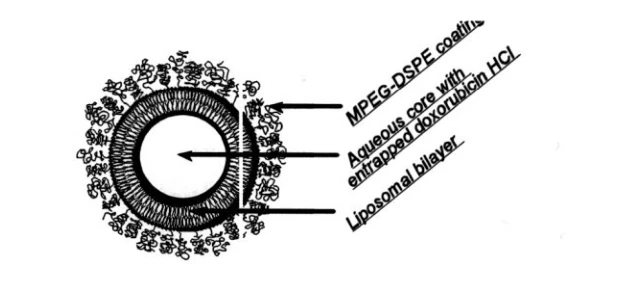
Pegylated liposomes have a half-life of approximately 73.9 hours in humans. They are stable in blood, and direct measurement of liposomal doxorubicin shows that at least 90% of the drug (the assay used cannot quantify less than 5-10% free doxorubicin) remains liposome- encapsulated during circulation.
It is hypothesized that because of their small size (ca. 100 nm) and persistence in the circulation, the pegylated Taro-Doxorubicin Liposomal liposomes are able to penetrate the altered and often compromised vasculature of tumors. This hypothesis is supported by studies using colloidal gold-containing pegylated liposomes, which can be visualized microscopically. Evidence of penetration of pegylated liposomes from blood vessels and their entry and accumulation in tumors has been seen in mice with C-26 colon carcinoma tumors. Once the pegylated liposomes distribute to the tissue compartment, the encapsulated doxorubicin hydrochloride becomes available. The exact mechanism of release is not understood.
10.3 Pharmacokinetics
The pharmacokinetics of pegylated liposomal doxorubicin hydrochloride for injection was evaluated in 120 patients from 10 different clinical trials using the population pharmacokinetic approach. The pharmacokinetics of pegylated liposomal doxorubicin hydrochloride for injection over the dose range of 10 mg/m2 to 60 mg/m2 body surface, was best described by a two-compartment non-linear model with zero-order input and Michaelis-Menten elimination. The mean intrinsic clearance of pegylated liposomal doxorubicin hydrochloride for injection was 0.030 L/h/m2 (range 0.008 to 0.152 L/h/m2) and the mean central volume of distribution was 1.93 L/m2 (range 0.96 - 3.85 L/m2) approximating the plasma volume. The apparent half-life ranged from 24 – 231 hours, with a mean of 73.9 hours. The apparent non-linearity suggests that the clearance of pegylated liposomal doxorubicin hydrochloride for injection is saturable, and that greater than dose-proportional increases in exposure occur as the dose is increased.
Breast Cancer
The pharmacokinetics of pegylated liposomal doxorubicin hydrochloride for injection determined in 18 patients with breast carcinoma were similar to the pharmacokinetics determined in the larger population of 120 patients with various cancers. The mean intrinsic clearance was 0.0160 L/h/m2 (range 0.0080 - 0.027 L/h/m2), the mean central volume of distribution was 1.46 L/m2 (range 1.10 - 1.64 L/m2). The mean apparent half-life was 71.5 hours (range 45.2 - 98.5 hours).
Ovarian Cancer
The pharmacokinetics of pegylated liposomal doxorubicin hydrochloride for injection determined in 11 patients with ovarian carcinoma were similar to the pharmacokinetics determined in the larger population of 120 patients with various cancers. The mean intrinsic clearance was 0.021 L/h/m2 (range 0.009 – 0.041 L/h/m2), the mean central volume of distribution was 1.95 L/m2 (range 1.67 – 2.40 L/m2). The mean apparent half- life was 75.0 hours (range 36.1 – 125 hours).
AIDS-KS
The plasma pharmacokinetics, and tumor localization of pegylated liposomal doxorubicin hydrochloride for injection were studied in 42 patients with AIDS- related Kaposi’s sarcoma (KS) who received single doses of 10 or 20 mg/m2 body surface, administered by a 30-minute infusion. Twenty-three of these patients received single doses of both 10 and 20 mg/m2 body surface, with a 3-week wash-out period between doses.
The pharmacokinetic parameter values of pegylated liposomal doxorubicin hydrochloride for injection are presented in the following table:
Table 11 - Pharmacokinetic Parameters in Pegylated Liposomal Doxorubicin Hydrochloride for Injection -Treated Patients (Mean ± SD)
| Dose | |||||||
|---|---|---|---|---|---|---|---|
| Parameter (units) | 10 mg/m2 body surface (n=23) | 20 mg/m2 body surface (n=23) | |||||
| Peak Plasma Concentration (mcg/mL) | 4.12 ± 0.215 | 8.34 ± 0.49 | |||||
| Plasma Clearance (L/h/m2) | 0.0556 ± 0.01 | 0.041 ± 0.004 | |||||
| Steady-State Volume of Distribution (L/ m2) | 2.83 ± 0.145 | 2.72 ± 0.120 | |||||
| AUC (mcg/mL•h) | 277 ± 32.9 | 590 ± 58.7 | |||||
| First Phase (λ1) Half-Life (h) | 4.7 ± 1.1 | 5.2 ± 1.4 | |||||
| Second Phase (λ2) Half-Life (h) | 52.3 ± 5.6 | 55.0 ± 4.8 | |||||
Across this dosage range, pegylated liposomal doxorubicin hydrochloride for injection displayed linear pharmacokinetics. Disposition occurred in two phases after pegylated liposomal doxorubicin hydrochloride for injection administration, with a relatively short first phase (~5 hours) and a prolonged second phase (~55 hours) that accounted for the majority of the area under the curve (AUC).
In contrast to the pharmacokinetics of doxorubicin, which displays a large volume of distribution, the steady-state volume of distribution of pegylated liposomal doxorubicin hydrochloride for injection indicated that pegylated liposomal doxorubicin hydrochloride for injection was confined mostly to the vascular fluid volume. Plasma protein binding of pegylated liposomal doxorubicin hydrochloride for injection has not been determined; however, the plasma protein binding of doxorubicin is approximately 70%.
Doxorubicinol, the major metabolite of doxorubicin, was detected at very low levels (range: 0.8 to 26.2 ng/mL) in the plasma of patients who received 10 or 20 mg/m2 (body surface) of pegylated liposomal doxorubicin hydrochloride for injection. The plasma clearance of pegylated liposomal doxorubicin hydrochloride for injection was slow, with a mean clearance value of 0.042 L/h/ m2 at a dose of 20 mg/m2 body surface.
Kaposi’s sarcoma lesions and normal skin biopsies were obtained at 48 and 96 hours post infusion of 10 or 20 mg/ m2 (body surface) of pegylated liposomal doxorubicin hydrochloride for injection in 22 patients. Significantly higher doxorubicin concentrations were found in KS lesions than in normal skin biopsies at both sampling times and dose levels. The median doxorubicin concentrations ranged from 2-fold to 20-fold higher in KS lesions than in normal skin.
Distribution:
The concentration of pegylated liposomal doxorubicin hydrochloride for injection in AIDS-KS lesions was a median of 21 times higher than in normal skin at 48 hours post-treatment. Population pharmacokinetic analyses suggested that there were small differences in the volume of distribution between tumor types, with the largest volume of distribution in patients with AIDS-KS (2.24 L/ m2), and the smallest volume of distribution in patients with breast carcinoma (1.12 L/ m2). The volume of distribution in the ovarian carcinoma population is 1.56 L/ m2.
Special Populations and Conditions
- Geriatrics: The population-based pharmacokinetic analysis included patients from 21 to 73 years of age. The results of this analysis suggested that age did not influence the pharmacokinetic profile of pegylated liposomal doxorubicin hydrochloride for injection.
- Hepatic Insufficiency: Based upon population pharmacokinetics, bilirubin concentrations did not affect the pharmacokinetics of pegylated liposomal doxorubicin hydrochloride for injection. It should be noted however, that few patients with elevated bilirubin were included in the analysis and that the highest bilirubin in the study was 4.0 mg/dL. Until more data are available demonstrating the safety of pegylated liposomal doxorubicin hydrochloride for injection in this patient population, suggested dosing reductions mentioned under 4 DOSAGE AND ADMINISTRATION should be followed.
- Renal Insufficiency: As doxorubicin is metabolized by the liver and excreted in the bile, dose modification should not be required with Taro-Doxorubicin Liposomal. Population-based analysis confirms that changes in renal function over the range tested (estimated creatinine clearance 30-156 mL/min) do not alter the pharmacokinetics of pegylated liposomal doxorubicin hydrochloride for injection. No pharmacokinetic data are available in patients with creatinine clearance of less than 30 mL/min.
11 STORAGE, STABILITY AND DISPOSAL
- Taro-Doxorubicin Liposomal should not be used after the expiry date stated on the label and carton.
- Unopened vials of Taro-Doxorubicin Liposomal should be stored at 2°C- 8°C. Avoid freezing.
After dilution:
- Chemical and physical in-use stability has been demonstrated for 24 hours at 2ºC to 8ºC.
- From a microbiological point of view, the product should be used immediately. If not used immediately, in-use storage times and conditions prior to use are the responsibility of the user and should not be longer than 24 hours at 2ºC to 8ºC.
- Partially used vials must be discarded. Taro-Doxorubicin Liposomal should be handled and disposed of in a manner consistent with that of other anti-cancer drugs.
12 SPECIAL HANDLING INSTRUCTIONS
Caution should be exercised in handling Taro-Doxorubicin Liposomal dispersion. The use of gloves is required. If Taro-Doxorubicin Liposomal comes into contact with skin or mucosa, wash immediately and thoroughly with soap and water.
- Taro-Doxorubicin Liposomal should not be used if it shows evidence of precipitation or any other particulate matter.
- Taro-Doxorubicin Liposomal should not be used if it shows a discoloration of the solution.
- Keep out of reach and sight of children.
PART II: SCIENTIFIC INFORMATION
13 PHARMACEUTICAL INFORMATION
Drug Substance
Proper name: Doxorubicin Hydrochloride
Chemical name: (8S,10S)-10-[(3-amino-2,3,6-trideoxy-α-L-lyxo-hexopyranosyl)oxy]-8- glycoloyl-7,8,9,10-tetrahydro-6,8,11-trihydroxy-1-methoxy-5,12- naphthacenedione hydrochloride
Molecular formula and molecular mass: C27 H29 NO11•HCl and 579.99 g/mol
Structural formula:
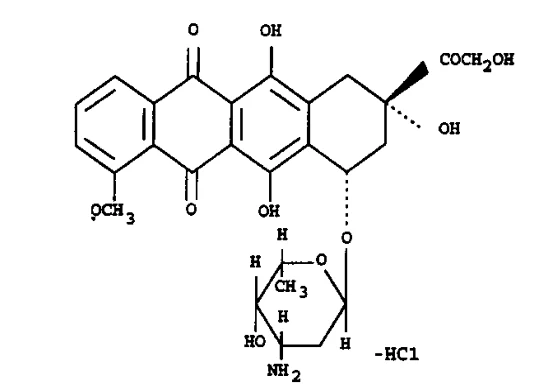
Physicochemical properties: Doxorubicin is a cytotoxic anthracycline antibiotic isolated from
Streptomyces peucetius var. caesius. It is a red- orange, odorless, crystalline powder, m.p. 204ºC - 205ºC, pH (conc. 5 mg/mL) 4.0 –
5.5, pKa 8.22, [α]20D +268º- 270º (conc. 0.1% methanol), soluble in water and alcohols.
14 CLINICAL TRIALS
14.1 Clinical Trial by Indication
Breast Cancer
A phase III randomized, controlled parallel-group, open-label, multicentre study of pegylated liposomal doxorubicin hydrochloride for injection 50 mg/m2 q 4 weeks vs, doxorubicin hydrochloride 60 mg/m2 q 3 weeks in patients with metastatic breast cancer was completed in 509 patients.
The protocol-specified primary objective of demonstrating non-inferiority between pegylated liposomal doxorubicin hydrochloride for injection and doxorubicin was met, the hazard ratio (HR) for progression-free survival (PFS) was 1.00 (95% CI for HR= 0.82 - 1.22). The treatment HR for PFS when adjusted for prognostic variables was consistent with PFS for the ITT population. Median PFS for pegylated liposomal doxorubicin hydrochloride for injection was 6.9 months and for doxorubicin 7.8 months, not statistically significant.
Table 12 - Progression-Free Survival in Breast Cancer Patients
| Protocol No. I97-328 | |||||||
|---|---|---|---|---|---|---|---|
| Number of Subjects | |||||||
| n | Censored | Progresseda | Median PFS | P-valueb | HR | 95% CI for HRc | |
| Pegylated Liposomal Doxorubicin Hydrochloride for Injection | 254 | 52 | 202 | 6.9 months | 0.99 | 1.00 | 0.82-1.22 |
| Doxorubicin | 255 | 47 | 208 | 7.8 months | |||
a: Deaths within 4 months of last tumor evaluation indicating no progression are considered events. b: Stratified log rank test to test superiority of pegylated liposomal doxorubicin hydrochloride for injection to doxorubicin. c: Adjusted for the interim analysis (95.01% CI provided). | |||||||
Figure #1: Kaplan-Meier Curve for Progression-free Survival in Breast Cancer Patients
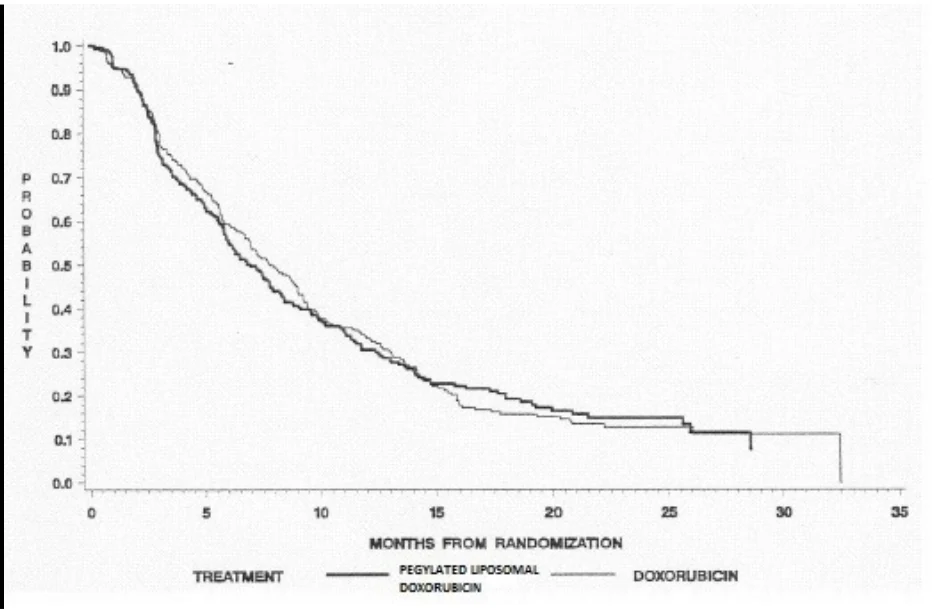
Table 13 - Overall Survival in Breast Cancer Patients
| n | Censored | Dead | Media nOS | P- valuea | HR | 95% CI for HRb | ||||||
|---|---|---|---|---|---|---|---|---|---|---|---|---|
Pegylated Liposomal Doxorubicin Hydrochloride for Injection Doxorubicin | 254 255 | 110 113 | 144 142 | 21 months 22 months | 0.59 | 0.9 | 0.74-1.19 | |||||
a: Stratified log rank test to test superiority of pegylated liposomal doxorubicin hydrochloride for injection to doxorubicin b: Adjusted for the interim analysis (95.01% CI provided) | ||||||||||||
Figure #2: Kaplan-Meier Curve for Overall Survival in Breast Cancer Patients
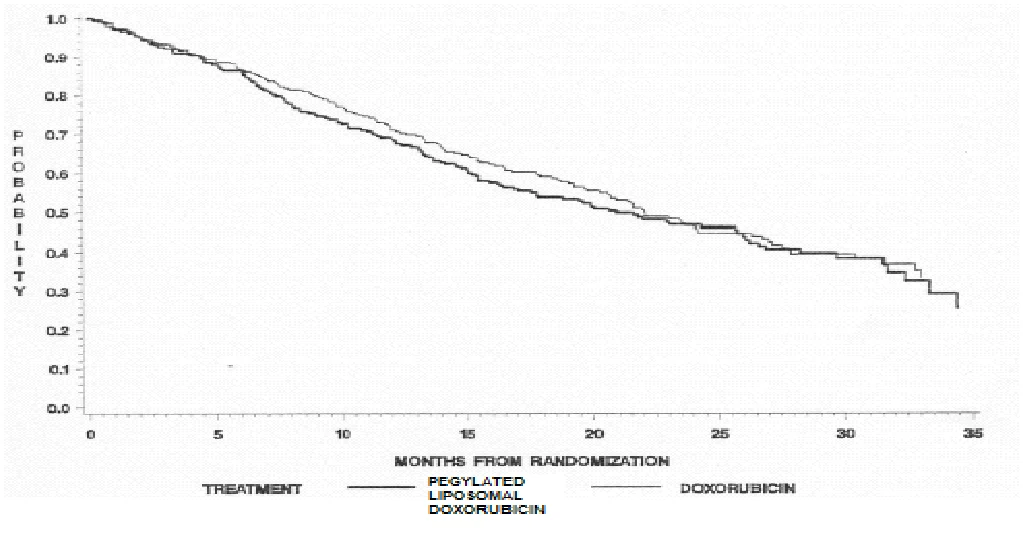
Table 14 - Objective Response to Treatment in Breast Cancer Patients
| Number (%) of Subjectsa | |||||
|---|---|---|---|---|---|
| Pegylated Liposomal Doxorubicin Hydrochloride for Injection (n=209) | Doxorubicin (n=201) | ||||
Overall Response (CR+ PR) Complete Response (CR) Partial Response (PR) Stable Disease (SD) Progressive Disease (PD) No assessment | 68 (33) 7 (3) 61 (29) 52 (25) 37 (18) 52 (25) | 77 (38) 9 (4) 68 (34) 51 (25) 22 (11) 51 (25) | |||
| a: Based on the number of subjects with measurable disease. | |||||
In the breast cancer pivotal phase III trial comparing pegylated liposomal doxorubicin hydrochloride for injection (50 mg/m2 every 4 weeks) to doxorubicin (60 mg/ m2 every 3 weeks), 10/254 patients randomized to receive pegylated liposomal doxorubicin hydrochloride for injection versus 48/255 patients randomized to receive doxorubicin met the protocol-defined criteria for cardiotoxicity during treatment and/or follow-up. Cardiotoxicity was defined as a decrease of 20 percentage points or greater from baseline if the resting LVEF remained in the normal range or a decrease of 10 percentage points or greater if the LVEF became abnormal (less than the lower limit for normal). The risk of developing a cardiac event as a function of cumulative anthracycline dose was significantly lower with pegylated liposomal doxorubicin hydrochloride for injection than with doxorubicin (HR [doxorubicin/ pegylated liposomal doxorubicin hydrochloride for injection] = 3.16, P<0.001). At cumulative doses greater than 450 mg/ m2 there were no cardiac events with pegylated liposomal doxorubicin hydrochloride for injection. Patients were also assessed for signs and symptoms of congestive heart failure (CHF). None of the 10 pegylated liposomal doxorubicin hydrochloride for injection patients, who had cardiotoxicity by LVEF criteria, developed signs and symptoms of CHF. In contrast, 10 of 48 doxorubicin patients, who had cardiotoxicity by LVEF criteria, developed signs and symptoms of CHF.
Table 15 - Cardiac Toxicity During Treatment and Follow-Up in Breast Cancer Patients
| Protocol No. I97-328 | ||
|---|---|---|
| Number of Subjects | ||
| Pegylated Liposomal Doxorubicin Hydrochloride for Injection (n=254) | Doxorubicin (n=255) | |
| Subjects developed cardiotoxicity (LVEF defined) | 10 | 48 |
| Cardiotoxicity (with signs & symptoms of CHF) | 0 | 10 |
| Cardiotoxicity (no signs & symptoms of CHF) | 10 | 38 |
Table 16 - Cumulative Anthracycline Dose and Cardiotoxicity in Breast Cancer Patients
Subgroups
| Number of Subjects | |||||||||
|---|---|---|---|---|---|---|---|---|---|
| n | Censored | Cardiotoxicity Events | HR | 95% CI for HR | |||||
≥ 55 years old Pegylated Liposomal Doxorubicin Hydrochloride for Injection Doxorubicin | 159 152 | 153 134 | 6 18 | 2.04 | 0.81-5.18 | ||||
Prior Adjuvant Anthracycline Pegylated Liposomal Doxorubicin Hydrochloride for Injection Doxorubicin | 38 40 | 37 29 | 1 11 | 7.27 | 0.93-56.80 |
|---|---|---|---|---|---|
Cardiac Risk Factor Pegylated Liposomal Doxorubicin Hydrochloride for Injection Doxorubicin | 122 121 | 117 100 | 5 21 | 2.7 | 1.01-7.18 |
Figure #3: Kaplan-Meier Curve for Rate of Cardiotoxicity vs. Cumulative Anthracycline Dose in Breast Cancer Patients
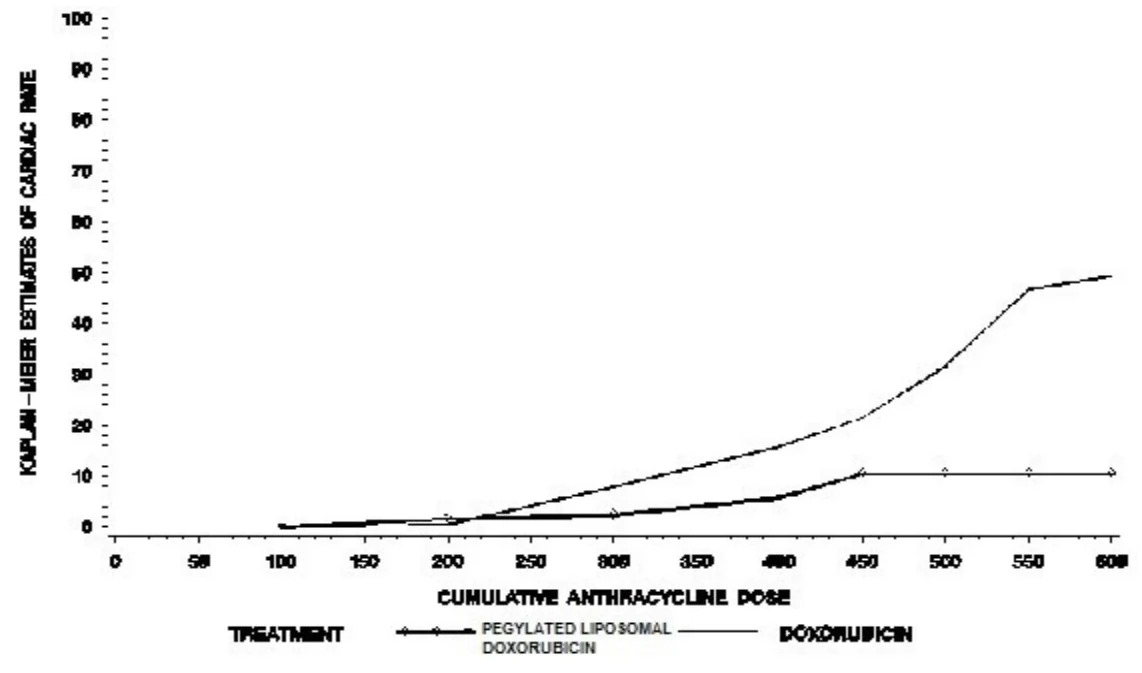
In 418 patients with solid tumors (including a subset of patients with breast and ovarian cancers) treated with pegylated liposomal doxorubicin hydrochloride for injection at a dose of 50 mg/m2/cycle, the incidence of clinically significant cardiac dysfunction was low. Only 13 of 88 patients (15%) with cumulative anthracycline dose
>400 mg/m2 body surface, had a clinically significant change in their LVEF (defined as LVEF
<45% or a decrease of at least 20 percentage points from baseline).
In addition, endomyocardial biopsies were performed in 8 solid tumor patients with cumulative anthracycline dose of 509 mg/m2-1,680 mg/m2 body surface. The range of Billingham cardiotoxicity scores was grades 0-1.5. These grading scores are consistent with no or mild cardiotoxicity.
Table 17 - Most Common Treatment Related (≥ 5%) Adverse Events in Breast Cancer Patients
| Number (%) of Subjects | |||||||||
|---|---|---|---|---|---|---|---|---|---|
| Pegylated Liposomal Doxorubicin Hydrochloride for Injection (n=254) | Doxorubicin (n=255) | ||||||||
All Grades | Grade 3 | Grade 4 | All Grades | Grade 3 | Grade 4 | ||||
PPE Nausea Mucositis Stomatitis Alopecia Vomiting Fatigue Anorexia Asthenia Rash Abdominal Pain Constipation Pigmentation Abnormal Fever Diarrhea Erythema Weakness Mouth Ulceration Anemia Neutropenia | 123 (48) 94 (37) 59 (23) 55 (22) 51 (20) 48 (19) 31 (12) 27 (11) 26 (10) 25 (10) 21 (8) 21 (8) 21 (8) 20 (8) 18 (7) 18 (7) 14 (6) 13 (5) 12 (5) 10 (4) | 42 (17) 8 (3) 10 (4) 12 (5) 0 2 (<1) 2 (<1) 3 (1) 3 (1) 6 (2) 3 (1) 2 (<1) 1 (<1) 0 3 (1) 2 (<1) 1 (<1) 1 (<1) 2 (<1) 3(1) | 0 0 0 0 0 0 0 0 0 0 0 0 0 0 0 0 0 0 1(<1) 1 (<1) | 5 (2) 136 (53) 33 (13) 38 (15) 169 (66) 78 (31) 40 (16) 26 (10) 32 (13) 4 (2) 11 (4) 24 (9) 6 (2) 18 (7) 20 (8) 3 (1) 20 (8) 9 (4) 19 (7) 25 (10) | 0 12 (5) 5 (2) 4 (2) 0 11 (4) 4 (2) 1(<1) 3 (1) 0 3 (1) 1 (<1) 1 (<1) 2 (<1) 2 (<1) 0 4 (2) 0 3 (1) 10 (4) | 0 0 0 0 0 0 0 0 0 0 0 0 0 1 (<1) 0 0 0 0 1(<1) 9 (4) | |||
Ovarian Cancer
Pivotal Phase III Study
A phase III comparative study of pegylated liposomal doxorubicin hydrochloride for injection versus topotecan in patients with epithelial ovarian cancer following failure of first-line, platinum based chemotherapy was completed in 474 patients. All patients entered into this study had failed a first-line platinum-containing regimen, usually a combination of platinum and paclitaxel, either used in combination or in sequence. A small number of patients had received prior therapy with platinum alone.
Pivotal Phase III Study – Efficacy
For the protocol-specified primary endpoint of time to progression for the 416 (207 pegylated liposomal doxorubicin hydrochloride for injection, 209 topotecan) evaluable patients (patients who were randomized, met enrolment criteria, and received at least 2 cycles of study drug), the results of the study demonstrate therapeutic equivalency of pegylated liposomal doxorubicin hydrochloride for injection vs. topotecan. The median time to progression for evaluable patients was 148 days for pegylated liposomal doxorubicin hydrochloride for injection and 134 days for topotecan with a hazard ratio of 1.262, 90% CI 1.062-1.500, P=0.026.
The time to progression for the Intent to Treat (ITT) population n=474 (239 pegylated liposomal doxorubicin hydrochloride for injection, 235 topotecan; patients who were randomized and received at least a partial dose of study drug) favored pegylated liposomal doxorubicin hydrochloride for injection over topotecan with a hazard ratio of 1.176, 90% CI 1.002-1.381, P=0.095. The median time to progression was 113 days for pegylated liposomal doxorubicin hydrochloride for injection and 119 days for topotecan.
Table 18 - Objective Response, Overall Response and Stratified by Platinum Sensitivity (ITT Ovarian Cancer Population)
| Pegylated Liposomal Doxorubicin Hydrochloride for Injection (n=239) | Topotecan (n=235) | |
|---|---|---|
Overall Response n Total Complete Partial | 239 47 (19.7%) 9 (3.8%) 38 (15.9%) | 235 40 (17%) 11 (4.7%) 29 (12.3%) |
Platinum-Refractory n Total Complete Partial | 130 16 (12.3%) 1 (0.8%) 15 (11.5%) | 124 8 (6.5%) 1 (0.8%) 7 (5.6%) |
Platinum-Sensitive n Total Complete Partial | 109 31 (28.4%) 8 (7.3%) 23 (21.1%) | 111 32 (28.8%) 10 (9.0%) 22 (19.8%) |
Figure #4 - Kaplan-Meier Curve of Progression-free Survival (Intent-to-treat Ovarian Cancer Population)
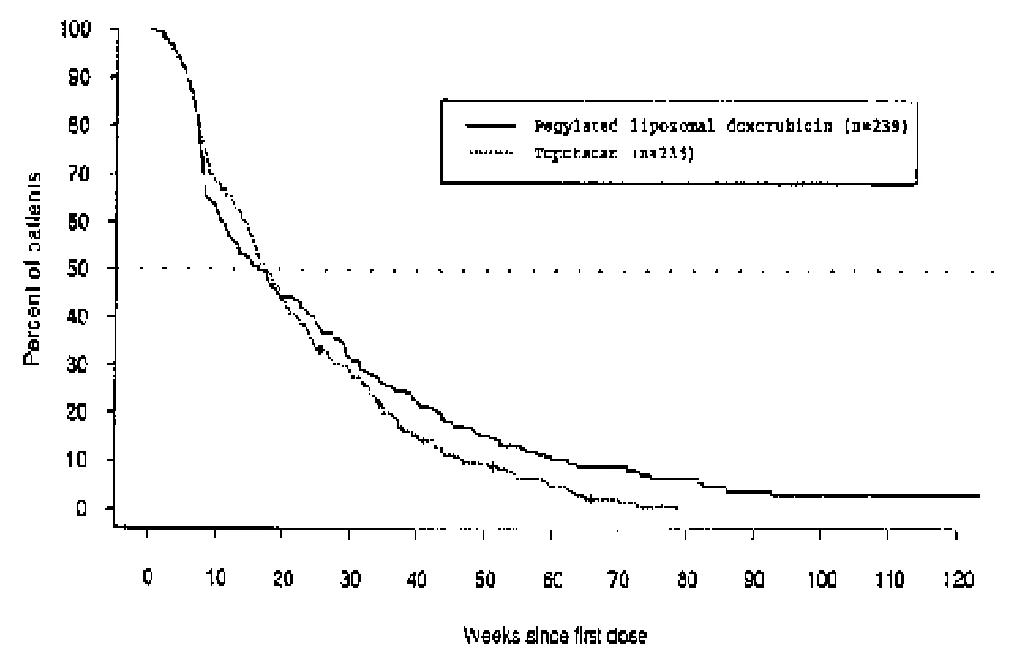
For the entire ITT population, overall survival for pegylated liposomal doxorubicin hydrochloride for injection was at least equivalent to topotecan with ratio of 1.121 (90% CI 0.920-1.367, P=0.34) in favor of pegylated liposomal doxorubicin hydrochloride for injection.
In the protocol-defined ITT population platinum-sensitive subgroup (patients who responded to initial platinum-based therapy and had a progression-free interval of greater than 6 months off treatment), both time to progression and overall survival were significantly in favor of pegylated liposomal doxorubicin hydrochloride for injection (Table 19).
Table 19 - Pivotal Phase III Study Protocol 30-49 (Ovarian Cancer Patients)
| Time to Progression for Platinum-Sensitive Subgroup of ITT population | ||||
|---|---|---|---|---|
| Treatment | n | Median (days) | Hazard Ratio (HR) | 90% CI for HR |
| Pegylated Liposomal Doxorubicin Hydrochloride for Injection | 109 | 202 | 1.349 | 1.065 - 1.709 |
| Topotecan | 111 | 163 | ||
| Overall Survival for Platinum-Sensitive Subgroup of ITT population | ||||
| Pegylated Liposomal Doxorubicin Hydrochloride for Injection | 109 | 756 | 1.72 | 1.222 - 2.422 |
| Topotecan | 111 | 498 | ||
Figure #5 - Kaplan-Meier Curve of Progression-free Survival (Intent-to-treat Population; Platinum-Sensitive Ovarian Cancer Patients).
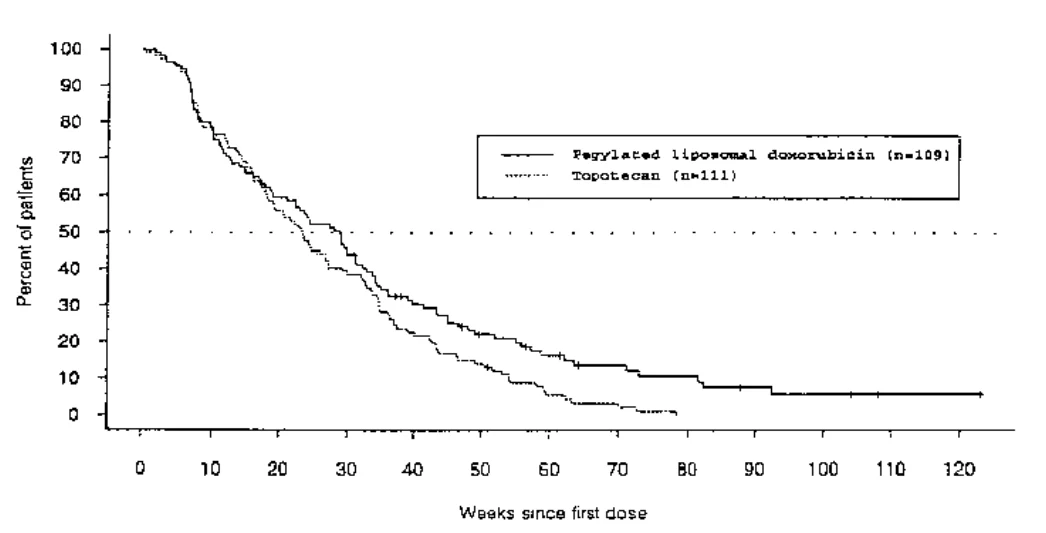
A consistent trend favouring pegylated liposomal doxorubicin hydrochloride for injection was demonstrated across efficacy endpoints and prognostic subgroups.
Pivotal Phase III Study - Safety
Overall, treatment-related adverse events observed with pegylated liposomal doxorubicin hydrochloride for injection tended to be of mild or moderate severity.
The most common drug-related adverse events associated with pegylated liposomal doxorubicin hydrochloride for injection were PPE (Palmar- Plantar Erythrodysesthesia) and stomatitis, and were severe in 23% and 8% of pegylated liposomal doxorubicin hydrochloride for injection - treated patients respectively. Both were easily managed with dose reduction or delays and were seldom treatment-limiting or life-threatening.
The most common drug-related adverse events associated with topotecan were hematologic toxicities (neutropenia, anemia, thrombocytopenia, leukopenia), nausea and alopecia.
Hematologic events, nausea, and alopecia were less frequent and less severe with pegylated liposomal doxorubicin hydrochloride for injection compared with topotecan. Hematologic toxicity with topotecan was frequently associated with clinical sequelae, such as infection, or the need for transfusions or hematopoietic growth factors.
Table 20 - Most Frequently Reported Treatment-Related Adverse Events for Each Ovarian
Cancer Treatment Group - Phase III Study
| Pegylated Liposomal Doxorubicin Hydrochloride for Injection (n=239) | Topotecan (n=235) | ||||||||||
|---|---|---|---|---|---|---|---|---|---|---|---|
| All Severities | Grade III/IV Severity | All Severities | Grade III/IV Severity | ||||||||
| Neutropenia | 84 (35%) | 29 (12%) | 191 (81%) | 178 (76%) | |||||||
| Anemia | 85 (36%) | 13 (5%) | 169 (72%) | 66 (28%) | |||||||
| Thrombocytopenia | 31 (13%) | 3 (1%) | 152 (65%) | 80 (34%) | |||||||
| Leukopenia | 87 (36%) | 24 (10%) | 149 (63%) | 117 (50%) |
|---|---|---|---|---|
| Alopecia | 38 (16%) | 3 (1%) | 115 (49%) | 14 (6%) |
| PPE* | 117 (49%) | 55 (23%) | 2 (1%) | 0 |
| Stomatitis | 95 (40%) | 20 (8%) | 35 (15%) | 1 (0.4%) |
| Nausea | 85 (36%) | 7 (3%) | 127 (54%) | 14 (6%) |
* PPE = Palmar-plantar erythrodysesthesia
There was no evidence of a relationship between cumulative pegylated liposomal doxorubicin hydrochloride for injection dose and change from baseline for LVEF (Left Ventricular Ejection Fraction).
When quality of life outcomes such as toxicity and progression are considered, pegylated liposomal doxorubicin hydrochloride for injection is always preferred over topotecan as demonstrated in the quality-adjusted survival analysis.
Although pain secondary to palmar-plantar erythrodysesthesia (PPE) is more common in pegylated liposomal doxorubicin hydrochloride for injection treated patients, this rarely resulted in study discontinuation.
AIDS-KS
Efficacy data on refractory patient population
Pegylated liposomal doxorubicin hydrochloride for injection was studied in an open-label, single-arm, multicenter study utilizing pegylated liposomal doxorubicin hydrochloride for injection at 20 mg/m2 by intravenous infusion every three weeks generally until progression or intolerance occurred. In an interim analysis, the treatment history of 383 patients was reviewed, and a cohort of 77 patients was retrospectively identified as having disease progression on prior systemic combination chemotherapy (at least 2 cycles of a regimen containing at least two of three treatments: bleomycin, vincristine or vinblastine, or doxorubicin) or as being intolerant to such therapy. Of the 77 patients selected, 66 had disease progression on conventional chemotherapy prior to entering the trial and 11 could not continue systemic chemotherapy because of intolerable toxicity. These 77 patients were predominantly white, homosexual males with a mean age of 38 years.
Two analyses of tumor response were used to evaluate the effectiveness of pegylated liposomal doxorubicin hydrochloride for injection:
- 1 - Indicator Lesion Assessment: A retrospective analysis was conducted based on analysis of
five indicator lesions. A partial response was defined as a decrease of 50% in the total
size of the indicator lesions compared to study entry, or a decrease of 50% in the number of raised lesions.
- 2
- Investigator Assessment: Investigator assessment of response was based on ACTG
criteria. Partial response was defined as no new lesions, sites of disease, or worsening edema. In addition, one of the following criteria had to be fulfilled: (1) a 50% or greater decrease in the number of all previously existing lesions; (2) a complete flattening of at least 50% of all previously raised lesions; (3) a 50% decrease in the sum of the products of the largest perpendicular diameters of the indicator lesions; or (4) the patient met the criteria for Clinical Complete Response except the patient had residual tumor-associated edema or effusion.
Analyses of efficacy were conducted using both conventional (“best”) and “conservative” response methodologies for the 77 refractory patients. According to the “conservative” response methodology (updated ACTG response criteria), patients had to meet the response criteria at a minimum of two consecutive clinical evaluations, separated by a minimum of 21 days, with no record of prior disease progression. The results obtained using both of these methodologies are summarized below:
Table 21 - Best Response in Refractorya AIDS-KS
Indicator Lesion Assessment | Investigator Assessment | |
|---|---|---|
| Number of Patients | 77 | 77 |
Best Response Complete Partial Stable Progression | 0 52 (67.5%) 20 (26.0%) 5 (6.5%) | 1 ( 1.3%) 43 (55.8%) 29 (37.7%) 4 ( 5.2%) |
Time to PR and/or CR (days) Median Range | 69 1-351 | 94 1-280 |
Duration of PR and/or CR (days) Median Range | 64 1-211 | 113 15-368 |
aPatients with disease that progressed on prior combination chemotherapy or who were intolerant to such therapy.
PR = Partial response; CR = Complete response
Table 22 - Best “Conservative” Response in Refractorya AIDS-KS
Indicator Lesion Assessment | Investigator Assessment | |
|---|---|---|
| Number of Patients | 77 | 77 |
Best Response Complete Partial Stable Progression | 0 26 (33.8%) 19 (24.7%) 32 (41.6%) | 1 ( 1.3%) 33 (42.9%) 22 (28.6%) 21 (27.3%) |
Time to PR and/or CR (days) Median Range | 92 1-414 | 99 1-304 |
Duration of PR and/or CR (days) Median Range | 65 22-211 | 113 21-368 |
aPatients with disease that progressed on prior combination chemotherapy or who were intolerant to such therapy.
PR = Partial response; CR = Complete response
Controlled trials
Two phase III, randomized, multicenter trials have been performed, comparing pegylated liposomal doxorubicin hydrochloride for injection at a dose of 20 mg/m2 with a combination chemotherapy regimen of 20 mg/m2 Adriamycin®, 10 U/ m2 bleomycin and 1.0 mg vincristine (ABV) or 15 U/ m2 bleomycin and 1.4 mg/m2 vincristine (BV) in the treatment of severe AIDS-KS. Patients received up to 6 cycles of either treatment regimen every 2 weeks (ABV-controlled) or 3 weeks (BV-controlled). Patients with extensive and progressive cutaneous KS lesions or mucocutaneous disease and/or documented visceral disease were enrolled in these studies. Most patients had between 10-50 lesions at baseline and CD4 counts of less than 50 cells per mm3 A total of 499 patients were treated in these two studies: 254 with pegylated liposomal doxorubicin hydrochloride for injection, 125 with ABV, and 120 with BV.
The primary efficacy parameter used in studies 30-10 and 30-11 was overall clinical assessment as determined by the investigator. Tumor response was to be classified as complete, clinically complete, partial, stable disease, or progressive disease, based on a refinement of the ACTG criteria published in 1989. In order to be classified as a “responder” (partial response (PR), clinical complete response (CCR), or complete response (CR)), the patient must have had at least two sequential investigator assessments, at least 28 days apart, that consistently confirmed the response. Partial response was defined as above (see efficacy data on refractory patient population; definition of investigator assessment). In conjunction with investigator assessment, additional assessments were also made, among which, assessment of indicator lesion characteristics and quality of life (QOL) questionnaires. Primary efficacy results are
summarized below:
Table 23 - Controlled Trials - Response Summary
| Pegylated Liposomal Doxorubicin Hydrochloride for Injection | ABV | BV | |
|---|---|---|---|
| (N = 254) | (N = 125) | (N = 120) | |
Complete/Partial Response Time to CR/PR - Median (Days) Duration - Median (Days) | 132 (52.0%) 43 119 | 31 (24.8 %) 50 92 | 28 (23.3%) 64 123 |
CR = Complete response; PR = Partial response
As evaluated by investigator assessment, the overall (complete/partial) response rate for pegylated liposomal doxorubicin hydrochloride for injection was significantly (P<0.001) superior to that of ABV and BV. In the pegylated liposomal doxorubicin hydrochloride for injection group, 8 patients (3.1%) achieved a clinical complete response and 124 patients (48.8%) achieved a partial response. In the ABV group, no patients achieved a clinical complete response and 31 (24.8%) achieved a partial response; in the BV group, 1 patient (0.8%) achieved a clinical complete response and 27 (22.5%) achieved a partial response.
Response in both the pegylated liposomal doxorubicin hydrochloride for injection patients and the control arms was associated with significant improvements in the characteristics of the KS lesions, including a reduction in lesion thickness and nodularity, improvement in lesion color, and resolution of lesion-associated edema. Pegylated liposomal doxorubicin hydrochloride for injection patients also showed a mean decrease of indicator lesion size by 26.0% by the end of treatment. ABV patients showed a mean decrease of 14.6%, whereas BV patients showed a slight increase (0.2%). Compared to ABV and BV treatment, the response rates achieved by pegylated liposomal doxorubicin hydrochloride for injection also translated into improved QOL for patients.
Cardiotoxicity
An increased incidence of congestive heart failure is associated with doxorubicin therapy at cumulative lifetime doses >450 mg/m2 body surface, or at lower doses for patients with cardiac risk factors. Endomyocardial biopsies on ten AIDS-KS patients receiving cumulative doses of pegylated liposomal doxorubicin hydrochloride for injection greater than 460 mg/m2 body surface, indicate no evidence of anthracycline-induced cardiomyopathy in 5 patients, minimal myocardial cell damage (<5%) in 4 patients and in 1 patient cell damage was >6-15%. The recommended dose of Taro-Doxorubicin Liposomal for AIDS-KS patients is 20 mg/m2body surface, every two-to-three weeks. The cumulative dose at which cardiotoxicity would become a concern for these AIDS-KS patients (>400 mg/m2 body surface) would require more than 20 courses of Taro-Doxorubicin Liposomal therapy over 40 to 60 weeks.
14.3 Comparative Bioavailability Studies
An open label, randomized, two-treatment, two-period, single-dose (50 mg/m2), crossover-design comparative bioavailability study was conducted with Taro-Doxorubicin Liposomal 2 mg/ml (Taro Pharmaceuticals Inc.) and PrDOXIL® 2 mg/ml (doxorubicin hydrochloride liposome injection; Ortho Biotech Products, USA) in 60 patients with ovarian cancer under fed (low fat breakfast) conditions.
Data from 41 subjects who completed the study are presented in the following tables.
SUMMARY TABLE OF THE COMPARATIVE BIOAVAILABILITY DATA
Encapsulated Doxorubicin (50 mg/m2) Geometric Mean Arithmetic Mean (CV %) | ||||
| Parameter | Test1 | Reference2 | % Ratio of Geometric Means | % Confidence Interval |
AUCT (mcg.h/ml) | 2960.98 3160.65 (36.4) | 2818.12 3098.28 (39.8) | 105.1 | 97.2 – 113.6 |
AUCI (mcg.h/ml) | 3213.05 3431.50 (36.7) | 3184.92 3428.20 (36.7) | 100.9 | 94.4 – 107.8 |
Cmax (mcg/ml) | 33.32 34.18 (24.1) | 32.47 33.59 (24.38) | 102.6 | 97.6 – 108.0 |
Tmax3 (h) | 2.92 (81.6) | 3.30 (72.9) | -- | -- |
T1/23 (h) | 77.44 (28.7) | 80.46 (44.2) | -- | -- |
1 Taro-Doxorubicin Liposomal 2 mg/ml (Taro Pharmaceuticals Inc.) 2 PrDOXIL® 2 mg/ml (doxorubicin hydrochloride liposome injection; Ortho Biotech Products, USA) 3 Expressed as arithmetic mean (CV%) | ||||
SUMMARY TABLE OF THE COMPARATIVE BIOAVAILABILITY DATA
Free Doxorubicin (50 mg/m2) Geometric Mean Arithmetic Mean (CV %) | ||||
| Parameter | Test1 | Reference2 | % Ratio of Geometric Means | % Confidence Interval |
AUCT (ng.h/ml) | 22488.86 25728.97 (56.5) | 21544.43 24891.96 (52.6) | 104.4 | 91.1 – 119.7 |
AUCI (ng.h/ml) | 24840.42 28079.08 (53.1) | 24468.74 24831.82 (168.2) | 101.5 | 88.1 – 117.0 |
Cmax (ng/ml) | 235.21 283.10 (72.7) | 237.10 261.42 (46.4) | 99.2 | 85.1 – 115.6 |
Tmax3 (h) | 20.40 (169.0) | 21.77 (157.5) | -- | -- |
T1/23 (h) | 93.23 (52.2) | 99.28 (167.5) | -- | -- |
1 Taro-Doxorubicin Liposomal In 2 mg/ml (Taro Pharmaceuticals Inc.) 2 PrDOXIL® 2 mg/ml (doxorubicin hydrochloride liposome injection; Ortho Biotech Products, USA) 3 Expressed as arithmetic mean (CV%) | ||||
SUMMARY TABLE OF THE COMPARATIVE BIOAVAILABILITY DATA
Total Doxorubicin (50 mg/m2) Geometric Mean Arithmetic Mean (CV %) | ||||
| Parameter | Test1 | Reference2 | % Ratio of Geometric Means | % Confidence Interval |
AUCT (mcg.h/ml) | 2936.31 3111.07 (32.5) | 2794.39 3083.54 (36.4) | 105.1 | 96.2 – 114.8 |
AUCI (mcg.h/ml) | 3094.52 3300.71 (33.8) | 2997.79 3231.38 (41.2) | 103.2 | 95.5 – 111.6 |
Cmax (mcg/ml) | 31.08 31.95 (24.1) | 30.50 31.67 (23.3) | 101.9 | 96.6 – 107.5 |
Tmax3 (h) | 2.54 (50.6) | 21.77 (157.5) | -- | -- |
T1/23 (h) | 75.48 (38.7) | 67.26 (96.4) | -- | -- |
1 Taro-Doxorubicin Liposomal 2 mg/ml (Taro Pharmaceuticals Inc.) 2 PrDOXIL® 2 mg/ml (doxorubicin hydrochloride liposome injection; Ortho Biotech Products, USA) 3 Expressed as arithmetic mean (CV%) | ||||
15 MICROBIOLOGY
No microbiology information is required for this drug product
16 NON-CLINICAL TOXICOLOGY
Therapeutic Efficacy of Pegylated Liposomal Doxorubicin Hydrochloride for Injection
The efficacy of pegylated liposomal doxorubicin hydrochloride for injection, equivalent doses of conventionally formulated doxorubicin hydrochloride and doxorubicin hydrochloride encapsulated in conventional liposomes have been compared in a variety of murine tumor models including several human xenograft models. In every model examined, pegylated liposomal doxorubicin hydrochloride for injection was more effective than the same dose of doxorubicin hydrochloride in inhibiting or halting tumor growth, in effecting cures and/or in prolonging the survival of tumor-bearing animals; and in no case was pegylated liposomal doxorubicin hydrochloride for injection less effective than doxorubicin hydrochloride. Pegylated liposomal doxorubicin hydrochloride for injection was more active in both solid and dispersed tumors and was more effective than doxorubicin hydrochloride in preventing spontaneous metastases from intramammary implants of two different mammary tumors in mice. In two tumor models in which they were compared, pegylated liposomal doxorubicin hydrochloride for injection was also more effective than the same dose of doxorubicin hydrochloride encapsulated in non-pegylated liposomes, demonstrating the impact of the long-circulating liposome.
Pharmacokinetics
Single dose studies were performed in rats and dogs, and multiple dose pharmacokinetic studies were also conducted in rats, rabbits and dogs to characterize the plasma pharmacokinetics of pegylated liposomal doxorubicin hydrochloride for injection.
The plasma pharmacokinetics of pegylated liposomal doxorubicin hydrochloride for injection and doxorubicin were found to be significantly different in all species evaluated. The plasma concentration of doxorubicin was up to 2000-fold higher in pegylated liposomal doxorubicin hydrochloride for injection-treated animals after intravenous injection of equivalent doses of pegylated liposomal doxorubicin hydrochloride for injection and doxorubicin hydrochloride. Plasma concentration by time data were best fit with a bi-exponential curve, with a relatively short first phase (half-life = 1 to 3 hours), and a more prolonged second phase, which represented the majority of the AUC (area-under- the-curve), and a half-life ranging from 20 to 30 hours. The volume of distribution was smaller and clearance was substantially decreased when compared to doxorubicin hydrochloride. Although plasma concentration and AUC were dose-dependent, pegylated liposomal doxorubicin hydrochloride for injection disposition kinetics were independent of dose. No evidence of drug accumulation was seen in dogs treated with up to 1.0 mg/kg of pegylated liposomal doxorubicin hydrochloride for injection every three weeks. The plasma pharmacokinetics of pegylated liposomal doxorubicin hydrochloride for injection in rats did not change with repeated dosing.
Despite the higher plasma concentration of doxorubicin after pegylated liposomal doxorubicin hydrochloride for injection treatment, the stability of the pegylated liposome and its low rate of doxorubicin release (leakage) in plasma results in very low levels of free (non-liposomal) doxorubicin hydrochloride in the bloodstream. Virtually the entire pegylated liposomal doxorubicin hydrochloride for injection dose administered to animals can be accounted for in the plasma in 2-5 minutes after treatment, suggesting that no sudden burst of drug release occurs after drug injection, as has been reported for conventional, non-pegylated liposomal formulations of doxorubicin hydrochloride. Direct measurements of the amount of liposomal drug in the plasma shows that more than 90% to 95% of the doxorubicin, remains encapsulated in liposomes.
Tissue levels of doxorubicin were determined in tumor-bearing mice and in non-tumor-bearing rats and dogs. In the tumor model studies, tumor AUC’s in pegylated liposomal doxorubicin hydrochloride for injection-treated animals ranged from 7-fold higher in a murine C26 colon carcinoma model to 25-fold greater in the human prostatic xenograft than in mice treated with the same dose of doxorubicin hydrochloride.
Tumor and normal tissue levels of doxorubicin continued to rise for at least 24 hours in pegylated liposomal doxorubicin hydrochloride for injection-treated mice, but peaked after 1-4 hours in animals that received doxorubicin hydrochloride, declining rapidly thereafter.
Doxorubicin concentrations persisted in the tissues in pegylated liposomal doxorubicin hydrochloride for injection-treated animals, owing to the slower clearance of liposome-associated drug, resulting in significantly higher tissue AUC’s. It is known that doxorubicin-associated toxicity, particularly cardiotoxicity, is associated with the high peak concentrations of doxorubicin, but not with AUC. Treatment regimens that minimize peak doxorubicin plasma concentrations, but maintain cumulative AUC, are associated with reduced risk of cardiomyopathy and do not compromise anti-tumor activity. The reduced cardiac tissue concentrations in pegylated liposomal doxorubicin hydrochloride for injection-treated animals correlate well with the observation that pegylated liposomal doxorubicin hydrochloride for injection is less cardiotoxic than doxorubicin hydrochloride in animals (see 16 NON-CLINICALTOXICOLOGY, Special Toxicology, Cardiotoxicity).
The higher AUC's in the tissues also did not correlate with increased toxicity, with the exception of cutaneous lesions. Doxorubicin concentrations were higher at sites of cutaneous lesions than in normal skin, with levels falling rapidly after treatment stopped and nearing the concentrations found in normal skin by the end of the recovery period. It could not be determined if lesions formed because of increased doxorubicin concentrations, or whether doxorubicin concentration was secondarily increased as a result of extravasation of pegylated liposomal doxorubicin hydrochloride for injection at pre-existing sites of tissue damage. Studies in dogs have demonstrated that the incidence and severity of the cutaneous lesions is related to dose intensity, with lower dose levels associated with decreased lesion formation (see 16 NON-CLINICAL TOXICOLOGY, Special Toxicology, Dermal Lesion Development).
General Toxicology:
Acute Toxicity
In single dose studies, the acute toxicity of pegylated liposomal doxorubicin hydrochloride for injection was similar for mice, rats, and dogs. In the rat, the incidence and severity of clinical observations were dose-related and included tail and footpad lesions, swelling and inflammation of the penis and scrotum, rough haircoat, alopecia, hypoactivity, hunched posture, respiratory distress, and reduced body weight gain. Reversible myelotoxicity was noted based on decreased RBC, WBC, hemoglobin, and hematocrit. Increases occurred in BUN and cholesterol levels.
Dogs were the most sensitive species. Treatment-related toxicity included dermal toxicity, reversible myelotoxicity, hematologic changes, increased BUN, gastrointestinal toxicity, body weight loss, reversible cutaneous lesions, and alopecia. Myelotoxicity was less severe compared with the doxorubicin hydrochloride group.
In a single dose study, MPEG-DSPE micelles, a component of the Taro-Doxorubicin Liposomal liposome formulation, had no acute toxic effects in mice when administered at a lipid dose approximately 30-fold that found in the dose of 20 mg/m2 recommended for humans.
Long-term Toxicity
The toxicity of pegylated liposomal doxorubicin hydrochloride for injection following repeated administration was similar in rats and dogs and an extension of the findings in the acute studies. Treatment-related effects included dermatologic toxicity, body weight and food consumption changes, alopecia, myelotoxicity (bone marrow cellularity changes), and hematologic effects (leukopenia and lower erythron mass). Dogs also showed gastrointestinal toxicity and no pathologic signs of toxicity. In the long-term studies, pegylated liposomal doxorubicin hydrochloride for injection was compared with non-liposomal doxorubicin hydrochloride:
Table 24 - Comparative Long-term Toxicity Studies
| Species | No./ Sex | No. of Doses | Dose (mg/kg) | CONCLUSIONS |
|---|---|---|---|---|
| Rat | Groups of 30 15Female 15 Male | 13 dose q3d | Pegylated Liposomal Doxorubicin Hydrochlori de for Injection 0.25, 1.0, 1.5 Dox hydrochl oride 1 |
|
| Species | No. / Sex | No. of Doses | Dose (mg/kg) | CONCLUSIONS |
|---|---|---|---|---|
| Dog | Groups of 6 Male | 4 dose q7d | Pegylated Liposomal Doxorubicin Hydrochlori de for Injection 1 Dox-hydrochlo ride 1 |
|
| Dog | Groups of 6 Female 6 Male | 10 dose q21d | Pegylated Liposomal Doxorubici n Hydrochlori de for Injection 0.25, 0.75, 1.0 Dox-hydrochlo ride 1.0 |
|
Carcinogenicity:
Doxorubicin, the active component of pegylated liposomal doxorubicin hydrochloride for injection, is both mutagenic and carcinogenic so conducting carcinogenicity and mutagenicity studies was not deemed necessary. Four studies were carried out with pegylated placebo liposome to confirm their lack of mutagenicity and genotoxicity.
Negative results were obtained in the Ames, the L5178Y mouse lymphoma, and chromosomal aberration assays in vitro, and the mouse bone marrow micronucleus assay in vivo.
Nephrotoxicity:
Cynomolgus monkeys (3/sex) were administered a single intravenous dose of pegylated liposomal doxorubicin hydrochloride for injection (Doxil® formulation) of 10 mg/kg (120 mg/m²; approximately two times the clinical dose) and followed for 28 days as a comparator arm in an acute toxicity study with an investigational doxorubicin formulation. Three male and 1 female monkeys were sacrificed on Day 11 or 15 in poor condition attributable to renal toxicity. Renal toxicity reflected in increased serum creatinine and blood urea nitrogen levels included tubular and/or glomerular changes and presented as renal hemorrhage and/or edema (cortex, pelvis or papilla), distal tubular dilatation, tubular protein casts, hypertrophy of the Bowman’s capsular epithelial cells, interstitial neutrophil infiltration, and/or necrosis of renal adipose tissue. Renal toxicity has been observed with even lower single doses of doxorubicin hydrochloride in rats and rabbits. However, since an evaluation of the post-marketing safety database for pegylated liposomal doxorubicin hydrochloride for injection in patients has not suggested a significant nephrotoxicity liability of pegylated liposomal doxorubicin hydrochloride for injection, these findings in monkeys may not have relevance to patient risk assessment.
Reproduction and Teratology:
The potential developmental toxicity of pegylated liposomal doxorubicin hydrochloride for injection was evaluated in rats and rabbits. In the first study, intravenous bolus injections of pegylated liposomal doxorubicin hydrochloride for injection 0.1, 0.5, or 1.0 mg/kg was administered on gestation days 6, 9, 12, and 15; or pegylated placebo liposomes or saline on the same treatment schedule. An additional group received doxorubicin 0.2 or 0.4 mg/kg daily between gestation days 6 and 15. Equivalent maternal toxicity occurred in the pegylated liposomal doxorubicin hydrochloride for injection 0.5 and 1.0 mg/kg groups and in the doxorubicin groups. Pegylated liposomal doxorubicin hydrochloride for injection 1.0 mg/kg induced decreased fetal weights, increases in fetal resorptions, and retarded ossification of caudal vertebrae and xiphoid centers in the fetuses. No adverse effects were seen in dams or fetuses in the placebo liposome or pegylated liposomal doxorubicin hydrochloride for injection 0.1 mg/kg groups.
The embryotoxicity of pegylated liposomal doxorubicin hydrochloride for injection was confirmed in the study in pregnant New Zealand White rabbits administered intravenous injections of pegylated liposomal doxorubicin hydrochloride for injection 0.5, 1.5, or 2.5 mg/kg on gestation days 6, 9, 12, 15, and 18. All doses were maternally toxic. Four females that died (3 and 1 in the high- and mid-dose groups, respectively), surviving females in the mid- and high-dose groups (4 and 2, respectively), and 4 females (low-dose group) who aborted prior to the end of the study all had 100% resorbed conceptuses. The uterine of another female (low-dose group) who aborted prior to the end of the study consisted of 3 normal conceptuses, 4 late resorptions, and 5 early resorptions. Pegylated liposomal doxorubicin hydrochloride for injection is both embryotoxic and an abortifacient in rabbits.
Special Toxicology:
Local Tolerance
Two single dose studies were conducted to examine the potential of pegylated liposomal doxorubicin hydrochloride for injection to cause injury if accidentally extravasated. Rabbits received single intravenous or subcutaneous injections of 0.1 or 1.0 mL of undiluted pegylated liposomal doxorubicin hydrochloride for injection 2.0 mg/mL, doxorubicin hydrochloride 2.0 mg/mL, or pegylated placebo liposomes. Histopathological evaluation of the intravenous injection sites revealed that pegylated liposomal doxorubicin hydrochloride for injection, doxorubicin hydrochloride, and placebo liposomes were well tolerated with no gross or microscopic evidence of irritation.
Hemolytic Potential
The hemolytic potential of pegylated liposomal doxorubicin hydrochloride for injection and pegylated placebo liposomes in human blood was assessed in vitro, as well as their compatibility with human serum and plasma. Neither pegylated liposomal doxorubicin hydrochloride for injection 1.0 mg/mL nor empty pegylated liposomes induced hemolysis of human erythrocytes, nor did either cause coagulation or precipitation of human serum or plasma.
Lysophosphatidylcholine (LPC) is a degradation product of the phosphatidylcholine component of the liposomes. An additional hemolytic potential study using pegylated liposomal doxorubicin hydrochloride for injection formulations prepared with 0 mg/mL, 0.5 mg/mL, or 0.88 mg/mL LPC caused no hemolysis of rat blood cells.
Dermal Lesion Development
The effect of peak dosage and dose frequency on dermal lesion development and myelosuppression was studied in dogs. Pegylated liposomal doxorubicin hydrochloride for injection 0.5, 1.0, 1.5 mg/kg was administered q7d, q14d, or q28d by intravenous (cephalic) catheter for 6-12 weeks. The higher dose intensities with lower dose frequency (1.0 mg/kg q14d and 1.5 mg/kg q28d) produced minimal evidence of cyclic depression of hemoglobin and hematocrit. In both groups, the hemoglobin and hematocrit values recovered to prestudy values at the end of the study. The onset of lesions occurred within 1 to 2 weeks after initiation of treatment and began to heal at rates that varied depending on lesion severity and dose frequency.
Myelosuppression was mild with all treatment regimens and no evidence of treatment-related leukopenia was observed. Dosages of 0.5 mg/kg given every 2 or 4 weeks were tolerated much better than the weekly doses at 0.5 mg/kg. Comparison of groups that received 0.5 mg/kg/treatment showed clear dose frequency-related effects on lesion development, lesion severity, and general toxicity. Integration of current results with previous studies showed a similar frequency-dependent effect with 1.0 mg/kg; weekly and every 2-week regimens produced severe toxicity while a 3-week dose cycle was better tolerated.
Cardiotoxicity
Cardiotoxicity is frequently observed in animals and man administered non-liposomal doxorubicin. However, in studies with pegylated liposomal doxorubicin hydrochloride for injection in rats and dogs it was observed that cardiotoxicity was either absent or present at a substantially decreased incidence and severity. A multiple-dose study was carried out to evaluate the relative cardiotoxicity of pegylated liposomal doxorubicin hydrochloride for injection and doxorubicin hydrochloride administered to male rabbits by intravenous injection q5d for targeted cumulative dosages of 14 or 21 mg/kg. Treatment was interrupted twice for 26 days to allow recovery from short-term toxicities unrelated to cardiotoxicity. Necropsies were conducted 1, 5, and 13 weeks after the 14th dose and 13 weeks after the 21st dose; hearts were examined for histopathological changes at each point. Lesion severity and incidence at five sites within the heart were also utilized to calculate a cardiotoxicity score for each animal.
Nine early deaths occurred in the pegylated liposomal doxorubicin hydrochloride for injection group, 3 due to cardiotoxicity and 5 due to generalized stress secondary to dermal lesions; 5 early deaths occurred in the doxorubicin hydrochloride group, all with evidence of cardiotoxicity. Cardiac lesions were more severe and frequent in the doxorubicin hydrochloride group: overall, 4/25 (16%) pegylated liposomal doxorubicin hydrochloride for injection-treated animals with cardiotoxicity compared to 10/15 (67%) doxorubicin hydrochloride-treated animals. The decreased cardiotoxicity was not due to increased latency of the lesion; there was no significant increase in lesion incidence or severity with time post-treatment. Cardiomyopathy increased in evidence and severity with time after treatment in the doxorubicin hydrochloride treatment group. Up to 50% more pegylated liposomal doxorubicin hydrochloride for injection (21 mg/kg cumulative dose) could be given without incurring increased cardiotoxicity compared to doxorubicin hydrochloride (14 mg/kg cumulative dose).
Pegylated Liposome Placebo
In addition to the mutagenicity and developmental studies, and the acute and long-term studies in which placebo liposomes were used as controls, pegylated Liposome Placebo was evaluated for its potential to induce cardiovascular changes in dogs and neurobehavioral changes in rats. In the cardiovascular study, dogs showed a significant decrease in blood pressure (19-70%) immediately after the start of dosing followed by a rapid partial recovery after the end of dosing, and a return to normal values within 4-6 hours post-dose. Compensating acceleration in heart rate was not seen. The dose rate did not affect the extent of hypotension, but inversely affected the duration. In the rat study, placebo liposomes did not induce any adverse neurobehavioral effects or evidence of neurotoxicity.
17 SUPPORTING PRODUCT MONOGRAPHS
- 1. Caelyx®, Sterile Aqueous Suspension for Intravenous Administration, 2 mg/mL, submission control 280737, Product Monograph, Janssen Inc. April 02, 2024.