


Product Monograph - Taro-Imiquimod
INDICATIONS AND CLINICAL USE
Taro-Imiquimod is indicated in immunocompetent adults for the following conditions.
Treatment of biopsy-confirmed, primary superficial basal cell carcinoma (sBCC) with a maximum tumour diameter of 2.0 cm, located on the trunk (excluding anogenital _________________________________________________________________________________ Taro-Imiquimod Page 5 of 33
skin), neck, or extremities (excluding hands and feet), otherwise amenable to simple surgical excision, in patients who, in consultation with their physician, choose not to have surgery and are willing to undergo regular follow-up. Note: Surgical excision is the usual treatment of choice for these sBCC tumours. While Imiquimod cream has been shown to be effective in the short-term clearance of sBCC in ~75% of cases, there are no data directly comparing Imiquimod cream to surgical excision.
- Treatment of clinically typical, nonhyperkeratotic, nonhypertrophic actinic keratosis on the face or balding scalp.
- Treatment of external genital and perianal warts/condyloma acuminata.
CONTRAINDICATIONS
Taro-Imiquimod is contraindicated in individuals with a history of sensitivity reactions to any of its components. It should be discontinued if hypersensitivity to any of its ingredients is noted.
WARNINGS
Patients with sBCC treated with Taro-Imiquimod are required to have regular follow-up of the treatment site because the efficacy of imiquimod in the treatment of sBCC is generally less than that with surgery and, as well, because the long term efficacy and safety of imiquimod in the treatment of sBCC have not yet been established.
The histological diagnosis of superficial basal cell carcinoma should be established prior to treatment since Imiquimod cream has not been evaluated for the treatment of other types of basal cell carcinomas, including nodular, morpheaform (fibrosing or sclerosing) types and is not recommended for treatment of BCC subtypes other than the superficial variant.
Imiquimod cream has not been evaluated for the treatment of sBCC on the face, head, hands or feet, and anogenital area.
The efficacy of Imiquimod cream in the prevention of squamous cell carcinoma (SCC) associated with AK has not been established. One subject who participated in a clinical trial of imiquimod and had complete clearance of AK lesions with imiquimod treatment developed a SCC in situ in the treatment area within 12 to 18 months of treatment (see PHARMACOLOGY, Clinical Studies).
Imiquimod cream has not been evaluated for the treatment of urethral, intra-vaginal, cervical, rectal, or intra-anal human papilloma viral disease and is not recommended for these conditions.
Hypersensitivity reactions (urticaria) and erythema multiforme have been reported in patients Imiquimod cream. Causality has not been established and no other reports of similar cases _________________________________________________________________________________ Taro-Imiquimod Page 6 of 33
have been reported in post-marketing surveillance. Taro-Imiquimod should be discontinued immediately if these events occur.
Some reports of localised hypopigmentation and hyperpigmentation following use of Imiquimod cream have been received. Post-marketing reporting suggests that these skin colour changes may be permanent in some patients.
PRECAUTIONS
General: Taro-Imiquimod administration is not recommended until skin or genital/perianal tissue is healed from any previous drug or surgical treatment. Taro-Imiquimod has the potential to exacerbate inflammatory conditions of the skin.
Local skin reactions such as erythema, erosion, excoriation/flaking, and edema are common.
Should a severe local skin reaction occur, the cream should be removed by washing the treatment area with mild soap and water. Treatment with Taro-Imiquimod can be resumed after the skin reaction has subsided.
The efficacy and safety of Imiquimod cream have not been established for patients with Basal Cell Nevus Syndrome or Xeroderma Pigmentosum.
The safety of Imiquimod cream applied to areas of skin greater than 25 cm2 for the treatment of actinic keratosis has not been established.
The safety and efficacy of Imiquimod cream in immunosuppressed patients have not been established.
Flu-like systemic signs and symptoms including malaise, fever, nausea, myalgias and rigors may occur. Dosing interruption may be required.
Taro-Imiquimod should be used with caution in patients with pre-existing autoimmune conditions. Rare reports have been received of exacerbation of autoimmune conditions in patients treated with Imiquimod cream.
Imiquimod cream has the potential to exacerbate inflammatory conditions of the skin, including chronic graft versus host disease.
Exposure to sunlight (including sunlamps) should be avoided or minimized during use of Taro-Imiquimod because of concern for heightened sunburn susceptibility. Patients should be warned to use protective clothing (hat) when using Taro-Imiquimod. Patients with sunburn should be advised not to use Taro-Imiquimod until fully recovered. Patients who may have considerable sun exposure, e.g., due to their occupation, and those patients with inherent sensitivity to sunlight should exercise caution when using Taro-Imiquimod. Phototoxicity has not been adequately assessed for Imiquimod cream. The enhancement of ultraviolet carcinogenicity is not necessarily dependent on phototoxic mechanisms. Despite the absence _________________________________________________________________________________ Taro-Imiquimod Page 7 of 33
of observed phototoxicity in humans (see PHARMACOLOGY, Clinical Studies), Imiquimod cream shortened the time to skin tumour formation in an animal photoco-carcinogenicity study (see Carcinogenesis, Mutagenesis, Impairment of Fertility). Therefore, it is prudent for patients to minimize or avoid natural or artificial sunlight exposure.
Carcinogenicity, Mutagenesis, and Impairment of Fertility: Two-year bioassays in Wistar rats (up to 3 mg/kg orally per day) and CD-1 mice (up to 4.5 mg/kg applied topically 3 times per week) showed no evidence of a carcinogenic effect in male and female rats and female mice. Liver tumours were increased in male mice exposed to the highest dose concentration, compared to the unexposed controls. However, the number of tumours was within the range seen historically for male CD-1 mice. It is generally accepted that an increase in liver tumours in male mice, in the absence of other neoplastic responses in mice or rats, is not indicative of a carcinogenic risk for humans.
In a photocarcinogenicity study in hairless mice, animals received Imiquimod cream 3 times per week at imiquimod concentrations of 0.03%, 0.1% and 0.3% and were irradiated with solar ultraviolet light for 5 days each week for 40 weeks and observed an additional 12 weeks. Vehicle cream enhanced UVR-induced skin tumour development. Imiquimod cream had no additional effect on tumour development beyond the vehicle effect (i.e., the addition of the active ingredient, imiquimod, to the vehicle cream did not result in an additional effect beyond the vehicle effect on tumour development).
Pregnancy: Imiquimod was not teratogenic in rat or rabbit teratology studies. In rats at a high maternally toxic dose (28 times human dose on a mg/m2 basis), reduced pup weights and delayed ossification were observed. However, there are no adequate and well-controlled studies in pregnant women. Because animal reproduction studies are not always predictive of human response, this drug should be used during pregnancy only if clearly needed.
Nursing Mothers: It is not known whether topically applied imiquimod is excreted in breast milk.
Use in Children: Safety and efficacy in patients below the age of 18 years have not been established.
Geriatric Use: Although no overall differences in safety or effectiveness have been observed between elderly and younger patients, greater sensitivity of some older individuals cannot be ruled out. Of the 185 patients in the 5 times per week treatment groups of clinical studies evaluating the treatment of sBCC with Imiquimod cream, 65 patients (35%) were 65 years and older, while 25 patients (14%) were 75 years and older. Of the 215 patients in the 2 times per week clinical studies evaluating the treatment of AK lesions with Imiquimod cream, 127 patients (59%) were 65 years and older, while 60 patients (28%) were 75 years and older. No overall differences in safety or effectiveness were observed between these patients and younger patients. No other clinical experience has identified differences in responses between the elderly and younger patients.
_________________________________________________________________________________ Taro-Imiquimod Page 8 of 33
DRUG INTERACTIONS
Interactions between Imiquimod cream with other drugs have not been established.
As an immune response modifier, imiquimod is not recommended for use concurrently with immunosuppressive drugs such as tacrolimus, pimicrolimus, mycophenolate mofetil, cyclosporine or methotrexate.
Concomitant use of corticosteroids with imiquimod may potentially limit efficacy.
ADVERSE REACTIONS
Superficial Basal Cell Carcinoma
The data described below reflect exposure to Imiquimod cream or vehicle in 364 patients enrolled in two double-blind, vehicle-controlled studies in which subjects with sBCC applied Imiquimod cream or vehicle to the target lesions 5X/week for 6 weeks.
Summary of All Adverse Events Reported by > 1% of Patients in the Combined 5X/Week Studies | ||||
| Body System Preferred Term | Imiq 5X/Week (n=185) | Vehicle 5X/Week (n=179) | ||
| Application Site Disorders Application Site Reaction | 52 | (28.1%) | 5 | (2.8%) |
Body as a Whole – General Disorders Allergy Aggravated Back Pain Chest Pain Fatigue Fever Pain | 2 7 2 4 3 3 | (1.1%) (3.8%) (1.1%) (2.2%) (1.6%) (1.6%) | 1 1 0 2 0 2 | (0.6%) (0.6%) (0.0%) (1.1%) (0.0%) (1.1%) |
| Cardiovascular Disorders, General Hypertension | 5 | (2.7%) | 1 | (0.6%) |
Centr and Periph Nervous System Disorders Dizziness Headache | 2 14 | (1.1%) (7.6%) | 1 4 | (0.6%) (2.2%) |
Gastro-Intestinal System Disorders Abdominal Pain Diarrhoea Dyspepsia Gastro-Intestinal Disorder Nos Nausea Tooth Disorder | 1 1 3 1 2 0 | (0.5%) (0.5%) (1.6%) (0.5%) (1.1%) (0.0%) | 2 2 2 2 0 2 | (1.1%) (1.1%) (1.1%) (1.1%) (0.0%) (1.1%) |
| Metabolic and Nutritional Disorders Gout | 2 | (1.1%) | 0 | (0.0%) |
| Musculo-Skeletal System Disorders Skeletal Pain | 3 | (1.6%) | 2 | (1.1%) |
| Psychiatric Disorders Anxiety | 2 | (1.1%) | 1 | (0.6%) |
Resistance Mechanism Disorders Infection Infection Fungal | 1 2 | (0.5%) (1.1%) | 3 2 | (1.7%) (1.1%) |
_________________________________________________________________________________ Taro-Imiquimod Page 9 of 33
Respiratory System Disorders Coughing Pharyngitis Rhinitis Sinusitis Upper Resp Tract Infection | 3 2 5 4 6 | (1.6%) (1.1%) (2.7%) (2.2%) (3.2%) | 1 1 1 1 2 | (0.6%) (0.6%) (0.6%) (0.6%) (1.1%) |
Secondary Terms Inflicted Injury Procedural Site Reaction | 3 2 | (1.6%) (1.1%) | 3 3 | (1.7%) (1.7%) |
Skin and Appendage Disorders Hyperkeratosis Rash Skin Disorder | 3 3 1 | (1.6%) (1.6%) (0.5%) | 2 1 3 | (1.1%) (0.6%) (1.7%) |
| White Cell and Res Disorder Lymphadenopathy | 5 | (2.7%) | 1 | (0.6%) |
The most frequently reported adverse reactions were those of local skin and application site reactions including erythema, edema, induration, erosion, flaking/scaling, scabbing/crusting, itching and burning at the application site. The adverse reactions that most frequently resulted in clinical intervention (e.g., rest periods, withdrawal from study) were local skin and application site reactions; 10% (19/185) of patients received rest periods. The average number of doses not received per patient due to rest periods was 7 doses with a range of 2 to 22 doses; 79% of patients (15/19) resumed therapy after a rest period. Overall, in the clinical studies, 2% (4/185) of patients discontinued for local skin/application site reactions. The incidence of application site reactions reported by >1% of the subjects during the 6-week treatment period is summarized in the table below.
Summary of All Application Site Reactions Reported by >1% of Patients in the Combined 5X/Week Studies | ||||
| Included Term | Imiq 5X/Week (n=185) | Vehicle 5X/Week (n=179) | ||
| Itching at Target Site | 30 | (16.2%) | 1 | (0.6%) |
| Burning at Target Site | 11 | (5.9%) | 2 | (1.1%) |
| Pain at Target Site | 6 | (3.2%) | 0 | (0.0%) |
| Tenderness at Target Site | 2 | (1.1%) | 0 | (0.0%) |
| Erythema at Remote Site | 3 | (1.6%) | 0 | (0.0%) |
| Papule(s) at Target Site | 3 | (1.6%) | 0 | (0.0%) |
| Bleeding at Target Site | 4 | (2.2%) | 0 | (0.0%) |
| Tingling at Target Site | 1 | (0.5%) | 2 | (1.1%) |
| Infection at Target Site | 2 | (1.1%) | 0 | (0.0%) |
Local skin reactions were collected independently of the adverse event “application site reaction” in an effort to provide a better picture of the specific types of local reactions that might be seen. The incidence and severity of local skin reactions that occurred during controlled studies are shown in the following table.
_________________________________________________________________________________ Taro-Imiquimod Page 10 of 33
Most Intense Local Skin Reactions in the Treatment Area as Assessed by the Investigator (Percentage of Patients) 5X/Week Application | ||||
| Local Skin Reaction | Mild/Moderate | Severe | ||
Imiquimod cream n=184 | Vehicle n=178 | Imiquimod cream n=184 | Vehicle n=178 | |
| Edema | 71% | 36% | 7% | 0% |
| Erosion | 54% | 14% | 13% | 0% |
| Erythema | 69% | 95% | 31% | 2% |
| Flaking/Scaling | 87% | 76% | 4% | 0% |
| Induration | 78% | 53% | 6% | 0% |
| Scabbing/Crusting | 64% | 34% | 19% | 0% |
| Ulceration | 34% | 3% | 6% | 0% |
| Vesicles | 29% | 2% | 2% | 0% |
Adverse events judged to be probably or possibly related to Imiquimod cream and reported by at least 1% of the patients included: Application Site Reactions: Target Site Reactions (itching, burning, pain, tenderness, bleeding, papules, infection, pimples); Remote Site Reactions: (erythema); Body as a Whole: back pain; White Cell and Resistance Disorders: lymphadenopathy.
In the sBCC studies, 23 of 1266 (1.8%) imiquimod-treated patients developed treatment site infections that were treated with antibiotics; the majority of these patients required a rest period off Imiquimod cream. In all vehicle controlled BCC studies, the adverse event lymphadenopathy was reported in 12 (1.8%) of the 672 imiquimod-treated patients. In all phase II/III BCC trials with 5X/week imiquimod dose groups, 9 (1.7%) of 518 patients with pre- and post-treatment laboratory tests developed a ≥2 toxicity grade level shift from baseline to end-of-treatment in absolute lymphocyte counts.
Actinic Keratosis
The data described below reflect exposure to Imiquimod cream or vehicle in 436 patients enrolled in two double-blind, vehicle-controlled studies in which patients applied Imiquimod cream or vehicle to a 25 cm2 contiguous treatment area on the face or balding scalp 2 times per week for 16 weeks.
In controlled clinical studies, the most frequently reported adverse reactions were those of local skin and application site reactions including erythema, flaking/scaling/dryness, scabbing/crusting, itching and burning at the application site. The adverse reactions that most frequently resulted in clinical intervention (e.g., rest periods, withdrawal from study) were local skin and application site reactions: 16% (35/215) of patients received rest periods. The average number of doses not received per patient due to rest periods was 4 doses with a range of 1 to 11 doses: 91% of patients (32/35) resumed therapy after a rest period. Overall, in the clinical studies, 2% (5/215) of patients discontinued for local skin/application site reactions and one patient discontinued due to the development of urticaria. One patient developed a bacterial infection at the treatment site.
_________________________________________________________________________________ Taro-Imiquimod Page 11 of 33
Summary of All Adverse Events Reported by > 1% of Patients in the Combined 2X/Week Studies | ||||
| Body System Preferred Term | Imiq 2X/Week (n=215) | Vehicle 2X/Week (n=221) | ||
| Application Site Disorders Application Site Reaction | 71 | (33.0%) | 32 | (14.5%) |
Body as a Whole – General Disorders Back Pain Fatigue Fever Headache Hernia Nos Influenza Like Symptoms Pain Rigors | 3 3 3 11 4 4 3 3 | (1.4%) (1.4%) (1.4%) (5.1%) (1.9%) (1.9%) (1.4%) (1.4%) | 2 2 0 7 1 4 3 0 | (0.9%) (0.9%) (0.0%) (3.2%) (0.5%) (1.8%) (1.4%) (0.0%) |
Cardiovascular Disorders, General Chest Pain Hypertension | 1 3 | (0.5%) (1.4%) | 4 5 | (1.8%) (2.3%) |
| Centr and Periph Nervous System Disorders Dizziness | 3 | (1.4%) | 1 | (0.5%) |
Gastro-Intestinal System Disorders Diarrhoea Dyspepsia Gastroesophageal Reflux Nausea Vomiting | 6 6 3 3 3 | (2.8%) (2.8%) (1.4%) (1.4%) (1.4%) | 2 4 3 3 1 | (0.9%) (1.8%) (1.4%) (1.4%) (0.5%) |
| Heart Rate and Rhythm Disorders Fibrillation Atrial | 3 | (1.4%) | 2 | (0.9%) |
| Metabolic and Nutritional Disorders Hyperscholesterolaemia | 4 | (1.9%) | 0 | (0.0%) |
Musculo-Skeletal Disorders Arthralgia Arthritis Myalgia Skeletal Pain | 2 2 3 1 | (0.9%) (0.9%) (1.4%) (0.5%) | 4 3 3 3 | (1.8%) (1.4%) (1.4%) (1.4%) |
Neoplasm Basal Cell Carcinoma Carcinoma Squamous | 5 8 | (2.3%) (3.7%) | 5 5 | (2.3%) (2.3%) |
| Resistance Mechanism Disorders Herpes Simplex Infection Viral | 9 4 3 | (4.2%) (1.9%) (1.4%) | 11 4 2 | (5.0%) (1.8%) (0.9%) |
Respiratory System Disorders Bronchitis Coughing Pharyngitis Pulmonary Cogestion Rhinitis Sinusitis Upper Resp Tract Infection | 2 6 4 1 7 16 33 | (0.9%) (2.8%) (1.9%) (0.5%) (3.3%) (27.4%) (15.3%) | 3 10 4 3 8 14 27 | (1.4%) (4.5%) (1.8%) (1.4%) (3.6%) (6.3%) (2.2%) |
Secondary Terms Abrasion Nos Cyst Nos Inflicted Injury Post-Operative Pain | 7 0 19 3 | (3.3%) (0.0%) (8.8%) (1.4%) | 5 4 21 4 | (2.3%) (1.8%) (9.5%) (1.8%) |
Skin and Appendages Disorders 47 (21.9%) 42 (19.0%) Alopecia 3 (1.4%) 0 (0.5%) _________________________________________________________________________________ Taro-Imiquimod Page 12 of 33
Dermatitis 3 (1.4%) 8 (3.2%) Eczema 4 (1.9%) 3 (1.4%) Hyperkeratosis 19 (8.8%) 12 (5.4%)
Photosensitivity Reaction Pruritis Rash Skin Disorder Verruca | 2 2 5 6 1 | (0.9%) (0.9%) (2.3%) (2.8%) (0.5%) | 4 3 5 7 3 | (1.8%) (1.4%) (2.3%) (3.2%) (1.4%) |
| Urinary System Disorders Urinary Tract Infection | 8 3 | (3.7%) (1.4%) | 10 1 | (4.5%) (0.5%) |
Vision Disorders Conjuncivitis Eye Abnormality Eye Infection | 1 4 0 | (0.5%) (1.9%) (0.0%) | 3 1 3 | (1.4%) (0.5%) (1.4%) |
Summary of All Application Site Reactions Reported by >1% of Patients in the Combined 2X/Week Studies | ||||
| Included Term | Imiq 2X/Week (n=215) | Vehicle 2X/Week (n=221) | ||
| Bleeding at Target Site | 7 | (3.3%) | 1 | (0.5%) |
| Burning at Remote Site | 4 | (1.9%) | 0 | (0.0%) |
| Burning at Target Site | 12 | (5.6%) | 4 | (1.8%) |
| Induration at Remote Site | 3 | (1.4%) | 0 | (0.0%) |
| Induration at Target Site | 5 | (2.3%) | 3 | (1.4%) |
| Irritation at Remote Site | 3 | (1.4%) | 0 | (0.0%) |
| Itching at Remote Site | 7 | (3.3%) | 3 | (1.4%) |
| Itching at Target Site | 44 | (20.5%) | 15 | (6.8%) |
| Pain at Target Site | 5 | (2.3%) | 2 | (0.9%) |
| Stinging at Target Site | 6 | (2.8%) | 2 | (0.9%) |
| Tenderness at Target Site | 4 | (1.9%) | 3 | (1.4%) |
Local skin reactions were collected independently of the adverse event "application site reaction" in an effort to provide a better picture of the specific types of local reactions that might be seen. The most frequently reported local skin reactions were erythema, flaking/scaling/dryness, and scabbing/crusting. The prevalence and severity of local skin reactions that occurred during controlled studies are shown in the following table.
Most Intense Local Skin Reactions in the Treatment Area as Assessed by the Investigator (Percentage of Patients) 2X/Week Application | ||||
| Event | Mild/Moderate | Severe | ||
| Imiquimod (n=215) | Vehicle (n=220) | Imiquimod (n=215) | Vehicle (n=220) | |
| Erythema | 80% | 91% | 18% | 2% |
| Edema | 49% | 10% | 0% | 0% |
| Weeping/Exudate | 21% | 1% | 0% | 0% |
| Vesicles | 9% | 1% | 0% | 0% |
| Erosion/Ulceration | 46% | 9% | 2% | 0% |
| Flaking/Scaling/Dryness | 85% | 87% | 7% | 3% |
| Scabbing/Crusting | 70% | 40% | 8% | 2% |
_________________________________________________________________________________ Taro-Imiquimod Page 13 of 33
External Genital Warts
In controlled clinical trials, the most frequently reported adverse reactions were those of local skin and application site reactions; some patients also reported systemic reactions. These reactions were usually mild to moderate in intensity; however, severe reactions were reported with 3 times per week application. These reactions were more frequent and more intense with daily application than with 3 times per week application. Overall, in the 3 times per week application clinical studies, 1.2% (4/327) of the patients discontinued due to local skin/application site reactions. The incidence and severity of local skin reactions during controlled clinical trials are shown in the following table.
Wart Site Reaction as Assessed by Investigator (3X/Week Application) | ||||||||
| Mild/Moderate | Severe | |||||||
| Females | Males | Females | Males | |||||
| Imiquimod (n=117) | Vehicle (n=99) | Imiquimod (n=156) | Vehicle (n=157) | Imiquimod (n=114) | Vehicle (n=99) | Imiquimod (n=156) | Vehicle (n=157) | |
| Erythema | 61% | 21% | 54% | 22% | 4% | 0% | 4% | 0% |
| Erosion | 30% | 8% | 29% | 6% | 1% | 0% | 1% | 0% |
| Excoriation/ Flaking | 18% | 8% | 25% | 8% | 0% | 0% | 1% | 0% |
| Edema | 17% | 5% | 12% | 1% | 1% | 0% | 0% | 0% |
| Induration | 5% | 2% | 7% | 2% | 0% | 0% | 0% | 0% |
| Ulceration | 5% | 1% | 4% | 1% | 3% | 0% | 0% | 0% |
| Scabbing | 4% | 0% | 13% | 3% | 0% | 0% | 0% | 0% |
| Vesicls | 3% | 0% | 2% | 0% | 0% | 0% | 0% | 0% |
Remote site skin reactions were also reported in female and male patients treated 3 times a week with Imiquimod cream. The severe remote site skin reactions reported for females were erythema (3%), ulceration (2%), and edema (1%); and for males, erosion (2%), and erythema, edema, induration, and excoriation/flaking (each 1%).
Adverse events judged to be probably or possibly related to Imiquimod cream reported by more than 5% of patients are listed below; also included are soreness, influenza-like symptoms and myalgia.
Adverse Reactions Probably or Possibly Related to Imiquimod Cream (3X/Week Application) | |||||
| Females | Males | ||||
| Imiquimod (n=117) | Vehicle (n=103) | Imiquimod (n=156) | Vehicle (n=158) | ||
| Application Site Disorders: | |||||
| Application Site Reactions Wart Site: | |||||
| Itching | 32% | 20% | 22% | 10% | |
| Burning | 26% | 12% | 9% | 5% | |
_________________________________________________________________________________ Taro-Imiquimod Page 14 of 33
| Pain | 8% | 2% | 2% | 1% |
| Soreness | 3% | 0% | 0% | 1% |
| Fungal Infectiona | 11% | 3% | 2% | 1% |
| Systemic Reactions: | ||||
| Headache | 4% | 3% | 5% | 2% |
| Influenza-like symptoms | 3% | 2% | 1% | 0% |
| Myalgia | 1% | 0% | 1% | 1% |
a Incidences reported without regard to causality with Imiquimod cream.
Adverse events judged to be possibly or probably related to Imiquimod cream and reported by more than 1% of patients include: Application Site Disorders: Wart Site Reactions (burning, hypopigmentation, irritation, itching, pain, rash, sensitivity, soreness, stinging, tenderness); Remote Site Reactions (bleeding, burning, itching, pain, tenderness, tinea cruris); Body as a Whole: fatigue, fever, influenza-like symptoms; Central and Peripheral Nervous System Disorders: headache; Gastro-Intestinal System Disorders: diarrhea; Musculo-Skeletal System Disorders: myalgia.
Post-Marketing Experience:
Application Site Disorders (resulting from internal application): local skin reactions, pain and swelling, difficulty passing urine in female patients.
Rare reports have been received of either the onset or exacerbation of autoimmune conditions (including thyroiditis, multiple sclerosis, spondyloarthropathy, psoriasis, ulcerative colitis) in association with Imiquimod cream therapy.
The following adverse reactions have been identified during post-approval use of Imiquimod cream. Because these reactions are reported voluntarily from a population of uncertain size, it is not always possible to reliably estimate their frequency or establish a causal relationship to drug exposure.
Application Site Disorders: tingling at the application site.
Body as a Whole: angioedema.
Cardiovascular: capillary leak syndrome, cardiac failure, cardiomyopathy, pulmonary edema, arrhythmias (tachycardia, atrial fibrillation, palpitations), chest pain, ischemia, myocardial infarction, syncope.
Endocrine: thyroiditis.
Gastro-Intestinal System Disorders: abdominal pain.
Hematological: decreases in red cell, white cell and platelet counts (including idiopathic thrombocytopenic purpura), lymphoma.
Hepatic: abnormal liver function.
Infections and Infestations: herpes simplex.
Musculo-Skeletal System Disorders: arthralgia.
Neuropsychiatric: agitation, cerebrovascular accident, convulsions (including febrile convulsions), depression, insomnia, multiple sclerosis aggravation, paresis, suicide. Respiratory: dyspnea.
Urinary System Disorders: proteinuria.
_________________________________________________________________________________ Taro-Imiquimod Page 15 of 33
Skin and Appendages: exfoliative dermatitis, erythema multiforme, hyperpigmentation, hypertrophic scar.
Vascular: Henoch-Schonlein purpura syndrome.
SYMPTOMS AND TREATMENT OF OVERDOSAGE
Overdosage of Imiquimod cream in humans is unlikely due to minimal percutaneous absorption. Animal studies reveal a rabbit dermal lethal imiquimod dose of greater than 5000 mg/kg. Persistent topical overdosing of Imiquimod cream could result in severe local skin reactions. The most clinically serious adverse event reported following multiple oral imiquimod doses of ≥200 mg was hypotension which resolved following oral or intravenous fluid administration.
DOSAGE AND ADMINISTRATION
The application frequency for Taro-Imiquimod cream is different for each indication.
Superficial Basal Cell Carcinoma
Taro-Imiquimod cream is to be applied to a biopsy-confirmed sBCC 5 times per week, prior to normal sleeping hours, and left on the skin for approximately 8 hours. The treatment area should include a 1 cm margin of skin around the tumour. The amount of cream to be applied depends upon the diameter of the target sBCC (see table below).
| Patient Dosing Guide | ||
| Target Tumor Diameter | Size of Cream Droplet to be Used (Diameter) | Approximate Amount of Cream to be Used |
| 0.5 to < 1.0 cm | 4 mm | 10 mg |
| ≥ 1.0 to < 1.5 cm | 5 mm | 25 mg |
| ≥ 1.5 to 2.0 cm | 7 mm | 40 mg |
Before applying the cream, the patient should wash the treatment area with mild soap and water and allow the area to dry thoroughly. The cream should be applied to cover the treatment area, including one centimetre of skin surrounding the tumour, and should be rubbed into the treatment area until the cream is no longer visible. Caution subjects to avoid contacting the cream in or near the eyes. Approximately 8 hours after applying Taro-Imiquimod, cream should be removed by washing the area with mild soap and water. An example of a 5 times per week application schedule is to apply Taro-Imiquimod cream once per day, Monday through Friday, prior to sleeping hours.
Taro-Imiquimod cream treatment should continue for 6 weeks. Local skin reactions in the treatment area are common. Patients should contact their physician if they experience any sign or symptom in the treatment area that restricts or prohibits their daily activity or makes _________________________________________________________________________________ Taro-Imiquimod Page 16 of 33
continued application of the cream difficult. A rest period of several days may be taken if required by the patient's discomfort or severity of the local skin reaction. However, the treatment period should not be extended beyond 6 weeks due to missed doses or rest periods.
The technique for proper dose administration should be demonstrated by the prescriber to maximize the benefit of Taro-Imiquimod cream therapy. Hand washing before and after cream application is recommended. The application site is not to be occluded.
A follow-up visit at approximately 12 weeks post-treatment to assess the treatment site for clinical clearance is appropriate. Early clinical clearance cannot be adequately assessed until resolution of local skin reactions. If there is clinical evidence of persistent tumour at the 12-week post-treatment visit, a biopsy or other alternative intervention should be considered; the safety of and efficacy of a repeat course of Taro-Imiquimod cream treatment have not been established. If any suspicious lesion arises in the treatment area at any time after 12 weeks, the patient should seek a medical evaluation.
Taro-Imiquimod cream is packaged in single-use packets which contain 250 mg of the cream or in a pump that contains 7.5g of the cream. Each complete actuation of the pump delivers 235 mg of the cream. No more than one sixth of a packet of Taro-Imiquimod cream (or one sixth of the amount delivered by a full actuation of the pump) should be applied to the treatment area at each application. Partially-used packets should be discarded and not reused; remaining cream from a full actuation of the pump should be discarded. Partially used pump should be discarded at the end of treatment period.
Actinic Keratosis
Taro-Imiquimod cream is to be applied 2 times per week to a defined treatment area on the face or scalp no larger than 25 cm2, prior to normal sleeping hours, and left on the skin for approximately 8 hours. Before applying the cream, the patient should wash the treatment area with mild soap and water and allow the area to dry thoroughly. The cream should be rubbed into the treatment area until the cream is no longer visible. Contact with the eyes, lips and nostrils should be avoided. Following the treatment period, cream should be removed by washing the area with mild soap and water. Examples of two times per week application schedules are Monday and Thursday, or Tuesday and Friday prior to sleeping hours.
Taro-Imiquimod cream treatment should continue for 16 weeks. Local skin reactions in the treatment area are common. Patients should contact their physician if they experience any sign or symptom in the treatment area that restricts or prohibits their daily activity or makes continued application of the cream difficult. A rest period of several days may be taken if required by the patient's discomfort or severity of the local skin reaction. However, the treatment period should not be extended beyond 16 weeks due to missed doses or rest periods.
The technique for proper dose administration should be demonstrated by the prescriber to maximize the benefit of Taro-Imiquimod cream therapy. Hand washing before and after cream application is recommended.
_________________________________________________________________________________ Taro-Imiquimod Page 17 of 33
Taro-Imiquimod cream is packaged in single-use packets or in a pump which contains 7.5g of cream. No more than one packet, 250 mg, of Taro-Imiquimod cream or the amount delivered by one full actuation of the pump, 235 mg of cream, should be applied to the treatment area at each application. Partially-used packets should be discarded and not reused. The application site is not to be occluded.
External Genital Warts
Taro-Imiquimod cream is to be applied 3 times per week, prior to normal sleeping hours, and left on the skin for 6-10 hours. Following the treatment period cream should be removed by washing the treated area with mild soap and water. Examples of 3 times per week application schedules are: Monday, Wednesday, Friday; or Tuesday, Thursday, Saturday application prior to sleeping hours.
Taro-Imiquimod cream treatment should continue until there is total clearance of the genital/perianal warts or for a maximum of 16 weeks. Local skin reactions (erythema) at the treatment site are common. A rest period of several days may be taken if required by the patient due to discomfort or severity of the local skin reaction. Treatment may resume once the reaction subsides. Non-occlusive dressings such as cotton gauze or cotton underwear may be used in the management of skin reactions.
The technique for proper dose administration should be demonstrated by the prescriber to maximize the benefit of Taro-Imiquimod cream therapy. Hand washing before and after cream application is recommended.
Taro-Imiquimod cream is packaged in single-use packets of 250 mg cream or in a pump, which contains 7.5 g of cream total, with each actuation of the pump delivering 235 mg cream. Each full actuation of the pump or single-use packet contains sufficient cream to cover a wart area of up to 20 cm2; use of excessive amounts of cream should be avoided. Patients self-administer Taro-Imiquimod cream by applying the cream to external genital and/or perianal warts. A thin layer is applied to the wart area and rubbed in until the cream is no longer visible. The application site is not to be occluded.
 _________________________________________________________________________________ Taro-Imiquimod Page 18 of 33
PHARMACEUTICAL INFORMATION
Drug Substance:
Proper name: Imiquimod (USAN, INN)
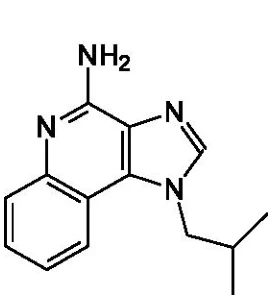
Chemical name: 1-isobutyl-1H-imidazol(4,5-c)quinolin-4-amine
CAS number: 99011-02-6
Structural formula:
Molecular formula: C14H16N4
Molecular weight: 240.3
Physical Form: White to off-white powder.
Solubility: Soluble in DMSO; very slightly soluble in methanol; practically insoluble in water and in acetone. Slightly soluble in pH buffer solutions ranging between 1.55 and 1.60 and insoluble in pH buffer solutions ranging between 4.49 and 9.04.
pKa Value: The pKa value of Imiquimod is 7.3.
Melting point: 295-298oC.
_________________________________________________________________________________ Taro-Imiquimod Page 19 of 33
Composition:
Each gram of Taro-Imiquimod Cream, 5% w/w contains 50 mg of imiquimod in an off-white oil-in-water vanishing cream base consisting of benzyl alcohol, cetyl alcohol, glycerin, isostearic acid, methylparaben, polysorbate 60, propylparaben, purified water, sorbitan monostearate, stearyl alcohol, white petrolatum and xanthan gum.
Stability and storage recommendations:
Store between 15-25oC. Avoid freezing. For the pump, store in the upright position.
AVAILABILITY AND DOSAGE FORMS
Taro-Imiquimod Cream, 5% w/w is supplied as follows:
Taro-Imiquimod: Single-use packets containing 250 mg of the cream. It is available as a box of 12 or 24 packets.
Taro-Imiquimod Pump: A pump that contains 7.5 g of the cream. Each full actuation of the pump delivers 235 mg of cream (a similar amount as packet).
PHARMACOLOGY
Pharmacodynamics: Imiquimod is an immune response modifier that is not a nucleoside analogue. Saturable binding studies suggest a membrane receptor for imiquimod exists on responding cells. In vitro studies have demonstrated that imiquimod induces the production of IFN and other cytokines from a variety of human and animal cells. In addition, cytokines were produced following dermal application and oral administration in various laboratory animals and in human studies following oral administration of imiquimod. In animal models imiquimod is an effective antiviral and antitumour agent whose activity is principally due to induction of alpha interferon but other cytokines are also involved. Imiquimod induced a local immune response and a decrease in HPV-DNA for genotypes 6 and 11 in patients treating external genital/perianal warts. The immune response was characterized by significant increases in mRNA for IFN-α, 2'5'-oligoadenylate synthetase and IFN-γ in wart tissue. Although these data suggest a sequence of immunologic events initiated by imiquimod therapy, the cause of wart regression seen with imiquimod therapy has not been established.
In vitro studies using isolated guinea pig myocardium, showed stimulation with tachyphylaxis development after multiple doses. Moderate to marked inhibition of agonist-induced contractions was observed in isolated guinea pig tracheal strips. Intravenous administration of a bolus dose of imiquimod caused CNS and cardiac stimulation in dogs. Little activity was found in inflammatory rat models. Some local anaesthetic activity, slight effect on locomotor, and slight effect on hexobarbital induced sleep time were observed in the mouse.
_________________________________________________________________________________ Taro-Imiquimod Page 20 of 33
Pharmacokinetics and Metabolism: Animal and human dermal pharmacokinetic results indicate that minimal, if any, systemic absorption occurs following dermal application of imiquimod cream. Imiquimod was not quantifiable in the serum of rats dosed topically three times per week at 5 mg/kg for 4 weeks; low levels of metabolite were quantifiable after the last, but not after the first dose. In guinea pigs, after a single large (21 mg/kg) topical dose of [14C] imiquimod as a 5% cream, only low concentrations of imiquimod were quantifiable in plasma.
Oral ADME (absorption, distribution, metabolism, elimination) studies in laboratory animals, revealed extensive biotransformation followed by both urinary and biliary excretion of metabolites. Tissue distribution is rapid with clearance after 2 to 3 days with the exception of pigmented tissues - skin and uveal tract of the eye. No evidence of ocular toxicity was found in six month oral rat and monkey imiquimod toxicity studies conducted at high daily doses.
Percutaneous absorption of 5% imiquimod cream following topical application for 8-12 hours was observed across the intact skin of healthy subjects and the affected skin of subjects with either genital warts or AK. In subjects with AK, urinary recovery less than 0.6% of the applied dose was seen. Because of this low percutaneus absorption, serum levels of imiquimod and metabolites were low or undetectable in these subjects.
Clinical Studies
The results of phase 1 dermal safety studies in healthy volunteers produced evidence that Imiquimod cream causes irritation in healthy and to a lesser extent sun damaged skin and no evidence that it causes photoirritation, phototoxicity, photoallergenicity or contact sensitization in healthy skin. However, phototoxicity testing was incomplete as wavelengths in the UVB range were not included and Imiquimod cream has peak absorption in the UVB range (320 nm) of the light spectrum.
Superficial Basal Cell Carcinoma
In two double-blind, vehicle-controlled clinical studies, 364 patients with a biopsy confirmed primary sBCC tumours were treated with Imiquimod cream or vehicle cream 5X/week for 6 weeks. Target tumours were to have a minimum area of 0.5 cm2 and a maximum diameter of 2.0 cm. Tumours within 1 cm of the hairline, eyes, nose, mouth and ears, on the anogenital area or on the hands or feet, or having any atypical features were excluded. Twelve weeks after the last scheduled application of study cream, the clinical response of the target tumour was evaluated. Following the clinical assessment, the entire target tumour area was excised and examined histologically for the presence of tumour.
The primary efficacy variable was the complete response rate defined as the proportion of patients with clinical (visual) and histological clearance of the sBCC target lesion at 12 weeks post-treatment.
The study population ranged from 31 to 89 years of age (median 60 years) and 65% had Fitzpatrick skin type I or II. Data on composite clearance (defined as both clinical and _________________________________________________________________________________ Taro-Imiquimod Page 21 of 33
histological clearance) and on histological clearance are shown in the table below.
| Clearance Rates at 12 Weeks Post-Treatment for Superficial Basal Cell Carcinoma | |||
| Study | Endpoint | Imiquimod cream | Vehicle cream |
| 1393- IMIQ | Composite Clearance | 70% (66/94) | 2% (2/89) |
| Histological Clearance | 78% (73/94) | 6% (5/89) | |
| 1408- IMIQ | Composite Clearance | 80% (73/91) | 1% (1/90) |
| Histological Clearance | 87% (79/91) | 1% (1/90) | |
| Pooled Results | Composite Clearance | 75% (139/185) | 2% (3/179) |
| Histological Clearance | 82% (152/185) | 3% (6/179) | |
There was a statistically significant observed association between the composite clearance rate and the most intense assessment of erythema, erosion and scabbing/crusting made over the course of the study by the investigator.
One non-controlled five-year long-term follow-up study was conducted to assess the recurrence of sBCC treated with Imiquimod cream applied once daily, 5 times per week, for 6 weeks. Target tumour inclusion criteria were the same as for the short-term sBCC studies described above. Efficacy assessment was done solely by clinical evaluation (i.e., no histological assessment). At 12 weeks post-treatment, patients were assessed for evidence of persistent sBCC. Subjects with no clinical evidence of sBCC entered the long-term follow-up period. The initial 12 week posttreatment clearance rate was 90% (163/182) and 162 subjects entered the long-term follow-up period for up to 5 years.
As of the 60-month visit of the follow-up period, a total of 18 subjects have had clinical evidence of sBCC recurrence at the target tumour site. For the 162 subjects who achieved initial clearance and entered the follow-up period, the estimated non-recurrence rate at Month 60 was 87% by life table method. The highest incidence of recurrences was seen during the first 12 months of long-term follow-up with the rate of recurrences decreasing in subsequent years. For all treated patients (N=182), the estimate of achieving initial clearance and remaining clear over the duration of the 5 year follow-up period was 78%.
| Estimated Clinical Clearance Rates for Superficial Basal Cell Carcinoma | ||||
| Follow-up Period | ||||
| Follow-up visit after 12-week post-treatment assessment | No. of Subjects who remained clinically clear | No. of Subjects with sBCC recurrence | No. of Subjects who discontinued at this visit with no sBCCa | Estimated Rate of Patients who Clinically Cleared and remained Clearb (N=182) |
| Month 3 | 153 | 4 | 5 | 87% |
| Month 6 | 149 | 4 | 0 | 85% |
| Month 12 | 143 | 2 | 4 | 84% |
| Month 24 | 138 | 4 | 1 | 82% |
| Month 36 | 136 | 0 | 2 | 82% |
| Month 48 | 127 | 2 | 7 | 80% |
| Month 64 | 125 | 2 | --- | 78% |
a Reasons for discontinuation included death, non-compliance, and personal reasons. b Estimated rate of 182 patients who clinically cleared and remained clear was determined by multiplying the _________________________________________________________________________________ Taro-Imiquimod Page 22 of 33
initial clearance rate at 12 weeks post-treatment (0.90) by the estimated non-recurrence rate using life table time to event analyses for those who achieved clearance during the 5 year long term follow-up beginning after the 12 week posttreatment visit.
Actinic Keratosis
In two double-blind, vehicle-controlled clinical studies, 436 patients with AK on the head were treated with Imiquimod cream or vehicle cream 2 times per week for 16 weeks. Patients with 4 to 8 clinically typical, visible, discrete, nonhyperkeratotic, nonhypertrophic AK lesions within a 25 cm2contiguous treatment area on either face or balding scalp were enrolled and randomized in a 1:1 ratio to active or vehicle treatment. On a scheduled dosing day, the study cream was applied to the entire 25 cm2treatment area prior to normal sleeping hours and left on for approximately 8 hours; twice weekly dosing continued for a total of 16 weeks. Eight weeks after the patient's last scheduled application of study cream, the clinical response of each patient was evaluated. The primary efficacy variable was complete clearance. Complete clearance (designated below as "clear") was defined as a count of zero AK lesions at 8 weeks post-treatment. A secondary efficacy variable was partial clearance, defined as the percentage of patients in whom 75% or more baseline AK lesions were cleared.
The study populations included patients ranging in age from 37 to 88 years (median 66 years) and 55% had Fitzpatrick skin type I or II. All imiquimod-treated patients were Caucasians. A total of 9 patients in the imiquimod treatment group and 11 in the vehicle treatment group withdrew from the post-treatment 8 week assessment phase of the two studies. Complete and partial clearance rates are shown in the tables below.
| Rates (100% Lesions Cleared) | |||||
| Study | Imiquimod Cream | Vehicle | p-value | Difference in Complete Clearance Rates | 95% Confidence Interval for the Difference |
| 1444-IMIQ | 46% (49/107) | 3% (3/110) | <0.0001 | 43% | (33%, 53%) |
| 1446-IMIQ | 44% (48/108) | 4% (4/111) | <0.0001 | 41% | (31%, 51%) |
| Partial Clearance Rates (75% or More Lesions Cleared) | |||||
| Study | Imiquimod Cream | Vehicle | p-value | Difference in Complete Clearance Rates | 95% Confidence Interval for the Difference |
| 1444-IMIQ | 60% (64/107) | 10% (11/110) | <0.0001 | 50% | (39%, 61%) |
| 1446-IMIQ | 58% (63/108) | 14% (15/111) | <0.0001 | 45% | (34%, 56%) |
There was a statistically significant observed association between the complete clearance rate and the most intense assessment of erythema made over the course of the study by the investigator.
_________________________________________________________________________________ Taro-Imiquimod Page 23 of 33
During treatment with Imiquimod cream, sub-clinical AK lesions in the treatment area may appear. During the course of treatment, 48 % (103/215) of patients experienced an increase in AK lesions relative to the number present at baseline within the treatment area. Patients with an increase in AK lesions had a similar response to those with no increase in AK lesions.
Actinic keratoses may recur in patients whose lesions initially appear clinically to have completely cleared after completion of imiquimod treatment. In an observational follow-up study, the subset of subjects who experienced complete clearance of their AK lesions at the 8 week post-treatment visit in the above two randomized trials were re-evaluated 12-18 months after the post-treatment visit. A total of 104 of the original 436 patients experienced complete clearance and were thus eligible for this study: 97 of the 215 (45%) initially randomized to imiquimod and 7 of the 221 (3%) randomized to vehicle. Of these 104 eligible subjects, 57 participated in the study. During a median follow-up period of 16 months, 42.6% (23/54) of the imiquimod-treated subjects and 33.3% (1/3) of the vehicle-treated subjects had a recurrence of AK within the original treatment area (i.e., the estimated sustained clearance rate [rate of subjects who clinically cleared and remained clear] for subjects in the original two randomized trials was 26% for the imiquimod treatment group and 2% for the vehicle treatment group). In addition, one patient, who had received imiquimod 3X/week for the treatment of AK lesions in another clinical trial (not described above) and who had complete clinical clearance of lesions at the 8 week post-treatment visit, developed a squamous cell carcinoma in situ in the treatment area which was excised prior to re-evaluation at the 12-18 month follow-up visit.
External Genital Warts
In a double-blind placebo-controlled clinical trial, 209 otherwise healthy patients 18 years of age and older with histologically-confirmed genital/perianal warts were treated with Imiquimod cream or placebo cream 3 times a week for a maximum of 16 weeks. The median baseline wart area was 69 mm2 (range 8 to 5525 mm2. Imiquimod cream was proven safe and effective for the treatment of genital and perianal warts (see following table). The Imiquimod cream group had wart clearance rates that were significantly greater than the placebo control. The percentage of patients achieving total clearance of their genital and perianal warts was 72% for females and 33% for males. Visible reduction in wart area occurred as early as 2 weeks and the median time to total wart clearance was 10 weeks; however, some patients required 16 weeks of therapy. Significantly more Imiquimod cream patients than the placebo patients achieved > 50% reduction in their baseline wart area (85% versus 38% in females, and 70% versus 22% in males, respectively). Six to nineteen percent of the cleared patients experienced a recurrence of their warts during the 12-week follow-up period.
Clearance and Recurrence Rates 3X/Week – Study 1004 | |||||
| Patient group | Treatment Group | Total Clearancea | Recurrence Rateb | ||
| all patients | Imiquimod Cream placebo | 50% 11% | (54/109) (11/100) | 13% 10% | (6/45) (1/10) |
| females | Imiquimod Cream placebo | 72% 20% | (33/46) (8/40) | 19% 14% | (5/27) (1/7) |
_________________________________________________________________________________ Taro-Imiquimod Page 24 of 33
| males | Imiquimod Cream placebo | 33% 5% | (21/63) (3/60) | 6% 0% | (1/18) (0/3) |
a Intent-to-treat analysis.
b Patients with total clearance who had recurrence of baseline/target warts during the 12-week follow-up period.
TOXICOLOGY
Acute Toxicity: Acute dermal toxicity studies in rabbits with unformulated imiquimod under occlusion did not reveal any toxic effects at very high dose levels - 5000 mg/kg. When administered orally, intraperitoneally, subcutaneously or intravenously, single dose studies revealed that imiquimod produced central nervous system (CNS) stimulation and convulsions at lethal doses. However, signs of CNS toxicity did not occur when animals were given lower repeat doses (100 mg/kg or lower).
| Species | Route | LD50 (mg/kg) |
| Mouse | oral | 403 |
| intraperitoneal | 879 | |
| Rat | oral | 1665 |
| intraperitoneal | 763 | |
| subcutaneous | ≈ 20 | |
| Rabbit | dermal | > 5000 |
| Monkey | oral | > 200 |
| intravenous infusion | ≈ 8 | |
| intravenous bolus | > 6 |
Irritation/Sensitization Studies: Skin irritation studies in rabbits showed that imiquimod was non-irritating when dosed unformulated at 500 mg or formulated up to 250 mg per site. Unformulated imiquimod produced mild or no eye irritation in rabbits when applied unformulated at 100 mg/eye or formulated up to 5 mg/eye. Formulated imiquimod was not irritating to rat or rabbit vaginal tract when applied every other day for 10 days at 10 and 50 mg/dose respectively. Dermal sensitization studies in guinea pigs showed that the 5% imiquimod cream was not a dermal sensitizer. Comparison of the dermal reaction to imiquimod cream in animal species (rat, mouse, rabbit) with clinical study results, reveals that mouse and rabbit results are comparable to humans. The more severe dermal irritation seen in the rat is not predictive of human response.
Long-Term Toxicity: Two repeat dose dermal toxicity studies in rats showed a compound related but non-dose related dermal irritation. A dose-related decrease in body weight of male rats was also observed. No systemic toxicity was found at doses up to 5 mg/kg three days per week for 4 weeks or at doses up to 2.5 mg/kg three days per week for 16 weeks.
The adverse effects observed for the high doses (10-30 mg/kg) in repeat dose oral toxicity studies in rats and monkeys could be related to exaggerated pharmacological effects of excessive cytokines induction and lymphoid stimulation: reduced body weight gains, anaemia, serum protein changes and death. High repeat daily doses of imiquimod did not _________________________________________________________________________________ Taro-Imiquimod Page 25 of 33
produce necrosis in any organ; the compound is not cytotoxic. Recovery animals demonstrated that the adverse effects were readily reversible. An oral no-adverse-effect level of 3 mg/kg/day was determined in both rats and monkeys dosed daily for 6 months.
Carcinogenicity: Two-year bioassays in Wistar rats (up to 3 mg/kg orally per day) and CD-1 mice (up to 4.5 mg/kg applied topically 3 times per week) showed no evidence of a carcinogenic effect in male and female rats and female mice. Liver tumours were increased in male mice exposed to the highest dose concentration, compared to the unexposed controls. However, the number of tumours was within the range seen historically for male CD-1 mice. It is generally accepted that an increase in liver tumours in male mice, in the absence of other neoplastic responses in mice or rats, is not indicative of a carcinogenic risk for humans.
In a photocarcinogenicity study in hairless mice, animals received Imiquimod cream 3 times per week at imiquimod concentrations of 0.03%, 0.1% and 0.3% and were irradiated with solar ultraviolet light for 5 days each week for 40 weeks and observed an additional 12 weeks. Vehicle cream enhanced UVR-induced skin tumour development. Imiquimod cream had no additional effect on tumour development beyond the vehicle effect (i.e., the addition of the active ingredient, imiquimod, to the vehicle cream did not result in an additional effect beyond the vehicle effect on tumour development).
Mutagenicity: Imiquimod was without effect in a series of eight mutagenicity assays including Ames, mouse lymphoma, CHO chromosome aberration, human lymphocyte chromosome aberration, SHE cell transformation, rat and hamster bone marrow cytogenetics, and mouse dominant lethal test.
Reproduction and Teratology: Teratology studies in rats and rabbits dosed at 1-20 mg/kg orally and at 0.5-2.0 mg/kg intravenously, did not reveal any teratogenic effects. The high doses in both studies produced some adverse effects in the dams related to maternal toxicity. The maternal toxicity was reflected in the high dose pups: reduced pup weights and delayed ossification in the rat. A radiolabel intravenous study in pregnant rabbits dosed at 1 mg/kg between day 6 to 18 of gestation for a total of 13 doses, showed radiolabel in the uteri, placenta, amniotic fluid and fetuses with no preferential concentration in the conceptus.
In a rat general reproduction study which utilized daily oral doses of 1.5-6.0 mg/kg, drug-related toxicity was observed at the high dose in the F0 generation with no adverse reproductive effects. Reversible ossification defects were observed in pups at the high dose. No effects were observed in growth, development, behaviour, learning/memory or reproduction of second generation. Daily oral administration of imiquimod to rats, at doses up to 8 times recommended human dose on a mg/m2 basis throughout mating, gestation, parturition and lactation, demonstrated no impairment of reproduction.
_________________________________________________________________________________ Taro-Imiquimod Page 26 of 33
REFERENCES
- 1. Arany I, Tyring S, Stanley MA, Tomai MA, Miller RL, Smith MH et al. Enhancement of the innate and cellular immune response in patients with genital warts treated with topical imiquimod cream 5%. Antiviral Res 1999; 43:55-63.
- 2.
Bernstein DI, Harrison CJ. Effects of the Immunomodulating Agent R-837 on Acute and
Latent Herpes Simplex Virus Type 2 Infections. Antimicro Agents and Chemotherapy 1989; 33(9):1511-1515.
- 3.
Bernstein DI, Miller RL, Harrison CJ. Effects of Therapy with an Immunomodulator
(Imiquimod, R-837) Alone and with Acyclovir on Genital HSV-2 Infection in Guinea-Pigs When Begun After Lesion Development. Antiviral Res 1993; 20:45-55.
- 4.
Dahl MV. Imiquimod: An immune response modifier. J Am Acad Dermatol 2000;
43(1):S1-5.
- 5. Edwards L. Imiquimod in clinical practice. J Am Acad Dermatol 2000; 43(1):S12-17.
- 6.
Edwards L, Ferenczy A, Eron L, Baker D, Owens ML, Fox TL et al. Self-administered topical 5% imiquimod cream for external anogenital warts. Arch Dermatol 1998; 134:25-
30.
- 7.
Gaspari AA, Sauder DN. Immunotherapy of basal cell carcinoma: evolving approaches.
Dermatol Surg 2003; 29(10):1027-1034.
- 8. Gollnick H, Barasso R, Jappe U, Ward K, Eul A, Carey-Yard M et al. Safety and efficacy of imiquimod 5% cream in the treatment of penile genital warts in uncircumcised men when applied three times weekly or once per day. Int J STD & AIDS 2001; 12:22-28.
- 9.
Harrison CJ, Miller RL, Bernstein DI. Posttherapy Suppression of Genital Herpes Simplex
Virus (HSV) Recurrences and Enhancement of HSV-Specific T-Cell Memory by Imiquimod in Guinea Pigs. Antimicro Agents and Chemo 1994; 38(9):2059-2064.
- 10.
Kende M, Lupton HW, Canonico PG. Treatment of Experimental Viral Infections with
Immuno-modulators. Adv Biosci 1988; 68:51-63.
- 11.
Miller RL, Birmachu W, Gerster JF et al. Imiquimod Cytokine Induction and Antiviral
Activity. Intl Antiviral News 1995; 3(7):111-113.
- 12. Miller RL, Gerster JF, Owens ML, Slade HB, Tomai MA. Imiquimod applied topically: a novel immune response modifier and new class of drug. Int J Immunopharm 1999; 21:1-14.
- 13.
Sauder DN. Immunomodulatory and pharmacologic properties of imiquimods. J Am Acad
Dermatol 2000; 43(1):S6-11.
- 14.
Testerman TL, Gerster JF, Imbertson LM et al. Cytokine Induction by the
Immunomodulators Imiquimod and S-27609. J Leuk Biol 1995; 58:365-372. _________________________________________________________________________________ Taro-Imiquimod Page 27 of 33
- 15. Tyring SK. Immune-response modifiers: A new paradigm in the treatment of human papillomavirus. Curr Ther Res 2000; 60(9):584-596.
- 16. Tyring SK, Arany I, Stanley MA, Tomai MA, Miller RL, Smith MH et al. A randomized, controlled, molecular study of condylomata acuminata clearance during treatment with imiquimod. J Infect Dis 1998; 178(August):551-555.
- 17.
Weeks CE, Gibson SJ. Induction of Interferon and Other Cytokines by Imiquimod and its
Hydroxylated Metabolite R-842 in Human Blood Cells In Vitro. J Interferon Res 1994; 14:81-85.
- 18.
Lebwohl M, Dinehart S, Whiting D, Lee PK, Tawfik N, Jorizzo J, Lee JH, Fox TL et al.
Imiquimod 5% cream for the treatment of actinic keratosis: Results from two phase III, randomized, double-blind, parallel group, vehicle-controlled trials. J Am Acad Dermatol May 2004; 50(5):714-21.
- 19.
Benson E. Imiquimod: potential risk of an immunostimulant. Australas J Dermatol
2004;45:123-4.
- 20. Rajan N, Langtry JAA. Generalized exacerbation of psoriasis associated with imiquimod cream treatment of superficial basal cell carcinomas. Clin Exp Dermatol 2005;31:140-1.
- 21.
Wu JK, Siller G, Strutton G. Psoriasis induced by topical imiquimod. Australas J Dermatol
2004; 45:47-50.
- 22.
Gollnick H, Barona CG, Frank RGJ, Ruzicka T, Megahed M, Maus J, Munzel U.Recurrence rate of superficial basal cell carcinoma following treatment with imiquimod 5% cream: conclusion of a 5-year long-term follow-up study in Europe. Eur J Dermatol 2008; 18(6):1-
6.
- 23. PrAldara®P Product Monograph dated December 4, 2013. Control number 164194.