


Product Monograph - Tenoxicam (Apotex)
RECENT MAJOR LABEL CHANGES
| 2 Contraindications | 09/2021 |
| 3 Serious Warnings and Precautions Box | 09/2021 |
| 7 Warnings and Precautions | 09/2021 |
| 7 Warnings and Precautions, 7.1.1 Pregnant Women | 09/2021 |
TABLE OF CONTENTS
Sections or subsections that are not applicable at the time of authorization are not listed.
RECENT MAJOR LABEL CHANGES..............................................................................................2
TABLE OF CONTENTS ................................................................................................................2
PART I: HEALTH PROFESSIONAL INFORMATION .......................................................................4
1 INDICATIONS ................................................................................................................4
1.1 Pediatrics ..........................................................................................................4
1.2 Geriatrics ............................................................................................................... 4
2 CONTRAINDICATIONS ...................................................................................................4
3 SERIOUS WARNINGS AND PRECAUTIONS BOX ..............................................................4
4 DOSAGE AND ADMINISTRATION...................................................................................5
4.2 Recommended Dose and Dosage Adjustment.......................................................5
4.5 Missed Dose ........................................................................................................5
5 OVERDOSAGE ...............................................................................................................5
6 DOSAGE FORMS, STRENGTHS, COMPOSITION AND PACKAGING ...................................5
7 WARNINGS AND PRECAUTIONS ....................................................................................6
7.1 Special Populations ...............................................................................................9
7.1.1 Pregnant Women .......................................................................................... 9
7.1.2 Breast-feeding..............................................................................................10
7.1.3 Pediatrics .....................................................................................................10
7.1.4 Geriatrics .....................................................................................................10
8 ADVERSE REACTIONS .................................................................................................. 10
8.1 Adverse Reaction Overview.................................................................................. 10
8.2 Clinical Trial Adverse Reactions ............................................................................ 10
9 DRUG INTERACTIONS.................................................................................................. 11
9.4 Drug-Drug Interactions......................................................................................... 11
9.5 Drug-Food Interactions ....................................................................................... 12
10 CLINICAL PHARMACOLOGY ......................................................................................... 13
10.1 Mechanism of Action ........................................................................................ 13
10.2 Pharmacodynamics ........................................................................................... 13
10.3 Pharmacokinetics............................................................................................... 14
11 STORAGE, STABILITY AND DISPOSAL ........................................................................... 16
PART II: SCIENTIFIC INFORMATION ........................................................................................ 16
13 PHARMACEUTICAL INFORMATION.............................................................................. 16
14 CLINICAL TRIALS.......................................................................................................... 17
14.2 Comparative Bioavailability Studies ..................................................................... 17
15 MICROBIOLOGY .......................................................................................................... 18
16 NON-CLINICAL TOXICOLOGY ....................................................................................... 18
PATIENT MEDICATION INFORMATION ................................................................................... 20
PART I: HEALTH PROFESSIONAL INFORMATION
1 INDICATIONS
TENOXICAM (tenoxicam tablets) is indicated for the:
- symptomatic treatment of rheumatoid arthritis, osteoarthritis, ankylosing spondylitis and extra-articular inflammations such as tendinitis, bursitis and periarthritis of the shoulders or hips.
1.1 Pediatrics
Pediatrics (< 16 years): Based on the data submitted and reviewed by Health Canada, the safety and efficacy of TENOXICAM in pediatric patients has not been established; therefore, Health Canada has not authorized an indication for pediatric use. (See 7.1.3. Pediatrics)
1.2 Geriatrics
Geriatrics: Evidence from clinical studies and experience suggests that use in the geriatric population is associated with differences in safety or effectiveness.
2 CONTRAINDICATIONS
- TENOXICAM is contraindicated during the third trimester of pregnancy, because of risks of premature closure of the ductus arteriosus, and prolonged parturition.
- TENOXICAM should not be administered to patients with active peptic ulcer or active inflammatory diseases of the gastrointestinal tract. TENOXICAM is contraindicated in patients who have shown hypersensitivity to the drug.
- Tenoxicam should not be used in patients in whom acute asthmatic attacks, urticaria, rhinitis or other allergic manifestations are precipitated by acetylsalicylic acid (ASA) or other nonsteroidal anti-inflammatory agents. Fatal anaphylactoid reactions have occurred in such individuals.
- Before anesthesia or surgery, TENOXICAM should not be given to elderly patients, to patients at risk of renal failure, or to patients with increased risk of bleeding, because of an increased risk of acute renal failure and possibility of impaired hemostasis.
3 SERIOUS WARNINGS AND PRECAUTIONS BOX
Serious Warnings and Precautions
|
|
4 DOSAGE AND ADMINISTRATION
4.2 Recommended Dose and Dosage Adjustment
- A single daily dose of 20 mg TENOXICAM should be taken orally at the same time each day. Higher doses should be avoided as they do not usually achieve a significantly greater therapeutic effect, but may be associated with a higher risk of adverse events.
- In some patients, a 10 mg (1/2 tablet) daily dose may be sufficient. The smallest effective dose should be prescribed.
- Use in Elderly:
As with other NSAIDs, TENOXICAM should be used with special caution in elderly patients since they may be less able to tolerate side effects than younger patients. They are also more likely to be receiving concomitant medication or to have impaired hepatic, renal or cardiovascular function.
4.5 Missed Dose
If you miss a dose, take the missed dose as soon as you remember. If it is almost time for your next dose, wait until then to take your medicine and skip the missed dose. Do not take two doses at the same time.
5 OVERDOSAGE
Cases of overdose with tenoxicam have not been reported. In the event of overdosage with TENOXICAM, supportive and symptomatic therapy is indicated.
| For management of a suspected drug overdose, contact your regional poison control centre. |
6 DOSAGE FORMS, STRENGTHS, COMPOSITION AND PACKAGING
Table – Dosage Forms, Strengths, Composition and Packaging
TENOXICAM (tenoxicam) 20 mg tablets are yellow, oval, biconvex, film-coated tablets engraved "2” partial bisect “0” on one side, other side plain. Available in bottles of 100, 250, 500 and 1000 tablets.
7 WARNINGS AND PRECAUTIONS
Please see 3 SERIOUS WARNINGS AND PRECAUTIONS BOX.
General
Caution should be exercised when a NSAID such as tenoxicam is used in patients with a history suggestive of peptic ulcer, melena or any gastrointestinal disease. In these cases, the physician must weigh the benefits of treatment against the possible hazards.
Infection
In common with other anti-inflammatory drugs, TENOXICAM may mask the usual signs of infection.
Gastrointestinal
If peptic ulceration or gastrointestinal bleeding occur in patients under treatment with TENOXICAM (tenoxicam), the drug should be immediately withdrawn.
There is no definitive evidence that the concomitant administration of histamine H2-receptor antagonists and/or antacids will either prevent the occurrence of gastrointestinal side effects or allow continuation of TENOXICAM therapy when and if these adverse reactions appear.
Hematologic
Drugs inhibiting prostaglandin biosynthesis do interfere with platelet function to some degree; therefore, patients who may be adversely affected by such an action should be carefully observed when TENOXICAM is administered.
Blood dyscrasias associated with the use of nonsteroidal anti-inflammatory drugs are rare, but could be with severe consequences.
Hepatic/Biliary/Pancreatic
As with other nonsteroidal anti-inflammatory drugs, borderline elevations of one or more liver tests may occur. These abnormalities may progress, may remain essentially unchanged, or may be transient with continued therapy. A patient with symptoms and/or signs suggesting liver dysfunction, or in whom an abnormal liver test has occurred, should be evaluated for evidence of the development of more
| Route of Administration | Dosage Form / Strength/Composition | Non-medicinal Ingredients |
| Oral | Tablet 20 mg | Colloidal silicon dioxide, croscarmellose sodium, hydroxypropyl methylcellulose, lactose monohydrate, magnesium stearate, microcrystalline cellulose, polydextrose, polyethylene glycol, titanium dioxide, yellow ferric oxide and carnauba wax. |
severe hepatic reactions while on therapy with this drug. Severe hepatic reactions including jaundice and cases of fatal hepatitis have been reported with this drug as with other nonsteroidal anti-inflammatory drugs. Although such reactions are rare, if abnormal liver tests persist or worsen, if clinical signs and symptoms consistent with liver disease develop, or if systemic manifestations occur (e.g. eosinophilia, rash, etc.), this drug should be discontinued.
During long-term therapy, liver function tests should be monitored periodically.
Monitoring and Laboratory Tests
Reversible elevation of BUN and serum creatinine have been reported with tenoxicam. The effect is thought to result from inhibition of renal prostaglandin synthesis resulting in changes in medullary and deep cortical blood flow with an attendant effect on renal function. Patients with impaired renal function or on diuretics, as well as elderly patients and those with congestive heart failure or liver ascites, are more at risk.
During long-term therapy, kidney function should be monitored periodically.
Pregnancy: If TENOXICAM is administered in the middle (approximately 20 weeks) to the end of the second trimester, it is recommended that pregnant women on TENOXICAM be closely monitored for amniotic fluid volume since TENOXICAM may result in reduction of amniotic fluid volume and even oligohydramnios (see Special Populations). TENOXICAM is contraindicated for use in the third trimester of pregnancy.
Ophthalmologic
Blurred and/or diminished vision has been reported with the use of tenoxicam and other nonsteroidal anti-inflammatory drugs. If such symptoms develop, this drug should be discontinued and an ophthalmologic examination performed; ophthalmic examination should be carried out at periodic intervals in any patient receiving this drug for an extended period of time.
Renal
As with other nonsteroidal anti-inflammatory drugs, long-term administration of tenoxicam to animals has resulted in renal papillary necrosis and other abnormal renal pathology. In humans, there have been reports of acute interstitial nephritis with hematuria, proteinuria, and occasionally nephrotic syndrome.
A second form of renal toxicity has been seen in patients with prerenal conditions leading to the reduction in renal blood flow or blood volume, where the renal prostaglandins have a supportive role in the maintenance of renal perfusion. In these patients, administration of a nonsteroidal anti- inflammatory drug may cause a dose-dependent reduction in prostaglandin formation and may precipitate overt renal decompensation. Patients at greatest risk of this reaction are those with impaired renal function, heart failure, liver dysfunction, those taking diuretics, and the elderly. Discontinuation of nonsteroidal anti-inflammatory therapy is usually followed by recovery to the pre-treatment state.
Fluid and Electrolyte Balance
Fluid retention and edema have been observed in patients treated with tenoxicam. Therefore, as with many other nonsteroidal anti-inflammatory drugs, the possibility of precipitating congestive heart failure in elderly patients or those with compromised cardiac function should be borne in mind. TENOXICAM should be used in caution in patients with heart failure, hypertension or other conditions predisposing to fluid retention.
With NSAID treatment, there is a potential risk of hyperkalemia particularly in patients with conditions such as diabetes mellitus or renal failure; elderly patients; and patients receiving concomitant therapy with β-adrenergic blockers, angiotensin-converting enzyme inhibitors or some diuretics. Serum electrolytes should be monitored periodically during long-term therapy, especially in those patients at risk.
Sensitivity/Resistance
As with other NSAIDs, allergic reactions may occur. Manifestation of allergic reactions include urticaria, bronchospasm and anaphylaxis.
Skin
Serious skin reactions: Use of some NSAIDs, such as TENOXICAM, have been associated with rare post-market cases of serious, fatal or otherwise life-threatening skin reactions, including:
- drug reaction with eosinophilia and systemic symptoms (DRESS)
- Stevens-Johnson syndrome
- toxic epidermal necrolysis (or Lyell’s Syndrome),
- exfoliative dermatitis
- erythema multiforme
Patients appear to be at higher risk for these events early in the course of therapy, with the onset of cases usually occurring within the first month of treatment. These reactions may be reversible if the causative agent is discontinued and appropriate treatment instituted. Patients should be advised that they should discontinue their NSAID at the first appearance of a skin rash, mucosal lesions or any other sign of hypersensitivity, and contact their physician immediately for assessment and advice, including which therapies to discontinue.
DRESS typically, although not exclusively, presents with fever, rash, lymphadenopathy, and/or facial swelling. Other clinical manifestations may include hepatitis, nephritis, hematological abnormalities, myocarditis, or myositis. Sometimes symptoms of DRESS may resemble an acute viral infection, and eosinophilia is often present. Because this disorder is variable in its presentation, other organ systems not noted here may be involved. It is important to note that early manifestations of hypersensitivity, such as fever or lymphadenopathy, may be present even though rash is not evident.
7.1 Special Populations
7.1.1 Pregnant Women
The safety of TENOXICAM during pregnancy has not been established and therefore its use during pregnancy is not recommended.
No teratogenic effects were observed in animal reproductive studies. Rats receiving tenoxicam during pregnancy showed delayed delivery. Tenoxicam readily passes into the milk of lactating rats.
TENOXICAM is contraindicated for use during the third trimester of pregnancy because of risks of premature closure of the ductus arteriosus and the potential to prolong parturition (see NON-CLINICAL TOXICOLOGY). Caution is recommended in prescribing TENOXICAM during the first and second trimesters of pregnancy, particularly from the middle to end of the second trimester of pregnancy (onset at approximately 20 weeks) due to possible fetal renal dysfunction leading to oligohydramnios and, in some cases, neonatal renal impairment or failure.
Published studies and postmarketing reports describe maternal NSAID use at approximately 20 weeks gestation or later in pregnancy associated with fetal renal dysfunction leading to oligohydramnios, and in some cases, neonatal renal impairment or failure. NSAIDs were shown to cause significant reduction in fetal urine production prior to reduction of amniotic fluid volume. There have also been a limited number of case reports of maternal NSAID use and neonatal renal dysfunction and renal impairment without oligohydramnios, some of which were irreversible, even after treatment discontinuation.
These adverse outcomes are seen, on average, after days to weeks of treatment, although oligohydramnios has been infrequently reported as soon as 48 hours after NSAID initiation. Complications of prolonged oligohydramnios may for example, include limb contractures and delayed lung maturation. In some postmarketing cases of impaired neonatal renal function, invasive procedures such as exchange transfusion or dialysis were required.
If after careful consideration of the benefit-risk, NSAID treatment is considered necessary to be administered anywhere from the middle (onset at approximately 20 weeks) to the end of the second trimester of pregnancy, the use should be limited to the lowest effective dose and shortest duration possible. It is also recommended that ultrasound monitoring of amniotic fluid be considered if TENOXICAM treatment extends beyond 48 hours and that NSAIDs treatment be discontinued if oligohydramnios occurs, followed by appropriate medical follow up.
Inhibition of prostaglandin synthesis may adversely affect pregnancy and/or embryo-fetal development. Data from epidemiological studies suggest an increased risk of miscarriage and of cardiac malformation after use of a prostaglandin synthesis inhibitor in early pregnancy.
In animals, administration of a prostaglandin synthesis inhibitor has been shown to result in increased pre- and post-implantation loss and embryo-fetal lethality. In addition, increased incidences of various malformations, including cardiovascular, have been reported in animals given a prostaglandin synthesis inhibitor during the organogenesis period.
7.1.2 Breast-feeding
The safety of TENOXICAM during lactation has not been established and therefore its use during lactation is not recommended.
7.1.3 Pediatrics
TENOXICAM is not recommended for use in patients under 16 years of age, as the dose and indications in this population have not been established.
7.1.4 Geriatrics
Elderly, frail and debilitated patients appear to be at higher risk from a variety of adverse reactions from nonsteroidal anti-inflammatory drugs (NSAIDs). As with other nonsteroidal anti- inflammatory drugs, TENOXICAM (tenoxicam) should be used with special caution in these patients.
8 ADVERSE REACTIONS
8.1 Adverse Reaction Overview
The most common adverse reactions encountered with nonsteroidal anti-inflammatory drugs are gastrointestinal, of which peptic ulcer, with or without bleeding, is the most severe. Fatalities have occurred on occasion, particularly in the elderly.
8.2 Clinical Trial Adverse Reactions
Clinical trials are conducted under very specific conditions. The adverse reaction rates observed in the clinical trials; therefore, may not reflect the rates observed in practice and should not be compared to the rates in the clinical trials of another drug. Adverse reaction information from clinical trials may be useful in identifying and approximating rates of adverse drug reactions in real-world use.
In approximately 12,000 patients administered tenoxicam 10 - 40 mg/day (approximately four- fifths receiving 20 mg/day), the incidence of peptic ulceration and the incidence of gastrointestinal bleeding (including hematemesis and melena) was 0.1 - 0.6%.
The approximate incidences of other adverse effects listed by systems are summarized below:
Gastrointestinal (10.4 - 23.0%): Dyspepsia (0.1-9.7%), nausea (2.0-6.7%), constipation (0.5-2.9%), abdominal pain (0.7-3.3%), diarrhea (0.5-2.3%), flatulence (0.04-1.9%), vomiting (0.2-1.1%), ulcerative stomatitis (0.1-0.7%), gastritis (0.1-0.8%), esophagitis (0.2%), abdominal discomfort (1.4-2.2%), pyrosis (1.3-1.9%), epigastric discomfort (0.2-0.4%), epigastric pain (1.8-2.5%), hyperacidity (0.02-0.4%), anorexia (0.05-0.4%), indigestion (0.1-0.2%), meteorism (0.2-0.4%), gastric pressure (0.5-1.0%), mouth dryness (0.1-0.3%). Glossitis, stomatitis, dysphagia and reflux esophagitis were each reported in less than 0.1% of the patients.
Dermatologic (1.6 - 3.9%): Rash (0.2-1.4%), pruritus (0.3-1.3%), sweating (0.06-0.3%), exanthema (0.2-0.3%), itching (0.05-0.4%). Photosensitivity reaction, seborrhea, urticaria, eczema and nail disorder were each reported in 0.1% or less of the patients. One case of angioedema was also reported.
Central Nervous System (2.0 - 9.1%): Headache (0.9-4.3%), dizziness (0.8-3.3%), malaise (0.04-0.8%), paresthesia (0.02-0.5%), somnolence (0.1-0.7%), vertigo (0.2-0.4%), confusion (0.2%), fatigue (0.1-0.9%), depression (0.6%), insomnia (0.1-0.2%). Leg cramps, nervousness, fever and paresis were each reported in 0.1% of the patients.
Cardiovascular: Hypertension (0.02-0.3%), palpitations (0.02-0.2%), flushing (0.02-0.03%), purpura (0.02-0.2%). Tachycardia was reported in less than 0.1% of the patients.
Hematologic: Anemia (0.04-0.3%), leukopenia (0.04-0.4%). Thrombocytopenia was reported in 0.1% or less of the patients.
Renal: Hematuria (0.02 - 0.2%), edema (0.2-1.3%), micturition frequency (0.02-0.3%), polyuria (0.03-0.1%). Dysuria, cystitis, increased BUN, increased creatinine, and albuminuria were each reported in less than 0.1% of the patients. Isolated cases of abnormal renal function and one case of renal failure were reported.
Hepatic (0.06-0.4%): Abnormal hepatic function (0.3%). Jaundice, increased SGOT, SGPT, gamma GT and bilirubin were each reported in less than 0.1% of the patients. Hepatitis, hepatic coma and hepatic failure were each reported once.
Respiratory (0.02-0.65%): Dyspnea (0.2%), bronchospasm (0.1%).
Eyes, Ears, Nose, Throat:
Vision abnormal (0.02-0.3%). Diplopia, conjunctivitis, tinnitus, deafness, epistaxis, abnormal lacrimation were each reported in 0.1% or less of the patients.
Skin
Serious skin reactions: Use of some NSAIDs, such as TENOXICAM, have been associated with rare post-market cases of serious, fatal or otherwise life-threatening skin reactions, including:
- drug reaction with eosinophilia and systemic symptoms (DRESS)
- Stevens-Johnson syndrome
- toxic epidermal necrolysis (or Lyell’s Syndrome),
- exfoliative dermatitis
- erythema multiforme
9 DRUG INTERACTIONS
9.4 Drug-Drug Interactions
Acetylsalicylic Acid or Other NSAIDs: Plasma concentrations of tenoxicam are reduced to approximately 80% of their normal concentrations when single doses of tenoxicam are administered in conjunction with acetylsalicylic acid (2,600 to 3,900 mg/day). At steady state, simultaneous administration of ASA does not appear to have a significant effect on the plasma concentration of tenoxicam. The use of TENOXICAM in conjunction with acetylsalicylic acid or other nonsteroidal anti-inflammatory agents is not recommended since data are not available demonstrating that the combination produces greater improvement than that achieved with either drug alone, and the potential for adverse reactions is increased.
Protein-Bound Drugs: As with other NSAIDs, TENOXICAM is highly protein-bound, and therefore, might be expected to displace other protein-bound drugs, such as anticoagulants, oral hypoglycemics (sulfonylureas), phenytoin and sulfonamides.
Short-term pharmacodynamic studies have demonstrated that tenoxicam does not potentiate the anticoagulant effect of coumarin-type anticoagulants nor the hypoglycemic effect of sulfonylurea drugs. However, when a NSAID such as TENOXICAM is administered concomitantly with anticoagulants, oral hypoglycemics, or other highly protein-bound drugs, the patient should be monitored and dosage adjustments made, if necessary.
Diuretics/Antihypertensives: As with other nonsteroidal anti-inflammatory drugs, TENOXICAM can attenuate the blood pressure lowering effect of hydrochlorothiazide and the peak excretion rates of Na+ and Cl- in patients with hypertension. Therefore, close monitoring of patients on this drug combination is advisable. The excretion of electrolytes was not significantly affected when tenoxicam (two-day loading dose of 40 mg daily, followed by 20 mg daily) was administered to normotensive patients receiving furosemide therapy (40 mg daily).
Some NSAIDs have been reported to reduce the antihypertensive effects of certain β-blockers. The interaction between TENOXICAM and β-blockers has not been studied.
Digoxin: In elderly patients with normal plasma creatinine levels, plasma digoxin levels were not altered by the concomitant administration of tenoxicam (30 mg daily).
Antacids: The administration of 15 mL of an aluminum hydroxide or an aluminum and magnesium hydroxide antacid just prior to a single 20 mg oral dose of tenoxicam did not affect the bioavailability of tenoxicam.
Cholestyramine: The average half-life of tenoxicam, after a single 20 mg intravenous dose, was reduced from 67.4 hours to 31.9 hours following the administration of cholestyramine (4 g in 200 mL water p.o. t.i.d.). The apparent drug clearance of tenoxicam increased by 105%.
Lithium: Nonsteroidal anti-inflammatory agents have been reported to increase steady state plasma lithium concentrations. It is recommended that these concentrations be monitored when initiating, adjusting and discontinuing TENOXICAM treatment.
Methotrexate: The co-administration of some NSAIDs and methotrexate has been associated with reduced renal tubular secretion of methotrexate, higher plasma concentrations, and severe methotrexate toxicity. Therefore, caution should be exercised when NSAIDs, such as TENOXICAM, are administered concurrently with methotrexate. The interaction between tenoxicam and methotrexate has not been studied.
9.5 Drug-Food Interactions
Interactions with food have not been established.
10 CLINICAL PHARMACOLOGY
10.1 Mechanism of Action
Tenoxicam is a nonsteroidal anti-inflammatory agent with analgesic and antipyretic properties. Its mechanism of action, as with other nonsteroidal anti-inflammatory agents, is not yet completely known. Tenoxicam is an inhibitor of prostaglandin biosynthesis both in vitro and in vivo (protects mice against arachidonic acid induced toxicity). In vitro tests of leukocyte peroxidase also suggest that tenoxicam may act as a scavenger for active oxygen at the site of inflammation. These effects probably explain in part, the activity of tenoxicam in the treatment of painful inflammatory and degenerative diseases of the musculoskeletal system. Tenoxicam does not act by pituitary- adrenal stimulation.
After 4, 7, 10 or 14 days of culture with tenoxicam (2.4, 12, 48 mcg/mL), there was no significant effect on the amount of cartilage proteoglycans synthesized and released into the culture medium of human chondrocytes, as compared to untreated cultures.
In vitro studies have also shown that tenoxicam inhibits the activity of both proteoglycanase and collagenase enzymes obtained from human osteoarthritic cartilage. These in vitro results suggest a positive effect of tenoxicam on the joint cartilage under experimental conditions by slowing down the enhanced catabolism of the osteoarthritic cartilage matrix. The clinical significance of these findings is not yet known and is being investigated.
10.2 Pharmacodynamics
Tenoxicam has anti-inflammatory, analgesic and antipyretic properties as shown in various pharmacological models.
Anti-Inflammatory Activity
The anti-inflammatory activity of orally-administered tenoxicam was determined in rats. Administration of a 30 mg/kg dose of tenoxicam produced a 50% reduction of carrageenan- induced paw edema. Administration of oral doses of the drug (0.3 to 3 mg/kg) caused inhibition of the acute inflammatory response (Days 0 to 4) of adjuvant-induced arthritis in rats. At the development stage, administration of the same amount of drug inhibited the development of arthritis. In the cotton pellet-induced granuloma test, tenoxicam (ED30 8.2 mg/kg), piroxicam and indomethacin were approximately equipotent inhibitors of granuloma formation.
Analgesic Activity
The analgesic activity of tenoxicam in the phenylquinone-induced writhing test was compared to that of piroxicam, indomethacin and naproxen in rats. The analgesic potencies of tenoxicam, piroxicam and naproxen were similar (ED50 ≅ 1 mg/kg), while that of indomethacin was considerably less (ED50 17 mg/kg). Tenoxicam at doses of 1.25 to 20 mg/kg was active in the Randall-Sellito test in which painful pressure is applied to the inflamed foot pads of rats.
Tenoxicam was inactive in the hot plate test (ED50 >300 mg/kg).
Antipyretic Activity
The antipyretic activity was shown in hyperetic rats. Following subcutaneous injection of a yeast suspension, the ED50 for tenoxicam (0 to 5 hours) was 1.7 mg/kg.
Tenoxicam is a potent inhibitor of prostaglandin and thromboxane synthesis due to its inhibition of fatty acid cyclooxygenase. No difference was seen between the activity of tenoxicam and indomethacin in the inhibition of arachidonic acid-induced platelet aggregation, which is mediated by the interaction of the formed thromboxane A2 and the prostaglandin E2 with their specific receptors. Tenoxicam inhibits platelet aggregation with greater potency than acetylsalicylic acid (ASA), but in contrast to ASA, the inhibition is reversible. Platelet adhesion is not affected.
As a consequence of the inhibition of gastric prostaglandin synthesis, tenoxicam, like other NSAIDs, may cause gastrointestinal side effects such as ulcers and gastrointestinal bleeding.
In vitro tests of leukocyte peroxidase suggest that tenoxicam may act as a scavenger for oxygen derived free radicals at the site of inflammation.
As with other NSAIDs, tenoxicam inhibits to a certain extent renal excretion of water and electrolytes in the rat (but not in the dog). The perinatal and postnatal study of tenoxicam showed that it has the potential to inhibit uterine contraction, with the increased incidence of dystocia and delayed parturition, as of all cyclooxygenase inhibitors.
Further studies in mice, rats, rabbits, cats, dogs and monkeys indicate that tenoxicam is devoid of effects on the cardiovascular, respiratory, central and autonomic nervous systems at doses higher than needed for the anti-inflammatory or analgesic response. Tenoxicam does not influence weight of the thymus or the adrenal glands in rats.
10.3 Pharmacokinetics
Absorption
Tenoxicam is extensively absorbed following oral administration with an absolute bioavailability of approximately 100%. Following a single oral dose of a 20 mg tablet, peak plasma concentrations (1.46 to 3.31 mcg/mL) were reached within one-half hour to six hours (median: 1.25 hours), and the mean half-life was 72 ± 28 hours (range: 32-110 hours) in eight fasted healthy males. When taken with a meal, tenoxicam is absorbed to the same extent but at a slower rate (peak plasma concentration is attained after four hours).
Distribution:
Following multiple doses of 20 mg once daily, steady-state conditions are reached within 10 - 15 days. Maximum steady-state plasma concentrations fall within the range of 10 - 15 mcg/mL. An average of 17% (4.8 - 45.3%) of a 20 mg oral dose is found in the bile as the C-7 or C-8 0-glucuronide of tenoxicam.
In 14 elderly patients suffering from osteoarthritis or rheumatoid arthritis, the mean peak plasma concentration after a single 20 mg dose of tenoxicam was 2.6 mcg/mL, and the mean maximum steady-state plasma concentration after multiple dosing was 12.4 mcg/mL.
Tenoxicam is highly bound to the albumin component of plasma proteins (98-99%).
Total tenoxicam concentrations in synovial fluid were determined in six patients (three male, three female) after receiving a single 40 mg oral dose of tenoxicam. Peak synovial concentrations (1.82 mcg/ mL) were reached after 10 hours. The area under the synovial fluid tenoxicam concentration-time curve was 40-50% of the area under the plasma tenoxicam concentration-time curve.
Over a 2-week period of observation, six healthy volunteers taking tenoxicam 20 mg daily in a single dose, showed significantly less mean daily fecal blood loss (5.71 mL/week) than they did when taking 1.2 - 3.0 g of acetylsalicylic acid daily (9.41 mL/week).
Metabolism:
Animal Metabolism
The pharmacokinetic profile of tenoxicam was determined in rats and dogs. The drug is completely and rapidly absorbed after oral administration to rats and dogs. In rats, radioactivity in the blood attained 70 - 90% of peak plasma concentrations within 15 minutes after oral administration. Very similar plasma-time profiles were seen in dogs after oral administration of 14C-tenoxicam. In both rats and dogs, a biphasic decline of blood concentrations of tenoxicam was observed.
A significant sex difference for the elimination of tenoxicam was observed in Sprague-Dawley rats after a single oral dose of radioactive tenoxicam. In males, the elimination half-life was 3.4 hours and 17.5 hours for the first and second phase, respectively. In females, the half-lives were 7.2 and 21.2 hours, respectively.
The distribution of the drug was extensive in both species. In rats and dogs, the drug is eliminated from the body through hepatic metabolism. After a single oral (5 mg/kg) administration of 14C- tenoxicam to male albino rats, approximately 85% of the drug was excreted in 48 hours; 50% in the feces and 35% in the urine. Similar excretion patterns of tenoxicam and its metabolites were seen in beagle dogs.
Human Metabolism
Due to the relatively rapid absorption and the long elimination half-life of tenoxicam, plasma concentration-time profiles after oral and intravenous administration were similar. The absolute bioavailability for the oral drug indicated complete absorption in the unchanged form.
The mean amounts of radioactivity in the feces and urine were 11% and 48%, respectively, 120 hours after administration of a 40 mg oral dose of tenoxicam. Urine collection up to 300 hours after dosing indicated that two-thirds of the oral dose might ultimately be excreted in the urine.
When 20 mg/day was administered orally for 18 days, only tenoxicam and 5-hydroxytenoxicam could be identified and quantified in plasma. At steady state, the concentrations of the metabolite in plasma were only 0.5 - 2% of the corresponding tenoxicam concentrations.
In the urine, 15 - 39% of the administered dose was found as the 5-hydroxy metabolite, whereas the renal excretion of unchanged tenoxicam was only 0.16 - 0.4% of the dose. A small percentage (2.6%) of the dose was excreted as the 5-hydroxytenoxicam glucuronide.
Elimination
Approximately two-thirds of a single 40 mg oral dose of tenoxicam is excreted in the urine, mainly as inactive 5’hydroxy-tenoxicam (20-30%). Only small amounts of the unchanged drug (0.5%) were found in the urine.
Special Populations and Conditions
Sex: The sex-dependent difference in the disposition of tenoxicam was investigated. There was
- no difference in the maximum plasma concentrations, whereas a difference, at the 0.10 level of significance, was seen for the time to reach maximum drug concentrations (3.6 hours for males, 1.52 hours for females), and for the half-life of elimination (72.4 hours for males and 61.8 hours for females).
- Hepatic Insufficiency: In four male and two female patients with liver cirrhosis, the mean peak plasma concentration was 2.6 mcg/mL and the half-life of elimination ranged between 26 - 84 hours after a single 20 mg dose of tenoxicam.
- Renal Insufficiency: In eight male and four female patients with renal insufficiency (creatinine clearance 6-57 mL/min), peak plasma concentrations were in the range of 1.2 - 5.2 mg/mL and the half-life of elimination ranged from 30 - 110 hours after a single 20 mg dose of tenoxicam. Pharmacokinetic parameters in patients with renal insufficiency were not significantly different from those in healthy volunteers.
11 STORAGE, STABILITY AND DISPOSAL
Store at room temperature 15 to 30ºC.
PART II: SCIENTIFIC INFORMATION
13 PHARMACEUTICAL INFORMATION
Drug Substance
Proper name: Tenoxicam
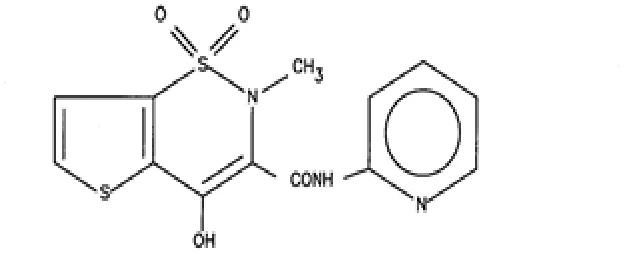
Chemical name: 1) 2H-Thieno[2,3-e]-1,2-thiazine-3-carboxamide, 4-hydroxy-2-methyl- N-2-pyridinyl-, 1,1-dioxide;
- 2) 4-Hydroxy-2-methyl-N-2-pyridyl-2H-thieno[2,3-e]-1,2- thiazine-3- carboxamide 1,1-dioxide.
Molecular formula and molecular mass: C13H11N3O4S2 and 337.37
Structural formula:
Physicochemical properties: Tenoxicam is a yellow, practically odourless crystalline powder, which melts (with decomposition) at approximately 219º - 221ºC. The pka values are approximately 1.1 and 5.3. Tenoxicam is quite insoluble in water and common organic solvents. The solubility in 95% ethanol at 25ºC is approximately 0.05 g/100 mL. The solubility at 37ºC in water is approximately 0.01 g/100 mL, in artificial gastric juice (pH 1.2) approximately 0.01 g/100 mL and in artificial intestinal juice (pH 7.5) approximately 0.42 g/100 mL.
Product Characteristics:
Each TENOXICAM tablet contains 20 mg tenoxicam. In addition, TENOXICAM tablets also contain the following non-medicinal ingredients: colloidal silicon dioxide, croscarmellose sodium, hydroxypropyl methylcellulose, lactose monohydrate, magnesium stearate, microcrystalline cellulose, polydextrose, polyethylene glycol, titanium dioxide, yellow ferric oxide and carnauba wax.
14 CLINICAL TRIALS
14.2 Comparative Bioavailability Studies
A randomized, two way, single dose (2 x 20 mg), crossover comparative bioavailability study of TENOXICAM (Apotex Inc.) and Mobiflex (Hoffman-La Roche Ltd.) was conducted in healthy, adult, male subjects under fasting conditions. The results obtained from the 19 subjects that were included in the statistical analysis are presented in the following table.
SUMMARY TABLE OF THE COMPARATIVE BIOAVAILABILITY DATA
Tenoxicam (2 x 20 mg) Geometric Mean Arithmetic Mean (CV%) | ||||
| Parameter | Test1 | Reference2 | % Ratio of Geometric Means | 90% Confidence Interval |
AUC0-72h (mcg•h/mL) | 238.70 242.58 (16.9) | 233.78 237.77 (17.5) | 102.1 | 99.2 – 105.1 |
Cmax (mcg/mL) | 5.79 5.86 (15.5) | 6.09 6.20 (16.2) | 95.1 | 90.8 – 99.6 |
Tmax3 (h) | 1.50 (0.67 – 4.0) | 1.00 (0.33 – 2.00) | ||
1 TENOXICAM (tenoxicam) tablet, 20 mg (Apotex Inc.)
2 Mobiflex (tenoxicam) tablet, 20 mg (Hoffman-La Roche Ltd.), purchased in Canada
3 Expressed as median (range)
Due to the long elimination half-life of tenoxicam, AUCI and T1/2 could not be accurately calculated from the data obtained in this study.
15 MICROBIOLOGY
No microbiological information is required for this drug product.
16 NON-CLINICAL TOXICOLOGY
General Toxicology: Acute Toxicity
| Species | Route | LD50in mg/kg (95% confidence interval) | |
| 24 hours after administration | 10 days after administration | ||
| Mice | p.o i.v. i.p | 771 (717-829) 340 (314-368) 523 (478-571) | 460 (373-567) 340 (314-368) 523 (478-571) |
| Rats | p.o. i.v. i.p. | 1019 (856-1214) 325 (302-349) 401 (347-465) | 586 (507-677) 325 (302-349) 401 (347-465) |
Toxic effects observed in animals included: yellow discolouration of urine, body weight loss, apathy, diarrhea, fecal blood loss, gastrointestinal erosions, ulceration of the mucous membranes and renal papillary necrosis.
Chronic Toxicity
Rats (80 Weeks): Tenoxicam was administered orally to rats (35/sex/ group) at daily doses of 0, 1, 3 and 6 mg/kg/day. Because of continuously increasing plasma levels and associated side effects, dosing of all groups was suspended from week 39 to 44. The 1 mg/kg/day dose was well tolerated. At 3 mg/kg/day some females presented gastrointestinal mucosal erosions and renal papillary necrosis. Six mg/kg/day caused gastrointestinal erosions and papillary necrosis. The female rats of this group had to be sacrificed after 52 weeks, presenting with gastrointestinal ulceration and renal papillary necrosis.
Baboons (12 Months): Groups of four baboons/sex/group received tenoxicam orally at doses of 1, 4 and 20 mg/kg/day. Due to adverse effect on growth, dosing in the 20 mg/kg/ day group was suspended from week 24 to 28.
One mg/kg/day was well tolerated. One baboon receiving 4 mg/kg/day was positive for occult blood. Twenty mg/kg/day produced a slightly reduced growth rate and food intake, persistent blood loss and slightly reduced red blood counts. One baboon had a repeated history of gastrointestinal infections with campylobacter and was sacrificed.
Carcinogenicity: The carcinogenicity of tenoxicam was studied in mice (51/sex/group) at doses of 0, 1, 3 or 5 mg/kg/day for 80 consecutive weeks, and in rats (50/sex/group) at doses of 0, 1, 3 and 6 mg/kg/day for 104 weeks. There was no evidence of carcinogenicity.
Genotoxicity: Investigations in three bacterial systems and four eukaryotic test systems did not reveal any mutagenic potential of tenoxicam.
Reproductive and Developmental Toxicology: Male and female rats received 0, 2, 4 or 8 mg tenoxicam daily. The males were dosed for at least 63 days prior to mating and the females from 14 days prior to mating to 7 days after mating. The drug had no effect on male fertility or female pregnancy.
At the high dose (8 mg) there was a significant decrease in the number of corpora lutea and implantations resulting in fewer numbers of live fetuses.
TERATOLOGY STUDIES
Mice: Groups of female mice were given 0, 1, 2, 4 or 8 mg/kg tenoxicam orally daily from day 6 to day 15 of gestation. There were no drug-related adverse effects on fetuses or neonates. The functional behaviour of F1mice was not altered.
Rats: Groups of female rats were given 0, 1, 2, 4, 8 or 12 mg/kg/day tenoxicam orally. The animals were dosed from day 7 to day 17 of gestation. A higher mortality rate was observed in the dams administered 8 (27%) or 12 mg/kg/day (65%).
All dead dams had panperitonitis with gastric lesions characteristic of NSAIDs and uterine hemorrhage. In dams which delivered naturally, drug-related gastrointestinal lesions were also seen in the 8 mg/kg/day group.
Teratogenic effects were not observed and the drug had no effect on the functional behaviour of F1rats.
Rabbits: Groups of female rabbits were administered 0, 2, 4, 8, 16 or 32 mg/kg/day tenoxicam orally from day 6 to day 18 of gestation. The number of resorptions was significantly increased in the high dose group. Tenoxicam had no teratogenic effect at the doses tested.
Juvenile Toxicity: Groups of 20 female rats were given 0, 0.25, 0.5, 1.0 or 2 mg/kg/day orally from day 18 of gestation throughout lactation. All animals had a dose-dependent significant prolongation of gestation. The neonatal viability was dose-dependently reduced at doses of 0.5 mg/kg/day or more.
Tenoxicam at doses of 2 mg/kg/day or less had no effect on the reproductive performance or functional behaviour of female rats.