


Product Monograph - Tepmetko
RECENT MAJOR LABEL CHANGES
| 1 Indications | 03/2024 |
|---|
TABLE OF CONTENTS
RECENT MAJOR LABEL CHANGES ......................................................................................... 2
TABLE OF CONTENTS ............................................................................................................... 2
PART I: HEALTH PROFESSIONAL INFORMATION .................................................................. 4
1 INDICATIONS ................................................................................................................... 4
1.1 Pediatrics ................................................................................................................. 4
1.2 Geriatrics ................................................................................................................. 4
2 CONTRAINDICATIONS ................................................................................................... 4
3 SERIOUS WARNINGS AND PRECAUTIONS BOX ........................................................ 4
4 DOSAGE AND ADMINISTRATION .................................................................................. 5
4.2 Recommended Dose and Dosage Adjustment ....................................................... 5
4.4 Administration .......................................................................................................... 7
4.5 Missed Dose ............................................................................................................ 7
5 OVERDOSAGE ................................................................................................................ 7
6 DOSAGE FORMS, STRENGTHS, COMPOSITION AND PACKAGING ......................... 7
7 WARNINGS AND PRECAUTIONS .................................................................................. 7
7.1 Special Populations ............................................................................................... 10
7.1.1 Pregnant Women ............................................................................................... 10
7.1.2 Breast-feeding ................................................................................................... 10
7.1.3 Pediatrics ........................................................................................................... 10
7.1.4 Geriatrics ........................................................................................................... 10
8 ADVERSE REACTIONS ................................................................................................. 10
8.1 Adverse Reaction Overview .................................................................................. 10
8.2 Clinical Trial Adverse Reactions ............................................................................ 11
9 DRUG INTERACTIONS .................................................................................................. 16
9.4 Drug-Drug Interactions .......................................................................................... 16
9.5 Drug-Food Interactions .......................................................................................... 17
10 ACTION AND CLINICAL PHARMACOLOGY ................................................................ 17
10.1 Mechanism of Action ......................................................................................... 17
10.2 Pharmacodynamics ........................................................................................... 17
10.3 Pharmacokinetics .............................................................................................. 17
11 STORAGE, STABILITY AND DISPOSAL ...................................................................... 19
PART II: SCIENTIFIC INFORMATION ....................................................................................... 20
13 PHARMACEUTICAL INFORMATION ............................................................................ 20
14 CLINICAL TRIALS ......................................................................................................... 21
14.1 Trial Design and Study Demographics .............................................................. 21
14.2 Study Results ..................................................................................................... 22
16 NON-CLINICAL TOXICOLOGY ..................................................................................... 24
PATIENT MEDICATION INFORMATION .................................................................................. 26
PART I: HEALTH PROFESSIONAL INFORMATION
1 INDICATIONS
TEPMETKO (tepotinib) is indicated for the treatment of adult patients with locally advanced unresectable or metastatic non-small cell lung cancer (NSCLC) harbouring mesenchymal-epithelial transition (MET) tyrosine kinase receptor exon 14 skipping alterations.
Documentation of MET tyrosine kinase receptor exon 14 (METex14) skipping alteration status based on a validated METex14 assay is required prior to treatment with TEPMETKO (see WARNINGS AND PRECAUTIONS).
Efficacy in patients with NSCLC harbouring METex14 skipping alterations was based on objective response rate and duration of response in a single-arm study (see CLINICAL TRIALS).
1.1 Pediatrics
Pediatrics (< 18 years of age): No data are available to Health Canada; therefore, Health Canada has not authorized an indication for pediatric use.
1.2 Geriatrics
Geriatrics (> 65 years of age): Of 313 patients with advanced NSCLC with METex14 skipping alterations in the VISION study who received 450 mg TEPMETKO once daily, 79% were 65 years or older, 41% were 75 years or older, and 8% were 85 years or older. No clinically important differences in safety or efficacy were observed between patients aged 65 years or older and younger patients.
2 CONTRAINDICATIONS
TEPMETKO is contraindicated in patients who are hypersensitive to this drug or to any ingredient in the formulation, including any non-medicinal ingredient, or component of the container. For a complete listing, see Dosage Forms, Strengths, Composition and Packaging.
3 SERIOUS WARNINGS AND PRECAUTIONS BOX
Hepatotoxicity (see DOSAGE AND ADMINISTRATION, Hepatic Impairment and
WARNINGS AND PRECAUTIONS).
- Interstitial lung disease (ILD) / Pneumonitis (see WARNINGS AND PRECAUTIONS).
- Embryo-fetal toxicity (see WARNINGS AND PRECAUTIONS).
Treatment with TEPMETKO (tepotinib) should be initiated and supervised by a qualified physician experienced in the use of anticancer therapies (see INDICATIONS).
4 DOSAGE AND ADMINISTRATION
4.2 Recommended Dose and Dosage Adjustment
The recommended dose of TEPMETKO is 450 mg (as tepotinib hydrochloride) once daily with food (two tablets). Treatment should continue until disease progression or unacceptable toxicity.
Dose Modification
The recommended dose reduction of TEPMETKO for the management of adverse reactions is 225 mg orally once daily.
Permanent discontinuation of TEPMETKO is recommended in patients who are unable to tolerate 225 mg orally once daily.
The recommended dosage modifications of TEPMETKO for adverse reactions are provided in Table 1.
Table 1 Recommended TEPMETKO Dosage Modifications for Adverse Reactions
| Adverse Reaction | Severity | Dose Modification |
|---|---|---|
| Interstitial Lung Disease (ILD) / Pneumonitis (see WARNINGS AND PRECAUTIONS) | Any grade | Withhold TEPMETKO if ILD is suspected. Permanently discontinue TEPMETKO if ILD is confirmed. |
| Adverse Reaction | Severity | Dose Modification |
|---|---|---|
| Increased alanine aminotransferase (ALT) and/or aspartate aminotransferase (AST) without increased total bilirubin (see WARNINGS AND PRECAUTIONS) | Grade 3 | Withhold TEPMETKO until recovery to baseline ALT/AST. If recovered to baseline within 7 days, then resume TEPMETKO at the same dose; otherwise resume TEPMETKO at a reduced dose. |
| Grade 4 | Permanently discontinue TEPMETKO. | |
| Increased ALT and/or AST with increased total bilirubin in the absence of cholestasis or hemolysis (see WARNINGS AND PRECAUTIONS) | ALT and/or AST greater than 3 times the upper limit of normal (ULN) with total bilirubin greater than 2 times ULN | Permanently discontinue TEPMETKO. |
| Other adverse reactions (see ADVERSE REACTIONS) | Grade 2 | Maintain dose level. If intolerable, consider withholding TEPMETKO until resolved, then resume TEPMETKO at a reduced dose. |
| Grade 3 | Withhold TEPMETKO until resolved, then resume TEPMETKO at a reduced dose. | |
| Grade 4 | Permanently discontinue TEPMETKO. |
Geriatrics (> 65 years of age): No dose adjustment is necessary in patients aged 65 years and above (see ACTION AND CLINICAL PHARMACOLOGY, Pharmacokinetics, Special Populations and Conditions).
Hepatic Impairment: No dose adjustment is recommended in patients with mild (Child Pugh A) or moderate (Child Pugh B) hepatic impairment. The pharmacokinetics and safety of TEPMETKO in patients with severe hepatic impairment (Child Pugh C) have not been studied (see WARNINGS AND PRECAUTIONS, Hepatic and ACTION AND CLINICAL PHARMACOLOGY, Pharmacokinetics, Special Populations and Conditions).
Renal Impairment: No dose adjustment is recommended in patients with mild or moderate renal impairment (creatinine clearance 30 to 89 mL/min). The pharmacokinetics and safety of TEPMETKO in patients with severe renal impairment (creatinine clearance below 30 mL/min) have not been studied (see WARNINGS AND PRECAUTIONS, Monitoring and Laboratory Tests and ACTION AND CLINICAL PHARMACOLOGY, Pharmacokinetics, Special Populations and Conditions).
4.4 Administration
TEPMETKO is for oral use. Tablets should be taken once daily with food, at approximately the same time each day. Tablets should be swallowed whole. Tablets should not be chewed, crushed, or split.
4.5 Missed Dose
If a daily dose of TEPMETKO is missed, it should be taken with food as soon as remembered on the same day, unless the next dose is due within 8 hours.
If vomiting occurs after taking a dose of TEPMETKO, patients should be advised to take the next dose at the scheduled time.
5 OVERDOSAGE
TEPMETKO has been investigated at doses up to 1,261 mg. Symptoms of overdose have not been identified. There is no specific treatment in the event of TEPMETKO overdose. In case of overdose, TEPMETKO should be withheld and symptomatic treatment initiated.
| For management of a suspected drug overdose, contact your regional poison control centre. |
|---|
6 DOSAGE FORMS, STRENGTHS, COMPOSITION AND PACKAGING
Table 2 Dosage Forms, Strengths, Composition and Packaging
TEPMETKO is a white-pink, oval, biconvex film-coated tablet with embossment “M” on one side and plain on the other side.
TEPMETKO is supplied in a transparent blister which consists of a multilayer composite form foil and an aluminum lidding foil containing 60 tablets (6 blister cards of 10 tablets).
7 WARNINGS AND PRECAUTIONS
Please see the Serious Warnings and Precautions Box at the beginning of Part 1: Health Professional Information.
| Route of Administration | Dosage Form / Strength/Composition | Non-medicinal Ingredients |
| oral | tablets / 225 mg tepotinib (as tepotinib hydrochloride) | Colloidal silicon dioxide, crospovidone, hypromellose, lactose monohydrate, magnesium stearate, mannitol, microcrystalline cellulose, polyethylene glycol, red iron oxides (E172), titanium dioxide, triacetin. |
General
Patient selection for METex14 skipping alterations
Patients treated with TEPMETKO must have a documented METex14 skipping alteration based on a validated METex14 plasma and/or tissue assay. Assessment for the presence of METex14 skipping alterations should be performed by laboratories with demonstrated proficiency in the specific technology being utilized (see CLINICAL TRIALS).
Driving and Operating Machinery
No studies on the effects of TEPMETKO on the ability to drive or use machines have been performed. Caution should be exercised when operating a vehicle or potentially dangerous machinery until the patient is reasonably certain that TEPMETKO does not affect them adversely.
Hepatic
Hepatotoxicity
Hepatotoxicity occurred in patients with advanced NSCLC with METex14 skipping alterations who received TEPMETKO monotherapy at the recommended dosage regimen (n=313) (see ADVERSE REACTIONS). Adverse reactions of increase in alanine aminotransferase (ALT) and/or increase in aspartate aminotransferase (AST) (ALT/AST) were reported in 19.8% of patients treated with TEPMETKO. Grade ≥ 3 adverse reactions were reported in 3.8%. A case of life-threatening hepatic failure occurred in one patient (0.3%) treated with TEPMETKO. Ten patients (3.2%) temporarily discontinued TEPMETKO and 2 patients (0.6%) had dose reductions due to increase in ALT/AST. The median time to first onset of Grade ≥ 3 adverse reactions was 9.9 weeks (range 3.1 to 37.4 weeks).
Liver function tests (ALT and AST, and total bilirubin) should be monitored prior to the start of TEPMETKO, every 2 weeks during the first 3 months of treatment, then once a month or as clinically indicated, with more frequent testing in patients who develop increased transaminases or bilirubin. Based on the severity of the adverse reaction, TEPMETKO should be withheld, dose reduced, or permanently discontinued. See DOSAGE AND ADMINISTRATION, Dose Modification.
Monitoring and Laboratory Tests
Interpretation of laboratory tests
Increase in creatinine
In patients with advanced NSCLC with METex14 skipping alterations who received TEPMETKO monotherapy at the recommended dosage regimen (n=313), a median increase in serum creatinine of 30% was computed 21 days after initiation of treatment with TEPMETKO (see ADVERSE REACTIONS).
In vitro studies suggest that tepotinib or its main metabolite inhibit the renal tubular transporter proteins organic cation transporter (OCT) 2 and multidrug and toxin extrusion (MATE) 2 at clinically relevant concentrations (see DRUG INTERACTIONS, Drug-Drug Interactions). As creatinine is a substrate of these transporters, one component of the observed increases in serum creatinine may be the inhibition of active tubular secretion.
Renal function estimates that rely on serum creatinine [creatinine clearance or estimated glomerular filtration rate (GFR)] should be interpreted with caution considering this effect. If persistent elevations in serum creatinine are observed, a comprehensive evaluation of the patient’s clinical status should be performed, and alternative markers of renal function should be considered in line with local clinical practice.
Respiratory
Interstitial lung disease (ILD) / Pneumonitis
Interstitial lung disease (ILD) / pneumonitis adverse reactions have been reported in 8 patients (2.6%) with advanced NSCLC with METex14 skipping alterations who received TEPMETKO monotherapy at the recommended dosage regimen (n=313). Four of 8 patients had serious adverse reactions. One of 8 patients had an adverse reaction which was Grade ≥ 3, serious, and resulted in death. Five patients (1.6%) permanently discontinued TEPMETKO due to ILD / pneumonitis. (See ADVERSE REACTIONS).
Patients should be monitored for acute onset or unexplained worsening of pulmonary symptoms indicative for ILD / pneumonitis (e.g., dyspnea, cough, fever). TEPMETKO should be immediately withheld in patients with suspected ILD / pneumonitis. If no other potential causes of ILD / pneumonitis are identified, TEPMETKO must be permanently discontinued and the patient should be treated appropriately.
Sexual Health
Reproduction
TEPMETKO can cause fetal harm when administered to a pregnant woman (see Special Populations). Women of childbearing potential or male patients with female partners of childbearing potential should be advised of the potential risk to a fetus.
Pregnancy testing
Pregnancy testing is recommended in women of childbearing potential prior to initiating treatment with TEPMETKO.
Contraception in females and males
Women of childbearing potential should use effective contraception during TEPMETKO treatment and for 1 week after the final dose.
Male patients with female partners of childbearing potential should use barrier contraception during TEPMETKO treatment and for 1 week after the final dose.
Fertility
No clinical data on the effect of TEPMETKO on fertility are available. See NON-CLINICAL TOXICOLOGY.
7.1 Special Populations
7.1.1 Pregnant Women
There are no clinical data on the use of TEPMETKO in pregnant women or on the transmission of TEPMETKO through the seminal fluid of male patients to their female partners of childbearing potential. Oral administration of tepotinib to pregnant rabbits during the period of organogenesis resulted in skeletal malformations (teratogenicity) and anomalies at exposures approximately 0.003 times the human exposure based on area under the curve (AUC) at the 450 mg daily clinical dose (see NON-CLINICAL TOXICOLOGY). Based on its mechanism of action (see ACTION AND CLINICAL PHARMACOLOGY) and findings in animal studies, TEPMETKO can cause fetal harm when administered to a pregnant woman.
TEPMETKO should not be used during pregnancy, unless clearly necessary and after a careful consideration of the need of the mother and the risk to the fetus. Women of childbearing potential or male patients with female partners of childbearing potential should be advised of the potential risk to a fetus and on the use of effective contraception (see WARNINGS AND PRECAUTIONS, Sexual Health, Reproduction).
7.1.2 Breast-feeding
There are no data regarding the secretion of tepotinib or its metabolites in human milk or its effects on the breast-fed infant or milk production. Breast-feeding should be discontinued during treatment with TEPMETKO and for one week after the final dose.
7.1.3 Pediatrics
Pediatrics (<18 years of age): The safety and efficacy of TEPMETKO in pediatric patients have not been established.
7.1.4 Geriatrics
Geriatrics (> 65 years of age): Of 313 patients with advanced NSCLC with METex14 skipping alterations in the VISION study who received 450 mg TEPMETKO once daily, 79% were 65 years or older, 41% were 75 years or older, and 8% were 85 years or older. No clinically important differences in safety or efficacy were observed between patients aged 65 years or older and younger patients.
8 ADVERSE REACTIONS
8.1 Adverse Reaction Overview
The pooled safety population reflects exposure to TEPMETKO in 506 patients with various solid tumours enrolled in five open-label, single-arm studies, in which patients received TEPMETKO monotherapy at a dose of 450 mg once daily. This includes 313 patients with advanced NSCLC harbouring METex14 skipping alterations included in the pivotal clinical study (VISION). In the pooled safety population, the median duration of exposure was 23.7 weeks (range 0 to 312 weeks), with 44% exposed for 6 months or longer, and 22% exposed for greater than one year. In the VISION study, the median duration of exposure was 32.4 weeks (range 0 to 312 weeks), with 60% exposed for 6 months or longer and 32% exposed for greater than one year.
In the VISION study, a treatment-emergent adverse event (TEAE) was reported by 99% of patients who received TEPMETKO in the target indication. The most common (≥ 20%) TEAEs were edema, mainly peripheral edema (72.5% of patients); hypoalbuminemia; nausea, increase in creatinine; diarrhea; decreased appetite; and dyspnea (see Clinical Trial Adverse Reactions).
Serious TEAEs occurred in 50.8% of patients who received TEPMETKO. Serious TEAEs in ≥ 2% of patients included pleural effusion (6.1%), pneumonia (5.4%), disease progression (4.2%), general health deterioration (3.8%), dyspnea (3.5%), peripheral edema (3.2%), and pulmonary embolism (2.2%).
Grade ≥ 3 TEAEs occurred in 64.9% of patients, with Grade 3, Grade 4, and Grade 5 TEAEs observed in 46.6%, 5.1%, and 13.1%, respectively. Grade ≥ 3 TEAEs were reported in ≥ 5% of patients [peripheral edema (11.8%) and hypoalbuminemia (6.4%)]. Grade 4 TEAEs reported in 2 patients (0.6%) were increased amylase (0.6%), and decreased neutrophil count (0.6%). A fatal adverse reaction occurred in one patient (0.3%) due to interstitial lung disease. A case of fatal dyspnea from possible fluid overload occurred in one patient (0.3%).
The most common Grade 3 to 4 laboratory abnormalities (≥ 2%) were increased lipase (3.5%), increased alanine aminotransferase (3.2%), increased amylase (3.2%), and increased gamma-glutamyltransferase (2.2%).
Permanent treatment discontinuation due to a TEAE occurred in 24.9% of patients who received TEPMETKO in VISION. The most frequent TEAEs (≥ 1%) leading to permanent discontinuations of TEPMETKO were peripheral edema (5.4%), pleural effusion (1.6%), general health deterioration (1.6%), disease progression (1.3%), edema (1.3%), pneumonitis (1.0%), interstitial lung disease (1.0%), pneumonia (1.0%), and genital edema (1.0%).
Temporary treatment discontinuations due to a TEAE occurred in 52.7% of patients who received TEPMETKO in VISION. The maximum permitted period of continuous treatment interruption was 21 days. Treatment-emergent adverse events requiring temporary discontinuations of TEPMETKO in ≥ 2% of patients were peripheral edema (19.8%), blood creatinine increased (5.8%), generalized edema (4.8%), edema (3.8%), pleural effusion (3.5%), nausea (3.2%), ALT increased (2.9%), pneumonia (2.6%), localized edema (2.2%), dyspnea (2.2%), and decreased appetite (2.2%).
Dose reductions due to a TEAE occurred in 36.1% of patients who received TEPMETKO in VISION. Treatment-emergent adverse events requiring dose reductions in ≥ 2% of patients who received TEPMETKO were peripheral edema (15.7%), generalized edema (3.2%), blood creatinine increased (2.9%), edema (2.6%), and pleural effusion (2.2%).
8.2 Clinical Trial Adverse Reactions
Because clinical trials are conducted under very specific conditions, the adverse reaction rates observed in the clinical trials may not reflect the rates observed in practice and should not be compared to the rates in the clinical trials of another drug. Adverse reaction information from clinical trials is useful for identifying drug-related adverse events and for approximating rates.
The safety of TEPMETKO was evaluated in 313 adult patients with locally advanced (stage IIIb) or metastatic (stage IV) NSCLC harbouring METex14 skipping alterations who received at least one dose of TEPMETKO in the single-arm, open-label Phase II VISION study. TEPMETKO was administered as monotherapy at a dose of 450 mg once daily. In the VISION study, the median duration of exposure was 32.4 weeks (range 0 to 312 weeks). The median age was 72 years
(range: 41 to 94 years), with 79% of patients ≥ 65 years of age. Patients with active brain metastases, clinically significant uncontrolled cardiac disease, severe hepatic impairment, and severe renal impairment were excluded from the study.
Table 3 summarizes the incidence of adverse reactions that occurred in ≥1% of patients with advanced NSCLC harbouring METex14 skipping alterations.
| Table 3 Adverse Reactions in ≥ 1% Patients with Advanced NSCLC Harbouring METex14 Skipping Alterations in the VISION Study |
|---|
| System organ class (SOC)/Adverse reaction | TEPMETKO N=313 | |
|---|---|---|
All grades n (%) | Grade ≥ 3 n (%) | |
| Gastrointestinal disorders | ||
| Nausea | 97 (31) | 4 (1.3) |
| Diarrhea | 90 (29) | 2 (0.6) |
| Constipation | 60 (19) | 1 (0.3) |
| Abdominal pain a | 58 (18) | 2 (0.6) |
| Vomiting b | 46 (15) | 3 (1.0) |
| General disorders and administration site conditions | ||
| Edema c | 251 (80) | 43 (14) |
| Fatigue d | 93 (30) | 6 (1.9) |
| Pyrexia | 32 (10) | 0 (0.0) |
| Generalized edema | 21 (7) | 8 (2.6) |
| Hepatobiliary disorders | ||
| Increase in alanine aminotransferase (ALT) | 57 (18) | 10 (3.2) |
| Increase in aspartate aminotransferase (AST) | 43 (14) | 6 (1.9) |
| Increase in alkaline phosphatase (ALP) | 35 (11) | 1 (0.3) |
| Infections and Infestations | ||
| Pneumonia e | 38 (12) | 16 (5) |
| Investigations | ||
| Increase in creatinine f | 95 (30) | 4 (1.3) |
| Increase in amylase g | 36 (11) | 10 (3.2) |
| Increase in lipase | 29 (9) | 11 (3.5) |
| Metabolism and nutrition disorders | ||
| Hypoalbuminemia h | 106 (34) | 20 (6) |
| Decreased appetite | 67 (21) | 6 (1.9) |
| Musculoskeletal and Connective Tissue disorders | ||
| Musculoskeletal pain i | 95 (30) | 10 (3.2) |
| Nervous system disorders | ||
| Dizziness | 22 (7) | 1 (0.3) |
| Headache | 18 (6) | 1 (0.3) |
| Renal and urinary disorders | |||
|---|---|---|---|
| Acute kidney injury | 9 (2.9) | 3 (1.0) | |
| Respiratory, thoracic and mediastinal disorders | |||
| Dyspneaj | 75 (24) | 8 (2.6) | |
| Coughk | 55 (18) | 1 (0.3) | |
| Pleural effusion | 45 (14) | 13 (4.2) | |
| Interstitial Lung Disease (ILD) / Pneumonitis | 8 (2.6) | 1 (0.3) | |
| Skin and subcutaneous tissue disorders | |||
| Rash | 31 (10) | 1 (0.3) | |
| Pruritus | 26 (8) | 0 (0.0) | |
| Rash maculo-papular | 14 (4.5) | 2 (0.6) | |
a includes abdominal discomfort, abdominal pain, abdominal pain lower, abdominal pain upper, gastrointestinal pain b includes terms retching, vomiting c includes terms edema peripheral, edema, edema genital, face edema, localized edema, eye edema, periorbital edema, peripheral swelling, scrotal edema d includes term asthenia, fatigue e includes terms pneumonia, pneumonia aspiration, pneumonia bacterial f includes terms blood creatinine increased, hypercreatininemia g includes amylase increased, hyperamylasemia h includes terms hypoalbuminemia, blood albumin decreased i includes arthralgia, arthritis, back pain, bone pain, musculoskeletal chest pain, musculoskeletal pain, myalgia, non-cardiac chest pain, pain in extremity, and spinal pain j includes dyspnea, dyspnea at rest, dyspnea exertional k includes cough, productive cough l ILD as per Integrated Assessment | |||
Table 4 provides treatment-emergent shifts from baseline in laboratory findings occurring in patients treated with TEPMETKO in VISION.
Table 4 Select Laboratory Abnormalities ( ≥ 20%) That Worsened from Baseline in Patients Who Received TEPMETKO in VISION
| Laboratory Abnormalities | TEPMETKO1 | |
|---|---|---|
| Grades 1 to 4 (%) | Grades 3 to 4 (%) | |
| Chemistry | ||
| Decreased albumin | 81 | 9 |
| Increased creatinine | 60 | 1.0 |
| Increased alkaline phosphatase aminotransferase | 52 | 1.6 |
| Increased alanine aminotransferase | 49 | 4.9 |
| Increased aspartate aminotransferase | 40 | 3.6 |
| Decreased sodium | 35 | 9 |
| Increased gamma-glutamyltransferase | 29 | 5 |
| Increased potassium | 26 | 1.9 |
| Increased amylase | 25 | 5 |
| Increased lipase | 21 | 5 |
| Hematology | ||
| Decreased lymphocytes | 57 | 15 |
| Decreased hemoglobin | 31 | 3.6 |
| Decreased leukocytes | 25 | 1.9 |
| Decreased platelets | 24 | 0.6 |
| 1 The denominator used to calculate the rate varied from 268 to 308 based on the number of patients with a baseline value and at least one post-treatment value. | ||
A clinically relevant laboratory abnormality in < 20% of patients who received TEPMETKO was increase in lipase in 18.3% of patients, including 3.7% Grades 3 to 4.
Increase in creatinine
In VISION, a median increase in serum creatinine of 30% was computed 21 days after initiation of treatment with TEPMETKO. The increases in serum creatinine persisted throughout treatment and were reversible upon treatment discontinuation, with a median increase of 6% at the 30-day safety follow-up visit. See DRUG INTERACTIONS, Drug-Drug Interactions.
9 DRUG INTERACTIONS
9.4 Drug-Drug Interactions
Agents that may have their plasma concentrations altered by tepotinib
P-gp substrates: Tepotinib can inhibit the transport of sensitive substrates of P-gp. Monitoring of the clinical effects of P-gp substrates with a narrow therapeutic index (e.g., digoxin) is recommended during co-administration with TEPMETKO.
The drugs listed in Table 5 are based on either drug interaction studies, or are potential interactions due to the expected magnitude and seriousness of the interaction.
Table 5 Established or Potential Drug Interactions
| Proper/Common Name | Source of Evidence | Effect | Clinical Comment | ||
|---|---|---|---|---|---|
| Drugs for which the exposure may be affected by tepotinib | |||||
| Sensitive P-gp substrates (e.g., digoxin) | CT | Inhibited transport of sensitive P-gp substrates | TEPMETKO increased the AUC and Cmax of the sensitive P-gp substrate dabigatran etexilate by approximately 50% and 40%. Monitoring of the clinical effects of P-gp-substrates with a narrow therapeutic index is recommended during co-administration with TEPMETKO. | ||
CT = Clinical Trial
Clinical studies
Effect of CYP3A/P-gp inducers on tepotinib: In healthy participants, co-administration of a single 450 mg tepotinib dose with the strong CYP3A inducer carbamazepine (300 mg twice daily for 14 days) decreased tepotinib AUCinf by 35% and Cmax by 11% compared to administration of tepotinib alone.
Effect of CYP3A/P-gp inhibitors on tepotinib: In healthy participants, co-administration of a single 450 mg tepotinib dose with the strong CYP3A inhibitor itraconazole (200 mg once daily for 11 days) increased tepotinib AUCinf by 22% with no change in tepotinib Cmax compared to administration of tepotinib alone.
In vitro studies
Cytochrome P450 enzymes: Tepotinib and M506 do not inhibit CYP1A2, CYP2A6, CYP2B6, CYP2C8, CYP2C9, CYP2C19, CYP2D6 and CYP2E1 or induce CYP1A2 and 2B6 at clinically relevant concentrations.
UDP-glucuronosyltransferase (UGT): Tepotinib and M506 do not inhibit UGT 1A1, 1A9, 2B17, 1A3/4/6 and 2B7/15 at clinically relevant concentrations.
Transporter systems: Tepotinib or its major circulating metabolite M506 inhibit BCRP, OCT2 and MATE2 at clinically relevant concentrations. Tepotinib does not inhibit bile salt export pump (BSEP) or organic anion transporter polypeptide (OATP)1B3, organic anion transporter (OAT)1 and 3.
9.5 Drug-Food Interactions
TEPMETKO should be taken with food (see ACTION AND CLINICAL PHARMACOLOGY, Pharmacokinetics).
10 ACTION AND CLINICAL PHARMACOLOGY
10.1 Mechanism of Action
The mesenchymal-epithelial transition factor (MET) and its ligand, the hepatocyte growth factor (HGF), are involved in carcinogenesis and tumour progression. Oncogenic activation of MET has been shown to promote cancer cell proliferation, survival, migration and invasion, and tumour angiogenesis, as well as to mediate resistance to cancer therapies.
Tepotinib is a kinase inhibitor that targets MET, including variants with exon 14 skipping alterations. Tepotinib inhibits HGF-dependent and -independent MET phosphorylation and MET-dependent downstream signaling pathways. Tepotinib also inhibited melatonin 2 and imidazoline 1 receptors at clinically achievable concentrations.
10.2 Pharmacodynamics
In vitro, tepotinib inhibited proliferation, anchorage-independent growth and migration of MET-dependent tumour cells. In mice implanted with tumour cell lines with oncogenic activation of MET, including METex14 skipping alterations, tepotinib inhibited tumour growth, led to sustained inhibition of MET phosphorylation, and, in one model, decreased the formation of metastases. Tepotinib treatment led also to regression of established intracranial brain metastasis models from NSCLC patient-derived xenografts with oncogenic MET activation.
Cardiac electrophysiology
TEPMETKO, at the recommended dosage of 450 mg once daily, was not associated with large mean increases in QTc (i.e., > 20 ms) in patients with various solid tumors. A concentration-dependent increase in QTc interval was observed. The QTc effect of tepotinib at high clinical exposures has not been evaluated.
10.3 Pharmacokinetics
The pharmacokinetic parameters for TEPMETKO have been characterized in patients with solid tumours (Table 6). Exposure increases dose-proportionally over the clinically relevant dose range up to 450 mg
Table 6 Summary of TEPMETKO pharmacokinetic parameters in patients
| Cmax (ng/mL) | tmax (h) | t1/2 (h) | AUCτ (h*ng/ml) | CLss/F (L/h) | VZ/F (L) | |
|---|---|---|---|---|---|---|
| geoMean (geoCV%) | Median (range | Mean | geoMean (geoCV%) | geoMean (geoCV%) | geoMean (geoCV%) | |
| Steady state (450 mg TEPMETKO once daily) | 1291 (48.1) | 8 (6-12) | 32 | 27,438 (51.7) | 23.8 (87.5%) | 1,038 (24.3%) |
Absorption: The geomean (geoCV%) absolute bioavailability of TEPMETKO in fed state was 71.6% (10.8%) in healthy subjects. The median time to maximum concentration tmax of tepotinib was 8 hours (range from 6 to 12 hours).
Effect of Food: Co-administration of a single 450 mg dose of TEPMETKO with a high-calorie, high-fat meal (approximately 800 to 1,000 kcal, 150 kcal from protein, 250 kcal from carbohydrate, and 500 to 600 kcal from fat) increased the AUC of tepotinib by 1.6-fold, increased the Cmax by 2-fold, and shifted the tmax from 12 hours to 8 hours.
Distribution: Protein binding of tepotinib in human plasma is 98%. The volume of distribution (Vz) of tepotinib after an intravenous tracer dose (geometric mean and geoCV%) was 574 L (14.4%).
Unbound concentrations of tepotinib in the brain tissue of rats at steady state were approximately 25% of the corresponding concentrations in plasma.
Metabolism: Tepotinib is primarily metabolized by CYP3A4 and CYP2C8 P450 enzymes. One major circulating plasma metabolite, M506, has been identified with a minor contribution to the overall efficacy of tepotinib.
Elimination: After oral administration of TEPMETKO in patients, the apparent clearance (CL/F) is 23.8 L/h, and the half-life is 32 hours.
Following oral administration of a 450 mg radiolabeled tepotinib dose, 85% of tepotinib was recovered in feces (45% unchanged) and 13.6% in urine (7% unchanged). The major circulating metabolite M506 accounted for about 3% of the total radioactivity in the feces.
Special Populations and Conditions: A population kinetic analysis did not show any effect of age (18 to 89 years), race/ethnicity, sex, or body weight (35.5 to 136 kg) on the pharmacokinetics of tepotinib.
Pediatrics: Pharmacokinetics of tepotinib have not been evaluated in children and adolescents <18 years of age.
Hepatic Impairment: No dose adjustment is recommended in patients with mild hepatic impairment (Child-Pugh Class A) or moderate hepatic impairment (Child-Pugh Class B). The pharmacokinetics and safety profile of tepotinib have not been studied in patients with severe hepatic impairment (Child Pugh Class C).
Renal Impairment: No dose adjustment is recommended in patients with mild and moderate renal impairment (creatinine clearance 30 to 89 mL/min). The pharmacokinetics and safety profile of tepotinib have not been studied in patients with severe renal impairment (creatinine clearance less than 30 mL/min).
11 STORAGE, STABILITY AND DISPOSAL
Store at room temperature between 15 to 30°C.Store in the original package to protect from moisture.
PART II: SCIENTIFIC INFORMATION
13 PHARMACEUTICAL INFORMATION
Drug Substance
Proper name/Common name: Tepotinib hydrochloride
Chemical name: 3-{1-[(3-{5-[(1-Methylpiperidin-4-yl)methoxy]pyrimidin-2-yl}phenyl)methyl]-6-oxo-1,6-dihydropyridazin-3-yl}benzonitrile hydrochloride monohydrate
Molecular formula and molecular mass: C29H28N6O2·HCl·H2O
547.05 g/mol (tepotinib hydrochloride monohydrate)
492.58 g/mol (tepotinib)
Structural formula:
Physicochemical properties: Tepotinib is a white to off-white powder. Tepotinib is non-hydroscopic. Tepotinib is slightly soluble in aqueous solvents at about pH 4.5 (without the presence of chloride ions). At pH 1.2 and pH 7.4, tepotinib is practically insoluble. In the presence of chloride ions, the solubility of tepotinib decreases. Tepotinib is practically insoluble in simulated gastric fluid.
Tepotinib hydrochloride has a pKa of 9.5.
14 CLINICAL TRIALS
14.1 Trial Design and Study Demographics
Table 7 Summary of Demographics for Patients in the VISION Study Efficacy Population with Advanced NSCLC Harbouring METex14 Skipping Alterations
| Study # | Trial design | Dosage, route of administration and duration | Study subjects (n) | Median age (Range) | Sex |
| VISION Study (MS2000 95-0022) | Single-arm, open-label Phase II trial | TEPMETKO 450 mg orally once daily, until progression of disease or unacceptable toxicity | N=313 (liquid biopsy, tumour biopsy, or both) | 72 years (range 41 to 94) | Female: n = 159 (51%) Male: n = 154 (49%) |
The efficacy of TEPMETKO (tepotinib) was evaluated in a single-arm, open-label, multicentre, non-randomized, multicohort study (VISION) in adult patients with locally advanced (stage IIIb) or metastatic (stage IV) non-small cell lung cancer (NSCLC) harbouring METex14 skipping alterations (n=313). Patients had at least one measurable lesion as defined by Response Evaluation Criteria in Solid Tumors (RECIST) version 1.1. Patients with epidermal growth factor receptor (EGFR) or anaplastic lymphoma kinase (ALK) activating alterations were excluded. Patients with symptomatic central nervous system metastases, clinically significant uncontrolled cardiac disease, or who received treatment with any MET or hepatocyte growth factor (HGF) inhibitor were excluded.
At baseline, 79% of patients were ≥ 65 years of age. Distribution by sex was balanced. The majority of patients were White (62%), followed by Asian patients (34%). Twenty-six per cent of patients had Eastern Cooperative Oncology Group (ECOG) Performance Status (PS) of 0 and 74% had ECOG PS of 1. Forty-nine percent were never smokers and 45% were former smokers.
The majority of patients had metastatic disease (94%), and 81% had adenocarcinoma histology. Patients were either treatment-naïve (n=164) or had received up to two lines of prior systemic therapies (n=149). Amongst previously treated patients, 84% received prior platinum-based chemotherapy. Thirteen percent of the patients had stable central nervous system metastases.
Identification of METex14 skipping alterations was prospectively determined using central laboratories employing either a polymerase chain reaction (PCR)-based or next-generation sequencing-based clinical trial assay using tissue (66%) and/or plasma (57%) samples.
Patients received 450 mg TEPMETKO once daily until disease progression or unacceptable toxicity.
The primary efficacy outcome measure was confirmed objective response (complete response or partial response) according to RECIST v1.1 as evaluated by a Blinded Independent Review Committee (BIRC). The confirmed objective response rate (ORR) was evaluated. A secondary efficacy outcome measure was duration of response (DOR) assessed by BIRC.
The efficacy population comprised 313 patients who tested positive for METex14 skipping alterations irrespective of testing methodology and had at least 9 months of follow-up from the start of TEPMETKO treatment (expected to yield 6 months of follow-up post response in patients with an objective response). Efficacy results are presented in Table 8.
14.2 Study Results
Table 8 Efficacy Results in the VISION Study by BIRC Assessment
| Efficacy parameter | Efficacy population N=313 | |||
|---|---|---|---|---|
Objective response rate [95% CI] | 51.4 [37.0, 53.6] | |||
| Complete response, % | 0.3 | |||
| Partial response, % | 51.1 | |||
Median duration of response, monthsa, b [95% CI] | 18 [12.4, 46.4] | |||
| Duration of response | ||||
| ≥ 6 months, % of responders | 65.8 | |||
| ≥ 9 months, % of responders | 49.7 | |||
| ≥ 12 months, % of responders | 38.5 | |||
BIRC=Blinded Independent Review Committee, CI=confidence interval a Product-limit (Kaplan-Meier) estimates, 95% CI for the median using the Brookmeyer and Crowley method | ||||
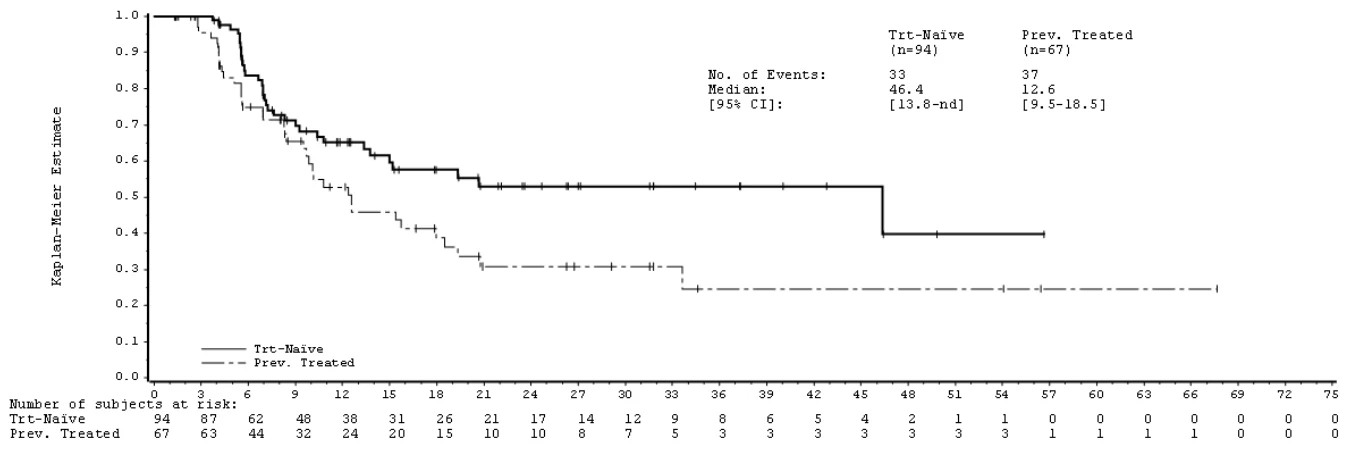
In treatment naïve patients (n=164) compared with previously treated patients (n=149), consistent results (BIRC) were observed for ORR (57.3% and 45%, respectively). In treatment naïve patients, median DOR was 46.4 months. However, in this subgroup, 61 responders (64.9%) were censored at the time of the analysis including 22 responders (23.2%) with ongoing treatment (see
Figure 1). Median DOR was 12.6 months for the previously treated patients. In treatment naïve patients compared with previously treated patients, there were 66% and 65.7% responders, respectively, with DOR ≥ 6 months; 51.1% and 47.8%, respectively, with DOR ≥ 9 months; and 40.4% and 35.8%, respectively, with DOR ≥ 12 months.
Figure 1 Kaplan-Meier Plot of DOR (Treatment-Naïve and Previously Treated Subgroups)
The tumour shrinkage pattern based on the change in sum of longest target lesion tumour diameters between baseline and best post-baseline assessment for each patient (BIRC) is shown in Figure 2.
Figure 2 Change in Sum of Longest Tumour Diameters Between Baseline and Best Post Baseline Assessment, IRC Assessment, VISION Study
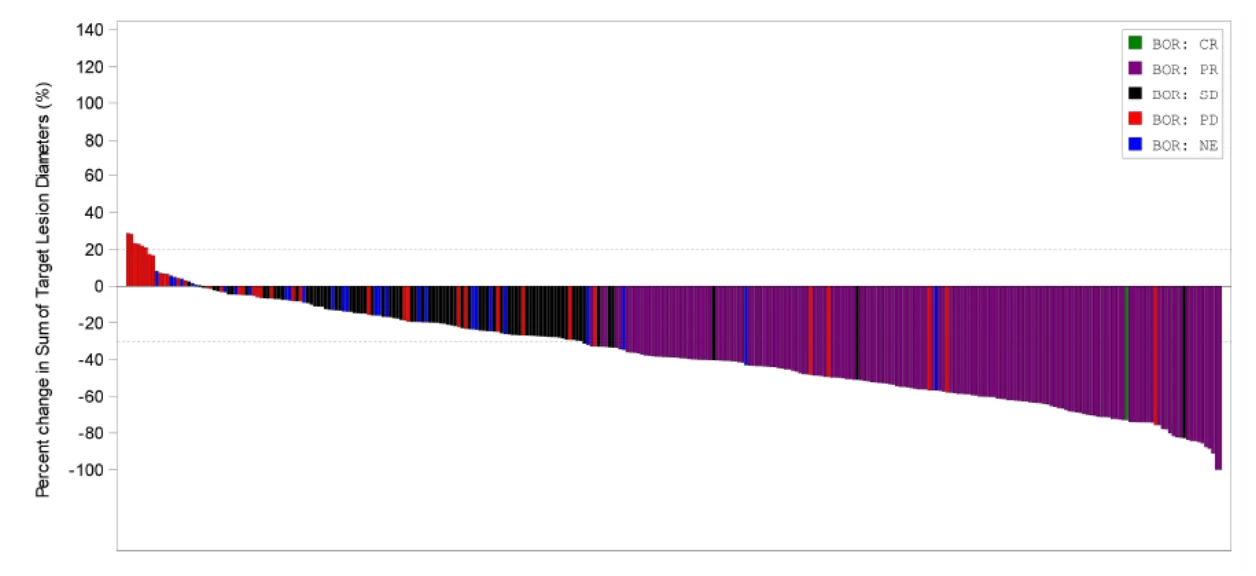
BOR=best objective response, CR=complete response, NE=not evaluable, PD=progressive disease, PR=partial response, SD=stable disease.
8 subjects excluded due to baseline/on-treatment measurement not being available.
BOR: NE* - BOR of NE where ongoing patient has not had two post-baseline tumour assessments.
16 NON-CLINICAL TOXICOLOGY
General Toxicology
Oral repeat-dose toxicity studies have been conducted in rats up to 26 weeks and dogs up to 39 weeks.
A no-observed-adverse-effect-level (NOAEL) was established at 40.5 mg tepotinib per kg per day in the 26-week study in rats and at 9 mg tepotinib per kg per day in the 39-week study in dogs both equivalent to approximately 4% of the human exposure at the recommended dose of TEPMETKO 450 mg once daily based on AUC.
Carcinogenicity and Mutagenicity
No studies have been performed to evaluate the carcinogenic potential of tepotinib.
No mutagenic or genotoxic effects of tepotinib were observed in in vitro and in vivo studies.
The major circulating metabolite was also shown to be non-mutagenic.
Reproductive and Developmental Toxicology
Impairment of Fertility
Fertility studies of tepotinib have not been performed. There were no morphological changes in male or female reproductive organs in repeat-dose toxicity studies in dogs.
Developmental Toxicity
In embryo-fetal development studies, pregnant rabbits received oral doses of 0.5, 5, 25, 50, 150 or 450 mg/kg mg tepotinib hydrochloride hydrate daily during organogenesis. Severe maternal toxicity occurred at the 450 mg/kg dose (approximately 0.75 times the human exposure at the 450 mg clinical dose). At 150 mg/kg (approximately 0.5 times the human exposure by AUC at the 450 mg clinical dose), two animals aborted and one animal died prematurely, mean fetal body weight was also decreased. A dose-dependent increase of skeletal malformations, including malrotations of fore and/or hind paws with concomitant misshapen scapula and/or malpositioned clavicle and/or calcaneus and/or talus occurred at doses ≥ 5 mg/kg (approximately 0.003 times the human exposure by AUC at the 450 mg clinical dose).
Juvenile Animal Studies
No juvenile toxicity studies have been conducted.