


Product Monograph - Teva-Deferasirox
SUMMARY PRODUCT INFORMATION
Route of Administration | Dosage Form / Strength | Clinically Relevant Nonmedicinal Ingredients |
| oral | Dispersible tablets for oral suspension 125 mg, 250 mg, or 500 mg | Colloidal silicon dioxide, crospovidone, lactose monohydrate, magnesium stearate, microcrystalline cellulose, povidone and sodium lauryl sulfate. For a complete listing see Dosage Forms, Composition and Packaging section. |
INDICATIONS AND CLINICAL USE
TEVA-DEFERASIROX (Deferasirox) is indicated in the management of chronic iron overload in patients with transfusion-dependent anemias aged 6 years or older.
TEVA-DEFERASIROX is also indicated in the management of chronic iron overload in patients with transfusion-dependent anemias aged two to five who cannot be adequately treated with deferoxamine.
TEVA-DEFERASIROX is also indicated for the treatment of chronic iron overload in patients with non-transfusion-dependent thalassemia syndromes aged 10 years and older.
Therapy with TEVA-DEFERASIROX should be initiated and maintained by physicians experienced in the treatment of chronic iron overload due to blood transfusions.
Pediatrics (2 to 16 years of age): There are limited data available on the use of deferasirox in children aged 2 to 5 (see Special Populations – Pediatrics). The overall exposure of deferasirox in young children (aged 2 to 5) was about 50% lower than in adults and this age group may require higher maintenance doses than are necessary in adults (see DOSAGE AND ADMINISTRATION).
Geriatrics (≥ 65 years of age): Four hundred and thirty-one (431) patients ≥ 65 years of age have been studied in clinical trials of deferasirox (see Special Populations – Geriatrics). The pharmacokinetics of deferasirox have not been studied in elderly patients. In clinical trials, elderly patients experienced a higher frequency of adverse reactions than younger patients and should be monitored closely for adverse reactions that may require a dose adjustment.
CONTRAINDICATIONS
TEVA-DEFERASIROX is contraindicated in patients with estimated creatinine clearance <60 mL/min or serum creatinine >2 times the age-appropriate upper limit of normal.
TEVA-DEFERASIROX is contraindicated in high risk myelodysplastic syndrome (MDS) patients, any other MDS patient with a life expectancy < 1 year and patients with other hematological and non-hematological malignancies who are not expected to benefit from chelation therapy due to the rapid progression of their disease.
TEVA-DEFERASIROX is contraindicated in patients with platelet counts < 50 x 109/L.
The use of TEVA-DEFERASIROX (Deferasirox) is contraindicated in patients with hypersensitivity to the active substance, deferasirox, or to any of the excipients. For a complete listing of excipients, see the DOSAGE FORMS, COMPOSITION AND PACKAGING section of the product monograph.
WARNINGS AND PRECAUTIONS
Serious Warnings and Precautions
Therapy with TEVA-DEFERASIROX should be initiated and maintained by physicians experience in the treatment of chronic iron overload due to blood transfusions.
TEVA-DEFERASIROX is contraindicated in patients with moderate and severe renal impairment (see CONTRAINDICATIONS) and has not been studied in patients with severe hepatic impairment.
The following are clinically significant adverse events;
- Acute renal failure
- Hepatic failure
- Gastrointestinal haemorrhage and perforations
General
The decision to remove accumulated iron should be individualized based on anticipated clinical benefits and risks of chelation therapy (see DOSAGE AND ADMINISTRATION).
The safety of TEVA-DEFERASIROX when administered with other iron chelation therapy has not been established.
No studies on the effects of deferasirox on the ability to drive or use machines have been performed. Patients experiencing dizziness should exercise caution when driving or operating machinery.
Carcinogenesis and Mutagenesis
See TOXICOLOGY – Mutagenicity and Carcinogenicity sections.
Cardiovascular
Deferasirox has not been studied in patients with acute cardiac failure due to iron overload. Therefore, the use of TEVA-DEFERASIROX is not recommended in these patients.
Ear/Nose/Throat
Auditory disturbances (high-frequency hearing loss, decreased hearing) have been reported with deferasirox therapy (see ADVERSE REACTIONS). Auditory testing is recommended before the start of TEVA-DEFERASIROX treatment and thereafter at regular intervals.
Gastrointestinal
Gastrointestinal irritation may occur during TEVA-DEFERASIROX treatment. Upper gastrointestinal (GI) ulceration and haemorrhage and upper and lower GI perforations have been reported uncommonly in patients, including children and adolescents, receiving deferasirox. There have been rare reports of fatal GI haemorrhages and perforations. Fatal haemorrhages have been reported more frequently in elderly patients who had advanced hematologic malignancies and/or low platelet counts. Multiple ulcers have been observed in some patients and there have been reports of ulcers complicated with gastrointestinal perforation (see ADVERSE REACTIONS). Physicians and patients should remain alert for signs and symptoms of GI ulceration, perforation and haemorrhage during TEVA-DEFERASIROX therapy and promptly initiate additional evaluation and treatment if a serious GI adverse event is suspected.
Caution should be exercised in patients who are taking TEVA-DEFERASIROX in combination with drugs that have known ulcerogenic potential, such as NSAIDs, corticosteroids, or oral bisphosphonates, and in patients receiving anticoagulants (see DRUG INTERACTIONS).
TEVA-DEFERASIROX contains lactose (0.7 mg lactose for each mg of deferasirox). This medicine is not recommended for patients with rare hereditary problems of galactose intolerance, severe lactase deficiency or glucose-galactose malabsorption.
Hematologic
There have been post-marketing reports (both spontaneous and from clinical trials) of cytopenias in patients treated with deferasirox. Most of these patients had preexisting hematologic disorders that are frequently associated with bone marrow failure (see ADVERSE REACTIONS – Post-Market Adverse Drug Reactions). The relationship of these episodes to treatment with deferasirox is unknown. In line with the standard clinical management of such hematological disorders, blood counts should be monitored regularly. Dose interruption of treatment with TEVA-DEFERASIROX should be considered in patients who develop unexplained cytopenia. Reintroduction of therapy with TEVA-DEFERASIROX may be considered, once the cause of the cytopenia has been elucidated.
Hepatic/Biliary/Pancreatic
TEVA-DEFERASIROX is not recommended in patients with severe hepatic impairment (Child-Pugh C) (see DOSAGE AND ADMINISTRATION – Dosing Considerations and ACTION AND CLINICAL PHARMACOLOGY – Special Populations and Conditions). Elevations of serum transaminase levels (greater than 5 times the upper limit of normal) have been observed in 40 patients (6.1%; 40/652) receiving deferasirox in the context of 4 registration studies. In these patients, the transaminase levels were already >5*ULN at baseline in 6 of the 40 patients. In 25 of the 40 patients, the transaminase levels at baseline were above the upper limit of normal but less than 5*ULN.
Although uncommon (0.3%), elevations of transaminases greater than 10 times the upper limit of the normal range, suggestive of hepatitis, have been observed in clinical trials.
In a 5 year pediatric observational study, single events of elevations in ALT and AST suspected to be related to deferasirox were reported in 21.1% and 11.9%, respectively. Approximately 12% of patients on study required a dose reduction or interruption of deferasirox to manage the increase in transaminases and 2.7% of patients discontinued treatment.
There have been postmarketing reports of hepatic failure in patients treated with deferasirox. There are a total of 24 international reports of hepatic failure – 21 post-marketing reports and 3 reports from clinical studies. Two of the 24 cases were reported in Canada. Most reports of hepatic failure involved patients with significant co-morbidities including liver cirrhosis and multi-organ failure; fatal outcomes were reported in some of these patients. As of the cut-off date above, no patient with normal baseline liver function or without additional life-threatening complications of their underlying disease has developed hepatic failure.
It is recommended that serum transaminases, bilirubin and alkaline phosphatase be monitored before the initiation of treatment, every 2 weeks during the first month and monthly thereafter. If there is an unexplained, persistent and progressive increase in serum transaminase levels, TEVA-DEFERASIROX treatment should be interrupted.
In the clinical trial and post-marketing settings, cases of serious acute pancreatitis were observed with and without documented underlying biliary conditions. A causal association to deferasirox could not be ruled out.
Immune
Rare cases of serious hypersensitivity reactions (such as anaphylaxis and angioedema) have been reported in patients receiving deferasirox, with the onset of the reaction occurring in the majority of cases within the first month of treatment (see ADVERSE REACTIONS – Post-Market Adverse Drug Reactions). If hypersensitivity reactions occur, TEVA-DEFERASIROX should be discontinued and appropriate medical intervention instituted. TEVA-DEFERASIROX should not be reintroduced in patients who have experienced previous hypersensitivity reactions on deferasirox due to the risk of anaphylactic shock.
Ophthalmologic
Ocular disturbances (lens opacities, early cataracts, maculopathies) have been reported with deferasirox therapy (see ADVERSE REACTIONS). Ophthalmic testing (including fundoscopy) is recommended before the start of TEVA-DEFERASIROX treatment and thereafter at regular intervals.
Renal
Deferasirox has not been studied in patients with renal impairment. Deferasirox treatment has been initiated only in patients with serum creatinine within the age-appropriate normal range and therefore must be used with caution in patients with elevated serum creatinine levels (see CONTRAINDICATIONS).
Deferasirox-treated patients experienced dose-dependent increases in serum creatinine. Increases in creatinine that were > 33% at ≥ 2 consecutive post baseline visits occurred at a greater frequency in deferasirox-treated patients compared to deferoxamine-treated patients (38% vs. 14%, respectively) in study 0107. In these beta-thalassemia patients, 94% of the creatinine elevations remained within the normal range. Under the dose adjustment instructions, dose reduction was required in one third of patients showing serum creatinine increase. In most patients undergoing dose reductions serum creatinine levels did not return to baseline; in 60% of patients undergoing dose reduction, serum creatinine remained elevated at > 33% without progression (see ADVERSE REACTIONS - Abnormal Hematologic and Clinical Chemistry Findings).
Cases of acute renal failure (some with fatal outcome) have been reported following the post-marketing use of deferasirox. There have been rare cases of acute renal failure requiring dialysis. For the fatal cases, it is impossible to completely exclude a contributory role of deferasirox to the renal impairment, although the fatalities in these critically ill patients could be attributable to other underlying diseases. The fact that there was an improvement after stopping the treatment in most of the cases with non-fatal acute renal failure is suggestive of a contributory role of deferasirox to these cases (see ADVERSE REACTIONS – Post Market Adverse Drug Reactions).
It is recommended that serum creatinine and/or creatinine clearance be assessed twice before initiating therapy. Weekly monitoring of serum creatinine and/or creatinine clearance is recommended in the first month after initiation or modification of therapy, and monthly thereafter. Patients with pre-existing renal conditions or patients who are receiving medicinal products that may depress renal function may be more at risk of complications. Care should be taken to maintain adequate hydration in patients (see DOSAGE AND ADMINISTRATION – Dosing Considerations). Dose reduction, interruption, or discontinuations should be considered for elevations in serum creatinine (see ADVERSE REACTIONS – Abnormal Hematologic and Clinical Chemistry Findings).
Renal tubulopathy has been reported in patients treated with deferasirox. The majority of these patients were children and adolescents with beta-thalassemia and serum ferritin levels <1,500 μg/L.
Tests for proteinuria should be performed monthly. As needed, additional markers of renal tubular function (e.g. glycosuria in non-diabetics and low levels of serum potassium, phosphate, magnesium or urate, phosphaturia, aminoaciduria) may also be monitored. Dose reduction or interruption may be considered if there are abnormalities in levels of tubular markers and/or if clinically indicated.
If there is a progressive increase in serum creatinine beyond the upper limit of normal, TEVA-DEFERASIROX should be interrupted (see DOSAGE AND ADMINISTRATION).
Skin
Serious skin reactions: Severe cutaneous adverse reactions (SCARs), including cases of Stevens-Johnson syndrome (SJS), toxic epidermal necrolysis (TEN), and hypersensitivity vasculitis, as well as drug reaction with eosinophilia and systemic symptoms (DRESS) which could be life - threatening or fatal, and rare cases of erythema multiforme, have occurred during deferasirox treatment. Patients should be advised of the signs and symptoms of severe skin reactions, and be closely monitored. Upon suspicion of any SCAR, TEVA-DEFERASIROX should be discontinued immediately and should not be reintroduced.
Skin rashes: skin rashes may also appear during TEVA-DEFERASIROX treatment. For rashes of mild to moderate severity, TEVA-DEFERASIROX may be continued without dose adjustment, since the rash often resolves spontaneously. For more severe rash, where interruption of treatment may be necessary, TEVA-DEFERASIROX may be re-introduced after resolution of the rash, at a lower dose followed by gradual dose escalation.
Special Populations
Pregnant Women: There are no adequate and well-controlled studies conducted in pregnant women. No clinical data on exposed pregnancies are available for deferasirox. Studies in animals have shown some reproductive toxicity at maternally toxic doses (see DETAILED PHARMACOLOGY – Reproduction and Teratology). The potential risk for humans is unknown. It is therefore recommended that TEVA-DEFERASIROX should not be used during pregnancy. Patients taking oral contraceptives may be at risk of getting pregnant because TEVA-DEFERASIROX may decrease the efficacy of hormonal contraceptives (see DRUG INTERACTIONS).
Nursing Women: It is not known whether deferasirox is excreted in human milk. In an animal study, deferasirox and its metabolites were present in breast milk of rats following a 10 mg/kg oral dose. The concentration of deferasirox was approximately 20-fold higher in maternal milk than in maternal plasma 4-8 hours post dose (see DETAILED PHARMACOLOGY – Reproduction and Teratology). Therefore, women should be advised against breast-feeding while taking TEVA-DEFERASIROX.
Pediatrics (2 to 16 years of age): There are limited data on the safety and effectiveness of deferasirox in pediatric patients aged 2 to 5 (see CLINICAL TRIALS). Deferasirox has not been associated with growth retardation in children followed for up to 5 years in clinical studies. However, as a precautionary measure, body weight and longitudinal growth in pediatric patients should be monitored at regular intervals (every 12 months).
In a 5-year observational study in which 267 children aged 2 to <6 years (at enrollment) with transfusional hemosiderosis received deferasirox, there were no unexpected safety findings observed regarding adverse events or laboratory abnormalities with the exception of an increase in single events of elevated transaminases suspected to be related to deferasiorx: 21.1% and 11.9% of pediatric patients had elevated alanine aminotransferase (ALT) and aspartate aminotransferase, respectively. Within the range of the known safety profile, increases in serum creatinine of >33% and above the upper limit of normal (ULN) on ≥2 consecutive occasions were observed in 3.1% of children and elevation of ALT greater than 5 times the ULN on ≥2 consecutive occasions was reported in 4.3% of children.
Geriatrics (≥ 65 years of age): Four hundred and thirty-one (431) patients ≥ 65 years of age have been studied in clinical trials of deferasirox. The majority of these patients had myelodysplastic syndrome (MDS, n= 393; ß-thalassemia, n= 2; other anemias, n= 36). In general, caution should be used in elderly patients due to the greater frequency of decreased hepatic, renal, or cardiac function, concomitant disease or other drug therapy. In clinical trials, elderly patients experienced a higher frequency of adverse reactions than younger patients and should be monitored closely for adverse reactions that may require a dose adjustment.
Monitoring and Laboratory Tests
Serum ferritin should be measured monthly to assess response to therapy and to evaluate for the possibility of overchelation of iron, although the correlation coefficient between serum ferritin and liver iron content (LIC) was 0.63, and changes in serum ferritin levels may not always reliably reflect changes in LIC. If the serum ferritin falls consistently below 500 μg/L, temporary interruption of TEVA-DEFERASIROX therapy should be considered (see DOSAGE AND ADMINISTRATION).
As with other iron chelator treatment, the risk of toxicity of TEVA-DEFERASIROX may be increased when inappropriately given to patients with a low iron burden or with serum ferritin levels that are only slightly elevated.
It is recommended that serum transaminases, bilirubin and alkaline phosphatase be monitored before the initiation of treatment, every 2 weeks during the first month and monthly thereafter. It is recommended that serum creatinine be assessed twice before initiating therapy and monitored weekly for the first month followed by monthly thereafter (see Hepatic/Biliary/Pancreatic and Renal sections above).
Tests for proteinuria should be performed monthly (see Renal section above). In line with standard clinical management of hematological disorders, blood counts should be monitored regularly (see Hematologic section above).
ADVERSE REACTIONS
Adverse Drug Reaction Overview
Over 7000 patients have been treated with deferasirox in clinical studies as of October 31, 2011. In the initial registration program, 652 patients were treated with deferasirox in therapeutic studies lasting for a median of 366 days in pediatric and adult patients [52 patients between 2 and 5 years of age, 240 patients between 6 and 16 years of age, 330 patients between 17 to 65 years of age and 30 patients ≥ 65 years]. These 652 patients included 421 with β-thalassemia, 99 with rare anemias, and 132 with sickle cell disease. Of these patients, 302 were male and 456 were Caucasian. In the sickle cell disease population, 89% of patients were black.
The most frequently occurring adverse events (all causalities) in the therapeutic trials of deferasirox were diarrhea, vomiting, nausea, headache, constipation, dyspepsia, abdominal pain, pyrexia, cough, proteinuria, increases in serum creatinine and transaminases, pruritis and skin rash. Gastrointestinal disorders, increases in serum creatinine and skin rash were dose related. Adverse events which most frequently led to dose interruption, dose adjustment, or discontinuation of therapy were skin rash, gastrointestinal disorders, infections, increased creatinine, and increased transaminases.
Clinical Trial Adverse Drug Reactions
Because clinical trials are conducted under very specific conditions the adverse reaction rates observed in the clinical trials may not reflect the rates observed in practice and should not be compared to the rates in the clinical trials of another drug. Adverse drug reaction information from clinical trials is useful for identifying drug-related adverse events and for approximating rates.
In clinical trials in patients with transfusional iron overload, the most frequent reactions reported during chronic treatment with deferasirox in adult and pediatric patients include gastrointestinal disturbances in about 26% of patients (mainly nausea, vomiting, diarrhea, or abdominal pain), and skin rash in about 7% of patients. Mild, non-progressive, dose-dependent increases in serum creatinine occurred in 34% of patients (see Abnormal Hematologic and Clinical Chemistry Findings).
In clinical trials in patients with transfusional iron overload, elevations of liver transaminases as suspected drug-related adverse events were reported in about 2% of patients. The increases in liver transaminases were not dose-dependent. Forty percent of these patients had elevated levels (above the upper limit of normal) prior to receiving deferasirox. Elevations of transaminases greater than 10 times the upper limit of the normal range, suggestive of hepatitis, were uncommon (0.3%). High frequency hearing loss and lenticular opacities (early cataracts) have been observed in <1% of patients treated with deferasirox (see WARNINGS AND PRECAUTIONS, Ear/Nose/Throat and Ophthalmologic).
In a 1-year, randomized, double-blind, placebo-controlled study in patients with non-transfusion-dependent thalassemia syndromes, the most frequently reported AEs in the deferasirox 10 mg/kg/day group (at least 10%) were headache (16.4%), upper respiratory tract infection (14.5%), oropharyngeal pain (10.9%), pyrexia (10.9%), and rash (10.9%). Table 1 displays adverse events occurring in >5% of deferasirox-treated patients.
Table 1: Adverse Events Occurring in >5% of Deferasirox-treated Patients in Study A2209
| Deferasirox | Deferasirox | Placebo | Placebo | Placebo | |
| 5 mg/kg/day | 10 mg/kg/day | 5 mg/kg/day | 10 mg/kg/day | Any dose | |
| N=55 | N=55 | N=28 | N=28 | N=56 | |
| n (%) | n (%) | n (%) | n (%) | n (%) | |
| Any AE | 42 (76.4) | 43 (78.2) | 20 (71.4) | 25 (89.3) | 45 (80.4) |
| Headache | 2 (3.6) | 9 (16.4) | 4 (14.3) | 4 (14.3) | 8 (14.3) |
| Upper respiratory tract infection | 7 (12.7) | 8 (14.5) | 5 (17.9) | 6 (21.4) | 11 (19.6) |
| Oropharyngeal pain | 4 (7.3) | 6 (10.9) | 0 | 2 (7.1) | 2 (3.6) |
| Pyrexia | 6 (10.9) | 6 (10.9) | 5 (17.9) | 3 (10.7) | 8 (14.3) |
| Rash | 2 (3.6) | 6 (10.9) | 1 (3.6) | 2 (7.1) | 3 (5.4) |
| Diarrhoea | 3 (5.5) | 5 (9.1) | 2 (7.1) | 4 (14.3) | 6 (10.7) |
| Fatigue | 1 (1.8) | 5 (9.1) | 2 (7.1) | 2 (7.1) | 4 (7.1) |
| Nausea | 4 (7.3) | 5 (9.1) | 1 (3.6) | 6 (21.4) | 7 (12.5) |
| Abdominal pain | 2 (3.6) | 4 (7.3) | 1 (3.6) | 3 (10.7) | 4 (7.1) |
| Anaemia | 3 (5.5) | 4 (7.3) | 0 | 2 (7.1) | 2 (3.6) |
| Nasopharyngitis | 5 (9.1) | 4 (7.3) | 2 (7.1) | 3 (10.7) | 5 (8.9) |
| Rhinitis | 1 (1.8) | 4 (7.3) | 1 (3.6) | 0 | 1 (1.8) |
| Abdominal pain upper | 3 (5.5) | 3 (5.5) | 0 | 0 | 0 |
| Dyspepsia | 0 | 3 (5.5) | 0 | 0 | 0 |
| Gastroenteritis | 1 (1.8) | 3 (5.5) | 0 | 2 (7.1) | 2 (3.6) |
| Influenza | 3 (5.5) | 3 (5.5) | 1 (3.6) | 0 | 1 (1.8) |
| Insomnia | 1 (1.8) | 3 (5.5) | 2 (7.1) | 0 | 2 (3.6) |
In Study 2209, one patient in the placebo 10 mg/kg group experienced an ALT increase to >5 x ULN and >2 x baseline (Table 2). Three deferasirox-treated patients (all in the 10 mg/kg group) had 2 consecutive serum creatinine level increases >33% from baseline and >ULN. Serum creatinine returned to normal in all patients (in one spontaneously and in the other two after drug interruption).
Table 2: Number (%) of Patients with Increases in Serum Creatinine or SGPT/ALT in Study 2209
| Laboratory Parameter | Deferasirox 5 mg/kg (N=55) n (%) | Deferasirox 10 mg/kg (N=55) n (%) | Placebo 5 mg/kg (N=28) n (%) | Placebo 10 mg/kg (N=28) n (%) | Placebo (N=56) n (%) |
| Serum Creatinine | |||||
Creatinine increase (>33% from baseline and >ULN at ≥2 consecutive post-baseline values) | 0 (0.0) | 3 ( 5.5) | 0 ( 0.0) | 0 (0.0) | 0 (0.0) |
| SGPT/ALT | |||||
| SGPT/ALT (>5 x ULN and >2 x baseline) | 0 (0.0) | 0 (0.0) | 0 ( 0.0) | 1 (3.6) | 1 (1.8) |
A total of 652 patients were treated with deferasirox in therapeutic studies of adult and pediatric patients with β-thalassemia (n=421), rare anemias (n=99) and sickle cell disease (n=132). This population was 46% male, 70% Caucasian and included 292 patients ≤16 years of age. In the sickle cell disease population, 89% of patients were black. A total of 94% of β- thalassemia patients, 70% of patients with rare anemias, and 86% of patients with sickle cell disease patients received therapy for ≥ 48 weeks.
The data in Table 3 displays the adverse events, regardless of causality, occurring in >5% of patients in either treatment group in the primary efficacy study 0107 in which 296 β-thalassemia patients were treated with deferasirox and 290 patients received deferoxamine as an active comparator. Adverse events which most frequently led to dose interruption, dose adjustment, or discontinuation of therapy were skin rash, gastrointestinal disorders, infections, increased creatinine, and increased transaminases (see Abnormal Hematologic and Clinical Chemistry Findings). Discontinuations due to adverse events with a suspected relationship to deferasirox occurred in 7 patients.
Table 3: Adverse Events Occurring in >5% of β-thalassemia Patients in the Comparative Trial
| Preferred Term | Deferasirox N=296 n (%) | Deferoxamine N=290 n (%) |
| Pyrexia | 56 (18.9) | 69 (23.8) |
| Headache | 47 (15.9) | 59 (20.3) |
| Abdominal pain | 41 (13.9) | 28 (9.7) |
| Cough | 41 (13.9) | 55 (19.0) |
| Nasopharyngitis | 39 (13.2) | 42 (14.5) |
| Preferred Term | Deferasirox N=296 n (%) | Deferoxamine N=290 n (%) |
| Diarrhea | 35 (11.8) | 21 (7.2) |
| Creatinine increased1 | 33 (11.1) | 0 (0) |
| Influenza | 32 (10.8) | 29 (10.0) |
| Nausea | 31 (10.5) | 14 (4.8) |
| Pharyngolaryngeal pain | 31 (10.5) | 43 (14.8) |
| Vomiting | 30 (10.1) | 28 (9.7) |
| Respiratory tract infection | 28 (9.5) | 23 (7.9) |
| Bronchitis | 27 (9.1) | 32 (11.0) |
| Rash | 25 (8.4) | 9 (3.1) |
| Abdominal pain upper | 23 (7.8) | 15 (5.2) |
| Pharyngitis | 23 (7.8) | 30 (10.3) |
| Arthralgia | 22 (7.4) | 14 (4.8) |
| Acute tonsillitis | 19 (6.4) | 15 (5.2) |
| Fatigue | 18 (6.1) | 14 (4.8) |
| Rhinitis | 18 (6.1) | 22 (7.6) |
| Back pain | 17 (5.7) | 32 (11.0) |
| Ear infection | 16 (5.4) | 7 (2.4) |
| Urticaria | 11 (3.7) | 17 (5.9) |
| 1 >33% increase compared to average baseline values | ||
The data in Table 4 displays the adverse events, regardless of causality, occurring in >1% in the pooled β-thalassemia patients by dose administered. The most frequently reported adverse events were abdominal pain, pyrexia and headache. In the 30 mg/kg dose group, the most frequently reported adverse events were abdominal pain, diarrhea and increased serum creatinine. Skin rash and ALT increase were the only adverse events that resulted in discontinuation.
Table 4: Most frequently reported AEs (>1% of all patients) – pooled β-thalassemia patients by dose administered
| Preferred term | Deferasirox 10 mg/kg N=143 | Deferasirox 20 mg/kg N=106 | Deferasirox 30 mg/kg N=172 | All patients N=421 |
| Total | Total | Total | Total | |
| n (%) | n (%) | n (%) | n (%) | |
| Abdominal pain | 38 (26.6) | 21 (19.8) | 41 (23.8) | 100 (23.8) |
| Pyrexia | 47 (32.9) | 31 (29.2) | 20 (11.6) | 98 (23.3) |
| Headache | 37 (25.9) | 20 (18.9) | 26 (15.1) | 83 (19.7) |
| Cough | 38 (26.6) | 17 (16.0) | 25 (14.5) | 80 (19.0) |
| Diarrhea | 24 (16.8) | 9 (8.5) | 37 (21.5) | 70 (16.6) |
| Nasopharyngitis | 23 (16.1) | 16 (15.1) | 20 (11.6) | 59 (14.0) |
| Vomiting | 28 (19.6) | 12 (11.3) | 18 (10.5) | 58 (13.8) |
| Rash | 12 (8.4) | 10 (9.4) | 30 (17.4) | 52 (12.4) |
| Nausea | 11 (7.7) | 11 (10.4) | 28 (16.3) | 50 (11.9) |
| Preferred term | Deferasirox 10 mg/kg N=143 | Deferasirox 20 mg/kg N=106 | Deferasirox 30 mg/kg N=172 | All patients N=421 |
| Total | Total | Total | Total | |
| n (%) | n (%) | n (%) | n (%) | |
| Creatinine increased1 | 2 (1.4) | 13 (12.3) | 34 (19.8) | 49 (11.6) |
| Laryngeal pain | 20 (14.0) | 12 (11.3) | 17 (9.9) | 49 (11.6) |
| Pharyngitis | 28 (19.6) | 9 (8.5) | 10 (5.8) | 47 (11.2) |
| Influenza | 19 (13.3) | 12 (11.3) | 13 (7.6) | 44 (10.5) |
| Rhinitis | 28 (19.6) | 8 (7.5) | 6 (3.5) | 42 (10.0) |
| URTI2 | 9 (6.3) | 8 (7.5) | 24 (14.0) | 41 (9.7) |
| Bronchitis | 7 (4.9) | 9 (8.5) | 20 (11.6) | 36 (8.6) |
| Arthralgia | 13 (9.1) | 8 (7.5) | 13 (7.6) | 34 (8.1) |
| Back pain | 9 (6.3) | 16 (15.1) | 9 (5.2) | 34 (8.1) |
| Constipation | 9 (6.3) | 6 (5.7) | 12 (7.0) | 27 (6.4) |
| Fatigue | 7 (4.9) | 6 (5.7) | 13 (7.6) | 26 (6.2) |
| Ear infection | 13 (9.1) | 7 (6.6) | 3 (1.7) | 23 (5.5) |
| Tonsillitis | 8 (5.6) | 7 (6.6) | 6 (3.5) | 21 (5.0) |
| Post procedural pain | 2 (1.4) | 8 (7.5) | 10 (5.8) | 20 (4.8) |
| Acute tonsillitis | 2 (1.4) | 6 (5.7) | 11 (6.4) | 19 (4.5) |
| Asthenia | 8 (5.6) | 7 (6.6) | 4 (2.3) | 19 (4.5) |
| Gastroenteritis | 8 (5.6) | 6 (5.7) | 5 (2.9) | 19 (4.5) |
| Chest pain | 2 (1.4) | 8 (7.5) | 8 (4.7) | 18 (4.3) |
| Ear pain | 3 (2.1) | 5 (4.7) | 4 (2.3) | 12 (2.9) |
| Palpitations | 1 (0.7) | 4 (3.8) | 7 (4.1) | 12 (2.9) |
| Tachycardia | 5 (3.5) | 4 (3.8) | 3 (1.7) | 12 (2.9) |
| Transfusion reaction | 7 (4.9) | 3 (2.8) | 2 (1.2) | 12 (2.9) |
| Urticaria | 3 (2.1) | 4 (3.8) | 5 (2.9) | 12 (2.9) |
| Dyspepsia | 4 (2.8) | 3 (2.8) | 4 (2.3) | 11 (2.6) |
| Pain in extremity | 5 (3.5) | 3 (2.8) | 3 (1.7) | 11 (2.6) |
| Pruritus | 3 (2.1) | 4 (3.8) | 4 (2.3) | 11 (2.6) |
| Rhinorrhoea | 1 (0.7) | 6 (5.7) | 3 (1.7) | 10 (2.4) |
| Sinusitis | 0 | 6 (5.7) | 4 (2.3) | 10 (2.4) |
| Transaminases increased | 8 (5.6) | 1 (0.9) | 1 (0.6) | 10 (2.4) |
| Urinary tract infection | 2 (1.4) | 1 (0.9) | 7 (4.1) | 10 (2.4) |
| Herpes simplex | 3 (2.1) | 1 (0.9) | 5 (2.9) | 9 (2.1) |
| Otitis media | 2 (1.4) | 1 (0.9) | 6 (3.5) | 9 (2.1) |
| Toothache | 2 (1.4) | 3 (2.8) | 4 (2.3) | 9 (2.1) |
| Anxiety | 3 (2.1) | 2 (1.9) | 3 (1.7) | 8 (1.9) |
| Bone pain | 1 (0.7) | 1 (0.9) | 6 (3.5) | 8 (1.9) |
| Conjunctivitis | 6 (4.2) | 1 (0.9) | 1 (0.6) | 8 (1.9) |
| Dyspnoea | 0 | 2 (1.9) | 6 (3.5) | 8 (1.9) |
| Muscle cramp | 1 (0.7) | 0 | 7 (4.1) | 8 (1.9) |
| Productive cough | 4 (2.8) | 3 (2.8) | 1 (0.6) | 8 (1.9) |
| Tooth abscess | 2 (1.4) | 0 | 6 (3.5) | 8 (1.9) |
| Abdominal distension | 1 (0.7) | 0 | 6 (3.5) | 7 (1.7) |
| Cholelithiasis | 2 (1.4) | 1 (0.9) | 4 (2.3) | 7 (1.7) |
| Preferred term | Deferasirox 10 mg/kg N=143 | Deferasirox 20 mg/kg N=106 | Deferasirox 30 mg/kg N=172 | All patients N=421 |
| Total | Total | Total | Total | |
| n (%) | n (%) | n (%) | n (%) | |
| Enteritis | 5 (3.5) | 1 (0.9) | 1 (0.6) | 7 (1.7) |
| Epistaxis | 4 (2.8) | 1 (0.9) | 2 (1.2) | 7 (1.7) |
| Erythema | 3 (2.1) | 2 (1.9) | 2 (1.2) | 7 (1.7) |
| Hypoacusis | 4 (2.8) | 2 (1.9) | 1 (0.6) | 7 (1.7) |
| Insomnia | 0 | 3 (2.8) | 4 (2.3) | 7 (1.7) |
| Vertigo | 2 (1.4) | 4 (3.8) | 1 (0.6) | 7 (1.7) |
| Alanine aminotransferase increased | 4 (2.8) | 2 (1.9) | 0 | 6 (1.4) |
| Cardiac murmur | 0 | 0 | 6 (3.5) | 6 (1.4) |
| Depression | 0 | 2 (1.9) | 4 (2.3) | 6 (1.4) |
| Dizziness | 1 (0.7) | 2 (1.9) | 3 (1.7) | 6 (1.4) |
| Dysmenorrhoea | 0 | 3 (2.8) | 3 (1.7) | 6 (1.4) |
| Lymphadenopathy | 2 (1.4) | 1 (0.9) | 3 (1.7) | 6 (1.4) |
| Myalgia | 1 (0.7) | 1 (0.9) | 4 (2.3) | 6 (1.4) |
| Pharyngitis streptococcal | 3 (2.1) | 3 (2.8) | 0 | 6 (1.4) |
| Proteinuria | 1 (0.7) | 1 (0.9) | 4 (2.3) | 6 (1.4) |
| Rash maculo-papular | 0 | 3 (2.8) | 3 (1.7) | 6 (1.4) |
| Seasonal allergy | 0 | 1 (0.9) | 5 (2.9) | 6 (1.4) |
| Abdominal discomfort | 1 (0.7) | 0 | 4 (2.3) | 5 (1.2) |
| Contusion | 2 (1.4) | 0 | 3 (1.7) | 5 (1.2) |
| Cystitis | 1 (0.7) | 1 (0.9) | 3 (1.7) | 5 (1.2) |
| Frequent bowel movements | 1 (0.7) | 1 (0.9) | 3 (1.7) | 5 (1.2) |
| Oedema peripheral | 0 | 2 (1.9) | 3 (1.7) | 5 (1.2) |
| Respiratory tract infection | 1 (0.7) | 1 (0.9) | 3 (1.7) | 5 (1.2) |
| Syncope | 2 (1.4) | 2 (1.9) | 1 (0.6) | 5 (1.2) |
| Viral infection | 1 (0.7) | 1 (0.9) | 3 (1.7) | 5 (1.2) |
| 1 >33% increase compared to average baseline values 2 Upper respiratory tract infection | ||||
Less Common Clinical Trial Adverse Drug Reactions (<1%)
The less common adverse events which occurred in clinical trials and considered to be related to deferasirox are listed below.
Cardiovascular: QT prolongation1
General disorders: Pyrexia, oedema, fatigue
Ear and labyrinth disorders: Deafness
Eye disorders: Cataract, maculopathy, optic neuritis
Gastrointestinal: Duodenal ulcer, gastric ulcer (including multiple ulcers)
gastritis, gastrointestinal haemorrhage, oesophagitis
Hepatic/Biliary/Pancreatic: Cholelithiasis, hepatitis, acute pancreatitis2
Nervous system: Dizziness
Psychiatric disorders: Anxiety, sleep disorder
Renal and urinary disorders: Renal tubular disorder (Fanconi syndrome)
Respiratory, thoracic and
mediastinal disorders: Pharyngolaryngeal pain
Skin and subcutaneous tissue
disorders: Pigmentation disorder, erythema multiforme.
- 1. Three cases of QT interval prolongation were reported in the clinical trials, however, a causal relationship to study drug was not established.
- 2. Cases of serious acute pancreatitis were observed with and without documented underlying biliary conditions.
Abnormal Hematologic and Clinical Chemistry Findings
In the comparative study 0107, 113 patients treated with deferasirox had non-progressive increases in serum creatinine > 33% above baseline (Table 5). Twenty-five (25) patients required dose reductions. Increases in serum creatinine appeared to be dose-related. Of the 17 patients with elevations in SGPT/ALT levels > 5 times the ULN at consecutive visits, one discontinued deferasirox therapy. One patient experienced increases in transaminases to >10x ULN which normalized upon drug discontinuation but then increased sharply upon rechallenge. Increases in transaminases did not appear to be dose-related and most of these patients had elevated transaminases prior to receiving deferasirox therapy.
Table 5: Number (%) of patients with increases in SGPT/ALT or serum creatinine in study 0107
| Laboratory parameter | Deferasirox N=296 n (%) | Deferoxamine N=290 n (%) |
| Serum creatinine | ||
| No. patients with creatinine > 33% and <ULN at ≥ 2 consecutive post-baseline visits | 106 (35.8) | 40 (13.8) |
No. patients with creatinine increase > 33% and >ULN at ≥ 2 consecutive post-baseline visits | 7 (2.4) | 1 (0.3) |
| SGPT/ALT | ||
| No. patients with SGPT/ALT >5 x ULN at ≥2 post-baseline visits | 8 (2.7) | 2 (0.7) |
| No. patients with SGPT/ALT >5 x ULN at ≥2 consecutive post-baseline visits | 17 (5.7) | 5 (1.7) |
A total of 652 patients were treated with deferasirox in clinical studies 107, 108, and 109. Of these patients, 237 (36%) had an increase in serum creatinine >33% on at least 2 consecutive visits, 68 (11%) of whom underwent dose reduction. The remainder returned to serum creatinine <33% above baseline without dose reduction. Of the 68 patients who underwent dose reduction, 17 (25%) returned to normal, 41 (60%) remained elevated at >33% without progression and the remaining 10 (15%) fluctuated between baseline and 33%.
Based on limited data in patients with sickle cell disease (N=132) and other rare anemias (N=99), the type and frequency of adverse events observed were similar to those observed in patients with β-thalassemia. The adverse event profile in patients <16 years of age was similar to that seen in adults, regardless of disease state.
In 49 adult β-thalassemia patients treated for greater than 1 year and up to 3 years, the type and frequency of adverse events was similar to that seen in patients treated for up to 1 year.
Post-Market Adverse Drug Reactions
Cases of acute renal failure (some with fatal outcome) have been reported following the post- marketing use of deferasirox. Rarely biopsy proven interstitial nephritis has also been reported.
Hypocalcemia has been reported to occur during deferasirox therapy.
Spontaneously reported adverse reactions, presented below, are reported voluntarily and it is not always possible to reliably establish frequency or a causal relationship to drug exposure.
Paediatric population
Renal tubulopathy has been reported in patients treated with deferasirox. The majority of these patients were children and adolescents with beta-thalassemia and serum ferritin levels <1,500 μg/L.
Renal and urinary disorders
Acute renal failure (mostly serum creatinine increases ≥ 2x upper limit of normal, and usually reversible after treatment interruption), hematuria, renal tubular necrosis
Skin and subcutaneous tissue disorders
Stevens-Johnson syndrome, hypersensitivity vasculitis, urticaria, erythema multiforme, alopecia, toxic epidermal necrolysis (TEN) and drug reaction with eosinophilia and systemic symptoms (DRESS).
Immune system disorders
Hypersensitivity reactions (including anaphylaxis and angioedema)
Gastrointestinal disorders
Duodenal ulcer, gastric ulcer, gastrointestinal bleeding, gastrointestinal perforation
Blood and lymphatic system disorders
Agranulocytosis, neutropenia, thrombocytopenia and aggravated anemia
Hepatic/Biliary/Pancreatic
Hepatic failure
DRUG INTERACTIONS
Drug-Drug Interactions
The safety of TEVA-DEFERASIROX when administered with other iron chelation therapy has not been established.
The concomitant administration of deferasirox and aluminum-containing antacid preparations has not been formally studied. Although deferasirox has a lower affinity for aluminum than for iron, TEVA-DEFERASIROX should not be taken with aluminum-containing antacid preparations (see WARNINGS AND PRECAUTIONS).
In a healthy volunteer study, the concomitant administration of deferasirox and midazolam (a CYP3A4 substrate) resulted in a decrease of midazolam exposure by 17%. In the clinical setting, this effect may be more pronounced. Therefore, caution should be exercised when deferasirox is combined with substances metabolised through CYP3A4 (e.g. cyclosporine, simvastatin, hormonal contraceptive agents), due to a possible decrease in efficacy.
In a healthy volunteer study, the concomitant administration of deferasirox (single dose of 30 mg/kg) and the potent UDP-glucuronosyltransferase (UGT) inducer rifampicin (repeated dose of 600 mg/day) resulted in a decrease of deferasirox exposure by 44% (90% CI: 37% - 51%). Therefore, the concomitant use of TEVA-DEFERASIROX with potent UGT inducers (e.g. rifampicin, phenytoin, phenobarbital, ritonavir) may result in a decrease in deferasirox efficacy. If TEVA-DEFERASIROX and a potent UGT inducer are used concomitantly, increases in the dose of TEVA-DEFERASIROX should be considered based on clinical response to therapy.
In a healthy volunteer study, the administration of cholestyramine after a single dose of deferasirox resulted in a 45% decrease in deferasirox exposure (AUC).
In a healthy volunteer study, the concomitant administration of deferasirox (repeated dose of 30 mg/kg/day) and the CYP2C8 substrate repaglinide (single dose of 0.5 mg) resulted in an increase in repaglinide AUC and Cmax by 131% and 62%, respectively. When TEVA-DEFERASIROX and repaglinide are used concomitantly, careful monitoring of glucose levels should be performed. An interaction between TEVA-DEFERASIROX and other CYP2C8 substrates like paclitaxel cannot be excluded.
In a healthy volunteer study, the concomitant administration of deferasirox (repeated dose of 30 mg/kg/day) and the CYP1A2 substrate theophylline (single dose of 120 mg) resulted in an increase in theophylline AUC by 84% (90% CI: 73% to 95%). The single dose Cmax was not affected, but an increase of theophylline Cmax is expected to occur with chronic dosing. When TEVA-DEFERASIROX and theophylline are used concomitantly, monitoring of theophylline concentration and possible theophylline dose reduction should be considered. An interaction between TEVA-DEFERASIROX and other CYP1A2 substrates such as clozapine and tizanidine may be possible.
In healthy volunteers, deferasirox had no effect on the pharmacokinetics of digoxin. The effect of digoxin on deferasirox pharmacokinetics has not been studied.
The concomitant administration of TEVA-DEFERASIROX and vitamin C has not been formally studied. Doses of vitamin C up to 200 mg were allowed in clinical studies without negative consequences. High doses of vitamin C should not be used.
Concomitant administration of TEVA-DEFERASIROX with drugs that have known ulcerogenic potential, such as NSAIDs, corticosteroids, or oral bisphosphonates, and use of TEVA-DEFERASIROX in patients receiving anticoagulants may increase the risk of gastrointestinal irritation (see WARNINGS AND PRECAUTIONS).
The interaction of deferasirox with hydroxyurea has not been formally studied. No inhibition of deferasirox metabolism by hydroxyurea is expected based on the results of an in vitro study.
Drug-Food Interactions
TEVA-DEFERASIROX should be taken on an empty stomach at least 30 minutes before eating the first meal of the day, preferably at the same time each day.
TEVA-DEFERASIROX tablets for oral suspension can be dispersed in water, orange juice or apple juice. Dispersion of TEVA-DEFERASIROX in carbonated drinks or milk is not recommended due to foaming and slow dispersion, respectively.
Drug-Herb Interactions
Interactions with herbal products have not been established.
Drug-Laboratory Interactions
Interactions between deferasirox and gallium contrast media have not been studied. It is known that the results of gallium-67 imaging may be distorted by the iron chelator deferoxamine due to chelation of gallium-67. It is therefore recommended that TEVA-DEFERASIROX therapy be interrupted at least five days before gallium-67 scintigraphy.
DOSAGE AND ADMINISTRATION
Recommended Dose and Dosage Adjustment
- 1. Transfusional iron overload
It is recommended that therapy with TEVA-DEFERASIROX (deferasirox) be started when a patient has evidence of chronic iron overload, such as the transfusion of approximately 100 mL/kg of packed red blood cells (approximately 20 units for a 40 kg patient) and a serum ferritin consistently >1000 μg/L. Doses should be in mg/kg and must be calculated and rounded to the nearest whole tablet size. TEVA-DEFERASIROX is available in three strengths (125, 250 and 500 mg).
The goals of iron chelation therapy are to remove the amount of iron administered in transfusions and, as required, to reduce the existing iron burden. The decision to remove accumulated iron should be individualized based on anticipated clinical benefit and risks of chelation therapy.
TEVA-DEFERASIROX should be taken on an empty stomach at least 30 minutes before eating the first meal of the day, preferably at the same time each day.
Starting Dose
The recommended initial daily dose of TEVA-DEFERASIROX is 10, 20, or 30 mg/kg/day body weight, depending on the patient’s transfusion rate and the goal of treatment:
Patients requiring maintenance of an acceptable body iron level
- An initial daily dose of 10 mg/kg/day is recommended for patients receiving less than 7 mL/kg/month of packed red blood cells (approximately <2 units/month for an adult) and for whom the objective is maintenance of an acceptable body iron level.
- An initial daily dose of 20 mg/kg/day is recommended for patients receiving more than 7 mL/kg/month of packed red blood cells (approximately >2 units/month for an adult) and for whom the objective is maintenance of an acceptable body iron level.
Patients requiring reduction of iron overload
- An initial daily dose of 20 mg/kg/day is recommended for patients receiving less than 14 mL/kg/month of packed red blood cells (approximately <4 units/month for an adult) and for whom the objective is gradual reduction of iron overload.
- An initial daily dose of 30 mg/kg/day is recommended for patients receiving more than 14 mL/kg/month of packed red blood cells (approximately >4 units/month for an adult) and for whom the objective is gradual reduction of iron overload.
The dose dependent iron excretion (mg/kg/day) was calculated from the change in LIC over one year, the amount of blood transfused and the weight of the patient. Using two example patients of 20 kg and 50 kg, the amount of iron excreted over one year could be calculated in terms of mg/year and transfusion unit-equivalents/year (assuming that one unit of PRBC contains 200 mg iron). Thus in a 50 kg adult, doses of 10, 20 and 30 mg/kg for one year can remove the amount of iron contained in about 20, 36 and 55 units of blood, respectively (i.e. about 1.5, 3 and 4.5 units of blood per month, respectively). In a 20 kg pediatric patient, doses of 10, 20 and 30 mg/kg for one year can remove the amount of iron contained in about 8, 14 and 22 units of blood, respectively (i.e. about 0.6, 1.2 and 1.8 units of blood per month; or 6, 12 and 18 mL/kg/month, respectively).
Table 6: Study 0107: Iron excretion during one year (PP-2 population, biopsy)
Initial dose (mg/kg) | n | Iron excretion (mg/kg/day) | Iron excretion (mg/year) | Iron excretion (transfusion unit equivalents/year) | ||
| 20kg patient | 50 kg patient | 20kg patient | 50 kg patient | |||
| 5 | 8 | 0.13 ± 0.10 | 939 ± 726 | 2349 ± 1816 | 4.7 ± 3.6 | 11.7 ± 9.1 |
| 10 | 44 | 0.22 ± 0.14 | 1572 ± 1055 | 3930 ± 2638 | 7.9 ± 5.3 | 19.6 ± 13.2 |
| 20 | 64 | 0.39 ± 0.15 | 2841 ± 1102 | 7102 ± 2756 | 14.2 ± 5.5 | 35.5 ± 13.8 |
| 30 | 108 | 0.60 ± 0.23 | 4378 ± 1712 | 10945 ± 4280 | 21.9 ± 8.6 | 54.7 ± 21.4 |
Dose Adjustment
It is recommended that serum ferritin be monitored every month and that the dose of TEVA-DEFERASIROX be adjusted if necessary every 3 to 6 months based on serum ferritin trends. Dose adjustments should be made in steps of 5 or 10 mg/kg and are to be tailored to the individual patient’s response and therapeutic goals (maintenance or reduction of body iron burden). In patients with beta-thalassemia not adequately controlled with daily doses of 30 mg/kg, doses of up to 40 mg/kg may be considered.
If the serum ferritin falls consistently below 500 μg/L, consideration should be given to temporarily interrupting therapy with TEVA-DEFERASIROX. As with other iron chelator treatment, the risk of toxicity of TEVA-DEFERASIROX may be increased when inappropriately high doses are given in patients with a low iron burden or with serum ferritin levels that are only slightly elevated. Doses of TEVA-DEFERASIROX should not exceed 30 mg/kg per day since, with the exception of beta-thalassemia patients, there is limited experience with doses above this level (See CLINICAL TRIALS).
The Liver Iron Concentration (LIC) should be assessed periodically by an appropriate method such as biopsy or MRI in order to verify treatment response.
- 2. Non-transfusion-dependent thalassemia syndromes
Chelation therapy should only be initiated when there is evidence of iron overload (liver iron concentration (LIC) ≥5 mg Fe/g dry weight (dw) or serum ferritin consistently >800 microgram/L). In patients with no LIC assessment, caution should be taken during chelation therapy to minimize the risk of over-chelation. Doses should be in mg/kg and must be calculated and rounded to the nearest whole tablet size. TEVA-DEFERASIROX is available in three strengths (125, 250 and 500 mg).
TEVA-DEFERASIROX should be taken on an empty stomach at least 30 minutes before eating the first meal of the day, preferably at the same time each day.
Starting Dose
The recommended initial daily dose of TEVA-DEFERASIROX is 10 mg/kg body weight.
Dose Adjustment
It is recommended that serum ferritin be monitored every month. Every 3 to 6 months of treatment, consider a dose increase in increments of 5 to 10 mg/kg if the patient’s LIC is ≥7 mg Fe/g dw, or serum ferritin is consistently >2,000 microgram/L and not showing a downward trend, and the patient is tolerating the drug well. The incidence of adverse effects increases with increasing dose. Experience with doses of 15mg/kg is limited. Doses above 20 mg/kg are not recommended because there is no experience with doses above this level in patients with non-transfusion-dependent thalassemia syndromes.
In patients in whom LIC was not assessed and serum ferritin is ≤2,000 microgram/L, dosing should not exceed 10 mg/kg.
For patients in whom the dose was increased to >10 mg/kg, dose reduction is recommended to 10 mg/kg or less when LIC is <7 mg Fe/g dw or serum ferritin is ≤2,000 microgram/L.
Once a satisfactory body iron level has been achieved (LIC <3 mg Fe/g dw or serum ferritin <300 microgram/L), treatment should be interrupted. Treatment should be re-initiated when there is evidence from clinical monitoring that chronic iron overload is present.
- 3. Transfusional iron overload and non-transfusion-dependent thalassemia syndromes
Dosing Considerations
Geriatrics (≥ 65 years of age): The pharmacokinetics of deferasirox have not been studied in geriatric patients. The dosing recommendations for elderly patients are the same as described above. In clinical trials, elderly patients experienced a higher frequency of adverse reactions than younger patients and should be monitored closely for adverse reactions that may require a dose adjustment.
Pediatrics (2 to 16 years of age): The dosing recommendations for pediatric patients are the same as for adult patients. In children < 6 years of age, exposure was about 50% lower than adults. Since dosing is individually adjusted according to response this difference in exposure is not expected to have clinical consequences. Changes in weight of pediatric patients over time must also be taken into account when calculating the dose.
Patients with renal impairment: Deferasirox has not been studied in patients with renal impairment (see CONTRAINDICATIONS). For adult patients, the daily dose of TEVA-DEFERASIROX should be reduced by 10 mg/kg if a non-progressive rise in serum creatinine by >33% above the average of the pre-treatment measurements is seen at two consecutive visits, and cannot be attributed to other causes. From those patients who underwent dose reduction, creatinine levels returned to baseline in only 25% of patients and in 60% of them, creatinine levels remained elevated >33% of the average pre-treatment levels. For pediatric patients, the dose should be reduced by 10 mg/kg if serum creatinine levels rise above the age-appropriate upper limit of normal at two consecutive visits. A total of 6 patients < 16 years developed creatinine levels >ULN during the core phase of the registration studies. Dose reductions were performed in 5 patients, in 4 of whom the levels returned to baseline. Creatinine levels fell to < ULN in the fifth patient but remained higher than baseline.
If there is a progressive increase in serum creatinine beyond the upper limit of normal, TEVA-DEFERASIROX therapy should be interrupted (see ADVERSE REACTIONS – Abnormal Hematologic and Clinical Chemistry Findings).
Patients with hepatic impairment: Deferasirox has been studied in a clinical trial in patients with hepatic impairment. For patients with moderate hepatic impairment (Child-Pugh B), the starting dose should be reduced by approximately 50%. TEVA-DEFERASIROX should not be used in patients with severe hepatic impairment (Child-Pugh C) (see WARNINGS and PRECAUTIONS and ACTION AND CLINICAL PHARMACOLOGY – Special Populations and Conditions). Deferasirox treatment has been initiated only in patients with baseline liver transaminase levels up to 5 times the upper limit of normal range. The pharmacokinetics of deferasirox were not influenced by such transaminase levels. The treating physician should initiate treatment with a dose taking into account general dosing instructions together with the extent of hepatic impairment. Close monitoring of efficacy and safety parameters is recommended. It is recommended that serum transaminase, bilirubin and alkaline phosphatase be monitored before the initiation of treatment, every 2 weeks during the first month and monthly thereafter. If there is an unexplained, persistent, and progressive increase in serum transaminase levels TEVA-DEFERASIROX treatment should be interrupted.
Patients with skin rash: Skin rashes may occur during TEVA-DEFERASIROX treatment. Severe skin rashes may require interruption of TEVA-DEFERASIROX treatment.
Gender: Females have a moderately lower apparent clearance (by 17.5%) for deferasirox compared to males. Since dosing is individually adjusted according to response this difference in clearance is not expected to have clinical consequences.
Missed Dose
If a dose is missed it should be taken as soon as remembered on that day, and the next dose should be taken as planned. Doses should not be doubled to make up for a missed dose.
Administration
Reconstitution: TEVA-DEFERASIROX tablets should be completely dispersed by stirring in water, orange juice, or apple juice until a fine suspension is obtained. Doses of < 1 g should be dispersed in 100 mL of liquid and doses of > 1 g in 200 mL of liquid. After swallowing the suspension, any residue should be resuspended in a small volume of liquid and swallowed. Tablets must not be chewed, split, crushed or swallowed whole.
Incompatibilities: Dispersion in carbonated drinks or milk is not recommended due to foaming and slow dispersion, respectively.
OVERDOSAGE
Cases of overdose (2-3 times the prescribed dose for several weeks) have been reported with deferasirox. In one case, this resulted in subclinical hepatitis which resolved without long-term consequences after a dose interruption. Single doses up to 80 mg/kg in iron overloaded β-thalassemic patients have been tolerated with nausea and diarrhea noted. In healthy volunteers, single doses of up to 40 mg/kg were tolerated.
Acute signs of overdose may include nausea, vomiting, headache, and diarrhea. Overdose should be treated by induction of emesis or by gastric gavage, and by symptomatic treatment.
For management of a suspected drug overdose, contact your regional Poison Control Centre.
ACTION AND CLINICAL PHARMACOLOGY
Mechanism of Action
Deferasirox is an orally active chelator that is highly selective for iron (as Fe3+). It is a tridentate ligand that binds iron with high affinity in a 2:1 ratio. Although its highest affinity is for iron, deferasirox has a significant affinity for aluminium. Deferasirox has very low affinity for zinc and copper, and there are variable decreases in the serum concentration of these trace metals after the administration of deferasirox. The clinical significance of these decreases is uncertain.
Pharmacodynamics
Pharmacodynamic effects tested in an iron balance metabolic study showed that deferasirox (10, 20 and 40 mg/kg/day) was able to induce net iron excretion (0.119, 0.329 and 0.445 mg Fe/kg body weight/d, respectively) within the clinically relevant range (0.1-0.5 mg Fe/kg/day). Iron excretion was predominantly fecal.
Daily treatment with deferasirox at doses of 20 and 30 mg/kg for one year in frequently transfused adult and pediatric patients with beta-thalassemia led to reductions in indicators of total body iron; liver iron concentration was reduced by about 0.4 and 8.9 mg Fe/g liver (biopsy dry weight) on average, respectively, and serum ferritin was reduced by about 36 and 926 μg/L on average, respectively. At these same doses the ratios of iron excretion: iron intake were 1.02 (indicating net iron balance) and 1.67 (indicating net iron removal), respectively. Deferasirox induced similar responses in iron-overloaded patients with other anemias. Daily doses of 10 mg/kg for one year could maintain liver iron and serum ferritin levels and induce net iron balance in patients receiving infrequent transfusions or exchange transfusions.
The effect of 20 and 40 mg/kg of deferasirox on QT interval was evaluated in a single-dose, double-blind, randomized, placebo-and active-controlled (moxifloxacin 400 mg), parallel group study in 182 healthy male and female volunteers aged 18-65 years. No evidence of prolongation of the QTc interval was observed in this study; however, the relevance of this study to long-term deferasirox use is unknown.
In patients with non-transfusion-dependent thalassemia syndromes and iron overload, treatment with deferasirox at a dose of 10 mg/kg/day for one year led to a reduction in mean liver iron concentration from baseline by -3.80 mg Fe/g dw, while an increase of 0.38 mg Fe/g dw was observed in patients treated with placebo. In addition, treatment with deferasirox at a dose of 10 mg/kg/day for one year led to a reduction in mean serum ferritin from baseline by -222.0 microgram/L, while an increase of 114.5 microgram/L was observed in patients treated with placebo.
In patients with cardiac iron deposition (MRI T2* <20 ms), treatment with deferasirox was shown to remove cardiac iron as demonstrated by progressive improvements in T2* values over 3 years of observation. In patients without cardiac deposition, deferasirox was shown to prevent clinically relevant cardiac iron deposition (maintenance of T2* at >20 ms) up to 1 year of observation, despite significant ongoing transfusion exposure.
Pharmacokinetics
Absorption: deferasirox is absorbed following oral administration with a median time to maximum plasma concentration (tmax) of about 1.5 to 4 hours. The Cmax and AUC of deferasirox increase approximately linearly with dose after both single administration and under steady-state conditions. Exposure to deferasirox increased by an accumulation factor of 1.3 to 2.3 after multiple doses. The absolute bioavailability (AUC) of deferasirox tablets for oral suspension is 70% compared to an intravenous dose.
Total exposure (AUC) was approximately doubled when taken along with a high-fat breakfast (fat content > 50% of calories) and increased by about 50% when taken along with a standard breakfast. The bioavailability (AUC) of deferasirox was moderately elevated when taken 30 minutes before meals with normal content (25% elevation) or high fat content (13% elevation). TEVA-DEFERASIROX must therefore be taken on an empty stomach at least 30 minutes before eating, preferably at the same time each day (see DOSAGE AND ADMINISTRATION).
The total exposure (AUC) to deferasirox when taken after dispersion of tablets in orange juice or apple juice was equivalent to the exposure after dispersion in water (relative AUC ratios of 103% and 90%, respectively).
Distribution: Deferasirox is highly (~99%) protein bound almost exclusively to serum albumin. The percentage of deferasirox confined to the blood cells was 5% in humans. The volume of distribution at steady state (Vss) of deferasirox is 14.37 ± 2.69 L in adults.
Metabolism: Glucuronidation is the main metabolic pathway for deferasirox, with subsequent biliary excretion. Deconjugation of glucuronidates in the intestine and subsequent reabsorption (enterohepatic recycling) is likely to occur. Deferasirox is mainly glucuronidated by UGT1A1 and to a lesser extent UGT1A3. CYP450-catalysed (oxidative) metabolism of deferasirox appears to be minor in humans (about 8%). No evidence for induction or inhibition of CYP450 enzymes (CYP1A1, CYP1A2 and CYP2D6) at therapeutic doses has been observed. No inhibition of deferasirox metabolism by hydroxyurea was observed in an in vitro study. Deferasirox undergoes enterohepatic recycling.
Excretion: Deferasirox and metabolites are primarily (84% of the dose) excreted in the feces. Renal excretion of deferasirox and metabolites is minimal (8% of the dose). The mean elimination half-life (t1/2) ranged from 8 to16 hours.
Special Populations and Conditions
Hepatic Insufficiency: The average AUC of deferasirox in 6 subjects with mild hepatic impairment (Child-Pugh A) increased 16% over that found in 6 subjects with normal hepatic function, while the average AUC of deferasirox in 6 subjects with moderate hepatic impairment (Child-Pugh B) increased 76% over that found in 6 subjects with normal hepatic function. The average Cmax of deferasirox in subjects with mild or moderate hepatic impairment increased 22% over that found in subjects with normal hepatic function (see WARNINGS AND PRECAUTIONS and DOSAGE AND ADMINISTRATION – Dosing Considerations). Efficacy of deferasirox was not studied in this pharmacokinetic investigation of subjects with hepatic impairment.
STORAGE AND STABILITY
Store at room temperature (15-30°C). Protect from moisture.
Keep in the original package. Keep in a safe place out of the reach of children and pets.
DOSAGE FORMS, COMPOSITION AND PACKAGING
TEVA-DEFERASIROX (deferasirox) dispersible tablets for oral suspension is available in three strengths: 125 mg, 250 mg and 500 mg.
125 mg:
White to off-white, round, flat tablet with beveled edges and debossing 77 on one side and 438 on the other side.
250 mg
White to off-white, round, flat tablet with beveled edges and debossing 77 on one side and 439 on the other side.
500 mg
White to off-white, round, flat tablet with beveled edges and debossing 77 on one side and 440 on the other side.
The inactive ingredients are: Colloidal silicon dioxide, crospovidone, lactose monohydrate, magnesium stearate, microcrystalline cellulose, povidone and sodium lauryl sulfate.
TEVA-DEFERASIROX (deferasirox) is supplied in blisters of 30 dispersible tablets.
PART II: SCIENTIFIC INFORMATION
PHARMACEUTICAL INFORMATION
Drug Substance
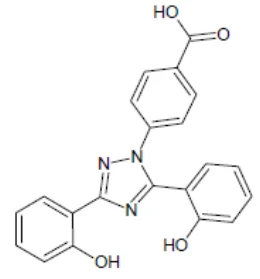
Common name: Deferasirox
Chemical name: 4-[3,5-Bis(2-hydroxyphenyl)-1H-1,2,4-triazol-1-yl]benzoic acid
Molecular formula: C21H15N3O4
Molecular mass: 373.36 g/mol
Structural formula:
Physicochemical properties: A white to almost white powder.
Solubility at 37ºC: 0.0009 mg/mL at pH 1.2 0.0021 mg/mL at pH 3.5 0.0011 mg/mL at pH 4.5 0.0688 mg/mL at pH 6.8 0.2943 mg/mL at pH 7.5
Melting Point: 263.7 °C
CLINICAL TRIALS
Comparative Biostudy
Randomized, blinded, single-dose, 2-way crossover comparative bioavailability study of 1 x 500 mg Teva-Deferasirox dispersible tablets (Teva Canada Limited.) and 1 x 500mg Exjade®
(deferasirox) dispersible tablets (Novartis Pharmaceuticals Canada Inc.) was conducted in 27 adult male and female healthy volunteers under fasting conditions. Summaries of the results for Deferasirox are presented in the following table:
| Deferasirox | |||||||||||||||
| ( 1 x 500 mg) | |||||||||||||||
| From measured data | |||||||||||||||
| Geometric Mean | |||||||||||||||
| Arithmetic Mean (CV %) | |||||||||||||||
| Parameter | Test* | Reference † | % Ratio of | 90% Confidence Interval | |||||||||||
| Geometric Means | |||||||||||||||
| AUC0-t | 147941.20 | 131604.06 | 111.79 | 106.15% to 117.73% | |||||||||||
| (ng•h/mL) | 154363.37 (30.64) | 139894.63 (36.95) | |||||||||||||
| AUC0-inf | 154811.04 | 137586.08 | 111.98 | 105.53% to 118.82% | |||||||||||
| (ng•h/mL) | 161898.12 (31.37) | 147587.45 (39.80) | |||||||||||||
| Cmax | 14550.64 | 11721.24 | 124.13 | 114.83% to 134.19% | |||||||||||
| (ng/mL) | 15163.47 (28.83) | 12177.58 (27.69) | |||||||||||||
| Tmax§ | 2.91 (33.74) | 3.33 (35.79) | |||||||||||||
| (h) | |||||||||||||||
| T½ el§ | 16.03 (40.14) | 15.90 (49.93) | |||||||||||||
| (h) | |||||||||||||||
* Teva-Deferasirox 500 mg dispersible tablets (Teva Canada Limited)
† Exjade® 500 mg dispersible tablets (Novartis Pharmaceuticals Canada Inc.) were purchased in Canada. § Expressed as the arithmetic mean (CV%)
Study demographics and trial design
Study 0107, was a 1-year, multi-centre, open-label, randomized, Phase III, active comparator control study to compare deferasirox and deferoxamine in patients with β- thalassemia and transfusional hemosiderosis. Patients ≥2 years of age were randomized in a 1:1 ratio to receive either oral deferasirox at starting doses of 5, 10, 20 or 30 mg/kg once daily or subcutaneous DESFERAL*®1 (deferoxamine) at starting doses of 20 to 60 mg/kg for at least 5 days per week based on LIC (liver iron concentration) at baseline (2 to 3, >3 to 7, >7 to 14 and >14 mg Fe/g dry weight (dw)). Patients randomized to deferoxamine who had LIC values <7 mg Fe/g dw were permitted to continue on their prior deferoxamine dose, even though the dose may have been higher than specified in the protocol. Consequently, the ratio of deferasirox to deferoxamine doses
1 PrDESFERAL* is a registered trademark
for the two lower LIC categories was disproportionately low (1:4) compared to the two upper LIC categories (1:2). A total of 586 patients were randomized and treated (including 154 patients <16 years of age and received either deferasirox (296 patients) or deferoxamine (290 patients). There were no major differences in the baseline demographic characteristics between the groups. In both groups more than 97% of patients had received prior chelation therapy. Approximately two-thirds of each group was heavily iron overloaded as evidenced by an LIC value > 7 mg Fe/g dw at baseline.
Study 0108 was an open-label, non-comparative, phase II trial of efficacy and safety of deferasirox given for 1 year to patients with chronic anemias and transfusional hemosiderosis unable to be treated with deferoxamine. Similar to Study 0107, patients received 5, 10, 20, or 30 mg/kg per day of deferasirox based on baseline LIC. A total of 184 patients (adult and pediatric) were treated in this study: 85 patients with β-thalassemia and 99 patients with other congenital or acquired anemias (myelodysplastic syndromes, n=47; Diamond-Blackfan syndrome, n=30; other, n=22). Nineteen percent (N=35) of patients were <16 years of age (11 patients were ≥ 2 - < 6 years, 11 patients were 6 - < 12 years, and 13 patients were 12 - < 16 years) and 16% (N=30) of patients were ≥ 65 years of age. Thirty-seven patients had not received prior chelation therapy.
Study 0109 was a 1-year, open-label, randomized, Phase II, active comparator control study to compare deferasirox and deferoxamine in patients with sickle cell disease and transfusional hemosiderosis. As in Study 0107, patients received 5, 10, 20, or 30, mg/kg per day of deferasirox or subcutaneous deferoxamine at doses of 20 to 60 mg/kg for 5 days per week based on baseline LIC. The primary objective of this study was safety and tolerability of deferasirox in this patient population. The population examined in study 0109 was adult and pediatric patients with sickle cell disease and chronic iron overload from repeated blood transfusions.
This population included individuals receiving intermittent or regular transfusions. A total of 195 patients were randomized to receive either deferasirox (132 patients) or deferoxamine (63 patients) with the following distribution by age group: 7 patients were 2-< 6 years; 45 patients were 6 - < 12 years; 46 patients were 12 - <16 years; 96 patients were ≥ 16 years. There were no major differences in the patient populations randomized to receive either deferasirox or deferoxamine with regard to baseline demographics and disease characteristics. In both groups about 60% of patients had received prior chelation therapy. A somewhat higher percentage of deferasirox patients were heavily iron overloaded (LIC value > 7 mg Fe/g dw) at baseline when compared with deferoxamine (deferasirox 64%; deferoxamine 49%).
Relevant demographic characteristics for these studies are shown in Table 7 and Table 8.
Table 7: Summary of patient demographics for clinical trials in chronic iron overload
| Study # | Trial design | Dosage, route of administration and duration | Study patients (n=number) | Mean age ± SD (Range) | Gender M/F |
| 0107 | open-label, randomized, Phase III, active comparator control study | Deferasirox by baseline LIC: 5, 10, 20, or 30 mg/kg DFO by baseline LIC‡: 20-30, 25-35, 35-50, >50 mg/kg Duration: 52 weeks | Deferasirox =296 DFO =290 | 17.2 ± 9.71 (2-53) | 282 (48.1%) / 304 (51.9%) |
| 0108 | open-label, non- comparative, phase II trial of efficacy and safety | Deferasirox by baseline LIC: 5, 10, 20, or 30 mg/kg Duration: 52 weeks | Deferasirox =184 | 35.0 ± 22.4 (3-81) | 93 (50.5%) / 91 (49.5%) |
| 0109 | open-label, randomized, Phase II, active comparator control study | Deferasirox by baseline LIC: 5, 10, 20, or 30 mg/kg DFO by baseline LIC: 20-30, 25-35, 35-50, >50 mg/kg Duration: 52 weeks (ongoing) | Deferasirox =132 DFO =63 | 19.2 ± 10.9 (3-54) | 80 (41.0%) / 115 (59.0%) |
| ‡LIC: liver iron concentration SD: standard deviation DFO: deferoxamine | |||||
Table 8: Number and % of patients treated with Deferasirox by study (n=652)
| Deferasirox patients | Study 106 N = 40 | Study 107 N = 296 | Study 108 N = 184 | Study 109 N = 132 | All patients N = 652 |
| Patients < 16 years | 36 (90%) | 154 (52%) | 35 (19%) | 67 (51%) | 292 (45%) |
| Age group | |||||
| ≥ 2 - < 6 years | 7 (17.5%) | 30 (10.1%) | 11 (6.0%) | 4 (3.0%) | 52 (8.0%) |
| 6 - < 12 years | 13 (32.5%) | 67 (22.6%) | 11 (6.0%) | 30 (22.7%) | 121 (18.6%) |
| 12 - < 16 years | 16 (40.0%) | 57 (19.3%) | 13 (7.1%) | 33 (25.0%) | 119 (18.3%) |
| 16 - < 50 years | 4 (10.0%) | 142 (48.0%) | 99 (53.8%) | 63 (47.7%) | 308 (47.2%) |
| 50 - < 65 years | 0 | 0 | 20 (10.9%) | 2 (1.5%) | 22 (3.4%) |
| ≥ 65 years | 0 | 0 | 30 (16.3%) | 0 | 30 (4.6%) |
Study results
In the primary efficacy study 0107, treatment duration was 12 months. LIC, an accepted indicator of total body iron burden, was assessed at baseline and after 12 months of therapy by liver biopsy or non-invasively by biomagnetic susceptometry. Success rate, the primary efficacy endpoint, was defined as a reduction in LIC of ≥ 3 mg Fe/g dw for baseline values ≥ 10 mg Fe/g dw, reduction of baseline values between 7 and < 10 to < 7 mg Fe/g dw, or maintenance or reduction for baseline values <7 mg Fe/g dw. Deferasirox was to be declared non-inferior to deferoxamine if the lower limit of the 95% confidence interval (two-sided) of the difference in success rates was above -15%.
Table 9: Success rates for study 0107 (reduction or maintenance of LIC according to baseline and non-inferiority to deferoxamine)
| Deferasirox | DFO | |
Biopsy & SQUID Success rate (n (%)) 95% CI | n=276 146 (52.9) [47.0, 58.8] | n=277 184 (66.4) [60.9, 72.0] |
| Difference and 95% CI | -13.5 [-21.6, -5.4] | |
| LIC < 7 mg Fe/g dw Success rate (n (%)) 95% CI | n=85 34 (40.0) [29.6, 50.4] | n=87 72 (82.8) [74.8, 90.7] |
| Difference [95% CI] | -42.8 [-55.9, -29.7] | |
| LIC ≥ 7 mg Fe/g dw Success rate (n (%)) 95% CI | n=191 112 (58.6) [51.7, 65.6] | n=190 112 (58.9) [52.0, 65.9] |
| Difference [95% CI] | -0.3 [-10.2, 9.6] | |
DFO: deferoxamine
The primary efficacy population consisted of 553 patients (deferasirox n=276; deferoxamine n=277) who had LIC evaluated at baseline and 12 months or discontinued due to an AE. Of these 553 patients, 56 patients were < 6 years; 130 patients were 6 - < 12 years; 106 patients were 12 <16 years; 261 patients were ≥ 16 years and <65 years. The overall success rates were 52.9% for Deferasirox and 66.4% for deferoxamine with a difference of -13.5 in success rates and a 95% CI of [-21.6, -5.4]. Non-inferiority to deferoxamine was not achieved because the lower limit of the CI was below -15%. However, non-inferiority was demonstrated in a group of patients with baseline LIC levels ≥ 7 mg Fe/g dw who were allocated to the higher dose groups (deferasirox doses of 20 or 30 mg/kg and deferoxamine doses of ≥ 35 mg/kg. The success rates with deferasirox and deferoxamine were 58.6% and 58.9%, respectively, and the lower limit of the 95% CI (-10.2%) was above the enon-inferiority threshold of -15% (see Table 9).
In patients with LIC ≥ 7 mg Fe/g dw who were treated with deferasirox 20 to 30 mg/kg per day a statistically significant reduction in LIC from baseline was observed (-5.3 ± 8.0 mg Fe/g dw, p<0.001, t-test) which was not statistically significantly different from deferoxamine (-4.3 ± 5.8 mg Fe/g dw, p = 0.367).
Table 10: Ratio of iron excretion/iron intake and change in serum ferritin levels from baseline to 1 year of treatment in the primary efficacy study 0107
Protocol Recommended Dose (mg/kg/day) | Mean actual prescribed dose (mg/kg/day) | Ratio of iron excretion/iron intake | Serum ferritin levels (μg/L) Mean change from baseline ± SD | ||||
| Defera-sirox | Deferox-amine | Defera-sirox | Deferox-amine | Deferasirox Mean ± SD (n) | Deferoxamine Mean ± SD (n) | Deferasirox Mean ± SD (n) | Deferoxamine Mean ± SD (n) |
| 5 | 20-30 | 6.2 ± 1.6 | 33.9 ± 9.9 | 0.58 ± 0.328 (15) | 0.95 ± 0.101 (13) | +1189± 700 (15) | +211 ± 459 (13) |
| 10 | 25-35 | 10.2 ± 1.2 | 36.7 ± 9.2 | 0.67 ± 0.365 (68) | 0.98 ± 0.217 (75) | +833 ± 817 (73) | +32 ± 585 (77) |
| 20 | 35-50 | 19.4 ± 1.7 | 42.4 ± 6.6 | 1.02 ± 0.398 (77) | 1.13 ± 0.241 (87) | -36 ± 721 (80) | -364 ± 614 (89) |
| 30 | ≥50 | 28.2 ± 3.5 | 51.6 ± 5.8 | 1.67 ± 0.716 (108) | 1.44 ± 0.596 (98) | -926 ± 1416 (115) | -1003 ± 1428 (101) |
| SD: standard deviation | |||||||
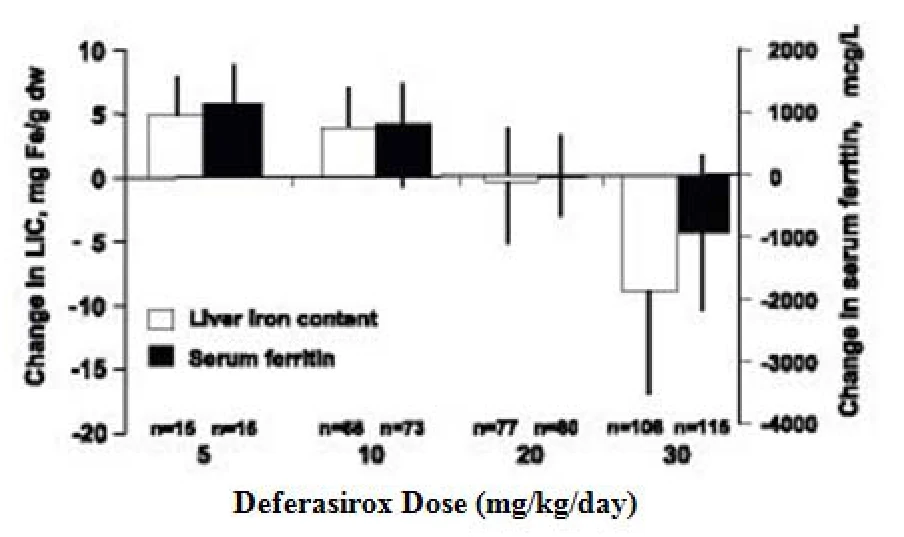
Reduction of LIC and serum ferritin were observed with deferasirox doses of 20 to 30 mg/kg. Deferasirox doses below 20 mg/kg/day failed to provide consistent lowering of LIC and serum ferritin levels (Figure 1). Therefore, a starting dose of 20 mg/kg/day is recommended (see DOSAGE AND ADMINISTRATION).
Figure 1. Changes in Liver Iron Concentration and Serum Ferritin Following
Deferasirox (5 to 30 mg/kg per day) in Study 107
The results of the primary efficacy study are supported by the second major efficacy study, study 0108. The primary endpoint was to demonstrate a success rate significantly greater than 50% with deferasirox. In the total population, the success rate (50.5%) was not statistically significantly higher than 50%. However, in patients with LIC ≥ 7 mg Fe/g dw for whom both baseline and end of study LIC was available and who received deferasirox 20 to 30 mg/kg per day, the success rate was 58.5% [p=0.022 (50.3, 66.6)] and there was a statistically significant reduction in the absolute LIC from baseline to end of study (-5.5 ± 7.4 mg Fe/g dw, p < 0.001, t-test). There was also a dose dependent effect on serum ferritin and the ratio of iron excretion to iron intake from doses of 5 to 30 mg/kg per day.
The primary objective of study 0109 was safety and tolerability (see ADVERSE REACTIONS). A total of 132 patients were treated with deferasirox and 63 patients with deferoxamine. At the time of the 6-month interim analysis, dose-dependent increases in the ratio of iron excretion to iron intake from doses of 5 to 30 mg/kg per day of deferasirox were observed. At the end of the study, the mean change in LIC in the per protocol-1 (PP-1) population, which consisted of patients who had at least one post-baseline LIC assessment, was -1.3 mg Fe/g dry weight for patients receiving deferasirox (n=113) and -0.7 mg Fe/g dry weight for patients receiving deferoxamine (n=54).
In an analysis of 192 beta-thalassemia patients dose escalated up to a maximum dose of 40 mg/kg/day (treated for up to 32 weeks), a further decrease in serum ferritin of 11.9% was observed (from the start of dosing >30 mg/kg/day). This was based on a pooled analysis of patients who were exposed to doses greater than 30 mg/kg/day in the key registration trials and their ongoing long-term extensions (Studies 0107/E, 0108/E, and 0109/E), and in another large clinical trial and its ongoing long-term extension (2402/E).
A cardiac sub-study was conducted as part of a Phase IV study. The cardiac sub-study was a one year, prospective, open-label, single-arm study which included two cohorts of severely iron overloaded ß-thalassemia patients with LVEF values ≥56%: 114 patients with baseline T2* values >5 to <20 ms indicating myocardial siderosis (treatment cohort) and 78 patients with myocardial T2* ≥20 ms indicating no clinically significant cardiac iron deposition (prevention cohort). In the treatment cohort, the deferasirox starting dose was 30 mg/kg/day, with escalation to a maximum of 40 mg/kg/day. In the prevention cohort, the deferasirox starting dose was 20-30 mg/kg/day, with escalation to a maximum of 40 mg/kg/day. The primary endpoint of the cardiac sub-study was the change in T2* at one year. In the treatment cohort, T2* (geometric mean ± coefficient of variation) significantly increased from a baseline value of 11.2 ms ± 40.5% to 12.9 ms ± 49.5%, representing a significant improvement of 16% (p <0.0001). In the treatment cohort, improvement in T2* was observed in 69.5% of patients and stabilization of T2* in 14.3% of patients. LVEF remained stable and within the normal range: 67.4 ± 5.7% to 67.1 ± 6.0%. In the prevention cohort, myocardial T2* remained within the normal range and was unchanged from a baseline value of 32.0 ms ± 25.6% to 32.5 ms ± 25.1% (+2%; p = 0.565) indicating that daily treatment with deferasirox can prevent cardiac iron loading in ß-thalassemia patients with a history of high transfusion exposure, and regular, ongoing transfusions.
Patients in the treatment cohort of the 1-year core study had the option to participate in two 1 year extensions. Over a three-year treatment duration period, there was a statistically significant (p<0.0001), progressive improvement in the geometric mean of cardiac T2* from baseline overall, in the severe cardiac iron overload sub-group, which is associated with a high risk of cardiac failure (T2* >5 to <10 ms), and in the mild to moderate cardiac iron overload sub-group (T2* 10 to <20 ms) (Table 11). Using the geometric mean ratio, the T2* increase was 43% above baseline in all patients, 37% increase from baseline in the T2* >5 to <10 ms sub-group, and 46% increase from baseline in the T2* 10 to <20 ms sub-group. Continuous treatment with deferasirox for up to 3 years at doses >30 mg/kg/day effectively reduced cardiac iron in thalassemia major patients with myocardial siderosis as shown by the number of patients who normalized their T2* or improved to a category associated with a lower risk of cardiac failure (Table 12).
Table 11: Geometric mean of T2* (ms) at baseline, and at the end of year 1, 2, and 3
| Baseline cardiac T2* | Baseline | End of core | End of E1 | End of E2 | ||||||||||||
| sub-group | (year 0) | (year 1) | (year 2) | (year 3) | ||||||||||||
| Overall | 11.20 (n=105) | 12.9(n=105) | 14.79 (n=95) | 17.12 (n=68) | ||||||||||||
| (p<0.0001) | (p<0.0001) | (p<0.0001) | ||||||||||||||
| T2* >5 to <10 ms | 7.39 (n=41) | 8.15 (n=41) | 8.71 (n=35) | 10.53 (n=24) | ||||||||||||
| T2* 10 to <20 ms | 14.62 (n=64) | 17.39 (n=64) | 20.13 (n=60) | 22.32 (n=44) | ||||||||||||
E1 = end of first year extension
E2 = end of second year extension
Table 12: Transition table of cardiac T2* from core baseline to end of E2 (year 3)
Baseline cardiac T2* sub-group | Baseline n (%) | <5 ms n (%) | 5 - <10 ms n (%) | 10 - <20 ms n (%) | ≥20 ms n (%) | Missing n (%) |
>5 - <10 ms (N=39) | 39 (100.0) | 1 (2.6) | 18 (46.2) | 15 (38.5) | 1 (2.6) | 4 (10.3) |
10 - <20 ms (N=62) | 62 (100.0) | 4 (6.5) | 16 (25.8) | 40 (64.5) | 2 (3.2) | |
All patients (N=101) | 101 (100.0) | 1 (1.0) | 22 (21.8) | 31 (30.7) | 41 (40.6) | 6 (5.9) |
A randomized, double-blind, placebo-controlled study to compare deferasirox and placebo was conducted in patients with non-transfusion-dependent thalassemia syndromes and iron overload. Patients ≥10 years of age were enrolled in the study in a 2:1:2:1 randomization to receive either deferasirox 5 mg/kg/day or deferasirox 10 mg/kg/day or matching placebo.
Transfusion independency of the patients was confirmed by the fact that blood transfusions 6 months prior to study start were not allowed and patients were excluded if a regular transfusion program was anticipated during the study. Iron overload was diagnosed by a serum ferritin >300 microgram/L at screening (two consecutive values at least 14 days apart from each other) and LIC ≥5 mg Fe/g dw measured by R2 MRI at screening. All patients with non-transfusion-dependent thalassemia syndromes were allowed with the exception of patients with HbS-variants or those whose clinical condition allowed phlebotomy.
In total, 166 patients were randomized. Demographics were well balanced. The main underlying disease was beta-thalassemia intermedia in 95 (57.2%) patients and HbE beta-thalassemia in 49 (29.5%) patients. The primary efficacy endpoint of change in liver iron concentration (LIC) from baseline to Week 52 was statistically significant in favor of both deferasirox treatment groups compared with placebo (Table 13). Furthermore, a statistically significant dose effect of deferasirox was observed in favor of the 10 mg/kg/day dose.
Table 13: Primary efficacy analysis – Analysis of covariance of absolute change in liver iron concentration (mg Fe/g dw) between baseline and Week 52 (Full Analysis Set)
Deferasirox 5 mg/kg/day (N=55) | Deferasirox 10 mg/kg/day (N=55) | Placebo (N=56) | |
| Change from baseline | |||
| Number of evaluable patients | 51 | 54 | 54 |
| Least squares mean | -1.95 | -3.80 | 0.38 |
| Standard error | 0.500 | 0.484 | 0.486 |
| 95% confidence interval | -2.94, -0.96 | -4.76, -2.85 | -0.59, 1.34 |
| Difference of deferasirox - Placebo | |||
| Least squares mean | -2.33 | -4.18 | - |
| Standard error | 0.700 | 0.687 | - |
| 95% confidence interval (1) | -3.89, -0.76 | -5.71, -2.64 | - |
| p-value (2) | 0.001 | <.001 | - |
| Difference of deferasirox 10 mg/kg - deferasirox 5 mg/kg | |||
| Least squares mean | - | -1.85 | - |
| Standard error | - | 0.695 | - |
| 95% confidence interval | - | -3.22, -0.48 | - |
| p-value (3) | - | 0.009 | - |
Estimates were obtained from an ANCOVA model for change in LIC between baseline and Week 52 with treatment as factor and baseline LIC as covariate. (1) two-sided simultaneous confidence intervals using Dunnett’s adjustment (2) one-sided p-value with Dunnett's adjustment testing the hypothesis that the mean decrease in LIC is not greater under deferasirox than under placebo. Critical alpha-level: 0.025 (3) two-sided p-value testing the hypothesis that the change in LIC is identical in the two deferasirox groups. Critical alpha-level: 0.05 The last available post-baseline LIC was carried forward if no LIC value was available at Week 52. Only patients with both baseline and at least one post-baseline LIC value were included for this analysis. | |||
The primary efficacy result was supported by additional analyses which showed a clear dose-response effect; this was reflected by a greater percentage of patients with an LIC decrease of ≥3 mg Fe/g dw in the 10 mg/kg/day deferasirox group compared to the 5 mg/kg/day deferasirox group (56.4% versus 32.7%, respectively). In addition, a reduction of ≥30% in LIC between baseline and Week 52 was reported in approximately twice as many patients in the 10 mg/kg/day deferasirox group (49.15%) compared to the 5 mg/kg/day deferasirox group (25.5%). After one year of treatment, 27.3% of patients in the 10 mg/kg/day deferasirox group and 14.5% of patients in the 5 mg/kg/day deferasirox group achieved an LIC of < 5mg Fe/g dw.
In the deferasirox treated groups, three pregnancies were reported among 45 female patients of child-bearing potential; one of these occurred despite concomitant oral contraceptive use. TEVA-
DEFERASIROX may decrease the efficacy of hormonal contraceptives (see DRUG INTERACTIONS).
DETAILED PHARMACOLOGY
Pharmacology
TEVA-DEFERASIROX (deferasirox) is an orally active iron chelating agent. The core structure of deferasirox is an N-substituted bis-hydroxyphenyl-triazole, representative of a new class of tridentate and iron selective chelators. In this structure, potent iron-coordinating atoms are arranged in a geometry optimal for the formation of tridentate complexes.
Pharmacodynamics
In vitro
Affinity and selectivity of deferasirox for iron were assessed by potentiometric measurements, spectrophotometric titrations and cyclic voltammetry. Deferasirox has a high affinity for iron(III) with an overall affinity constant for the 1:2 complex (one Fe atom and two deferasirox molecules) in aqueous solution of 36.9 (logβ2). Conversely, the affinity for iron(II) with a logβ2 of 14.0 is low.
In a cell culture system using iron-loaded rat heart myocytes, deferasirox and deferoxamine showed similar potencies to remove iron at concentrations up to 80 μmol/L, which is a concentration that was achieved in human plasma following administration of efficacious doses.
In vivo
The potent and specific ability of deferasirox to mobilize tissue iron and to promote its excretion has been demonstrated in several animal studies. In the non iron-loaded, bile duct-cannulated rat, single oral doses of 25, 50 and 100 mg/kg deferasirox showed a rapid response within the first three hours after administration of the compound. A protracted action of biliary iron excretion was noted, extending beyond 24 hours for the high doses of 50 and 100 mg/kg. Furthermore, iron excretion was dose dependent. The efficiency of iron excretion, defined as the amount of iron excreted as a percentage of the theoretical iron binding capacity of the dose, was higher than previously tested compounds (deferoxamine s.c. 2-4% and oral L1 2%), and amounted to 18.3% for the 25 mg/kg dose, which showed the highest effect.
In iron-overloaded marmosets receiving 14, 28, 56 or 112 mg/kg deferasirox, significantly higher fecal iron was measured for the doses of 56 and 112 mg/kg even two days after administration of deferasirox, corroborating the prolonged action found in rats. In addition, a dose dependent increase of iron excretion and superior efficacy of deferasirox compared to other chelators was found. With both animal models the bulk of the iron was excreted into bile (rat) or feces (marmoset) with less than 15% of the total iron found in urine, indicating that the iron complex is mainly cleared by the liver.
Radioactive iron given intravenously as deferasirox -iron complex was excreted in feces By inference, this suggests that iron complexes formed with deferasirox in the blood are also cleared by the liver.
Chronic administration of deferasirox to rats and marmosets demonstrated effective removal of iron from the liver, the main storage organ for iron. Conversely, in marmosets, deferasirox did not reduce liver zinc or liver copper levels. Likewise, zinc and copper levels in kidney were not found to be negatively affected, whereas kidney iron levels were reduced by approximately 40% in males and 30% in females at the highest dose of 80 mg/kg tested.
Safety Pharmacology
In the course of its safety evaluation, it could be shown in rat that deferasirox does not promote the uptake of dietary iron. A wide range of safety pharmacology studies has been conducted to assess the effects of deferasirox on behavior, cardiovascular, renal, and respiratory systems.
In mice, deferasirox effects on CNS function included ataxia (≥ 100 mg/kg), slight head tremors (1000 mg/kg), and effects on step-through passive avoidance. In vitro receptor-binding assays showed that deferasirox at 10 μmol/L only interacted weakly with kainate receptors and the channel site of NMDA receptors.
Renal evaluations in the rat after single doses up to 1000 mg/kg revealed no effects on the excretion of Cl¯, Na+ and K+ and urine volume. Intraduodenal administration of deferasirox at doses up to 1000 mg/kg to anesthetized rats demonstrated no effect on respiratory rate, tidal volume or minute volume. A variety of in vitro and in vivo studies were conducted to explore possible cardiovascular effects of deferasirox.
The data from the in vitro studies with isolated atria, heart or Purkinje fibers demonstrated no consistent pattern of changes. In an in vivo dog telemetry study, deferasirox demonstrated an increase in mean heart rate only at an exposure (Cmax) of 734 μmol/L. No ECG changes were observed in marmoset toxicity studies after 4 weeks (130 mg/kg; Cmax of 127-135 μmol/L) or 39 weeks (80 mg/kg; Cmax of 64-81 μmol/L). Neither the hERG assay nor the dog study showed any evidence for QTc prolongation potential.
Pharmacokinetics
Pharmacokinetics and disposition of 14C-labeled and non-radiolabeled deferasirox, its metabolites, and the respective iron complex Fe-[deferasirox]2 were investigated comprehensively in mice, rats, dogs and marmosets, including in humans. The fate of deferasirox appears similar in all species including human, with minor differences.
The extent of oral absorption and bioavailability of deferasirox was investigated after intravenous and oral administration of 14C-labeled deferasirox in mice, rats and marmosets and with non-radiolabeled deferasirox in dogs (see Table 14).
Table 14: Pharmacokinetic parameters of total deferasirox
| Human | Marmoset | Rat b, f | |
| Single oral dose (mg/kg) | ~ 20 a | 25 | 10 |
| AUC (μmol·h/L)/(mg/kg) c | 35.5 | 8.72 h | 2.71 h |
| Cmax (μmol/L)/(mg/kg) c | 1.53 | 1.85 | 0.76 |
| tmax (h) | 4-6 | 0.5 | 0.5 |
| Bioavailability (% of dose) | 73 ± 20 d | 88 b | 32 b |
| deferasirox(% of 14C-AUC) | 91 | 25 | 67 |
| t½α of deferasirox (h) | 11 ± 5 | 0.7 (t½α35) e, f | 0.8 |
| Human d | Marmoset | Rat b, f | |
| Intravenous dose (mg/kg) | 1.65 | 10 | 10 |
| AUC (μmol·h /L)/(mg/kg) c | 63.4 | 9.96 b, k | 8.45 j |
| Vss (L/kg) | 0.18 | 8.1 e, f | 0.64 |
| Clearance CL (mL/min/kg) | 0.74 | 3.2 f | 5.6 |
| Hepatic extraction ratio EH (%) g | 8 | 12 | 23 |
| t½α of deferasirox(h) | 4.1 ± 1.5 | 0.5 (t½z 51) e, f | 0.7 |
a: an oral dose of 1000 mg 14C-labeled deferasirox was given as a drink suspension in water to thalassemia patients at steady-state (daily 1000 mg non-radiolabeled deferasirox) b: calculations based on: deferasirox total = deferasirox free + Fe-[ deferasirox]2 c: multiply μmol/L or μmol·h/L with 373.37 to obtain μg/L or μg·h/L, respectively d: healthy volunteers, 130 mg, 90 min i.v. infusion versus 375 mg, p.o. e: value very high, probably due to substantial contribution by enterohepatic recirculation evident in the terminal elimination phase after 8 h f: parameter calculated by the author g: EH= CL/hepatic plasma flow, where hepatic plasma flow = hepatic blood flow . hematocrit (HCT ~0.45) h: AUC0-72h i: AUC0-24h j: AUC0.083-24h k: AUC0.083-72h | |||
Using specific and sensitive analytical methods, deferasirox, metabolites and iron complex Fe-[ deferasirox]2 were quantified in various biological matrices. Orally administered deferasirox is well and rapidly absorbed in all species investigated including man. Oral bioavailability is substantial if not complete, with dose over-proportional increase in rodents and female rabbits, probably due to saturation of elimination processes. In marmosets and humans the systemic exposure to deferasirox increased proportionally to the dose. No unexpected accumulation and no significant gender differences were observed in the pharmacokinetics. Deferasirox is the major active circulating moiety in the animal species and human, and is considered to contribute most to the overall iron elimination in vivo. Two hydroxy metabolites of deferasirox (M1 and M2), which were found to be able to form iron complexes in vitro are considered to contribute negligibly to the overall iron excretion capacity of deferasirox.
Deferasirox in the blood was mainly confined to the plasma compartment of human and dog (≥ 90%), and to a lesser extent in the rabbit, marmoset, rat and mouse. For the deferasirox iron complex, almost no uptake to blood cells was observed. Deferasirox and its iron complex were extensively (98%-99%) bound to plasma proteins and primarily to human serum albumin for all species including human.
Deferasirox shows a distribution pattern typical for a compound with a low volume of distribution: deferasirox was distributed throughout the body, but was mainly present intravascularly. Substantial levels were found in organs of the gastrointestinal tract and excretory organs. Deferasirox and/or its metabolites passed the blood-brain barrier to a very low extent only. The placental barrier was passed to a very low extent only. Deferasirox was enriched in the milk building up a milk-to-plasma ratio of up to 20. Suckling juvenile rats were distinctly exposed to deferasirox. The tissue distribution pattern in juvenile animals was qualitatively similar to that in mother animals. No notable retention was observed in any tissue or organ of the albino and pigmented rat.
Metabolism of deferasirox includes mainly glucuronidation (animals and human), and to a lesser extent cytochrome P450-catalysed hydroxylation, in human mainly by CYP1A1, CYP1A2 and CYP2D6. Direct glucuronidation of deferasirox to the acyl-glucuronide (M3) occurred predominantly by UGT1A1 and UGT1A3. Drug-drug interactions by deferasirox based on UGT isoenzymes are in principle possible when a second co-administered drug is metabolized solely or mainly by UGT1A1 or UGT1A3. Any inhibition or induction of the cytochrome P450 enzymes by co-medications is not expected to significantly affect the pharmacokinetics of deferasirox. The potential for drug-drug interactions between deferasirox and comedications via cytochrome P450 enzymes, and via hepatic anion transport appears low. Based on the available data on the pharmacokinetic and disposition of deferasirox in animals and man, deferasirox appears to have a very low potential for induction of drug metabolizing enzymes in the liver.
Elimination of deferasirox and metabolites is rapid and complete. The elimination of the iron complex of deferasirox could not be determined in bile and/or feces due to its inherent instability in these matrices. Key elimination processes are hepatic metabolism and hepatobiliary elimination. Biliary elimination could be studied in rats only, but the findings are assumed to apply to higher animal species and humans as well. Hepatobiliary elimination may occur to some extent by first pass. There is evidence for enterohepatic recirculation of deferasirox and it metabolites. Enterohepatic recirculation can be ascribed to hepatobiliary elimination and intestinal hydrolysis of glucuronides to deferasirox. Deferasirox, its metabolites and the iron complex are anions, and seem to be eliminated largely via bile by hepatic canalicular anion transport (as shown in data from mrp2-deficient (TR-) rats). Active transporters expressed at the canalicular membranes of the hepatocytes e.g. MRP2, MXR (also called BCRP) may be involved in the elimination of deferasirox, its iron complex and its metabolites.
TOXICOLOGY
Acute Toxicity Studies
Single oral doses of deferasirox at 1000 mg/kg in mice and ≥500 mg/kg in rats resulted in mortality/morbidity. Single intravenous doses of deferasirox in mice resulted in mortality at 150 mg/kg. No mortality was observed in rats at the highest intravenous dose tested, 75 mg/kg.
Subacute Toxicity Studies
Mortality was observed at doses ≥ 200 mg/kg and at 100 mg/kg in the 2-week and 4-week rat study, respectively. Decreased tissue iron and changes in hematological parameters characteristic of a potent iron chelator were evident. Histopathologic findings of renal cortical tubular cytoplasmic vacuolation and gastrointestinal tract were common to both studies. Decreased hematopoiesis in the spleen, and splenic lymphoid depletion was observed after two weeks of administration. All effects were reversible following a nondosing phase. In a rat exploratory studies in which rats were iron overloaded or received diet supplemented with iron or findings were limited to pharmacological effects on tissue/serum iron levels.
In 2 and 4-week studies in marmosets, decreased tissue iron levels was observed at all doses of deferasirox. Effects on hematopoiesis were evident at 400 mg/kg after 2-weeks of administration and at 130 mg/kg after 4-weeks of treatment. vacuolar degeneration of the renal cortical tubules at doses ≥ 200 mg/kg and at 130 mg/kg in the 2-week and 4-week study, respectively. Vacuolation of intrahepatic bile duct cells and marked inflammation of gall bladder epithelium with fibrosis of the gall bladder wall and vacuolar hyperplasia of the epithelium was noted in a single animal at 130 mg/kg after 4 weeks treatment. All effects were reversible following a nondosing phase. In a two week exploratory study in marmosets preloaded with iron, no deferasirox related effects were observed. Dietary iron supplementation of marmosets did not reduce deferasirox effects.
Long Term Toxicity Studies
In a 26-week oral study in rats (with dietary iron supplementation) at doses of 0, 30, 80 or 180 mg/kg, mortality was observed at 180 mg/kg. Cataracts, characterized by lenticular degeneration and fragmentation, vacuole formation and/or lenticular epithelial hyperplasia were present at doses ≥ 80 mg/kg. Early lenticular changes were observed at 30 mg/kg. Cytoplasmic vacuolation of renal cortical tubular epithelium and splenic hematopoiesis occurred at 180 mg/kg. Ulceration/erosion of the glandular stomach was observed at ≥ 80 mg/kg. With the exception of the lenticular cataracts, all effects were reversible following a nondosing phase.
Oral administration of deferasirox to marmosets for 39 weeks at doses of 0, 20, 40 or 80 mg/kg resulted in mortality at 80 mg/kg. Histopathology findings at 80 mg/kg consisted of vacuolation of the hepatic bile duct cells; vacuolation and/or degeneration of the renal cortical tubules and dilatation of medullary tubules.
Fertility
Deferasirox at oral doses up to 75 mg/kg/day (which resulted in a drug exposure (plasma AUC) that was less than the maximum human value) was found to have no adverse effect on fertility and reproductive performance of male and female rats.
Reproduction and Teratology
Deferasirox was not teratogenic in rats or rabbits treated with doses up to and exceeding the maximum tolerated doses. Increased skeletal variations were seen in rats at a maternotoxic dose of 100 mg/kg/day, which achieved a drug exposure (plasma AUC) that was similar to the maximum human value. No adverse effect on fetal development was observed in rabbits at a maternotoxic dose of 50 mg/kg/day, which achieved a drug exposure about 30% of the maximum human value.
In a rat study designed to evaluate for effects on pre- and post-natal development, rats were treated at doses up to 90 mg/kg/day, a dose lethal to maternal animals, from early gestation to end of lactation. This treatment resulted in an increase in the number of stillborn pups and reduced pup birth weight.
Mutagenicity
Deferasirox was negative in the Ames test and an in vitro chromosome aberration assay with human peripheral blood lymphocytes. Positive responses were observed in an in vitro (V79) micronucleus screening test and in a rat in vivo bone marrow micronucleus assay, which may have been a result of altered hematopoiesis due to iron chelation. No response was observed in another rat in vivo micronucleus assay (liver) with doses up to 250 mg/kg.
Carcinogenicity
Deferasirox was not carcinogenic in a 104-week study in Wistar rats or in a 26-week study in transgenic p53+/- heterozygous mice that were maintained on an iron-supplemented diet.
In the rat carcinogenicity study, rats were administered deferasirox daily for 2 years at doses up to 60 mg/kg resulting in plasma exposure that were 28 to 39% of human exposure at 20 mg/kg based on plasma AUC0-24hr.
In the mouse oral carcinogenicity study, transgenic p53+/- heterozygous mice were treated daily for 26 weeks at doses up to 200 mg/kg in males and 300 mg/kg in females, which resulted in plasma exposures that were 122% and 210% of human exposure at 20 mg/kg, respectively, based on plasma AUC0-24hr.
104-week rat carcinogenicity study
No deferasirox-related neoplastic or non-neoplastic lesions were detected.
26-week transgenic mouse carcinogenicity study
No deferasirox-related neoplastic lesions were observed. Non-neoplastic lesions observed in mice were generally similar to those observed in 26 week toxicity study in rats and included biliary hyperplasia and hepatic periportal inflammation.
REFERENCES
- 1. [Adams RJ, McKie VC, Hsu L, et al (1998)] Prevention of a first stroke by transfusions in children with sickle cell anemia and abnormal results on transcranial Doppler ultrasonography. N Engl J Med, 339, 5-11.
- 2. [Aessopos A, Farmakis D, Hatziliami A, et al (2004)] Cardiac status in well-treated patients with thalassemia major. Eur J Haematol, 73, 359–66.
- 3. [Aldulak B, Bayazit AK, Noyan A, et al (2000)] Renal function in pediatric patients with ß-thalassemia major. Pediatr Nephrol, 15, 109-112.
- 4. [Andrews NC (1999)] Disorders of iron metabolism. N Engl J Med, 341, 1986-95.
- 5. [Angelucci E, Brittenham GM, McLaren CE, et al (2000)] Hepatic iron concentration and total body iron stores in thalassemia major. N Engl J Med, 343, 327-31.
- 6. [Angelucci E, Brittenham GM, McLaren CE, et al (2000)] Hepatic iron concentration and total body iron stores in thalassemia major. N Engl J Med 343, 327-31. Erratum in: N Engl J Med, 2000, 343, 1740.
- 7. [Arboretti R, Tognoni G, Alberti D (2001)] Pharmacosurveillance and quality of care of thalassaemic patients. Eur J Clin Pharmacol, 56, 915-22.
- 8. [Ballas SK (2001)] Iron overload is a determinant of morbidity and mortality in adult patients with sickle cell disease. Semin Hematol, 38, 30-6.
- 9. [Borgna-Pignatti C, Rugolotto S, De Stefano P, et al (2004)] Survival and complications in patients with thalassemia major treated with transfusion and deferoxamine. Haematologica, 89, 1187-93.
- 10. [Brittenham GM, Griffith PM, Nienhuis AW, et al (1994)] Efficacy of deferoxamine in preventing complications of iron overload in patients with thalassemia major. N Engl J Med, 331, 567-73.
- 11.
[Britton RS, Leicester KL, Bacon BR (2002)] Iron toxicity and chelation therapy. Int J
Hematol, 76, 219-28.
- 12. [Bronspiegel-Weintrob N, Olivieri NF, Tyler B, et al (1990)] Effect of age at the start of iron chelation therapy on gonadal function in beta-thalassemia major. N Engl J Med, 323, 713-9.
- 13.
[Cohen A (1987)] Management of iron overload in the pediatric patient. Hematol Oncol
Clin North Am, 3, 521-44.
- 14. [Cohen AR, Galanello R, Piga A, et al (2000)] Safety profile of the oral iron chelator deferiprone: a multicentre study. Br J Haematol, 108, 305-12.
- 15. [Davis BA, Porter JB (2000)] Long-term outcome of continuous 24-hour deferoxamine infusion via indwelling intravenous catheters in high-risk beta-thalassemia. Blood, 95, 1229-36.
- 16. [Fischer R, Tiemann CD, Engelhardt R, et al (1999)] Assessment of iron stores in children with transfusion siderosis by biomagnetic liver susceptometry. Am J Hematol, 60, 289-99.
- 17.
[Gabutti V, Piga A (1996)] Results of long-term iron-chelating therapy. Acta Haematol, 95,
26-36.
- 18.
[Galanello R, Piga A, Alberti D, et al (2003)] Safety, tolerability, and pharmacokinetics of
ICL670, a new orally active iron-chelating agent in patients with transfusion dependent iron overload due to beta-thalassemia. J Clin Pharmacol, 43, 565-72.
- 19. [Harrison PM, Arosio P (1996)] The ferritins: molecular properties, iron storage function and cellular regulation. Biochem Biophys Acta, 1275, 161-203.
- 20. [Janka GE, Mohring P, Helmig M, et al (1981)] Intravenous and subcutaneous desferrioxamine therapy in children with severe iron overload. Eur J Pediatr, 137, 285-90.
- 21.
[Jensen PD, Heickendorff L, Pedersen B, et al (1996)] The effect of iron chelation on haemopoiesis in MDS patients with transfusional iron overload. Br J Haematol, 94, 288-
99.
- 22. [Koliakos G, Papachristou F, Koussi A, et al (2003)] Urine biochemical markers of early renal dysfunction are associated with iron overload in β-thalassemia. Clin Lab Haem, 25, 105-9.
- 23.
[Kowdley KV (2004)] Iron, hemochromatosis, and hepatocellular
carcinoma.Gastroenterology, 127, S79-86.
- 24. [Kwiatkowski JL, Cohen AR (2004)] Iron chelation therapy in sickle-cell disease and other transfusion-dependent anemias. Hematol Oncol Clin North Am, 18, 1355-77.
- 25. [Liu P, Olivieri N (1994)] Iron overload cardiomyopathies: new insights into an old disease. Cardiovasc Drugs Ther, 8, 101-10.
- 26.
[National Comprehensive Cancer Network (2004)] Myelodysplastic syndromes. Practice
Guidelines in Oncology. National Comprehensive Cancer Network, v1-2004.
- 27.
[National Institutes of Health (2002)] Management and therapy of sickle cell disease.
National Heart, Lung, And Blood Institute. NIH Publication No. 96-2117 (Fourth Edition).
- 28. [National Institutes of Health (2004)] NHLBI stops study testing how long children with sickle cell anemia should have blood transfusions to prevent stroke. NIH News, Clinical Alert, December 5, 2004.
- 29.
[Nisbet-Brown E, Olivieri NF, Giardina PJ, et al (2003)] Effectiveness and safety of
ICL670 in iron-loaded patients with thalassaemia: a randomized, double-blind, placebo controlled, dose-escalation trial. Lancet, 361, 1597-1602.
- 30. [Olivieri NF (1999)] The β-thalassemias. N Engl J Med, 341, 99-109.
- 31.
[Olivieri NF (2001)] Progression of iron overload in sickle cell disease. Semin Hematol,
38, 57-62.
- 32. [Olivieri NF and Brittenham GM. (1997)] Iron-chelating therapy and the treatment of thalassemia. Blood, 89:739-761.
- 33. [Olivieri, NF, Buncic JR, Chew E, et al (1986)] Visual and auditory neurotoxicity in patients receiving subcutaneous deferoxamine infusions. N Engl J Med, 314, 869-73.
- 34. [Olivieri NF, Nathan DG, MacMillan JH, et al (1994)] Survival in medically treated patients with homozygous beta-thalassemia. N Engl J Med, 331, 574-8.
- 35. [Pennell D, Porter B, Cappellini MD, et al] Deferasirox for up to 3 years leads to continued improvement of myocardial T2* in patients with beta-thalassemia major. Haematologica, haematol.2012 [Epub ahead of print]
- 36. [Piga A, Gaglioti C, Fogliacco E, Tricta F (2003)] Comparative effects of deferiprone and deferoxamine on survival and cardiac disease in patients with thalassemia major: a retrospective analysis. Haematologica; 88, 489-96.
- 37. [Porter J (2001)] Practical management of iron overload. Br J Haematol, 115, 239-52.
- 38. [Porter JB, Davis BA (2002)] Monitoring chelation therapy to achieve optimal outcome in the treatment of thalassaemia. Best Pract Res Clin Haematol, 15, 329-68.
- 39.
[Schrier SL, Angelucci E (2005)] New strategies in the treatment of thalassemias. Annu
Rev Med, 56, 157-71.
- 40.
[Sumboonnanonda A, Malasit P, Tanphaichitr VS, et al (1998)] Renal tubular function in
ß-thalassemia. Pediatr Nephrol, 12, 280-3.
- 41. [Taher AT, Porter J, Viprakasit V, et al (2012)] Deferasirox reduces iron overload significantly in nontransfusion-dependent thalassemia: 1-year results from a prospective, randomized, double-blind, placebo-controlled study. Blood 120, 970-977.
- 42. [Vichinsky E, et al. (2007)] A randomised comparison of deferasirox versus deferoxamine for the treatment of transfusional iron overload in sickle cell disease. British Journal of Haematology, 136, 501–508.
- 43.
A Single, Comparative Bioavailability Study of Two Formulations of Deferasirox 500mg
Dispersible Tablets under Fasting Conditions, data on file at Teva Canada Limited.
- 44.
EXJADE* Product Monograph, Novartis Pharmaceuticals Canada Inc., Control Number:
207864, Date of Revision: October 23, 2017.