


Product Monograph - Teva-Febuxostat
SUMMARY PRODUCT INFORMATION
| Route of Administration | Dosage Form / Strength | Clinically Relevant Nonmedicinal Ingredients |
| Oral | Tablet/ 80 mg | Colloidal silica anhydrous, croscarmellose sodium, hydroxypropylcellulose, lactose monohydrate, magnesium stearate and microcrystalline cellulose. The film coating contains iron oxide yellow, polyethylene glycol, polyvinyl alcohol, titanium dioxide, and talc. |
INDICATIONS AND CLINICAL USE
TEVA-FEBUXOSTAT (febuxostat) is indicated to lower serum uric acid levels in patients with gout who have an inadequate response or intolerance to allopurinol, or for whom treatment with allopurinol is inappropriate.
Geriatrics (> 65 years of age):
No clinically significant differences in safety or efficacy were observed in geriatric patients compared to younger patients in clinical studies.
Pediatrics (< 18 years of age):
Safety and efficacy in pediatric patients have not been established.
CONTRAINDICATIONS
TEVA-FEBUXOSTAT is contraindicated in patients:
- being treated with azathioprine or mercaptopurine (see DRUG INTERACTIONS).
- with a history of hypersensitivity to febuxostat or to any other ingredient in the formulation. For a complete listing of ingredients, see DOSAGE FORMS, COMPOSITION AND PACKAGING.
WARNINGS AND PRECAUTIONS
Serious Warnings and Precautions
|
General
Gout Flare
TEVA-FEBUXOSTAT treatment should not be started until an acute attack of gout has completely subsided. After initiation of TEVA-FEBUXOSTAT therapy, an increase in gout flares is frequently observed.
In order to reduce the likelihood of gout flares when TEVA-FEBUXOSTAT is initiated, concurrent flare prophylactic treatment with drugs such as a non-steroidal anti-inflammatory drug (NSAID) or colchicine is recommended. Flare prophylactic therapy may be beneficial for up to six months (see CLINICAL TRIALS). If a gout flare occurs during TEVA-FEBUXOSTAT treatment, TEVA-FEBUXOSTAT should not be discontinued. The gout flare should be managed concurrently, as appropriate for the individual patient.
- TEVA-FEBUXOSTAT is not recommended for use in patients with a greatly increased rate of urate formation (e.g., malignant disease and its treatment, Lesch-Nyhan syndrome). No studies have been conducted in these populations. Febuxostat has not been studied in organ transplant recipients. The use of TEVA-FEBUXOSTAT in these patients with secondary hyperuricemia is not recommended.
Cardiovascular
In a post-market cardiovascular (CV) outcome study (CARES) which enrolled patients with gout who had a history of major CV disease, cerebrovascular disease or diabetes mellitus with micro- and/or macrovascular disease, there was a higher rate (134 [1.5 per 100 patient-years (P-Y)]) of CV death in patients treated with febuxostat compared to patients treated with allopurinol (100 [1.1 per 100 P-Y]) [Hazard Ratio: 1.34, 95% CI: 1.03, 1.73]. The primary endpoint of major adverse cardiovascular events (MACE) [a composite of cardiovascular death, nonfatal myocardial infarction (MI), nonfatal stroke, and unstable angina with urgent coronary revascularization] was similar for febuxostat and allopurinol [Hazard Ratio: 1.03, 95% CI: 0.89, 1.21]. Febuxostat was similar to allopurinol for nonfatal MI, nonfatal stroke and unstable angina with urgent coronary revascularization (see CLINICAL TRIALS).
In the original phase 3 randomized controlled studies which enrolled patients with gout, there was a higher rate of cardiovascular thromboembolic events (cardiovascular deaths, non-fatal myocardial infarctions, and non-fatal strokes) in patients treated with febuxostat 80 mg [1.09 per 100 P-Y (95% CI 0.44-2.24)] than allopurinol [0.60 per 100 P-Y (95% CI 0.16-1.53)].
A potential increased risk of cardiac failure has also been reported in patients with pre-existing cardiovascular disease and/or risk factors for cardiovascular disease. Treatment with febuxostat is not recommended in patients with ischemic heart disease or congestive heart failure. Monitor for signs and symptoms of myocardial infarction (MI), stroke and cardiac failure.
Consider the risks and benefits of TEVA-FEBUXOSTAT when deciding to prescribe or continue patients on TEVA-FEBUXOSTAT. Patients should be informed about the symptoms of serious CV events and the steps to take if they occur.
Gastrointestinal
TEVA-FEBUXOSTAT tablets contain lactose. Patients with rare hereditary problems of galactose intolerance, the Lapp lactase deficiency or glucose-galactase malabsorption should not take TEVA-FEBUXOSTAT.
Hepatic/Biliary/Pancreatic
There have been postmarketing reports of fatal and non-fatal hepatic failure in patients taking febuxostat, although the reports contain insufficient information necessary to establish the probable cause. During randomized controlled studies, transaminase elevations greater than three times the upper limit of normal (ULN) were observed (AST: 2%, 2% and ALT: 3%, 2% in febuxostat and allopurinol-treated patients, respectively). No dose-effect relationship for these transaminase elevations was noted. Laboratory assessment of liver function is recommended prior to the initiation of TEVA-FEBUXOSTAT therapy and periodically thereafter (see ADVERSE REACTIONS, Abnormal Hematologic and Clinical Chemistry Findings).
Obtain a liver test panel (serum alanine aminotransferase [ALT], aspartate aminotransferase [AST], alkaline phosphatase, and total bilirubin) as a baseline before initiating TEVA-FEBUXOSTAT.
Measure liver tests promptly in patients who report symptoms that may indicate liver injury, including fatigue, anorexia, right upper abdominal discomfort, dark urine or jaundice. In this clinical context, if the patient is found to have abnormal liver tests (ALT greater than three times the upper limit of the reference range), TEVA-FEBUXOSTAT treatment should be interrupted and investigation done to establish the probable cause. TEVA-FEBUXOSTAT should not be restarted in these patients without another explanation for the liver test abnormalities.
Patients who have serum ALT greater than three times the reference range with serum total bilirubin greater than two times the reference range without alternative etiologies are at risk for severe drug-induced liver injury and should not be restarted on TEVA-FEBUXOSTAT. For patients with lesser elevations of serum ALT or bilirubin and with an alternate probable cause, treatment with TEVA-FEBUXOSTAT can be used with caution.
Hypersensitivity
See Skin.
Skin
Serious skin and hypersensitivity reactions, including Stevens-Johnson Syndrome, DRESS and Toxic Epidermal Necrolysis have been reported in patients taking febuxostat. Many of these patients had reported previous similar skin reactions to allopurinol. TEVA-FEBUXOSTAT should be used with caution in patients with a history of serious skin and hypersensitivity reactions to allopurinol. TEVA-FEBUXOSTAT should be discontinued immediately and appropriate treatment initiated at the first sign of any of these reactions.
Special Populations
Pregnant Women: There are no adequate and well-controlled studies in pregnant women using febuxostat. TEVA-FEBUXOSTAT should not be used in pregnant women. Febuxostat was not teratogenic when orally administered to pregnant rats and rabbits during the period of organogenesis at doses up to 48 mg/kg (see TOXICOLOGY). Febuxostat and febuxostat-derived metabolites do not readily cross the placenta of pregnant rats.
Nursing Women: It is not known whether febuxostat is excreted in human milk. TEVA-FEBUXOSTAT should not be used in nursing women.
Febuxostat is excreted in the milk of pregnant female rats and is associated with reduced neonatal body weight, increased neonatal mortality, and developmental delays at 48 mg/kg (see TOXICOLOGY).
Geriatrics (> 65 years of age): Of the total number of subjects in clinical studies of febuxostat, 16% were 65 and over, while 4% were 75 and over. Comparing subjects in different age groups, no clinically significant differences in safety or efficacy were observed but greater sensitivity of some older individuals cannot be ruled out.
Pediatrics (< 18 years of age): Safety and efficacy in pediatric patients have not been established. The use of TEVA-FEBUXOSTAT in the pediatric population is not recommended.
Renal Impairment: There are insufficient data in patients with severe renal impairment (Clcr less than 30 mL/min); and there are no data in end stage renal impairment patients who are on dialysis. The use of TEVA-FEBUXOSTAT in these populations is not recommended (see ACTION AND CLINICAL PHARMACOLOGY).
Hepatic Impairment: No studies have been conducted in patients with severe hepatic impairment (Child-Pugh Class C). The use of TEVA-FEBUXOSTAT in this population is not recommended (see ACTION AND CLINICAL PHARMACOLOGY).
Monitoring and Laboratory Tests
Cardiovascular: Signs and symptoms of myocardial infarction, strokes and cardiac failure should be monitored during therapy with TEVA-FEBUXOSTAT (see ADVERSE REACTIONS, Adverse Drug Reaction Overview).
Hepatic: Laboratory assessment of liver function (serum transaminases) is recommended prior to the initiation of TEVA-FEBUXOSTAT therapy and periodically thereafter.
ADVERSE REACTIONS
Adverse Drug Reaction Overview
The following adverse drug reactions are described elsewhere in the product monograph:
- Cardiovascular Death (see WARNINGS AND PRECAUTIONS, Cardiovascular and CLINICAL TRIALS).
- Serious Skin Reactions (see WARNINGS AND PRECAUTIONS, Skin).
- Hepatic Effects (see WARNINGS AND PRECAUTIONS, Hepatic/Bilary/Pancreatic)
The most frequently reported Adverse Drug Reactions (ADRs) in Phase 3 randomized controlled studies with febuxostat 80 mg were: liver function abnormalities (4.6%), diarrhea (3.0%), rash (1.6%), nausea (1.3%), and dizziness (1.1%). The most frequently reported ADR in the long-term open label extension studies with febuxostat 80 mg was liver function abnormalities. The overall incidence of adverse reactions did not increase during long-term studies.
The most common adverse reaction leading to discontinuation from therapy in randomized, controlled studies was liver function abnormalities in 1.2% of febuxostat 80 mg and in 0.9% of allopurinol-treated subjects.
Clinical Trial Adverse Drug Reactions
Because clinical trials are conducted under very specific conditions the adverse reaction rates observed in the clinical trials may not reflect the rates observed in practice and should not be compared to the rates in the clinical trials of another drug. Adverse drug reaction information from clinical trials is useful for identifying drug-related adverse events and for approximating rates.
In clinical studies, patients received febuxostat in doses ranging from 10 mg to 300 mg. The total exposure to febuxostat 80 mg in randomized controlled studies and long-term extension studies was greater than 2300 patient-years. For febuxostat 80 mg, 1377 subjects were treated for ≥ 6 months, 674 patients were treated for ≥ 1 year and 515 patients were treated for ≥ 2 years. In the CARES study, a total of 3098 patients were treated with febuxostat 40 mg or up-titrated to 80 mg daily; of these, 2155 patients were treated for ≥1 year and 1539 were treated for ≥2 years.
In three randomized, controlled clinical studies which were 6 to 12 months in duration, the following adverse reactions were reported by the treating physician as related to study drug. Table 1 summarizes the most common adverse reactions reported at a rate of at least 1% for febuxostat 80 mg and at an incidence at least 0.5% higher than placebo.
Table 1: Adverse Reactions Occurring in ≥ 1% of Patients Treated with Febuxostat and at Least 0.5% Greater than Seen in Patients Receiving Placebo in Controlled Studies
Adverse Reactions
Placebo (N=134) | Febuxostat 80 mg (N=1279) | Allopurinol* (N=1277) | |
| Liver Function Abnormalities | 0.7% | 4.6% | 4.2% |
| Nausea | 0.7% | 1.3% | 0.8% |
| Rash | 0.7% | 1.6% | 1.6% |
* Of the subjects who received allopurinol, 10 received 100 mg, 145 received 200 mg and 1122 received 300 mg based on level of renal impairment.
In addition to the adverse reactions presented in Table 1, diarrhea and dizziness were reported in more than 1% of subjects treated with febuxostat although not at a rate more than 0.5% greater than placebo.
Adverse drug reactions (other than cardiovascular events) reported in the CARES Cardiovascular Outcome Study were consistent with those reported in previous Phase 3 clinical trials. For analysis of the cardiovascular events see CLINICAL TRIALS, Use in Patients with Gout and a History of Major Cardiovascular Disease [CARES Cardiovascular Outcomes Trial].
Less Common Clinical Trial Adverse Drug Reactions (<1%)
In clinical studies the following causally related adverse reactions occurred in less than 1% of subjects treated with 80 mg of febuxostat. This list also includes adverse reactions which occurred in at least one subject treated with doses ranging from 40 mg to 240 mg of febuxostat.
Blood and Lymphatic System Disorders: anemia, idiopathic thrombocytopenic purpura, leukocytosis/leukopenia, neutropenia, pancytopenia, splenomegaly, thrombocytopenia.
Cardiac Disorders: angina pectoris, atrial fibrillation/flutter, cardiac murmur, ECG abnormal, palpitations, sinus bradycardia, tachycardia.
Ear and Labyrinth Disorders: deafness, tinnitus, vertigo.
Eye Disorders: cataract, vision blurred.
Gastrointestinal Disorders: abdominal distention, abdominal pain, colitis, constipation, diarrhea, dry mouth, dyspepsia, esophageal stenosis, flatulence, frequent stools, gastritis, gastroenteritis, gastroesophageal reflux disease, gastrointestinal discomfort, gingival pain, hematemesis, hematochezia, hyperchlorhydria, mouth ulceration, pancreatitis, peptic ulcer, rectal hemorrhage, vomiting.
General Disorders and Administration Site Conditions: asthenia, chest pain/discomfort, edema, fatigue, feeling abnormal, gait disturbance, influenza-like symptoms, mass, pain, thirst.
Hepatobiliary Disorders: cholelithiasis/cholecystitis, hepatic steatosis, hepatitis, hepatomegaly.
Immune System Disorder: hypersensitivity.
Infections and Infestations: cellulitis, herpes zoster, sinusitis, tinea pedis.
Injury, Poisoning and Procedural Complications: contusion.
Metabolism and Nutrition Disorders: anorexia, appetite decreased/increased, cow’s milk intolerance, dehydration, diabetes mellitus, dyslipidemia, gout, hypercholesterolemia, hyperglycemia, hyperlipidemia, hypertriglyceridemia, hypokalemia, weight decreased/increased.
Musculoskeletal and Connective Tissue Disorders: arthralgia, arthritis, bunion, bursitis, costochondritis, gouty tophus, joint stiffness, joint swelling, muscle spasms/twitching/tightness/weakness, musculoskeletal pain/stiffness, myalgia.
Neoplasms Benign, Malignant and Unspecified: malignant melanoma, myelodysplastic syndrome.
Nervous System Disorders: altered taste, amnesia, balance disorder, burning sensation, cerebrovascular accident, dizziness, Guillain-Barré syndrome, headache, hemiparesis, hypoesthesia, hyposmia, lacunar infarction, lethargy, mental impairment, migraine, paresthesia, peripheral neuropathy, somnolence, transient ischemic attack, tremor.
Psychiatric Disorders: agitation, anxiety, depression, insomnia, irritability, libido decreased, nervousness, panic attack, personality change.
Renal and Urinary Disorders: hematuria, incontinence, kidney infection, nephrolithiasis, pollakiuria, proteinuria, renal failure, renal insufficiency, urgency, urinary tract infection.
Reproductive System and Breast Changes: breast pain, erectile dysfunction, gynecomastia, mastitis.
Respiratory, Thoracic and Mediastinal Disorders: bronchitis, cough, dyspnea, epistaxis, nasal dryness, paranasal sinus hypersecretion, pharyngeal edema, respiratory tract congestion, sneezing, throat irritation, upper respiratory tract infection, wheezing.
Skin and Subcutaneous Tissue Disorders: alopecia, angio edema, dermatitis, dermographism, ecchymosis, eczema, hair color changes, hair growth abnormal, hyperhidrosis, peeling skin, petechiae, photosensitivity, pruritus, purpura, skin discoloration/altered pigmentation, skin lesion, skin odor abnormal, urticaria.
Vascular Disorders: flushing, hot flush, hypertension, hypotension.
Laboratory Parameters: activated partial thromboplastin time prolonged, creatine increased, bicarbonate decreased, sodium increased, EEG abnormal, glucose increased, cholesterol increased, triglycerides increased, amylase increased, potassium increased, TSH increased, platelet count decreased, hematocrit decreased, hemoglobin decreased, MCV increased/decreased, RBC decreased, creatinine increased, blood urea increased, BUN/creatinine ratio increased, creatine phosphokinase (CPK) increased, alkaline phosphatase increased, LDH increased, PSA increased, urine output increased/decreased, lymphocyte count decreased, neutrophil count decreased, WBC increased/decreased, coagulation test abnormal, low density lipoprotein (LDL) increased, prothrombin time prolonged, urinary casts, urine positive for white blood cells and protein.
Abnormal Hematologic and Clinical Chemistry Findings
During the 3 randomized controlled studies, transaminase elevations greater than 3 times the upper limit of normal were observed. The clinically important abnormalities in liver function tests reported in the controlled studies are shown in Table 2.
Table 2: Incidence of Clinically Important Laboratory Abnormalities Reported in Controlled Studies
| Treatment Group (%) | ||||||||||||
|---|---|---|---|---|---|---|---|---|---|---|---|---|
| Laboratory Abnormality | Normal Values* | Placebo (N=134) | Febuxostat 80 mg (N=1279) | Allopurinol† (N=1277) | ||||||||
Alkaline phosphatase ≥ 2xULN | Males: 31-131 U/L Females: 31-135 U/L | 0% | 0.4% | 0% | ||||||||
| ALT ≥ 3xULN | Males: 6-43 U/L Females: 6-34 U/L | 0.8% | 3.2% | 1.9% | ||||||||
| AST ≥ 3xULN | Males: 11-36 U/L Females: 9-34 U/L | 0.8% | 1.3% | 2.0% | ||||||||
| Total bilirubin ≥ 2.0 mg/dL | Both genders: 0.2-1.2 mg/dL | 0.8% | 0.5% | 1.0% | ||||||||
Percentages are based on the number of patients with post-baseline laboratory data.
* Normal values across age groups as reported by the central laboratory. ULN = upper limit of normal.
† Of the patients who received allopurinol, 10 received 100 mg, 145 received 200 mg, and 1122 received 300 mg based on the level of renal impairment.
Post-Market Adverse Drug Reactions
The following adverse reactions have been identified during the post-approval use of febuxostat. Because these reactions are reported voluntarily from a population of uncertain size, it is not always possible to reliably estimate their frequency or establish a causal relationship.
Blood and Lymphatic System Disorders: agranulocytosis, eosinophilia.
Cardiac Disorders: myocardial infarction (some fatal), cardiac failure.
Hepatobiliary Disorders: hepatic failure (some fatal), jaundice, serious cases of abnormal liver function test results, liver disorder.
Immune System Disorders: anaphylactic reaction/shock.
Musculoskeletal and Connective Tissue Disorders: rhabdomyolysis.
Psychiatric Disorders: psychotic behavior including aggressive thoughts.
Renal and Urinary Disorders: Renal failure, proteinuria, tubular-interstitial nephritis.
Skin and Subcutaneous Tissue Disorders: erythema, generalized rash, Stevens-Johnson Syndrome, DRESS and Toxic Epidermal Necrolysis.
There have been some reports of serious skin reactions and hypersensitivity, and many, but not all of these patients reported previous hypersensitivity to allopurinol.
DRUG INTERACTIONS
Overview
Febuxostat is unlikely to inhibit or induce CYP450 enzymes at clinically relevant concentrations and therefore, has low potential to be involved in drug-drug interactions with drugs that are substrates of CYP450. However, febuxostat is a xanthine oxidase (XO) inhibitor, and therefore, may cause increased plasma concentrations of drugs metabolized by XO when co-administered, potentially leading to toxicity by these other drugs.
Serious Drug Interactions
Febuxostat is contraindicated in patients being treated with the following drugs. Inhibition of xanthine oxidase (XO) by febuxostat may cause increased plasma concentrations of these drugs leading to toxicity:
- Azathioprine
- Mercaptopurine
Drug-Drug Interactions
Xanthine Oxidase (XO) Substrate Drugs such as Azathioprine or Mercaptopurine: Interaction studies of febuxostat with azathioprine and mercaptopurine, drugs that are metabolized by XO, have not been conducted. Inhibition of XO is known to result in an increase in plasma concentrations of these drugs leading to toxicity. On the basis of the mechanism of action of febuxostat on XO inhibition, concomitant use is contraindicated (see CONTRAINDICATIONS).
Drug interaction studies of febuxostat with cytotoxic chemotherapy have not been conducted. No data are available regarding the safety of febuxostat during cytotoxic chemotherapy.
Colchicine: Administration of febuxostat (40 mg QD) with colchicine (0.6 mg BID) resulted in an increase of 12% in Cmax and 7% in AUC24 of febuxostat. Colchicine had no effect on the total exposure to febuxostat. In addition, administration of colchicine (0.6 mg BID) with febuxostat (120 mg QD) resulted in less than 11% change in Cmax or AUC of colchicine for both AM and PM doses. These changes were not considered clinically significant. No dose adjustment is necessary for either febuxostat or colchicine when the two drugs are co-administered.
Naproxen: Febuxostat metabolism depends on uridine diphosphate glucuronosyltransferase (UGT) enzymes. Medicinal products that inhibit glucuronidation, such as NSAIDs, could in theory affect the elimination of febuxostat. In healthy subjects, administration of febuxostat (80 mg QD) with naproxen (500 mg BID) resulted in a 28% increase in Cmax and a 40% increase in AUC of febuxostat. An increase in febuxostat plasma exposure following co-administration with naproxen is not expected to raise any safety concerns. In addition, there were no significant changes in the Cmax or AUC of naproxen (less than 2%). Febuxostat can be co-administered with naproxen with no dose adjustment of febuxostat or naproxen being necessary.
Indomethacin: Administration of febuxostat (80 mg QD) with indomethacin (50 mg BID) did not result in any significant changes in Cmax or AUC of febuxostat or indomethacin (less than 7%). No dose adjustment is necessary for either febuxostat or indomethacin when these two drugs are co-administered.
Hydrochlorothiazide: Administration of febuxostat (80 mg single dose) with hydrochlorothiazide (50 mg single dose) did not result in any clinically significant changes in Cmax or AUC of febuxostat (less than 4%), and serum uric acid concentrations were not substantially affected. No dose adjustment is necessary for febuxostat when co-administered with hydrochlorothiazide.
Warfarin: Administration of febuxostat (80 mg QD) with warfarin had no effect on the pharmacokinetics of warfarin in healthy subjects. INR and Factor VII activity were also not affected by the co-administration of febuxostat. No dose adjustment is necessary for warfarin when co-administered with febuxostat.
Desipramine: Febuxostat was shown to be a weak inhibitor of CYP2D6 in vitro. In healthy subjects, 120 mg febuxostat QD resulted in a mean 22% increase in AUC of desipramine (25 mg QD), a CYP2D6 substrate, indicating a potential weak inhibitory effect of febuxostat on the CYP2D6 enzyme in vivo. The increase of desipramine plasma exposure following co-administration with febuxostat was associated with a 17% decrease in the 2-hydroxydesipramine to desipramine metabolic ratio (based on AUC). In combination with other weak inhibitors of CYP2D6, this increase of desipramine plasma exposure could be exacerbated. Co-administration of a drug that is CYP2D6 substrate with febuxostat is not expected to require any dose adjustment for those compounds.
Antacids: Concomitant ingestion of an antacid containing magnesium hydroxide and aluminum hydroxide with an 80 mg single dose of febuxostat has been shown to delay absorption of febuxostat (approximately 1 hour) and to cause a 31% decrease in Cmax and a 15% decrease in AUC∞. As AUC rather than Cmax was related to drug effect, change observed in AUC was not considered clinically significant. Febuxostat may be taken without regard to antacid use.
Rosiglitazone: Co-administration of drugs that are CYP2C8 substrates (such as rosiglitazone) with febuxostat are not expected to require dose adjustment. Febuxostat was shown to be a weak inhibitor of CYP2C8 in vitro. However, in vivo, administration of febuxostat (120 mg once daily) with rosiglitazone 4 mg had no effect on pharmacokinetics of rosiglitazone or its metabolite N-desmethylrosiglitazone in healthy subjects. In addition, no changes were observed in the ratio of N-desmethylrosiglitazone to rosiglitazone for AUC and Cmax. No dose adjustment is necessary for rosiglitazone when co-administered with febuxostat.
Theophylline: Administration of febuxostat (80 mg once daily) with theophylline resulted in an increase of 6% in Cmax and 6.5% in AUC of theophylline. No dose adjustment is necessary for theophylline when co-administered with febuxostat.
However, co-administration of a single dose of theophylline with febuxostat resulted in an approximately 400-fold increase in the amount of 1-methylxanthine, one of the major metabolites of theophylline, excreted in the urine. Since long-term safety of exposure to 1-methylxanthine in humans is unknown, use with caution when co-administering febuxostat with theophylline.
Drug-Food Interactions
No interactions with food have been observed with febuxostat (see ACTION AND CLINICAL PHARMACOLOGY).
Drug-Herb Interactions
Interactions with herbal products have not been established.
Drug-Laboratory Interactions
Interactions with laboratory tests have not been established.
Drug-Lifestyle Interactions
No studies on the effects on the ability to drive or use machines have been performed. Caution should be exercised before driving or using machinery.
DOSAGE AND ADMINISTRATION
Dosing Considerations
After initiation of febuxostat therapy, an increase in gout flares is frequently observed.
In order to reduce the likelihood of gout flares when TEVA-FEBUXOSTAT is initiated, concurrent flare prophylactic treatment with drugs such as a non-steroidal anti-inflammatory drug (NSAID) or colchicine is recommended4. Flare prophylactic therapy may be beneficial for up to six months. This can be determined by the physician. If a gout flare occurs during TEVA-FEBUXOSTAT treatment, TEVA-FEBUXOSTAT should not be discontinued. The gout flare should be managed concurrently, as appropriate for the individual patient.
Recommended Dose and Dosage Adjustment
The recommended oral dose of TEVA-FEBUXOSTAT is 80 mg once daily.
TEVA-FEBUXOSTAT can be taken without regard to food or antacid use (see ACTION AND CLINICAL PHARMACOLOGY).
No dose adjustment is necessary in geriatric patients (> 65 years of age) (see ACTION AND CLINICAL PHARMACOLOGY).
No dose adjustment is necessary in patients with mild or moderate hepatic impairment (Child-Pugh Class A or B) (see ACTION AND CLINICAL PHARMACOLOGY).
No dose adjustment is necessary in patients with mild or moderate renal impairment (Clcr 30-89 mL/min) (see ACTION AND CLINICAL PHARMACOLOGY).
Missed Dose
If a dose of TEVA-FEBUXOSTAT is missed at its usual time, it should be taken as soon as possible. However if it is too close to the time of the next dose, the missed dose should be skipped and treatment should be resumed with the next scheduled dose.
OVERDOSAGE
Febuxostat was studied in healthy subjects in doses up to 300 mg daily for seven days without evidence of dose-limiting toxicities. No overdose of febuxostat was reported in clinical studies.
| For management of a suspected drug overdosage, contact your regional Poison Control Centre. |
ACTION AND CLINICAL PHARMACOLOGY
Mechanism of Action
Uric acid is the end product of purine metabolism in humans and is generated in the cascade of hypoxanthine ➔ xanthine ➔ uric acid. Both steps in the above transformations are catalyzed by xanthine oxidase (XO). Febuxostat is a 2-arylthiazole derivative that achieves its therapeutic effect of decreasing serum uric acid by selectively inhibiting XO with in vitro Ki values in the range of 0.6–10 nM. Febuxostat is a nonpurine selective inhibitor of XO (NP-SIXO) that potently inhibits both the oxidized and reduced forms of XO.
Pharmacodynamics
Effect on Uric Acid and Xanthine Concentrations
In healthy subjects, febuxostat resulted in a dose dependent decrease in 24-hour mean serum uric acid concentrations, and an increase in 24-hour mean serum xanthine concentrations. In addition, there was a decrease in the total daily urinary uric acid excretion and an increase in total daily urinary xanthine excretion. The percent reduction in 24-hour mean serum uric acid concentrations was approximately 55% following 80 mg daily doses.
Effect on Cardiac Repolarization
The effect of febuxostat on cardiac repolarization as assessed by the QTc interval was evaluated in normal healthy subjects and in patients with gout. Febuxostat in doses up to 300 mg daily (3.75 times the maximum recommended daily dosage), at steady state, did not demonstrate an effect on the QTc interval.
Pharmacokinetics
In healthy subjects, maximum plasma concentrations (Cmax) and AUC of febuxostat increased in a dose proportional manner following single and multiple doses of 10 mg (0.125 times the lowest recommended dosage) to 120 mg (1.5 times the maximum recommended dosage). There is no accumulation when therapeutic doses are administered every 24 hours. Febuxostat has a mean terminal elimination half-life (t1/2) of approximately 5 to 8 hours. Febuxostat pharmacokinetic parameters for patients with hyperuricemia and gout estimated by population pharmacokinetic analyses were similar to those estimated in healthy subjects.
Absorption: The absorption of radiolabeled febuxostat following oral dose administration was estimated to be at least 49% (based on total radioactivity recovered in urine). Maximum plasma concentrations of febuxostat occurred between 1 to 1.5 hours post-dose. After multiple oral 80 mg once daily doses, Cmax is approximately 2.9 ± 1.4 mcg/mL (N=226). Absolute bioavailability of the febuxostat tablet has not been studied.
Febuxostat may be taken without regard to food. Following multiple 80 mg once daily doses with a high fat meal, there was a 49% decrease in Cmax and an 18% decrease in AUC, respectively. However, no clinically significant change in the percent decrease in serum uric acid concentration was observed (58% fed vs. 51% fasting).
Distribution: The mean apparent steady state volume of distribution (Vss/F) of febuxostat was approximately 54 L (CV 49%). The plasma protein binding of febuxostat is approximately 99.2% (primarily to albumin).
Metabolism: Febuxostat is extensively metabolized by both conjugation via uridine diphosphate glucuronosyltransferase (UGT) enzymes including UGT1A1, UGT1A3, UGT1A9, and UGT2B7 and oxidation via cytochrome P450 (CYP) enzymes including CYP1A2, 2C8 and 2C9 and non-P450 enzymes. The relative contribution of each enzyme isoform in the metabolism of febuxostat is not clear. The oxidation of the isobutyl side chain leads to the formation of four pharmacologically active hydroxy metabolites, all of which occur in plasma of humans at a much lower extent than febuxostat.
In urine and feces, acyl glucuronide metabolites of febuxostat (~35% of the dose), and oxidative metabolites, 67M-1 (~10% of the dose), 67M-2 (~11% of the dose), and 67M-4, a secondary metabolite from 67M-1, (~14% of the dose) appeared to be the major metabolites of febuxostat in vivo.
Excretion: Febuxostat is eliminated by both hepatic and renal pathways. Following an 80 mg oral dose of 14C-labeled febuxostat, approximately 49% of the dose was recovered in the urine as unchanged febuxostat (3%), the acyl glucuronide of the drug (30%), its known oxidative metabolites and their conjugates (13%), and other unknown metabolites (3%). In addition to the urinary excretion, approximately 45% of the dose was recovered in the feces as the unchanged febuxostat (12%), the acyl glucuronide of the drug (1%), its known oxidative metabolites and their conjugates (25%), and other unknown metabolites (7%).
The mean terminal elimination half-life (t1/2) of febuxostat was approximately 5 to 8 hours.
Special Populations and Conditions
Geriatrics: The Cmax and AUC of febuxostat and its metabolites following multiple oral doses of febuxostat in geriatric subjects (≥ 65 years) were similar to those in younger subjects (18-40 years). In addition, the percent decrease in serum uric acid concentration was similar between elderly and younger subjects.
Gender: Following multiple oral doses of febuxostat, the Cmax and AUC24 of febuxostat were 30% and 14% higher in females than in males, respectively. However, weight-corrected Cmax and AUC were similar between the genders. In addition, the percent decrease in serum uric acid concentrations was similar between genders.
Race: No specific pharmacokinetic study was conducted to investigate the effects of race.
Hepatic Impairment: No studies have been conducted in subjects with severe hepatic impairment (Child-Pugh Class C). The use of febuxostat in this population is not recommended. Following multiple 80 mg doses of febuxostat in patients with mild (Child-Pugh Class A) or moderate (Child-Pugh Class B) hepatic impairment, an average of 20-30% increase was observed for both Cmax and AUC24 (total and unbound) in hepatic impairment groups compared to subjects with normal hepatic function. In addition, the percent decrease in serum uric acid concentration was comparable between different hepatic groups (62% in healthy group, 49% in mild hepatic impairment group, and 48% in moderate hepatic impairment group).
Renal Impairment: There are insufficient data in patients with severe renal impairment (Clcr less than 30 mL/min) and there are no data in end stage renal impairment patients who are on dialysis. The use of febuxostat in these populations is not recommended.
Febuxostat has not been studied in end stage renal impairment patients who are on dialysis.
Following multiple 80 mg doses of febuxostat in healthy subjects with mild (Clcr 50 to 80 mL/min), moderate (Clcr 30 to 49 mL/min) or severe renal impairment (Clcr 10 to 29 mL/min), the Cmax of febuxostat did not change relative to subjects with normal renal function (Clcr greater than 80 mL/min). AUC and half-life of febuxostat increased in subjects with renal impairment in comparison to subjects with normal renal function, but values were similar among the three renal impairment groups. Mean febuxostat AUC values were up to 1.8 times higher in subjects with renal impairment compared to those with normal renal function. However, the percent decrease in serum uric acid concentration for subjects with renal impairment was comparable to those with normal renal function (58% in normal renal function group and 55% in the severe renal function group).
STORAGE AND STABILITY
Store at 15°-30°C.
DOSAGE FORMS, COMPOSITION AND PACKAGING
TEVA-FEBUXOSTAT tablets for oral use contain the active ingredient, febuxostat (as febuxostat hemihydrate), and are available in the 80 mg dosage strength. Inactive ingredients include colloidal silica anhydrous, croscarmellose sodium, hydroxypropylcellulose, lactose monohydrate, magnesium stearate and microcrystalline cellulose. The film coating contains iron oxide yellow, polyethylene glycol, polyvinyl alcohol, titanium dioxide, and talc.
TEVA-FEBUXOSTAT 80 mg tablets are yellow, capsule shape, biconvex, film-coated tablet with A275 on one side and 80 on the other side
TEVA-FEBUXOSTAT tablets are supplied in HDPE bottles of 100 count tablets and carton of 30 count tablets (3 x 10 blisters).
PART II: SCIENTIFIC INFORMATION
PHARMACEUTICAL INFORMATION
Drug Substance
Common name: Febuxostat hemihydrate
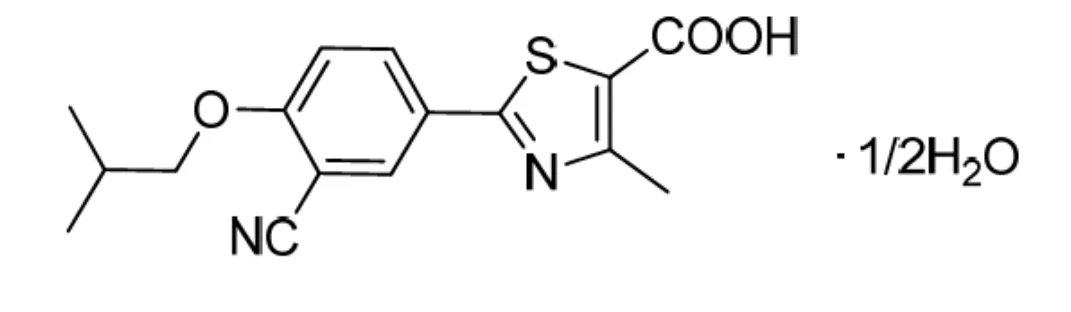
Chemical name: 2-[3-Cyano-4-isobutoxyphenyl]-4-methyl-1,3-thiazole-5-carboxylicacid, hemihydrate
Molecular formula: C16H16N2O3S·1/2 H2O
Molecular mass: 325.39 g/mol
Structural formula:
Physicochemical properties: Febuxostat hemihydrate is a non-hygroscopic, white to off white powder that is freely soluble in dimethylsulfoxide; soluble in acetone; slightly soluble in ethanol; and practically insoluble in water. The melting range is approximately 209°C to 210°C.
CLINICAL TRIALS
Comparative Bioavailability Studies
A double blinded, randomized, single dose, two way crossover bioequivalence study of TEVA-FEBUXOSTAT (febuxostat) 80 mg tablets (Teva Canada Limited) and Uloric® (febuxostat) 80 mg tablets (Takeda Canada Inc.) was conducted in 32 healthy adult subjects under fasting conditions. A summary of the bioavailability data from 32 subjects who completed the study is presented in the following table.
Febuxostat (1 x 80 mg) From measured data uncorrected for potency Geometric LS Mean Arithmetic Mean (CV %) | ||||
|---|---|---|---|---|
| Parameter | Test* | Reference† | % Ratio of Geometric Means | 90% Confidence Interval |
AUC0-T (mcg·h/mL) | 11.73 12.17 (29.35) | 12.11 12.65 (30.51) | 96.83 | 93.16 – 100.63 |
AUC0-∞ (mcg·h/mL) | 12.09 12.52 (28.61) | 12.51 13.03 (29.74) | 96.65 | 93.14 – 100.30 |
Cmax (mcg/mL) | 3.75 3.93 (30.06) | 3.94 4.14 (29.66) | 95.12 | 83.16 – 108.81 |
Tmax§ (h) | 1.00 (0.25 – 4.00) | 0.88 (0.05 – 3.50) | ||
T½€ (h) | 4.46 (28.16) | 4.54 (26.01) | ||
* Test product: TEVA-Febuxostat, 80 mg
† Reference product: ULORIC® (Febuxostat Tablets), 80 mg manufactured by: Takeda Canada and purchased in Canada
§ For Tmax median (range) is presented
€ For T1/2 arithmetic mean (CV %) is presented
Management of Hyperuricemia in Gout: The efficacy of febuxostat was demonstrated in three randomized, double-blind, controlled trials in patients with hyperuricemia and gout. Hyperuricemia was defined as a baseline serum uric acid level ≥ 8 mg/dL (476 mcmol/L).
A serum uric acid level of less than 6 mg/dL (360 mcmol/L) is the goal of anti-hyperuricemic therapy and has been established as appropriate for the treatment of gout.8
Study 1 (Study F-GT06-153 - CONFIRMS) randomized (1:1:1) patients to: febuxostat 40 mg daily (n = 757), febuxostat 80 mg daily (n = 756), or allopurinol (n = 756). Allopurinol dose was 300 mg daily for patients with estimated creatinine clearance (eClcr) ≥ 60 mL/min or 200 mg daily for patients with estimated Clcr ≥ 30 mL/min and ≤ 59 mL/min. The duration of Study 1 was 6 months.
Study 2 (Study C02-009 – APEX6) randomized (1:2:2:1:2) patients to: placebo (n = 134), febuxostat 80 mg daily (n = 267), febuxostat 120 mg daily (n = 269), febuxostat 240 mg daily (n = 134) or allopurinol (n = 268). Allopurinol dose was 300 mg daily for patients with a baseline serum creatinine ≤ 1.5 mg/dL or 100 mg daily for patients with a baseline serum creatinine greater than 1.5 mg/dL and ≤ 2 mg/dL). The duration of Study 2 was 6 months.
Study 3 (Study C02-010 – FACT2), a 1-year study, randomized (1:1:1) patients to: febuxostat 80 mg daily (n = 256), febuxostat 120 mg daily (n = 251), or allopurinol 300 mg daily (n = 253).
Subjects who completed Study 2 and Study 3 were eligible to enroll in a phase 3 long-term extension study (Study C02-021 – EXCEL study1) in which subjects received treatment with febuxostat for over three years. In addition, subjects who had completed a 4-week dose-finding study (Study TMX-00-0043) were eligible to enroll in a phase 2 long-term extension study (Study TMX-01-005, FOCUS study) in which subjects received treatment with febuxostat for up to five years5.
In all three studies, subjects received naproxen 250 mg twice daily or colchicine 0.6 mg once or twice daily for gout flare prophylaxis. In Study 1 the duration of prophylaxis was 6 months; in Study 2 and Study 3 the duration of prophylaxis was 8 weeks.
Patients in these studies were generally representative of the patient population for which febuxostat use is intended. Subjects ranged in age from 19 to 85 years old with a mean age of 52.3 years. Table 4 summarizes the demographics and baseline characteristics for the subjects enrolled in the studies.
Table 4: Patient Demographics and Baseline Characteristics in Study 1, Study 2 and Study 3
| Male | 95% |
Race: Caucasian African American | 80% 10% |
| Ethnicity: Hispanic or Latino | 7% |
| Alcohol User | 67% |
Mild to Moderate Renal Insufficiency [percent with estimated Clcr less than 90 mL/min] | 59% |
| History of Hypertension | 49% |
| History of Hyperlipidemia | 38% |
| BMI ≥ 30 kg/m2 | 63% |
| Mean BMI | 33 kg/m2 |
| Baseline sUA ≥ 10 mg/dL | 36% |
| Mean baseline sUA | 9.7 mg/dL |
| Experienced a gout flare in previous year | 85% |
Study Results
A summary of the proportion of subjects with sUA levels in phase 3 randomized controlled trials is provided in Table 5.
Table 5: Proportion of Subjects with sUA Levels <6.0 mg/dL
| Final Visit <6.0 mg/dL (Primary Endpoint for Study 1) | |||
| Study (N) | Febuxostat 80 mg QD | Allopurinol* | Placebo |
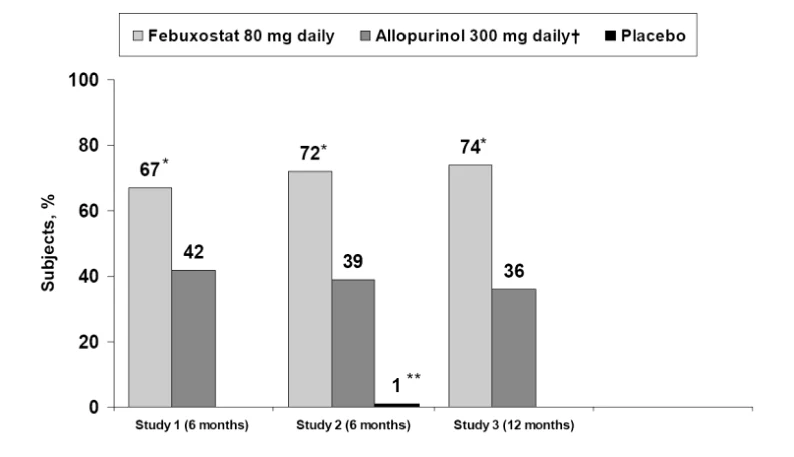
| Study 1 (1512) | 67% † | 42% | N/A |
| Study 2 (669) | 72% †,‡ | 39% | 1% |
| Study 3 (509) | 74% † | 36% | N/A |
| Last 3 Visits <6.0 mg/dL (Primary Endpoint for Studies 2 and 3) | |||
| Study (N) | Febuxostat 80 mg QD | Allopurinol* | Placebo |
| Study 2 (669) | 48% †,‡ | 22% | 0% |
| Study 3 (509) | 53% † | 21% | N/A |
N refers to the number of subjects randomized to the treatment arms presented in the Table
N/A = not applicable (treatment was not evaluated)
*In Study 1, 145 of 755 ITT subjects in the allopurinol arm received 200 mg QD. In Study 2, 10 of 268 ITT subjects in the allopurinol arm received 100 mg QD. All other allopurinol subjects received 300 mg QD.
†Indicates statistical significance versus allopurinol at p<0.001.
‡Indicates statistical significance versus placebo at p<0.001.
Febuxostat 80 mg was superior to allopurinol in lowering serum uric acid to less than 6 mg/dL (360 mcmol/L) at the final visit (Figure 1).
Figure 1: Proportion of Patients with Serum Uric Acid Levels Less Than 6.0 mg/dL (360 mcmol/L) at Final Visit
† In Study 1, allopurinol patients (n=145) with estimated Clcr ≥ 30 mL/min and Clcr < 59 mL/min were dosed at 200 mg daily. In Study 2, allopurinol patients (n=10) with serum creatinine greater than 1.5 and ≤ 2.0 mg/dL were dosed at 100 mg daily.
* p <0.001 versus allopurinol
** p< 0.001 versus Febuxostat 80 mg and allopurinol.
In 76% of subjects treated with febuxostat 80 mg QD, a reduction in serum uric acid levels to less than 6 mg/dL (360 mcmol/L) was noted by the Week 2 visit. Average serum uric acid levels were maintained at 6 mg/dL or below throughout treatment in 83% of these patients.
In all treatment groups, fewer subjects with higher baseline serum urate levels (≥ 10 mg/dL) and/or tophi achieved the goal of lowering serum uric acid to less than 6 mg/dL at the final visit. However, a higher proportion achieved a serum uric acid level of less than 6 mg/dL with febuxostat 80 mg than with allopurinol 300/200/100 mg.
Study 1 evaluated efficacy in patients with mild to moderate renal impairment (i.e., baseline estimated Clcr less than 90 mL/minute). The results in this sub-group of patients are shown in Table 6.
Table 6: Percentage of Subjects with sUA < 6.0 mg/dL (360 mcmol/L) at Final Visit in Study 1 by Renal Function Status
| Renal Function Status | Febuxostat 80 mg % (n/N) | Allopurinol 300/200 mg % (n/N) |
Normal Function (estimated Clcr ≥ 90 mL/min) | 58% † (147/243) | 42% (106/254) |
Mild Impairment (estimated Clcr 60 – 89 mL/min) | 72% † (263/367) | 46% (169/365) |
Moderate Impairment (estimated Clcr 30 – 59 mL/min) | 71% † (97/136) | 32% ‡ (43/136) |
† Statistically significantly (p<0.05) higher than allopurinol
‡ Subjects in the allopurinol group with moderate impairment received 200 mg.
Use in Patients with Gout and a History of Major Cardiovascular Disease [CARES Cardiovascular Outcomes Trial]
A randomized, double-blind, allopurinol-controlled CV outcomes study (CARES) was conducted to evaluate the CV risk of febuxostat in patients with gout who had a history of major CV disease, cerebrovascular disease, or diabetes mellitus with micro- and/or macrovascular disease.8 The study compared the risk of MACE between patients treated with febuxostat (N=3098) and allopurinol-treated patients (N=3092). The primary endpoint was the time to first occurrence of a MACE defined as the composite of CV death, nonfatal MI, nonfatal stroke, or unstable angina with urgent coronary revascularization. The study was designed to exclude a prespecified risk margin of 1.3 for the hazard ratio of MACE. An independent committee conducted a blinded evaluation of serious CV adverse events according to predefined criteria (adjudication) for determination of MACE. The study was event driven and patients were followed until a sufficient number of primary outcome events accrued. The median on-study follow-up time was 2.6 years.
Patients randomized to febuxostat initially received 40 mg (not approved dose in Canada) once daily which was increased to 80 mg once daily, if their sUA was ≥6 mg/dL at Week 2. For patients randomized to allopurinol, those who had normal renal function or mild renal impairment (estimated creatinine clearance (eClcr) ≥60 to <90 mL/minute) initially received 300 mg once daily with 100 mg/day dose increments monthly until either sUA <6 mg/dL or an allopurinol dosage of 600 mg once daily was achieved; those who had moderate renal impairment (eClcr ≥30 to <60 mL/minute) initially received 200 mg once daily with 100 mg/day dose increments monthly until either a sUA <6 mg/dL or an allopurinol dosage of 400 mg once daily was achieved.
The mean age of the population was 65 years (range: 44 to 93 years). Table 7 summarizes the demographics and baseline characteristics for the subjects enrolled in the study, which were balanced across treatment groups.
Table 7: Patient Demographics and Baseline Characteristics in CARES
| Male | 84% |
Race: Caucasian African American | 69% 18% |
| Mean duration of gout | 12 years |
| Baseline serum urate level (sUA) | 8.7 mg/dL |
| Experienced a gout flare in previous year | 90% |
| Most prevalent comorbid cardiovascular risk factors | |
| Hypertension | 92% |
| Hyperlipidemia | 87% |
| Diabetes mellitus | 55% |
| Diabetes mellitus with micro- or macrovascular disease | 39% |
Mild to Moderate Renal Insufficiency [percent with estimated Clcr 30 to 89 mL/min] | 92% |
| Cardiovascular disease history | |
| Myocardial infarction | 39% |
| Hospitalization for unstable angina | 28% |
| Cardiac revascularization | 37% |
| Stroke | 14% |
Study Results
Table 8 shows the study results for the primary MACE composite endpoint and its individual components. For the composite primary endpoint, the febuxostat group was non-inferior compared with the allopurinol group. The rates of nonfatal MI, stroke, and unstable angina with urgent coronary revascularization were similar. There was a higher rate of CV deaths in patients treated with febuxostat (134 CV deaths; 1.5 per 100 PY) than in allopurinol-treated patients (100 CV deaths; 1.1 per 100 PY). Sudden cardiac death was the most common cause of adjudicated CV deaths in the febuxostat group (83 of 3,098; 2.7%) as compared to the allopurinol group (56 of 3,092; 1.8%). The biological plausibility of CV death associated with febuxostat is unclear.
All-cause mortality was higher in the febuxostat group (243 deaths [7.8%]; 2.6 per 100 PY) than the allopurinol group (199 deaths [6.4%]; 2.2 per 100 PY) [Hazard Ratio: 1.22, 95% CI: 1.01, 1.47], due to a higher rate of CV deaths.
Table 8: Patients with MACE in CARES (Cardiovascular Outcomes Study in Patients with Gout)
Febuxostat N=3098 | Allopurinol N=3092 | Hazard Ratio | ||||||||
| Number of Patients with Event (%) | Rate per 100 PY* | Number of Patients with Event (%) | Rate per 100 PY* | 95% CI | ||||||
| Composite of primary endpoint MACE | 335 (10.8) | 3.8 | 321 (10.4) | 3.7 | 1.03 (0.89, 1.21) | |||||
| Cardiovascular Death | 134 (4.3) | 1.5 | 100 (3.2) | 1.1 | 1.34 (1.03, 1.73) | |||||
| Nonfatal MI | 111 (3.6) | 1.2 | 118 (3.8) | 1.3 | 0.93 (0.72, 1.21) | |||||
| Nonfatal stroke | 71 (2.3) | 0.8 | 70 (2.3) | 0.8 | 1.01 (0.73, 1.41) | |||||
| Unstable angina with urgent coronary revascularization | 49 (1.6) | 0.5 | 56 (1.8) | 0.6 | 0.86 (0.59, 1.26) | |||||
* Patient Years (PY)
DETAILED PHARMACOLOGY
Pharmacodynamics: Febuxostat is a 2-arylthiazole derivative. This compound is a potent, non-purine selective inhibitor of xanthine oxidase (NP-SIXO). In vitro studies indicated that febuxostat inhibits xanthine oxidase (XO) with Ki values in the range of 0.6-0.10 nM. The compound potently inhibits both the oxidized and reduced forms of the enzyme. Febuxostat had no effect on other enzymes involved in purine or pyrimidine metabolism, namely guanine deaminase, hypoxanthine guanine phosphoribosyltransferase, orotate phosphoribosyltransferase, orotidine monophosphate decarboxylase and purine nucleoside phosphorylase. In vivo animal studies using normal and hyperuricemic mice and rats, as well as chimpanzees, demonstrated that febuxostat exhibits hypouricemic activity.
Safety Pharmacology:
Central nervous and respiratory systems
A series of pharmacology studies were performed to assess the effects of febuxostat on the central nervous and respiratory systems following a single oral 10, 30, 100, or 300 mg dose. There were no toxicologically-relevant findings.
Cardiovascular system
In vitro IKr assay. The effect of febuxostat on hERG tail currents was evaluated in stably transfected HEK-293 and CHO cells. Inhibition of hERG tail currents was not observed at concentrations up to 500 mcM. Rather, febuxostat exhibited an agonist effect which was most pronounced during depolarization (+10 to +20 mV). EC50 values were calculated to be 0.003 mcM (initial effect) and 0.07 mcM (steady state).
In vitro Purkinje action potential assay. Ventricular Purkinje fibres isolated from Beagle dogs were treated with 0.1, 1.0, 50 and 500 mcM febuxostat. At 50 and 500 mcM, a decrease in the maximum rate of depolarization (MRD) and a rate-independent reduction in action potential duration at 60% repolarization (APD60) and 90% repolarization (APD90) was observed.
In vivo cardiovascular safety data. Febuxostat was administered to Beagle dogs at 5 and 50 mg/kg for 14 consecutive days. ECG parameters, including RR, PR, QRS, QT and QTc were assessed at Tmax on dosing day 1, 4, 6, 8, 11 and 13. There were no toxicologically-relevant findings.
Pharmacokinetics: In a Phase 1, multiple-dose, randomized, placebo-controlled, double-blind, dose-escalation study, the pharmacokinetics and pharmacodynamics of febuxostat were determined in 118 healthy subjects following single and multiple oral dosages ranging from 10 to 240 mg of febuxostat.
Following febuxostat administration, febuxostat was rapidly absorbed, with the mean time to reach the observed peak plasma concentration (Tmax) ranging from 0.70 to 1.44 hours on Days 1 and 14 following the morning oral dose for each of the dosing regimens. Febuxostat pharmacokinetic parameters were not time-dependent or dose-dependent, and remained linear between the 10 to 120 mg QD dose range. For doses above 120 mg, a greater than dose-proportional increase in febuxostat mean area under the plasma concentration-time curve (AUC) was observed. AUCs for metabolites 67M-1, 67M-2 and 67M-4 were substantially less than those of parent drug at all dose levels, each representing less than 4% that of parent drug, while metabolite 67M-3 was generally not detectable. At steady state, only a small portion (approximately 0.9%-6.1%) of the orally administered febuxostat dose was excreted in urine as parent drug, indicating renal excretion of febuxostat is not a major route of elimination.
Each regimen of febuxostat resulted in decreased uric acid concentrations in both serum and urine. There was also a decrease in the total daily urinary excretion and urinary concentration of uric acid. Estimates for the 24 hour mean serum urate concentration (Cmean, 24) on Day 14 were similar to those on Day 8, indicating that the maximum effect was most likely reached within the first week of dosing with febuxostat.
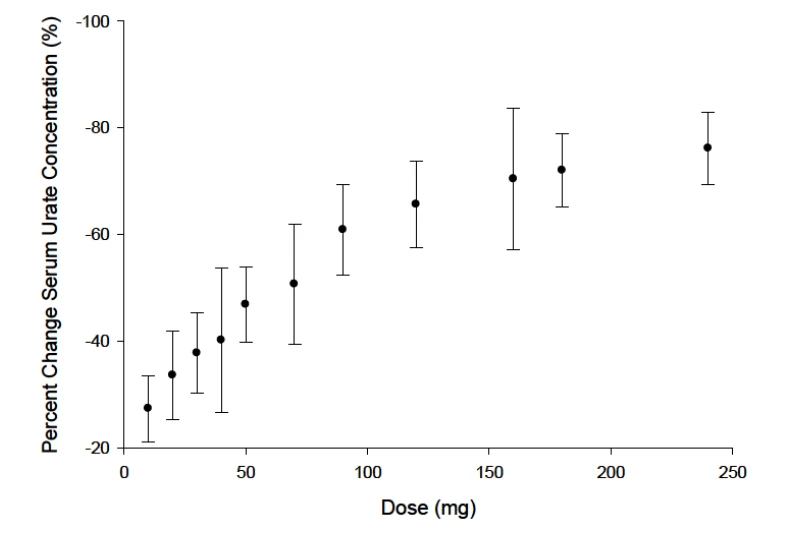
There appeared to be a maximum effect (Emax) dose-response relationship between the percent decrease in serum urate on Day 14 and the dose (Figure 2). This dose-response relationship appeared to be linear for febuxostat doses of 10-120 mg, but the effect appeared to level off for doses above 120 mg.
Figure 2: Mean (±SD) Percent Change in Serum Urate Concentration vs. Dose Following Multiple Once Daily Oral Febuxostat Doses for 14 Days
TOXICOLOGY
Acute Toxicity
Febuxostat does not pose an acute toxicity hazard by the oral route based on studies performed in rats (lethal dose 300-600 mg/kg) and dogs (no deaths up to 2000 mg/kg).
Chronic Toxicity
The chronic toxicity profile of febuxostat was evaluated in a series of oral toxicology studies up to 26 weeks duration in rats at doses of 3, 12, and 48 mg/kg/day and up to 52 weeks duration in dogs at doses of 5, 15, and 48 mg/kg/day,
Rats and dogs dosed at 48 and 45 mg/kg/day, respectively, exhibited numerous histopathologic alterations in the kidney and urinary bladder that were considered secondary to mechanical irritation caused by the deposition of xanthine crystals/calculi in these tissues. In dogs, less severe histological alterations were also noted in the kidney at 15 mg/kg/day (4x human plasma exposure at 80 mg/day).
In rats, and consequent to the histopathological changes at 48 mg/kg/day (31x human plasma exposure at 80 mg/day), various serum chemistry parameters (increased BUN, creatinine, phospholipids, triglycerides), hematology parameters (increased leukocytes, decreased erythrocytes) and urinalysis parameters (increased excretion of potassium and sodium) were altered. The NOAEL for 26-week rat study was considered to be 12 mg/kg/day (8x plasma exposure at 80 mg/day).
In dogs, less significant changes in serum chemistry, hematology and urinalysis parameters were observed at 45 mg/kg/day (55x plasma exposure at 80 mg/day). The NOAEL for 52-week dog study was considered to be 5 mg/kg/day (0.5x plasma exposure at 80 mg/day).
Genotoxicity
At high concentrations of febuxostat, a positive mutagenic response was observed in the in vitro chromosomal aberration test using Chinese hamster lung fibroblast cells, with and without metabolic activation.
However, febuxostat is not considered genotoxic (mutagenic or clastogenic) as a negative response was observed in the in vitro Ames bacterial (S. typhimurium and E. coli) reverse mutation assay, the in vitro L5178Y mouse lymphoma thymidine kinase (TK+/-) forward mutation assay, the in vitro chromosome aberration test using human peripheral blood lymphocytes, the unscheduled rat hepatocyte DNA synthesis assay, the in vivo mouse micronucleus test, and the in vivo chromosome aberration test using rat bone marrow cells.
Carcinogenicity
Two-year carcinogenicity studies were conducted in B6C3F1 mice dosed at 3, 7.5, and 18.75 mg/kg/day and F344 rats dosed at 3, 6, 12 and 24 mg/kg/day. In female mice, transitional cell papilloma and carcinoma of urinary bladder was observed at 18.75 mg/kg/day (10x human plasma exposure at 80 mg/day). In male mice, a tumorigenic effect was not observed up to doses of 18.75 mg/kg/day (4x human plasma exposure at 80 mg/day febuxostat).
In male rats, transitional cell papilloma and carcinoma of urinary bladder was observed at 24 mg/kg/day (25x human plasma exposure at 80 mg/day febuxostat). In female rats, a tumorigenic effect was not observed up to doses of 24 mg/kg/day (20x human plasma exposure based on AUC at 80 mg/day febuxostat).
In both female mice and male rats, urinary bladder neoplasms were considered secondary to calculus formation in the kidney and urinary bladder and consequent to mechanical irritation of epithelial tissues.
Fertility, reproduction and early embryonic development (segment I)
Male and female rats were orally dosed with febuxostat at 3, 12 and 48 mg/kg/day. Paternal and maternal toxicity was observed at 12 mg/kg/day and consisted of kidney and urinary bladder alterations consistent with the presence of xanthine calculi. There were no febuxostat-related effects on mating index, fertility index or reproductive parameters at doses up to 48 mg/kg/day (31x human plasma exposure at 80 mg/day).
Embryo-fetal (segment II) and pre/post-natal development (segment III)
Pregnant female rats and rabbits were orally administered febuxostat at 3, 12 and 48 mg/kg/day throughout the period of organogenesis. There were no treatment-related developmental effect and febuxostat was not considered teratogenic in rats or rabbits up to doses of 48 mg/kg/day (31x and 40x human plasma exposure at 80 mg/day, respectively).
Pre- and post-natal development was assessed in pregnant female rats dosed with febuxostat at 3, 12 and 48 mg/kg/day throughout organogenesis and during lactation. Maternal toxicity was observed at 12 and 48 mg/kg/day. A reduced number of live offspring was noted on post-natal days 4 (viability index) and 21 (weaning index) at 48 mg/kg (92% and 77%, respectively, versus, 97% and 95%, respectively, in controls). Dead neonates exhibited a high incidence of kidney and urinary bladder findings consistent with the presence of xanthine crystals. Decreased body weight observed at 48 mg/kg/day in male and female neonates from birth until weaning was associated with pre-weaning developmental delays.
Placental and milk transfer
A pharmacokinetic study conducted in pregnant female rats indicated that febuxostat and febuxostat-related metabolites do not readily transfer to the fetus via the placenta (transfer rate determined to be less than 0.0085% of the administered dose). Febuxostat readily distributed into milk with concentrations similar to or greater than those observed systematically. Transfer of febuxostat to neonatal rats via the milk was observed in developmental toxicology studies.
REFERENCES
- 1. Becker MA, Schumacher HR, MacDonald PA, Lloyd E, Lademacher C. Clinical efficacy and safety of successful long-term urate lowering with febuxostat or allopurinol in subjects with gout. J Rheumatol. First Release 2009 March 15.
- 2. Becker MA, Schumacher HR Jr, Wortmann RL, MacDonald PA, Eustace D, Palo WA, Streit J, Joseph-Ridge N. Febuxostat compared with allopurinol in patients with hyperuricemia and gout. N Engl J Med. 2005 Dec;353(23):2450-2461.
- 3. Becker MA, Schumacher HR Jr, Wortmann RL, MacDonald PA, Palo WA, Eustace D, Vernillet L, Joseph-Ridge N. Febuxostat, a novel nonpurine selective inhibitor of xanthine oxidase: a twenty-eight-day, multicenter, phase II, randomized, double-blind, placebo-controlled, dose response clinical trial examining safety and efficacy in patients with gout. Arthritis Rheum. 2005 Mar;52(3):916-923.
- 4. Borstad GC, Bryant LR, Abel MP, Scroggie DA, Harris MD, Alloway JA. Colchicine for prophylaxis of acute flares when initiating allopurinol for chronic gouty arthritis. J Rheumatol. 2004;31:2429-2432.
- 5. Schumacher HR Jr, Becker MA, Lloyd E, MacDonald PA, Lademacher C. Febuxostat in the treatment of gout: 5-yr findings of the FOCUS efficacy and safety study. Rheumatology. 2009 Feb;48(2):188-194.
- 6. Schumacher HR Jr, Becker MA, Wortmann RL, MacDonald PA, Hunt B, Streit J, Lademacher C, Joseph-Ridge N. Effects of febuxostat versus allopurinol and placebo in reducing serum urate in subjects with hyperuricemia and gout: A 28-week, phase III, randomized, double-blind, parallel-group trial. Arthritis Care Res. 2008 Nov;59(11):1540-1548.
- 7. White WB, Faich G, Borer JS, Makuch RW. 2003. Cardiovascular thrombotic events in arthritis trials of the cyclooxygenase-2 inhibitor celecoxib. Am J Cardiol 2003; 92(4):411-8.
- 8. White WB, Saag KG, Becker MA, Borer JS, Gorelick PB, Whelton Aw, Hunt B, Castillo M, Gunawardhana L. Cardiovascular safety of febuxostat or allopurinol in patients with gout. N Engl J Med. 2018 Mar; 378(12):1200-1210.
- 9. Zhang W, Doherty M, Bardin T, et al. EULAR evidence based recommendations for gout. Part II: Management. Report of a task force of the EULAR Standing Committee For International Clinical Studies Including Therapeutics (ESCISIT). Ann Rheum Dis. 2006;65(10):1312-1324.
- 10. Product Monograph for ULORIC® (Febuxostat Tablets). Takeda Canada Inc., Oakville, Ontario. Submission Control No. 228535, Date of Revision: September 30, 2019.