


Product Monograph - Teveten Plus
RECENT MAJOR LABEL CHANGES
| 7 WARNINGS AND PRECAUTIONS, Endocrine and Metabolism | 07/2020 |
| 7 WARNINGS AND PRECAUTIONS, Ophthalmologic | 02/2021 |
| 7 WARNINGS AND PRECAUTIONS, Respiratory | 09/2022 |
TABLE OF CONTENTS
Sections or subsections that are not applicable at the time of authorization are not listed.
RECENT MAJOR LABEL CHANGES............................................................................................ 2
TABLE OF CONTENTS .............................................................................................................. 2
PART I: HEALTH PROFESSIONAL INFORMATION ..................................................................... 4
1 INDICATIONS .............................................................................................................. 4
1.1 Pediatrics .......................................................................................................... 4
1.2 Geriatrics........................................................................................................... 4
2 CONTRAINDICATIONS ................................................................................................. 4
3 SERIOUS WARNINGS AND PRECAUTIONS BOX ............................................................ 5
4 DOSAGE AND ADMINISTRATION................................................................................. 5
4.1 Dosing Considerations ....................................................................................... 5
4.2 Recommended Dose and Dosage Adjustment..................................................... 5
4.4 Administration................................................................................................... 6
4.5 Missed Dose ...................................................................................................... 6
5 OVERDOSAGE ............................................................................................................. 6
6 DOSAGE FORMS, STRENGTHS, COMPOSITION AND PACKAGING ................................. 7
7 WARNINGS AND PRECAUTIONS .................................................................................. 7
7.1 Special Populations .......................................................................................... 11
7.1.1 Pregnant Women ....................................................................................... 11
7.1.2 Breast-feeding............................................................................................ 12
7.1.3 Pediatrics ................................................................................................... 12
7.1.4 Geriatrics ................................................................................................... 12
8 ADVERSE REACTIONS ................................................................................................ 13
8.1 Adverse Reaction Overview.............................................................................. 13
8.2 Clinical Trial Adverse Reactions ........................................................................ 13
8.3 Less Common Clinical Trial Adverse Reactions .................................................. 15
8.5 Post-Market Adverse Reactions........................................................................ 16
9 DRUG INTERACTIONS................................................................................................ 16
9.2 Drug Interactions Overview.............................................................................. 16
9.4 Drug-Drug Interactions .................................................................................... 16
9.5 Drug-Food Interactions .................................................................................... 23
9.6 Drug-Herb Interactions .................................................................................... 23
9.7 Drug-Laboratory Test Interactions .................................................................... 23
10 CLINICAL PHARMACOLOGY ....................................................................................... 23
10.1 Mechanism of Action.................................................................................. 23
10.2 Pharmacodynamics .................................................................................... 26
10.3 Pharmacokinetics ....................................................................................... 27
11 STORAGE, STABILITY AND DISPOSAL ......................................................................... 28
12 SPECIAL HANDLING INSTRUCTIONS........................................................................... 28
PART II: SCIENTIFIC INFORMATION ...................................................................................... 28
13 PHARMACEUTICAL INFORMATION............................................................................ 28
14 CLINICAL TRIALS........................................................................................................ 30
14.1 Clinical Trials by Indication.......................................................................... 30
15 MICROBIOLOGY ........................................................................................................ 30
16 NON-CLINICAL TOXICOLOGY ..................................................................................... 30
PATIENT MEDICATION INFORMATION ................................................................................. 40
PART I: HEALTH PROFESSIONAL INFORMATION
1 INDICATIONS
TEVETEN® PLUS (eprosartan mesylate and hydrochlorothiazide) is indicated for:
- the treatment of mild to moderate essential hypertension in patients for whom combination therapy with both eprosartan and hydrochlorothiazide is appropriate.
TEVETEN® PLUS is not indicated for initial therapy (see 4 DOSAGE AND ADMINISTRATION).
1.1 Pediatrics
Pediatrics (< 18 years): Based on the data submitted and reviewed by Health Canada, the safety and efficacy of TEVETEN® PLUS in children have not been established. Therefore, Health Canada has not authorized an indication for this patient population.
1.2 Geriatrics
Geriatrics (> 65 years of age): No overall differences in safety were observed between elderly patients and younger patients, but appropriate caution should nevertheless be used when prescribing to the elderly, as increased vulnerability to drug effect is possible in this patient population (see 4 DOSAGE AND ADMINISTRATION and 10.3 Pharmacokinetics, Special Populations and Conditions, Geriatrics).
2 CONTRAINDICATIONS
TEVETEN® PLUS is contraindicated in:
- Patients who are hypersensitive to this drug or to any ingredient in the formulation or component of the container. For a complete listing, see 6 DOSAGE FORMS, STRENGTHS, COMPOSITION AND PACKAGING.
- Patients who are hypersensitive to thiazides or other sulfonamide-derived substances because of the hydrochlorothiazide component.
- Patients with anuria, or severe renal impairment.
- Pregnant women (see 7.1.1 Pregnant Women).
- Nursing women (see 7.1.1 Pregnant Women).
- Patients with severe hepatic impairment.
- Patients with cholestasis and biliary obstructive disorders.
- Patients with hemodynamically significant bilateral renovascular disease or severe stenosis of a solitary functioning kidney.
- Patients with refractory hyponatremia, hypokalemia or hypercalcemia.
- Patients with symptomatic hyperuricemia/ gout.
- Patients with rare hereditary problems of galactose intolerance, the Lapp lactase deficiency or glucose-galactose malabsorption.
- Combination with angiotensin converting enzyme (ACE) inhibitors in patients with diabetic nephropathy (see 7 WARNINGS AND PRECAUTIONS, Dual Blockade of the Renin-Angiotensin-Aldosterone System (RAAS)).
- Combination with aliskiren-containing drugs in patients with diabetes mellitus (type 1 or type 2) and/or moderate to severe renal impairment (GFR < 60 ml/min/1.73m2) (see 7 WARNINGS AND PRECAUTIONS, Dual Blockade of the Renin-Angiotensin-Aldosterone System (RAAS); 7 WARNINGS AND PRECAUTIONS, Renal, Renal Impairment; and 9 DRUG INTERACTIONS.
3 SERIOUS WARNINGS AND PRECAUTIONS BOX
Serious Warnings and Precautions
|
4 DOSAGE AND ADMINISTRATION
4.1 Dosing Considerations
- Dosage must be individualized. The fixed combination is not for initial therapy. The dose of TEVETEN® PLUS (eprosartan mesylate and hydrochlorothiazide) should be determined by the titration of the individual components.
- Once the patient has been stabilized on the individual components, 1 tablet of TEVETEN® PLUS given once daily may be substituted if the doses on which the patient were stabilized are the same as those in the fixed combination (see 1 INDICATIONS).
4.2 Recommended Dose and Dosage Adjustment
Eprosartan Monotherapy
The recommended initial dose of eprosartan monotherapy is 600 mg once daily. Achievement of maximum BP reduction in most patients may take 2-3 weeks after initiation of therapy. If BP is not adequately controlled with eprosartan alone, a thiazide diuretic may be administered concomitantly. (See 7 WARNINGS AND PRECAUTIONS, Dual Blockade of the Renin-Angiotensin-Aldosterone System (RAAS); and 9 DRUG INTERACTIONS).
- Dosage Adjustment in Elderly and in Patients with Severe Renal Impairment
A lower initial starting dose of 400 mg eprosartan monotherapy once daily should be considered. The usual regimen of therapy with TEVETEN® PLUS may generally be followed for patients with creatinine > 30 mL/min. Because of the hydrochlorothiazide component, TEVETEN® PLUS is not recommended in patients with severe renal impairment (creatinine clearance < 30 mL/min) (see 7 WARNINGS AND PRECAUTIONS, Renal, Renal Impairment).
- Patients with Hepatic Impairment
Since dosage adjustment of eprosartan is required in patients with liver impairment, and thiazide diuretics may precipitate hepatic coma, a fixed combination product such as TEVETEN® PLUS is not advisable (see 7 WARNINGS AND PRECAUTIONS, Hepatic/Biliary/Pancreatic).
Patients Treated With Diuretics
In patients receiving diuretics, eprosartan therapy should be initiated with caution, since these patients may be volume-depleted and thus more likely to experience hypotension following initiation of additional anti-hypertensive therapy. Whenever possible, all diuretics should be discontinued 2-3 days prior to the administration of eprosartan to reduce the likelihood of hypotension (see 7 WARNINGS AND PRECAUTIONS, Cardiovascular, Hypotension, and 9 DRUG INTERACTIONS). If this is not possible because of the patient’s condition, eprosartan should be administered with caution and the BP monitored closely. Thereafter, the dosage should be adjusted according to the individual response of the patient.
Drug discontinuation
If increasing azotemia and oliguria occur during treatment of severe progressive renal disease the diuretic should be discontinued.
If photosensitivity reactions occur during treatment with hydrochlorothiazide-containing drugs, treatment should be stopped.
TEVETEN® PLUS should be discontinued as soon as possible when pregnancy is detected (see 2 CONTRAINDICATIONS).
TEVETEN® PLUS should be withdrawn and appropriate treatment given if diagnosis of Acute Respiratory Distress Syndrome (ARDS) is suspected.
4.4 Administration
TEVETEN® PLUS may be taken with or without food any time of the day, but it should be taken consistently with respect to food intake and at the same time every day.
4.5 Missed Dose
If a dose is forgotten, the missed dose should be taken as soon as possible. The next dose should be taken at the normal time. Two doses should not be taken within 6 hours of each other.
5 OVERDOSAGE
For eprosartan and hydrochlorothiazide a maximum ingested dose was 3600 mg eprosartan/75 mg hydrochlorothiazide. It was reported in a case of a suicide attempt.
No specific information is available on the treatment of overdosage with TEVETEN® PLUS (eprosartan mesylate and hydrochlorothiazide). Treatment should be symptomatic and supportive.
Eprosartan
Limited data are available in regard to overdosage with eprosartan. There have been individual reports from postmarketing experience where doses ≤12,000 mg of eprosartan had been ingested. Although most patients reported no symptoms, it has to be noted however that in 1 subject circulatory collapse occurred after ingestion of 12,000 mg eprosartan. The subject recovered completely. The most likely manifestations of overdosage would be hypotension and/or tachycardia. If symptomatic hypotension should occur, supportive treatment should be instituted. Eprosartan is not removed by hemodialysis.
Hydrochlorothiazide
The most common signs and symptoms observed are those caused by electrolyte depletion (hypokalemia, hypochloremia, hyponatremia) and dehydration resulting from excessive diuresis and will most likely present as nausea and somnolence. If digitalis has also been administered, hypokalemia may accentuate cardiac arrhythmias. The degree to which hydrochlorothiazide is removed by hemodialysis has not been established.
| For management of a suspected drug overdose, contact your regional poison control centre. |
6 DOSAGE FORMS, STRENGTHS, COMPOSITION AND PACKAGING
Table 1 – Dosage Forms, Strengths, Composition and Packaging
Composition
TEVETEN® PLUS (600 mg eprosartan and 12.5 mg hydrochlorothiazide) is supplied as a film-coated, capsule-shaped, butterscotch-coloured tablet containing 600 mg eprosartan as eprosartan mesylate and 12.5 mg of hydrochlorothiazide as active ingredients.
Listing of Non-Medicinal Ingredients
TEVETEN® PLUS contains the following non-medicinal ingredients: crospovidone, iron oxide black, iron oxide yellow, lactose (as 43.3 mg lactose monohydrate), macrogol 3350, magnesium stearate, microcrystalline cellulose, polyvinyl alcohol, pregelatinized starch, talc and titanium dioxide.
Packaging
TEVETEN® PLUS is available in blister packs of 28 tablets.
7 WARNINGS AND PRECAUTIONS
General:
Hydrochlorothiazide may lead to a positive result in doping tests.
Carcinogenesis and Mutagenesis:
- Non-melanoma skin cancer:
An increased risk of non-melanoma skin cancer (NMSC) [basal cell carcinoma (BCC) and squamous cell carcinoma (SCC) of the skin] after hydrochlorothiazide therapy was reported in some epidemiological studies. The risk may be higher with increasing cumulative use (see 8.5 Post-Market Adverse Drug
| Route of Administration | Dosage Form / Strength/Composition | Non-medicinal Ingredients |
| Oral | Tablet 600 mg eprosartan/ 12.5 mg hydrochlorothiazide | crospovidone, iron oxide black, iron oxide yellow, lactose (as 43.3 mg lactose monohydrate), macrogol 3350, magnesium stearate, microcrystalline cellulose, polyvinyl alcohol, pregelatinized starch, talc and titanium dioxide. |
Reactions). The photosensitizing action of hydrochlorothiazide may be a possible mechanism for NMSC (see 16 NON-CLINICAL TOXICOLOGY, Carcinogenicity – Hydrochlorothiazide).
Patients taking hydrochlorothiazide should be informed of the potential risk of NMSC. They should be advised to regularly check their skin for new lesions as well as changes to existing ones, and to promptly report any suspicious skin lesions. Patients should also be advised to limit exposure to sunlight, to avoid the use of indoor tanning equipment, and to use adequate protection (e.g. a broad spectrum sunscreen with a SPF of 30 or higher, clothing, and a hat) when exposed to sunlight or UV light to minimize the risk of skin cancer.
Alternatives to hydrochlorothiazide may be considered for patients who are at a particularly high risk for NMSC (e.g., light coloured skin, known personal or family history of skin cancer, ongoing immunosuppressive therapy, etc.) (see 8.5 Post-Market Adverse Drug Reactions).
Cardiovascular:
- Aortic and Mitral Valve Stenosis, Hypertrophic Cardiomyopathy
There is concern on theoretical grounds that patients with aortic stenosis might be at particular risk of decreased coronary perfusion when treated with vasodilators because they do not develop as much afterload reduction.
As with all vasodilators, patients with aortic or mitral valve stenosis or hypertrophic cardiomyopathy should be treated with caution.
- Hypotension
Occasionally, symptomatic hypotension has occurred after administration of eprosartan, in some cases after the first dose. Symptomatic hypotension may occur in patients with sodium or volume depletion e.g. as a result of high doses of diuretics, dietary salt restriction, dialysis, diarrhea, or vomiting. In those patients, because of the potential fall in blood pressure (BP), therapy should be started under close medical supervision. Sodium and/ or volume depletion should be corrected before treatment with TEVETEN® PLUS. Similar considerations apply to patients with ischemic heart or cerebrovascular disease, in whom an excessive fall in BP could result in myocardial infarction or cerebrovascular accident.
Dual Blockade of the Renin-Angiotensin-Aldosterone System (RAAS)
There is evidence that co-administration of ARBs, such as the eprosartan component of TEVETEN® PLUS, or of angiotensin converting enzyme (ACE) inhibitors, with aliskiren increases the risk of hypotension, syncope, stroke, hyperkalemia and deterioration of renal function, including renal failure, in patients with diabetes mellitus (type 1 or type 2) and/or moderate to severe renal impairment (GFR < 60 ml/min/1.73m2). Therefore, the use of TEVETEN® PLUS in combination with aliskiren-containing drugs is contraindicated in these patients (see 2 CONTRAINDICATIONS).
Further, co-administration of ARBs, including the eprosartan component of TEVETEN® PLUS, with other agents blocking the RAAS, such as ACE inhibitors or aliskiren-containing drugs, is generally not recommended in any patients, since such treatment has been associated with an increased incidence of severe hypotension, renal failure, and hyperkalemia (see 9 DRUG INTERACTIONS).
If dual blockade therapy is considered absolutely necessary, this should only occur under specialist supervision and subject to frequent close monitoring of renal function, electrolytes and blood pressure. The concomitant use of angiotensin II receptor blockers (ARBs) and ACE inhibitors in patients with diabetic nephropathy is contraindicated (see 2 CONTRAINDICATIONS).
For additional information, see 9 DRUG INTERACTIONS.
Driving and Operating Machinery
No studies on the ability to drive and use machines have been performed, but based on its pharmacodynamic properties, TEVETEN® PLUS is unlikely to affect this ability. When driving vehicles or operating machines, it should be taken into account that occasionally dizziness or asthenia may occur during treatment of hypertension.
Endocrine and Metabolism:
- Diabetes
In diabetic patients, dosage adjustment of insulin or oral hypoglycemic agents may be required. Hyperglycemia may occur with thiazide diuretics. Thus, latent diabetes mellitus may manifest during thiazide therapy.
- Metabolism
Periodic determination of serum electrolytes to detect possible electrolyte imbalance should be performed at appropriate intervals. Based on experience with the use of other medicinal products which affect the renin-angiotensin-aldosterone system, concomitant use of eprosartan with potassium-sparing diuretics, potassium supplements, salt substitutes containing potassium or any medicinal products that may increase potassium levels (e.g. heparin, trimethoprim containing medicines, NSAIDs) may lead to an increase in serum potassium. Therefore, co-administration with eprosartan should be done cautiously (see 9.4 Drug-Drug Interactions).
All patients receiving thiazide therapy should be observed for clinical signs of fluid or electrolyte imbalance: hypokalemia, hyponatremia and hypochloremic alkalosis. Serum and urine electrolyte determinations are particularly important when the patient is vomiting excessively or receiving parenteral fluids. Warning signs or symptoms of fluid and electrolyte imbalance, irrespective of cause, include dryness of mouth, thirst, weakness, lethargy, drowsiness, restlessness, confusion, seizures, muscle pains or cramps, muscular fatigue, hypotension, oliguria, tachycardia, arrhythmias, and gastrointestinal disturbances such as nausea and vomiting.
Hypokalemia may develop, especially with brisk diuresis, when severe cirrhosis is present, or after prolonged therapy.
Interference with adequate oral electrolyte intake will also contribute to hypokalemia. Hypokalemia may cause cardiac arrhythmia and may also sensitize or exaggerate the response of the heart to the toxic effects of digitalis (e.g., increased ventricular irritability).
Although any chloride deficit is generally mild and usually does not require specific treatment except under extraordinary circumstances (as in liver disease or renal disease), chloride replacement may be required in the treatment of metabolic alkalosis. Dilutional hyponatremia may occur in edematous patients in hot weather; appropriate therapy is water restriction, rather than administration of salt except in rare instances when the hyponatremia is life-threatening. In actual salt depletion, appropriate replacement is the therapy of choice.
Hyperuricemia may occur or frank gout may be precipitated in certain patients receiving thiazide therapy. Thiazides may decrease serum protein-bound iodine levels without signs of thyroid disturbance.
Thiazides have been shown to increase the urinary excretion of magnesium; this may result in hypomagnesemia.
Thiazides may decrease urinary calcium excretion. Thiazides may cause intermittent and slight elevation of serum calcium in the absence of known disorders of calcium metabolism. Marked hypercalcemia may be evidence of hidden hyperparathyroidism. Thiazides should be discontinued before carrying out tests for parathyroid function.
The antihypertensive effects of hydrochlorothiazide may be enhanced in postsympathectomy patients.
- Primary Hyperaldosteronism
Patients with primary hyperaldosteronism do not react sufficiently on antihypertensives which act through inhibition of the renin-angiotensin-aldosterone system (RAAS). Therefore, treatment with TEVETEN® PLUS is not recommended.
Hepatic/Biliary/Pancreatic
Based on pharmacokinetic data which demonstrate increased plasma concentrations of eprosartan in hepatically impaired patients after administration of eprosartan, a lower initial dose should be considered for patients with hepatic impairment or a history of hepatic impairment (see 4 DOSAGE AND ADMINISTRATION).
Thiazides should be used with caution in patients with impaired hepatic function or progressive liver disease, since minor alterations of fluid and electrolyte balance may precipitate hepatic coma (see 4 DOSAGE AND ADMINISTRATION).
When TEVETEN® PLUS is used in patients with mild to moderate hepatic impairment, special care should be exercised due to the fact that there is limited experience in this patient population.
Ophthalmologic
Choroidal effusion, Acute Myopia and Secondary Angle-Closure Glaucoma:
Hydrochlorothiazide, a sulfonamide, can cause an idiosyncratic reaction, resulting in choroidal effusion, acute transient myopia and/or acute angle-closure glaucoma. Symptoms include acute onset of decreased visual acuity, blurred vision or ocular pain and typically occur within hours to weeks of drug initiation. Untreated acute angle-closure glaucoma can lead to permanent vision loss.
The primary treatment is to discontinue hydrochlorothiazide as rapidly as possible. Prompt medical or surgical treatments may need to be considered if the intraocular pressure remains uncontrolled. Risk factors for developing acute angle-closure glaucoma may include a history of sulfonamide or penicillin allergy.
Renal:
- Azotemia
Azotemia may be precipitated or increased by hydrochlorothiazide. Cumulative effects of the drug may develop in patients with impaired renal function.
- Renal Impairment
As a consequence of inhibiting the RAAS, changes in renal function have been seen in susceptible individuals. In patients whose renal function may depend on the activity of the RAAS, such as patients with bilateral renal artery stenosis, unilateral renal artery stenosis to a solitary kidney, or severe congestive heart failure, treatment with agents that inhibit this system has been associated with oliguria, progressive azotemia, and rarely, acute renal failure and/or death. In susceptible patients, concomitant diuretic use may further increase risk.
Use of TEVETEN® PLUS should include appropriate assessment and close monitoring of renal function (see 4 DOSAGE AND ADMINISTRATION), serum potassium and uric acid.
The use of ARBs - including the eprosartan component of TEVETEN® PLUS, with aliskiren-containing drugs is contraindicated in patients with moderate to severe renal impairment (GFR < 60 ml/min/1.73m2). See 2 CONTRAINDICATIONS and 9.4 Drug-Drug Interactions, Table 3.
There is no experience with TEVETEN® PLUS in patients with renal transplants.
Thiazides should be used with caution in patients with renal disease. Because of the hydrochlorothiazide component, TEVETEN® PLUS is not recommended in patients with severe renal impairment (creatinine clearance < 30 mL/min) (see 4 DOSAGE AND ADMINISTRATION).
Respiratory:
- Acute Respiratory Toxicity
Very rare severe cases of acute respiratory toxicity, including acute respiratory distress syndrome (ARDS) have been reported after taking hydrochlorothiazide. Pulmonary oedema typically develops within minutes to hours after hydrochlorothiazide intake. At the onset, symptoms include dyspnoea, fever, pulmonary deterioration and hypotension. Hydrochlorothiazide should not be administered to patients who previously experienced ARDS following hydrochlorothiazide intake.
Sensitivity/Resistance:
Patients with rare hereditary problems of galactose intolerance, the Lapp lactase deficiency or glucose-galactose malabsorption should not take this medicinal product (see 2 CONTRAINDICATIONS).
- Hypersensitivity Reactions
Hypersensitivity reactions to hydrochlorothiazide may occur in patients with or without a history of allergy or bronchial asthma. Hypersensitivity reactions to hydrochlorothiazide are more likely in patients with a history of allergies including hypersensitivity to sulfonamide-derived substances.
Thiazide diuretics have been reported to cause exacerbation or activation of systemic lupus erythematosus.
Skin:
- Photosensitivity
Photosensitivity reactions have been reported with the use of thiazide diuretics.
7.1 Special Populations
7.1.1 Pregnant Women
Drugs that act directly on the RAAS can cause fetal and neonatal morbidity and death when administered to pregnant women.
The use of ARBs is contraindicated during pregnancy. Patients planning pregnancy should be changed to alternative anti-hypertensive treatments which have an established safety profile for use in pregnancy. When pregnancy is diagnosed, treatment with ARBs should be stopped immediately, and, if appropriate, alternative therapy should be started.
The use of ARBs during the second and third trimesters is known to induce human fetotoxicity (decreased renal function, oligohydramnios, skull ossification retardation) and neonatal toxicity (renal failure, hypotension, hyperkalaemia). See 16 NON-CLINICAL TOXICOLOGY, Reproductive and Developmental Toxicology.
Infants with a history of in utero exposure to ARBs should be closely observed for hypotension, oliguria, and hyperkalemia. If oliguria occurs, attention should be directed toward support of BP and renal perfusion. Exchange transfusion or dialysis may be required as a means of reversing hypotension and/or substituting for impaired renal function; however, limited experience with those procedures has not been associated with significant clinical benefit.
Eprosartan is not removed from plasma by dialysis.
Thiazides cross the placental barrier and appear in cord blood. The routine use of diuretics in otherwise healthy pregnant women is not recommended and exposes mother and fetus to unnecessary hazard including fetal or neonatal jaundice, thrombocytopenia and possibly other adverse experiences which have occurred in the adult. Diuretics do not prevent development of toxemia of pregnancy and there is no satisfactory evidence that they are useful in the treatment of toxemia.
- Animal Data: Eprosartan has been shown to produce maternal and fetal toxicities (maternal and fetal mortality, low maternal body weight and food consumption, resorptions, abortions and litter loss) in pregnant rabbits given oral doses as low as 10 mg eprosartan/kg/day. No maternal or fetal adverse effects were observed at 3 mg/kg/day; this oral dose yielded a systemic exposure (AUC) to unbound eprosartan 0.8x that achieved in humans given 400 mg twice daily. No adverse effects on in utero or postnatal development and maturation of offspring were observed when eprosartan mesylate was administered to pregnant rats at oral doses ≤1000 mg eprosartan/kg/day (the 1000 mg eprosartan/kg/day dose in non-pregnant rats yielded systemic exposure to unbound eprosartan approximately 0.6x the exposure achieved in humans given 400 mg twice daily).
7.1.2 Breast-feeding
It is not known whether eprosartan is excreted in human milk but significant levels have been found in the milk of lactating rats. Thiazides appear in human milk. Because many drugs are excreted in human milk and because of their potential for affecting the nursing infant adversely, if the initiation of treatment with eprosartan and hydrochlorothiazide is regarded necessary, nursing should be discontinued first. The use of TEVETEN® PLUS is contraindicated in nursing women (see 2 CONTRAINDICATIONS).
7.1.3 Pediatrics
Pediatrics (< 18 years): The safety and efficacy in children have not been established. Therefore, TEVETEN® PLUS is not indicated in this patient population.
7.1.4 Geriatrics
Geriatrics (> 65 years): No overall differences in safety were observed between elderly patients and younger patients, but appropriate caution should nevertheless be used when prescribing to the elderly, as increased vulnerability to drug effect is possible in this patient population. See 4 DOSAGE AND
ADMINISTRATION and 10.3 Pharmacokinetics, Special Populations and Conditions, Geriatrics.
8 ADVERSE REACTIONS
8.1 Adverse Reaction Overview
The combination of eprosartan mesylate and hydrochlorothiazide contained in TEVETEN® PLUS was evaluated for safety in 1518 patients treated for hypertension. In open studies, 890 patients were treated from 6 months to 2 years. Of these, 528 patients were treated for ≥6 months and 449 patients were treated for ≥1 year at various doses of eprosartan and ≥12.5 mg hydrochlorothiazide daily.
8.2 Clinical Trial Adverse Reactions
Clinical trials are conducted under very specific conditions. The adverse reaction rates observed in the clinical trials; therefore, may not reflect the rates observed in practice and should not be compared to the rates in the clinical trials of another drug. Adverse reaction information from clinical trials may be useful in identifying and approximating rates of adverse drug reactions in real-world use.
In controlled clinical trials, 268 patients were treated with eprosartan 600 mg plus hydrochlorothiazide 12.5 mg and about 3% of these patients discontinued therapy due to clinical adverse experiences.
The following potentially serious adverse reactions were reported rarely in controlled clinical trials: syncope, hypotension.
The following table is based on double-blind controlled trials in patients treated at doses of 600 mg eprosartan and 12.5mg hydrochlorothiazide. In double-blind controlled clinical trials, the following adverse events (AEs) occurred amongst patients treated with combination therapy at an incidence of ≥1%. Of the 268 patients who received such combination therapy during the double-blind treatment period in the controlled trials, 110 patients reported AEs.
Table 2 Frequency of adverse events ≥ 1 % during the double-blind treatment period by preferred term and treatment group regardless of causality: Controlled studies
Eprosartan 600 mg/ Hydrochlorothiazide 12.5 mg N = 268 (%) | Eprosartan 600mg N = 275 (%) | Hydrochlorothiazide 12.5mg N = 117 (%) | Placebo N = 122 (%) | |
|---|---|---|---|---|
Blood and Lymphatic System Disorders Leucocytosis | 1.5 | 0.7 | 0.9 | 0.8 |
Gastrointestinal Disorders Abdominal pain | 1.5 | 0.4 | 0.9 | 0.8 |
Eprosartan 600 mg/ Hydrochlorothiazide 12.5 mg N = 268 (%) | Eprosartan 600mg N = 275 (%) | Hydrochlorothiazide 12.5mg N = 117 (%) | Placebo N = 122 (%) | |
|---|---|---|---|---|
General Disorders and Administration Site Conditions Asthenia Fatigue | 1.1 1.9 | 1.1 1.8 | 0.9 0.9 | 0.8 0.8 |
Hepatobiliary Disorders SGPT increase | 1.1 | 0 | 0.9 | 0 |
Metabolic and Nutritional Disorders Hyperglycemia | 1.5 | 0.7 | 2.6 | 0.8 |
Musculoskeletal and Connective Tissue Disorders Arthrosis Back Pain | 1.9 2.6 | 0.4 2.5 | 0.0 1.7 | 0.8 3.3 |
Nervous System Disorders Dizziness Headache Neuralgia Paresthesia Vertigo | 4.1 3.4 1.1 1.1 1.5 | 1.8 3.6 1.1 0.7 0.0 | 1.7 3.4 0.0 0.0 0.0 | 1.6 9.0 1.6 0.8 1.6 |
Psychiatric Disorders Insomnia Depression | 1.9 1.1 | 0.7 0.4 | 1.7 0.0 | 0.0 0.0 |
Renal and Urinary Disorders Albuminuria |
Eprosartan 600 mg/ Hydrochlorothiazide 12.5 mg N = 268 (%) | Eprosartan 600mg N = 275 (%) | Hydrochlorothiazide 12.5mg N = 117 (%) | Placebo N = 122 (%) | |
|---|---|---|---|---|
Cystitis Hematuria Pyuria Urinary tract infection | 1.9 1.1 1.1 1.5 1.1 | 0.7 0.0 0.7 1.1 0.4 | 1.7 0.9 1.7 1.7 1.7 | 1.6 0.8 0.8 0.8 0.8 |
Respiratory Disorders Bronchitis | 1.5 | 0.7 | 1.7 | 0 |
The most commonly reported AEs in the eprosartan 600 mg and hydrochlorothiazide 12.5 mg group were dizziness (4.1%) and headache (3.4%).
Furthermore, the following reactions have been reported (from placebo controlled trials and scientific literature):
Common (≥1% to <10%): Rhinitis, unspecified gastrointestinal complaints (e.g. nausea, diarrhea, vomiting).
8.3 Less Common Clinical Trial Adverse Reactions
| Blood and Lymphatic System Disorders: | Hemolytic anemia*, leukopenia |
| Metabolism and Nutrition Disorders: | Hypochloremia, hypercholesterolemia, hypokalemia, hyponatremia, hyperuricemia, gout |
| Gastrointestinal Disorders: | Constipation** |
| General Disorders and Administration Site Conditions: | Pyrexia |
| Immune System Disorders: | Hypersensitivity |
| Respiratory Disorders: | Pneumonitis*, pulmonary edema*, Acute respiratory distress syndrome (ARDS) (see 7 WARNINGS AND PRECAUTIONS, Respiratory, Acute Respiratory Toxicity) |
| Musculoskeletal and Connective Tissue Disorders: | Muscle spasms** |
| Psychiatric Disorders: | Anxiety, libido disorder, nervousness |
| Reproductive System and Breast Disorders: | Sexual dysfunction |
*Frequency based on data from hydrochlorothiazide
**Did not occur in a higher frequency than in placebo
Unknown (cannot be estimated from available data): Acute myopia and secondary angle-closure glaucoma*, agranulocytosis, anaphylactic reactions, anorexia, aplastic anemia, hypercalcemia, hypertriglyceridemia, interstitial nephritis, jaundice (intrahepatic cholestatic jaundice), photosensitivity, renal failure/ impaired renal function in patients at risk (e.g. renal artery stenosis), restlessness, systemic lupus erythematosus, toxic epidermal necrolysis, vasculitis.
*Frequency based on data from hydrochlorothiazide
8.5 Post-Market Adverse Reactions
In addition to the above, the following adverse reactions have been reported rarely in post-marketing experience: anemia, hypotension, including postural hypotension, myalgia, arthralgia, skin reactions (rash, pruritus, urticaria), taste disorders and thrombocytopenia.
- Angioedema (involving swelling of the face, lips and/or tongue) has been reported very rarely.
- Eye disorders – choroidal effusion, acute myopia, acute angle-closure glaucoma (frequency unknown).
- Laboratory testing has demonstrated occasional elevation of liver enzymes.
- Cases of muscle pain, muscle weakness, myositis and rhabdomyolysis have been reported in patients receiving ARBs.
- Cutaneous lupus erythematosus and hypomagnesaemia have been reported.
Non-melanoma skin cancer: Some pharmacoepidemiological studies have suggested a higher risk of squamous cell carcinoma (SCC) and basal cell carcinoma (BCC) of the skin with increasing use of hydrochlorothiazide. A systematic review and meta-analysis undertaken by Health Canada suggested, with important uncertainty, that the use of hydrochlorothiazide for several years (>3 years) could lead to:
- 122 additional cases (95% CI, from 112 to 133 additional cases) of SCC per 1000 treated patients compared with non-use of hydrochlorothiazide (meta-analysis of 3 observational studies);
- 31 additional cases (95% CI, from 24 to 37 additional cases) of BCC per 1000 treated patients compared with non-use of hydrochlorothiazide (meta-analysis of 2 observational studies).
For adverse reactions pertinent to the individual components of TEVETEN® PLUS, please consult the Product Monographs for eprosartan mesylate and hydrochlorothiazide.
9 DRUG INTERACTIONS
9.2 Drug Interactions Overview
Eprosartan has been shown not to inhibit human cytochrome P450 enzymes CYP1A, 2A6, 2C9/8, 2C19, 2D6, 2E, and 3A in vitro.
9.4 Drug-Drug Interactions
The drugs listed in this table are based on either drug interaction case reports or studies, or potential interactions due to the expected magnitude and seriousness of the interaction (i.e., those identified as contraindicated).
Table 3 - Established or Potential Drug-Drug Interactions Associated with Eprosartan Mesylate, Hydrochlorothiazide or both
| Proper/Common name | Source of Evidence | Effect | Clinical comment |
| Agents increasing serum potassium | CT, T | Eprosartan decreases the production of aldosterone. Since in placebo-controlled clinical studies, significantly elevated serum potassium concentrations were observed, and based on experience with the use of drugs that affect the renin-angiotensin-aldosterone system, concomitant use of potassium-sparing diuretics, potassium supplements, salt substitutes containing potassium or drugs that may increase serum potassium levels (e.g. heparin, trimethoprim containing medicines, NSAIDS) may lead to increase in serum potassium. | Potassium-sparing diuretics (e.g. spironolactone, triamterene, amiloride), or potassium supplements should be given only for documented hypokalemia and with frequent monitoring of serum potassium. Potassium-containing salt substiutes should also be used with caution. If drugs which affects potassium levels are to be prescribed in combination with TEVETEN® PLUS, monitoring of potassium plasma levels is advised. See 7 WARNINGS AND PRECAUTIONS. |
| Alcohol, barbiturates, or narcotics | C | Potentiation of orthostatic hypotension may occur. | Avoid alcohol, barbiturates or narcotics, especially with initiation of therapy. |
| Amantadine | C | Thiazides may increase the risk of adverse effects caused by amantadine. | Monitor for adverse effects of amantadine. |
| Amifostine | Potentiation of antihypertensive effect may occur. | ||
| Amphotericin B | T | Amphotericin B increases the risk of hypokalemia induced by thiazide diuretics. | Monitor serum potassium level. |
Antiarrythmics
| CT, T | Eprosartan and thiazide diuretics may affect serum potassium, which could lead to hypokalemia and increase the potential for torsades de pointes. | Monitor serum potassium and ECG when TEVETEN® PLUS is administered with antiarrhythmics. |
| |||
Antibiotics and others (e.g. erythromycin, penicillin G, pentamidine) | CT, T | Coadministration may potentiate the potassium-depleting effect of hydrochlorothiazide. | Concomitant use is not recommended. If drugs which affect potassium levels are to be prescribed in combination with TEVETEN® PLUS, monitoring of serum potassium levels and ECG is advised. |
| Antidepressants especially selective serotonin reuptake inhibitors (SSRIs, e.g. citalopram, escitalopram, sertraline) | T, C | Concomitant use with thiazide diuretics may potentiate hyponatremia. | Monitor serum sodium levels. Use with caution. |
| Antidiabetic agents (e.g. insulin and oral hypoglycemic agents) | CT | Thiazide-induced hyperglycemia may compromise blood sugar control. Depletion of serum potassium augments glucose intolerance. | Monitor glycemic control, supplement potassium if necessary, to maintain appropriate serum potassium levels, and adjust diabetes medications as required. |
Antiepileptics (e.g. carbamazepine, oxcarbazepine, topiramate) | T, C CT | Concomitant use with thiazide diuretics may potentiate hyponatremia. Additive hypokalemia. Possible thiazide-induced increase in topiramate serum concentrations. | Monitor serum sodium levels. Monitor serum potassium and topiramate levels. Use potassium supplements, or adjust topiramate dose as necessary. |
Antifungals (e.g. ketoconazole and fluconazole) | CT | No effect on steady state pharmacokinetics of eprosartan. | Concomitant administration of ketoconazole or fluconazole had no effect on steady state pharmacokinetics of eprosartan. |
| Antihypertensive drugs | CT | Eprosartan and hydrochlorothiazide may potentiate the action of other antihypertensive drugs (e.g. guanethidine, methyldopa, beta-blockers, vasodilators, calcium channel blockers, ACEI, ARB, and direct renin inhibitors). | |
| Antineoplastic drugs, including cyclophosphamide and methotrexate | C | Concomitant use of thiazide diuretics may reduce renal excretion of cytotoxic agents and enhance their myelosuppressive effects. | Hematological status should be closely monitored in patients receiving this combination. Dose adjustment of cytotoxic agents may be required. |
| Antipsychotics (e.g. chlorpromazine, trifluoperazine, haloperidol pimozide, droperidol) | T, C | Concomitant use with thiazide diuretics may potentiate hyponatremia. Eprosartan and thiazide diuretics may affect serum potassium, which could lead to hypokalemia and increase the potential for torsades de pointes. | Use with caution. Monitor serum sodium, potassium levels, and ECG when TEVETEN® PLUS is administered with antipsychotics. |
| Baclofen | Potentiation of antihypertensive effect may occur. | ||
| Beta-blockers | The hyperglycemic effect of beta-blockers may be enhanced by thiazides. | ||
| Bile acid sequestrants, e.g. cholestyramine | CT | Bile acid sequestrants bind thiazide diuretics in the gut and impair gastrointestinal absorption by 43-85%. Administration of thiazide 4 hours after a bile acid sequestrant reduced absorption of hydrochlorothiazide by 30- 35%. | Give thiazide 2-4 hours before or 6 hours after the bile acid sequestrant. Maintain a consistent sequence of administration. Monitor BP, and increase dose of thiazide, if necessary. |
| Calcium and vitamin D supplements | C | Thiazides decrease renal excretion of calcium and increase calcium release from bone. | If calcium supplements or medicinal products affecting serum calcium levels (e.g. Vitamin D therapy) must be prescribed, serum calcium levels should be monitored and calcium dosage adjusted accordingly. |
| Corticosteroids, and adrenocorticotropi c hormone (ACTH) | T | Intensified electrolyte depletion, particularly hypokalemia, may occur. | Monitor serum potassium, and adjust medications, as required. |
| Diazoxide | T | The hyperglycemic effect of diazoxide may be enhanced by | Monitor blood glucose levels. |
| thiazides. | |||
| Digoxin | CT | Thiazide-induced electrolyte disturbances, i.e. hypokalemia, hypomagnesemia, increase the risk of digoxin toxicity, which may lead to fatal arrhythmic events. | Concomitant administration of hydrochlorothiazide and digoxin requires caution. Monitor electrolytes and digoxin levels closely. Supplement potassium or adjust doses of digoxin or thiazide, as required. |
| Diuretics | T | Patients on diuretics, and especially those in whom diuretic therapy was recently instituted, may occasionally experience an excessive reduction in BP after initiation of therapy with eprosartan. No pharmacokinetic drug interaction of clinical significance has been identified with eprosartan and thiazide diuretics. | The possibility of symptomatic hypotension with the use of eprosartan can be minimized by discontinuing the diuretic prior to initiation of treatment (see 7 WARNINGS AND PRECAUTIONS, Cardiovascular, Hypotension; and 4 DOSAGE AND ADMINISTRATION). |
| Drugs that alter GI motility, i.e., anticholinergic agents, such as atropine and prokinetic agents, such as metoclopramide, domperidone | CT, T | Bioavailability of thiazide diuretics may be increased by anticholinergic agents due to a decrease in gastrointestinal motility and gastric emptying. Conversely, prokinetic drugs may decrease the bioavailability of thiazide diuretics. | Dose adjustment of thiazide may be required. |
| Dual blockade of the Renin-Angiotensin-Aldosterone-System (RAAS) with ARBs, ACEIs or aliskiren-containing drugs | CT | Dual blockade of the Renin-Angiotensin-Aldosterone-System with ARBs, ACEIs or aliskiren-containing drugs has been associated with an increased incidence of severe hypotension, decreased renal function (including acute renal failure) and hyperkalemia. | Dual blockade of the Renin-Angiotensin-System with ARBs, ACEIs or aliskiren-containing drugs is contraindicated in patients with diabetes and/or renal impairment, and is generally not recommended in other patients. See 2 CONTRAINDICATIONS; 7 WARNINGS AND PRECAUTIONS, Dual Blockade of the Renin-Angiotensin-Aldosterone System (RAAS). |
| Gout medications (allopurinol, | T, RC | Thiazide-induced hyperuricemia may | Dosage adjustment of gout medications may be required. |
| uricosurics, xanthine oxidase inhibitors) | compromise control of gout by allopurinol and probenecid. The co-administration of hydrochlorothiazide and allopurinol may increase the incidence of hypersensitivity reactions to allopurinol. | ||
| Laxatives | CT, T | The potassium-depleting effect of hydrochlorothiazide may be potentiated by the coadministration of laxatives. | Concomitant use with laxatives is not recommended. If laxatives are to be prescribed in combination with TEVETEN® PLUS, monitoring of serum potassium levels is advised. |
| Lithium | CT, T | Thiazide diuretics reduce the renal clearance of lithium and add a high risk of lithium toxicity. | Reversible increases in serum lithium concentrations and toxicity have been reported during concomitant administration of lithium with ACEIs and, rarely, with ARBs. Concomitant use of TEVETEN® PLUS with lithium is generally not recommended. If such use is deemed necessary, reduce lithium dose by 50% and monitor lithium levels closely. |
| Nonsteroidal anti-inflammatory drugs (NSAID) | CT, T | NSAID-related retention of sodium and water antagonizes the diuretic and antihypertensive effects of thiazides. NSAID-induced inhibition of renal prostaglandins leading to decreases of renal blood flow, along with thiazide-induced decreases in GFR may lead to acute renal failure. Patients with heart failure may be at particular risk. As with ACEIs, concomitant use of ARBs and NSAIDs may lead to an increased risk of worsening of renal function, including possible acute renal failure and an increase in | The combination should be administered with caution, especially in the elderly. If combination use is necessary, monitor renal function, serum potassium, and BP closely. Patients should be adequately hydrated. Dose adjustments may be required. |
| serum potassium, especially in patients with poor pre-existing renal function. | |||
| Indometacin | T | A decrease in efficacy of the angiotensin II receptor blocker | Concomitant use of losartan with the NSAID indomethacin led to a decrease in efficacy of the angiotensin II receptor blocker, a class effect cannot be excluded. |
| Metformin | There is a risk of lactic acidosis induced by possible functional renal failure linked to hydrochlorothiazide. | Metformin should be used with caution. | |
| Pressor amines (e.g. norepinephrine) | T | In the presence of diuretics, possible decreased response to pressor amines may be seen but not sufficient to preclude their use. | |
| Salicylic acid derivatives | CT, T | The potassium-depleting effect of hydrochlorothiazide may be potentiated by the coadministration of salicylic acid derivatives. | Concomitant use with salicylic acid derivatives is not recommended. If salicylic acid derivatives are to be prescribed in combination with TEVETEN® PLUS, monitoring of serum potassium levels is advised. |
| Skeletal muscle relaxants of the curare family, e.g., tubocurare | C | Thiazide drugs may increase the responsiveness of some skeletal muscle relaxants, such as curare derivatives. | |
| Tetracyclines | T | Concomitant administration of tetracyclines and thiazides increases the risk of tetracycline-induced increase in urea. This interaction is probably not applicable to doxycycline. | |
| Warfarin | CT | Concomitant administration of eprosartan and warfarin had no effect on steady-state prothrombin time ratios (INR) in healthy volunteers. | |
Legend: C = Case Study; RC = Retrospective Cohort Study; CT = Clinical Trial; T = Theoretical
9.5 Drug-Food Interactions
Interactions with food have not been established.
9.6 Drug-Herb Interactions
Interactions with herbal products have not been established.
9.7 Drug-Laboratory Test Interactions
Interactions with laboratory tests have not been established.
10 CLINICAL PHARMACOLOGY
10.1 Mechanism of Action
TEVETEN® PLUS (eprosartan mesylate and hydrochlorothiazide) combines the actions of eprosartan mesylate, an ARB, and that of a thiazide diuretic, hydrochlorothiazide.
- Eprosartan
Eprosartan antagonizes angiotensin II by blocking the angiotensin type 1 (AT1) receptor. Angiotensin II is a potent vasoconstrictor, the primary vasoactive hormone of the RAS and an important component in the pathophysiology of hypertension. It also stimulates aldosterone secretion by the adrenal cortex. Eprosartan blocks the vasoconstrictor and aldosterone-secreting effects of angiotensin II by selectively blocking the binding of angiotensin II to the AT1 receptor found in many tissues (e.g., vascular smooth muscle, adrenal gland). There is also an AT2 receptor found in many tissues but it is not known to be associated with cardiovascular homeostasis. Eprosartan does not exhibit any partial agonist activity at the AT1 receptor. Its affinity for the AT1 receptor is 1,000 times greater than for the AT2 receptor. In vitro binding studies indicate that eprosartan is a reversible, competitive inhibitor of the AT1 receptor.
Eprosartan does not inhibit ACE, also known as kininase II, the enzyme that converts angiotensin I to angiotensin II and degrades bradykinin, nor does it bind to or block other hormone receptors or ion channels known to be important in cardiovascular regulation.
- Hydrochlorothiazide
Hydrochlorothiazide is a diuretic and antihypertensive which interferes with the renal tubular mechanisms of electrolyte reabsorption. It increases excretion of sodium and chloride in approximately equivalent amounts. Natriuresis may be accompanied by some loss of potassium and bicarbonate. While this compound is predominantly a saluretic agent, in vitro studies have shown that it has a carbonic anhydrase inhibitory action which seems to be relatively specific for the renal tubular mechanism. It does not appear to be concentrated in erythrocytes or the brain in sufficient amounts to influence the activity of carbonic anhydrase in those tissues.
Hydrochlorothiazide is useful in the treatment of hypertension. It may be used alone or as an adjunct to other antihypertensive drugs. Hydrochlorothiazide does not affect normal BP.
Hydrochlorothiazide is an established thiazide diuretic. Thiazides affect the renal tubular mechanisms of electrolyte reabsorption, directly increasing excretion of fluid, sodium and chloride. The diuretic action of hydrochlorothiazide reduces plasma volume, increases plasma renin activity, increases aldosterone secretion, with consequent increases in urinary potassium and bicarbonate loss, and decreases in serum potassium. The antihypertensive action of hydrochlorothiazide appears to be due to combined diuretic and direct vascular activity (reduction of vascular resistance) mechanism.
- Early Tolerance Studies
Oral and intravenous (i.v.) eprosartan was safe and well tolerated in healthy subjects when given single oral doses ≤800 mg, single i.v. doses ≤20 mg, and repetitive oral doses ≤300 mg twice daily for 8 days. Oral eprosartan was safe and well tolerated in patients with essential hypertension at repetitive oral doses of ≤1200 mg once daily for 1 week and in patients with renal insufficiency at repetitive oral doses of 300 mg twice daily for 7 days. The most common adverse experiences following eprosartan dosing were headache, dizziness and fatigue. There appeared to be no gross differences in the frequency of adverse experiences following eprosartan dosing compared to placebo with the exception of headache which was reported more frequently following eprosartan dosing than following placebo dosing.
- Inhibition of Angiotensin II Activity and the Renin-Angiotensin-Aldosterone System
Angiotensin II AT1 receptor antagonism as the mechanism of action of eprosartan in humans has been confirmed. Single oral doses of eprosartan from 10-400 mg have been shown to inhibit the vasopressor, renal vasoconstrictive and aldosterone secretory effects of infused angiotensin II with complete (100%) inhibition evident at doses of ≥350 mg. A dose-response relationship for these effects of eprosartan has been demonstrated. At 3 hours following single oral doses of 10, 30, 50, 70, 100, and 200 mg, eprosartan inhibited angiotensin Il-induced decreases in effective renal plasma flow (ERPF) by 39.1%, 49.9%, 33.0%, 56.0%, 71.0%, and 85.7%, respectively, relative to placebo. The effects of eprosartan on blood pressure (BP) and ERPF were mirrored by partial inhibition of the aldosterone secretory effects of angiotensin II. The results of 2 studies predicted that oral doses of eprosartan in the range of 200-400 mg would be effective anti-hypertensive doses in patients with essential hypertension. The absence of angiotensin II AT1 agonist activity has also been confirmed. A single oral dose of eprosartan 350 mg administered in the absence of angiotensin II resulted in an increase in ERPF, which suggests that eprosartan has a renal vasodilatory effect in salt replete men. Eprosartan 350 mg had no vasopressor effect and did not stimulate aldosterone secretion.
- Effects on Renal Hemodynamics and Function
The renal hemodynamic effects of eprosartan were evaluated in normal subjects, in patients with essential hypertension and in patients with renal insufficiency.
Eprosartan increased ERPF (as measured by the plasma clearance of para-aminohippurate) in salt replete as well as salt restricted normal subjects. A dose-related increase in ERPF of 25-30% compared to pre-dose values occurred in salt restricted normal subjects with a plateau of effect occurring between 200-400 mg. A single oral dose of eprosartan 400 mg increased ERPF to a greater extent than a single oral dose of losartan 50 mg, however this difference was not statistically significant. The renal hemodynamic effects of 7 days of dosing with eprosartan 300 mg bid were superior to 7 days of dosing with captoril 25 mg tid. Following eprosartan dosing, there was no reduction in GFR (glomerular filtration rate, as measured by plasma clearance of inulin) in normal subjects following single doses or following repetitive dosing with 300 mg bid for 8 days.
Eprosartan maintained renal function in patients with essential hypertension and in patients with renal insufficiency. In a 2-way crossover study, patients with essential hypertension received eprosartan 300 mg bid or placebo for 28 days. There were no clinically or statistically significant differences in ERPF or GFR for ≤4 hours following dosing between regimens on either day 1 or day 28 of treatment. In a 3-way crossover study, patients with varying degrees of renal insufficiency received eprosartan 300 mg bid, captopril 25 mg tid or placebo for 7 days. Neither single dose (day 1) nor repetitive dosing (day 7) with eprosartan or captopril had any significant effects on renal function (ERPF and GFR) compared to placebo despite the severity of renal functional impairment. Eprosartan may be safely administered to patients with essential hypertension and patients with varying degrees of renal insufficiency without resulting in a deterioration of renal function. But the maximum dose should not exceed 600 mg/day (see 7 WARNINGS AND PRECAUTIONS; and 4.2 Recommended Dose and Dosage Adjustment, Eprosartan Monotherapy, Dosage Adjustment in Elderly and in Patients with Severe Renal Impairment).
Effects on the Metabolic and Endocrine System - Sodium Excretion and Adrenal Effects
- Sodium Excretion
In salt-restricted normal men, a natriuretic effect was evident following dosing with single oral doses of eprosartan (10-400 mg) when pre-dose 24 hour urine sodium excretion was compared to 24-hour post-dose urine sodium excretion. This natriuretic effect of eprosartan was statistically significant at all doses studied except for the 400 mg dose. There was no apparent dose response for natriuresis. In patients with essential hypertension who were maintained on ad lib sodium diets, there were no gross changes in 24 hour sodium or potassium excretion after 6-7 days of repetitive oral dosing of eprosartan compared to pre-dose values or to placebo for any of the treatment groups (doses ≤1200 mg bid for 7 days). In another study of patients with essential hypertension who were also maintained on ad lib sodium diets, there were no clinically or statistically significant differences in sodium excretion for ≤4 hours following dosing between eprosartan 300 mg bid and placebo on either day 1 or day 28 of treatment. In patients with renal insufficiency, neither single dose (day 1) nor repetitive dosing (day 7) with eprosartan 300 mg bid or captopril 25 mg bid had a significant acute effect on sodium excretion compared to placebo despite the severity of renal functional impairment. Eprosartan may be safely administered to patients with essential hypertension and to patients with varying degrees of renal insufficiency without resulting in sodium retention. However, a lower starting dose of 400 mg once daily should be considered in patients with severe renal impairment. The maximum dose of eprosartan should not exceed 600 mg/day in patients with moderate to severe renal impairment (creatinine clearance <60 mL/min). See 7 WARNINGS AND PRECAUTIONS; and 4.2 Recommended Dose and Dosage Adjustment, Eprosartan Monotherapy, Dosage Adjustment in Elderly and in Patients with Severe Renal Impairment).
- Adrenal Effects
In normal subjects, the adrenal responses to placebo, eprosartan and captopril were consistent with the pharmacologic activities of these compounds. Eprosartan suppressed the aldosterone secretion caused by exogenous angiotensin II in a dose related fashion. In placebo-treated subjects, sodium restriction stimulated aldosterone secretion and plasma renin activity, and exogenous angiotensin II further stimulated aldosterone secretion and suppressed renin secretion via feedback inhibition. In the eprosartan/salt restricted regimens, eprosartan dosing with 200 mg or 400 mg suppressed aldosterone secretion, stimulated renin secretion and blunted the effects of exogenous angiotensin II infusion to either stimulate aldosterone or to suppress renin. In marked contrast, dosing with captopril 25 mg under salt restricted conditions suppressed aldosterone secretion and stimulated renin secretion but had no effect on exogenous angiotensin II-induced stimulation of aldosterone secretion or suppression of renin secretion. A single oral dose of eprosartan 400 mg had similar effects as losartan 50 mg on aldosterone and plasma renin activity.
In patients with essential hypertension, plasma renin activity at trough (12-24 hours following dosing) was unchanged after 1 week of eprosartan therapy at doses ≤1200 mg once daily or after 28 days of 300 mg bid compared to pre-dose, baseline values on day 1. In another study of patients with essential hypertension, there was a trend for plasma renin activity at trough to increase in both the eprosartan and enalapril treated groups after 12 weeks of therapy compared to pre-dose, baseline values. After 12 weeks of therapy, angiotensin II concentrations tended to increase in the eprosartan-treated patients, most likely as a result of removal of feedback inhibition, but not in the enalapril-treated patients. Serum aldosterone concentrations remained unchanged after 12 weeks of therapy in both the eprosartan and enalapril groups. Of note, despite an increase in angiotensin II concentrations in the eprosartan-treated group, serum aldosterone concentrations were not increased following 12 weeks of therapy with eprosartan. These observations in normal subjects and in patients with essential hypertension are consistent with the pharmacologic activities of these compounds and with direct angiotensin II AT1 receptor antagonism of eprosartan. In general, the adrenal effects of eprosartan were less marked in normal subjects and in hypertensive patients who were on ad lib sodium diets.
10.2 Pharmacodynamics
- Eprosartan
Eprosartan inhibits the pharmacologic effects of angiotensin II infusions in healthy adult men. Single oral doses of eprosartan 10-400 mg have been shown to inhibit the vasopressor, renal vasoconstrictive and aldosterone secretory effects of infused angiotensin II with complete inhibition evident at doses of ≥350 mg. Eprosartan inhibits the pressor effects of angiotensin II infusions. A single oral dose of 350 mg inhibits pressor effects by approximately 100% at peak, with approximately 30% inhibition persisting for 24 hours. In hypertensive patients treated chronically with eprosartan, there was a 2-fold rise in angiotensin II plasma concentration and a 2-fold rise in plasma renin activity, while plasma aldosterone levels remained unchanged. Serum potassium levels also remained unchanged in these patients.
Achievement of maximal BP response to a given dose in most patients may take 2-3 weeks of treatment. Onset of BP reduction is seen within 1-2 hours of dosing with few instances of orthostatic hypotension. BP control can be maintained with once- or twice-daily dosing over a 24-hour period. Attenuation of the effect towards the end of the 24 hour dosing period may occur in some patients with once daily dosing. Discontinuing treatment with eprosartan does not lead to a rebound increase in BP.
There was no change in mean heart rate in patients treated with eprosartan in controlled clinical trials.
The antihypertensive effect of eprosartan was similar in men and women, but was somewhat smaller in patients >65 years.
Although data available to date indicate a similar pharmacodynamic effect of eprosartan in black and white hypertensive patients, this should be viewed with caution since antihypertensive drugs that affect the RAS, such as ACEIs and ARBs, have generally been found to be less effective in low-renin hypertensives (frequently blacks).
- Hydrochlorothiazide
Onset of diuretic action following oral administration occurs in 2 hours and the peak action in about 4 hours. Diuretic activity lasts about 6-12 hours.
- Eprosartan and Hydrochlorothiazide
The components of TEVETEN® PLUS have been shown to have an additive effect on BP reduction, reducing BP to a greater degree than either component alone.
The antihypertensive effect of TEVETEN® PLUS is sustained over a 24 hour period. In clinical studies of 1 year’s duration, the antihypertensive effect was maintained with continued therapy. Despite the significant decrease in BP, administration of TEVETEN® PLUS had no clinically significant effect on heart rate.
10.3 Pharmacokinetics
Eprosartan:
Eprosartan pharmacokinetics were not influenced by weight, race, gender or severity of hypertension at baseline. Oral clearance was shown to be a linear function of age with CL/F decreasing 0.62 L/h for every year increase.
Eprosartan and Hydrochlorothiazide:
Concomitant administration of eprosartan and hydrochlorothiazide has no clinically significant effect on the pharmacokinetics of either drug.
Absorption
Absolute bioavailability following a single 300 mg oral dose of eprosartan is approximately 13%. Eprosartan plasma concentrations peak at 1-2 hours after an oral dose in the fasted state. Plasma concentrations of eprosartan increase in a slightly less than dose-proportional manner over the 100-800 mg dose-range. The terminal elimination half-life of eprosartan following oral administration is 5-9 hours. Eprosartan does not significantly accumulate with chronic use.
The bioavailability of eprosartan and hydrochlorothiazide is not influenced by food, but absorption is delayed. Peak plasma concentrations occur at 4 hours after dosing for eprosartan and 3 hours for hydrochlorothiazide.
Distribution:
Plasma protein binding of eprosartan is high (approximately 98%) and constant over the concentration range achieved with therapeutic doses. After intravenous (i.v.) dosing, the eprosartan volume of distribution is about 13 liters and total plasma clearance is about 8 L/h.
Metabolism:
- Eprosartan: Eprosartan is not metabolized by the cytochrome P450 system. No active metabolites were detected following oral and i.v. dosing with eprosartan in human subjects.
- Hydrochlorothiazide: Hydrochlorothiazide is not metabolized but is eliminated rapidly by the kidney. The plasma half-life is 5.6-14.8 hours when the plasma levels can be followed for at least 24 hours. At least 61% of the oral dose is eliminated unchanged within 24 hours. Hydrochlorothiazide crosses the placental but not the blood-brain barrier and is excreted in breast milk.
Elimination
Eprosartan is eliminated by biliary and renal excretion, primarily as unchanged compound. Less than 2% of an oral dose is excreted in the urine as a glucuronide. Eprosartan was the only drug related compound found in the plasma and feces. Following administration of i.v. eprosartan, about 61% of the material is recovered in the feces and about 37% in the urine. Following an oral dose of eprosartan, about 90% is recovered in the feces and about 7% in the urine. Approximately 20% of the radioactivity excreted in the urine was an acyl glucuronide of eprosartan with the remaining 80% being unchanged eprosartan.
Eprosartan exhibited a population mean oral clearance (CL/F) for an average 60-year-old patient of 48.5 L/h. The mean steady-state volume of distribution (Vss/F) was 308 liters in patients of all ages.
Special Populations and Conditions
- Geriatrics: Following single oral dose administration of eprosartan to healthy elderly men (aged 68-78 years), both AUC and Cmax eprosartan values increased, on average by approximately 2 fold, compared to healthy young men (aged 20-39 years) who received the same dose. The extent of plasma protein binding was not influenced by age.
- Sex: There were no differences in the pharmacokinetics and plasma protein binding between men and women following administration of a single oral dose of eprosartan.
- Ethnic Origin: A pooled population pharmacokinetic analysis of 442 Caucasian and 29 non-Caucasian hypertensive patients showed that oral clearance and steady-state volume of distribution for eprosartan were not influenced by race.
- Hepatic Insufficiency: Geometric mean eprosartan AUC values increased approximately 40% in a study of mild to moderate hepatically impaired men vs. healthy men who each received a single 100 mg oral dose of eprosartan. The extent of eprosartan plasma protein binding was not influenced by hepatic dysfunction (see 4 DOSAGE AND ADMINISTRATION).
- Renal Insufficiency: Following administration of eprosartan 200 mg b.i.d. for 7 days, patients with mild renal impairment (creatinine clearance 60-80 mL/min) showed mean eprosartan Cmax and AUC values similar to subjects with normal renal function. Compared to patients with normal renal function, mean AUC and Cmax values were approximately 30% higher in patients with moderate renal impairment (creatinine clearance 30-59 mL/min) and 50% higher in patients with severe renal impairment (creatinine clearance 5-29 mL/min). The unbound eprosartan fraction was not influenced by mild to moderate renal impairment but increased approximately 2-fold in a few patients with severe renal impairment (see 4.2 Recommended Dose and Dosage Adjustment, Eprosartan Monotherapy). Hemodialysis resulted in very limited effects on clearance (CLHD<1L/h) and was essentially not dialyzed.
11 STORAGE, STABILITY AND DISPOSAL
TEVETEN® PLUS (600 mg eprosartan and 12.5 mg hydrochlorothiazide) tablets should be stored between 15 and 25° C. Protect from moisture.
12 SPECIAL HANDLING INSTRUCTIONS
No Special Handling Instructions are required for this drug product.
PART II: SCIENTIFIC INFORMATION
13 PHARMACEUTICAL INFORMATION
Drug Substance
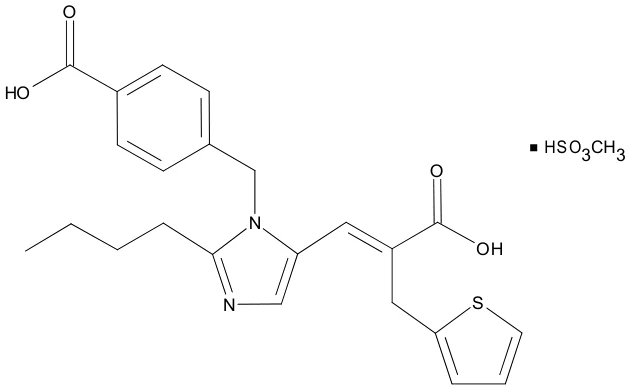
- Eprosartan mesylate
| Proper name: | eprosartan mesylate |
| Chemical name: |
|
| |
| Molecular formula and molecular mass: | C23H24N2O4S●CH4O3S |
| 520.65 | |
| Structural formula: | |
| Description: | White to off-white free-flowing crystalline powder |
| Physicochemical properties: | Freely soluble in ethanol, and melts between 248 and 250° C. Solubility Profile: A saturated aqueous solution of eprosartan had a pH of 2 after 30 minutes. Higher pH values were obtained by the addition of sodium hydroxide solution. |
| pH | Solubility (g/L) |
~ 1* 2 3 4 5 6 7 7.5 | 0.61 0.084 0.014 0.007 0.009 0.24 0.91 >20 |
| *0.1 M HCl |
The solubility in ethanol at room temperature is >100 mg/mL. pKa Value: The apparent pKa values of eprosartan were determined to be pKa1 = 4.11, pKa2 = 5.68 and pKa3 = 6.89. Distribution Coefficients: The octanol/water (pH 7.4 phosphate buffer) distribution coefficient was determined to be 0.047 (log D=-1.43). |
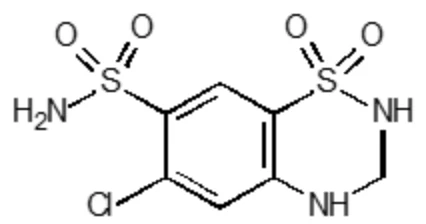
- Hydrochlorothiazide
 |
| Proper name: | hydrochlorothiazide | |
| Chemical name: | 6-chloro-3,4-dihydro-2H-1,2,4-benzothiadiazine-7-sulfonamide 1,1-dioxide | |
| Molecular formula and molecular mass: | C7H8ClN3O4S2 | 297.74 |
| Structural formula: | ||
| Description: | Hydrochlorothiazide is a white, or practically white, crystalline powder. It is slightly soluble in water, but freely soluble in sodium hydroxide solution. | |
14 CLINICAL TRIALS
14.1 Clinical Trials by Indication
The clinical trial data on which the original indication was authorized is not available.
15 MICROBIOLOGY
No microbiological information is required for this drug product.
16 NON-CLINICAL TOXICOLOGY
General Toxicology:
The acute toxicity of eprosartan was evaluated in a series of single and repeat dose studies by oral or i.v. administration for ≤3 months in mice, ≤6 months in rats and ≤1 year in dogs (Table 4 and Table 5).
Eprosartan showed no significant toxicity at dosages ≤2000 mg/kg/day in mice or ≤1000 mg/kg/day in rats and dogs.
- Acute Toxicity
Table 4 - Acute Toxicity of Eprosartan Alone
| Species | Route | Duration | Dose(mg/kg/day) | Major Findings |
|---|---|---|---|---|
Rat (Sprague-Dawley) | Oral | Single dose | 3, 10, 30, 100, 300, 600, 1000 | No effects on survival, body weight, clinical observations, hematology, clinical chemistry or urinalysis. |
 |
- Long-Term Toxicity
Table 5 - Chronic Toxicity of Eprosartan Alone
Rat (Sprague-Dawley) | i.v. | Single dose | 10, 30, 100, 300 | No effects on survival, clinical observations, hematology, clinical chemistry or histopathology. |
Dog (Beagle) | Oral | Single dose | 30, 100, 300, 600, 1000 | No effects on survival, body weight, clinical observations, hematology, clinical chemistry or histopathology. |
Dog (Beagle) | i.v. | Single dose | 100 and 300 | Emesis at >100 mg/kg. Mild increases in serum transaminase and alkaline phosphatase activities in male and female at 300 mg/kg. Mild intra-hepatic cholangitis in males at >100 mg/kg. No effect on survival or body weight. |
| Species | Route | Duration | Dose (mg/kg/day) | Major Findings |
Mouse (CD-1) | Oral | 10 days | 300, 1000, 3000 | No effects on survival, clinical observations, body weight, or clinical chemistry. |
Mouse (CD-1) | Oral | 3 months | 100, 300, 1000, 2000 | Transient (wk 1-2) body weight loss and decreased food consumption at doses > 1000 mg/kg. No effects on survival, clinical observations, hematology, clinical chemistry, organ weights or histopathology. |
Rat (Sprague-Dawley) | Oral | 7 days | 100, 300, 1000, 3000 | No effects on survival, clinical observations, body weight, hematology, clinical chemistry, or histopathology. |
Rat (Sprague-Dawley) | Oral | 1 month | 30, 100, 1000 | No effects on survival, clinical observations, body weight, food consumption, ophthalmology, hematology, clinical chemistry, urinalysis, organ weights or histopathology. |
Rat (Sprague-Dawley) | Oral | 1 month (impurity evaluation) | 100, 1000 | No effects on survival, clinical observations, body weight, food consumption, ophthalmology, hematology, clinical chemistry, urinalysis, organ weights or histopathology. |
Rat (Sprague-Dawley) | Oral | 6 months | 30, 100, 1000 | No effects on survival, clinical observations, body weight, food consumption, ophthalmology, hematology, clinical chemistry, urinalysis, organ weights or histopathology, increased ALT and AST activities in a few at 100 and 1000 mg. |
Rat (Sprague-Dawley) | i.v. | 4 days | 50, 150 | No effects on survival, body weight, clinical observations, hematology, clinical chemistry or histopathology. |
| Rat - males (Sprague-Dawley) | i.v. | 14 days | 1, 10, 30 | Minimal inflammatory cell infiltrates at injection site. No effects on survival, body weight, clinical observations, hematology, clinical chemistry, ophthalmology, organ weights or histopathology. |
| Rat - males (Sprague-Dawley) | i.v. | 1 month | 10, 50, 150 | Mortality (50 mg/kg) and transient hypoactivity or convulsions at ≥50 mg/kg. No effects on body weight, food consumption, hematology, clinical chemistry, ophthalmology, organ weights or histopathology. |
Dog (Beagle) | Oral | 4 days | 100, 1000 | No effects on survival, body weight, clinical observations, hematology, clinical chemistry, organ weights or histopathology. |
Dog - males (Beagle) | Oral | 1 month | 100, 300, 1000 | Mild decrease (≤15%) in erythrocyte parameters at 1000 mg/kg. No effects on survival, body weight, food consumption, electrocardiography, ophthalmology, hemostasis, clinical chemistry, urinalysis, organ weights or histopathology on day 29, 1.4-1.9 x increase in serum urea nitrogen in 1/ 3 dogs at 100 mg or 300 mg and in 2/ 3 dogs at 1000 mg. |
Dog (Beagle) | Oral | 6 months | 30, 100, 1000 | Mild decrease (≤17%) in erythrocyte parameters in males (≥100 mg/kg) and females (≥30 mg/kg). No effects on survival, body weight, food consumption, electrocardiography, ophthalmology, hemostasis, clinical |
The acute and subchronic toxicity of eprosartan and hydrochlorothiazide was evaluated in a series of single and repeat dose studies by oral administration for up to 3 months in mice and 3 months in dogs. The results of these studies are presented in Table 6 and Table 7.
Table 6 - Acute Toxicity of Eprosartan and Hydrochlorothiazide
1(Eprosartan /Hydrochlorothiazide)
| chemistry, urinalysis, organ weights or histopathology. | ||||
Dog (Beagle) | Oral | 1 year | 30, 100, 1000 | Mild decrease (≤16%) in erythrocyte parameters at 1000 mg/kg at weeks 13 and 26; no effect on erythrocyte parameters at week 52. No effects on survival, body weight, food consumption, electrocardiography, ophthalmology, hemostasis, clinical chemistry, urinalysis, organ weights or histopathology. |
| Male Dog (Beagle) | i.v. | 14 days | 1, 10, 30 | Emesis at 30 mg/kg. No effects on survival, body weight, food consumption, electrocardiography, ophthalmology, hematology, hemostasis, clinical chemistry, urinalysis, organ weights or histopathology. |
| Species | Route | Duration | Dose mg/kg/day | Major Findings |
| Dog, Beagle | oral | 1 day | 1(E/H)1000/0.3 (E/H)1000/1 (E/H)1000/3 | Clinical Observations:
Body Weight:
Mortality: No deaths. |
Table 7 - Subchronic Toxicity of Eprosartan and Hydrochlorothiazide
| Species | Route | Duration | Dosage (mg/kg/day) | Major Findings |
| mouse | oral (gavage) | 90 days | (E/H) 0/0-control (E/H) 2000/0 (E/H) 0/62.5 (E/H) 300/9.375 (E/H) 2000/62.5 | Mortality: no drug-related deaths Clinical Observations: no drug-related clinical observations, changes in body weight, food consumption or ophthalmology. Organ Weights: Heart weight (absolute and relative to body weight) was significantly (p < 0.05) decreased for low-dose and high-dose combination females. Necropsy/Histology: Mild to moderate juxtaglomerular cell hyperplasia in male and female mice given the high-dose combination. Tubular de-/and regeneration was increased in male and female mice of the high-dose combination group and for males treated with 62.5 mg/kg/ day hydrochlorothiazide alone. Conclusions: While low dose combination groups did not show signs of toxicity, in high dose combination group juxtaglomerular cell hyperplasia and renal tubular regeneration were observed. |
| dog | oral (gavage) | 30 days | (E/H) 0/0-control (E/H) 1000/0 (E/H) 0/31.25 (E/H) 100/3.125 (E/H) 1000/31.25 | Mortality: One female and one male dog of the high-dose combination group were sacrified. Body Weight: Loss in BW in male and female in high-dose combination. Clinical observations: One male and one female in high-dose combination group showed emesis, bloody feces, and hypoactivity. -In surviving males and females of high-dose combination group increased emesis observed. -In low-dose combination group, or Eprosartan alone (1000mg/kg/day) increased emesis observed. Clinical Chemistry/Hematology/Urinalysis/Histology: -One female and one male dog of the high-dose combination group showed signs of hemoconcentration, increased serum urea, creatinine and potassium and decreased serum sodium. -Surviving males and females of the high-dose combination group showed increased emesis and chemistry and urinalysis changes. -Microscopic changes in the 3/ 7 survivors with increased creatinine included diffuse renal tubular |
Carcinogenicity:
Eprosartan was not carcinogenic in rats or mice dosed for up to 2 years at 600 mg/kg/day and 2,000 mg/kg/day, respectively; the systemic exposure (AUCs) at these doses was approximately similar to or 3 times greater, respectively, than exposure achieved in humans given the maximum recommended human dose (800 mg) (Table 8).
Table 8 - Carcinogenicity of Eprosartan Alone
Hydrochlorothiazide
According to the experimental data available, hydrochlorothiazide revealed inconsistent evidence of carcinogenic activity in rats and mice, with conflicting evidence of hepatic adenoma in male mice at the highest dose and adrenal pheochromocytoma in one rat study but not in another. Current evidence is
degeneration and regeneration. Conclusions: -high dose combination (1000/31.25 mg/kg/day) caused nephrotoxicity progressing to renal failure, characterized by uremia and microscopic renal tubular degeneration and regeneration. | ||||
| dog | oral (gavage) | 90 days | (E/H) 0/0 (E/H) 1000/0.3 (E/H) 1000/3.0 | Mortality: No drug related mortality. Clinical Observations: Drug related clinical signs (in both treatment groups) were limited to emesis and unformed (soft, mucoid or watery) or discolored (yellow) feces. Body Weight/Food Consumption /Electrocardiography/Ophthalmology/Tissue Weight/Necropsy/Histology: No drug related effects. Hematology/Clinical Chemistry/Urinalysis: No significant drug related effects. Conclusions: No significant toxicological effects associated with either the 1000/0.3 or 1000/3.0 mg/kg/day combination groups. |
| Species | Route | Duration | Dose (mg/kg/day) | Major Findings |
|---|---|---|---|---|
| Mouse (CD-1) | Oral | 2 years | 100, 1000, 2000 | No carcinogenic effect. Decreased survival rate at 2000 mg; decreased mean body weights at 2000 mg (6-13%) and at 1000 mg (3- 9%); increased number of mice with lung congestion at 2000 mg. |
Rat (Sprague-Dawley) | Oral | 2 years | 30, 100, 600 | No carcinogenic effect. Increase in non-neoplastic lung lesions in males at equal to or greater than 30 mg (for edema and hemorrhage) and at 600 mg (necrosis). |
inadequate to draw a clear conclusion for a carcinogenic effect of hydrochlorothiazide in animals.
The mutagenic potential was assessed in a series of in vitro and in vivo test systems. While some positive results were obtained in vitro, all in vivo studies provided negative results. Hydrochlorothiazide enhanced the UVA-induced formation of pyrimidine dimers in vitro and in the skin of mice following oral treatment. It is therefore concluded that although there is no relevant mutagenic potential in vivo, hydrochlorothiazide could enhance the genotoxic effects of UVA light. This mechanism of photosensitization could be associated with a higher risk for non-melanoma skin cancer.
Genotoxicity:
In vitro and in vivo eprosartan showed no evidence of mutagenicity or clastogenicity in a microbial assay (Salmonella typhimurium and Escherichia coli), in L5178Y mouse lymphoma cells, in human lymphocytes and in a mouse micronucleus test (Table 9).
Table 9 - Genotoxic Potential: Eprosartan
Similarly, in vitro and in vivo eprosartan and hydrochlorothiazide showed no evidence of mutagenicity in microbial assays (Ames mutagenicity assay of Salmonella typhimurium and Escherichia coli strains), in human lymphocytes and in a mouse micronuleaus test (Table 10).
Table 10 - Genotoxic Potential: Eprosartan and Hydrochlorothiazide
| Test | System | ug/mL or plate | Results |
| Mutagenicity | Salmonella typhimurium and Escherichia coli | 50 - 5000 (with and without S9) | Negative |
| Mutagenicity and chromosome damage | L5178Y Mouse lymphoma cell | 198 - 2750 (with S9) 198 - 3250 (without S9) | Negative |
| Mutagenicity and chromosome damage | L5178Y Mouse lymphoma cells | 400 - 1250 (with S9) 400 - 900 (without S9) | Negative |
| Micronucleus | Mouse (CD-1) bone marrow cells | 1250, 2500 | Negative |
| Chromosome aberration | Human lymphocytes | 1000 - 2000 (with S9) 100 - 2500 (without S9) | Negative; slight polyploidy at cytotoxic concentrations |
| Test | System | Conc./Dose | Results |
| Mutagenicity | Salmonella typhimurium and Escherichia coli | 312.5 - 5000 μg/plate (with and without S9) | Negative |
| Micronucleus | Mouse (CD-1) bone marrow cells | 2000 mg/kg/day | Negative |
| Chromosome aberration | Human lymphocytes | 860.2-1831 mcg/mL (without S9) | Negative |
The 600/12.5 mixture of eprosartan and hydrochlorothiazide did not induce gene mutations (in vitro) and chromosomal aberrations (in vitro and in vivo) at non-toxic concentration/dose range.
Reproductive and Developmental Toxicology:
- Reproductive Toxicology
In general reproductive performance studies, eprosartan had no effects on mating, fertility or gonadal function in male or female rats given oral dosages up to 1000 mg/kg/day (Table 11).
Hydrochlorothiazide had no adverse effects on the fertility of mice and rats of either sex in studies wherein these species were exposed, via their diet, to doses of up to 100 and 4 mg/kg respectively, prior to mating and throughout gestation.
The combination (eprosartan and hydrochlorothiazide) given orally at doses up to 3/1 mg/kg/day (eprosartan and hydrochlorothiazide) did neither result in maternal nor fetal developmental toxicity effects.
- Teratology
Eprosartan had no effects on pregnancy, parturition or lactation in female rats and did not affect fetal development, survival, growth or postnatal development of offspring when given orally at dosages up to 1000 mg/kg/day or intravenously at dosages up to 150 mg/kg/day. When given to pregnant rabbits, eprosartan produced maternal toxicity at doses starting at 3 mg/kg/day and maternal and fetal mortality at doses starting at 10 mg/kg/day, consistent with the unique sensitivity of pregnant and fetal rabbits to angiotensin converting enzyme inhibitors and angiotensin receptor (AT1) antagonists given during mid- to late gestation (Table 11).
Table 11 - Reproduction and Teratology of Eprosartan Alone
| 1529-2635 mcg/mL (with S9) |
| Species | Route | Duration (Days*) | Dose (mg/kg/day) | Major Findings |
|---|---|---|---|---|
| Segment 1 | ||||
Male Rat (Sprague-Dawley) | Oral | 105 days | 30, 100, 1000 | No effects on body weight, clinical signs, mating, fertility, reproductive organ weights or gonadal function (spermatogenesis). |
Female Rat (Sprague-Dawley) | Oral | 14ac - 21pc | 0.3, 3, 30, 100, 300, 1000 | No effects on body weight, food consumption, clinical observations, mating, fertility, gonadal function, pregnancy, parturition or lactation. No effect on offspring viability, growth and development. |
| Segment 2 | ||||
Rat (Sprague- | Oral | 6 - 17pc | 30, 100, 1000 | No maternal or developmental effects. |
* ac = ante coitum; pc = post coitum; pp = post partum
The teratogenic potential of eprosartan and hydrochlorothiazide was investigated in a series of studies. Eprosartan in combination with hydrochlorothiazide was orally administered (by gavage) to female New Zealand White rabbits. The results of these studies are presented in Table 12.
Table 12 - Teratology of Eprosartan and Hydrochlorothiazide
| Dawley) | ||||||
Rabbit New Zealand White | Oral | 6 - 18pc 6 - 28pc | 100, 500, 1000 1, 10, 30, 60 | Maternal toxicity, but no fetal toxicity, at 100 mg/kg when dosed 6-18pc. Maternal toxicity (mortality, decreased body weight and food consumption and abortions) and fetal mortality at >10 mg/kg when dosed 6-28pc. | ||
Rabbit New Zealand White | Oral | 6 - 28pc | 0.3, 3, 30 | Maternal decreased food consumption (>3 mg/kg) or increased mortality, decreased body weight gain, adverse clinical signs and abortions at 30 mg/kg. Fetal mortality at 30 mg/kg. | ||
Rabbit New Zealand White | Oral | 6 - 18pc | 10, 30 | Maternal toxicity (decreased food consumption and body weight gain at >10 mg/kg) and lethality (30 mg/kg). No fetal developmental toxicity at 10 or 30 mg/kg. | ||
| Segment 3 | ||||||
Rat (Sprague-Dawley) | Oral | 6pc - 21pp | 30, 100, 1000 | No effects on pregnancy, parturition or lactation. No effect on survival, growth, or postnatal development of offspring. | ||
Rat (Sprague-Dawley) | i.v. | 15pc - 20pp | 10, 50, 150 | No effects on pregnancy, parturition or lactation. No effects on survival, growth or postnatal development of offspring. | ||
| Species | Route | Duration | Dosage (mg/kg/day) | Major Findings |
| rabbit | oral (gavage) | days 6-28 (gest) days 6-17 (gest) days 18-28 (gest) days 6-28 (gest) | 10/0 30/10 10/3 10/3 3/1 1/0.3 0/3 | Maternal toxicity (mortality, decreased food consumption and weight gain) but no developmental toxicity was evident at 30/10 mg/kg/day (eprosartan/HCTZ) when given on day 6 to 17 p.c. Maternal toxicity (body weight decreased and early delivery) and developmental toxicity (increased resorption rate) were evident at 10/3 mg/kg/day when given at late pregnancy (days 18 to 28). |
1Eprosartan/HCTZ
| rabbit | oral (gavage) | days 6-17 (gest) | 0/0 0/10 10/3 30/0 30/10 | Maternal toxicity but no developmental toxicity was evident at 30/0, 10/3 or 30/10 mg/kg/day (eprosartan/HCTZ) when given on days 6 - 17 of pregnancy. Maternal toxicity was greater in rabbits given 30/10 mg/kg/day compared to rabbits given 30/0 or 0/10 mg/kg/day. |
| rabbit | oral (gavage) | days 18-28 (gest) | 0/0 0/3 3/1 10/0 10/3 | Maternal toxicity (body weight loss, abortion and/or early delivery) and developmental toxicity (increased fetal mortality) were evident at 10 mg/kg/day of eprosartan alone and for the 10/3 mg/kg/day (eprosartan/HCTZ) combination. HCTZ produced no maternal or developmental toxicity and did not enhance the toxicity effects of eprosartan. |