


Product Monograph - Topiramate (Sivem Pharmaceuticals, 25 mg, ..., 200 mg)
Recent Major Label Changes
| 4.Dosage and Administration, 4.1.Dosing Considerations | 2026-06 |
|---|---|
| 7.1.1. Pregnancy | 2026-06 |
Table of Contents
Certain sections or subsections that are not applicable at the time of the preparation of the most recent authorized product monograph are not listed.
Recent Major Label Changes 2
Table of Contents ..................................................................................................................... 2
Part 1: Healthcare Professional Information ............................................................................ 4
- 1.
Indications ........................................................................................................................... 4
1.1. Pediatrics ................................................................................................................. 4
1.2. Geriatrics ................................................................................................................. 4
- 2. Contraindications ......................................................................................................... 4
- 4.
Dosage and Administration .......................................................................................... 5
4.1. Dosing Considerations ............................................................................................. 5
4.2. Recommended Dose and Dosage Adjustment ........................................................ 5
4.2.1. Discontinuing Treatment ......................................................................................... 6
4.4. Administration ......................................................................................................... 7
4.5. Missed Dose ............................................................................................................ 7
- 5. Overdose...................................................................................................................... 8
- 6. Dosage Forms, Strengths, Composition and Packaging ................................................. 8
- 7.
Warnings and Precautions ........................................................................................... 9
General…………………………………………………………………………………………………………………………10
Carcinogenesis and Genotoxicity ....................................................................................... 9
Driving and Operating Machinery...................................................................................... 9
Endocrine and Metabolism ............................................................................................... 9
Hepatic/Biliary/Pancreatic ............................................................................................... 14
Monitoring and Laboratory Tests .................................................................................... 14
Neurologic ....................................................................................................................... 14
Ophthalmologic ............................................................................................................... 15
Psychiatric ....................................................................................................................... 16
Renal ................................................................................................................................ 16
Skin .................................................................................................................................. 17
7.1. Special Populations .................................................................................................. 17
7.1.1. Pregnancy .............................................................................................................. 17
7.1.2. Breast-feeding ....................................................................................................... 20
7.1.3. Pediatrics ............................................................................................................... 20
7.1.4. Geriatrics ............................................................................................................... 21
- 8.
Adverse Reactions ...................................................................................................... 22
8.1. Adverse Reaction Overview ...................................................................................... 22
8.2. Clinical Trial Adverse Reactions ................................................................................ 24
8.2.1. Clinical Trial Adverse Reactions – Pediatrics .......................................................... 32
8.4. Less Common Clinical Trial Adverse Reactions ...................................................... 36
8.5. Post-Market Adverse Reactions ............................................................................ 36
- 9.
Drug Interactions ............................................................................................................... 41
9.2. Drug Interactions Overview ...................................................................................... 41
9.4. Drug-Drug Interactions .......................................................................................... 41
9.5. Drug-Food Interactions .......................................................................................... 48
9.6. Drug-Herb Interactions .......................................................................................... 49
9.7. Drug-Laboratory Test Interactions ......................................................................... 49
- 10.
Clinical Pharmacology ...................................................................................................... 49
10.1. Mechanism of Action .............................................................................................. 49
10.2. Pharmacodynamics ................................................................................................ 49
10.3. Pharmacokinetics ................................................................................................... 51
- 11. Storage, Stability and Disposal ......................................................................................... 53
Part 2: Scientific Information ................................................................................................. 54
- 13. Pharmaceutical Information ............................................................................................ 54
- 14.
Clinical Trials .................................................................................................................... 54
14.1. Clinical Trials by Indication ..................................................................................... 54
14.2. Comparative Bioavailability Studies ....................................................................... 59
- 16. Non-Clinical Toxicology .............................................................................................. 61
- 17. Supporting Product Monographs ..................................................................................... 64
Patient Medication Information ............................................................................................ 65
Part 1: Healthcare Professional Information
1. Indications
Epilepsy
TOPIRAMATE (topiramate) is indicated:
- as monotherapy for the management of patients (adults and children six years and older) with newly diagnosed epilepsy.
- as adjunctive therapy for the management of patients (adults and children two years and older) with epilepsy who are not satisfactorily controlled with conventional therapy.
Migraine Prophylaxis
TOPIRAMATE is indicated in adults for the prophylaxis of migraine headache. Prophylactic treatment of migraine may be considered in situations such as: adults experiencing four or more migraine attacks per month who fail to respond adequately to acute abortive therapy; recurring attacks that significantly interfere with the patient’s daily routine; a pattern of increasing migraine attacks over time, with the risk of developing rebound headache from acute abortive therapies; or failure of, or contraindication to, or troublesome side effects from acute abortive medications. Continuing therapy should be reviewed every six months. TOPIRAMATE should not be used in the acute treatment of migraine attacks. Safety and efficacy of topiramate in the management or prevention of cluster headache, hemiplegic, basilar, ophthalmoplegic, or transformed migraine headaches have not been established.
1.1. Pediatrics
Pediatrics (<2 years of age): Based on the data submitted and reviewed by Health Canada, the safety and efficacy of topiramate in pediatric patients under two years of age has not been established; therefore TOPIRAMATE is not indicated in children under two years of age (see 7.1.3 Pediatrics).
1.2. Geriatrics
Geriatrics (>65 years of age): There is limited information in patients over 65 years of age (see 7.1.4 Geriatrics).
2. Contraindications
TOPIRAMATE is contraindicated in patients who are hypersensitive to this drug or to any ingredient in the formulation, including any non-medicinal ingredient, or component of the container. For a complete listing, see 6. Dosage Forms, Strengths, Composition and Packaging.
TOPIRAMATE for the indication prophylaxis of migraine is contraindicated in pregnancy and in women of childbearing potential who are not using a highly effective method of contraception (see 4.1 Dosing Considerations and 7.1.1 Pregnant Women).
4. Dosage and Administration
4.1. Dosing Considerations
- Patients with renal impairment
- Patients undergoing hemodialysis
- Patients with hepatic disease
- Prophylactic treatment of migraine: In pregnancy, the occurrence of seizures presents a significant risk for the mother and child. Prescribing TOPIRAMATE to prevent seizures therefore outweighs the risk of malformations to the fetus. However, taking TOPIRAMATE to prevent migraine attacks does not outweigh this risk. Consequently, TOPIRAMATE is contraindicated in pregnancy and in women of child- bearing potential who are not using a highly effective method of contraception (see 2. Contraindications). Educational materials related to the management of women of childbearing potential treated with TOPIRAMATE are available for healthcare professionals through the manufacturer
4.2. Recommended Dose and Dosage Adjustment
TOPIRAMATE tablets can be taken without regard to meals.
Epilepsy
Monotherapy
Adults and Children (Age 6 years and older)
The recommended initial target dose for topiramate monotherapy in adults and children six years of age and older is 100 mg/day and the maximum recommended dose is 400 mg/day, administered in two divided doses, as needed, and tolerated.
Table 1: Recommended titration rate for topiramate monotherapy to 100 mg/day
| Week 1 | Weeks 2–3 | Weeks 3–4 | |
|---|---|---|---|
| Morning Dose | None | 25 mg | 50 mg |
| Evening Dose | 25 mg | 25 mg | 50 mg |
If doses above 100 mg/day are required, the dose may be increased at weekly intervals in increments of 50 mg/day to a maximum of 400 mg/day. Dose and titration rate should be guided by clinical outcome. Some patients may benefit from a slower titration schedule. Daily doses above 400 mg have not been adequately studied. Only 14 pediatric patients have received 500 mg/day topiramate in controlled clinical trials (see 8.2.1 Clinical Trial Adverse Reactions – Pediatrics, Table 9).
Adjunctive Therapy
Adults (Age 17 years and older)
It is recommended that TOPIRAMATE as adjunctive therapy be initiated at 50 mg/day, followed by titration as needed and tolerated to an effective dose. At weekly intervals, the dose may be increased by 50 mg/day and taken in two divided doses. Some patients may benefit from lower initial doses, e.g., 25 mg and/or a slower titration schedule. Some patients may achieve efficacy with once-a-day dosing.
The recommended total daily maintenance dose is 200 to 400 mg/day in two divided doses. Doses above 400 mg/day have not been shown to improve responses and have been associated with a greater incidence of adverse events. The maximum recommended dose is 800 mg/day. Daily doses above 1,600 mg have not been studied.
Children (Ages 2–16 years)
It is recommended that TOPIRAMATE as adjunctive therapy be initiated at 25 mg (or less, based on a range of 1 to 3 mg/kg/day) nightly for the first week followed by titration as needed and tolerated to an effective dose. The dosage should then be increased at one- or two-week intervals by increments of 1 to 3 mg/kg/day (administered in two divided doses). Some patients may benefit from lower initial doses and/or a slower titration schedule.
The recommended total daily maintenance dose is approximately 5 to 9 mg/kg/day in two divided doses.
4.2.1. Discontinuing Treatment
In patients with a history of seizures or epilepsy, TOPIRAMATE should be gradually withdrawn to minimize the potential for seizures or increased seizure frequency. In clinical trials, daily dosages were decreased in weekly intervals by 50 to 100 mg in adults with epilepsy.
In clinical trials of children, topiramate was gradually withdrawn over a two- to eight-week period.
In situations where rapid withdrawal of TOPIRAMATE is medically required, appropriate monitoring is recommended.
Migraine Prophylaxis
Adults
The usual total daily dose of TOPIRAMATE as treatment for prophylaxis of migraine headache is 100 mg/day administered in two divided doses. Dose and titration rate should be guided by clinical outcome. If required, longer intervals between dose adjustments can be used. No extra benefit has been demonstrated from the administration of doses higher than 100 mg/day and the incidence of some adverse events increases with increasing dose (see 8.2 Clinical Trial Adverse Reactions, Table 8).
Table 2: Recommended titration rate for topiramate for migraine prophylaxis to 100 mg/day
| Morning Dose | Evening Dose | |
|---|---|---|
| Week 1 | None | 25 mg |
| Week 2 | 25 mg | 25 mg |
| Week 3 | 25 mg | 50 mg |
| Week 4 | 50 mg | 50 mg |
Drug Discontinuation
In patients without a history of seizures or epilepsy, TOPIRAMATE should be gradually withdrawn to minimize the potential for seizures or increased seizure frequency. In clinical trials, daily dosages were decreased in weekly intervals by 25–50 mg in adults receiving topiramate at doses up to 100 mg/day for migraine prophylaxis.
In situations where rapid withdrawal of TOPIRAMATE is medically required, appropriate monitoring is recommended.
Pediatrics
The safety and efficacy of topiramate in the management or prevention of migraine in pediatrics have not been studied. Health Canada has not authorized an indication for pediatric use.
Patients with Renal Impairment
In renally impaired subjects (creatinine clearance less than 70 mL/min/1.73 m2), one-half of the usual adult dose is recommended. Such patients will require a longer time to reach steady-state at each dose (see 7. Warnings and Precautions, Renal and 10.3 Pharmacokinetics, Special Populations and Conditions, Renal Insufficiency).
Patients Undergoing Hemodialysis
Topiramate is cleared by hemodialysis at a rate that is 4 to 6 times greater than a normal individual. Accordingly, a prolonged period of dialysis may cause topiramate concentration to fall below that required to maintain an antiseizure effect. To avoid rapid drops in topiramate plasma concentration during hemodialysis, a supplemental dose of TOPIRAMATE may be required. The supplemental dose should take into account 1) the duration of dialysis, 2) the clearance rate of the dialysis system being used, and 3) the effective renal clearance of topiramate in the patient being dialyzed (see 7. Warnings and Precautions, Renal).
Patients with Hepatic Disease
In hepatically impaired patients, topiramate plasma concentrations are increased approximately 30%. This moderate increase is not considered to warrant adjustment of the TOPIRAMATE dosing regimen. Initiate topiramate therapy with the same dose and regimen as for patients with normal hepatic function. The dose titration in these patients should be guided by clinical outcome, i.e., seizure control, and avoidance of adverse effects. Such patients will require a longer time to reach steady-state at each dose (see 10.3 Pharmacokinetics, Special Populations and Conditions, Hepatic Insufficiency).
Geriatrics
See 7.1.4 Geriatrics.
4.4. Administration
TOPIRAMATE is available in tablets for oral administration. Tablets should not be broken.
4.5. Missed Dose
The missed dose should be taken as soon as possible. If it is almost time for the next dose, the missed dose should not be taken. Instead, the next scheduled dose should be taken. Doses should not be doubled.
5. Overdose
Overdoses of topiramate have been reported. Signs and symptoms included convulsions, drowsiness, speech disturbances, blurred vision, diplopia, mentation impaired, lethargy, abnormal co-ordination, stupor, hypotension, abdominal pain, agitation, dizziness, and depression. The clinical consequences were not severe in most cases but deaths have been reported after polydrug overdoses involving topiramate.
Topiramate overdose can result in severe metabolic acidosis (see 7. Warnings and Precautions, Endocrine and Metabolism, Metabolic Acidosis).
The highest topiramate overdose reported was calculated to be between 96 and 110 g and resulted in coma lasting 20 to 24 hours followed by full recovery after three to four days.
In the event of overdose, Topiramate should be discontinued and general supportive treatment given until clinical toxicity has been diminished or resolved. Hemodialysis has been shown to be an effective means of removing topiramate from the body. The patient should be well hydrated.
| For the most recent information in the management of a suspected drug overdose, contact your regional poison control centre or Health Canada’s toll-free number, 1-844 POISON-X (1-844-764- 7669). |
|---|
6. Dosage Forms, Strengths, Composition and Packaging
Table 3: Dosage Forms, Strengths, Composition and Packaging
| Route of Administration | Dosage Form / Strength/Composition | Non-medicinal Ingredients |
|---|---|---|
| oral | Tablets: 25 mg, 50 mg, 100 mg and 200 mg | Cellulose microcrystalline, hypromellose 3cp, hypromellose 6cp, iron oxide red (only for 200 mg), iron oxide yellow (only for 50 mg and 100 mg), lactose monohydrate, magnesium stearate, polyethylene glycol 400, polysorbate 80, sodium starch glycolate, starch pregelatinized, and titanium dioxide. |
Description
TOPIRAMATE Film Coated Tablets
25 mg: White, circular, biconvex, film-coated tablets debossed with ’E’ on one side and “22” on the other side. Available in HDPE bottle of 100’s count.
50 mg: Light yellow colored, circular, biconvex, film-coated tablets debossed with ‘E’ on one side and ‘33’ on the other side. Available in HDPE bottle of 60’s & 100’s count.
100 mg: Dark yellow colored, circular, biconvex, beveled edged, film-coated tablets debossed with “E” on one side and “23” on the other. Available in HDPE bottle of 100’s count.
200 mg: Pink colored, circular, biconvex, beveled edged, film-coated tablets debossed “E” on one side and “24” on the other. Available in HDPE bottle of 60’s & 100’s count.
7. Warnings and Precautions
General
Antiepileptic drugs (AEDs), including TOPIRAMATE, should be withdrawn gradually to minimize the potential for seizures or increased seizure frequency. In clinical trials in adult patients with epilepsy, dosages were decreased by 50–100 mg/day at weekly intervals. In clinical trials of children, topiramate was gradually withdrawn over a two- to eight-week period (see 4.2 Recommended Dose and Dosage Adjustment, Epilepsy, Drug Discontinuation).
In patients without a history of seizures or epilepsy, TOPIRAMATE should be gradually withdrawn to minimize the potential for seizures or increased seizure frequency. In clinical trials in adult patients receiving topiramate for migraine prophylaxis dosages were decreased by 25–50 mg/day at weekly intervals (see 4.2 Recommended Dose and Dosage Adjustment, Migraine Prophylaxis, Drug Discontinuation).
In situations where rapid withdrawal of TOPIRAMATE is medically required, appropriate monitoring is recommended (see 4.2 Recommended Dose and Dosage Adjustment, Epilepsy, Drug Discontinuation and 4.2 Recommended Dose and Dosage Adjustment, Migraine Prophylaxis, Drug Discontinuation).
Carcinogenesis and Genotoxicity
See 16. Non-Clinical Toxicology for discussion on animal data.
Driving and Operating Machinery
TOPIRAMATE acts on the central nervous system and may produce drowsiness, dizziness, or other related symptoms. It may also cause visual disturbances and/or blurred vision. These adverse events could potentially be dangerous in patients driving a vehicle or operating machinery. Accordingly, patients should be advised not to drive or operate complex machinery or engage in other hazardous activities until they have gained sufficient experience on TOPIRAMATE to gauge whether or not it affects their mental and/or motor performance adversely (See Patient Medication Information).
Endocrine and Metabolism
Hyperammonemia and Encephalopathy
Topiramate alone or in concomitant treatment with valproic acid (VPA) or other antiepileptic medications can cause hyperammonemia with or without encephalopathy. Although hyperammonemia may be asymptomatic, clinical symptoms of hyperammonemic encephalopathy often include acute alterations in level of consciousness and/or cognitive function with lethargy or vomiting. Hypothermia can also be a manifestation of hyperammonemia. In patients using concomitant topiramate and valproate this adverse event can occur after starting topiramate treatment or after increasing the daily dose of topiramate. Treatment-induced encephalopathy has also been reported without hyperammonemia (See 9.4 Drug-Drug Interactions).
If hyperammonemia is suspected serum ammonia levels should be monitored (see Monitoring Hyperammonemia and Encephalopathy, below). If elevated serum ammonia concentrations persist, consider discontinuing topiramate and/or VPA. The symptoms and signs of hyperammonemic encephalopathy may abate with discontinuation of either drug.
Patients with inborn errors of metabolism or reduced hepatic mitochondrial activity may be at an increased risk for hyperammonemia with or without encephalopathy. Although not studied, topiramate treatment or an interaction of concomitant topiramate and valproic acid treatment may exacerbate existing defects or unmask deficiencies in susceptible persons.
Hyperammonemia/Encephalopathy with Topiramate Monotherapy
Post-market: Hyperammonemia with and without encephalopathy has been reported in adult patients who were taking topiramate alone (see 8.5 Post-Market Adverse Reactions).
Clinical Trials: Topiramate treatment has produced hyperammonemia (in some instances, dose-related) in clinical investigational programs of adolescents (12–16 years) who were treated with topiramate monotherapy for migraine prophylaxis (incidence above the upper limit of normal, placebo: 22%; 50 mg/day: 26%; 100 mg/day: 41%). Pediatric patients under two years of age who were treated with adjunctive topiramate for partial onset epilepsy, also experienced hyperammonemia (placebo: 8%; 5 mg/kg/day: 10%; 15 mg/kg/day: 0%; 25 mg/kg/day: 9%). TOPIRAMATE is not indicated for migraine prophylaxis in patients under 18 years of age. TOPIRAMATE is also not indicated for any use in patients under two years of age (see 1.1 Pediatrics).
In some patients, ammonia was markedly increased (>50% above upper limit of normal). In adolescent patients, the incidence of markedly increased hyperammonemia was 6% for placebo, 6% for 50 mg, and 12% for 100 mg topiramate daily. The hyperammonemia associated with topiramate treatment occurred with and without encephalopathy in placebo-controlled trials and in an open-label, extension trial. Dose- related hyperammonemia was also observed in the extension trial in pediatric patients up to two years old.
Hyperammonemia/Encephalopathy with Concomitant Valproic Acid (VPA)
Post-market: In post-marketing reports, concomitant administration of topiramate and valproic acid (VPA) has been associated with hyperammonemia with or without encephalopathy in patients who have tolerated either drug alone. The risk of encephalopathy is greater for concomitant topiramate-VPA therapy than for VPA monotherapy. This adverse reaction is not due to a pharmacokinetic interaction. (See 9.4 Drug-Drug Interactions, Antiepileptic Drugs (AEDs)).
Clinical Trials: Although TOPIRAMATE is not indicated for use in patients under two years of age, in an investigational trial in this population, VPA clearly produced a dose-related increase in the incidence of treatment-emergent hyperammonemia (above the upper limit of normal, placebo: 0%, 5 mg/kg/day: 12%, 15 mg/kg/day: 7%, 25 mg/kg/day: 17%). Markedly increased, dose-related hyperammonemia also occurred in these patients (placebo: 0%; 5 mg/kg/day: 0%, 15 mg/kg/day: 7%, 25 mg/kg/day: 8%). Dose- related hyperammonemia was similarly observed in a long-term extension trial in these very young, pediatric patients.
Monitoring for Hyperammonemia/Encephalopathy
Asymptomatic elevations of serum ammonia levels may occur with topiramate treatment and require close monitoring. In patients who develop unexplained vomiting, lethargy, confusion, other changes in mental status or hypothermia, associated with any topiramate treatment, hyperammonemic encephalopathy should be considered a possible cause of these symptoms and serum ammonia levels measured. Hyperammonemia may be present despite normal liver function tests (See 8.5 Post-Market Adverse Reactions and 7. Warnings and Precautions, Endocrine and Metabolism, Hypothermia with Concomitant Valproic Acid Use, and 9.4 Drug-Drug Interactions, Antiepileptic Drugs (AEDs)).
Treatment-induced encephalopathy may occur with or without hyperammonemia; normal serum ammonia levels cannot be used to rule out treatment-induced encephalopathy.
Hypothermia with Concomitant Valproic Acid (VPA) Use
Hypothermia, defined as an unintentional drop in body core temperature to < 35°C (95°F), has been reported in association with topiramate use with concomitant valproic acid (VPA) both in conjunction with hyperammonemia and in the absence of hyperammonemia. This adverse reaction in patients using concomitant topiramate and valproate can occur after starting topiramate treatment or after increasing the daily dose of topiramate (see 9.4 Drug-Drug Interactions, Valproic Acid). Consideration should be given to stopping topiramate or valproate in patients who develop hypothermia, which may be manifested by a variety of clinical abnormalities including lethargy, confusion, coma, and significant alterations in other major organ systems such as the cardiovascular and respiratory systems. Clinical management and assessment should include examination of blood ammonia levels (see 7. Warnings and Precautions, Endocrine and Metabolism, Hyperammonemia and Encephalopathy).
Oligohidrosis and Hyperthermia
Oligohidrosis (decreased sweating), anhidrosis and hyperthermia (elevation of body temperature above normal), infrequently resulting in hospitalization, including fatalities, have been reported in patients treated with topiramate. Some of the cases were reported after exposure to elevated environmental temperatures. Oligohidrosis and hyperthermia may have potentially serious sequelae and may be preventable by prompt recognition of symptoms and appropriate treatment.
These reports have primarily involved children. Patients treated with TOPIRAMATE, especially pediatric patients, should be monitored closely for evidence of decreased sweating and increased body temperature, particularly in hot weather. Proper hydration before and during activities such as exercise or exposure to warm temperatures is recommended.
Caution should be used when TOPIRAMATE is prescribed with other drugs that predispose patients to heat- related disorders; these drugs include, but are not limited to, other carbonic anhydrase inhibitors and drugs with anticholinergic activity (see 8.5 Post-Market Adverse Reactions).
Metabolic Acidosis
Hyperchloremic, non-anion gap, metabolic acidosis (i.e., decreased serum bicarbonate below the normal reference range in the absence of respiratory alkalosis) is associated with topiramate treatment. This decrease in serum bicarbonate is due to the inhibitory effect of topiramate on renal carbonic anhydrase. Generally, the decrease in bicarbonate occurs early in treatment although it can occur at any time during treatment. These decreases are usually mild to moderate (average decrease of 4 mmol/L at doses of 100 mg/day or above in adults and at approximately 6 mg/kg/day in pediatric patients). Rarely, patients have experienced decreases to values below 10 mmol/L. Conditions or therapies that predispose to acidosis (such as renal disease, severe respiratory disorders, status epilepticus, diarrhea, surgery, ketogenic diet, or certain drugs) may be additive to the bicarbonate-lowering effects of topiramate.
In patients >16 years of age, the incidence of persistent treatment-emergent decreases in serum bicarbonate (levels of <20 mmol/L at two consecutive visits or at the final visit) in controlled clinical trials for adjunctive treatment of epilepsy was 32% for 400 mg/day, and 1% for placebo. Metabolic acidosis has been observed at doses as low as 50 mg/day. The incidence of a markedly abnormally low serum bicarbonate (i.e., absolute value <17 mmol/L and >5 mmol/L decrease from pre-treatment) in these trials was 3% for 400 mg/day, and 0% for placebo. In the monotherapy trial, the incidence was 1% for 50 mg/day and 7% for 400 mg/day. Serum bicarbonate levels have not been systematically evaluated at daily doses greater than 400 mg/day.
In pediatric patients two to 16 years of age, the incidence of persistent treatment-emergent decreases in serum bicarbonate in placebo-controlled trials for adjunctive treatment of Lennox-Gastaut Syndrome or refractory partial onset seizures was 67% for topiramate (at approximately 6 mg/kg/day), and 10% for placebo. The incidence of a markedly abnormally low serum bicarbonate (i.e., absolute value <17 mmol/L and >5 mmol/L decrease from pre-treatment) in these trials was 11% for topiramate and 0% for placebo.
The incidence of persistent treatment-emergent decreases in serum bicarbonate in placebo-controlled trials for adults for prophylaxis of migraine was 44% for 200 mg/day, 39% for 100 mg/day, 23% for 50 mg/day, and 7% for placebo. The incidence of a markedly abnormally low serum bicarbonate (i.e., absolute value <17 mmol/L and >5 mmol/L decrease from pre-treatment) in these trials was 11% for 200 mg/day, 9% for 100 mg/day, 2% for 50 mg/day, and <1% for placebo.
Although not approved for use in patients under two years of age for any indication (see 1. Indications), a controlled trial that examined this population revealed that topiramate produced a metabolic acidosis that was notably greater in magnitude than that observed in controlled trials in older children and adults. The mean treatment difference (25 mg/kg/day topiramate-placebo) was -5.9 mEq/L for bicarbonate. The incidence of metabolic acidosis (defined by a serum bicarbonate <20 mEq/L) was 0% for placebo, 30% for 5 mg/kg/day, 50% for 15 mg/kg/day, and 45% for 25 mg/kg/day. The incidence of markedly abnormal changes (i.e., <17 mEq/L and >5 mEq/L decrease from baseline of >20 mEq/L) was 0% for placebo, 4% for 5 mg/kg/day, 5% for 15 mg/kg/day, and 5% for 25 mg/kg/day.
Cases of moderately severe metabolic acidosis have been reported in patients as young as five months old, especially at daily doses above 5 mg/kg/day.
In pediatric patients, six to 15 years of age, the incidence of persistent treatment-emergent decreases in serum bicarbonate in the epilepsy controlled clinical trial for monotherapy was 9% for 50 mg/day and 25% for 400 mg/day. The incidence of a markedly abnormally low serum bicarbonate (i.e., absolute value <17 mEq/L and >5 mEq/L decrease from pre-treatment) in this trial was 1% for 50 mg/day and 6% for 400 mg/day.
In patients ≥16 years of age, the incidence of persistent treatment-emergent decreases in serum bicarbonate in the epilepsy controlled clinical trial for monotherapy was 14% for 50 mg/day and 25% for 400 mg/day. The incidence of a markedly abnormally low serum bicarbonate (i.e., absolute value <17 mEq/L and >5 mEq/L decrease from pre-treatment) in this trial for adults was 1% for 50 mg/day and 6% for 400 mg/day.
Some manifestations of acute or chronic metabolic acidosis may include hyperventilation, nonspecific symptoms such as fatigue and anorexia, or more severe sequelae including cardiac arrhythmias or stupor. Chronic, untreated metabolic acidosis may increase the risk for nephrolithiasis or nephrocalcinosis (see 7. Warnings and Precautions, Renal, Kidney Stones), and may also result in osteomalacia (referred to as rickets in pediatric patients) and/or osteoporosis with an increased risk for fractures.
Chronic metabolic acidosis in pediatric patients may also reduce growth rates. A reduction in growth rate may eventually decrease the maximal height achieved. The effect of topiramate on growth and bone-related sequelae has not been systematically investigated in long-term, placebo-controlled trials. A one year, open-label study in 63 pediatric patients aged 6 to 15 years with recent or new onset of epilepsy was conducted to assess the effects of topiramate versus levetiracetam on growth, development, and bone mineralization. Efficacy was not evaluated in this study. Twenty-four patients who received topiramate completed the study. These patients had statistically significant reductions in mean annual change from baseline in body weight and bone mineral density compared to the levetiracetam group. A similar trend was also observed for height and height velocity but was not statistically significant. Continued growth was observed in both treatment groups but was slower in the topiramate arm. Topiramate exposure also altered biochemical markers for bone mineralization such as parathyroid hormone and 25-hydroxy-vitamin D. There were no traumatic injuries, fractures or falls in either treatment group. Other confounding factors aside from metabolic acidosis could not be excluded.
Long-term, open-label treatment of infants/toddlers, with intractable partial epilepsy, for up to one year, showed reductions from baseline in Z SCORES for length, weight, and head circumference compared to age and sex-matched normative data, although these patients with epilepsy are likely to have different growth rates than normal infants. Reductions in Z SCORES for length and weight were correlated to the degree of acidosis. Topiramate treatment that causes metabolic acidosis during pregnancy can possibly produce adverse effects on the fetus and might also cause metabolic acidosis in the neonate from possible transfer of topiramate to the fetus.
Measurement of baseline and periodic serum bicarbonate during topiramate treatment is recommended. If metabolic acidosis develops and persists, consideration should be given to reducing the dose or discontinuing topiramate (using dose tapering). If the decision is made to continue patients on topiramate in the face of persistent acidosis, alkali treatment should be considered.
Decreases in Serum Potassium with Concomitant Treatment with Hydrochlorothiazide (HCTZ)
In a drug interaction study, a greater decrease from baseline in serum potassium values was seen with concomitant treatment than for either drug alone. At the end of each treatment period, 27% (3/11) of subjects on topiramate treatment alone and 25% (3/12) of subjects on HCTZ treatment alone showed a serum potassium value of <3.6 mEq/L, compared to 61% (14/23) of subjects on concomitant drug treatment. One of the subjects who had hypokalemia with concomitant treatment also had an abnormal ECG (non-specific ST-T wave changes), which may have been related to the decrease in plasma potassium levels. Caution should be used when treating patients who are receiving TOPIRAMATE and hydrochlorothiazide concomitantly (see 9.4 Drug-Drug Interactions, Other Drug Interactions, Hydrochlorothiazide (HCTZ)).
Nutritional Supplementation
A dietary supplement or increased food intake may be considered if the patient is losing weight while on this medication.
Hepatic/Biliary/Pancreatic
Decreased Hepatic Function
In hepatically impaired patients, TOPIRAMATE should be administered with caution as the clearance of topiramate was decreased compared with normal subjects.
Monitoring and Laboratory Tests
It has been observed in clinical trials that topiramate-treated subjects experienced an average decrease in serum bicarbonate level of 4 mmol/L and an average increase in serum chloride level of 4 mmol/L (see 7. Warnings and Precautions, Endocrine and Metabolism).
Topiramate treatment with or without concomitant valproic acid (VPA) can cause hyperammonemia with or without encephalopathy (see 7. Warnings and Precautions, Endocrine and Metabolism, Hyperammonemia and Encephalopathy).
Hypokalemia Observed During Concomitant Treatment with Hydrochlorothiazide: In a drug interaction study with the diuretic hydrochlorothiazide (HCTZ), the percentage of patients with a serum potassium measurement of <3.6 mEq/L was greater at the end of concomitant treatment than at the end of treatment for either drug alone: 27% (3/11) of subjects on topiramate treatment alone and 25% (3/12) of subjects on HCTZ alone versus 61% (14/22) of subjects on concomitant drug treatment (see 7.
Warnings and Precautions, Endocrine and Metabolism, Decreases in Serum Potassium with Concomitant Treatment with Hydrochlorothiazide (HCTZ) and 9.4 Drug-Drug Interactions, Other Drug Interactions, Hydrochlorothiazide (HCTZ)).
Neurologic
Central Nervous System (CNS) Effects
Adverse events most often associated with the use of topiramate were CNS-related and were observed in both the epilepsy and migraine populations. In adults, the most significant of these can be classified into three general categories:
- i) psychomotor slowing, difficulty with concentration and speech or language problems, in particular, word-finding difficulties,
- ii) somnolence or fatigue and
- iii) mood disturbances including irritability and depression.
In the controlled epilepsy adjunctive therapy trials, these events were generally mild to moderate and generally occurred early in therapy. While the incidence of psychomotor slowing does not appear to be dose related, both language problems and difficulty with concentration or attention increased in frequency with increasing dosage in the six double-blind trials, suggesting that these events are dose- related (see 8.1 Adverse Reaction Overview, Epilepsy, Adjunctive Therapy).
Central nervous system and psychiatric-related events were also more frequently reported in topiramate-treated subjects in the migraine prophylaxis trials. These included: anorexia, dizziness, difficulty with memory, somnolence, language problems, and difficulty with concentration and attention. Most of the events were mild or moderate in severity, some of which led to withdrawal from treatment (see 8.2 Clinical Trial Adverse Reactions, Migraine Prophylaxis).
Additional non-specific CNS effects occasionally observed with topiramate as add-on epilepsy therapy include dizziness or imbalance, confusion, and memory problems. Although the duration of the epilepsy monotherapy studies was considerably longer than the epilepsy adjunctive therapy studies, these adverse events were reported at lower incidences in the monotherapy trials.
Paresthesia
Paresthesia, an effect associated with the use of other carbonic anhydrase inhibitors, appears to be a common effect of topiramate. Paresthesia was more frequently reported in the migraine prophylaxis and epilepsy monotherapy trials versus the adjunctive therapy trials in epilepsy. The higher incidence in the epilepsy monotherapy studies may have been related to the higher topiramate plasma concentrations achieved in the monotherapy studies. In the majority of instances, paresthesia did not lead to treatment discontinuation.
Ophthalmologic
Acute Myopia and Secondary Angle Closure Glaucoma syndrome
A syndrome consisting of acute myopia associated with secondary angle closure glaucoma has been reported in patients receiving topiramate. The vast majority of cases were considered serious and occurred in patients without previous history of ocular abnormalities. No clear dose relationship could be discerned. Symptoms include acute onset of decreased visual acuity and/or ocular pain.
Ophthalmologic findings include but are not limited to, the following: diplopia, myopia, mydriasis (dilated pupils), blurred vision, corneal edema, anterior chamber shallowing, ocular hyperemia (redness), choroidal detachments, retinal pigment epithelial detachments, macular striae (lines on the surface of retina), increased intraocular pressure, scotoma (blind spot or partial loss of vision), and sudden bilateral vision loss. This syndrome may be associated with supraciliary effusion resulting in anterior displacement of the lens and iris, with secondary angle closure glaucoma. Symptoms typically occur within a few days to one month of initiating topiramate therapy. In contrast to primary narrow angle glaucoma, which is rare under 40 years of age, secondary angle closure glaucoma associated with topiramate has been reported in pediatric patients as well as adults. The primary treatment to reverse symptoms is discontinuation of topiramate as rapidly as possible, according to the judgment of the treating physician. Other measures, in conjunction with discontinuation of topiramate, may be helpful (see 8.5 Post-Market Adverse Reactions).
In all cases of acute visual blurring and/or painful/red eye(s), immediate consultation with an ophthalmologist/emergency room is recommended.
Elevated intraocular pressure of any etiology, if left untreated, can lead to serious sequelae including permanent vision loss.
Maculopathy, including visual field defect, has been observed very rarely in post-marketing reports (See
8.5 Post-Market Adverse Reactions).
Visual Field Defects
Visual field defects have been reported in patients receiving topiramate independent of elevated intraocular pressure. In clinical trials, although most events did resolve, some of these events were not reversible after topiramate discontinuation. If visual problems occur at any time during topiramate treatment, consideration should be given to discontinuing the drug.
Psychiatric
Suicidal Ideation and Behaviour
Suicidal ideation and behaviour have been reported in patients treated with antiepileptic agents in several indications.
All patients treated with AEDs, irrespective of indication, should be monitored for signs of suicidal ideation and behaviour and appropriate treatment should be considered. Patients (and caregivers of patients) should be advised to seek medical advice should signs of suicidal ideation or behaviour emerge.
An FDA meta-analysis of randomized placebo-controlled trials, in which AEDs were used for various indications, has shown a small increased risk of suicidal ideation and behaviour in patients treated with these drugs. The mechanism of this risk is not known.
There were 43,892 patients treated in the placebo-controlled clinical trials that were included in the meta-analysis. Approximately 75% of patients in these clinical trials were treated for indications other than epilepsy and, for the majority of non-epilepsy indications the treatment (AED or placebo) was administered as monotherapy. Patients with epilepsy represented approximately 25% of the total number of patients treated in the placebo controlled clinical trials and, for the majority of epilepsy patients, treatment (AED or placebo) was administered as adjunct to other antiepileptic agents (i.e., patients in both treatment arms were being treated with one or more AED). Therefore, the small increased risk of suicidal ideation and behaviour reported from the meta-analysis (0.43% for patients on AEDs compared to 0.24% for patients on placebo) is based largely on patients that received monotherapy treatment (AED or placebo) for non-epilepsy indications. The study design does not allow an estimation of the risk of suicidal ideation and behaviour for patients with epilepsy that are taking AEDs, due both to this population being the minority in the study, and the drug-placebo comparison in this population being confounded by the presence of adjunct AED treatment in both arms.
Renal
Kidney Stones
A total of 32/1,715 (1.9%) of patients exposed to topiramate during its epilepsy adjunctive therapy development reported the occurrence of kidney stones, an incidence about 10 times that expected in a similar, untreated population (M/F ratio: 27/1,092 male; 5/623 female). In double-blind epilepsy monotherapy studies, a total of 8/886 (0.9%) of adults reported the occurrence of kidney stones. In the general population, risk factors for kidney stone formation include gender (male), ages between 20–50 years, prior stone formation, family history of nephrolithiasis, and hypercalciuria (see 7. Warnings and Precautions, Endocrine and Metabolism, Metabolic Acidosis). Based on logistic regression analysis of the clinical trial data, no correlation between mean topiramate dosage, duration of topiramate therapy, or age and the occurrence of kidney stones was established; of the risk factors evaluated, only gender (male) showed a correlation with the occurrence of kidney stones. In the pediatric patients studied, there were no kidney stones observed.
Carbonic anhydrase inhibitors, e.g., acetazolamide, promote stone formation by reducing urinary citrate excretion and by increasing urinary pH. Concomitant use of TOPIRAMATE, a weak carbonic anhydrase inhibitor, with other carbonic anhydrase inhibitors may create a physiological environment that increases the risk of kidney stone formation and should therefore be avoided (see 9.4 Drug-Drug
Interactions).
Patients, especially those with a predisposition to nephrolithiasis, may have an increased risk of renal stone formation and associated signs and symptoms such as renal colic, renal pain, or flank pain.
Increased fluid intake increases the urinary output, lowering the concentration of substances involved in stone formation. Therefore, adequate hydration is recommended to reduce this risk. None of the risk factors for nephrolithiasis can reliably predict stone formation during topiramate treatment.
Adjustment of Dose in Renal Failure
The major route of elimination of unchanged topiramate and its metabolites is via the kidney. Renal elimination is dependent on renal function and is independent of age. Patients with impaired renal function (CLCR <70 mL/min/1.73 m2) or with end-stage renal disease receiving hemodialysis treatments may take 10 to 15 days to reach steady-state plasma concentrations as compared to four to eight days in patients with normal renal function. As with all patients, the titration schedule should be guided by clinical outcome (i.e., seizure control, avoidance of side effects) with the knowledge that patients with known renal impairment may require a longer time to reach steady state at each dose (see 4.1 Dosing Considerations).
Skin
Serious skin reactions (Stevens-Johnson Syndrome (SJS) and Toxic Epidermal Necrolysis (TEN)) have been reported in patients receiving topiramate (see 8.5 Post-Market Adverse Reactions). The majority of cases have occurred in patients concurrently taking other medications that are known to be associated with SJS and TEN. There have also been several cases in patients receiving monotherapy. The most frequently reported latency (half of cases where latency was assessable) was 3 weeks to 4 months after initiating topiramate therapy. It is recommended that patients be informed about the signs of serious skin reactions. If SJS or TEN are suspected, use of topiramate should be discontinued.
7.1. Special Populations
7.1.1. Pregnancy
Topiramate can cause fetal harm when administered to a pregnant woman. This has been reported with topiramate monotherapy and topiramate as part of a polytherapy regimen.
For Migraine Prophylaxis Use
Prophylactic treatment of migraine: Topiramate is contraindicated for the indication prophylaxis of migraine in pregnancy and in women of child-bearing potential who are not using a highly effective method of contraception (see 2. Contraindications and 4.1 Dosing Considerations).
For Treatment of Epilepsy
TOPIRAMATE should be used during pregnancy only if the potential benefits outweighs the potential risk. If the decision is made to use TOPIRAMATE, women who are not planning a pregnancy should use highly effective contraception (see 9.4 Drug-Drug Interactions, Other Drug Interactions, Contraceptives).
Before the initiation of treatment with topiramate in a woman of childbearing potential, pregnancy testing should be performed.
If a woman plans a pregnancy, a preconception visit is recommended in order to reassess the treatment, and to consider other therapeutic options. Women who are planning a pregnancy should be counselled regarding the relative risks and benefits of TOPIRAMATE use during pregnancy, and alternative therapeutic options should be considered for these patients (see Patient Medication Information). If this drug is used during pregnancy, or if the patient becomes pregnant while taking this drug, the patient should be apprised of the potential hazard to a fetus. In case of administration during the first trimester, careful prenatal monitoring should be performed (see Patient Medication Information).
Teratogenic Risk
When multiple species of pregnant animals received topiramate at clinically relevant doses, structural malformations, including craniofacial defects, and reduced fetal weights occurred in offspring. In humans, topiramate crosses the placenta and similar concentrations have been reported in the umbilical cord and maternal blood.
- Congenital malformations
Data from pregnancy registries (see below) indicate that infants exposed to topiramate in utero have an increased risk for congenital malformations (e.g. cleft lip and/or cleft palate (oral clefts), hypospadias and anomalies involving various body systems including limbs and heart).
In addition, data from these registries and other studies indicate that, compared with monotherapy, there may be an increased risk of teratogenic effects associated with the use of AEDs in combination therapy. The risk has been observed in all doses and effects were reported to be dose dependent. In women treated with topiramate who have had a child with a congenital malformation, there appears to be an increased risk of malformations in subsequent pregnancies when exposed to topiramate. There is an increased risk of pre-term labor and premature delivery associated with the use of AEDs, including topiramate.
Pregnancy Registry Data
Data from the NAAED Pregnancy Registry indicate an increased risk of oral clefts in infants exposed to topiramate monotherapy during the first trimester of pregnancy. The prevalence of oral clefts was 1.2% compared to a prevalence of 0.39% to 0.46% in infants exposed to other AEDs, and a prevalence of 0.12% in infants of mothers without epilepsy or treatment with other AEDs. For comparison, the Centers for Disease Control and Prevention (CDC) reviewed available data on oral clefts in the United States and found a similar background rate of 0.17%. The relative risk of oral clefts in topiramate-exposed pregnancies in the NAAED Pregnancy Registry was 9.6 (95% Confidence Interval = CI 3.6–25.7) as compared to the risk in a background population of untreated women. The UK Epilepsy and Pregnancy Register reported a similarly increased prevalence of oral clefts of 3.2% among infants exposed to topiramate monotherapy. The observed rate of oral clefts was 16 times higher than the background rate in the UK, which is approximately 0.2%.
- SGA (Small for Gestational Age)
Compared with a reference group not taking AEDs, registry data for topiramate monotherapy showed a higher prevalence of low birth weight (<2500 grams). One pregnancy registry reported an increased frequency of infants who were small for gestational age (SGA; defined as birth weight below the 10th percentile corrected for their gestational age, stratified by sex) among those exposed to topiramate monotherapy in utero. SGA has been observed in all doses and is dose dependent. The prevalence of SGA is greater in women who received higher doses of topiramate during pregnancy. In addition, the prevalence of SGA for women who continued topiramate use later in pregnancy is higher compared to women who stopped its use before the third trimester. These data indicated that the overall occurrence of SGA in neonates exposed to topiramate in utero was 18% compared to 7% in the reference group.
The long-term consequences of the SGA findings could not be determined. A causal relationship for low birth weight and SGA has not been established.
- Neurodevelopmental disorders
Neurodevelopmental disorders have been reported (including autism spectrum disorder, attention deficit hyperactivity disorder (ADHD) and intellectual disability) among children born to women with epilepsy treated with topiramate alone or in combination with other antiepileptic drugs during pregnancy. Studies related to the risk of neurodevelopmental disorders from prenatal exposure to topiramate are contradictory, and a risk cannot be excluded.
- Metabolic Acidosis
Topiramate treatment can cause metabolic acidosis. The effect of topiramate-induced metabolic acidosis has not been studied in pregnancy; however, metabolic acidosis in pregnancy (due to other causes) can cause decreased fetal growth, decreased fetal oxygenation, and fetal death, and may affect the fetus’ ability to tolerate labour. Pregnant patients should be monitored for metabolic acidosis and treated as in the nonpregnant state. Newborns of mothers treated with TOPIRAMATE should be monitored for metabolic acidosis because of transfer of topiramate to the fetus and possible occurrence of transient metabolic acidosis following birth (see 7. Warnings and Precautions, Endocrine and Metabolism, Metabolic Acidosis).
Labour and Delivery
There is an increased risk of pre-term labor and premature delivery associated with the use of AEDs, including topiramate.
The development of topiramate-induced metabolic acidosis in the mother and/or in the fetus might affect the fetus’ ability to tolerate labour.
Women of Childbearing Potential
Specialist advice should be given to women who are of childbearing potential. The need for treatment with AEDs should be reviewed when a woman is planning to become pregnant. In pregnant women being treated for epilepsy, sudden discontinuation of AED therapy should be avoided as this may lead to breakthrough seizures that could have serious consequences for the woman and the unborn child.
Monotherapy should be preferred whenever possible because therapy with multiple AEDs could be associated with a higher risk of congenital malformations than monotherapy, depending on the associated antiepileptics.
To provide information regarding the effects of in utero exposure to topiramate, physicians are advised to recommend that pregnant patients taking topiramate enroll in the North American Antiepileptic Drug (NAAED) Pregnancy Registry. This can be done by calling the toll-free number, 1-888-233-2334, and must be done by patients themselves. Information on the registry can also be found at the website http://www.aedpregnancyregistry.org/.
7.1.2. Breast-feeding
Topiramate is excreted in the milk of lactating rats. The excretion of topiramate in human milk has not been evaluated in controlled studies. However, some observations in patients suggest that topiramate is extensively excreted into human breast milk. Diarrhea and somnolence have been reported in breastfed infants whose mothers receive topiramate treatment. Therefore, a decision should be made to either discontinue breast-feeding or to discontinue topiramate taking into account the benefit of breast-feeding for the child and the benefit of the drug to the mother. Caution should be exercised when administered to a nursing woman.
7.1.3. Pediatrics
Epilepsy
Safety and effectiveness in patients below the age of two years have not been established for the adjunctive therapy treatment of partial onset seizures, primary generalized tonic-clonic seizures, or seizures associated with Lennox-Gastaut syndrome. In a single randomized, double-blind, placebo- controlled investigational trial, the efficacy, safety, and tolerability of topiramate oral liquid and sprinkle formulations as an adjunct to concurrent AED therapy in infants one to 24 months of age with refractory partial onset seizures were assessed. After 20 days of double-blind treatment, topiramate (at fixed doses of 5, 15, and 25 mg/kg/day) did not demonstrate efficacy compared with placebo in controlling seizures.
Results from the above controlled epilepsy trial and an open-label, long-term extension study in patients under two years of age indicated that some adverse reactions/toxicities occurred in patients under two years of age that had not been previously observed in older pediatric patients and adults for various indications. These events included growth/length retardation, certain clinical laboratory abnormalities, and other adverse reactions/toxicities that occurred with a greater frequency and/or greater severity.
Infection
These very young pediatric patients (<2 years) appeared to experience an increased risk for infections (any topiramate dose: 12% vs. placebo: 0%) and of respiratory disorders (any topiramate dose: 40% vs. placebo: 16%). The following adverse reactions were observed in at least 3% of patients on topiramate and were 3% to 7% more frequent than in patients on placebo: viral infection, bronchitis, pharyngitis, rhinitis, otitis media, upper respiratory infection, cough, and bronchospasm. A generally similar profile was observed in older children.
Creatinine and BUN
Topiramate resulted in an increased incidence of patients with increased creatinine (any topiramate dose: 5% vs. placebo: 0%), BUN (any topiramate dose: 3% vs. placebo: 0%), protein (any topiramate dose: 34% vs. placebo: 6%), and an increased incidence of decreased potassium (any topiramate dose: 7% vs. placebo: 0%). This increased frequency of abnormal values was not dose-related. The clinical significance of these findings is uncertain.
Other Events
Topiramate treatment also produced a dose-related increase in the percentage of patients who had a shift from normal at baseline to high/increased (above the normal reference range) in total eosinophil count at the end of treatment (placebo: 6%; 5 mg/kg/day: 10%; 15 mg/kg/day: 9%; 25 mg/kg/day: 14%;
any topiramate dose: 11%.
There was a mean dose-related increase in alkaline phosphatase. The clinical significance of these findings is uncertain.
Topiramate produced a dose-related increased incidence of treatment-emergent hyperammonemia (see 7. Warnings and Precautions, Endocrine and Metabolism, Hyperammonemia and Encephalopathy).
Treatment with topiramate for up to one year was associated with reductions in Z SCORES for length, weight, and head circumference (see 7. Warnings and Precautions, Endocrine and Metabolism, Metabolic Acidosis and 8. Adverse Reactions).
Open-label Epilepsy Trial
In an open-label, adjunctive therapy, epilepsy trial, increasing impairment of adaptive behaviour was documented in behavioural testing over time in children under two years of age. There was a suggestion that this effect was dose-related. However, because of the absence of an appropriate control group, it is not known if this decrement in function was treatment-related or reflects the patient’s underlying disease. For example, patients who received higher doses may have more severe underlying disease.
In this open-label, uncontrolled study, the mortality was 37 deaths/1,000 patient years. It is not possible to know whether this mortality rate is related to topiramate treatment, because the background mortality rate for a similar, significantly refractory, young pediatric population under two years with partial epilepsy, is not known.
Safety and efficacy of topiramate for the monotherapy treatment of partial onset seizures or any other type of epilepsy in patients under two years of age, have not been established.
Migraine Prophylaxis
Although not indicated for migraine prophylaxis in patients under 18 years of age (see 1. Indications), in a double-blind, placebo-controlled trial of migraine prophylaxis in patients 12 to 16 years, topiramate treatment produced a dose-related increased shift in serum creatinine from normal at baseline to an increased value at the end of 4 months. The incidence of these abnormal shifts was 4% for placebo, 4% for 50 mg, and 18% for 100 mg.
Weight Loss in Pediatrics (> 2 years of age): TOPIRAMATE administration is associated with weight loss in some children that generally occurs early in therapy. Of those pediatric subjects treated in clinical trials for at least a year who experienced weight loss, 96% showed a resumption of weight gain within the period tested. In two- to four-year-olds, the mean change in weight from baseline at 12 months (n=25) was +0.7 kg (range -1.1 to 3.2); at 24 months (n=14), the mean change was +2.2 kg (range -1.1 to 6.1). In 5–10-year-olds, the mean change in weight from baseline at 12 months (n=88) was +0.7 kg (range -6.7 to 11.8); at 24 months (n=67), the mean change was +3.3 kg (range -8.6 to 20.0). Weight decreases, usually associated with anorexia or appetite changes, were reported as adverse events for 9% of patients treated with topiramate. The long-term effects of reduced weight gain in pediatric patients are not known.
7.1.4. Geriatrics
There is limited information in patients over 65 years of age. The possibility of age-associated renal function abnormalities should be considered when using TOPIRAMATE (see 10.3 Pharmacokinetics, Special Populations and Conditions).
8. Adverse Reactions
8.1. Adverse Reaction Overview
The majority of the most common adverse events in clinical trials were mild to moderate in severity and dose related. These dose-related adverse events typically began in the titration phase and often persisted into the maintenance phase, but infrequently began in the maintenance phase. Rapid titration rate and higher initial dose were associated with higher incidences of adverse events leading to discontinuation.
Epilepsy
Monotherapy Adults
The most commonly observed adverse events associated with the use of topiramate at dosages of 100 to 400 mg/day in controlled trials in adults with newly diagnosed epilepsy were: paresthesia, fatigue, headache, somnolence, dizziness, upper respiratory tract infection, anorexia, weight decrease, depression, and nausea (see Table 4).
Approximately 19% of the 886 adult patients who received topiramate as monotherapy in controlled clinical trials for patients with newly diagnosed epilepsy discontinued therapy due to adverse events. Adverse events associated with discontinuing therapy included paresthesia (2.6%), somnolence (2.5%), fatigue (2.3%), nausea (2.0%), and psychomotor slowing (1.6%).
Pediatrics
The most commonly observed adverse events associated with the use of topiramate at dosages of 100 to 400 mg/day in controlled trials in children with newly diagnosed epilepsy were: upper respiratory tract infection, headache, anorexia, difficulty with concentration/attention, weight decrease, somnolence, paresthesia, fever, and fatigue (see Table 9).
Approximately 10% of the 245 pediatric patients who received topiramate as monotherapy in controlled clinical trials for patients with newly diagnosed epilepsy discontinued therapy due to adverse events.
Adverse events associated with discontinuing therapy included difficulty with concentration/attention (2.0%). No pediatric patients withdrew due to psychomotor slowing.
Adjunctive Therapy
Adults
The most commonly observed adverse events associated with the adjunctive use of topiramate (topiramate) at dosages of 200 to 400 mg/day in controlled trials in adults that were seen at greater frequency in patients treated with topiramate and did not appear to be dose-related within this dosage range were: somnolence, dizziness, ataxia, speech disorders and related speech problems, psychomotor slowing, nystagmus, and paresthesia (see Table 5).
In six double-blind clinical trials, 10.6% of subjects (n=113) assigned to a topiramate dosage of 200 to 400 mg/day in addition to their standard AED therapy discontinued due to adverse events, compared to 5.8% of subjects (n=69) receiving placebo. The percentage of subjects discontinuing due to adverse events appeared to increase at dosages above 400 mg/day. Overall, approximately 17% of all subjects (n=527) who received topiramate in the double-blind trials discontinued due to adverse events, compared to 4% of the subjects (n=216) receiving placebo.
The most common dose-related adverse events at dosages of 200 to 1,000 mg/day were: nervousness, difficulty with concentration or attention, confusion, depression, anorexia, language problems, and mood problems (see Table 6).
Pediatrics
Adverse events associated with the use of topiramate at dosages of 5 to 9 mg/kg/day in worldwide pediatric clinical trials that were seen at greater frequency in patients treated with topiramate were: fatigue, somnolence, anorexia, nervousness, difficulty with concentration/attention, difficulty with memory, aggressive reaction, and weight decrease (see Table 10).
None of the pediatric patients who received topiramate adjunctive therapy at 5 to 9 mg/kg/day in controlled clinical trials discontinued due to adverse events. In open extensions of the controlled clinical trials, approximately 9% of the 303 pediatric patients who received topiramate at dosages up to 30 mg/kg/day discontinued due to adverse events. Adverse events associated with discontinuing therapy included aggravated convulsions (2.3%), language problems (1.3%), and difficulty with concentration/attention (1.3%).
When the safety experience of patients receiving topiramate as adjunctive therapy in both double-blind and open-label trials (1,446 adults and 303 children) was analyzed, a similar pattern of adverse events emerged.
Migraine Prophylaxis
The most commonly observed adverse events associated with the use of topiramate at dosages of 100 to 400 mg/day in controlled trials in adults with migraine prophylaxis were: paresthesia, somnolence, dizziness, upper respiratory tract infection, sinusitis, anorexia, difficulty with concentration/attention, diarrhea, taste perversion and nausea (see Table 7). Most of the adverse events were mild or moderate in severity and most occurred more frequently during the titration period than during the maintenance period.
Of the 1,135 patients exposed to topiramate in the placebo-controlled studies, 25% discontinued due to adverse events, compared to 10% of the 445 placebo patients. The most common adverse events associated with discontinuing therapy in the topiramate-treated patients included paresthesia (6.7%), fatigue (4.3%), nausea (4.0%), difficulty with concentration/attention (2.9%), insomnia (2.7%), anorexia
(2.1%), and dizziness (2.0%).
In the six-month migraine prophylaxis controlled trials, the proportion of patients who experienced one or more cognitive-related event was 19% for topiramate 50 mg/day, 22% for 100 mg/day, 28% for 200 mg/day and 10% for placebo. These dose-related adverse reactions typically began in the titration phase and often persisted into the maintenance phase, but infrequently began in the maintenance phase.
8.2. Clinical Trial Adverse Reactions
Clinical trials are conducted under very specific conditions. The adverse reaction rates observed in the clinical trials; therefore, may not reflect the rates observed in practice and should not be compared to the rates in the clinical trials of another drug. Adverse reaction information from clinical trials may be useful in identifying and approximating rates of adverse drug reactions in real-world use.
Epilepsy
Monotherapy
Table 4 includes adverse events reported for adult patients in double-blind, controlled monotherapy epilepsy trials where the incidence rate in any topiramate treatment group was at least 2% and was greater than that for placebo patients.
Table 4: Incidence of Treatment-Emergent Adverse Events in Monotherapy Trials in Adultsa Where
Rate was ≥2% in Any Topiramate Group
| Topiramate Dosage (mg/day) | |||
|---|---|---|---|
Body System/ Adverse Event | 50-100 (n=444) | 200-400 (n=329) | 500 (n=113) |
| Body as a Whole - General Disorders | |||
| Fatigue | 18 | 18 | 19 |
| Injury | 9 | 8 | 4 |
| Asthenia | 4 | 5 | 4 |
| Back Pain | 3 | 2 | 5 |
| Pain | 3 | 2 | 5 |
| Chest Pain | 2 | 2 | 3 |
| Fever | 1 | 2 | 3 |
| Syncope | 2 | 1 | 1 |
| Leg Pain | 2 | 2 | 1 |
| Peripheral Edema | 1 | <1 | 2 |
| Central and Peripheral Nervous System Disorders | |||
| Paresthesia | 23 | 39 | 38 |
| Headache | 23 | 16 | 19 |
| Dizziness | 16 | 13 | 13 |
| Hypoesthesia | 5 | 5 | 12 |
| Language Problems | 4 | 5 | 6 |
| Ataxia | 3 | 5 | 4 |
| Speech Disorders/Related Speech Problems | 2 | 3 | 3 |
| Vertigo | 2 | 3 | 4 |
| Tremor | 3 | 2 | 3 |
| Hypertonia | 1 | 2 | 2 |
| Involuntary Muscle Contractions | 1 | 2 | 4 |
| Sensory Disturbances | 1 | 1 | 4 |
| Migraine | 2 | 1 | 1 |
| Abnormal Co-ordination | 1 | 1 | 3 |
| Convulsions Aggravated | 1 | 0 | 2 |
| Convulsions Grand Mal | <1 | 1 | 2 |
| Gait Abnormal | <1 | <1 | 3 |
| Dyskinesia | 0 | 0 | 2 |
| Gastrointestinal System Disorders | |||
| Topiramate Dosage (mg/day) | |||
Body System/ Adverse Event | 50-100 (n=444) | 200-400 (n=329) | 500 (n=113) |
| Nausea | 11 | 12 | 12 |
| Diarrhea | 6 | 8 | 12 |
| Abdominal Pain | 6 | 8 | 7 |
| Dyspepsia | 5 | 5 | 4 |
| Vomiting | 4 | 3 | 2 |
| Constipation | 2 | 3 | 1 |
| Dry Mouth | 1 | 2 | 6 |
| Gastroenteritis | 2 | 1 | 2 |
| Gastritis | 1 | 2 | 2 |
| Toothache | 1 | 1 | 2 |
| Gastrointestinal Disorder NOSb | <1 | <1 | 2 |
| Hemorrhoids | <1 | <1 | 2 |
| Stomatitis Ulcerative | <1 | 0 | 2 |
| Hearing and Vestibular Disorders | |||
| Tinnitus | 1 | 2 | 2 |
| Heart Rate and Rhythm Disorders | |||
| Palpitation | 1 | 1 | 4 |
| Tachycardia | 1 | 0 | 2 |
| Metabolic and Nutritional Disorders | |||
| Weight Decrease | 9 | 14 | 18 |
| Musculoskeletal System Disorders | |||
| Arthralgia | 3 | 4 | 4 |
| Myalgia | 2 | 1 | 2 |
| Muscle Weakness | 1 | 1 | 2 |
| Platelet, Bleeding and Clotting Disorders | |||
| Epistaxis | 1 | 2 | 1 |
| Hematoma | 0 | 0 | 2 |
| Psychiatric Disorders | |||
| Somnolence | 11 | 15 | 19 |
| Anorexia | 8 | 14 | 11 |
| Insomnia | 9 | 8 | 9 |
| Difficulty with Memory NOSb | 6 | 10 | 9 |
| Depression | 7 | 10 | 4 |
| Difficulty with Concentration/Attention | 6 | 9 | 8 |
| Nervousness | 6 | 7 | 8 |
| Mood Problems | 5 | 6 | 4 |
| Anxiety | 4 | 6 | 5 |
| Confusion | 4 | 5 | 7 |
| Psychomotor Slowing | 2 | 5 | 8 |
| Cognitive Problems NOSb | 2 | 3 | 3 |
| Agitation | 2 | 2 | 3 |
| Emotional Lability | 1 | 3 | 2 |
| Aggressive Reaction | 2 | 1 | 2 |
| Libido Decreased | 1 | 2 | 1 |
| Depression Aggravated | <1 | 2 | 3 |
| Impotence | 1 | 1 | 2 |
| Reproductive Disorders, Female | |||
| Menstrual Disorder | 3 | 1 | 8 |
| Dysmenorrhea | 2 | 2 | 0 |
| Topiramate Dosage (mg/day) | |||
Body System/ Adverse Event | 50-100 (n=444) | 200-400 (n=329) | 500 (n=113) |
| Intermenstrual Bleeding | 2 | 1 | 0 |
| Menorrhagia | 1 | 1 | 2 |
| Pregnancy Unintended | 1 | 1 | 2 |
| Mastitis | 0 | 0 | 2 |
| Reproductive Disorders, Male | |||
| Premature Ejaculation | 0 | 0 | 2 |
| Resistance Mechanism Disorders | |||
| Infection Viral | 5 | 9 | 6 |
| Otitis Media | 2 | 1 | 2 |
| Respiratory System Disorders | |||
| Upper Respiratory Tract Infection | 15 | 13 | 10 |
| Pharyngitis | 5 | 5 | 2 |
| Sinusitis | 3 | 4 | 6 |
| Rhinitis | 3 | 3 | 5 |
| Bronchitis | 2 | 2 | 1 |
| Coughing | 2 | 2 | 2 |
| Dyspnea | 1 | 2 | 1 |
| Pneumonia | 1 | <1 | 3 |
| Skin and Appendages Disorders | |||
| Rash | 3 | 4 | 3 |
| Alopecia | 3 | 3 | 1 |
| Acne | 1 | 3 | 2 |
| Pruritus | 1 | 3 | 1 |
| Increased Sweating | 1 | <1 | 2 |
| Maculopapular Rash | 1 | 0 | 2 |
| Special Senses Other, Disorders | |||
| Taste Perversion | 3 | 5 | 6 |
| Urinary System Disorders | |||
| Urinary Tract Infection | 2 | 2 | 5 |
| Micturition Frequency | 1 | 2 | 4 |
| Dysuria | <1 | 2 | 1 |
| Cystitis | <1 | 2 | 1 |
| Renal Calculus | <1 | 2 | 2 |
| Vision Disorders | |||
| Vision Abnormal | 3 | 4 | 4 |
| Diplopia | 1 | 1 | 2 |
a Values represent the percentage of patients reporting a given adverse event. Patients may have reported more than one adverse event during the study and can be included in more than one adverse event category.
b Not otherwise specified.
Adjunctive Therapy
Table 5 includes adverse events reported for adult patients in six multicentre, randomized, double-blind, placebo-controlled, adjunctive epilepsy trials where the incidence rate in any topiramate treatment group was at least 2% and was greater than that for placebo patients.
Table 5: Incidence of Treatment-Emergent Adverse Events in Placebo-Controlled, Add-On Epilepsy Trials in Adultsa,b (Events that occurred in ≥2% of patients treated with topiramate and occurred more frequently in patients treated with topiramate than placebo-treated patients)
| Topiramate Dosage (mg/day) | ||||||||
|---|---|---|---|---|---|---|---|---|
Body System/ Adverse Event | Placebo (n=216) | 200-400 (n=113) | 600-1,000 (n=414) | |||||
| Body as a Whole | ||||||||
| Asthenia | 1.4 | 8.0 | 3.1 | |||||
| Back Pain | 4.2 | 6.2 | 2.9 | |||||
| Chest Pain | 2.8 | 4.4 | 2.4 | |||||
| Influenza-Like Symptoms | 3.2 | 3.5 | 3.6 | |||||
| Leg Pain | 2.3 | 3.5 | 3.6 | |||||
| Hot Flushes | 1.9 | 2.7 | 0.7 | |||||
| Nervous System | ||||||||
| Dizziness | 15.3 | 28.3 | 32.1 | |||||
| Ataxia | 6.9 | 21.2 | 14.5 | |||||
| Speech Disorders/Related Speech Problems | 2.3 | 16.8 | 11.4 | |||||
| Nystagmus | 9.3 | 15.0 | 11.1 | |||||
| Paresthesia | 4.6 | 15.0 | 19.1 | |||||
| Tremor | 6.0 | 10.6 | 8.9 | |||||
| Language Problems | 0.5 | 6.2 | 10.4 | |||||
| Co-ordination Abnormal | 1.9 | 5.3 | 3.6 | |||||
| Hypoesthesia | 0.9 | 2.7 | 1.2 | |||||
| Abnormal Gait | 1.4 | 1.8 | 2.2 | |||||
| Gastrointestinal System | ||||||||
| Nausea | 7.4 | 11.5 | 12.1 | |||||
| Dyspepsia | 6.5 | 8.0 | 6.3 | |||||
| Abdominal Pain | 3.7 | 5.3 | 7.0 | |||||
| Constipation | 2.3 | 5.3 | 3.4 | |||||
| Dry Mouth | 0.9 | 2.7 | 3.9 | |||||
| Metabolic and Nutritional | ||||||||
| Weight Decrease | 2.8 | 7.1 | 12.8 | |||||
| Neuropsychiatric | ||||||||
| Somnolence | 9.7 | 30.1 | 27.8 | |||||
| Psychomotor Slowing | 2.3 | 16.8 | 20.8 | |||||
| Nervousness | 7.4 | 15.9 | 19.3 | |||||
| Difficulty with Memory | 3.2 | 12.4 | 14.5 | |||||
| Confusion | 4.2 | 9.7 | 13.8 | |||||
| Depression | 5.6 | 8.0 | 13.0 | |||||
| Difficulty with Concentration/Attention | 1.4 | 8.0 | 14.5 | |||||
| Anorexia | 3.7 | 5.3 | 12.3 | |||||
| Agitation | 1.4 | 4.4 | 3.4 | |||||
| Mood Problems | 1.9 | 3.5 | 9.2 | |||||
| Aggressive Reaction | 0.5 | 2.7 | 2.9 | |||||
| Apathy | 0 | 1.8 | 3.1 | |||||
| Depersonalization | 0.9 | 1.8 | 2.2 | |||||
| Emotional Lability | 0.9 | 1.8 | 2.7 | |||||
| Reproductive, Female | (n=59) | (n=24) | (n=128) | |||||
| Breast Pain, Female | 1.7 | 8.3 | 0 | |||||
| Dysmenorrhea | 6.8 | 8.3 | 3.1 | |||||
| Menstrual Disorder | 0 | 4.2 | 0.8 | |||||
| Topiramate Dosage (mg/day) | ||||||||
Body System/ Adverse Event | Placebo (n=216) | 200-400 (n=113) | 600-1,000 (n=414) | |||||
| Reproductive, Male | (n=157) | (n=89) | (n=286) | |||||
| Prostatic Disorder | 0.6 | 2.2 | 0 | |||||
| Respiratory System | ||||||||
| Pharyngitis | 2.3 | 7.1 | 3.1 | |||||
| Rhinitis | 6.9 | 7.1 | 6.3 | |||||
| Sinusitis | 4.2 | 4.4 | 5.6 | |||||
| Dyspnea | 0.9 | 1.8 | 2.4 | |||||
| Skin and Appendages | ||||||||
| Pruritus | 1.4 | 1.8 | 3.1 | |||||
| Vision | ||||||||
| Diplopia | 5.6 | 14.2 | 10.4 | |||||
| Vision Abnormal | 2.8 | 14.2 | 10.1 | |||||
| White Cell and RES | ||||||||
| Leukopenia | 0.5 | 2.7 | 1.2 | |||||
a Patients in these add-on trials were receiving 1 to 2 concomitant AEDs in addition to topiramate or placebo.
b Values represent the percentage of patients reporting a given adverse event. Patients may have reported more than one adverse event during the study and can be included in more than one adverse event category.
Table 6 presents dose-dependent adverse events.
Table 6: Incidence (%) of Dose-Related Adverse Events from Placebo-Controlled, Add-On Epilepsy Trials in Adults
| Topiramate Dosage (mg/day) | |||||
|---|---|---|---|---|---|
| Adverse Event | Placebo (n=216) | 200 (n=45) | 400 (n=68) | 600-1,000 (n=414) | |
| Fatigue | 13.4 | 11.1 | 11.8 | 29.7 | |
| Nervousness | 7.4 | 13.3 | 17.6 | 19.3 | |
| Difficulty with Concentration/Attention | 1.4 | 6.7 | 8.8 | 14.5 | |
| Confusion | 4.2 | 8.9 | 10.3 | 13.8 | |
| Depression | 5.6 | 8.9 | 7.4 | 13 | |
| Anorexia | 3.7 | 4.4 | 5.9 | 12.3 | |
| Language Problems | 0.5 | 2.2 | 8.8 | 10.1 | |
| Anxiety | 6 | 2.2 | 2.9 | 10.4 | |
| Mood Problems | 1.9 | 0 | 5.9 | 9.2 | |
Migraine Prophylaxis
Table 7 includes those adverse events reported for patients in four multicentre, randomized, double- blind, placebo-controlled, parallel-group migraine prophylaxis clinical trials where the incidence rate in any topiramate treatment group was at least 2% and was greater than that for placebo patients.
Table 7: Incidence % of Treatment-Emergent Adverse Events in Placebo-Controlled Migraine Trials Where Rate Was at Least 2% in Any Topiramate Group and Greater Than the Rate in Placebo-Treated Patientsa
| Topiramate Dosage (mg/day) | ||||||||||
|---|---|---|---|---|---|---|---|---|---|---|
Body System/ Adverse Event | Placebo (n=445) | 50 (n=235) | 100 (n=386) | 200 (n=514) | ||||||
| Body as a Whole — General Disorders | ||||||||||
| Fatigue | 11 | 14 | 15 | 19 | ||||||
| Injury | 7 | 9 | 6 | 6 | ||||||
| Asthenia | 1 | <1 | 2 | 2 | ||||||
| Fever | 1 | 1 | 1 | 2 | ||||||
| Influenza-Like Symptoms | <1 | <1 | <1 | 2 | ||||||
| Allergy | <1 | 2 | <1 | <1 | ||||||
| Central and Peripheral Nervous System Disorders | ||||||||||
| Paresthesia | 6 | 35 | 51 | 49 | ||||||
| Dizziness | 10 | 8 | 9 | 12 | ||||||
| Hypoesthesia | 2 | 6 | 7 | 8 | ||||||
| Language Problems | 2 | 7 | 6 | 7 | ||||||
Involuntary Muscle Contractions | 1 | 2 | 2 | 4 | ||||||
| Ataxia | <1 | 1 | 2 | 1 | ||||||
| Speech Disorders/Related Speech Problems | <1 | 1 | <1 | 2 | ||||||
| Gastrointestinal System Disorders | ||||||||||
| Nausea | 8 | 9 | 13 | 14 | ||||||
| Diarrhea | 4 | 9 | 11 | 11 | ||||||
| Abdominal Pain | 5 | 6 | 6 | 7 | ||||||
| Dyspepsia | 3 | 4 | 5 | 3 | ||||||
| Dry Mouth | 2 | 2 | 3 | 5 | ||||||
| Vomiting | 2 | 1 | 2 | 3 | ||||||
| Gastroenteritis | 1 | 3 | 3 | 2 | ||||||
| Hearing and Vestibular Disorders | ||||||||||
| Tinnitus | 1 | <1 | 1 | 2 | ||||||
| Metabolic and Nutritional Disorders | ||||||||||
| Weight Decrease | 1 | 6 | 9 | 11 | ||||||
| Thirst | <1 | 2 | 2 | 1 | ||||||
| Musculoskeletal System Disorders | ||||||||||
| Arthralgia | 2 | 7 | 3 | 1 | ||||||
| Neoplasms | ||||||||||
| Neoplasm NOSc | <1 | 2 | <1 | <1 | ||||||
| Psychiatric Disorders | ||||||||||
| Anorexia | 6 | 9 | 15 | 14 | ||||||
| Somnolence | 5 | 8 | 7 | 10 | ||||||
| Difficulty with Memory NOSc | 2 | 7 | 7 | 11 | ||||||
Difficulty with Concentration/Attention | 2 | 3 | 6 | 10 | ||||||
| Insomnia | 5 | 6 | 7 | 6 | ||||||
| Anxiety | 3 | 4 | 5 | 6 | ||||||
| Mood Problems | 2 | 3 | 6 | 5 | ||||||
| Depression | 4 | 3 | 4 | 6 | ||||||
| Nervousness | 2 | 4 | 4 | 4 | ||||||
| Topiramate Dosage (mg/day) | ||||||||||
Body System/ Adverse Event | Placebo (n=445) | 50 (n=235) | 100 (n=386) | 200 (n=514) | ||||||
| Confusion | 2 | 2 | 3 | 4 | ||||||
| Psychomotor Slowing | 1 | 3 | 2 | 4 | ||||||
| Libido Decreased | 1 | 1 | 1 | 2 | ||||||
| Aggravated Depression | 1 | 1 | 2 | 2 | ||||||
| Agitation | 1 | 2 | 2 | 1 | ||||||
| Cognitive Problems NOSc | 1 | <1 | 2 | 2 | ||||||
| Reproductive Disorders, Female | ||||||||||
| Menstrual Disorder | 2 | 3 | 2 | 2 | ||||||
| Reproductive Disorders, Male | ||||||||||
| Ejaculation Premature | 0 | 3 | 0 | 0 | ||||||
| Resistance Mechanism Disorders | ||||||||||
| Viral Infection | 3 | 4 | 4 | 3 | ||||||
| Otitis Media | <1 | 2 | 1 | 1 | ||||||
| Respiratory System Disorders | ||||||||||
| Upper Respiratory Tract Infection | 12 | 13 | 14 | 12 | ||||||
| Sinusitis | 6 | 10 | 6 | 8 | ||||||
| Pharyngitis | 4 | 5 | 6 | 2 | ||||||
| Coughing | 2 | 2 | 4 | 3 | ||||||
| Bronchitis | 2 | 3 | 3 | 3 | ||||||
| Dyspnea | 2 | 1 | 3 | 2 | ||||||
| Rhinitis | 1 | 1 | 2 | 2 | ||||||
| Skin and Appendages Disorders | ||||||||||
| Pruritus | 2 | 4 | 2 | 2 | ||||||
| Special Sense Other, Disorders | ||||||||||
| Taste Perversion | 1 | 15 | 8 | 12 | ||||||
| Taste Loss | <1 | 1 | 1 | 2 | ||||||
| Urinary System Disorders | ||||||||||
| Urinary Tract Infection | 2 | 4 | 2 | 4 | ||||||
| Renal Calculus | 0 | 0 | 1 | 2 | ||||||
| Vision Disorders | ||||||||||
| Vision Abnormal | <1 | 1 | 2 | 3 | ||||||
| Blurred Visionb | 2 | 4 | 2 | 4 | ||||||
| Conjunctivitis | 1 | 1 | 2 | 1 | ||||||
a Values represent the percentage of patients reporting a given adverse event. Patients may have reported more than one adverse event during the study and can be included in more than one adverse event category.
b Blurred vision was the most common term considered as vision abnormal. Blurred vision was an included term that accounted for > 50% of events coded as vision abnormal, a preferred term.
c Not otherwise specified.
Table 8 shows adverse events that were dose-dependent.
Table 8: Incidence (%) of Dose-Related Adverse Events from Placebo-Controlled Migraine Trialsa
| Topiramate Dosage (mg/day) | ||||||||
|---|---|---|---|---|---|---|---|---|
| Adverse Event | Placebo (n=445) | 50 (n=235) | 100 (n=386) | 200 (n=514) | ||||
| Paresthesia | 6 | 35 | 51 | 49 | ||||
| Fatigue | 11 | 14 | 15 | 19 | ||||
| Nausea | 8 | 9 | 13 | 14 | ||||
| Anorexia | 6 | 9 | 15 | 14 | ||||
| Dizziness | 10 | 8 | 9 | 12 | ||||
| Weight Decrease | 1 | 6 | 9 | 11 | ||||
| Difficulty with Memory NOSb | 2 | 7 | 7 | 11 | ||||
| Diarrhea | 4 | 9 | 11 | 11 | ||||
| Difficulty with | 2 | 3 | 6 | 10 | ||||
| Concentration/Attention | ||||||||
| Somnolence | 5 | 8 | 7 | 10 | ||||
| Hypoesthesia | 2 | 6 | 7 | 8 | ||||
| Anxiety | 3 | 4 | 5 | 6 | ||||
| Depression | 4 | 3 | 4 | 6 | ||||
| Mood Problems | 2 | 3 | 6 | 5 | ||||
| Dry Mouth | 2 | 2 | 3 | 5 | ||||
| Confusion | 2 | 2 | 3 | 4 | ||||
| Involuntary Muscle | 1 | 2 | 2 | 4 | ||||
| Contractions | ||||||||
| Abnormal Vision | <1 | 1 | 2 | 3 | ||||
| Renal Calculus | 0 | 0 | 1 | 2 | ||||
a The incidence rate of the adverse events in the 200 mg/day group was ≥ 2% than the rate in both the placebo group and the 50 mg/day group.
b Not otherwise specified.
Other Adverse Events Observed During Migraine Clinical Trials
For the prophylactic treatment of migraine headache, topiramate has been administered to 1,367 patients in all clinical studies (includes double-blind and open-label extension). During these studies, all adverse events were recorded by the clinical investigators using terminology of their own choosing. To provide a meaningful estimate of the proportion of individuals having adverse events, similar types of events were grouped into a smaller number of standardized categories using modified WHOART dictionary terminology.
The following additional adverse events that were not described earlier were reported by greater than 1% of the 1,367 topiramate-treated patients in the controlled clinical trials:
Body as a Whole: pain, chest pain, allergic reaction
Central and Peripheral Nervous System Disorders: headache, vertigo, tremor, sensory disturbance, migraine aggravated
Gastrointestinal System Disorders: constipation, gastroesophageal reflux, tooth disorder
Musculoskeletal System Disorders: myalgia
Platelet, Bleeding and Clotting Disorders: epistaxis
Reproductive Disorders, Female: intermenstrual bleeding
Resistance Mechanism Disorders: infection, genital moniliasis
Respiratory System Disorders: pneumonia, asthma
Skin and Appendages Disorders: rash, alopecia
Vision Disorders: abnormal accommodation, eye pain
8.2.1. Clinical Trial Adverse Reactions – Pediatrics
Epilepsy
Monotherapy
Table 9 lists treatment-emergent adverse events that occurred in at least 2% of children (6 to 16 years of age) in double-blind, controlled monotherapy epilepsy trials.
Table 9: Incidence of Treatment-Emergent Adverse Events in Monotherapy Trials in Children Ages 6 up to 16 Yearsa Where Rate was ≥2% in Any Topiramate Group
| Topiramate Dosage (mg/day) | |||||||
|---|---|---|---|---|---|---|---|
Body System/ Adverse Event | 50-100 (n=125) | 200-400 (n=106) | 500b (n=14) | ||||
| Body as a Whole - General Disorders | |||||||
| Fatigue | 7 | 10 | 14 | ||||
| Fever | 2 | 11 | 7 | ||||
| Injury | 4 | 2 | 14 | ||||
| Asthenia | 0 | 3 | 7 | ||||
| Back Pain | 2 | 2 | 0 | ||||
| Allergic Reaction | 1 | 1 | 7 | ||||
| Allergy | 0 | 1 | 7 | ||||
| Influenza-Like Symptoms | 0 | 0 | 7 | ||||
| Central and Peripheral Nervous System Disorders | |||||||
| Headache | 27 | 17 | 29 | ||||
| Dizziness | 9 | 8 | 0 | ||||
| Paresthesia | 4 | 11 | 7 | ||||
| Language Problems | 0 | 3 | 7 | ||||
| Convulsions Grand Mal | 2 | 0 | 7 | ||||
| Hypertonia | 0 | 0 | 7 | ||||
| Hyperkinesia | 2 | 0 | 21 | ||||
| Migraine | 2 | 1 | 0 | ||||
| Muscle Contractions Involuntary | 1 | 2 | 0 | ||||
| Tremor | 2 | 0 | 0 | ||||
| Vertigo | 0 | 3 | 0 | ||||
| Cramps Legs | 2 | 0 | 0 | ||||
| Gait Abnormal | 2 | 0 | 0 | ||||
| Collagen Disorders | |||||||
| Topiramate Dosage (mg/day) | |||||||
Body System/ Adverse Event | 50-100 (n=125) | 200-400 (n=106) | 500b (n=14) | ||||
| Auto-antibody Response | 0 | 0 | 7 | ||||
| Gastrointestinal System Disorders | |||||||
| Diarrhea | 9 | 7 | 7 | ||||
| Vomiting | 8 | 6 | 14 | ||||
| Abdominal Pain | 6 | 4 | 14 | ||||
| Nausea | 4 | 5 | 14 | ||||
| Gastroenteritis | 6 | 0 | 7 | ||||
| Constipation | 1 | 0 | 7 | ||||
| Gastrointestinal Disorder NOSc | 0 | 0 | 7 | ||||
| Dyspepsia | 2 | 1 | 0 | ||||
| Toothache | 1 | 1 | 7 | ||||
| Hearing and Vestibular Disorders | |||||||
| Ear ache | 2 | 0 | 0 | ||||
| Metabolic and Nutritional Disorders | |||||||
| Weight Decrease | 5 | 14 | 0 | ||||
| Acidosis | 0 | 0 | 7 | ||||
| Musculoskeletal System Disorders | |||||||
| Arthralgia | 1 | 2 | 7 | ||||
| Platelet, Bleeding and Clotting Disorders | |||||||
| Epistaxis | 2 | 4 | 14 | ||||
| Psychiatric Disorders | |||||||
| Anorexia | 13 | 13 | 14 | ||||
| Somnolence | 14 | 9 | 0 | ||||
| Difficulty with Concentration/Attention | 6 | 13 | 7 | ||||
| Insomnia | 5 | 4 | 14 | ||||
| Nervousness | 5 | 6 | 0 | ||||
| Mood Problems | 2 | 8 | 0 | ||||
| Difficulty with Memory NOSc | 4 | 2 | 14 | ||||
| Cognitive Problems NOSc | 1 | 6 | 0 | ||||
| Psychomotor Slowing | 3 | 3 | 0 | ||||
| Aggressive Reaction | 2 | 3 | 7 | ||||
| Depression | 0 | 5 | 0 | ||||
| Sleep Disorder | 2 | 2 | 0 | ||||
| Personality Disorder (Behaviour Problems) | 2 | 2 | 0 | ||||
| Anxiety | 2 | 1 | 0 | ||||
| Confusion | 0 | 3 | 0 | ||||
| Emotional Lability | 2 | 1 | 0 | ||||
| Red Blood Cell Disorders | |||||||
| Anemia | 1 | 2 | 0 | ||||
| Reproductive Disorders, Female | |||||||
| Vaginitis | 0 | 0 | 13 | ||||
| Dysmenorrhea | 2 | 2 | 0 | ||||
| Intermenstrual Bleeding | 0 | 2 | 0 | ||||
| Reproductive Disorders, Male | |||||||
| Testis Disorder | 2 | 0 | 0 | ||||
| Resistance Mechanism Disorders | |||||||
| Infection Viral | 4 | 7 | 7 | ||||
| Infection | 2 | 6 | 0 | ||||
| Otitis Media | 2 | 1 | 7 | ||||
| Topiramate Dosage (mg/day) | |||||||
Body System/ Adverse Event | 50-100 (n=125) | 200-400 (n=106) | 500b (n=14) | ||||
| Respiratory System Disorders | |||||||
| Upper Respiratory Tract Infection | 26 | 25 | 21 | ||||
| Pharyngitis | 9 | 5 | 21 | ||||
| Rhinitis | 5 | 6 | 21 | ||||
| Sinusitis | 3 | 6 | 14 | ||||
| Bronchitis | 2 | 4 | 0 | ||||
| Asthma | 2 | 1 | 0 | ||||
| Coughing | 2 | 1 | 0 | ||||
| Skin and Appendages Disorders | |||||||
| Rash | 3 | 4 | 21 | ||||
| Dermatitis | 1 | 0 | 7 | ||||
| Alopecia | 1 | 3 | 0 | ||||
| Acne | 2 | 0 | 0 | ||||
| Nail Disorder | 2 | 0 | 0 | ||||
| Pruritus | 0 | 2 | 0 | ||||
| Rash Erythematous | 2 | 0 | 0 | ||||
| Urinary System Disorders | |||||||
| Urinary Incontinence | 2 | 2 | 7 | ||||
| Renal Calculus | 0 | 0 | 7 | ||||
| Micturition Frequency | 0 | 2 | 0 | ||||
| Urinary Tract Infection | 2 | 0 | 0 | ||||
| Vascular Disorders | |||||||
| Flushing | 1 | 4 | 7 | ||||
| Vision Disorders | |||||||
| Conjunctivitis | 2 | 2 | 0 | ||||
Values represent the percentage of patients reporting a given adverse event. Patients may have reported more than one adverse event during the study and can be included in more than one adverse event category.
b Due to n=14 in the 500 mg topiramate group, an incidence of 7% represents one patient.
c Not otherwise specified.
Adjunctive Therapy
Table 10 lists treatment-emergent adverse events that occurred in at least 2% of children treated with 5 to 9 mg/kg/day topiramate in double-blind, placebo-controlled adjunctive therapy epilepsy trials that were numerically more common than in patients treated with placebo.
Table 10: Incidence (%) of Treatment-Emergent Adverse Events in Worldwide Pediatric Add-on Epilepsy Clinical Trials Experience (2–16 Years of Age)a,b (Events that occurred in ≥2% of patients treated with topiramate and occurred more frequently in patients treated with topiramate than placebo- treated patients)
| Body System/ | Placebo | Topiramate | |||||
|---|---|---|---|---|---|---|---|
| Adverse Event | (n=101) | (n=98) | |||||
| Body as a Whole — General Disorders | |||||||
| Fatigue | 5 | 16.3 | |||||
| Injury | 12.9 | 14.3 | |||||
| Allergic Reaction | 1 | 2 | |||||
| Central and Peripheral Nervous System Disorders | |||||||
| Body System/ | Placebo | Topiramate | |||||
| Adverse Event | (n=101) | (n=98) | |||||
| Gait Abnormal | 5 | 8.2 | |||||
| Ataxia | 2 | 6.1 | |||||
| Hyperkinesia | 4 | 5.1 | |||||
| Dizziness | 2 | 4.1 | |||||
| Speech Disorders/Related Speech Problems | 2 | 4.1 | |||||
| Convulsions Aggravated | 3 | 3.1 | |||||
| Hyporeflexia | 0 | 2 | |||||
| Gastrointestinal System Disorders | |||||||
| Nausea | 5 | 6.1 | |||||
| Saliva Increased | 4 | 6.1 | |||||
| Constipation | 4 | 5.1 | |||||
| Gastroenteritis | 2 | 3.1 | |||||
| Metabolic and Nutritional Disorders | |||||||
| Weight Decrease | 1 | 9.2 | |||||
| Thirst | 1 | 2 | |||||
| Platelet, Bleeding and Clotting Disorders | |||||||
| Purpura | 4 | 8.2 | |||||
| Epistaxis | 1 | 4.1 | |||||
| Nervous Disorders | |||||||
| Somnolence | 15.8 | 25.5 | |||||
| Anorexia | 14.9 | 24.5 | |||||
| Nervousness | 6.9 | 14.3 | |||||
| Personality Disorder (Behaviour Problems) | 8.9 | 11.2 | |||||
| Difficulty with Concentration/Attention | 2 | 10.2 | |||||
| Aggressive Reaction | 4 | 9.2 | |||||
| Insomnia | 6.9 | 8.2 | |||||
| Mood Problems | 6.9 | 7.1 | |||||
| Difficulty with Memory NOSc | 0 | 5.1 | |||||
| Emotional Lability | 5 | 5.1 | |||||
| Confusion | 3 | 4.1 | |||||
| Psychomotor Slowing | 2 | 3.1 | |||||
| Reproductive Disorders, Female | |||||||
| Leukorrhea | 0 | 2.3 | |||||
| Resistance Mechanism Disorders | |||||||
| Infection Viral | 3 | 7.1 | |||||
| Infection | 3 | 3.1 | |||||
| Respiratory System Disorders | |||||||
| Upper Respiratory Tract Infection | 36.6 | 36.7 | |||||
| Pneumonia | 1 | 5.1 | |||||
Skin and Appendages Disorders Skin Disorder | 2 | 3.1 | |||||
| Alopecia | 1 | 2 | |||||
| Dermatitis | 0 | 2 | |||||
| Hypertrichosis | 1 | 2 | |||||
| Rash Erythematous | 0 | 2 | |||||
Urinary System Disorders Urinary Incontinence | 2 | 4.1 | |||||
Vision Disorders Eye Abnormality | 1 | 2 | |||||
| Body System/ | Placebo | Topiramate | |||||
| Adverse Event | (n=101) | (n=98) | |||||
Vision Abnormal White Cell and RES Disorders | 1 | 2 | |||||
| Leukopenia | 0 | 2 | |||||
a Patients in these add-on trials were receiving 1 to 2 concomitant AEDs in addition to topiramate or placebo.
b Values represent the percentage of patients reporting a given adverse event. Patients may have reported more than one adverse event during the study and can be included in more than one adverse event category.
c Not otherwise specified.
8.4. Less Common Clinical Trial Adverse Reactions
Adverse events that occurred less frequently but were considered potentially medically relevant included: taste perversion, cognitive problems (not otherwise specified) and psychosis/psychotic symptoms.
In adult and pediatric patients, nephrolithiasis was reported rarely. Isolated cases of thromboembolic events have also been reported; a causal association with the drug has not been established.
In clinical trials with topiramate, the occurrence rate for all potential cases of oligohidrosis (decreased sweating) was 0.25%.
In clinical trials for topiramate in epilepsy, migraine prophylaxis and other investigational indications (obesity, bipolar disorder, and diabetic peripheral neuropathy), suicide-related adverse events‡ occurred at a rate of 0.8% (84 reports/10,846 patients) in topiramate versus 0.2% (5 reports/3,150 patients) in placebo groups. Although the average exposure time for patients on topiramate (approximately 10 months) was longer than for those on placebo (approximately 5 months), these adverse events were reported randomly over the exposure period. Suicide attempts occurred in 0.3% (33 reports/10,846 patients) of the topiramate-treated patients compared to 0% in placebo groups. Of these 33 attempts, one completed suicide was reported in a double-blind bipolar disorder trial and three in the open-label phase of the bipolar disorder trials (see 7. Warnings and Precautions, Psychiatric).
‡ Suicide-related adverse events include suicidal ideation, suicide attempt, suicide, and any evidence of self-harm.
8.5. Post-Market Adverse Reactions
In addition to the adverse events reported during clinical trial testing of topiramate, the following adverse drug reactions have been reported in patients receiving marketed topiramate from worldwide use since approval. Adverse drug reactions from spontaneous reports during the worldwide post-marketing experience with topiramate are included in Table 11 below. The adverse drug reactions are ranked by frequency, using the following convention (all calculated per patient-years of estimated exposure):
Very common ³1/10
Common ³1/100 and <1/10
Uncommon ³1/1,000 and <1/100
Rare ³1/10,000 and <1/1000
Very rare <1/10,000
The frequencies provided below reflect reporting rates for adverse drug reactions from spontaneous reports, and do not represent more precise estimates that might be obtained in clinical or experimental studies.
Table 11: Post-Marketing Reports of Adverse Drug Reactions
| Adverse Event | Reporting Rate | ||||||
|---|---|---|---|---|---|---|---|
| Common | Uncommon | Rare | Very Rare | ||||
Blood and Lymphatic System Disorders
| X X | ||||||
Metabolism and Nutrition Disorders
| X | X X X X | |||||
Musculoskeletal and Connective Tissue Disorders
| X X X X X | ||||||
Psychiatric Disorders
| X X X | X X X X X X X X X X X X X | |||||
| Adverse Event | Reporting Rate | ||||||
| Common | Uncommon | Rare | Very Rare | ||||
Nervous System Disorders
| X X X X | X X X X X X X | |||||
Eye Disorders
| X X | X X X X X X X | |||||
Gastrointestinal Disorders
| X | X X X | |||||
Skin and Subcutaneous Tissue Disorders
| X | X X | |||||
Renal and Urinary Disorders
| X | X X | |||||
General Disorders and Administration Site Conditions
| X X | X X X X X X X | |||||
1 see 7. Warnings and Precautions, Endocrine and Metabolism
2 see 7. Warnings and Precautions, Endocrine and Metabolism, Hyperammonemia and Encephalopathy and 9.4 Drug- Drug Interactions
3 see 7. Warnings and Precautions, Neurologic
4 see 7. Warnings and Precautions, Psychiatric
5 see 7. Warnings and Precautions, Ophthalmologic
6 see 7. Warnings and Precautions, Renal and 9.4 Drug-Drug Interactions
7 The majority of these reports have been in children
8 see 7. Warnings and Precautions, Endocrine and Metabolism, Metabolic Acidosis
There have been post-marketing reports of a variety of ocular pathologies, including closed-angle glaucoma, retinal detachment, sudden increase in intraocular pressure, and maculopathy. The vast majority of cases were reported in patients without previous history of ocular abnormalities. In most patients experiencing such events, treatment with topiramate was discontinued (see 7. Warnings and Precautions, Ophthalmologic).
Oligohidrosis (decreased sweating) has been rarely reported with the use of topiramate. The majority of spontaneous post-marketing reports have been in children. Adverse events that may be related to potential cases of oligohidrosis include dehydration, hyperthermia, and heat intolerance. Adequate hydration prior to activities such as exercise or exposure to warm temperatures is recommended (see 7. Warnings and Precautions, Endocrine and Metabolism).
To date, there have been rare spontaneous, post-marketing reports of metabolic acidosis. In some cases, acidosis resolved after dosage reduction or upon discontinuation of topiramate (see 7. Warnings and Precautions, Endocrine and Metabolism).
Rare reports of encephalopathy with or without hyperammonemia have been received for patients treated with topiramate while also taking valproic acid or other antiepileptic medications (see 7. Warnings and Precautions, Endocrine and Metabolism, Hyperammonemia and Encephalopathy and 9.4 Drug-Drug Interactions).
There have been rare spontaneous post-marketing reports of suicide attempts and suicide-related adverse events, including fatalities, in patients treated with topiramate alone or in combination with other medications (see 7. Warnings and Precautions, Psychiatric).
Very rare reports of bullous skin and mucosal reactions (including Stevens-Johnson syndrome, toxic epidermal necrolysis, erythema multiforme and pemphigus) have also been received. The majority of these reports have occurred in patients taking other medications that can be associated with bullous skin and mucosal reactions. There have also been several cases in patients receiving monotherapy (see 7. Warnings and Precautions, Skin ).
| Adverse Event | Reporting Rate | ||||||
|---|---|---|---|---|---|---|---|
| Common | Uncommon | Rare | Very Rare | ||||
Investigations
| X | X X | |||||
Immune System Disorders
| X | ||||||
Infections and Infestations
| X | ||||||
The following adverse experiences have not been listed above and data are insufficient to support an estimate of their incidence or to establish causation.
Reports of increases in liver function tests in patients taking topiramate with and without other medications have been received. Isolated reports have been received of hepatitis and hepatic failure occurring in patients taking multiple medications while being treated with topiramate.
Table 12: Adverse Drug Reactions observed in clinical trials in at least one indication (Adults and Children):
Blood and Lymphatic System Disorders
Common - lymphadenopathy
uncommon- Eosinophilia
Immune System Disorders
uncommon - Hypersensitivity
Metabolism and Nutrition Disorders
uncommon - Acidosis hyperchloremic
Psychiatric Disorders
common – restlessness, anorgasmia, disturbance in sexual arousal, flat affect, hallucination- auditory, hallucination-visual, hypomania, initial insomnia, listless, mania, middle insomnia, orgasmic sensation decreased, panic attack, panic disorder, panic reaction, paranoia, perseveration, reading disorder, tearfulness, thinking abnormal
Nervous System Disorders
common – dysarthria, mental impairment, hypogeusia, psychomotor hyperactivity
uncommon – hyperaesthesia, ageusia, akinesia, anosmia, aphasia, burning sensation, cerebellar syndrome, Circadian rhythm sleep disorder, clumsiness, complex partial seizure, depressed level of consciousness, dizziness postural, drooling, dysesthesia, dysgraphia, dysphasia, dystonia, formication, hypersomnia, hypokinesia, hyposmia, neuropathy peripheral, parosmia, poor quality of sleep, presyncope, repetitive speech, sensory loss, syncope, unresponsive to stimuli
unknown - apraxia, aura
Eye Disorders
uncommon – dry eye, lacrimation increased, altered visual depth perception, amblyopia, blepharospasm, blindness transient, blindness unilateral, glaucoma, mydriasis, night blindness, photopsia, presbyopia, scintillating scotoma, scotoma
Ear and Labyrinth Disorders
uncommon – Ear pain, deafness, deafness unilateral, ear discomfort, hearing impaired
Cardiac Disorders
uncommon – sinus bradycardia, bradycardia
Vascular Disorders
uncommon – Orthostatic hypotension, Raynaud’s phenomenon
Respiratory, Thoracic, and Mediastinal Disorders
uncommon – dyspnea exertional, nasal congestion, paranasal sinus hypersecretion
Gastrointestinal Disorders
common - Abdominal discomfort, stomach discomfort, paresthesia oral, gingival bleeding uncommon – abdominal distension, abdominal tenderness, breath odor, epigastric discomfort, flatulence, glossodynia, hypoesthesia oral, oral pain
unknown – pancreatitis
Musculoskeletal and Connective Tissue Disorders
common - muscle spasms, musculoskeletal chest pain, muscle twitching, musculoskeletal stiffness uncommon – flank pain, muscle fatigue
Renal and Urinary Disorders
common – pollakiuria, hematuria, nephrocalcinosis (the majority of nephrocalcinosis reports have been in children)
uncommon – calculus ureteric, calculus urinary, renal pain, incontinence
General Disorders and Administration Site Conditions
common – irritability, sluggishness, feeling drunk, malaise, peripheral coldness,
uncommon – feeling jittery, generalized oedema
Investigations
common - tandem gait test abnormal
uncommon – blood bicarbonate decreased, crystal urine present, white blood cell count decreased
Reproductive Systems and Breast Disorders
common – erectile disfunction
uncommon – sexual dysfunction
Social Circumstances
common – learning disability
Skin and Subcutaneous Tissue Disorders
uncommon – hypoesthesia facial, pruritus generalized, anhidrosis, erythema, skin discoloration, skin odor abnormal, swelling face, urticaria, urticaria localized
9. Drug Interactions
9.2. Drug Interactions Overview
TOPIRAMATE is metabolized by the cytochrome P450 (CYP450) drug metabolizing system. In vitro studies indicate that topiramate does not inhibit enzyme activity for CYP1A2, CYP2A6, CYP2B6, CYP2C9, CYP2D6, CYP2E1, and CYP3A4/5 isozymes. In vitro studies indicate that topiramate is a mild inhibitor of CYP2C19 and a mild inducer of CYP3A4. The extent of metabolism is generally low in healthy volunteers; however, TOPIRAMATE is metabolized up to 50% in patients receiving concomitant antiepileptic therapy with known inducers of drug-metabolizing enzymes.
The addition of topiramate to other antiepileptic drugs has no effect on their steady-state plasma concentrations with the exception of phenytoin. Increase in the plasma concentrations of phenytoin may occasionally be observed. Consequently, any patient on phenytoin showing clinical signs or symptoms of toxicity should have phenytoin levels monitored.
Rare post-marketing reports of encephalopathy with or without hyperammonemia have been received for patients treated with topiramate alone or in combination with valproic acid or other antiepileptic medications.
Drug interactions, including those with some antiepileptic drugs, CNS depressants and contraceptives, are described in Section 9.4 Drug-Drug Interactions.
9.4. Drug-Drug Interactions
In all of the studies below, except where noted, the maximum topiramate dose administered was 200 mg/day.
Antiepileptic Drugs (AEDs)
Potential interactions between topiramate and standard AEDs were measured in controlled clinical pharmacokinetic studies in patients with epilepsy. The effects of these interactions on plasma concentrations are summarized in Table 13.
Table 13: Drug Interactions with topiramate Therapy
AED Co-administered | AED Concentration | Topiramate Concentration |
|---|---|---|
| Phenytoin | ↔** | ↓59% |
| Carbamazepine (CBZ) | ↔ | ↓40% |
| CBZ epoxide* | ↔ | NS |
| Valproic acid | ↓11% | ↓14% |
| Phenobarbital | ↔ | NS |
| Primidone | ↔ | NS |
| Lamotrigine | ↔ | ↓13% |
at topiramate doses up to 400 mg/day
* Is not administered but is an active metabolite of carbamazepine
↔ No effect on plasma concentration (≤15% change)
** Plasma concentrations increased 25% in some patients, generally those on a b.i.d. dosing regimen of phenytoin
↓ Plasma concentrations decrease in individual patients
NS Not studied
AED Antiepileptic drug
Effects of TOPIRAMATE on Other AEDs
The addition of topiramate to other AEDs (phenytoin, carbamazepine, valproic acid, phenobarbital, primidone) has no effect on their steady-state plasma concentrations, except in the occasional patient, where the addition of topiramate to phenytoin may result in an increase of plasma concentrations of phenytoin.
The effect of topiramate on the steady-state pharmacokinetics of phenytoin may be related to the frequency of phenytoin dosing. A slight increase in steady-state phenytoin plasma concentrations was observed, primarily in patients receiving phenytoin in two divided doses. The slight increase may be due to the saturable nature of phenytoin pharmacokinetics and inhibition of phenytoin metabolism CYP2C19.
The addition of TOPIRAMATE therapy to phenytoin should be guided by clinical outcome. In general, as evidenced in clinical trials, patients do not require dose adjustments. However, any patient on phenytoin showing clinical signs or symptoms of toxicity should have phenytoin levels monitored. The effects of these interactions on plasma concentrations are summarized in Table 13.
Effects of Other AEDs on TOPIRAMATE
Phenytoin and Carbamazepine
Phenytoin and carbamazepine decrease the plasma concentration of topiramate. The addition or withdrawal of phenytoin and/or carbamazepine during adjunctive therapy with TOPIRAMATE may require adjustment of the dose of TOPIRAMATE. This should be done by titrating to clinical effect.
Valproic Acid
The addition or withdrawal of valproic acid does not produce clinically significant changes in plasma concentrations of topiramate, and therefore, does not warrant dosage adjustment of TOPIRAMATE. The effects of these interactions on plasma concentrations are summarized in Table 13.
Rare post-marketing reports of encephalopathy with or without hyperammonemia have been received for patients treated with topiramate alone or in combination with valproic acid or other antiepileptic medications. The majority of the cases reported concomitant administration of topiramate and valproic acid. This adverse reaction is not the consequence of a pharmacokinetic interaction between topiramate and VPA. Caution is advised when polytherapy is necessary (see 7. Warnings and Precautions, Endocrine and Metabolism, Hyperammonemia and Encephalopathy and 8.5 Post-Market Adverse Reactions).
Concomitant administration of topiramate with valproic acid has also been associated with hypothermia (with and without hyperammonemia) in patients who have tolerated either drug alone. It may be prudent to examine blood ammonia levels in patients in whom the onset of hypothermia has been reported (see 7. Warnings and Precautions, Endocrine and Metabolism, Hypothermia with Concomitant Valproic Acid (VPA) Use).
Other Drug Interactions:
Digoxin: In a single-dose study, serum digoxin AUC decreased 12% due to concomitant topiramate administration (200 mg/day). Multiple-dose studies have not been performed. When TOPIRAMATE is added or withdrawn in patients on digoxin therapy, careful attention should be given to the routine monitoring of serum digoxin.
CNS Depressants: Concomitant administration of TOPIRAMATE and alcohol or other CNS depressant drugs has not been evaluated in clinical studies. It is recommended that TOPIRAMATE not be used concomitantly with alcohol or other CNS depressant drugs.
Contraceptives:
Topiramate (50–200 mg/day) in Healthy Volunteers
In a pharmacokinetic interaction study in healthy volunteers, subjects were stratified into obese versus non-obese (n=12 versus n=12) with both groups concomitantly administered a combination oral contraceptive product containing 1 mg norethindrone plus 35 mcg ethinyl estradiol and topiramate (50 to 200 mg/day) given in the absence of other medications. For the ethinyl estradiol component, both obese and non-obese volunteers showed a decrease in mean AUC and Cmax at 200 mg/day (-10.7% and - 9.4% versus -15.2% and -11.3%, respectively) that were not statistically significant. Changes in individual subjects ranged from decreases of approximately 35% to 90% in five individuals to increases of approximately 35% to 60% in three individuals. At the 50 and 100 mg/day topiramate doses, similar changes in mean Cmax and AUC were observed for non-obese volunteers. The clinical significance of these changes is unknown. For the norethindrone component, only the non-obese group showed a decrease (-11.8%). In view of the dose-dependent decreases seen in the ethinyl estradiol component in epileptic patients receiving topiramate as adjunctive therapy (below), and the fact that the recommended dose is up to 400 mg/day, there may be greater decreases seen at doses above 200 mg/day as monotherapy.
Topiramate as Adjunctive Therapy with Valproic Acid in Epileptic Patients
In a pharmacokinetic interaction study, epileptic patients received topiramate as adjunctive therapy with valproic acid and a combination oral contraceptive product containing norethindrone (1 mg) plus ethinyl estradiol (35 mcg). In this study, topiramate did not significantly affect the oral clearance of norethindrone. The serum levels of the estrogenic component decreased by 18%, 21% and 30% at daily doses of 200, 400 and 800 mg of topiramate, respectively. There are minimal clinical data regarding interaction of valproic acid and oral contraceptives.
In view of both of the above study findings, the efficacy of low-dose (e.g., 20 mcg) oral contraceptives may be reduced in both the monotherapy and adjunctive therapy situation with topiramate. For topiramate doses up to 200 mg/day, which includes the recommended dose for migraine prophylaxis of 100 mg/day, the mean reduction in norethindrone and ethinyl estradiol exposure from topiramate treatment is not significant, although marked changes in individual patients are possible. In the treatment of epilepsy at doses greater than 200 mg/day, significant dose-dependent decreases in ethinyl estradiol exposure are expected. Patients on topiramate doses greater than 200 mg/day who are taking oral contraceptives should receive a preparation containing not less than 30 mcg of estrogen.
The possibility of decreased contraceptive efficacy and increased breakthrough bleeding should be considered in patients taking contraceptive products with TOPIRAMATE . Patients taking estrogen-containing or progestin only contraceptives should be asked to report any change in their bleeding patterns. Contraceptive efficacy can be decreased even in the absence of breakthrough bleeding.
Hydrochlorothiazide (HCTZ): A parallel-arm drug-drug interaction study conducted in healthy volunteers (12 males, 11 females) evaluated the steady-state pharmacokinetics of the diuretic HCTZ (25 mg every 24h) and topiramate (96 mg every 12h) when administered alone and concomitantly. The results of this study indicate that mean topiramate Cmax increased by 27% and mean AUC increased by 29% when HCTZ was added to topiramate. The clinical significance of this statistically significant change is unknown.
Thus, the concomitant use of topiramate and HCTZ may require a downward adjustment of the topiramate dose. The steady-state pharmacokinetics of HCTZ were not significantly influenced by the concomitant administration of topiramate. In addition, greater decreases in serum potassium were seen with concomitant treatment than with either drug alone, both in terms of percentage of patients with a serum potassium measurement of <3.6 mEq/L at the end of each treatment period [61% (14/23) with concomitant treatment versus 27% (3/11) with topiramate alone versus 25% (3/12) with HCTZ alone] and in mean change from baseline (approximately -0.60 mEq/L for concomitant treatment versus -0.25 mEq/L for topiramate alone versus -0.12 mEq/L for HCTZ alone). One of the subjects who had hypokalemia with concomitant treatment also had an abnormal ECG (non-specific ST-T wave changes), which may have been related to the decrease in plasma potassium levels. See also 7. Warnings and Precautions, Endocrine and Metabolism, Decreases in Serum Potassium with Concomitant Treatment with Hydrochlorothiazide (HCTZ).
Metformin: A drug-drug interaction study conducted in 18 healthy volunteers, ages 18–37, evaluated the steady-state pharmacokinetics of metformin and topiramate in plasma when metformin (500 mg b.i.d.) was given alone and when metformin and topiramate (50, 75 and 100 mg) were given simultaneously for six consecutive days. The results of this study indicated that metformin mean Cmax and mean AUC0-12h increased by 18% and 25%, respectively, while mean CL/F decreased 20% when metformin was co-administered with topiramate (up-titrated to 100 mg b.i.d.). Topiramate did not affect metformin Tmax. The effects of higher doses of topiramate (>100 mg b.i.d.) on metformin are unknown. The clinical significance of the effect of topiramate on metformin pharmacokinetics is unclear. Oral plasma clearance of topiramate appears to be reduced when administered with metformin. The extent of change in the clearance is unknown. The clinical significance of the effect of metformin on topiramate pharmacokinetics is unclear. When TOPIRAMATE is added or withdrawn in patients on metformin therapy, careful attention should be given to the routine monitoring for adequate control of their diabetic disease state.
Glyburide: A drug-drug interaction study conducted in 28 patients with type 2 diabetes, ages 38-68 years and BMIs 25-40 kg/m2, evaluated the steady-state pharmacokinetics of glyburide and topiramate in plasma when glyburide (5 mg/day) was given alone and when glyburide and topiramate (150 mg/day) were given concomitantly for 48 consecutive days. Glyburide systemic exposure was statistically significantly reduced when combined with topiramate such that mean Cmax and mean AUC24 decreased by 22% and 25%, respectively, while mean CL/F increased by 21%. Systemic exposure of the active metabolites, 4-trans-hydroxyglyburide and 3-cis-hydroxyglyburide, was also statistically significantly reduced by 13% and 15%, respectively. The steady-state pharmacokinetics of topiramate were unaffected by concomitant administration of glyburide. The clinical significance of the effect of glyburide on topiramate pharmacokinetics is unclear. Mild to moderate declines in serum bicarbonate without metabolic acidosis were associated with the addition of topiramate (see 7. Warnings and Precautions, Endocrine and Metabolism, Metabolic Acidosis). The effects of higher doses of topiramate (>150 mg/day) on glyburide are unknown. When topiramate is added to glyburide therapy or glyburide is added to topiramate therapy, careful attention should be given to the routine monitoring of patients for adequate control of their diabetic disease state.
Pioglitazone: A drug-drug interaction study conducted in healthy volunteers (26 males, 26 females) evaluated the steady-state pharmacokinetics of topiramate and the antidiabetic agent, pioglitazone, when administered alone and concomitantly. The pharmacokinetic parameters of topiramate were not affected; mean pioglitazone AUC decreased by 15%, and mean Cmax increased non-significantly by 10%, but with individual subjects showing large increases and three of the four highest values recorded by males. In addition, each of the active hydroxy-metabolite and the active keto-metabolite showed mean decreases in Cmax and AUC (approximately 15% for the hydroxy-metabolite and 60% for the keto- metabolite). The clinical significance of these findings is not known. When TOPIRAMATE is added to pioglitazone therapy or pioglitazone is added to TOPIRAMATE therapy, careful attention should be given to the routine monitoring of patients for adequate control of their diabetic disease state.
Lithium:
Healthy Volunteers
A drug-drug interaction study conducted in twelve healthy volunteers, ages 20–40 years, evaluated the steady-state pharmacokinetics of lithium in plasma when lithium (300 mg q8h) was administered for 14 days and topiramate (up-titrated to 100 mg q12h) was given concomitantly for the last six days. Based on the data analysis of twelve subjects, systemic exposure of lithium was statistically significantly reduced in the presence of topiramate such that Cmax and AUC0-8h decreased by 20% and 18%, respectively, while mean CL/F and CLR increased by 36% and 12%, respectively. One subject did not have measurable trough lithium concentrations on Day 14, potentially indicating missed dose administration. By excluding this subject from the analyses, systemic exposure of lithium was slightly reduced in the presence of topiramate (12% for Cmax, 10% for AUC0-8) while mean CL/F and CLR increased by 11% and 16%, respectively. The clinical significance of the effect of topiramate on lithium pharmacokinetics is unclear. The effects of higher doses of topiramate (>200 mg/day) on the pharmacokinetics of lithium are unknown.
Patients with Bipolar Disorder
A drug-drug interaction study conducted in 31 patients with various types of bipolar disorder, ages 20– 60 years, evaluated the steady-state pharmacokinetics of lithium and topiramate when administered concomitantly. Subjects were randomized to receive either low doses of topiramate of up to 200 mg/day or high doses of topiramate of up to 600 mg/day. Pharmacokinetic profiles for lithium were obtained following one week and three weeks of continuous lithium dosing. The pharmacokinetics of lithium were unaffected during treatment with topiramate at doses of up to 200 mg/day and were unaffected by short-term treatment with topiramate (one week) at doses up to 600 mg/day. Following treatment with topiramate at doses of up to 600 mg/day for three weeks, there was an observed statistically significant increase in systemic exposure of lithium (about 27% for both Cmax and AUC).
Topiramate exposure for both the low and high dose groups was similar following one week and three weeks of continuous treatment in the presence of lithium. The effects of higher doses of topiramate (>600 mg/day) on lithium have not been studied and are unknown. Lithium levels should be monitored when co-administered with topiramate and dose adjustments for lithium should be based on both lithium levels and clinical outcome for the patient.
Risperidone:
Healthy Volunteers
A drug-drug interaction study was conducted in 12 healthy volunteers (6 males, 6 females), ages 28–40 years, with single-dose administration of risperidone (2 mg) and multiple doses of topiramate (titrated up to 200 mg/day). In the presence of topiramate, systemic exposure of the total active moiety (risperidone + 9-hydroxyrisperidone) was reduced such that mean AUC0-∞ was 11% lower and mean Cmax was statistically significantly (18%) lower. In the presence of topiramate, systemic exposure of risperidone was statistically significantly reduced such that mean Cmax and AUC0-∞ were 29% and 23% lower, respectively. The pharmacokinetics of 9-hydroxyrisperidone were unaffected. The effects of a single dose (2 mg/day) of risperidone on the pharmacokinetics of multiple doses of topiramate have not been studied. Therefore, patients receiving risperidone in combination with topiramate should be closely monitored for clinical response to risperidone.
Patients with Bipolar Disorder
A drug-drug interaction study conducted in 52 patients with various types of bipolar disorder (24 males, 28 females), ages 19–56 years, evaluated the steady-state pharmacokinetics of risperidone and topiramate when administered concomitantly. Eligible subjects were stabilized on a risperidone dose of 1–6 mg/day for two to three weeks. Topiramate was then titrated up to escalating doses of 100, 250 and 400 mg/day along with risperidone for up to six weeks. Risperidone was then tapered and discontinued over four weeks while maintaining topiramate (up to 400 mg/day). There was a statistically significant reduction in risperidone systemic exposure (16% and 33% for AUC12 and 13% and 34% for Cmax at the 250 and 400 mg/day doses, respectively). Minimal alterations were observed in the pharmacokinetics of the total active moiety (risperidone plus 9-hydroxyrisperidone) and 9-hydroxyrisperidone. Topiramate systemic exposure was slightly reduced (12.5% for mean Cmax and 11% for mean AUC12) in the presence of risperidone, which achieved statistical significance. There were no clinically significant changes in the systemic exposure of the risperidone total active moiety or of topiramate. The effects of higher doses of topiramate (>400 mg/day) are unknown. Patients with bipolar disorder receiving risperidone in combination with topiramate should be closely monitored for clinical response to risperidone.
Haloperidol: The pharmacokinetics of a single dose of the antipsychotic haloperidol (5 mg) were not affected following multiple dosing of topiramate (200 mg/day) in 13 healthy adults (6 males, 7 females).
Venlafaxine: A drug-drug interaction study was conducted in 26 healthy volunteers (16 males/10 females, ages 18–40 years, BMI ranging from 25 to 30 kg/m2) to evaluate the interaction between venlafaxine and topiramate. Subjects received single 150-mg doses of extended release venlafaxine and multiple doses of topiramate titrated up to 150 mg/day. The single-dose pharmacokinetics of venlafaxine were unaffected by treatment with topiramate. While the Cmax, AUC∞ and CL/F of the active metabolite, O-desmethylvenlafaxine were unaffected, the renal clearance of the active metabolite was increased by 53% during treatment with topiramate. These observed increases in urinary excretion of O- desmethylvenlafaxine during treatment with topiramate did not affect systemic exposure. The steady- state pharmacokinetics of topiramate were unaffected by repeated daily-dose administration of venlafaxine for five days. The effects of higher doses of topiramate (>150 mg/day) on the pharmacokinetics of venlafaxine and higher doses of venlafaxine up to the maximum dose of 375 mg/day on the pharmacokinetics of topiramate are unknown.
Amitriptyline: There was a 12% increase in both AUC and Cmax for the tricyclic antidepressant amitriptyline (25 mg/day) in 18 normal subjects (9 males, 9 females) receiving 200 mg/day of topiramate. Individual subjects experienced large changes in amitriptyline concentration, either up or down, in the presence of topiramate; any adjustments in amitriptyline dose should be made according to patients’ clinical response and not on the basis of plasma levels.
Pizotifen: Multiple dosing of topiramate (200 mg/day) in 19 healthy volunteers (12 males, 7 females) had little effect on the pharmacokinetics of the antihistamine pizotifen following daily 1.5 mg doses. There was a mean 12% and 15% decrease respectively in topiramate Cmax and AUC in the volunteers (12 males and 7 females) receiving 200 mg/day topiramate and 1.5 mg/day pizotifen. This is not considered to be clinically significant.
Dihydroergotamine: Multiple dosing of topiramate (200 mg/day) in 24 healthy volunteers (12 males, 12 females) had little effect on the pharmacokinetics of a 1 mg subcutaneous dose of dihydroergotamine, and a 1 mg subcutaneous dose of dihydroergotamine similarly had little effect on the pharmacokinetics of a 200 mg/day dose of topiramate.
Sumatriptan: Multiple dosing of topiramate (200 mg/day) in 24 healthy volunteers (14 males, 10 females) had little effect on the pharmacokinetics of single doses of the anti-migraine medication sumatriptan, either orally (100 mg) or subcutaneously (6 mg).
Propranolol: Multiple dosing of topiramate (100, then 200, mg/day) in 34 healthy volunteers (17 males, 17 females) had little effect on the pharmacokinetics of propranolol following daily 160 mg doses. There was a 17% increase in Cmax of the metabolite 4-OH propranolol at 100 mg/day topiramate. Propranolol doses of 80, then 160, mg/day in 39 volunteers (27 males, 12 females) had a dose-dependent effect on exposure to topiramate (200 mg/day), reaching approximately a 9% and 16% increase for Cmax and a 9% and 17% increase for AUC at 80 and 160 mg/day propranolol respectively.
Diltiazem: A drug-drug interaction study was conducted in 28 healthy volunteers (13 males/15 females, ages 18–45 years and BMIs 25–35 kg/m2) to evaluate the interaction between topiramate and diltiazem. Eligible subjects received single 240-mg doses of extended-release diltiazem and multiple doses of topiramate titrated to 150 mg/day. Systemic exposure of diltiazem was statistically significantly reduced during topiramate treatment, where Cmax and AUC∞ were 10% and 25% lower, respectively, following single-dose administration. There was an increase in diltiazem CL/F by approximately 30%. Systemic exposure of the active metabolite, desacetyl diltiazem, was statistically significantly reduced during treatment with topiramate where Cmax and AUC36 were 27% and 18% lower, respectively. The single- dose pharmacokinetics of the active metabolite, N-demethyl-diltiazem, were unaffected by topiramate. Following repeated daily-dose administration of diltiazem for five days, steady-state systemic exposure of topiramate was greater during treatment with diltiazem, where Cmax and AUC12 were approximately 17% and 20% higher, respectively, and CL/F was 16% lower. The effects of higher doses of topiramate (>150 mg/day) on the pharmacokinetics of diltiazem or its metabolites have not been studied. Overall, the clinical significance of these observations is unclear.
Vitamin K-antagonist anticoagulant medications: Decreased Prothrombin Time/International Normalized Ratio (PT/INR) responses have been reported following concomitant administration of topiramate with vitamin K-antagonist anticoagulant medications. Closely monitor INR during concomitant administration of topiramate therapy with vitamin K-antagonist anticoagulant medications.
Flunarizine:
Patients with Migraine — Effects of topiramate on the pharmacokinetics of flunarizine
The dose of flunarizine used in this study is one-half of the recommended daily dose. A drug-drug interaction study that was conducted in 47 patients with a history migraine (13 males, 34 females, ages 20–53 years), evaluated the steady-state pharmacokinetics of flunarizine when topiramate was administered concomitantly. Subjects were taking flunarizine for at least four weeks before study start. One subgroup was administered only flunarizine (5 mg every 24h) for 81 days, and a second subgroup received flunarizine (5 mg every 24h) for 81 days and topiramate (up-titrated to 50 mg/day and then to 100 mg/day) from Day 4 to a.m. dose on Day 82 concomitantly.
Mean Cmax of flunarizine decreased by 22% with concomitant administration of topiramate at 50 mg/day. During concomitant treatment with topiramate at 100 mg/day, Cmax estimates returned to those observed during treatment with flunarizine alone. Mean AUC0-24 for flunarizine was similar with concomitant administration of topiramate at 50 mg/day and 16% higher with topiramate at 100 mg/day compared to treatment with flunarizine alone. Mean CL/F of flunarizine was unaffected by treatment with topiramate. Systemic exposure of topiramate (Cmax and AUC0-12) doubled with increasing topiramate dose from 50 mg/day to 100 mg/day. Mean CL/F was similar during both dose periods and was consistent with previously observed estimates in healthy volunteers. These alterations are unlikely to be of clinical significance. However, there are no data on the effects of higher doses of topiramate on flunarizine levels. There is also no information on the interaction of topiramate and flunarizine in patients with history of seizure or epilepsy.
Agents Predisposing to Nephrolithiasis: TOPIRAMATE, when used concomitantly with other agents predisposing to nephrolithiasis, such as carbonic anhydrase inhibitors (e.g., acetazolamide), may increase the risk of nephrolithiasis. While using TOPIRAMATE, agents like these should be avoided since they may create a physiological environment that increases the risk of renal stone formation (see 7. Warnings and Precautions, Renal).
9.5. Drug-Food Interactions
There was no clinically significant effect of food on the bioavailability of topiramate.
9.6. Drug-Herb Interactions
Interactions with herbal products have not been established.
9.7. Drug-Laboratory Test Interactions
There are no known interactions of topiramate with commonly used laboratory tests.
10. Clinical Pharmacology
10.1. Mechanism of Action
The precise mechanism by which topiramate exerts its antiseizure and migraine prophylaxis effects is unknown.
10.2. Pharmacodynamics
Topiramate is a novel agent classified as a sulfamate substituted monosaccharide. Three pharmacological properties of topiramate are believed to contribute to its anticonvulsant activity. First, topiramate reduces the frequency at which action potentials are generated when neurons are subjected to a sustained depolarization indicative of a state-dependent blockade of voltage-sensitive sodium channels. Second, topiramate markedly enhances the activity of GABA at some types of GABA receptors. Because the antiepileptic profile of topiramate differs markedly from that of the benzodiazepines, it may modulate a benzodiazepine-insensitive subtype of GABAA receptor. Third, topiramate antagonizes the ability of kainate to activate the kainate/AMPA subtype of excitatory amino acid (glutamate) receptors but has no apparent effect on the activity of N-methyl-D-aspartate (NMDA) at the NMDA receptor subtype. These effects of topiramate were concentration dependent over a range of 1 mcM to 200 mcM, with minimum activity observed at 1 mcM to 10 mcM.
In addition, topiramate inhibits some isoenzymes of carbonic anhydrase. This pharmacologic effect is much weaker than that of acetazolamide, a known carbonic anhydrase inhibitor, and is not thought to be a major component of topiramate's antiepileptic activity.
Preclinical Pharmacodynamics
Topiramate was initially found to possess anticonvulsant activity in the maximal electroshock seizure (MES) test in mice. Subsequent studies revealed that topiramate was also highly effective in the MES test in rats. In both species, anticonvulsant activity was evident within 30 minutes after oral administration, reached a peak 1 to 6 hours after dosing, and gradually declined thereafter.
Topiramate's anticonvulsant activity in rodents was further evaluated using chemical convulsants (pentylenetetrazole, bicuculline, picrotoxin, strychnine) to induce clonic or tonic seizures. Topiramate was either weak or inactive in blocking chemically induced seizures.
Topiramate was found to effectively block seizures in mouse and rat models of hereditary epilepsy, in some animal models of kindled epilepsy, and in a rat model of stroke-induced epilepsy. In the spontaneous epileptic rat (SER) model of hereditary epilepsy, topiramate blocked the clonic motor seizures and the absence-like seizures monitored by EEG recordings.
The potency of topiramate in blocking MES seizures is similar to that of phenytoin and carbamazepine, and much greater than that of valproate. The oral ED50 of topiramate at the time of peak activity was 20 to 50 mg/kg in mice and 5 to 15 mg/kg in rats.
Studies in mice receiving concomitant administration of topiramate and carbamazepine or phenobarbital showed synergistic anticonvulsant activity, while combination with phenytoin showed additive anticonvulsant activity.
An investigation of the possible development of tolerance to the anticonvulsant activity revealed no tolerance in rats dosed orally with topiramate for 14 days at twice the ED50 value. When mice were dosed orally for 5 days at four times the ED50 value, a small but significant degree of tolerance did occur.
Topiramate was examined for effects on central nervous system (CNS) function, particularly reflex activity, and motor co-ordination. A quantitative measure of CNS impairment was obtained by calculating the dose required to cause a loss of righting reflex (LRR) in either 3% (TD3) or 50% (TD50) of mice tested, or the dose that caused 50% (TD50) of mice or rats to be unable to remain ambulatory on a rotating rod or reel. A protective index (PI) was obtained by calculating the ratio of the TD50 dose to the ED50 dose in the MES test (or the TD3 dose to the ED97 dose). The calculated PI values for topiramate compared favourably to those of the reference anticonvulsants phenytoin, carbamazepine, valproate (divalproex), and phenobarbital, particularly in rats. An evaluation of acute effects in dogs indicated that impairment of CNS function occurred only at doses several times the ED50 dose in the MES test in rats and mice.
Topiramate was evaluated for effects on general behaviour in mice, rats, and dogs at doses ranging from 10 to 1,000 mg/kg. Dose-related effects in mice and rats included a decrease in spontaneous motor activity, and a decrease in body tone and respiratory activity. In dogs, emesis occurred in one of three dogs at 100 mg/kg (p.o.), and at 500 mg/kg (p.o.) one of three dogs exhibited preconvulsant activity and one of three convulsed. Recovery was complete at six hours after dosing. When administered i.v. to rats at doses ranging from 1 mg/kg to 10 mg/kg, topiramate had no effect on EEG activity, cerebral pH, spinal reflexes, or neuromuscular conduction. In mice, topiramate at doses of 30 mg/kg (p.o.) or greater prolonged pentobarbital-induced sleep time threefold to eightfold in a dose-dependent manner. In rats pretreated with topiramate at 60 mg/kg or 200 mg/kg (p.o.) one hour prior to inducing sleep with ethanol, sleep time was prolonged 38% and 54%, respectively. When rats were pretreated with these doses of topiramate four hours prior to inducing sleep with ethanol, there was no prolongation of sleep time.
In cardiovascular studies, topiramate, when given i.v. to anesthetized dogs at doses up to 10 mg/kg, caused a small, dose-related increase in blood pressure, which was associated with a slight decrease in heart rate. There was no effect on electrocardiographic measures at these doses. Topiramate, when administered to spontaneously hypertensive rats at doses of 30 mg/kg i.p. and 100 mg/kg p.o. caused a biphasic response in mean arterial pressure; an initial transient increase was followed by a modest decrease in blood pressure that persisted for about 12 hours. Topiramate, at concentrations up to 10 mcM, elicited no biologically significant effects on coronary flow, contractile force, or flow rate in the isolated guinea pig heart.
In GI studies, topiramate at concentrations up to 100 mcM had no effect on basal or pentagastrin- stimulated gastric acid secretion in the isolated mouse stomach assay. Topiramate weakly inhibited gastric acid secretion in rats and dogs.
Topiramate and acetazolamide were examined for effects on renal function using rats anesthetized with pentobarbital. Both compounds were infused i.v. at 9 or 90 mcM/kg/h. At each dose, both compounds produced changes in renal function, including an increase in urinary flow rate, solute clearance, and urinary pH. Also, a decrease in urinary osmolality and decreases in arterial blood pH and plasma bicarbonate concentration were observed. The effects of both dosage levels of topiramate were similar to, but less than, those of acetazolamide. Renal vascular resistance, heart rate, and glomerular filtration rate did not differ from pre-treatment control values.
10.3. Pharmacokinetics
Topiramate exhibits low inter-subject variability in plasma concentrations and therefore has predictable pharmacokinetics. The pharmacokinetics of topiramate are linear with plasma clearance remaining constant and area under the plasma concentration curve increasing in a dose-proportional manner over a 100 to 400 mg single oral dose range in healthy subjects. Patients with normal renal function may take four to eight days to reach steady-state plasma concentrations. The mean Cmax following multiple twice-a-day oral doses of 100 mg to healthy subjects was 6.76 mcg/mL. The mean plasma elimination half- lives from multiple 50 mg and 100 mg q12h doses of topiramate were approximately 21 hours. The elimination half-life did not significantly change when switching from single dose to multiple dose.
In well-controlled add-on trials, no correlation has been demonstrated between trough plasma concentrations and its clinical efficacy. It is not necessary to monitor topiramate plasma concentrations to optimize therapy with topiramate.
No evidence of tolerance requiring increased dosage has been demonstrated in patients during five years of use.
Concomitant multiple-dose administration of topiramate, 100 to 400 mg q12h, with phenytoin or carbamazepine shows dose-proportional increases in plasma concentrations of topiramate.
Absorption:
Topiramate is rapidly and well absorbed. Following oral administration of 100 mg topiramate to healthy subjects, a mean peak plasma concentration (Cmax) of 1.5 mcg/mL was achieved within two to three hours (Tmax). The mean extent of absorption from a 100 mg oral dose of 14C-topiramate was at least 81% based on the recovery of radioactivity from the urine.
There was no clinically significant effect of food on the bioavailability of topiramate.
Distribution:
Approximately 13% to 17% of topiramate is bound to plasma proteins. A low capacity binding site for topiramate in/on erythrocytes that is saturable above plasma concentrations of 4 mcg/mL has been observed.
The volume of distribution varied inversely with the dose. The mean apparent volume of distribution was 0.80 to 0.55 L/kg for a single-dose range of 100 to 1,200 mg.
Metabolism:
Topiramate is not extensively metabolized (≈20%) in healthy volunteers. It is metabolized up to 50% in patients receiving concomitant antiepileptic therapy with known inducers of drug-metabolizing enzymes. Six metabolites formed through hydroxylation, hydrolysis and glucuronidation have been isolated, characterized and identified from plasma, urine, and feces of humans. Each metabolite represents less than 3% of the total radioactivity excreted following administration of 14C-topiramate.
Two metabolites which retained most of the structure of topiramate were tested and found to have little or no pharmacological activity.
Elimination:
In humans, the major route of elimination of unchanged topiramate and its metabolites is via the kidney (at least 81% of the dose). Approximately 66% of a dose of 14C-topiramate was excreted unchanged in the urine within four days. The mean renal clearance for 50 mg and 100 mg of topiramate, following q12h dosing, was approximately 18 mL/min and 17 mL/min, respectively. Evidence exists for renal tubular reabsorption of topiramate. This is supported by studies in rats where topiramate was co- administered with probenecid, and a significant increase in renal clearance of topiramate was observed. This interaction has not been evaluated in humans. Overall, plasma clearance (CL/F) is approximately 20 to 30 mL/min in humans following oral administration.
Special Populations and Conditions:
- Pediatrics: Pharmacokinetics of topiramate were evaluated in patients aged 4 to 17 years receiving one or two other AEDs. Pharmacokinetic profiles were obtained after one week at doses of 1, 3, and 9 mg/kg/day. As in adults, topiramate pharmacokinetics were linear with clearance independent of dose and steady-state plasma concentrations increasing in proportion to dose. Compared with adult epileptic patients, mean topiramate clearance is approximately 50% higher in pediatric patients. Steady-state plasma topiramate concentrations for the same mg/kg dose are expected to be approximately 33% lower in children compared to adults. As with adults, hepatic enzyme-inducing AEDs decrease the plasma concentration of topiramate.
- Geriatrics: Plasma clearance of topiramate is unchanged in elderly subjects in the absence of underlying renal disease.
- Sex: Although direct comparison studies of pharmacokinetics have not been conducted, analysis of plasma concentration data from clinical efficacy trials has shown that sex appears to have no effect on the plasma clearance of topiramate. In addition, based on pooled analyses, sex appears to have no effect on the efficacy of topiramate.
- Ethnic Origin: Although direct comparison studies of pharmacokinetics have not been conducted, analysis of plasma concentration data from clinical efficacy trials has shown that ethnic origin appears to have no effect on the plasma clearance of topiramate. In addition, based on pooled analyses, ethnic origin appears to have no effect on the efficacy of topiramate.
- Age: Although direct comparison studies of pharmacokinetics have not been conducted, analysis of plasma concentration data from clinical efficacy trials has shown that age appears to have no effect on the plasma clearance of topiramate.
Hepatic Insufficiency: The pharmacokinetics of a single 100 mg oral dose of topiramate were evaluated in subjects with moderate to severe hepatic impairment (n=5) and in six healthy subjects in which five of the healthy subjects were demographically matched to the five hepatically impaired subjects. Plasma topiramate concentrations in the hepatically impaired group increased (Cmax 28.9% and AUC (0-∞) 29.2%) with respect to the healthy subjects, due to an approximate 26% decrease in topiramate oral plasma clearance. The decrease in topiramate oral plasma clearance (CL/F) was primarily due to a 49% decrease in renal clearance. The reason for this decrease in renal clearance in hepatically impaired subjects is not known. Therefore, topiramate should be administered with caution in patients with hepatic impairment (see
4.2 Recommended Dose and Dosage Adjustment, Patients with Hepatic Disease).
- Renal Insufficiency: The pharmacokinetics of a single 100 mg oral dose of topiramate were evaluated in patients with moderate or severe renal impairment (seven patients per group) and were compared to seven demographically matched subjects with normal renal function. Compared to normal subjects, the overall oral plasma clearance (CL/F) of topiramate was reduced by 42% and 54% in patients with moderate and severe renal impairment, respectively. The respective renal clearance values decreased by 54% and 77%. As a result, mean plasma exposure (AUC) values in moderate and severe renal impairment increased by 1.9- and 2.2-fold, respectively. Overall, higher steady-state topiramate plasma AUC is expected for a given dose in renally impaired patients as compared to those with normal renal function. In addition, patients with renal impairment will require a longer time to reach steady-state at each dose. In patients with moderate and severe renal impairment, half of the usual starting and maintenance dose is recommended (see 7. Warnings and Precautions, Renal and 4.2 Recommended Dose and Dosage Adjustment, Patients with Renal Impairment).
- Hemodialysis: Topiramate is effectively removed from plasma by hemodialysis (see 4.2 Recommended Dose and Dosage Adjustment, Patients Undergoing Hemodialysis).
Preclinical Pharmacokinetics
Studies performed in rats and dogs employing 14C-topiramate show that topiramate is rapidly and well absorbed after oral administration and that unchanged topiramate is the major component in plasma for several hours after dosing. The absolute bioavailability of topiramate is approximately 100% in male and female rats.
Topiramate is poorly bound to plasma proteins (9% to 17%) in the mouse, rat, rabbit, dog, and monkey, but there appears to be a low capacity erythrocyte binding site for the drug in all species studied.
Studies in rats show that following oral administration of 14C-topiramate, total radioactivity does not accumulate in any tissue. Topiramate did distribute across the blood-brain barrier, with brain tissue concentrations of total radioactivity being about 40% of plasma concentrations 6 hours after a single oral dose.
The metabolism of topiramate has been investigated in mice, rats, rabbits, and dogs. The metabolic pathways, primarily hydroxylation or hydrolysis of the isopropylidene groups and subsequent conjugation, were qualitatively similar in all species studied.
The major route of elimination of unchanged topiramate and its metabolites in all species studied is via the kidney. All species excreted a significant proportion of the dose in urine as intact topiramate; however, the proportion of metabolites excreted tended to be higher in species with shorter plasma half-lives.
11. Storage, Stability and Disposal
Store at 15°C to 30°C. Protect from moisture. Keep out of the reach and sight of children.
Part 2: Scientific Information
13. Pharmaceutical Information
Drug Substance
Proper name: Topiramate
Chemical name: 2,3:4,5-bis-O-(1-methylethylidene)-β-D-fructopyranose sulfamate
Molecular formula and molecular mass: C12H21NO8S, 339.36 g/ mol
Structural formula:
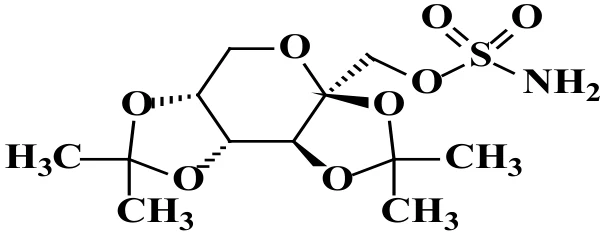
Physicochemical properties: Topiramate is a white crystalline powder having a bitter taste. Topiramate is most soluble in alkaline solutions containing sodium hydroxide or sodium phosphate with a pH of 9 to
- 10. It is freely soluble in acetone, chloroform, dimethylsulfoxide and ethanol. The solubility in water is
9.8 mg/mL. Its saturated solution has a pH of 6.3.
14. Clinical Trials
14.1. Clinical Trials by Indication
Epilepsy
Monotherapy Controlled Trials
The effectiveness of topiramate as monotherapy in adults and children 6 years of age and older with newly diagnosed epilepsy was established in a multicentre, randomized, double-blind, parallel-group trial that compared the safety and efficacy of 2 doses of topiramate as monotherapy for the treatment of newly diagnosed or recurrent epilepsy.
The trial was conducted in 487 patients (6 to 83 years of age) who had a new diagnosis of epilepsy (partial onset or generalized) or a diagnosis of recurrent epilepsy while not taking AEDs. Patients who had either 1 or 2 well-documented seizures during the 3-month retrospective baseline phase entered the study and received topiramate 25 mg/day for 7 days in an open-label fashion. Any AED therapy used for temporary or emergency purposes was discontinued prior to randomization. Following that phase, patients were randomized to receive topiramate 50 mg/day or topiramate 400 mg/day. Patients remained in the double-blind phase until they experienced a first partial onset or generalized tonic- clonic seizure, until termination of the double-blind phase 6 months after randomization of the last subject, or until withdrawal for protocol-specified reasons. The primary efficacy assessment was based on the comparison between topiramate dose groups with respect to time to first partial onset or generalized tonic-clonic seizure during the double-blind phase. Comparison of the Kaplan-Meier survival curves of time to first seizure favoured topiramate 400 mg/day over topiramate 50 mg/day (p=0.0002, log rank test). The separation between the groups in favour of the higher dose group occurred early in the titration phase and was statistically significant as early as 2 weeks post-randomization (p=0.046), when, by following the weekly titration schedule, the subjects in the higher dose group had achieved a maximum topiramate dose of 100 mg/day. The higher dose group was also superior to the lower dose group with respect to the proportion of subjects who remained seizure-free, based on the Kaplan-Meier estimates, for a minimum of 6 months of therapy (82.9% vs. 71.4%; p=0.005), and for a minimum of 1 year of therapy (75.7% vs. 58.8%; p=0.001). The ratio of hazard rates for time to first seizure was 0.516 (95% confidence interval, 0.364 to 0.733). The treatment effects with respect to time to first seizure were consistent across various subject subgroups defined by age, sex, geographic region, baseline body weight, baseline seizure type, time since diagnosis, and baseline AED use.
Adjunctive Therapy Controlled Trials in Adults with Partial Onset Seizures
The effectiveness of topiramate as adjunctive therapy in adults with refractory partial onset seizures, with or without secondarily generalized seizures, was established in six multicentre, outpatient, randomized, double-blind, placebo-controlled trials. Patients in all six studies were permitted a maximum of two AEDs in addition to topiramate therapy (target doses of 200, 400, 600, 800, or 1,000 mg/day) or placebo.
In all six add-on trials, the primary efficacy measurement was reduction in seizure rate from baseline during the entire double-blind phase; responder rate (fraction of patients with at least a 50% reduction) was also measured. The median percent reductions in seizure rates and the responder rates by treatment group for each study are shown in Table 14.
Table 14: Median Percent Seizure Rate Reduction and Percent Responders in Six Double-Blind, Placebo-Controlled, Add-On Trials in Adults with Partial Onset Seizures
Target Topiramate Dosage (mg/day)
| Protocol | Efficacy results | Placebo | 200 | 400 | 600 | 800 | 1,000 |
|---|---|---|---|---|---|---|---|
| YD | n | 45 | 45 | 45 | 46 | -- | -- |
| Median % Reduction | 13.1 | 29.6a | 47.8c | 44.7d | -- | -- | |
| % Responders | 18 | 27 | 47b | 46b | -- | -- | |
| YE | n | 47 | -- | -- | 48 | 48 | 47 |
| Median % Reduction | 1.2 | -- | -- | 40.7d | 41.0d | 37.5d | |
| % Responders | 9 | -- | -- | 44d | 40c | 38c | |
| Y1 | n | 24 | -- | 23 | -- | -- | -- |
| Median % Reduction | 1.1 | -- | 40.7a | -- | -- | -- | |
| % Responders | 8 | -- | 35b | -- | -- | -- | |
| Y2 | n | 30 | -- | -- | 30 | -- | -- |
| Median % Reduction | -12.2 | -- | -- | 46.4c | -- | -- | |
| % Responders | 10 | -- | -- | 47c | -- | -- | |
| Y3 | n | 28 | -- | -- | -- | 28 | -- |
| Median % Reduction | -17.8 | -- | -- | -- | 35.8c | -- | |
| % Responders | 0 | -- | -- | -- | 43c | -- | |
| YF/YG | n | 42 | -- | -- | -- | -- | 167 |
| Median % Reduction | 1.2 | -- | -- | -- | -- | 50.8d | |
| % Responders | 19 | -- | -- | -- | -- | 52d |
Comparisons with placebo: a p > 0.05; b p < 0.05; c p ≤ 0.01; dp ≤ 0.001
Across the six efficacy trials in adults, 232 of the 527 topiramate patients (44%) responded to treatment with at least a 50% seizure reduction during the double-blind phase; by comparison, only 25 of the 216 placebo-treated patients (12%) showed the same level of treatment response. When the treatment response was defined more rigorously as a 75% or greater decrease from baseline in seizure rate during double-blind treatment, 111 of the 527 topiramate patients (21%) in the 200 to 1,000 mg/day groups, but only 8 of the 216 placebo patients (4%), demonstrated this level of efficacy. In addition, 24 (5%) of the patients treated with topiramate became seizure-free, compared with 0% in the placebo group (p ≤0.01). At target dosages of 400 mg/day and higher, the percent of treatment responders was statistically greater for patients treated with topiramate than placebo-treated patients.
Pooled analyses of secondarily generalized seizure rates for all patients who had this seizure type during the studies show statistically significant percent reductions in the topiramate groups when compared with placebo. The median percent reduction in the rate of generalized seizures was 57% for patients treated with topiramate compared with -4% for placebo-treated patients. Among patients treated with topiramate, 109 (55%) of 198 had at least a 50% reduction in generalized seizure rate compared with 24 (27%) of 88 placebo-treated patients.
The dose titration in the original clinical trials was 100 mg/day the first week, 100 mg b.i.d. the second week, and 200 mg b.i.d. the third week. In a 12-week, double-blind trial, this titration rate was compared to a less rapid rate beginning at 50 mg/day.
There were significantly fewer adverse experiences leading to discontinuation and/or dosage adjustment in the group titrated at the less rapid rate. Seizure rate reductions were comparable between the groups at all time points measured.
Adjunctive Therapy Controlled Trials in Children with Partial Onset Seizures
The effectiveness of topiramate as an adjunctive treatment for children with partial onset seizures was established in a multicentre, randomized, double-blind, placebo-controlled trial comparing topiramate and placebo in patients with a history of partial onset seizures, with or without secondarily generalized seizures.
Patients in this study were permitted a maximum of two AEDs in addition to topiramate or placebo. Patients were stabilized on optimal dosages of their concomitant AEDs during an 8-week baseline phase. Included were patients who experienced at least six partial onset seizures, with or without secondarily generalized seizures, during the baseline phase.
Following randomization, patients began the double-blind phase of treatment. Patients received active drug beginning at 25 or 50 mg/day; the dose was then increased by 25 to 150 mg/day increments every other week until the assigned dosage of 125, 175, 225 or 400 mg/day, based on patient’s weight to approximate a dosage of 6 mg/kg per day, was reached. After titration, patients entered an 8-week stabilization period.
The reduction in seizure rate from baseline during the entire double-blind phase was measured. The median percent reduction in seizure rate and the responder rate (fraction of patients with at least a 50% reduction) were also measured and the key results are shown in Table 15.
Table 15: Median Percent Seizure Rate Reduction and Percent Responders in a Double-Blind, Placebo- Controlled, Add-On Trial in Pediatric Patients with Partial Onset Seizures
Target topiramate Dosage
| Protocol | Efficacy results | Placebo | 6 mg/kg/day* | p value |
|---|---|---|---|---|
| YP | N | 45 | 41 | |
| Median % Reduction | 10.5 | 33.1 | 0.034 | |
| % Responders | 20 | 39 | 0.08 |
* For Protocol YP, protocol-specified target dosages (<9.3 mg/kg/day) were assigned based on subject's weight to approximate a dosage of 6 mg/kg/day; these dosages corresponded to mg/day dosages of 125, 175, 225 and 400 mg/day.
Forty patients received topiramate during the double-blind study and continued topiramate treatment in the open-label study. During the open-label study, dose escalation was permitted if required. The percent responders increased to 53% at a median average dose of 7.5 mg/kg/day.
Additional Adjunctive Therapy Clinical Data
Some data demonstrating efficacy of topiramate as adjunctive therapy in adults and a small number of pediatric patients for primary generalized tonic-clonic seizures and seizures associated with Lennox- Gastaut syndrome are available from randomized, double-blind, placebo-controlled trials.
In the epilepsy clinical trials in approximately 1300 patients, daily dosages were decreased when required in weekly intervals by 50 to 100 mg in adults and over a 2 to 8 week period in children; transition was permitted to a new antiepileptic regimen when clinically indicated.
Migraine Prophylaxis
Controlled Trials in the Prophylactic Treatment of Migraine
The results of two multicentre, randomized, double-blind, placebo-controlled, parallel-group clinical trials established the effectiveness of topiramate in the prophylactic treatment of migraine headache. The design of both trials was identical, enrolling patients with a history of migraine, with or without aura, for at least 6 months, according to the International Headache Society diagnostic criteria. Patients with a history of cluster headaches or basilar, ophthalmoplegic, hemiplegic, or transformed migraine headaches were excluded from the trials. Patients were required to have completed a washout of any prior migraine preventive medications before starting the baseline phase.
Patients who experienced 3 to 12 migraine periods (each migraine period was defined as any occurrence of migraine headache that started and ended, or recurred within a 24-hour interval) over the 4 weeks in the baseline phase were equally randomized to either topiramate 50 mg/day, 100 mg/day, 200 mg/day, or placebo and treated for a total of 26 weeks (8-week titration period and 18-week maintenance period). Treatment was initiated at 25 mg/day for one week, and then the daily dosage was increased by 25-mg increments each week until reaching the assigned target dose or maximum tolerated dose (administered twice daily). Up to 2 dose adjustments were allowed after the second week of treatment during the double-blind phase if unacceptable tolerability problems occurred. When needed, rescue medications were allowed for the acute treatment of headache or migraine-associated symptoms.
Effectiveness of treatment was assessed through the reduction in migraine headache frequency, as measured by the change in 4-week migraine period rate from the baseline phase to double-blind treatment in each topiramate treatment group compared to placebo.
In the first study, a total of 469 patients (416 females, 53 males), ranging in age from 13 to 70 years, were randomized and provided efficacy data. Two hundred and sixty-five patients completed the entire 26-week double-blind phase. The median average daily dosages were 47.8 mg/day, 88.3 mg/day, and
132.1 mg/day in the target dose groups of topiramate 50, 100, and 200 mg/day, respectively.
The mean migraine headache frequency rate at baseline was approximately 5.5 migraine headaches/28 days and was similar across treatment groups. The change in the mean 4-week migraine headache frequency from baseline to the double-blind phase was -1.3, -2.1, and -2.2 in the topiramate 50, 100, and 200 mg/day groups, respectively, versus -0.8 in the placebo group (see Figure 1). The differences between the topiramate 100 and 200 mg/day groups versus placebo were statistically significant (p <0.001 for both comparisons; confidence intervals vs. placebo: topiramate 100 mg/day [-1.93, -0.55], and topiramate 200 mg/day [-2.04, -0.62]). The changes in migraine frequency represent a median percent reduction of 31%, 53%, and 55% in the topiramate 50, 100, and 200 mg/day groups, respectively, versus 21% in the placebo group.
In the second study, a total of 468 patients (406 females, 62 males), ranging in age from 12 to 65 years, were randomized and provided efficacy data. Two hundred and fifty-five patients completed the entire 26-week double-blind phase. The median average daily dosages were 46.5 mg/day, 85.6 mg/day, and
150.2 mg/day in the target dose groups of topiramate 50, 100, and 200 mg/day, respectively.
The mean migraine headache frequency rate at baseline was approximately 5.5 migraine headaches/28 days and was similar across treatment groups. The change in the mean 4-week migraine headache period frequency from baseline to the double-blind phase was -1.4, -2.1, and -2.4 in the topiramate 50, 100, and 200 mg/day groups, respectively, versus -1.1 in the placebo group (see Figure 1). The differences between the topiramate 100 and 200 mg/day groups versus placebo were statistically significant (p=0.008 and p <0.001, respectively; confidence intervals vs. placebo: topiramate 100 mg/day [-1.76, -0.27], and topiramate 200 mg/day [-2.06, -0.57]). The changes in migraine frequency represent a median percent reduction of 35%, 49%, and 48% in the topiramate 50, 100, and 200 mg/day groups, respectively, versus 19% in the placebo group.
In both studies, there were no apparent differences in treatment effect within age, gender, or racial subgroups.
In the migraine prophylaxis clinical trials in approximately 900 patients, daily dosages were decreased when required in weekly intervals by 25 to 50 mg in adults receiving topiramate at doses up to 100 mg/day.
Figure 1: Reduction in 4-Week Migraine Headache Frequency (Studies TOPMAT-MIGR-001 and TOPMAT-MIGR-002)
Placebo
Topiramate
50 mg/day
Topiramate
100 mg/day
Topiramate
200 mg/day
(N=115 and 114) (N= 117 and 117) (N=125 and 120) (N=112 and 117)
0
-1
-2


-3
* p <0.010, ** p <0.001
Additional efficacy measures that were assessed, in both studies, included responder rate, cumulative response rate, change in average monthly migraine attack rate, change in the average monthly rate of rescue medication use, change in the average number of monthly migraine days and onset of action defined as the earliest month that there was a statistically significant difference between each topiramate treatment group and placebo with respect to the primary efficacy endpoint that was maintained for the remainder of the double-blind phase.
14.2. Comparative Bioavailability Studies
Comparative Bioavailability Data for Topiramate 100 mg Tablets
An open label, randomized, single-dose, two-way crossover study of TOPIRAMATE 100 mg tablets (Sivem Pharmaceuticals ULC) and PrTOPAMAX® 100 mg tablets (JANSSEN-ORTHO Inc., Canada) was conducted in healthy, adult, male subjects under fasting conditions. Comparative bioavailability data from the 35 subjects that were included in the statistical analysis are presented in the following table:
SUMMARY TABLE OF THE COMPARATIVE BIOAVAILABILITY DATA
Topiramate 1 X 100 mg Geometric Mean Arithmetic Mean (CV %) | ||||
|---|---|---|---|---|
| Parameter | Test1 | Reference2 | % Ratio of Geometric Means | 90% Confidence Interval |
AUC0-72 (µg·h/mL) | 92.90 93.58 (12.29) | 93.16 94.41 (16.37) | 99.7 | 96.5 – 103.1 |
AUCI (µg·h/mL) | 133.48 135.00 (15.42) | 134.96 136.97 (17.34) | 98.9 | 96.5 – 101.4 |
Cmax (µg/mL) | 3.01 3.04 (14.17) | 2.98 3.01 (14.68) | 101.2 | 97.7 – 104.7 |
| Tmax3 (h) | 1.50 (0.50 – 4.00) | 3.00 (0.50 – 5.00) | ||
| T½4 (h) | 68.07 (19.12) | 68.23 (15.78) | ||
1 TOPIRAMATE (Topiramate) tablets 100 mg (Sivem Pharmaceuticals ULC)
2 PrTOPAMAX® (Topiramate) tablets 100 mg (JANSSEN-ORTHO Inc.)
3 Expressed as the median (range) only
4 Expressed as arithmetic mean (% CV) only
Comparative Bioavailability data for Topiramate 200 mg Tablets
An open label, randomized, single-dose, two-way crossover study of TOPIRAMATE 200 mg tablets (Sivem Pharmaceuticals ULC) and PrTOPAMAX® 200 mg tablets (JANSSEN-ORTHO Inc., Canada) was conducted in healthy, adult, male subjects under fasting conditions. Comparative bioavailability data from the 26 subjects that were included in the statistical analysis are presented in the following table:
SUMMARY TABLE OF THE COMPARATIVE BIOAVAILABILITY DATA
Topiramate 1 X 200 mg Geometric Mean Arithmetic Mean (CV %) | ||||
|---|---|---|---|---|
| Parameter | Test1 | Reference2 | % Ratio of Geometric Means | 90% Confidence Interval |
AUC0-72 (µg·h/mL) | 161.85 163.89 (14.97) | 154.88 156.44 (14.47) | 104.5 | 101.8-107.3 |
AUCI (µg·h/mL) | 206.13 209.77 (17.78) | 197.21 199.90 (17.64) | 104.5 | 101.6 – 107.5 |
Cmax (µg/mL) | 5.52 5.599 (14.71) | 5.53 5.62 (18.47) | 99.8 | 94.5 – 105.5 |
| Tmax3 (h) | 2.75 (0.50 -4.00) | 2.25 (0.50 -6.00) | ||
| T½4 (h) | 47.56 (21.79) | 48.15 (38.91) | ||
1 TOPIRAMATE (Topiramate) tablets 200 mg (Sivem Pharmaceuticals ULC)
2 PrTOPAMAX® (Topiramate) tablets 200 mg (JANSSEN-ORTHO Inc.)
3 Expressed as the median (range) only
4 Expressed as arithmetic mean (% CV) only
16. Non-Clinical Toxicology
In acute and long-term studies conducted in mice, rats, dogs and rabbits, exposure to topiramate was well tolerated.
General Toxicology:
Acute Toxicity
Table 17: Acute Toxicity Studies Performed with Topiramate
| Species/ Strain | Route of Administration | No. Animals/ Group M/F [Age] | Dose Range (mg/kg) | Estimated LD50 (mg/kg) |
|---|---|---|---|---|
| Mouse | Oral | 2/2 or 5/5 | 1000-3375 | M 2338 |
| Crl:COBS | gavage | [6-8 weeks] | F 2915 | |
| CD®-1 | ||||
| (ICR)BR | ||||
| Mouse | i.p. | 5/5 or 2/2 | 500-1700 | M 605 |
| Crl:COBS | [6-8 weeks] | F 710 | ||
| CD®-1 | ||||
| (ICR)BR | ||||
Rat Crl:COBS® | Oral gavage | 5/5 or 2/2 [7-8 weeks] | 1500-4220 | M 3745 F 2436 |
| (WI)BR | ||||
Rat Crl:COBS® | i.p. | 5/5 or 2/2 [7-8 weeks] | 750-2550 | M 1633 F 1227 |
| (WI)BR | ||||
| Dog | p.o. | 1/1 or 2/2 | 270-400 | No deaths |
| Beagle | [approx. 1 yr.] |
Chronic Toxicity
Table 18: Multiple-Dose Toxicity Studies
| Species/Strain Sex | Route of Administration | No. Animals/ Group M/F | Dosage (mg/kg/day) | Duration | Results | ||||
|---|---|---|---|---|---|---|---|---|---|
Rat Crl:CD®(SD) Male & Female | Oral gavage | 15/15 | 10, 90, 750 | 3 months | Lower body weight and weight gain; CNS signs; diuresis with some hemoconcentration; higher kidney and liver weights with hepatocytic hypertrophy; and urothelial hyperplasia with some microcalculi (few females). Findings principally at 90 and 750 mg/kg per day. | ||||
Rat Crl:CD®(SD) Male & | Oral gavage | 16/16 and 6/6 | 10, 90, 750 | 3 months | Some slight effects (lower body weight gain and lower urine | ||||
| Species/Strain Sex | Route of Administration | No. Animals/ Group M/F | Dosage (mg/kg/day) | Duration | Results | ||||
| Female | during recovery | plus 4- week recovery period | sodium) occurred at 10 mg/kg, the lowest dosage tested in this study; however, they are considered to be of no toxicological concern. Effects at ≥ 90 mg/kg were similar to those occurring in other 3-month and/or 12- month rat studies. Recovery occurred for all changes except for the increased water consumption and hyperplasia of the transitional epithelium of the bladder. | ||||||
Rat Crl:COBS®(WI) Male & Female | Oral (diet) | 25/25 | 10, 55, 300 | 12 months | Lower body weight and weight gain with lower food efficiency (300 mg/kg per day only); lower erythrocyte parameters and triglycerides; higher serum chloride and cholesterol; higher kidney and liver weights with hepatocytic hypertrophy; urothelial hyperplasia with urinary calculi; and gastric epithelial hyperplasia. Only body weight, chloride and gastric changes seen at 10 mg/kg per day. | ||||
Rat Crl:COBS®(WI) Male & Female | Oral (diet) | 26/23 treated 20/21 Untreated | Male: > 300 Female: ∃450 | 11 months plus 4-, 9-, and 20-week recovery periods | Lower weight gain; higher gastrin levels and gastric epithelial hyperplasia. No effect on gastric enterochromaffin-like cells (often associated with tumour formation in the presence of high gastrin levels). During recovery phase, all changes were reversible. | ||||
| Dog/Beagle Male & Female | p.o. | 4/4 | 10, 40, 150 | 3 months | Lower weight gain, food consumption, and food efficiency; hemodilution; lower transaminases and urine specific gravity; higher urine pH, serum alkaline phosphatase and chloride; and higher liver weights. No significant morphological changes. Observations essentially at 40 and 150 mg/kg per day only. | ||||
| Species/Strain Sex | Route of Administration | No. Animals/ Group M/F | Dosage (mg/kg/day) | Duration | Results | ||||
| Dog/Beagle Male & Female | p.o. | 4/4 | 10, 30, 100 | 12 months | Sporadic emesis at all dosage levels. Lower body weight gain; hemodilution; higher urine pH, serum alkaline phosphatase and chloride; and higher liver weights. No significant morphologic changes. Only findings seen below 100 mg/kg per day were emesis, and higher alkaline phosphatase and chloride. | ||||
Reproductive and Developmental Toxicology:
Topiramate has demonstrated selective developmental toxicity, including teratogenicity, in multiple animal species at clinically relevant doses. When oral doses of 20, 100, or 500 mg/kg were administered to pregnant mice during the period of organogenesis, the incidence of fetal malformations (primarily craniofacial defects) was increased at all doses. The low dose is approximately 0.2 times the recommended human dose (RHD) 400 mg/day on a mg/m2 basis. Fetal body weights and skeletal ossification were reduced at 500 mg/kg in conjunction with decreased maternal body weight gain.
In rat studies (oral doses of 20, 100, and 500 mg/kg or 0.2, 2.5, 30, and 400 mg/kg), the frequency of limb malformations (ectrodactyly, micromelia, and amelia) was increased among the offspring of dams treated with 400 mg/kg (10 times the RHD on a mg/m2 basis) or greater during the organogenesis period of pregnancy. Embryotoxicity (reduced fetal body weights, increased incidence of structural variations) was observed at doses as low as 20 mg/kg (0.5 times the RHD on a mg/m2 basis). Clinical signs of maternal toxicity were seen at 400 mg/kg and above, and maternal body weight gain was reduced during treatment with 100 mg/kg or greater.
In rabbit studies (20, 60, and 180 mg/kg or 10, 35, and 120 mg/kg orally during organogenesis), embryo/fetal mortality was increased at 35 mg/kg (2 times the RHD on a mg/m2 basis) or greater, and teratogenic effects (primarily rib and vertebral malformations) were observed at 120 mg/kg (6 times the RHD on a mg/m2 basis). Evidence of maternal toxicity (decreased body weight gain, clinical signs, and/or mortality) was seen at 35 mg/kg and above.
When female rats were treated during the latter part of gestation and throughout lactation (0.2, 4, 20, and 100 mg/kg or 2, 20, and 200 mg/kg), offspring exhibited decreased viability and delayed physical development at 200 mg/kg (5 times the RHD on a mg/m2 basis) and reductions in pre- and/or postweaning body weight gain at 2 mg/kg (0.05 times the RHD on a mg/m2 basis) and above. Maternal toxicity (decreased body weight gain, clinical signs) was evident at 100 mg/kg or greater.
In a rat embryo/fetal development study with a postnatal component (0.2, 2.5, 30, or 400 mg/kg during organogenesis; noted above), pups exhibited delayed physical development at 400 mg/kg (10 times the RHD on a mg/m2 basis) and persistent reductions in body weight gain at 30 mg/kg (1 times the RHD on a mg/m2 basis) and higher.
Carcinogenicity:
Tumours of smooth muscle origin in the urinary bladder were seen only in mice (oral dosages up to 300 mg/kg for 21 months) and appear to be unique to the species. Since no human counterpart exists, they were not considered clinically relevant. No such findings occurred in the rat carcinogenicity study (oral dosages up to 120 mg/kg/day for 24 months).
Genotoxicity: In a battery of in vitro and in vivo mutagenicity assays, topiramate did not show genotoxic potential.
17. Supporting Product Monographs
- 1. PrTopamax® (Tablets, 25 mg, 100 mg and 200 mg) Submission Control Number: 289202, Product Monograph, Janssen Inc., Date of Revision: July 23, 2025.