


Product Monograph - Trasylol
SUMMARY PRODUCT INFORMATION
| Table 1 – Product Information Summary | ||||
| Route of Administration | Dosage Form, Strength | Clinically Relevant Nonmedicinal Ingredients | ||
| Intravenous | Isotonic Solution, 10,000 KIU/mL | Sodium Chloride (BP) Water for Injection (BP) For a complete listing see DOSAGE FORMS, COMPOSITION AND PACKAGING section. | ||
DESCRIPTION
TRASYLOL® (aprotinin) is a highly purified natural polypeptide proteinase inhibitor obtained from bovine lung.
INDICATIONS AND CLINICAL USE
TRASYLOL® (aprotinin) is indicated for prophylactic use to reduce perioperative blood loss and the need for blood transfusion in those patients undergoing cardiopulmonary bypass in the course of isolated coronary artery bypass graft (CABG) surgery who are at increased risk for blood loss and blood transfusion requirement.
CONTRAINDICATIONS
- Patients who are hypersensitive to this drug or to any ingredient in the formulation or component of the container. For a complete listing, see the DOSAGE FORMS, COMPOSITION AND PACKAGING section.
- Administration of TRASYLOL® to patients with a known or suspected previous aprotinin exposure during the last 12 months is contraindicated. For patients with known or suspected history of exposure to aprotinin greater than 12 months previously, see WARNINGS AND PRECAUTIONS. Aprotinin may also be a component of some fibrin sealant products and the use of these products should be included in the patient history.
WARNINGS AND PRECAUTIONS
Serious Warnings and Precautions
|
General
Anaphylactic or anaphylactoid reactions have occurred with TRASYLOL® administration, including fatal reactions in association with the initial (test) dose. The initial (test) dose does not fully predict a patient’s risk for a hypersensitivity reaction, including a fatal reaction. Fatal hypersensitivity reactions have occurred among patients who tolerated an initial (test) dose.
Hypersensitivity reactions often manifest as anaphylactic/anaphylactoid reactions with hypotension the most frequently reported sign of the hypersensitivity reaction. Other symptoms of a hypersensitivity reaction include pruritis, rash, asthma, and nausea. The hypersensitivity reaction can progress to anaphylactic shock with circulatory failure. If a hypersensitivity reaction occurs during injection or infusion of TRASYLOL®, administration should be stopped immediately and emergency treatment should be initiated. Even when a second exposure to TRASYLOL® has been tolerated without symptoms, a subsequent administration may result in severe hypersensitivity/anaphylactic reactions.
TRASYLOL® should be administered only in operative settings where cardiopulmonary bypass can be rapidly initiated. Before initiating treatment with TRASYLOL®, the recommendations below should be followed to manage a potential hypersensitivity or anaphylactic reaction:
- 1) Have standard emergency treatments for hypersensitivity or anaphylactic reactions readily available in the operating room (e.g., epinephrine, corticosteroids).
- 2) Administration of the initial (test) dose and loading dose should be done only when the patient is intubated and when conditions for rapid cannulation and initiation of cardiopulmonary bypass are present.
- 3) Delay the addition of TRASYLOL® into the pump prime solution until after the loading dose has been safely administered.
Re-exposure to Aprotinin
Administration of TRASYLOL®, especially to patients who have received aprotinin in the past, requires a careful risk/benefit assessment because an allergic reaction may occur (see CONTRAINDICATIONS and ADVERSE REACTIONS). Although the majority of cases of anaphylaxis occur upon re-exposure within the first 12 months, there are also case reports of anaphylaxis occurring upon re-exposure after more than 12 months.
In a retrospective review of 387 European patient records with documented re-exposure to TRASYLOL®, the incidence of hypersensitivity/anaphylactic reactions was 2.7%. Two patients who experienced hypersensitivity/anaphylactic reactions subsequently died, 24 hours and 5 days after surgery, respectively. The relationship of these 2 deaths to TRASYLOL® is unclear. This retrospective review also showed that the incidence of a hypersensitivity or anaphylactic reaction following re-exposure is increased when the re-exposure occurs within 6 months of the initial administration (5.0% for re-exposure within 6 months and 0.9% for re-exposure greater than 6 months). Other smaller studies have shown that in case of re-exposure, the incidence of hypersensitivity/anaphylactic reactions may reach the five percent level.
An analysis of all spontaneous reports from the Bayer Global database covering a period from 1985 to March 2006 revealed that of 291 possibly associated spontaneous cases of hypersensitivity (fatal: n=52 and non-fatal: n=239), 47% (138/291) of hypersensitivity cases had documented previous exposure to TRASYLOL®. Of the 138 cases with documented previous exposure, 110 had information on the time of the previous exposure. Ninety-nine of the 110 cases had previous exposure within the prior 12 months.
Initial (Test) Dose
All patients treated with TRASYLOL® should first receive an initial (test) dose to minimize the extent of aprotinin exposure and to help assess the potential for allergic reactions (see DOSAGE AND ADMINISTRATION). Initiation of this initial (test) dose should occur only in operative settings where cardiopulmonary bypass can be rapidly initiated. The initial (test) dose of 1 mL TRASYLOL® should be administered intravenously at least 10 minutes prior to the loading dose and the patient should be observed for manifestations of possible hypersensitivity reaction.
However, even after the uneventful administration of the 1 mL initial (test) dose, any subsequent dose may cause an anaphylactic reaction. If this happens, the infusion of aprotinin should immediately be stopped, and the standard emergency treatment for anaphylaxis be applied.
It should be noted that serious, even fatal, hypersensitivity/anaphylactic reactions can occur with administration of the initial (test) dose.
Loading Dose
The loading dose of TRASYLOL® should be given intravenously to patients in the supine position over a 20 to 30 minute period. Rapid intravenous administration of TRASYLOL® can cause a transient fall in blood pressure (see DOSAGE AND ADMINISTRATION).
Immune – Allergic Reactions
Patients with a history of allergic reactions to drugs and other agents may be at a greater risk of developing hypersensitivity or anaphylactic reactions to TRASYLOL® (see WARNINGS AND PRECAUTIONS – General).
Renal
TRASYLOL® administration increases the risk for renal dysfunction and may increase the need for dialysis in the perioperative period. This risk may be especially increased for patients with pre-existing renal impairment or those who receive aminoglycoside antibiotics or drugs that alter renal function.
An analysis of Bayer’s global pool of placebo-controlled studies in patients undergoing coronary artery bypass graft (CABG) surgery has found elevations of serum creatinine values >44.2 µmol/L (0.5 mg/dL) above baseline in patients with TRASYLOL® therapy (see ADVERSE REACTIONS – Abnormal Hematologic and Clinical Chemistry Findings: Renal Function Tests). Careful consideration of the balance of risks and benefits is therefore advised before administering TRASYLOL® to patients with pre-existing impaired renal function (creatinine clearance <60 mL/min), or to those with other risk factors for renal dysfunction (such as perioperative administration of aminoglycosides or products that alter renal function). Serum creatinine should be monitored regularly.
An increase in renal failure and mortality compared to age matched historical controls has been reported for TRASYLOL®-treated patients undergoing cardiopulmonary bypass with deep hypothermic circulatory arrest during operation of the thoracic aorta. Caution should be exercised and a careful risk/benefit assessment made before TRASYLOL® is used in this setting.
Specifically, adequate anticoagulation with heparin must be assured (see DRUG INTERACTIONS – Drug-Laboratory Interactions: Laboratory Monitoring of Anticoagulation during Cardiopulmonary Bypass).
Mortality
The in-hospital mortality in the Bayer randomized, clinical trial is summarized in Table 2 below:
| Table 2 – In-hospital Mortality in Bayer Randomized Clinical Trials (Population: All Global CABG Patients Valid for Safety) | ||||||||||
| Population | Full-Dose Aprotinin | Placebo | Odds Ratio (95% CI) | |||||||
| n/N | % | n/N | % | |||||||
| All CABG | 65/2249 | 2.9 | 55/2164 | 2.5 | 1.09 (0.78, 1.52) | |||||
| Primary CABG | 36/1819 | 2.0 | 39/1785 | 2.2 | 0.92 (0.62, 1.38) | |||||
| Repeat CABG | 22/276 | 8.0 | 13/255 | 5.1 | 1.47 (0.75, 2.87) | |||||
An association between TRASYLOL® use and increased mortality has been reported in some nonrandomized observational studies (eg, Mangano 2007, Schneeweiss 2008, Olenchock 2008, Shaw 2008) (1-6) while other non-randomized studies have not reported such an association (eg, Karkouti 2006, Mangano 2006, Coleman 2007, Pagano 2008, Ngaage 2008, Karkouti, 2009). (7-12) In these studies, TRASYLOL® was usually administered to patients who had more risk factors for increased mortality before surgery than patients in the other treatment groups. Most of the studies did not adequately account for these baseline differences in risk factors and the influence of these risk factors on the results is not known. Therefore interpretation of these observational studies is limited and an association between TRASYLOL® use and increased mortality can neither be established nor refuted. Thus, TRASYLOL® should only be used as authorized in isolated CABG surgery, after careful consideration of the potential risks and benefits.
A publication by Fergusson et al 2008 (13, 14) analyzed data from a randomized controlled trial, Blood Conservation Using Antifibrinolytics in a Randomized Trial (BART), and reported a higher mortality trend in TRASYLOL®-treated patients compared to those treated with tranexamic acid or aminocaproic acid. However, the BART study was not adequately powered for the secondary endpoint of all-cause mortality, and thus, given the small number of deaths, the mortality results reported by Fergusson et al 2008 (13, 14) could be due to statistical chance. (15) Also, further analysis of the data (16) has revealed that the PTT was significantly longer in the TRASYLOL® treatment group than in the comparator groups. Less heparin was used in the TRASYLOL® arm, but the reasons for this are unclear. Therefore, the available BART data on mortality do not establish nor refute an association between TRASYLOL® use and increased mortality.
In patients undergoing cardiopulmonary bypass with TRASYLOL® therapy, one of two methods is recommended to manage adequate anticoagulation: Fixed Heparin Dosing, or Heparin Titration. Activated Clotting Time (ACT) should be used to monitor anticoagulation (see DRUG INTERACTIONS – Drug-Laboratory Interactions: Laboratory Monitoring of Anticoagulation during Cardiopulmonary Bypass).
Special Populations
Pregnant Women
No evidence of teratogenic or embryotoxic effects has been seen in animals. There are no adequate and well-controlled studies in pregnant women. TRASYLOL® may be used in pregnancy only if the potential benefit justifies the potential risk. In case of severe adverse drug reactions (like anaphylactic reaction, heart arrest, etc.) and their consecutive therapeutic measures, damage to the fetus has to be taken into account for a risk/benefit evaluation.
Nursing Women
It is not known whether TRASYLOL® is excreted in human milk. However, since TRASYLOL® is not bioavailable after oral administration, any drug contained in the milk would have no effect on the baby.
Geriatrics (≥ 65 years of age)
Of the total of 3083 subjects in clinical studies of TRASYLOL®, 1100 (35.7%) were 65 years of age and over, while 297 (9.6%) were 75 and over. No overall differences in safety or effectiveness were observed between these subjects and younger subjects, and other reported clinical experience has not identified differences in responses between the elderly and younger patients.
Pediatrics (<18 years of age)
Infants, toddlers, children and adolescents: efficacy and safety have not been established in this patient population.
ADVERSE REACTIONS
Adverse Drug Reaction Overview
Adverse drug reactions (ADRs) based on all placebo-controlled clinical studies with aprotinin sorted by CIOMS III categories of frequency (aprotinin n=3817 and placebo n=2682, status: April 2005) are listed below:
ADRs derived from post marketing reports (n=584 reports, status: April 2005) are printed in bold italic.
As with all venipunctures, local thrombophlebitic reactions (thrombophlebitis injection site) may occur after TRASYLOL® injections or infusions.
Clinical Trial Adverse Drug Reactions
Because clinical trials are conducted under very specific conditions the adverse reaction rates observed in the clinical trials may not reflect the rates observed in practice and should not be compared to the rates in the clinical trials of another drug. Adverse drug reaction information from clinical trials is useful for identifying drug-related adverse events and for approximating rates.
| Table 3 – ADRs Based on all Placebo-Controlled Clinical Studies with Aprotinin | |||||||||||||
|---|---|---|---|---|---|---|---|---|---|---|---|---|---|
| Clinical Description | Common >1% to <10% | Uncommon >0.1% to <1% | Rare >0.01% to <0.1% | Very Rare <0.01% | |||||||||
| General Disorders or Administration Site Conditions | |||||||||||||
| Infusion site reactions | Injection and infusion site reactions Infusion site (thrombo-) phlebitis | ||||||||||||
| Cardiac Disorders | |||||||||||||
| Myocardial disorders | Myocardial ischemia Coronary occlusion/ thrombosis Myocardial infarction Thrombosis | ||||||||||||
| Pericardial effusion | Pericardial effusion | ||||||||||||
| Vascular Disorders | |||||||||||||
Embolism and Thrombosis | Thrombosis | Arterial thrombosis (and its organ-specific manifestations that might occur in vital organs such as kidney, lung or brain) | Pulmonary embolism | ||||||||||
| Blood and Lymphatic System Disorders | |||||||||||||
| Changes in coagulation | Disseminated intravascular coagulation Coagulopathy | ||||||||||||
| Immune System Disorders | |||||||||||||
| Acute hypersensitivity reactions | Allergic reaction Anaphylactic / anaphylactoid reaction | Anaphylactic shock (potentially life threatening) | |||||||||||
| Renal and Urinary Disorders | |||||||||||||
| Renal impairment | Oliguria, acute renal failure, renal tubular necrosis | ||||||||||||
Myocardial Infarction
In the pooled analysis of placebo-controlled clinical studies with patients undergoing CABG surgery, the incidence of investigator-reported myocardial infarction (MI) in aprotinin treated patients was 5.8% compared to 4.8% placebo treated patients with a difference of 0.98% between the groups (aprotinin n=3817 and placebo n=2682, status: April 2005).
A numerically greater incidence of MI in association with aprotinin was observed in some studies, while other studies showed a lower incidence compared to placebo. The described studies were not designed to detect the difference of incidence of MI and might not have the statistical power to exclude a clinically significant adverse event.
Because no uniform criteria for the diagnosis of myocardial infarction were utilized by investigators, this issue was addressed prospectively in three studies. These data were analyzed by a blinded consultant employing an algorithm for possible, probable or definite MI. Data from these three studies are summarized below:
| Table 4 – Incidence of Myocardial Infarctions by Treatment Group Population: All CABG Patients Valid for Safety Analysis (Studies 466, 471, 472) | |||||||
| Treatment | Definite MI (%) | Definite or Probable MI (%) | Definite, Probable, or Possible MI (%) | ||||
| TRASYLOL® (n=646) | 4.6 | 10.7 | 14.1 | ||||
| Placebo (n=661) | 4.7 | 11.3 | 13.4 | ||||
Mortality
The in-hospital mortality in the Bayer randomized, clinical trial is summarized in Table 5 below:
| Table 5 – In-hospital Mortality in Bayer Randomized Clinical Trials (Population: All Global CABG Patients Valid for Safety) | ||||||||||
| Population | Full-Dose Aprotinin | Placebo | Odds Ratio (95% CI) | |||||||
| n/N | % | n/N | % | |||||||
| All CABG | 65/2249 | 2.9 | 55/2164 | 2.5 | 1.09 (0.78, 1.52) | |||||
| Primary CABG | 36/1819 | 2.0 | 39/1785 | 2.2 | 0.92 (0.62, 1.38) | |||||
| Repeat CABG | 22/276 | 8.0 | 13/255 | 5.1 | 1.47 (0.75, 2.87) | |||||
An association between TRASYLOL® use and increased mortality has been reported in some published studies. TRASYLOL® should only be used as authorized in isolated CABG surgery, after careful consideration of the potential risks and benefits (see ADVERSE REACTIONS – Post-Market Adverse Drug Reactions).
Graft Closure
In some studies, a numerical increase of graft closure, although not statistically significant, was observed in association with aprotinin. In a multi-centre study in patients undergoing primary coronary artery bypass graft surgery there was a statistically significant increased risk of graft closure (coronary occlusion) for TRASYLOL®-treated patients compared to patients who received placebo. The graft closure rates observed in this study are shown in Table 6 below. This result was mainly negatively influenced by two centres. Subanalyses clearly demonstrated that for one centre inadequate heparinisation was the primary issue while the other centre used a non-standard graft conservation technique. In addition to the note on heparinisation (see DRUG INTERACTIONS – Drug-Laboratory Interactions), the practice of using blood from the aprotinin central infusion line is strongly discouraged (for determining ACT and other blood tests). No differences between the treatment groups were observed for the incidence of myocardial infarctions or of deaths in this study. (17-19)
| Table 6 – Overall Graft Closure Ratesa | ||||||||
| Aprotinin | Placebo | CI for the difference (%) (aprotinin –placebo) | ||||||
| All centers (n=703) | 15.4% | 10.9% | 1.3% to 9.6% | |||||
| North American centers (n=381) | 9.4% | 9.5% | -3.8% to 5.9% | |||||
| a Population: All patients with assessable saphenous vein grafts. | ||||||||
A follow-up study (20, 21) was done on patients who survived the original study. Of the 870 patients in the study, 857 were alive at the end of the clinical trial and 645 (75%) responded to the follow-up survey. Final analysis showed that aprotinin administered intra-operatively to primary CABG patients did not affect mortality and cardiac-related morbidity after the conclusion of the trial.
Abnormal Hematologic and Clinical Chemistry Findings
Renal Function Tests
Data from Bayer’s global pool of placebo-controlled studies in patients undergoing coronary artery bypass graft (CABG) surgery showed that the incidence of serum creatinine elevations >44.2 µmol/L (0.5 mg/dL) above pretreatment levels was statistically higher at 9.0% (185/2047) in the aprotinin group compared with 6.6% (129/1957) in the placebo group, with an odds ratio of 1.41 (1.12 to 1.79). In the majority of instances, postoperative renal dysfunction was not severe and was reversible. However, renal dysfunction may progress to renal failure and the incidence of serum creatinine elevations >176.8µmol/L (2.0 mg/dL) above baseline was slightly higher in the aprotinin group (1.1% vs. 0.8%) (see WARNINGS AND PRECAUTIONS).
As shown in Table 3, oliguria, acute renal failure, and renal tubular necrosis are uncommon (≥0.1% to <1%).
Serum Transaminases
Data pooled from all patients undergoing CABG surgery in placebo-controlled trials showed no evidence of an increase in the incidence of postoperative hepatic dysfunction in patients treated with TRASYLOL®. The mean changes of ALT and AST from baseline to 24 hours postoperatively were not different between patients treated with TRASYLOL® compared to patients treated with placebo.
Other Laboratory Findings
The incidence of treatment-emergent events in plasma glucose, AST (formerly SGOT), LDH, alkaline phosphatase, and CPK-MB was not notably different between TRASYLOL® and placebo-treated patients undergoing CABG surgery. Significant elevations in the partial thromboplastin time (PTT) and celite Activated Clotting Time (Celite ACT) are expected in TRASYLOL®-treated patients during surgery, and in the hours after surgery due to circulating concentrations of TRASYLOL®, which are known to inhibit activation of the intrinsic clotting system by contact with a foreign material (eg, celite), a method used in these tests (see DRUG INTERACTIONS – Drug-Laboratory Interactions).
Post-Market Adverse Drug Reactions
Allergic/anaphylactic reactions are rare in patients with no prior exposure to aprotinin. In case of re-exposure the incidence of allergic/anaphylactic reactions may reach the five percent level. A retrospective review showed that the incidence of an allergic/anaphylactic reaction following re-exposure is increased when the re-exposure occurs within 6 months of the initial administration (5.0% for re-exposure within 6 months and 0.9% for re-exposures greater than 6 months). A retrospective review suggests that the incidence of severe anaphylactic reactions to aprotinin may further increase when patients are re-exposed more than twice within 6 months. Even when a second exposure to aprotinin has been tolerated without symptoms, a subsequent administration may result in severe allergic reactions or anaphylactic shock with, in rare cases, fatal outcome.
The symptoms of allergic/anaphylactic reactions may include:
| Respiratory system: | asthma (bronchospasm) |
| Skin and appendages: | pruritus, rash, urticaria |
Some of the following adverse drug reactions could be part of an allergic/anaphylactic reaction:
| Cardiovascular system: | bradycardia, heart arrest, heart failure, hypotension, tachycardia, thrombosis, vasodilation, ventricular fibrillation |
| Digestive system: | nausea |
If allergic reactions occur during injection or infusion, administration should be stopped immediately. Standard emergency treatment may be required, ie, adrenalin/epinephrine, volume substitution and corticosteroids.
During post marketing surveillance, single cases of reversible kidney failure have been reported.
An association between TRASYLOL® use and increased mortality has been reported in some nonrandomized observational studies (eg, Mangano 2007, Schneeweiss 2008, Olenchock 2008, Shaw 2008) (1-6) while other non-randomized studies have not reported such an association (eg, Karkouti 2006, Mangano 2006, Coleman 2007, Pagano 2008, Ngaage 2008, Karkouti, 2009). (7-12) In these studies, TRASYLOL® was usually administered to patients who had more risk factors for increased mortality before surgery than patients in the other treatment groups. Most of the studies did not adequately account for these baseline differences in risk factors and the influence of these risk factors on the results is not known. Therefore interpretation of these observational studies is limited and an association between TRASYLOL® use and increased mortality can neither be established nor refuted. Thus, TRASYLOL® should only be used as authorized in isolated CABG surgery, after careful consideration of the potential risks and benefits.
Non-Bayer Randomized Controlled Clinical Trial
A publication by Fergusson et al 2008 (13, 14) analyzed data from a randomized controlled trial, Blood Conservation Using Antifibrinolytics in a Randomized Trial (BART), and reported a higher mortality trend in TRASYLOL®-treated patients compared to those treated with tranexamic acid or aminocaproic acid. However, the BART study was not adequately powered for the secondary endpoint of all-cause mortality, and thus, given the small number of deaths, the mortality results reported by Fergusson et al 2008 (13, 14) could be due to statistical chance. (15) Also, further analysis of the data (16) has revealed that the PTT was significantly longer in the TRASYLOL® treatment group than in the comparator groups. Less heparin was used in the TRASYLOL® arm, but the reasons for this are unclear. Therefore, the available BART data on mortality do not establish nor refute an association between TRASYLOL® use and increased mortality.
In patients undergoing cardiopulmonary bypass with TRASYLOL® therapy, one of two methods is recommended to manage adequate anticoagulation: Fixed Heparin Dosing, or Heparin Titration. Activated Clotting Time (ACT) should be used to monitor anticoagulation (see DRUG INTERACTIONS – Drug-Laboratory Interactions: Laboratory Monitoring of Anticoagulation during Cardiopulmonary Bypass).
DRUG INTERACTIONS
Drug-Drug Interactions
TRASYLOL® has a dose-dependent inhibitory effect on the action of thrombolytic agents (ie, streptokinase, tPA and urokinase).
In a study of nine patients with untreated hypertension, TRASYLOL®, infused intravenously in a dose of 2 million KIU over two hours, blocked the acute hypotensive effect of 100 mg of captopril.
Drug-Laboratory Interactions
Laboratory Monitoring of Anticoagulation during Cardiopulmonary Bypass
TRASYLOL® prolongs whole blood clotting times by a different mechanism than heparin. In the presence of aprotinin, prolongation is dependent on the type of whole blood clotting test employed. Significant elevations in the partial thromboplastin time (PTT) and celite Activated Clotting Time (Celite ACT) are expected in TRASYLOL®-treated patients during surgery, and in the hours after surgery due to circulating concentrations of TRASYLOL®, which are known to inhibit activation of the intrinsic clotting system by contact with a foreign material (eg, celite), a method used in these tests (see ADVERSE REACTIONS – Abnormal Hematologic and Clinical Chemistry Findings: Other Laboratory Findings). These increases may lead to an overestimation of the degree of anticoagulation, thereby leading to inadequate anticoagulation which may be associated with an increased risk of graft closure.
Partial thromboplastin time (PTT) – The PTT alone should not be used to monitor adequate anticoagulation with heparin in patients receiving TRASYLOL®.
Activated Clotting Time (ACT) - An ACT is not a standardized coagulation test, and different formulations of the assay are affected differently by the presence of aprotinin. The test is further influenced by variable dilution effects and the temperature experienced during cardiopulmonary bypass. It has been observed that kaolin-based ACTs are not increased to the same degree by aprotinin as are diatomaceous earth-based (celite) ACTs.
Laboratory Management of Anticoagulation during Cardiopulmonary Bypass
In patients undergoing cardiopulmonary bypass with TRASYLOL® therapy, one of two methods is recommended to manage adequate anticoagulation: Fixed Heparin Dosing or Heparin Titration.
- 1. Fixed Heparin Dosing - A standard loading dose of heparin, administered prior to cannulation of the heart, plus the quantity of heparin added to the prime volume of the cardiopulmonary bypass circuit, should total at least 350 IU/kg. Additional heparin should be administered in a fixed dose regimen based on patient weight and duration of cardiopulmonary bypass.
- 2. Heparin Titration - Protamine titration, a method that is not affected by aprotinin, can be used to measure heparin levels. A heparin dose response, assessed by protamine titration, should be performed prior to administration of aprotinin to determine the heparin loading dose. Additional heparin should be administered on the basis of heparin levels measured by protamine titration. Heparin levels during bypass should not be allowed to drop below 2.7 IU/mL (2.0 mg/kg) or below the level indicated by heparin dose-response testing performed prior to administration of aprotinin.
Activated Clotting Time (ACT) should be used to monitor anticoagulation.
Activated Clotting Time (ACT) - While protocols vary, a minimal celite-ACT of 750 seconds or kaolin-ACT of 480 seconds, independent of the effects of hemodilution and hypothermia, is recommended in the presence of aprotinin. During extended extracorporeal circulation, patients may require additional heparin, even in the presence of ACT levels that appear adequate. The manufacturer of the ACT test should be consulted regarding interpretation of the assay in the presence of TRASYLOL®.
In TRASYLOL® treated patients the neutralisation of heparin by protamine after discontinuation of cardiopulmonary bypass should either be based on a fixed ratio to the amount of heparin administered or be guided by a protamine titration method.
TRASYLOL® is not a heparin-sparing agent.
DOSAGE AND ADMINISTRATION
Recommended Dose and Dosage Adjustment
TRASYLOL®, given prophylactically to patients undergoing CABG surgery, significantly reduced the donor blood transfusion requirement relative to placebo treatment. TRASYLOL® is supplied as a solution containing 10,000 KIU/mL, which is equal to 1.4 mg/mL. All intravenous doses of TRASYLOL® should be administered through a central line. DO NOT ADMINISTER ANY OTHER DRUG USING THE SAME LINE. The dosing regimen includes a 1 mL initial (test) dose, a loading dose, a dose to be added while recirculating the priming fluid of the cardiopulmonary bypass circuit (“pump prime” dose), and a constant infusion dose. To avoid physical incompatibility of TRASYLOL® and heparin when adding to the pump prime solution, each agent must be added during recirculation of the pump prime to assure adequate dilution prior to admixture with the other component. The dosing regimen (incorporating a 1 mL initial [test] dose) is described in the table below:
| Table 7 – Dosing Regimen for CABG Surgery | ||||||
| Initial (Test) Dose | Loading Dose | “Pump Prime” Dose | Constant Infusion Dose | |||
| TRASYLOL® | 1 mL (1.4 mg or 10,000 KIU) | 200 mL (280 mg, or 2.0 million KIU) | 200 mL (280 mg, or 2.0 million KIU) | 50 mL/hr (70 mg/hr, or 500,000 KIU/hr) | ||
Administration
Initial (Test) Dose
Owing to the risk of allergic/anaphylactic reactions, a 1 mL initial (test) dose should be administered intravenously at least 10 minutes before the loading dose. After the uneventful administration of the 1 mL test-dose, the loading dose may be given. An H1-antagonist and an H2-antagonist may be administered 15 minutes prior to the initial (test) dose of TRASYLOL®. In any case, standard emergency treatments for anaphylactic and allergic reactions should be readily available. Initiation of this initial (test) dose should occur only in operative settings where cardiopulmonary bypass can be rapidly initiated.
Loading Dose
With the patient in a supine position, the loading dose is given slowly over 20 to 30 minutes, after induction of anesthesia but prior to sternotomy. In patients with known previous exposure to TRASYLOL®, the loading dose should be given just prior to cannulation. When the loading dose is complete, it is followed by the constant infusion dose, which is continued until surgery is complete. The “pump prime” dose is added to the recirculating priming fluid of the cardiopulmonary bypass circuit, by replacement of an aliquot of the priming fluid, prior to the institution of cardiopulmonary bypass. Total doses of more than 7 million KIU have not been studied in controlled trials.
Parenteral drug products should be inspected visually for particulate matter and discoloration prior to administration whenever solution and container permit. Discard any unused portion.
Reconstitution
Parenteral Products
TRASYLOL® is compatible with glucose 20% solution, hydroxyethyl starch solution and Ringers lactate solution.
TRASYLOL® (aprotinin) has been shown to be physically incompatible with corticosteroids, heparin, nutrient solutions containing amino acids or fat emulsions, and tetracyclines.
Administration of TRASYLOL® in mixed infusions (particularly with beta-lactam antibiotics) should be avoided.
OVERDOSAGE
Although TRASYLOL® (aprotinin) has been used extensively in clinical medicine, no symptoms of overdosing have come to our knowledge (see Product Monograph PART II: TOXICOLOGY). There is no specific antidote.
ACTION AND CLINICAL PHARMACOLOGY
Mechanism of Action
Aprotinin is a broad spectrum protease inhibitor which has antifibrinolytic properties. By forming reversible stoichiometric enzyme-inhibitor complexes, aprotinin acts as an inhibitor of human trypsin, plasmin, plasma kallikrein and tissue kallikrein, thus inhibiting fibrinolysis.
It also inhibits the contact phase activation of coagulation which both initiates coagulation and promotes fibrinolysis. In the special situation of cardiopulmonary bypass and foreign-surface mediated contact activation, additional inhibition of plasma kallikrein appears to contribute to the desired effect, which in general can be described as minimizing derangements in the coagulation and fibrinolysis system.
Aprotinin modulates the systemic inflammatory response (SIR) associated with cardiopulmonary bypass (CPB) surgery. SIR results in the interrelated activation of the hemostatic, fibrinolytic, cellular and humoral inflammatory systems. Aprotinin, through its inhibition of multiple mediators (eg, kallikrein, plasmin) results in the attenuation of inflammatory responses, fibrinolysis, and thrombin generation. Aprotinin has a dose-dependent inhibitory effect on the action of thrombolytic agents (ie, streptokinase, tPA and urokinase).
Aprotinin inhibits pro-inflammatory cytokine release and maintains glycoprotein homeostasis. In platelets, aprotinin reduces glycoprotein loss (eg, GpIb, GpIIb/IIIa), while in granulocytes it prevents the expression of pro-inflammatory adhesive glycoproteins (eg, CD11b).
Pharmacodynamics
The effects of aprotinin use in CPB involves a reduction in inflammatory response which translates into a decreased need for allogeneic blood transfusions, reduced bleeding, and decreased mediastinal re-exploration for bleeding.
Pharmacokinetics
The studies comparing the pharmacokinetics of aprotinin in healthy volunteers, cardiac patients undergoing surgery with cardiopulmonary bypass, and women undergoing hysterectomy suggest linear pharmacokinetics over the dose range of 500,000 KIU to 2 million KIU.
For management of a suspected drug overdose, contact your regional Poison Control Centre.
Absorption
After intravenous (I.V.) injection, rapid distribution of aprotinin occurs into the total extracellular space, leading to a rapid initial decrease in plasma aprotinin concentration.
Distribution
Average steady state intraoperative plasma concentrations were 137 KIU/mL (n=10) after administration of the following dosage regimen: 1 million KIU I.V. loading dose, 1 million KIU into the pump prime volume, 250,000 KIU per hour of operation as continuous intravenous infusion.
Average steady state intraoperative plasma concentrations were 175-281 KIU/mL in patients treated with aprotinin during cardiac surgery (2 million KIU I.V. loading dose, 2 million KIU into the pump prime volume, 500,000 KIU per hour of operation as continuous intravenous infusion).
Animal studies have shown that aprotinin is accumulated primarily in the kidney. Aprotinin, after being filtered by the glomeruli, is actively reabsorbed by the proximal tubules in which it is stored in phagolysosomes.
Metabolism
Aprotinin is slowly degraded by lysosomal enzymes. The physiological renal handling of aprotinin is similar to that of other small proteins, eg, insulin.
Excretion
TRASYLOL® is rapidly excreted from the body. In humans, a biphasic elimination pattern with an initial half-life of 0.3 to 0.7 hours and a terminal half-life of 5 to 10 hours is observed.
Following a single I.V. dose of radiolabelled aprotinin, approximately 25 to 40% of the radioactivity is excreted in the urine over 48 hours. After a 30 minute infusion of 1 million KIU, about 2% is excreted as unchanged drug. After a larger dose of 2 million KIU infused over 30 minutes, urinary excretion of unchanged aprotinin accounts for approximately 9% of the dose.
Special Populations and Conditions
Renal Insufficiency
No pharmacokinetic studies are available in patients with terminal renal insufficiency. Studies in patients with renal impairment revealed no clinically significant pharmacokinetic alterations or obvious side effects. A special dose adjustment is not warranted.
Duration of Effect
TRASYLOL® is administered as a continuous intravenous infusion throughout the duration of the surgery and acts as a hemostatic agent. Since TRASYLOL® inhibits multiple mediators (eg, kallikrein, plasmin), there is an attenuation of inflammatory responses, fibrinolysis and thrombin generation post-surgery.
STORAGE AND STABILITY
TRASYLOL® (aprotinin) is stable when stored in sealed vials at room temperature. Do not store above 25˚C. Avoid freezing. If a precipitate or particulate matter is present, or if the contents are cloudy, the drug should not be used. Once a vial has been opened, it should be used immediately.
SPECIAL HANDLING INSTRUCTIONS
Not applicable.
DOSAGE FORMS, COMPOSITION AND PACKAGING
TRASYLOL® (aprotinin) is available as a preservative-free isotonic solution in vials of 50 mL containing 500,000 KIU (Kallikrein Inhibitory Units), and 200 mL containing 2,000,000 KIU. Each millilitre contains 10,000 KIU/mL (1.4 mg/mL) and 9 mg sodium chloride in water for injection. TRASYLOL® is administered intravenously. Do not make repeated withdrawals from the vial. It should be used only as a single dose vial.
PART II: SCIENTIFIC INFORMATION
PHARMACEUTICAL INFORMATION
Drug Substance
| Proper name: | TRASYLOL® |
| Common name: | Aprotinin |
| Molecular weight: | 6,511.47 |
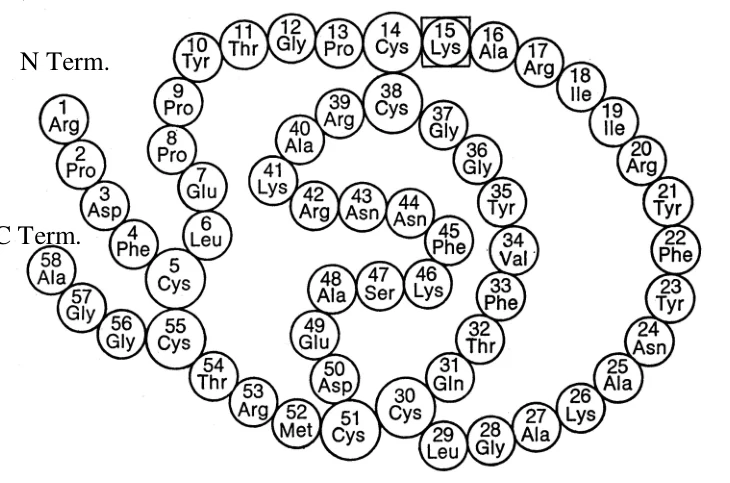
| Structural formula: | C284 H432 N84 O79 S7 Primary Structure: Aprotinin is made up of 58 amino acid residues that are arranged in a single polypeptide chain, cross-linked by three disulfide bridges. Tertiary Structure: The molecule has a length of 29Å and a diameter of 19Å and has a double-stranded antiparallel β-folded sheet structure twisted to form a right-handed double helix with 14 amino-acid units per turn. |
| Physiochemical properties: | Clear almost colourless aqueous solution. The aprotinin concentrate is converted by freeze-drying into an almost white hygroscopic amorphous powder. The concentrate is infinitely miscible with water and dilute salt or buffer solutions. It dissolves without precipitation in methanol (max.70%, v/v), ethanol (max.70%, v/v) and acetone (max. 50%, v/v). The pH of the aprotinin concentrate is adjusted to 4.5 – 6.5 during manufacture. |
C Term.
N Term.
Product Characteristics
TRASYLOL® is a preservative-free isotonic solution.
Viral Inactivation
Bovine Spongiform Encephalopathy (BSE) is a concern when a product is derived from a bovine source. Even though only bovine lung tissue from BSE–free countries is used to manufacture TRASYLOL®, evaluation of the potential of the purification process to clear a Transmissible Spongiform Encephalopathy (TSE) agent was performed. Duplicate spiking experiments were performed using a mouse-adapted strain of scrapie as the model for BSE. Four steps in the purification process were evaluated. Titration of spiked loading material and output samples was performed at dilutions of 10-4 to 10-7 and undiluted to 10-7 respectively. The sum of the purification steps evaluated provided a clearance factor in excess of 18 log10 for a TSE agent.
CLINICAL TRIALS
Study Demographics and Trial Design
Five studies (19, 22-26) were selected as pivotal studies to support the indication of use of TRASYLOL® in CABG surgery. They were double-blind, randomized, parallel group, placebo-controlled, North American studies (Studies 447, 448, 466, 471 and 472), four of which were multi-centre trials and the other one (No. 447) was a single centre trial.
The study demographics are described in Table 8.
| Table 8 – Study Demographics | |||||||||||
|---|---|---|---|---|---|---|---|---|---|---|---|
| Study Number | n (valid for efficacy) | Mean age (yrs) | % Male | % Caucasian | Mean Weight (kg) | ||||||
| 447 | 154 | 61 | 86 | 95 | 85 | ||||||
| 448 | 196 | 64 | 83 | 84 | 83 | ||||||
| 466 | 254 | 65 | 90 | 95 | 85 | ||||||
| 471 | 644 | 61 | 86 | 90 | 85 | ||||||
| 472 | 796 | 62 | 87 | 88 | 85 | ||||||
Primary Coronary Artery Bypass Graft Patients
Three placebo-controlled, double-blind studies of TRASYLOL® (19, 22-24) were conducted in the United States and Europe; of 1372 randomized patients undergoing primary CABG surgery, 1254 were valid for efficacy analysis. The dosage regimens compared in the table below are: TRASYLOL® (2 million KIU I.V. loading dose, 2 million KIU into the pump prime volume, and 500,000 KIU per hour of surgery as a continuous intravenous infusion; and a placebo regimen (normal saline)). All patients valid for efficacy were pooled by treatment regimen.
| Table 9 – Summary of Trial Design for Primary Coronary Artery Bypass Graft Surgery | |||||||
| Study No. (Study Design) | Primary Efficacy Parameter | Treatment Regimen (Number of Patients Valid for Efficacy) | Gender | Mean Age (Years) | |||
448 (multi-center, randomized, double-blind, placebo-controlled) stratified, parallel design, group comparison | Reduction in donor blood transfusion (% pts requiring transfusion, no. units donor blood required per pt) | Aprotinin (74) Placebo (67) | 79% male | 63 | |||
| 471 (multi-center, randomized, double-blind, placebo-controlled parallel study) | Reduction in donor blood transfusion required up to and through post-op Day 12 (no. units donor blood or packed red blood cells per patient), % pts requiring donor blood transfusion up to and through post-op Day 12 | High-dose aprotinin (160) Low-dose aprotinin (168) Pump prime only aprotinin (159) Placebo (157) | 86% male | 61 | |||
| 472 (multi-center, randomized, double-blind, placebo-controlled stratified, parallel group) | % pts with one or more occluded saphenous vein graft distal anastomoses at graft angiography | Aprotinin (401) Placebo (395) | 87% male | 62 | |||
Repeat Coronary Artery Bypass Graft Patients
Three placebo-controlled, double blind studies (23, 25, 26) were conducted in the United States; of 325 randomized patients undergoing repeat CABG surgery, 296 were valid for efficacy analysis. The dosage regimens compared in the table below are identical to those used in the primary CABG studies described above. All patients valid for efficacy were pooled by treatment regimen.
| Table 10 – Summary of Trial Design for Repeat Coronary Artery Bypass Graft Surgery | |||||||
| Study No. (Study Design) | Primary Efficacy Parameter | Treatment Regimen (Number of Patients Valid for Efficacy) | Gender | Mean Age (Years) | |||
| 447 (single-center, stratified, randomized, double-blind, placebo-controlled, parallel design, group comparison) | Reduction in donor blood transfusion (% pts requiring transfusion, no. units donor blood required per pt) | High-dose aprotinin (53) Low-dose aprotinin (49) Placebo (52) | 86% male | 61 | |||
448 (multi-center, randomized, double-blind, placebo-controlled) stratified, parallel design, group comparison | Reduction in donor blood transfusion (% pts requiring transfusion, no. units donor blood required per pt) | Aprotinin (23) Placebo (32) | 91% male | 65 | |||
466 (multi-center, randomized, double-blind, placebo-controlled, group comparison) stratified, parallel | Reduction in donor blood transfusion (% pts requiring donor blood transfusion up to and through post-op Day 12, no. units and vol. donor blood required per pt) | High-dose aprotinin (61) Low-dose aprotinin (60) Pump prime only aprotinin (68) Placebo (65) | 90% male | 65 | |||
Study Results
Primary Coronary Artery Bypass Graft Patients
In this pooled analysis, fewer patients receiving TRASYLOL® required any donor blood in comparison to the placebo regimen. The number of units of donor blood required by patients, the volume of donor blood transfused, the number of units of donor blood products transfused, the thoracic drainage rate, and total thoracic drainage volumes were also reduced in patients receiving TRASYLOL® as compared to placebo (19, 22-24).
| Table 11 – Efficacy Variables - Primary CABG Patients Mean or % of Patients | ||||||
|---|---|---|---|---|---|---|
| Variable | Placebo Regimen (n=619) | TRASYLOL® (n=635) | ||||
| % of Primary CABG Patients Who Required Donor Blood | 53.31 | 36.69a | ||||
| Units of Donor Blood Transfused | 2.17 | 1.02a | ||||
| Total Thoracic Drainage Volume (mL) | 1322 | 748a,b | ||||
| % of Patients Reoperation For Diffuse Bleeding | 1.81 | 0c | ||||
a significantly different from placebo (P<0.05) b n=633 c no statistical analysis was performed | ||||||
Repeat Coronary Artery Bypass Graft Patients
In this pooled analysis, fewer patients receiving TRASYLOL® required any donor blood compared to the placebo regimen. The number of units of donor blood required by patients, the volume (milliliters) of donor blood transfused, the number of units of donor blood products transfused, the thoracic drainage rate, and the total thoracic drainage volumes were also reduced in patients receiving TRASYLOL® as compared to placebo (23, 25, 26).
| Table 12 – Efficacy Variables - Repeat CABG Patients Mean or % of Patients | ||||||
| Variable | Placebo Regimen (n=149) | TRASYLOL® (n=137) | ||||
| % of Repeat CABG Patients Who Required Donor Blood | 75.17 | 45.26a | ||||
| Units of Donor Blood Transfused | 4.01 | 1.5a | ||||
Total Thoracic Drainage Volume (mL) (based on 2 studies - 448, 466) | 1998b | 1148a,c | ||||
| % of Patients Reoperation for Diffuse Bleeding | 2.01 | 0d | ||||
a significantly different from placebo (P<0.05) b n=97 c n=84 d no statistical analysis was performed | ||||||
DETAILED PHARMACOLOGY
Animal Pharmacology
In Vitro Antiproteinase Activity
In vitro TRASYLOL® (aprotinin) inhibits the fibrinolytic activity of plasmin, trypsin, urokinase and streptokinase. The kinin-forming activity of plasmin, trypsin and kallikrein also is inhibited by TRASYLOL® as well as the esterolytic activity of these enzymes. TRASYLOL® inhibited the caseinolytic activity of urokinase-activated human plasmin, trypsin and the plasminogen activation process by urokinase. On the basis of in vitro studies, the inhibition is competitive and reversible although the inhibitor-trypsin complex is firmer than the inhibitor-kallikrein complex. TRASYLOL® also potentiates the antifibrinolytic activity of other proteinase inhibitors. Human spleen cathepsin was inhibited by TRASYLOL®.
In Vivo Antiproteinase Activity
In vivo TRASYLOL® in doses as low as 400 units/kg was capable of inhibiting the hypotensive activity of kallikrein and plasmin in the dog presumed to be mediated by the proteolytic release of hypotensive peptides. The toxicity of trypsin in the dog, and ficin and papain in the dog, rat and rabbit was reduced significantly by TRASYLOL® as was the fibrinolytic activity of streptokinase in the rabbit and mouse. Fibrinolysis secondary to thrombin-induced intra-vascular coagulation was inhibited effectively in the dog by intravenous TRASYLOL®. Trypsin levels in the rat were reported reduced following TRASYLOL® administration.
Action on Blood Coagulation and Blood Coagulation Factors
In vitro TRASYLOL® was shown to have an antithromboplastic action and to affect those stages of blood clotting preceding the final prothrombin-thrombin transformation. Clotting and thrombin times are prolonged when TRASYLOL® was added in concentrations of 7 to 10 mg to 0.6 mL canine blood. TRASYLOL® also was capable of protecting dogs against a lethal dose of brain thromboplastin. TRASYLOL® was found not to affect the coagulation changes induced by thromboplastin administration in the dog, but greatly reduced the mortality rate and occurrence of fibrin clots in the right heart or major pulmonary vessels. It was suggested that the protective effect may be due to interference with fibrin stabilizing factor, thereby interfering with the normal consolidation of formed fibrin aggregated.
Pharmacodynamic Studies
In a general pharmacologic screen, TRASYLOL® in doses of 50,000 KIU/kg I.V. had no analgesic activity in the rat, no taming effect in electrically-stimulated mice and no broncholytic effect in histamine-treated guinea pigs. In concentrations up to 700 KIU/mL, TRASYLOL® did not interfere with smooth muscle stimulating action (isolated guinea pig ileum) of nicotine, acetylcholine, histamine, serotonin, bradykinin, angiotensin (hypertensin) or barium chloride. In doses up to 200,000 KIU/kg intramuscularly, TRASYLOL® did not inhibit the gastric secretion in rats following pyloric ligature.
No overt central nervous system effects were noted after administration of high doses of TRASYLOL®.
Rapid intravenous injections of TRASYLOL® 150,000 KIU/kg caused a reversible hypotensive response in the anaesthetized rat, dog and cat. Hypotension occurred in the guinea pig only at twice that dose, whereas rabbits were unaffected at doses up to 300,000 KIU/kg. A decrease in cardiac output was evident in the dog. No electrocardiographic changes occurred in the guinea pig receiving doses ranging from 10,000 to 100,000 KIU/kg/hr. The hypotensive response possibly may be related to histamine release since injections of 50,000 to 100,000 KIU of
TRASYLOL® intracutaneously into rats and guinea pigs led to extravasation and spread of a protein-bound dye indicator. The reaction was inhibited by antihistamines.
Metabolism, Distribution, Excretion
TRASYLOL® administered subcutaneously in mice is absorbed completely within one hour. The elimination rate in the mouse was determined at 50,000 to 100,000 KIU/kg/hour. Intraperitoneal absorption of TRASYLOL® also has been demonstrated, and estimated at 75% in the dog. No measurable absorption is obtained following oral or rectal administration.
The distribution of TRASYLOL® is primarily extracellular, and distributed to various organs according to their blood supply. Distribution studies in the dog and rat with tritium-labelled TRASYLOL® reveal complete blood clearance within 5 hours with highest concentrations in the liver, peaking at 20 minutes after administration. Levels also are attained in the lungs, spleen, brain, muscles, stomach and intestines. The lowest concentration occurs in the brain; practically no aprotinin passes into the cerebrospinal fluid. Maximum concentrations are achieved in the kidney within 14 hours when levels are no longer detectable in any other organ. Aprotinin accumulates in the kidneys and to a lesser degree also in cartilaginous tissue. Enrichment in the kidneys is due to binding to the brush border of the epithelial cells of the proximal tubules and enrichment in the phagolysosomes of these cells. Accumulation in the cartilaginous tissue results from the affinity of the basic aprotinin to the acid proteoglycans. Hepatic degradation is suggested as well as a structural change which promotes fixation to the renal tissue. The kidney is the main excretory organ and possibly may be responsible for partial degradation and inactivation. No biliary excretion was noted. The elimination half-life in the dog was estimated at 30 minutes. The elimination half-life in man was estimated at 150 minutes with no placental transfer. However, subsequent studies have shown a biphasic elimination profile with an initial half-life of 0.3 to 0.7 hours and a terminal half-life of 5 to 10 hours.
Other Pharmacologic Actions
TRASYLOL® administered in doses of 50,000 KIU/kg to dogs causes clot formation in isolated venous segments ligated 1 minute after drug injection. No clots occurred when ligation was done 5 minutes after drug injection. No clots formed in ligated venous segments of rabbits pre-treated with 5,000 to 10,000 KIU/kg. TRASYLOL® inhibited rat paw edema induced by kallikrein, serotonin, dextran, egg albumin, polyvinyl-pyrolidone, yeast, formalin and heat. TRASYLOL® elicited a homogenous antigenic response in the rabbit.
Human Pharmacology
Pharmacokinetics
TRASYLOL® (aprotinin) is a polypeptide which must be given parenterally in order to achieve adequate blood levels.
In a pharmacokinetic study in healthy volunteers, doses of 50,000 and 500,000 KIU (Kallikrein Inhibitory Units) were administered by rapid I.V. The plasma profiles of radioactivity showed a biphasic elimination pattern, with an initial half-life of 0.7 hours, and a terminal half-life of about 7 hours.
Pharmacokinetic studies conducted in patients undergoing cardiopulmonary bypass or hysterectomy suggest linear pharmacokinetics over the dose range of 500,000 KIU to 2 million KIU.
The pharmacokinetics of aprotinin do not change when doses up to 2 x 10⁶ KIU are given as a fairly rapid (30 minute) infusion. This indicates that no saturation of tissue binding or plasma elimination processes takes place, and that plasma levels should be predictable for any given dose.
Distribution
The steady-state volume of distribution is about 20 L. The rapid elimination rate of aprotinin makes constant infusion a reasonable means of maintaining a desired plasma concentration. Steady-state concentrations of 10 KIU/mL have been achieved with an infusion rate of 100,000 KIU/hr, while concentrations of 100 KIU/mL have been attained with a proportionately higher dose; i.e., 1 x 10⁶ KIU/hr.
Metabolism
Based on animal studies, a high degree of binding to renal tissue is likely, from which elimination and metabolism may proceed by a slow process. Metabolic by-products may be also incorporated into a general amino acid pool of the body.
Excretion
The total body clearance is approximately 40 mL/minute.
In man, urinary excretion of active aprotinin accounts for less than 5% of the dose.
A range of 25 to 40% of the radio-labelled aprotinin was recovered in the urine as metabolites within 48 hours after the dosing. These metabolites lack enzyme-inhibitory activity.
Special Populations
Renal Insufficiency
No pharmacokinetic studies are available in patients with terminal renal insufficiency. Studies in patients with renal impairment revealed no clinically significant pharmacokinetic alterations or obvious side effects. A special dose adjustment is not warranted.
Pregnant Women
Only very limited amounts of aprotinin penetrate the placental barrier. The placenta is probably not absolutely impermeable to aprotinin, but permeation appears to take a very slow course.
TOXICOLOGY
Acute Toxicity
| Table 13 – Preclinical Safety Data – Acute Toxicity | ||||
| Animal Species | Intravenous LD50 Dose | |||
| Mice | 2.5-6.5 x 10⁶ KIU/kg | |||
| Rats | 2.5-5 x 10⁶ KIU/kg | |||
| Rabbits | 500,000 KIU/kg | |||
| Dogs | >1.36 x 10⁶ KIU/kg | |||
Signs and Symptoms
Death occurred as a result of cardiocirculatory failure. Transient symptoms of hyperemia of the extremities occurred in the mouse. Death in the rat followed what appeared to be an anaphylactoid-like reaction. No significant pathology was noted in surviving animals, other than a slightly enlarged pale yellow kidney. No evidence of toxicity was noted in the surviving rabbits.
In a study designed to approximate the anticipated conditions of human use, dogs received single intravenous infusions ranging from 340,000 KIU/kg/day over 4 hours to 1,360,000 KIU/kg over 8 hours. The doses correspond with 3 to 10 times the highest recommended doses in humans. Abnormalities observed were pseudoallergic reactions and slight to moderate hyaline transformation of the cytoplasm of renal tubular epithelial cells. The morphological renal changes, which had no accompanying glomerular alterations, were not totally reversed within a 10-day recovery period.
In rats, guinea-pigs, rabbits and dogs, high doses (>150,000 KIU/kg) injected quickly caused a blood pressure reduction of varying magnitude, which rapidly subsided.
Repeated Dose Toxicity
The effect of repeated intraperitoneal injections of TRASYLOL® (aprotinin) (10,000 to 300,000 KIU/kg) in 100 rats for 12-13 weeks was studied. Signs of renal damage were seen in animals receiving 50,000 KIU/kg or more. At 50,000 KIU/kg, increased kidney weights were recorded. Low grade anemia occurred at 150,000 to 300,000 KIU/kg. Weight gains were depressed in males receiving 25,000 KIU/kg or more and in females receiving 150,000 KIU/kg or more. Histopathologic findings revealed no evidence of toxicity and any changes that occurred were not permanent.
In another rat study, after a 35-day recovery period, all pathological findings in clinical chemistry as well as macroscopic and microscopic kidney changes were no longer evident, with the exception that the relative kidney weights in the high-dose males and females remained elevated. It was concluded that all functional and morphological effects on the renal tubules were generally reversible within 35 days after termination of treatment.
A four-week subacute intravenous toxicity in 32 Beagle dogs at doses of 50,000 to 500,000 KIU/kg revealed kidney modifications in the form of tubular injury and tubular epithelial necrosis, severe in the 500,000 KIU/kg group and marked in the 160,000 KIU/kg group.
Acute symptoms resembled initially a shock-like state, but these subsided as the treatment proceeded. No coagulation or fibrinolytic changes were noted.
In dogs numerous parenteral studies with doses ranging from 5,000 to 500,000 KIU/kg/day were conducted using the intravenous or the intraperitoneal route, for periods of up to 16 weeks. The most important toxicological target in the dog as in the rat studies was the tubular epithelium of the kidneys. The reversibility of all renal (morphological and functional) effects was demonstrated by special studies including recovery groups.
Reproductive Toxicology
In rat intravenous studies, daily doses of up to 80,000 KIU/kg produced no maternal toxicity, embryotoxicity, or fetotoxicity. Daily doses of up to 100,000 KIU/kg did not interfere with the growth and development of the young, and doses of 200,000 KIU/kg/day were not teratogenic. In rabbits, daily intravenous doses of 100,000 KIU/kg produced no evidence of maternal toxicity, embryotoxicity, fetotoxicity, or teratogenicity.
Mutagenesis
Aprotinin gave a negative mutagenic response in the Salmonella/microsome and B. subtilis DNA damage system.
REFERENCES
Post-Marketing Studies - Mortality
- 1. Mangano DT, Miao Y, Vuylsteke A, Tudor IC, Juneja R, Filipescu D, et al. Mortality associated with aprotinin during 5 years following coronary artery bypass graft surgery. JAMA. 2007;297(5):471-9.
- 2. Olenchock S, Lee P, Yehoshua T, Murphy S, Symes J, Tolis G. Impact of Aprotinin on Adverse Clinical Outcomes and Mortality up to 12 Years in a Registry of 3,337 Patients. Ann Thorac Surg. 2008;86:560-7.
- 3. Schneeweiss S, Seeger JD, Landon J, Walker AM. Aprotinin during coronary-artery bypass grafting and risk of death. N Engl J Med. 2008;358(8):771-83.
- 4. Schneeweiss S, Seeger JD, Landon J, Walker AM. Supplementary appendix to: Aprotinin during coronary-artery bypass grafting and risk of death. Available from http://content.nejm.org/cgi/content/full/358/8/771/DC1, accessed September 8, 2009. N Engl J Med. 2008;358(8):771-83.
- 5. Shaw AD, Stafford-Smith M, White WD, Phillips-Bute B, Swaminathan M, Milano C, et al. The effect of aprotinin on outcome after coronary-artery bypass grafting. N Engl J Med. 2008;358(8):784-93.
- 6. Shaw AD, Stafford-Smith M, White WD, Phillips-Bute B, Swaminathan M, Milano C, et al. Supplementary appendix to: The effect of aprotinin on outcome after coronary-artery bypass grafting. Available from http://content.nejm.org/cgi/content/full/358/8/784/DC1 accessed August 23, 2008. N Engl J Med. 2008;358(8):784-93.
- 7. Coleman C, Rigali V, Hammond J, Kluger J, Jeleniowski K, White C. Evaluating the safety implications of aprotinin use: the retrospective evaluation of aprotinin in cardio thoracic surgery (REACTS). J Thorac Cardiovasc Surg. 2007;133(6):1547-52.
- 8. Karkouti K, Beattie WS, Dattilo KM, McCluskey SA, Ghannam M, Hamdy A, et al. A propensity score case-control comparison of aprotinin and tranexamic acid in high-transfusion-risk cardiac surgery. Transfusion. 2006;46(3):327-38.
- 9. Karkouti K, Wijeysundera DN, Yau TM, McCluskey SA, Tait G, Beattie WS. The Risk-Benefit Profile of Aprotinin Versus Tranexamic Acid in Cardiac Surgery. Anesth Analg. 2009.
- 10. Mangano D, Tudor J, Dietzel C. The risk associated with aprotinin in cardiac surgery. N Engl J Med. 2006;354(4):353-65.
- 11. Ngaage DL, Cale AR, Cowen ME, Griffin S, Guvendik L. Aprotinin in primary cardiac surgery: operative outcome of propensity score-matched study. Ann Thorac Surg. 2008;86(4):1195-202.
- 12. Pagano D, Howell NJ, Freemantle N, Cunningham D, Bonser RS, Graham TR, et al. Bleeding in cardiac surgery: the use of aprotinin does not affect survival. J Thorac Cardiovasc Surg. 2008;135(3):495-502.
- 13. Fergusson DA, Hebert PC, Mazer CD, Fremes S, MacAdams C, Murkin JM, et al. A comparison of aprotinin and lysine analogues in high-risk cardiac surgery. N Engl J Med. 2008;358(22):2319-31.
- 14. Fergusson DA, Hebert PC, Mazer CD, Fremes S, MacAdams C, Murkin JM, et al. Supplementary appendix to: A comparison of aprotinin and lysine analogues in high-risk cardiac surgery. Available from http://content.nejm.org/cgi/content/full/NEJMoa0802395/DC1 accessed September 8, 2009. N Engl J Med. 2008;358:2319-31. DOI: 10.1056/NEJMoa0802395.
- 15. Health Canada. Final Report of the Expert Advisory Panel on TRASYLOL(R). Ottawa: Health Products and Food Branch, Health Canada. 2009 March 31. p. 1-7.
- 16. Health Canada. Response to the Final Report of the Expert Advisory Panel on TRASYLOL(R). Health Products and Food Branch, Health Canada. 2011.
General
- 17. Tucker E, Montegriffo E. A single centre, randomised, double-blind, parallel group, placebo-controlled study of the effectiveness of per-operative aprotinin administration in reducing blood loss in patients undergoing coronary revascularisation surgery with arterial conduits: Bayer AG. 2001 November 19. Report: PH-31508/Study No. 200046 [Attachment 26, Vol. 10].
- 18. Gorina E. Multicentre double-blind, randomized, placebo-controlled study to evaluate the effects of two dosages of aprotinin on blood transfusion requirements during coronary bypass surgery: Bayer AG. 2001 Jan 11. Report: PH-30598.
- 19. Alderman EL, Levy JH, Rich JB, Nili M, Vidne B, Schaff H, et al. Analyses of coronary graft patency after aprotinin use: results from the International Multicenter Aprotinin Graft Patency Experience (IMAGE) trial. J Thorac Cardiovasc Surg. 1998;116(5):716-30.
- 20. Segerson TP, Niemcryk SJ, Taylor T, Cislo P. Addendum A for MRR 1355: A multicenter, randomized, double-blind, placebo-controlled group comparison study to investigate the effect of aprotinin on graft patency in patients undergoing primary cardiopulmonary bypass surgery for myocardial revascularization (CABG). Follow-up Survey, West Haven: Bayer Corporation. 1999 September 10. Report: MRR-1355A/Study No. 472 [Attachment 6, Vol. 9].
- 21. Niemcryk SJ, Pettersson G, Rasmussen C, Cislo P. Follow-up analyses of the International Multicenter Aprotinin Graft Patency Experience (IMAGE). J Drug Assess. 2001;4(4):227-306 [Attachment 14, Vol. 9].
- 22. Lemmer JH, Jr., Dilling EW, Morton JR, Rich JB, Robicsek F, Bricker DL, et al. Aprotinin for primary coronary artery bypass grafting: a multicenter trial of three dose regimens. Ann Thorac Surg. 1996;62(6):1659-67; discussion 67-8.
- 23. Lemmer JH, Jr., Stanford W, Bonney SL, Breen JF, Chomka EV, Eldredge WJ, et al. Aprotinin for coronary bypass operations: efficacy, safety, and influence on early saphenous vein graft patency. A multicenter, randomized, double-blind, placebo-controlled study. J Thorac Cardiovasc Surg. 1994;107(2):543-51; discussion 51-3.
- 24. Berger PB, Alderman EL, Nadel A, Schaff HV. Frequency of early occlusion and stenosis in a left internal mammary artery to left anterior descending artery bypass graft after surgery through a median sternotomy on conventional bypass: benchmark for minimally invasive direct coronary artery bypass. Circulation. 1999;100(23):2353-8.
- 25. Levy JH, Pifarre R, Schaff HV, Horrow JC, Albus R, Spiess B, et al. A multicenter, double-blind, placebo-controlled trial of aprotinin for reducing blood loss and the requirement for donor-blood transfusion in patients undergoing repeat coronary artery bypass grafting. Circulation. 1995;8(92):2236-44.
- 26. Bonney SL, Coniff RF, Birkett JP, Schwartz LA, Collins S. A randomized, double-blind, placebo-controlled study of the ability of aprotinin to reduce the need for blood transfusions after repeat open heart surgery for myocardial revascularization (CABG). 1992 September 3. Report: R-5724, Study No. 0447.