


Product Monograph - Zemaira
RECENT MAJOR LABEL CHANGES
| 4.4 Administration & Patient Medication Information | 12/2022 |
|---|---|
| 6 DOSAGE FORMS, STRENGTHS, COMPOSITION AND PACKAGING | 06/2024 |
TABLE OF CONTENTS
Sections or subsections that are not applicable at the time of authorization are not listed.
RECENT MAJOR LABEL CHANGES ............................................................................................ 2
TABLE OF CONTENTS .............................................................................................................. 2
PART I: HEALTH PROFESSIONAL INFORMATION ...................................................................... 4
1 INDICATIONS ............................................................................................................... 4
1.1 Pediatrics ................................................................................................................ 4
1.2 Geriatrics ................................................................................................................ 4
2 CONTRAINDICATIONS ................................................................................................. 4
4 DOSAGE AND ADMINISTRATION ................................................................................. 4
4.1 Dosing Considerations ............................................................................................ 4
4.2 Recommended Dose and Dosage Adjustment ....................................................... 4
4.3 Reconstitution ........................................................................................................ 5
4.4 Administration ...................................................................................................... 10
4.5 Missed Dose ......................................................................................................... 10
5 OVERDOSAGE ............................................................................................................ 10
6 DOSAGE FORMS, STRENGTHS, COMPOSITION AND PACKAGING ............................... 11
7 WARNINGS AND PRECAUTIONS ................................................................................ 12
7.1 Special Populations............................................................................................... 13
7.1.1 Pregnant Women ........................................................................................... 13
7.1.2 Breast-feeding ................................................................................................ 13
7.1.3 Pediatrics ........................................................................................................ 13
7.1.4 Geriatrics ........................................................................................................ 14
8 ADVERSE REACTIONS ................................................................................................ 14
8.1 Adverse Reaction Overview .................................................................................. 14
8.2 Clinical Trial Adverse Reactions ............................................................................ 14
8.3 Less Common Clinical Trial Adverse Reactions ..................................................... 16
8.4 Abnormal Laboratory Findings: Hematologic, Clinical Chemistry and Other Quantitative Data ........................................................................................................... 16
8.5 Post-Market Adverse Reactions ........................................................................... 17
9 DRUG INTERACTIONS ................................................................................................ 17
9.2 Drug Interactions Overview .................................................................................. 17
9.3 Drug-Behavioural Interactions .............................................................................. 17
9.4 Drug-Drug Interactions ......................................................................................... 18
9.5 Drug-Food Interactions ......................................................................................... 18
9.6 Drug-Herb Interactions ......................................................................................... 18
9.7 Drug-Laboratory Test Interactions ........................................................................ 18
10 CLINICAL PHARMACOLOGY ....................................................................................... 18
10.1 Mechanism of Action ...................................................................................... 18
10.2 Pharmacodynamics ........................................................................................ 18
10.3 Pharmacokinetics ........................................................................................... 19
11 STORAGE, STABILITY AND DISPOSAL ......................................................................... 21
12 SPECIAL HANDLING INSTRUCTIONS ........................................................................... 21
PART II: SCIENTIFIC INFORMATION ....................................................................................... 22
13 PHARMACEUTICAL INFORMATION ............................................................................ 22
14 CLINICAL TRIALS ........................................................................................................ 24
14.1 Trial Design and Study Demographics ............................................................ 24
14.2 Study Results .................................................................................................. 24
14.3 Comparative Bioavailability Studies ................................................................ 25
14.4 Immunogenicity .............................................................................................. 25
15 MICROBIOLOGY ........................................................................................................ 25
16 NON-CLINICAL TOXICOLOGY ..................................................................................... 26
PATIENT MEDICATION INFORMATION .................................................................................. 27
PART I: HEALTH PROFESSIONAL INFORMATION
1 INDICATIONS
Zemaira (Alpha1-Proteinase Inhibitor (Human)) is indicated for:
- Maintenance treatment in adults with severe A1-PI deficiency (e.g. genotypes PiZZ, PiZ(null), Pi(null,null), PiSZ) and clinical evidence of emphysema. Zemaira slows the underlying destruction of lung tissue as shown by CT scan densitometry. However, there is a lack of robust evidence on how lung density rate translates into clinically relevant effect.
- Patients are to be under optimal pharmacologic and non-pharmacologic treatment and show evidence of progressive lung disease (e.g. lower forced expiratory volume per second (FEV1) predicted, lower diffusion capacity, impaired walking capacity or increased number of exacerbations) as evaluated by a healthcare professional experienced in the treatment of A1-PI deficiency.
1.2 Pediatrics
Pediatrics (<16 years): See section 7 WARNINGS AND PRECAUTIONS, subsection 7.1 Special Populations.
1.3 Geriatrics
Geriatrics (≥65 years): See section 7 WARNINGS AND PRECAUTIONS, subsection 7.1 Special Populations.
2 CONTRAINDICATIONS
Zemaira (Alpha1-Proteinase Inhibitor (Human)) is contraindicated in:
- Patients with a history of anaphylaxis or severe systemic reactions to the active substance or to any of its excipients.
- Immunoglobulin A (IgA)-deficient patients with antibodies against IgA, due to the risk of severe hypersensitivity (see section 7 WARNINGS AND PRECAUTIONS).
4 DOSAGE AND ADMINISTRATION
4.1 Dosing Considerations
Not applicable.
4.2 Recommended Dose and Dosage Adjustment
Zemaira (Alpha1-Proteinase Inhibitor (Human)) is to be administered intravenously only.
The recommended dose of Zemaira is 60 mg/kg body weight administered once weekly. This dose has been demonstrated to increase and maintain a level of functional A1-PI in the epithelial lining of the lower respiratory tract, providing adequate anti-elastase activity in the lung of individuals with alpha1-antitrypsin deficiency.
Dose ranging studies using efficacy endpoints have not been performed with Zemaira or any A1-PI product.
Paediatric Population
The safety and efficacy of Zemaira in the paediatric population have not been established.
Elderly Population
The safety and efficacy of Zemaira in elderly patients (65 years of age or older) is limited. No clinical study has determined whether elderly patients respond differently from younger subjects.
4.3 Reconstitution
Preparation
- For intravenous use only.
- Use aseptic techniques during reconstitution and administration.
- Do not mix Zemaira with other medicinal products. Administer Zemaira through a separate dedicated infusion line.
- The powder must be reconstituted with Sterile Water for Injection (diluent; provided in the product package) and administered using an intravenous administration set (not supplied).
- Administer within 3 hours after reconstitution.
- Administer Zemaira intravenously at a rate of approximately 0.08 mL/kg/min as determined by the response and comfort of the patient. The recommended dosage of 60 mg/kg body weight will take approximately 15 minutes to infuse.
- Monitor closely the infusion rate and the patient’s clinical state, including vital signs, throughout the infusion. Slow or stop the infusion if adverse reactions occur. If symptoms subside promptly, the infusion may be resumed at a lower rate that is comfortable for the patient.
- Zemaira is for single use only. Following administration, discard any unused solution and all administration equipment in an appropriate manner as per local requirements.
Instructions for Home-Treatment/Self-Administration
First infusions should be administered under the supervision of a healthcare professional experienced in the use of human alpha1-proteinase inhibitor or in the treatment of alpha1-proteinase inhibitor deficiency.
Subsequent infusions can be administered by a caregiver or by the patient if appropriate training is provided and the use is reviewed at regular intervals.
The decision of whether a patient is suitable for home-treatment/self-administration is made by the treating doctor. There are limited data regarding the use of this medicinal product in home-treatment/self-administration.
Potential risks associated with home-treatment/self-administration are related to the administration itself as well as to the handling of adverse drug reactions, particularly hypersensitivity.
Follow the steps below to reconstitute Zemaira:
| 1 | Ensure that the powder vial and Sterile Water for Injection (diluent) vial are at room temperature (up to 25°C). This can be done either by leaving the vials at room temperature for about an hour or by holding them in your hands for a few minutes. | ||
|---|---|---|---|
| 2 | Remove the plastic flip-top cap from the diluent vial. | ||
| 3 | Wipe the rubber stopper of the diluent vial with antiseptic solution and allow it to dry. | ||
| 4 | Open the Mix2Vial® transfer set by peeling off the lid (Figure 1). Do not remove the transfer set from the blister package. | 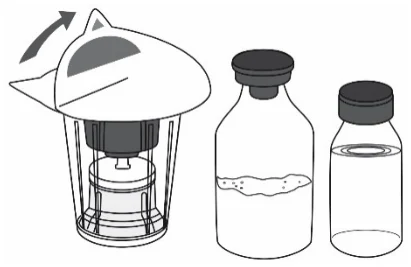 Figure 1 | |
| 5 | Place the diluent vial on an even, clean surface and hold the vial tight. Take Mix2Vial® together with the blister package and vertically pierce the diluent vial with the blue tip of the Mix2Vial® (Figure 2). | 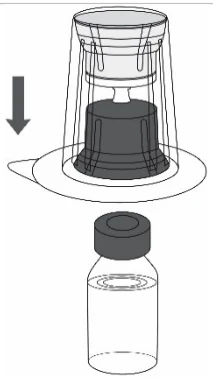 Figure 2 | |
| 6 | Carefully remove the blister package from the Mix2Vial® by holding at the rim, and pulling vertically upwards. Make sure that you only pull away the blister package and not the Mix2Vial® (Figure 3). | 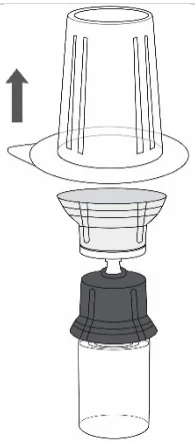 Figure 3 | |
| 7 | Remove the plastic flip-top cap from the Zemaira vial. | ||
|---|---|---|---|
| 8 | Wipe the rubber stopper of the Zemaira vial with antiseptic solution and allow it to dry. | ||
| 9 | Place the Zemaira vial on an even and firm surface. Invert the diluent vial with the Mix2Vial® attached and vertically pierce the Zemaira vial with the clear tip of the Mix2Vial® (Figure 4). The diluent will automatically flow into the Zemaira vial. NOTE: Ensure all water has transferred into the Zemaira vial. | 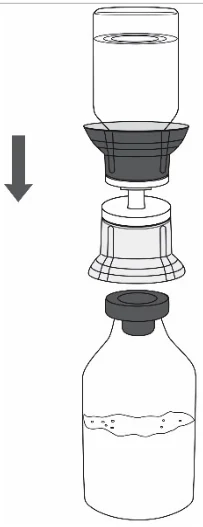 Figure 4 | |
| 10 | Follow steps below to remove entire Mix2Vial® from Zemaira vial:
Discard the diluent vial with the entire Mix2Vial®. | 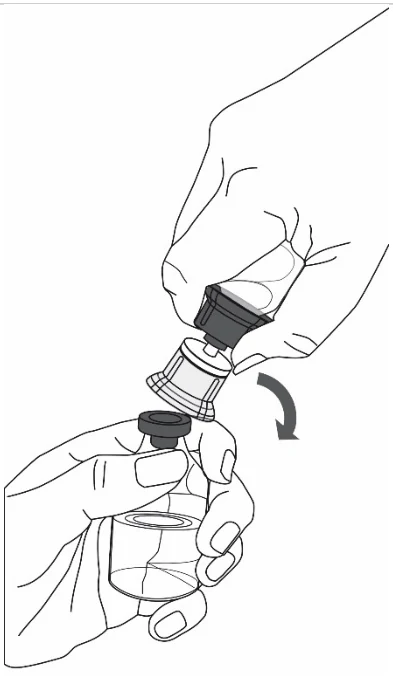 Figure 5 | |
| 11 | Gently swirl the Zemaira vial until the powder is completely dissolved (Figure 6). DO NOT SHAKE. Take care not to touch the rubber vial stopper. | 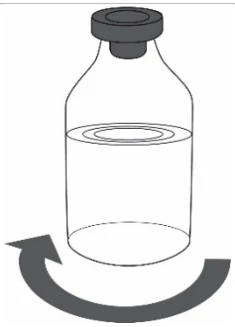 Figure 6 |
|---|---|---|
| 12 | Inspect visually the reconstituted solution. The solution should be clear, colorless to slightly yellow, and free from visible particles. Do not use solutions that are discoloured, cloudy or have particles. | |
| 13 | If more than 1 vial of Zemaira is needed to achieve the required dose, repeat instructions 1 to 12 above using an additional package containing an unused Mix2Vial® transfer set. Use a separate, unused Mix2Vial® transfer set and sterile water for injections (diluent) vial for each Zemaira vial. | |
| 14 | The reconstituted solutions can be sequentially administered directly from the vial, or the reconstituted solutions can alternatively be transferred into an infusion container (e.g., empty intravenous bag or glass bottle; (not supplied) via a commercially available intravenous fluid tubing transfer set (not supplied)) prior to administration. Use aseptic technique to transfer the reconstituted solution into an infusion container. | |
Table 1 – Reconstitution
| Vial Size | Volume of Diluent to be Added to Vial | Concentration per mL |
| 1000mg | 20mL | 50mg / mL* |
| 4000mg | 76mL | 50mg / mL* |
| 5000mg | 95mL | 50mg / mL* |
* After reconstitution with 20, 76 or 95 ml of solvent, the solution contains approximately 50 mg / ml of A1-PI.
4.4 Administration
The reconstituted solution must be administered using an intravenous administration set (not supplied).
| 1 | Make sure that the air vent cap and the roller clamp of the IV infusion set are closed. VERTICALLY pierce the Zemaira vial with the IV infusion set spike while twisting the IV infusion set spike gently or connect it to an infusion container |
|---|---|
| 2 | Elevate the Zemaira vial/infusion container or hang on an infusion stand |
| 3 | Prime the drip chamber by squeezing it until Zemaira has filled the chamber roughly half-way. |
| 4 | Open the air vent cap of the IV infusion set. |
| 5 | Slowly open the roller clamp of the IV infusion set and let the Zemaira solution flow until it reaches the end of the tubing with no air bubbles. |
| 6 | Close the roller clamp. |
| 7 | Disinfect the injection site with an antiseptic like an alcohol swab before carefully inserting the needle into the vein. Make sure that there is no more air in the butterfly tube left. |
| 8 | Connect the other end of the IV infusion set to the butterfly set and open the roller clamp again. |
| 9 | Infuse the reconstituted solution into the vein following the instructions given to you by your doctor. The solution should be infused at an infusion rate of about 0.08 mL/kg bw/min, as determined by your response and your comfort. The recommended dose of 60 mg/kg bw will take approximately 15 minutes to infuse. |
4.5 Missed Dose
A missed dose should be administered as soon as possible and continue at regular intervals. Do not administer a double dose to make up for the missed dose.
5 OVERDOSAGE
No cases of overdose have been reported.
| For management of a suspected drug overdose, contact your regional poison control centre. |
|---|
6 DOSAGE FORMS, STRENGTHS, COMPOSITION AND PACKAGING
To help ensure the traceability of biologic products, including biosimilars, health professionals should recognise the importance of recording both the brand name and the non-proprietary (active ingredient) name as well as other product-specific identifiers such as the Drug Identification Number (DIN) and the batch/lot number of the product supplied.
Table 2 – Dosage Forms, Strengths, Composition and Packaging
Zemaira (Alpha1-Proteinase Inhibitor (Human)) is supplied in a single-use vial containing approximately 1000, 4000 or 5000 mg of functionally active A1-PI as a lyophilized white to off-white powder for reconstitution with Sterile Water for Injection (provided in the product package). The product package includes:
- 1 vial with Zemaira powder (including the hanger)
- 1 vial of Sterile Water for Injection (diluent)
- 1 Mix2Vial® transfer set for reconstitution
Following reconstitution with 20, 76 or 95 mL, respectively, of Sterile Water for Injection, the Zemaira solution contains 73 to 89 mM sodium*, 30.4 to 39.4 mM chloride, 15 to 20 mM phosphate, and 121 to 168 mM mannitol. Hydrochloric acid and/or sodium hydroxide may have been added to adjust the pH. Zemaira contains no preservative.
* That should be taken into consideration for patients on a sodium-controlled diet.
Zemaira (Alpha1-Proteinase Inhibitor (Human)) is a sterile, white to off white, lyophilized preparation of highly purified Alpha1-Proteinase Inhibitor (Human) (A1-PI), also known as alpha1-antitrypsin, to be reconstituted with Sterile Water for Injection (included in the product package) and administered by the intravenous route. The product is presented in three strengths of approximately 1000, 4000 or 5000 mg of functionally active A1-PI per vial.
Zemaira is manufactured from pooled human plasma by cold ethanol fractionation according to a modified Cohn process followed by additional purification steps. The manufacturing process includes two virus clearance steps namely pasteurization and virus filtration (also called nanofiltration). All these measures provide a high degree of assurance that the
| Route of Administration | Dosage Form/ Strength/Composition | Non-medicinal Ingredients |
| Intravenous (IV) | Lyophilized powder for reconstitution and injection; 1000, 4000 and 5000 mg/vial | Hydrogen chloride or Sodium hydroxide (for pH adjustment), mannitol, sodium chloride, sodium phosphate |
production process for Zemaira results in high safety margins concerning potential impact on patients by adventitious agents like microorganisms, prions and viruses (See section 13 PHARMACEUTICAL INFORMATION, subsection Viral Inactivation for further details.)
7 WARNINGS AND PRECAUTIONS
This product is prepared from large pools of human plasma. Thus, there is a possibility it may contain causative agents of viral or other undetermined diseases.
General
The recommended infusion rate for Zemaira (Alpha1-Proteinase Inhibitor (Human)) should be adhered to (see section 4 DOSAGE AND ADMINISTRATION). During the first infusions, patient’s clinical state, including vital signs, should be closely monitored throughout the infusion period. If any reaction takes place that might be related to the administration of Zemaira, the rate of infusion should be decreased or the administration should be stopped, as required by the clinical condition of the patient. If symptoms subside promptly after stopping, the infusion may be resumed at a lower rate that is comfortable for the patient.
Standard measures to prevent infections resulting from the use of medicinal products prepared from human blood or plasma include selection of donors, screening of individual donations and plasma pools for specific markers of infection, and the inclusion of effective manufacturing steps for the inactivation/removal of viruses. Despite this, when medicinal products prepared from human blood or plasma are administered, the possibility of transmitting infective agents cannot be totally excluded. This also applies to unknown or emerging viruses and other pathogens.
The measures taken are considered effective for enveloped viruses such as human immunodeficiency virus (HIV), hepatitis B virus (HBV) and hepatitis C virus (HCV) and for the non-enveloped hepatitis A (HAV) and parvovirus B19 virus.
Appropriate vaccination (hepatitis A and B) should be considered for patients in regular/repeated receipt of human plasma-derived proteinase inhibitors.
It is strongly recommended that every time Zemaira is administered to a patient, the name and batch number of the product are recorded in order to maintain a link between the patient and the batch of the product.
Driving and Operating Machinery
Zemaira may have a minor influence on the ability to drive and use machines. Adverse reactions such as dizziness may occur following administration of Zemaira.
Reproductive Health: Female and Male Potential
Fertility
No animal fertility studies have been conducted with Zemaira and its effect on human fertility has not been established in controlled clinical trials.
Respiratory
Tobacco smoke is an important risk factor for the development and progression of emphysema. Therefore cessation of smoking and the avoidance of environmental tobacco smoke are strongly recommended.
Sensitivity/Resistance
Caution should be used when administering Zemaira to patients with known hypersensitivity to an A1-PI product.
Zemaira may contain trace amounts of IgA. Patients with selective or severe IgA deficiency can develop antibodies to IgA and, therefore, have a greater risk of developing potentially severe hypersensitivity and anaphylactic reactions.
Suspected allergic or anaphylactic type reactions may require immediate discontinuation of the infusion, depending on the nature and severity of the reaction. In case of shock, emergency medical treatment should be administered.
7.1 Special Populations
7.1.1 Pregnant Women
No animal reproduction studies have been conducted with Zemaira and its safety for use in human pregnancy has not been established in controlled clinical trials. It is not known whether Zemaira can cause fetal harm when administered to a pregnant woman. Zemaira should be given to a pregnant woman only if clearly needed.
7.1.2 Breast-feeding
It is unknown whether Zemaira/metabolites are excreted in human milk. The excretion of human alpha1-proteinase inhibitor in milk has not been studied in animals. Zemaira should be given to a nursing woman only if clearly needed.
7.1.3 Pediatrics
Pediatrics (<16 years): Safety and effectiveness in the pediatric population have not been established. No data are available to Health Canada; therefore, Health Canada has not authorized an indication for pediatric use.
7.1.4 Geriatrics
Geriatrics (≥65 years): The safety and efficacy of Zemaira in elderly patients have not been established in clinical trials.
8 ADVERSE REACTIONS
8.1 Adverse Reaction Overview
Therapeutic administration of Zemaira 60 mg/kg body weight once weekly has been demonstrated to be well-tolerated.
The most common adverse reactions (ARs) observed in subjects receiving Zemaira in all clinical trials were headache, dizziness, dyspnea and nausea.
In post-licensure trials, serious exacerbations of chronic obstructive pulmonary disease (COPD) were observed at incidence rates greater than placebo.
8.2 Clinical Trial Adverse Reactions
Clinical trials are conducted under very specific conditions. The adverse reaction rates observed in the clinical trials; therefore, may not reflect the rates observed in practice and should not be compared to the rates in the clinical trials of another drug. Adverse reaction information from clinical trials may be useful in identifying and approximating rates of adverse drug reactions in real-world use.
The cumulative safety and tolerability profile of Zemaira (Alpha1-Proteinase Inhibitor (Human)) is based on the six clinical trials listed below:
- Randomized, Placebo-Controlled Trial of Augmentation Therapy in Alpha1-Protease Inhibitor Deficiency (RAPID), in 180 subjects who received weekly 60 mg/kg body weight intravenous dose of either Zemaira (93 subjects) or placebo (87 subjects) for 24 months.
- RAPID Extension Trial, open-label study in 140 subjects who completed the RAPID Trial and received weekly 60 mg/kg body weight intravenous dose of Zemaira for an additional 24 months.
- A controlled, double-blind study in 44 subjects who received weekly 60 mg/kg body weight dose of either Zemaira (30 subjects) or Prolastin® (a commercially available Alpha1-Proteinase Inhibitor [Human] product) (14 subjects) for 10 weeks, followed by an open-label phase in which 43 subjects received Zemaira weekly for 14 weeks.
- An open-label study in 9 subjects who received weekly 60 mg/kg body weight dose of Zemaira for 26 weeks, followed by a 7-week to 22-week extension.
- A crossover, double-blind study in 18 subjects who received a single 60 mg/kg body weight dose of either Zemaira or Prolastin®.
- An open-label study in 19 subjects who received a single, body weight 15 mg/kg (2 subjects), 30 mg/kg (5 subjects), 60 mg/kg (6 subjects), or 120 mg/kg (6 subjects) intravenous dose of Zemaira.
The frequencies of ARs presented in Table and Table are based on six-month exposure data from 221 patients treated with Zemaira and 87 treated with placebo in the six clinical studies listed above.
Table presents ARs that occurred in >1% of patients according to the MedDRA System organ classification:
Table 3 – Clinical Trial Adverse Reactions (AR) Occurring in >1% of Patients, and Adverse Event (AE) Frequency of the Same Preferred Term, Expressed as a Percentage (%) of All Infusions Irrespective of Causality
System Organ Class (SOC) Preferred Term | Percentage of Patients Reporting AR >1% | AE Frequency as % of All Infusions Irrespective of Causality | ||||
|---|---|---|---|---|---|---|
n=221 % of patients | n=23,138 % of total infusions | |||||
Gastrointestinal disorders Nausea | 1.4 | 0.16 | ||||
Nervous system disorders Dizziness Headache | 2.3 5.0 | 0.11 0.78 | ||||
Respiratory, thoracic and mediastinal disorders Dyspnea | 1.4 | 0.31 | ||||
Chronic Obstructive Pulmonary Disease (COPD) Exacerbations
In a retrospective analysis, during the 10-week blinded portion of the 24-week clinical trial, 6 subjects (20%) of the 30 treated with Zemaira had a total of 7 exacerbations of their chronic obstructive pulmonary disease (COPD). Nine subjects (64%) of the 14 treated with Prolastin had a total of 11 exacerbations of their COPD. The observed difference between groups was 44% (95% confidence interval [CI] from 8% to 70%). Over the entire 24-week treatment period, of the 30 subjects in the Zemaira treatment group, 7 subjects (23%) had a total of 11 exacerbations of their COPD.
In the RAPID study, 25 serious exacerbations of COPD were reported in 15 Zemaira subjects vs. 17 such events in 9 placebo subjects, corresponding to rates of 0.146 exacerbations per subject-year with Zemaira and 0.115 exacerbations per subject-year with placebo, (ratio Zemaira : Placebo [95% confidence interval]: 1.256 [0.457-3.454]).
8.3 Less Common Clinical Trial Adverse Reactions
Adverse reactions occurring in ˂1% of patients are summarized in Table :
Table 4– Less Common Clinical Trial Adverse Reactions
System Organ Class (SOC) Event Term | Zemaira n=221 % |
|---|---|
Nervous system disorders Paraesthesia Hypoaesthesia | 0.5 0.5 |
Vascular disorders Flushing/hot flush | 0.5 |
Skin and subcutaneous tissue disorders Urticaria Rash (including exfoliative and generalized) Pruritus | 0.9 0.5 0.5 |
General disorders and administration site conditions Asthenia | 0.5 |
For ARs occurring in <1% of patients, all AE rates reported as percentage (%) of all infusions and irrespective of causality were ≤0.04%.
8.4 Abnormal Laboratory Findings: Hematologic, Clinical Chemistry and Other Quantitative Data
Not applicable.
8.5 Post-Market Adverse Reactions
Because post-marketing reporting of adverse reactions is voluntary and from a population of uncertain size, it is not always possible to reliably estimate the frequency of these reactions or establish a causal relationship to product exposure.
Table 5 lists the ARs that have been identified during post-marketing use of Zemaira. This list also includes adverse events assessed as unrelated to study treatment in clinical trials with Zemaira (see section 8 ADVERSE REACTIONS , subsection 8.2 Clinical Trial Adverse Reactions).
Table 5– ARs Reported During the Post-marketing Use of Zemaira
| System Organ Class | Preferred Term/Symptoms |
|---|---|
| Blood and lymphatic system disorders | Lymph node pain |
| Eye disorders | Eye swelling |
| Gastrointestinal disorders | Lip swelling |
| General disorders and administration site conditions | Infusion-site reactions (including infusion site hematoma)* Chest pain* Chills* Pyrexia* |
| Immune system disorders | Hypersensitivity reactions (including tachycardia, hypotension, confusion, syncope, oxygen consumption decreased and pharyngeal oedema)* Anaphylactic reactions* |
| Skin and subcutaneous tissue disorders | Facial swelling, hyperhidrosis* |
* These events were observed in clinical trials but assessed as unrelated to study treatment
9 DRUG INTERACTIONS
9.2 Drug Interactions Overview
No interaction studies have been performed.
9.3 Drug-Behavioural Interactions
Not applicable.
9.4 Drug-Drug Interactions
Interactions with other drugs have not been established.
9.5 Drug-Food Interactions
Interactions with food have not been established.
9.6 Drug-Herb Interactions
Interactions with herbal products have not been established.
9.7 Drug-Laboratory Test Interactions
Interactions with laboratory tests have not been established.
10 CLINICAL PHARMACOLOGY
10.1 Mechanism of Action
The A1-PI is a 52 kDa single polypeptide glycoprotein produced by hepatocytes and mononuclear phagocytes and is understood to be the primary anti-protease in the lower respiratory tract, where it inhibits neutrophil elastase (NE). Lung tissue can be degraded by neutrophil proteases, which have been activated by infection and/or inflammation. Normal healthy individuals produce sufficient A1-PI to control the NE produced by activated neutrophils and are thus able to prevent inappropriate proteolysis of lung tissue by NE. Conditions that increase neutrophil accumulation and activation in the lung, such as respiratory infection and smoking, will in turn increase the levels of NE.
Individuals deficient in endogenous A1-PI are unable to maintain appropriate antiprotease defence and experience more rapid proteolysis of the alveolar walls starting prior to the development of clinically evident chronic obstructive lung disease in the third or fourth decade. Over time, the progressive loss of lung tissue results in the decline in lung function characterized by dyspnea and its sequelae.
10.2 Pharmacodynamics
Augmenting the levels of functional A1-PI by intravenous infusion and correcting the imbalance between NE and protease inhibitors is an approach to therapy for patients with A1-PI deficiency. The administration of Zemaira increases and maintains the antigenic and functional serum levels as well as the lung epithelial lining fluid (ELF) levels of A1-PI in the lower lung, leading to a slowdown of the progression of emphysema. However, there is a lack of robust evidence on how lung density decline rate translates into clinically relevant effect.
10.3 Pharmacokinetics
Four clinical studies were conducted with Zemaira in 89 subjects (59 males and 30 females) to evaluate the effect of Zemaira on serum levels of A1-PI. The subjects ranged in age from 29 to 68 years (median age 49 years). At screening, serum A1-PI levels were between 3.2 and 10.1 µM (mean of 5.6 µM).
A double-blind, randomized, active-controlled, crossover pharmacokinetic study was conducted in 13 males and 5 females with A1-PI deficiency, ranging in age from 36 to 66 years. Nine subjects received a single 60 mg/kg bw dose of Zemaira followed by Prolastin, and 9 subjects received Prolastin followed by a single 60 mg/kg bw dose of Zemaira, with a wash-out period of 35 days between doses. A total of 13 post-infusion serum samples were taken at various time points up to Day 21. Table 6 shows the mean results for the Zemaira pharmacokinetic parameters.
Table 6 – Pharmacokinetic parameters for A1-PI following a single 60 mg/kg bw dose of Zemaira
| Pharmacokinetic Parameter | Zemaira 60 mg/kg Mean (standard deviation)* | Prolastin 60 mg/kg Mean (standard deviation) |
|---|---|---|
| Area under the curve (AUC0-∞) | 144 (±27) µM x day | 160 (±32) µM x day |
| Maximum concentration (Cmax) | 44.1 (±10.8) µM | 48.8 (±8.7) µM |
| Terminal half-life (t1/2ß) | 5.1 (±2.4) days | 4.8 (±1.4) days |
| Total clearance | 603 (±129) mL/day | 557 (±107) mL/day |
| Volume of distribution at steady state | 3.8 (±1.3) L | 3.4 (±0.8) L |
* n=18 subjects
A population pharmacokinetic analysis was conducted using data from 90 Zemaira-treated subjects from the RAPID trial. The population estimate of mean half-life was 6.8 days. The model predicted mean steady-state concentration was 21.8 µM after a 60 mg/kg bw/week dose. The population pharmacokinetic analysis did not indicate that there were any significant effects of age, gender, weight, or baseline serum antigenic A1-PI concentrations on the clearance of Zemaira.
Relationship between pharmacokinetics and pharmacodynamics
In a double-blind, controlled clinical study to evaluate the safety and biochemical efficacy of Zemaira 44 subjects were randomized to receive 60 mg/kg bw intravenous dose of Zemaira once weekly for 24 weeks. The mean trough serum A1-PI levels at steady state (Weeks 7-11) were maintained above 11 µM. The mean of the steady state trough serum A1-PI level for Zemaira-treated subjects was 17.7 µM (standard deviation: 2.5).
In a subgroup of subjects enrolled in this study (10 Zemaira-treated subjects) broncho-alveolar lavage was performed. ELF measurements of A1-PI levels showed a consistent increase following treatment. ELF levels of antigenic A1-PI and A1-PI:NE complexes increased from baseline. Free elastase was immeasurably low in all samples.
Following the completion of the RAPID and RAPID Extension Trial, an exposure response analysis was conducted. This analysis revealed an inverse linear relationship between trough serum A1-PI levels and the annual decline in lung density as measured by volume adjusted CT scans for subjects receiving 60 mg/kg body weight intravenous dose of Zemaira or placebo (see Figure 1).
Figure 1 – Expected Lung Density Decline Rate as a Function of Trough Serum A1-PI Level*
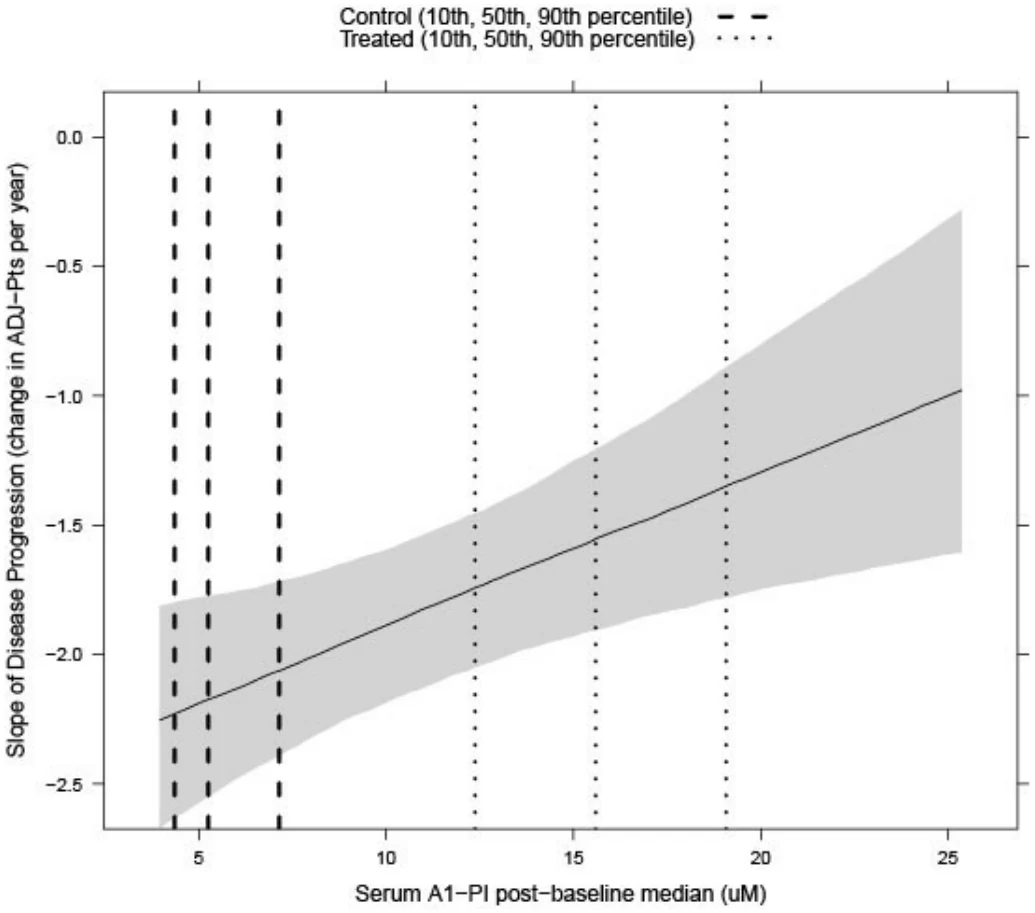
*The area in grey represents 90% confidence intervals based on annual rate of change in adjusted lung density from a bootstrapping method.
11 STORAGE, STABILITY AND DISPOSAL
When stored in the refrigerator or at room temperature (at +2°C to +25°C), Zemaira is stable for the period indicated by the expiration date on its label. Do not freeze.
Storage after reconstitution: Administer within 3 hours after reconstitution. Do not freeze the reconstituted solution.
12 SPECIAL HANDLING INSTRUCTIONS
Not applicable.
PART II: SCIENTIFIC INFORMATION
13 PHARMACEUTICAL INFORMATION
Drug Substance
Proper name: Alpha1-Proteinase Inhibitor (Human); alpha1-antitrypsin (A1AT).
Chemical name: NA
Molecular formula and molecular mass: 50-52 kDa
Structural formula: Alpha1-Proteinase Inhibitor (Human) is a globular protein with significant structural similarity to other members of the serine proteinase inhibitor family. The secondary structure consists primarily of α-helix and β-sheet motifs. One notable structural element is the reactive center loop, encompassing residues 344-368. This unstructured loop extends into the solvent and contains the cleavable bond (between residues 358 and 359) integral to protease inhibition.
The 394 amino acid polypeptide sequence and the glycan-free three dimensional structure of the most common genetic variant of A1-PI (H). Notable features of this sequence include three asparagines containing N-linked oligosaccharides at positions 46, 83, and 247, and a single cysteine at position 232. A common genetic variant of this sequence exhibits a valine to alanine substitution at position 213. The identity of A1-PI (H) as the primary protein in Zemaira has been confirmed by tryptic digestion and liquid chromatography-tandem mass spectrometry (LC-MS/MS) analysis. In addition, the molecular weights of the A1-PI (H) molecule observed by high resolution mass spectrometry of the intact protein are consistent with the different glycoforms and sequence variants of the molecule described in the literature.
The average molecular weight of A1-PI (H) cited in the literature varies considerably from 49,000 to 59,000 Da, depending on the methodology used. Most values center around 50-52 kDa. The molecular weight of the A1-PI (H) in Zemaira was determined by high resolution electrospray ionization time-of-flight mass spectrometry (ESI-TOF-MS). The average molecular weight can be estimated from this spectrum using the observed intensity to calculate a weighted average for the entire spectrum. This average value of 51,333.3 Da is consistent with the literature reports. Individual peaks observed in the spectrum are highly consistent with the calculated masses of known forms of A1-PI (H).
Physicochemical properties: Zemaira is available as a powder for solution which is soluble in water.
Pharmaceutical standard: Pharmacopeial
Product Characteristics:
Zemaira is a sterile, white to off-white, lyophilized preparation of highly purified alpha1-Proteinase Inhibitor (Human) (A1-PI), also known as alpha1-antitrypsin, to be reconstituted and administered by the intravenous route. The reconstituted product is a clear, colorless to slightly yellow solution.
Each vial of Zemaira contains the following ingredients:
Table 7 – Ingredients
| Ingredient | Nominal Amount | ||||||
|---|---|---|---|---|---|---|---|
| Alpha1-Proteinase Inhibitor (Human) | 1000 mg/vial | 4000 mg/vial | 5000 mg/vial | ||||
| Sodium | 37 mg/vial | 148 mg/vial | 185 mg/vial | ||||
| Chloride | 25 mg/vial | 99 mg/vial | 124 mg/vial | ||||
| Phosphate | 32 mg/vial | 128 mg/vial | 160 mg/vial | ||||
| Mannitol | 525 mg/vial | 2100 mg/vial | 2625 mg/vial | ||||
| HCl and/or NaOH | Quantity sufficient for pH adjustment | ||||||
The specific activity of Zemaira is ≥0.7 mg of functional A1-PI per milligram of total protein. The purity is ≥92% A1-PI. The total protein content is approximately 1100 mg per vial, 4400 mg per vial or 5500 mg per vial. After reconstitution with 20, 76 or 95 mL water for injection, the solution contains approximately 50 mg/mL of A1-PI.
Viral Inactivation
All plasma used in the manufacture of Zemaira is obtained from plasma donors and is tested using serological assays for hepatitis B surface antigen (HBsAg) and antibodies to HIV-1/2 and HCV. The plasma is tested with Nucleic Acid Testing (NAT) for HBV, HCV, HIV-1, and HAV, and found to be nonreactive (negative). The plasma is also tested by NAT for B19V. Only plasma that passed the virus screening is used for production. The limit for B19V in the fractionation pool is ≤104 International Units of B19V per mL.
Zemaira is manufactured from large pools of human plasma by cold ethanol fractionation according to a modified Cohn process followed by additional purification steps. The manufacturing process includes two virus clearance steps: pasteurization and virus filtration (also called nanofiltration). These virus clearance steps have been validated in a series of in vitro experiments for their capacity to inactivate/remove both enveloped and non-enveloped viruses.
All these measures provide a high degree of assurance that the production process for Zemaira results in high safety margins concerning potential impact on patients by adventitious agents like microorganisms, prions and viruses.
14 CLINICAL TRIALS
14.1 Trial Design and Study Demographics
RAPID Trial1
The safety and efficacy of Zemaira was evaluated in a randomized, double-blind, placebo-controlled, multi-center study (RAPID) followed by a 2-year open-label extension study (RAPID extension study).
A total of 180 subjects with A1-PI deficiency characterized by a serum A1-PI level <11 μM (i.e. <50 mg/dL as determined by nephelometry) and clinical evidence of emphysema, were randomized to receive a weekly 60 mg/kg bw intravenous dose of either Zemaira (93 subjects) or placebo (87 subjects) for up to 24 months.
One-hundred forty subjects (76 Zemaira-treated subjects and 64 subjects treated with placebo in the RAPID Study) continued into the RAPID extension study and were treated with a weekly 60 mg/kg bw intravenous dose of Zemaira for up to 24 months.
The clinical data of both studies are based on computer tomography (CT) investigating the effect of Zemaira on the progression of emphysema and the decline of lung density.
14.2 Study Results
RAPID Trial1
Zemaira-treated subjects demonstrated a consistent pattern of slower lung density decline than those receiving placebo (see Error! Reference source not found.). The annual rate of lung density decline, as measured by CT scan at total lung capacity over 2 years was lower with Zemaira (-1.45 g/L) as compared with placebo (-2.19 g/L), reflecting a 34% reduction (p=0.017, 1-sided). Higher CT lung density measurements correlated with higher forced expiratory volume in 1 second (0.31, p<0.001), higher diffusion capacity of carbon monoxide (0.46, p<0.001), higher exercise capacity (0.26, p=0.002), and lower St. George’s Respiratory Questionnaire activity score (-0.26, p=0.002) throughout the study.
1 Chapman KR et al. Intravenous augmentation treatment and lung density in severe α1 antitrypsin deficiency (RAPID): a randomised, double-blind, placebo-controlled trial. Lancet. 2015;386(9991):360-8.
Figure 1 – Changes in Lung Density from baseline in the RAPID study
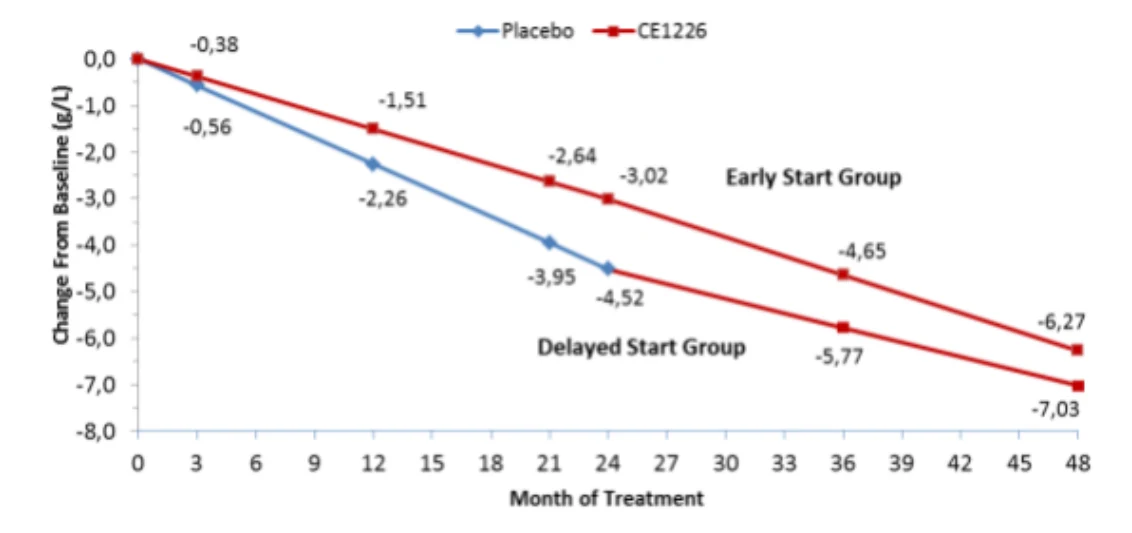
The final analysis of the RAPID extension study demonstrated:
- that the reduced rate in lung density decline was maintained for subjects continuously treated with Zemaira for 4 years;
- that a reduced rate in lung density decline was achieved in the RAPID extension study temporal with the administration of Zemaira in subjects previously treated with placebo in the RAPID study.
- that lung tissue lost while exposed to 2 years of placebo administrations was irreversible.
In the RAPID study, Zemaira, administered at single doses of 120 mg/kg bw to 75 patients to cover exceptional 2-week drug holidays, demonstrated a similar safety and tolerability profile compared to placebo. Regular weekly dosing with 120 mg/kg bw has not been investigated.
14.3 Comparative Bioavailability Studies
Not applicable.
14.4 Immunogenicity
Not applicable.
15 MICROBIOLOGY
No microbiological information is required for this drug product.
16 NON-CLINICAL TOXICOLOGY
In a safety pharmacology study, dogs were administered a 60 or 240 mg/kg intravenous dose of Zemaira. At the clinical dose of 60 mg/kg, no changes in cardiovascular and respiratory parameters or measured hematology, blood chemistry, or electrolyte parameters were attributed to the administration of Zemaira. A minor transient decrease in femoral resistance and increase in blood flow were observed after administration of the 240 mg/kg dose.
General Toxicology:
In single-dose studies, mice and rats were administered a 0, 60, 240, or 600 mg/kg intravenous dose of Zemaira and observed twice daily for 15 days. No signs of toxicity were observed up to 240 mg/kg. Transient signs of distress were observed in male mice and in male and female rats after administration of the highest dose (600 mg/kg).
In repeat-dose toxicity studies, rats and rabbits received 0, 60, or 240 mg/kg intravenous doses of Zemaira once daily for 5 consecutive days. No treatment-related effects on clinical signs, body weight, hematology, coagulation, or urinalysis were observed in rats administered up to 240 mg/kg. No signs of toxicity were observed in rabbits administered 60 mg/kg. Changes in organ weights and minimal epidermal ulceration were observed in rabbits administered 240 mg/kg, but had no clinical effects.
The local tolerance of Zemaira was evaluated in rabbits following intravenous, perivenous, and intra-arterial administration. No treatment-related local adverse reactions were observed.
To test the occurrence of new antigenic determinants caused by the pasteurization step, rabbits were immunized with Zemaira. Serum was then collected from the animals, IgG fractions were purified and absorbed with non-pasteurized Zemaira. Pasteurized and non-pasteurized Zemaira were separated using native or SDS gel systems, blotted on nitrocellulose membranes and detected with the various antibodies. This study gave no evidence for the existence of neoantigens in pasteurized Zemaira samples.
Carcinogenicity:
Long-term studies in animals to evaluate carcinogenesis have not been conducted.
Genotoxicity:
Long-term studies in animals to evaluate mutagenesis have not been conducted.
Reproductive and Developmental Toxicology:
Long-term studies in animals to evaluate impairment of fertility have not been conducted.