


Patient Medication Information: uses, side effects, how to take - Zemaira
What is Zemaira used for?
- This medicine is used in adults with known severe alpha1-proteinase inhibitor deficiency (an inherited condition also called alpha1-antitrypsin deficiency) who have developed a lung condition called emphysema.
- Emphysema develops when the lack of alpha1-proteinase inhibitor results in a condition in which neutrophil elastase is not being properly controlled, damaging the tiny air sacs in the lungs through which oxygen passes into the body. Because of this damage, the lungs do not work properly.
- Using this medicine regularly increases the blood and lung levels of alpha1-proteinase inhibitor, thus slowing the progression of emphysema. However, there is limited information explaining the clinical impact of these changes.
How does Zemaira work?
This medicine contains the active substance human alpha1-proteinase inhibitor, which is a normal component of the blood and is found in the lung. There, its main function is to protect the lung tissue by limiting the action of a certain enzyme, called neutrophil elastase. Neutrophil elastase can cause damage if its action is not controlled (for example, in case you have an alpha1-proteinase inhibitor deficiency).
What are the ingredients in Zemaira?
Medicinal ingredients:
- Alpha1-Proteinase Inhibitor (Human) (A1-PI)
Non-medicinal ingredients:
- Hydrogen chloride or Sodium hydroxide (for pH adjustment)
- Mannitol
- Sodium chloride
- Sodium phosphate
Zemaira comes in the following dosage forms:
Zemaira is supplied in a single-use vial containing approximately 1000, 4000 or 5000 mg of functionally active A1-PI as a lyophilized white to off-white powder for reconstitution with the respective Sterile Water for Injection vial (20, 76 or 95mL) (provided in the product package). The product package includes:
- 1 vial with Zemaira powder (including the hanger)
- 1 vial of Sterile Water for Injection (diluent)
- 1 Mix2Vial® transfer set for reconstitution
Do not use Zemaira if:
- You are allergic to human alpha1-proteinase inhibitor or any of the other ingredients of this medicine.
- You have been found to have a deficiency of certain blood proteins called immunoglobulin type A (IgA) and have developed antibodies against them.
To help avoid side effects and ensure proper use, talk to your healthcare professional before you take Zemaira. Talk about any health conditions or problems you may have, including if you:
- Have a history of allergic or other adverse reactions to human alpha1-proteinase inhibitor. Your doctor will inform you about signs of allergic reactions (for example chills, flushing, faster heartbeat, fall in blood pressure, light-headedness, rash, hives, itching, difficulty in breathing or swallowing as well as swelling of your hands, face, or mouth).
Are pregnant or breast-feeding, think you may be pregnant or are planning to have a baby, ask your doctor or healthcare professional for advice before taking this medicine.
- However, as there is no information available regarding the safety of Zemaira use during pregnancy, if you are pregnant, this medicine should only be given to you with caution.
- It is unknown whether Zemaira passes into human milk. If you are breast-feeding, your doctor will discuss with you the risks and benefits of taking this medicine.
- There are no data concerning the effect on fertility.
Other warnings you should know about:
Dizziness may occur after the administration of this medicine. If you experience dizziness, you should not drive or use machines until the dizziness has passed.
This medicine is not for use in children or adolescents below 18 years of age.
Tell your healthcare professional about all the medicines you take, including any drugs, vitamins, minerals, natural supplements or alternative medicines.
The following may interact with Zemaira:
To date, no relevant interactions are known.
How to take Zemaira:
After reconstitution, Zemaira is given by infusion into a vein. A healthcare professional experienced in the treatment of alpha1-proteinase inhibitor deficiency will supervise the first infusions.
Home Treatment/Self-administration
After the first infusions, you or your caregiver might also administer Zemaira, but only after receiving adequate training. Your doctor decides that you are suitable for such home-treatment/self-administration, he or she will instruct you in:
- how to prepare and give this medicine,
- how to keep the product sterile (aseptic infusion techniques),
- how to keep a treatment diary,
- how to identify side effects, including signs of allergic reactions, and measures to be taken in case such effects occur.
Your doctor or your healthcare professional will regularly review your/your caregiver’s infusion technique to ensure continued appropriate handling.
Reconstitution:
Follow the steps below to reconstitute Zemaira:
| 1 | Ensure that the powder vial and Sterile Water for Injection (diluent) vial are at room temperature (up to +25°C). This can be done either by leaving the vials at room temperature for about an hour or by holding them in your hands for a few minutes. |
|---|---|
| 2 | Remove the plastic flip-top cap from the diluent vial. |
| 3 | Wipe the rubber stopper of the diluent vial with antiseptic solution and allow it to dry. |
| 4 | Open the Mix2Vial® transfer set by peeling off the lid (Figure 1). Do not remove the transfer set from the blister package. | 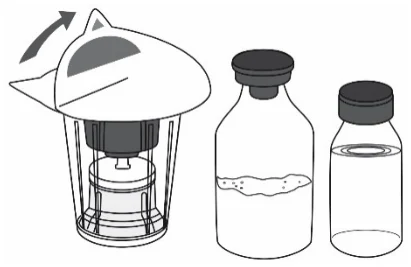 Figure 1 | |
|---|---|---|---|
| 5 | Place the diluent vial on an even, clean surface and hold the vial tight. Take Mix2Vial® together with the blister package and vertically pierce the diluent vial with the blue tip of the Mix2Vial® (Figure 2). | 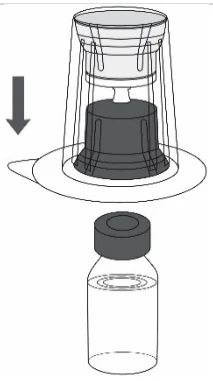 Figure 2 | |
| 6 | Carefully remove the blister package from the Mix2Vial® by holding at the rim, and pulling vertically upwards. Make sure that you only pull away the blister package and not the Mix2Vial® (Figure 3). | 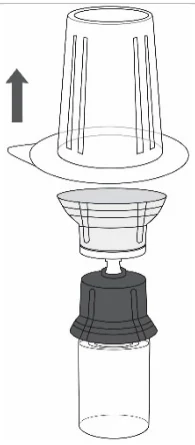 Figure 3 | |
| 7 | Remove the plastic flip-top cap from the Zemaira vial. | ||
| 8 | Wipe the rubber stopper of the Zemaira vial with antiseptic solution and allow it to dry. | ||
| 9 | Place the Zemaira vial on an even and firm surface. Invert the diluent vial with the Mix2Vial® attached and vertically pierce the Zemaira vial with the clear tip of the Mix2Vial® (Figure 4). The diluent will automatically flow into the Zemaira vial. NOTE: Ensure all water has transferred into the Zemaira vial. | 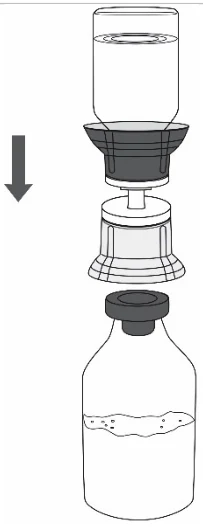 Figure 4 |
|---|---|---|
| 10 | Follow steps below to remove entire Mix2Vial® from Zemaira vial:
Discard the diluent vial with the entire Mix2Vial®. | 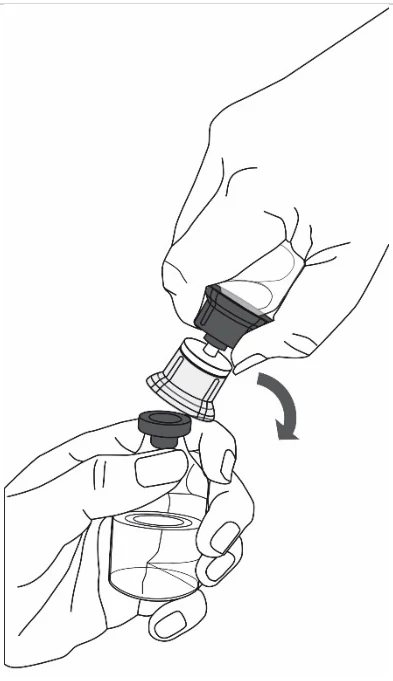 Figure 5 |
| 11 | Gently swirl the Zemaira vial until the powder is completely dissolved (Figure 6). DO NOT SHAKE. Take care not to touch the rubber vial stopper. | 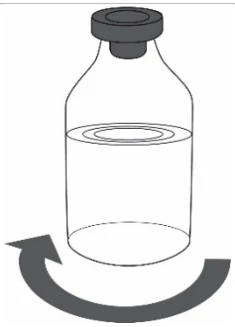 Figure 6 |
|---|---|---|
| 12 | Inspect visually the reconstituted solution. The solution should be clear, colorless to slightly yellow, and free from visible particles. Do not use solutions that are discoloured, cloudy or have particles. | |
| 13 | If more than 1 vial of Zemaira is needed to achieve the required dose, repeat instructions 1 to 12 above using an additional package containing an unused Mix2Vial® transfer set. Use a separate, unused Mix2Vial® transfer set and sterile water for injections (diluent) vial for each Zemaira vial. | |
| 14 | The reconstituted solutions can be sequentially administered directly from the vial, or the reconstituted solutions can alternatively be transferred into an infusion container (e.g., empty intravenous bag or glass bottle; (not supplied) via a commercially available intravenous fluid tubing transfer set (not supplied)) prior to administration. Use aseptic technique to transfer the reconstituted solution into an infusion container. | |
Administration:
The reconstituted solution must be administered using an intravenous administration set (not supplied).
| 1 | Make sure that the air vent cap and the roller clamp of the IV infusion set are closed. VERTICALLY pierce the Zemaira vial with the IV infusion set spike while twisting the IV infusion set spike gently or connect it to an infusion container. |
|---|---|
| 2 | Elevate the Zemaira vial/infusion container or hang on an infusion stand. |
| 3 | Prime the drip chamber by squeezing it until Zemaira has filled the chamber roughly half-way. |
| 4 | Open the air vent cap of the IV infusion set. |
| 5 | Slowly open the roller clamp of the IV infusion set and let the Zemaira solution flow until it reaches the end of the tubing with no air bubbles. |
| 6 | Close the roller clamp. |
| 7 | Disinfect the injection site with an antiseptic like an alcohol swab before carefully inserting the needle into the vein. Make sure that there is no more air in the butterfly tube left. |
|---|---|
| 8 | Connect the other end of the IV infusion set to the butterfly set and open the roller clamp again. |
| 9 | Infuse the reconstituted solution into the vein following the instructions given to you by your doctor. The solution should be infused at an infusion rate of about 0.08 mL/kg bw/min, as determined by your response and your comfort. The recommended dose of 60 mg/kg bw will take approximately 15 minutes to infuse. |
Usual dose:
The amount of Zemaira you are given is based on your body weight. The recommended dose is 60 mg per kg of body weight and should be administered once per week. The infusion solution is normally given over about 15 minutes (about 0.08 mL of solution per kg body weight each min). Your doctor will determine the appropriate infusion rate for you by taking into account your weight and your tolerability to infusion.
Overdose:
No cases of overdose have been reported.
| If you think you, or a person you are caring for, have taken too much Zemaira, contact a healthcare professional, hospital emergency department, or regional poison control centre immediately, even if there are no symptoms. |
|---|
Missed Dose:
Proceed with your next dose immediately and continue at regular intervals as advised by your doctor or healthcare professional.
Do not take a double dose to make up for a forgotten dose.
What are possible side effects from using Zemaira?
These are not all the possible side effects you may have when taking Zemaira. If you experience any side effects not listed here, tell your healthcare professional. Please also see section 7 WARNINGS AND PRECAUTIONS.
Talk to your healthcare professional right away if you have any of the following symptoms after using Zemaira:
- Hypersensitivity reactions (including tachycardia (abnormally rapid heart rate), hypotension (abnormally low blood pressure), confusion, syncope (temporary loss of consciousness), oxygen consumption decreased and pharyngeal oedema (throat swelling)).
- Anaphylactic reactions (allergic reactions (for example chills, flushing, faster heartbeat, fall in blood pressure, light-headedness, rash, hives, itching, difficulty in breathing or swallowing as well as swelling of your hands, face, or mouth)). Depending on the nature and severity of the reaction, your doctor may decide whether to slow or stop the infusion completely and start the appropriate treatment. In case of self-administration/home-treatment, stop the infusion immediately and contact your doctor or healthcare professional.
- Dizziness may occur after the administration of this medicine. If you experience dizziness, you should not drive or use machines until the dizziness has passed.
Other possible side effects may include:
- Headache
- Dyspnea (shortness of breath)
- Nausea
- Lymph node pain
- Eye swelling
- Lip swelling
- Infusion-site reactions (such as burning, stinging, pain, swelling or redness at the infusion site (hematoma))
- Chest pain
- Chills
- Pyrexia (fever)
- Facial swelling, hyperhidrosis (excessive sweating)
If you have a troublesome symptom or side effect that is not listed here or becomes bad enough to interfere with your daily activities, talk to your healthcare professional.
Reporting Side Effects
You can report any suspected side effects associated with the use of health products to Health Canada by:
NOTE: Contact your health professional if you need information about how to manage your side effects. The Canada Vigilance Program does not provide medical advice. |
We recommend that CSL Behring Canada, Inc. be copied when reporting suspected side effects, at the following address:
AdverseReporting@CSLBehring.com
Storage:
When stored in the refrigerator or at room temperature (at +2°C to +25°C), Zemaira is stable for the period indicated by the expiration date on its label. Do not freeze.
Storage after reconstitution: Administer within 3 hours after reconstitution. Do not freeze the reconstituted solution.
Keep out of reach and sight of children.
If you want more information about Zemaira:
- Talk to your healthcare professional
- Find the full product monograph that is prepared for healthcare professionals and includes this Patient Medication Information by visiting the Health Canada website: (https://www.canada.ca/en/health-canada/services/drugs-health-products/drug-products/drug-product-database.html; the manufacturer’s website (www.cslbehring.ca), or by calling 1-866-773-7721.