


Product Monograph - Triazolam (AA Pharma, 0.25 mg)
RECENT MAJOR LABEL CHANGES
| 1 Indications, 1.2 Geriatrics | 12/2021 |
| 2 Contraindications | 12/2021 |
| 3 Serious Warnings and Precautions Box | 12/2021 |
| 4 Dosage and Administration, 4.1 Dosing considerations | 12/2021 |
| 4 Dosage and Administration, 4.2 Recommended Dose and Dosage Adjustment | 12/2021 |
| 7 Warnings and Precautions | 12/2021 |
| 7 Warnings and Precautions, 7.1.4 Geriatrics | 12/2021 |
TABLE OF CONTENTS
Sections or subsections that are not applicable at the time of authorization are not listed.
RECENT MAJOR LABEL CHANGES ........................................................................................... 2
TABLE OF CONTENTS ............................................................................................................. 2
PART I: HEALTH PROFESSIONAL INFORMATION ..................................................................... 4
1 INDICATIONS .............................................................................................................. 4
1.1 Pediatrics ................................................................................................................... 4
1.2 Geriatrics ................................................................................................................... 4
2 CONTRAINDICATIONS ................................................................................................. 4
3 SERIOUS WARNINGS AND PRECAUTIONS BOX ............................................................ 5
4 DOSAGE AND ADMINISTRATION ................................................................................. 5
4.1 Dosing Considerations .............................................................................................. 5
4.2 Recommended Dose and Dosage Adjustment ......................................................... 6
4.5 Missed Dose .............................................................................................................. 6
5 OVERDOSAGE ............................................................................................................. 6
6 DOSAGE FORMS, STRENGTHS, COMPOSITION AND PACKAGING ................................. 7
7 WARNINGS AND PRECAUTIONS .................................................................................. 7
7.1 Special Populations ................................................................................................. 11
7.1.1 Pregnant Women .............................................................................................. 11
7.1.2 Breast-feeding ................................................................................................... 11
7.1.3 Pediatrics ........................................................................................................... 11
7.1.4 Geriatrics ........................................................................................................... 11
8 ADVERSE REACTIONS................................................................................................ 11
8.1 Adverse Reaction Overview .................................................................................... 11
8.2 Clinical Trial Adverse Reactions .............................................................................. 11
8.5 Post-Market Adverse Reactions .............................................................................. 13
9 DRUG INTERACTIONS ............................................................................................... 14
9.1 Serious Drug Interactions ....................................................................................... 14
9.4 Drug-Drug Interactions ........................................................................................... 14
9.5 Drug-Food Interactions ........................................................................................... 14
9.6 Drug-Herb Interactions ........................................................................................... 14
9.7 Drug-Laboratory Test Interactions.......................................................................... 14
10 CLINICAL PHARMACOLOGY ....................................................................................... 14
10.1 Mechanism of Action ........................................................................................ 14
10.2 Pharmacodynamics ........................................................................................... 15
10.3 Pharmacokinetics .............................................................................................. 16
11 STORAGE, STABILITY AND DISPOSAL ......................................................................... 18
12 SPECIAL HANDLING INSTRUCTIONS ........................................................................... 18
PART II: SCIENTIFIC INFORMATION ...................................................................................... 19
13 PHARMACEUTICAL INFORMATION ........................................................................... 19
14 CLINICAL TRIALS ....................................................................................................... 19
15 MICROBIOLOGY ....................................................................................................... 19
16 NON-CLINICAL TOXICOLOGY ..................................................................................... 19
PATIENT MEDICATION INFORMATION ................................................................................. 22
PART I: HEALTH PROFESSIONAL INFORMATION
1 INDICATIONS
TRIAZOLAM (Triazolam Tablets USP) is indicated for
- the symptomatic relief of transient and short-term insomnia in patients who have difficulty falling asleep. Triazolam is not recommended for early morning awakenings.
The use of hypnotics should be restricted for insomnia where disturbed sleep results in impaired daytime functioning.
1.1 Pediatrics
Pediatrics (<18 years): Based on the data submitted and reviewed by Health Canada, the safety and efficacy of TRIAZOLAM in pediatric patients has not been established; therefore, Health Canada has not authorized an indication for pediatric use. See 7 WARNINGS AND PRECAUTIONS.
1.2 Geriatrics
Long-term use of TRIAZOLAM should be avoided in elderly patients. Enhanced monitoring is recommended. See 7 WARNINGS AND PRECAUTIONS, Falls and fractures; 4.1 Dosing considerations.
2 CONTRAINDICATIONS
- TRIAZOLAM is contraindicated in patients with known hypersensitivity to this drug, other benzodiazepines, or to any ingredient in the formulation, including any non-medical ingredient, or component of the container. For a complete listing, see 6 DOSAGE FORMS, STRENGTHS, COMPOSITION AND PACKAGING.
- Triazolam is contraindicated in patients who in the past manifested paradoxical reactions to alcohol and/or sedative medications, and in subjects with a history of substance or alcohol abuse.
- Triazolam is contraindicated in pregnant women. Benzodiazepines may cause fetal damage when administered during pregnancy. During the first trimester of pregnancy, several studies have suggested an increased risk of congenital malformations associated with the use of benzodiazepines. During the last weeks of pregnancy, ingestion of therapeutic doses of a benzodiazepine hypnotic has resulted in neonatal CNS depression due to transplacental distribution. If triazolam is prescribed to women of child-bearing potential, the patient should be warned of the potential risk to a fetus and advised to consult her physician regarding the discontinuation of the drug is she intends to become pregnant.
- Triazolam is contraindicated in patients who have myasthenia gravis or a history of uncorrected narrow-angle glaucoma.
- Triazolam is contraindicated with medications that significantly impair the oxidative metabolism mediated by cytochrome P450 3A (CYP 3A) including cimetidine, erythromycin, ketoconazole, itraconazole, nefazodone, and several HIV protease inhibitors, (see 7 WARNINGS and PRECAUTIONS; 9.4 Drug-Drug Interactions).
3 SERIOUS WARNINGS AND PRECAUTIONS BOX
Serious Warnings and Precautions
Addiction, Abuse and Misuse The use of benzodiazepines, including TRIAZOLAM, can lead to abuse, misuse, addiction, physical dependence and withdrawal reactions. Abuse and misuse can result in overdose or death, especially when benzodiazepines are combined with other medicines, such as opioids, alcohol or illicit drugs.
Withdrawal Benzodiazepines, like TRIAZOLAM, can produce severe or life-threatening withdrawal symptoms.
See 7 WARNINGS AND PRECAUTIONS, Dependence/Tolerance. Risks from Concomitant use with Opioids Concomitant use of TRIAZOLAM and opioids may result in profound sedation, respiratory depression, coma and death. See 7 WARNINGS AND PRECAUTIONS, General, Concomitant use with opioidsConcomitant use with opioidsConcomitant use with opioidsConcomitant use with opioidsConcomitant use with opioidsConcomitant use with opioids.
Memory disturbance
|
4 DOSAGE AND ADMINISTRATION
4.1 Dosing Considerations
- TRIAZOLAM should always be prescribed at the lowest effective dose for the shortest duration possible.
- Treatment with triazolam should usually not exceed 7-10 consecutive days. Use for more than 2-3 consecutive weeks requires complete reevaluation of the patient.
- TRIAZOLAM can produce withdrawal signs and symptoms or rebound phenomena following abrupt discontinuation or rapid dose reduction. See 3 SERIOUS WARNINGS AND PRECAUTIONS BOX, Withdrawal; 7 WARNINGS AND PRECAUTIONS, Dependence/Tolerance. Abrupt discontinuation should be avoided and treatment - even if only of short duration - should be terminated by gradually tapering the dosage schedule under close monitoring.
- Tapering should be tailored to the specific patient. Special attention should be given to patients with a history of seizure. See 3 SERIOUS WARNINGS AND PRECAUTIONS BOX, Withdrawal; 7 WARNINGS AND PRECAUTIONS, Error! Reference source not found..
- If a patient experiences withdrawal signs and symptoms, consider postponing the taper or raising the benzodiazepine to the previous dosage prior to proceeding with a gradual taper.
- Geriatric patients in particular may be more sensitive to benzodiazepines. See 7 WARNINGS AND PRECAUTIONS, Falls and fractures.
- Long-term use of TRIAZOLAM should be avoided in elderly patients. Enhanced monitoring is recommended.
4.2 Recommended Dose and Dosage Adjustment
The starting dose in all patients should be 0.125 mg; for many patients this dose immediately before retiring should be sufficient. In most adults, a dose of 0.25 mg should not be exceeded. A dose of 0.5 mg should be used only for exceptional patients who do not respond adequately to a trial of the lower dose since the risk of several adverse reactions increases with the size of the dose administered.
For elderly, or debilitated patients and patients with disturbed liver/kidney function, the dose should not exceed 0.125 mg before retiring. The 0.25 mg dose should be used only for exceptional patients who do not respond to a trial of the lower dose.
Caution and consideration of dose reduction are recommended during coadministration of CYP 3A inhibitors with triazolam. See 9.4 Drug-Drug Interactions.
Health Canada has not authorized an indication for pediatric use.
4.5 Missed Dose
If the patient misses a dose, inform the patient to skip the missed dose and take the next dose at the regular dosing schedule.
5 OVERDOSAGE
Manifestations of TRIAZOLAM overdosage include extensions of its pharmacological effects, namely somnolence, confusion, impaired coordination, slurred speech, and ultimately coma. Respiratory depression and apnea have been reported with overdosages of triazolam.
Death has been reported in association with overdoses of triazolam by itself, as it has with other benzodiazepines. In addition, fatalities have been reported in patients who have overdosed with a combination of alcohol and a single benzodiazepine, including triazolam. In some of these cases, blood levels of the benzodiazepine and alcohol were lower than those usually associated with reports of fatalities with either substance alone.
As in all cases of drug overdosage, respiration, pulse and blood pressure should be monitored and supported by general measures when necessary. Immediate gastric lavage should be performed. An adequate airway should be maintained. Intravenous fluids may be administered. As with the management of intentional overdosage with any drug, the physician should bear in mind that multiple agents may have been ingested by the patient.
The benzodiazepine antagonist, flumazenil ('Anexate’), is a specific antidote in known or suspected benzodiazepine overdose. (For conditions of use see 'Anexate ' Product Monograph).
Experiments in animals have indicated that cardiopulmonary collapse can occur with massive intravenous doses of triazolam. This could be reversed with positive mechanical respiration and intravenous infusion of norepinephrine bitartrate or metaraminol bitartrate. Hemodialysis and forced diuresis are probably of little value.
| For management of a suspected drug overdose, contact your regional poison control centre. |
6 DOSAGE FORMS, STRENGTHS, COMPOSITION AND PACKAGING
Table 1 - Dosage Forms, Strengths, Composition and Packaging
TRIAZOLAM is available as oval, flat-faced with beveled edge, scored tablets. Powder blue 0.25 mg tablets are identified as “0.25”. Available in cartons containing 70 unit of use blister strips of 7 tablets each (490 tablets/carton).
7 WARNINGS AND PRECAUTIONS
Please see 3 SERIOUS WARNINGS AND PRECAUTIONS BOX.
General
Sleep disturbance may be the presenting manifestation of a physical and/or psychiatric disorder. Consequently, a decision to initiate symptomatic treatment of insomnia should only be made after the patient has been carefully evaluated.
The failure of insomnia to remit after 7-10 days of treatment may indicate the presence of a primary psychiatric and/or medical illness.
Worsening of insomnia or the emergence of new abnormalities of thinking or behavior may be the consequence of an unrecognized psychiatric or physical disorder. These have also been reported to occur in association with the use of TRIAZOLAM.
Concomitant use with opioids: Concomitant use of benzodiazepines, including TRIAZOLAM, and opioids may result in profound sedation, respiratory depression, coma, and death. Because of these risks, reserve concomitant prescribing of these drugs for use in patients for whom alternative treatment options are not possible. See 3 SERIOUS WARNINGS AND PRECAUTIONS BOX, Risks from Concomitant use with Opioids; 9.1 Serious Drug Interactions.
Observational studies have demonstrated that concomitant use of opioid analgesics and
| Route of Administration | Dosage Form / Strength/Composition | Non-medicinal Ingredients |
| Oral | Tablet 0.25 mg | croscarmellose sodium, FD&C blue #2, lactose, magnesium stearate, microcrystalline cellulose. |
benzodiazepines increases the risk of drug-related mortality compared to use of opioid analgesics alone. Because of similar pharmacological properties, it is reasonable to expect similar risk with the concomitant use of other CNS depressant drugs with benzodiazepines.
If a decision is made to prescribe TRIAZOLAM concomitantly with opioids, prescribe the lowest effective dosages and minimum durations of concomitant use. In patients already receiving an opioid analgesic, prescribe a lower initial dose of TRIAZOLAM than indicated, and titrate based on clinical response. If an opioid analgesic is initiated in a patient already taking TRIAZOLAM, prescribe a lower initial dose of the opioid analgesic and titrate based on clinical response. Follow patients closely for signs and symptoms of respiratory depression and sedation. See 5 OVERDOSAGE.
Advise both patients and caregivers about the risks of respiratory depression and sedation when TRIAZOLAM is used with opioids.
Advise patients not to drive or operate heavy machinery with concomitant use of the opioid.
Interaction with drugs that inhibit metabolism via cytochrome P450 3A: The initial step in triazolam metabolism is hydroxylation catalyzed by cytochrome P450 3A (CYP 3A). Drugs that inhibit this metabolic pathway may have a profound effect on the clearance of triazolam. Consequently, triazolam should be avoided in patients receiving very potent inhibitors of CYP 3A. With drugs inhibiting CYP 3A to a lesser but still significant degree, triazolam should be used only with caution and consideration of appropriate dosage reduction.
Dependence/Tolerance
Use of benzodiazepines, such as TRIAZOLAM, can lead to abuse, misuse, addiction, physical dependence (including tolerance) and withdrawal reactions. Abuse and misuse can result in overdose or death, especially when benzodiazepines are combined with other medicines, such as opioids, alcohol, or illicit drugs.
The risk of dependence increases with higher doses and longer term use but can occur with short-term use at recommended therapeutic doses. The risk of dependence is greater in patients with a history of psychiatric disorders and/or substance (including alcohol) use disorder.
- Discuss the risks of treatment with TRIAZOLAM with the patient, considering alternative (including non-drug) treatment options.
- Carefully evaluate each patient’s risk of abuse, misuse and addiction, considering their medical condition and concomitant drug use, prior to prescribing TRIAZOLAM. In individuals prone to substance use disorder, TRIAZOLAM should only be administered if deemed medically necessary, employing extreme caution and close supervision.
- TRIAZOLAM should always be prescribed at the lowest effective dose for the shortest duration possible.
- All patients receiving benzodiazepines should be routinely monitored for signs and symptoms of misuse and abuse. If a substance use disorder is suspected, evaluate the patient and refer them for substance abuse treatment, as appropriate.
Withdrawal
Benzodiazepines, such as TRIAZOLAM, can produce withdrawal signs and symptoms, ranging from mild to severe and even life threatening, following abrupt discontinuation or rapid dose reduction. Other factors that may precipitate withdrawal are switching from a long-acting to a short-acting benzodiazepine, decreasing blood levels of the drug or administration of an antagonist. The risk of withdrawal is higher with higher dosages and/or prolonged use, but can occur with short-term use at recommended therapeutic doses.
The onset of withdrawal signs and symptoms can range from hours to weeks following drug cessation and occur even with tapered dosage. Some symptoms can persist for months. Since symptoms are often similar to those for which the patient is being treated, it may be difficult to distinguish from a relapse of the patient’s condition.
Severe or life-threatening signs and symptoms of withdrawal include catatonia, delirium tremens, depression, dissociative effects (e.g. hallucinations), mania, psychosis, seizures (including status epilepticus) and suicidal ideation and behaviour.
Other withdrawal signs and symptoms include abdominal cramps, cognitive impairment, diarrhea, dysphoria, extreme anxiety or panic attacks, headache, hypersensitivity to light, noise and physical contact, insomnia, irritability, muscle pain or stiffness, paresthesia, restlessness, sweating, tension, tremors and vomiting. There is also a possibility of rebound anxiety or rebound insomnia.
- Abrupt discontinuation should be avoided and treatment - even if only of short duration - should be terminated by gradually tapering the dosage schedule under close monitoring.
- Tapering should be tailored to the specific patient. Special attention should be given to patients with a history of seizure.
- If a patient experiences withdrawal symptoms, consider postponing the taper or raising the benzodiazepine to the previous dosage prior to proceeding with a gradual taper.
- Inform patients of risk of discontinuing abruptly, reducing dosage rapidly or switching medications.
- Stress the importance of consulting with their health care professional in order to discontinue safely.
- Patients experiencing withdrawal symptoms should seek immediate medical attention.
See 3 SERIOUS WARNINGS AND PRECAUTIONS BOX, Addiction, Abuse and Misuse, Withdrawal; 4.1 Dosing Considerations.
Driving and Operating Machinery
Patients requiring mental alertness: Because of triazolam' s CNS depressant effect, patients receiving the drug should be cautioned against engaging in hazardous occupations requiring complete mental alertness such as operating machinery or driving a motor vehicle. For the same reason, patients should be warned against the concomitant ingestion of triazolam and alcohol or CNS depressant drugs.
Falls and fractures
There have been reports of falls and fractures among benzodiazepine users due to adverse reactions such as sedation, dizziness and ataxia. The risk is increased in those taking concomitant sedatives (including alcoholic beverages), the elderly or debilitated patients.
Hepatic/Biliary/Pancreatic
Patients with specific conditions: Triazolam should be given with caution to patients with impaired hepatic function.
Immune
Severe Anaphylactic and Anaphylactoid Reactions: Rare cases of angioedema involving the tongue, glottis or larynx have been reported in patients after taking the first or subsequent doses of sedative-hypnotics, including TRIAZOLAM Some patients have had additional symptoms such as dyspnea, throat closing or nausea and vomiting that suggest anaphylaxis. Some patients have required medical therapy in the emergency department. If angiodema involves the throat, glottis or larynx, airway obstruction may occur and be fatal. Patients who develop angioedema after treatment with TRIAZOLAM should not be rechallenged with the drug.
Psychiatric
Abnormal thinking and psychotic behavioral changes have been reported to occur in association with the use of benzodiazepine hypnotics including triazolam. Some of the changes may be characterized by decreased inhibition, e.g., aggressiveness or extroversion that seem excessive, similar to that seen with alcohol and other CNS depressants (e.g., sedative/hypnotics). Particular caution is warranted in patients with a history of violent behaviour. Psychotic behavioral changes that have been reported include bizarre behaviour, hallucinations, and depersonalization. Abnormal behaviours associated with triazolam have been reported more with chronic use or high doses.
It can rarely be determined with certainty whether a particular instance of the abnormal behaviours listed above is drug induced, spontaneous in origin, or a result of an underlying psychiatric or physical disorder. Nevertheless, the emergence of any new behavioural sign or symptom of concern requires careful and immediate evaluation.
Confusion: the benzodiazepines affect mental efficiency, e.g., concentration, attention and vigilance. The risk of confusion is greater in the elderly and in patients with cerebral impairment.
Anxiety, restlessness: an increase in daytime anxiety (interdose rebound anxiety) and/or restlessness have been observed during treatment with triazolam. This may be a manifestation of interdose withdrawal, due to the very short elimination half-life of the drug.
Depression: caution should be exercised if triazolam is prescribed to patients with signs or symptoms of depression that could be intensified by hypnotic drugs. Suicidal tendencies e.g., intentional overdose, is more common in these patients, thus the least amount of drug that is feasible should be available to them at any one time.
Complex sleep-related behaviours: Complex sleep-related behaviours such as “sleep- driving” (i.e., driving while not fully awake after ingestion of a sedative-hypnotic, with amnesia for the event) have been reported in patients who have taken TRIAZOLAM. Other potentially dangerous behaviours have been reported in patients who got out of bed after taking a sedative-hypnotic and were not fully awake, including preparing and eating food, making phone calls, leaving the house, etc. As with “sleep-driving”, patients usually do not remember these events. The use of alcohol and other CNS-depressants with TRIAZOLAM appears to increase the risk of such behaviours, as does the use of TRIAZOLAM at doses exceeding the maximum recommended dose. TRIAZOLAM is not to be taken with alcohol. Caution is needed with concomitant use of other CNS depressant drugs. Due to the risk to the patient and the community, discontinuation of TRIAZOLAM should be strongly considered for patients who report any such complex sleep-related behaviours.
Renal
Patients with specific conditions: Triazolam should be given with caution to patients with impaired renal function.
Reproductive Health: Female and Male Potential
- Teratogenic Risk
Teratogenic effects
TRIAZOLAM is contraindicated in pregnant women. See 2 CONTRAINDICATIONS
Nonteratogenic effects
It is to be considered that the child born of a mother who is on benzodiazepines may be at some risk for withdrawal symptoms from the drug, during the postnatal period. Also, neonatal flaccidity has been reported in an infant born of a mother who had been receiving benzodiazepines.
Respiratory
Patients with specific conditions: Triazolam should be given with caution to patients with severe pulmonary insufficiency, or sleep apnea.
Respiratory depression and apnea have been reported in patients with compromised respiratory function.
7.1 Special Populations
7.1.1 Pregnant Women
For teratogenic effects. See 2 CONTRAINDICATIONS. Non-teratogenic effects: a child born to a mother who is on benzodiazepines may be at some risk for withdrawal symptoms from the drug during the postnatal period. Also, neonatal flaccidity has been reported in an infant born to a mother who had been receiving benzodiazepines.
7.1.2 Breast-feeding
Human studies have not been performed but studies in rats have shown that triazolam and its metabolites are secreted in the milk. Therefore, administration of triazolam to nursing mothers is not recommended.
7.1.3 Pediatrics
Pediatrics (<18 years): No data are available to Health Canada; therefore, Health Canada has not authorized an indication of pediatric use.
7.1.4 Geriatrics
Long-term use of TRIAZOLAM should be avoided in elderly or debilitated patients who may be more sensitive to benzodiazepines. There is an increased risk of cognitive impairment, delirium, falls, fractures, hospitalizations and motor vehicle accidents in these users. Enhanced monitoring is recommended in this population.
Elderly patients are especially susceptible to dose-related adverse effects, such as drowsiness, dizziness, or impaired coordination. Therefore, the lowest possible dose should be used in these subjects.
8 ADVERSE REACTIONS
8.1 Adverse Reaction Overview
The most frequent adverse reactions associated with the use of TRIAZOLAM are extensions of the pharmacological effects of the drug, e.g., sedation (morning drowsiness, somnolence), dizziness, nervousness/irritability and impaired coordination.
The most serious adverse reactions which may occur include memory impairment, abnormal thinking/behavior, confusion, anxiety, and depression. See 7 WARNINGS AND PRECAUTIONS.
8.2 Clinical Trial Adverse Reactions
Clinical trials are conducted under very specific conditions. The adverse reaction rates observed in the clinical trials; therefore, may not reflect the rates observed in practice and should not be compared to the rates in the clinical trials of another drug. Adverse reaction information from clinical trials may be useful in identifying and approximating rates of adverse drug reactions in real-world use.
The incidence of adverse reactions among patients receiving triazolam or placebo is listed in the table. The figures cannot be used to predict precisely the incidence of untoward events in the course of usual medical practice where patient characteristics and other factors often differ from those in clinical trials. Comparison of the cited figures, however, can provide the prescriber with some basis for estimating the relative contributions of drug and nondrug factors to the untoward event incidence rate in the population studied.
PERCENT OF PATIENTS REPORTING ADVERSE REACTIONS (≥0.5%)
The adverse reaction profile of triazolam observed in controlled clinical trials illustrates the dose-dependency of most of the adverse reactions. At present, the higher dose range is not recommended. See 4 DOSAGE AND ADMINISTRATION.
Body system Adverse Reaction | Triazolam 0.1-0.3 mg n = 1002 | Triazolam 0.4-0.6 mg n = 2370 | placebo n = 2036 |
|---|---|---|---|
CARDIOVASCULAR palpitations | 0.5 | 0.4 | 0.4 |
CNS drowsiness/ sedation headache dizziness nervousness/irritability impaired coordination insomnia confusion mood changes depression memory impairment | 9.5 5.9 4.4 3.7 1.7 1.0 0.7 0.7 0.5 0.2 | 18.6 8.1 9.0 4.6 4.3 1.2 1.0 0.8 1.1 1.0 | 14.5 6.2 5.8 6.4 1.2 2.8 0.5 0.7 0.7 0 |
GASTROINTESTINAL nausea/vomiting dry mouth abdominal pain/discomfort diarrhea | 2.9 0.5 0.4 0.2 | 3.8 0.9 0.6 0.8 | 3.5 1.4 0.5 0.4 |
METABOLIC/ NUTRITION appetite change | 0 | 0.5 | 0.6 |
MUSCULOSKELETAL musculoskeletal/ joint pain | 0.8 | 0.9 | 0.7 |
RESPIRATORY respiratory infection | 1.1 | 1.7 | 0.9 |
SPECIAL SENSES visual disturbance taste alteration | 0.4 0.4 | 0.7 0.6 | 0.2 0.3 |
The adverse reactions reported in the table were observed in controlled clinical trials conducted by The Upjohn Company.
8.3 Less Common Clinical Trial Adverse Reactions
Rare (i.e., less than 0.5%) adverse reactions include:
Cardiac disorders: syncope, dyspnea
Ear and labyrinth disorders: hearing impairment, tinnitus
Eye disorders: eye irritation/redness
Gastrointestinal disorders: constipation, flatulence, oral irritation
General disorders and administration site conditions: edema, chest pain, hot/cold flashes, malaise
Investigations: Elevated levels of SGOT, bilirubin and alkaline phosphatase have also been noted.
Musculoskeletal and connective tissue disorders: muscular cramps, muscular weakness
Nervous system disorders: dysesthesia/paresthesia, dream abnormalities, muscle tone disorder, tremor
Psychiatric disorders: drug abuse/habituation, drug withdrawal symptoms, hallucinations, sexual dysfunction
Renal and urinary disorders: micturition difficulties
Respiratory, thoracic and mediastinal disorders: dyspnea
Skin and subcutaneous tissue disorders: dermatitis, diaphoresis
Vascular disorders: hypertension
8.5 Post-Market Adverse Reactions
- Injury, Poisoning and Procedural Complications: There have been reports of falls and fractures in benzodiazepine users due to adverse reactions such as sedation, dizziness and ataxia. The risk is increased in those taking concomitant sedatives (including alcoholic beverages), the elderly and debilitated patients.
Dependence/Withdrawal: Development of physical dependence and withdrawal following discontinuation of therapy has been observed with benzodiazepines such as TRIAZOLAM. Severe and life-threatening symptoms have been reported. See 3 SERIOUS WARNINGS AND PRECAUTIONS BOX, Addiction, Abuse and Misuse; 7 WARNINGS AND PRECAUTIONS, Dependence/Tolerance.
9 DRUG INTERACTIONS
9.1 Serious Drug Interactions
Serious Drug Interactions Concomitant use of TRIAZOLAM and opioids may result in profound sedation, respiratory depression, coma and death.
See 7 WARNINGS AND PRECAUTIONS, General, Concomitant use with opioids. TRIAZOLAM is contraindicated with medications that significantly impair the oxidative metabolism mediated by cytochrome P450 3A (CYP 3A). See 2 CONTRAINDICATIONS; 7 WARNINGS AND PRECAUTIONS, General, Interaction with drugs that inhibit metabolism via cytochrome P450 3A ; 9.4 Drug-Drug Interactions |
9.4 Drug-Drug Interactions
TRIAZOLAM produces additive CNS depressant effects when co- administered with alcohol, antihistamines, anticonvulsants, or psychotropic medications which themselves can produce CNS depression.
Pharmacokinetic interactions can occur when triazolam is administered along with drugs that interfere with its metabolism via CYP3A. Concomitant use of triazolam with potent CYP 3A inhibitors is contraindicated. For concomitant use of triazolam with less potent CYP 3A inhibitors caution and dose reduction are recommended. Examples include cimetidine or erythromycin which when co-admistered with triazolam cause an approximate doubling of the plasma levels and elimination half-life of triazolam. Consequently, contraindication for potent CYP 3A inhibitors and consideration of dose reduction for less potent CYP 3A inhibitors may be appropriate when patients are treated concomitantly with triazolam.
9.5 Drug-Food Interactions
Interactions with food have not been established.
9.6 Drug-Herb Interactions
Interactions with herbal products have not been established.
9.7 Drug-Laboratory Test Interactions
Interactions with laboratory tests have not been established.
10 CLINICAL PHARMACOLOGY
10.1 Mechanism of Action
TRIAZOLAM is a benzodiazepine hypnotic with a very short elimination half-life (about 3 hours).
In sleep laboratory studies of one to 21 days duration, triazolam significantly decreased sleep latency, increased the duration of sleep and decreased the number of nocturnal awakenings. However, after two weeks of consecutive nightly administration, the drug's effect on total wake time was decreased, and the values recorded in the last third of the night approached baseline levels. On the first and/or second night after drug discontinuance (first or second post-drug night), total time asleep, and percentage of time spent sleeping frequently were significantly decreased, and sleep latency significantly increased when compared to baseline (predrug) nights. This effect is referred to as "rebound" insomnia.
The duration of hypnotic effect and the profile of unwanted effects may be influenced by the alpha (distribution) and beta (elimination) half-lives of the administered drug and any active metabolites formed. When half-lives are long, the drug or metabolites may accumulate during periods of nightly administration and be associated with impairments of cognitive and motor performance during waking hours. If half-lives are short, the drug and metabolites will be cleared before the next dose is ingested, and carry-over effects related to sedation or CNS depression should be minimal or absent. However, during nightly use and for an extended period, pharmacodynamic tolerance or adaptation to some effects of benzodiazepine hypnotics may develop. If the drug has a very short elimination half-life, it is possible that a relative deficiency (i.e., in relation to the receptor site) may occur at some point in the interval between each night's use. This sequence of events may account for two clinical findings reported to occur after several weeks of nightly use of rapidly eliminated benzodiazepine hypnotics: (1) increased wakefulness during the last third of the night and (2) the appearance of increased day-time anxiety. See 7 WARNINGS AND PRECAUTIONS.
When sedation and psychomotor performance were compared in healthy elderly and young subjects, in response to 0.125 and 0.25 mg doses of triazolam, the degree of sedation was greater and the impairment of psychomotor performance more pronounced in the elderly. The age-dependent difference was closely associated with the correspondingly higher plasma triazolam concentrations measured in elderly subjects.
Patients with severe liver disease also demonstrated greater psychomotor impairment than control subjects or patients with minimal liver dysfunction.
10.2 Pharmacodynamics
Triazolam antagonized chemically induced seizures in mice, rats, and cats, but like other benzodiazepines, it was much less effective against electroshock-induced seizures.
In tests measuring potential muscle-relaxant activity, triazolam antagonized strychnine lethality, inhibited the traction response in mice, and depressed spinal reflexes in the decerebrate cat.
Triazolam was found to potentiate a number of central nervous system depressant agents, as measured by the loss of righting reflex in mice. No loss of righting reflex was noted with triazolam alone, except at toxic doses.
Triazolam significantly lowered the LD50’s of chlorpromazine, diphenylhydantoin, glutethimide, and pentobarbital, while having little or no effect on the LD50’s of a number of other drugs.
Triazolam was more active than diazepam in antagonizing foot-shock-induced aggressive behaviour in mice, in inhibiting aggressive behaviour in monkeys, and in suppressing conflict behaviour in rats. Cross dependence studies with barbiturates, direct physical dependence studies, and self-administration studies indicated little potential for physical dependence with triazolam in the animal systems tested.
Triazolam produced changes in EEG activity of monkeys characteristic of those seen with other benzodiazepines.
Triazolam did not influence plasma warfarin levels or alter prothrombin time in rats or dogs.
Triazolam and diazepam caused similar changes in cardiovascular and pulmonary parameters of cats and dogs at considerably higher doses than those producing central nervous system effects.
10.3 Pharmacokinetics
Pharmacokinetics
Triazolam is rapidly absorbed and peak plasma levels are reached within 2 hours following oral administration. Peak plasma concentration (Cmax) and area under the plasma-concentration curve (AUC) increase in proportion to the dose, while the time to peak plasma concentration (Tmax), elimination half-life (t1/2β), and clearance are independent of dose. Triazolam has a short half-life; the range is reported to be 1.5 to 5.5 hours.
Triazolam is metabolised via hepatic microsomal oxidation. The hydroxylated metabolites, which are inactive, are excreted primarily in the urine as conjugated glucuronides. The two primary metabolites account for approximately 80% of urinary excretion.
Repeated administration of triazolam for 7 days does not lead to accumulation and does not alter the rate of elimination.
Absorption
Triazolam, administered orally to man as a compressed tablet, had a minimal absorption of 82% and a peak plasma level at 1.5 hours. Triazolam had a half-life of 2.7 hours and this was consistent with the absence of accumulated triazolam in the plasma 24 hours after each dose for seven consecutive 1 mg doses. Studies of blood and plasma indicated no accumulation of triazolam related material in the formed elements of the blood.
Distribution:
Tissue distribution of 14C-triazolam radioactivity was studied in the mouse by whole-body section autoradiography. Following oral or intravenous administration, triazolam and/or its metabolites were rapidly and widely distributed throughout the body. The concentration of drug-related material in most organs and tissues had reached a maximum within 1 hr. of dosing, and decreased rapidly thereafter. The 14C concentration in the brain was reasonably well reflected by the blood 14C concentration.
At 37°C, triazolam was 89% bound in human serum. Binding to albumin accounted for only a portion of the total binding observed, since binding in a physiological concentration of human serum albumin amounted to only 49%.
Triazolam crossed the blood-brain barrier in mice after intraperitoneal administration. Brain levels of norepinephrine and dopamine in mice were essentially unchanged by either triazolam or diazepam. Both slowed the utilization of dopamine by the brain and also decreased the incorporation of C14 tyrosine into norepinephrine and dopamine.
Triazolam had no significant effect on serotonin turnover.
Metabolism:
The pharmacokinetics of triazolam were also examined in the rat and dog. Twelve metabolites were found in rat, and 10 metabolites in dog urine. All metabolites found in human urine were also present in rat urine, indicating a qualitative similarity of triazolam metabolism in human and rat. The two major human metabolites were also the major urinary metabolites in the dog, but not the rat.
Urine from humans dosed orally with triazolam -14C contained small amounts of unmetabolized triazolam as well as 6 metabolites. The two metabolites found in highest concentration in human urine were 1,-hydroxy-triazolam and 4-hydroxy-triazolam which accounted for 69% and 11% of the urinary radioactivity respectively.
Elimination
In the rat, triazolam-related materials were excreted primarily in the faeces, whereas the urinary and fecal excretion were approximately equivalent in the dog. The elimination kinetics of the rat were similar to those of man, whereas in the dog they were more complex.
In man, approximately 85% of drug related materials following oral administration of triazolam -14C was excreted in the urine whereas approximately 8% was excreted in the faeces. Biliary excretion appeared relatively unimportant in man. Urinary excretion of drug-related materials was quite rapid in man and could be described by two exponentials. The initial excretion rate was equivalent to a mean excretion half-time of about 6 hours and the mean excretion half-time for the terminal excretion phase was about 36 hours.
Special Populations and Conditions
- Geriatrics: The kinetics of triazolam are significantly influenced by age (see table). Following single oral doses of 0.125 mg and 0.25 mg of triazolam, peak plasma concentrations and area under the curve were significantly higher and clearance significantly lower in elderly subjects (mean age: 69 years) than in younger ones (mean age: 30 years). Age, however, did not influence the time to peak plasma levels and differences in elimination half-life were small.
| Mean (± standard deviation) pharmacokinetic parameters following single oral doses of triazolam in young and elderly volunteers. | ||||||||||||
|---|---|---|---|---|---|---|---|---|---|---|---|---|
| Triazolam 0.125 mg | Triazolam 0.25 mg | |||||||||||
Young (n=26) | Elderly (n=21) | Young (n=26) | Elderly (n=21) | |||||||||
Cmax (ng/mL) | 1.08±0.08 | 1.67±0.16* | 2.02±0.15 | 3.06±0.22* | ||||||||
Tmax (hr) | 0.88±0.08 | 0.95±0.11 | 0.96±0.10 | 0.88±0.07 | ||||||||
AUC (ng/ml·hr) | 3.85±0.45 | 6.24±0.82* | 7.01±0.68 | 12.03±1.11* | ||||||||
(T1/2β) (hr) | 2.94±0.4 | 3.03±0.25 | 2.43±0.16 | 3.00±0.24* | ||||||||
Clearance (ml/min/kg) | 11.4±2.2 | 6.8±0.9* | 10.5±1.0 | 5.8±0.4* | ||||||||
| * p<0.05 | ||||||||||||
- Pregnancy and Breast-feeding: When triazolam was given to pregnant mice two days before term, drug-related material was found uniformly distributed in the fetus with concentrations approximately the same as in the brain of the mother. When 14C-triazolam was given orally to lactating rats, triazolam appeared mainly as metabolites in the milk samples obtained at 6 and 24 hours post-administration.
- Hepatic Insufficiency: Following oral administration of triazolam, 0.25 mg, triazolam clearance was reduced in eight subjects with biopsy- proven cirrhosis (4.99 ± 3.14 mL/min/kg) as compared to seven normal subjects (6.69 ± 2.52 mL/min/kg). Peak plasma levels and time to peak concentration were not different between the groups. The reduction in triazolam clearance in subjects with cirrhosis correlated with the severity of liver dysfunction.
- Renal Insufficiency: Following oral administration of triazolam, 0.5 mg, peak plasma triazolam concentrations were lower in eleven patients with renal failure undergoing dialysis (4.04 ± 1.83 ng/mL) than in patients with normal renal function (6.54 ± 1.70 ng/mL). Other pharmacokinetic parameters were not significantly different between patients with impaired and normal renal function.
11 STORAGE, STABILITY AND DISPOSAL
Store at controlled room temperature 15-30°C (59-86°F).
Keep out of reach and sight of children.
TRIAZOLAM should never be disposed of in household trash. Disposal via a pharmacy take back program is recommended.
12 SPECIAL HANDLING INSTRUCTIONS
None
PART II: SCIENTIFIC INFORMATION
13 PHARMACEUTICAL INFORMATION
Drug Substance
Proper name: triazolam
Chemical name: 8-chloro-6(o-chlorophenyl)-1-methyl-4H-S-triazolo(4,3-a), (1,4) benzodiazepine
Molecular formula and molecular mass: C17H12Cl2N4 and 343.21
Structural formula:
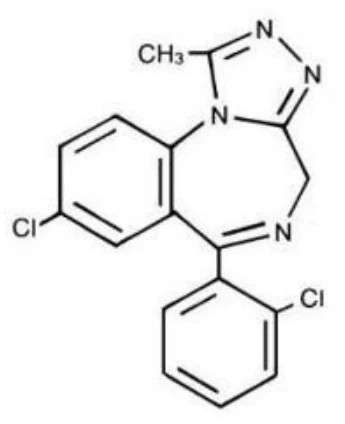
Physicochemical properties: Triazolam is a white to off-white, practically odourless, crystalline powder. It is soluble in chloroform; slightly soluble in alcohol; practically insoluble in ether and in water.
14 CLINICAL TRIALS
This information is not available for this drug product.
15 MICROBIOLOGY
No microbiological information is required for this drug product.
16 NON-CLINICAL TOXICOLOGY
General Toxicology:
Acute Toxicity: The oral LD50’s in the rat were found to be greater than 5000 mg/kg. The oral LD50 in the mouse was greater than 5000 mg/kg. Signs of toxicity included lethargy, ataxia, reduced motor activity, piloerection, ptosis, hunched back and abdominal distention.
Necropsy of the two rats who died revealed reddening of the pyloric antrum in one case and gaseous distention of the GI tract in the other.
Necropsy of the one mouse that died revealed no visible tissue abnormalities.
Necropsy of animals killed routinely at the conclusion of the study revealed no visible abnormality.
Subacute and Chronic Toxicity: Triazolam was administered orally or intravenously to rats for periods of 14 days, 86 days and 2 years. In the two 14-day studies (0, 500 and 1000 mg/kg/day p.o.; 0, 0.5, 1.0 and 2.0 mg/kg/day i.v.), triazolam produced sedation, drowsiness and ataxia. In the 86- day study (0, 30, 100 and 300 mg/kg/day p.o.), sedation was observed after dosing.
However, toward the end of the study, only the 300 mg/kg rats appeared to be affected. The higher doses produced increased kidney and adrenal weights in both sexes and increased liver weights in females. In the two-year study (0, 10, 30 and 100 mg/kg/day p.o.), the pharmacologic effects noted were drowsiness, increased aggressiveness in females and some unsteadiness. Male rats receiving the two higher dose levels had shorter mean survival times than did low dose and control animals. These early deaths were associated with urinary calculi and chronic progressive nephrosis. The overall incidence of chronic progressive nephrosis was the same for all males, but developed early in rats receiving the higher triazolam doses.
Seven treated rats developed large thrombi, mainly in the heart. Similarly, 10 treated animals had microscopic foreign body granulomas in their lungs. Triazolam tended to aggravate the incidence and extent of hepatic necrosis. Serum cholesterol levels increased slightly with increasing doses.
Dogs were administered triazolam for periods of 9 days, 13 days, 3 months and one year. In the 9-day study (0 and 100-300 mg/kg/day p.o.), anxiety, ataxia and sedation were seen for the first two days and polydypsia was the only consistent observation throughout the study. In the 13-day study (0, 0.1, 0.5 and 1.0 mg/kg/day i.v.), triazolam produced relaxation and ataxia and a dose-related increase in SGOT, cholesterol and BUN. One dog in the mid-dose group had marked elevation of liver enzymes, hepatocellular degeneration with focal necrosis and raised BSP. In the 3-month study (0, 0.5, 10 and 50 mg/kg/day p.o.), indications of tolerance development were seen and the dose was altered on the thirteenth day (0, 10, 30 and 100 mg/kg/day). Hyperactivity, hyperexcitability, ataxia, sedation and polydypsia were observed. Despite increased food consumption, treated dogs showed lower weight gain than controls. Dogs treated with the two higher triazolam doses had elevated alkaline phosphatase and slightly increased liver weights.
Two out of four dogs at the highest dose had reduced liver glycogen and one had a suggestion of bile duct proliferation. In the one-year study (0, 3, 10 and 30 mg/kg/day p.o. 6 days/wk), triazolam caused ataxia, ptosis, hyperactivity, increased food consumption and loose stools. Dogs in all treated groups had raised alkaline phosphatase levels and decreased prothrombin times. Liver weights were increased in the mid-dose group. At the two higher dose levels, elevation of platelet and leukocyte counts was observed. One high-dose dog was sacrificed at one year after being moribund and convulsing for 24 hours and was found to have acute myocardial degeneration.
Reproductive and Developmental Toxicology:
Reproduction and Teratology Studies: Significant drug-related abnormalities were not seen in the offspring of female rats treated orally with 2 and 5 mg/kg/day of triazolam in the diet prior to mating and throughout the subsequent pregnancy. Similarly, the same regimen administered to males prior to mating had no effect on the pregnancies sired by those males.
Triazolam given orally to pregnant rats from day 6 through day 15 at dosage levels of 10 and 30 mg/kg/day did not adversely affect the reproductive parameters studied with the exception of a slight increase in the average number of resorption sites per litter at the 30 mg/kg level. Some skeletal growth retardation occurred at the 30 mg level as indicated by a higher incidence of 5th metacarpals absent and minor sternebrae variations (mostly incomplete ossification). One fetus from the 30 mg level exhibited a hypoplastic mandible and premaxilla. Another fetus from the same litter lacked all ribs and vertebrae below the 3rd thoracic vertebrae with the exception of one sacral vertebra.
Triazolam administered orally to pregnant rabbits at 10 and 30 mg/kg/day on gestation days 6 through 18 did not adversely affect the reproductive parameters studied. The results of examinations for visceral and skeletal malformations in triazolam treated rabbits revealed minor alterations in rib numbers accompanied by a low incidence of rib and sternebrae malformations suggesting teratogenic activity in this species. The lowest dose level at which the alterations occurred with triazolam was 10 mg/kg/day.
Treatment of pregnant rabbits on gestation days 6 through 18 by gastric intubation of triazolam at 0.2, 0.5, 2 and 5 mg/kg/day or diazepam at 8, 20, 25 and 50 mg/kg/day did not affect the reproductive parameters studied.
The incidence of anatomical variations and abnormalities observed were comparable to current or previous control groups with this strain of rabbit or were considered spontaneous due to their isolated nature. No dose-related teratogenic activity was observed following treatment with triazolam or diazepam under the conditions of this study.