


Product Monograph - Tukysa
RECENT MAJOR LABEL CHANGES
Not applicable
TABLE OF CONTENTS
RECENT MAJOR LABEL CHANGES ........................................................................................ 1
TABLE OF CONTENTS ............................................................................................................. 2
PART I: HEALTH PROFESSIONAL INFORMATION ................................................................. 4
1 INDICATIONS ................................................................................................................. 4
1.1 Pediatrics ............................................................................................................... 4
1.2 Geriatrics ............................................................................................................... 4
2 CONTRAINDICATIONS .................................................................................................. 4
3 SERIOUS WARNINGS AND PRECAUTIONS BOX ........................................................ 5
4 DOSAGE AND ADMINISTRATION ................................................................................ 5
4.1 Dosing Considerations ........................................................................................... 5
4.2 Recommended Dose and Dosage Adjustment ....................................................... 5
4.3 Missed Dose .......................................................................................................... 8
5 OVERDOSAGE ............................................................................................................... 8
6 DOSAGE FORMS, STRENGTHS, COMPOSITION AND PACKAGING ......................... 8
7 WARNINGS AND PRECAUTIONS ................................................................................. 8
7.1 Special Populations ............................................................................................. 11
7.1.1 Pregnant Women ............................................................................................. 11
7.1.2 Breast-feeding .................................................................................................. 11
7.1.3 Pediatrics .........................................................................................................11
7.1.4 Geriatrics ..........................................................................................................11
8 ADVERSE REACTIONS ............................................................................................... 12
8.1 Adverse Reaction Overview ................................................................................. 12
8.2 Clinical Trial Adverse Reactions........................................................................... 12
8.3 Less Common Clinical Trial Adverse Reactions ................................................... 14
8.4 Abnormal Laboratory Findings: Hematologic, Clinical Chemistry and Other Quantitative Data ........................................................................................................... 15
9 DRUG INTERACTIONS ................................................................................................ 15
9.1 Overview .............................................................................................................. 15
9.2 Drug-Drug Interactions ......................................................................................... 16
9.3 Drug-Food Interactions ........................................................................................ 18
9.4 Drug-Herb Interactions ......................................................................................... 18
9.5 Drug-Laboratory Test Interactions ........................................................................ 18
10 ACTION AND CLINICAL PHARMACOLOGY ............................................................... 18
10.1 Mechanism of Action ........................................................................................ 18
10.2 Pharmacodynamics .......................................................................................... 18
10.3 Pharmacokinetics ............................................................................................. 19
11 STORAGE, STABILITY AND DISPOSAL ..................................................................... 20
12 SPECIAL HANDLING INSTRUCTIONS ........................................................................ 20
PART II SCIENTIFIC INFORMATION ...................................................................................... 21
13 PHARMACEUTICAL INFORMATION ........................................................................... 21
14 CLINICAL TRIALS ........................................................................................................ 22
14.1 Trial Design and Study Demographics ............................................................. 22
14.2 Study Results ................................................................................................... 24
15 MICROBIOLOGY .......................................................................................................... 26
16 NON-CLINICAL TOXICOLOGY .................................................................................... 26
PATIENT MEDICATION INFORMATION ................................................................................. 28
PART I: HEALTH PROFESSIONAL INFORMATION
1 INDICATIONS
TUKYSA (tucatinib) is indicated in combination with trastuzumab and capecitabine for treatment of patients with locally advanced unresectable or metastatic HER2-positive breast cancer, including patients with brain metastases, who have received prior treatment with trastuzumab, pertuzumab, and trastuzumab emtansine, separately or in combination.
Clinical trial data supporting the effectiveness of TUKYSA in combination with trastuzumab and capecitabine are limited to patients who had received at least one prior HER2-directed therapy in the metastatic setting.
1.1 Pediatrics
Pediatrics (<18 years of age):
No data are available to Health Canada; therefore, Health Canada has not authorized an indication for pediatric use.
1.2 Geriatrics
Geriatrics (≥65 years of age):
In the HER2CLIMB trial, 116/612 (19%) patients were 65 years or older. No overall differences in effectiveness were observed between these patients and younger patients. Differences in safety were observed between patients 65 years or older and younger patients in the TUKYSA arm; patients 65 years or older were more likely to experience a serious adverse event and more likely to discontinue TUKYSA compared to younger patients <65 years (see Warnings and Precautions Special Populations, Geriatrics).
2 CONTRAINDICATIONS
TUKYSA is contraindicated in patients who are hypersensitive to this drug or to any ingredient in the formulation, including any non-medicinal ingredient, or component of the container. For a complete listing, see Dosage Forms, Strengths, Composition and Packaging.
Refer to the Product Monographs of capecitabine and trastuzumab for further information on the contraindications of these drugs.
3 SERIOUS WARNINGS AND PRECAUTIONS BOX
Serious Warnings and Precautions
- TUKYSA in combination with trastuzumab and capecitabine can cause severe diarrhea, leading to dehydration, acute kidney injury and death. Antidiarrheal treatment may be indicated (see Warnings and Precautions, Diarrhea).
- TUKYSA can cause severe hepatotoxicity; monitor transaminase and bilirubin (see Warnings and Precautions, Hepatotoxicity).
- TUKYSA may cause fetal harm and developmental malformation when administered to a pregnant woman (see Warnings and Precautions, Sexual Health and Special Populations, Pregnant Women).
4 DOSAGE AND ADMINISTRATION
4.1 Dosing Considerations
TUKYSA tablets should be swallowed whole. Tablets should not be chewed, crushed, or split prior to swallowing.
4.2 Recommended Dose and Dosage Adjustment
The recommended dose of TUKYSA is 300 mg (two 150 mg tablets) taken orally twice daily in combination with trastuzumab and capecitabine until disease progression or unacceptable toxicity (see Table 1). For additional information on dosing and administration of the co-administered trastuzumab and capecitabine, consult the respective Product Monographs.
Table 1: Recommended dosing
| Treatment | Dose | Treatment Days | Timing Relative to Food Intake |
|---|---|---|---|
| TUKYSA | 300 mg orally twice daily | Continuously | Take with or without a meal |
| Capecitabine | 1000 mg/m2 orally twice daily | Days 1 to 14 every 21 days | Take within 30 minutes after a meal |
| Trastuzumab | |||
| Intravenous dosing | Not applicable | ||
| Initial dose | 8 mg/kg intravenously | Day 1 | |
| Subsequent doses | 6 mg/kg intravenously | Every 21 days | |
OR Subcutaneous dosing | 600 mg subcutaneously | Every 21 days | |
TUKYSA should be taken approximately 12 hours apart, at the same time every day, with or without a meal. TUKYSA may be taken at the same time with capecitabine.
Patients with Hepatic Impairment
For patients with baseline severe hepatic impairment (Child-Pugh C), reduce the starting dose of TUKYSA to 200 mg orally twice daily (see ACTION AND CLINICAL PHARMACOLOGY, Pharmacokinetics).
No starting dose adjustment is required in patients with baseline mild (Child-Pugh A) or moderate (Child-Pugh B) hepatic impairment.
Patients with Renal Impairment
TUKYSA in combination with capecitabine and trastuzumab cannot be used in patients with severe renal impairment (creatinine clearance [CrCL] < 30 mL/min), because capecitabine is contraindicated in patients with severe renal impairment.
No starting dose adjustment is required in patients with baseline mild to moderate renal impairment (CrCL ≥ 30 mL/min) (see ACTION AND CLINICAL PHARMACOLOGY, Pharmacokinetics).
Concomitant Use with Strong CYP2C8 Inhibitors
Avoid concomitant use of strong CYP2C8 inhibitors with TUKYSA. If concomitant use with a strong CYP2C8 inhibitor cannot be avoided, reduce the TUKYSA starting dose to 100 mg twice daily and increase monitoring for tucatinib-related toxicity. After discontinuation of the strong CYP2C8 inhibitor for 3 elimination half-lives, resume the TUKYSA dose taken prior to initiating the inhibitor (see DRUG INTERACTIONS).
Pediatrics (<18 years of age)
Health Canada has not authorized an indication for pediatric use.
Geriatrics (≥ 65 years old)
No dose adjustment is required in patients ≥ 65 years of age (see ACTION AND CLINICAL PHARMACOLOGY, Pharmacokinetics).
Dose Modifications for Adverse Reactions
The recommended TUKYSA dose modifications for patients with adverse reactions are provided in Tables 2 to 3. Refer to the Product Monographs for co-administered trastuzumab and capecitabine for dose modifications for toxicities suspected to be caused by those therapies.
Table 2: TUKYSA Dose Reduction Schedule
| Dose Level | TUKYSA Dose |
|---|---|
| Starting dose | 300 mg twice daily |
| First dose reduction | 250 mg twice daily |
| Second dose reduction | 200 mg twice daily |
| Third dose reduction | 150 mg twice daily1 |
- 1. Permanently discontinue TUKYSA in patients unable to tolerate 150 mg twice daily.
Table 3: TUKYSA Dose Modifications for Adverse Reactions
| Adverse Reaction1 | Severity | TUKYSA Dose Modification |
|---|---|---|
| Diarrhea | Grade 3 without anti-diarrheal treatment | Initiate or intensify appropriate medical therapy. Hold TUKYSA until recovery to ≤ Grade 1, then resume TUKYSA at the same dose level. |
| Grade 3 with anti-diarrheal treatment | Initiate or intensify appropriate medical therapy. Hold TUKYSA until recovery to ≤ Grade 1, then resume TUKYSA at the next lower dose level. | |
| Grade 4 | Permanently discontinue TUKYSA. | |
| Hepatotoxicity | Grade 2 elevation of bilirubin (>1.5 – ≤ 3 x ULN) | Hold TUKYSA until recovery to ≤ Grade 1, then resume TUKYSA at the same dose level. |
Grade 3 elevation of ALT or AST (> 5 – ≤ 20 x ULN) OR Grade 3 elevation of bilirubin (> 3 ≤ 10 x ULN) | Hold TUKYSA until severity ≤ Grade 1. Then resume TUKYSA at the next lower dose level. | |
Grade 4 elevation of ALT or AST (> 20 x ULN) OR Grade 4 elevation of bilirubin (> 10 x ULN) | Permanently discontinue TUKYSA. | |
ALT or AST > 3 x ULN AND Bilirubin > 2 x ULN | Permanently discontinue TUKYSA. | |
| Other Adverse Reactions | Grade 3 | Hold TUKYSA until severity ≤ Grade 1. Then resume TUKYSA at the next lower dose level. |
| Grade 4 | Permanently discontinue TUKYSA. |
ULN: upper limit of normal; ALT: alanine aminotransferase; AST: aspartate aminotransferase
- 1. Grading per CTCAE v4.03
4.3 Missed Dose
If a patient misses or vomits a dose, they should take their next dose at the regularly scheduled time.
5 OVERDOSAGE
There is no specific antidote, and the benefit of hemodialysis in the treatment of TUKYSA overdose is unknown. In the event of an overdose, withhold TUKYSA and apply general supportive measures.
For management of a suspected drug overdose, contact your regional poison control centre.
6 DOSAGE FORMS, STRENGTHS, COMPOSITION AND PACKAGING
Table 4: Dosage Forms, Strengths, Composition and Packaging
7 WARNINGS AND PRECAUTIONS
General
Patients with brain metastases requiring immediate local therapy were excluded from the pivotal HER2CLIMB study. These patients should undergo local CNS directed therapy prior to being treated with TUKYSA, if appropriate (see CLINICAL TRIALS).
Driving and Operating Machinery
Due caution should be exercised when driving or operating a vehicle or potentially dangerous
| Route of Administration | Dosage Form / Strength/Composition | Non-medicinal Ingredients |
| Oral | 50 mg tablets: round, convex, yellow, film-coated, debossed with “TUC” on one side and “50” on the other side. 150 mg tablets: oval-shaped, yellow, film-coated, debossed with “TUC” on one side and “150” on the other side. | Tablet core Colloidal silicon dioxide Copovidone Crospovidone Potassium chloride Sodium bicarbonate Sodium chloride Magnesium stearate Microcrystalline cellulose Coating Polyvinyl alcohol Titanium dioxide Macrogol/polyethylene glycol Talc Yellow iron oxide non-irradiated |
machinery.
Gastrointestinal
Diarrhea
Diarrhea, including severe events, has been reported during treatment with TUKYSA in combination with trastuzumab and capecitabine (see ADVERSE REACTIONS). In HER2CLIMB, 81% of patients who received TUKYSA experienced diarrhea, including 12% with Grade 3 diarrhea and 0.5% with Grade 4 diarrhea. Both patients who developed Grade 4 diarrhea subsequently died, with diarrhea as a contributor to death. The median time to onset of the first episode of diarrhea was 12 days; 80% of diarrhea events resolved with a median time to resolution of 8 days. Diarrhea led to dose reductions of TUKYSA in 6% of patients and discontinuation of TUKYSA in 1% of patients. Prophylactic use of antidiarrheals was not mandated in the HER2CLIMB trial.
If diarrhea occurs, administer antidiarrheals as clinically indicated. Based on the severity of the diarrhea, interrupt dose, then dose reduce or permanently discontinue TUKYSA (see DOSAGE AND ADMINISTRATION) and refer to the trastuzumab and capecitabine Product Monographs for relevant safety information and dose modifications. Perform diagnostic tests as clinically indicated to exclude infectious causes of Grade 3 or 4 diarrhea or diarrhea of any grade with complicating features (dehydration, fever, neutropenia).
Stomatitis
Stomatitis has been reported during treatment with TUKYSA in combination with trastuzumab and capecitabine. In HER2CLIMB, 32% of patients who received TUKYSA experienced stomatitis, including 2.5% with Grade 3.
If stomatitis occurs, follow the dose modification guidelines for TUKYSA in Table 3 (see DOSAGE AND ADMINISTRATION) and refer to the trastuzumab and capecitabine Product Monographs for relevant safety information and dose modifications.
Hepatic/Biliary/Pancreatic
Hepatotoxicity
Hepatotoxicity, including severe hepatotoxicity, has been reported during treatment with TUKYSA. In HER2CLIMB, the median time to onset of any grade increased ALT, AST, or bilirubin was 36 days; 84% of events resolved, with a median time to resolution of 22 days. In HER2CLIMB, 8% of patients who received TUKYSA had an ALT increase > 5 × ULN, 6% had an AST increase > 5 × ULN, and 1.5% had a bilirubin increase > 3 × ULN (Grade ≥3); 2% of patients had AST and/or ALT increased > 10 × ULN. Hepatotoxicity led to dose reduction of TUKYSA in 8% of patients and discontinuation of TUKYSA in 1.5% of patients.
If hepatotoxicity occurs, based on its severity, interrupt dose, then dose reduce or permanently discontinue TUKYSA (see DOSAGE AND ADMINISTRATION).
Patients with known chronic liver disease, or carriers of hepatitis B or C were excluded from the pivotal study. Patients with pre-existing liver function test abnormalities (total bilirubin > 1.5 × ULN, or AST/ALT > 2.5 × ULN, or AST/ALT > 5 × ULN if liver metastases were present) were excluded from clinical trials with TUKYSA.
Monitoring and Laboratory Tests
Liver Function Monitoring
Monitor ALT, AST, and bilirubin prior to starting TUKYSA, every three weeks, and as clinically indicated.
Creatinine Increased
Although not an adverse reaction, increased serum creatinine was observed in 14% of patients treated with TUKYSA due to inhibition of renal tubular transport of creatinine without affecting glomerular function. In clinical studies, increases in serum creatinine (30% mean increase) occurred within the first 21 days of treatment with TUKYSA remained elevated but stable throughout treatment and were reversible upon treatment discontinuation. Alternative markers such as BUN, cystatin C, or calculated GFR (if not based on creatinine), may be considered to determine whether renal function is impaired.
Sexual Health
Reproduction
Pregnancy testing
Verify the pregnancy status of female patients of reproductive potential prior to initiating TUKYSA (see Special Populations).
Contraception
Advise female patients of reproductive potential of potential risk to a fetus. Advise females of reproductive potential to use effective contraception during treatment and for at least 1 week after the last dose (see Special Populations).
Advise male patients with female partners who are pregnant, possibly pregnant, or who could become pregnant to use effective barrier contraception during treatment with TUKYSA and for at least 1 week after the last dose of TUKYSA. Male patients are also advised not to donate or store semen during treatment and at least 1 month after the last dose of TUKYSA.
Fertility
No fertility studies in women or men have been conducted.
Based on findings from animal studies, TUKYSA may impair male and female fertility (see NON-CLINICAL TOXICOLOGY).
Skin
Palmar-plantar erthrodysesthesia syndrome
Palmar-plantar erthrodysesthesia syndrome has been reported during treatment with TUKYSA in combination with trastuzumab and capecitabine. In HER2CLIMB, 63% of patients who received TUKYSA experienced palmar-plantar erthrodysesthesia, including 13% with Grade 3.
If palmar-plantar erthrodysesthesia syndrome occurs, follow the dose modification guidelines for TUKYSA in Table 3 (see DOSAGE AND ADMINISTRATION) and refer to the trastuzumab and capecitabine Product Monographs for relevant safety information and dose modifications.
7.1 Special Populations
7.1.1 Pregnant Women
Pregnancy
TUKYSA may cause fetal harm based on findings from animal studies. There are no data from the use of TUKYSA in pregnant women. TUKYSA should not be used in pregnant women. If the patient becomes pregnant while taking TUKYSA, the patient should be apprised of potential hazard to the fetus.
In animal studies, administration of TUKYSA to pregnant rabbits during organogenesis, at exposures similar to those in patients, resulted in embryo-fetal malformations (see NON-CLINICAL TOXICOLOGY).
7.1.2 Breast-feeding
No data are available regarding the presence of tucatinib or its metabolites in human or animal milk or its effects on the breastfed child or on milk production.
Because many drugs are excreted into human milk and because of the potential for serious adverse reactions in a breastfed child from TUKYSA advise lactating women not to breastfeed while taking TUKYSA and for at least 1 week after the last dose.
7.1.3 Pediatrics
No data are available to Health Canada; therefore, Health Canada has not authorized an indication for pediatric use.
7.1.4 Geriatrics
In the HER2CLIMB trial, 116/612 (19%) patients were 65 years or older. No overall differences in effectiveness were observed between these patients and younger patients. Differences in safety were observed between patients 65 years or older and younger patients in both the TUKYSA and control treatment arms. In patients ≥65 years, the incidence of serious adverse events was 34% and 36% in patients receiving TUKYSA and placebo, respectively; in patients <65, the incidence of serious adverse events was 24% and 25%, respectively. In the TUKYSA arm, diarrhea and vomiting were the most frequent serious adverse events, which occurred in 9% and 6% of patients ≥65 years compared to 3% and 2% of patients <65 years, respectively. Higher incidence rates for Grade ≥3 diarrhea and vomiting were observed in patients ≥65 years (17% and 7%, respectively) compared to patients <65 years (12% and 2%, respectively) in the TUKYSA arm of HER2CLIMB. Higher rates of treatment discontinuation due to adverse events were observed in both treatment arms for patients ≥65 years (9.8% in the TUKYSA arm and 9.1% in the control arm) compared to patients <65 years (4.7% in the TUKYSA arm and 1.8% in the control arm).
8 ADVERSE REACTIONS
8.1 Adverse Reaction Overview
The data described in this section reflect exposure to TUKYSA in combination with trastuzumab and capecitabine from HER2CLIMB, a randomized, double-blind, placebo-controlled, active comparator, global trial in patients with locally advanced unresectable or metastatic HER2-positive breast cancer, who received at least one dose of study drug.
The median duration of exposure to TUKYSA or placebo was 5.8 months (range, <0.1, 35.1) compared to 4.4 months (range, <0.1 to 24.0) on the control arm.
Patients treated with TUKYSA experienced higher incidences of treatment-emergent adverse events (99.3% vs 97.0), grade 3-4 adverse events (53.2% vs 45.7%), and treatment-related adverse events (85% vs 73%) than those treated with placebo.
The most common treatment emergent adverse events in patients who received TUKYSA (≥20%) were diarrhea, palmar-plantar erythrodysesthesia, nausea, fatigue, hepatotoxicity, vomiting, stomatitis, decreased appetite, abdominal pain, headache, anemia, and rash.
Serious adverse events occurred in 26% of patients treated with TUKYSA compared to 27% of patients treated with placebo + trastuzumab + capecitabine (control arm). The most common serious adverse events (≥2%) in patients treated with TUKYSA were diarrhea (4%), vomiting (2%), nausea (2%), abdominal pain (2%), and seizure (2%).
Fatal adverse events occurred in 2% of patients who received TUKYSA compared to 3% of patients on the control arm. Events leading to death in the TUKYSA arm included sudden death, sepsis, dehydration, and cardiogenic shock.
Adverse events leading to treatment discontinuation of TUKYSA/placebo occurred in 6% of patients on the TUKYSA arm compared to 3% of patients in the control arm; the most common adverse events leading to treatment discontinuation of TUKYSA were diarrhea (1%) and ALT increased (1%). Adverse events leading to dose reduction occurred in 21% of patients treated with TUKYSA compared to 11% of patients in the control arm; the most common adverse events leading to dose reduction of TUKYSA were diarrhea (6%), ALT increased (5%), and AST increased (4%).
8.2 Clinical Trial Adverse Reactions
Because clinical trials are conducted under very specific conditions, the adverse reaction rates observed in the clinical trials may not reflect the rates observed in practice and should not be compared to the rates in the clinical trials of another drug. Adverse reaction information from clinical trials is useful for identifying drug-related adverse events and for approximating rates.
Table 5 summarizes treatment emergent adverse events reported in patients in HER2CLIMB.
Table 5: Treatment Emergent Adverse Events (≥10%) in Patients Who Received TUKYSA and with a Difference Between Arms of ≥ 5% Compared to Placebo in HER2CLIMB (All Grades)
SOC Preferred Term | TUKYSA + Trastuzumab + Capecitabine N = 404 | Placebo + Trastuzumab + Capecitabine N = 197 | ||||||||||||||
|---|---|---|---|---|---|---|---|---|---|---|---|---|---|---|---|---|
All Grade n (%) | Grade 3 n (%) | Grade 4 n (%) | All Grade n (%) | Grade 3 n (%) | Grade 4 n (%) | |||||||||||
| Blood and lymphatic system disorders | ||||||||||||||||
| Anemia1 | 85 (21) | 15 (3.7) | 0 (0) | 25 (13) | 5 (2.5) | 0 (0) | ||||||||||
| Gastrointestinal disorders | ||||||||||||||||
| Diarrhea | 327 (81) | 50 (12) | 2 (0.5) | 105 (53) | 17 (9) | 0 (0) | ||||||||||
| Nausea | 236 (58) | 15 (3.7) | 0 (0) | 86 (44) | 6 (3) | 0 (0) | ||||||||||
| Vomiting | 145 (36) | 12 (3) | 0 (0) | 50 (25) | 7(3.6) | 0 (0) | ||||||||||
| Stomatitis2 | 131 (32) | 10 (2.5) | 0 (0) | 42 (21) | 1(0.5) | 0 (0) | ||||||||||
| Hepatobiliary disorders | ||||||||||||||||
| Hepatotoxicity3 | 169 (42) | 37 (9) | 1 (0.2) | 47 (24) | 7 (3.6) | 0 (0) | ||||||||||
| Investigations | ||||||||||||||||
| Creatinine Increased4 | 56 (14) | 0 (0) | 0 (0) | 3 (1.5) | 0 (0) | 0 (0) | ||||||||||
| Weight decreased | 54 (13) | 4 (1) | 0 (0) | 11 (6) | 1 (0.5) | (0) | ||||||||||
| Metabolism and nutrition disorders | ||||||||||||||||
| Decreased appetite | 100 (25) | 2 (0.5) | 0 (0) | 39 (20) | 0 (0) | 0 (0) | ||||||||||
| Musculoskeletal and connective tissue disorders | ||||||||||||||||
| Arthralgia | 59 (15) | 2 (0.5) | 0 (0) | 9 (4.6) | 1 (0.5) | 0 (0) | ||||||||||
| Nervous System Disorders | ||||||||||||||||
| Peripheral Neuropathy5 | 54 (13) | 2 (0.5) | (0) | 13 (7) | 2 (1) | 0 (0) | ||||||||||
| Respiratory, thoracic and mediastinal disorders | ||||||||||||||||
| Epistaxis | 47 (12) | 0 (0) | 0 (0) | 9 (5) | 0 (0) | 0 (0) | ||||||||||
| Skin and subcutaneous tissue disorders | ||||||||||||||||
| Palmar-plantar erythrodysesthesia syndrome | 256 (63) | 53 (13) | 0 (0) | 104 (53) | 18 (9) | 0 (0) | ||||||||||
| Rash6 | 82 (20) | 3 (0.7) | 0 (0) | 29 (15) | 1 (0.5) | 0 (0) | ||||||||||
- 1. Anemia includes anemia, hemoglobin decreased, and normocytic anemia
- 2. Stomatitis includes stomatitis, oropharyngeal pain, oropharyngeal discomfort mouth ulceration, oral pain, lip ulceration, glossodynia, tongue blistering, lip blister, oral dysaethesia, tongue ulceration, apthous ulcer
- 3. Hepatotoxicity includes hyperbilirubinemia, blood bilirubin increased, bilirubin conjugated increased, alanine aminotransferase increased, transaminases increased, hepatotoxicity, aspartate aminotransferase increased, liver function test increased, liver injury, and hepatocellular injury
- 4. Due to inhibition of renal tubular transport of creatinine without affecting glomerular function
- 5. Peripheral neuropathy includes peripheral sensory neuropathy, neuropathy peripheral, peripheral motor neuropathy, and peripheral sensorimotor neuropathy
- 6. Rash includes rash maculo-papular, rash, dermatitis acneiform, erythema, rash macular, rash papular, rash pustular, rash pruritic, rash erythematous, skin exfoliation, urticaria, dermatitis allergic, palmar erythema, plantar erythema, skin toxicity, and dermatitis
8.3 Less Common Clinical Trial Adverse Reactions
Additional clinically important adverse events, regardless of relationship to TUKYSA, that occurred in <10% of patients treated with TUKYSA in combination with trastuzumab and capecitabine include:
Cardiac disorders: cardiac failure, palpitations
Gastrointestinal disorders: dysphagia, rectal hemorrhage
General disorders and administration site conditions: chest discomfort, influenza-like illness, non-cardiac chest pain, peripheral swelling, pyrexia
Infections and infestations: septic shock
Investigations: glomerular filtration rate decreased, neutrophil count decreased, platelet count decreased
Metabolism and nutrition disorders: dehydration, hyperglycemia, hypernatremia, hypoglycemia
Musculoskeletal and connective tissue disorders: muscular weakness
Nervous system disorders: lethargy, seizure
Psychiatric disorders: depression
Renal and urinary disorders: dysuria, urinary incontinence
Reproductive system and breast disorders: vaginal hemorrhage
Skin and subcutaneous tissue disorders: alopecia, night sweats, skin ulcer
Vascular disorders: hypotension
8.4 Abnormal Laboratory Findings: Hematologic, Clinical Chemistry and Other Quantitative Data
Table 6: Laboratory Abnormalities (≥20%) Worsening from Baseline in Patients Who Received TUKYSA and with a Difference of ≥5% Compared to Placebo in HER2CLIMB
| TUKYSA + Trastuzumab +Capecitabine1 | Placebo + Trastuzumab +Capecitabine1 | ||||||||||
|---|---|---|---|---|---|---|---|---|---|---|---|
All Grades n (%) | Grades ≥3 n (%) | All Grades n (%) | Grades ≥3 n (%) | ||||||||
| Hematology | |||||||||||
| Decreased hemoglobin | 234 (59) | 13 (3.3) | 100 (51) | 3 (1.5) | |||||||
| Chemistry | |||||||||||
| Decreased phosphate | 221 (57) | 30 (8) | 87 (45) | 14 (7) | |||||||
| Increased bilirubin | 190 (47) | 6 (1.5) | 60 (30) | 6 (3.1) | |||||||
| Increased ALT | 185 (46) | 31 (8) | 54 (27) | 1 (0.5) | |||||||
| Increased AST | 171 (43) | 23 (6) | 49 (25) | 2 (1) | |||||||
| Decreased magnesium | 156 (40) | 3 (0.8) | 48 (25) | 1 (0.5) | |||||||
| Decreased potassium 2 | 146 (36) | 25 (6) | 61 (31) | 10 (5) | |||||||
| Increased creatinine 3 | 132 (33) | 0 (0) | 12 (6) | 0 (0) | |||||||
| Decreased sodium 4 | 114 (28) | 10 (2.5) | 46 (23) | 4 (2) | |||||||
| Increased alkaline phosphatase | 103 (26) | 2 (0.5) | 34 (17) | 0 (0) | |||||||
- 1. The denominator used to calculate the rate varied from 351 to 400 in the TUKYSA arm and 173 to 197 in the control arm based on the number of patients with a baseline value and at least one post-treatment value. Grading was based on NCI-CTCAE v.4.03 for laboratory abnormalities, except for increased creatinine which only includes patients with a creatinine increase based on the upper limit of normal definition for grade 1 events (NCI CTCAE v5.0).
- 2. Laboratory criteria for Grade 1 is identical to laboratory criteria for Grade 2.
- 3. Due to inhibition of renal tubular transport of creatinine without affecting glomerular function.
- 4. There is no definition for Grade 2 in CTCAE v.4.03.
9 DRUG INTERACTIONS
9.1 Overview
Tucatinib is metabolized primarily by CYP2C8 and to a lesser extent via CYP3A (See ACTION AND CLINICAL PHARMACOLOGY, Pharmacokinetics). Concomitant use of TUKYSA with a moderate or strong inducer of CYP2C8 or a strong inducer of CYP3A can decrease tucatinib exposure. Concomitant use of TUKYSA with a moderate or strong inhibitor of CYP2C8 can increase tucatinib exposure. Co-administration of tucatinib with itraconazole, a strong CYP3A inhibitor, did not result in a clinically significant drug interaction.
9.2 Drug-Drug Interactions
The drugs listed in this table are based on either drug interaction studies, or potential interactions due to the expected magnitude and seriousness of the interaction.
Table 7: Drug-Drug Interactions
| Common Name | Source of Evidence | Effect | Clinical Comment | ||
| Drug Interactions that Affect TUKYSA | |||||
| Moderate or Strong CYP2C8 Inducers (e.g. rifampin) | CT, P | Concomitant use with a moderate or strong CYP2C8 inducer decreases tucatinib plasma concentrations (see Table 8), which may reduce TUKYSA efficacy. | Avoid concomitant use of TUKYSA with moderate or strong CYP2C8 inducers. | ||
| Strong CYP3A Inducers (e.g. phenytoin, rifampin) | CT | Concomitant use with a strong CYP3A inducer decreases tucatinib plasma concentrations (see Table 8), which may reduce TUKYSA efficacy. | Avoid concomitant use of TUKYSA with strong CYP3A inducers. | ||
| Moderate or Strong CYP2C8 Inhibitors (e.g. clopidogrel, gemfibrozil) | CT, P | Concomitant use with a moderate or strong CYP2C8 inhibitor increases tucatinib plasma concentrations (see Table 8), which may increase the risk of TUKYSA toxicity. | Avoid concomitant use of TUKYSA with strong CYP2C8 inhibitors (see DOSAGE AND ADMINISTRATION). Increase monitoring for tucatinib-related toxicity if co-administered with moderate CYP2C8 inhibitors. | ||
| TUKYSA Drug Interactions that Affect Other Drugs | |||||
| CYP3A Substrates (e.g. midazolam, triazolam) | CT | Concomitant use with CYP3A substrates increases the plasma concentrations of CYP3A substrates (see Table 9), which may lead to increased toxicity of the CYP3A substrates. | Avoid concomitant use of TUKYSA with sensitive CYP3A substrates. If the use of sensitive CYP3A substrates is unavoidable, consider dose modification of CYP3A substrates with narrow therapeutic indices and/or increased monitoring for potential adverse reactions as described in the medication’s prescribing information. | ||
| P-glycoprotein (P-gp) Substrates (e.g. dabigatran etexilate, digoxin, fexofenadine) | CT | Concomitant use with P-gp substrates increases the plasma concentrations of P-gp substrates (see Table 9), which | P-gp substrates with narrow therapeutic indices, such as digoxin, should be used with caution when | ||
| may lead to increased toxicity of the P-gp substrates. | coadministered with TUKYSA. Refer to the prescribing information of sensitive P-gp substrates for dose adjustment recommendations due to drug interactions. | ||||
CT = Clinical Trial; P = Predicted
Clinical Studies
Table 8: Effect of Other Drugs on TUKYSA
Concomitant Drug (Dose) | TUKYSA Dose | Ratio (90% CI) of Exposure Measures of Tucatinib With and Without Concomitant drug |
|---|---|---|
| Cmax | AUC | |
Strong CYP3A Inhibitor Itraconazole (200 mg BID) | ||
| 300 mg single dose | 1.32 (1.23, 1.42) | 1.34 (1.26, 1.43) |
Strong CYP3A/Moderate CYP2C8 Inducer Rifampin (600 mg once daily) | 0.63 (0.53, 0.75) | 0.52 (0.45, 0.60) |
Strong CYP2C8 Inhibitor Gemfibrozil (600 mg BID) | 1.62 (1.47, 1.79) | 3.04 (2.66, 3.46) |
Table 9: Effect of TUKYSA on Other Drugs
Concomitant Drug (Dose) | TUKYSA Dose | Ratio (90% CI) of Exposure Measures of Concomitant Drug With and Without Tucatinib |
|---|---|---|
| Cmax | AUC | |
CYP2C8 Substrate Repaglinide (0.5 mg single dose) | ||
| 300 mg twice daily | 1.69 (1.37, 2.10) | 1.69 (1.51, 1.90) |
CYP3A Substrate Midazolam (2 mg single dose) | 3.01 (2.63, 3.45) | 5.74 (5.05, 6.53) |
P-gp Substrate Digoxin (0.5 mg single dose) | 2.35 (1.90, 2.90) | 1.46 (1.29, 1.66) |
MATE1/2-K Substrate Metformin1 (850 mg single dose) | 1.08 (0.95, 1.23) | 1.39 (1.25, 1.54) |
- 1. Tucatinib reduced the renal clearance of metformin without any effect on glomerular filtration rate (GFR) as measured by iohexol clearance and serum cystatin C.
Based on drug interaction studies conducted with TUKYSA, no clinically significant drug interactions have been observed when TUKYSA is combined with omeprazole (a proton pump inhibitor) or tolbutamide (a sensitive CYP2C9 substrate).
In Vitro Studies
Tucatinib is a reversible inhibitor of CYP2C8 and CYP3A and a time-dependent inhibitor of CYP3A, but has low potential to inhibit CYP1A2, CYP2B6, CYP2C9, CYP2C19, CYP2D6, and UGT1A1 at clinically relevant concentrations.
Tucatinib is a substrate of P-gp and BCRP, but not a substrate of OAT1, OAT3, OCT1, OCT2, OATP1B1, OATP1B3, MATE1, MATE2-K, and BSEP.
Tucatinib inhibits MATE1/MATE2-K mediated transport of metformin and OCT2/MATE1-mediated transport of creatinine. The observed serum creatinine increase in clinical studies with tucatinib is due to inhibition of tubular secretion of creatinine via OCT2 and MATE1.
9.3 Drug-Food Interactions
The effect of food on the pharmacokinetics of tucatinib was not clinically meaningful, thus tucatinib may be administered without regard to food (see ACTION AND CLINICAL PHARMACOLOGY, Pharmacokinetics).
9.4 Drug-Herb Interactions
Interactions with herbal products have not been established.
9.5 Drug-Laboratory Test Interactions
Interactions with laboratory tests have not been established.
10 ACTION AND CLINICAL PHARMACOLOGY
10.1 Mechanism of Action
Tucatinib is a reversible and selective tyrosine kinase inhibitor of HER2. In cellular signaling assays, tucatinib is >1000-fold more selective for HER2 compared to epidermal growth factor receptor. In vitro, tucatinib inhibits phosphorylation of HER2 and HER3, resulting in inhibition of downstream cell signaling and cell proliferation, and induces death in HER2 driven tumor cells. In vivo, tucatinib inhibits the growth of HER2 driven tumors and the combination of tucatinib and trastuzumab showed enhanced anti-tumor activity in vitro and in vivo compared to either drug alone. In an intracranial mouse tumor model, tucatinib demonstrated increased distribution to tumor tissue compared with brain parenchyma and resulted in increased survival.
10.2 Pharmacodynamics
Cardiac Electrophysiology
In a randomised, partially double-blind, placebo- and positive-controlled 3-way crossover ECG assessment study in healthy subjects (N=50), tucatinib, administered as 300 mg twice-daily for four days and then as a single 300 mg dose on the morning of the fifth day, did not have any clinically relevant effect on the QTcF interval, the QRS duration, the PR interval, or ventricular heart rate. In this study, the geometric mean (CV%) Cmax value of tucatinib was 519 ng/mL (26.7%).
10.3 Pharmacokinetics
Table 10 presents population pharmacokinetic model-predicted pharmacokinetic parameters in patients with metastatic breast cancer after treatment with TUKYSA in combination with trastuzumab and capecitabine.
Table 10: Summary of Tucatinib Pharmacokinetic Parameters in Metastatic Breast Cancer Patients
Cmax (ng/mL) | Tmax (h) | Effective t½ (h) | AUC0-12 (ng*h/mL) | CL/F (L/h) | Vss/F (L) | |
Steady State (300 mg BID) | 630 | 2 | 9.55 | 5234 | 57.3 | 730 |
Cmax: maximum serum concentration; Tmax: time present at maximum concentration; t1/2: half life; AUC: area under the curve; CL/F: apparent clearance; Vss/F: apparent steady-state volume of distribution.
Plasma tucatinib exposure (AUC0-INF and Cmax) demonstrated approximately dose proportional increases at oral doses from 50 to 300 mg twice daily (0.17 to 1 times the recommended dose) administered alone in healthy volunteers. Tucatinib exhibited 1.7-fold accumulation for AUC and 1.5-fold accumulation for Cmax following administration of TUKYSA 300 mg twice daily for 14 days in patients. Time to steady state was approximately 4 days.
Absorption: Following a single oral dose of 300 mg tucatinib, the median time to peak plasma concentration was approximately 2.0 hours (range 1.0 to 4.0 hours).
Effects of Food
Administration of a single dose of tucatinib (2 x 150 mg) in 11 subjects after a high-fat, high-calorie meal (153 calories from protein, 257 calories from carbohydrates and 571 calories from fat), resulted in a 49% increase in AUC0-INF and a delay in Tmax from 1.5 hours to 4.0 hours when compared with administration of tucatinib (2 x 150 mg) under fasting conditions. Food did not significantly affect Cmax. The effect of food on the pharmacokinetics of tucatinib was not clinically meaningful.
Distribution: The apparent volume of distribution of tucatinib was approximately 1670 L in healthy volunteers. The plasma protein binding was 97.1% at clinically relevant concentrations.
Metabolism: Tucatinib is metabolized primarily by CYP2C8 and to a lesser extent via CYP3A. In plasma, approximately 75.6% of the plasma radioactivity was unchanged tucatinib, 19.3% was attributed to identified metabolites including 9.2% as an active metabolite ONT-993, and 5.1% was unassigned.
Elimination: Following a single oral dose of 300 mg, tucatinib is cleared from plasma with a mean half-life of approximately 8.7 hours and apparent clearance of 148 L/h in healthy volunteers.
Tucatinib is predominantly eliminated by the hepatobiliary route and is not appreciably renally eliminated. Following a single oral dose of 300 mg radiolabeled tucatinib, approximately 86% of the total radiolabeled dose was recovered in feces (16% of the administered dose as unchanged tucatinib) and 4% in urine with an overall total recovery of 90% within 13 days post-dose.
Special Populations and Conditions
Based on population pharmacokinetic analyses, age (19 to 77 years), albumin (2.5 to 5.2 g/dL), body weight (41 kg to 138 kg), and race (White, Black, and Asian) did not have a clinically meaningful effect on tucatinib exposure. The effect of gender on the pharmacokinetics of tucatinib has not been studied.
Pediatrics: Pharmacokinetics of tucatinib have not been evaluated in children and adolescents <18 years of age.
Hepatic Insufficiency: The effect of hepatic impairment on tucatinib pharmacokinetics was studied in non-cancer subjects with mild (Child-Pugh Class A), moderate (Child-Pugh Class B), or severe (Child-Pugh C) hepatic impairment following a single oral administration of 300 mg tucatinib. Mild (Child-Pugh A) and moderate (Child-Pugh B) hepatic impairment had no clinically relevant effect on tucatinib exposure. The mean AUC0-INF of tucatinib was approximately 1.6-fold higher in subjects with severe hepatic impairment compared to subjects with normal hepatic function.
Renal Insufficiency: Renal excretion is a minor route of tucatinib elimination, accounting for approximately 4% of the administered dose. The pharmacokinetics of tucatinib have not been evaluated in a dedicated renal impairment study. In a population pharmacokinetic analysis, mild renal impairment (CrCL 60 to 89 mL/min) had no effect on tucatinib pharmacokinetics. There was insufficient data to evaluate the effect of moderate (CrCL 30 to 59 mL/min) and severe renal impairment (CrCL< 30 mL/min) on tucatinib pharmacokinetics in the population pharmacokinetic analysis.
11 STORAGE, STABILITY AND DISPOSAL
Store at 20ºC to 25ºC.
Keep out of reach and sight of children.
60 count bottle presentation for 50 mg and 150 mg tablets:
White, 75cc Wide Mouth Round Bottle, made of polyethylene with child-resistant cap, polypropylene closure, and foil induction inner seal. A 2g desiccant canister with silica gel is enclosed with the tablets in each bottle.
120 count bottle presentation for 150 mg tablets:
White, 150cc Wide Mouth Round Bottle, made of polyethylene with child-resistant cap, polypropylene closure, and foil induction inner seal. A 2g desiccant canister with silica gel is enclosed with the tablets in each bottle.
Dispense only in original container. Do not discard desiccant. Replace cap securely each time after opening. Discard any unused tablets 3 months after opening the bottle.
12 SPECIAL HANDLING INSTRUCTIONS
Any unused medicinal product or waste material should be disposed of in accordance with local requirements.
PART II SCIENTIFIC INFORMATION
13 PHARMACEUTICAL INFORMATION
Drug Substance
Proper/common name:
Tucatinib
Chemical name:
Ethanol, compd. With N6-(4,5-dihydro-4,4-dimethyl-2-oxazolyl)-N4-[3-methyl-4-([1,2,4]triazolo[1,5-a] 21yridine-7-yloxy)phenyl]-4,6-quinazolinediamine (1:2)
Molecular formula and
molecular mass:
C26H24N8O2 – ½ C2H5OH;
503.57 g/mol
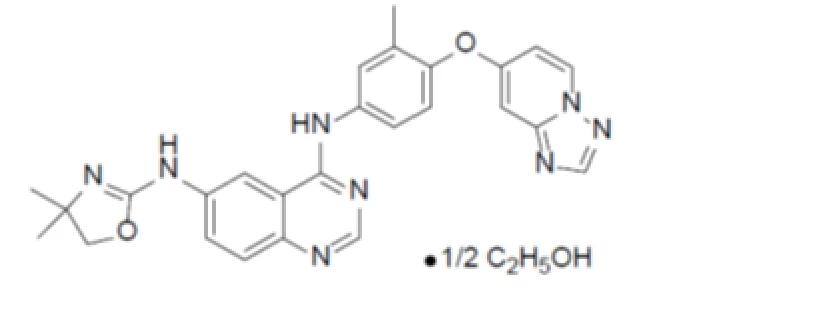
Structural formula:
Physicochemical properties:
Tucatinib hemi-ethanolate is an off-white to yellow powder. In aqueous media, tucatinib hemi-ethanolate is soluble at pH <2.9, sparingly soluble at pH 4.0, and insoluble at pH ≥4.6.
14 CLINICAL TRIALS
14.1 Trial Design and Study Demographics
Table 11: Summary of trial design of HER2CLIMB, tucatinib versus Placebo in Combination with Trastuzumab and Capecitabine in Patients with Previously Treated Locally Advanced Unresectable or Metastatic HER2+ Breast Carcinoma
| Trial design | Dosage, route of administration and duration | Study subjects (n) | Median age (Range) |
Randomized, double-blind, placebo-controlled, active comparator Subjects randomized in a 2:1 ratio to receive tucatinib or placebo in combination with trastuzumab and capecitabine | TUKYSA or placebo, 300 mg orally twice per day, was administered until disease progression or unacceptable toxicity. Trastuzumab was administered intravenously as a loading dose of 8 mg/kg on Day 1 of Cycle 1, followed by a maintenance dose of 6 mg/kg on Day 1 of each subsequent 21-day cycle. An alternate dosing option for trastuzumab was a fixed dose of 600 mg administered subcutaneously on Day 1 of each 21-day cycle. Capecitabine, 1000 mg/m2 orally twice per day, was administered on Days 1 through 14 of each 21-day cycle. | TUKYSA in combination with trastuzumab and capecitabine (N=410) Placebo in combination with trastuzumab and capecitabine (N=202). Total N=612 Randomization was stratified by the presence or history of brain metastases (yes vs. no), Eastern Cooperative Oncology Group (ECOG) performance status (0 vs. 1), and region (U.S., Canada, or rest of world). | TUKYSA + Trastuzumab + Capecitabine 55 (22-80) Placebo + Trastuzumab + Capecitabine 54 (25-82) |
The efficacy of TUKYSA in combination with trastuzumab and capecitabine was evaluated in the global HER2CLIMB trial. Enrolled patients were required to have HER2-positive unresectable locally advanced or metastatic breast cancer, with or without brain metastases, and had prior treatment with trastuzumab, pertuzumab, and ado-trastuzumab emtansine (T-DM1) separately or in combination, in the neoadjuvant, adjuvant or metastatic setting. All patients had received at least one prior HER2-directed agent in the metastatic setting, with 94% of patients having prior trastuzumab, 91% of patients with prior pertuzumab, and 99% of patients with prior T-DM1 in the metastatic setting. HER2 overexpression or amplification was confirmed by central laboratory analysis prior to patient enrollment.
Patients with brain metastases, including those with untreated or progressing lesions, were eligible to enroll provided they were neurologically stable and did not require immediate radiation or surgery. Patients who received systemic corticosteroids for control of symptoms of CNS metastases <28 days prior to the first dose of study treatment were excluded from the trial. The trial also excluded patients with leptomeningeal disease.
Table 12: Summary of patient demographics and baseline disease characteristics in HER2CLIMB (Full Analysis Set)
TUKYSA + trastuzumab + capecitabine (N=410) | Placebo + trastuzumab + capecitabine (N=202) | Total (N=612) | ||||||||||||
|---|---|---|---|---|---|---|---|---|---|---|---|---|---|---|
| Median Age, years (range) | 55 (22, 80) | 54 (25, 82) | 54 (22, 82) | |||||||||||
| Age Category, n (%) | ||||||||||||||
| < 65 years | 328 (80) | 168 (83) | 496 (81) | |||||||||||
| ≥ 65 years | 82 (20) | 34 (17) | 116 (19) | |||||||||||
| Gender n (%) | ||||||||||||||
| Male | 3 (0.7) | 2 (1) | 5 (0.8) | |||||||||||
| Female | 407 (99) | 200 (99) | 607 (99) | |||||||||||
| Race | ||||||||||||||
| Asian | 18 (4) | 5 (2) | 23 (4) | |||||||||||
| 41 (10) | 14 (7) | 55 (9) | ||||||||||||
| White | 287 (70) | 157 (78) | 444 (73) | |||||||||||
| Baseline ECOG, n (%) | ||||||||||||||
| 0 | 204 (50) | 94 (47) | 298 (49) | |||||||||||
| 1 | 206 (50) | 108 (53) | 314 (51) | |||||||||||
| Estrogen/progesterone receptor status, n (%) | ||||||||||||||
| Positive for either or both | 243 (59) | 127 (63) | 370 (60) | |||||||||||
| Negative for both | 161 (39) | 75 (37) | 236 (39) | |||||||||||
| Sites of metastatic disease | ||||||||||||||
| Lung | 200 (49) | 100 (50) | 300 (49) | |||||||||||
| Liver | 137 (33) | 78 (39) | 215 (35) | |||||||||||
| Skin | 58 (14) | 28 (14) | 86 (14) | |||||||||||
| Patients with history or presence of brain metastases, n (%) | 198 (48) | 93 (46) | 291 (48) | |||||||||||
| Treated stable | 80/198 (40) | 37/93 (40) | 117/291 (40) | |||||||||||
| Treated progressing | 74/198 (37) | 34/93 (37) | 108/291 (37) | |||||||||||
| Untreated | 44/198 (22) | 22/93 (24) | 66/291 (23) | |||||||||||
| Median number of prior lines of systemic therapy (range) | 4 (2, 14) | 4 (2, 17) | 4 (2, 17) | |||||||||||
| Median number of prior lines of systemic therapy in the metastatic setting (range) | 3 (1, 14) | 3 (1, 13) | 3 (1,14) | |||||||||||
The primary efficacy endpoint was progression-free survival (PFS) in the first 480 randomized patients, as assessed by blinded independent central review (BICR) according to Response Evaluation Criteria in Solid Tumours (RECIST) v1.1.
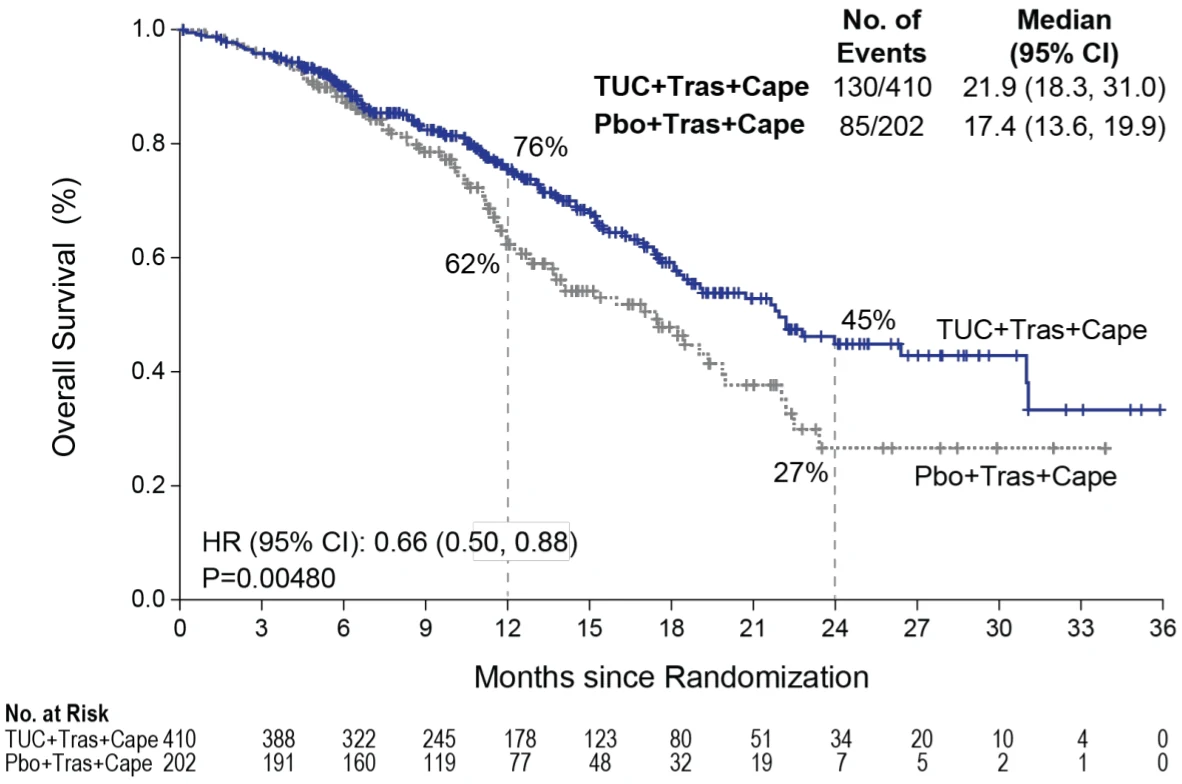
Secondary efficacy endpoints were evaluated in all randomized patients (N=612) and included overall survival (OS), PFS among patients with a history or presence of brain metastases (PFSBrainMets), and confirmed objective response rate (ORR).
14.2 Study Results
The median duration of exposure to TUKYSA was 7.3 months (range <0.1, 35.1) for patients on the TUKYSA + trastuzumab and capecitabine arm compared to 4.4 months (range <0.1, 24.0) of placebo for patients on the placebo + trastuzumab and capecitabine arm.
Efficacy results are summarized in Table 13 and Figures 1 and 2.
Table 13: Summary of primary and key secondary efficacy results based on RECIST 1.1 criteria in HER2CLIMB, per Blinded Independent Central Review (BICR)
| TUKYSA + Trastuzumab + Capecitabine | Placebo + Trastuzumab + Capecitabine | |||||||||||||||||
|---|---|---|---|---|---|---|---|---|---|---|---|---|---|---|---|---|---|---|
| Primary endpoint1 | ||||||||||||||||||
| Progression-free survival | N=320 | N=160 | ||||||||||||||||
| Number of events (%) | 178 (56) | 97 (61) | ||||||||||||||||
| Hazard ratio (95% CI)2 | 0.54 (0.42, 0.70) | |||||||||||||||||
| P-value3 | <0.00001 | |||||||||||||||||
| Median PFS, months (95% CI) | 7.8 (7.5, 9.6) | 5.6 (4.2, 7.1) | ||||||||||||||||
| Secondary endpoints | ||||||||||||||||||
| Overall survival | N=410 | N=202 | ||||||||||||||||
| Number of deaths | 130 (32) | 85 (42) | ||||||||||||||||
| Hazard ratio (95% CI)2 | 0.66 (0.50, 0.87) | |||||||||||||||||
| P-value4 | 0.00480 | |||||||||||||||||
| Median OS, months (95% CI) | 21.9 (18.3, 31.0) | 17.4 (13.6, 19.9) | ||||||||||||||||
| PFSBrainMets5 | N=198 | N=93 | ||||||||||||||||
| Number of events (%) | 106 (53.5) | 51 (54.8) | ||||||||||||||||
| Hazard ratio (95% CI) 6 | 0.483 (0.339, 0.689) | |||||||||||||||||
| P-value67 | <0.00001 | |||||||||||||||||
| Median, months (95% CI) | 7.6 (6.2, 9.5) | 5.4 (4.1, 5.7) | ||||||||||||||||
| Confirmed Objective Response Rate for Patients with Measurable Disease | N=340 | N=171 | ||||||||||||||||
| ORR (95% CI)8 | 40.6 (35.3, 46.0) | 22.8 (16.7, 29.8) | ||||||||||||||||
| P-value9 | 0.00008 | |||||||||||||||||
| CR | 3 (0.9) | 2 (1.2) | ||||||||||||||||
| PR | 135 (39.7) | 37 (21.6) | ||||||||||||||||
CI=confidence interval; PFS=progression-free survival; OS=overall survival; ORR=objective response rate; CR=complete response; PR=partial response.
- 1. Primary PFS analysis conducted in first 480 randomized patients.
- 2. Hazard ratio and 95% confidence intervals are based on stratified Cox proportional hazards regression model controlling for stratification factors (presence or history of brain metastases, ECOG status, and region of world)
- 3. Two-sided p-value based on re-randomization procedure (Rosenberger and Lachin 2002) controlling for stratification factors, compared with the allocated alpha of 0.05
- 4. Two-sided p-value based on re-randomization procedure (Rosenberger and Lachin 2002) controlling for stratification factors, compared with the allocated alpha of 0.0074 for this interim analysis (with 60% of the planned number of events for final analysis)
- 5. Analysis includes patients with history or presence of parenchymal brain metastases at baseline, including target and non-target lesions. Any site of disease progression (not only in the brain) was considered an event. Does not include patients with dural lesions only.
- 6. Hazard ratio and 95% confidence intervals are based on stratified Cox proportional hazards regression model controlling for stratification factors (ECOG status and region of world)
- 7. Two-sided p-value based on re-randomization procedure (Rosenberger and Lachin 2002) controlling for stratification factors, compared with the allocated alpha of 0.0080 for this interim analysis (with 71% of the planned number of events for final analysis)
- 8. Two-sided 95% exact confidence interval, computed using the Clopper-Pearson method (1934)
- 9. Two-sided p-value based on Cochran-Mantel-Haenszel test controlling for stratification factors (presence or history of brain metastases, ECOG status, and region of world), compared with the allocated alpha of 0.05
Figure 1: PFS per BICR
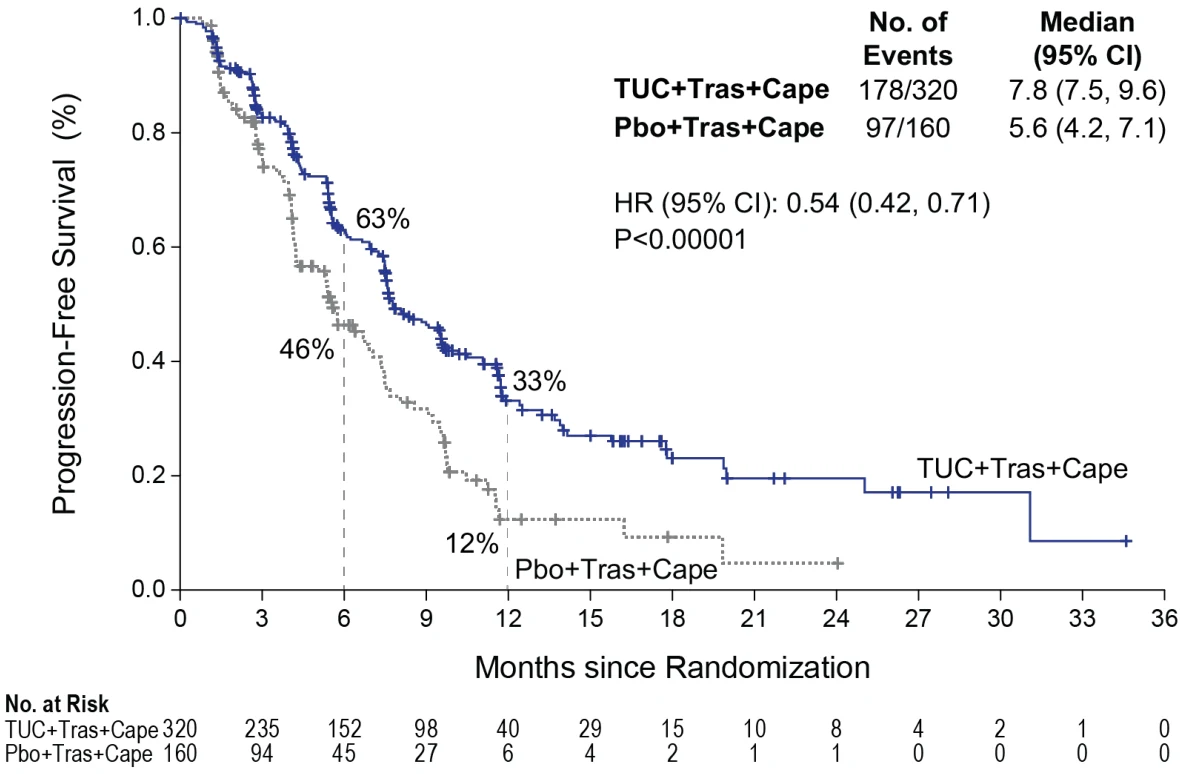
Figure 2: Overall Survival
Efficacy results were consistent across patient subgroups including stratification factors and hormone receptor status.
15 MICROBIOLOGY
Not applicable.
16 NON-CLINICAL TOXICOLOGY
General Toxicology
Rat
Tucatinib was administered orally to rats at doses of 6, 20, and 60 mg/kg/day for 13 weeks. At ≥ 6 mg/kg/day in females, there were higher alanine aminotransferase and alkaline phosphatase, centrilobular hepatocyte hypertrophy, increased interstitial cells in the ovary, atrophy of the uterus, mucification of the vagina, and lobular atrophy of the mammary gland in males. Additional changes at ≥ 20 mg/kg/day included minimally higher liver weights. Additional changes at 60 mg/kg/day included lower uterus/cervix (females) and prostate gland (males) weights. There were no test article-related findings at the end of recovery with the exception of the ovary of females administered ≥20 mg/kg/day. The exposure achieved at a dose of 6 mg/kg/day is approximately 2% of the exposure achieved at the maximum recommended human dose of 300 mg twice daily based on AUC comparison.
Cynomolgus monkeys
Tucatinib was administered orally to cynomolgus monkeys at doses of 5, 20, and 40 mg/kg/day for 13 weeks. At ≥5 mg/kg/day, there were fecal abnormalities and increased heart rates (at vital signs measurement only). Additional findings at 40 mg/kg/day, included transient body weight loss, lean body condition, and apparent blood in the stool which was successfully treated with antibiotic therapy, and increased liver weights. All changes were reversible. The dose of 20 mg/kg/day is approximately 24% of the maximum recommended human dose of 300 mg twice daily based on AUC comparison.
Carcinogenicity and Mutagenicity
Carcinogenicity studies have not been conducted with tucatinib.
Tucatinib was not mutagenic in an in vitro bacterial reverse-mutation study (Ames test) or clastogenic in either an in vitro mouse bone marrow chromosomal aberration assay or an in vivo mouse bone marrow erythrocyte micronucleus assay.
Reproductive and Developmental Toxicology
Impairment of Fertility
In repeat-dose toxicity studies in rats, decreased corpora lutea/corpus luteum cyst, increased interstitial cells of the ovary, atrophy of the uterus, and mucification of the vagina were observed at doses of ≥ 6 mg/kg/day administered twice daily, which resulted in exposures based on AUC0-12 of approximately 4% of the human exposure at the recommended dose. Changes in male rats included lobular atrophy of the male mammary gland and decreased prostate gland weights. No histological effects were observed on male or female reproductive tracts in cynomolgus monkeys or on male reproductive tracts in rats at doses resulting in exposures up to 8 times (in monkey) or 18 times (in rat) the human exposure at the recommended dose based on AUC0-12.
Developmental Toxicity
Embryo-fetal development studies were conducted in rabbits and rats. Tucatinib administered to pregnant dams caused teratogenicity in rabbits and embryo-fetal toxicity in rats. In pregnant rabbits, increased resorptions, decreased percentages of live fetuses, and skeletal, visceral, and external malformations were observed in fetuses at ≥90 mg/kg/day; at this dose, maternal exposure is approximately equivalent to the human exposure at the recommended dose based on AUC. In pregnant rats, decreased maternal body weight and body weight gain were observed at doses of ≥90 mg/kg/day. Fetal effects of decreased weights and delayed ossification were observed at ≥120mg/kg/day.
Juvenile Animal Studies
No juvenile toxicity studies have been conducted.