


Patient Medication Information: uses, side effects, how to take - Uceris
What is UCERIS used for?
To treat mild to moderate ulcerative colitis and to get this condition under control (induced remission).
How does UCERIS work?
UCERIS rectal foam contains budesonide, which helps reduce inflammation. This helps decrease symptoms of ulcerative colitis such as pain and diarrhea.
What are the ingredients in UCERIS?
Medicinal ingredients: budesonide
Non-medicinal ingredients: Cetyl Alcohol, Citric Acid Monohydrate, Edetate Disodium, Emulsifying Wax, Polyoxyl (10) Stearyl Ether, Propylene Glycol, Purified Water
Propellant: Isobutane, N-Butane, Propane
UCERIS comes in the following dosage forms:
2 mg/actuation
Do not use UCERIS if:
- you are allergic to budesonide or any of the ingredients in UCERIS. See the beginning of this leaflet for a complete list of ingredients in UCERIS
- you have an infection
- you have tuberculosis
- you have a viral eye infection called ocular herpes simplex
To help avoid side effects and ensure proper use, talk to your healthcare professional before you take UCERIS. Talk about any health conditions or problems you may have, including if you:
- have liver problems
- are about to have an operation
- have chicken pox or measles or have recently been near anyone with chicken pox or measles
- have or had a family history of diabetes, cataracts, or increased pressure in the eye (glaucoma).
- have or had tuberculosis
- have high blood pressure (hypertension)
- have brittle bone (osteoporosis)
- have stomach ulcers
- have glaucoma or cataract or any other problems
are pregnant or plan to become pregnant. It is not known if UCERIS will harm your unborn baby.
- are breastfeeding or planning to breastfeed. UCERIS can pass into your breast milk and may harm your baby. You and your healthcare provider should decide if you will use UCERIS or breastfeed. You should not do both.
Other warnings you should know about:
UCERIS is flammable. Avoid fire, flame and smoking during and right after using UCERIS.
UCERIS may lower your ability to fight infections and you should:
- avoid contact with people who have chicken pox or measles.
- contact your doctor if you have signs of infection such as:
- fever
- pain
- ache, chills, feeling tired
- nausea, vomiting
If you take other steroid medicines for allergies, switching to UCERIS may cause these allergies to come back. These allergies may include eczema (a skin disease) or inflammation inside your nose (rhinitis). Contact your doctor if any allergies get worse.
Tell your healthcare professional about all the medicines you take, including any drugs, vitamins, minerals, natural supplements or alternative medicines.
The following may interact with UCERIS:
- ketoconazole or itraconazole, used to treat fungal infections
- ritonavir, indinavir, saquinavir, which are HIV medications
- cyclosporine and erythromycin, which are antibiotics
Do not eat grapefruit or drink grapefruit juice while using UCERIS. Eating grapefruit or drinking grapefruit juice can increase the level of UCERIS in your blood.
How to take UCERIS:
Read the Patient Medication Information and the following instructions before you start using it. Talk to your healthcare provider if you have any questions.
- Before using UCERIS, you should use the bathroom to empty your bowels.
- You may use UCERIS while in a standing position, in a lying position, or in a sitting position (for example, while using the toilet).
- Use UCERIS exactly as your healthcare provider tells you to use it.
- UCERIS should only be used rectally (through the anus). Do not take UCERIS by mouth.
- You should stop using UCERIS before preparing for a colonoscopy. Call your healthcare provider before restarting UCERIS after your colonoscopy.
Applicators should be used only 1 time. You should use a new applicator for each dose.
Each kit contains:
- Patient Medication Information
- canisters containing 14 doses each
- 4 trays of single-use applicators (7 applicators per tray)
- Applicator disposal bags for use after each dose
| Preparing to use UCERIS rectal foam | |
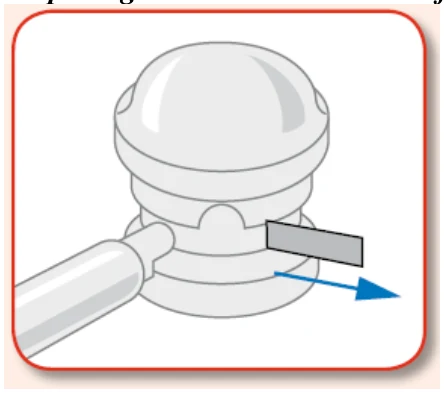 Figure B | Step 1: Twist Safety Tab to Remove Before the first use, remove the safety tab from under the pump dome (See Figure B).
|
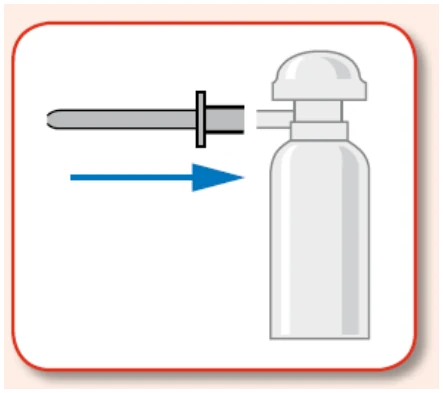 Figure C | Step 2: Attach the Applicator The applicators are in a special tray. Hold the tray firmly and pull to remove 1 applicator. Push the applicator firmly onto the nozzle of the canister (See Figure C). Each applicator is coated with a lubricant. If needed, you can apply an additional lubricant, such as petrolatum or petroleum jelly. |
 The canister cannot be used if safety tab is not removed.
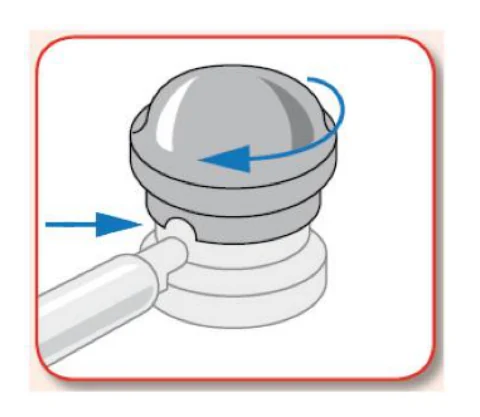 Figure D | Step 3: Align Notch to Nozzle To unlock the canister, twist the dome on the top of the canister until the semi-circular notch underneath the dome is in line with the nozzle (See Figure D). |
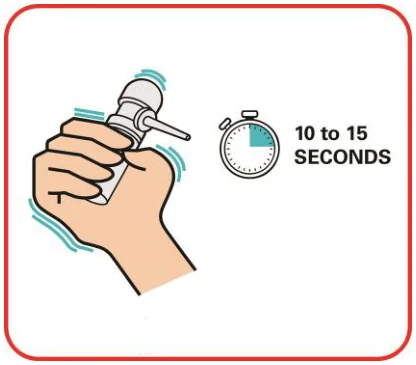 Figure E | Step 4: Warm and Shake Canister Warm the canister by holding it in your hands while shaking it vigorously for 10 to 15 seconds (See Figure E). |
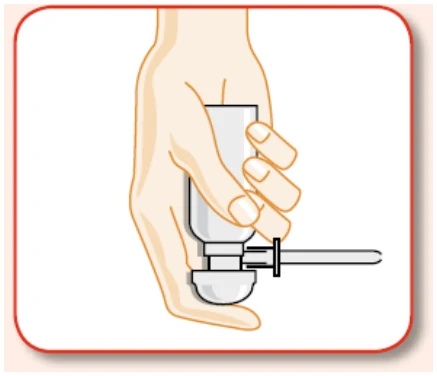 Figure F | Step 5: Turn the Canister Upside Down Place your forefinger on the top of pump dome and then turn the canister upside down (See Figure F).
|
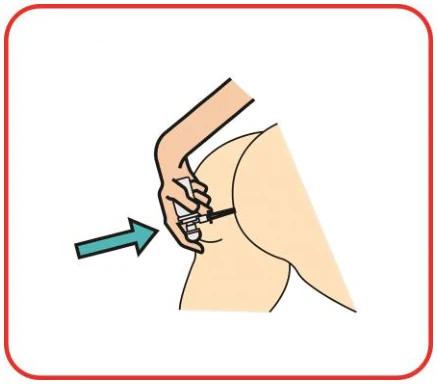 Figure G | Step 6: Insert the Applicator into Rectum Insert the applicator into your rectum as far as it is comfortable. The easiest way to use UCERIS is to keep one foot on the floor and raise the other foot onto a firm surface such as a chair or stool (See Figure G). |
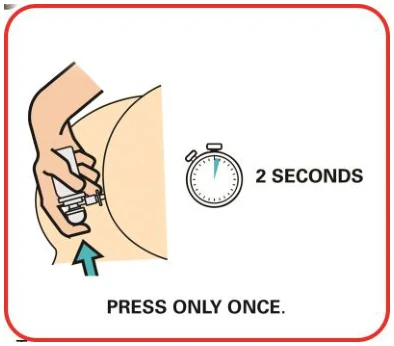 Figure H | Step 7: Give a Dose of UCERIS To give a dose of UCERIS, use your forefinger to fully push down the pump dome one time and hold it for about 2 seconds in that position (See Figure H). |
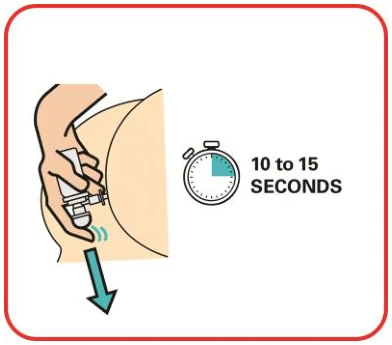 Figure I | Step 8: Release and Hold Release finger pressure on the pump dome and hold the applicator in place for 10 to 15 seconds (See Figure I). |
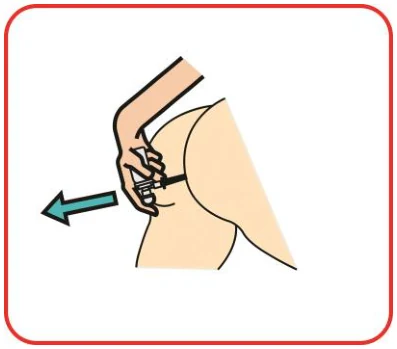 Figure J | Step 9: Remove the Applicator (See Figure J) The foam will still expand a little and may drop out of the applicator or anus. |
 Figure K | Step 10: Remove Applicator from Canister Remove the applicator from the canister and place the used applicator in the plastic bag provided. (See Figure K). Throw the plastic bag away in your household trash. Each applicator should be used only once. Please discard the applicator after use. |
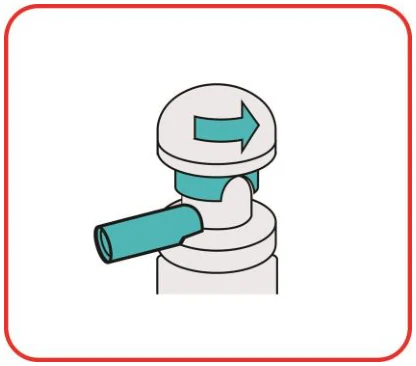 Figure L | Step 11: Twist Notch on Dome Away from Nozzle To prevent loss of UCERIS from the canister between uses, turn the pump dome around so that the semi-circular notch faces the opposite direction to the nozzle (See Figure L). |
 Wash your hands with soap and water. Try not to empty your bowels until the next morning. |
Usual dose:
Take twice daily for 2 weeks followed by 1 metered dose administered rectally once daily for 4 weeks.
Apply UCERIS in the morning and the evening for the first 2 weeks of treatment; then once daily in the evening for the next 4 weeks. When applied in the evening, use immediately before bedtime. Try not to empty your bowels again until the next morning.
Overdose:
If you regularly use more UCERIS than you should, you may develop signs/symptoms of hypercorticism (too much corticosteroid medicine in your blood).
| If you think you have taken too much UCERIS, contact your healthcare professional, hospital emergency department or regional poison control centre immediately, even if there are no symptoms. |
Missed Dose:
If you forget to take an occasional dose of UCERIS it is not necessary to make up the missed dose. Just continue with the next dose as prescribed.
What are possible side effects from using UCERIS?
These are not all the possible side effects you may feel when taking UCERIS. If you experience any side effects not listed here, contact your healthcare professional.
The most common side effect of UCERIS includes rash.
Using corticosteroid for a long time reduces your ability to handle stress. Before having an operation or emergency, contact your doctor if you are under stress and have symptoms such as:
- tiredness, weakness
- nausea, vomiting
- low blood pressure
Serious side effects and what to do about them
| Symptom / effect | Talk to your healthcare professional | Stop taking drug and get immediate medical help | |||||
| Only if severe | In all cases | ||||||
| Allergic Reaction: difficulty swallowing or breathing, wheezing; drop in blood pressure; feeling sick to your stomach and throwing up; hives or rash; swelling of the face, lips, tongue or throat. | X | ||||||
| Constipation | X | ||||||
| Headache | X | ||||||
| Changes in vision that may be signs of glaucoma (increased pressure in your eye), cataract (clouding of the lens of your eye) | X | ||||||
| Adrenal effects: roundness of the face, weight gain, reduced glucose tolerance, high blood sugar, fluid retention in the tissues (e.g. swollen legs), increased excretion of potassium (hypokalemia), irregular periods in women, unwanted body hair in women, impotence, abnormal laboratory findings (reduced | X | ||||||
| adrenal function), red stripes on the skin (stretch marks), acne | |||
| Pancreatitis (inflammation of the pancreas): severe pain in the abdomen and back | X | ||
| Mood changes, such as anxiety, aggression or trouble sleeping | X | ||
| Increased risk of infection (such as chicken pox and measles) | X | ||
| Hypertension (high blood pressure): shortness of breath, fatigue, dizziness or fainting, chest pain or pressure, swelling in your ankles and legs, bluish color to your lips and skin, racing pulse or heart palpitations | X | ||
If you have a troublesome symptom or side effect that is not listed here or becomes bad enough to interfere with your daily activities, talk to your healthcare professional.
Reporting Side Effects
You can report any suspected side effects associated with the use of health products to Health Canada by:
NOTE: Contact your health professional if you need information about how to manage your side effects. The Canada Vigilance Program does not provide medical advice. |
Storage:
- Store UCERIS at 15°C to 30°C.
- Do not store the UCERIS container near heat or store at temperatures above 49°C.
- Do not puncture or burn the UCERIS canister.
- Do not refrigerate.
- Keep out of reach and sight of children.
If you want more information about UCERIS:
- Talk to your healthcare professional
- Find the full product monograph that is prepared for healthcare professionals and includes this Patient Medication Information by visiting the Health Canada website (http://hc-sc.gc.ca/index-eng.php); the manufacturer’s website http://www.bauschhealth.ca, or by calling 1-800-361-4261.