


Product Monograph - Uceris
1 INDICATIONS
UCERIS (budesonide) rectal foam is a glucocorticosteroid indicated for the induction of remission in adult patients with active mild to moderate distal ulcerative colitis extending up to 40 cm from the anal verge.
1.1 Pediatrics
Pediatrics (<18 years of age)
No data are available to Health Canada; therefore, Health Canada has not authorized an indication for pediatric use. See Section 6.1.3 WARNINGS AND PRECAUTIONS, Special Populations.
1.2 Geriatrics
Geriatrics (>65 years of age)
There is no sufficient and adequate data in clinical studies with UCERIS for patients aged 65 and over to determine whether they respond differently than younger patients. See Section 6.1.4 WARNINGS AND PRECAUTIONS, Special Populations, Geriatrics, and Section 3.2 DOSAGE AND ADMINISTRATION, Recommended Dose and Dosage Adjustment.
2 CONTRAINDICATIONS
- UCERIS is contraindicated in patients who are hypersensitive to this drug or to any ingredient in the formulation, including any non-medicinal ingredient, or component of the container. For a complete listing, see Section 5 DOSAGE FORMS, STRENGTHS, COMPOSITION AND PACKAGING.
- Active or quiescent tuberculosis infection.
- Untreated fungal, bacterial, systemic viral or parasitic infections.
- Ocular herpes simplex.
3 DOSAGE AND ADMINISTRATION
3.1 Dosing Considerations
- UCERIS rectal foam is only to be applied rectally. It is not for oral use.
- The patient should empty their bowels before using UCERIS rectal foam.
- Each applicator is coated with a lubricant. If additional lubrication is needed, petrolatum or petroleum jelly can also be used.
3.2 Recommended Dose and Dosage Adjustment
The recommended dosage regimen is 1 metered dose administered rectally twice daily for 2 weeks followed by 1 metered dose administered rectally once daily for 4 weeks.
Health Canada has not authorized an indication for pediatric (<18 years of age) use (see Section 6.1.3 WARNINGS AND PRECAUTIONS, Special Populations, Pediatrics).
No dosage adjustment required in patients 65 years of age and older. However, dose selection for elderly patients should be cautious, usually starting at the low end of the dosing range (see Section 6.1.4 WARNINGS AND PRECAUTIONS, Special Populations, Geriatrics).
No dosage adjustment required in patients with hepatic or renal impairment.
3.3 Administration
Prior to applying the Rectal Foam, you should use the bathroom in order to empty your bowels.
Warm the canister in the hands while shaking it vigorously for 10 to 15 seconds prior to use.
UCERIS rectal foam can be used in a standing, lying or sitting position (e.g., while using the toilet).
Apply UCERIS rectal foam in the morning and the evening for the first 2 weeks of treatment; then once daily in the evening for the next 4 weeks. When applied in the evening, use immediately prior to bedtime. Try not to empty your bowels again until the next morning.
Applicators should be used only once. Please discard the applicator after use.
3.4 Missed Dose
If a dose of UCERIS rectal foam is missed, it should be administered as soon as possible, unless it is almost time for the next dose. A patient should not use two UCERIS doses at the same time to make up for a missed dose.
4 OVERDOSAGE
Acute overdosage with UCERIS rectal foam is unlikely. However, UCERIS rectal foam is absorbed systemically and chronic overdosage may result in signs/symptoms of hypercorticism.
| For management of a suspected drug overdose, contact your regional poison control centre. |
5 DOSAGE FORMS, STRENGTHS, COMPOSITION AND PACKAGING
Table 1 – Dosage Forms, Strengths, Composition and Packaging
UCERIS rectal foam is formulated as an emulsion which is filled into an aluminum canister with an aerosol propellant. It is available in 1 strength: 2 mg budesonide per metered dose.
6 WARNINGS AND PRECAUTIONS
General
Caution should be taken in patients with infections, hypertension, diabetes mellitus, osteoporosis, peptic ulcer, glaucoma or cataracts, or with a family history of diabetes or glaucoma, or with any other condition where glucocorticosteroids may have unwanted effects. These patients should be monitored for the occurrence of such effects, and the benefits of a corticosteroid enema must be weighed against the risks when needed.
Concomitant treatment with CYP3A4 inhibitors (such as ketoconazole, itraconazole, ritonavir, indinavir, saquinavir, erythromycin, cyclosporine and grapefruit and grapefruit juice) should be avoided as it may increase the budesonide systemic exposure (see 8 DRUG INTERACTIONS).
Monitor patients who are transferred from glucocorticosteroid treatment with higher systemic effects to glucocorticosteroids with lower systemic effects, such as UCERIS rectal foam, since symptoms attributed to withdrawal of steroid therapy, including those of acute adrenal suppression or benign intracranial hypertension, may develop. Adrenocortical function monitoring may be required in these patients and the dose of glucocorticosteroid treatment with high systemic effects should be reduced cautiously.
Replacement of systemic glucocorticosteroids with UCERIS rectal foam may unmask allergies (e.g., rhinitis and eczema), which were previously controlled by the systemic drug.
CAUTION: The contents of UCERIS rectal foam includes n-butane, isobutane and propane as propellants which are flammable. Avoid fire, flame, and smoking during and immediately following administration.
Patients should temporarily discontinue the use of UCERIS before initiation of bowel preparation for colonoscopy and consult their health care provider before resuming therapy.
| Route of Administration | Dosage Form / Strength/Composition | All Non-medicinal Ingredients |
| Rectal | Foam, 2 mg budesonide per metered dose | Cetyl Alcohol, Citric Acid Monohydrate, Edetate Disodium, Emulsifying Wax, Polyoxyl (10) Stearyl Ether, Propylene Glycol, Purified Water Propellant: Isobutane, N-Butane, Propane |
Carcinogenesis and Mutagenesis
See NON-CLINICAL TOXICOLOGY.
Endocrine and Metabolism
Hypercorticism and Adrenal Axis Suppression
When glucocorticosteroids are used chronically, systemic effects such as hypercorticism and adrenal suppression may occur. Glucocorticosteroids can suppress or reduce the response of the hypothalamus-pituitary-adrenal (HPA) axis to stress. In situations where patients are subject to surgery or other stress situations, supplementation with a systemic glucocorticosteroid is recommended.
Since UCERIS rectal foam contains a glucocorticosteroid, general warnings and precautions concerning glucocorticoids should be followed. See Section 9 ACTION AND CLINICAL PHARMACOLOGY.
Hepatic/Biliary/Pancreatic
Reduced liver function may affect the elimination of glucocorticoids, resulting in higher systemic exposure to budesonide, and possibly higher risk of systemic adverse events. See Section 9.3 ACTION AND CLINICAL PHARMACOLOGY, Pharmacokinetics – Special Populations and Conditions, Hepatic Insufficiency. Therefore, caution should be exercised in the administration of the product and monitoring of these patients. The benefits of budesonide must be weighed against the risks. Discontinuing the use of UCERIS rectal foam should be considered in these patients if signs of hypercorticism are observed
UCERIS should not be used in patients with severe hepatic impairment, such as in cases of hepatic cirrhosis, unless the expected potential benefit clearly outweighs the increased risk of toxic effects
Immune
Patients who are on drugs that suppress the immune system such as glucocorticosteroids, including budesonide, are more susceptible to infection than healthy individuals.
Viral infections such as chicken pox and measles, for example, can have a more serious or even fatal course in susceptible patients or patients on immunosuppressant doses of glucocorticosteroids. In patients who have not had these diseases, particular care should be taken to avoid exposure. If patients are infected or suspected of being infected, consider reduction or discontinuation of UCERIS treatment as appropriate.
How the dose, route and duration of glucocorticosteroid administration affect the risk of developing a disseminated infection is not known. The contribution of the underlying disease and/or prior glucocorticosteroid treatment to the risk is also not known.
If exposed, therapy with varicella zoster immune globulin (VZIG) or pooled intravenous immunoglobulin (IVIG), as appropriate, may be indicated.
If exposed to measles, prophylaxis with pooled intramuscular immunoglobulin (IG) may be indicated. If chicken pox develops, treatment with antiviral agents may be considered.
Ophthalmologic
Visual disturbance may be reported with systemic and topical corticosteroid use, which may be due to cataract, glaucoma or rare diseases such as central serous chorioretinopathy (CSCR). Patients should be considered for assessment by an ophthalmologist in cases of visual disturbances
6.1 Special Populations
6.1.1 Pregnant Women
There are no studies with UCERIS rectal foam in pregnant women.
Animal reproduction studies using subcutaneous administration of budesonide to rats and rabbits at doses 1.2 times and 0.12 times, respectively, the human intrarectal dose of 4 mg/day, produced skeletal abnormalities, fetal loss and decreased pup weight. (See Section 14 NON-CLINICAL TOXICOLOGY, Reproductive and Developmental Toxicology). UCERIS rectal foam should be used during pregnancy only if the potential benefit clearly justifies the risk to the fetus.
Fetal/neonatal adverse reactions
Hypoadrenalism may occur in neonates exposed to glucocorticosteroids in-utero. Carefully observe these neonates for signs and symptoms of hypoadrenalism.
6.1.2 Breast-feeding
Use of UCERIS rectal foam is likely to result in budesonide in human milk as budesonide delivered by inhalation from a dry powder inhaler is present in human milk at low concentrations. The developmental and health benefits of breastfeeding should be considered along with the mother’s clinical need for UCERIS rectal foam and any potential adverse effects on the breastfed child from UCERIS rectal foam or from the underlying maternal condition. Exercise caution when administering UCERIS rectal foam to a breast-feeding woman.
6.1.3 Pediatrics (<18 years of age)
No data are available to Health Canada; therefore, Health Canada has not authorized an indication for pediatric use Glucocorticosteroids, including UCERIS, may reduce growth velocity in children.
6.1.4 Geriatrics
Clinical studies with UCERIS rectal foam did not include sufficient numbers of patients aged 65 and over to determine whether they respond differently than younger patients. In general, dose selection for an elderly patient should be cautious, usually starting at the low end of the dosing range, reflecting the greater frequency of decreased hepatic, renal, or cardiac function, and of concomitant disease or other drug therapy.
7 ADVERSE REACTIONS
7.1 Adverse Reaction Overview
The most frequently reported adverse drug reaction (>10%) during 2 placebo-controlled, 6-week trials (Study BUCF3001 and BUCF3002) was blood cortisol decreased (11% in the UCERIS rectal foam-treated group and 1% in the placebo group).
The most common reason for study discontinuation was blood cortisol decreased and adrenal insufficiency.
One serious adverse reaction of severe acute generalized exanthematous pustulosis occurred in conjunction with a staphylococcal infection in the UCERIS rectal foam group.
7.2 Clinical Trial Adverse Reactions
Because clinical trials are conducted under very specific conditions, the adverse reaction rates observed in the clinical trials may not reflect the rates observed in practice and should not be compared to the rates in the clinical trials of another drug. Adverse reaction information from clinical trials is useful for identifying drug-related adverse events and for approximating rates.
In the clinical trials, the overall exposure to UCERIS rectal foam was in 332 patients with active mild to moderate distal ulcerative colitis extending up to 40 cm from the anal verge. The median duration of exposure was 42 days. However, UCERIS rectal foam was studied primarily in 2 placebo-controlled, 6-week trials in patients with active disease (Study BUCF3001 and Study BUCF3002). In these trials, 268 patients received UCERIS rectal foam 2 mg twice a day for 2 weeks followed by 2 mg once a day for 4 weeks.
Adverse reactions were experienced by 21% of subjects (56 of 268) in the UCERIS rectal foam-treated group and 6% subjects (16 of 278) in the placebo group.
The most common adverse reactions (≥ 1% of the UCERIS rectal foam or placebo group and at higher frequency in the UCERIS rectal foam group) were decreased blood cortisol, adrenal insufficiency, rash and headache (Table 2). Decreased blood cortisol was defined as a morning cortisol level of < 5 mcg/dL. Adrenal insufficiency was defined as a cortisol level of < 18 mcg/dL at 30 minutes post challenge with adrenocorticotropic hormone (ACTH).
Table 2 – Common (>1%) Adverse Reactions Reported in two Placebo Controlled Trials (Studies BUCF3001 and BUCF3002)
Adverse Reaction System Organ Class Preferred Term | Placebo N = 278 n (%) | Budesonide Foam 2 mg/25 mL N = 268 n (%) |
| Any system organ class | 16 (6) | 56 (21) |
| Endocrine disorders | ||
| Adrenal insufficiency† | 2 (0.7) | 10 (3.74) |
| Investigations | ||
| Blood cortisol decreased# | 6 (2.2) | 46 (17.2) |
| Nervous system disorders | ||
| Headache | 1 (0.4) | 2 (0.7) |
| Skin and subcutaneous tissue disorders | ||
| Rash | 0 | 3 (1.1) |
#Decreased blood cortisol was defined as a morning cortisol level of < 5 mcg/dL
†Adrenal insufficiency was defined as a cortisol level of < 18 mcg/dL at 30 minutes post challenge with ACTH.
Of the 46 UCERIS rectal foam treated patients with decreased blood cortisol (defined as a morning cortisol level of < 5 mcg/dL) reported as an adverse event, none had adrenal insufficiency (defined as a cortisol level of < 18 mcg/dL at 30 minutes post challenge with ACTH) (see Table 3). All cases of adrenal insufficiency resolved.
Table 3 summarizes the percentages of patients reporting glucocorticoid related effects in the 2 placebo-controlled trials (Studies BUCF3001 and BUCF3002).
Table 3 – Summary of Glucocorticoid Related Effects in Two Placebo-Controlled
Trials (Studies BUCF3001 and BUCF3002)
Adverse Reaction System Organ Class Preferred Term | UCERIS Rectal Foam 2 mg/25 mL N = 268 n (%) | Placebo N = 278 n (%) | |||||
| Overall | 60 (22) | 10 (4) | |||||
Investigations Blood cortisol decreased | 46 (17) * | 6 (2) | |||||
Endocrine disorders Adrenal insufficiency | 10 (4) | 2 (1) | |||||
Metabolism and nutrition disorders Hyperglycemia | 1 (0.4) | 0 | |||||
Psychiatric disorders Insomnia | 1 (0.4) | 1 (0.4) | |||||
| Sleep disorder | 1 (0.4) | 0 | |||||
| Depression | 1 (0.4) | 1 (0.4) | |||||
Skin and subcutaneous tissue disorders Acne | 1 (0.4) | 0 | |||||
| * Decreases in serum cortisol levels associated with budesonide treatment were seen at Weeks 1 and 2 (twice-daily treatment) in the UCERIS rectal foam group, but gradually returned to baseline levels during the 4 weeks of once daily treatment. | |||||||
Potentially clinically significant laboratory tests results included ACTH challenge test abnormal [cortisol < 18 mcg/dL (< 500 nmol/L)] in 21.6% of patients in the UCERIS group as compared to 6.4% of those in the placebo group. In addition, 27.0 % of patients treated with UCERIS had a morning blood cortisol level < 5 mcg/dL [< 138 nmol/L], as compared to 6.9% with placebo.
No clinically significant differences were observed with respect to the overall percentages of patients with any glucocorticoid related effects between UCERIS rectal foam and placebo after 6 weeks of therapy.
For additional details on morning cortisol levels and the response to the ACTH stimulation test, see Section 12 PHARMACEUTICAL INFORMATION.
7.3 Post-Market Adverse Reactions
The following adverse reactions have been reported for other oral and rectal formulations of budesonide.
Cardiac disorders: hypertension
Gastrointestinal disorders: pancreatitis
General disorders and administration site conditions: pyrexia, peripheral edema
Immune System Disorders: anaphylactic reactions
Nervous System Disorders: dizziness, benign intracranial hypertension
Psychiatric Disorders: mood swings
Skin and subcutaneous tissue disorders: pruritus, maculo-papular rash, allergic dermatitis
8 DRUG INTERACTIONS
8.1 Overview
UCERIS should not be used in patients using concomitant medications that are CYP3A4 inhibitors.
8.2 Drug-Drug Interactions
CYP3A4 Inhibitors
The active ingredient of UCERIS rectal foam, budesonide, is metabolized by CYP3A4. Inhibitors of CYP3A4 activity (such as ketoconazole, itraconazole, ritonavir, indinavir, saquinavir, erythromycin, cyclosporine and grapefruit and grapefruit juice) can increase systemic budesonide concentrations. Avoid concomitant use of CYP3A4 inhibitors with UCERIS rectal foam. See Section 9 ACTION AND CLINICAL PHARMACOLOGY, Section 9.3 Pharmacokinetics, Metabolism
Pharmacodynamic interactions
Cardiac glycosides
The action of the glycoside can be potentiated by potassium deficiency which is a potential known adverse effect of glucocorticoids.
Saluretics
Concomitant use of glucocorticoids may result in enhanced potassium excretion and aggravated hypokalemia,
8.3 Drug-Food Interactions
Grapefruit or grapefruit juice should be avoided during treatment with UCERIS. See Section 8.2 Drug-Drug Interactions, CYP3A4 inhibitors.
8.4 Drug-Herb Interactions
Interactions with herbal products have not been established.
8.5 Drug-Laboratory Test Interactions
Interactions with laboratory tests have not been established. Because adrenal function may be suppressed by treatment with budesonide, an ACTH stimulation test for diagnosing pituitary insufficiency might show false results (low values)
9 ACTION AND CLINICAL PHARMACOLOGY
9.1 Mechanism of Action
Budesonide has a glucocorticosteroid activity that is predominantly topical when administered rectally.
9.2 Pharmacodynamics
Treatment with glucocorticosteroids, including UCERIS rectal foam, is associated with a suppression of endogenous cortisol concentrations and an impairment of the hypothalamic-pituitary-adrenal (HPA) axis function. These effects were measured by determination of plasma cortisol concentrations and responses to adrenocorticotropin challenge (i.e., ACTH stimulation test) in 2 placebo-controlled, 6-week trials in patients with active disease (see Section 13 CLINICAL TRIALS). These trials enrolled subjects with post ACTH stimulation cortisol level of >18 mcg/dL at baseline. Subjects received UCERIS rectal foam 2 mg or a placebo twice daily for 2 weeks followed by once daily for 4 weeks. Normal morning serum cortisol levels > 5 mcg/dL were maintained in 85% and 84% of UCERIS rectal foam treated subjects during Weeks 1 and 2 (twice daily treatment) and 93% and 94% during Weeks 4 and 6 (once daily treatment), respectively (see Table 4).
At baseline (predose), 84% of subjects in the UCERIS rectal foam group had a normal response to the ACTH challenge and at Week 6, 63% of subjects had a normal response to the ACTH challenge; in the placebo group, these values were 86% and 76%, respectively (see Table 4). ACTH stimulation test was not performed routinely during the twice daily treatment period (Weeks 1 and 2).
Table 4 – Proportion of Subjects with Cortisol Levels of > 5 mcg/dL (138 nmol/L) During the Study and Proportion of Subjects with Normal Response to ACTH Challenge (RCT Safety Population) | ||
| Cortisol Parameter | UCERIS Rectal Foam 2 mg/25 mL N = 268 n (%) | Placebo N = 278 n (%) |
| Total cortisol > 5 mcg/dL (lower limit of normal range) | ||
| Baseline | 259/268 (96.6) | 275/278 (98.9) |
| Week 1 | 224/263 (85.2) | 264/269 (98.1) |
| Week 2 | 216/257 (84.0) | 263/266 (98.9) |
| Week 4 | 218/235 (92.8) | 243/249 (97.6) |
| Week 6 | 211/224 (94.2) | 234/241 (97.1) |
| Normal response to ACTH challengea | ||
| Baseline | 222/266 (83.5) | 238/278 (85.6) |
| Week 6b | 148/236 (62.7) | 180/237 (75.9) |
a The normal response to ACTH challenge included 3 criteria, as defined in the synthetic adrenocorticotropin hormone label: 1) morning cortisol level > 5 mcg/dL; 2) increase in cortisol level by ≥ 7 mcg/dL above the morning (pre-challenge) level following ACTH challenge; and cortisol level of > 18 mcg/dL following ACTH challenge.
b Denominator includes 20 subjects in the UCERIS rectal foam arm and 2 subjects in the placebo arm who discontinued prior to week 6 due to adverse events related to low cortisol or abnormal response to ACTH challenge.
9.3 Pharmacokinetics
Absorption
Distal Ulcerative Colitis Patients
Based on population pharmacokinetic analysis from sparse PK samples from two phase 3 studies, the estimated AUC0-12 following administration of UCERIS rectal foam 2 mg twice a day was 4.31 ng*hr/mL with a CV of 64% in the target patient population.
Distribution
The volume of distribution (VSS) of budesonide varies between 2.2 and 3.9 L/kg in healthy subjects and in patients. Plasma protein binding is estimated to be 85 to 90% in the concentration range of 1 to 230 nmol/L, independent of gender. The erythrocyte/plasma partition ratio at clinically relevant concentrations is approximately 0.8.
Metabolism
Following absorption, budesonide is subject to first-pass metabolism. In vitro experiments in human liver microsomes demonstrate that budesonide is rapidly and extensively biotransformed, mainly by CYP3A4, to its 2 major metabolites, 6β-hydroxy budesonide and 16α-hydroxy prednisolone. The glucocorticoid activity of these metabolites is negligible (<1/100) in relation to that of the parent compound.
In vivo investigations with intravenous doses in healthy subjects demonstrate that budesonide has a plasma clearance of 0.9-1.8 L/min. These plasma clearance values approach the estimated liver blood flow, suggesting that budesonide is a high hepatic clearance drug.
Budesonide is metabolized via CYP3A4. Potent inhibitors of CYP3A4 can increase the plasma concentrations of budesonide. Co-administration of ketoconazole (inhibitor of CYP3A4) results in an 8-fold increase in AUC of oral budesonide, compared to budesonide alone. Grapefruit juice, an inhibitor of gut mucosal CYP3A, approximately doubles the systemic exposure of oral budesonide. Conversely, induction of CYP3A4 can result in the lowering of budesonide plasma concentrations. The effect of CYP3A4 inhibitors and inducers on the pharmacokinetics of UCERIS rectal foam have not been studied.
Oral contraceptives containing ethinyl estradiol, which are also metabolized by CYP3A4, do not affect the pharmacokinetics of oral budesonide. Budesonide does not affect the plasma concentrations of oral contraceptives (i.e., ethinyl estradiol).
In vitro interactions studies performed with budesonide showed that budesonide did not inhibit human cytochrome P450 isoenzymes CYP1A2, CYP2B6, CYP2C9, CYP2D6, or CYP2E1 at concentrations ranging from 0.11 to 1130 ng/mL. Isoenzyme CYP3A4 was inhibited at the highest concentration tested but the IC 50 was >1130 ng/mL. UCERIS rectal foam is not expected to inhibit these enzymes in clinical use. No significant induction of CYP1A2, CYP2B6, CYP2C9 or CYP3A4/5 expression was observed in human hepatocytes in vitro at budesonide concentrations up to 9000 nM (3.88 mcg/mL).
In an in vitro study, budesonide was not a substrate of human transporters OATP1B3 and may be a weak substrate of OATP1B1. Budesonide at concentrations up to 300 nM (129 ng/mL) did not inhibit OATP1B1 or OATP1B3.
Budesonide was not a substrate of BCRP and was a weak substrate of P-glycoprotein. Budesonide was a weak inhibitor of P-glycoprotein (IC50 9.78 mcM or 4.21 mcg/mL) and BCRP (IC 50 43.1 mcM or 18.6 mcg/mL). UCERIS rectal foam is not expected to inhibit these transporters in clinical use.
Elimination
Budesonide is excreted in urine and feces in the form of metabolites. After oral as well as intravenous administration of micronized [3H]-budesonide, approximately 60% of the recovered radioactivity is found in urine. The major metabolites, including 6β-hydroxybudesonide and 16α-hydroxyprednisolone, are mainly renally excreted, intact or in conjugated forms. No unchanged budesonide is detected in urine.
Special Populations and Conditions
Pediatrics (<18 years of age)
No clinical data are available to Health Canada; therefore, Health Canada has not authorized an indication for pediatric use (See Section 6.1.3 WARNINGS AND PRECAUTIONS, Special Populations, Pediatrics).
Geriatrics (>65 years of age)
Clinical studies with UCERIS did not include sufficient numbers of patients aged 65 and over to determine whether they respond differently than younger patients. However, dose selection for elderly patients should be cautious, usually starting at the low end of the dosing range (See Section 6.1.4 WARNINGS AND PRECAUTIONS, Special Populations, Geriatrics).
Pregnancy and Breast-feeding
There are no studies with UCERIS rectal foam in pregnant women. Animal reproduction studies showed that budesonide is teratogenic and embryocidal in rabbits and rats. Hypoadrenalism may occur in neonates exposed to glucocorticosteroids in-utero (see Section 6.1.1 WARNINGS AND PRECAUTIONS, Special Populations, Pregnant Women).
Use of UCERIS rectal foam is likely to result in budesonide in human milk as budesonide delivered by inhalation from a dry powder inhaler is present in human milk at low concentrations (see 6.1.2 WARNINGS AND PRECAUTIONS, Special Populations, Breast-feeding)
Hepatic Insufficiency
The effect of hepatic impairment on the pharmacokinetics of UCERIS rectal foam has not been studied. Reduced liver function affects the elimination of glucocorticoids and increased systemic availability of oral budesonide has been demonstrated in patients with liver cirrhosis.
In a study in patients with mild to moderate hepatic impairment (Child-Pugh Class A and Child-Pugh Class B) dosed with budesonide 4 mg oral capsules, systemic exposure was similar between patients with mild hepatic impairment (Child-Pugh Class A; n=4) and healthy subjects (n=8), and 3.5-fold higher in patients with moderate hepatic impairment (Child-Pugh Class B; n=4) than in healthy subjects. For the intravenous dose, no significant differences in CL or VSS are observed. Patients with severe liver dysfunction (Child-Pugh Class C) were not studied.
Reduced liver function may affect the elimination of glucocorticoids which may result in increased systemic effects and toxicity of UCERIS. Therefore, caution should be exercised during the treatment of these patients who should be closely monitored. UCERIS should not be used in patients with severe hepatic impairment, such as in case of hepatic cirrhosis, unless the expected benefit clearly outweighs the increased risk of toxic effects (see 6 WARNINGS AND PRECAUTIONS, Special Populations, Hepatic/Biliary/Pancreatic).
Renal Insufficiency
The pharmacokinetics of budesonide in patients with renal impairment has not been studied. Intact budesonide is not renally excreted, but metabolites are to a large extent, and might therefore reach higher levels in patients with impaired renal function. However, these metabolites have negligible corticosteroid activity as compared with budesonide. Caution should be used in patients with severe renal impairment, and UCERIS should be used only after weighing the benefit against the possible risks.
10 STORAGE, STABILITY AND DISPOSAL
UCERIS rectal foam is supplied as a kit containing 2 aerosol canisters with 28 PVC applicators coated with paraffin lubricant for administration of the foam. Each canister is labeled with a net weight of 33.4 g and contains 14 metered doses.
Store at 15-30°C.
11 SPECIAL HANDLING INSTRUCTIONS
UCERIS rectal foam contains a flammable propellant. Do not have the canister burned after use and do not spray contents directly towards flames.
- Do not expose to heat or store at temperatures above 49°C.
- Flammable. Avoid fire, flame, or smoking during and immediately following administration.
- Contents under pressure. Do not puncture or incinerate.
Do not refrigerate.
PART II: SCIENTIFIC INFORMATION
12 PHARMACEUTICAL INFORMATION
Drug Substance
Proper name: Budesonide
Chemical name: Budesonide
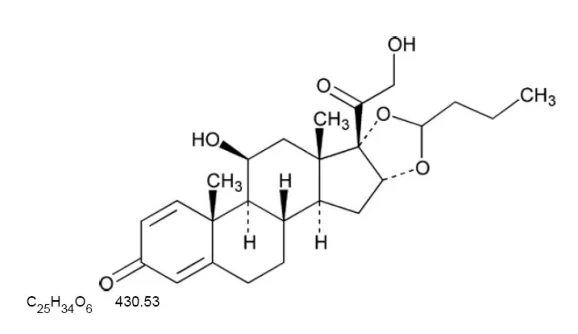
Molecular formula: C25H34O6
Molecular mass: 430.5 g / mol
Structural formula:
Physicochemical properties
Description: UCERIS rectal foam contains budesonide, a non-halogenated synthetic glucocorticoid, as the active ingredient. It is a mixture of the 2 epimers (22S: 22R (1:1 to 1.5) differing in the position of an acetal chain.
Budesonide is designated chemically as (RS)-11β, 16α, 17,21 tetrahydroxypregna-1,4-diene3,20-dione cyclic 16,17-acetal with butyraldehyde.
13 CLINICAL TRIALS
13.1 Trial Design and Study Demographics
The safety and efficacy of UCERIS rectal foam were evaluated in 2 replicate, randomized, double-blind, placebo-controlled, multi-center trials (Studies BUCF3001 and BUCF3002).
Participants in the trials were adult patients with active mild-to-moderate distal ulcerative colitis with disease extending at least 5 cm but no further than 40 cm from the anal verge (confirmed by endoscopy). To be eligible, patients had to have a Modified Mayo Disease Activity Index (MMDAI) score between 5 and 10, inclusive, a rectal bleeding subscore of 2 or 3, and an endoscopy subscore of 2 or 3. The MMDAI score ranges from 0 to 12 and has 4 subscales as described in Table 5.
Table 5. Modified Mayo Disease Activity Index (MMDAI)
| Stool frequency a | Rectal Bleeding b | Endoscopy/Sigmoidoscopy | Physician’s Global Assessment c |
0: = Normal (Normal number of stools per day for this patient 1: 1 to 2 more than normal 2: 3 to 4 more than normal 3: ≥5 more than normal | 0 = no blood seen 1 = streaks of blood w/stool < half the time 2 = obvious blood w/stool most of time 3 = blood alone | 0 = normal or inactive disease 1 = mild (erythema, decreased vascular patternd) 2 = moderate (marked erythema, absent vascular pattern, friability, erosions) 3 = severe disease (spontaneous bleeding, ulceration) | 0 = normal 1 = mild disease 2 = moderate disease 3 = severe disease |
- a. Each patient served as his or her own control to establish the degree of abnormality of the stool frequency.
- b. The daily bleeding score represented the most severe bleeding of the day.
- c. The physician’s global assessment acknowledged the 3 other criteria, the patient’s daily record of abdominal discomfort and general sense of well-being, and other observations, such as physical findings and the patient’s performance status.
- d. The Mayo Index, “friability” was deleted from an endoscopy score of 1. With this modification, the presence of friability was indicative of an endoscopy score of 2 or 3.
Oral and rectal corticosteroids, and rectal 5-aminosalicylic acid (5-ASA) products were prohibited during the course of the trials but were allowed as rescue therapy. Oral 5-ASA products were allowed at doses ≤ 4.8 grams/day.
In total, 546 subjects were randomized the combined two trials: 267 subjects to UCERIS rectal foam and 279 subjects to placebo. Patients received UCERIS rectal foam 2 mg or placebo twice daily for 2 weeks followed by once daily for 4 weeks.
In the combined studies, the mean age was 44 years and 42 years, in the UCERIS and placebo groups, respectively. Most patients were females (59% with placebo, and 54% with UCERIS), and 8% of patients were ≥ 65 years of age in the UCERIS group (n=21), as compared to 4% in the placebo group. Approximately 90% were Caucasian.
The majority of patients had a baseline diagnosis of proctosigmoiditis (71%), and the remaining had a baseline diagnosis of proctitis.
Baseline mean MMDAI total score was 7.9 and 8.0 in the UCERIS rectal foam group and placebo group, respectively. The mean of the subscores at baseline were not significantly different by treatment groups: approximately 1.8, 2.1, and 2.1 for the stool frequency subscore, bleeding subscore, and endoscopy subscore, respectively.
Concomitant oral 5-ASA use at baseline was 59% and 51% in Studies BUCF3001 and BUCF3002, respectively.
The primary endpoint was the proportion of subjects who were in remission after 6 weeks of treatment. Remission was defined as a decrease or no change in the stool frequency subscore from baseline, a rectal bleeding subscore of 0, and an endoscopy score of 0 or 1.
13.2 Study Results
In each trial (Study BUCF3001 and Study BUCF3002), a significantly higher proportion of patients in the UCERIS rectal foam group than in the placebo group were in remission at Week 6 (pooled p<0.0001) and had a rectal bleeding subscore of 0 at Week 6 (pooled p<0.0001) (Table 6).
| Table 6 - Efficacy Results: Studies BUCF3001 and BUCF3002 | ||||
| Efficacy Endpoint | Study BUCF3001 | |||
UCERIS Rectal Foam N=133 | Placebo N=132 | p-valueb | Treatment Difference (95% CI) | |
| Remission at Week 6a | 38.3% | 25.8% | 0.0322 | 12.6% (1.5%, 23.7%) |
| Rectal Bleeding subscore = 0 at Week 6 | 46.6% | 28.0% | 0.0020 | 18.6% (7.2%, 30%) |
| Study BUCF3002 | ||||
UCERIS Rectal Foam N=134 | Placebo N=147 | p-valueb | Treatment Difference (95% CI) | |
| Remission at Week 6a | 44.0% | 22.4% | <0.0001 | 21.6% (10.8%, 32.4%) |
| Rectal Bleeding subscore = 0 at Week 6 | 50.0% | 28.6% | <0.0001 | 21.4% (10.3%, 32.6%) |
a Remission was defined as an endoscopy subscore of 0 or 1, a rectal bleeding subscore of 0, and a decrease or no change in stool frequency subscore from baseline.
b p-values obtained from the Cochran-Mantel-Haenszel (CMH) test.
CI: Confidence Interval
In Study BUCF3001, the percentage of patients with endoscopy subscore of 0 or 1 at Week 6 was 55.6% in the UCERIS rectal foam group versus 43.2% in the placebo group. In Study BUCF3002, the corresponding percentage were 56.0% in the UCERIS rectal foam group versus 36.7% in the placebo group.
14 NON-CLINICAL TOXICOLOGY
General Toxicity
The acute and chronic toxicity of budesonide has been evaluated in mice, rats, dogs, and monkeys after oral, intravenous, intraperitoneal and subcutaneous administration. Published data indicate that the acute toxicity of budesonide depends on the route of administration. Mortality was seen at substantially lower doses after i.v., i.p. and s.c. administration compared to oral administration. The LD50 values ranged between 53.6 and 173 mg/kg for s.c. administration, between 98.9 and 320 mg/kg for i.v. administration and between 138 and 300 mg/kg for the i.p. route. In contrast, after oral administration, LD50 values between >3200 mg/kg and >10,000 mg/kg were obtained. This likely reflects low systemic bioavailability due to extensive first-pass effect in the liver. In addition to acute toxicity studies conducted with budesonide, the acute toxicity of intravenously-administered 11β,16α-dihydroxy-androsta-1,4-diene-3,17-dione (DHADD), the main degradation product of budesonide, was evaluated in mice. Results showed that while DHADD exhibits acute toxicity following IV administration at a lower dose in comparison with budesonide (LD50: 150 mg/kg for DHADD versus 320 mg/kg for budesonide), this LD50 is extremely high in comparison to DHADD doses associated with therapeutic use of 2 mg budesonide once or twice daily.
Toxicity profiles of budesonide after chronic exposure were typical of high-dose glucocorticosteroids and included atrophy of the thymus, adrenals and lymph nodes, gastric ulcerations, decreases in white blood cell counts, depression of the hypothalamic pituitary adrenal (HPA) axis, increased liver glycogen, and gastrointestinal hemorrhage. The no observed adverse effect level (NOAEL) in rats was > 5 mcg/kg/day given subcutaneously. Twice-daily rectal administration of budesonide foam was well tolerated at doses up to 4 mg/day in 6- and 39-week pivotal repeat dose toxicity studies in dogs, with no local adverse effects on rectal tissues. Orally administered budesonide (capsules and extended-release tablets) was well tolerated in monkeys dosed at 18 mg/day for 28 days.
Carcinogenicity
Carcinogenicity studies with budesonide were conducted in rats and mice.
In a 2-year study in Sprague-Dawley rats, budesonide caused a statistically significant increase in the incidence of gliomas in male rats at an oral dose of 50 mcg/kg (approximately 0.12 times the recommended intrarectal dose of 4 mg/day in humans, based on the body surface area). In addition, there were increased incidences of primary hepatocellular tumors in male rats at 25 mcg/kg (approximately 0.06 times the recommended intrarectal dose of 4 mg/day in humans, based on the body surface area) and above. No tumorigenicity was seen in female rats at oral doses up to 50 mcg/kg (approximately 0.12 times the recommended intrarectal dose of 4 mg/day in humans, based on the body surface area).
In an additional 2-year study in male Sprague-Dawley rats, budesonide caused no gliomas at an oral dose of 50 mcg/kg (approximately 0.12 times the recommended intrarectal dose of 4 mg/day in humans, based on the body surface area). However, it caused a statistically significant increase in the incidence of hepatocellular tumors at an oral dose of 50 mcg/kg (approximately 0.12 times the recommended intrarectal dose of 4 mg/day in humans, based on the body surface area). The concurrent reference glucocorticosteroids (prednisolone and triamcinolone acetonide) showed similar findings.
In a 91-week study in mice, budesonide caused no treatment-related carcinogenicity at oral doses up to 200 mcg/kg (approximately 0.24 times the recommended intrarectal dose of 4 mg/day in humans, based on the body surface area).
Genotoxicity
Budesonide showed no evidence of mutagenic potential in the Ames test, the mouse lymphoma cell forward gene mutation (TK+/-) test, the human lymphocyte chromosome aberration test, the Drosophila melanogaster sex-linked recessive lethality test, the rat hepatocyte UDS test or the mouse micronucleus test.
Reproductive and Developmental Toxicology
In subcutaneous embryofetal development studies, fetal loss, decreased pup weights, and skeletal abnormalities were observed at a subcutaneous dose of 25 mcg/kg in rabbits (approximately 0.12 times the recommended human intrarectal dose of 4 mg/day, based on the body surface area) and 500 mcg/kg in rats (approximately 1.2 times the recommended human intrarectal dose of 4 mg/day, based on the body surface area).