


Product Monograph - Ultravist 240
INDICATIONS AND CLINICAL USE
ULTRAVIST (iopromide), provided in two strengths, is indicated for intravascular use to provide diagnostic information in a number of radiographic contrast procedures. It is also indicated for the visualization of various body cavities, eg, arthrography and hysterosalpingography.
ULTRAVIST 300 Computed tomography (CT)
Excretory urography
Pediatric excretory urography
Renal arteriography
Peripheral arteriography (bifemoral pelvis/leg)
Cerebral arteriography
Phlebography of the extremities
Arthrography
ULTRAVIST 370 Computed tomography (CT)
Excretory urography
Coronary arteriography (including PTCA), with or without left ventriculography
Pediatric angiocardiography
Arthrography
CONTRAINDICATIONS
ULTRAVIST (iopromide) is not indicated for use in myelography, cerebral ventriculography, and cisternography.
ULTRAVIST should not be administered to patients with known hypersensitivity to the drug, or with manifest hyperthyroidism.
WARNINGS
Contrast media-induced nephrotoxicity, presenting as transient impairment of renal function, may occur after intravascular ULTRAVIST administration. Patients with pre-existing renal impairment, diabetes mellitus, sepsis, hypotension, dehydration, cardiovascular disease, elderly patients, and patients with multiple myeloma, hypertension, patients on medications which alter renal function and patients with hyperuricemia, are at increased risk of this condition. Patients with both renal impairment and diabetes are at the highest risk for contrast media-induced nephrotoxicity.
ULTRAVIST should only be administered to patients with a history of renal or combined renal and hepatic impairment after careful risk/benefit assessment by the prescriber. The general health condition and co-morbidity of the patients as well as the medical need for a contrast enhanced examination should be assessed. ULTRAVIST should only be used where the benefit clearly outweighs the risk. In patients with renal impairment, postpone a new contrast medium examination until renal function returns to pre-examination levels.
Nonionic iodinated contrast media inhibit blood coagulation less than ionic contrast media. Clotting has been reported in vivo and in vitro when blood remains in contact with syringes, catheters or tubes containing nonionic contrast media. Nonionic contrast media are not suitable flush solutions.
Serious, rarely fatal, thromboembolic events causing myocardial infarction and stroke have been reported during angiographic procedures with both nonionic and ionic contrast media. Therefore, meticulous intravascular administration technique is necessary, particularly during angiographic procedures, to minimize thromboembolic events. Numerous factors, including length of procedure, number of injections, catheter and syringe material, underlying disease state, and concomitant medication may contribute to the development of thromboembolic events (see PRECAUTIONS, Intravascular Use).
ULTRAVIST (iopromide) has been associated with serious and fatal reactions. Therefore, clear indication and evaluation of the benefit/risk ratio for every patient should precede each examination with contrast media. Also, it is of utmost importance that adequate facilities and appropriate personnel be readily available and a course of action be planned in advance for the immediate treatment of any serious untoward reaction. Diagnostic procedures utilizing a radiopaque contrast agent should be conducted only by a physician with the requisite training and a thorough knowledge of the particular procedure to be performed. The physician must also be thoroughly familiar with the emergency treatment of all adverse effects.
PRECAUTIONS
General
As with other iodinated contrast agents, the use of ULTRAVIST (iopromide) contrast enhancement may obscure some lesions which were seen on previously unenhanced CT scans.
Because unenhanced scanning may provide adequate diagnostic information in the individual patient, the decision to employ contrast enhancement, which may be associated with risk and increased radiation exposure, should be based upon a careful evaluation of clinical, other radiological, and unenhanced CT findings. Careful optimization of contrast and radiation parameters can decrease radiation exposure.
Caution is advised in patients with cardiac and circulatory insufficiency, hypertension, pheochromocytoma, cerebral arteriosclerosis, latent hyperthyroidism, severe impairment of hepatic or renal function, pulmonary emphysema, diabetes with renal dysfunction requiring treatment, cerebral arterial spasm, bland nodular goiter, multiple myeloma or other paraproteinemias, and renal transplant.
Avoid angiography whenever possible in patients with homocystinuria because of the risk of inducing thrombosis and embolism.
Pronounced states of excitement, anxiety and pain may increase the risk of side effects or intensify contrast medium-related reactions. Care should be taken to minimize the state of anxiety in such patients.
Sensitivity testing using a small test dose of contrast medium is not recommended as it has no predictive value. Furthermore, sensitivity testing itself has occasionally led to serious and even fatal hypersensitivity/anaphylactoid reactions.
Cardiovascular
Patients with congestive heart failure receiving concurrent diuretic therapy may have relative intravascular volume depletion, which may affect the renal response to the contrast agent osmotic load. Observe such patients for several hours following the procedure to detect delayed hemodynamic renal function disturbances.
Hypersensitivity
Before any contrast medium is injected, the patient should be questioned for a history of allergy (eg, shellfish), sensitivity to iodine or to radiographic media, previous reaction to contrast media, and bronchial asthma, as the reported incidence of hypersensitivity/anaphylactoid reactions to contrast media (including severe reactions) are higher in patients with these conditions. However, such reactions are irregular and unpredictable in nature. ULTRAVIST can also be associated with hypersensitivity/anaphylactoid or other idiosyncratic reactions characterized by cardiovascular, respiratory, and cutaneous manifestations. Hypersensitivity/anaphylactoid reactions ranging from mild to severe reactions including shock are possible (see ADVERSE REACTIONS). Most adverse reactions to contrast agents appear within 30 minutes after the start of their injection, but a delayed reaction may occur hours or days after an injection. Premedication with a corticosteroid regimen may be considered in patients with an increased risk of acute hypersensitivity/anaphylactoid reactions such as patients with a previous moderate or severe acute reaction, or patients with asthma or an allergy requiring medical treatment. However, corticosteroids should not be mixed in the same syringe with any contrast medium because of potential chemical incompatibility. Treatment with beta-blockers or general anesthesia increases the incidence and may aggravate adverse reactions, particularly in people with asthma. Patients who experience hypersensitivity/anaphylactoid reactions while taking beta-blockers may be resistant to treatment effects of beta agonists. In the event of a severe hypersensitivity/anaphylactoid reaction, patients with cardiovascular disease are more susceptible to serious or even fatal outcomes. Due to the possibility of severe hypersensitivity/anaphylactoid reactions after administration, postprocedure observation of the patient is recommended. Preparedness for instituting emergency measures is necessary for all patients.
Renal
Renal function should be assessed before injecting ULTRAVIST. ULTRAVIST is cleared by glomerular filtration; patients with renal insufficiency have increased systemic exposure to ULTRAVIST as compared to patients with normal renal function. Exercise caution and use the lowest necessary dose of ULTRAVIST in patients with renal insufficiency. Before ULTRAVIST is administered, patients should be fully assessed and precautions must be taken in patients with renal impairment. Implementation of prevention strategies is considered to be the best approach to reducing development of contrast media-induced nephrotoxicity.
Acute renal insufficiency or failure may occur following ULTRAVIST administration, particularly in patients with pre-existing renal impairment, sepsis, hypotension, dehydration, advanced vascular disease, congestive heart disease, diabetes mellitus, multiple myeloma or other paraproteinacious diseases, patients on medications which alter renal function, and the elderly with age-related renal impairment.
Adequately hydrate patients prior to and following ULTRAVIST administration in order to minimize the risk of contrast media-induced nephrotoxicity. Patients on dialysis, if without residual renal function, may receive ULTRAVIST for radiological procedures as iodinated contrast media are cleared by the dialysis process.
Please see DOSAGE AND ADMINISTRATION, Special Populations, Patients with renal impairment: for additional information.
Endocrine and Metabolism
Thyroid Dysfunction
Ultravist, like all other iodinated contrast median (ICM), may induce changes in thyroid function in some patients. Transient hyperthyroidism or hypothyroidism has been reported following iodinated contrast media administration to adult and pediatric patients. Decreased levels of thyroxine (T4) and triiodothyronine (T3) and increased levels of TSH were reported after exposure to ICM in infants, especially preterm infants, which remained for up to a few weeks or even more than a month (see ADVERSE REACTIONS). Some patients were treated for hypothyroidism (see PRECAUTIONS, Special Populations, Infants:)
Assessment of thyroid function may be obscured for several weeks following the administration of ULTRAVIST.
Reports of thyroid storm after the intravascular use of iodinated radiopaque agents in patients with hyperthyroidism or with an autonomously functioning thyroid nodule suggest that this additional risk be evaluated in appropriate patients prior to the use of ULTRAVIST.
For neonates, especially preterm infants, who have been exposed to ULTRAVIST either through the mother during pregnancy or in the neonatal period, it is recommended to monitor thyroid function, as exposure to excess iodine may cause hypothyroidism, possibly requiring treatment.
Patients with pheochromocytoma may be at an increased risk to develop a hypertensive crisis. Administer iodinated contrast agents with extreme caution in patients with known or suspected of having pheochromocytoma. Inject the minimum amount of contrast necessary. Assess the blood pressure throughout the procedure and have measures for treatment of a hypertensive crisis readily available.
Hepatic/Biliary/Pancreatic
Renal toxicity has been reported in a few patients with liver dysfunction who were given an oral cholecystographic agent followed by intravascular contrast agents. Administration of ULTRAVIST should be postponed in patients who have to undergo oral cholecystography.
Hematologic
Contrast agents may promote sickling in individuals who are homozygous for sickle cell disease when administered intravascularly.
Neurologic
ULTRAVIST should be administered intravascularly with caution in situations in which there may be a reduced seizure threshold, such as a previous history of seizures and the use of certain concomitant medication (eg, antidepressants, antipsychotics and neuroleptics). Patients with seizure history or other neurologic disorders may be at increased risk to have seizures and neurological complications in relationship to ULTRAVIST administration. Neurological complications are more frequent in cerebral angiography and related procedures.
Special attention should be paid to patients with increased intracranial pressure, disrupted blood-brain barrier (tumor, subarachnoid hemorrhage, transient ischemic attack, cerebral thrombosis, ischemia) or any condition whereby the presence of contrast material in the vessels is prolonged. Serious neurological sequelae (stroke, aphasia, cortical blindness, convulsions) may occur following intraarterial or intravascular infusion of contrast media. In patients with normal blood-brain barriers and renal failure, iodinated contrast agents have been associated with blood-brain barrier disruption and accumulation of contrast in the brain. Factors which increase blood-brain barrier permeability facilitate the passage of the contrast medium into cerebral tissue, possibly leading to CNS reactions. The benefit/risk ratio of the procedure has to be evaluated and the amount of contrast medium necessary to obtain a diagnostic picture kept to a minimum.
The administration of ULTRAVIST may aggravate the symptoms of myasthenia gravis.
Special Populations
Pregnant Women:
The safe use of ULTRAVIST during pregnancy has not been established. Therefore, it should not be used unless the benefits outweigh the risks.
Reproduction studies performed with iopromide in rats and rabbits at doses up to 3.7 gI/kg (2.2 times the maximum recommended dose for a 50 kg human, or approximately 0.7 times the human dose following normalization of the data to body surface area estimates) have revealed no evidence of direct harm to the fetus. Embryolethality was observed in rabbits that received 3.7 gI/kg, but this was considered to have been secondary to maternal toxicity. Adequate and well-controlled studies in pregnant women have not been conducted.
Nursing Women:
It is not known whether ULTRAVIST is excreted in human milk. However, many injectable contrast agents are excreted unchanged in human milk. Although it has not been established that serious adverse reactions occur in nursing infants, caution should be exercised when intravascular contrast agents are administered to nursing women because of potential adverse reactions. If the use of ULTRAVIST is considered necessary in a nursing mother, it is suggested to discontinue breast feeding for 48 hours. (see PRECAUTIONS, Endocrine and Metabolism)
Pediatrics:
Pediatric patients at higher risk of experiencing an adverse reaction during and after administration of any contrast agent include pediatric patients with asthma, a sensitivity to medication and/or allergens, cyanotic and acyanotic heart disease, congestive heart failure, or a serum creatinine greater than 1.5 mg/dL (132.6 μmol/L).
Optimal doses of ULTRAVIST injection have not been established because different injection volumes, concentrations, and injection rates were not studied. The relationship of the volume of injection with respect to the size of the target vascular bed has not been established. The potential need for dose adjustment on the basis of immature renal function has not been established. In the pediatric population, the pharmacokinetic parameters have not been established.
Exercise caution in selecting the dose. Lower rates of injection of ULTRAVIST are recommended for use in the pediatric population.
Infants:
Decreased levels of thyroxine (T4) and triiodothyronine (T3) and increased level of TSH were reported after exposure to ICM in infants, especially preterm infants, which remained for up to a few weeks or more than a month (see ADVERSE REACTIONS). Hypothyroidism in infants may be harmful for growth and development, including mental development and may require treatment. Thyroid function in infants exposed to ICM should therefore be evaluated and monitored until thyroid function is normalized.
Geriatrics:
Elderly patients may present a special risk in the use of radiographic contrast media. These patients may have compromised renal and cardiac function and may be taking medication (eg, beta-blockers) which may make them more susceptible to the potentially harmful effects of procedures involving the use of contrast agents.
Please see DOSAGE AND ADMINISTRATION, Special Populations, Elderly population (aged 65 years and above): for additional information.
Intravascular Use
ULTRAVIST produces less circulatory osmotic load than ionic contrast agents; however, it can produce significant hemodynamic disturbances especially in patients with reduced cardiac reserve. The volume of injection should be minimized and the patient's vital signs should be continuously monitored for several hours following the procedure to detect delayed hemodynamic disturbances in these patients. Hypotension should be corrected promptly as it can lead to serious arrhythmias. Special care regarding dosage should be observed in patients with right ventricular failure, pulmonary emphysema, pulmonary hypertension or a stenotic pulmonary vascular bed because serious hemodynamic changes may occur in these individuals. Patients with significant cardiac disease or severe coronary artery disease are at an increased risk of developing clinically relevant hemodynamic changes and arrhythmia. The intravascular injection of ULTRAVIST may precipitate pulmonary edema in patients with heart failure.
Mesenteric necrosis, acute pancreatitis, renal shutdown and serious neurologic complications including spinal cord damage and hemiplegia have been reported following inadvertent injection of a large part of the aortic dose of an ionic contrast medium directly into an aortic branch or arterial trunk.
There are inherent dangers associated with catheter manipulation, contrast medium injection and angiographic procedures. Angiography may be associated with local and distal organ damage, ischemia, thromboembolism and organ failure including stroke, brachial plexus palsy, chest pain, myocardial infarction, sinus arrest, and hepato-renal function abnormalities. For these reasons, meticulous angiographic techniques are recommended, including close attention to guide wire and catheter manipulation, use of manifold systems and/or three-way stopcocks, frequent catheter flushing with heparinized saline solutions, and minimizing the length of the procedure. In angiographic procedures, consider the possibility of dislodging plaques or damaging or perforating the vessel wall with resultant pseudoaneurysms, hemorrhage at puncture site, dissection of coronary artery during catheter manipulations and contrast agent injection. Fluoroscope guidance is to be used to place the catheter. The physicochemical properties of the contrast agent, the dose and the speed of injection can influence the reactions. Test injections to ensure proper catheter placement are suggested. Increased thrombosis and activation of the complement system has also occurred. The possibility of these occurrences should be borne in mind during the procedure.
For coronary arteriography and left ventriculography, specialized personnel, and adequate equipment and facilities for immediate resuscitation and cardioversion are necessary. Monitor electrocardiograms and vital signs throughout the procedure.
Exercise care when performing venography in patients with suspected thrombosis, phlebitis, severe ischemic disease, local infection, venous thrombosis or a totally obstructed venous system.
Clotting may occur when blood remains in contact with syringes containing iodinated contrast agents.
Pulsation must be present in the artery to be injected. Extreme caution is therefore advised for patients considered for angiography, particularly those suspected of having thromboangiitis obliterans (Buerger's disease), since vascular procedures may induce severe arterial spasm.
In intraarterial administration, caution is advisable in patients with suspected thrombosis, ischemic disease, local infection, a totally obstructed vascular system, or severe ischemia associated with ascending infection or advanced arteriosclerosis. With the use of conventional ionic contrast media, occasional serious neurologic complications, including paraplegia, have been reported in patients with aorto-iliac or femoral artery obstruction, abdominal compression, hypotension or hypertension, and following the injection of vasopressors.
When large individual doses are administered, an appropriate time interval should elapse between injections to allow any hemodynamic disturbances to subside. Hemodynamic changes are likely to be more pronounced following repeated injections given in rapid succession.
Following arterial catheterization and injection, pressure hemostasis is advisable with immobilization of the limb for several hours to prevent hemorrhage from the site of arterial puncture.
Drug Interactions
Drug-Drug Interactions
Interleukins are associated with an increased prevalence of delayed hypersensitivity/anaphylactoid reactions after iodinated contrast agent administration. These reactions include flu-like symptoms, fever, chills, nausea, vomiting, pruritus, rash, diarrhea, hypotension, edema, oliguria, and joint pain.
Biguanides (metformin): In patients with acute kidney failure or severe chronic kidney disease, biguanide elimination can be reduced leading to accumulation and the development of lactic acidosis. As the application of ULTRAVIST can lead to renal impairment or an aggravation of renal impairment, patients, especially those with prior renal impairment, treated with metformin may be at an increased risk of developing lactic acidosis. As a precaution, in patients with an eGFR < 45 mL/min/1.73m2, biguanides should be discontinued 48 hours prior to non-urgent contrast injections or at the time of the contrast medium examination and withheld for 48 hours after the administration of contrast medium and reinstated only after adequate renal function remains stable (less than 25% increase compared to baseline creatinine). (see PRECAUTIONS, Renal)
Radioisotopes: Diagnosis and treatment of thyroid disorders with thyrotropic radioisotopes may be impeded for up to several weeks after administration of ULTRAVIST due to reduced radioisotope uptake.
Drug-Laboratory Test Interactions
Thyroid Function Tests: The results of protein-bound iodine and radioactive iodine uptake studies, which depend on iodine estimation, will not accurately reflect thyroid function for at least 16 days following administration of iodinated contrast agents. However, thyroid function tests which do not depend on iodine estimations, for example, T3 resin uptake and total or free thyroxine (T4) assays are not affected.
Laboratory Assay of Coagulation Parameters, Fibrinolysis and Complement System: The effect of iopromide on coagulation factors in in vitro assays increased with the administered dose. Coagulation, fibrinolysis, and complement activation were evaluated with standard citrated human plasma in the following assays: thrombin time, thrombin coagulase time, calcium thromboplastin time, partial thromboplastin time, plasminogen, thrombin, alpha-2 antiplasmin and Factor XIIa activity. Thrombin inhibition was almost complete. Data on reversibility are not available. The thrombin time increased from approximately 20 seconds at an iopromide concentration of 10 mg I/mL, up to 100 seconds at an iopromide concentration of 70 mg I/mL.
The PTT increased from approximately 50 seconds at an iopromide concentration of 10 mg I/mL, up to approximately 100 seconds at an iopromide concentration of 70 mg l/mL. A similar increase was noted in the thrombin coagulase time. Lesser effects were noted in the calcium thromboplastin time. Coagulation time increased from
13.5 to 23 seconds at the highest iopromide concentration of 70 mg I/mL. The Hageman factor split products decreased by about 20% over the range of 10 to 70 mg l/mL of iopromide. Plasminogen was relatively stable. There was no evidence of activation of fibrinolysis. The complement alternate pathway was activated. Factor B conversion increased in a dose dependent manner. The duration of these effects was not studied.
In vitro studies with human blood showed that iopromide had a slight effect on coagulation and fibrinolysis. No Factor XIIa formation could be demonstrated. The complement alternate pathway also can be activated.
ADVERSE REACTIONS
Adverse Drug Reaction Overview
Adverse reactions reported with ULTRAVIST (iopromide) have generally been less frequent than with some commonly used iodinated compounds. Adverse reactions in association with the use of iodinated contrast media are usually mild to moderate and transient in nature. However, all side effects and toxicity associated with this class of compound are possible during the use of ULTRAVIST, including severe and life-threatening reactions as well as death.
Careful patient observation for adverse reactions is recommended in the use of all contrast media. Reactions accompanying use may vary with the dosage, the technique of administration, the procedure and the underlying condition of the patient. Adverse reactions generally occur within 30 minutes after injection but some may be delayed or of long-lasting nature. These reactions include: laryngospasm, bronchospasm, wheezing, dyspnea, and status asthmaticus; angioedema, subglottic edema and signs of airway obstruction; anaphylactic shock; cardiovascular collapse with peripheral vasodilation, hypotension, tachycardia, dyspnea, cyanosis, sweating, pallor, ventricular fibrillation and cardiac arrest; CNS stimulation or depression with agitation, convulsions, coma and death. Severe life-threatening reactions to iodinated contrast media require appropriate emergency measures.
Many life-threatening reactions begin with only mild symptoms such as nasal congestion, sneezing, watery eyes, skin erythema, or a vague sense of discomfort. It is therefore extremely important that all patients be watched closely until their symptoms have abated. The symptoms, which occur regardless of the amount of contrast medium administered and the mode of administration, can indicate incipient shock. Administration of the contrast medium must then be interrupted immediately and, if necessary, specific therapy initiated intravenously. In the case of intravenous administration, use of a flexible indwelling catheter is therefore recommended.
The most frequently observed adverse drug reactions (>4%) in patients receiving ULTRAVIST are headache, nausea, and vasodilation.
The most serious adverse drug reactions in patients receiving ULTRAVIST are anaphylactoid shock, respiratory arrest, bronchospasm, laryngeal edema, pharyngeal edema, asthma, coma, cerebral infarction, stroke, brain edema, convulsion, arrhythmia, cardiac arrest, myocardial ischemia, myocardial infarction, cardiac failure, bradycardia, cyanosis, hypotension, shock, dyspnea, pulmonary edema, respiratory insufficiency and aspiration.
Clinical Trial Adverse Drug Reactions
A clinical trial dataset of 2398 patients was used to generate the adverse drug reaction profile of ULTRAVIST prior to market authorization in Canada. The following list of adverse reactions and their incidence is based on this dataset.
The adverse drug reactions listed below are also grouped by the following denotations:
a may be associated with injection site reaction
* life-threatening and/or fatal cases have been reported
| General Disorders and Administration Site Conditions | Incidence | ||
| Warmtha | (slight - moderate) | 36.4% | |
| (severe) | 3.0% | ||
| Paina | (slight to moderate) | 6.1% | |
| (severe) | 0.4% | ||
| Gastrointestinal Disorders | |||
| Nausea / Vomiting / Diarrhea | 2.3% | ||
Adverse reactions having an incidence of <1%:
Cardic Disorders: Tachycardia (0.3%); bradycardia* (0.1%); extrasystoles (0.1%); left bundle branch heart block (0.1%); anginal symptoms (0.1%); arrhythmia* (0.1%).
Eye Disorders: Blurred vision (0.1%); sensation of pressure in eyes (0.1%).
Immune System Disorders: Urticaria (0.8%); respiratory symptoms (0.3%): angioedema and lip swelling (0.1%); Quincke's edema (0.1%).
Nervous System Disorders: dysgeusia (0.4%); restlessness/anxiety (0.3%); headache (0.3%); paresthesia (0.2%): arm or face; hypoesthesia (0.1%); dizziness (0.1%); vertigo (0.1%); vegetative dystonia (0.1%).
Respiratory, Thoracic and Mediastinal Disorders: Respiratory symptoms (0.3%): sneezing, cough, bronchospasm*; sore throat (0.1%).
Vascular Disorders: hypotension* (0.4%); collapse/loss of consciousness (0.3%); hypertension (0.1%).
Other Reactions: knee swelling/pain (0.1%); shoulder pain (0.1%); venous pressure (0.1%); numbness (0.1%); shivers (0.1%); popliteal region tension (0.1%); septicemia (0.1%).
Postmarket Adverse Drug Reactions
Adverse drug reactions reported subsequent to market introduction in Canada are presented below and are also grouped by the following denotations:
a may be associated with injection site reaction
b associated with intravascular use only
* life-threatening and/or fatal cases have been reported
† Endocrine Disorders - Thyroid function tests indicative of hypothyroidism or transient thyroid suppression have been uncommonly reported following iodinated contrast media administration to adult and pediatric patients, including infants. Some patients were treated for hypothyroidism
| Cardiac disorders: | cardiac arrest*, cardiac rhythm or function disturbances, chest pain / discomfort, cyanosis*, cardiac failure*, myocardial ischemia* / infarction*, palpitations |
| Ear and labyrinth disorders: | hearing disorders, hearing disturbances |
| Endocrine disorders: † | thyroid disorder, thyrotoxic crisis |
| Eye disorders: | conjunctivitis, blurred / disturbed vision, lacrimation, photophobia, vision disturbances |
| Gastrointestinal disorders: | abdominal pain, dysphagia, swelling of the salivary glands, throat irritation |
General disorders and administration site conditions: | chills, edemaa, inflammation and soft tissue injury in case of extravasationa, malaise, pallor, warmtha |
| Immune system disorders: | anaphylactic reactions*, anaphylactoid reactions* / hypersensitivity*, anaphylactoid shock* |
| Investigations: | body temperature increased |
Musculoskeletal, connective tissue and bone disorders: | hypertonia, compartment syndrome in case of extravasationb |
| Nervous system disorders: | amnesia, cerebral ischemia / infarction*, coma*, convulsion*, hypoesthesia, paresis / paralysis, somnolence, speech disorders, speech disturbances, stroke*, transient cortical blindnessb, tremor, brain edema*b, vasovagal reactions, agitation, confusional state |
| Renal and urinary: | renal failureb, renal impairment |
| Respiratory, thoracic and Mediastinal disorders: | asthma*, dyspnea*, hoarseness, laryngeal*/pharyngeal*/tongue/face edema, laryngeal/pharyngeal spasm, mucosal swelling, pulmonary edema*, respiratory insufficiency*, respiratory arrest*, respiratory distress, rhinitis, transient disturbances in respiratory rate, aspiration* |
| Skin and subcutaneous tissue disorders: | erythema, bullous conditions (eg, Stevens-Johnson’s or Lyell syndrome), hyperhydrosis, pruritus, rash |
| Vascular disorders: | blood pressure disturbances, shock*, thromboembolic eventsb, thrombophlebitis, vasculitis (severe), vasodilatation, vasospasmb, venous thrombosis |
† Endocrine Disorders - Thyroid function tests indicative of hypothyroidism or transient thyroid suppression have been uncommonly reported following iodinated contrast media administration to adult and pediatric patients, including infants. Some patients were treated for hypothyroidism.
The majority of the reactions after myelography or use in body cavities occur some hours after the administration.
ULTRAVIST is not indicated for use intrathecally or for use in endoscopic retrograde cholangiopancreatography (ERCP) (see INDICATIONS AND CLINICAL USE).
The following ADRs have been reported for ULTRAVIST with intrathecal use:
Nervous system disorders: chemical meningitis and meningism
Based on experience with other nonionic contrast media, the following adverse drug reactions may occur if ULTRAVIST is administered intrathecally:
| General disorders and Administration site conditions: | back pain, injection site pain, micturition disorder, pain in extremities |
| Nervous system disorders: | aseptic meningitis, EEG abnormal, neuralgia, paraplegia |
| Psychiatric disorders: | psychosis |
In addition to the adverse drug reactions listed above, the following have been reported when ULTRAVIST is used for ERCP:
Endocrine: elevation of pancreatic enzyme levels, pancreatitis
SYMPTOMS AND TREATMENT OF OVERDOSAGE
For management of a suspected drug overdose, contact your regional Poison Control Center.
Intravascular Overdose:
Symptoms may include fluid and electrolyte imbalance, renal failure, cardiovascular and pulmonary complications. An overdose of ULTRAVIST (iopromide) should be treated by support of vital functions and prompt institution of symptomatic therapy.
ULTRAVIST is dialyzable. In the event of accidental intravascular overdose, water and electrolyte losses must be compensated by infusion.
DOSAGE AND ADMINISTRATION
General Information
Solutions of ULTRAVIST (iopromide), like those of other radiopaque contrast agents, should be at or close to body temperature when injected. As with other sterile parenteral products, ULTRAVIST should not be withdrawn from the vial except immediately prior to use (see WARNINGS). ULTRAVIST should not be mixed with other medicinal products to avoid the risk of possible incompatibilities. Any unused portion should be discarded.
For additional instructions see Stability and Storage Recommendations.
Vials containing contrast medium solutions are not intended for the withdrawal of multiple doses, with the exception of ULTRAVIST Pharmacy Bulk Vials (see AVAILABILITY OF DOSAGE FORMS, and DOSAGE AND ADMINISTRATION, DIRECTIONS FOR MULTIPLE DISPENSING FROM PHARMACY BULK VIALS). The rubber stopper should never be pierced more than once. The use of a cannula or needle with a long tip and a maximum diameter of 18 G is recommended for piercing the stopper and drawing up the contrast medium. With the exception of ULTRAVIST Pharmacy Bulk Vials (see DOSAGE AND ADMINISTRATION, DIRECTIONS FOR MULTIPLE DISPENSING FROM PHARMACY BULK VIALS), any contrast solution not used in one examination for a given patient is to be discarded.
In the case of abdominal angiography and urography, the diagnostic yield is increased if the bowels are empty of fecal matter and gas. It may be necessary to administer an enema or laxative in the evening prior to examination, provided purging of the bowels is not contraindicated.
In infants and young children, prolonged fasting, restriction of fluids and the administration of a laxative before the examination are contraindicated.
DIRECTIONS FOR MULTIPLE DISPENSING FROM PHARMACY BULK VIALS
The transferring of ULTRAVIST from Pharmacy Bulk Vials should be performed in a suitable work area, utilizing an aseptic technique. The container closure may be penetrated only one time, utilizing a suitable transfer device.
Once punctured, the withdrawal of container contents should be accomplished without delay. Any unused portion must be discarded.
Multiple dispensing from Pharmacy Bulk Vials is only intended for the following presentations:
- ULTRAVIST 300: 500 mL vial
- ULTRAVIST 370: 200 mL vial and 500 mL vial
Special Populations
Newborns (< 1 month) and infants (1 month to 2 years):
Young infants (age < 1 year) and especially newborns are susceptible to electrolyte imbalance and hemodynamic alterations. Care should be taken regarding the dose of contrast medium to be given, the technical performance of the radiological procedure and the patient status.
Elderly population (aged 65 years and above):
Middle-aged and elderly patients, without significantly impaired renal function, who received ULTRAVIST in doses corresponding to 9–30 g iodine, had mean steady-state volumes of distribution that ranged between 30–40 L. Mean total and renal clearances were between 81–125 mL/min and 70–115 mL/min respectively in these patients, and were similar to the values found in the young volunteers. The distribution phase half-life in this patient population was 0.1 hour, the main elimination phase half-life was 2.3 hours, and the terminal elimination phase half-life was 40 hours. The urinary excretion (97% of the dose) and fecal excretion (2%) was comparable to that observed in young healthy volunteers, suggesting that, compared to the renal route, biliary and/or gastrointestinal excretion is not significant for iopromide. (see PRECAUTIONS, Special Populations, Geriatrics:)
Patients with hepatic impairment:
Elimination of iopromide is not affected by impaired liver function as only about 2% of the dose is eliminated via feces and iopromide is not metabolized. No dosage adjustment is considered necessary in patients with hepatic impairment.
Patients with renal impairment:
Since iopromide is excreted almost exclusively in an unchanged form via the kidneys, the elimination of iopromide is prolonged in patients with renal impairment. Biliary excretion cannot be excluded in patients with severe renal impairment. Special attention should be paid to patients with impairment of both renal and hepatic functions (see WARNINGS). In order to reduce the risk of additional contrast media-induced renal impairment in patients with pre-existing renal impairment, the minimum possible dose should be used in these patients. (see PRECAUTIONS, Renal)
In patients with impaired renal function, the plasma half-life of iopromide is prolonged according to the reduced glomerular filtration rate.
In a clinical study, the effect of renal impairment on the pharmacokinetics and safety of iopromide was evaluated in a study with 22 patients with normal or impaired renal function. The total clearance was reduced to 49.4 mL/min/1.73 m2 (CV = 53%) in mildly and moderately impaired patients (CrCl: 30-80 mL/min/1.73 m2, N = 10 evaluable patients) and to 18.1 mL/min/1.73 m2 (CV = 30%) in severely impaired patients not dependent on dialysis (CrCl: 10-30 mL/min/1.73 m2 N = 3 evaluable patients) compared to 91.3 mL/min/1.73 m2 (CV = 27.3%) in the patients with normal renal function (CrCl: >80 mL/min/1.73 m2, N = 9 evaluable patients). This results in higher systemic exposure.
The mean terminal half-life is 6.1 hours (CV = 43%) in mildly and moderately impaired patients (CrCl: 30-80 mL/min/1.73 m2) and 11.6 hours (CV = 49%) in severely impaired patients not dependent on dialysis (CrCl: 10-30 mL/min/1.73 m2).
Intravascular administration of contrast media should, if possible, be done with the patient lying down. After the administration, the patient should be kept under observation for at least 30 minutes, since experience shows that the majority of all severe incidents occur within this time.
The recommended dosages of ULTRAVIST should not be exceeded. The volume of each individual injection is a more important consideration than the total dose used.
Determine the volume and concentration of ULTRAVIST to be used, taking into account factors such as age, body weight, size of the vessel and the rate of blood flow within the vessel; consider also extent of opacification required, structure(s) or area to be examined, disease processes affecting the patient, and equipment and technique to be employed. As with all iodinated contrast agents, lower doses may have less risk. The efficacy of ULTRAVIST below doses recommended has not been established.
EXCRETORY UROGRAPHY
Adults
Recommended doses for each concentration of ULTRAVIST:
ULTRAVIST 300: 40 - 70 mL
ULTRAVIST 370: 30 - 55 mL
The dose may be adjusted in special indications (eg, obese patients, impaired renal function), if necessary.
Children
The physiologically poor concentrating ability of the immature nephron necessitates the administration of relatively high doses of contrast medium in children.
The doses of ULTRAVIST 300 should not exceed:
Newborns (< 1 month): 4 mL/kg of body weight equivalent to 1.2 g I/kg.
Infants (1 month to 2 years): 3 mL/kg of body weight equivalent to about 1.0 g I/kg.
Children (2 to 11 years): 1.5 mL/kg of body weight equivalent to about 0.5 g I/kg.
COMPUTERIZED TOMOGRAPHY ( CT )
Cranial CT
The following doses are recommended and should not be exceeded:
ULTRAVIST 300: 70 - 140 mL
ULTRAVIST 370: 70 - 105 mL
Whole-body CT
In whole-body computerized tomography, the necessary doses of ULTRAVIST and the rates of administration depend on the organs under investigation, the diagnostic problem and, in particular, the different scan and image reconstruction times of the scanner.
Recommended doses for each concentration of ULTRAVIST:
ULTRAVIST 300: 100 - 150 mL
ULTRAVIST 370: 80 - 120 mL
ANGIOGRAPHY
The dosage of ULTRAVIST depends on the age, weight, cardiac output and general condition of the patient, the clinical problem, examination technique, and the nature and volume of the vascular region to be investigated. The following dosages may serve as a guide:
ULTRAVIST USUAL RECOMMENDED
CONCENTRATION SINGLE DOSE
PROCEDURE (mg I/mL) (mL/injection)
Cerebral Arteriography:
Aortic arch angiography 300 40 - 80
Retrograde carotid angiography 300 30 - 40
Common carotid 300 6 - 12
Internal carotid 300 5 - 12
External carotid 300 4 - 8
Vertebral artery 300 6 - 10
Aortography:
Thoracic aortography 300 50 - 80
Abdominal aortography 300 40 - 60
Peripheral angiography:
Selective arteriography 300 8 - 12
Aorto-femoral runoffs 300 40 - 80
Phlebography: 300 60 - 90
Angiocardiography:
Left ventriculography 370 30 - 60
Coronary arteriography 370 5 - 8
Pediatric Angiography
ULTRAVIST 370 mg I/mL is indicated for pediatric angiocardiography. Pediatric dosing is suggested proportional to body weight, and based on cardiac output and general condition of the patient, the clinical problem, examination technique, and the nature and volume of the vascular region to be investigated.
ARTHROGRAPHY
Intraarticular injections of contrast media should be monitored by fluoroscopy to ensure adequate injection technique and opacification while preventing over distention of the joint space. Excessive dilution of the contrast medium should be avoided.
ULTRAVIST USUAL RECOMMENDED
CONCENTRATION SINGLE DOSE
PROCEDURE (mg I/mL) (mL/injection)
Knee 300 5 - 11
370 5 - 11
PHARMACEUTICAL INFORMATION
Drug Substance
Structural Formula:
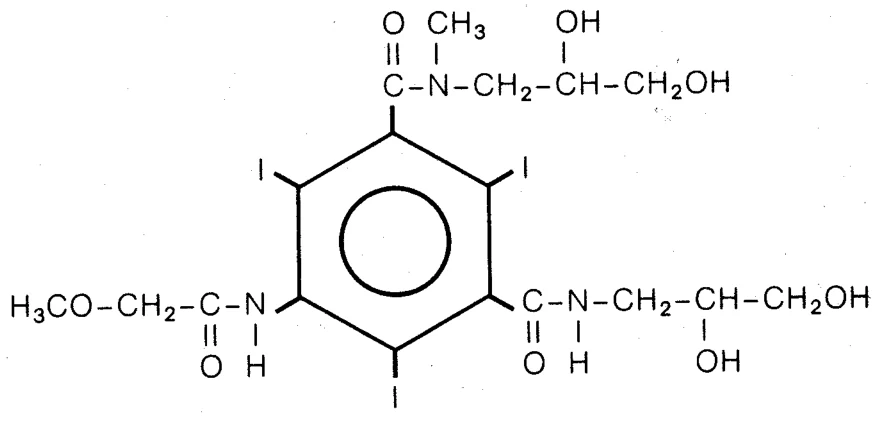
Molecular Formula: C18H24I3N3O8
Molecular Weight: 791.12
Chemical Name: 5-methoxyacetylamino-2,4,6-triiodoisophthalic acid[(2,3-dihydroxy-N-methylpropyl)-(2,3-dihydroxypropyl)] diamide
Non-medicinal Ingredients: calcium disodium edetate (EDTA), hydrochloric acid and tromethamine. Preservative-free. pH has been adjusted to between 6.5 and 8.0 with hydrochloric acid.
Physical Properties:
__________________________________________________________________
ULTRAVIST ULTRAVIST
300 370
____________________________________________________________________
Iodine concentration
(mg/mL) 300 370
Iopromide concentration
(mg/mL) 623.0 769.0
Viscosity (mPa•s or cp)
at 20ºC 8.7 20.1 at 37ºC 4.6 9.5
Osmotic pressure at 37ºC
(MPa) 1.59 2.02
(atm) 15.7 19.9
Osmolality at 37ºC
(osm/kg H2O) 0.61 0.77
Specific gravity at 37ºC 1.33 1.409
_____________________________________________________________________
Stability and Storage Recommendations
ULTRAVIST (iopromide) should be stored between 15°C and 30°C and protected from light.
ULTRAVIST should be visually inspected and used only if:
- it is clear and within the normal colorless to pale yellow range
- it contains no particulate matter (including crystals)
- the container does not appear to be defective
Since ULTRAVIST is a highly concentrated solution, crystallization (milky-cloudy appearance and/or sediment at bottom, or floating crystals) may occur very rarely.
Discard unused portions.
AVAILABILITY OF DOSAGE FORMS
ULTRAVIST (iopromide) is a sterile colorless to pale yellow solution of iopromide in water and contains no preservative. Solutions do contain tromethamine (0.24%) as a buffer and calcium disodium edetate (EDTA) 0.1 mg/mL as a sequestering agent. The pH has been adjusted to between 6.5 and 8.0 with hydrochloric acid.
ULTRAVIST 300 (iopromide 62.3%) provides 623 mg of iopromide per mL equivalent to 300 mg of organically bound iodine per mL. It is supplied in 50, 100, and 150 mL vials. Pharmacy Bulk Vials are supplied in 500 mL vials.
ULTRAVIST 370 (iopromide 76.9%) provides 769 mg of iopromide per mL equivalent to 370 mg of organically bound iodine per mL. It is supplied in 50, and 100 mL vials. Pharmacy Bulk Vials are supplied in 200 mL and 500 mL vials.a
a (Not all presentations may be available in Canada.)
PHARMACOLOGY
PHARMACODYNAMICS
Hemodynamics
In isolated perfused rabbit hearts, iopromide (370 : 1480 mg I) produced initial vasodilatation with increased coronary flow and a positive inotropic effect; ventricular fibrillation subsequently complicated these observations.
Anesthetized rats given a single intravenous administration of iopromide (1110 mg I/kg) showed increases in mean arterial pressure, maximum rate of increase in left ventricular pressure (dp/dt), cardiac minute volume, end diastolic pressure and myocardial oxygen consumption during the first 2 to 3 minutes post injection. Heart rate was transiently lowered immediately post injection and vascular resistance was reduced significantly. Extrasystoles occurred during the first 56 seconds post injection.
Cardiovascular effects in anesthetized cats given a single intravenous injection of iopromide 1110 mg I/kg included increases in blood pressure, end diastolic pressure, central venous pressure, pulmonary artery pressure, cardiac minute volume, and contractility; peripheral resistance was decreased and heart rate was lowered transiently.
Dogs injected with iopromide (3 g I) into the coronary arteries following cardiac catheterization demonstrated a positive inotropic effect and slightly decreased coronary sinus blood flow.
Lungs
Tests of lung and cardiovascular function in the guinea pig after intravenous iopromide administration (1-2 g I/kg) revealed an increased negativity of the expiratory intrapleural pressure, increased respiratory rate, decreased blood pressure, decreased compliance and increased airways resistance.
Arterial Tolerance
The ED50 of iopromide for femoral artery pain in the rat was greater than 3.0 g I/kg. The rat showed only slight behavioural anomalies after up to 3 g I/kg were administered by the carotid artery; little pain response was seen with femoral artery administration of up to 4 g I/kg. Iopromide concentrations greater than 320 mg I/mL were less painful than iohexol or iopamidol in the femoral artery.
Central Nervous System
Intracerebral administration of iopromide in the rat revealed an ED50 of 86 mg I/kg and an LD50 of 588 mg I/kg. Intracisternal administration in the rat resulted in an ED50 of 53 mg I/kg and an LD50 of 222 mg I/kg.
Intraarterial administration into the common carotid artery of the rat resulted in an ED50 of 2.3 g I/kg. Iopromide was better tolerated than iopamidol and meglumine ioglicinate.
Vertebral angiography in the rabbit was associated with greater brachycardia after iopromide administration (3.5 g I/animal) than after iopamidol or metrizamide at equivalent doses.
Renal
Radiography of the renal parenchyma in the dog following a single intravenous administration of iopromide 300 to 600 mg I/kg provided good to moderate visualization of the renal parenchyma. Plasma iodine concentrations after 300 mg I/kg i.v. were 2.6 to 3.0 mg I/m and decreased to 0.8 to 0.9 mg I/mL 20 minutes postadministration. After 600 mg I/kg i.v. plasma iodine concentrations were 5.2 to 6.2 mg I/mL and dropped to 1.5 - 2.0 mg I/mL within 20 minutes post administration. A decrease in hematocrit was also observed.
After renal arteriography in the rat, greater albuminuria was noted after administration of iopromide (400 mg I/kg) than in the controls; however, no statistically significant differences were noted between iopromide, iohexol and iopamidol in this respect.
In rabbits, the potential of iopromide to cause renal damage was determined after a single intravenous administration of 1 to 10.5 g I/kg. Findings included increased protein excretion, increased GGT, increased serum urea-N, increased serum creatinine and changes in SGOT, SGPT, and alkaline phosphatase levels. Kidney changes (tubular necrosis, pallor, dilated tubules) and increased kidney weight were also apparent. In white rabbits a single intravenous dose of iopromide (5 g I/kg) had a greater effect than iopamidol on serum creatinine, serum urea-N, urine protein and flow as well as on the occurrence of histological findings.
An investigation of renal function in rhesus monkeys after a single intravenous injection of iopromide (5 g I/kg) revealed no abnormalities.
Other
In vitro and in vivo investigations with iopromide revealed very little plasma protein binding (0.9%) and demonstrated only a slight influence on erythrocyte morphology in comparison with iosimide, metrizamide and ioglicinate. A low rate of lysozyme inhibition (ID50=142 mg I/mL), hemolysis inhibition (ID50=15.2 mg I/mL) and complement activation (ED50=176 mg I/mL) similar to that of other nonionic contrast media was also determined.
In one investigation, to determine histamine release from rat mast cells, contamination of the test substance (150 mg I/mL) caused an extremely high histamine release (82%); this investigation was non-reproducible. Histamine release in another investigation with rat mast cells was much lower (7%) and compared favorably with metrizamide and iopamidol.
PHARMACOKINETICS
Following a single intravenous injection of 125I-iopromide 1 and 10 g I/kg in rats, 56% and 26% of the dose, respectively, was excreted in the urine within 30 minutes. Ninety per cent of either dose was excreted in the urine, and 10% in the stool, by the seventh day after administration. The pre-injection isomeric ratio was unchanged and no metabolites were observed in urine or bile. Accumulation of iodine in the thyroid gland was noted in the rat after the radio-labelled drug was administered. In another experiment, the disappearance of 3H-iopromide from the thyroid was similar to that for other organs, indicating that the accumulation of iodine in the thyroid was not due to an accumulation of iopromide. The plasma half-life in the conscious rat was short at about 15 minutes.
In the dog the plasma half-life was 45 minutes and total plasma clearance was about 3 mL/min/kg, indicating primary elimination by glomerular filtration in the kidney. The apparent volume of distribution of iopromide corresponded to the extracellular compartment. No metabolites were apparent. The ratio of stereoisomers for the drug was unchanged in the urine.
In the rat 125I-iopromide appeared not to cross the placental barrier appreciably, although in rabbits, radioactivity which approximated 5-10% of the maternal plasma level was measured in the fetus.
TOXICOLOGY
Acute Toxicity
Iopromide, by single intracisternal injection, was less well tolerated in the rat than was metrizamide. The LD50 for iopromide was 222 mg I/kg and for metrizamide it was 325 mg I/kg (P ≤ 0.05). Toxic effects included various motor disturbances seen in all animals with survivors recovering within 48 hours.
In two studies in rats, the LD50 of iopromide was found to be 14.5 g I/kg and > 14.8 g l/kg, following a single intravenous injection. In weanling rats the LD50 of iopromide was 15.5 g I/kg following a single intravenous injection. Signs of toxicity included apathy, prone posture, spastic gait, ruffled fur and necrosis/discoloration at the injection site. Surviving rats were free of neurologic symptoms within 48 hours. Rats which died showed renal pallor, pulmonary edema and hydrothorax.
The intravenous LD50 of iopromide in mice was greater than 18.5 g I/kg. Signs of toxicity were similar to those seen in the rat. Additionally, paleness of the liver occurred in mice that died.
The LD50 following a single injection into the right carotid artery of rats was about 50% of the intravenous LD50. Seizures occurred in all animals after 10.0 g I/kg.
Injections of iopromide, metrizamide or iopamidol (3.5 g I/animal) into the vertebral artery of rabbits were equally well tolerated with little evidence of arterial (intracranial) spasm following any of these agents.
In the beagle dog the intravenous LD50 was greater than 10 g I/kg. Toxic effects included apathy, diuresis, blood-stained feces, cutaneous erythema, auricular vesiculation and swollen lips and eyelids. However, no dogs died and no abnormalities were seen at autopsy.
Subacute Toxicity
Iopromide was administered to rats and beagle dogs of both sexes for 4-5 weeks. No animals died and no severe adverse effects were recorded. Mild to moderate vacuolization of the hepatocytes in rats, and slight to moderate vacuolization of the proximal tubular epithelial cells in dogs were observed after 3.7 g I/kg
Local Tolerance
Local tolerance studies in rabbits after a single intravenous or intraarterial application into the ear vessels did not give any evidence for unequivocal local changes at the administration site.
After a single intramuscular injection, the same animal species showed slight local reactions, which were only slightly more marked than those observed after 0.9% (w/v) NaCl solution.
Reproduction and Teratology
Pregnant female rats, after daily intravenous administration (days 6 to 15 of gestation) with doses of 0.37, 1.11, and 3.7 g I/kg/day showed adverse local reactions from 1.11 g I/kg/day and a slight decline in body weight gain after 3.7 g I/kg/day. Fetal examinations revealed an increased incidence of minor skeletal anomalies at all doses and additional 14th ribs in the high dose group.
A similar investigation in the rabbit was invalid owing to an unacceptably high content of free amines in the test substance. Findings in the doe included convulsions and increased mortality. In the fetus findings included slight retardational effects in surviving animals, increased embryomortality, increased frequency of supernumerary 13th ribs and increased incidence of postural limb anomalies.
Female rabbits received doses of 0.37, 1.11, and 3.7 g I/kg/day on days 6-18 of gestation. Fetal observations included increased minor external anomalies, increased rate of retarded ossification of sternebrae at 1.11 g I/kg/day and above, as well as, decreased mean fetal weight and increased rate of minor visceral anomalies or variations at the highest dose. There was an increased mortality rate in does after 3.7 g I/kg/day.
Rabbits, administered dosages of 0.4, 1.2, 3.6 g I/kg/day, during days 6 to 18 of gestation, showed no change in general condition, mortality rate, or incidence of abortions. No effect was observed on the number, size, weight and sex of the fetuses or on pre-and postimplantational loss or incidence of fetal anomalies. Determination of gamma-glutamyl transferase in 24 h urine, urea nitrogen, and serum creatinine revealed no compound-related effects. There was no change in the kidney in respect to absolute or relative organ weight, or histology.
Mutagenicity
No positive mutagenic responses were observed for iopromide in the mouse during the micronucleus and dominant lethal tests. No evidence of mutagenicity was observed in the Ames test with Salmonella typhimurium. Similarly, there was no indication of clastogenic potential in the human lymphocyte test.
REFERENCES
- 1. Bettmann MA. Angiographic contrast agents: conventional and new media compared. AJR Am J Roentgenol. 1982;139(4):787-94.
- 2. Burbank FH, Brody WR, Hall A, Keyes G. A quantitative in vivo comparison of six contrast agents by digital subtraction angiography. Invest Radiol. 1982;17(6):610-6.
- 3. Cohan RH, Dunnick NR, Bashore TM. Treatment of reactions to radiographic contrast material. AJR Am J Roentgenol. 1988;151(2):263-70.
- 4. Farso Nielsen F, de Carvalho A, Hjollund Madsen E. Omnipaque and urografin in arthrography of the knee. Acta Radiol Diagn (Stockh). 1984;25(2):151-4.
- 5. Golmann K, Aulie A, Tornquist C, Almen T. Acute renal failure initiated by contrast media. Contrast Media in Radiology - First European Workshop - Proceedings. 1982:215-7.
- 6. Hagen B. Iohexol and iopromide--two new non-ionic water-soluble radiographic contrast media: randomized, intraindividual double-blind study versus ioxaglate in peripheral angiography. Fortschr Geb Rontgenstrahlen Nuklearmed Erganzungsbd. 1983;118:107-14.
- 7. Higgins CB. Overview and methods used for the study of the cardiovascular actions of contrast materials. Invest Radiol. 1980;15(6 Suppl):S188-93.
- 8. Ilett KF, Hackett LP, Paterson JW, McCormick CC. Excretion of metrizamide in milk. Br J Radiol. 1981;54(642):537-8.
- 9. Jacobsen T. The preclinical development of iohexol (Omnipaque). Farmakotherapi. 1982;3:45-7.
- 10. Kennedy C, Rickards D, Lee S, Sharp MB, Dawson P. A double-blind study comparing the efficiency, tolerance and renal effects of iopromide and iopamidol. Br J Radiol. 1988;61(724):288-93.
- 11. EC, Hang JH, Hamblin AE, Lyon SG, Howard M. Activation systems in contrast idiosyncrasy. Invest Radiol. 1980;15(6 Suppl):S2-5.
- 12. Mannesmann G, Muller B, Goedecke H, Maass B. Cardio- and hemodynamic characterization of X-ray contrast media after intravascular administration. Pharmacol Ther B. 1979;5(1-3):115-24.
- 13. Mutzel W, Siefert HM, Speck U. Biochemical-pharmacologic properties of iohexol. Acta Radiol Suppl. 1980;362:111-5.
- 14. Siefert HM, Press WR, Speck U. Tolerance to iohexol after intracisternal, intracerebral and intraarterial injection in the rat. Acta Radiol Suppl. 1980;362:77-81.
- 15. Skalpe IO. The toxicity of the non-ionic watersoluble contrast medium metrizamide (Amipaque) in selective vertebral angiography. An experimental study in rabbits. Neuroradiology. 1977;13(1):19-24.
- 16. Skalpe IO. The toxicity of the non-ionic water-soluble contrast media iohexol and metrizamide (Amipaque) in selective vertebral angiography. An experimental study in rabbits. Neuroradiology. 1981;20(5):235-9.
- 17. Speck U, Siefert HM, Klink G. Contrast media and pain in peripheral arteriography. Invest Radiol. 1980;15(6 Suppl):S335-9.
- 18. Speck U, Mannesmann G, Mützel W, Schroder G. Preliminary evaluation of new non-ionic contrast media. Radiology Today. 1981:45-9.
- 19. Speck U. [New intravenous contrast media for cholegraphy, urography and computerized tomography]. Rontgenpraxis. 1982;35(2):57-62.
- 20. Speck U, Mützel W, Press WR. Kidney toxicity testing in animals. Invest Radiol 1984;19(4 Suppl., ):S123.
- 21. Taenzer V, Meiisel P, Hartwig P. Urography with non-ionic contrast media: II. Diagnostic quality and tolerance of iopromide in comparison with ioxaglate. Fortschr Geb Rontgenstrahlen Nuklearmed Erganzungsbd. 1983;118:153-5.
- 22. Thomas ML, Creagh MF, Mahraj RP, Tung KT. A comparative trial of the tolerance and diagnostic quality of iopromide and iopamidol when used for leg phlebography. Vasa. 1988;17(4):273-4.
- 23. Waldron RL, 2nd, Bridenbaugh R, Purkenson M, Dempsey EW. The effect of angiographic contrast media at the cellular level in the brain. Radiology. 1973;108(1):187-9.
- 24. Waldron RL, 2nd, Bryan RN. Effects of contrast agents on the blood-brain barrier. An electron microscopic study. Radiology. 1975;116(1):195-8.
- 25. Wolf KJ, Steidle B, Skutta T, Mutzel W. Iopromide. Clinical experience with a new non-ionic contrast medium. Acta Radiol Diagn (Stockh). 1983;24(1):55-62.
- 26. E, Bohnlein K, Gailer H, Lindner R, Richter EI. Experiences with rayvist and iopromid in head and body CT. Fortschr Geb Rontgenstrahlen Nuklearmed Erganzungsbd. 1983;118:162-72.
- 27. Ben Saad M, Rohnean A, Sigal-Cinqualbre A, Adler G, Paul JF. Evaluation of image quality and radiation dose of thoracic and coronary dual-source CT in 110 infants with congenital heart disease. Pediatr Radiol. 2009;39(7):668-76
- 28. Manual on Contrast Media. American College of Radiology. Version 7, 2010.
- 29. Weber G, et al. Neonatal transient hypothyroidism: aetiological study. Italian Collaborative Study on Transient Hypothyroidism. Arch Dis Child Fetal Neonatal Ed. 1998 Jul;79(1):F70-2.
- 30. Linder N, et al. Iodine and hypothyroidism in neonates with congenital heart disease. Arch Dis Child Fetal Neonatal Ed. 1997 Nov;77(3):F239-40.
- 31. Ahmet A, et al.. Hypothyroidism in neonates post-iodinated contrast media: a systematic review. Acta Paediatr. 2009 Oct;98(10):1568-74.
- 32. European Society of Urogenital Radiology (ESUR) Guidelines on Contrast Media. Version 6.0 Feb 2007.
- 33. Kopp AF, Mortele KJ, Cho YD, Palkowitsch P, Bettmann MA, Claussen CD. Prevalence of acute reactions to iopromide: postmarketing surveillance study of 74,717 patients. Acta Radiol. 2008 Oct;49(8):902-11.
- 34. Coakley FV, Panicek DM. Iodine allergy: an oyster without a pearl? AJR AM J Roentgenol 1997; 169:951-952.
- 35. Katayama et al.. Adverse reactions to ionic and nonionic contrast mecia. A report from the Japanese Committee on the Safety of Contrast Media. Radiology 1990; 175:621-628.
- 36. Shehadi WH. Adverse reactions to intravascularly administered contrast media. A comprehensive study based on a prospective survey. Am J Roentgenol Radium Ther Nucl Med 1975; 124:145-152.
- 37. Clauss W. In which patients is the administration of X-ray contrast media associated with an increased risk? In: Dawson P, Clauß W, editors. Contrast Media in Practice.Springer,1999: 96-98
- 38. Bessell-Browne R, et al. CT of pheochromocytoma and paraganglioma: risk of adverse events with i.v. administration of nonionic contrast material. AJR Am J Roentgenol. 2007 Apr;188(4):970-4.
- 39. Mukherjee JJ, et al., Pheochromocytoma: effect of nonionic contrast medium in CT on circulating catecholamine levels. Radiology. 1997 Jan;202(1):227-31.
- 40. Yamaguchi K. Prediction of severe adverse reactions to ionic and nonionic contrast media in Japan: evaluation of pretesting. A report from the Japanese Committee on the Safety of Contrast Media. Radiology. 1991 Feb;178(2):363-7.
- 41. Clauss W. Can hypersensitivity reactions to contrast media be predicted through preliminary testing? In: Dawson P, Clauß W, editors. Contrast Media in Practice.Springer,1999: 120-121
- 42. Thomsen HS, Morcos SK. Contrast-medium-induced nephropathy: Is there a new consensus? A review of published guidelines. Eur Radiol 2006; 16:1835-40.
- 43. Singh et al. Patient preparation for intravenous urography: are we practising evidence-based medicine? Clin Radiol. 2008 Feb;63(2):170-3. Epub 2007 Oct 31
- 44. Clauss W. Prophylactic measures. What is the place of fasting and dehydration before contrast media administration? In: Dawson P, Clauß W, editors. Contrast Media in Practice.Springer,1999: 118-120
- 45. Bourin M, Jolliet P, Ballereau F: An Overview of the Clinical Pharmacokinetics of X-ray Contrast Media. Clin. Pharmacokinet. 32: 180-193 (1997)
- 46. Bae , KT: Intravenous Contrast Medium Administration and Scan Timing at CT: Considerations and Approaches, Radiology, 256: 32-60 (2010)
- 47. Brink JA Use of high concentration contrast media (HCCM): principles and rationale-body CT. Eur J Radiol 45: S53-S58 (2003)
- 48. Albrecht A, Golebiowski M, Kornienko VN, Nikitin V, Palmers Y, Trzebicki J, Twarkowski P, Wegener R: A double-blind, prospective, randomized, multicenter group comparison study of iopromide 240 vs iohexol 240 in myelography. Eur. Radiol. 9: 1901-1908 (1999)
- 49. Kugoev AL, Krause W Timerbaeva SL, Wegener R: Pharmacokinetics and tolerability of iopromide 240 after lumbar myelography. Invest. Radiol. 34:692-7 (1999)
- 50. Mann K, Rendl, J, Busley R, Saller B, Seybold S, Hoermann R, Sauerbruch T, Börner W: Systemic iodine absorption during endoscopic application of radiographic contrast agents for endoscopic retrograde cholangiopancreaticography. Eur J Endocrinol. 1994 May;130:498-501 (1994)
- 51. Brenner T, et al. Lack of effect of nonionic and paramagnetic contrast media on experimental autoimmune myasthenia gravis Neurology 50, 4 Suppl: A21-A22 (1998), Abstract No P01.036
- 52. Hartwig P, Mutzel W, Taenzer V. Pharmacokinetics of Iohexol, Iopamidol, Iopromide and Iosimide Compared with Meglumine Diatrizoate; in “Recent Developments in Non-ionic Contrast Media”, Taenzer V and Wende S, Eds, G. Thieme, Stuttgart, New York, 1989, pp 220-223
- 53. Kierdorf H et al. Elimination of Nonionic Contrast Medium Iopromide in End Stage Renal Failure by Hemodialysis; in Recent Developments in Non-ionic Contrast Media, Taenzer V and Wende S, Eds, G. Thieme, Stuttgart, New York, 1989, pp 119-123
- 54. Matzkies FK. Clearance of Iopromide during Haemodialysis with High- and Low-flux Membranes. Acta Radiologica (1999), 40: pp 220-223
- 55. Täuber W. Whole body autoradiographic distribution studies on nonionic X-ray contrast agents in pregnant rats. In: Tänzer V, Wende S, editors. Recent developments in nonionic contrast media. Stuttgart/ New York: Thieme, 1989: 215-219
- 56. Krause W et al. Dose proportionality of iopromide pharmacokinetics and tolerability after iv injection in healthy volunteers. Eur J Clin Pharmacol 1994; 46:339-343
- 57. ACR Committee on Drugs and Contrast Media. ACR Manual on Contrast Media. Version 7. Reston: American College of Radiology; 2010; [cited 2012 February 27]. Available from: http://www.acr.org/SecondaryMainMenuCategories/quality_safety/c ontrast_manual.aspx.
- 58. Canadian Association of Radiologists. Consensus Guidelines for the Prevention of Contrast Induced Nephropathy. Ottawa: Canadian Association of Radiologists; 2011; [cited 2012 February 27]. Available from: http://www.car.ca/uploads/standards%20guidelines/20110617_en_prevention_cin. pdf.