


Product Monograph - Vanrafia
Recent Major Label Changes
None at the time of the most recent authorization.
Table of Contents
Recent Major Label Changes ................................................................................................... 2
Table of Contents ................................................................................................................... 2
Part 1: Healthcare Professional Information ........................................................................... 4
- 1.
Indications ....................................................................................................................... 4
1.1. Pediatrics .................................................................................................................. 4
1.2. Geriatrics .................................................................................................................. 4
- 2. Contraindications ............................................................................................................ 4
- 3. Serious Warnings and Precautions Box ............................................................................ 4
- 4.
Dosage and Administration ............................................................................................. 5
4.1. Dosing Considerations .............................................................................................. 5
4.2. Recommended Dose and Dosage Adjustment ......................................................... 5
4.4. Administration .......................................................................................................... 5
4.5. Missed Dose ............................................................................................................. 5
- 5. Overdose ......................................................................................................................... 5
- 6. Dosage Forms, Strengths, Composition, and Packaging ................................................... 6
- 7.
Warnings and Precautions ............................................................................................... 6
Reproductive Health ............................................................................................................. 7
7.1. Special Populations .................................................................................................. 7
7.1.1 Pregnancy ................................................................................................................. 7
7.1.2 Breastfeeding ........................................................................................................... 8
7.1.3 Pediatrics .................................................................................................................. 8
7.1.4 Geriatrics .................................................................................................................. 8
- 8.
Adverse Reactions ........................................................................................................... 8
8.1. Adverse Reaction Overview ...................................................................................... 8
8.2. Clinical Trial Adverse Reactions ................................................................................ 8
8.4. Abnormal Laboratory Findings: Hematologic, Clinical Chemistry, and Other Quantitative Data ................................................................................................................. 9
- 9.
Drug Interactions ........................................................................................................... 10
9.2. Drug Interactions Overview .................................................................................... 10
9.4. Drug-Drug Interactions ........................................................................................... 10
9.5. Drug-Food Interactions........................................................................................... 12
9.6. Drug-Herb Interactions ........................................................................................... 12
9.7. Drug-Laboratory Test Interactions ......................................................................... 12
- 10.
Clinical Pharmacology ................................................................................................... 12
10.1. Mechanism of Action .............................................................................................. 12
10.2. Pharmacodynamics ................................................................................................ 12
10.3. Pharmacokinetics ................................................................................................... 12
- 11. Storage, Stability, and Disposal ...................................................................................... 14
- 12. Special Handling Instructions ......................................................................................... 14
Part 2: Scientific Information ................................................................................................ 15
- 13. Pharmaceutical Information .......................................................................................... 15
- 14.
Clinical Trials .................................................................................................................. 15
14.1. Clinical Trials by Indication ..................................................................................... 15
- 15. Microbiology ................................................................................................................. 19
- 16. Non-Clinical Toxicology .................................................................................................. 19
Patient Medication Information ........................................................................................... 22
Part 1: Healthcare Professional Information
1. Indications
VANRAFIATM is indicated to reduce proteinuria in adults with primary immunoglobulin A nephropathy (IgAN) at risk of rapid disease progression, generally a urine protein-to-creatinine ratio (UPCR) ≥ 1.5 g/g.
1.1. Pediatrics
Pediatrics (< 18 years of age): No studies have been performed in pediatric patients below 18 years of age. The safety and efficacy of VANRAFIA in pediatric patients below 18 years of age have not been established; therefore, Health Canada has not authorized an indication for pediatric use.
1.2. Geriatrics
Geriatrics (≥ 65 years of age): There were 29 (7%) patients 65 years of age and older in the ALIGN study of VANRAFIA. No dose adjustment is recommended in geriatric patients. No overall differences in safety and effectiveness of VANRAFIA were observed between geriatric patients and younger patients.
2. Contraindications
VANRAFIA is contraindicated:
- In patients who are pregnant (see 4 Dosage and Administration, 7 Warnings and Precautions).
- In patients with hypersensitivity to atrasentan or to any ingredient in the formulation, including any non-medicinal ingredient, or component of the container. For a complete listing, see 6 Dosage forms, strengths, composition and packaging.
3. Serious Warnings and Precautions Box
WARNING: EMBRYO-FETAL TOXICITY
VANRAFIA is contraindicated for use in pregnant patients; it may cause major birth defects based on animal data. Exclude pregnancy prior to initiation of treatment with VANRAFIA. Advise use of effective contraception before the initiation of treatment, during treatment, and for one month after discontinuation of treatment with VANRAFIA. Stop VANRAFIA as soon as possible if the patient becomes pregnant (see 2 Contraindications, 4 Dosage and Administration, 7 Warnings and Precautions, and 7.1 Special Populations).
4. Dosage and Administration
4.1. Dosing Considerations
Initiate treatment with VANRAFIA in female patients of reproductive potential only after confirmation of a negative pregnancy test. Pregnancy tests are required monthly during treatment and one month after discontinuation of treatment with VANRAFIA (see 7 Warnings and Precautions, 7.1 Special Populations).
The safety and efficacy of VANRAFIA have not been established in patients with IgAN who are not on a maximally tolerated dose of a renin-angiotensin system (RAS) inhibitor prior to treatment initiation and during treatment (see 14 Clinical Trials).
4.2. Recommended Dose and Dosage Adjustment
The recommended dose of VANRAFIA is 0.75 mg administered orally once daily.
Special populations
Renal impairment: No dosage regimen adjustment is required for patients with renal impairment. Patients with eGFR <15 mL/min/1.73 m2 (end-stage renal disease) have not been studied.
Hepatic Impairment: No dose adjustment is required for patients with mild or moderate hepatic impairment. The safety and efficacy of VANRAFIA in patients with severe hepatic impairment (Child-Pugh class C) has not been established (see 10.3 Pharmacokinetics).
Pediatrics (< 18 years of age): No studies have been performed in pediatric patients below 18 years of age. The safety and efficacy of VANRAFIA in patients below the age of 18 years have not been established.
Geriatrics (≥ 65 years of age): No dose adjustment is required for patients aged 65 years and over (see 10.3 Pharmacokinetics). No overall differences in safety and effectiveness were observed between geriatric patients and younger patients (see 14 Clinical Trials)
4.4. Administration
Swallow tablets whole. Do not crush or chew the tablets. VANRAFIA can be taken with or without food.
4.5. Missed Dose
If a dose or doses are missed, take the prescribed dose at the next scheduled time. The dose should not be doubled to make up for a missed dose.
5. Overdose
There is no experience with overdose of VANRAFIA. Atrasentan has been given in a single dose up to 139.5 mg and multiple doses up to 40 mg/day in healthy volunteers. Overdose of VANRAFIA may result in decreased blood pressure, headache or vasodilation. In the event of an overdose, patients should be closely monitored for signs or symptoms of adverse reactions, and standard supportive measures should be taken, as required. Dialysis is unlikely to be effective because atrasentan is highly protein-bound.
For the most recent information in the management of a suspected drug overdose, contact your regional poison control centre or Health Canada’s toll-free number, 1-844 POISON-X (1-844-764-7669).
- 6. Dosage Forms, Strengths, Composition, and Packaging
Table 1 – Dosage Forms, Strengths, and Composition
Description
VANRAFIA 0.75 mg: film-coated, round, biconvex, white to off-white immediate release tablet marked with “7” on one side and unmarked on the other side.
VANRAFIA is supplied in a high-density polyethylene (HDPE) bottle containing a desiccant, with induction seal and polypropylene child-resistant cap. Each bottle contains 30 tablets.
7. Warnings and Precautions
Liver function
Elevations of liver aminotransferases (AST, ALT) have been associated with some endothelin receptor antagonists (ERAs). Some ERAs have been associated with hepatotoxicity and liver failure. Asymptomatic and transient transaminase elevations have been observed with VANRAFIA (see 8 Adverse Reactions). Obtain liver enzyme testing before initiating VANRAFIA and repeat during treatment as clinically indicated.
In patients with elevated aminotransferases (at least 3-fold the upper limit of normal [ULN]), consider the risk and benefit before initiating VANRAFIA and consider periodic liver test monitoring. Do not initiate VANRAFIA in patients with severe hepatic impairment.
Advise patients to promptly report symptoms suggestive of hepatic injury (e.g., nausea, vomiting, right upper quadrant pain, fatigue, anorexia, jaundice, dark urine). If patients develop sustained, unexplained, clinically significant ALT and/or AST elevations, or if elevations are accompanied by an increase in bilirubin > 2-fold ULN, or by clinical symptoms of hepatic injury (e.g., jaundice), VANRAFIA therapy should be discontinued. VANRAFIA treatment can be re-initiated when hepatic enzyme levels normalize in patients who have not experienced clinical symptoms of hepatotoxicity or jaundice.
| Route of Administration | Dosage Form/ Strength/Composition | Non-Medicinal Ingredients |
| oral | film-coated tablet 0.75 mg atrasentan (0.803 mg atrasentan hydrochloride) | Crospovidone, glyceryl dibehenate, hypromellose, lactose monohydrate, L-cysteine hydrochloride monohydrate, polyethylene glycol, and silicon dioxide. |
Fluid Retention
Fluid retention may occur with endothelin receptor antagonists (ERAs) and has been observed in clinical studies with VANRAFIA (see 8 Adverse Reactions). Patients should be monitored for signs and symptoms of fluid retention (e.g., weight gain, peripheral edema). If clinically significant fluid retention develops, evaluate the patient to determine the cause, as clinically indicated.
VANRAFIA has not been evaluated in IgAN patients with heart failure.
Reproductive Health
- Fertility
Decreased sperm counts have been observed in patients taking other ERAs. VANRAFIA, similar to other ERAs, may have an adverse effect on spermatogenesis.
Decreased sperm counts have been observed in some patients with diabetic kidney disease (DKD) receiving VANRAFIA 0.75 mg once daily with return to normal levels within approximately 3 months after drug discontinuation. This effect has not been studied in patients with IgAN.
Animal studies in male rats and dogs showed testicular degeneration was observed at exposure 53 and 31 times the AUC at MRHD, respectively. Decreased or absent corpora lutea, cystic endometrial hyperplasia with squamous metaplasia, and uterine cysts were observed at exposure of 86 and 43 times the AUC at MRHD in female rats and dogs, respectively, see 16 Non-Clinical Toxicology.
- Contraception and pregnancy testing
The pregnancy status should be verified prior to starting treatment with VANRAFIA, routinely during the treatment and one month after discontinuation of treatment. The patient should contact their physician immediately for pregnancy testing if onset of menses is delayed or pregnancy is suspected. If the pregnancy test is positive, the physician must discuss with the patient the risks to the pregnancy and the fetus.
Patients of reproductive potential must use effective contraception (methods that result in <1% of pregnancy rates) prior to initiation of treatment, during treatment, and for one month after discontinuation of treatment with VANRAFIA to prevent pregnancy (see 3 Serious Warnings and Precautions Box, 7.1 Special Populations).
7.1. Special Populations
7.1.1 Pregnancy
VANRAFIA is contraindicated during pregnancy (see 2 Contradictions, 3 Serious Warnings and Precautions Box). There is no data on the use of VANRAFIA in pregnant individuals. The background risk of major birth defects and miscarriage in clinically recognized pregnancies for the indicated population is unknown.
Embryo-fetal toxicity:
Animal studies in pregnant rats and rabbits have shown embryo-fetal developmental toxicity at doses below the maximum recommended human dose (MRHD) based on the area under the curve (AUC) (see
16 Non-Clinical Toxicology). Based on the data from animal studies, pregnant patients must be advised of the potential risk to the fetus. Patients should be advised to inform their healthcare provider of known or suspected pregnancy.
7.1.2 Breastfeeding
There are no data on the presence of atrasentan in human milk, the effects on the breastfed infant, or the effect on milk production. The developmental and health benefits of breastfeeding should be considered along with the mother’s clinical need for VANRAFIA and any potential adverse effects on the breastfed child from VANRAFIA or from the underlying maternal condition.
Animal data showed minimal transfer of atrasentan to lactating pups. On lactating day 14, the pups to dam ratio for the plasma concentration of atrasentan were 0.192 and 0.357 with 10, and 100 mg/kg/day dose of atrasentan. Pups from 1 mg/kg/day group did not have detectable levels of atrasentan.
7.1.3 Pediatrics
The safety and efficacy of VANRAFIA in pediatric patients have not been established.
7.1.4 Geriatrics
No overall differences in safety and effectiveness were observed between geriatric patients and younger patients.
8. Adverse Reactions
8.1. Adverse Reaction Overview
The most common adverse reactions for VANRAFIA in the ALIGN study were peripheral edema (10%), anemia (6%) and transaminase elevations (2%) (see 8.2 Clinical Trial Adverse Reactions, 7 Warnings and Precautions – Liver function and Fluid Retention).
8.2. Clinical Trial Adverse Reactions
Clinical trials are conducted under very specific conditions. Therefore, the frequencies of adverse reactions observed in the clinical trials may not reflect frequencies observed in clinical practice and should not be compared to frequencies reported in clinical trials of another drug.
Immunoglobulin A Nephropathy (IgAN)
The safety of VANRAFIA was assessed in a randomized, double-blind, placebo-controlled phase 3 study (ALIGN) in adults with biopsy-proven primary IgAN, eGFR ≥30 mL/min/1.73 m2, total urine protein ≥1 g/day who were on a stable dose of maximally-tolerated renin angiotensin system inhibitor (RASi) therapy. The study included two cohorts: a main cohort of participants receiving background RASi and an exploratory SGLT2i cohort of participants on a stable dose of an SGLT2i in addition to a stable dose of a RASi. The stable baseline dose of RASi (main and exploratory SGLT2i cohorts) and SGLT2i therapies (exploratory SGLT2i cohort) were continued throughout the study.
The adverse reaction dataset for the target indication was based on 403 participants with IgAN who received at least 1 dose of study drug in the pooled main cohort and SGLT2i cohort in the ALIGN study. The median duration of treatment was 47 weeks (range: 0 to 128 weeks).
The most common adverse reactions (≥5%) with VANRAFIA were peripheral edema and anemia. Table 2 describes the adverse reactions that occurred in ≥2% of patients treated with VANRAFIA and higher than placebo in the ALIGN study.
Table 2. Adverse Reactions Reported in ≥2% of Adult Patients with IgAN Treated with VANRAFIA and Higher than Placebo in ALIGN
| System organ class/preferred term | VANRAFIA (N=201) n (%) | Placebo (N=202) n (%) | ||||
|---|---|---|---|---|---|---|
| Blood and Lymphatic System Disorders | ||||||
| Anemia | 12 (6%) | 2 (1%) | ||||
| General disorders and administrative site conditions | ||||||
| Edema peripheral | 21 (10%) | 14 (7%) | ||||
| Investigations | ||||||
| Transaminase Increased* | 4 (2%) | 0 | ||||
The terms were group terms: Peripheral edema includes edema, edema peripheral, and fluid retention. Anemia includes anemia, and hemoglobin decreased. * Elevations in alanine aminotransferase (ALT) or aspartate aminotransferase (AST) > 3-fold upper limit of normal (ULN) reported as Adverse Events; including alanine aminotransferase increased, aspartate aminotransferase abnormal, aspartate aminotransferase increased, hepatic enzyme increased, liver function test (LFT) increased. | ||||||
Blood Pressure Decrease
At Week 36, the mean change from baseline in systolic and diastolic blood pressure (BP) for patients receiving VANRAFIA in the ALIGN study was -3.5 mmHg and -4.1 mmHg compared to +2.7 mmHg and +2.4 mmHg in patients receiving placebo, respectively. Hypotension occurred in 6 % of patients receiving atrasentan and 4% of patients receiving placebo. These events were generally mild or moderate in severity, rarely symptomatic, and did not necessitate treatment discontinuation.
8.4. Abnormal Laboratory Findings: Hematologic, Clinical Chemistry, and Other Quantitative Data
Clinical Trial Findings
Hemoglobin Decrease
At Week 36, the mean change in hemoglobin from baseline for those patients receiving VANRAFIA in the ALIGN study was -0.7 g/dL, compared to -0.2 g/dl for those receiving placebo. A decrease in hemoglobin to below 9 g/dL occurred in 2.5% of patients receiving VANRAFIA and 1% in patients receiving placebo in the ALIGN study. These decreases are thought to be in part due to hemodilution. Anemia was reported more frequently in the VANRAFIA group than in the placebo group (VANRAFIA 6%, placebo 1%). There were no treatment discontinuations due to anemia or hemoglobin decrease in the ALIGN study.
Liver Transaminase Elevation
In the ALIGN study, elevations of AST/ALT >3 times ULN, based on clinical laboratory evaluations, were observed in 4 patients (2%) in the VANRAFIA group and 2 patients (1%) in the placebo group. These liver enzyme elevations in the placebo group were not reported as adverse events. One participant in the VANRAFIA group had an ALT or AST > 5 x ULN. ALP elevations > 1.5 x ULN were observed in 2% of participants in the VANRAFIA group and 1% of participants in the placebo group. Two of the four patients in the VANRAFIA group had dose interruptions and subsequently continued treatment with normalization of AST/ALT.
9. Drug Interactions
9.2. Drug Interactions Overview
Concomitant use of atrasentan with strong or moderate CYP3A inducers is not recommended due to decreased exposures and potential loss of efficacy (see 9.4 Drug-Drug interactions).
Concomitant use of atrasentan with inhibitors of organic anion transporting polypeptides 1B1/1B3 (OATP1B1/3) is not recommended due to clinically meaningful increases in atrasentan exposure and potential increased risk of adverse reactions. (see 9.4 Drug-Drug interactions).
9.4. Drug-Drug Interactions
The drugs listed in this table are based on either drug interaction case reports or studies, or potential interactions due to the expected magnitude and seriousness of the interaction.
Table 3 – Established or Potential Drug-Drug Interactions
| [Non-proprietary name(s) of the drug product(s)] | Source of evidence | Effect | Clinical comment |
| Cyclosporine | CT | Coadministration with cyclosporine, OATP1B1/1B3 inhibitor resulted in a 4.3-fold increase in the Cmax and 3.8-fold increase in the AUC of atrasentan, compared to atrasentan alone | It is not recommended to use atrasentan with OATP1B1/1B3 inhibitors (e.g. cyclosporine) because it is expected to increase exposure of atrasentan |
| Rifampicin | CT | Coadministration with rifampicin (strong CYP3A inducer) decreased atrasentan half-life by 4.3-fold and ctrough by 90%. | It is not recommended to use atrasentan with a strong or moderate CYP3A inducer (e.g. rifampicin, efavirenz). Atrasentan is a CYP3A substrate. Concomitant use with a strong or moderate CYP3A inducer is expected to decrease atrasentan exposure, which may reduce the efficacy of VANRAFIA |
| Ketoconazole | CT | Coadministration with ketoconazole (strong CYP3A inhibitor) resulted in 1.9-fold the AUC of atrasentan, compared to atrasentan alone, but did not impact the Cmax. | The increase in exposure of atrasentan with concomitant use with CYP3A inhibitors (e.g. ketoconazole) is not expected to be clinically meaningful. |
Clinical Studies and Model-Informed Approaches
Effect of Atrasentan on Other Drugs
No clinically relevant differences in the pharmacokinetics were observed with midazolam (CYP3A4 substrate) or losartan (CYP2C9 and CYP3A4 substrate) when co-administered with atrasentan. Based on in vitro and clinical data, intestinal lumen and systemic atrasentan concentrations at the MRHD are insufficient to cause clinically relevant interactions with sensitive substrates of P-gp.
In Vitro Studies
CYP Enzymes: Atrasentan is a substrate of CYP3A. Atrasentan inhibits in vitro CYP3A, CYP2B6, CYP2C8 and CYP2C9 and induces CYP3A and CYP2B6, but is not expected to cause clinically significant interactions with these CYP450 enzymes in the liver. Atrasentan does not inhibit CYP1A2, CYP2C19, or CYP2D6 and is not an inducer of CYP1A2.
Transporters: Atrasentan is a substrate of P-gp and OATP1B1/1B3 but not a substrate of BCRP, MRP2/4, NTCP, OCT1, or OATP2B1. Atrasentan is an inhibitor of P-gp, OATP1B1, and OATP1B3, but does not inhibit MRP, NTCP, OCT, OAT1, MATE1, or MATE2K at relevant concentrations.
9.5. Drug-Food Interactions
VANRAFIA may be taken with or without food (see 4 Dosage and Administration and 10.3 Pharmacokinetics, Absorption).
9.6. Drug-Herb Interactions
Interactions with herbal products have not been established.
9.7. Drug-Laboratory Test Interactions
Interactions with laboratory tests have not been established.
10. Clinical Pharmacology
10.1. Mechanism of Action
Atrasentan is a potent and highly selective Endothelin A (ETA ) receptor antagonist (Ki = 0.034 nM) with >1800-fold selectivity for the ETA receptor over the endothelin type B receptor (Ki = 63.3 nM). In preclinical studies, atrasentan attenuates endothelin-1 (ET-1) mediated mesangial cell response, glomerular injury, tubulointerstitial injury, and reduces proteinuria. Atrasentan reduces proteinuria in patients with IgA nephropathy. Activation of ETA by endothelin-1 (ET-1) has been implicated as a key driver of proteinuria, renal cell injury, podocyte dysfunction, and mesangial cell activation, resulting in kidney inflammation and fibrosis and progressive renal function decline.
10.2. Pharmacodynamics
Based on exposure-response (ER) analysis, clinically meaningful reductions in urine protein-to-creatinine ratio (UPCR) at Week 36 were observed across the atrasentan exposure range following 0.75 mg daily. The ER analysis identified an association of increased atrasentan exposure with anemia, but no association was observed between atrasentan exposure and hypotension or peripheral edema.
Cardiac Electrophysiology
A dedicated, single-dose, randomized, placebo- and active-controlled, four-period crossover study was conducted in 48 healthy volunteers. The highest dose tested was a single 6 mg dose of atrasentan. At exposures 40% higher than the clinical exposure at the maximum recommended dose, clinically significant QTc interval prolongation was not observed.
10.3. Pharmacokinetics
Atrasentan is orally bioavailable, rapidly absorbed with linear dose proportionality of AUC across the 0.35 to 30 mg dose range. No clinically significant differences in the pharmacokinetics of atrasentan were observed based on age (19 to 77 years), sex, race, mild to severe renal impairment (eGFR 15 to 90 mL/min/1.73 m2), or mild to moderate hepatic impairment (Child-Pugh class A or B). Patients with severe hepatic impairment (Child-Pugh class C) or eGFR <15 mL/min/1.73 m2 (end-stage renal disease) have not been studied.
Table 4 - Summary of atrasentan Pharmacokinetic Parameters in Healthy Volunteers after administration of 0.75 mg tablets
| Cmax(ng/mL) | Tmaxa (h) | t½b (h) | AUC0-∞ (ng•h/mL) | CL/F (L/h) | Vdβ/F (L) | |
| Single dose mean | 1.76 ± 1.74 | 0.48 ± 0.08 | 39.2 ± 43.4 | 57.2 ± 25.3 | 15.2 ± 5.83 | 1239 ± 672 |
a Tmax (time to reach maximum concentration)
b t1/2 (Half-life)
Absorption
Atrasentan time to peak plasma concentration (Tmax) is approximately 0.5 hours. A second peak, likely due to enterohepatic recycling, is observed approximately at 12 hours after an oral dose. Atrasentan steady state plasma concentrations are reached within 7 days of once daily administration, with 2 to 3-fold accumulation.
Effect of Food
When a 0.5 mg tablet (used in early clinical studies) was administered at a dose of 2 mg with a high-fat meal (800 to 1000 Kcal, > 50% fat) to healthy participants, atrasentan median Tmax was increased by 3.5 hours, Cmax decreased by 67% and the total exposure (AUCT) was unchanged compared to the fasting state. VANRAFIA can be taken with or without food (See 4.4 Administration).
Distribution
Atrasentan is extensively bound to human plasma proteins (>99%) and distributes extensively with an estimated apparent volume of distribution at steady-state of 1180 L according to the population PK model.
Metabolism
Atrasentan is extensively metabolized by CYP3A and multiple uridine 5'-diphospho-glucuronosyltransferases (UGTs) with approximately half via CYP3A and the remaining half via glucuronidation by multiple UGTs.
Elimination
The apparent oral clearance (CL/F) of atrasentan is 19 L/h with a terminal elimination half-life of approximately 43 hours at steady state.
After a radiolabeled atrasentan 10 mg dose, approximately 86% of the dose is recovered in the feces (5.5% as parent atrasentan). Renal excretion is minimal, with <4% recovered in urine (negligible amounts of parent atrasentan).
- 11. Storage, Stability, and Disposal
Store between 15 to 25°C. Discard any unused tablets 35 days after first opening the bottle.
VANRAFIA must be kept out of the reach and sight of children.
12. Special Handling Instructions
Not applicable.
Part 2: Scientific Information
13. Pharmaceutical Information
Drug Substance
Proper name: atrasentan hydrochloride
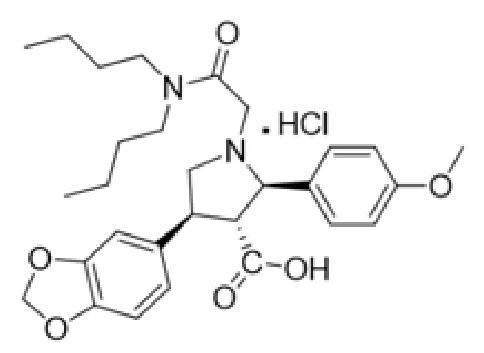
Chemical name: (2R, 3R, 4S)-4-(1,3-benzodioxol-5-yl)-1-[2-(dibutylamino)-2-oxoethyl]-2-(4-methoxyphenyl)-3-pyrrolidinecarboxylic acid hydrochloride
Molecular formula: C29H38N2O6HCl
Relative Molecular mass: 547.1 g/mol
Structural formula:
Physicochemical properties:
Atrasentan is a slightly hygroscopic white to off-white powder that is slightly soluble in water.
14. Clinical Trials
14.1. Clinical Trials by Indication
Immunoglobulin A nephropathy (IgAN):
The effect of VANRAFIA on proteinuria was assessed in a randomized, double-blind, placebo-controlled phase 3 study (ALIGN) in adults with biopsy-proven primary IgAN, eGFR ≥30 mL/min/1.73 m2, total urine protein ≥1 g/day who were on a stable dose of maximally-tolerated renin angiotensin system inhibitor (RASi) therapy. The study included two cohorts: a main cohort of 340 patients and an exploratory SGLT2i cohort of 64 patients who were also on a stable dose of SGLT2i at baseline. The stable baseline dose of RASi (main and exploratory SGLT2i cohorts) and SGLT2i therapies (exploratory SGLT2i cohort) were continued throughout the study. Patients with other glomerulopathies or those who had been recently treated with systemic immunosuppressants were excluded. Patients were randomized (1:1) to receive either VANRAFIA 0.75 mg or placebo once daily. The efficacy analysis was based on the first 270 patients in the main cohort who reached the Week 36 visit. Baseline characteristics were comparable between treatment groups (see Table 6). The primary efficacy results presented below (see Table 7) are based on interim analysis of the primary endpoint, defined as the percent change from baseline in 24-hour urine protein-to-creatinine ratio (24-hour UPCR) conducted at Week 36. Patients continue blinded for a total of 132 Weeks. The key secondary endpoint is the change from baseline in estimated glomerular filtration rate (eGFR) at the final study visit (Week 136). This endpoint was not part of the interim efficacy analysis and will be formally analyzed at the final analysis of the double-blind portion of the study. The study is ongoing.
Table 5 - Summary of patient demographics for clinical trials in Patients with IgAN
| Study # | Study design | Dosage, route of administration and duration | Study subjects (n) | Mean age (Range) | Sex |
ALIGN (CHK01-01) (ongoing) | Phase 3, randomized, double-blind, placebo-controlled | Atrasentan 0.75 mg, placebo, orally once daily The median duration of treatment was 60.1 weeks (range: 0 to 128 weeks) for patients receiving Atrasentan and 59.1 weeks (range: 0 to 120 weeks) for patients receiving placebo. | N = 270 (Atrasentan: 135, Placebo: 135) N=269 treated (Atrasentan: 134, Placebo: 135) | Atrasentan: 46 years (19-77) Placebo: 44 years (21-75) | Atrasentan: Female 54 (40%) Male 81 (60%) Placebo: Female 57 (42%) Male 78 (58%) |
Table 6 - Patient Baseline Demographics and Characteristics in ALIGN (CHK01-01)
| Parameters | Atrasentan 0.75 mg QD (N=135) | Placebo (N=135) | |||||||||
|---|---|---|---|---|---|---|---|---|---|---|---|
| Parameters | Atrasentan 0.75 mg QD (N=135) | Placebo (N=135) | |||||||||
| Parameters | Atrasentan 0.75 mg QD (N=135) | Placebo (N=135) | |||||||||
| Age, years, mean (SD) | 45.7 (12.94) | 44.1 (11.03) | |||||||||
| Age, years, median (range) | 46 (19-77) | 44 (21-75) | |||||||||
| Age >= 65 years, n (%) | 11 (8.1) | 6 (4.4) | |||||||||
| Sex, n (%) | |||||||||||
| Male | 81 (60) | 78 (57.8) | |||||||||
| Female | 54 (40) | 57 (42.2) | |||||||||
| Ethnicity, n (%) | |||||||||||
| Hispanic or Latino | 32 (23.7) | 24 (17.8) | |||||||||
| Not Hispanic or Latino | 98 (72.6) | 110 (81.5) | |||||||||
| Not reported | 5 (3.7) | 1 (0.7) | |||||||||
| Race, n (%) | |||||||||||
| Asian | 75 (55.6) | 79 (58.5) | |||||||||
| Black or African American | 4 (3) | 1 (0.7) | |||||||||
| White | 49 (36.3) | 48 (35.6) | |||||||||
| Not Reported or Other | 7 (5.2) | 7 (5.2) | |||||||||
| Geographic Region, n (%) | |||||||||||
| Asia | 64 (47.4) | 63 (46.7) | |||||||||
| Europe | 11 (8.1) | 13 (9.6) | |||||||||
| Northern America | 20 (14.8) | 26 (19.3) | |||||||||
| Latin America and the Caribbean | 29 (21.5) | 23 (17.0) | |||||||||
| Oceania | 11 (8.1) | 10 (7.4) | |||||||||
| History of hypertension, n (%) | 78 (58.2) | 85 (63.0) | |||||||||
| History of type 2 diabetes, n (%) | 1 (0.7) | 3 (2.2) | |||||||||
| Hematuria based on urine dipstick, n (%) | 58 (43.0) | 63 (46.7) | |||||||||
| Systolic Blood Pressure, mmHg, Mean (SD) [3] | 125.4 (13.32) | 122.9 (12.32) | |||||||||
| Diastolic Blood Pressure, mmHg, Mean (SD) [3] | 79.6 (9.85) | 78.7 (9.02) | |||||||||
24-hour Total Urine Protein, mg/day, Median (Q1, Q3) [1] | 1847.4 (1314.0, 2775.9) | 1851.0 (1328.9, 2550.0) | |||||||||
| 24-hour Total Urine Protein > 3.5 g/day, n (%) | 20 (14.8) | 21 (15.2) | |||||||||
| 24-hour UPCR, mg/g, Median (Q1, Q3) [1] | 1435.7 (1006.7, 1988.6) | 1429.2 (1100.9, 1918.3) | |||||||||
| eGFR, mL/min/1.73 m2, Mean (SD) [2] | 58.28 (23.750) | 59.49 (24.417) | |||||||||
| RASi Usage at Baseline, n (%) | 134 (99.3) | 132 (97.8) | |||||||||
QD = once daily; SD = standard deviation eGFR = estimated glomerular filtration rate per Chronic Kidney Disease Epidemiology Collaboration equation; IA = interim analysis; Q1 = first quartile; Q3 = third quartile; QD = once daily; RASi = renin-angiotensin system inhibitor; SD = standard deviation; UPCR = urine protein:creatinine ratio [1] Baseline value is based on the geometric mean of the 2 latest samples on/prior to study day 1. | |||||||||||
[2] Baseline value is based on the arithmetic mean of the 2 latest samples on/prior to study day 1. [3] Baseline value is based on the arithmetic mean of the triplicate results obtained at the last assessment on/prior to study day 1. [5] Baseline BNP values below the lower limit of quantification (2.0 pg/mL) were imputed as 1.9 pg/mL. | |||||||||||
Study Results
The primary endpoint was the percent reduction in 24-hour UPCR at Week 36 relative to baseline (see Table 7). The study demonstrated that VANRAFIA treatment resulted in a statistically significant reduction of 24-hour UPCR at Week 36 compared to placebo of 36.1% (p<0.0001) relative to baseline. A similar treatment effect on 24-hour UPCR was also observed in the exploratory SGLT2i cohort.
Table 7 – Percent reduction in 24-hour UPCR at Week 36 relative to baseline in ALIGN
VANRAFIA on top of supportive carea (N=135) | Placebo on top of supportive carea (N=135) | Treatment difference (95% CI) c,d p-valuee | |
|---|---|---|---|
| Primary endpoint | |||
| % Reduction in 24-hour UPCR (95% CI) at Week 36 relative to baselineb,d | 38.1% (31.7%, 43.9%) | 3.1% (-7.3%, 12.4%) | 36.1% (26.4%, 44.6%) <0.0001 |
a Supportive care: primarily a stable dose of maximally-tolerated RAS inhibitor therapy. b Least squares geometric mean change in UPCR relative to baseline was reported as a percent reduction along with the respective 95% confidence interval. c The estimate of the ratio of least squares geometric means of the change in UPCR relative to baseline comparing VANRAFIA with placebo was reported as a percent reduction along with the respective 95% confidence interval and 2-sided p-value. d Mixed model repeated measures analysis included all observed UPCR data except for subjects with intercurrent events (i.e., restricted medication use, chronic dialysis, kidney transplant). These subjects had UPCR data excluded beginning at the start date of the earliest event. The only intercurrent events observed were restricted medication use, which occurred in 3.0% and 5.2% of VANRAFIA and placebo treated subjects, respectively. e Two-sided p-value statistically significant at the 0.01 level | |||
Abbreviations: CI= confidence interval, GM= geometric mean, n= number of subjects in each group, UPCR= urine protein-to-creatinine ratio, RAS= renin-angiotensin system, SGLT2= sodium-glucose transport protein 2, ACEi= angiotensin-converting enzyme inhibitors, ARB= angiotensin receptor blockers.
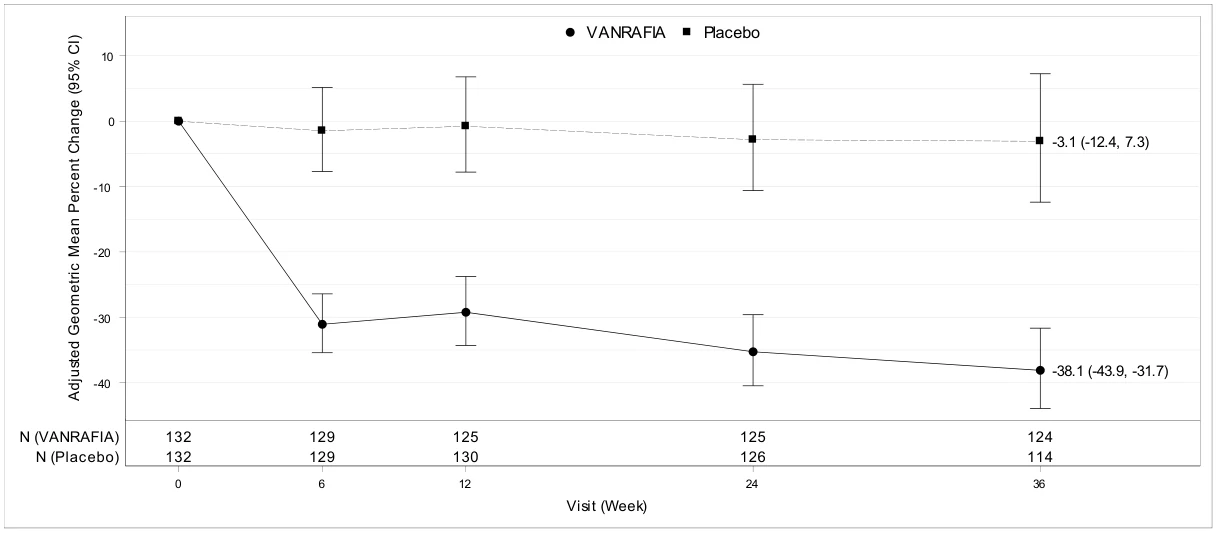
Improvement in proteinuria reduction was consistently observed with VANRAFIA as early as Week 6 and sustained through Week 36. The adjusted geometric mean percent change from baseline in UPCR over time is displayed in Figure 1.
Figure 1: Geometric mean percent change from baseline in 24-hour UPCR by visit in ALIGN
Adjusted % change relative to baseline in UPCR (sampled from a 24-hr urine collection) was estimated based on the MMRM analysis. N represents the number of evaluable subjects included in the analysis (i.e. with non-missing UPCR values and baseline covariates) for each visit and treatment group. Values reported in and under the figure were converted to percent reduction from baseline. Relative percent reductions comparing VANRAFIA and placebo were estimated from the regression model.
CI=confidence interval; MMRM= mixed model repeated measures; UPCR=urine protein-to-creatinine ratio.
In the main cohort, the treatment effect of VANRAFIA on 24-hour UPCR after 36 weeks of treatment was generally similar across prespecified subgroups including age, sex, race, and baseline disease characteristics (such as baseline eGFR and proteinuria levels). A similar treatment effect on 24-hour UPCR at Week 36 was also observed in the exploratory SGLT2i cohort.
It has not been established whether VANRAFIA slows the rate of eGFR decline in patients with IgAN. The key secondary eGFR endpoint at Week 136 remains pending.
15. Microbiology
No microbiological information is required for this drug product.
16. Non-Clinical Toxicology
General Toxicology
In a six month study in rats, male and female rats were treated with 5, 20, and 60 mg/kg/day atrasentan for 6 months. Increased RBC, hemoglobin, hematocrit, and higher heart, liver, and kidney weight was
noted in male rats at 60 mg/kg/day dose (exposure of 1346 times the AUC at MRHD) and at 20 mg/kg/day dose (exposure of 521 times the AUC at MRHD) in females. Decreased or absent corpora lutea, cystic endometrial hyperplasia with squamous metaplasia, and uterine cysts were observed in female rats at all doses evaluated (at exposure of 86 times the AUC at MRHD). Testicular degeneration was observed at all the doses evaluated in the study (exposure 53 times the AUC at MRHD).
In the chronic (9 months) study in male and female dogs treated with 10, 30, and 100 mg/kg/day atrasentan, decrease in erythrocyte counts, hemoglobin, and hematocrit were seen in males at AUC of 231 times the MRHD and at AUC of 817 times the MRHD in females. Increase in ALT was seen at AUC of 978 and 817 times the MRHD in males and females, respectively. Increase in ovary weight, glandular hyperplasia of mammary gland, large corpora lutea, and glandular hyperplasia in uterus were observed in females at all doses tested (10 mg base/kg/day to 100 mg base/kg/day) starting at exposure approximately 43 times the AUC at MRHD. Increase in testis weight, inflammation in prostate, interstitial edema in testis, and testicular degeneration were observed in male dogs starting at 10 mg base/kg/day dose (exposure 31 times the AUC at MRHD), whereas, vacuolar changes in testis and lipid accumulation in Sertoli cells were observed at highest dose (100 mg base/kg/day) with exposures 978 times the MRHD.
Genotoxicity
Atrasentan was negative for genotoxicity in vitro bacteria reverse mutation (Ames test), in vitro human lymphocyte assay, in vitro mouse lymphoma mutagenesis assay, in vivo rat chromosomal aberration assays, and in vivo mouse micronucleus study.
Carcinogenicity
Oral administration of atrasentan to rats for 2 years increased the incidence of benign uterine stromal polyps in females at 2 mg/kg/day (approximately 26 times the AUC at the MRHD). No carcinogenic effects were observed in males at exposures approximately 110 times the AUC at the MRHD or in females at exposures approximately 13 times the AUC at the MRHD.
There were no atrasentan-related tumor findings observed in either male or female transgenic mice following 6 months of treatment with atrasentan up to the highest dose studied at 60 mg/kg/day (1812 times of the exposure at MRHD).
Reproductive and Developmental Toxicology
In a male rat fertility study, male rats were treated with atrasentan at doses of 5, 20, and 60 mg/kg/day for 3 months prior to mating and continued post-mating with untreated female rats. Increased incidence and severity of testicular germ cell depletion, decreased fertility and fecundity index, lower incidences of implantation sites, viable fetuses, and increased preimplantation loss were noted with 20 and 60 mg/kg/day dose (at exposures 467 and 1621 times the AUC at MRHD, respectively). Effects were reversible in animals treated with 20 mg/kg/day dose after a recovery period of 5 months. No adverse effects on male fertility were seen at 5 mg/kg/day, approximately 58 times the AUC at MRHD.
In a female rat fertility study, oral administration of atrasentan (5, 20, and 100 mg base/kg/day) 14 days prior to mating continued until gestational day 7 did not demonstrate systemic or reproductive toxicity (changes in estrous cycle, fertility index, incidence of corpora lutea, number of implantation sites, viable and non-viable embryos, pre and post-implantation losses) at exposures of approximately 4,000 times the AUC at MRHD.
Teratogenicity
In embryo-fetal development studies in pregnant rats and rabbits, teratogenicity and/or embryo-fetal toxicity were observed.
In pregnant rats, oral administration of atrasentan throughout organogenesis (gestational day 6 to 17) at doses of 0.1, 0.3, 1.0, and 3.0 mg/kg/day resulted in developmental abnormalities primarily including the ear, lower jaw, or skull in all treated groups with detectable plasma exposures to atrasentan (0.3 mg/kg/day and above) at exposure of 2.4 times the AUC at MRHD.
In pregnant rabbits, oral administration of atrasentan throughout organogenesis (gestational day 6 to 18) at doses of 0.1, 0.3, 1.0 and 3.0 mg/kg/day resulted in visceral malformations including deformities in the cardiovascular system at all the doses evaluated, at exposure 0.2 times the AUC at the MRHD at a dose of 0.3 mg/kg/day (lowest detectable plasma exposures to atrasentan).
In the pre- and postnatal development study in rats, atrasentan was orally administered to pregnant rats at doses of 1, 10, or 100 mg/kg/day during the period from gestation Day 15 through lactation Day 20. Increased pup mortality during the pre-weaning period, and increased heart weight and myocardial hypertrophy were noted with maternal exposure with 100 mg/kg/day dose. No adverse effects on pre- and postnatal development were observed at doses up to 10 mg/kg/day which resulted in maternal exposure approximately 61 times the AUC at the MRHD.