


Patient Medication Information: uses, side effects, how to take - Ventolin Diskus
What VENTOLIN DISKUS is used for:
VENTOLIN DISKUS is used in adults and children (4 years or older) to:
- relieve and prevent worsening breathing problems (bronchospasm) due to chronic bronchitis (inflammation of the airways of the lungs with mucus production), bronchial asthma (inflammation of the airways of the lungs) and other problems with the airways of the lungs.
- prevent breathing problems caused by exercise.
The safety and effectiveness of VENTOLIN DISKUS in children under the age of 4 are not known.
How VENTOLIN DISKUS works:
Salbutamol belongs to a group of medicines knowns as “bronchodilators”. Salbutamol relaxes the muscles in the walls of the small air passages in the lungs. This helps to open up the airways of the lungs making it easier to breathe.
The ingredients in VENTOLIN DISKUS are:
Medicinal ingredients: Salbutamol sulfate
Non-medicinal ingredients: Lactose
VENTOLIN DISKUS comes in the following dosage forms:
VENTOLIN DISKUS inhalation powder is a disposable blue-coloured plastic inhaler device containing a foil strip with 60 blisters. Each blister contains 200 mcg of the active ingredient salbutamol (as the sulfate salt). The blisters protect the powder for inhalation from effects of the atmosphere. It cannot be refilled.
Do not use VENTOLIN DISKUS if:
- you are allergic to salbutamol sulphate or any of the other ingredients in VENTOLIN DISKUS. This includes lactose (which contains milk protein) and milk.
- for the treatment of preterm labour or miscarriage.
To help avoid side effects and ensure proper use, talk to your healthcare professional before you take VENTOLIN DISKUS. Talk about any health conditions or problems you may have, including if you:
- Have ever had to stop taking other medicines for this illness because you were allergic to them or they caused problems.
- Have thyroid problems.
- Have a heart problem.
- Have high blood pressure.
- Have diabetes.
- Have seizures or a past history of seizures.
Have low levels of potassium in your blood (hypokalemia), especially if you are taking:
- Medicines known as xanthine derivatives (such as theophylline)
- Steroids to treat asthma
- Diuretics also known as “water pills”, used to lower fluid levels and treat high blood pressure
Are pregnant or plan to become pregnant. Taking VENTOLIN DISKUS during pregnancy may cause harm to your baby. Your healthcare professional will consider the benefit to you and the risk to your baby of taking VENTOLIN DISKUS while you're pregnant.
- Are breastfeeding. It is not known if VENTOLIN DISKUS passes into breast milk.
Other warnings you should know about:
You should always carry your VENTOLIN DISKUS with you to use immediately in case you experience an asthma attack.
Monitoring: Your healthcare professional might monitor your health throughout your treatment with VENTOLIN DISKUS. This can include monitoring your lungs, the level of potassium in your blood and how you respond to VENTOLIN DISKUS.
Overuse: If you are using VENTOLIN DISKUS more than twice a week to treat your asthma symptoms (not including before or after exercise or other triggers) talk to your healthcare professional. This may be a sign that your asthma is not well controlled and may increase the risk of severe asthma attacks. Your healthcare professional may need to reassess your treatment.
Paradoxical bronchospasm: If you feel tightness of the chest, coughing, wheezing or breathlessness right after using VENTOLIN DISKUS, you may have a serious condition called “paradoxical bronchospasm” (an unexpected closing of your airways). Stop using VENTOLIN DISKUS and seek medical help right away.
Tell your healthcare professional about all the medicines you take, including any, vitamins, minerals, natural supplements or alternative medicines.
The following may interact with VENTOLIN DISKUS:
- anti-depressants, medicines used to treat depression (such as monoamine oxidase inhibitors, and tricyclic antidepressants).
- medicines used to treat allergies.
- beta-blockers, medicines used to lower blood pressure (such as propranolol).
- diuretics also known as “water pills”, medicines used to lower fluid levels and treat high blood pressure.
- other bronchodilators, medicines used to open the airway (such as asthma medicines such as ipratropium bromide).
- epinephrine, a medicine that can be used to treat allergic reactions or sudden asthma attacks.
- digoxin, a medicine used to treat certain heart problems.
How to take VENTOLIN DISKUS:
- Take VENTOLIN DISKUS exactly as directed by your healthcare professional.
- It is important that you use your VENTOLIN DISKUS properly. This will ensure that you receive the prescribed dose of your medicine. Make sure you know how, when, and how much you should use. Follow your healthcare professional’s instructions carefully. If you are not sure, ask your healthcare professional.
- VENTOLIN DISKUS should only be inhaled. Do not swallow.
- If you are using an asthma anti-inflammatory medicine daily (such as an inhaled corticosteroid) continue using it regularly, even if you feel better.
If you are using an inhaled corticosteroid:
- Always use VENTOLIN DISKUS first.
- Wait a few minutes and then use your inhaled corticosteroid.
- If you have to go into hospital for an operation, take your inhaler with you and tell the healthcare professional what medicine(s) you are taking.
Salbutamol has a duration of action of 4 to 6 hours in most patients.
You should call your healthcare professional immediately if:
- the effects of one dose last less than 3 hours;
- you notice a sudden worsening of your shortness of breath;
- your symptoms gets worse (for example you have frequent symptoms or flare ups such as breathlessness, cough, wheezing, tight chest, night-time awakening or limited physical ability);
- your usual dose does not provide relief of wheezing or chest tightness;
- you need to use VENTOLIN DISKUS more often than before.
These may be signs that your asthma or chest condition is getting worse. Your healthcare professional may want to reassess your treatment plan.
Instructions for Use of VENTOLIN DISKUS:
VENTOLIN DISKUS is closed when you first take it out of the box. It counts down from 60 to 1. To show when the last five doses have been reached the numbers appear in red.
Before you use VENTOLIN DISKUS read through this entire section carefully.
Push your thumb away from you as far as it will go. | Figure 1 |
|---|---|
| Figure 2 |
| Figure 3 |
| Figure 4 |
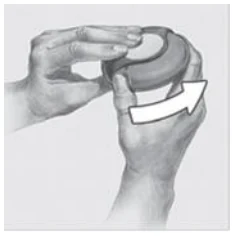
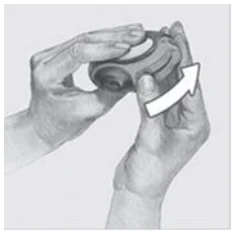
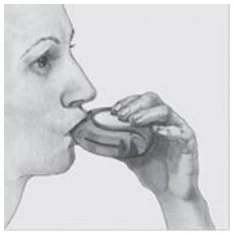
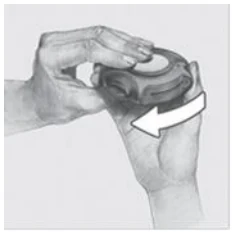
Remember:
- Keep your inhaler dry.
- Keep it closed when not in use.
- Only slide the lever when you are ready to take a dose.
Children: During inhalation, children should be assisted or supervised by an adult who knows the proper use of the inhaler.
Usual dose:
Your healthcare professional will decide your dose of VENTOLIN DISKUS. This may depend on your condition, your age, and how you react to VENTOLIN DISKUS. Your dose may be repeated every 4 to 6 hours as directed. Do not increase the dose or the number of times you use your medicine without asking your healthcare professional, as this may make you feel worse.
Adults and Children (4 years or older):
- To relieve bronchospasm: 1 inhalation as needed. If you have a more severe attack, you can repeat the dose every 4 to 6 hours, and immediately consult your healthcare professional or the nearest hospital.
- To prevent bronchospasm: 1 inhalation repeated every 4 to 6 hours up, as needed, to a maximum three or four times a day as prescribed by your healthcare professional.
- To prevent bronchospasm caused by exercise: 1 inhalation 15 minutes before exercise.
Maximum dose: 4 inhalations in a 24 hour period.
Do not increase the dose or the number of times you use your medicine without asking your healthcare professional, as this may make you feel worse.
Overdose:
If you accidentally take a larger dose than prescribed, you are more likely to get side effects like a faster heart beat, headaches and feeling shaky or restless. These effects usually wear off within a few hours, but you should tell your healthcare professional as soon as possible.
| If you think you, or a person you are caring for, have taken too much VENTOLIN DISKUS, contact a healthcare professional, hospital emergency department, regional poison control centre or Health Canada’s toll-free number 1-844 POISON-X (1-844-764-7669) immediately, even if there are no signs or symptoms. |
|---|
Possible side effects from using VENTOLIN DISKUS:
These are not all the possible side effects you may have when taking VENTOLIN DISKUS. If you experience any side effects not listed here, tell your healthcare professional.
Side effects may include:
- Headache
- Feeling a little shaky
- Feeling anxious or irritable
- Feeling tired or weak
- Trouble sleeping (insomnia)
- Hyperactivity in children
- Dizziness, vertigo
- Drowsiness
- Muscle cramps
- Muscle pain
- Fever
- Respiratory infections and/or inflammation
- Nausea and vomiting
- Chest pain or discomfort
- Flushing
- Difficulty urinating
- Unusual taste in your mouth
- Dry or irritated throat
Serious side effects and what to do about them
| Frequency / Side Effect / Symptom | Talk to your healthcare professional | Stop taking this drug and get immediate medical help | ||||
|---|---|---|---|---|---|---|
| Only if severe | In all cases | |||||
| Common | ||||||
| Tachycardia (heart rate that exceeds the normal resting rate): heart beating faster than usual | ✓ | |||||
| Uncommon | ||||||
| Palpitation (sensation of rapid or irregular heart rate): irregular heart beat | ✓ | |||||
| Rare | ||||||
| Hallucinations in Children: see or hear things that are not there | ✓ | |||||
| Hypokalemia (low level of potassium in the blood): muscle weakness, muscle spasms, cramping, constipation, feeling of skipped heart beats or palpitations, fatigue, tingling or numbness | ✓ | |||||
| Very Rare | ||||||
| Allergic Reactions: difficulty swallowing or breathing, wheezing, feeling sick to your stomach and throwing up, hives or rash, swelling of the face, lips, tongue or throat | ✓ | |||||
| Arrhythmia (abnormal heart rhythms): rapid, slow or irregular heartbeat | ✓ | |||||
| Bronchospasm (when there is a sudden narrowing of the airway): : increased wheezing, tightness in the chest, or difficulty in breathing (can happen after taking your dose) | ✓ | |||||
| Frequency / Side Effect / Symptom | Talk to your healthcare professional | Stop taking this drug and get immediate medical help | |||
|---|---|---|---|---|---|
| Only if severe | In all cases | ||||
| Unknown | |||||
| Hypertension (high blood pressure): shortness of breath, fatigue, dizziness, chest pain, or swelling in your ankles and legs | ✓ | ||||
If you have a troublesome symptom or side effect that is not listed here or becomes bad enough to interfere with your daily activities, tell your healthcare professional.
Reporting Side Effects
You can report any suspected side effects associated with the use of health products to Health Canada by:
NOTE: Contact your healthcare professional if you need information about how to manage your side effects. The Canada Vigilance Program does not provide medical advice. |
Storage:
- Do not store VENTOLIN DISKUS above 30°C.
- Keep in a dry place.
- Protect from frost and light.
- Keep out of sight and reach of children.
If you want more information about VENTOLIN DISKUS:
- Talk to your healthcare professional.
- Find the full product monograph that is prepared for healthcare professionals and includes the Patient Medication Information by visiting the Health Canada Drug Product Database website (https://www.canada.ca/en/health-canada/services/drugs-health-products/drug-products/drug-product-database.html); the manufacturer’s website www.gsk.ca, or by calling 1-800-387-7374.
You may need to read this leaflet again. PLEASE DO NOT THROW IT AWAY until you have finished your medicine.
Date of Authorization: 2025-09-19
©2025 GSK group of companies or its licensor
Trademarks are owned by or licensed to the GSK group of companies